(JUNE 2002) 66. Which of following is true for non-competitive inhibition? (1) Increases Vmax (2) Decreases Vmax (3) Increases Km (4) Decreases Km The correct answer is (2) Decreases Vmax. Introduction […]
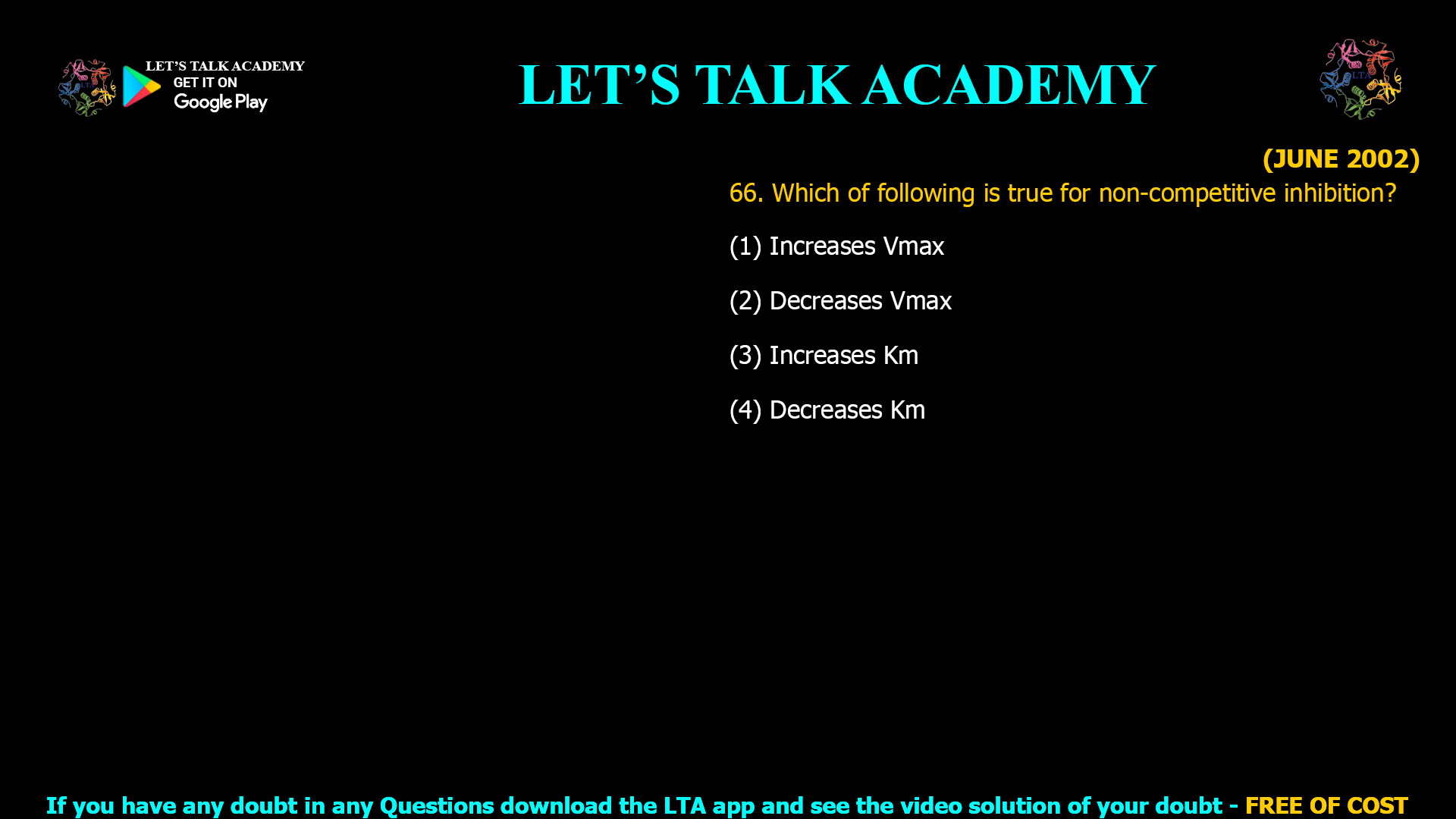
(JUNE 2002) 66. Which of following is true for non-competitive inhibition? (1) Increases Vmax (2) Decreases Vmax (3) Increases Km (4) Decreases Km The correct answer is (2) Decreases Vmax. Introduction […]
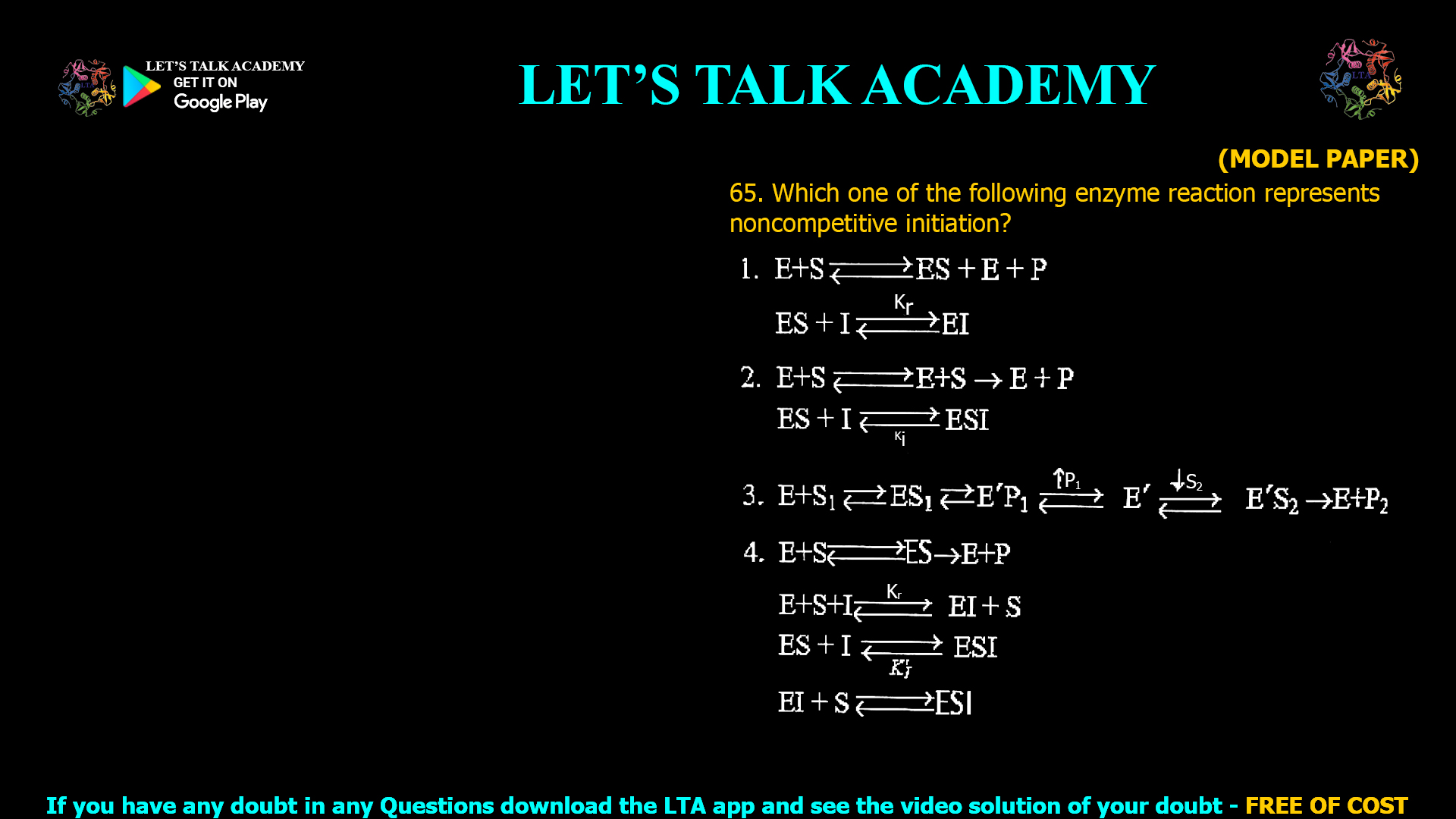
The correct answer is (2) E+S ⇄ ES → E+P; ES+I ⇄ ESI. Introduction Noncompetitive inhibition is a fundamental model in enzyme kinetics, describing how inhibitors can reduce enzyme activity regardless […]
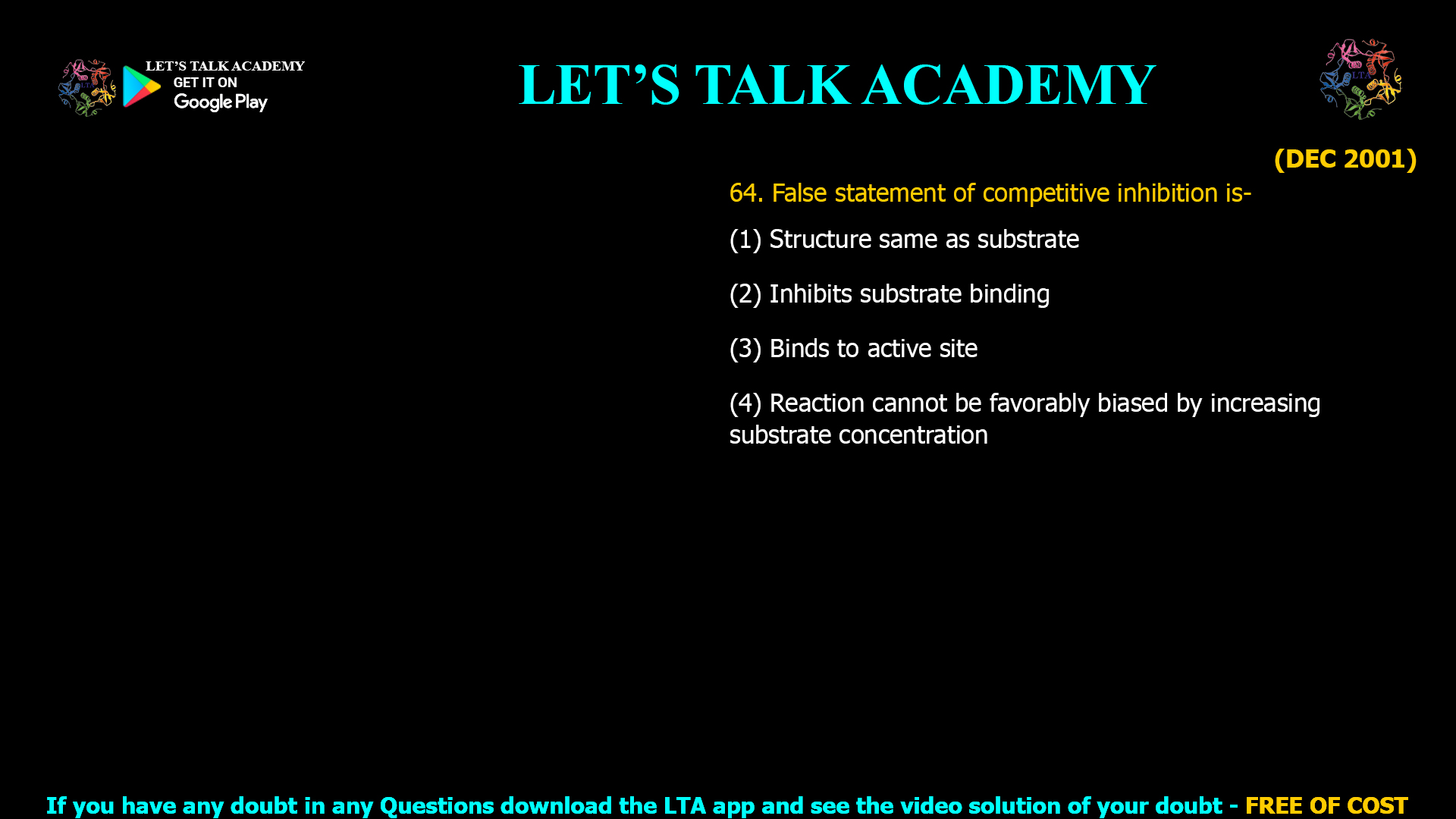
(DEC 2001) 64. False statement of competitive inhibition is- (1) Structure same as substrate (2) Inhibits substrate binding (3) Binds to active site (4) Reaction cannot be favorably biased by […]
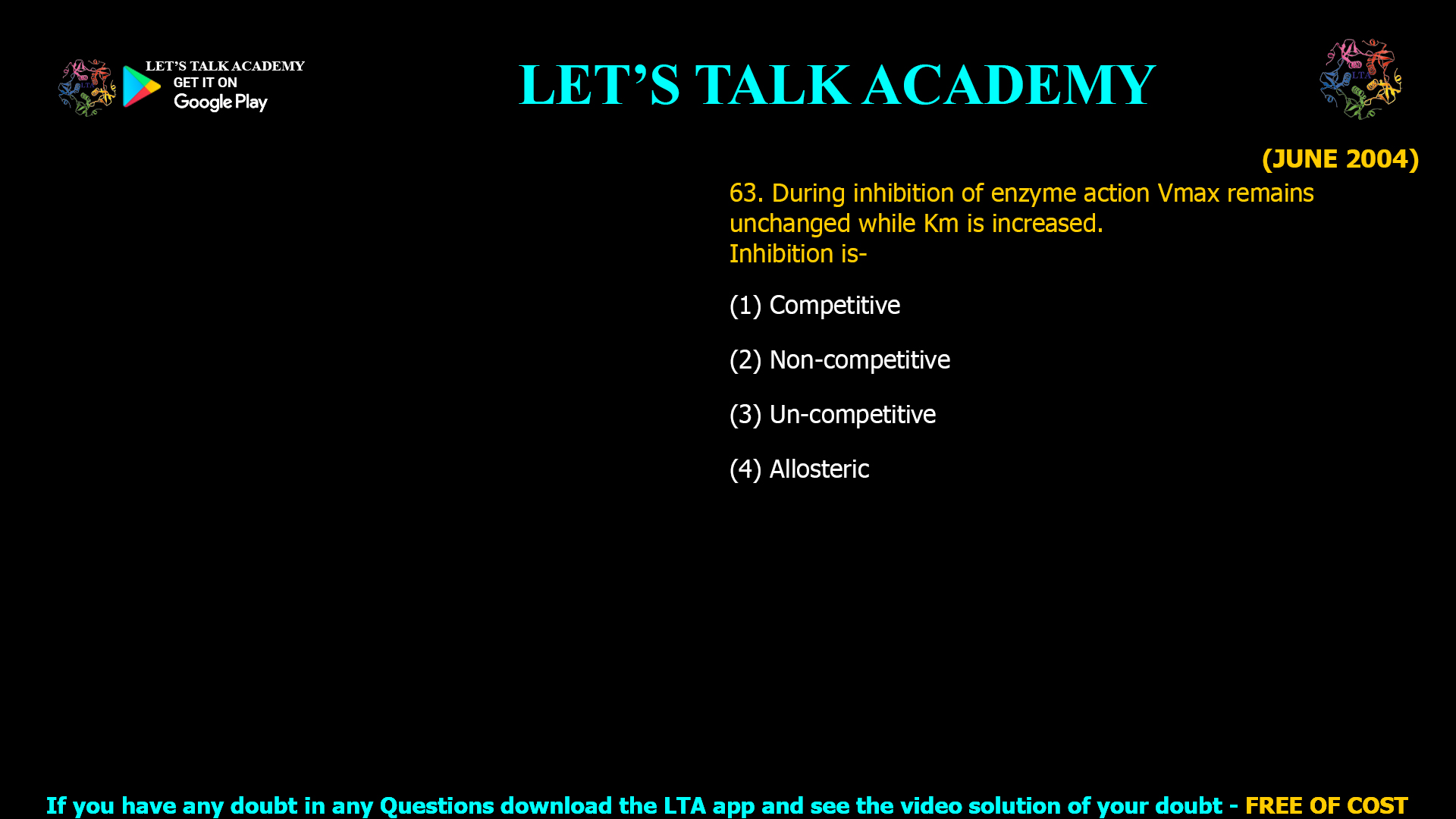
(JUNE 2004) 63. During inhibition of enzyme action Vmax remains unchanged while Km is increased. Inhibition is- (1) Competitive (2) Non-competitive (3) Un-competitive (4) Allosteric The correct answer is (1) Competitive. […]
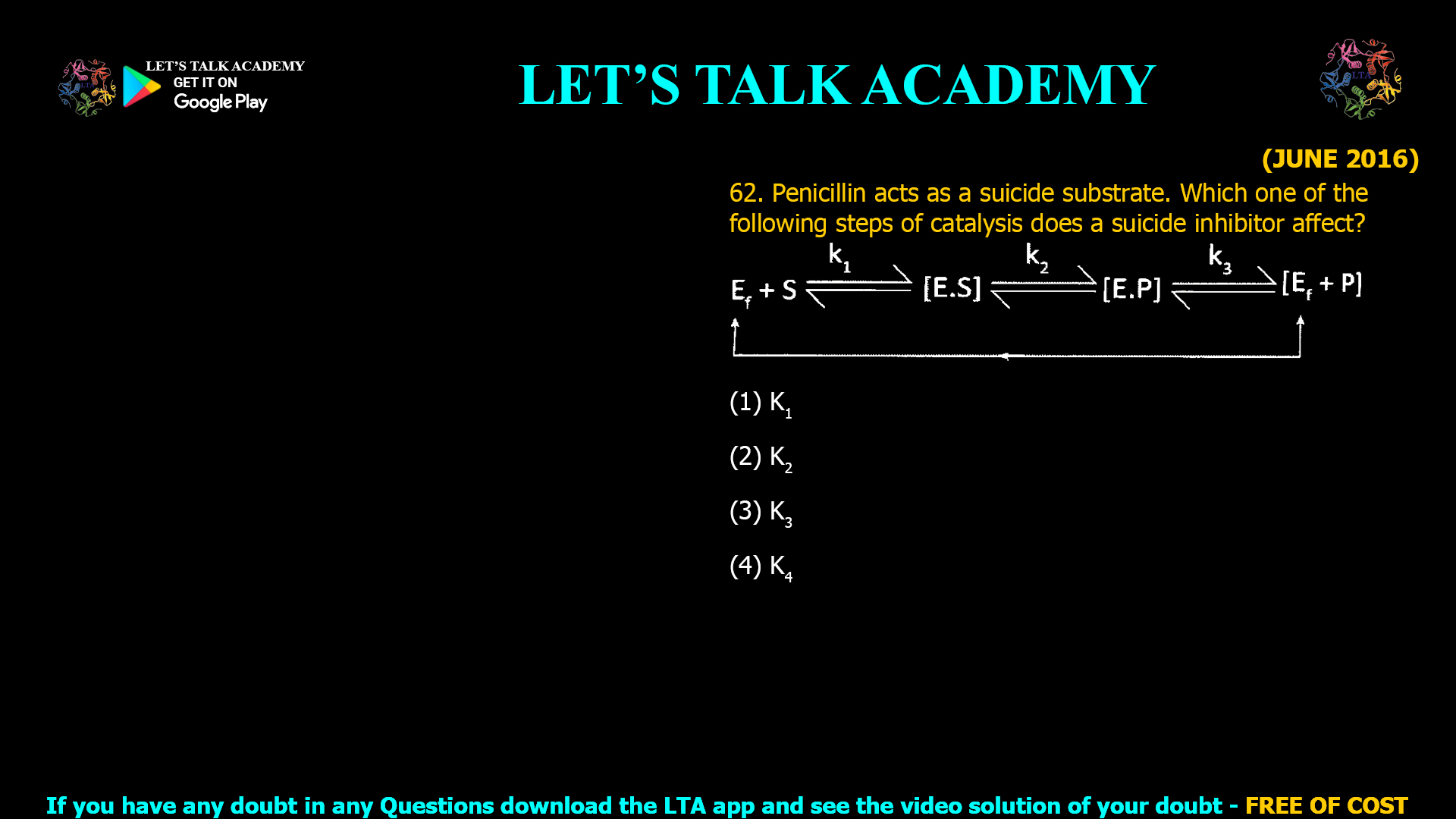
The correct answer is (2) K₂. Introduction Mechanism-based (suicide) inhibitors are among the most potent and specific enzyme inhibitors in biochemistry and pharmacology. Penicillin serves as a classical example, irreversibly inactivating […]
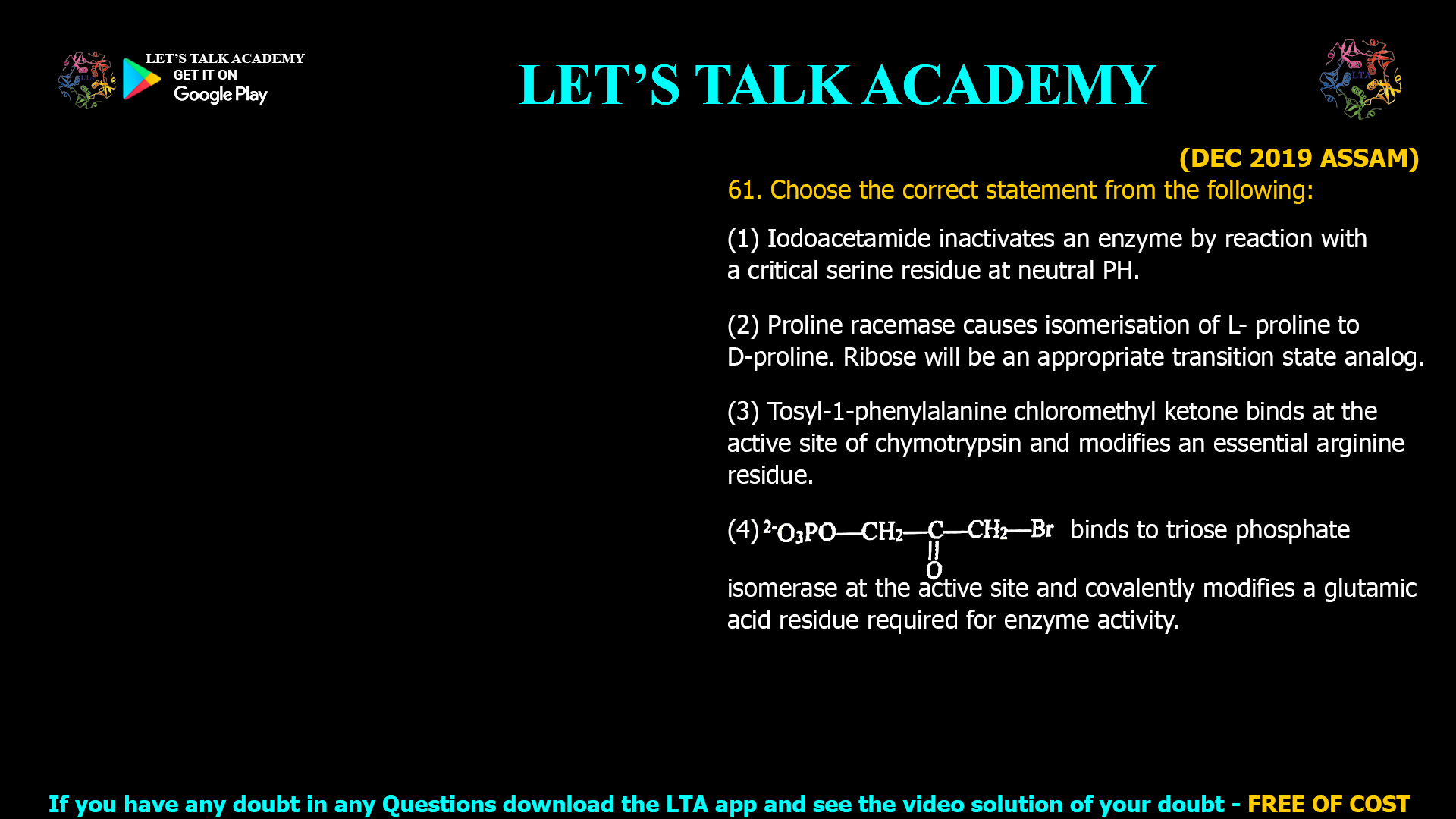
The correct answer is (4) The given brominated compound binds to triose phosphate isomerase at the active site and covalently modifies a glutamic acid residue required for enzyme activity. Introduction Enzyme […]
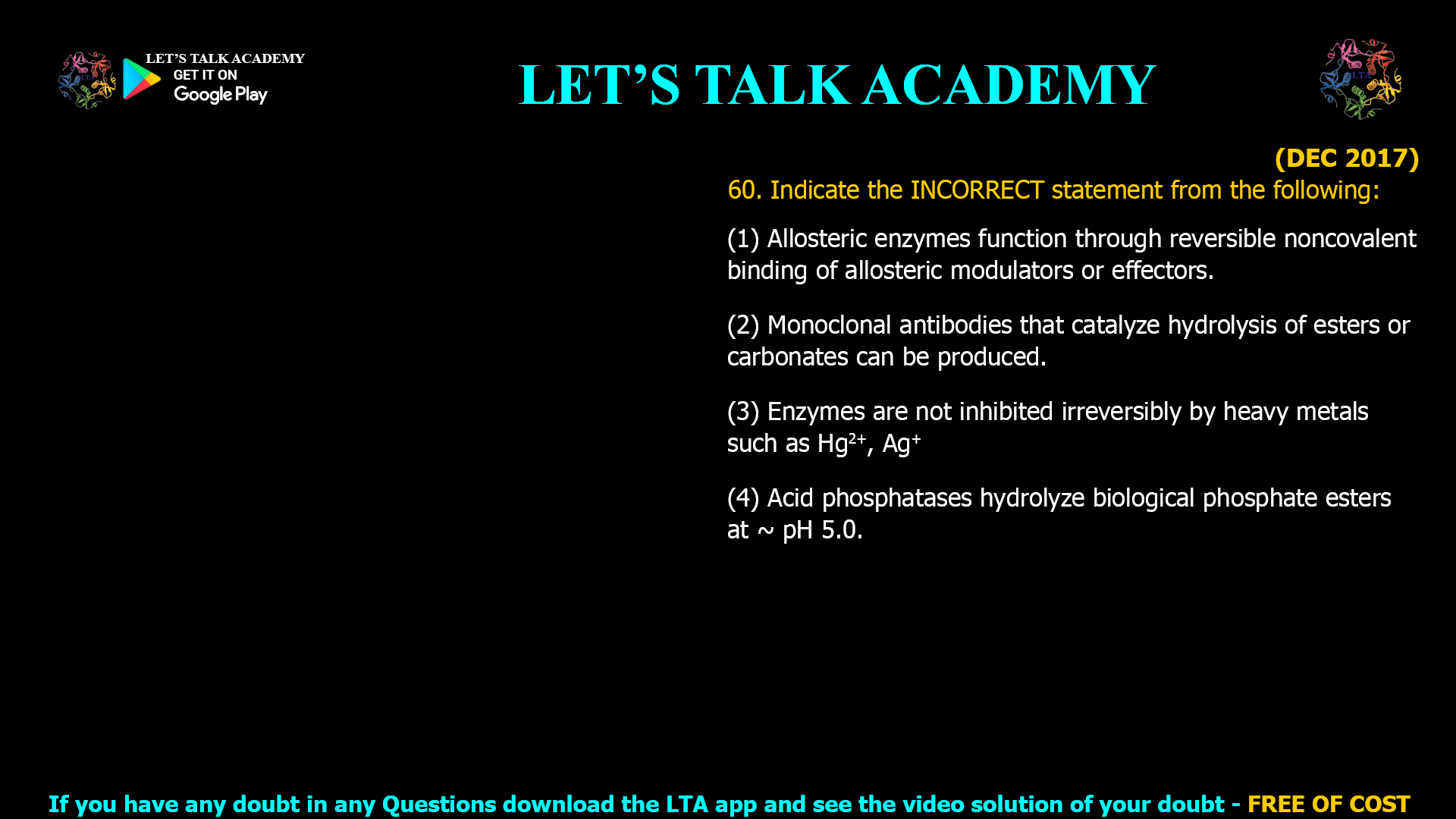
(DEC 2017) 60. Indicate the INCORRECT statement from the following: (1) Allosteric enzymes function through reversible noncovalent binding of allosteric modulators or effectors. (2) Monoclonal antibodies that catalyze hydrolysis of […]
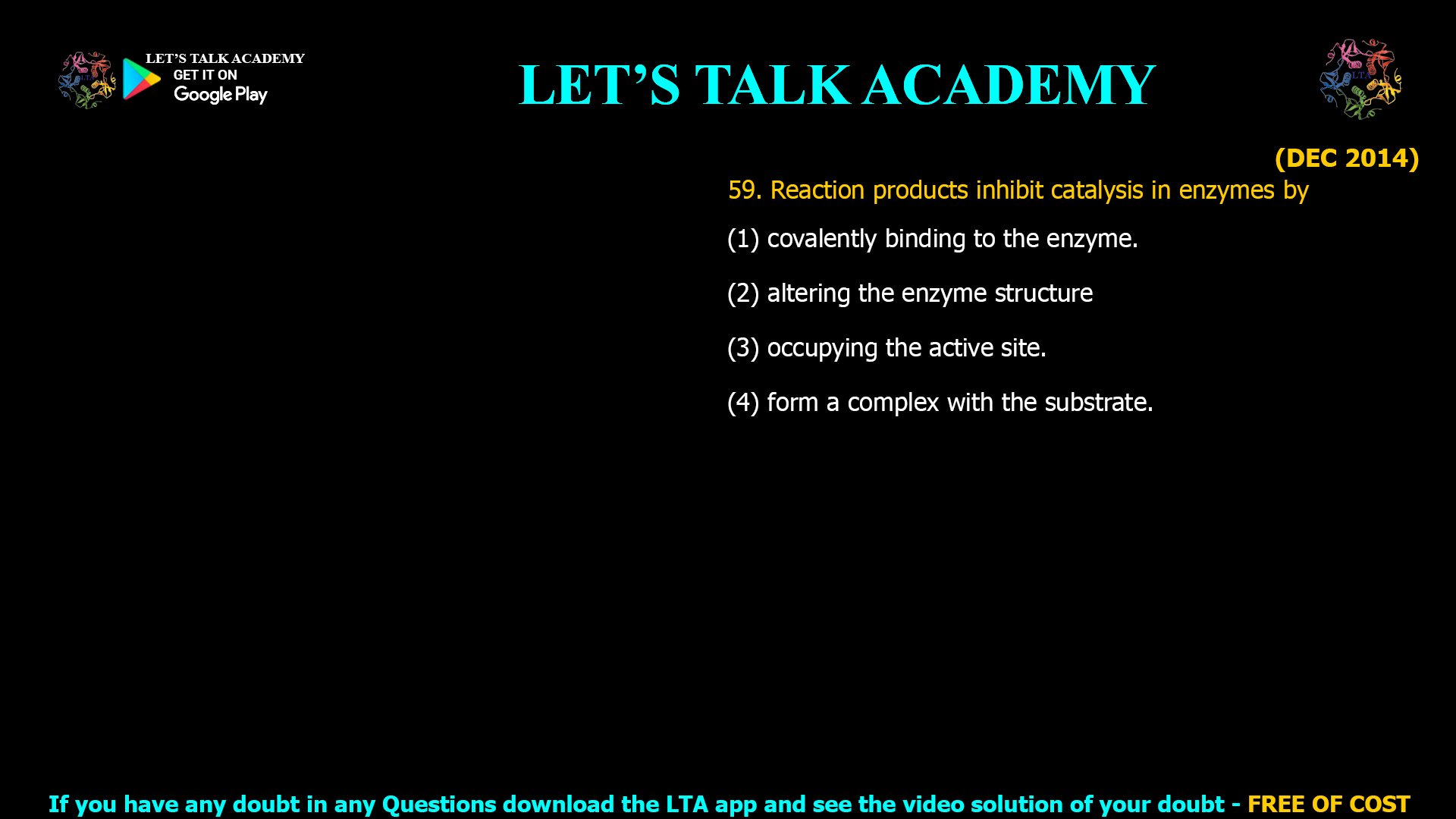
(DEC 2014) 59. Reaction products inhibit catalysis in enzymes by (1) covalently binding to the enzyme. (2) altering the enzyme structure (3) occupying the active site. (4) form a complex […]
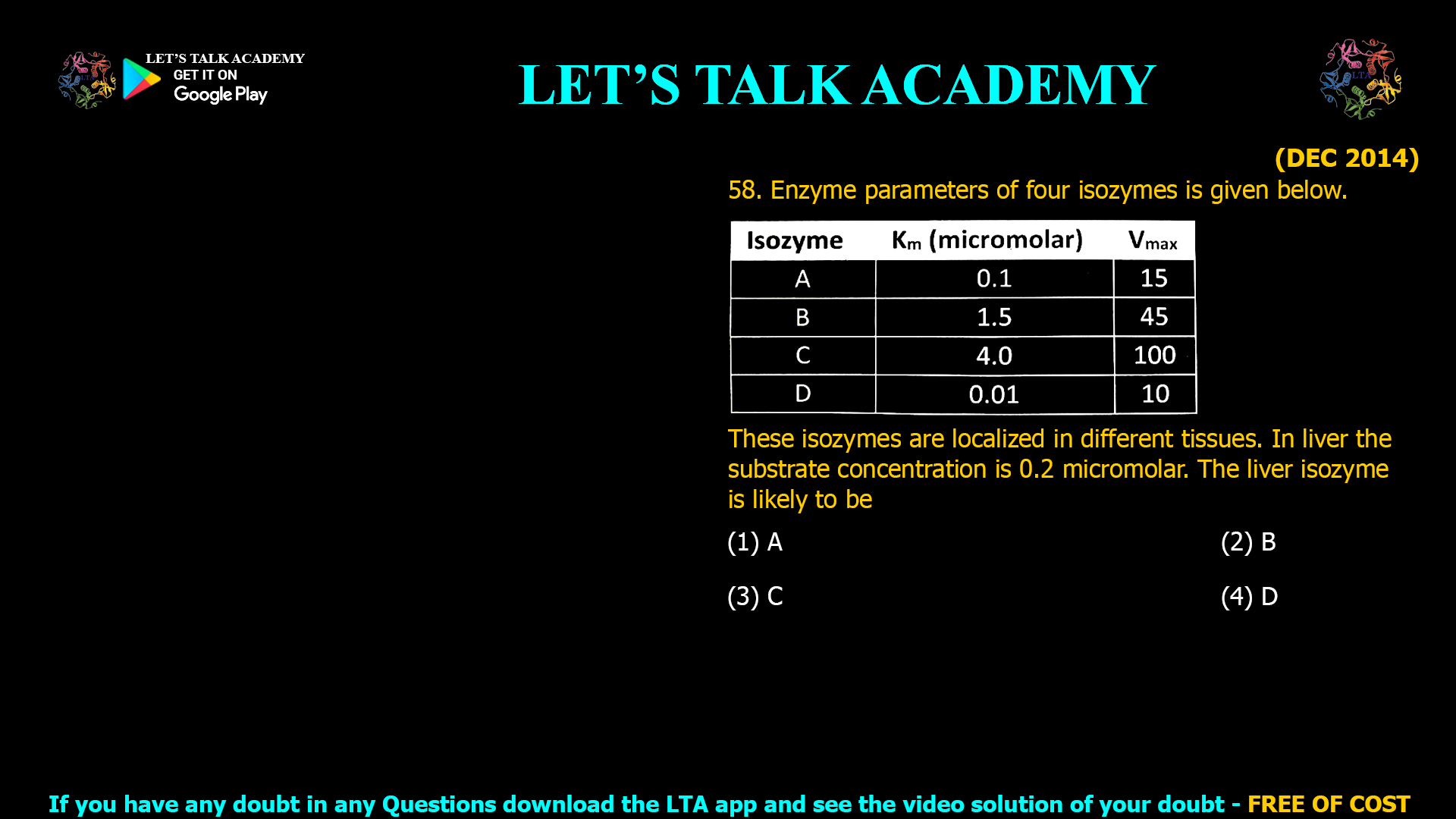
The correct answer is (1) A. Introduction Isozymes are enzyme variants catalyzing the same reaction but optimized for different tissue environments, frequently distinguished by their kinetic properties: the Michaelis constant (KmKm) […]
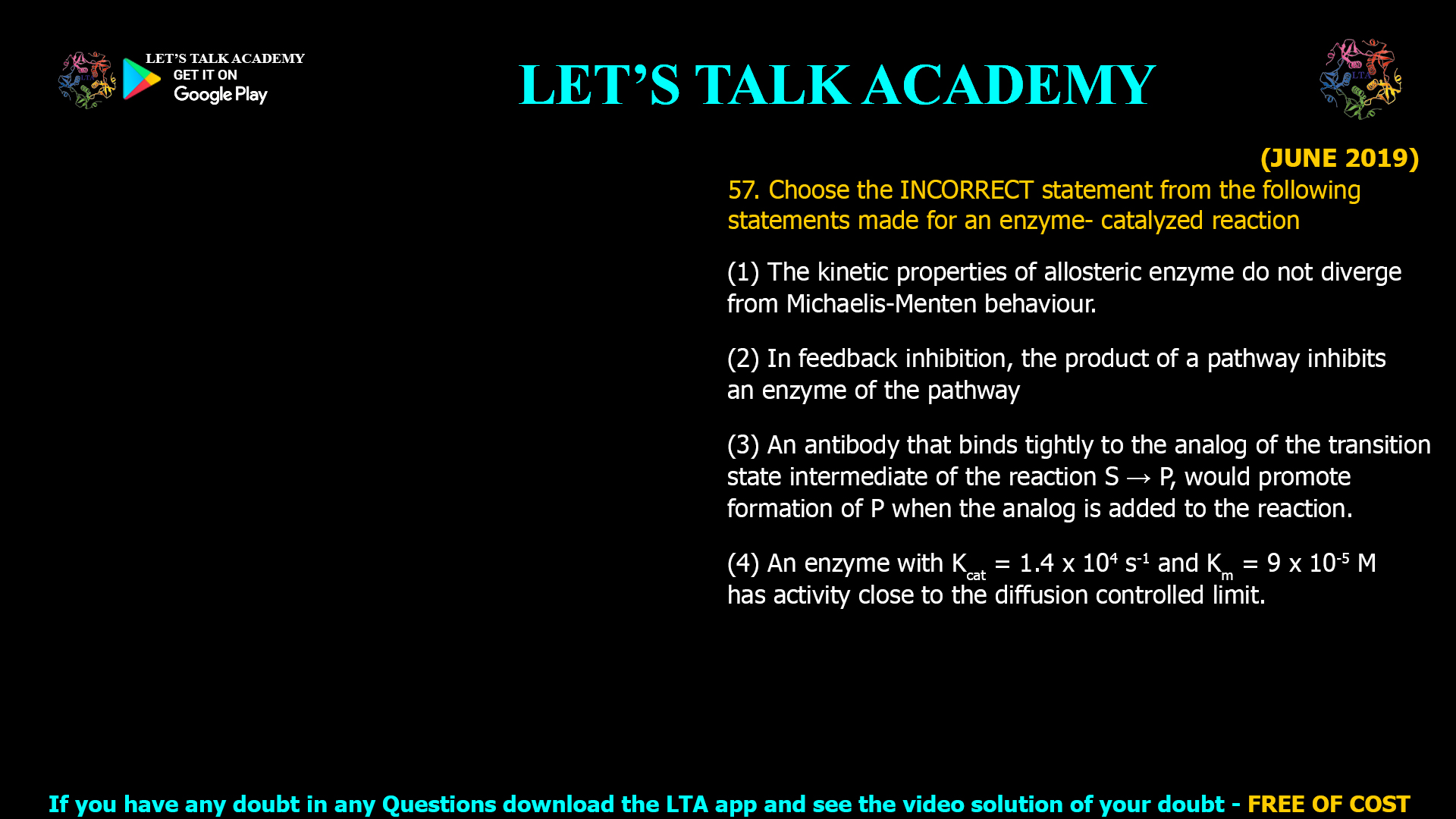
(JUNE 2019) 57. Choose the INCORRECT statement from the following statements made for an enzyme- catalyzed reaction (1) The kinetic properties of allosteric enzyme do not diverge from Michaelis-Menten behaviour. […]


