Name the ectothermic animal that can thermoregulate by behavioural means rather than by physiological means. (1) Bumble bee in an orchard. (2) Tuna fish in the ocean. (3) Lizard in […]
Blog
CSIR NET Life Science Previous Year Questions and Solution on Animal Physiology
Main Function of Sweating: How Sweating Helps Regulate Body Temperature
Main function of sweating is (1) Thermoregulation of body (2) Excrete salt (3) Maintenance of blood volume (4) Osmoregulation of body The Main Function of Sweating: Thermoregulation of the Body […]
CSIR NET Life Science Previous Year Questions and Solution on Animal Physiology
How Does the Human Body Regulate Temperature? The Role of the Hypothalamus Explained
2. Temperature of body is regulated by (1) Hypothalamus (2) Suprachaismatic nuclei (3) Cerebellum (4) Cerebrum Body Temperature Regulation: The Command of the Hypothalamus Maintaining a stable internal temperature is […]
CSIR NET Life Science Previous Year Questions and Solution on Animal Physiology
Where Is the Thermoregulatory Center Located in the Human Brain?
In human brain, the thermoregulatory center is located at (1) cerebral cortex (2) hypothalamus (3) medulla (4) basal ganglia The Thermoregulatory Center in the Human Brain: Why the Hypothalamus Is […]
CSIR NET Life Science Previous Year Questions and Solution on Biochemistry
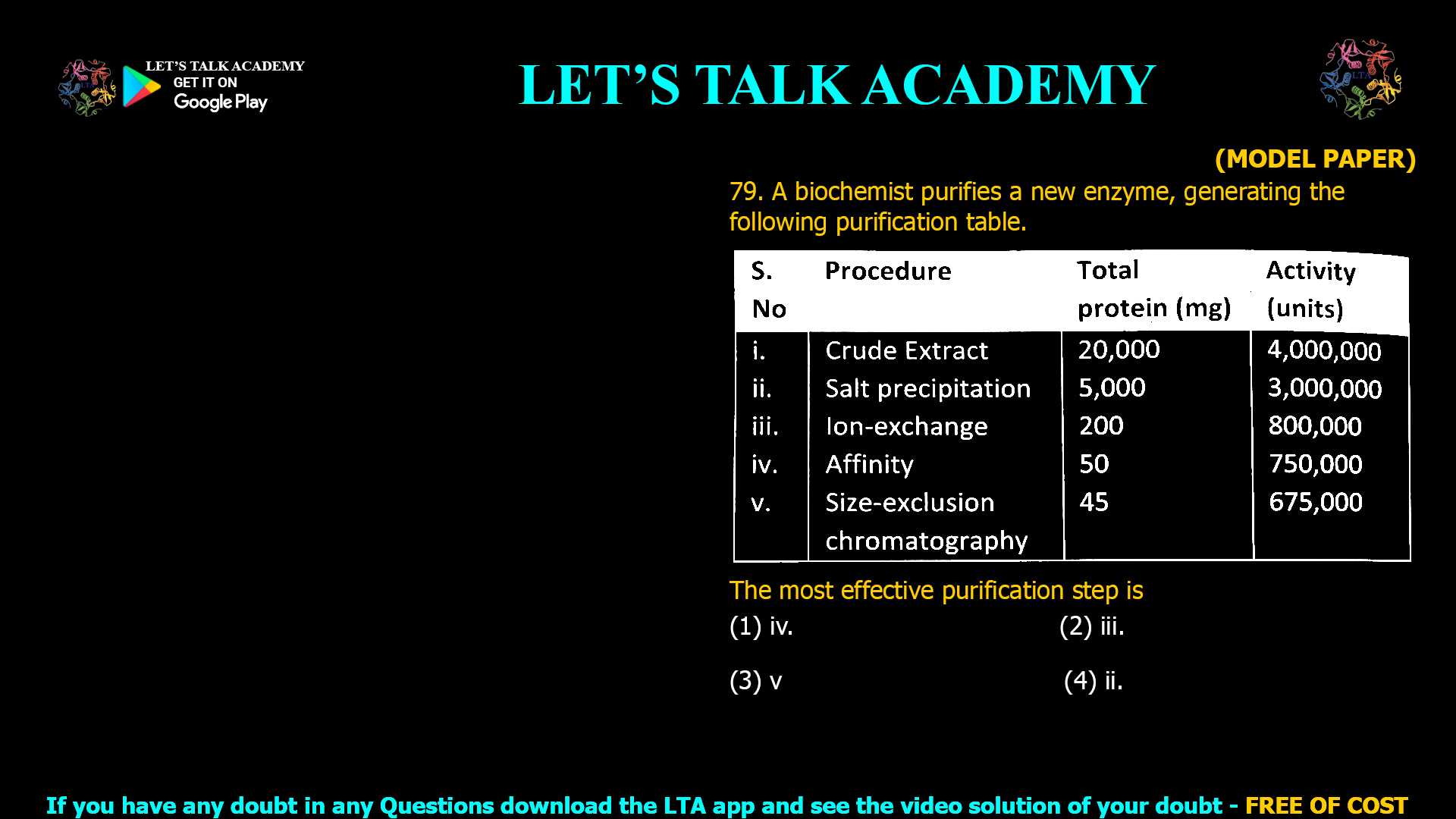
Affinity Chromatography: The Most Effective Step in Enzyme Purification
The correct answer is (1) iv. Affinity chromatography. Introduction Enzyme purification is a multistep process designed to isolate proteins from complex biological mixtures. Each stage serves to increase the purity and […]
CSIR NET Life Science Previous Year Questions and Solution on Biochemistry
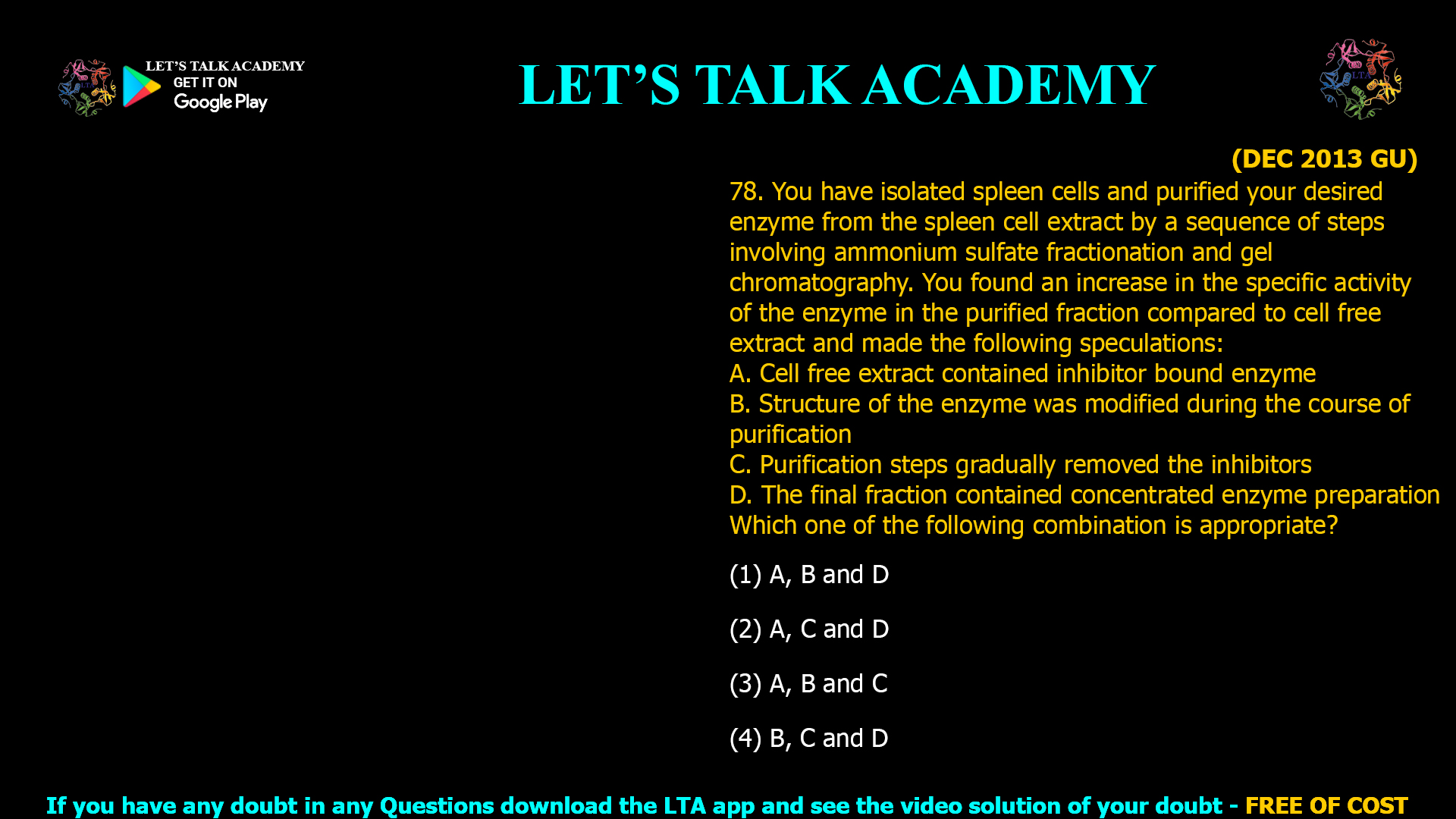
Understanding Enzyme Purification: Role of Inhibitors and Enzyme Concentration on Specific Activity
(DEC 2013 GU) 78. You have isolated spleen cells and purified your desired enzyme from the spleen cell extract by a sequence of steps involving ammonium sulfate fractionation and gel […]
CSIR NET Life Science Previous Year Questions and Solution on Biochemistry
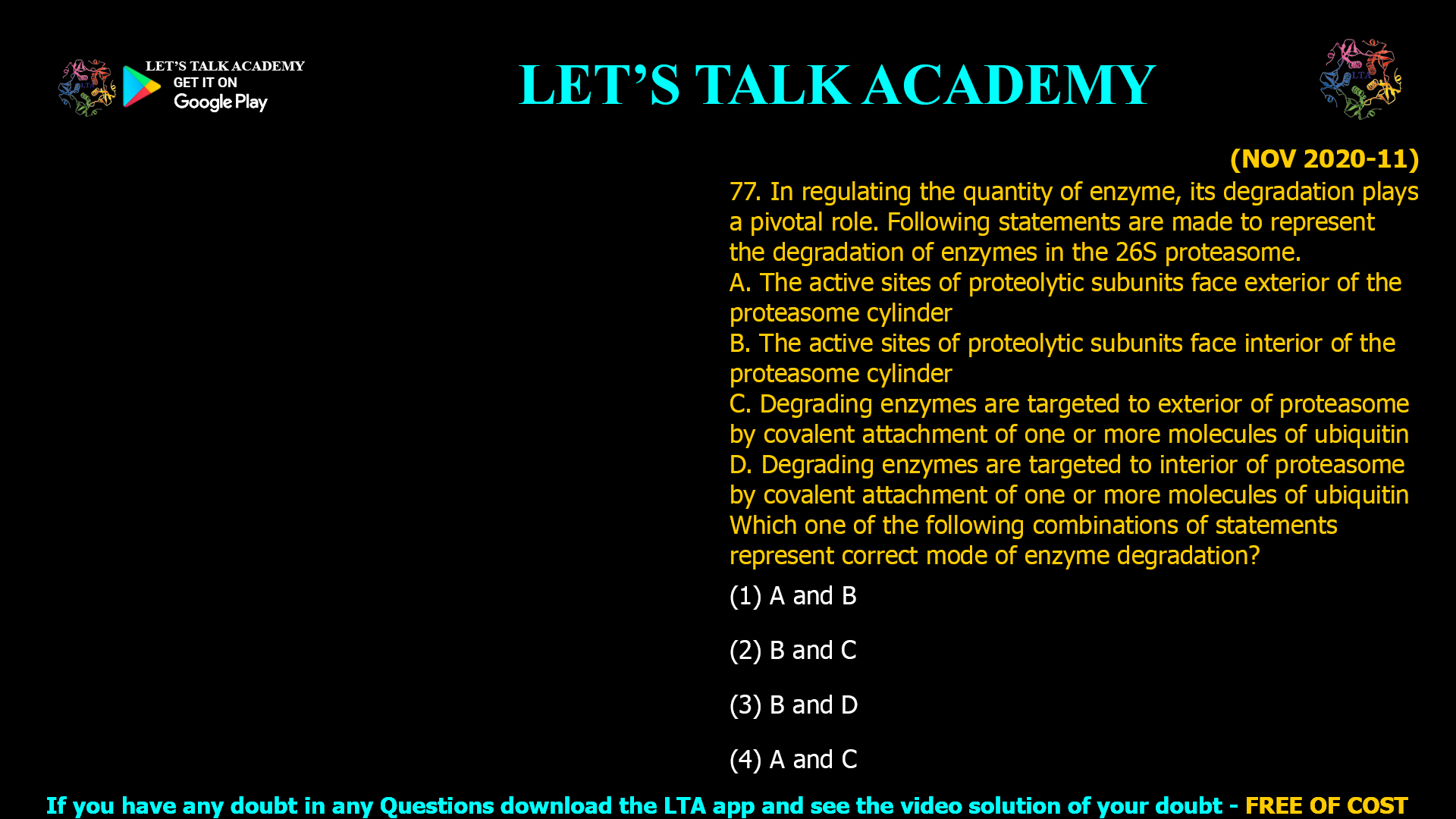
Mechanism of Enzyme Degradation by the 26S Proteasome: Orientation of Active Sites and Ubiquitin Targeting
(NOV 2020-11) 77. In regulating the quantity of enzyme, its degradation plays a pivotal role. Following statements are made to represent the degradation of enzymes in the 26S proteasome. A. […]
CSIR NET Life Science Previous Year Questions and Solution on Biochemistry
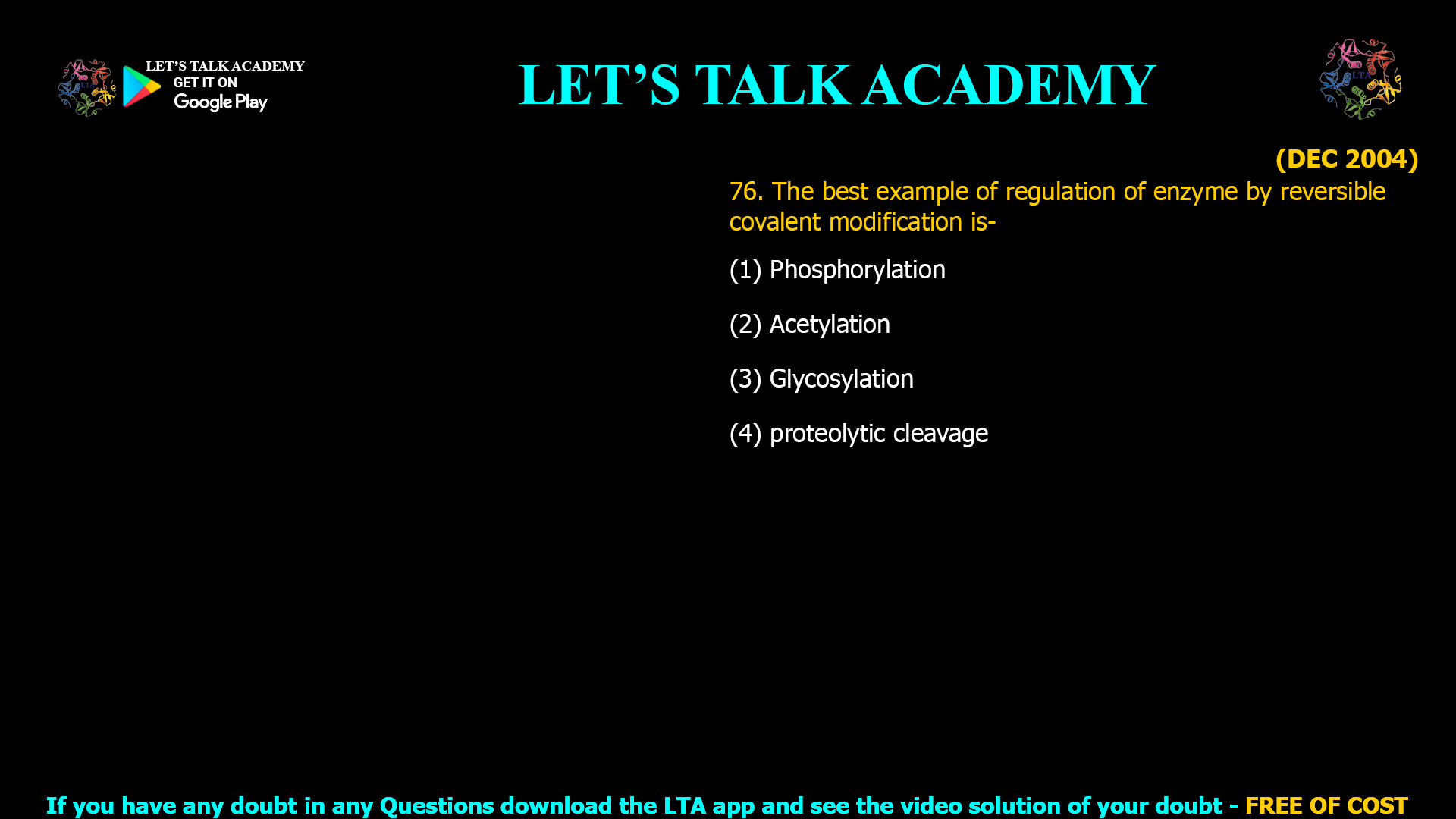
Phosphorylation: The Premier Example of Enzyme Regulation by Reversible Covalent Modification
(DEC 2004) 76. The best example of regulation of enzyme by reversible covalent modification is- (1) Phosphorylation (2) Acetylation (3) Glycosylation (4) proteolytic cleavage The correct answer is (1) Phosphorylation. Introduction […]
![(SEPT 2022-1) 75. Dixon plot is used to study the enzyme inhibition by plotting various expressions of velocity (v) and inhibitor concentration [l] on the X-axis (column A) and Y-axis (column B) as given below: Which one of the following options is the correct combination from columns A and B to draw the Dixon plot? 1. Column A -iv, Column B- i 2. Column A -i, Column B- ii 3. Column A- ii, Column B- iii 4. Column A- iii, Column B- iv](https://www.letstalkacademy.com/wp-content/uploads/2025/09/75.jpg)
CSIR NET Life Science Previous Year Questions and Solution on Biochemistry
Using Dixon Plot for Enzyme Inhibition: Correct Axes Selection Explained
The correct answer is (3) Column A-ii, Column B-ii. Introduction Dixon plots are essential tools in enzyme kinetics, allowing researchers to analyze and visualize enzyme inhibition data accurately. The choice of […]

CSIR NET Life Science Previous Year Questions and Solution on Biochemistry
How to Use Dixon’s Plot for Enzyme Inhibition Kinetics: The 1/Vi1/Vi vs. [I][I] Approach
The correct answer is Introduction Quantitative analysis of enzyme inhibition is essential for both basic biochemistry research and drug development. The Dixon plot is a classic graphical method used to […]


