The correct answer is (2) K₂. Introduction Mechanism-based (suicide) inhibitors are among the most potent and specific enzyme inhibitors in biochemistry and pharmacology. Penicillin serves as a classical example, irreversibly inactivating […]
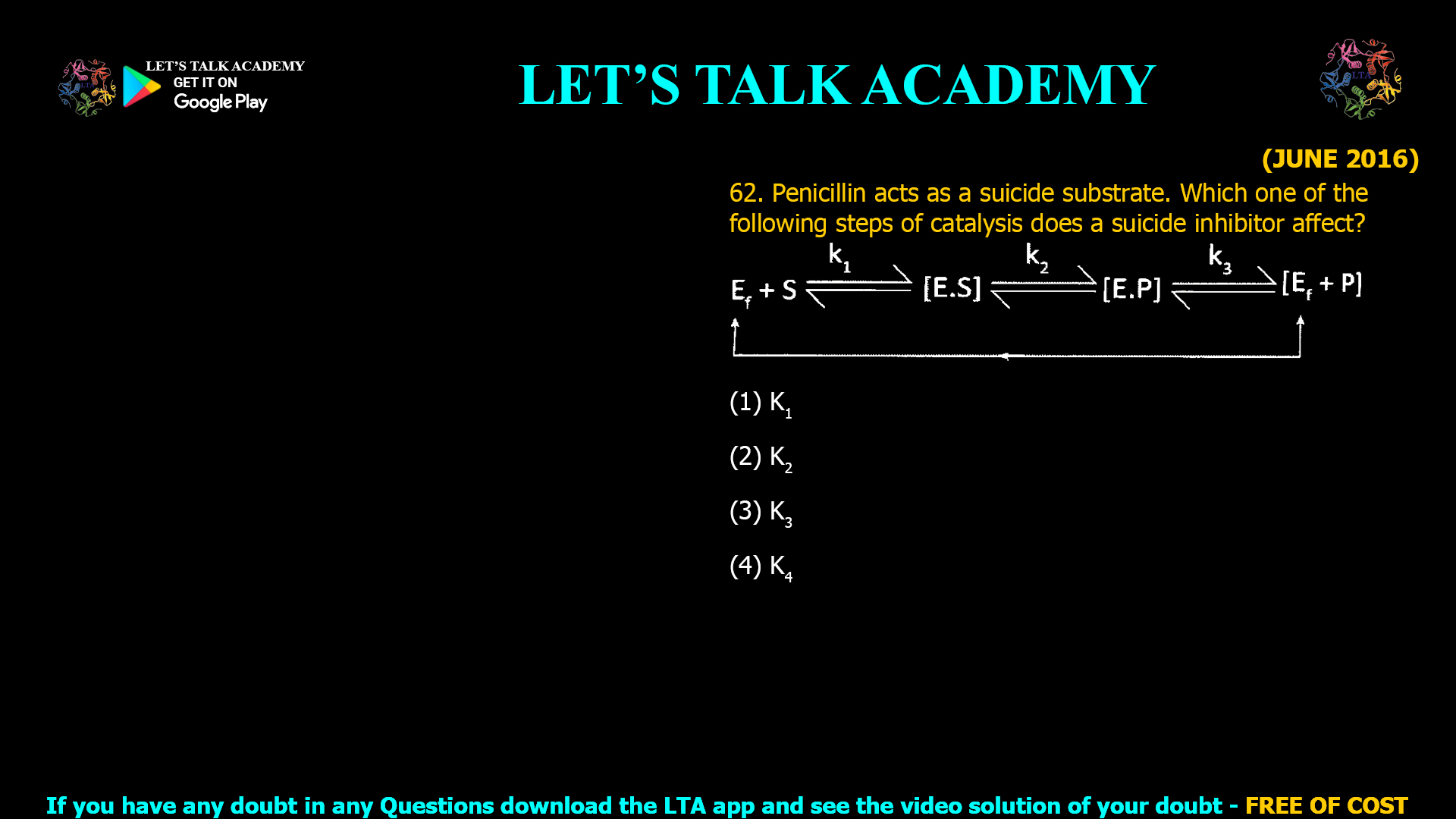
The correct answer is (2) K₂. Introduction Mechanism-based (suicide) inhibitors are among the most potent and specific enzyme inhibitors in biochemistry and pharmacology. Penicillin serves as a classical example, irreversibly inactivating […]
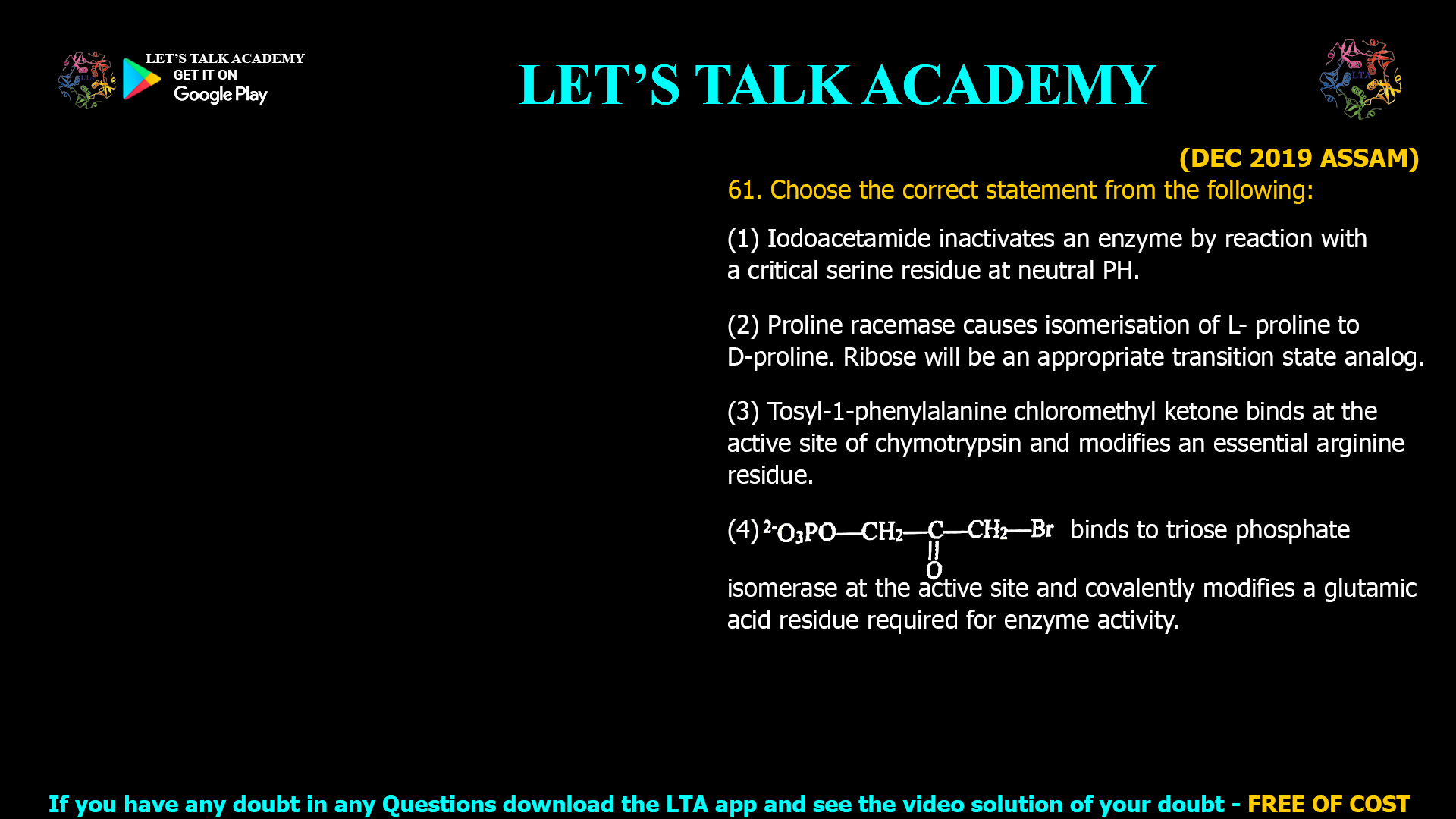
The correct answer is (4) The given brominated compound binds to triose phosphate isomerase at the active site and covalently modifies a glutamic acid residue required for enzyme activity. Introduction Enzyme […]
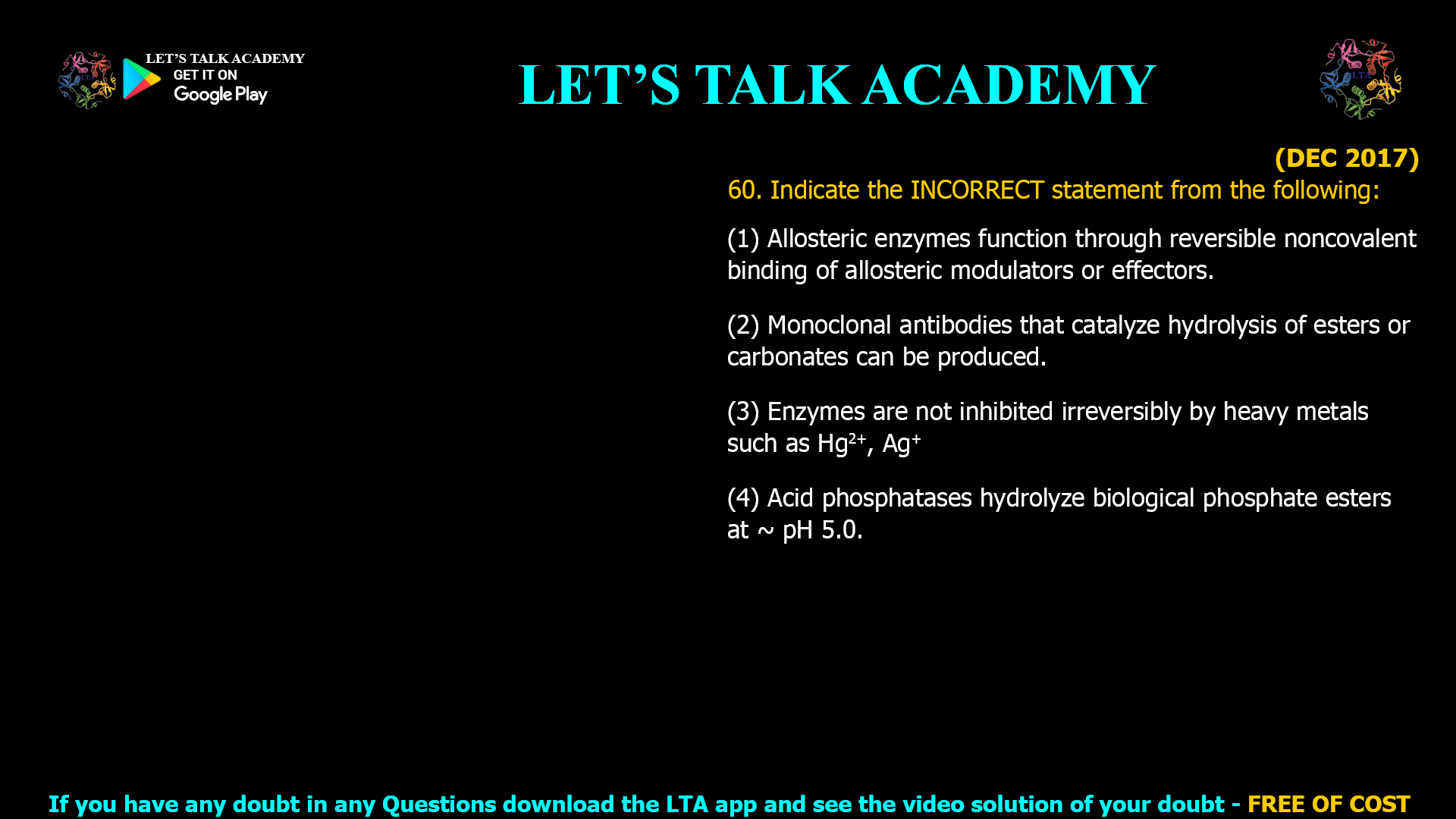
(DEC 2017) 60. Indicate the INCORRECT statement from the following: (1) Allosteric enzymes function through reversible noncovalent binding of allosteric modulators or effectors. (2) Monoclonal antibodies that catalyze hydrolysis of […]
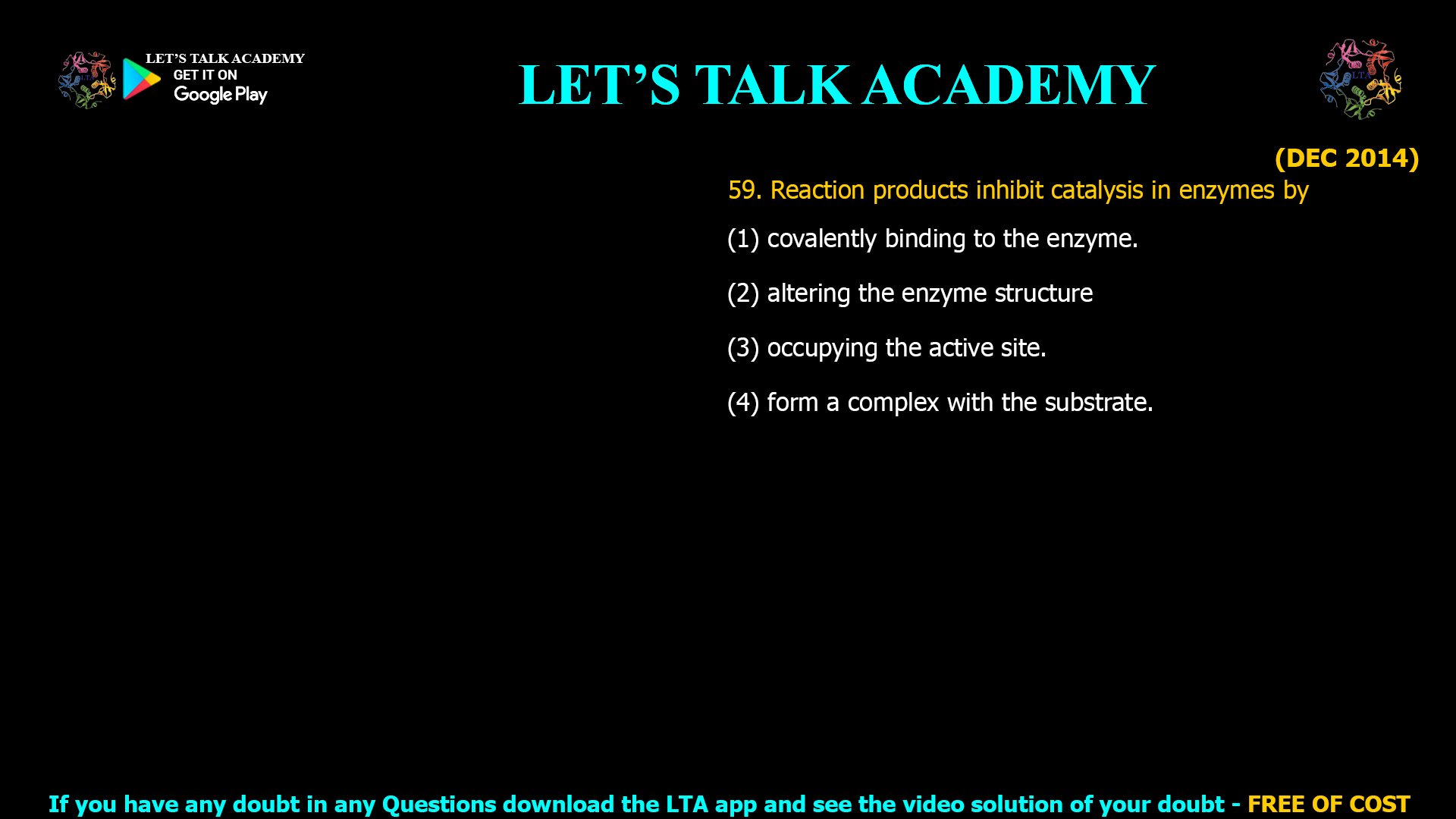
(DEC 2014) 59. Reaction products inhibit catalysis in enzymes by (1) covalently binding to the enzyme. (2) altering the enzyme structure (3) occupying the active site. (4) form a complex […]
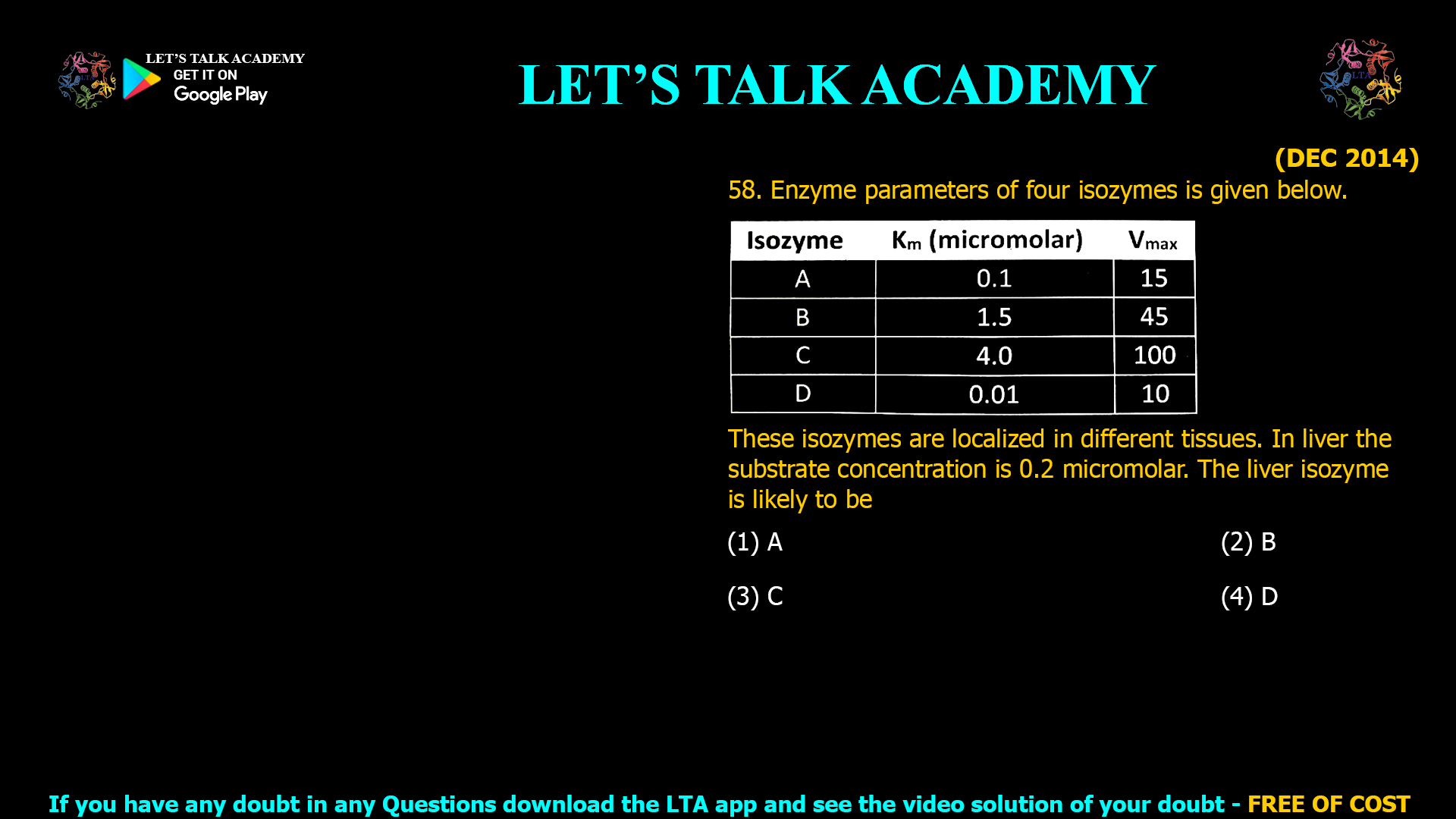
The correct answer is (1) A. Introduction Isozymes are enzyme variants catalyzing the same reaction but optimized for different tissue environments, frequently distinguished by their kinetic properties: the Michaelis constant (KmKm) […]
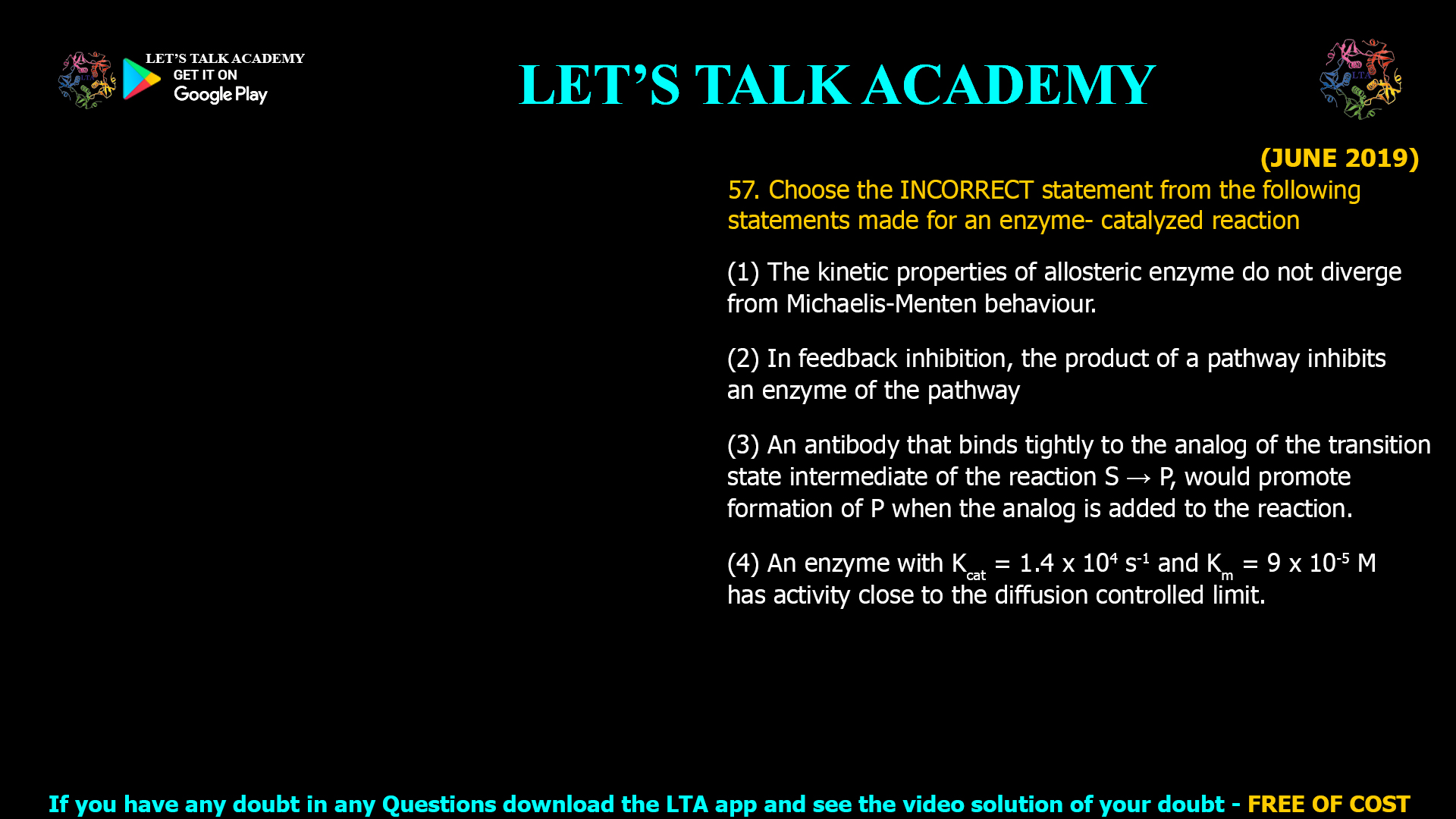
(JUNE 2019) 57. Choose the INCORRECT statement from the following statements made for an enzyme- catalyzed reaction (1) The kinetic properties of allosteric enzyme do not diverge from Michaelis-Menten behaviour. […]
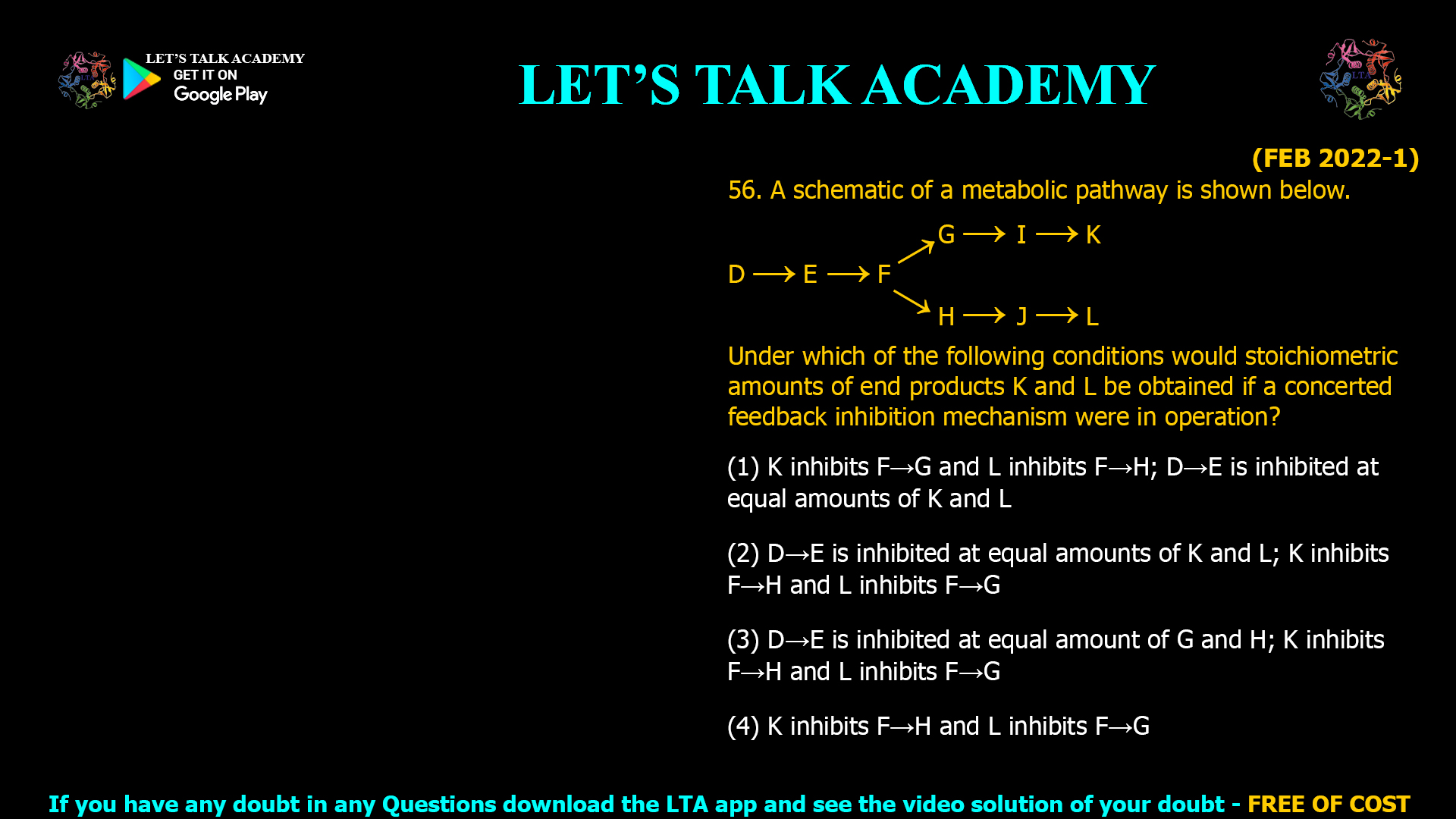
The correct answer is (1) K inhibits F→G and L inhibits F→H; D→E is inhibited at equal amounts of K and L. Introduction Metabolic pathways often branch to produce multiple end […]

(DEC 2019 ASSAM) 55. An allosteric enzyme has two heterotropic effectors, X and Y. The allosteric constant, L for the enzyme in the absence of effector molecules is 180. For […]

(DEC 2006) 54. If an enzyme obeying Hills reaction shows negative cooperativity. It means (1) Binding of substrate to any one site of multi-subunit enzyme decreases affinity for other substrate […]
![(NOV 2020-11) 53. The Hill equation and its plot describe the following enzyme kinetic behaviours A. Saturation Kinetics B. Cooperative Kinetics C. Log Vi/(Vmax — Vi) versus Log [s] D. Log (Vmax — Vi)/Vi versus Log [s]-1 Which one of the following combination represent correct descriptions? (1) A and C (2) B and C (3) B and D (4) A and D](https://www.letstalkacademy.com/wp-content/uploads/2025/09/53.jpg)
(NOV 2020-11) 53. The Hill equation and its plot describe the following enzyme kinetic behaviours A. Saturation Kinetics B. Cooperative Kinetics C. Log Vi/(Vmax — Vi) versus Log [s] D. […]


