
Composition, Structure and Function of Biomolecules: Lipids
Introduction to Lipids
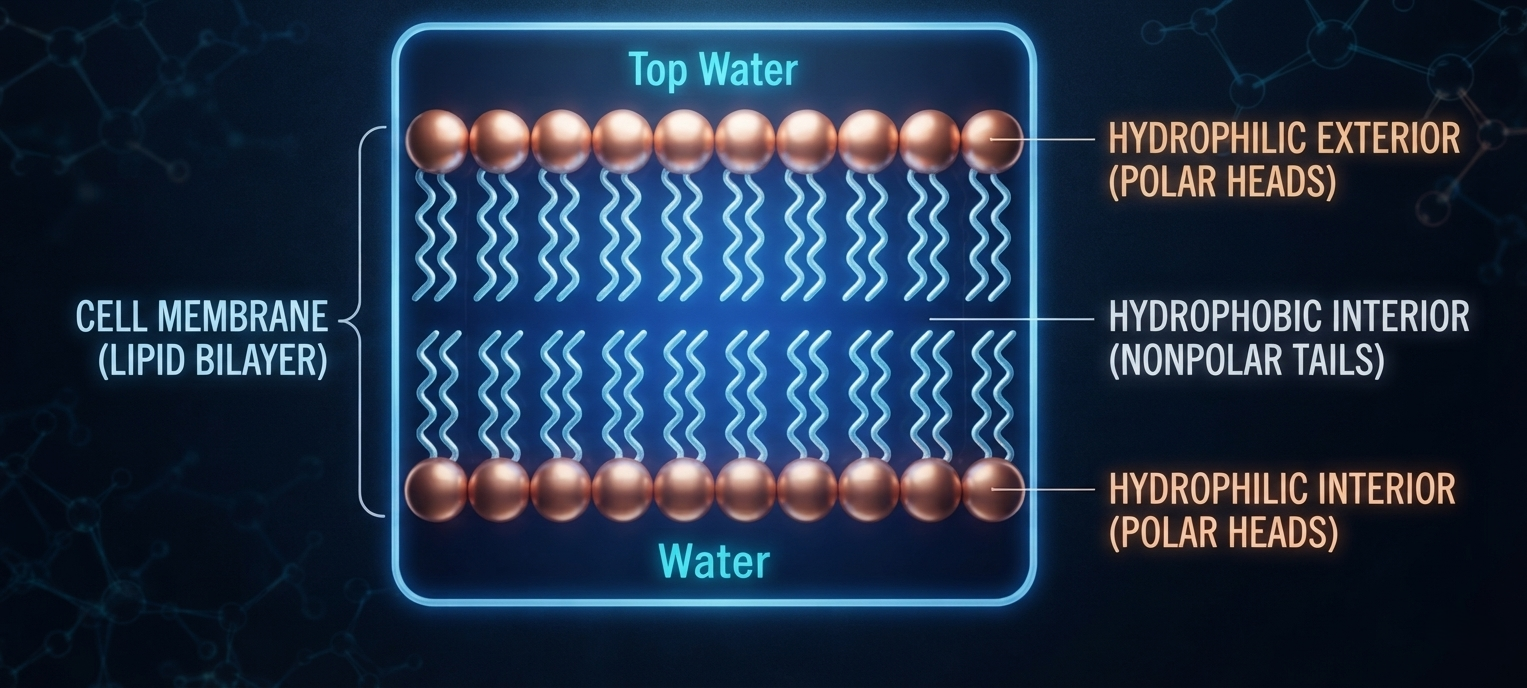
Lipids are one of the most important classes of biomolecules present in living organisms. They are chemically diverse organic molecules that are generally insoluble or poorly soluble in water but readily soluble in non-polar organic solvents such as ether, chloroform, benzene, and acetone. Unlike proteins and nucleic acids, lipids do not possess a single common structural framework. Instead, they constitute a broad group of molecules that share predominantly hydrophobic or amphipathic properties.
Lipids are essential for almost every aspect of cellular life. They serve as concentrated sources of metabolic energy, form the fundamental structural framework of biological membranes, provide thermal insulation and mechanical protection, participate in cell signalling, act as precursors of hormones and other signalling molecules, and contribute to the recognition and interaction of cells.
A useful way to understand lipids is to remember that their biological function is strongly determined by their chemical structure. For example, triacylglycerols are highly hydrophobic and therefore excellent energy-storage molecules, whereas phospholipids contain both hydrophilic and hydrophobic regions and consequently form membrane bilayers. Cholesterol contains both a polar hydroxyl group and a large hydrophobic steroid framework, allowing it to regulate membrane properties.
General Characteristics of Lipids
Lipids show several general characteristics that distinguish them from other major biomolecules.
Most lipids are hydrophobic, meaning that they do not interact favourably with water. Their hydrophobicity is primarily due to long hydrocarbon chains or rings containing numerous carbon-hydrogen bonds.
However, not all lipids are completely hydrophobic. Many biologically important lipids are amphipathic, meaning that they contain both a hydrophilic region and a hydrophobic region. Phospholipids and many sphingolipids are excellent examples.
When amphipathic lipids are placed in an aqueous environment, they can spontaneously organize themselves into structures such as micelles, bilayers, monolayers, and liposomes. This self-assembly is fundamental to the organization of biological membranes.
Lipids are generally rich in carbon and hydrogen and contain relatively less oxygen than carbohydrates. Some lipids additionally contain phosphorus, nitrogen, or sulfur depending on their chemical class.
Another important feature is their high energy density. The oxidation of fatty acids releases a large amount of metabolic energy, making triacylglycerols highly efficient long-term energy-storage molecules.
Chemical Composition of Lipids
Lipids may contain different combinations of carbon, hydrogen, oxygen, phosphorus, nitrogen, and sulfur.
The most common elements are:
- Carbon (C)
- Hydrogen (H)
- Oxygen (O)
Some complex lipids additionally contain:
- Phosphorus (P)
- Nitrogen (N)
- Sulfur (S)
The exact composition depends upon the lipid class.
For example, triacylglycerols mainly contain carbon, hydrogen, and oxygen, whereas phospholipids contain phosphorus and sometimes nitrogen in addition to carbon, hydrogen, and oxygen.
The structural diversity of lipids arises from differences in fatty acid chain length, degree of unsaturation, alcohol components, polar head groups, and chemical linkages.
Fatty Acids
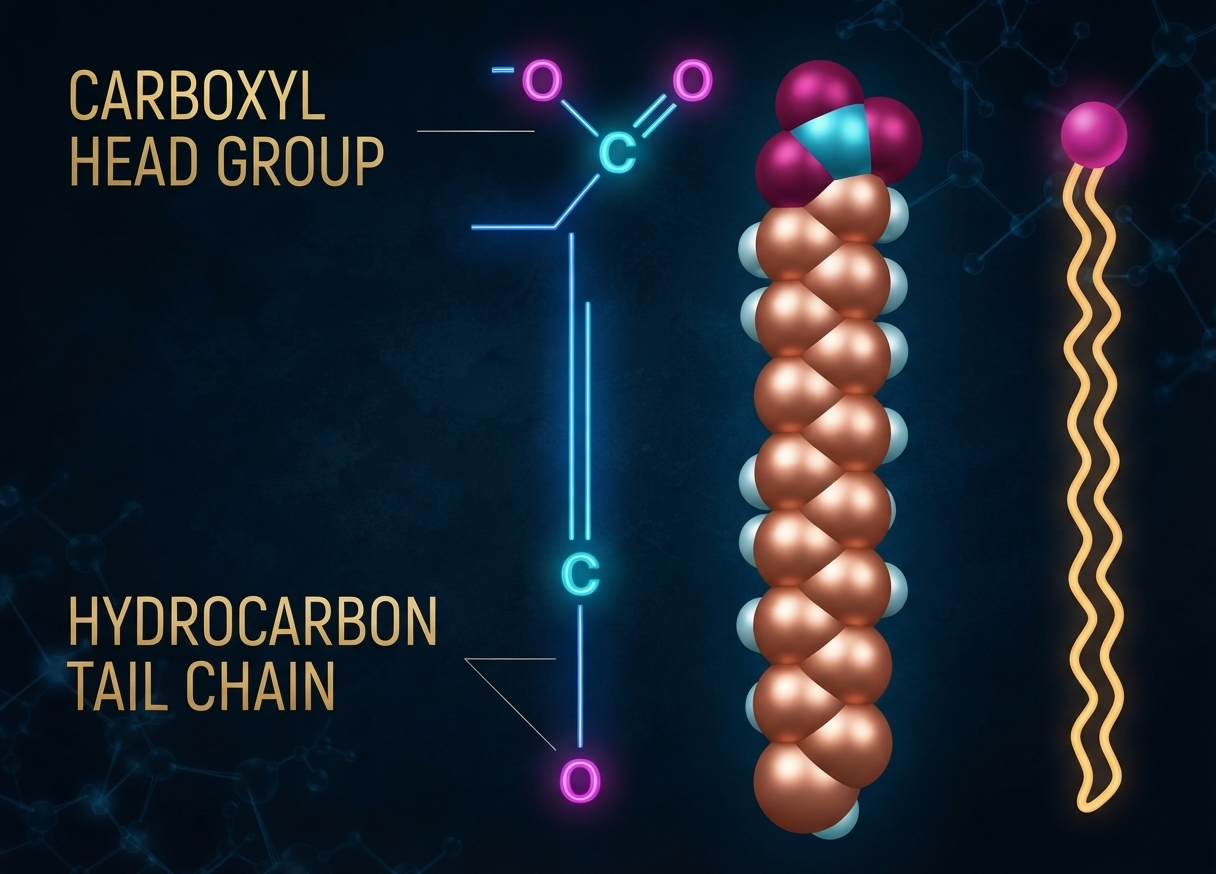
Fatty acids are fundamental components of many biologically important lipids. Chemically, a fatty acid consists of a hydrocarbon chain attached to a terminal carboxyl group.
The general structure can be represented as:
R–COOH
Here, R represents a hydrocarbon chain and –COOH represents the carboxyl group.
The carboxyl group gives fatty acids their acidic character, whereas the hydrocarbon chain is largely responsible for their hydrophobic nature.
Fatty acids may differ in:
- Chain length
- Number of carbon atoms
- Number of double bonds
- Position of double bonds
- Configuration of double bonds
These structural differences strongly influence the physical and biological properties of lipids.
Classification of Fatty Acids Based on Saturation
Fatty acids can broadly be divided into saturated fatty acids and unsaturated fatty acids.
Saturated Fatty Acids
Saturated fatty acids contain no carbon-carbon double bonds in their hydrocarbon chain.
Their carbon atoms are therefore saturated with hydrogen.
Examples include:
- Palmitic acid — 16:0
- Stearic acid — 18:0
The notation 18:0, for example, indicates that the fatty acid contains 18 carbon atoms and zero double bonds.
Because saturated fatty acid chains are relatively straight, they can pack closely together. Consequently, lipids rich in saturated fatty acids generally have higher melting points than comparable lipids containing unsaturated fatty acids.
Unsaturated Fatty Acids
Unsaturated fatty acids contain one or more carbon-carbon double bonds.
They are classified into:
Monounsaturated Fatty Acids
These contain one double bond.
A common example is:
Oleic acid — 18:1
The notation 18:1 indicates 18 carbon atoms and one double bond.
Polyunsaturated Fatty Acids
These contain two or more double bonds.
Examples include:
- Linoleic acid — 18:2
- α-Linolenic acid — 18:3
- Arachidonic acid — 20:4
Polyunsaturated fatty acids are especially important in membrane structure and signalling pathways.
Cis and Trans Fatty Acids
The geometry of a double bond can significantly influence the shape of a fatty acid.
Most naturally occurring unsaturated fatty acids contain cis double bonds.
In a cis configuration, the hydrocarbon chains are bent around the double bond. This introduces a kink into the fatty acid chain and prevents tight packing of neighbouring molecules.
As a result, cis-unsaturated fatty acids generally increase membrane fluidity.
In contrast, trans fatty acids have a more extended configuration and can pack more closely, making their physical properties more similar to those of saturated fatty acids.
More cis double bonds → greater bending → poorer packing → increased membrane fluidity.
Omega Fatty Acids
Fatty acids can also be classified according to the position of the first double bond when counting from the methyl end, also called the omega (ω) end.
Important groups include:
- Omega-3 (ω-3) fatty acids
- Omega-6 (ω-6) fatty acids
For example, α-linolenic acid belongs to the omega-3 family, whereas linoleic acid belongs to the omega-6 family.
The position of double bonds is biologically important because different fatty acids serve as precursors for different lipid-derived signalling molecules.
Essential Fatty Acids
Essential fatty acids are fatty acids that an organism cannot synthesize adequately and therefore must obtain from the diet.
In humans, linoleic acid and α-linolenic acid are generally considered essential fatty acids.
They serve as precursors for the synthesis of several biologically important polyunsaturated fatty acids and lipid mediators.
Essential fatty acids are important not only for energy metabolism but also for maintaining membrane structure and producing signalling molecules.
Triacylglycerols
Triacylglycerols, also called triglycerides or triglycerides, are major storage lipids.
A triacylglycerol consists of:
One glycerol + Three fatty acids
Glycerol is a three-carbon alcohol containing three hydroxyl groups.
Each hydroxyl group can form an ester bond with the carboxyl group of a fatty acid.
Therefore:
Glycerol + 3 Fatty Acids → Triacylglycerol + 3 H₂O
The bonds formed between glycerol and fatty acids are ester bonds.
Triacylglycerols are highly hydrophobic because their polar hydroxyl groups of glycerol become esterified with fatty acids.
Structure of Triacylglycerol
The three fatty acids attached to glycerol do not necessarily have to be identical.
A triacylglycerol may contain:
- Three identical fatty acids
- Two identical and one different fatty acid
- Three different fatty acids
This structural variation contributes to the enormous diversity of naturally occurring fats and oils.
Triacylglycerols are stored predominantly in adipose tissue in animals and in oil bodies or other storage structures in plants.
Functions of Triacylglycerols
The major function of triacylglycerols is long-term energy storage.
They provide more energy per gram than carbohydrates because fatty acids are highly reduced molecules.
Triacylglycerols also provide:
Thermal Insulation
Stored fat beneath the skin can reduce heat loss and help maintain body temperature.
Mechanical Protection
Adipose tissue surrounding organs can provide cushioning and mechanical protection.
Metabolic Energy
During periods of fasting, prolonged exercise, or energy deficiency, stored triacylglycerols can be hydrolysed to release fatty acids for oxidation.
NCBI resources describe triacylglycerols as major lipid stores and important sources of metabolic energy.
Glycerophospholipids
Glycerophospholipids, also called phosphoglycerides, are major components of biological membranes.
Their basic structure contains:
Glycerol + 2 Fatty Acids + Phosphate + Polar Head Group
The glycerol molecule forms the backbone.
Two fatty acids are generally attached to the first and second carbon atoms of glycerol, while the phosphate-containing polar head group is associated with the third carbon.
A simplified arrangement is:
Polar head group – phosphate – glycerol – fatty acid – fatty acid
The combination of a hydrophilic head and hydrophobic tails makes glycerophospholipids amphipathic molecules.
This amphipathic nature is responsible for their ability to form lipid bilayers in aqueous environments.
Major Glycerophospholipids
Important glycerophospholipids include:
Phosphatidylcholine
Phosphatidylcholine contains choline as its polar head group.
It is one of the major phospholipids of biological membranes.
Phosphatidylethanolamine
Phosphatidylethanolamine contains ethanolamine as its head group.
It is abundant in many biological membranes and contributes to membrane curvature and organization.
Phosphatidylserine
Phosphatidylserine contains serine as its polar head group.
It is normally enriched on the cytosolic leaflet of the plasma membrane. During apoptosis, phosphatidylserine becomes exposed on the outer leaflet and can serve as an “eat-me” signal for phagocytic cells.
Phosphatidylinositol
Phosphatidylinositol contains inositol as the head group.
It is particularly important in cell signalling because its phosphorylated derivatives participate in signal-transduction pathways.
For example, phosphatidylinositol 4,5-bisphosphate, or PIP₂, can be cleaved by phospholipase C to produce diacylglycerol (DAG) and inositol 1,4,5-trisphosphate (IP₃).
This is a high-value concept for CSIR NET because it connects lipid structure directly with cell signalling.
Sphingolipids
Sphingolipids are another major class of membrane lipids.
Unlike glycerophospholipids, which contain glycerol as their backbone, sphingolipids are built around a sphingosine backbone or a related long-chain amino alcohol.
The basic structural unit is called a ceramide.
Ceramide consists of:
Sphingosine + Fatty Acid
The fatty acid is linked to the amino group of sphingosine through an amide bond.
This distinction is extremely important for examination purposes.
Glycerophospholipid
Glycerol backbone + fatty acids
Sphingolipid
Sphingosine backbone + fatty acid
Important Sphingolipids
Sphingomyelin
Sphingomyelin is a phosphosphingolipid containing a phosphate-containing polar head group.
It is particularly abundant in the membranes of nerve cells and is an important component of the myelin sheath.
Glycosphingolipids
Glycosphingolipids contain one or more carbohydrate residues attached to ceramide.
Important examples include:
- Cerebrosides
- Globosides
- Gangliosides
These molecules are especially important in cell recognition, cell-cell interactions, and nervous-system function.
Cerebrosides
Cerebrosides are glycosphingolipids containing a single sugar residue attached to ceramide.
Depending on the sugar, they may contain glucose or galactose.
They are particularly abundant in nervous tissue.
Gangliosides
Gangliosides are complex glycosphingolipids containing oligosaccharides and at least one sialic acid residue.
They are especially abundant in neuronal membranes and participate in cell recognition, membrane organization, and signalling.
Waxes
Waxes are simple lipids formed by the esterification of:
Long-chain fatty acid + Long-chain alcohol
Unlike triacylglycerols, waxes do not contain glycerol as their characteristic alcohol component.
Waxes are highly hydrophobic and provide protective and waterproofing functions.
Examples include:
- Plant cuticular waxes
- Beeswax
- Earwax
In plants, wax layers on the surface of leaves and fruits reduce water loss and provide protection against environmental stress.
Steroids
Steroids are lipids characterized by a characteristic four-ring hydrocarbon framework.
The steroid nucleus contains four fused rings, conventionally designated A, B, C, and D.
Steroids are structurally different from fatty-acid-based lipids but are classified as lipids because of their hydrophobic character and solubility properties.
Important biological steroids include:
- Cholesterol
- Cortisol
- Aldosterone
- Testosterone
- Estrogen
- Progesterone
Cholesterol
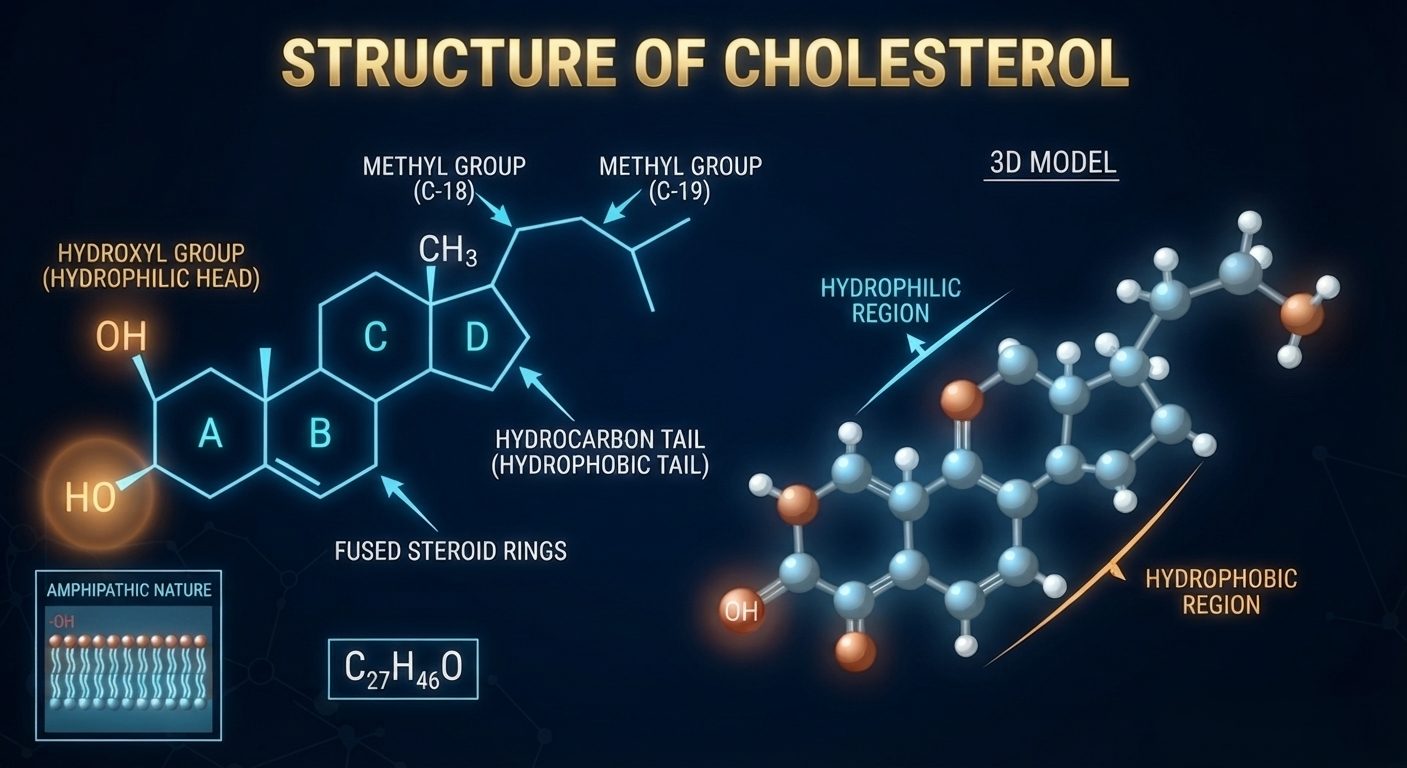
Cholesterol is one of the most important sterols in animal cells.
Its structure contains:
- A hydroxyl group
- Four fused hydrocarbon rings
- A hydrocarbon side chain
The hydroxyl group provides a relatively small polar region, whereas most of the molecule is hydrophobic.
Therefore, cholesterol is an amphipathic lipid.
Cholesterol is an important structural component of animal cell membranes and serves as a precursor for steroid hormones, bile acids, and vitamin D.
Functions of Cholesterol
Membrane Structure
Cholesterol is an important component of animal plasma membranes.
It interacts with phospholipid molecules and influences membrane organization.
Regulation of Membrane Fluidity
Cholesterol acts as a membrane fluidity buffer.
At relatively high temperatures, it restricts excessive movement of phospholipid tails.
At low temperatures, it interferes with tight packing of phospholipids and helps prevent excessive membrane rigidity.
Therefore, cholesterol contributes to maintaining appropriate membrane physical properties.
Precursor of Steroid Hormones
Cholesterol serves as the precursor for steroid hormones such as:
- Cortisol
- Aldosterone
- Testosterone
- Estrogen
- Progesterone
Precursor of Bile Acids
Cholesterol is converted in the liver into bile acids and bile salts, which are important for the digestion and absorption of dietary lipids.
Precursor of Vitamin D
Cholesterol-derived molecules participate in the biosynthesis of vitamin D.
Steroid Hormones
Steroid hormones are derived from cholesterol and include hormones produced by the adrenal cortex and gonads.
Examples include:
Glucocorticoids: Cortisol
Mineralocorticoids: Aldosterone
Androgens: Testosterone
Estrogens: Estradiol
Progestins: Progesterone
Because steroid hormones are relatively hydrophobic, they can cross biological membranes and bind intracellular receptors.
This provides an important connection between lipid chemistry and gene regulation.
Eicosanoids
Eicosanoids are biologically active lipid-derived signalling molecules synthesized mainly from polyunsaturated fatty acids.
They generally act locally rather than being stored in large quantities.
Major classes include:
- Prostaglandins
- Thromboxanes
- Leukotrienes
Arachidonic acid is an important precursor for many eicosanoids.
Eicosanoids participate in:
- Inflammation
- Vascular regulation
- Platelet function
- Smooth-muscle activity
- Immune responses
The relationship between membrane phospholipids, arachidonic acid, and eicosanoid synthesis is an important integrated concept for CSIR NET.
Classification of Lipids
Lipids can be classified in several ways. A traditional biochemical classification divides them into simple lipids, compound lipids, and derived lipids.
Simple Lipids
Simple lipids are esters of fatty acids with alcohols.
Examples include:
- Triacylglycerols
- Waxes
Compound or Complex Lipids
These contain additional groups besides fatty acids and alcohol.
Examples include:
- Phospholipids
- Glycolipids
- Lipoproteins
Derived Lipids
These are substances derived from the hydrolysis or modification of simple and complex lipids.
Examples include:
- Fatty acids
- Sterols
- Steroids
- Eicosanoids
This traditional classification is useful for examinations, although modern lipid biology recognizes a much broader structural diversity.
Saponifiable and Non-Saponifiable Lipids
Another important classification is based on the ability of lipids to undergo saponification.
Saponifiable Lipids
Saponifiable lipids contain hydrolysable ester or related bonds and can participate in alkaline hydrolysis.
Examples include:
- Triacylglycerols
- Phospholipids
- Waxes
Non-Saponifiable Lipids
Non-saponifiable lipids lack the ester bonds characteristic of many saponifiable lipids.
Examples include:
- Steroids
- Cholesterol
This distinction is frequently useful in biochemical classification questions.
Biological Membranes and Lipids
One of the most important functions of lipids is their role in biological membranes.
The basic structural framework of most cellular membranes is the lipid bilayer.
Phospholipids spontaneously arrange themselves into a bilayer because their hydrophilic heads interact with water while their hydrophobic tails avoid the aqueous environment.
The lipid bilayer provides:
- A selective permeability barrier
- Structural support for membrane proteins
- A platform for signalling
- Compartmentalization of cellular processes
- Membrane flexibility and dynamics
The major membrane lipids include phospholipids, cholesterol, and glycolipids.
Membrane Fluidity
Membrane fluidity is strongly influenced by the composition of membrane lipids.
Several factors determine membrane fluidity.
Fatty Acid Chain Length
Shorter fatty acid chains generally increase membrane fluidity because they have weaker hydrophobic interactions.
Longer chains generally increase the strength of hydrophobic interactions and can decrease fluidity.
Degree of Unsaturation
Increasing the number of cis double bonds introduces bends into fatty acid chains.
This reduces packing efficiency and increases fluidity.
Therefore:
More unsaturation → greater fluidity
Cholesterol
Cholesterol modulates membrane fluidity and helps prevent membranes from becoming excessively rigid or excessively fluid.
Lipids in Cell Signalling
Lipids are not merely structural components of membranes; they are also active participants in intracellular signalling.
A particularly important example involves phosphatidylinositol 4,5-bisphosphate (PIP₂).
Upon activation of certain receptors, phospholipase C hydrolyses PIP₂ to generate:
DAG + IP₃
DAG remains associated with the membrane and activates protein kinase C.
IP₃ diffuses through the cytosol and promotes the release of Ca²⁺ from the endoplasmic reticulum.
Thus, a membrane lipid can act as the precursor for intracellular second messengers.
This is a classic example of how lipid structure is directly connected to cellular communication.
Lipoproteins
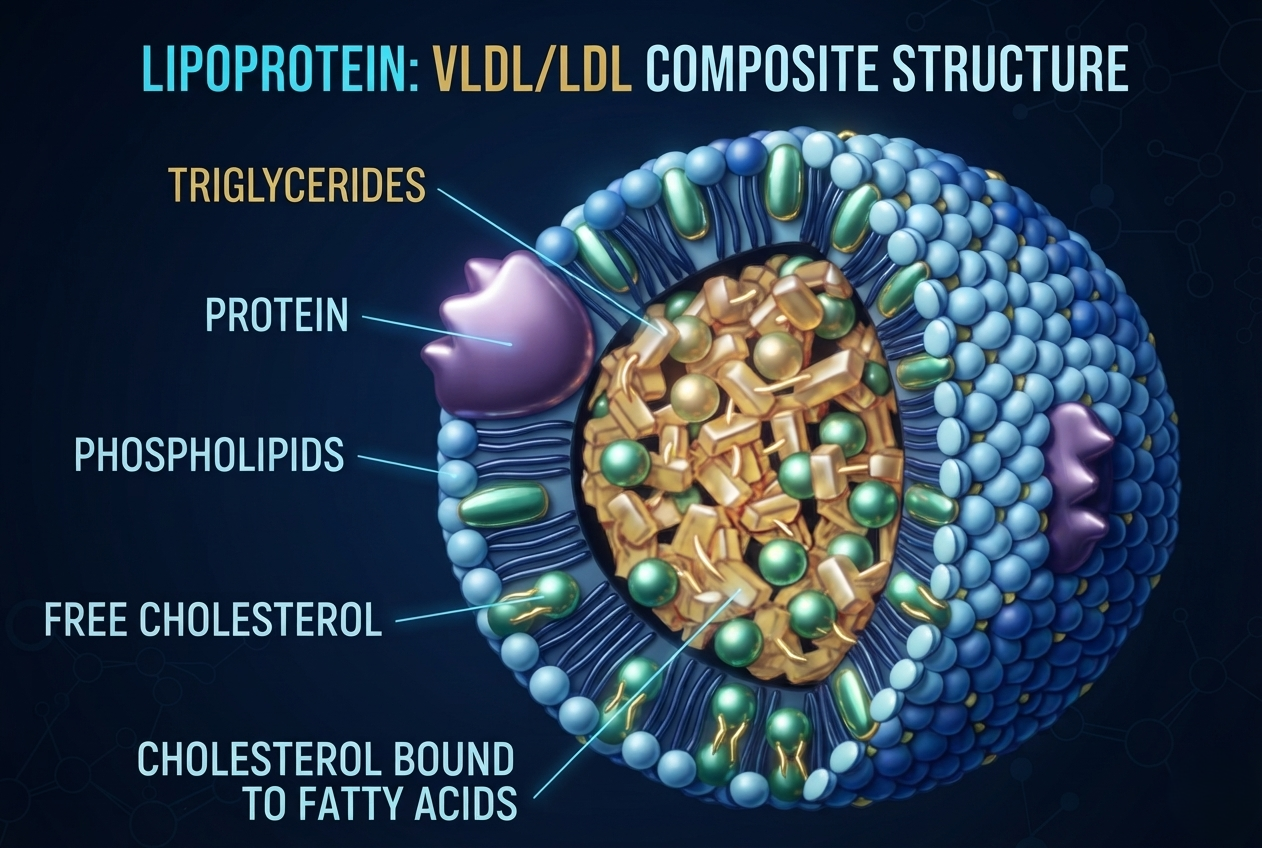
Because many lipids are hydrophobic, they cannot freely circulate in the aqueous environment of blood.
They are therefore transported in association with proteins as lipoproteins.
A typical lipoprotein contains a hydrophobic core rich in triacylglycerols and cholesteryl esters, surrounded by a more hydrophilic surface containing phospholipids, free cholesterol, and apolipoproteins.
Major classes include:
- Chylomicrons
- VLDL
- IDL
- LDL
- HDL
Chylomicrons
Chylomicrons transport dietary lipids from the intestine to other tissues.
VLDL
Very-low-density lipoproteins transport mainly endogenous triacylglycerols from the liver to peripheral tissues.
LDL
Low-density lipoproteins are relatively cholesterol-rich particles that deliver cholesterol to tissues.
HDL
High-density lipoproteins participate in reverse cholesterol transport, carrying cholesterol from peripheral tissues toward the liver.
Lipids as Energy Storage Molecules
Lipids are highly efficient energy-storage molecules.
Fatty acids contain many reduced carbon-hydrogen bonds. Their oxidation therefore generates substantial amounts of ATP.
Triacylglycerols are especially suitable for long-term energy storage because they are:
- Highly reduced
- Hydrophobic
- Stored without extensive associated water
In contrast, glycogen is more hydrated and occupies greater cellular volume for the same amount of stored chemical energy.
Therefore, triacylglycerols are particularly advantageous for long-term energy storage.
Lipid Oxidation
During energy demand, stored triacylglycerols can undergo lipolysis.
The process releases:
Triacylglycerol → Glycerol + Fatty Acids
The released fatty acids can enter cells and undergo β-oxidation.
β-oxidation progressively removes two-carbon units from fatty acids in the form of acetyl-CoA.
Acetyl-CoA can enter the citric acid cycle, while the reducing equivalents generated during fatty acid oxidation contribute to ATP production through oxidative phosphorylation.
For long-chain fatty acids, transport into the mitochondrial matrix involves the carnitine shuttle.
This pathway is highly important for CSIR NET because questions may connect lipid structure with energy metabolism.
Ketone Bodies
When carbohydrate availability is limited and fatty acid oxidation becomes prominent, the liver produces ketone bodies.
The major ketone bodies are:
- Acetoacetate
- β-Hydroxybutyrate
- Acetone
Ketone bodies can serve as alternative energy substrates for several tissues during prolonged fasting or carbohydrate restriction.
The brain can use ketone bodies during prolonged fasting, reducing its dependence on glucose.
Lipids as Protective Molecules
Lipids also have important protective functions.
Subcutaneous fat provides thermal insulation.
Adipose tissue surrounding organs provides mechanical protection.
Waxes provide water-resistant protective layers on plants and animals.
Lipids in the skin form an important barrier that limits uncontrolled water loss.
Thus, lipid function extends far beyond energy storage.
Lipids and Cell Recognition
Specific membrane lipids can contribute to cell recognition and cell-cell interaction.
Glycolipids, particularly those containing complex carbohydrate groups, are present on the extracellular surface of plasma membranes.
Their carbohydrate components can act as recognition molecules and contribute to interactions between cells and their environment.
This is particularly important in tissues such as the nervous system and immune system.
Lipids in Nervous Tissue
Lipids are major structural components of nervous tissue.
Myelin, which surrounds many axons, contains large amounts of lipids.
Important lipids associated with nervous tissue include:
- Cholesterol
- Phospholipids
- Sphingomyelin
- Glycosphingolipids
The high lipid content of myelin contributes to its insulating properties and facilitates efficient electrical conduction along axons.
Important Lipid Bonds
Different lipid classes contain different types of chemical bonds.
Ester Bond
Found prominently in triacylglycerols and glycerophospholipids.
It is formed between a carboxyl group of a fatty acid and a hydroxyl group of an alcohol.
Amide Bond
Characteristic of ceramides and sphingolipids.
It forms between the amino group of sphingosine and the carboxyl group of a fatty acid.
Phosphodiester Bond
Present in many phospholipids where phosphate connects the glycerol-containing portion to an alcohol head group.
Understanding these bonds helps distinguish lipid classes in conceptual questions.
Amphipathic Nature of Lipids
The term amphipathic refers to molecules containing both hydrophilic and hydrophobic regions.
Phospholipids are classic amphipathic molecules.
Their polar head interacts with water, while their hydrocarbon tails avoid water.
When placed in an aqueous environment, this arrangement allows phospholipids to organize spontaneously into bilayers.
This property is one of the fundamental principles behind the origin and organization of cellular membranes.
Lipid Bilayer Organization
In a membrane bilayer, phospholipid molecules arrange themselves so that:
Hydrophilic heads → face aqueous environments
Hydrophobic tails → face inward toward each other
This arrangement minimizes the exposure of hydrophobic hydrocarbon chains to water.
The bilayer is not a static structure. Lipids can move laterally within the plane of the membrane, making the membrane dynamic and fluid.
This concept forms the basis of the fluid mosaic model of membrane organization.
Lipid Rafts
Lipid rafts are specialized membrane domains enriched in particular lipids, especially cholesterol and sphingolipids.
They can provide platforms for the organization of membrane proteins and signalling components.
The concept is useful for understanding how membrane composition can create functionally specialized regions within an otherwise fluid membrane.
Functional Summary of Lipids
Lipids perform numerous functions in living organisms.
Energy Storage
Triacylglycerols act as major long-term energy reserves.
Membrane Formation
Phospholipids, cholesterol, and glycolipids contribute to biological membranes.
Signalling
Certain lipids and their derivatives function as signalling molecules or second-messenger precursors.
Hormone Formation
Cholesterol serves as a precursor for steroid hormones.
Protection
Lipids provide thermal insulation and mechanical cushioning.
Waterproofing
Waxes reduce water loss from plant and animal surfaces.
Nervous System Function
Sphingolipids and other lipids are important components of myelin and neuronal membranes.
Cell Recognition
Glycolipids contribute to cellular recognition and interaction.
Precursor Molecules
Lipids provide precursors for eicosanoids, steroid hormones, bile acids, and vitamin D.
Important Comparisons
Saturated vs Unsaturated Fatty Acids
Saturated fatty acids contain no carbon-carbon double bonds and generally have straighter hydrocarbon chains.
Unsaturated fatty acids contain one or more carbon-carbon double bonds and usually have greater conformational irregularity.
Cis-unsaturated fatty acids introduce bends into hydrocarbon chains and generally increase membrane fluidity.
Triacylglycerol vs Phospholipid
A triacylglycerol contains:
Glycerol + 3 fatty acids
A typical glycerophospholipid contains:
Glycerol + 2 fatty acids + phosphate-containing head group
Triacylglycerols are primarily associated with energy storage, whereas phospholipids are major structural components of biological membranes.
Glycerophospholipid vs Sphingolipid
Glycerophospholipids contain a glycerol backbone.
Sphingolipids contain a sphingosine-derived backbone.
This structural distinction is highly important in biochemical classification.
Cholesterol vs Triacylglycerol
Cholesterol is a sterol with a four-ring steroid nucleus.
Triacylglycerol is an ester of glycerol with three fatty acids.
Cholesterol has major structural and precursor functions, whereas triacylglycerol primarily functions as a long-term energy-storage lipid.


