
1. Introduction to Two-Component Systems
Living organisms constantly interact with their surroundings. Bacteria must detect changes in temperature, nutrient availability, osmotic pressure, pH, toxic substances, and the presence of other organisms. Plants, although unable to move away from unfavorable conditions, must also sense and respond to changes in their environment, including drought, salinity, temperature fluctuations, and variations in hormone concentrations.
To survive and maintain normal cellular activities, organisms require efficient mechanisms for receiving external signals and converting them into appropriate intracellular responses. One important signaling mechanism is the two-component system (TCS).
Two-component systems are widely distributed signal transduction pathways that enable cells to detect environmental or intracellular stimuli and regulate physiological processes. They are particularly common in bacteria and play important roles in processes such as metabolism, chemotaxis, stress adaptation, virulence, biofilm formation, and cellular development.
Plants also possess two-component-like signaling systems. These systems are especially important in the perception and transmission of cytokinin signals, a class of plant hormones involved in cell division, shoot development, nutrient responses, and other aspects of plant growth.
Although bacterial and plant systems share a common signaling principle based on phosphorylation and dephosphorylation, their molecular organization, regulatory networks, and biological functions differ in important ways.
The study of these systems provides insight into how cells process information and coordinate complex responses without requiring a nervous system or a centralized control center.
1.1 Definition of a Two-Component System
A two-component system is a signal transduction pathway generally composed of two principal protein components:
-
Sensor histidine kinase (HK): A protein that detects a specific signal or change in the cellular environment and transfers a phosphate group to a conserved histidine residue.
-
Response regulator (RR): A protein that receives the phosphate group on a conserved aspartate residue and regulates a downstream cellular response.
The fundamental signaling process can be represented as follows:
Basic Two-Component Signaling Pathway
Environmental or Cellular Signal
Temperature, nutrients, osmotic changes, or hormones
Sensor Histidine Kinase (HK)
Autophosphorylation at a conserved histidine
Response Regulator (RR)
Phosphorylation at a conserved aspartate
Cellular Response
Changes in gene expression, metabolism, motility, or development
Figure 1.1. General organization of a classical two-component signaling pathway.
In the classical bacterial pathway, the sensor histidine kinase transfers a phosphate group from ATP to its own histidine residue. The phosphorylated kinase then transfers the phosphate group to a conserved aspartate residue in the receiver domain of the response regulator.
The phosphorylated response regulator undergoes a conformational change that modifies its activity. Depending on the type of response regulator, it may bind DNA and regulate transcription, influence protein activity, or control cellular behavior through other mechanisms.
1.2 Historical Background
Two-component systems were first characterized through research on bacterial chemotaxis and the regulation of bacterial responses to environmental signals. Subsequent studies identified histidine kinases and response regulators as recurring components of diverse bacterial signaling pathways.
Researchers later discovered that plants possess proteins related to bacterial histidine kinases and response regulators. This finding was particularly important for understanding cytokinin signaling, which uses a phosphorelay mechanism resembling bacterial signaling but incorporates additional intermediate protein domains.
The discovery of these systems demonstrated that phosphorylation-based signal transduction is not restricted to a single group of organisms. Instead, it represents a versatile biochemical strategy that has been adapted to different cellular environments and biological functions.
1.3 General Characteristics of Two-Component Systems
Two-component systems possess several characteristic features:
-
They generally involve a sensor kinase and a response regulator.
-
They commonly use ATP-dependent phosphorylation.
-
They transfer phosphate groups between specific amino acid residues.
-
They convert environmental or intracellular signals into biochemical responses.
-
They can regulate gene expression, enzymatic activity, cell motility, and development.
-
Their components may function as part of larger signaling networks.
-
Their activity is often controlled by both phosphorylation and dephosphorylation.
-
Their specificity depends on molecular recognition between signaling proteins.
Two-component systems are not identical in all organisms. Some pathways contain additional phosphotransfer proteins or intermediate domains, while others use noncanonical signaling mechanisms.
2. Molecular Basis of Two-Component Signaling
The activity of a two-component system depends on the controlled transfer of a phosphate group between proteins. This process is called phosphotransfer and is central to the regulation of many cellular signaling pathways.
Phosphorylation can alter the three-dimensional structure, stability, activity, or interaction properties of a protein. Consequently, the addition or removal of a phosphate group can act as a molecular switch that changes the behavior of a signaling protein.
2.1 Role of Protein Phosphorylation
Protein phosphorylation involves the covalent attachment of a phosphate group to a specific amino acid residue. In two-component systems, the most characteristic residues involved are histidine and aspartate.
The general reaction catalyzed by a sensor histidine kinase is:
Here, HK-His represents the conserved histidine residue of the histidine kinase, and HK-His~P represents its phosphorylated form.
The phosphate group is then transferred to the response regulator:
The phosphorylated response regulator can then interact with downstream targets and produce a cellular response.
Unlike many eukaryotic protein kinases, which commonly phosphorylate serine, threonine, or tyrosine residues, histidine kinases use histidine as the initial phosphoacceptor. The response regulator generally receives the phosphate group on an aspartate residue.
2.2 Why Phosphorylation Functions as a Molecular Switch
Phosphorylation can modify the electrostatic properties and structural arrangement of a protein. In response regulators, phosphorylation of the receiver domain can stabilize an active conformation.
For many DNA-binding response regulators, this conformational change increases their ability to bind promoter regions or interact with transcriptional machinery. In other response regulators, phosphorylation affects interactions with enzymes, cytoskeletal components, or other cellular targets.
Dephosphorylation reverses the signal in many systems, allowing the cell to return to its previous state or adapt to changing conditions.
The phosphorylation state of a response regulator is therefore determined by the balance between:
-
Phosphorylation by the sensor kinase or another phosphodonor.
-
Intrinsic autodephosphorylation.
-
Phosphatase activity of the sensor kinase or other regulatory proteins.
-
Additional phosphotransfer reactions in more complex signaling pathways.
2.3 Specificity of Phosphotransfer
A cell may contain dozens of histidine kinases and response regulators. Despite the potential for unwanted cross-talk, many signaling pathways maintain considerable specificity.
Specificity is influenced by:
-
The structure of the interaction surfaces between signaling proteins.
-
Electrostatic complementarity.
-
Protein-protein recognition.
-
Cellular localization.
-
Relative concentrations of signaling components.
-
Kinetic differences in phosphorylation and dephosphorylation.
-
Regulatory feedback mechanisms.
However, cross-regulation can occur in some systems. This may be physiologically useful when multiple pathways must coordinate a response.
3. Bacterial Two-Component Systems
Bacterial two-component systems are major mechanisms of environmental sensing and adaptation. They allow bacteria to monitor changing conditions and rapidly modify their behavior or gene expression.
A bacterium may encounter sudden changes in nutrient availability, osmotic pressure, temperature, pH, oxygen concentration, or exposure to antimicrobial compounds. Two-component systems help connect these external changes to intracellular regulatory networks.
The typical bacterial pathway contains a sensor histidine kinase and a response regulator. The sensor kinase detects a stimulus, while the response regulator controls a specific response.
3.1 General Organization of Bacterial Two-Component Systems
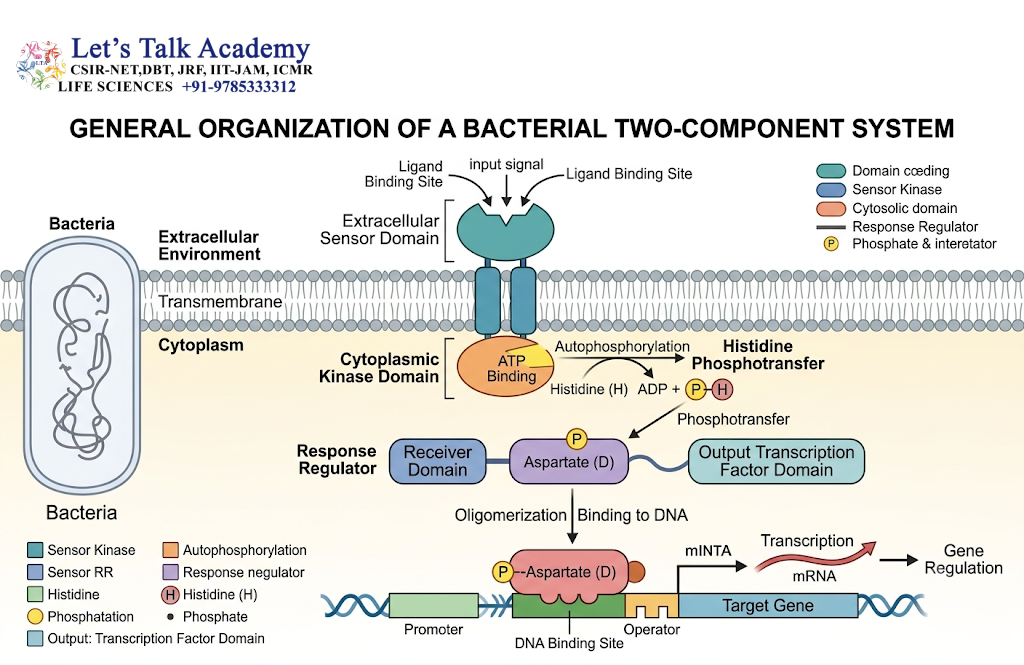
A classical bacterial two-component system consists of two separate proteins:
-
A sensor histidine kinase, often associated with the cell membrane or located in the cytoplasm.
-
A response regulator, usually containing a receiver domain and, in many cases, an output domain.
The sensor kinase may contain transmembrane segments that detect changes in the periplasm, membrane, or extracellular environment. Other sensor kinases are soluble and respond to intracellular metabolic or chemical signals.
Response regulators are often cytoplasmic. Many bacterial response regulators function as transcription factors, although some regulate cellular processes without directly controlling transcription.
3.2 Structure of Sensor Histidine Kinases
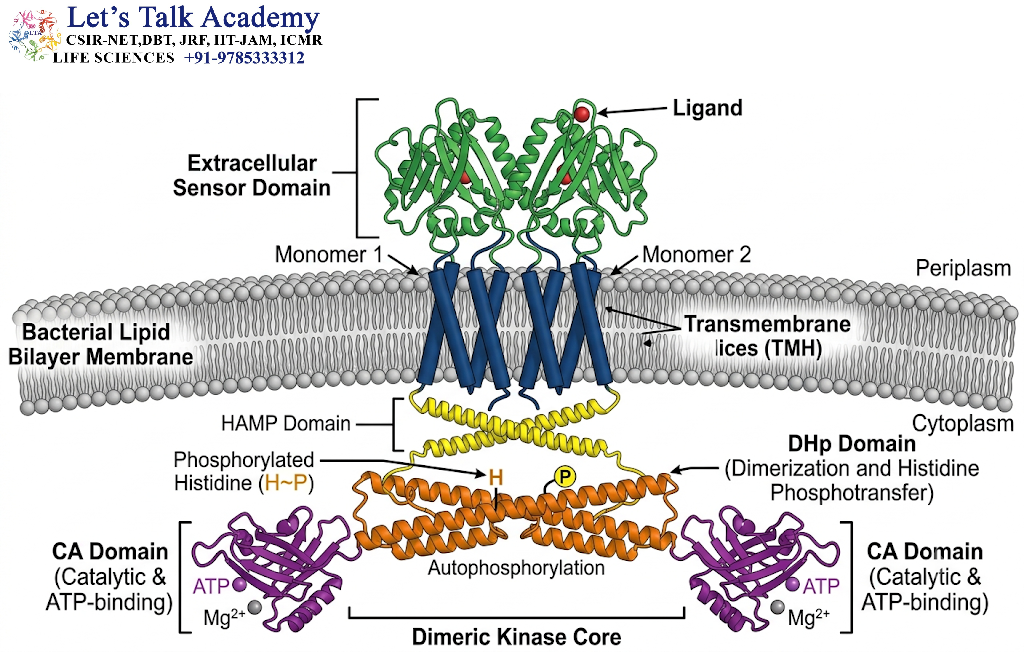
Sensor histidine kinases are modular proteins with conserved regions that support signal detection, ATP utilization, and phosphotransfer.
A typical membrane-associated histidine kinase contains the following regions:
-
Input or sensory region: Detects a specific environmental or intracellular signal.
-
Transmembrane segments: Anchor the protein in the membrane in many sensor kinases.
-
HAMP or related signaling regions: Help transmit conformational information from the sensory region to the catalytic region in many systems.
-
DHp domain: Contains the conserved histidine residue and supports interaction with the response regulator.
-
CA catalytic domain: Binds ATP and catalyzes phosphorylation of the conserved histidine.
The exact domain organization varies considerably among different histidine kinases.
3.2.1 Sensory Domain
The sensory domain is responsible for detecting a particular stimulus. The stimulus may be a physical change, a small molecule, a protein interaction, or a change in the cellular environment.
Some histidine kinases detect signals directly through their own sensory domains. Others respond indirectly to changes in membrane properties, metabolic state, or interactions with other proteins.
The sensory domain determines, in large part, which environmental signals can influence the kinase.
3.2.2 Dimerization and Histidine Phosphotransfer Domain
The dimerization and histidine phosphotransfer domain, commonly called the DHp domain, plays a central role in signal transmission and phosphotransfer.
Many sensor histidine kinases function as dimers. Within the dimer, the DHp region forms a structural platform that positions the conserved histidine residue for phosphorylation.
The conserved histidine is often located in a helical region of the DHp domain. Its precise position and the surrounding protein structure influence the efficiency of phosphotransfer.
3.2.3 Catalytic and ATP-Binding Domain
The catalytic and ATP-binding domain, commonly designated the CA domain, binds ATP and provides the catalytic machinery for histidine phosphorylation.
Conserved sequence motifs, including the characteristic N, G1, F, and G2 regions found in many histidine kinase catalytic domains, contribute to ATP binding and catalytic activity.
The ATP-binding region supplies the phosphate group required for autophosphorylation. The catalytic domain works together with the DHp domain to coordinate the phosphorylation reaction.
3.3 Structure of Response Regulators
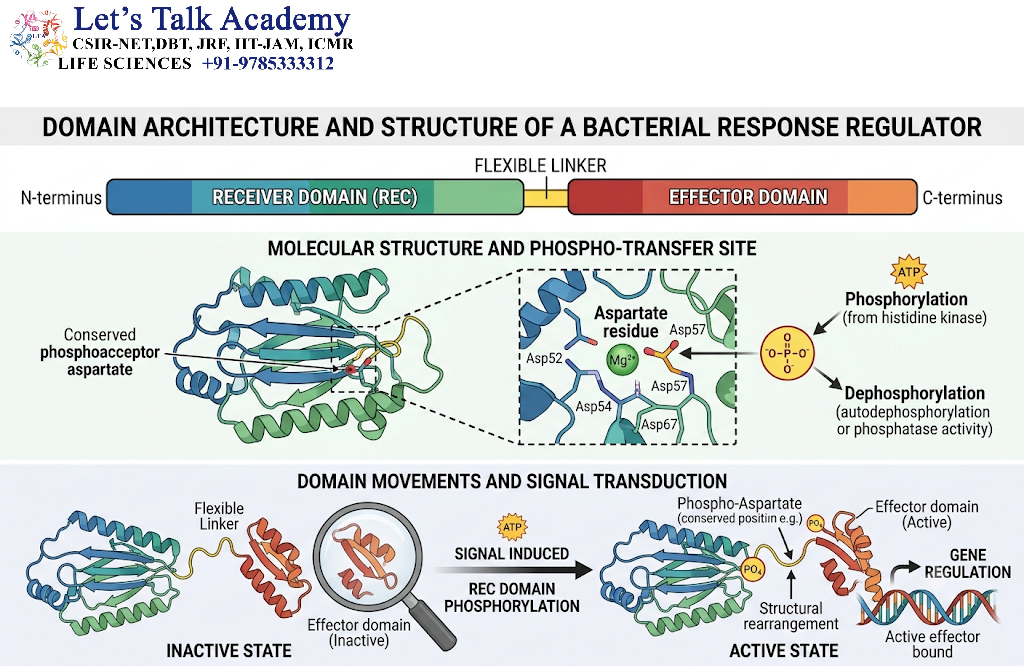
Response regulators generally contain one or two major functional regions:
-
An N-terminal receiver domain.
-
A C-terminal output domain, when present.
The receiver domain is the site of phosphorylation, while the output domain determines the physiological effect of the signal.
3.3.1 Receiver Domain
The receiver domain is a conserved protein module that binds a divalent metal ion and contains the residues necessary for phosphorylation and signal transmission.
In many bacterial response regulators, the phosphorylatable aspartate is positioned within a conserved structural arrangement that includes additional acidic residues and a conserved lysine.
The receiver domain generally adopts an alpha/beta protein-folding pattern. Phosphorylation changes its conformational state and can regulate the activity of the output domain.
3.3.2 Output Domain
The output domain is responsible for producing a downstream response.
Common output domains include:
-
DNA-binding domains that regulate transcription.
-
Protein-interaction domains that control enzymatic or structural processes.
-
Domains involved in chemotaxis signaling.
-
Domains that regulate cyclic nucleotide metabolism or other signaling pathways.
Some response regulators consist almost entirely of a receiver domain and regulate target proteins directly.
3.4 Mechanism of Bacterial Two-Component Signaling
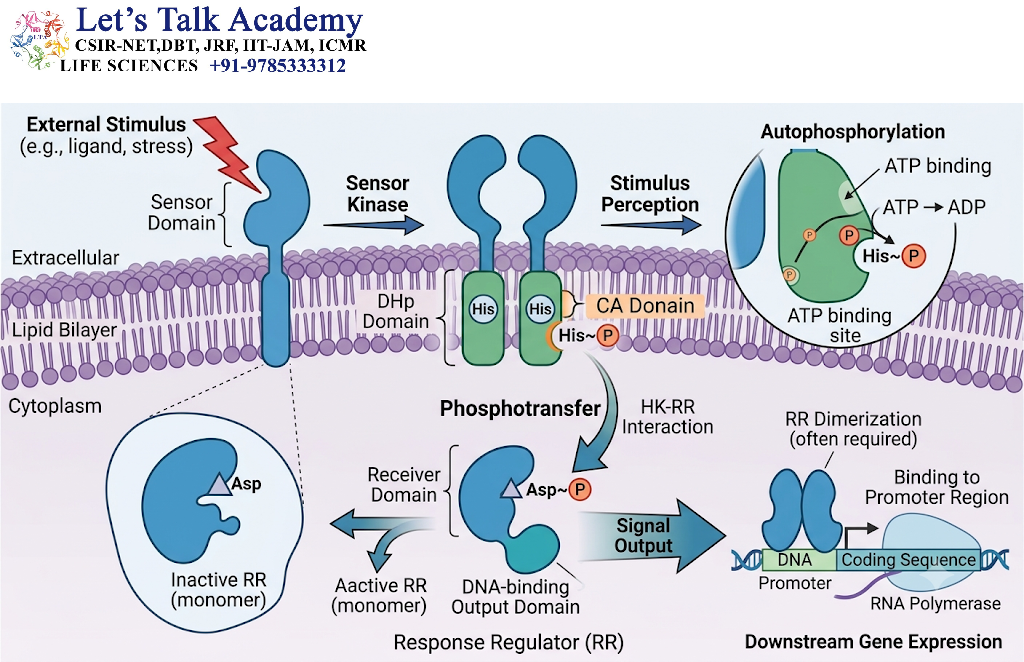
A classical bacterial two-component pathway generally proceeds through the following sequence of events.
-
Signal detection
The sensor histidine kinase detects a change in the environment or intracellular state.
-
Kinase activation
The sensor undergoes a conformational change that modifies its catalytic activity.
-
Autophosphorylation
The kinase uses ATP to phosphorylate a conserved histidine residue within its DHp domain.
-
Phosphotransfer
The phosphate group is transferred from the histidine kinase to a conserved aspartate residue in the receiver domain of the response regulator.
-
Response regulator activation
Phosphorylation changes the response regulator’s conformation and modulates its output activity.
-
Cellular response
The response regulator modifies gene expression or another cellular process.
-
Signal termination
Dephosphorylation and other regulatory mechanisms reduce the activity of the response regulator and help reset the pathway.
3.5 Kinase and Phosphatase Activities
An important characteristic of many bacterial histidine kinases is their ability to function both as kinases and as phosphatases.
When the kinase activity predominates, the response regulator becomes phosphorylated and more active. When phosphatase activity predominates, the phosphorylated response regulator is dephosphorylated.
This dual activity enables the system to respond dynamically to changing signals.
The same histidine kinase may therefore support both the activation and termination of a cellular response.
3.6 Bacterial Two-Component Systems and Gene Regulation
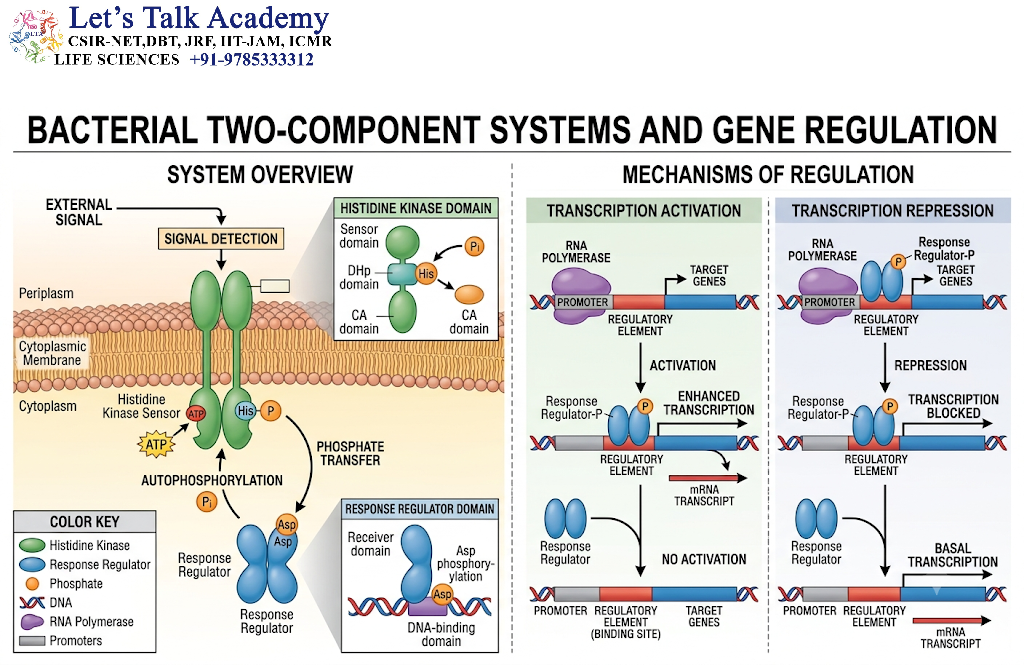
Many response regulators function as transcription factors. Once activated, they bind specific DNA sequences and influence the transcription of target genes.
Depending on the system, a response regulator may:
-
Activate gene transcription.
-
Repress gene transcription.
-
Coordinate both activation and repression of different genes.
-
Regulate alternative sigma factor pathways.
-
Influence transcription through protein-protein interactions.
The target genes are often organized into regulons, which are groups of genes controlled by the same regulatory protein. A single response regulator can therefore coordinate a broad physiological adaptation.
3.7 Important Examples of Bacterial Two-Component Systems
3.7.1 EnvZ–OmpR System
The EnvZ–OmpR system of Escherichia coli regulates the expression of outer membrane porins in response to environmental conditions, particularly osmotic changes.
-
EnvZ: Sensor histidine kinase.
-
OmpR: Response regulator.
EnvZ modulates the phosphorylation state of OmpR. Phosphorylated OmpR regulates transcription of genes such as ompC and ompF, which encode major outer membrane porins.
The relative expression of these porins helps E. coli adjust the permeability of its outer membrane to changing environmental conditions.
The EnvZ–OmpR pathway illustrates how a two-component system can connect environmental sensing with membrane physiology.
3.7.2 PhoR–PhoB System
The PhoR–PhoB system is involved in the response to phosphate limitation in many bacteria, including E. coli.
-
PhoR: Sensor histidine kinase.
-
PhoB: Response regulator.
Under phosphate-limiting conditions, the system promotes the expression of genes involved in phosphate acquisition and utilization.
The response regulator PhoB controls a phosphate starvation regulon. This allows the bacterium to increase its ability to obtain and use available phosphate.
The PhoR–PhoB pathway demonstrates how two-component systems contribute to nutrient homeostasis.
3.7.3 NtrB–NtrC System
The NtrB–NtrC system participates in the regulation of nitrogen metabolism.
-
NtrB: Sensor histidine kinase.
-
NtrC: Response regulator.
Under appropriate nitrogen-limiting conditions, phosphorylated NtrC activates transcription of genes involved in nitrogen assimilation. In some bacteria, NtrC also interacts with RNA polymerase containing alternative sigma factors, enabling regulation of genes that require specialized transcriptional machinery.
This pathway demonstrates that response regulators can control transcription through mechanisms that extend beyond simple promoter binding.
3.7.4 PhoQ–PhoP System
The PhoQ–PhoP system is a well-studied signaling pathway in several Gram-negative bacteria, including Salmonella enterica.
-
PhoQ: Sensor histidine kinase.
-
PhoP: Response regulator.
PhoQ can detect environmental conditions such as changes in magnesium availability and other host-associated signals. PhoP regulates genes involved in adaptation to environmental stress and, in some organisms, host interactions.
The pathway is important for understanding how bacteria coordinate environmental sensing with changes in cell envelope properties and survival-related processes.
3.7.5 CiaRH System
The CiaRH system in Streptococcus pneumoniae is associated with regulation of genes involved in cellular stress responses and other physiological processes.
-
CiaH: Sensor histidine kinase.
-
CiaR: Response regulator.
The CiaRH pathway illustrates the importance of two-component signaling in Gram-positive bacteria and its role in coordinating cellular adaptation.
3.7.6 Bacterial Chemotaxis Signaling
Some bacterial chemotaxis systems use a histidine kinase-like signaling protein, CheA, and a response regulator, CheY.
CheA is a histidine kinase that participates in the detection of chemical gradients through interactions with chemoreceptor complexes. It transfers phosphate to CheY, which can then interact with the flagellar motor.
In many bacteria, phosphorylated CheY influences the direction of flagellar rotation, thereby affecting swimming behavior.
Chemotaxis signaling differs from many transcriptional two-component systems because its primary output is rapid regulation of cell motility rather than direct control of gene expression.
4. Functional Roles of Bacterial Two-Component Systems
Bacterial two-component systems regulate a wide range of cellular processes. Their ability to detect and respond to environmental changes makes them important for bacterial survival, adaptation, and ecological success.
4.1 Adaptation to Environmental Stress
Bacteria are frequently exposed to stressful conditions, including high salt concentrations, temperature fluctuations, oxidative stress, and changes in acidity.
Two-component systems detect such conditions and regulate the expression of genes that promote cellular adaptation.
For example, a signaling pathway may activate the synthesis of protective proteins, modify membrane composition, regulate transporters, or adjust metabolic activity.
4.2 Regulation of Nutrient Acquisition
Nutrients such as phosphate, nitrogen, iron, and carbon sources are essential for bacterial growth.
When nutrients become limited, bacteria activate specific regulatory pathways to increase the expression of transport proteins, enzymes, and metabolic regulators.
The PhoR–PhoB system is an example of a two-component pathway that regulates the response to phosphate limitation.
4.3 Regulation of Virulence
Some pathogenic bacteria use two-component systems to detect host-associated environmental conditions and regulate genes involved in infection.
These pathways may influence:
-
Adhesion to host cells.
-
Secretion systems.
-
Cell envelope remodeling.
-
Toxin production.
-
Resistance to host defense mechanisms.
-
Adaptation to specific host niches.
The importance of a particular pathway varies according to the bacterial species and the infection context.
4.4 Biofilm Formation
Biofilms are organized microbial communities in which bacteria are embedded in a self-produced extracellular matrix.
Two-component systems can regulate biofilm formation by controlling genes associated with surface attachment, extracellular polymer production, motility, and community development.
These pathways help bacteria coordinate transitions between free-living and surface-associated lifestyles.
4.5 Regulation of Cell Division and Development
Some bacterial two-component systems influence cell division, sporulation, differentiation, and developmental transitions.
For example, signaling pathways in certain Gram-positive bacteria coordinate developmental processes in response to environmental conditions.
The ability to regulate development through phosphorylation allows bacteria to alter their life cycle in a controlled manner.
5. Plant Two-Component-Like Signaling Systems
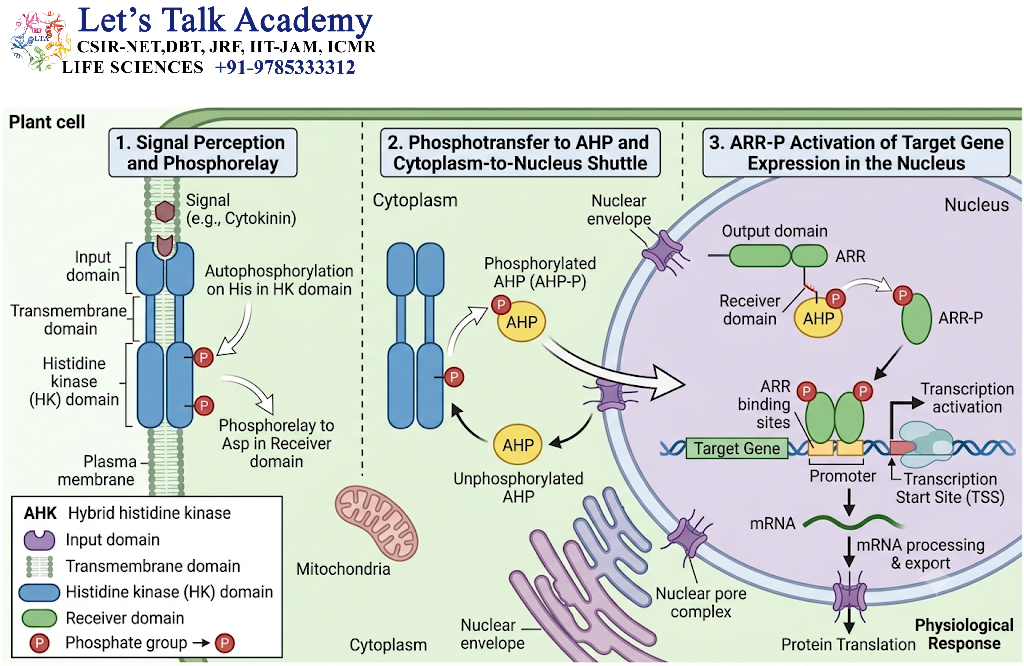
Plants possess signaling pathways that share fundamental features with bacterial two-component systems. These pathways are especially prominent in the perception and transmission of cytokinin signals.
Cytokinins are plant hormones that regulate cell division, shoot development, nutrient responses, leaf senescence, vascular development, and other physiological processes.
Plant two-component-like systems typically contain:
-
A sensor histidine kinase.
-
A histidine phosphotransfer protein.
-
A response regulator.
This organization is commonly called a multistep phosphorelay.
Unlike the classical bacterial pathway, in which a histidine kinase usually transfers phosphate directly to a response regulator, plant phosphorelays often involve an additional phosphotransfer protein between the receptor kinase and the response regulator.
5.1 Discovery and Evolutionary Significance
The discovery of histidine kinase-related proteins in plants revealed an important evolutionary connection between bacterial and plant signaling mechanisms.
Plant proteins involved in cytokinin signaling contain domains that are structurally related to bacterial histidine kinases and response regulators.
This similarity is consistent with the broader evolutionary history of signaling proteins. However, sequence similarity alone does not establish a direct evolutionary origin for every individual protein, and the functions of homologous domains can diverge substantially.
Plant two-component-like signaling pathways have evolved to function within the architecture of eukaryotic cells, where signals must often be integrated with transcriptional regulation, hormone responses, and developmental programs.
5.2 General Organization of Plant Phosphorelays
A typical plant cytokinin phosphorelay contains three main functional components:
-
Histidine kinase receptors: Detect cytokinin and initiate phosphorylation.
-
Histidine phosphotransfer proteins: Transfer phosphoryl groups between the receptor and response regulators.
-
Response regulators: Control downstream signaling and gene expression.
The basic sequence is:
The pathway is more complex than this simplified representation because multiple receptor types, phosphotransfer proteins, and response regulators can participate in the same signaling network.
5.3 Plant Histidine Kinase Receptors
Plant histidine kinase receptors are membrane-associated proteins that perceive cytokinin signals.
In Arabidopsis thaliana, important cytokinin receptors include:
-
AHK2.
-
AHK3.
-
AHK4, also known as CRE1 or WOL.
These receptors belong to the family of hybrid histidine kinases.
A hybrid histidine kinase generally contains:
-
An input or ligand-binding region.
-
A histidine kinase-related phosphotransfer region.
-
A receiver domain within the same polypeptide.
This organization enables the receptor to initiate a multistep phosphorelay.
5.3.1 Cytokinin Perception
Cytokinin molecules bind to specific receptor proteins. This binding alters the receptor’s signaling state and influences its kinase and phosphotransfer activities.
The receptors can recognize different cytokinin forms, and their ligand preferences and signaling properties may differ.
Cytokinin perception is not merely a process of detecting the presence of a hormone. The receptor network also contributes to the regulation of signal intensity, tissue sensitivity, and the integration of hormone responses.
5.3.2 Hybrid Histidine Kinase Architecture
Hybrid histidine kinases combine the functions of a histidine kinase and a receiver domain in a single protein.
In a cytokinin receptor, the phosphoryl group can be transferred from the conserved histidine in the kinase-related region to an aspartate residue in the receptor’s own receiver domain.
The phosphoryl group is subsequently transferred to a histidine phosphotransfer protein, which conveys the signal to downstream response regulators.
This arrangement provides additional opportunities for regulation and signal integration.
5.4 Histidine Phosphotransfer Proteins in Plants
Histidine phosphotransfer proteins, abbreviated HPTs or AHPs in Arabidopsis, act as intermediate carriers of phosphoryl groups in plant phosphorelays.
Examples include AHP1, AHP2, AHP3, AHP4, and AHP5 in Arabidopsis thaliana.
These proteins are generally soluble and can participate in the transfer of phosphoryl groups from receptor proteins to response regulators.
5.4.1 Mechanism of Phosphotransfer
The histidine phosphotransfer protein receives a phosphoryl group on a conserved histidine residue.
The phosphorylated HPT then transfers the phosphoryl group to a response regulator. This transfer can occur in the cytoplasm or nucleus, depending on the signaling components and cellular context.
Because HPT proteins may shuttle between cellular compartments, they can contribute to the spatial regulation of signaling.
5.4.2 Role in Signal Integration
A single HPT protein may interact with more than one receptor or response regulator. Consequently, HPTs can act as points of convergence for signaling pathways.
They may help integrate signals from different receptors and transmit those signals to a shared group of downstream targets.
However, the specific interaction patterns depend on the organism, tissue, and signaling context.
5.5 Plant Response Regulators
Plant response regulators are downstream components of two-component-like signaling systems. They are commonly divided into two major functional groups:
-
Type-B response regulators.
-
Type-A response regulators.
A third group, type-C response regulators, has also been described in plants and shares some structural characteristics with type-A response regulators.
5.6 Type-B Response Regulators
Type-B response regulators are transcription factors that activate the expression of cytokinin-responsive genes.
They generally contain:
-
An N-terminal receiver domain.
-
A central or C-terminal region containing a Myb-like DNA-binding domain.
-
Additional regions that contribute to transcriptional regulation.
Examples in Arabidopsis thaliana include ARR1, ARR10, and ARR12.
When activated through the phosphorelay pathway, type-B response regulators regulate the transcription of genes involved in cytokinin responses.
5.6.1 Function of Type-B Response Regulators
Type-B response regulators act as important transcriptional activators in cytokinin signaling.
They can promote the expression of type-A response regulator genes and other cytokinin-responsive genes.
Their activity connects phosphorylation-based signal transduction with changes in gene expression, thereby influencing cellular growth and development.
5.6.2 Role in Development
Type-B response regulators participate in the regulation of processes such as:
-
Shoot apical meristem activity.
-
Root and shoot development.
-
Cell proliferation.
-
Vascular development.
-
Nutrient responses.
-
Hormonal interactions.
The precise effects depend on the particular response regulator and the developmental context in which it operates.
5.7 Type-A Response Regulators
Type-A response regulators are important components of cytokinin signaling and often function as negative-feedback regulators.
They generally contain a receiver domain and a comparatively short output region. Unlike type-B response regulators, most type-A response regulators lack a Myb-like DNA-binding domain.
Examples in Arabidopsis thaliana include ARR3, ARR4, ARR5, ARR6, ARR7, and ARR15.
5.7.1 Role in Negative Feedback
Cytokinin signaling often induces the expression of type-A response regulator genes.
The newly synthesized type-A response regulators can then reduce the intensity or duration of cytokinin signaling through several possible mechanisms, including competition for phosphotransfer interactions and modulation of downstream signaling components.
This creates a negative-feedback loop that helps prevent excessive or prolonged signaling.
5.7.2 Importance of Type-A Response Regulators
Negative feedback is essential for maintaining signaling balance.
If cytokinin signaling remained continuously active, it could disrupt normal growth and development. Type-A response regulators help cells adjust their sensitivity to cytokinin and respond appropriately to changing hormone concentrations.
6. Mechanism of Cytokinin Signaling Through Plant Phosphorelays
Cytokinin signaling is one of the best-characterized examples of a plant two-component-like system.
Cytokinins influence cell division, meristem activity, organ development, nutrient allocation, and multiple other aspects of plant physiology.
The signaling pathway converts cytokinin perception at a receptor into changes in gene expression through a multistep phosphorylation cascade.
6.1 Step 1: Cytokinin Binding to the Receptor
The process begins when a cytokinin molecule binds to the ligand-binding region of a cytokinin receptor.
In Arabidopsis, receptors such as AHK2, AHK3, and AHK4 participate in cytokinin perception.
Ligand binding changes the receptor’s signaling state and regulates the activity of the receptor’s histidine kinase-related region.
The exact molecular effects of ligand binding can depend on the receptor and the cytokinin ligand involved.
6.2 Step 2: Receptor Autophosphorylation
Following receptor activation, the conserved histidine residue in the receptor’s kinase-related domain becomes phosphorylated using ATP.
This is an example of histidine autophosphorylation.
The phosphoryl group is then transferred to an aspartate residue in the receiver domain of the hybrid receptor.
The presence of both kinase-related and receiver domains in the same receptor allows the initial steps of the phosphorelay to occur within one protein.
6.3 Step 3: Transfer to Histidine Phosphotransfer Proteins
The phosphoryl group is transferred from the receptor’s receiver domain to a conserved histidine residue in an HPT protein.
In Arabidopsis, AHP proteins serve as important intermediates in cytokinin signal transmission.
The HPT protein acts as a mobile phosphotransfer component and can transport the signaling information between cellular compartments.
6.4 Step 4: Phosphorylation of Response Regulators
The phosphorylated HPT transfers the phosphoryl group to an aspartate residue in the receiver domain of a response regulator.
The response regulator becomes activated or changes its activity state.
The downstream effect depends on whether the response regulator is a type-A or type-B protein and on the specific regulatory network involved.
6.5 Step 5: Regulation of Gene Expression
Activated type-B response regulators bind regulatory DNA sequences and influence the expression of target genes.
Among the genes induced by cytokinin signaling are those encoding type-A response regulators.
Other target genes influence cell proliferation, hormone responses, development, and metabolic processes.
6.6 Step 6: Negative Feedback and Signal Attenuation
Type-A response regulators contribute to the regulation of cytokinin signaling by reducing the strength or duration of the response.
This feedback mechanism helps maintain signaling homeostasis.
Additional regulatory processes, including changes in receptor activity, protein abundance, and hormone metabolism, can further shape the final response.
6.7 Simplified Cytokinin Signaling Diagram
Plant Cytokinin Phosphorelay
Cytokinin
Hormone binds to the receptor
AHK2 / AHK3 / AHK4
Hybrid histidine kinase receptor
His → Asp phosphorelay
AHP Proteins
Histidine phosphotransfer proteins
Type-B Response Regulators
Transcriptional activation
Cytokinin-Responsive Genes
Growth, development, and physiological responses
Type-A Response Regulators
Negative feedback and signal attenuation
Figure 6.1. Simplified multistep phosphorelay involved in plant cytokinin signaling.
7. Biological Functions of Plant Two-Component-Like Systems
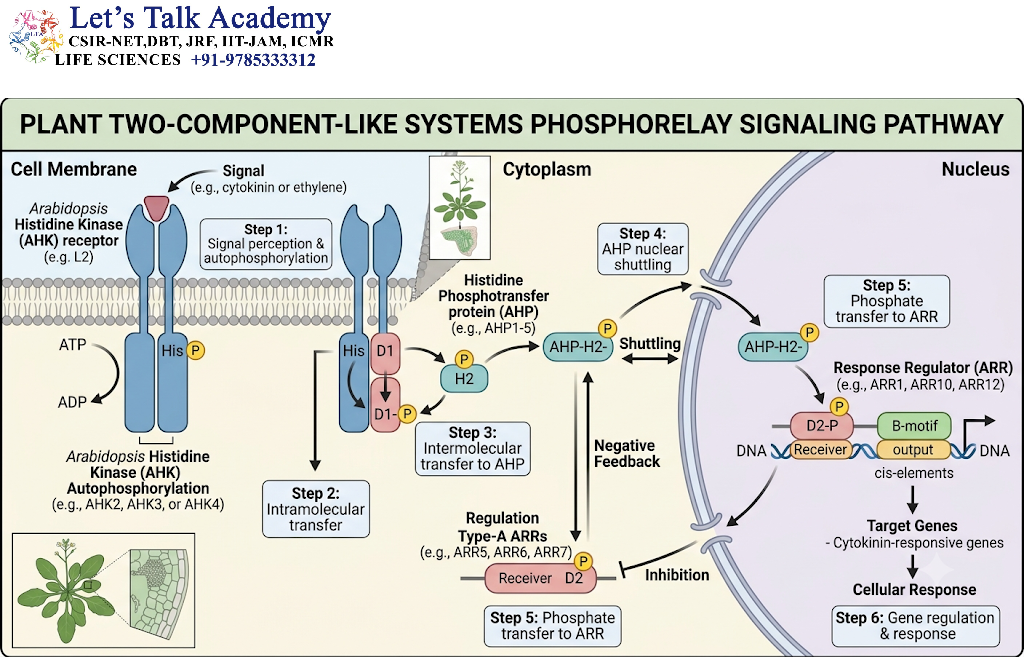
Plant two-component-like systems are involved in several developmental and physiological processes. Although cytokinin signaling is their best-known function, these signaling proteins also participate in other aspects of plant biology.
The activity of these pathways is influenced by hormone concentrations, tissue type, developmental stage, environmental conditions, and interactions with other signaling networks.
7.1 Regulation of Cell Division
Cytokinins are important regulators of cell division and cell proliferation. Their effects are particularly evident in regions of active growth, such as meristems.
Cytokinin signaling through histidine kinase receptors, HPT proteins, and response regulators can influence the expression of genes involved in cell-cycle regulation.
Type-B response regulators activate transcriptional programs that contribute to cytokinin responses, while type-A response regulators help limit excessive signaling.
The overall effect of cytokinin signaling depends on its interaction with other hormones and developmental pathways.
7.2 Regulation of Shoot Apical Meristem Activity
The shoot apical meristem is a region of actively dividing cells that contributes to the formation of stems, leaves, and reproductive structures.
Cytokinin signaling plays an important role in maintaining meristematic activity and influencing the balance between cell proliferation and differentiation.
In Arabidopsis, type-B response regulators, including ARR1, ARR10, and ARR12, contribute to developmental programs associated with cytokinin responses.
Disruption of cytokinin perception or signal transduction can alter meristem activity and influence shoot development.
7.3 Regulation of Root Development
Root growth depends on the coordinated activities of cell division, cell expansion, and cellular differentiation.
Cytokinin signaling can influence the size and activity of the root apical meristem. It also interacts with auxin signaling to regulate the formation and development of lateral roots.
In many developmental contexts, cytokinin and auxin have opposing or complementary effects. Their interaction helps determine the balance between root and shoot growth.
The final response is controlled by the combined effects of hormone transport, hormone metabolism, receptor activity, and downstream gene regulation.
7.4 Regulation of Vascular Development
Vascular tissues transport water, minerals, sugars, and signaling molecules throughout the plant.
Cytokinin signaling contributes to the regulation of vascular development, including processes associated with the differentiation of xylem and other vascular tissues.
The effects of cytokinin depend on the tissue, developmental stage, and interaction with hormones such as auxin.
The involvement of cytokinin response regulators in vascular development demonstrates how two-component-like signaling pathways can influence the organization of plant tissues.
7.5 Regulation of Nutrient Responses
Plants must adjust their growth and metabolism according to the availability of nutrients such as nitrogen and phosphorus.
Cytokinin signaling is involved in the coordination of nutrient availability with developmental and metabolic responses.
For example, cytokinin signaling can influence the expression of genes associated with nutrient transport, root architecture, and shoot growth.
However, cytokinin is only one component of a much larger nutrient-signaling network. Other hormones, transcription factors, and metabolic signals also contribute to nutrient responses.
7.6 Regulation of Leaf Senescence
Leaf senescence is a genetically regulated process involving the gradual deterioration of cellular structures and the remobilization of nutrients.
Cytokinins are generally associated with delaying aspects of leaf senescence under several experimental conditions.
Changes in cytokinin concentration and signaling can influence the expression of genes involved in senescence-related processes.
The relationship between cytokinin signaling and senescence is complex and depends on factors such as leaf age, environmental conditions, and interactions with other hormones.
7.7 Interactions with Other Plant Hormones
Plant two-component-like signaling systems do not operate independently. They interact with multiple hormone signaling pathways.
Important interactions include:
-
Auxin: Cytokinin and auxin jointly regulate root and shoot development.
-
Ethylene: Ethylene can influence cytokinin responses and developmental processes.
-
Abscisic acid (ABA): Cytokinin and ABA often participate in the regulation of stress and growth responses.
-
Gibberellins: Both hormone pathways contribute to growth and developmental regulation.
-
Brassinosteroids: Interactions between cytokinin and brassinosteroid signaling can influence cell proliferation and differentiation.
These interactions allow plants to integrate multiple environmental and developmental signals.
8. Other Histidine Kinase-Related Pathways in Plants
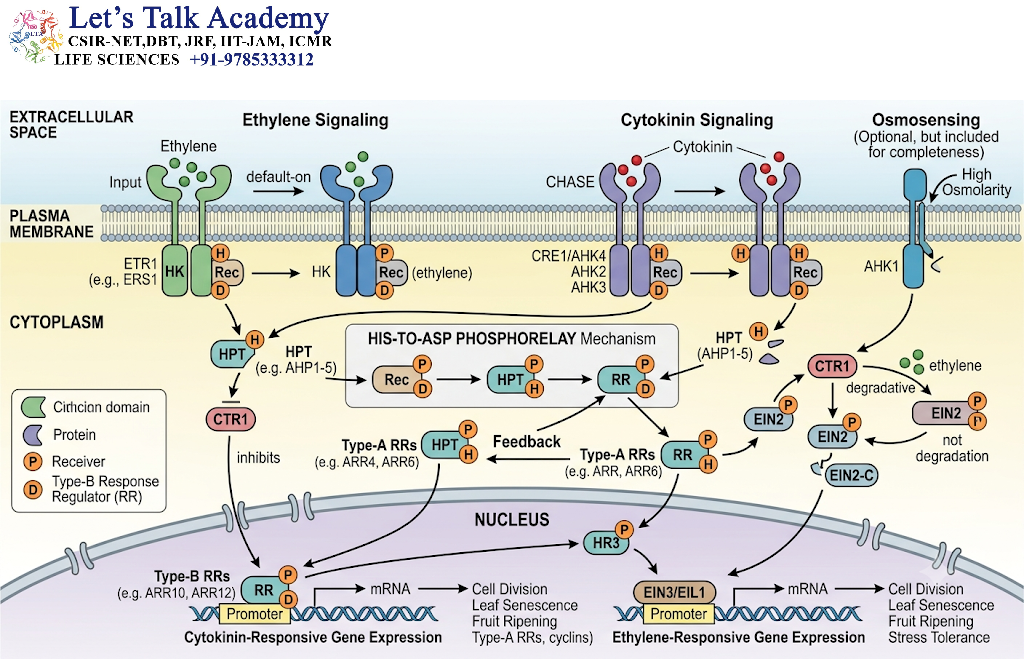
Although cytokinin signaling is the principal example of a plant two-component-like signaling pathway, some plant proteins related to histidine kinases have other functions.
These proteins illustrate the diversification of two-component-related signaling mechanisms during evolution.
8.1 Ethylene-Related Signaling and Histidine Kinase-Like Proteins
Ethylene is a gaseous plant hormone involved in fruit ripening, senescence, seedling development, and responses to environmental stress.
In some plant species, ethylene receptors, such as ETR1, contain a histidine kinase-related domain.
However, not all ethylene receptors possess functional histidine kinase activity. In several receptors, this region has undergone functional divergence.
Ethylene signaling also differs fundamentally from the classical bacterial two-component pathway. Ethylene receptors regulate downstream signaling through interactions with other proteins, including CTR1, rather than operating as a straightforward His-to-Asp phosphorylation cascade.
Therefore, ethylene receptors should be understood as two-component-related proteins, rather than automatically being classified as conventional functional histidine kinases.
8.2 Chloroplast-Associated Signaling
Some plant histidine kinase-related proteins are associated with chloroplast function and plastid development.
These proteins can participate in the coordination of cellular and organellar processes.
However, the precise signaling mechanisms and physiological roles vary among different proteins and plant species. Not every histidine kinase-like protein is part of a classical two-component phosphorelay.
8.3 Diversification of Plant Signaling Proteins
The presence of histidine kinase-related domains in proteins with different functions highlights the evolutionary flexibility of signaling modules.
A protein domain that originally participated in phosphotransfer signaling may acquire a modified role in a new biological context.
Therefore, structural similarity between bacterial and plant proteins should be interpreted alongside biochemical activity, cellular localization, and physiological function.
9. Comparison Between Bacterial and Plant Two-Component Systems
Bacterial and plant two-component systems share the fundamental principle of phosphorylation-dependent signal transduction. However, their organization and biological roles show important differences.
9.1 Major Similarities
The principal similarities include:
-
Both systems use protein phosphorylation to transmit information.
-
Histidine and aspartate residues are central to many of their phosphotransfer reactions.
-
Their signaling proteins contain conserved structural domains.
-
Both systems can regulate gene expression and physiological responses.
-
Both systems can use phosphorylation and dephosphorylation to control signaling intensity.
-
Both can integrate environmental information with cellular responses.
-
Both can contain multistep signaling pathways.
9.2 Major Differences
|
Feature |
Bacterial Two-Component Systems |
Plant Two-Component-Like Systems |
|---|---|---|
|
Typical organization |
Sensor histidine kinase and response regulator |
Hybrid histidine kinase, HPT protein, and response regulator |
|
Common signaling arrangement |
Often direct His-to-Asp phosphotransfer |
Frequently a multistep phosphorelay |
|
Typical signal sources |
Nutrients, osmolarity, stress, chemicals, and environmental changes |
Cytokinins, developmental signals, and other physiological cues |
|
Sensor location |
Membrane-associated or cytoplasmic |
Often associated with cellular membranes or specific organelles |
|
Intermediate proteins |
Often absent in classical systems, but may occur in specialized pathways |
Histidine phosphotransfer proteins are important in cytokinin signaling |
|
Common output |
Gene regulation, motility, metabolism, and stress adaptation |
Hormonal responses, gene expression, growth, and development |
|
Common response regulators |
Transcription factors, chemotaxis regulators, and other regulatory proteins |
Type-A, type-B, and other response regulators |
|
Typical cellular context |
Single bacterial cell |
Multicellular plant with specialized tissues |
|
Signaling complexity |
Ranges from simple pathways to large regulatory networks |
Integrated with hormone, developmental, and environmental signaling networks |
9.3 Conserved Biochemical Principles
Despite their differences, both bacterial and plant systems use phosphorylation as a reversible regulatory mechanism.
The initial phosphotransfer reaction frequently involves a histidine residue, while the downstream receiver domain generally contains a phosphorylatable aspartate.
The phosphorylated state of the receiver protein can alter its structure and activity, enabling signal transmission.
This conserved biochemical principle makes two-component systems an important example of how molecular mechanisms can be adapted to different biological contexts.
9.4 Differences in Biological Organization
Bacteria are generally unicellular organisms that must respond rapidly to changes in their immediate environment. Their two-component systems often regulate processes such as nutrient acquisition, motility, membrane adaptation, and stress resistance.
Plants are multicellular organisms with specialized tissues and developmental programs. Plant two-component-like systems often function as components of hormonal signaling networks.
Consequently, plant signaling pathways must coordinate cellular responses across tissues and developmental stages, whereas bacterial pathways frequently focus on immediate physiological adaptation. This is a broad distinction rather than an absolute rule.
10. Regulation and Termination of Two-Component Signaling
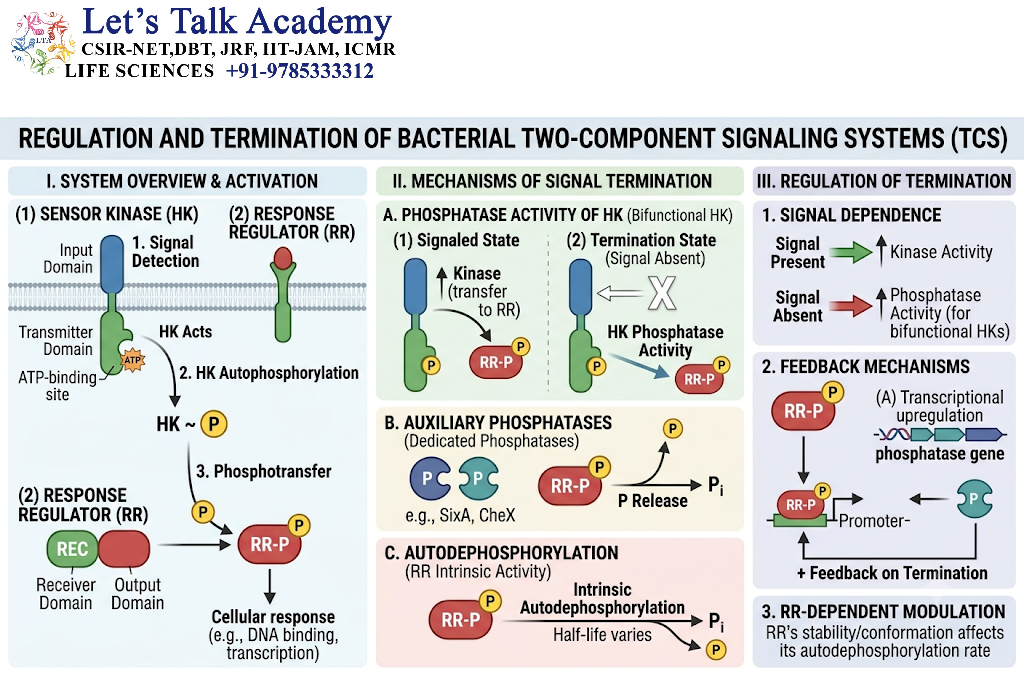
An effective signaling system must be capable of both activating and terminating a response. Continuous activation of a pathway can be harmful because it may cause inappropriate gene expression or disrupt normal cellular functions.
Two-component systems therefore employ several mechanisms to control signal duration and intensity.
10.1 Autodephosphorylation
Many phosphorylated response regulators undergo spontaneous dephosphorylation.
The rate of this reaction depends on the molecular structure of the receiver domain and the surrounding cellular environment.
Autodephosphorylation helps ensure that the signal does not remain active indefinitely after the initial stimulus has disappeared.
10.2 Phosphatase Activity of Sensor Kinases
Many bacterial sensor histidine kinases can stimulate the dephosphorylation of their corresponding response regulators.
When the environmental stimulus changes, the kinase may shift from a phosphorylation-promoting state to a phosphatase-promoting state.
This allows the sensor to control both the activation and inactivation of its signaling pathway.
10.3 Feedback Regulation
Feedback regulation occurs when downstream products of a signaling pathway influence the activity of upstream signaling components.
For example, a response regulator may control the expression of genes that influence the activity or abundance of the sensor kinase.
In plant cytokinin signaling, the induction of type-A response regulators is a well-established example of transcriptional feedback.
10.4 Protein Degradation
Protein degradation can regulate the duration of a signaling response.
Changes in the abundance of sensor kinases, phosphotransfer proteins, or response regulators can influence the strength of signal transmission.
In plants, protein stability and hormone metabolism can contribute to the control of cytokinin responses.
10.5 Compartmentalization
The location of signaling proteins within the cell can influence how efficiently they interact.
In plants, the movement of HPT proteins between the cytoplasm and nucleus can contribute to the spatial regulation of phosphorelay signaling.
In bacteria, membrane localization, protein complexes, and cellular organization can influence signal specificity and pathway activity.
10.6 Cross-Talk Between Signaling Pathways
Cross-talk occurs when components of one signaling pathway influence another pathway.
Cross-talk can be beneficial when cells must coordinate responses to multiple stimuli. However, excessive or inappropriate cross-talk can interfere with signal specificity.
Cells control cross-talk through molecular recognition, protein abundance, subcellular localization, and the relative rates of phosphorylation and dephosphorylation.
11. Experimental Approaches to Studying Two-Component Systems
Understanding two-component signaling requires a combination of molecular biology, biochemistry, genetics, cell biology, and computational analysis.
Researchers use experimental techniques to identify signaling components, examine their interactions, measure phosphorylation, and determine their physiological functions.
11.1 Gene Knockout and Mutant Analysis
Gene knockout experiments involve removing or disrupting a specific gene to determine its biological function.
For example, a bacterial strain lacking a sensor kinase gene may show altered sensitivity to osmotic stress or nutrient limitation.
In plants, mutations in cytokinin receptors or response regulator genes can reveal their roles in growth and development.
Phenotypic analysis of mutants helps establish relationships between signaling proteins and biological processes.
11.2 Site-Directed Mutagenesis
Site-directed mutagenesis is used to replace specific amino acids within a protein.
In two-component systems, researchers may mutate the conserved histidine of a sensor kinase or the conserved aspartate of a response regulator.
These experiments can determine whether a residue is required for phosphorylation, phosphotransfer, or downstream activity.
For example, replacing the phosphoacceptor histidine with a nonphosphorylatable residue may disrupt kinase activity. The exact effect depends on the protein and the substituted amino acid.
11.3 In Vitro Phosphorylation Assays
In vitro phosphorylation assays are biochemical experiments used to investigate the transfer of phosphate groups between purified proteins.
A typical experiment may contain:
-
Purified sensor histidine kinase.
-
ATP.
-
Purified response regulator.
-
Appropriate reaction buffer.
-
Required cofactors.
-
Detection reagents.
Researchers can analyze whether the kinase undergoes autophosphorylation and whether the phosphate group is transferred to the response regulator.
These experiments provide direct evidence for phosphotransfer activity.
11.4 Reporter Gene Assays
Reporter gene assays are used to measure the activity of a promoter or signaling pathway.
A promoter responsive to a particular response regulator may be connected to a reporter gene such as lacZ, gfp, or luc.
When the signaling pathway is activated, reporter expression changes, producing a measurable signal.
Reporter assays are widely used to investigate the effects of environmental stimuli, hormone treatments, mutations, and regulatory proteins.
11.5 Gene Expression Analysis
Gene expression can be measured using techniques such as:
-
Reverse transcription quantitative PCR (RT-qPCR).
-
RNA sequencing.
-
Northern blotting.
-
Transcriptome analysis.
These methods help identify genes regulated by a response regulator or signaling pathway.
For example, researchers can compare gene expression in a wild-type organism and a mutant lacking a particular response regulator.
11.6 Protein-Protein Interaction Studies
Protein-protein interactions are important for signal specificity.
Methods used to study interactions include:
-
Yeast two-hybrid assays.
-
Co-immunoprecipitation.
-
Bacterial two-hybrid assays.
-
Pull-down assays.
-
Biophysical binding techniques.
-
Protein cross-linking and mass spectrometry.
These approaches can help identify interaction partners and determine whether a sensor kinase interacts with a particular response regulator.
11.7 Fluorescence Microscopy
Fluorescence microscopy can be used to examine the location of signaling proteins within cells.
In plant systems, fluorescently tagged HPT proteins may be used to study their localization and movement between the cytoplasm and nucleus.
In bacteria, fluorescent fusion proteins can help reveal the distribution of signaling proteins within the cell.
However, fluorescent tags can sometimes alter protein behavior, so localization results must be interpreted carefully.
11.8 Structural Biology
Structural biology provides information about the three-dimensional organization of signaling proteins.
Techniques such as X-ray crystallography, nuclear magnetic resonance spectroscopy, and cryo-electron microscopy can help reveal:
-
Protein domain organization.
-
Ligand-binding sites.
-
Histidine kinase dimerization.
-
ATP-binding regions.
-
Receiver domain conformational changes.
-
Protein-protein interaction interfaces.
Structural information helps explain how a molecular signal is converted into a functional response.
11.9 Bioinformatics and Comparative Genomics
Bioinformatics is useful for identifying and comparing signaling proteins across organisms.
Researchers can use sequence analysis to identify conserved motifs, predict protein domains, and investigate evolutionary relationships.
For example, bacterial genomes can be examined for genes encoding histidine kinases and response regulators.
In plant genomes, computational analyses can help identify histidine kinase receptors, HPT proteins, and response regulator families.
Sequence similarity alone, however, does not prove that a protein retains the same biochemical activity as its evolutionary relatives.
12. Advanced Concepts in Two-Component Signaling
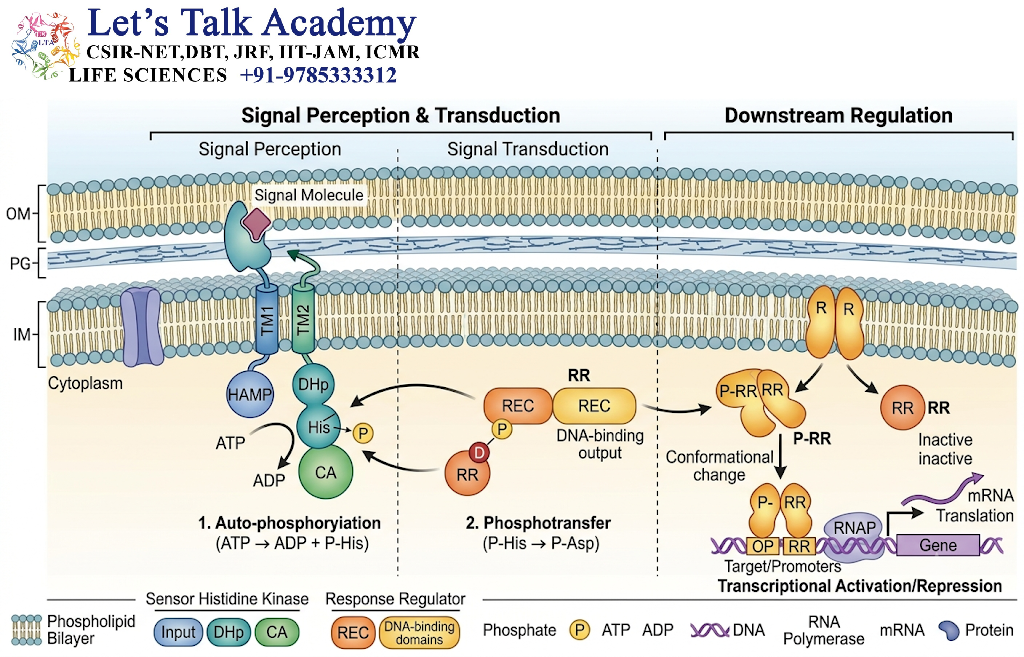
Two-component systems are often presented as simple pathways consisting of a sensor and a response regulator. In reality, many pathways display complex behavior resulting from interactions among multiple signaling components.
12.1 Hybrid Histidine Kinases
Hybrid histidine kinases contain both a histidine kinase-related domain and a receiver domain within the same protein.
They are particularly important in multistep phosphorelays.
The additional receiver domain allows a phosphate group to be transferred internally before it reaches a separate phosphotransfer protein or downstream response regulator.
This organization provides extra opportunities for regulatory control.
12.2 Multistep Phosphorelays
A multistep phosphorelay is a signaling pathway involving several sequential phosphotransfer reactions.
A generalized multistep phosphorelay can be represented as:
This pathway allows signals to pass through multiple intermediate domains or proteins.
Multistep phosphorelays are important in plant cytokinin signaling and also occur in various bacterial developmental and environmental signaling pathways.
12.3 Phosphorylation-Dependent Conformational Changes
Phosphorylation of the receiver domain can stabilize a specific structural state.
This structural transition influences how the response regulator interacts with its output target.
In transcriptional response regulators, phosphorylation may enhance DNA binding or promote dimerization. In other systems, it may alter interactions with enzymes or structural proteins.
The exact mechanism varies according to the response regulator.
12.4 Signal Amplification and Attenuation
Signal amplification occurs when a small input produces a large downstream response. Signal attenuation occurs when a pathway reduces the strength of a signal.
Two-component systems can exhibit both behaviors depending on their network structure.
For example, transcriptional regulation may increase the production of downstream proteins, amplifying a physiological response. Phosphatase activity and negative feedback may subsequently attenuate the response.
The magnitude of a signaling output depends on protein abundance, enzymatic activity, binding affinities, and the kinetics of phosphotransfer reactions.
12.5 Bifunctional Signaling Proteins
Some signaling proteins can perform more than one biochemical function.
Many bacterial sensor histidine kinases can function as both kinases and phosphatases. This allows the same protein to regulate the phosphorylation state of its response regulator in opposite directions.
Bifunctionality is particularly useful for maintaining signaling balance and adapting to changes in environmental conditions.
12.6 Signaling Specificity and Cross-Regulation
The presence of multiple two-component systems in the same organism creates the possibility of unwanted interactions.
Specificity is maintained through several mechanisms, including:
-
Recognition of particular interaction partners.
-
Spatial separation of signaling components.
-
Differences in the rates of phosphotransfer.
-
Selective dephosphorylation.
-
Regulatory feedback.
-
Differential protein expression.
Nevertheless, cross-regulation can be an important feature of complex signaling networks rather than merely a source of errors.
13. Physiological and Biotechnological Significance
Two-component systems have broad significance in microbiology, plant biology, biotechnology, and drug discovery.
Their ability to connect environmental signals with cellular responses makes them useful subjects for both fundamental and applied research.
13.1 Importance in Microbial Adaptation
Bacterial two-component systems allow microorganisms to respond to environmental changes without requiring extensive changes in their genetic material.
By regulating gene expression and protein activity, these systems help bacteria adapt to fluctuations in nutrient availability, osmotic pressure, temperature, and other conditions.
This adaptability contributes to the ecological success of bacteria in diverse habitats.
13.2 Importance in Plant Growth and Agriculture
Plant cytokinin signaling influences growth, development, and responses to nutrient availability.
Understanding plant phosphorelays can help researchers investigate the molecular basis of:
-
Meristem activity.
-
Root and shoot development.
-
Nutrient use.
-
Tissue differentiation.
-
Hormonal regulation.
-
Plant stress responses.
Such knowledge may contribute to future approaches for improving crop development and understanding plant adaptation.
However, agricultural applications require careful consideration of the complexity of plant growth and the possible effects of modifying hormone signaling.
13.3 Antimicrobial Research
Some bacterial two-component systems regulate processes associated with survival, virulence, or adaptation to host environments.
Because these pathways can be important for bacterial physiology, their components have been investigated as potential targets for antimicrobial research.
Possible targets include:
-
Sensor histidine kinase catalytic regions.
-
ATP-binding sites.
-
Histidine phosphotransfer reactions.
-
Response regulator activation.
-
Protein-protein interaction surfaces.
A potential target is not automatically a clinically effective drug target. Selectivity, toxicity, resistance development, and the biological importance of the pathway must all be evaluated.
13.4 Synthetic Biology
Two-component systems are useful tools in synthetic biology because they can convert environmental signals into programmable cellular responses.
Researchers can adapt signaling components to create systems that respond to particular molecules or environmental conditions.
Applications under investigation include:
-
Environmental biosensors.
-
Engineered microbial pathways.
-
Controlled gene expression.
-
Cellular detection systems.
-
Programmable biological circuits.
The modular organization of many signaling proteins makes them attractive components for constructing engineered regulatory networks.
13.5 Environmental Monitoring
Engineered bacterial signaling systems can potentially be used to detect environmental chemicals, pollutants, or changes in physical conditions.
For example, a sensor kinase that responds to a particular chemical stimulus may be coupled to a reporter gene.
The resulting organism can produce a measurable output when the target signal is present.
Such systems must be evaluated for sensitivity, specificity, stability, and environmental safety before practical deployment.
14. Important Examples for Comparative Understanding
The following examples summarize major systems and their primary biological roles.
|
Organism or system |
Sensor or receptor |
Response regulator or output |
Major function |
|---|---|---|---|
|
Escherichia coli EnvZ–OmpR |
EnvZ |
OmpR |
Osmotic regulation and porin expression |
|
Escherichia coli PhoR–PhoB |
PhoR |
PhoB |
Phosphate starvation response |
|
Escherichia coli NtrB–NtrC |
NtrB |
NtrC |
Nitrogen regulation |
|
Salmonella enterica PhoQ–PhoP |
PhoQ |
PhoP |
Environmental adaptation and host-associated responses |
|
Bacterial chemotaxis |
CheA |
CheY |
Regulation of flagellar behavior |
|
Arabidopsis thaliana cytokinin pathway |
AHK2, AHK3, AHK4 |
AHPs and ARRs |
Cytokinin perception and developmental regulation |
|
Arabidopsis thaliana type-B response regulator pathway |
Cytokinin receptor network |
ARR1, ARR10, ARR12, among others |
Transcriptional activation of cytokinin responses |
|
Arabidopsis thaliana type-A response regulator pathway |
Cytokinin receptor network |
ARR3, ARR4, ARR5, ARR6, and others |
Negative feedback and response modulation |
The functions listed in this table represent broad biological roles. The exact signaling behavior of a system depends on the organism, environmental conditions, and experimental context.
15. Important Molecular Features of Two-Component Systems
A detailed understanding of two-component systems requires knowledge of the amino acid residues, structural domains, and biochemical reactions that participate in signal transduction. These features determine how a sensor detects a stimulus, transfers a phosphoryl group, and activates a downstream response.
15.1 Conserved Histidine Residue in Sensor Kinases
The conserved histidine residue is the primary phosphoacceptor in many sensor histidine kinases.
During autophosphorylation, the gamma phosphate of ATP is transferred to the imidazole side chain of the histidine residue. The resulting phosphohistidine intermediate is chemically reactive and serves as the source of the phosphoryl group for the next phosphotransfer reaction.
The conserved histidine is usually located within the dimerization and histidine phosphotransfer domain.
Mutations affecting this residue may interfere with autophosphorylation and disrupt downstream signaling. However, the effects of a mutation depend on the protein structure and the nature of the amino acid substitution.
15.2 Conserved Aspartate in Receiver Domains
The receiver domain of a response regulator contains a conserved aspartate residue that accepts the phosphoryl group.
This residue is positioned within a structural environment that supports phosphotransfer and conformational switching.
Other conserved residues, including acidic amino acids and a lysine, contribute to the coordination of the metal ion and the stabilization of the active receiver-domain structure.
The phosphorylated aspartate can promote a structural transition that changes the activity of the response regulator.
15.3 Role of Divalent Metal Ions
Receiver domains generally require a divalent metal ion for efficient phosphorylation and proper structural organization.
Commonly studied ions include magnesium and manganese.
The metal ion contributes to the coordination of the phosphoryl group and helps stabilize the chemical environment required for phosphotransfer.
The exact metal-binding properties vary among receiver domains. The presence of a suitable metal ion is therefore an important factor in biochemical studies of two-component signaling.
15.4 ATP Utilization by Histidine Kinases
Sensor histidine kinases generally use ATP as the source of the phosphoryl group during autophosphorylation.
The catalytic and ATP-binding region recognizes ATP and positions it for the phosphorylation reaction.
Unlike conventional eukaryotic serine/threonine and tyrosine kinases, histidine kinases belong to a distinct family of signaling enzymes with a different structural organization and catalytic mechanism.
The ATP-binding region is therefore an important target for structural and biochemical investigations.
15.5 Reversible Phosphotransfer
Phosphotransfer reactions in two-component systems are reversible in the broader sense that the phosphorylation state of signaling proteins can be regulated in both directions.
The forward transfer of a phosphoryl group activates or modifies the response regulator, while dephosphorylation reduces its phosphorylation-dependent activity.
The balance between these reactions determines the amount of active response regulator in the cell.
16. Classical and Nonclassical Two-Component Systems
Not all signaling pathways that contain histidine kinase-related proteins follow the same mechanism. It is useful to distinguish classical two-component systems from more complex or noncanonical pathways.
16.1 Classical Two-Component Systems
A classical bacterial two-component system usually consists of:
-
One sensor histidine kinase.
-
One response regulator.
The sensor kinase autophosphorylates on histidine and transfers the phosphoryl group directly to an aspartate in the receiver domain of the response regulator.
The response regulator then controls a downstream process.
A simplified example is:
16.2 Multistep Phosphorelays
Multistep phosphorelays contain additional phosphotransfer domains or proteins.
A typical pathway may involve:
-
Autophosphorylation of a sensor histidine kinase.
-
Transfer to a receiver domain within the same protein.
-
Transfer to a histidine phosphotransfer protein.
-
Transfer to a downstream response regulator.
Plant cytokinin signaling is an important example of this arrangement.
16.3 Noncanonical Histidine Kinase-Related Signaling
Some proteins contain domains related to histidine kinases but do not perform all the reactions associated with a classical two-component system.
For example, certain plant ethylene receptors contain histidine kinase-related domains but function primarily through protein interactions and downstream signaling mechanisms rather than a conventional phosphorelay.
Similarly, some bacterial signaling pathways contain modified response regulators or unusual phosphotransfer arrangements.
Therefore, the presence of a histidine kinase-related domain does not, by itself, establish that a protein functions as a conventional sensor kinase.
17. Role of Cellular Localization in Signal Transduction
The location of signaling proteins within a cell can influence the speed, specificity, and strength of signal transmission.
Two-component signaling is therefore regulated not only by biochemical reactions but also by the spatial organization of proteins.
17.1 Membrane Localization in Bacteria
Many bacterial sensor histidine kinases are associated with the plasma membrane.
Their transmembrane regions anchor them in the membrane, while their sensory domains detect signals originating from the periplasm, membrane, or surrounding environment.
Membrane localization places the sensor in an appropriate position to detect changes in environmental conditions.
Some histidine kinases, however, are soluble and detect intracellular signals.
17.2 Cytoplasmic Signaling in Bacteria
Response regulators are frequently located in the bacterial cytoplasm.
After phosphorylation, they may interact with DNA, enzymes, or other proteins.
The cytoplasmic location of response regulators allows them to coordinate signaling information with intracellular metabolic and regulatory processes.
Some signaling components form larger protein complexes that help improve the organization of the pathway.
17.3 Nuclear Signaling in Plants
Plant response regulators and phosphotransfer proteins may operate in different cellular compartments.
In cytokinin signaling, HPT proteins can participate in the transfer of signaling information between the cytoplasm and nucleus.
Type-B response regulators function as transcriptional regulators and influence the expression of target genes in the nucleus.
This spatial organization allows hormone perception at the receptor to be connected with nuclear gene regulation.
17.4 Importance of Protein Trafficking
The movement of signaling proteins between cellular compartments can affect the timing and intensity of a response.
Changes in protein localization may regulate the accessibility of a phosphotransfer protein to its receptor or downstream response regulator.
Protein trafficking can therefore act as an additional regulatory layer in eukaryotic signaling networks.
18. Mathematical and Biochemical Understanding of Two-Component Systems
Two-component systems can also be understood through basic biochemical principles and mathematical models.
These models help researchers investigate how signaling pathways respond to changes in stimulus concentration, protein abundance, and reaction rates.
18.1 Phosphorylation State of a Response Regulator
The active form of a response regulator is often its phosphorylated form. The fraction of phosphorylated protein depends on the rates of phosphorylation and dephosphorylation.
A simplified conceptual relationship is:
Here:
-
[RR∼P][RR\sim P] represents the concentration of phosphorylated response regulator.
-
vphosphorylationv_{\text{phosphorylation}} represents the rate of phosphoryl-group transfer to the response regulator.
-
vdephosphorylationv_{\text{dephosphorylation}} represents the rate at which the phosphorylated response regulator loses its phosphoryl group.
This simplified expression does not include every reaction in a real pathway.
18.2 Steady-State Signaling
At steady state, the rate of phosphorylation is approximately balanced by the rate of dephosphorylation.
Under these conditions, the concentration of phosphorylated response regulator remains relatively stable over time.
Steady-state behavior does not necessarily mean that the system is inactive. It may indicate that the pathway is continuously processing signals while maintaining a relatively constant phosphorylation level.
18.3 Signal Sensitivity
Signal sensitivity refers to the ability of a system to respond to a particular concentration or intensity of stimulus.
Sensitivity can depend on:
-
The affinity of the sensor for its signal.
-
The abundance of the sensor and response regulator.
-
The catalytic activity of the sensor kinase.
-
The rates of phosphotransfer and dephosphorylation.
-
Feedback mechanisms.
-
The threshold required for downstream activation.
Two systems responding to the same environmental stimulus may display different sensitivities because of differences in their molecular components.
18.4 Signal Duration
The duration of a response depends on how quickly the signaling pathway is activated and how rapidly it returns to its basal state.
Rapid dephosphorylation can shorten a signaling response, whereas slower dephosphorylation may prolong it.
Feedback regulation and protein degradation can also influence the duration of a response.
These principles are useful for understanding how cells adapt to short-lived or persistent environmental stimuli.
19. Common Misconceptions About Two-Component Systems
Several misconceptions can arise when studying bacterial and plant signaling pathways. Clarifying these points helps establish a more accurate understanding of the subject.
19.1 All Histidine Kinases Are Membrane Proteins
Incorrect idea: Every histidine kinase is located in the cell membrane.
Correct explanation: Many sensor histidine kinases are membrane-associated, but some are soluble and detect intracellular or cytoplasmic signals.
19.2 Every Response Regulator Is a Transcription Factor
Incorrect idea: All response regulators directly control gene expression.
Correct explanation: Many bacterial response regulators are transcription factors, but others regulate chemotaxis, enzyme activity, cellular movement, or other processes without directly binding DNA.
19.3 All Plant Histidine Kinase-Related Proteins Perform Phosphorelays
Incorrect idea: Every plant protein containing a histidine kinase-related domain functions as a classical phosphotransfer enzyme.
Correct explanation: Some plant proteins have evolved different activities. Ethylene receptors provide an example of proteins with histidine kinase-related domains whose signaling functions do not necessarily involve a classical phosphorelay.
19.4 Plant and Bacterial Systems Are Identical
Incorrect idea: Plant two-component-like systems function exactly like bacterial two-component systems.
Correct explanation: Both systems share conserved biochemical principles, but plant pathways often contain hybrid histidine kinases and additional phosphotransfer proteins. Their functions are integrated into complex hormone and developmental networks.
19.5 Phosphorylation Always Activates a Protein
Incorrect idea: Phosphorylation invariably increases protein activity.
Correct explanation: Phosphorylation can activate, inhibit, or otherwise modify protein activity. The effect depends on the structure and function of the particular signaling protein.
19.6 Cytokinin Signaling Controls All Plant Growth
Incorrect idea: Cytokinin signaling alone determines plant growth and development.
Correct explanation: Cytokinin is one component of a complex regulatory network. Auxin, gibberellins, ethylene, ABA, brassinosteroids, nutrients, and environmental signals also influence plant development.


