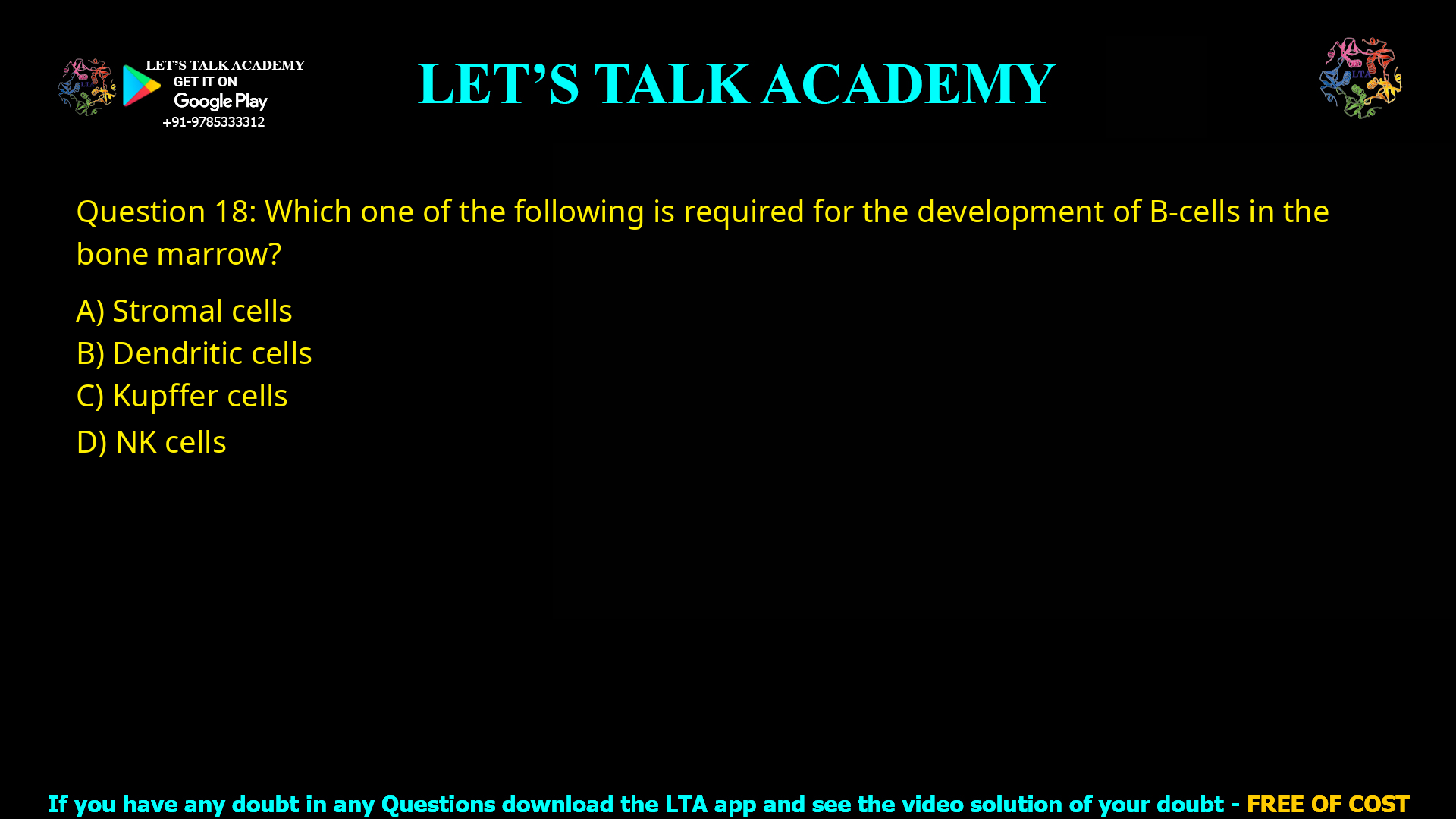
Q.18 Which one of the following is required for the development of B–cells in the bone
marrow?
(A) Stromal cells
(B) Dendritic cells
(C) Kupffer cells
(D) NK cells
Stromal cells are required for B-cell development in the bone marrow, as they create the essential microenvironment through cell contacts and cytokines like IL-7 and SCF. This process supports progenitor cells from hematopoietic stem cells to immature B cells. The correct answer is option (A).
Option Analysis
Stromal cells in the bone marrow produce IL-7 and SCF, binding to receptors on developing B cells to drive proliferation and differentiation up to the pre-B cell stage. Without this support, B lymphopoiesis halts, confirming their necessity.
Dendritic cells present antigens to activate T and B cells in lymphoid tissues but do not contribute to early B-cell maturation in bone marrow.
Kupffer cells function as liver macrophages for clearing pathogens and debris, with no role in bone marrow hematopoiesis.
NK cells provide innate cytotoxicity and surveil for abnormal cells but lack involvement in B-cell lineage commitment or development.
B-Cell Development Stages
B cells originate from hematopoietic stem cells in bone marrow and progress through pro-B, pre-B, and immature stages. Stromal cells enable V(D)J recombination and pre-BCR signaling via direct interactions. Immature IgM+ B cells then exit to the periphery.
Exam Relevance
This question tests immunology basics for exams like IIT JAM Biotechnology, emphasizing stromal cell functions over other immune cells. Understanding these distinctions aids in solving similar multiple-choice items on lymphopoiesis.


