
1. Introduction to Euchromatin
Chromatin is the organized form of DNA and associated proteins found inside the nucleus of eukaryotic cells. Because the DNA molecule is extremely long compared with the size of the nucleus, it must be packaged efficiently. At the same time, the cell must be able to access particular DNA sequences whenever genes need to be expressed, DNA needs to be replicated, or damaged DNA needs to be repaired.
This apparent contradiction—compacting DNA while keeping selected regions accessible—is solved by the dynamic organization of chromatin.
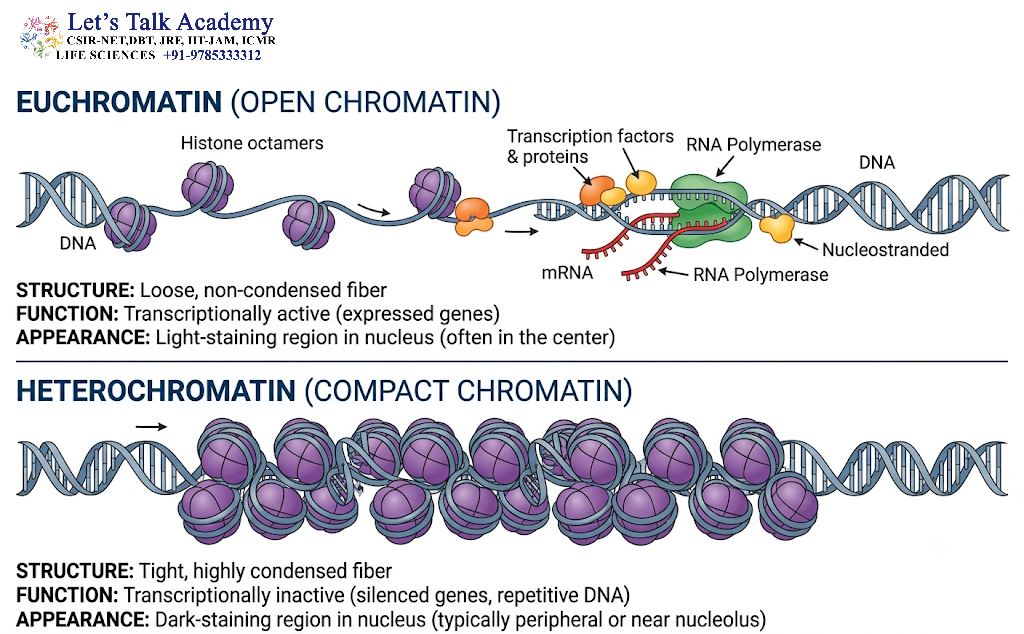
Based on its structural organization, accessibility, staining properties, and functional state, chromatin is broadly described as euchromatin and heterochromatin. Euchromatin represents relatively open and accessible chromatin and is generally associated with active or potentially active genes. Heterochromatin is generally more compact and is associated with transcriptional repression and specialized genomic functions. However, this distinction is not an absolute on/off system; chromatin exists in dynamic states that can change according to cell type, developmental stage, environmental signals, and gene activity.
The term euchromatin literally means “true chromatin.” It describes chromosome regions that are relatively less condensed and therefore more accessible to regulatory proteins and transcriptional machinery.
A useful way to understand euchromatin is to imagine a large library. The entire genome is the library, while chromatin is the system used to organize its books. Euchromatin corresponds to shelves where the books needed frequently are easy to reach and open. This does not mean that every gene in euchromatin is continuously active. Rather, euchromatin provides a chromatin environment that is generally more permissive to gene regulation.
2. Historical Background of Euchromatin
The distinction between euchromatin and heterochromatin originated from cytological observations of chromosomes.
During microscopic examination of chromosomes, some chromosomal regions appeared more intensely stained and remained highly condensed, whereas other regions appeared relatively less condensed and stained less intensely during particular stages of the cell cycle.
These observations eventually led to the conceptual division of chromatin into two broad categories:
- Euchromatin – relatively less condensed and generally transcriptionally permissive.
- Heterochromatin – relatively condensed and generally transcriptionally repressed.
The classical distinction was particularly useful because it connected chromosome structure with gene activity. Modern molecular biology has expanded this concept considerably. Researchers now understand that chromatin is regulated through nucleosome positioning, histone modifications, histone variants, chromatin-remodeling complexes, DNA modifications, transcription factors, non-coding RNAs, and three-dimensional genome organization.
Therefore, euchromatin should not simply be considered “uncoiled DNA.” It is a highly organized and regulated chromatin state.
3. Basic Organization of Chromatin
3.1 DNA and Histone Proteins
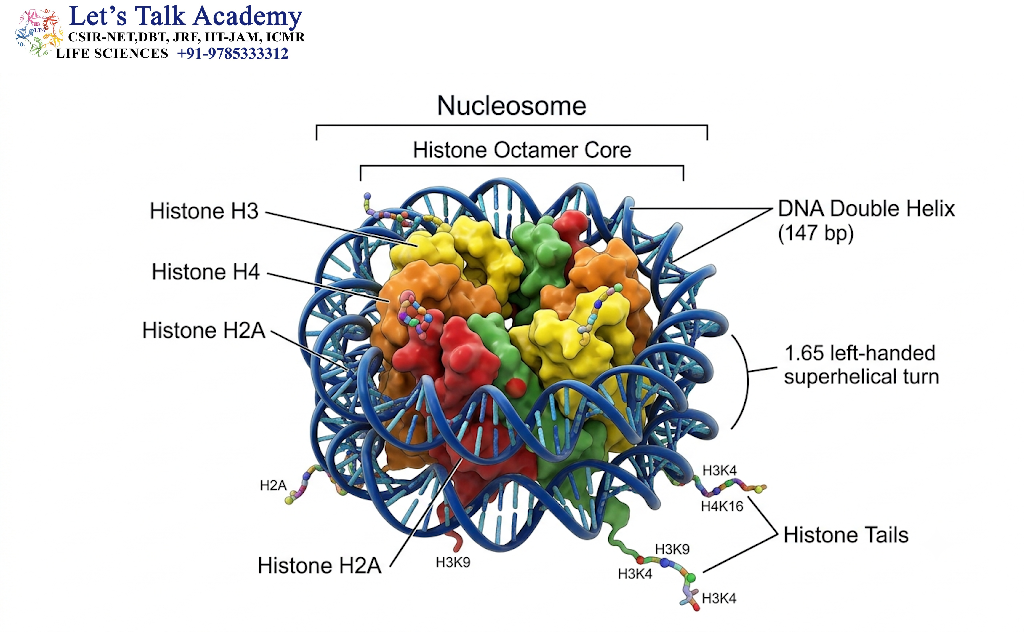
Chromatin is primarily composed of DNA and histone proteins.
The four major canonical histones are:
- Histone H2A
- Histone H2B
- Histone H3
- Histone H4
Two copies of each of these histones form a histone octamer. Approximately 147 base pairs of DNA are wrapped around this octamer to form the fundamental structural unit of chromatin called the nucleosome.
The nucleosome can therefore be considered the basic packaging unit of eukaryotic DNA.
A simplified arrangement is:
DNA → nucleosome → chromatin → chromosome
However, chromatin organization is considerably more dynamic than this simple sequence suggests.
3.2 Nucleosomes and DNA Accessibility
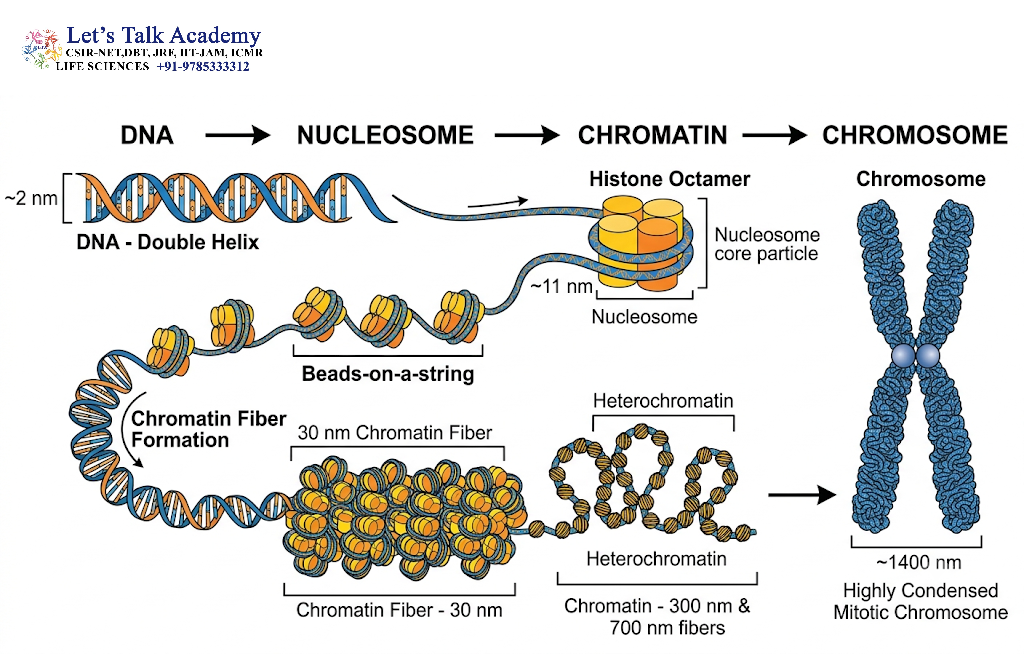
The positioning of nucleosomes has a major effect on whether DNA sequences can be accessed by proteins.
When nucleosomes occupy regulatory DNA sequences, transcription factors may have difficulty accessing those sequences. Conversely, nucleosome repositioning or removal can expose DNA and facilitate the binding of regulatory proteins.
Euchromatin generally contains chromatin configurations that permit greater access to transcription factors, RNA polymerase, and other regulatory proteins.
3.3 Linker DNA and Histone H1
The DNA between neighboring nucleosomes is known as linker DNA.
Histone H1, commonly called the linker histone, associates with linker DNA and contributes to chromatin organization. The degree and nature of H1 association can influence chromatin compaction and accessibility.
Although euchromatin is relatively open, it still contains nucleosomes and histone proteins. Thus, open chromatin does not mean naked DNA.
4. Definition of Euchromatin
4.1 Meaning of Euchromatin
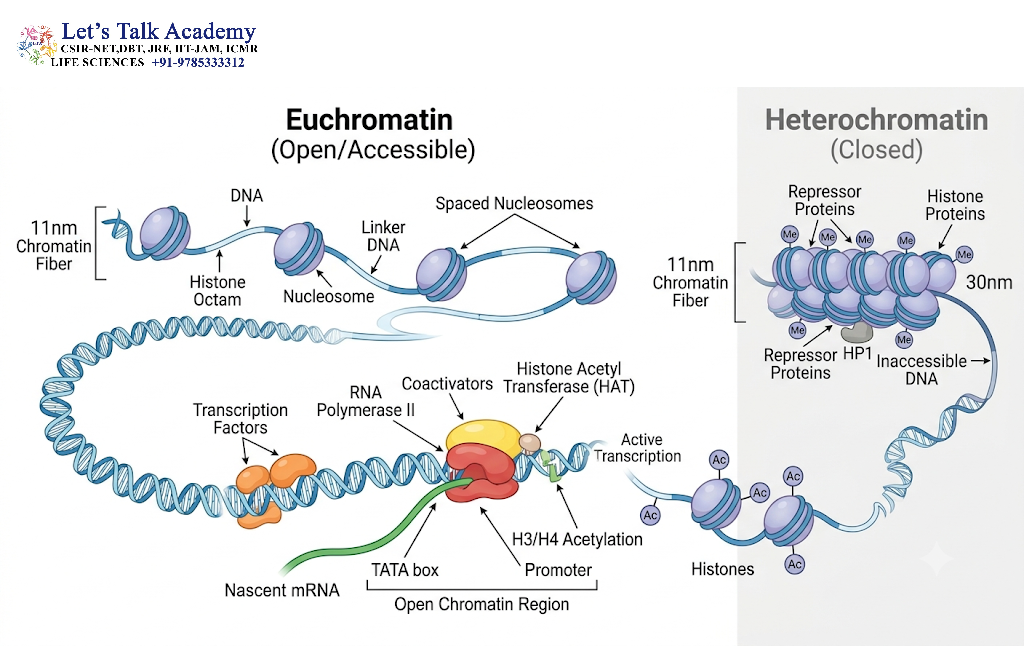
Euchromatin is a relatively less condensed, accessible chromatin state that is commonly associated with active or transcriptionally competent genomic regions.
It is generally characterized by:
- relatively high DNA accessibility,
- greater gene density,
- active regulatory elements,
- characteristic histone modifications,
- specific histone variants,
- dynamic nucleosome positioning,
- association with transcriptional machinery, and
- increased transcriptional potential.
Importantly, euchromatin does not mean that every gene within it is actively transcribed at every moment. Some genes may remain inactive temporarily but can be activated when the appropriate regulatory signals are received.
4.2 Euchromatin as a Dynamic State
Euchromatin is not a permanent physical condition. Chromatin can transition between relatively accessible and inaccessible states.
For example:
Condensed chromatin → remodeling → increased accessibility → transcriptional activation
or, under different regulatory conditions:
Accessible chromatin → repressive modifications → increased compaction → reduced transcription
This dynamic behavior allows cells with essentially the same genome to express different sets of genes.
5. Structural Features of Euchromatin
5.1 Relatively Open Organization
One of the most important features of euchromatin is its relatively open organization.
This organization allows transcription factors and other DNA-binding proteins to access regulatory sequences more readily than in highly compacted chromatin.
However, the older idea that euchromatin is simply a completely extended “beads-on-a-string” structure should be treated cautiously. Modern chromosome-conformation and imaging studies show that chromatin has multiple levels of organization rather than one universal fiber structure.
5.2 Higher DNA Accessibility
DNA accessibility is a central characteristic of euchromatin.
Accessible DNA can be recognized by:
- transcription factors,
- RNA polymerase-associated machinery,
- chromatin-remodeling complexes,
- DNA repair proteins,
- replication proteins, and
- other regulatory factors.
This accessibility allows the genome to respond rapidly to cellular signals.
5.3 Gene-Rich Regions
Euchromatin is commonly enriched in gene-containing regions compared with many highly repetitive heterochromatic regions.
Genes located within euchromatic environments are generally more accessible to transcriptional regulation, although the final expression level of an individual gene depends on many additional factors.
6. Euchromatin and Gene Expression
6.1 Relationship Between Euchromatin and Transcription
The most important functional association of euchromatin is its relationship with gene expression.
Transcription requires proteins to recognize and interact with DNA. If chromatin is excessively compacted, these proteins may have limited access to the DNA template.
The relatively accessible organization of euchromatin facilitates:
- transcription-factor binding,
- enhancer activity,
- promoter recognition,
- assembly of transcriptional complexes,
- recruitment of RNA polymerase, and
- transcriptional elongation.
Euchromatin therefore creates a chromatin environment that is generally compatible with transcription.
6.2 Promoters
A promoter is a regulatory DNA region associated with transcription initiation.
Promoters of actively expressed genes often occur within accessible chromatin environments. Nucleosome positioning around promoters can be precisely regulated, creating regions where transcription factors can bind efficiently.
6.3 Enhancers
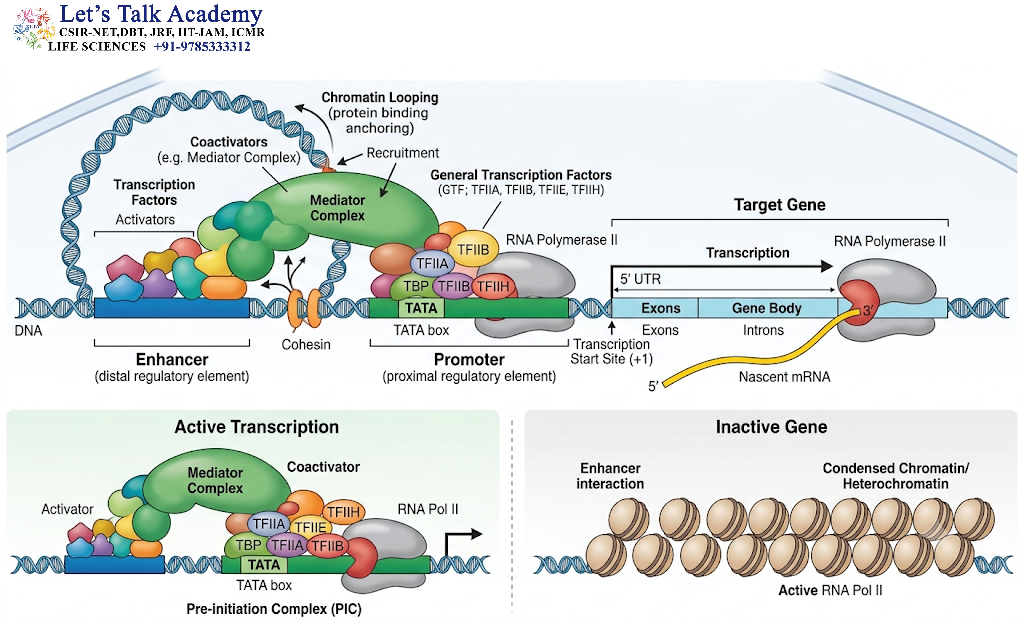
Enhancers are regulatory DNA elements that can increase gene transcription when bound by appropriate transcription factors.
Enhancers may be located far from the promoters they regulate. Three-dimensional chromatin organization can bring an enhancer into physical proximity with its target promoter.
Active enhancers are frequently associated with histone modifications such as H3K27ac, while active promoter regions commonly show enrichment for H3K4me3.
6.4 Gene Bodies
Euchromatic organization is not restricted to promoters.
Within actively transcribed gene bodies, characteristic chromatin modifications and nucleosome patterns can occur. For example, H3K36 methylation is associated with actively transcribed gene bodies in many eukaryotic systems.
7. Histone Modifications in Euchromatin
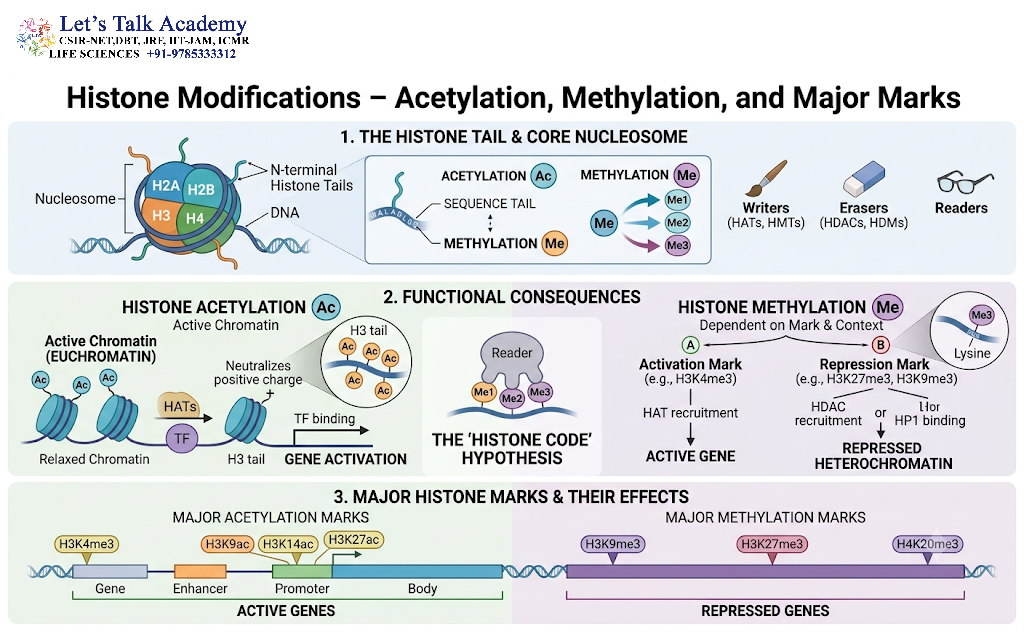
Histone modifications are among the most important mechanisms regulating euchromatin.
Histone tails can undergo several types of post-translational modification, including:
- acetylation,
- methylation,
- phosphorylation,
- ubiquitination,
- SUMOylation, and
- other modifications.
These modifications can alter chromatin properties directly or recruit specific regulatory proteins.
7.1 Histone Acetylation
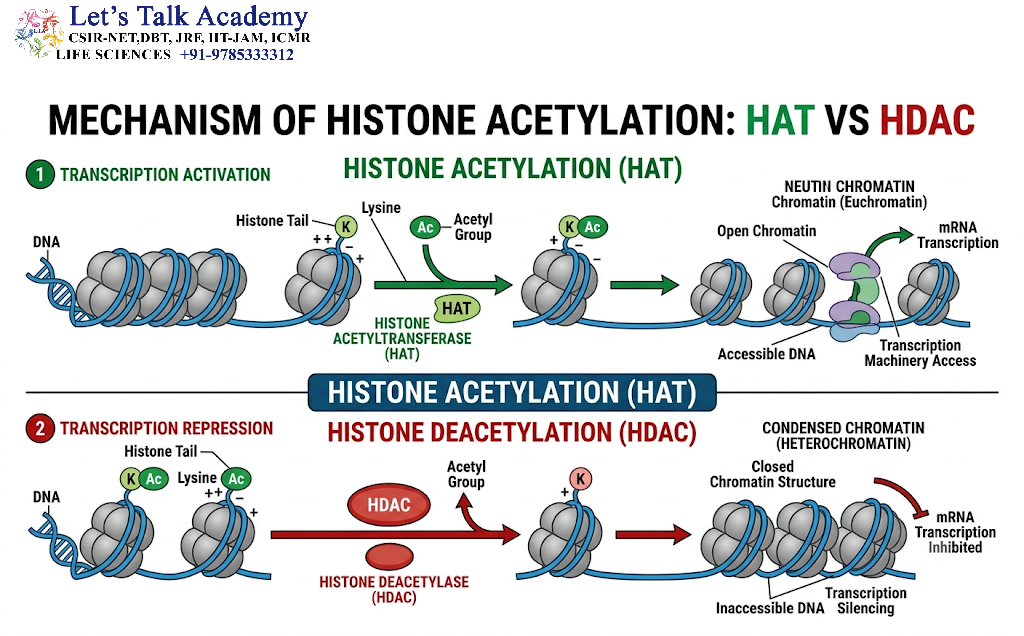
Histone acetylation is strongly associated with transcriptionally active chromatin.
Histone acetyltransferases, or HATs, add acetyl groups to specific lysine residues on histones.
Acetylation can reduce electrostatic interactions between positively charged histone proteins and negatively charged DNA, contributing to a more accessible chromatin environment.
Common active-associated acetylation marks include:
- H3K9ac
- H3K27ac
- H3K14ac
Histone acetylation can also create binding sites for proteins containing bromodomains, thereby recruiting additional transcription-associated complexes.
7.2 Histone Deacetylation
Histone deacetylases, or HDACs, remove acetyl groups from histones.
Deacetylation can contribute to a more compact or transcriptionally less permissive chromatin state.
Therefore, HATs and HDACs function in an opposing regulatory system:
HAT activity → increased acetylation → greater accessibility
HDAC activity → reduced acetylation → decreased accessibility
The actual biological outcome depends on the specific genomic region and interacting factors.
7.3 H3K4 Methylation
Methylation of lysine 4 of histone H3 is strongly associated with active chromatin.
Different methylation states have different distributions and functions.
For example:
- H3K4me1 – commonly associated with enhancers.
- H3K4me3 – strongly associated with active promoters.
- H3K4me2 – frequently associated with transcriptionally active regions.
Thus, histone methylation should not simply be described as either “activating” or “repressive.” Its effect depends heavily on the modified residue, degree of methylation, genomic location, and proteins that recognize the modification.
7.4 H3K36 Methylation
H3K36 methylation is associated with actively transcribed gene bodies.
It participates in the regulation of transcription elongation and helps coordinate chromatin organization with transcriptional activity.
7.5 H3K79 Methylation
H3K79 methylation is another modification associated with active chromatin and transcription.
Together, active-associated histone modifications form part of a complex regulatory network often described in terms of the histone code.
8. Histone Variants in Euchromatin
Canonical histones can sometimes be replaced by specialized histone variants.
These variants can change the physical and functional properties of nucleosomes.
8.1 H3.3
H3.3 is a histone H3 variant frequently associated with active genes and transcriptionally dynamic regions.
Its deposition is regulated differently from that of canonical replication-coupled H3 histones.
8.2 H2A.Z
H2A.Z is a histone H2A variant that participates in transcriptional regulation and chromatin organization.
It can be found near regulatory regions, including promoters, and can influence nucleosome stability and accessibility.
Euchromatin-associated histone variants therefore provide another layer of regulation beyond conventional histone modifications.
9. Chromatin-Remodeling Complexes
Euchromatin formation and maintenance cannot be explained by histone modifications alone.
Cells also use ATP-dependent chromatin-remodeling complexes to alter nucleosome organization.
These complexes use energy from ATP hydrolysis to:
- reposition nucleosomes,
- remove nucleosomes,
- exchange histone components,
- alter nucleosome spacing, and
- expose regulatory DNA sequences.
Such remodeling can make promoters and enhancers accessible to transcription factors.
Therefore:
Histone modification + nucleosome remodeling + transcription factors = coordinated regulation of gene accessibility
10. Major Molecular Components Associated with Euchromatin
Several classes of molecules participate in euchromatic regulation.
10.1 Histone-Modifying Enzymes
These enzymes add or remove chemical modifications from histones.
Examples include:
- histone acetyltransferases,
- histone deacetylases,
- histone methyltransferases,
- histone demethylases,
- kinases, and
- ubiquitin-related enzymes.
10.2 Chromatin Readers
Some proteins recognize particular histone modifications.
These are commonly called reader proteins.
For example, bromodomain-containing proteins can recognize acetylated lysine residues, whereas other reader domains recognize particular methylated histone residues.
The reader can then recruit additional regulatory complexes.
10.3 Chromatin Writers
Enzymes that establish particular chromatin modifications are often called writers.
Examples include histone acetyltransferases and histone methyltransferases.
10.4 Chromatin Erasers
Enzymes that remove modifications are commonly called erasers.
Examples include:
- histone deacetylases,
- histone demethylases, and
- certain deubiquitinating enzymes.
This writer–reader–eraser framework helps explain how chromatin states are established, interpreted, and modified.
11. DNA Methylation and Euchromatin
DNA methylation is another important epigenetic mechanism.
In many mammalian genomic contexts, DNA methylation—particularly at promoter-associated CpG-rich regions—is associated with transcriptional repression.
Therefore, active euchromatic regions often show a combination of:
- accessible chromatin,
- active histone modifications,
- appropriate transcription-factor binding,
- regulatory nucleosome positioning, and
- reduced repression at relevant regulatory DNA.
However, DNA methylation patterns are highly context-dependent, and euchromatin cannot be defined simply as “unmethylated DNA.”
12. Three-Dimensional Organization of Euchromatin
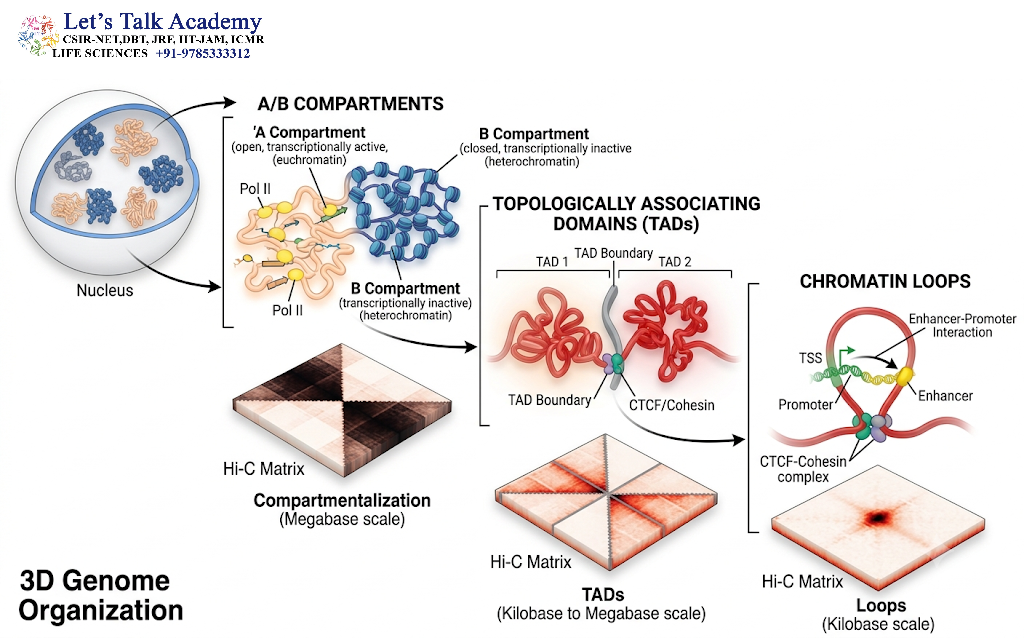
Modern genomics has shown that chromatin organization is not merely a two-dimensional arrangement along chromosomes.
The genome is folded within the nucleus.
12.1 Chromatin Compartments
Large regions of the genome can preferentially interact with regions having similar chromatin properties.
Active genomic regions are generally associated with A compartments, whereas more inactive regions are commonly associated with B compartments.
This organization helps coordinate genes and regulatory elements in three-dimensional nuclear space.
12.2 Topologically Associating Domains
Topologically Associating Domains (TADs) are genomic regions within which DNA sequences interact more frequently with one another than with sequences outside the domain.
TAD organization can influence enhancer–promoter communication and genome regulation.
12.3 Chromatin Loops
Chromatin loops can bring regulatory elements that are far apart in linear DNA sequence into close spatial proximity.
For example:
Enhancer → chromatin loop → promoter → gene activation
Proteins such as CTCF and cohesin are important components of many chromatin-organizing processes.
13. Euchromatin and DNA Replication
Chromatin must be reorganized during DNA replication.
When DNA is replicated, parental histones are redistributed and newly synthesized histones are incorporated into the daughter DNA molecules.
Euchromatic regions generally replicate earlier during the cell cycle than many highly compacted heterochromatic regions.
This relationship between chromatin state and replication timing provides another connection between genome structure and genome function.
Importantly, replication does not simply erase chromatin information. Cells possess mechanisms that help re-establish characteristic chromatin states following DNA replication.
14. Euchromatin and DNA Repair
DNA within euchromatin is relatively accessible to DNA-binding proteins, including proteins involved in DNA damage detection and repair.
When DNA damage occurs, local chromatin can undergo rapid remodeling.
Histone modifications can act as molecular signals that recruit or regulate DNA repair proteins.
Thus, euchromatin is not only important for transcription but also participates in maintaining genome integrity.
15. Euchromatin and Development
During development, cells with essentially the same genome acquire different identities.
For example, a nerve cell and a muscle cell contain largely the same DNA but express different groups of genes.
This difference is achieved partly through selective chromatin organization.
Some genes become accessible and transcriptionally active, whereas others become less accessible or repressed.
Therefore:
Chromatin organization → selective gene accessibility → cell-specific gene expression → cellular differentiation
Euchromatin is consequently central to developmental gene regulation.
16. Euchromatin and Cell-Type-Specific Gene Expression
Different cell types maintain different euchromatic landscapes.
A gene involved in muscle function may be highly accessible in muscle cells but relatively inaccessible in unrelated cell types.
Similarly, genes required for neuronal signaling are preferentially activated in neuronal cells.
This is achieved through coordinated regulation involving:
- transcription factors,
- enhancers,
- promoters,
- histone modifications,
- chromatin remodelers,
- DNA methylation,
- non-coding RNAs, and
- three-dimensional genome organization.
Euchromatin therefore provides a flexible regulatory environment in which cell-specific gene expression can occur.
17. Facultative Euchromatin and Chromatin State Transitions
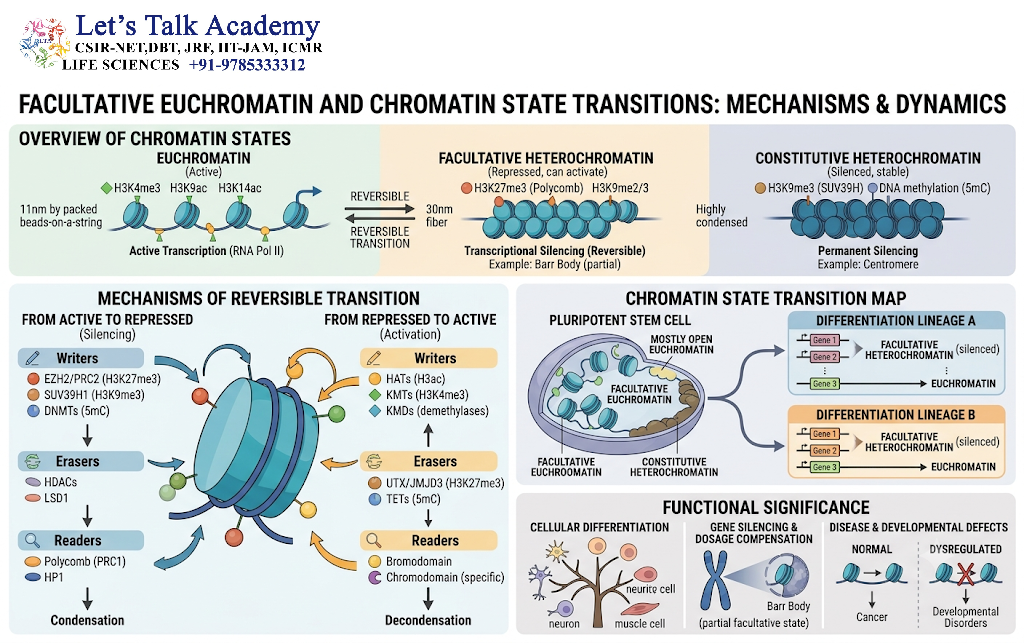
Chromatin states can change during development and in response to cellular signals.
A genomic region that is inactive in one cell type may become transcriptionally active in another.
Such a region may transition toward a more euchromatic state through:
- recruitment of transcription factors,
- nucleosome remodeling,
- histone acetylation,
- deposition of active histone marks,
- incorporation of histone variants, and
- formation of appropriate enhancer–promoter interactions.
Conversely, an active region can acquire repressive features and become less accessible.
This dynamic nature is one of the most important concepts in modern chromatin biology.
18. Euchromatin Compared with Heterochromatin
| Feature | Euchromatin | Heterochromatin |
|---|---|---|
| General structure | Relatively open | Relatively compact |
| DNA accessibility | Higher | Lower |
| Gene density | Generally higher | Often lower |
| Transcription | Generally permissive/active | Generally repressed |
| Histone acetylation | Generally higher | Generally lower |
| H3K4 methylation | Frequently enriched | Generally less characteristic |
| H3K9me3 | Generally low | Commonly enriched in many heterochromatic regions |
| H3K27me3 | Not a defining euchromatic mark | Associated with certain repressed domains |
| Histone variants | H3.3, H2A.Z can be associated | Specialized variants occur in specific repressive contexts |
| Regulatory activity | Promoters and enhancers commonly accessible | Repetitive and silenced regions commonly enriched |
| Replication | Often relatively early | Many regions replicate later |
| Major function | Gene regulation and expression | Silencing, genome stability, structural organization |
This comparison should be understood as a general framework rather than an absolute rule because chromatin states are highly context-dependent.
19. Euchromatin Is Not Always Transcriptionally Active
One common misconception is:
“Euchromatin means active genes.”
This statement is incomplete.
A more accurate statement is:
Euchromatin is generally more accessible and transcriptionally permissive, but individual genes within euchromatin can be inactive.
Gene expression depends on several additional factors, including:
- availability of transcription factors,
- promoter sequence,
- enhancer activity,
- DNA methylation,
- histone modifications,
- nucleosome positioning,
- transcriptional repressors,
- non-coding RNAs, and
- three-dimensional genome organization.
Therefore, euchromatin should be viewed as a regulatory environment, rather than a simple label for actively transcribed genes.
20. Molecular Mechanism of Euchromatin Formation
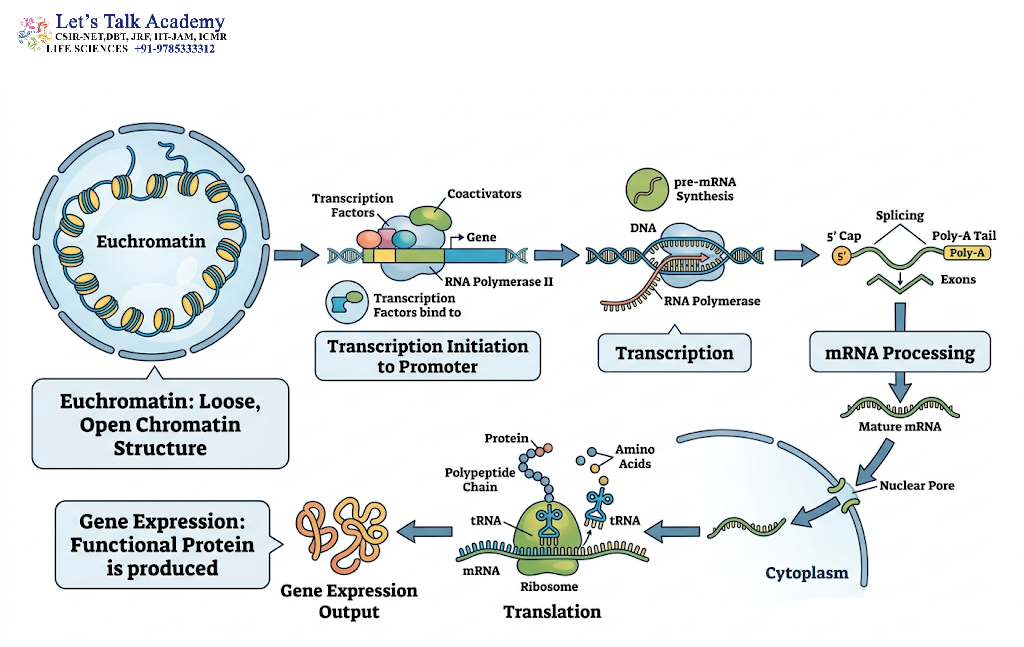
The establishment of a euchromatic state can involve several coordinated steps.
20.1 Recognition of Regulatory DNA
Specific transcription factors recognize regulatory DNA sequences.
20.2 Recruitment of Chromatin Regulators
Transcription factors recruit histone-modifying enzymes and chromatin-remodeling complexes.
20.3 Histone Modification
Histone acetylation and active-associated methylation patterns can develop around regulatory regions.
20.4 Nucleosome Remodeling
ATP-dependent remodeling complexes reposition or reorganize nucleosomes.
20.5 Increased DNA Accessibility
Regulatory DNA becomes more accessible to additional transcription factors and transcription-associated machinery.
20.6 Transcriptional Activation
RNA polymerase and associated factors are recruited, leading to transcription when all necessary regulatory conditions are satisfied.
Thus, euchromatin formation is a cooperative molecular process, not the result of one single modification.
21. Maintenance of Euchromatin
Once an active chromatin environment has been established, cells must maintain it.
Maintenance involves:
- continued histone modification,
- nucleosome turnover,
- histone variant incorporation,
- transcription-associated chromatin remodeling,
- DNA replication-associated chromatin restoration,
- transcription factor binding, and
- communication between chromatin regulatory complexes.
This maintenance allows cells to preserve characteristic gene-expression programs while still permitting chromatin to respond to changing conditions.
22. Euchromatin and Epigenetic Regulation
Euchromatin is closely connected with epigenetics.
Epigenetic regulation refers broadly to mechanisms that influence gene activity without changing the underlying DNA sequence.
Important mechanisms include:
- histone modifications,
- DNA methylation,
- nucleosome positioning,
- chromatin remodeling,
- histone variants,
- non-coding RNAs, and
- higher-order chromatin organization.
These mechanisms interact rather than functioning independently.
For example:
Transcription factor binding → recruitment of HAT → histone acetylation → chromatin remodeling → increased accessibility → transcription
This illustrates how several epigenetic mechanisms can cooperate to produce a functional euchromatic environment.
23. Euchromatin and Non-Coding RNA
Non-coding RNAs can participate in chromatin regulation.
Some RNA molecules interact with chromatin-associated proteins and can influence:
- chromatin accessibility,
- transcription,
- enhancer activity,
- chromatin looping, and
- recruitment of chromatin-modifying complexes.
Thus, the regulation of euchromatin is not controlled exclusively by DNA and histone proteins.
24. Biological Importance of Euchromatin
Euchromatin performs several essential biological functions.
24.1 Gene Regulation
It provides an accessible environment for transcriptional regulation.
24.2 Cell Differentiation
It helps establish cell-specific gene-expression programs.
24.3 Development
Changes in chromatin accessibility contribute to developmental transitions.
24.4 Environmental Response
Cells can alter chromatin states in response to signaling and environmental changes.
24.5 DNA Replication
Euchromatic organization is associated with characteristic replication timing and replication-associated chromatin dynamics.
24.6 DNA Repair
Chromatin remodeling allows repair machinery to access damaged DNA.
24.7 Genome Organization
Euchromatin contributes to the three-dimensional organization of the genome within the nucleus.
25. Experimental Identification of Euchromatin
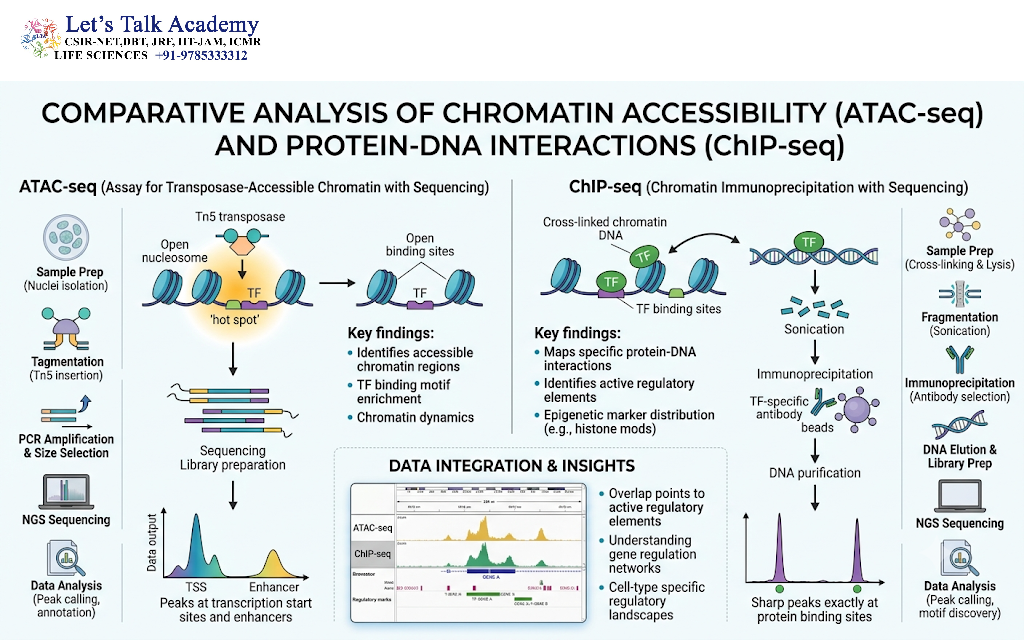
Modern molecular biology provides several approaches for studying euchromatin.
25.1 DNase I Hypersensitivity
Open chromatin is often more sensitive to DNase I digestion because DNA is more accessible.
25.2 ATAC-seq
ATAC-seq (Assay for Transposase-Accessible Chromatin using sequencing) is widely used to identify accessible chromatin regions.
Regions that are highly accessible to the transposase enzyme can often be detected as peaks in sequencing data.
25.3 ChIP-seq
Chromatin immunoprecipitation followed by sequencing (ChIP-seq) can identify genomic regions associated with specific histone modifications or chromatin-associated proteins.
For example, researchers may examine:
- H3K4me3,
- H3K27ac,
- H3K36me3, or
- specific transcription factors.
25.4 RNA-seq
RNA sequencing measures gene-expression patterns and can be combined with chromatin-accessibility data to determine whether accessible regions correlate with transcription.
25.5 Hi-C
Hi-C and related chromosome-conformation techniques provide information about three-dimensional genome organization, including compartments, domains, and chromatin interactions.
These approaches demonstrate that euchromatin is a measurable molecular state rather than merely a microscopic appearance.
26. Euchromatin and Disease
Abnormal chromatin regulation can contribute to disease.
Changes in:
- histone-modifying enzymes,
- chromatin-remodeling proteins,
- DNA methylation,
- histone variants,
- transcription factors, and
- three-dimensional genome organization
can alter gene expression.
Such abnormalities have been implicated in developmental disorders and cancer biology.
The relationship is complex because both excessive repression and inappropriate activation of genes can be harmful.
For example, inappropriate activation of normally silent genes or failure to activate genes required for cellular differentiation can disturb normal cellular behavior.
27. Euchromatin and Cancer Biology
Cancer cells frequently exhibit abnormal epigenetic regulation.
Mutations or altered activity of chromatin-modifying proteins can change the accessibility of genes involved in:
- cell proliferation,
- differentiation,
- DNA repair,
- apoptosis,
- metabolism, and
- immune responses.
As a result, chromatin biology has become an important area of cancer research.
Understanding euchromatin can therefore help explain how changes in genome regulation occur without necessarily requiring changes in the DNA sequence of every affected gene.
28. Important Histone Marks Associated with Euchromatin
| Histone mark | General association |
|---|---|
| H3K4me3 | Active promoters |
| H3K4me1 | Enhancer-associated regions |
| H3K27ac | Active enhancers and regulatory regions |
| H3K36me3 | Transcribed gene bodies |
| H3K79 methylation | Active transcription-associated chromatin |
| H3K9ac | Active/accessibility-associated chromatin |
| H4 acetylation | Transcriptionally permissive chromatin |
These marks should not be interpreted independently. Their meaning depends on genomic location, cellular context, combinations with other modifications, and the proteins that recognize them.
29. Key Characteristics of Euchromatin
The major characteristics of euchromatin can be summarized as follows:
- It is relatively less condensed.
- It is generally more accessible to regulatory proteins.
- It is frequently associated with gene-rich regions.
- It commonly contains active promoters and enhancers.
- It is associated with characteristic active histone modifications.
- Histone acetylation is generally prominent.
- H3K4 methylation is commonly associated with active regulatory regions.
- Histone variants such as H3.3 and H2A.Z can contribute to its organization.
- Nucleosome positioning is dynamically regulated.
- ATP-dependent chromatin remodelers participate in its maintenance.
- It supports transcriptionally permissive environments.
- It can change in response to developmental and environmental signals.
- It participates in DNA replication and repair.
- It contributes to three-dimensional genome organization.
- It is essential for regulated gene expression and cellular identity.
30. Common Misconceptions About Euchromatin
30.1 Euchromatin Means Completely Uncoiled DNA
Incorrect.
Euchromatin remains organized into nucleosomes and higher-order structures. It is relatively accessible, not completely unstructured.
30.2 Every Gene in Euchromatin Is Active
Incorrect.
Euchromatin is generally transcriptionally permissive, but individual genes can remain inactive.
30.3 All Histone Methylation Is Repressive
Incorrect.
The effect of methylation depends on the amino acid residue and methylation state. For example, H3K4 methylation is commonly associated with active chromatin, whereas H3K9me3 and H3K27me3 are commonly associated with repressive chromatin contexts.
30.4 Euchromatin Has No Nucleosomes
Incorrect.
Euchromatin contains nucleosomes. Its regulatory properties depend partly on nucleosome positioning, composition, and dynamics.
30.5 Chromatin Exists Only in Two States
Incorrect.
The euchromatin–heterochromatin distinction is useful but simplified. Modern studies reveal multiple chromatin states and complex three-dimensional organization.
31. Conceptual Model of Euchromatin
A useful model for understanding euchromatin is:
DNA sequence
↓
Nucleosome organization
↓
Histone modifications + histone variants
↓
Chromatin remodeling
↓
Increased DNA accessibility
↓
Transcription-factor binding
↓
Enhancer/promoter communication
↓
Recruitment of transcriptional machinery
↓
Gene expression
This pathway emphasizes that gene expression is the outcome of several interconnected regulatory processes.
32. Euchromatin as a Dynamic Genome-Regulatory System
The most modern view of euchromatin goes beyond the traditional idea of “lightly stained chromatin.”
Euchromatin should instead be regarded as a dynamic regulatory system.
Its properties are determined by the interaction of:
- DNA sequence,
- nucleosomes,
- histone modifications,
- histone variants,
- chromatin-remodeling complexes,
- transcription factors,
- non-coding RNAs,
- DNA methylation,
- nuclear organization,
- enhancer–promoter interactions, and
- cellular signaling pathways.
These components continuously interact to determine which regions of the genome are accessible and how strongly particular genes can be expressed.
33. Integrated View of Euchromatin
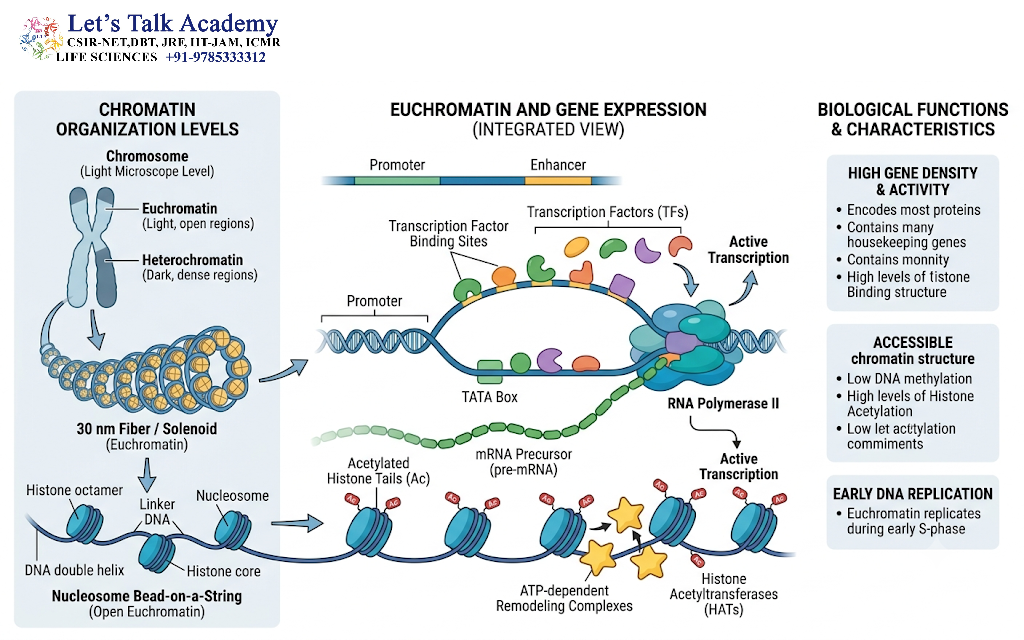
Euchromatin can be understood at several levels.
Molecular level
Histones, DNA, histone modifications, and regulatory proteins determine local chromatin accessibility.
Genomic level
Promoters, enhancers, genes, and regulatory elements are organized into functional chromatin domains.
Nuclear level
Chromatin domains occupy specific positions and interact in three-dimensional nuclear space.
Cellular level
These chromatin states determine which genes are expressed in a particular cell.
Organismal level
Differential gene expression contributes to development, differentiation, adaptation, and physiological function.
Therefore, euchromatin connects chromosome structure with gene regulation and cellular identity.


