
1. Introduction to Cell-Mediated Effector Functions
Cell-mediated effector functions are the biological activities performed by immune cells after they become activated in response to pathogens, infected cells, abnormal cells, or foreign substances. These functions are essential for eliminating threats that cannot be effectively controlled by antibodies alone.
The term cell-mediated emphasizes that the final immune response is carried out directly by cells rather than simply by soluble immune molecules. Important effector cells include T lymphocytes, natural killer (NK) cells, macrophages, neutrophils, eosinophils, and other specialized leukocytes.
Cell-mediated effector functions are particularly important in the elimination of virus-infected cells, tumor cells, intracellular microorganisms, and antibody-coated target cells. They also contribute to inflammation, phagocytosis, antigen presentation, tissue repair, and regulation of immune responses.
A useful way to understand these functions is to consider three connected events:
Recognition → Activation → Effector response
An immune cell first recognizes a target or receives an activating signal. This recognition triggers intracellular signaling pathways. The activated cell then performs an effector function such as cytotoxicity, phagocytosis, cytokine secretion, or activation of another immune cell.
Among the most important cell-mediated effector mechanisms are:
- Cytotoxic T-lymphocyte-mediated killing
- Natural killer cell-mediated cytotoxicity
- Antibody-dependent cell-mediated cytotoxicity
- Macrophage-mediated killing and activation
- Neutrophil-mediated antimicrobial activity
- Cytokine-mediated immune regulation
- Cell-mediated phagocytosis and destruction of target material
These mechanisms are interconnected rather than isolated. For example, cytokines produced by one immune cell can activate another cell, while antibodies produced by B cells can guide innate effector cells toward their targets.
2. Major Cells Involved in Cell-Mediated Effector Functions
2.1 Cytotoxic T Lymphocytes
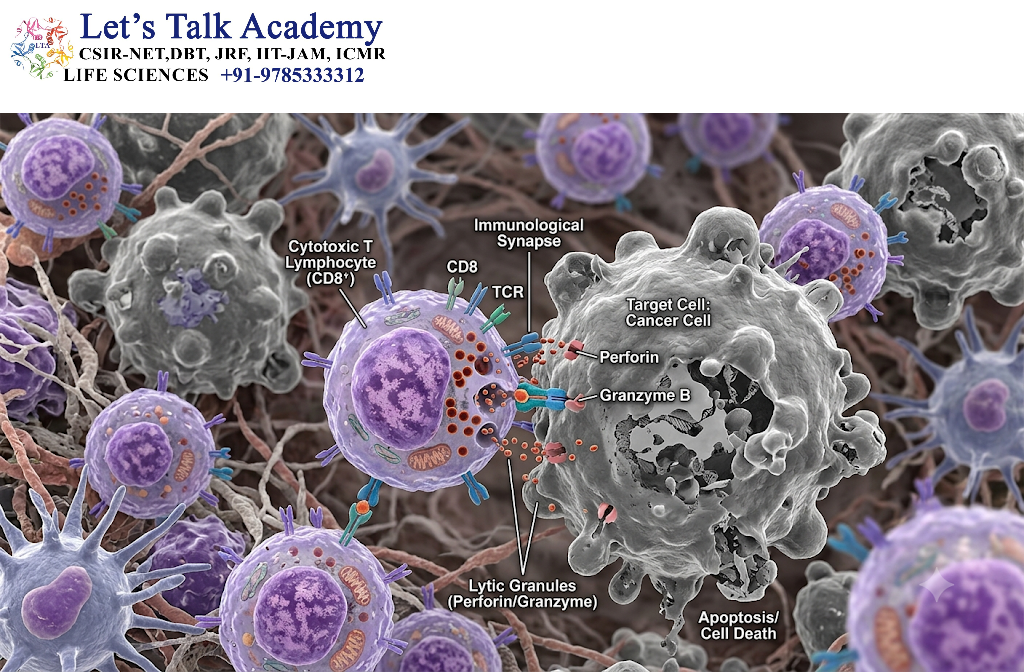
Cytotoxic T lymphocytes (CTLs) are specialized CD8⁺ T cells that recognize and destroy cells displaying specific antigenic peptides in association with MHC class I molecules.
Almost all nucleated cells can express MHC class I molecules. When a cell becomes infected with an intracellular pathogen or undergoes malignant transformation, abnormal proteins may be processed into peptides and presented on MHC class I molecules.
The T-cell receptor (TCR) of a CTL recognizes the peptide–MHC class I complex. Additional receptor interactions provide the signals necessary for efficient activation and formation of an immunological synapse.
Once activated, the CTL can kill the target through two major mechanisms:
- Perforin–granzyme pathway
- Death-receptor pathway
CTL-mediated killing is highly specific because recognition depends on the antigen-specific TCR.
2.2 Natural Killer Cells
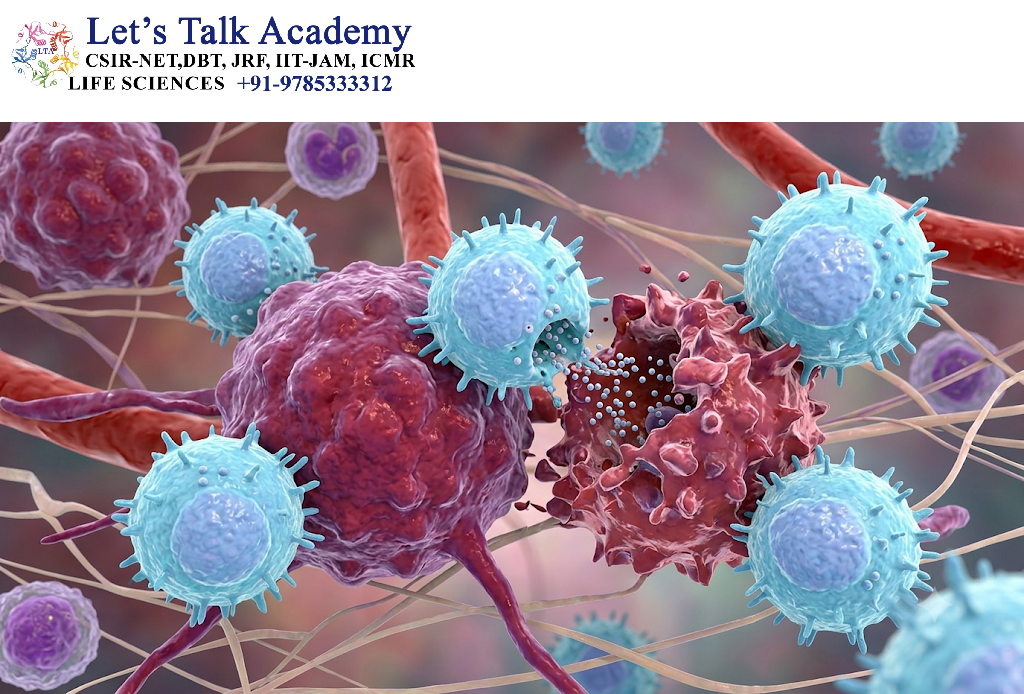
Natural killer cells are cytotoxic lymphocytes belonging to the innate immune system. Unlike conventional CTLs, NK cells do not require prior antigen-specific sensitization to kill many abnormal cells.
NK-cell activity is determined by the balance between signals from activating and inhibitory receptors. Healthy cells generally provide inhibitory signals through appropriate MHC class I expression. Cells with reduced or altered MHC class I expression, cellular stress, or certain infection-associated changes can become susceptible to NK-cell attack.
This principle is commonly associated with the “missing-self” concept.
NK cells can kill target cells by releasing cytotoxic granules containing perforin and granzymes. They can also produce cytokines, particularly interferon-gamma (IFN-γ), which influences macrophages and other immune cells.
2.3 Macrophages
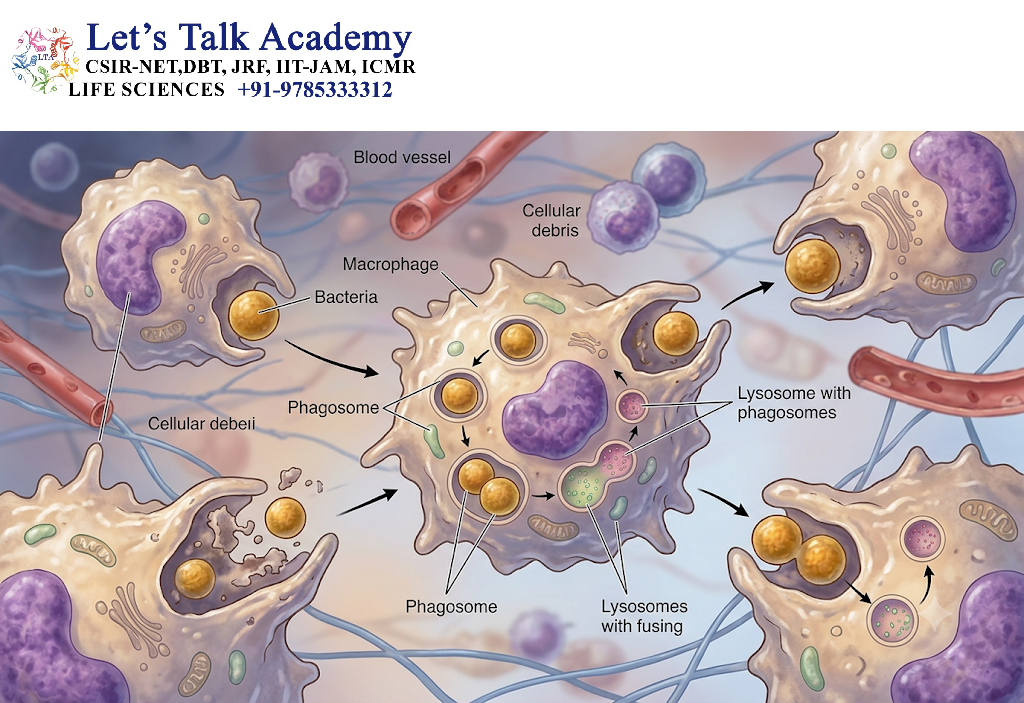
Macrophages are important effector cells of both innate and adaptive immunity.
Their major functions include:
- Phagocytosis
- Intracellular destruction of microorganisms
- Secretion of cytokines and chemokines
- Antigen presentation
- Removal of dead and damaged cells
- Participation in tissue repair
- Interaction with T lymphocytes
Activated macrophages can produce reactive oxygen and nitrogen intermediates, lysosomal enzymes, inflammatory mediators, and other antimicrobial molecules.
Macrophages can also be activated by T-cell-derived cytokines. Therefore, T cells and macrophages can form an important functional partnership, particularly during immune responses against intracellular pathogens.
2.4 Neutrophils
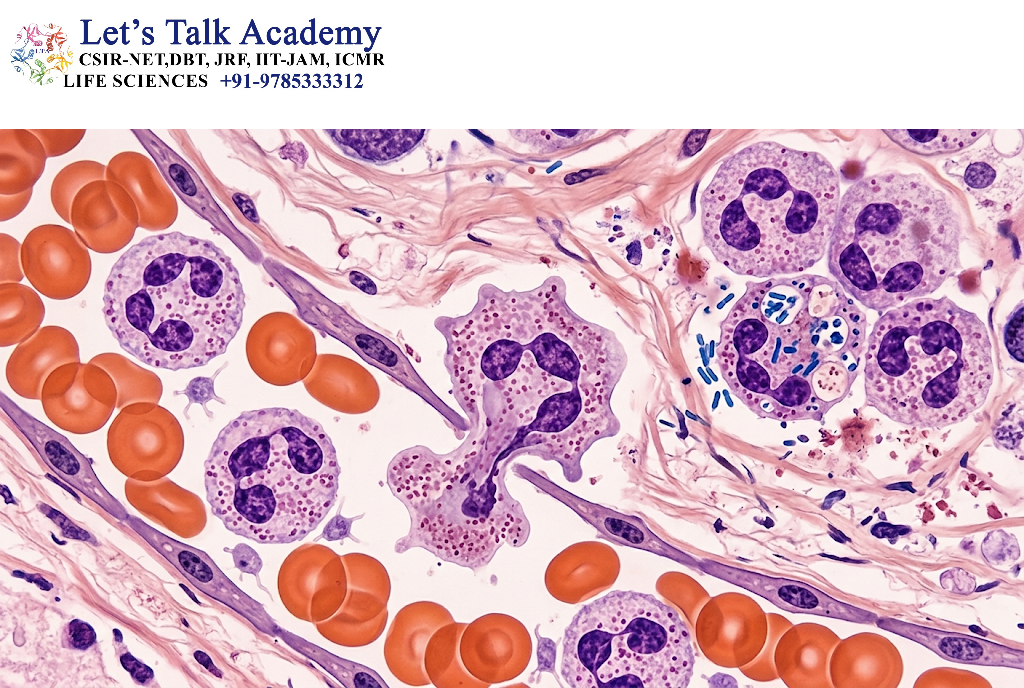
Neutrophils are rapidly recruited innate immune cells that contribute to antimicrobial defense through several mechanisms.
Their effector functions include:
- Phagocytosis
- Degranulation
- Production of reactive oxygen species
- Release of antimicrobial proteins
- Formation of neutrophil extracellular traps (NETs)
- Participation in antibody-dependent cellular cytotoxicity under appropriate conditions
Neutrophils are especially important during acute inflammatory responses.
2.5 Eosinophils
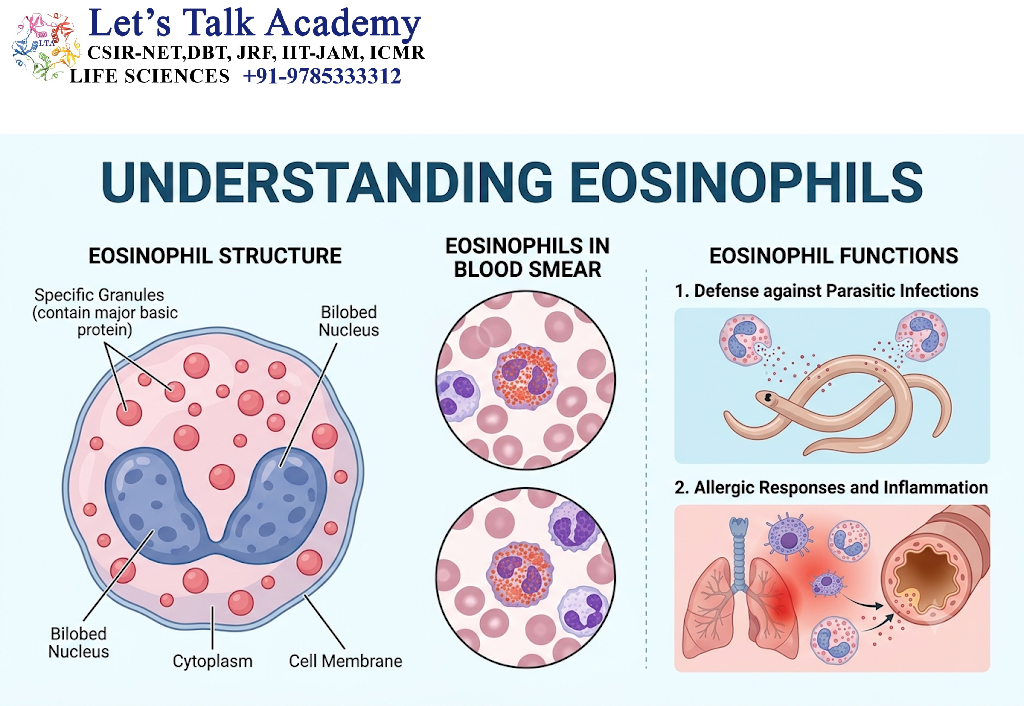
Eosinophils are particularly associated with immune responses against multicellular parasites and with allergic inflammation.
They contain cytoplasmic granules containing toxic proteins and other mediators. When appropriately activated, eosinophils can release these substances onto target surfaces.
Eosinophils can also participate in antibody-dependent cellular mechanisms through Fc receptors.
3. Cytotoxic T-Cell-Mediated Effector Function
3.1 Recognition of Target Cells
CTL-mediated cytotoxicity begins with recognition of a peptide presented by MHC class I.
The general sequence is:
Intracellular protein → proteasomal processing → peptide generation → MHC class I loading → surface presentation → TCR recognition
The antigen-specific TCR recognizes the peptide–MHC class I complex on the target cell.
This interaction is supported by the CD8 co-receptor and several adhesion and co-stimulatory interactions.
3.2 Formation of the Immunological Synapse
After recognizing its target, the CTL establishes close contact with the target cell.
This specialized interface is called the immunological synapse.
The immunological synapse allows the CTL to direct its cytotoxic machinery toward the target cell. This spatial organization is important because it reduces indiscriminate damage to neighboring cells.
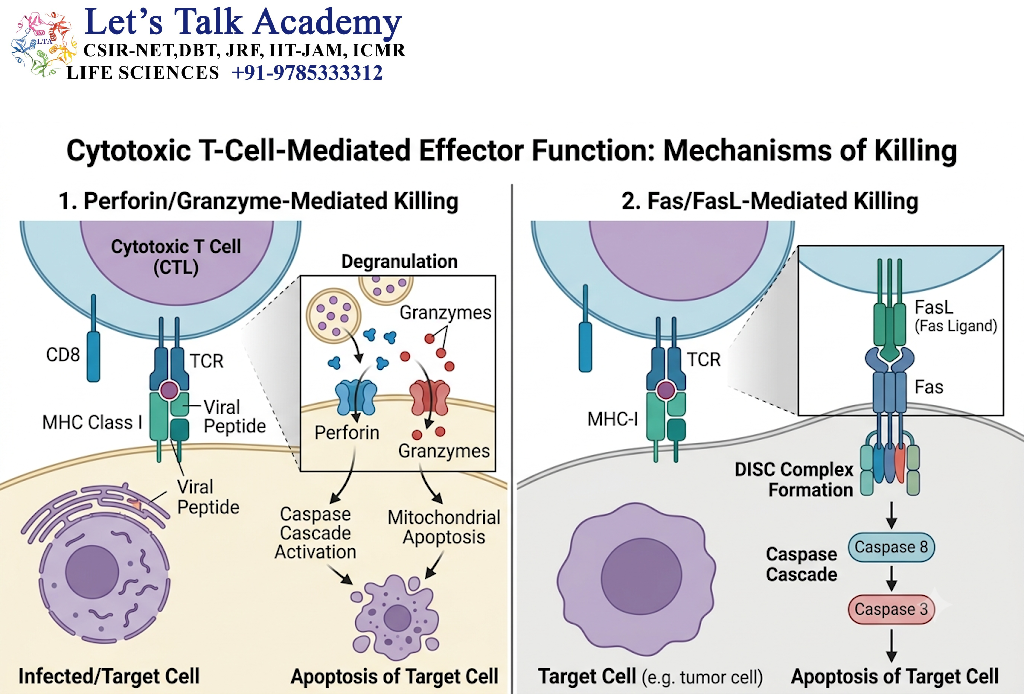
3.3 Perforin–Granzyme Mechanism
One of the major mechanisms of CTL-mediated killing involves cytotoxic granules.
These granules contain:
- Perforin
- Granzymes
- Other cytotoxic proteins
Upon activation, the CTL releases these molecules into the immunological synapse.
Perforin contributes to the delivery of granzymes into the target-cell cytosol. Granzymes are serine proteases that activate apoptotic pathways.
The final outcome is generally programmed cell death or apoptosis rather than uncontrolled cellular destruction.
3.4 Fas–Fas Ligand Pathway
CTLs can also induce apoptosis through the Fas–Fas ligand (FasL) pathway.
The activated CTL expresses FasL, while the target cell may express Fas, also known as CD95.
Binding of FasL to Fas initiates an intracellular signaling cascade involving death-domain signaling and activation of caspases.
The final outcome is apoptosis of the target cell.
3.5 Biological Significance of CTL Cytotoxicity
CTL-mediated cytotoxicity is particularly important in controlling:
- Viral infections
- Certain intracellular infections
- Tumor cells
- Abnormal host cells
Unlike nonspecific cytotoxic mechanisms, CTLs generally require recognition of a specific peptide–MHC class I complex.
4. Natural Killer Cell-Mediated Cytotoxicity
4.1 Basic Principle
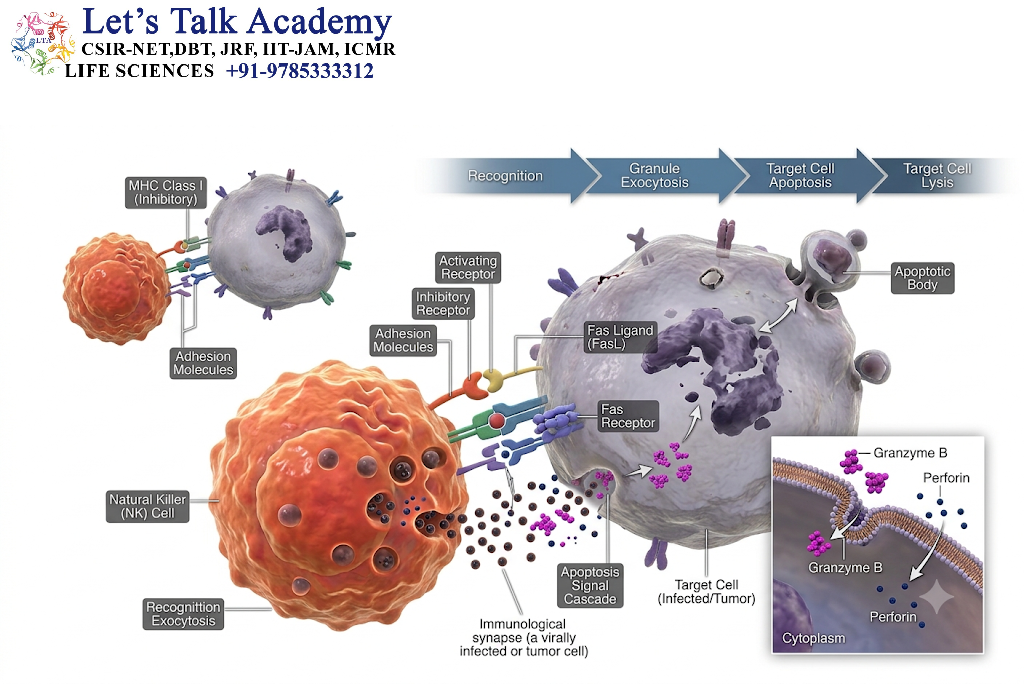
NK cells are innate cytotoxic lymphocytes that can recognize and eliminate abnormal cells without the conventional antigen-specific recognition used by CTLs.
Their activity is regulated by the integration of signals from multiple receptors.
The outcome depends on the overall balance between activating and inhibitory signals.
4.2 Missing-Self Recognition
Many healthy cells express MHC class I molecules that engage inhibitory NK-cell receptors.
If MHC class I expression is reduced or altered, inhibitory signaling may decrease. At the same time, stressed or transformed cells may express ligands for activating NK-cell receptors.
This combination can favor NK-cell activation.
This mechanism is often described as missing-self recognition.
4.3 NK-Cell Cytotoxic Mechanism
Once activated, NK cells form contact with the target cell and release cytotoxic granules.
The major components include:
Perforin → facilitates granzyme delivery → caspase activation → apoptosis
NK cells can also use death-receptor pathways to induce target-cell apoptosis.
In addition to killing, NK cells produce cytokines such as IFN-γ and TNF-α, allowing them to influence other components of the immune response.
5. Antibody-Dependent Cell-Mediated Cytotoxicity
5.1 Definition of ADCC
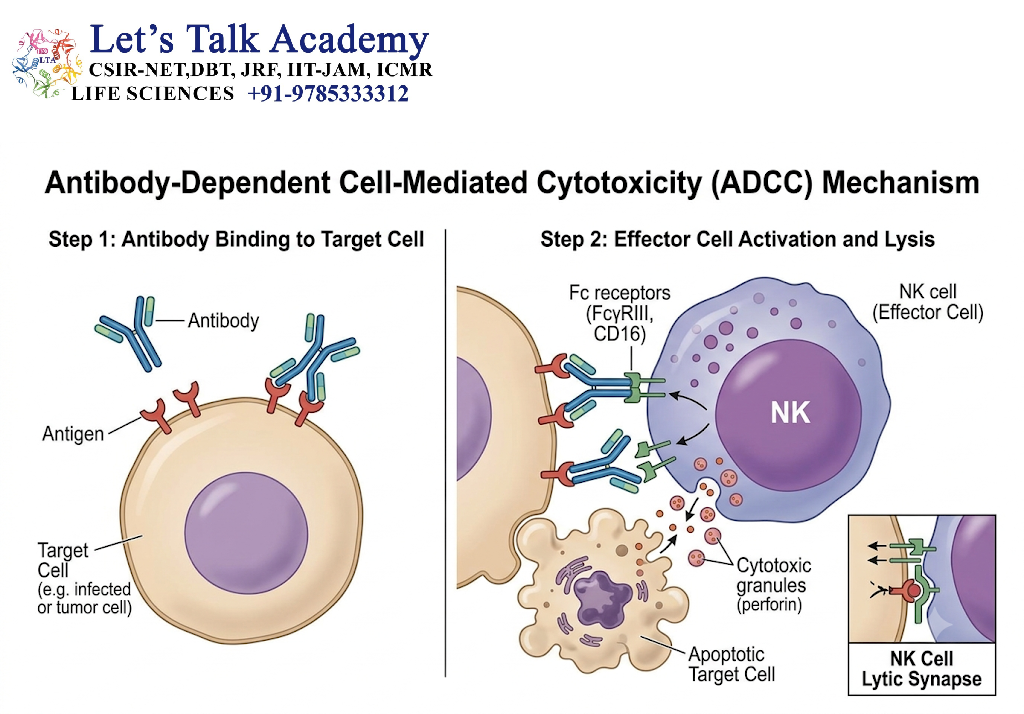
Antibody-dependent cell-mediated cytotoxicity (ADCC) is an immune mechanism in which an effector cell recognizes antibodies attached to a target cell and subsequently destroys that target.
ADCC provides an important connection between humoral and cellular immunity.
The process involves three principal components:
- Target cell
- Antibody
- Fc-receptor-bearing effector cell
The antibody binds its antigen through its Fab region. Its Fc region remains available for interaction with Fc receptors on effector cells.
When Fc receptors are engaged by antibody-coated targets, signaling pathways activate the effector cell and can result in target-cell death.
5.2 Role of NK Cells in ADCC
NK cells are major mediators of IgG-dependent ADCC.
They express FcγRIIIa (CD16), which recognizes the Fc region of IgG antibodies bound to target-cell surfaces.
The sequence can be summarized as:
Antigen on target cell → IgG binding → Fc exposure → CD16 binding → NK-cell activation → cytotoxic granule release → target-cell apoptosis
This mechanism allows NK cells to destroy cells that have been specifically coated with antibodies even though the NK cell itself does not recognize the target antigen through a conventional antigen-specific TCR.
5.3 Effector Cells Other Than NK Cells
Although NK cells are particularly important in ADCC, other immune cells can participate in antibody-dependent cellular mechanisms.
These include:
- Monocytes
- Macrophages
- Neutrophils
- Eosinophils
Different cell types express different Fc receptors and therefore respond differently to antibody-coated targets.
6. Macrophage-Mediated Effector Functions
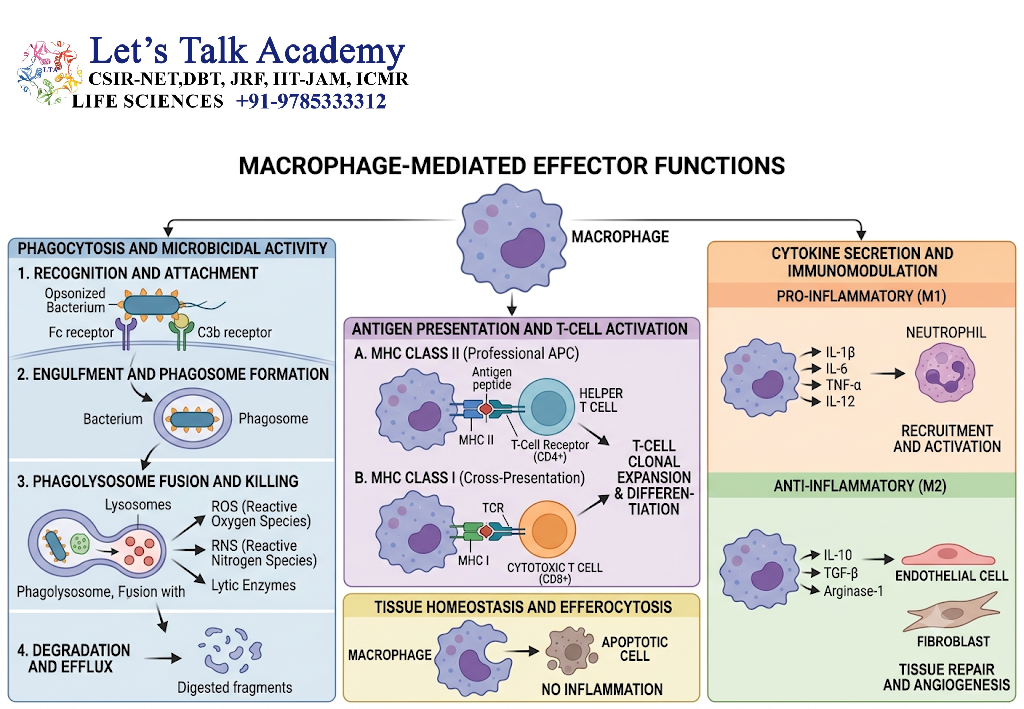
6.1 Phagocytosis
Macrophages recognize particles, microorganisms, apoptotic cells, and cellular debris.
The basic stages of phagocytosis include:
Chemotaxis → attachment → engulfment → phagosome formation → phagolysosome formation → degradation
The phagosome fuses with lysosomal compartments, producing a phagolysosome in which the ingested material can be degraded.
6.2 Opsonization and Fc Receptors
Antibodies can enhance phagocytosis by coating target particles.
This process is called opsonization.
Macrophages possess Fc receptors that can bind the Fc portion of antibodies attached to targets.
Therefore:
Antibody coating → Fc-receptor recognition → macrophage activation → engulfment → intracellular destruction
This demonstrates how antibody-mediated recognition can recruit cellular effector mechanisms.
6.3 Cytokine Production
Activated macrophages release numerous cytokines and chemokines.
These mediators can:
- Recruit additional immune cells
- Promote inflammation
- Activate endothelial cells
- Influence T-cell responses
- Enhance antimicrobial activity
- Coordinate tissue responses
Macrophages therefore function not only as phagocytes but also as important communication centers within the immune system.
7. Cytokines as Cell-Mediated Effector Molecules
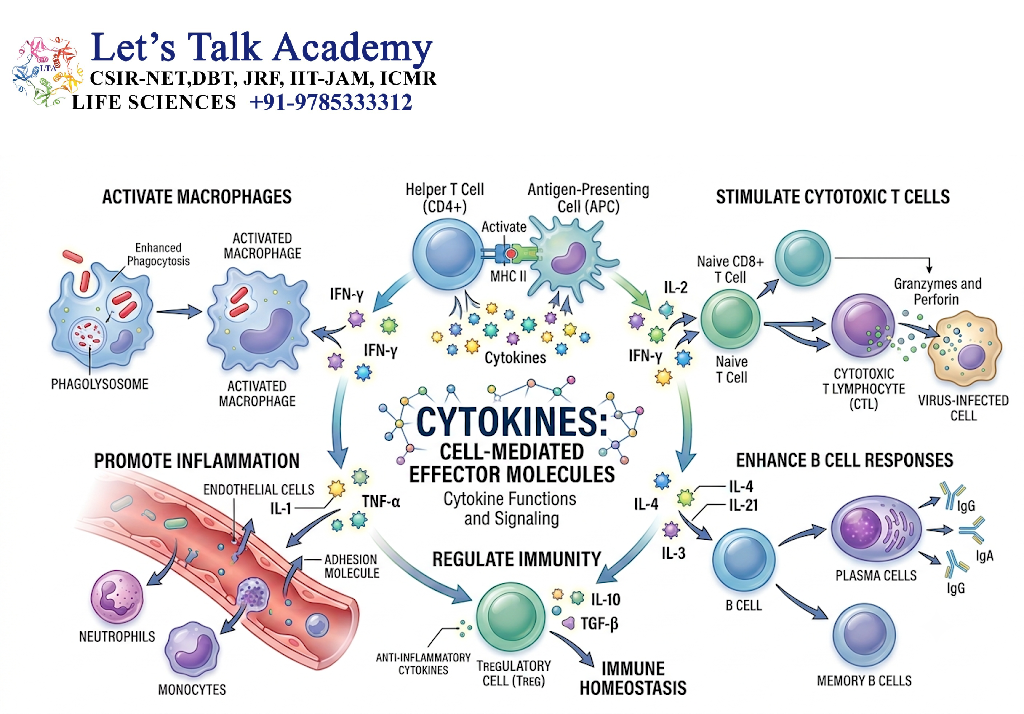
7.1 Importance of Cytokines
Cytokines are soluble signaling molecules that allow immune cells to communicate with one another.
They can influence:
- Cell proliferation
- Differentiation
- Activation
- Migration
- Survival
- Inflammation
- Antiviral activity
Cytokines may act on the same cell that produced them, nearby cells, or cells at distant sites.
7.2 Interferon-Gamma
IFN-γ is particularly important in cell-mediated immunity.
It can enhance macrophage antimicrobial activity and influence antigen presentation and immune-cell communication.
Activated T cells and NK cells are important sources of IFN-γ.
Thus, IFN-γ provides an important functional link between lymphocytes and macrophages.
7.3 Tumor Necrosis Factor
TNF is a major inflammatory cytokine.
It can promote:
- Inflammatory-cell recruitment
- Endothelial activation
- Changes in vascular permeability
- Activation of immune cells
- Certain cell-death pathways
Excessive or prolonged TNF activity, however, can contribute to tissue injury and pathological inflammation.
8. Mechanism of Target-Cell Killing
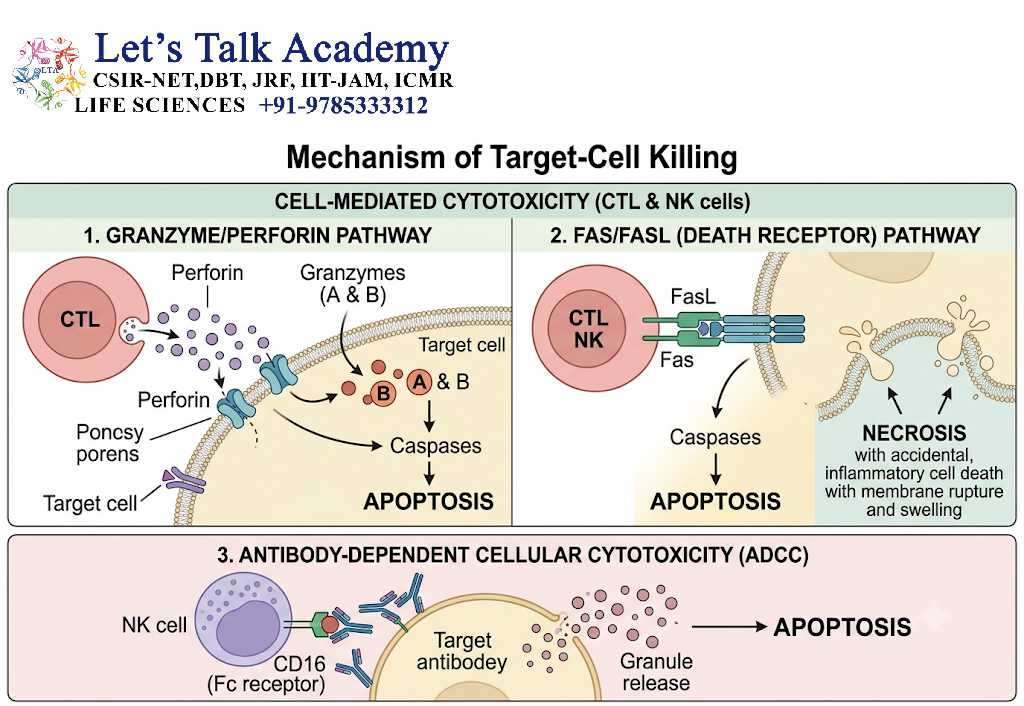
Cell-mediated cytotoxicity generally follows a coordinated sequence.
8.1 Step 1: Target Recognition
The immune effector cell identifies the target through receptor–ligand interactions.
Recognition mechanisms differ between CTLs, NK cells, and Fc-receptor-bearing cells.
8.2 Step 2: Effector-Target Cell Contact
The effector cell attaches firmly to the target cell.
Adhesion molecules stabilize this interaction and allow signaling to continue efficiently.
8.3 Step 3: Activation of Cytotoxic Machinery
Intracellular signaling activates cytoskeletal rearrangements, granule polarization, and secretion machinery.
8.4 Step 4: Directed Release of Cytotoxic Molecules
Cytotoxic granules are directed toward the target-cell interface.
The release is highly localized, helping minimize damage to surrounding cells.
8.5 Step 5: Induction of Apoptosis
Perforin–granzyme pathways or death-receptor pathways activate programmed cell-death mechanisms.
The target cell undergoes apoptosis and is subsequently removed by phagocytic cells.
9. Comparison of Major Cell-Mediated Effector Mechanisms
| Effector mechanism | Major cell | Recognition principle | Major outcome |
|---|---|---|---|
| CTL cytotoxicity | CD8⁺ T cell | Peptide–MHC I recognition | Target-cell apoptosis |
| NK cytotoxicity | NK cell | Activating/inhibitory receptor balance | Target-cell apoptosis |
| ADCC | NK cells and other Fc-receptor-bearing cells | Antibody Fc recognition | Target-cell destruction |
| Phagocytosis | Macrophages, neutrophils | Pattern/opsonin/receptor recognition | Engulfment and degradation |
| Macrophage activation | Macrophages | Cytokine and receptor signaling | Antimicrobial and inflammatory activity |
| Cytokine-mediated regulation | T cells, NK cells, macrophages and others | Cytokine receptors | Immune-cell activation or regulation |
The important distinction is that CTLs generally use antigen-specific TCR recognition of peptide–MHC I, whereas NK cells integrate activating and inhibitory signals and can also participate in ADCC through Fc receptors.
10. Cell-Mediated Effector Functions in Antiviral Immunity
Viruses replicate inside host cells, which creates a major challenge for the immune system because antibodies have limited access to intracellular viral components.
Cell-mediated mechanisms solve this problem by eliminating infected host cells.
CTLs recognize viral peptides presented by MHC class I and kill infected cells.
NK cells can recognize infected cells when their receptor-signaling pattern favors activation.
Antibodies can also bind viral proteins expressed on infected-cell surfaces, allowing NK cells to eliminate those cells through ADCC.
Thus, antiviral immunity involves cooperation between:
Antibodies + CTLs + NK cells + macrophages + cytokines
This coordinated response helps restrict viral replication and remove infected cells.
11. Cell-Mediated Effector Functions in Cancer
Cancer cells can acquire abnormal characteristics that make them targets for immune surveillance.
CTLs can recognize tumor-associated or tumor-specific peptides presented through MHC class I.
NK cells can recognize stress-associated changes and altered expression of inhibitory ligands.
Antibodies directed against tumor-associated surface molecules can recruit NK cells through ADCC.
Macrophages and other innate immune cells can also participate in tumor-associated immune responses.
The relationship between immune cells and tumors is complex because tumors can develop mechanisms that suppress immune-cell activity, alter antigen presentation, and modify the surrounding immune environment.
12. Regulation of Cell-Mediated Effector Functions
Cell-mediated immunity must be tightly controlled.
An excessively strong response can cause damage to healthy tissues, while an insufficient response can allow infections or abnormal cells to persist.
Regulation occurs through:
- Inhibitory receptors
- Regulatory cytokines
- Immune checkpoints
- Regulatory T cells
- Changes in antigen presentation
- Controlled expression of activating ligands
- Programmed termination of immune responses
NK-cell function, for example, depends on a balance between activating and inhibitory signals rather than on a single receptor interaction.
13. Biological Significance of Cell-Mediated Effector Functions
Cell-mediated effector functions are essential because many important biological threats are located inside host cells or require direct cellular removal.
Their major roles include:
13.1 Elimination of Infected Cells
CTLs and NK cells can remove virus-infected cells and limit pathogen replication.
13.2 Tumor Surveillance
NK cells and CTLs contribute to the detection and elimination of abnormal cells.
13.3 Removal of Antibody-Coated Cells
ADCC connects antibody recognition with cellular cytotoxicity.
13.4 Destruction of Phagocytosed Microorganisms
Macrophages and neutrophils destroy microorganisms after engulfment.
13.5 Immune-System Communication
Cytokines produced by immune cells coordinate the activities of different immune-cell populations.
13.6 Removal of Dead Cells
Phagocytic cells help clear apoptotic cells and cellular debris, supporting tissue homeostasis.
14. Important Molecular Concepts
14.1 MHC Class I
MHC class I molecules present intracellularly derived peptides to CD8⁺ T cells.
This pathway is central to CTL recognition.
14.2 T-Cell Receptor
The TCR provides antigen-specific recognition by detecting peptide–MHC complexes.
14.3 CD8
CD8 acts as a co-receptor on cytotoxic T cells and interacts with MHC class I.
14.4 CD16
CD16 is an Fc receptor expressed prominently on NK cells and is a major receptor involved in IgG-dependent ADCC.
14.5 Perforin
Perforin is a cytotoxic granule protein involved in the delivery of granzymes into target cells.
14.6 Granzymes
Granzymes are proteases that activate intracellular pathways leading to apoptosis.
14.7 Fas and Fas Ligand
Fas–FasL interactions provide a death-receptor pathway for inducing apoptosis.
14.8 IFN-γ
IFN-γ is an important cytokine that promotes macrophage activation and shapes cell-mediated immune responses.
15. ADCC and Complement-Mediated Cytotoxicity: A Key Distinction
ADCC and complement-dependent cytotoxicity should not be confused.
In ADCC, antibody-coated target cells are recognized by Fc receptors on effector cells such as NK cells, macrophages, neutrophils, or eosinophils.
In complement-dependent cytotoxicity, antibodies activate the complement system, ultimately contributing to target-cell damage through complement-mediated mechanisms.
Therefore:
ADCC → antibody + Fc receptor-bearing effector cell
Complement-dependent cytotoxicity → antibody + complement system
Both mechanisms can contribute to antibody-mediated defense, but their effector pathways are different.
16. Integration of Innate and Adaptive Effector Functions
Cell-mediated immunity demonstrates that innate and adaptive immune mechanisms do not function independently.
For example, adaptive immunity generates antigen-specific antibodies and CTLs, whereas innate cells such as NK cells and macrophages provide rapid effector mechanisms.
Antibodies can recruit NK cells through Fc receptors.
T-cell-derived cytokines can activate macrophages.
Macrophages and dendritic cells can influence lymphocyte activation.
Therefore, the immune response is better understood as an integrated network rather than as a collection of separate pathways.
17. Clinical and Biological Applications
Understanding cell-mediated effector mechanisms is important in several areas of modern biology and medicine.
17.1 Monoclonal Antibody Therapy
Some therapeutic antibodies can recruit immune effector cells through Fc-receptor interactions.
ADCC is one mechanism through which antibody-coated target cells can be eliminated.
17.2 Cancer Immunology
CTLs, NK cells, macrophages, and antibodies can all contribute to immune-mediated tumor control.
17.3 Antiviral Defense
Cell-mediated cytotoxicity is essential for eliminating infected cells and restricting intracellular pathogen replication.
17.4 Immune Deficiencies
Defects in cytotoxic lymphocyte function can impair the body’s ability to control certain infections and abnormal cellular proliferation.


