
1. Introduction to Light Signaling in Plants
1.1 Overview of Light Signaling
Light is one of the most important environmental factors controlling plant growth and development. Unlike animals, plants cannot move from one location to another to escape unfavorable environmental conditions. Instead, they continuously monitor their surroundings and adjust their growth, physiology, and metabolism according to environmental signals.
Among these environmental signals, light plays a particularly important role. It serves not only as an energy source for photosynthesis but also as an informational signal that helps plants determine when and where to grow.
Plants can detect differences in light intensity, wavelength, direction, duration, and the ratio of different wavelengths. They use specialized light-sensing proteins called photoreceptors to perceive these changes. The information received by photoreceptors is transmitted through complex molecular signaling networks that ultimately regulate gene expression, protein activity, cell division, cell expansion, and developmental transitions.
The process through which plants perceive light and convert it into biochemical, cellular, and physiological responses is known as light signaling or photomorphogenic signaling.
Light signaling influences nearly every stage of a plant’s life cycle, beginning with seed germination and continuing through seedling establishment, leaf development, flowering, shade avoidance, and senescence.
For example, a seedling growing underground generally develops a long hypocotyl and a closed apical hook. Once it emerges into the light, its developmental program changes. The hypocotyl elongation slows, the cotyledons expand, chloroplasts develop, and photosynthetic machinery becomes active. This transition is called photomorphogenesis, or light-mediated plant development.
Light signaling is therefore not simply a response to illumination. It is a highly coordinated regulatory system that integrates environmental information with the plant’s internal developmental and metabolic status.
1.2 Light as an Environmental Signal
Light has two major roles in plants:
-
Energy source: Light provides the energy required for photosynthesis, allowing plants to synthesize organic compounds from carbon dioxide and water.
-
Information source: Light provides information about the surrounding environment and helps regulate plant growth and development.
The informational role of light is particularly important because different wavelengths activate different photoreceptors and signaling pathways.
The major characteristics of light perceived by plants include:
-
Light intensity: The amount of light available to the plant.
-
Wavelength: The specific color or spectral quality of light.
-
Direction: The direction from which light reaches the plant.
-
Photoperiod: The duration of light and darkness during a daily cycle.
-
Light quality: The relative distribution of different wavelengths in the light environment.
Plants use this information to regulate processes such as seed germination, stem elongation, leaf expansion, flowering, and chloroplast development.
For instance, a plant growing beneath a dense canopy may receive relatively more far-red light compared with red light. This change in spectral composition can indicate the presence of neighboring vegetation and trigger shade-avoidance responses.
1.3 Discovery and Development of the Concept of Photomorphogenesis
The effects of light on plant development have been recognized for centuries. However, the molecular basis of these responses became clearer through physiological, genetic, biochemical, and molecular studies.
Early research demonstrated that plants respond differently to various wavelengths of light. These observations led to the identification of specialized photoreceptors that control distinct developmental processes.
Studies of Arabidopsis thaliana, a widely used model plant, helped establish the roles of phytochromes, cryptochromes, phototropins, and other light-responsive proteins.
Genetic analysis revealed that mutations in specific photoreceptor genes can produce characteristic changes in seedling development. Molecular studies subsequently demonstrated that light signaling involves changes in protein stability, protein localization, transcription factor activity, and gene expression.
Modern research shows that plant light signaling is closely connected with hormone signaling, the circadian clock, temperature sensing, and nutrient availability. Thus, photomorphogenesis is best understood as an integrated regulatory network rather than a single linear pathway.
2. Physical Basis of Light Perception in Plants
2.1 Nature of Light
Light is electromagnetic radiation that travels in the form of oscillating electric and magnetic fields. Plants are primarily responsive to particular portions of the electromagnetic spectrum, especially wavelengths within or near the visible region.
The visible spectrum generally extends from approximately 400 to 700 nanometers (nm). This range is known as photosynthetically active radiation, or PAR, because it provides the wavelengths most commonly used in photosynthesis.
However, several plant photoreceptors also detect wavelengths outside this range, particularly ultraviolet and far-red radiation.
Light can be described in terms of wavelength, frequency, and energy. The energy of a photon is given by:
Where:
-
EE is the energy of a photon.
-
hh is Planck’s constant.
-
cc is the speed of light.
-
λ\lambda is the wavelength of light.
As wavelength decreases, photon energy increases. Therefore, ultraviolet radiation contains more energy per photon than visible red light.
Photoreceptors contain light-absorbing molecules called chromophores. When a chromophore absorbs a photon, it undergoes a change in its electronic or chemical state. This change alters the activity or conformation of the photoreceptor protein, initiating a signaling process.
2.2 Wavelengths Involved in Plant Light Responses
Different photoreceptors are sensitive to different parts of the electromagnetic spectrum.
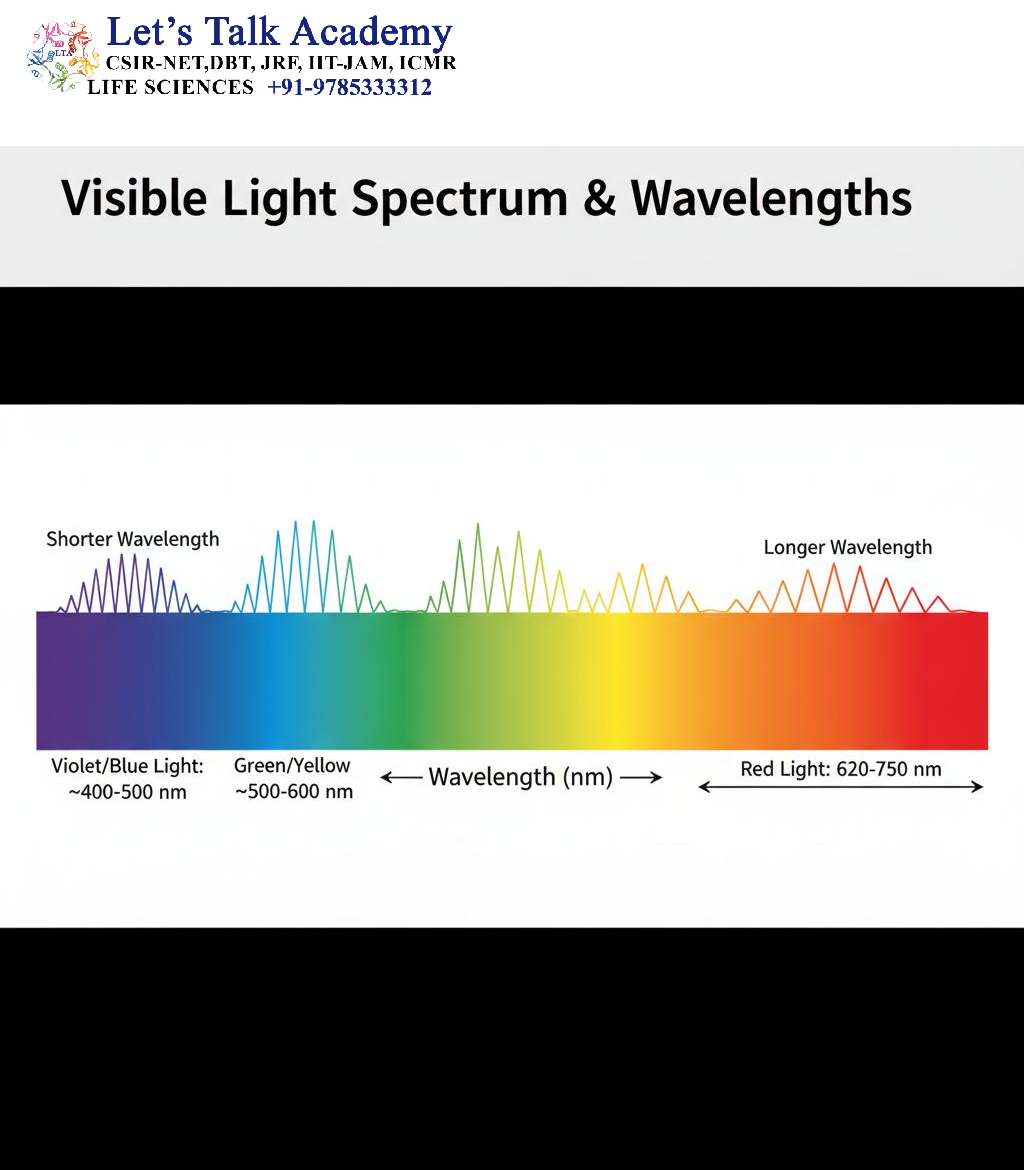
Red light
Red light, approximately 600–700 nm, is strongly involved in phytochrome-mediated regulation of seed germination, photomorphogenesis, and shade responses.
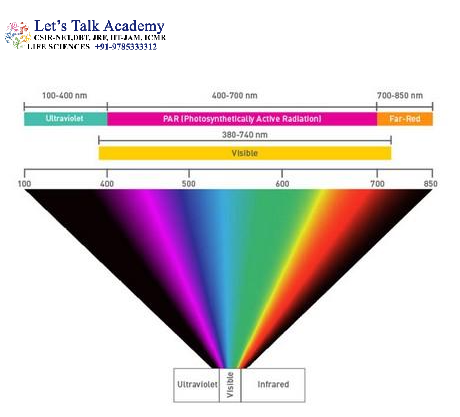
Far-red light
Far-red light, approximately 700–750 nm, influences phytochrome activity and provides information about the presence of nearby vegetation.
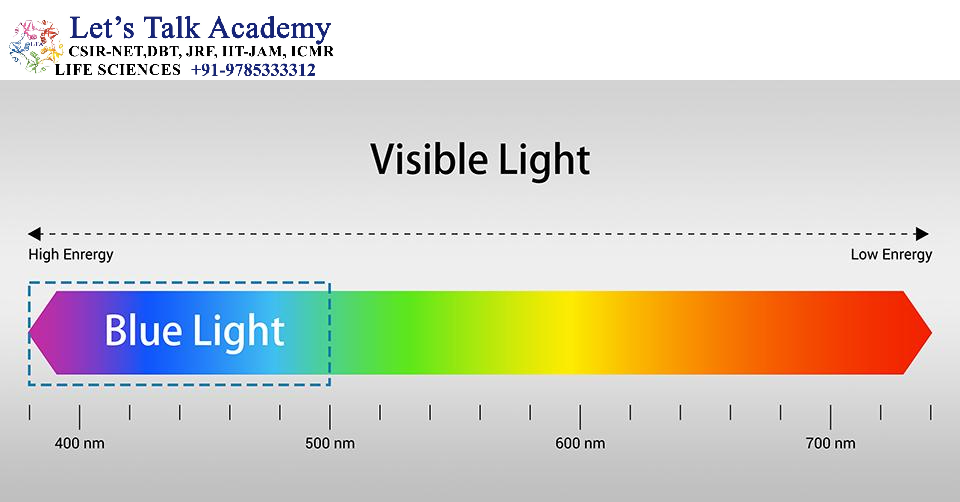
Blue light
Blue light, approximately 400–500 nm, regulates phototropism, stomatal opening, circadian rhythms, and several aspects of plant development.
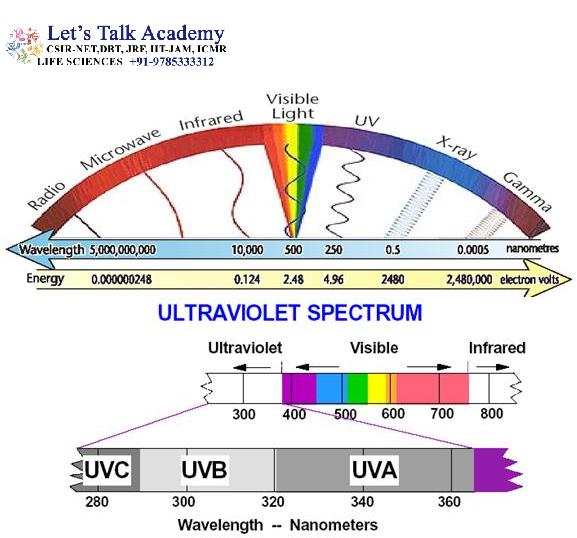
Ultraviolet light
Ultraviolet-B radiation, approximately 280–315 nm, is detected primarily by UVR8 and contributes to protective responses, changes in gene expression, and specialized metabolite production.
The sensitivity of plants to particular wavelengths depends on the photoreceptor involved, the physiological condition of the plant, and the intensity and duration of exposure.
3. Major Photoreceptors Involved in Plant Light Signaling
3.1 Introduction to Plant Photoreceptors
Photoreceptors are specialized proteins that detect specific wavelengths of light and initiate signaling pathways. They are essential for translating environmental light information into changes in plant development and physiology.
Unlike the visual systems of animals, plants do not possess a single specialized organ responsible for detecting light. Photoreceptors are distributed throughout different plant organs, including leaves, stems, shoot apices, and, in some species and circumstances, roots.
Different photoreceptors have distinct absorption properties, molecular structures, and biological functions. However, their signaling pathways frequently overlap, allowing plants to coordinate responses to complex light environments.
The major photoreceptor families found in higher plants include:
-
Phytochromes, which primarily detect red and far-red light.
-
Cryptochromes, which detect blue and ultraviolet-A light.
-
Phototropins, which detect blue light and regulate directional growth and photosynthetic optimization.
-
Zeitlupe-family photoreceptors, which participate in blue-light signaling and circadian clock regulation.
-
UVR8, which detects ultraviolet-B radiation.
The major photoreceptor families and their general functions are summarized below.
|
Photoreceptor family |
Major light range |
Important functions |
|---|---|---|
|
Phytochromes |
Red and far-red |
Seed germination, photomorphogenesis, shade avoidance, flowering |
|
Cryptochromes |
Blue and UV-A |
Seedling development, flowering, circadian regulation |
|
Phototropins |
Blue light |
Phototropism, chloroplast movement, stomatal opening |
|
Zeitlupe family |
Blue light |
Circadian rhythms and photoperiodic flowering |
|
UVR8 |
UV-B |
UV protection, acclimation, gene regulation |
The five major classes and their broad roles are well established in plant photobiology, although the exact photoreceptor composition and functions vary among plant species.
3.2 Phytochromes: Red- and Far-Red-Light Photoreceptors
3.2.1 General Characteristics of Phytochromes
Phytochromes are photosensory proteins that detect red and far-red light. They play central roles in regulating plant development throughout the life cycle.
The name phytochrome refers to a plant-associated chromatic photoreceptor. In the model plant Arabidopsis thaliana, five phytochrome proteins—phyA, phyB, phyC, phyD, and phyE—have been identified.
Phytochromes are involved in:
-
Seed germination.
-
Seedling de-etiolation.
-
Regulation of hypocotyl elongation.
-
Shade-avoidance responses.
-
Leaf development.
-
Flowering-time regulation.
-
Chloroplast development.
-
Regulation of circadian rhythms.
-
Responses to certain environmental temperature changes.
Phytochromes are particularly important because they can detect changes in the red-to-far-red light ratio, which provides information about surrounding vegetation.
3.2.2 Molecular Structure of Phytochromes
A typical phytochrome consists of a protein moiety covalently associated with a linear tetrapyrrole chromophore called phytochromobilin.
Phytochromes contain several structurally and functionally important regions:
-
N-terminal photosensory region: Contains the chromophore-binding region and is responsible for light perception.
-
Chromophore-binding domain: Holds the phytochromobilin chromophore through a covalent linkage.
-
PAS-related domains: Contribute to protein interactions and structural organization.
-
Histidine kinase-related domain: Participates in signaling and conformational regulation, although plant phytochromes do not function as conventional bacterial histidine kinases.
The chromophore absorbs light, and the resulting changes in its configuration induce structural rearrangements in the phytochrome protein.
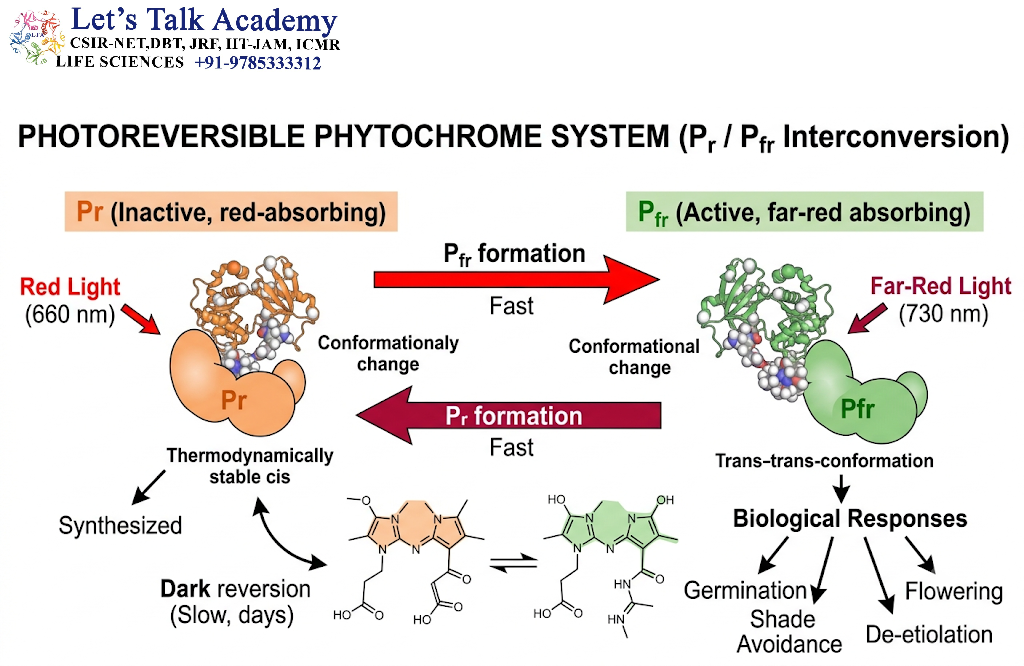
3.2.3 Pr and Pfr Forms of Phytochrome
Phytochromes exist in two major photoreversible forms:
-
Pr form: The red-light-absorbing form.
-
Pfr form: The far-red-light-absorbing form.
In many developmental responses, the Pfr form is the physiologically active form. However, phytochrome A-mediated responses can involve distinct signaling mechanisms, and the relationship between Pfr formation and activity is not identical for every phytochrome or response.
The interconversion of the two forms is illustrated below:
Photoreversible Phytochrome System
Pr form
Red-light-absorbing state
Generally associated with the inactive state in many phytochrome responses
Red light
Pfr form
Far-red-light-absorbing state
Often the active signaling state
Far-red light
Red and far-red light can reversibly alter phytochrome conformation and signaling activity. Thermal reversion and degradation also influence phytochrome activity.
When Pr absorbs red light, it undergoes a structural transition toward Pfr. When Pfr absorbs far-red light, it can return toward Pr. The ratio of these forms provides information about the light environment.
This reversible photochemistry allows plants to detect not only the presence of light but also changes in its spectral composition.
3.2.4 Phytochrome Nuclear Translocation
One of the most important features of phytochrome signaling is the light-dependent movement of phytochromes between the cytoplasm and nucleus.
In darkness, many phytochrome molecules are predominantly found in the cytoplasm, although the precise distribution depends on the phytochrome type and physiological conditions.
After light activation, specific phytochromes can accumulate in the nucleus. There, they interact with signaling proteins and transcriptional regulators to control gene expression.
For example, activated phytochrome B can interact with members of the PHYTOCHROME-INTERACTING FACTOR family, particularly PIF transcription factors.
Nuclear translocation is therefore an important step in connecting the initial perception of light with changes in transcription.
3.2.5 Phytochrome-Interacting Factors
Phytochrome-interacting factors (PIFs) are a group of basic helix–loop–helix transcription factors that regulate gene expression associated with skotomorphogenesis, growth, and light responses.
In darkness, PIF proteins can promote the expression of genes associated with seedling elongation and dark-adapted development.
Following the activation of phytochrome B by red light, PIFs can interact with the active receptor. This interaction may promote PIF phosphorylation, ubiquitination, and subsequent degradation through the proteasome.
As PIF activity decreases, genes associated with photomorphogenesis become more active, resulting in developmental changes such as:
-
Inhibition of excessive hypocotyl elongation.
-
Expansion of cotyledons.
-
Initiation of chloroplast development.
-
Activation of light-responsive genes.
This pathway is a major example of how light signaling regulates plant development through changes in transcription factor stability.
3.2.6 Phytochrome A and Phytochrome B
Phytochrome A and phytochrome B are among the best-studied members of the phytochrome family, but they differ in their physiological roles.
Phytochrome A:
-
Is particularly important for responses to very low light levels.
-
Contributes to far-red-light responses.
-
Participates in seedling development and de-etiolation.
-
Helps plants respond to changes in the light environment during emergence from soil or vegetation.
Phytochrome B:
-
Plays a major role in red-light-mediated photomorphogenesis.
-
Regulates hypocotyl elongation.
-
Participates in shade avoidance.
-
Influences flowering and other developmental processes.
-
Interacts with PIF transcription factors to regulate growth.
The activities of phytochrome A and phytochrome B are not completely independent. Their signaling pathways may interact, and the biological response depends on the intensity, duration, and spectral quality of light.
3.3 Cryptochromes: Blue-Light Photoreceptors
3.3.1 Introduction to Cryptochromes
Cryptochromes are flavoprotein photoreceptors that primarily perceive blue and ultraviolet-A light. They are structurally related to DNA photolyases, enzymes involved in the repair of ultraviolet-induced DNA damage.
However, plant cryptochromes generally function as light sensors rather than as DNA-repair enzymes.
In Arabidopsis thaliana, CRY1 and CRY2 are major cryptochromes involved in blue-light signaling. CRY3 is another member of the family with distinct cellular and physiological roles.
Cryptochromes regulate:
-
Inhibition of hypocotyl elongation.
-
Photomorphogenesis.
-
Regulation of flowering.
-
Circadian clock entrainment.
-
Light-responsive gene expression.
-
Interactions between light and other environmental signals.
3.3.2 Molecular Structure and Chromophore
Cryptochromes contain a photolyase-homologous region that binds flavin adenine dinucleotide (FAD). The FAD chromophore participates in the absorption of blue light.
The protein structure can be divided broadly into:
-
An N-terminal photolyase-homologous domain.
-
A C-terminal extension that contributes to signaling and interactions with other proteins.
The C-terminal region is especially important in several plant cryptochromes because it participates in the regulation of downstream signaling processes.
When blue light is absorbed, the cryptochrome protein undergoes changes in its molecular and biochemical properties. These changes can influence protein interactions, phosphorylation, oligomerization, and the formation of signaling complexes.
3.3.3 Mechanism of Cryptochrome Activation
The activation of cryptochromes is more complex than simply absorbing a photon. Depending on the receptor and experimental conditions, activation can involve changes in protein conformation, photoreduction-related processes, phosphorylation, dimerization, and the formation of higher-order protein assemblies.
Activated cryptochromes interact with specific signaling partners and transcriptional regulators. These interactions alter the expression of genes involved in plant growth and development.
For example, CRY2 can interact with CIB family transcription factors to regulate flowering-related gene expression. Cryptochromes can also influence the activity of other regulatory proteins, thereby coordinating light signaling with the plant’s internal clock and developmental programs.
3.3.4 Cryptochromes and Photomorphogenesis
In dark-grown seedlings, elongation of the hypocotyl helps the young plant reach the soil surface. After exposure to blue light, cryptochromes contribute to the inhibition of excessive hypocotyl elongation.
They also promote changes characteristic of photomorphogenesis, including:
-
Cotyledon expansion.
-
Leaf development.
-
Increased expression of light-responsive genes.
-
Changes in chloroplast development.
-
Coordination with phytochrome signaling.
Cryptochromes often function together with phytochromes rather than operating in isolation. The integration of red-, far-red-, and blue-light information allows the plant to produce an appropriate developmental response.
3.4 Phototropins: Blue-Light Receptors for Growth Orientation and Photosynthetic Optimization
3.4.1 Introduction to Phototropins
Phototropins are blue-light-activated receptor proteins that regulate several plant responses related to the efficient capture and use of light.
The most prominent function of phototropins is the regulation of phototropism, in which plant organs grow in response to the direction of light.
Phototropins also regulate:
-
Chloroplast movement.
-
Stomatal opening.
-
Leaf positioning.
-
Certain aspects of leaf expansion.
-
Cellular responses that improve photosynthetic efficiency.
In Arabidopsis thaliana, PHOT1 and PHOT2 are the principal phototropins.
3.4.2 Molecular Structure of Phototropins
Phototropins belong to the family of LOV-domain-containing blue-light receptors. They contain:
-
Two LOV domains, called LOV1 and LOV2.
-
Flavin mononucleotide (FMN) chromophores associated with their LOV domains.
-
A serine/threonine protein kinase domain.
The LOV2 domain is particularly important in the regulation of phototropin kinase activity.
When blue light is absorbed by the FMN chromophore, it triggers structural and chemical changes within the LOV domain. These changes relieve inhibitory interactions involving the kinase region and promote activation of the receptor’s kinase activity.
3.4.3 Phototropin Signaling and Phototropism
Phototropism is the directional growth of a plant organ in response to light. In many young shoots, growth toward a light source is known as positive phototropism.
The general mechanism involves the following stages:
-
Blue light is perceived by phototropins, particularly in the illuminated region of a young shoot.
-
Phototropin signaling activates downstream components, including proteins involved in the regulation of auxin transport.
-
Auxin becomes asymmetrically distributed across the responding organ.
-
Differential cell elongation occurs on the two sides of the organ.
-
The organ bends toward the light source.
In shoots, auxin accumulation on the shaded side commonly promotes greater cell elongation, causing the shoot to curve toward the light.
The PIN-FORMED and AUX1/LAX families of auxin transport proteins contribute to the regulation of auxin distribution. The exact transport mechanisms vary with the organ and developmental context.
3.4.4 Phototropins and Chloroplast Movement
Plants can change the position of chloroplasts within their cells in response to light intensity.
Under weak light, chloroplasts may accumulate along cell surfaces that maximize light absorption. This response is called the accumulation response.
Under strong light, chloroplasts may move toward positions that reduce excessive light absorption and help protect the photosynthetic apparatus. This is called the avoidance response.
Phototropins, particularly PHOT1 and PHOT2, regulate these movements through signaling pathways that involve the actin cytoskeleton and specialized chloroplast-associated structures.
Chloroplast movement is an example of how light signaling can rapidly modify cell organization without requiring large changes in gene expression.
3.4.5 Phototropins and Stomatal Opening
Stomata are microscopic pores, usually found in the epidermis of leaves, that regulate gas exchange between the plant and the atmosphere.
Blue light activates phototropin signaling in guard cells. This contributes to the activation of plasma membrane H⁺-ATPases, membrane hyperpolarization, and the uptake of potassium and other solutes. Water enters the guard cells osmotically, increasing their turgor and promoting stomatal opening.
Stomatal opening allows carbon dioxide to enter the leaf for photosynthesis. However, it can also increase water loss through transpiration. Therefore, phototropin-mediated stomatal regulation must be integrated with other signals, including abscisic acid, carbon dioxide concentration, and water status.
3.5 Zeitlupe-Family Photoreceptors
3.5.1 General Characteristics
The Zeitlupe family consists of blue-light-responsive proteins that participate in the regulation of the circadian clock and photoperiodic flowering.
Important members in Arabidopsis include:
-
ZEITLUPE (ZTL).
-
FLAVIN-BINDING, KELCH REPEAT, F-BOX 1 (FKF1).
-
LOV KELCH PROTEIN 2 (LKP2).
These proteins contain a LOV domain that binds a flavin chromophore, an F-box domain, and Kelch repeat regions.
The LOV domain participates in blue-light perception, whereas the F-box and Kelch repeat regions contribute to protein interactions and the regulation of target proteins.
3.5.2 Role in Circadian Regulation
The circadian clock is an internal timing system that coordinates biological processes with approximately 24-hour environmental cycles.
Zeitlupe-family proteins contribute to the regulation of clock-associated proteins and help synchronize plant physiology with day–night cycles.
ZTL, for example, participates in the light-dependent regulation of proteins involved in circadian timing. FKF1 also contributes to the timing of flowering under suitable photoperiodic conditions.
3.5.3 Role in Photoperiodic Flowering
Photoperiodic flowering refers to the regulation of flowering in response to day length.
In long-day plants such as Arabidopsis thaliana, FKF1 contributes to the regulation of flowering-time pathways. Blue light can enhance FKF1-related interactions that promote the degradation of specific transcriptional repressors, including proteins that regulate the expression of CONSTANS (CO).
The accumulation of CO protein at an appropriate time of day can promote the expression of FLOWERING LOCUS T (FT), which encodes a key component of the flowering signal.
The FT protein or FT-associated flowering signal is produced in leaves and can move toward the shoot apical meristem, where it contributes to the transition from vegetative growth to flowering.
The exact mechanisms vary among species, but the central principle is that light perception and circadian timing work together to regulate seasonal development.
3.6 UVR8: The Ultraviolet-B Photoreceptor
3.6.1 Introduction to UVR8
UVR8, or UV RESISTANCE LOCUS 8, is a specialized photoreceptor that detects ultraviolet-B radiation.
UV-B radiation is a natural component of sunlight, but excessive exposure can damage cellular structures, DNA, proteins, and photosynthetic machinery.
Plants use UVR8-mediated signaling to activate protective and acclimatory responses.
UVR8 contributes to:
-
Activation of UV-B-responsive genes.
-
Production of protective flavonoids.
-
Regulation of plant morphology.
-
Protection against UV-associated cellular damage.
-
Coordination of stress-acclimation responses.
3.6.2 Molecular Mechanism of UVR8 Activation
Unlike phytochromes, cryptochromes, and phototropins, UVR8 does not require a separate covalently bound chromophore for its basic UV-B perception mechanism.
In its ground state, UVR8 exists primarily as a homodimer. Specific tryptophan residues within the protein absorb UV-B radiation.
When UV-B is absorbed, interactions at the interface between the two protein subunits are disrupted. The UVR8 dimer dissociates into monomers, which can interact with the regulatory protein COP1.
The UVR8–COP1 complex contributes to the activation of UV-B-responsive transcriptional programs.
3.6.3 UVR8, COP1, and HY5
COP1, or CONSTITUTIVELY PHOTOMORPHOGENIC 1, is an important regulator of light signaling. In darkness, COP1 functions as part of an E3 ubiquitin ligase complex that promotes the degradation of several positive regulators of photomorphogenesis, including HY5.
HY5 is a bZIP transcription factor that promotes the expression of numerous light-responsive genes.
After UV-B activation of UVR8, interaction with COP1 contributes to the stabilization and activation of HY5. This promotes the transcription of genes involved in UV-B acclimation and photoprotection.
One important response is the increased production of flavonoids and related phenolic compounds. These compounds can absorb UV radiation and help protect underlying tissues from excessive exposure.
The UVR8 signaling pathway therefore connects UV-B perception with gene expression, metabolic adaptation, and cellular protection.
3.6.4 Negative Regulation of UVR8 Signaling
Light signaling must be tightly controlled. Excessive or prolonged activation of signaling pathways can interfere with normal growth and cellular homeostasis.
The proteins RUP1 and RUP2, or REPRESSOR OF UV-B PHOTOMORPHOGENESIS proteins, contribute to the negative regulation of UVR8 signaling.
They help promote the reassociation of UVR8 monomers into the inactive dimeric form, thereby reducing the duration of the UV-B response.
This feedback mechanism allows plants to respond to UV-B while avoiding unnecessary or prolonged activation of protective signaling.
The UVR8 pathway illustrates an important general principle of signal transduction: activation must be balanced by mechanisms that terminate or attenuate the response.
4. Core Molecular Components of Plant Light Signaling
4.1 Introduction to Downstream Signaling
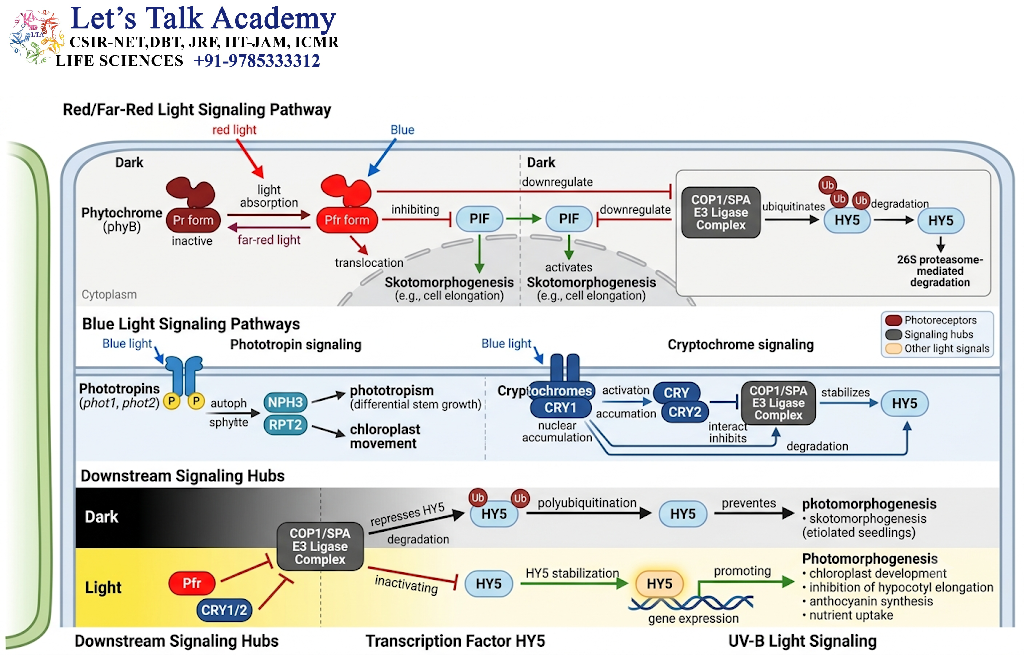
Photoreceptors initiate light perception, but they do not independently control every developmental response. Instead, they communicate with signaling proteins, transcription factors, protein kinases, ubiquitin ligases, and other regulatory molecules.
These components convert the initial photoreceptor response into changes in gene expression and cellular activity.
A simplified sequence of light signaling is:
Light perception → Photoreceptor activation → Protein interactions → Signaling regulation → Transcriptional changes → Physiological response
The actual signaling pathways are interconnected and may include multiple feedback loops, parallel pathways, and interactions with hormones and metabolic signals.
4.2 COP1: A Major Regulator of Photomorphogenesis
4.2.1 Structure and Function of COP1
COP1 is an E3 ubiquitin ligase that plays a central role in regulating light-dependent development.
An E3 ubiquitin ligase helps attach ubiquitin molecules to selected target proteins. Ubiquitination can mark proteins for degradation by the 26S proteasome.
COP1 contains domains that support protein interactions and ubiquitin-ligase activity, including a RING-finger domain, a coiled-coil region, and WD40 repeats.
In darkness, COP1 promotes the degradation of several positive regulators of photomorphogenesis. As a result, seedlings maintain features associated with dark growth.
4.2.2 COP1 Activity in Darkness
Dark-grown seedlings generally display a developmental pattern called skotomorphogenesis.
Typical features include:
-
Elongated hypocotyls.
-
A closed apical hook.
-
Small, unopened cotyledons.
-
Limited chloroplast development.
-
Reduced expression of many light-induced genes.
In darkness, COP1 accumulates in the nucleus and helps maintain this developmental state by targeting positive light-signaling regulators for degradation.
HY5 is one of the best-known targets of this regulatory system.
4.2.3 Regulation of COP1 by Light
Light signaling can reduce the ability of COP1 to promote the degradation of certain photomorphogenesis-promoting proteins.
Activated photoreceptors, including phytochromes and cryptochromes, influence COP1 activity through distinct molecular interactions and regulatory pathways.
As COP1-mediated degradation of positive regulators decreases, proteins such as HY5 accumulate and activate light-responsive genes.
It is important to recognize that COP1 is not simply an on–off switch. Its activity is regulated in a context-dependent manner and contributes to multiple signaling networks.
4.3 HY5: A Central Transcriptional Regulator
4.3.1 General Characteristics of HY5
HY5, or ELONGATED HYPOCOTYL 5, is a basic leucine zipper transcription factor that plays a major role in plant photomorphogenesis.
It acts downstream of several photoreceptor pathways and regulates the expression of genes involved in:
-
Seedling development.
-
Chlorophyll biosynthesis.
-
Anthocyanin production.
-
Root development.
-
Nutrient responses.
-
Light acclimation.
-
Photoprotection.
HY5 is often described as a central integrator of light signaling because it connects light perception with multiple developmental and metabolic processes.
4.3.2 HY5-Mediated Gene Regulation
HY5 binds to specific DNA sequences in the promoters of target genes and influences their transcription.
Its activity can promote the expression of genes required for the development of photosynthetic tissues and the production of protective pigments.
For example, light-induced HY5 activity contributes to the expression of genes associated with chlorophyll biosynthesis and flavonoid metabolism.
HY5 can also interact with other transcription factors and signaling pathways, allowing plants to coordinate their responses to light with nutrient availability, hormonal status, and environmental stress.
4.4 Phytochrome-Interacting Factors and Growth Regulation
PIF proteins regulate many aspects of plant growth, particularly in darkness and under shade-like conditions.
In dark-grown seedlings, PIFs can promote the expression of genes involved in cell elongation. Once phytochrome signaling is activated, selected PIFs can be phosphorylated and degraded, leading to reduced elongation and the development of light-grown characteristics.
PIFs also interact with hormonal pathways, including those regulated by gibberellins, auxin, and ethylene.
Consequently, the final growth response depends on interactions among photoreceptors, transcription factors, hormones, and cellular growth machinery.
4.5 Protein Phosphorylation and Dephosphorylation
Protein phosphorylation is a reversible process in which phosphate groups are added to proteins by protein kinases and removed by protein phosphatases.
Light signaling frequently involves phosphorylation because it can rapidly alter protein activity, localization, stability, and protein–protein interactions.
Examples include:
-
Phototropin activation through light-regulated kinase activity.
-
Phosphorylation of transcription factors and signaling proteins.
-
Regulation of cryptochrome activity.
-
Phosphorylation-associated changes in PIF stability and activity.
-
Regulation of ion transport proteins during stomatal responses.
Protein phosphatases counterbalance kinase activity and help regulate the duration and intensity of signaling.
Phosphorylation is particularly useful in signaling systems because it allows rapid responses without requiring the synthesis of new proteins.
4.6 Ubiquitination and Proteasomal Degradation
Ubiquitination is a process in which ubiquitin molecules are attached to target proteins through the coordinated activity of E1, E2, and E3 enzymes.
The ubiquitin–proteasome system is important for controlling the abundance of signaling proteins.
In plant light signaling, ubiquitination can regulate:
-
Photoreceptor stability.
-
Transcription factor degradation.
-
Signal termination.
-
Developmental transitions.
-
Adaptation to changing light conditions.
For example, the light-dependent degradation of selected PIF proteins contributes to the inhibition of hypocotyl elongation.
The ability to regulate protein stability allows plants to change their developmental state in response to environmental signals.
5. Light-Regulated Seedling Development
5.1 Skotomorphogenesis: Development in Darkness
When a seed germinates beneath the soil, it develops in the absence of significant light. During this period, the seedling follows a developmental program known as skotomorphogenesis.
The primary purpose of this growth pattern is to help the emerging shoot reach the soil surface efficiently.
Typical characteristics of a dark-grown dicot seedling include:
-
Elongated hypocotyl.
-
Closed or tightly curved apical hook.
-
Small, unexpanded cotyledons.
-
Limited chloroplast differentiation.
-
Reduced accumulation of photosynthetic pigments.
-
Dependence on stored nutrients during early development.
Skotomorphogenesis is not simply a state in which light responses are absent. It is an actively regulated developmental program involving transcription factors, hormonal signals, and protein degradation.
PIF proteins and COP1 play important roles in maintaining several aspects of dark-grown development.
5.2 Photomorphogenesis: Development in Light
When a seedling reaches the soil surface and encounters light, it undergoes a major developmental transition called photomorphogenesis.
During this transition, the plant changes its growth pattern to support photosynthesis and efficient use of the surrounding environment.
Important features of photomorphogenesis include:
-
Inhibition of excessive hypocotyl elongation.
-
Opening and expansion of cotyledons.
-
Development of chloroplasts.
-
Production of chlorophyll.
-
Activation of photosynthetic genes.
-
Changes in root and shoot growth.
-
Regulation of protective pigments and secondary metabolites.
Photomorphogenesis is controlled by several photoreceptors acting through partially overlapping pathways.
5.2.1 Molecular Switch from Skotomorphogenesis to Photomorphogenesis
The transition from dark growth to light growth involves a coordinated change in the activity and stability of regulatory proteins.
In darkness:
-
COP1 promotes the degradation of positive regulators such as HY5.
-
PIFs promote the expression of genes associated with elongation.
-
Dark-growth developmental programs remain active.
In light:
-
Activated photoreceptors influence COP1 activity.
-
HY5 and other positive regulators accumulate.
-
Selected PIF proteins are inhibited or degraded.
-
Light-responsive genes become activated.
-
Photomorphogenic development begins.
This process is not instantaneous in every tissue. The timing of the response depends on the type of light, the developmental stage, and the physiological condition of the seedling.
5.3 De-Etiolation
The process through which a dark-grown seedling develops light-grown characteristics is called de-etiolation.
It is one of the most extensively studied examples of plant light signaling.
De-etiolation includes several coordinated events:
-
Reduction in hypocotyl elongation.
-
Expansion of cotyledons.
-
Opening of the apical hook.
-
Chlorophyll synthesis.
-
Chloroplast maturation.
-
Activation of photosynthetic machinery.
-
Reorganization of gene expression.
Different photoreceptors contribute to de-etiolation under different light conditions.
Red light is detected mainly by phytochromes, whereas blue light is detected by cryptochromes and other blue-light photoreceptors. The combined action of these receptors ensures that the seedling responds appropriately to its environment.
5.4 Light Signaling and Chloroplast Development
Chloroplasts are specialized organelles responsible for photosynthesis in plants and many algae.
In dark-grown seedlings, plastids are not yet fully developed into functional chloroplasts. Exposure to light stimulates the development of the photosynthetic apparatus.
Light signaling regulates the expression of nuclear genes encoding proteins required for:
-
Chlorophyll biosynthesis.
-
Photosystem assembly.
-
Electron transport.
-
Carbon fixation.
-
Thylakoid membrane development.
-
Photosynthetic enzyme production.
The development of chloroplasts requires coordinated communication between the nucleus and plastids. Light-responsive nuclear transcription factors, including HY5, contribute to the expression of genes required for photosynthetic development.
The process is also influenced by plastid-derived signals, which help coordinate nuclear gene expression with the functional condition of the developing chloroplast.
5.5 Light Regulation of Root Development
Although shoots are the most visible organs involved in photomorphogenesis, light signaling also influences root development.
Roots are usually located in the soil, but they may receive light directly or respond to light-derived signals transmitted from shoots.
Light influences:
-
Root elongation.
-
Lateral root formation.
-
Root gravitropism.
-
Root architecture.
-
Nutrient uptake.
-
Interactions between roots and microorganisms.
Light-responsive pathways interact with auxin, cytokinins, abscisic acid, and other hormones to regulate root growth.
HY5 is one of the regulatory factors implicated in the integration of light signals with root development. The effects of light on roots can be direct or indirect, depending on the species and experimental conditions.
6. Light Signaling in Plant Growth and Development
6.1 Light Regulation of Hypocotyl Elongation
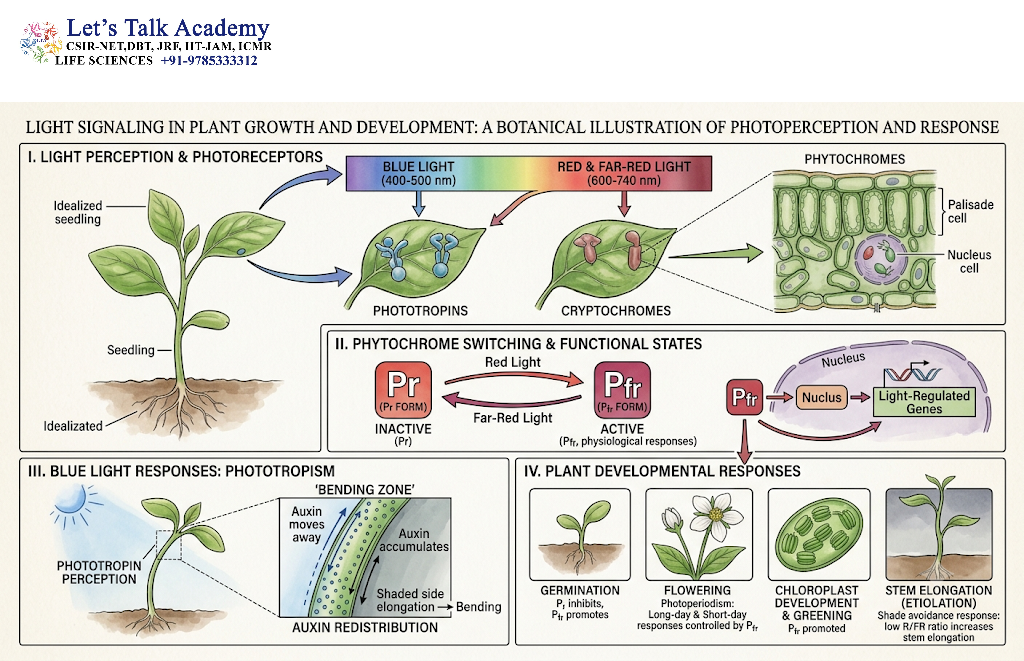
Hypocotyl elongation is one of the most useful indicators of light-regulated development.
In darkness, seedlings generally develop elongated hypocotyls. In many light-grown seedlings, hypocotyl elongation is reduced.
The regulation of hypocotyl growth involves:
-
Phytochrome signaling.
-
Cryptochrome signaling.
-
PIF transcription factors.
-
Auxin activity.
-
Gibberellin signaling.
-
Cell wall modification.
-
Regulation of cell expansion.
PIF proteins can activate genes involved in cell elongation. Light-activated phytochromes can reduce the activity of selected PIFs, thereby restricting excessive hypocotyl growth.
However, light does not always inhibit elongation. Under certain shade conditions, plants may elongate their stems and petioles as part of the shade-avoidance response.
Therefore, the effect of light on growth depends on the quality, intensity, and environmental context of the signal.
6.2 Shade-Avoidance Responses
6.2.1 Meaning of Shade Avoidance
Plants frequently grow in environments where neighboring plants compete for sunlight. A plant growing beneath a canopy may receive less direct sunlight and a different spectral composition of light.
Leaves absorb a significant amount of red light for photosynthesis while transmitting or reflecting relatively more far-red light. As a result, the red-to-far-red ratio decreases beneath vegetation.
Plants use phytochrome signaling to detect changes in this ratio.
The developmental responses triggered by the perception of competition for light are collectively known as shade-avoidance responses.
6.2.2 Major Features of Shade Avoidance
Shade-avoidance responses may include:
-
Stem elongation.
-
Petiole elongation.
-
Changes in leaf angle.
-
Reduced investment in some forms of branching.
-
Earlier flowering in certain species.
-
Changes in biomass allocation.
These responses help a plant position its leaves in a more favorable light environment.
However, shade avoidance can also involve trade-offs. For example, rapid stem elongation may occur at the expense of other forms of growth or structural investment.
6.2.3 Molecular Basis of Shade Avoidance
Phytochrome B is a major regulator of shade responses.
When the red-to-far-red ratio decreases, the balance between the active and less-active forms of phytochrome B changes. This influences the interaction between phytochrome B and PIF transcription factors.
Changes in PIF activity can promote the expression of genes associated with elongation growth.
Hormonal pathways, particularly those involving auxin, gibberellins, and brassinosteroids, interact with PIF-regulated transcription to produce the final growth response.
Shade avoidance therefore demonstrates how plants combine spectral information with hormonal regulation and developmental control.
6.3 Light and Leaf Expansion
Leaves are the principal organs responsible for capturing light for photosynthesis. Light signaling regulates leaf size, shape, orientation, and cellular development.
Light affects leaf development through changes in:
-
Cell division.
-
Cell expansion.
-
Chloroplast formation.
-
Epidermal differentiation.
-
Stomatal development.
-
Photosynthetic gene expression.
Light also interacts with the plant’s nutritional status and hormonal signals to influence leaf growth.
For example, insufficient light may alter leaf morphology in ways that improve light capture, whereas excessive light may activate protective responses that reduce photodamage.
6.4 Light Regulation of Flowering
6.4.1 Photoperiodism
Photoperiodism is the physiological response of organisms to the relative duration of light and darkness in a daily cycle.
In plants, photoperiodism is particularly important for the regulation of flowering.
Plants may be classified according to their responses to day length as:
-
Long-day plants: Flower when the photoperiod meets or exceeds a suitable critical duration.
-
Short-day plants: Flower when the photoperiod is shorter than a critical duration, often requiring sufficiently long nights.
-
Day-neutral plants: Flowering is less dependent on a specific photoperiod and may be influenced more strongly by age or other environmental conditions.
These categories describe flowering responses under particular environmental conditions; they do not imply that every species responds identically to day length.
6.4.2 Integration of Light and the Circadian Clock
The circadian clock is an internal biological oscillator that helps plants measure the timing of environmental signals.
Light synchronizes or entrains the clock, allowing plants to coordinate developmental processes with the daily cycle.
Photoreceptors such as phytochromes and cryptochromes participate in the entrainment of the circadian clock.
The clock, in turn, influences the timing of gene expression and the activity of proteins involved in flowering.
This coordination is essential because flowering often depends not only on how much light a plant receives but also on when that light is perceived.
6.4.3 CONSTANS and FLOWERING LOCUS T
In Arabidopsis thaliana, the photoperiodic flowering pathway includes the transcription factor CONSTANS (CO) and the flowering regulator FLOWERING LOCUS T (FT).
Under suitable long-day conditions, the expression and stability of CO are regulated in a time-dependent manner.
When CO activity is appropriately aligned with light availability, it can promote the expression of FT in leaves.
FT-associated signals then contribute to the transition of the shoot apical meristem from vegetative development to reproductive development.
The flowering pathway is regulated by several additional factors, including temperature, age, gibberellins, and the autonomous flowering pathway.
Light signaling therefore functions as one part of a larger regulatory network controlling flowering time.
6.5 Light and Stomatal Development
Stomata are formed by specialized epidermal cells and regulate the exchange of gases between the plant and the atmosphere.
Light influences both stomatal development and stomatal function.
Blue-light signaling through phototropins contributes to the regulation of stomatal opening in mature guard cells.
In addition, light-responsive regulatory networks can influence the development and distribution of stomata during leaf formation.
The final stomatal pattern is controlled by a network of developmental regulators, including members of the SPEECHLESS, MUTE, and FAMA transcription factor families, together with environmental and hormonal signals.
Light signaling can influence these developmental processes through interactions with other regulatory pathways.
7. Light Signaling and Hormonal Interactions
7.1 Introduction
Plant development is regulated by the interaction of environmental signals and plant hormones. Light signaling does not operate independently of hormonal pathways. Instead, photoreceptors and hormone-regulated processes influence one another to control growth and development.
Important hormones involved in light responses include:
-
Auxins.
-
Gibberellins.
-
Brassinosteroids.
-
Abscisic acid.
-
Ethylene.
-
Cytokinins.
The outcome of light perception depends on the balance between these signals and the physiological condition of the plant.
7.2 Interaction Between Light Signaling and Auxin
Auxin is a major regulator of cell elongation, cell division, root development, and directional growth.
Auxin is particularly important in phototropism, where its asymmetric distribution causes differential growth on opposite sides of a plant organ.
Light signaling influences auxin transport and response through several mechanisms.
In phototropism:
-
Phototropins perceive directional blue light.
-
Downstream signaling alters the distribution or activity of auxin transport components.
-
Auxin accumulates asymmetrically in the responding region.
-
Differences in cell expansion cause curvature.
Auxin also interacts with phytochrome and PIF pathways during shade avoidance and hypocotyl growth.
7.3 Interaction Between Light and Gibberellins
Gibberellins are plant hormones that promote several growth processes, including stem elongation and seed germination.
The effects of gibberellins are partly mediated through the regulation of DELLA proteins.
DELLA proteins are growth-regulating factors that can inhibit the activity of certain transcriptional regulators, including PIFs.
Light signaling and gibberellin signaling can therefore converge on shared regulatory components.
In dark-grown seedlings, gibberellin-associated pathways may support elongation growth. After exposure to light, changes in phytochrome signaling and other pathways can modify the balance between growth-promoting and growth-restricting regulators.
This interaction helps plants adjust growth according to the availability of light.
7.4 Interaction Between Light and Brassinosteroids
Brassinosteroids are steroid hormones that regulate cell expansion, cell division, vascular development, and other aspects of plant growth.
They interact with light signaling at multiple levels.
Brassinosteroid signaling can influence the activity of transcription factors involved in hypocotyl elongation. In turn, light-regulated proteins such as PIFs can participate in the integration of light and brassinosteroid signals.
The interaction between these pathways allows plants to coordinate growth with environmental conditions.
For example, shade-associated elongation responses may involve both light-regulated transcription factors and hormone-dependent changes in cell expansion.
7.5 Interaction Between Light and Abscisic Acid
Abscisic acid (ABA) is an important hormone involved in stress responses, seed dormancy, stomatal regulation, and water balance.
Light signaling and ABA signaling interact during seed germination, seedling development, and stress adaptation.
During seed germination, environmental light conditions can influence the balance between growth-promoting and inhibitory signals.
In guard cells, ABA generally promotes stomatal closure during water stress, whereas blue-light signaling through phototropins promotes stomatal opening under suitable conditions.
The final stomatal response depends on the relative strength and timing of these signals, as well as the plant’s water status.
7.6 Interaction Between Light and Ethylene
Ethylene is a gaseous plant hormone involved in growth regulation, fruit ripening, senescence, and responses to mechanical and environmental stress.
Ethylene signaling interacts with light-regulated pathways during seedling development.
In some conditions, ethylene can influence hypocotyl elongation and apical hook development. Light signaling can modify the expression and activity of components involved in ethylene responses.
The interaction is particularly important because plants must coordinate their developmental program with environmental obstacles and the availability of light.
7.7 Interaction Between Light and Cytokinins
Cytokinins are hormones that regulate cell division, shoot development, nutrient mobilization, and the maintenance of certain developmental processes.
Light signaling and cytokinin signaling interact during chloroplast development, shoot growth, and the regulation of photosynthetic capacity.
Cytokinins can influence the expression of light-responsive genes, while light-regulated transcription factors can affect hormone metabolism and signaling.
These interactions help coordinate the development of photosynthetic tissues with the plant’s nutritional and developmental status.
8. Light Signaling, Photosynthesis, and Stress Adaptation
8.1 Light Signaling and Photosynthetic Efficiency
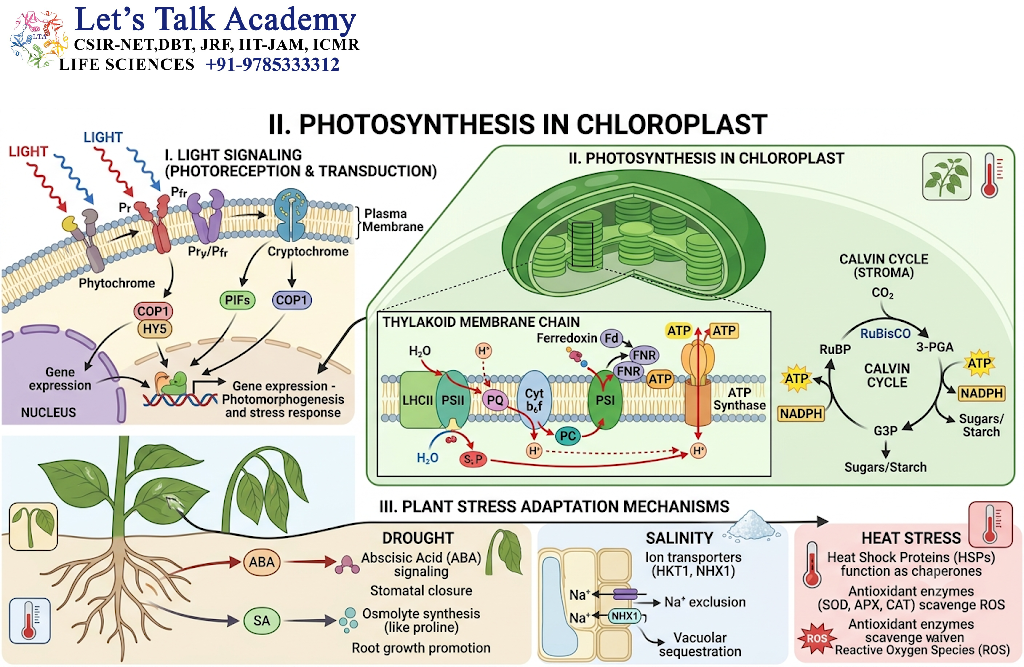
Photosynthesis requires light energy, but excessive light can damage the photosynthetic apparatus.
Plants therefore need mechanisms that balance light capture with protection against photodamage.
Light signaling contributes to this balance by regulating:
-
Leaf orientation.
-
Chloroplast movement.
-
Stomatal behavior.
-
Photosynthetic gene expression.
-
Pigment production.
-
Photoprotective mechanisms.
-
Acclimation to changing light intensity.
Phototropins are important for chloroplast movement and stomatal opening, while other photoreceptors regulate developmental and transcriptional responses.
8.2 High-Light Stress and Photoprotection
High-light conditions can lead to the production of reactive oxygen species (ROS) and damage to photosynthetic components.
Plants respond through several protective mechanisms, including:
-
Dissipation of excess excitation energy.
-
Antioxidant production.
-
Changes in chloroplast positioning.
-
Activation of protective genes.
-
Repair of damaged photosynthetic proteins.
-
Adjustments in photosynthetic activity.
The process of non-photochemical quenching, particularly energy dissipation within the photosynthetic apparatus, helps reduce the harmful effects of excessive excitation.
Light signaling contributes to the regulation of genes involved in photoprotection, although the sensing and response to high-light stress involve several systems beyond the classical photoreceptors.
8.3 Light Signaling and Reactive Oxygen Species
Reactive oxygen species include molecules such as superoxide, hydrogen peroxide, and singlet oxygen.
At controlled levels, ROS can act as signaling molecules. At excessive levels, they can damage proteins, lipids, nucleic acids, and cellular membranes.
Light intensity influences the production of ROS through its effects on photosynthetic electron transport and other metabolic processes.
Plants coordinate light signaling with ROS signaling to regulate acclimation responses.
This integration helps plants distinguish between normal fluctuations in light and conditions that require stronger protective responses.
8.4 UV-B-Induced Protective Responses
UV-B radiation can damage DNA and other cellular components if exposure is excessive.
The UVR8 pathway activates the expression of genes involved in UV-B acclimation.
One major protective mechanism is the production of flavonoids and related phenolic compounds.
These compounds can absorb ultraviolet radiation and reduce the amount of damaging radiation reaching sensitive cellular structures.
UV-B signaling may also influence antioxidant defenses, cell expansion, leaf development, and other physiological processes.
The final response depends on the intensity and duration of UV-B exposure and the plant’s developmental and physiological state.
8.5 Light Signaling and Drought Responses
Light signaling interacts with pathways involved in drought tolerance.
Under drought conditions, plants modify stomatal behavior, root development, growth, and metabolism to conserve water.
Phototropin-mediated blue-light signaling promotes stomatal opening under suitable conditions, but drought-associated ABA signaling can counteract this response and promote closure.
Light-responsive transcription factors may also influence root development and stress-responsive gene expression.
The interaction between light and drought signaling enables plants to balance carbon acquisition with water conservation.
8.6 Light and Temperature Integration
Plants frequently experience changes in both light and temperature.
Some photoreceptors, especially phytochromes, participate in pathways that integrate light signals with temperature-dependent growth responses.
Under warm conditions, plants may display elongation responses that resemble aspects of shade avoidance. These responses involve interconnected molecular networks, including PIF proteins and hormone signaling.
The relationship between light and temperature is particularly important because both factors influence plant development and seasonal adaptation.
9. Experimental Approaches for Studying Plant Light Signaling
9.1 Importance of Experimental Analysis
Understanding light signaling requires the integration of physiological, biochemical, genetic, molecular, and imaging approaches.
Researchers use model plants such as Arabidopsis thaliana because they have a relatively short life cycle, a well-characterized genome, and extensive genetic resources.
The experimental study of light signaling often involves comparing plants exposed to different wavelengths, intensities, or durations of light.
9.2 Photobiological Experiments
9.2.1 Light-Controlled Growth Experiments
In a typical experiment, seedlings are grown under controlled conditions and exposed to specific light treatments.
Researchers may compare:
-
Darkness.
-
Red light.
-
Far-red light.
-
Blue light.
-
White light.
-
Different photoperiods.
-
Different light intensities.
The resulting differences in hypocotyl length, cotyledon expansion, root growth, and leaf development can reveal the effects of light on plant development.
9.2.2 Action Spectra
An action spectrum describes the relative effectiveness of different wavelengths of light in producing a particular biological response.
For example, an action spectrum for phototropism can help identify the wavelengths that most effectively induce directional growth.
Action spectra are useful for distinguishing different light responses and for investigating the involvement of particular photoreceptor systems.
9.3 Mutant and Transgenic Analysis
Genetic approaches are essential for identifying the functions of photoreceptors and signaling proteins.
Researchers can study plants with mutations in genes encoding:
-
Phytochromes.
-
Cryptochromes.
-
Phototropins.
-
UVR8.
-
COP1.
-
HY5.
-
PIF proteins.
-
Other signaling components.
A mutant that displays an altered response to a particular wavelength may provide evidence that the affected gene contributes to that signaling pathway.
However, interpretation requires caution because photoreceptor families often have overlapping functions.
9.4 Gene Expression Analysis
Light signaling changes the expression of numerous genes.
Researchers use methods such as:
-
Quantitative reverse-transcription PCR.
-
RNA sequencing.
-
Reporter-gene analysis.
-
Promoter studies.
-
Chromatin immunoprecipitation.
-
Transcriptomic comparisons.
These techniques help identify genes activated or repressed by light and reveal the regulatory networks involved.
For example, the expression of light-responsive genes can be compared between wild-type plants and mutants lacking a particular photoreceptor.
9.5 Protein–Protein Interaction Studies
Many light-signaling mechanisms depend on interactions between photoreceptors and downstream regulatory proteins.
Methods used to study these interactions include:
-
Yeast two-hybrid analysis.
-
Co-immunoprecipitation.
-
Pull-down assays.
-
Bimolecular fluorescence complementation.
-
Protein localization studies.
-
Biophysical binding assays.
These methods help determine whether two proteins interact and under what conditions the interaction occurs.
9.6 Fluorescence Microscopy and Live-Cell Imaging
Fluorescence microscopy is useful for studying the location and movement of light-signaling proteins within cells.
Researchers can use fluorescent protein tags to observe:
-
Nuclear accumulation of photoreceptors.
-
Photobody formation.
-
Chloroplast movement.
-
Changes in protein localization.
-
Protein interactions.
-
Cellular responses to light.
Live-cell imaging allows scientists to study the timing and dynamics of signaling events.
9.7 Physiological Measurements
Light signaling can also be studied through physiological measurements, including:
-
Photosynthetic rate.
-
Chlorophyll content.
-
Stomatal conductance.
-
Transpiration.
-
Leaf area.
-
Root length.
-
Biomass accumulation.
-
Flowering time.
-
Anthocyanin content.
Combining physiological measurements with molecular analysis provides a more complete understanding of how light signals influence plant function.
10. Integration of Light Signaling with Other Environmental Signals
10.1 Introduction to Signal Integration
Plants rarely experience environmental factors independently. In their natural habitats, light intensity, temperature, water availability, nutrient concentration, and atmospheric carbon dioxide can change simultaneously.
To survive and reproduce, plants must integrate information from these different sources and coordinate their physiological responses.
Light signaling is therefore connected to several other signaling networks. Photoreceptors can influence hormonal pathways, metabolic responses, circadian rhythms, and stress-response mechanisms.
This integration allows plants to respond more effectively to environmental changes than they could by relying on a single signaling pathway.
10.2 Integration of Light and the Circadian Clock
The circadian clock is an endogenous timing system that generates approximately 24-hour rhythms in biological processes.
These rhythms continue under constant environmental conditions, although they can gradually become desynchronized from the external day–night cycle.
Light acts as an important environmental cue for resetting the circadian clock.
Phytochromes and cryptochromes contribute to the entrainment of circadian rhythms by detecting changes in light intensity and spectral composition.
The circadian clock regulates processes such as:
-
Photosynthetic activity.
-
Stomatal behavior.
-
Leaf movement.
-
Metabolic activity.
-
Gene expression.
-
Flowering-time pathways.
-
Growth patterns.
The interaction between photoreceptors and the circadian clock helps plants anticipate regular environmental changes instead of merely reacting to them.
10.3 Integration of Light and Temperature
Temperature influences plant growth, metabolism, flowering, and stress responses.
Light and temperature signaling share several regulatory components, including certain transcription factors and hormone-dependent pathways.
Phytochromes, particularly phytochrome B, have been implicated in the integration of light and temperature information.
Changes in temperature can influence phytochrome activity and the regulation of growth-related transcription factors.
For example, under certain warm-temperature conditions, plants may exhibit increased hypocotyl elongation. This response can involve PIF proteins and hormone signaling.
The relationship between light and temperature is complex and varies among species and developmental stages.
10.4 Integration of Light and Nutrient Signaling
Plants must coordinate light capture with nutrient availability.
Photosynthesis produces carbohydrates, while mineral nutrients such as nitrogen, phosphorus, magnesium, and iron are required for the formation of photosynthetic proteins, pigments, and cellular structures.
Light-responsive transcription factors, including HY5, can participate in the regulation of nutrient-related processes.
For example, light-dependent changes in gene expression can influence nutrient uptake, root development, and the allocation of carbon between roots and shoots.
Nutrient availability can also influence the plant’s ability to respond to light because photosynthetic development requires adequate resources.
10.5 Integration of Light and Carbon Metabolism
Photosynthesis converts light energy into chemical energy, primarily through the production of ATP and NADPH and the fixation of carbon dioxide.
Light signaling regulates the development and activity of the photosynthetic machinery, whereas carbohydrate availability can influence growth and gene expression.
The interaction between light signaling and sugar signaling helps coordinate:
-
Carbon fixation.
-
Growth.
-
Energy allocation.
-
Storage of carbohydrates.
-
Development of photosynthetic organs.
This interaction prevents the plant from activating energy-demanding developmental programs without adequate resources.
11. Advanced Molecular Concepts in Plant Light Signaling
11.1 Photobodies and Light Signaling
Photobodies are discrete, dynamic nuclear structures associated with certain photoreceptors, especially phytochromes.
They can be observed as distinct fluorescent structures when phytochromes are tagged with suitable fluorescent proteins.
Photobodies are associated with the organization of photoreceptor signaling components and may participate in the regulation of protein interactions and stability.
Their number, size, and composition can change in response to light conditions.
Although photobodies are important research subjects, their precise molecular functions are not identical across all photoreceptors or experimental systems.
11.2 Protein Stability as a Regulatory Mechanism
Light signaling depends not only on changes in protein activity but also on changes in protein stability.
The amount of a signaling protein present in a cell can determine the strength and duration of a response.
Important processes include:
-
Ubiquitination.
-
Proteasomal degradation.
-
Protein phosphorylation.
-
Protein dephosphorylation.
-
Changes in protein synthesis.
-
Changes in subcellular localization.
For example, the degradation of selected PIF proteins following phytochrome activation contributes to the transition from dark growth to light growth.
Similarly, regulatory mechanisms affecting cryptochrome stability can influence the duration of blue-light responses.
Protein turnover allows plants to respond dynamically to changes in environmental conditions.
11.3 Subcellular Localization of Signaling Proteins
The location of a protein within a cell can determine its function.
Photoreceptors and signaling proteins may move between the cytoplasm, nucleus, plasma membrane, and other cellular compartments.
Examples include:
-
Light-dependent movement of phytochromes into the nucleus.
-
Recruitment of signaling components to the plasma membrane during phototropin-mediated responses.
-
Redistribution of proteins associated with chloroplast movement.
-
Nuclear accumulation of regulatory proteins involved in gene expression.
Changes in subcellular localization can rapidly modify signaling activity and provide spatial control over cellular responses.
11.4 Feedback Regulation in Light Signaling
Feedback regulation ensures that a signaling pathway remains responsive without becoming excessively active.
Negative feedback can reduce signaling activity after a response has been initiated, whereas positive feedback can strengthen or prolong a response under particular conditions.
Examples of regulatory feedback include:
-
RUP1- and RUP2-mediated attenuation of UVR8 signaling.
-
Regulation of photoreceptor abundance.
-
Changes in the expression of light-signaling genes.
-
Interactions between photoreceptors and their downstream inhibitors.
-
Changes in the activity of transcription factors.
Feedback regulation is essential because environmental light conditions can change rapidly throughout the day.
11.5 Crosstalk Between Photoreceptor Pathways
Plants often perceive multiple wavelengths simultaneously. As a result, photoreceptor pathways do not always act independently.
For example:
-
Phytochromes and cryptochromes can work together during seedling development.
-
Phytochromes can influence the expression of components involved in phototropism.
-
Phototropins and phytochromes can interact indirectly or directly in certain responses.
-
Multiple photoreceptors can influence the expression of shared transcriptional regulators.
-
Different photoreceptors can regulate overlapping developmental processes.
Crosstalk allows plants to integrate information from a complex light environment and avoid inappropriate responses to a single wavelength.
12. Physiological and Ecological Importance of Light Signaling
12.1 Light Signaling and Plant Survival
Plants are stationary organisms, so their ability to adapt to environmental changes depends heavily on their sensory and regulatory systems.
Light signaling enables plants to detect suitable locations for growth, respond to neighboring vegetation, regulate photosynthetic development, and protect themselves from excessive radiation.
These responses increase the likelihood of successful growth and reproduction.
12.2 Light Signaling and Competition for Resources
Plants compete with neighboring plants for sunlight, water, and mineral nutrients.
Changes in the red-to-far-red ratio can provide early information about neighboring vegetation.
Shade-avoidance responses may allow a plant to increase its access to light by altering stem elongation, leaf position, or branching patterns.
However, these responses may involve trade-offs, particularly when resources such as water and nutrients are limited.
12.3 Light Signaling and Agricultural Productivity
Understanding light signaling has important applications in agriculture and horticulture.
Knowledge of plant photoreceptors can help improve:
-
Crop architecture.
-
Growth under controlled environments.
-
Timing of flowering.
-
Light use in greenhouses.
-
Vertical farming systems.
-
Plant density management.
-
Crop adaptation to shade.
-
Photoprotection under high-light conditions.
Artificial lighting systems can be designed to provide specific light spectra that influence plant growth and development.
However, the optimal light conditions depend on the crop species, developmental stage, growing system, temperature, and nutrient supply.
12.4 Light Signaling in Controlled-Environment Agriculture
Controlled-environment agriculture involves the cultivation of plants under regulated environmental conditions.
In greenhouses and indoor farms, light intensity, wavelength, photoperiod, and daily light exposure can be adjusted to influence plant growth.
Light-emitting diodes are commonly used because they can provide adjustable spectral output and energy-efficient illumination.
Knowledge of phytochrome and cryptochrome signaling can help growers understand the effects of red, far-red, and blue light on plant development.
For example, adjustments to the light spectrum may influence stem elongation, leaf development, and flowering in particular crops.
However, light manipulation must be combined with appropriate temperature, irrigation, and nutrient management.
12.5 Light Signaling and Plant Breeding
Natural variation in light-response genes can influence plant architecture, flowering time, and adaptation to different environments.
Plant breeders and researchers can investigate variations in genes encoding photoreceptors and downstream signaling proteins to understand their contribution to crop performance.
Potential applications include:
-
Selection for suitable plant architecture.
-
Adaptation to high-density cultivation.
-
Regulation of flowering time.
-
Improved growth under low-light conditions.
-
Development of crops suited to specific cultivation systems.
The effects of individual genes must be evaluated in the context of the entire genetic background and the growing environment.


