
1.Introduction
Hormones are chemical signaling molecules that coordinate the activities of cells, tissues, and organs. They are produced by specialized cells or glands and released into the body, where they act on specific target cells.
Hormonal communication is essential for maintaining the internal balance of the body and coordinating processes such as growth, development, metabolism, reproduction, stress responses, water and electrolyte balance, and energy utilization.
A hormone does not generally affect every cell of the body. Its effect depends largely on the presence of a suitable receptor. A receptor is a specialized protein that recognizes a particular signaling molecule and converts the binding event into a cellular response.
The relationship between a hormone and its receptor can therefore be summarized as:
Hormone → receptor binding → signal transduction → cellular response
Different hormones use different types of receptors and signaling pathways. Water-soluble hormones generally act through receptors located on the plasma membrane, whereas many lipid-soluble hormones enter cells and interact with intracellular receptors.
1.2 Definition of Hormones
A hormone is a biologically active chemical messenger produced by specialized cells and released into the circulation or extracellular environment to regulate the activity of specific target cells.
Hormones usually act at very low concentrations but can produce significant physiological effects because their signals are amplified inside target cells.
1.3 Definition of Hormone Receptors
A hormone receptor is a specific protein that recognizes and binds a hormone or hormone-like signaling molecule and initiates a cellular response.
Receptors determine:
- which cells respond to a hormone,
- the sensitivity of the cell,
- the type of response produced,
- the duration of signaling,
- the strength of the response.
2. Characteristics of Hormonal Signaling
2.1 Specificity
Hormonal signaling is highly specific.
A hormone can circulate throughout the body, but only cells containing the appropriate receptor respond directly to that hormone.
For example, insulin circulates through the blood, but its effects depend on the presence of insulin receptors on target cells.
2.2 High Potency
Hormones can produce physiological effects at very low concentrations.
This is possible because receptor-mediated signaling often involves amplification.
2.3 Signal Amplification
One hormone-receptor interaction can activate multiple downstream molecules.
For example:
One receptor → several signaling proteins → many second messengers → activation of many target proteins
This allows a small hormonal signal to produce a substantial cellular response.
2.4 Feedback Regulation
Hormonal systems are commonly regulated through feedback mechanisms.
The most common mechanism is negative feedback, in which the final physiological effect reduces further hormone production.
3. Classification of Hormones
Hormones can be classified according to their chemical nature.
The major categories are:
- Peptide and protein hormones
- Steroid hormones
- Amino acid-derived hormones
- Fatty acid-derived signaling molecules
4. Peptide and Protein Hormones
4.1 General Characteristics
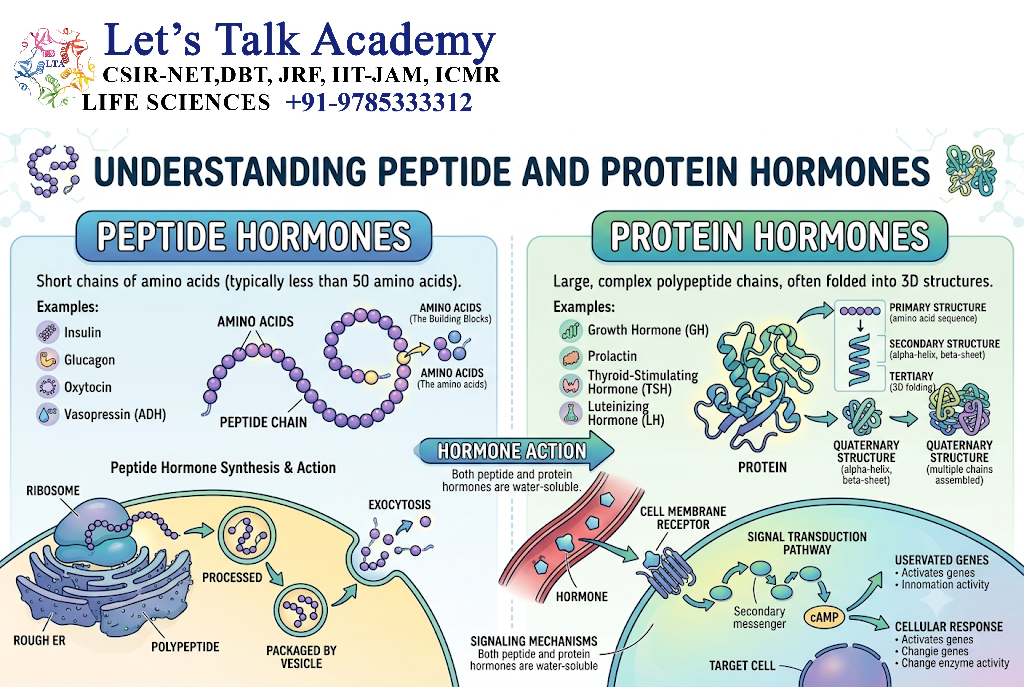
Peptide and protein hormones are composed of amino acids.
Examples include:
- insulin,
- glucagon,
- growth hormone,
- prolactin,
- parathyroid hormone,
- adrenocorticotropic hormone.
Because many peptide hormones are hydrophilic, they do not readily cross the lipid bilayer of the plasma membrane.
They therefore generally act through cell-surface receptors.
4.2 Synthesis
Many peptide hormones are synthesized as larger precursor molecules.
The general pathway is:
Gene transcription → mRNA → preprohormone → prohormone → active hormone
Processing may occur in the endoplasmic reticulum and Golgi apparatus and may continue in secretory vesicles.
4.3 Storage and Release
Many peptide hormones are stored in secretory vesicles.
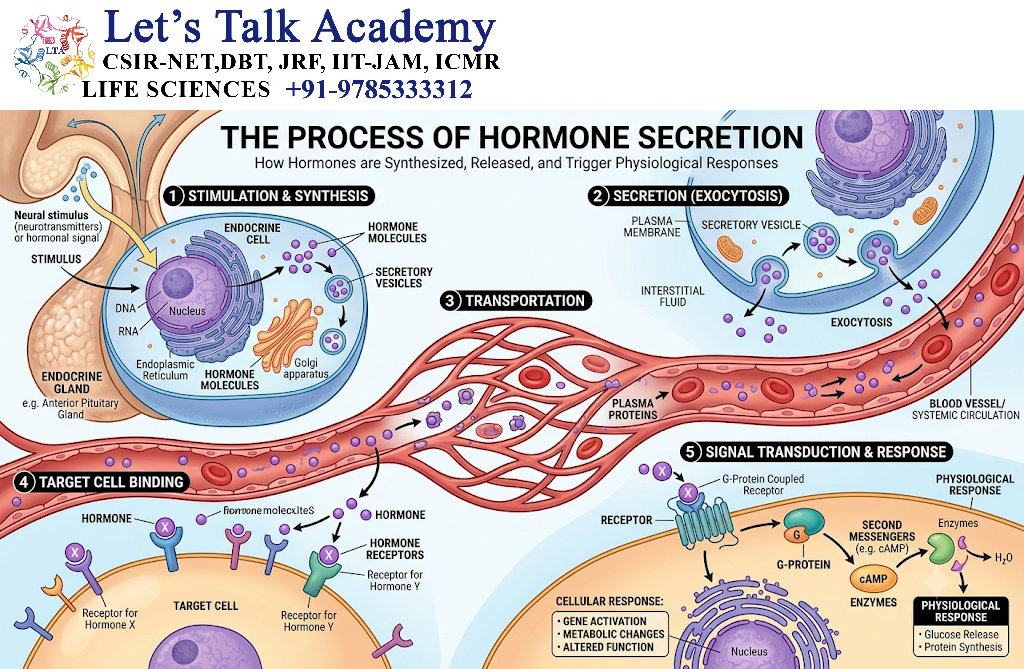
When the appropriate signal arrives, the hormone can be released through exocytosis.
5. Steroid Hormones
5.1 General Characteristics
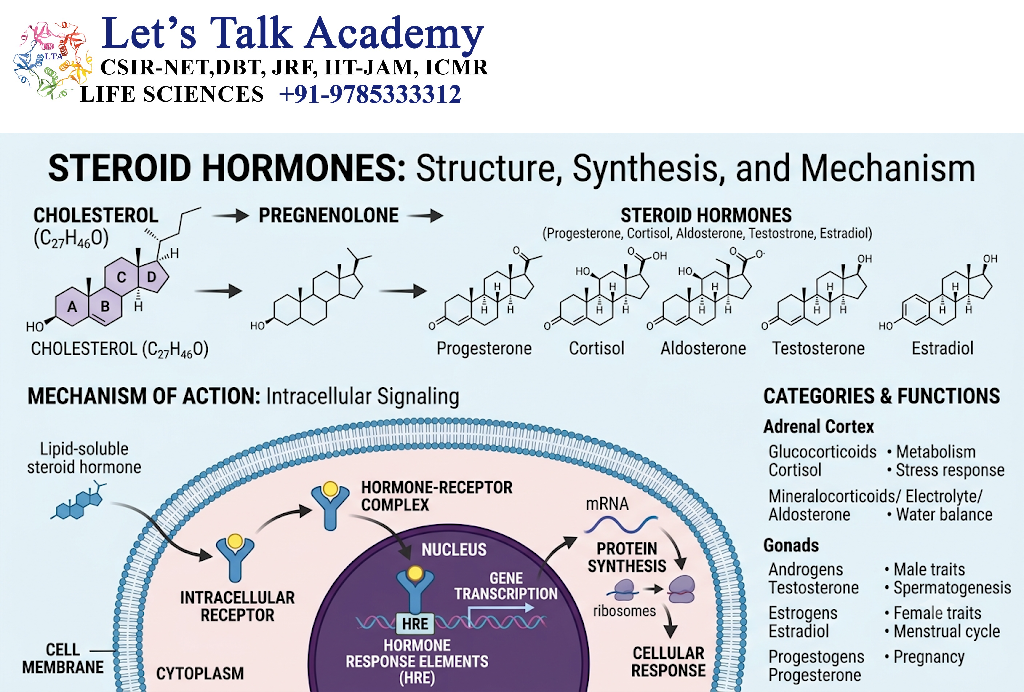
Steroid hormones are derived from cholesterol.
Examples include:
- cortisol,
- aldosterone,
- testosterone,
- estrogen,
- progesterone.
Steroid hormones are generally lipid-soluble.
5.2 Transport in Blood
Because steroid hormones are poorly soluble in water, many circulate in association with carrier proteins.
The fraction that is free is generally more readily available to enter target cells.
5.3 Mechanism of Action
Steroid hormones can cross the plasma membrane and bind to intracellular receptors.
The hormone-receptor complex can regulate gene transcription.
Therefore:
Steroid hormone → intracellular receptor → DNA regulatory region → altered gene transcription → protein synthesis → cellular response
6. Amino Acid-Derived Hormones
6.1 General Characteristics
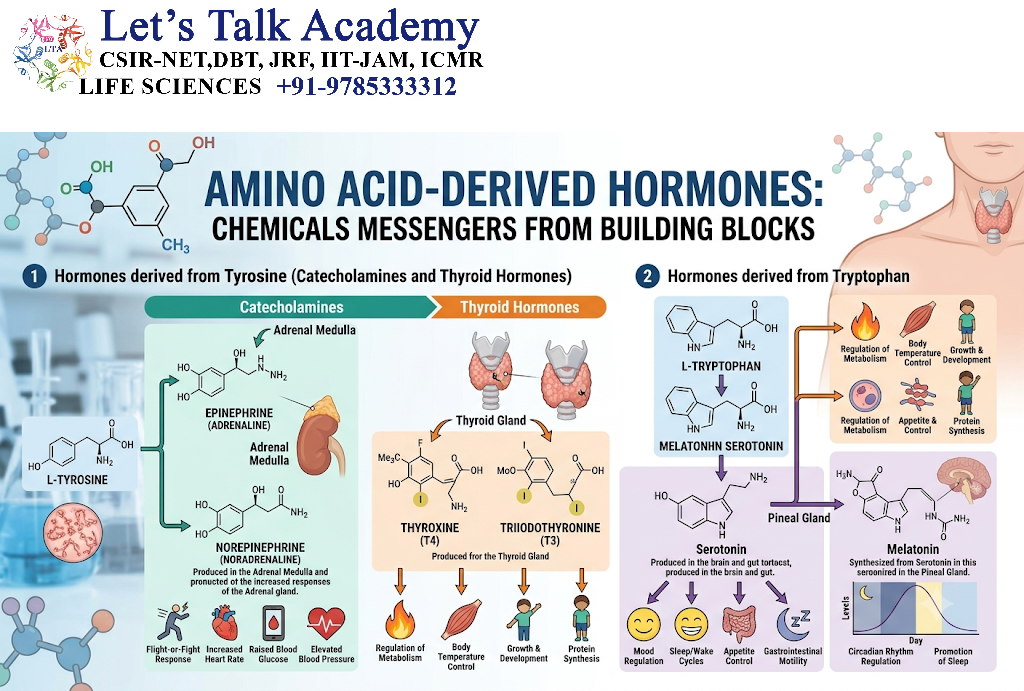
Some hormones are derived from amino acids, particularly tyrosine and tryptophan.
Examples include:
- thyroid hormones,
- epinephrine,
- norepinephrine,
- melatonin.
6.2 Thyroid Hormones
Thyroid hormones are derived from tyrosine and are lipid-soluble enough to enter cells.
They primarily act through intracellular nuclear receptors.
6.3 Catecholamines
Epinephrine and norepinephrine are also derived from tyrosine.
They are water-soluble and generally act through plasma-membrane receptors such as adrenergic G-protein-coupled receptors.
7. Hormone Secretion
7.1 Endocrine Secretion
In endocrine signaling, hormones are released into the bloodstream and travel to distant target tissues.
Example:
Pituitary hormone → bloodstream → distant target organ
7.2 Paracrine Signaling
In paracrine signaling, a signaling molecule acts on nearby cells.
7.3 Autocrine Signaling
In autocrine signaling, a cell releases a signaling molecule that acts on the same cell or cells of the same type.
7.4 Neuroendocrine Signaling
In neuroendocrine signaling, neurons release hormones or hormone-like signaling molecules into the bloodstream.
8. Hormone Receptor Classification
Hormone receptors can broadly be divided into:
- Cell-surface receptors
- Intracellular receptors
Cell-surface receptors include:
- G-protein-coupled receptors,
- receptor tyrosine kinases,
- cytokine-associated receptors,
- receptor serine/threonine kinases,
- receptor guanylyl cyclases.
Intracellular receptors include:
- cytoplasmic receptors,
- nuclear receptors.
9. Cell-Surface Hormone Receptors
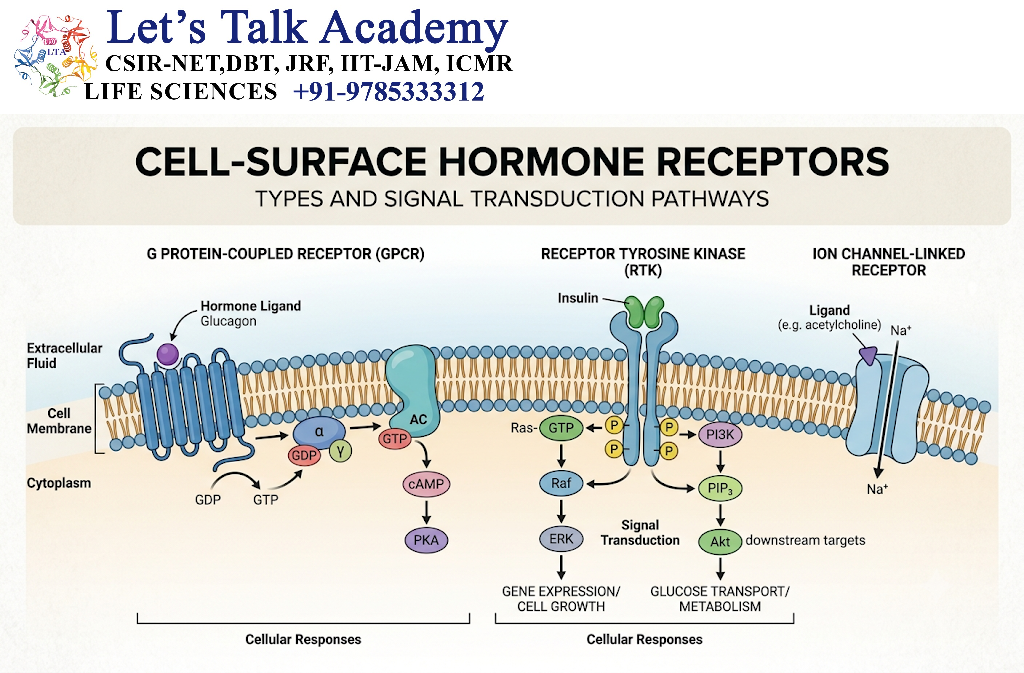
9.1 General Characteristics
Cell-surface receptors are located in the plasma membrane.
They are particularly important for hormones that cannot easily cross the lipid bilayer.
Binding of the hormone to the extracellular region of the receptor produces a conformational change that initiates intracellular signaling.
9.2 Major Signaling Components
Cell-surface receptor signaling can involve:
- G proteins,
- protein kinases,
- second messengers,
- ion channels,
- adaptor proteins,
- transcription factors.
10. G-Protein-Coupled Receptors
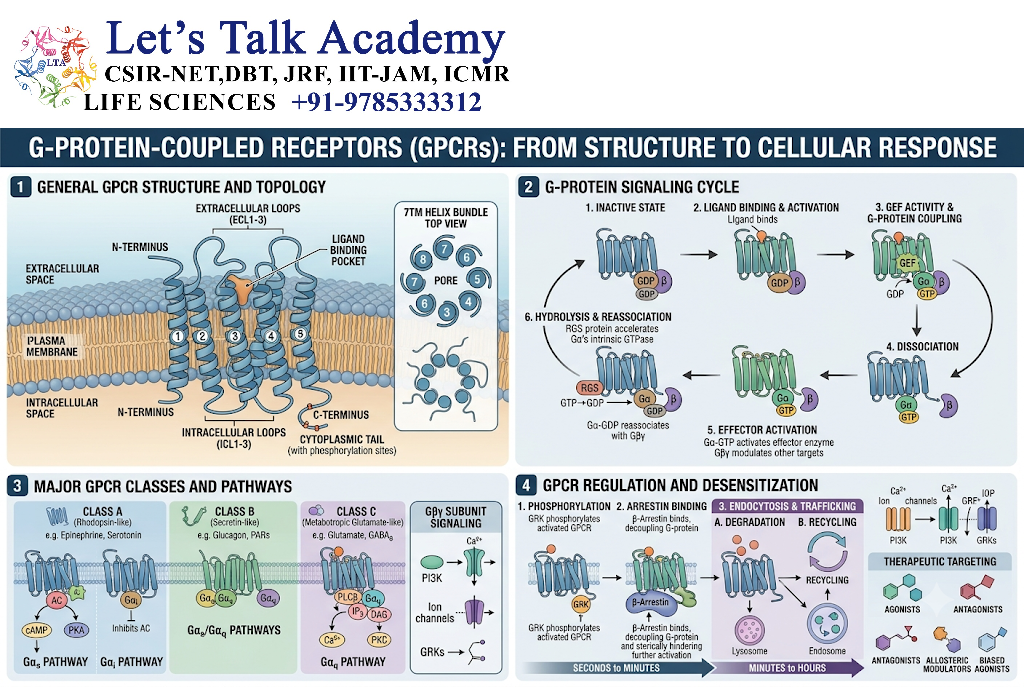
10.1 Structure
G-protein-coupled receptors, or GPCRs, are membrane proteins containing seven transmembrane α-helices.
They are among the largest families of signaling receptors.
10.2 G Proteins
Heterotrimeric G proteins contain three subunits:
- α,
- β,
- γ.
The α subunit binds guanine nucleotides.
10.3 Activation Mechanism
When a hormone binds to a GPCR:
Hormone → GPCR → G protein activation → effector enzyme/channel → second messenger → cellular response
In the resting state, the Gα subunit contains GDP.
Receptor activation promotes exchange of GDP for GTP.
The activated G protein then regulates downstream effectors.
11. Adenylyl Cyclase–cAMP Pathway
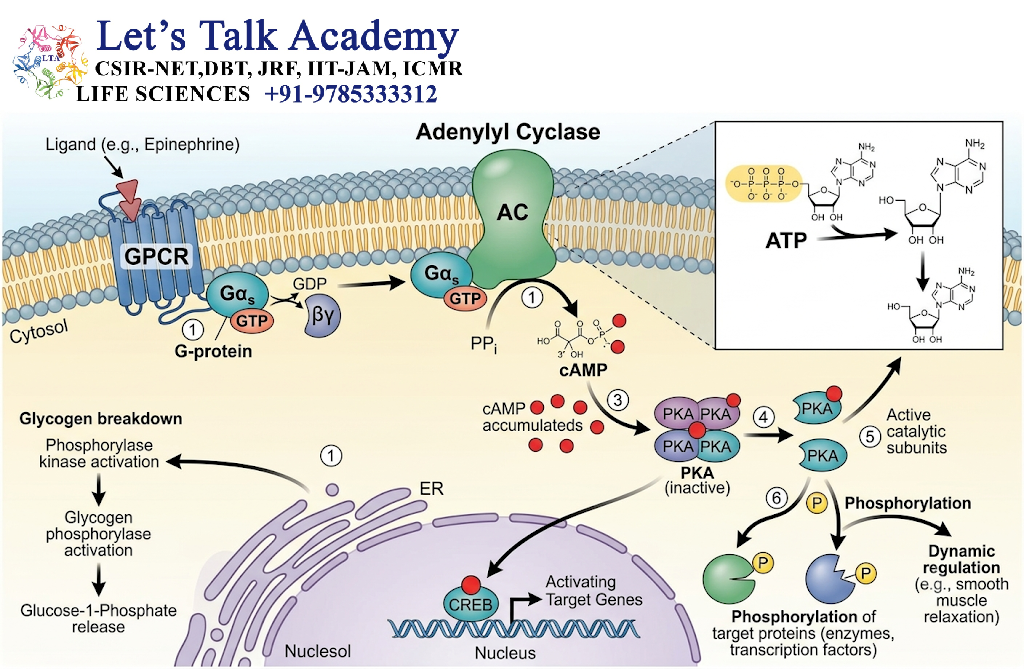
11.1 Adenylyl Cyclase
Adenylyl cyclase is an enzyme associated with the plasma membrane.
It converts ATP into cyclic AMP (cAMP).
11.2 cAMP as a Second Messenger
cAMP acts as a second messenger.
A typical pathway is:
Hormone → GPCR → Gs protein → adenylyl cyclase → cAMP → protein kinase A → target proteins
11.3 Protein Kinase A
Protein kinase A, or PKA, is activated by cAMP.
PKA phosphorylates specific proteins and can also regulate transcription factors.
One important transcription factor regulated through this pathway is CREB.
11.4 Biological Effects
The cAMP pathway can regulate:
- metabolism,
- enzyme activity,
- gene transcription,
- ion transport,
- cell differentiation.
12. Inhibitory cAMP Signaling
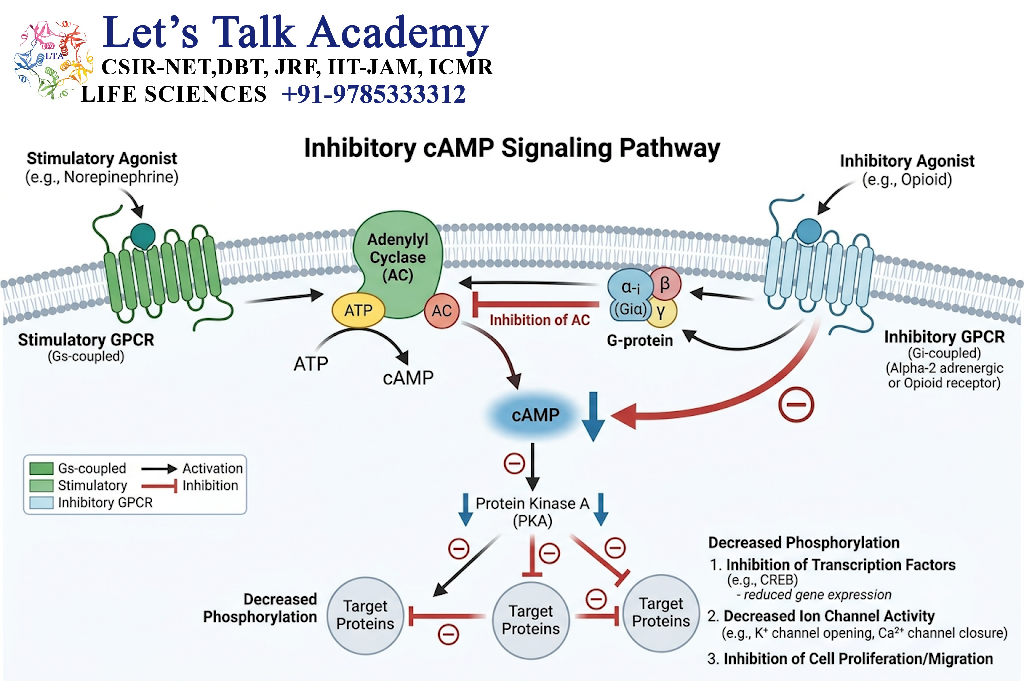
12.1 Gi Protein
Some GPCRs activate Gi proteins.
Gi can inhibit adenylyl cyclase activity.
The pathway can therefore be represented as:
Hormone → Gi-coupled receptor → adenylyl cyclase inhibition → cAMP reduction → reduced PKA signaling
The final response depends on the cell type and the other pathways activated simultaneously.
13. Phospholipase C–IP₃/DAG Pathway
13.1 PLC Activation
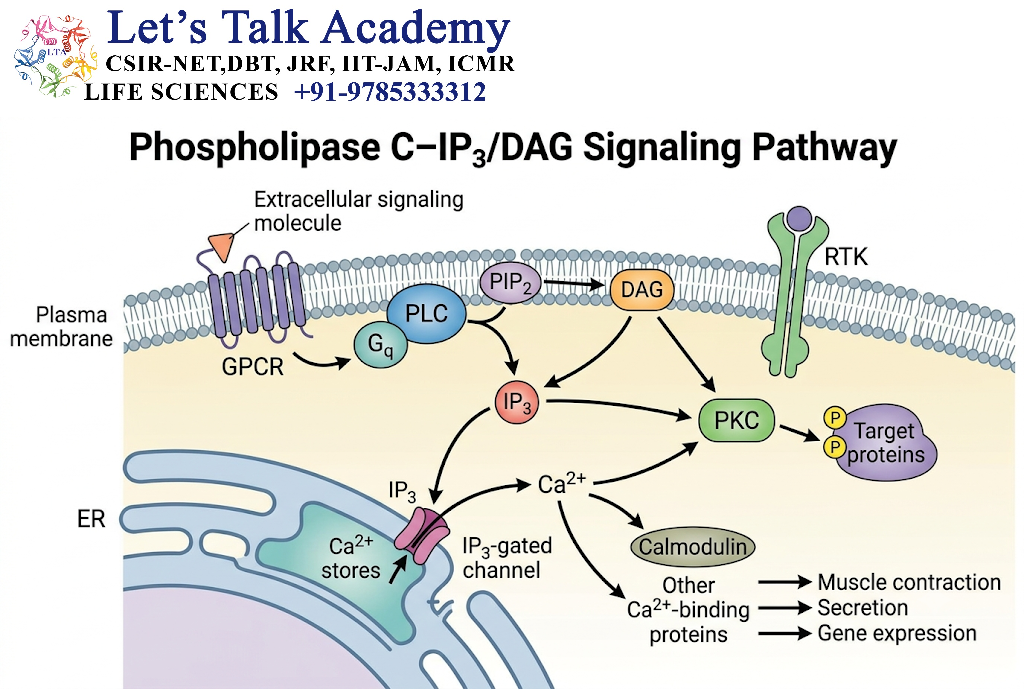
Some GPCRs activate Gq proteins, which stimulate phospholipase C-β.
PLC acts on the membrane phospholipid PIP₂.
PIP₂ is cleaved into:
- IP₃,
- DAG.
13.2 IP₃
IP₃ diffuses through the cytoplasm and binds to IP₃ receptors on the endoplasmic reticulum.
This causes release of Ca²⁺ into the cytoplasm.
13.3 DAG
DAG remains in the plasma membrane and contributes to activation of protein kinase C (PKC).
13.4 Overall Pathway
Hormone → GPCR → Gq → PLC → PIP₂ → IP₃ + DAG → Ca²⁺ release + PKC activation → cellular response
14. Calcium as a Second Messenger
14.1 Importance of Ca²⁺
Calcium ions are important intracellular signaling molecules.
Changes in cytosolic Ca²⁺ concentration can regulate:
- muscle contraction,
- secretion,
- metabolism,
- enzyme activity,
- gene expression.
14.2 Calmodulin
Calmodulin is a calcium-binding protein.
When Ca²⁺ binds to calmodulin, the resulting complex can activate various target proteins, including calcium/calmodulin-dependent protein kinases.
15. Receptor Tyrosine Kinases
15.1 Definition
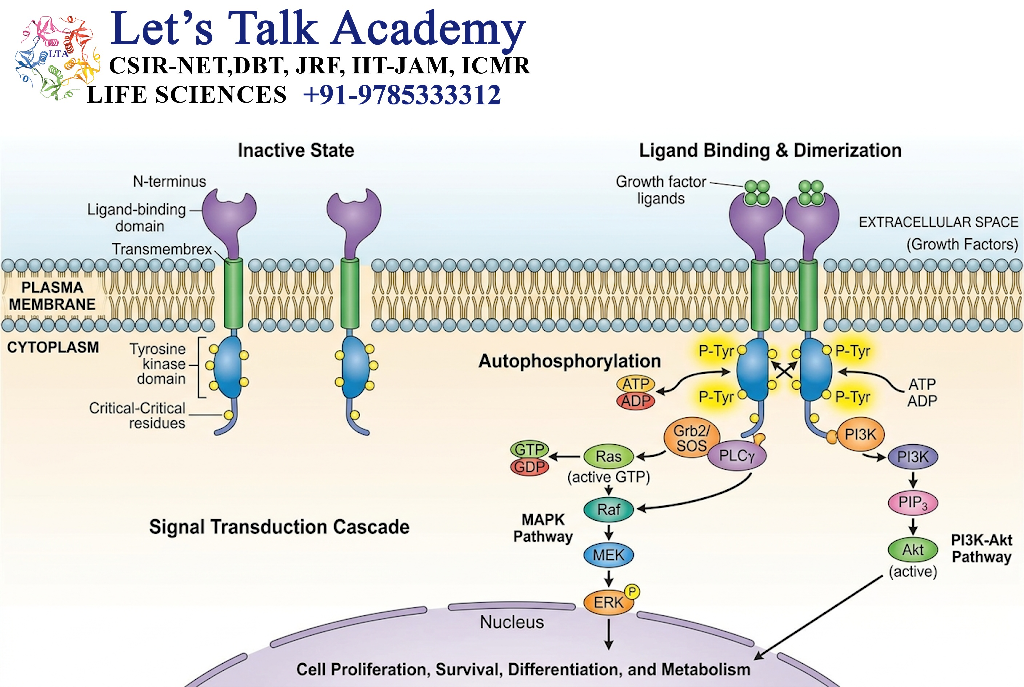
Receptor tyrosine kinases, or RTKs, are transmembrane receptors with intrinsic or closely associated tyrosine kinase activity.
A major hormone that signals through an RTK is insulin.
15.2 Structure
An RTK generally contains:
- extracellular ligand-binding domain,
- single transmembrane region,
- intracellular kinase domain.
15.3 Activation
Ligand binding promotes receptor activation and phosphorylation of tyrosine residues.
These phosphorylated residues serve as docking sites for signaling proteins.
16. Insulin Receptor Signaling
16.1 Insulin Receptor
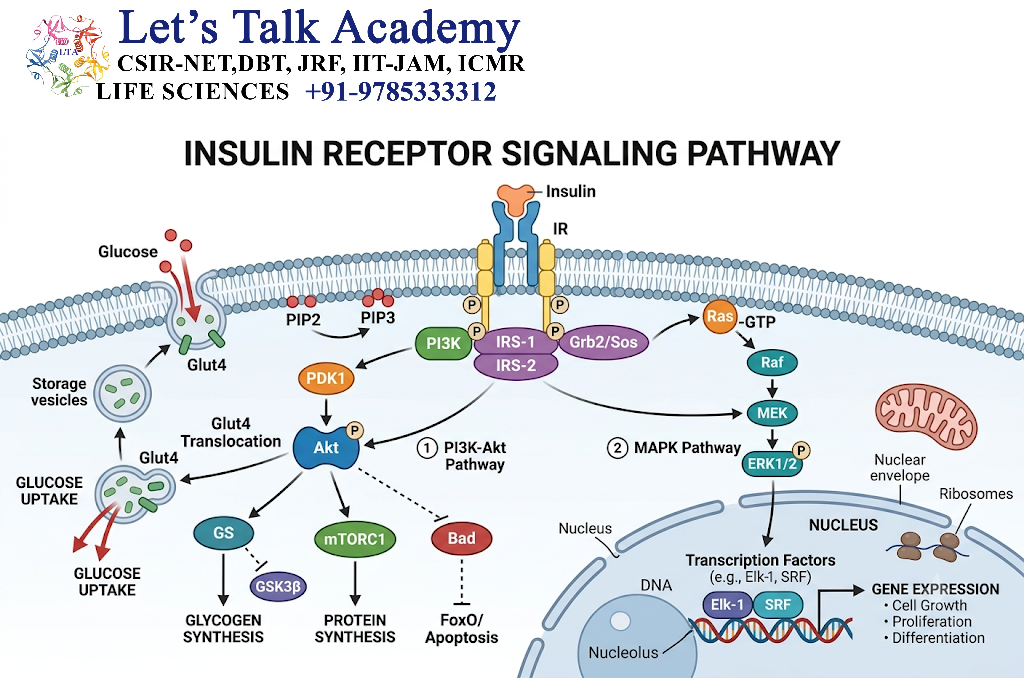
The insulin receptor is a receptor tyrosine kinase.
Binding of insulin activates the receptor and promotes phosphorylation of insulin receptor substrate proteins.
16.2 PI3K-AKT Pathway
One major pathway is:
Insulin → insulin receptor → IRS → PI3K → PIP₃ → AKT → metabolic responses
16.3 Physiological Effects
Insulin signaling promotes:
- glucose uptake in responsive tissues,
- glycogen synthesis,
- lipid synthesis,
- protein synthesis.
It also suppresses several catabolic processes.
16.4 GLUT4 Translocation
In skeletal muscle and adipose tissue, insulin signaling promotes movement of GLUT4-containing vesicles to the plasma membrane.
This increases glucose uptake into these cells.
17. Ras-MAPK Signaling
17.1 General Pathway
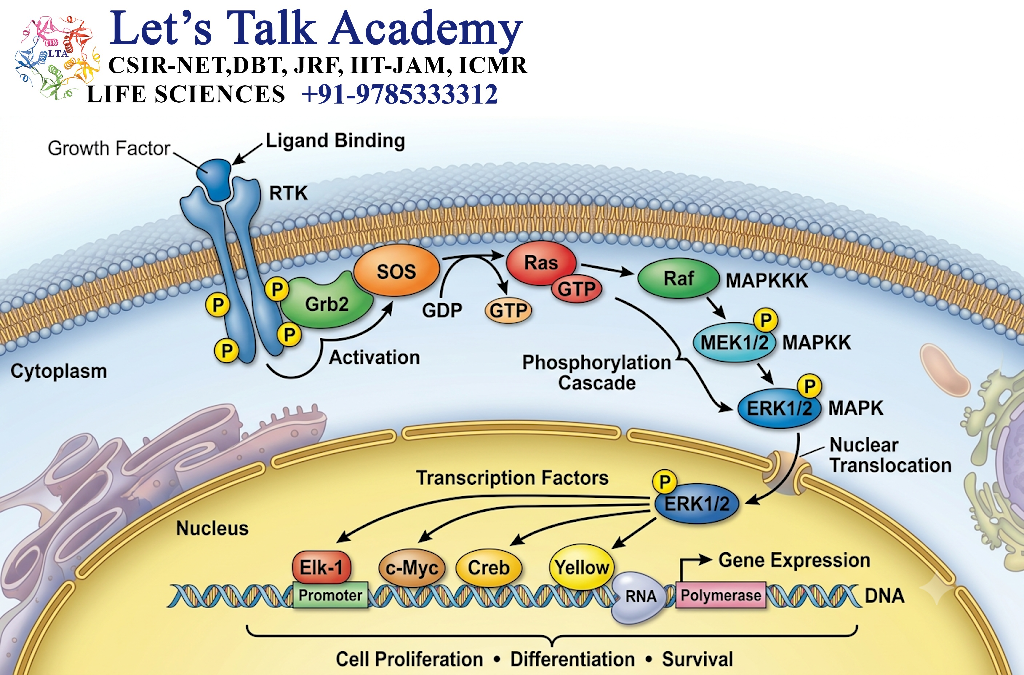
RTK activation can also initiate the Ras-MAPK pathway.
A simplified sequence is:
RTK → adaptor proteins → Ras → Raf → MEK → ERK → nuclear targets
17.2 Role
The Ras-MAPK pathway can regulate:
- cell growth,
- proliferation,
- differentiation,
- gene expression.
18. Cytokine-Associated Receptors and JAK-STAT Signaling
18.1 General Characteristics
Some receptors do not contain intrinsic kinase activity but associate with cytoplasmic tyrosine kinases.
The most important examples are JAKs, or Janus kinases.
18.2 JAK-STAT Pathway
A typical pathway is:
Ligand → receptor → JAK activation → receptor phosphorylation → STAT phosphorylation → STAT dimerization → nucleus → gene transcription
18.3 Biological Importance
JAK-STAT signaling participates in responses to:
- growth-regulatory signals,
- immune signaling molecules,
- hematopoietic factors.
19. Receptor Serine/Threonine Kinases
19.1 Definition
Some signaling molecules bind receptors containing serine/threonine kinase activity.
A major example is the TGF-β receptor family.
19.2 SMAD Pathway
The general pathway is:
TGF-β family ligand → receptor activation → SMAD phosphorylation → SMAD complex → nucleus → gene regulation
19.3 Functions
This pathway can regulate:
- cell differentiation,
- development,
- extracellular matrix production,
- growth control.
20. Receptor Guanylyl Cyclases
20.1 Definition
Some receptors possess guanylyl cyclase activity.
They generate the second messenger cGMP from GTP.
20.2 cGMP
cGMP can activate:
- protein kinase G,
- cyclic nucleotide-regulated channels,
- other signaling proteins.
Certain peptide hormones, particularly natriuretic peptides, act through membrane guanylyl cyclase receptors.
21. Intracellular Hormone Receptors
21.1 General Characteristics
Intracellular receptors are located inside the cell.
They are particularly important for lipid-soluble hormones.
Major examples include receptors for:
- steroid hormones,
- thyroid hormones,
- retinoids,
- vitamin D.
21.2 Mechanism
The general mechanism is:
Hormone → cell entry → intracellular receptor → receptor activation → DNA binding → altered transcription → protein production → cellular response
22. Nuclear Receptors
22.1 Definition
Nuclear receptors are ligand-regulated transcription factors.
They contain functional regions involved in:
- DNA binding,
- ligand binding,
- transcriptional regulation.
22.2 DNA-Binding Domain
Many nuclear receptors contain a DNA-binding domain with characteristic zinc-finger structures.
This domain recognizes specific DNA sequences known as hormone response elements (HREs).
22.3 Ligand-Binding Domain
The ligand-binding domain recognizes the hormone and undergoes conformational changes after ligand binding.
This can alter interactions with coactivators and corepressors.
23. Steroid Hormone Receptor Mechanism
23.1 Cytoplasmic Receptors
Some steroid hormone receptors are located predominantly in the cytoplasm before ligand binding.
They may be associated with chaperone proteins.
23.2 Receptor Activation
Hormone binding produces a conformational change that can expose nuclear localization signals.
The hormone-receptor complex enters the nucleus.
23.3 DNA Binding
The receptor binds hormone response elements in regulatory regions of target genes.
23.4 Transcriptional Regulation
The receptor recruits:
- coactivators,
- chromatin-modifying proteins,
- components of transcriptional machinery.
This changes transcription of specific genes.
24. Direct and Indirect Gene Regulation by Nuclear Receptors
24.1 Direct Regulation
A nuclear receptor can directly bind a hormone response element and regulate transcription.
24.2 Indirect Regulation
Some nuclear receptors influence gene expression by interacting with other transcription factors without directly binding the same DNA sequence.
This provides additional specificity to hormonal responses.
25. Thyroid Hormone Receptors
25.1 General Mechanism
Thyroid hormone receptors are nuclear receptors.
They are generally associated with DNA even before hormone binding.
In the absence of hormone, receptor-associated corepressors can contribute to transcriptional repression.
Hormone binding changes receptor conformation and promotes recruitment of coactivators.
25.2 Physiological Effects
Thyroid hormone signaling contributes to:
- basal metabolic regulation,
- growth,
- development,
- nervous-system maturation.
26. Hormone Receptor Specificity
26.1 Receptor Distribution
The same hormone can have different effects in different tissues because receptor expression varies among cell types.
26.2 Receptor Subtypes
Some hormones act through multiple receptor subtypes.
Different receptor subtypes can activate different signaling pathways.
26.3 Cellular Context
The final response depends on:
- receptor subtype,
- receptor abundance,
- downstream signaling proteins,
- transcription factors,
- metabolic state,
- cellular environment.
27. Hormone Signal Amplification
27.1 Principle
Hormonal signals are often amplified through signaling cascades.
For example:
One hormone molecule
→ receptor activation
→ multiple G proteins
→ multiple adenylyl cyclase molecules
→ many cAMP molecules
→ multiple PKA molecules
→ phosphorylation of many target proteins.
This explains how very small concentrations of hormones can produce strong cellular effects.
28. Termination of Hormone Signaling
28.1 Importance
Hormonal signaling must be terminated after the required response has occurred.
Continuous signaling can disturb cellular homeostasis.
28.2 Mechanisms
Signal termination can occur through:
- hormone degradation,
- hormone removal from circulation,
- receptor internalization,
- receptor dephosphorylation,
- GTP hydrolysis,
- phosphodiesterase activity,
- protein phosphatases.
28.3 cAMP Degradation
Phosphodiesterases convert cAMP into AMP.
Thus:
cAMP → AMP
This reduces PKA activation.
29. Receptor Desensitization
29.1 Definition
Desensitization occurs when a cell becomes less responsive to continuous or repeated stimulation by a hormone.
29.2 GPCR Desensitization
GPCRs can be phosphorylated by receptor kinases.
β-arrestin can then bind phosphorylated receptors and reduce further G-protein signaling.
The receptor may subsequently be internalized.
29.3 Physiological Importance
Desensitization prevents excessive cellular responses and allows cells to adapt to persistent hormonal signals.
30. Receptor Downregulation
30.1 Definition
Downregulation refers to a reduction in receptor number or availability.
Persistent exposure to a hormone can sometimes decrease receptor abundance.
30.2 Significance
Downregulation reduces cellular sensitivity to the hormone.
This is an important mechanism of adaptation.
31. Receptor Upregulation
31.1 Definition
Upregulation refers to an increase in receptor number or responsiveness.
Cells may increase receptor expression when stimulation is chronically reduced.
31.2 Significance
Upregulation can increase cellular sensitivity to a signaling molecule.
32. Hormonal Feedback Regulation
32.1 Negative Feedback
Negative feedback is the most common regulatory mechanism in endocrine systems.
The final effect reduces further hormone secretion.
A simplified pathway is:
Hypothalamus → pituitary → peripheral endocrine gland → hormone
The peripheral hormone feeds back to reduce hypothalamic and pituitary stimulation.
32.2 Positive Feedback
Positive feedback amplifies the initial stimulus.
An important physiological example is the increase in estrogen-associated signaling that contributes to the pre-ovulatory LH surge.
Positive feedback is less common than negative feedback.
33. Hormone Transport
33.1 Free Hormones
Some hormones circulate freely in plasma.
Water-soluble hormones commonly circulate in this form.
33.2 Protein-Bound Hormones
Many lipid-soluble hormones associate with carrier proteins.
Protein binding can:
- increase solubility,
- extend circulation time,
- create a circulating reservoir.
33.3 Free Hormone Fraction
The free hormone fraction is generally more readily available for receptor interaction.
34. Hormone Metabolism and Clearance
34.1 Liver
The liver plays an important role in metabolism and inactivation of many hormones.
34.2 Kidney
The kidneys contribute to removal of hormones and their metabolites.
34.3 Local Metabolism
Hormones can also be metabolized within target tissues.
The rate of hormone production, metabolism, transport, and clearance together influences its effective concentration.
35. Hormone Receptor Interactions
35.1 Ligand-Receptor Binding
Hormone-receptor interaction depends on molecular complementarity.
Important properties include:
- specificity,
- affinity,
- reversibility.
35.2 Affinity
Affinity describes how strongly a receptor binds its ligand.
A high-affinity receptor can respond to relatively low ligand concentrations.
35.3 Saturation
At sufficiently high hormone concentrations, available receptors can become occupied.
At this point, increasing hormone concentration further may produce relatively little additional receptor occupancy.
36. Receptor Occupancy and Cellular Response
Receptor occupancy and cellular response are related but are not always identical.
A cell can sometimes produce a near-maximal response without occupying every receptor.
This can occur because of:
- signal amplification,
- receptor reserve,
- highly efficient downstream pathways.
37. Hormone Receptor Agonists and Antagonists
37.1 Agonists
An agonist is a molecule that binds to a receptor and produces receptor activation or a biological response.
37.2 Antagonists
An antagonist binds to a receptor but prevents or reduces activation by an agonist or endogenous ligand.
37.3 Partial Agonists
Partial agonists activate receptors but produce a lower maximal response than a full agonist under comparable conditions.
38. Second Messengers
Second messengers are intracellular molecules that transmit signals from activated receptors to downstream targets.
Important second messengers include:
- cAMP,
- cGMP,
- IP₃,
- DAG,
- Ca²⁺.
They allow extracellular hormonal signals to be converted into intracellular responses.
39. Protein Kinases and Protein Phosphatases
39.1 Protein Kinases
Protein kinases add phosphate groups to proteins.
Phosphorylation can change:
- enzyme activity,
- protein localization,
- protein stability,
- protein-protein interactions,
- transcription-factor activity.
39.2 Protein Phosphatases
Protein phosphatases remove phosphate groups.
They help terminate or modify signaling pathways.
Thus, cellular signaling depends on a dynamic balance between phosphorylation and dephosphorylation.
40. Cross-Talk Between Hormonal Signaling Pathways
40.1 Definition
Cross-talk occurs when two or more signaling pathways influence one another.
For example, signaling through one receptor may alter the activity of proteins used by another pathway.
40.2 Importance
Cross-talk allows cells to integrate multiple signals rather than responding to each hormone independently.
This contributes to complex physiological responses.
41. Hormonal Regulation of Gene Expression
Hormones can regulate gene expression through several mechanisms.
Cell-surface receptor pathway
Hormone → membrane receptor → second messenger → kinase → transcription factor → gene expression
Nuclear receptor pathway
Hormone → intracellular receptor → DNA response element → transcriptional regulation → protein synthesis
Therefore, hormones can alter cellular activity both rapidly and over longer periods.
42. Rapid and Slow Hormonal Responses
42.1 Rapid Responses
Cell-surface receptors can produce rapid responses by modifying existing proteins.
Examples include:
- enzyme activation,
- ion-channel regulation,
- glucose transport,
- secretion.
42.2 Slow Responses
Nuclear receptor signaling often requires changes in gene transcription and protein synthesis.
These responses generally develop more slowly but can persist longer.
43. Hormones and Metabolism
Hormones regulate major metabolic processes.
Important examples include:
- insulin,
- glucagon,
- epinephrine,
- cortisol,
- thyroid hormones.
These hormones influence:
- glucose metabolism,
- lipid metabolism,
- protein metabolism,
- energy expenditure.
44. Insulin and Glucagon
44.1 Insulin
Insulin generally promotes storage and utilization of nutrients.
It promotes:
- glucose uptake in responsive tissues,
- glycogen synthesis,
- lipid synthesis,
- protein synthesis.
44.2 Glucagon
Glucagon generally acts to increase blood glucose during fasting.
It promotes processes such as:
- glycogen breakdown,
- gluconeogenesis,
- mobilization of energy stores.
Many glucagon effects involve the cAMP-PKA pathway.
45. Hormones and Growth
Growth-related hormones regulate:
- cell proliferation,
- protein synthesis,
- tissue development,
- metabolism.
Growth hormone, for example, stimulates production of IGF-1, which mediates many of its growth-promoting effects.
46. Hormones and Reproduction
Hormonal signaling is essential for:
- gamete development,
- reproductive-organ function,
- menstrual-cycle regulation,
- pregnancy,
- lactation,
- sexual differentiation.
Major reproductive hormones include:
- estrogen,
- progesterone,
- testosterone,
- LH,
- FSH.
Their effects depend on specific receptors expressed in target tissues.
47. Hormones and Stress Responses
Stress responses involve several hormones, including:
- epinephrine,
- norepinephrine,
- cortisol.
These hormones help coordinate physiological responses involving:
- cardiovascular function,
- energy mobilization,
- metabolism,
- alertness,
- adaptation to stress.
48. Hormones and Water-Electrolyte Balance
Hormones regulate the concentration and distribution of water and electrolytes.
Important hormones include:
- aldosterone,
- vasopressin,
- natriuretic peptides.
48.1 Vasopressin
Vasopressin promotes water conservation through receptor-mediated effects in the kidney.
Different vasopressin receptor subtypes activate different signaling pathways.
48.2 Aldosterone
Aldosterone is a steroid hormone that acts through an intracellular mineralocorticoid receptor.
It regulates expression of proteins involved in sodium reabsorption and potassium secretion.
49. Hormone Receptor Regulation
Receptor activity is regulated at several levels:
- receptor synthesis,
- receptor localization,
- ligand binding,
- receptor phosphorylation,
- receptor internalization,
- receptor degradation,
- receptor recycling.
These mechanisms allow cells to precisely control hormonal sensitivity.
50. Defects in Hormone-Receptor Signaling
Abnormalities can occur at different points in the signaling pathway.
Possible defects include:
- insufficient hormone production,
- excessive hormone production,
- receptor mutations,
- defective receptor trafficking,
- abnormal second-messenger signaling,
- kinase dysfunction,
- altered gene regulation.
A normal hormone concentration does not necessarily guarantee a normal response if the receptor or downstream signaling machinery is defective.
51. General Comparison of Hormone Receptors
| Feature | Cell-Surface Receptors | Intracellular Receptors |
|---|---|---|
| Location | Plasma membrane | Cytoplasm or nucleus |
| Common ligands | Peptide hormones, catecholamines | Steroid and thyroid hormones |
| Ligand solubility | Usually hydrophilic | Usually lipophilic |
| Main mechanism | Second messengers/kinase cascades | Regulation of gene transcription |
| Response | Often rapid | Often slower |
| Examples | Insulin receptor, adrenergic receptors | Cortisol receptor, thyroid hormone receptor |
52. Major Signaling Pathways
| Receptor/pathway | Major signaling component | Common cellular effects |
|---|---|---|
| GPCR-Gs | cAMP-PKA | Metabolism, secretion, gene expression |
| GPCR-Gi | Reduced cAMP | Regulation of cellular activity |
| GPCR-Gq | IP₃-DAG-Ca²⁺ | Contraction, secretion, enzyme regulation |
| RTK | PI3K-AKT | Metabolism, survival, growth |
| RTK | Ras-MAPK | Growth, proliferation, differentiation |
| JAK-STAT | STAT proteins | Gene transcription |
| TGF-β receptor | SMAD proteins | Development, differentiation |
| Guanylyl cyclase receptor | cGMP | Ion transport and kinase signaling |
| Nuclear receptor | Hormone response elements | Gene transcription |


