
1. Regulation of Gene Expression in Phages
1.1 Introduction
Bacteriophages, commonly called phages, are viruses that specifically infect bacterial cells. They contain genetic material that carries the information required for their replication, assembly, and transmission to new host cells. Since phages depend largely on the molecular machinery of their bacterial hosts, they must regulate the expression of their genes in a highly coordinated manner.
Phage gene expression does not occur randomly or at the same level throughout infection. Different genes are activated at different stages of the phage life cycle. Genes required immediately after infection are generally expressed first, followed by genes involved in genome replication and finally genes required for the formation and release of new phage particles. This sequential expression ensures that cellular resources are used efficiently.
Regulation of gene expression in phages involves several molecular mechanisms, including promoter recognition, transcriptional activation and repression, transcription termination and antitermination, RNA stability, translational control, protein degradation, and regulatory feedback. These mechanisms allow a phage to respond to the physiological condition of the host cell and to select an appropriate developmental pathway.
The study of phage gene regulation has provided important insights into fundamental principles of molecular biology. Phage systems have been particularly useful for understanding genetic switches, transcriptional regulation, repressors, activators, promoters, operators, feedback mechanisms, and the relationship between viruses and their hosts.
1.2 Basic Principle of Phage Gene Regulation
The basic principle of phage gene regulation is that phage genes are expressed in a controlled temporal sequence according to their biological requirements.
A generalized sequence can be represented as:
Early gene expression → Regulation of host machinery → Genome replication → Late gene expression → Assembly → Release
Early genes generally establish control over the infected cell and produce proteins required for subsequent stages. Once replication begins, genes associated with the production of structural components are activated. Finally, proteins involved in assembly and host-cell lysis or phage release are produced.
Thus, phage gene regulation can be understood as a coordinated genetic program in which each stage prepares the cell for the next stage.
1.3 Importance of Gene Regulation in Phages
Gene regulation is essential because a phage has a limited genome and depends on host resources. Continuous expression of every phage gene would waste cellular energy and could interfere with the orderly progression of infection.
For example, structural proteins such as capsid proteins are not required immediately after phage entry. Producing them before phage DNA replication would be inefficient. Therefore, regulatory mechanisms delay their expression until the appropriate stage.
Similarly, lysis proteins must generally be produced near the end of the replication cycle. Premature lysis would prevent the formation of complete progeny phages.
Therefore, temporal regulation ensures that proteins are produced at the correct time and in appropriate amounts.
2. Organization of Phage Genes
2.1 Phage Genome
A phage genome contains the genetic information required for different stages of its life cycle. Depending on the phage, the genome may consist of DNA or RNA, and it may be single-stranded or double-stranded.
Many experimentally studied bacteriophages contain double-stranded DNA genomes. Their genomes are often compact and contain genes arranged in functional groups.
These genes may encode regulatory proteins, replication enzymes, structural proteins, DNA packaging proteins, host-interaction proteins, and lysis proteins.
2.2 Functional Organization of Genes
Phage genes involved in related biological processes are often organized close together. Such organization allows coordinated transcription and efficient use of the genome.
Genes involved in a particular function may form an operon and may be transcribed together as a polycistronic RNA.
For example, several genes required for structural assembly may be expressed as part of the same transcriptional unit.
2.3 Operons in Phages
An operon is a group of functionally related genes controlled by common regulatory elements and transcribed as a unit.
Phages can use operon organization to coordinate the synthesis of several proteins required for the same stage of infection.
This arrangement is particularly advantageous for compact viral genomes because it reduces regulatory complexity while allowing coordinated gene expression.
3. Temporal Classes of Phage Genes
3.1 Early Genes
Early genes are expressed shortly after the phage genome enters the bacterial cell.
Their products commonly include regulatory proteins and enzymes required to establish the phage developmental program.
Early proteins may:
- modify host transcription,
- modify host translation,
- suppress host defense mechanisms,
- initiate phage DNA replication,
- regulate expression of later genes.
Early gene expression is therefore responsible for establishing the molecular conditions required for successful phage development.
3.2 Middle Genes
Some phages show an intermediate or middle phase of gene expression.
Middle genes commonly encode proteins associated with:
- DNA replication,
- recombination,
- regulatory transitions,
- modification of host machinery.
The middle phase connects the early regulatory stage with the late structural stage.
3.3 Late Genes
Late genes are expressed during the later stages of infection.
They commonly encode:
- capsid proteins,
- tail proteins,
- DNA packaging proteins,
- assembly proteins,
- lysis proteins.
The expression of late genes is usually coordinated with genome replication and assembly.
3.4 Significance of Temporal Regulation
Temporal regulation prevents the unnecessary synthesis of proteins before they are required.
The general principle is:
Early proteins prepare the host → replication proteins produce phage genomes → late proteins construct new phages
This sequential organization increases the efficiency of phage reproduction.
4. Lytic and Lysogenic Pathways
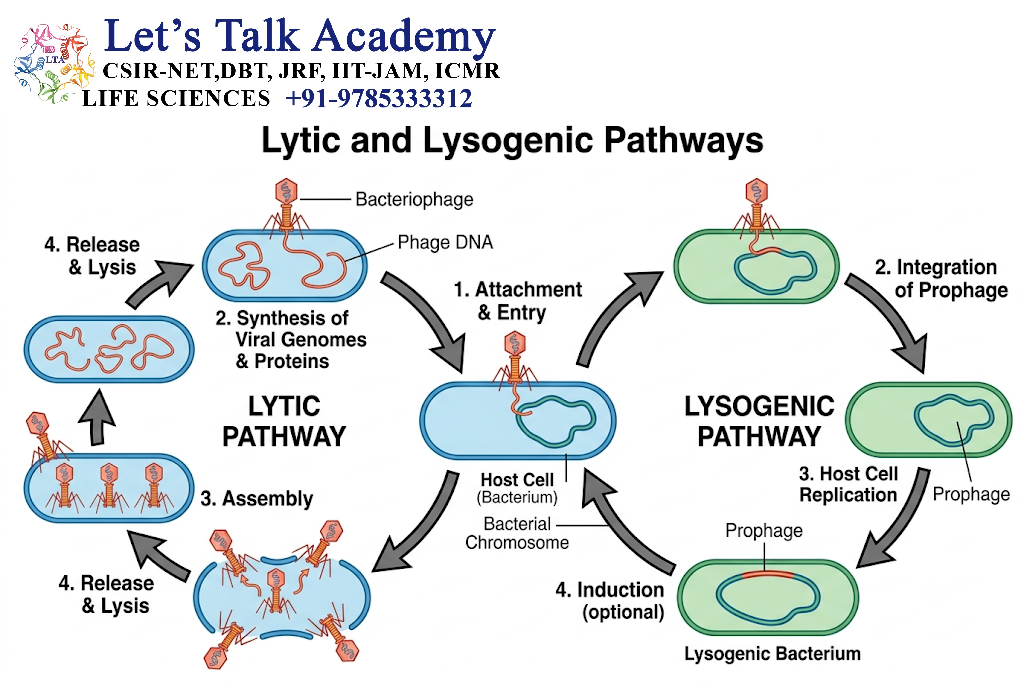
4.1 Lytic Pathway
The lytic pathway results in the production of new phage particles followed by destruction of the host cell in classical lytic infections.
The major stages are:
- Attachment to the host cell.
- Entry of phage genetic material.
- Early gene expression.
- Phage genome replication.
- Late gene expression.
- Assembly of phage particles.
- Host-cell lysis.
- Release of progeny phages.
4.2 Lysogenic Pathway
In lysogeny, the phage genome is maintained within the bacterial cell without immediately producing large numbers of progeny phages.
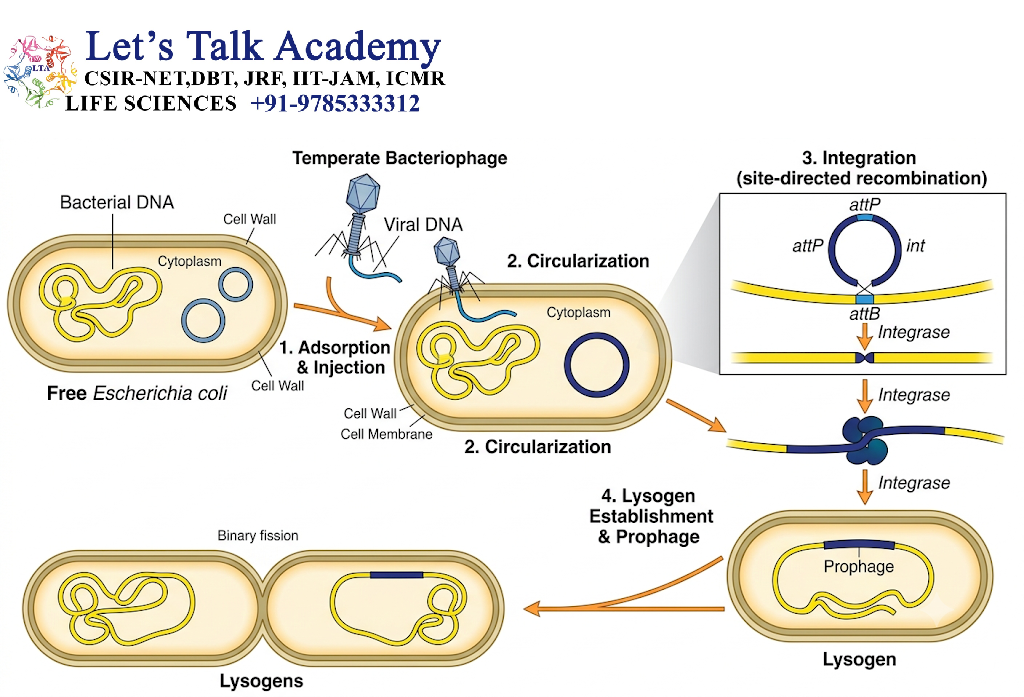
In the classical λ system, the phage genome integrates into the bacterial chromosome and is called a prophage.
The prophage is replicated along with the bacterial chromosome and passed to daughter cells during bacterial division.
4.3 Lysis-Lysogeny Decision
The decision between lytic development and lysogeny is controlled by a regulatory network.
The outcome depends on the relative activities of several regulatory proteins and on the physiological state of the host.
The decision can therefore be considered a molecular switch between two alternative developmental states.
5. Bacteriophage λ as a Model System
5.1 Introduction
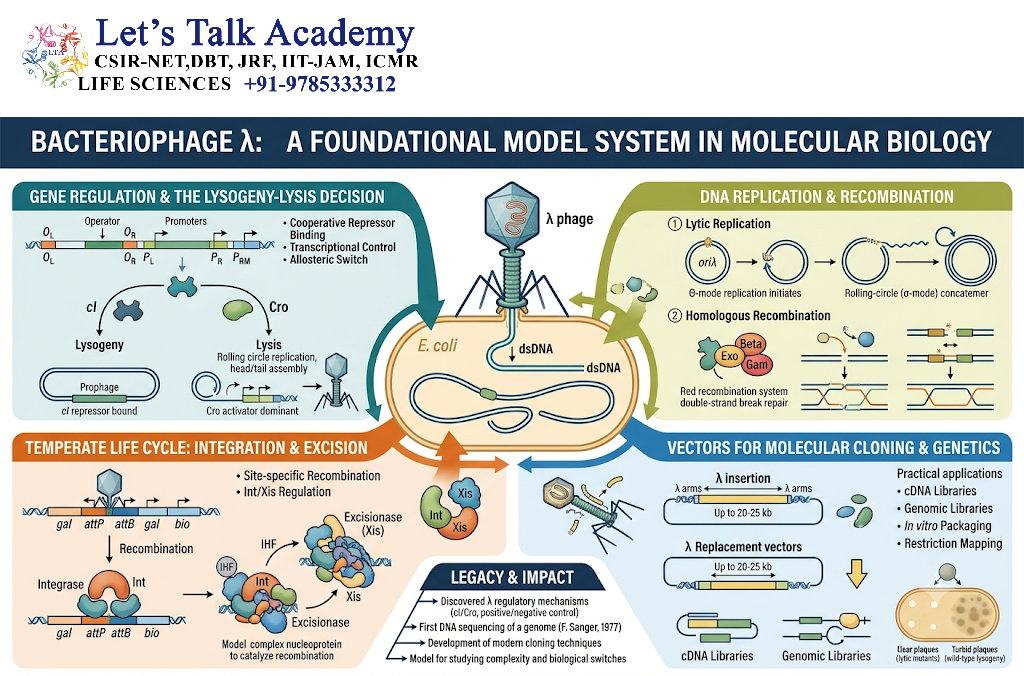
Bacteriophage λ infects Escherichia coli and is one of the most extensively studied systems for understanding gene regulation.
The λ system demonstrates how a relatively small viral genome can generate complex developmental behavior through interactions among promoters, operators, repressors, activators, and regulatory proteins.
5.2 Major Regulatory Proteins
Important λ regulatory proteins include:
- CI
- Cro
- CII
- CIII
- N
- Q
Each protein contributes to specific stages of phage development.
5.3 CI Repressor
The CI protein is the major repressor responsible for maintaining lysogeny.
CI binds to regulatory DNA sequences and represses transcription from promoters that would otherwise activate lytic development.
When sufficient functional CI is maintained, the lysogenic state is stabilized.
Therefore:
High CI activity → repression of lytic genes → maintenance of lysogeny
5.4 Cro Protein
Cro is a regulatory protein that favors the lytic developmental pathway.
Its activity opposes the establishment or maintenance of the CI-dominated lysogenic state.
Thus, the balance between CI and Cro contributes to the developmental decision.
6. Promoters and Operators in Phage Regulation
6.1 Promoters
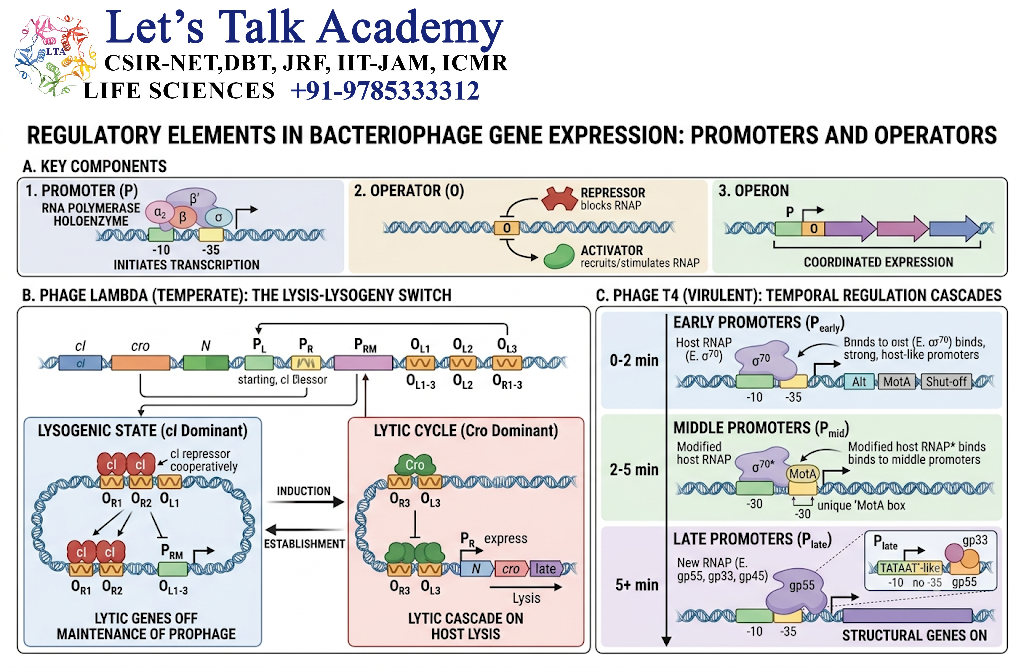
A promoter is a DNA sequence recognized by RNA polymerase where transcription begins.
Phage genomes contain promoters that control different groups of genes.
Some promoters are active early in infection, whereas others become active later.
6.2 λ PL and PR Promoters
In λ, the promoters known as PL and PR are important early promoters.
Transcription from these promoters produces RNAs containing genes involved in early regulatory and replication processes.
Their activity is strongly influenced by regulatory proteins.
6.3 Operators
An operator is a regulatory DNA region to which a transcriptional regulator can bind.
In λ, CI repressor binds operator regions associated with the control of lytic promoters.
Operator binding can prevent or reduce RNA polymerase activity and thereby suppress transcription.
7. Negative Regulation
7.1 Definition
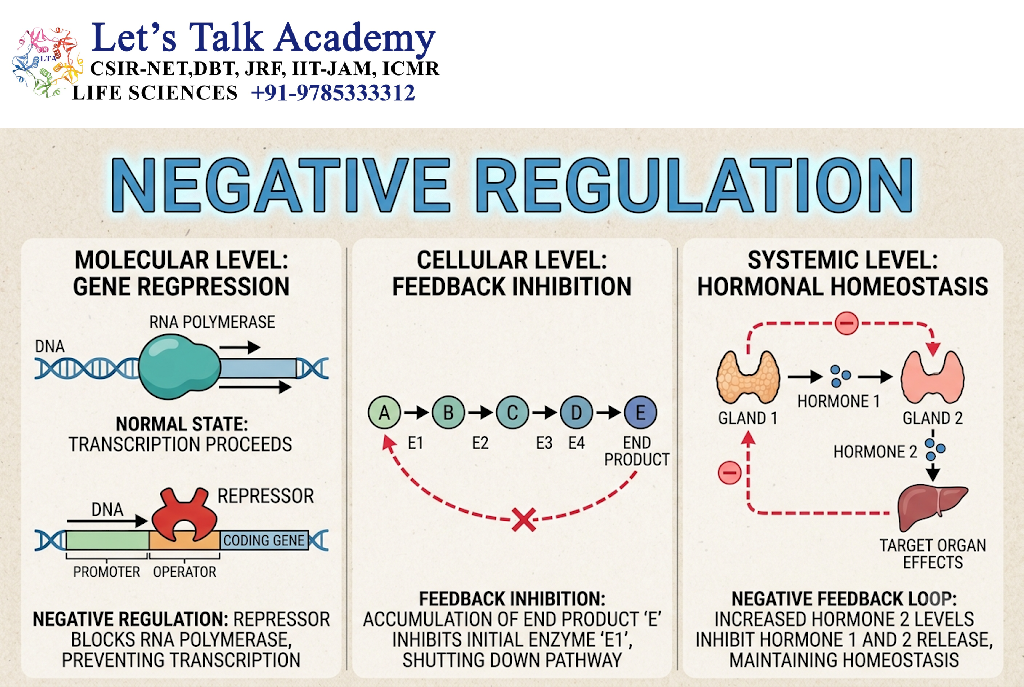
Negative regulation occurs when a regulatory molecule reduces the expression of a gene.
The most common mechanism involves a repressor protein binding to regulatory DNA.
The basic mechanism is:
Repressor binding → reduced transcription → reduced protein production
7.2 Repression in λ
The CI repressor binds to operator sites and inhibits transcription of genes required for lytic growth.
This repression is essential for maintaining lysogeny.
7.3 Biological Importance
Negative regulation prevents unnecessary gene expression and allows the phage to maintain a particular developmental state.
8. Positive Regulation
8.1 Definition
Positive regulation occurs when a regulatory protein increases gene expression.
An activator can enhance transcription by facilitating RNA polymerase recruitment or activity.
8.2 Role in Phages
Positive regulation is important for activating genes at specific stages of infection.
A phage may use one regulatory protein to activate another transcriptional program, creating a sequential cascade.
This ensures that later genes are expressed only after the appropriate earlier events have occurred.
9. Antitermination
9.1 Definition
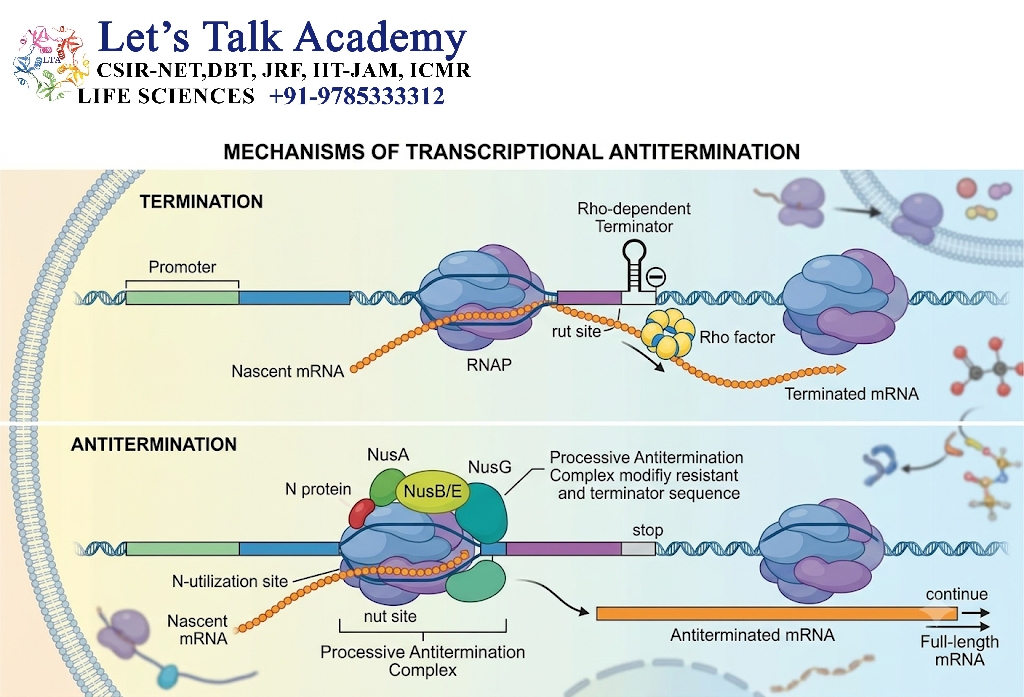
Antitermination is a regulatory mechanism in which RNA polymerase continues transcription beyond a normal transcription termination site.
Normally, termination causes RNA polymerase to stop transcription. In antitermination, a phage regulatory protein modifies the transcription complex so that RNA polymerase can continue.
9.2 N Protein of λ
The λ N protein is an important antitermination factor.
It allows RNA polymerase to read through specific termination sites and continue transcription into downstream genes.
This enables the expression of genes that would otherwise not be transcribed efficiently.
9.3 Biological Importance
Antitermination provides a mechanism for controlling the length and timing of transcription.
It allows a phage to initially express a limited set of genes and subsequently extend transcription into additional genes when the appropriate regulatory protein becomes available.
10. Q Protein and Late Transcription
10.1 Q Protein
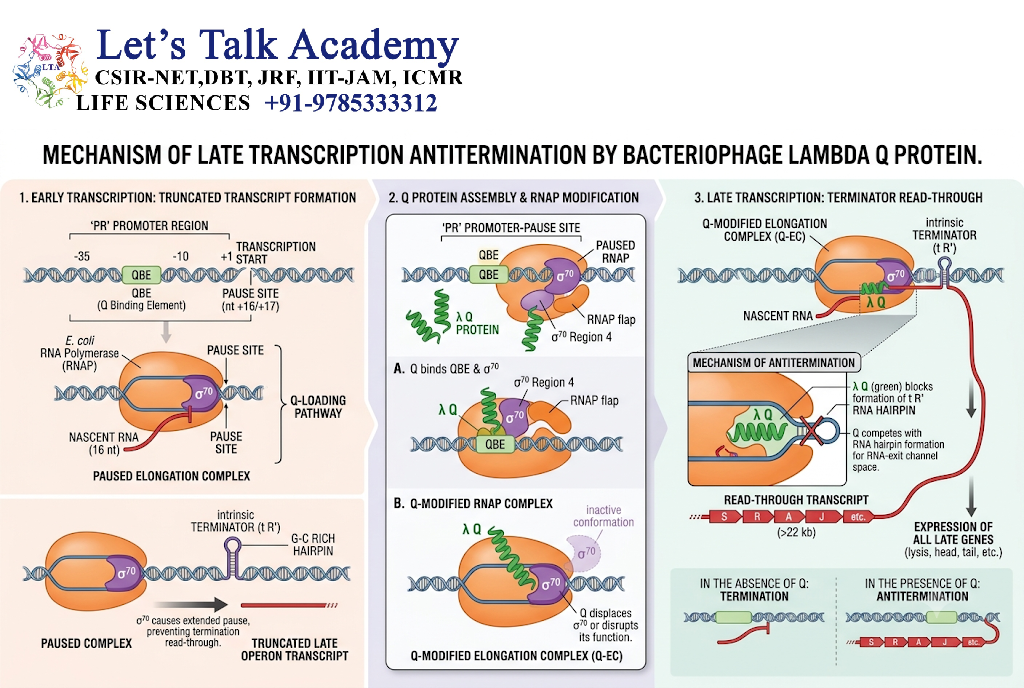
The λ Q protein is associated with activation of late gene expression.
It modifies the transcriptional machinery so that RNA polymerase can efficiently transcribe late genes beyond a regulatory termination checkpoint.
10.2 Importance of Q Regulation
Late genes encode proteins needed for:
- phage structure,
- genome packaging,
- assembly,
- host-cell lysis.
Their expression must therefore occur at the appropriate stage.
Q-mediated regulation helps coordinate the transition into the late transcriptional program.
11. Regulatory Cascade
11.1 Definition
A regulatory cascade occurs when one regulatory event leads to another regulatory event, producing sequential activation of different gene groups.
Phage gene regulation frequently follows this principle.
11.2 General Cascade
Early regulatory genes
↓
Additional regulatory proteins
↓
Replication genes
↓
Late transcription
↓
Structural genes
↓
Assembly and release
The cascade ensures that the phage does not attempt to complete all stages simultaneously.
12. Feedback Regulation
12.1 Definition
Feedback regulation occurs when a product of a regulatory pathway affects the activity of the same pathway or a related pathway.
12.2 Positive Feedback
Positive feedback strengthens a regulatory state.
For example, accumulation of a regulatory protein can promote conditions that favor further establishment of that regulatory state.
12.3 Negative Feedback
Negative feedback limits excessive gene expression.
It can prevent a regulatory protein from accumulating to unnecessarily high levels.
Feedback mechanisms are important for maintaining stable phage developmental states.
13. Establishment of Lysogeny
13.1 Role of CII
CII is an important λ regulatory protein involved in establishment of lysogeny.
When CII activity is sufficiently high, it activates transcription from promoters that favor production of CI repressor.
13.2 Role of CIII
CIII contributes to the stabilization of CII.
It does this by reducing the effectiveness of host proteolytic activity against CII.
Thus:
CIII → increased CII stability → increased CII activity → increased CI establishment → lysogeny favored
13.3 Establishment Versus Maintenance
Establishment and maintenance of lysogeny are related but distinct processes.
CII has an important role during establishment, whereas CI is central to maintaining the established lysogenic state.
14. Maintenance of Lysogeny
14.1 Role of CI
Once lysogeny has been established, CI maintains repression of lytic genes.
The prophage remains in a relatively inactive state with respect to productive phage replication.
14.2 Stable Regulatory State
The lysogenic state represents a stable regulatory condition.
The general principle is:
CI maintained → lytic promoters repressed → prophage maintained
The stability of this state depends on continued regulation of CI production and activity.
15. Induction of the Prophage
15.1 Definition
Induction is the transition of a prophage from lysogenic maintenance toward lytic development.
15.2 DNA Damage and SOS Response
DNA damage in the bacterial host can activate the SOS response.
A central component of this response is the RecA protein.
Activated RecA promotes autocleavage of λ CI repressor.
As CI activity decreases, repression of lytic promoters is relieved.
15.3 General Mechanism
DNA damage → SOS response → RecA activation → CI cleavage → lytic transcription → phage replication → late gene expression → assembly → release
This mechanism connects the physiological condition of the host cell with the developmental behavior of the phage.
16. Host RNA Polymerase
16.1 Dependence on Host Transcription Machinery
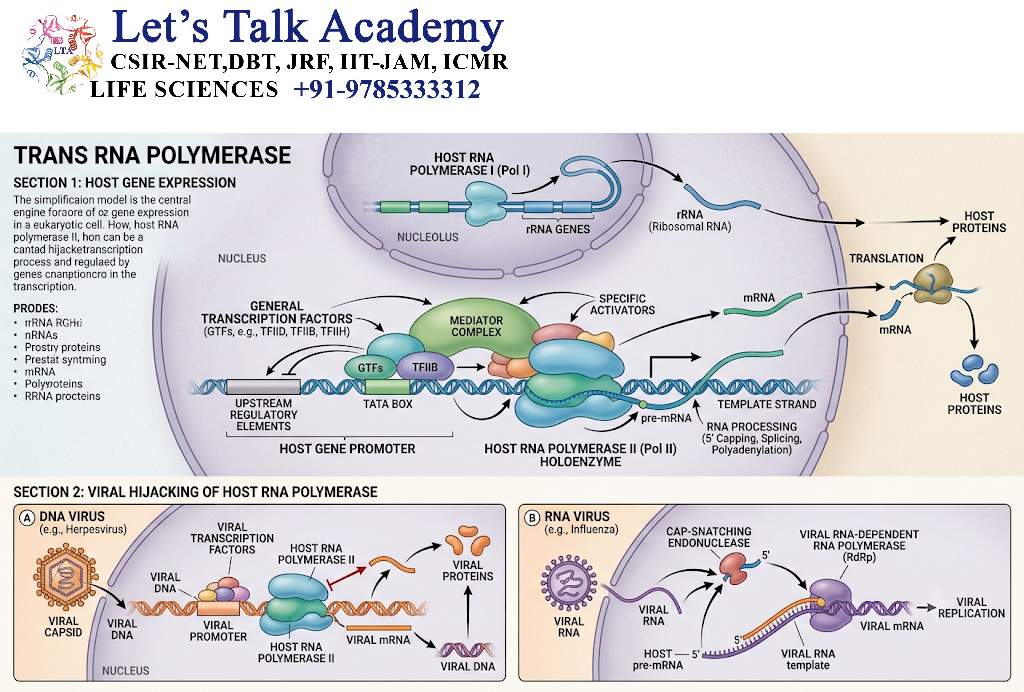
Many phages initially use the bacterial RNA polymerase to transcribe their genes.
This allows rapid initiation of phage gene expression after infection.
16.2 Modification of RNA Polymerase
Some phages produce regulatory proteins that modify the specificity or activity of host RNA polymerase.
This redirects transcription from host genes toward phage genes.
16.3 Sigma Factors
Bacterial sigma factors help RNA polymerase recognize specific promoter sequences.
Phages can exploit this promoter-recognition system or alter it during infection.
Consequently, phage infection can cause a major change in the pattern of transcription within the host cell.
17. Host Shutoff
17.1 Definition
Host shutoff refers to mechanisms that decrease host gene expression while favoring phage gene expression.
17.2 Purpose
Host shutoff provides several advantages.
It can:
- redirect cellular resources,
- reduce competition for ribosomes,
- reduce competition for RNA polymerase,
- suppress host defense mechanisms,
- increase production of phage components.
17.3 Mechanisms
Different phages use different mechanisms, including:
- degradation of host RNA,
- inhibition of host transcription,
- modification of RNA polymerase,
- alteration of translation,
- interference with host regulatory systems.
18. Regulation at the RNA Level
18.1 RNA Stability
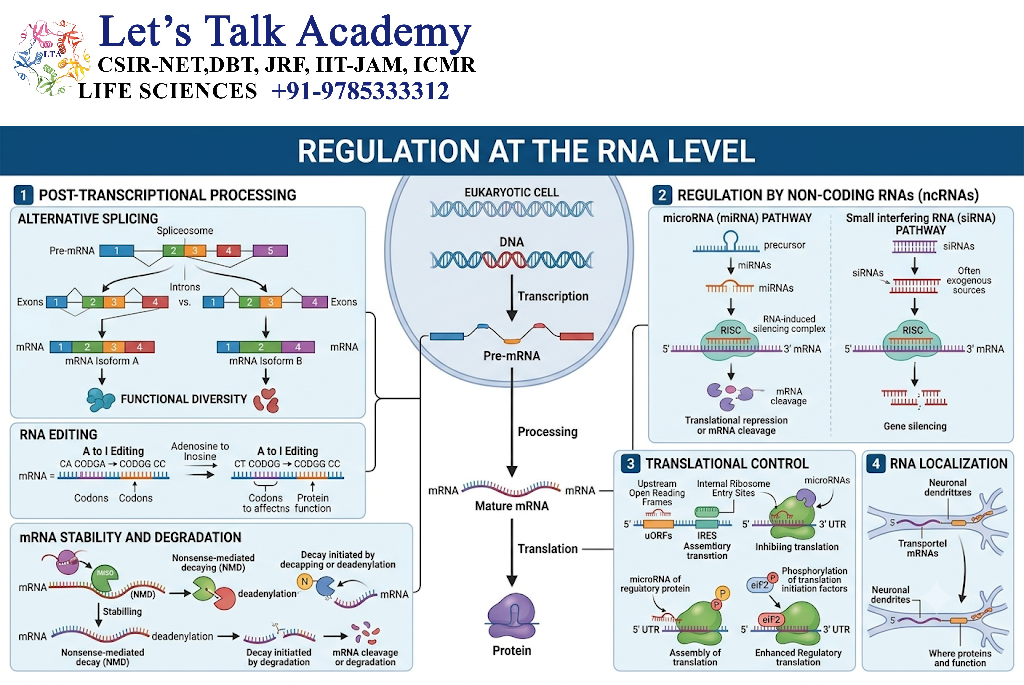
The abundance of an mRNA depends on both its synthesis and its degradation.
A stable mRNA can remain available for translation for a longer period, whereas rapid degradation decreases protein production.
Phages can influence RNA stability by interacting with host RNA-processing and degradation systems.
18.2 Antisense RNA
Some phages produce regulatory RNAs that can base-pair with complementary target RNAs.
Antisense RNA can affect:
- translation,
- RNA stability,
- ribosome binding,
- RNA degradation.
This provides regulation after transcription has occurred.
19. Translational Regulation
19.1 Importance
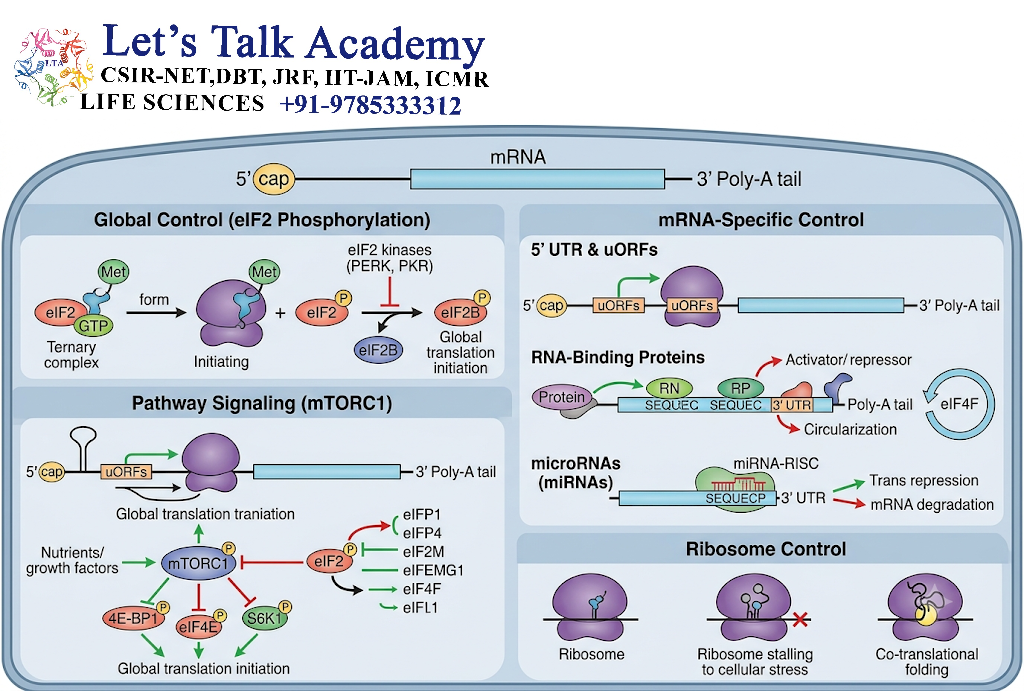
Phages depend on host ribosomes for protein synthesis.
Therefore, controlling translation provides another mechanism for regulating phage development.
19.2 Mechanisms
Translational regulation can influence:
- initiation of translation,
- ribosome binding,
- accessibility of mRNA,
- mRNA stability,
- competition between host and phage mRNAs.
19.3 Temporal Translation
Early and late mRNAs can have different translational efficiencies.
This allows the phage to change the relative amounts of proteins produced during infection.
20. Protein Stability and Degradation
20.1 Importance
The concentration of a regulatory protein depends on both its rate of synthesis and its rate of degradation.
A protein that is produced rapidly but degraded rapidly may not accumulate to a high level.
Conversely, a stable regulatory protein can remain active for a longer period.
20.2 Role in Phage Decisions
Protein degradation can influence developmental decisions.
For example, degradation of a lysogeny-promoting regulatory protein can shift the balance toward lytic development.
Therefore:
Protein synthesis + protein stability + protein degradation = regulatory control
21. Regulation of DNA Replication
21.1 Replication Proteins
Phage DNA replication requires specific viral proteins.
These proteins must be expressed before extensive genome replication can occur.
Therefore, replication genes are generally activated before the late structural genes.
21.2 Coordination with Gene Expression
DNA replication and transcription are closely coordinated.
Once sufficient phage genomes are produced, the phage can support increased synthesis of structural components and packaging proteins.
Thus:
Early regulation → replication → late expression
22. Regulation of Late Genes
22.1 Structural Proteins
Late genes commonly encode proteins required for construction of new phage particles.
These include:
- head proteins,
- tail proteins,
- connector proteins,
- DNA packaging proteins.
22.2 Lysis Proteins
Some late genes encode proteins involved in releasing progeny phages from the bacterial cell.
These proteins are generally produced after sufficient phage assembly has occurred.
22.3 Importance of Timing
Late gene expression must be coordinated with genome replication.
Premature production of structural proteins would not efficiently produce complete phage particles.
23. Regulation of Lysis
23.1 Lysis Timing
Lysis is the final stage of the classical lytic cycle.
The phage must carefully regulate the timing of host-cell destruction.
23.2 Consequences of Premature Lysis
If lysis occurs too early:
- genome replication may be incomplete,
- structural proteins may be insufficient,
- incomplete phage particles may be produced.
23.3 Consequences of Delayed Lysis
If lysis is delayed excessively:
- cellular resources may become depleted,
- phage production may become inefficient.
Therefore, lysis represents an important regulated endpoint of the phage developmental program.
24. Environmental Regulation
24.1 Host Physiological State
Phage developmental decisions can be influenced by the physiological state of the bacterial host.
Relevant factors include:
- nutrient availability,
- growth rate,
- cellular stress,
- DNA damage,
- metabolic state.
24.2 DNA Damage
DNA damage is particularly important in λ because it can activate the bacterial SOS response and promote prophage induction.
24.3 Nutrient Conditions
Host nutritional conditions can influence the availability of cellular resources required for phage replication.
Therefore, phages can integrate information about host conditions into their developmental programs.
25. Multiplicity of Infection
25.1 Definition
Multiplicity of infection refers to the ratio of infecting phage particles to host cells in a population.
The number of infecting phage genomes can influence the intracellular concentration of regulatory proteins.
25.2 Influence on Development
In some phage systems, infection by multiple phages can alter the balance of regulatory factors and affect the probability of lytic versus lysogenic development.
This illustrates how phage developmental decisions can depend on both viral and host factors.
26. Stochastic Gene Regulation
26.1 Definition
Gene expression involves molecular fluctuations.
Even genetically identical cells under similar conditions can experience differences in:
- transcription,
- translation,
- protein degradation,
- regulatory protein concentration.
26.2 Biological Significance
Such fluctuations can influence whether a regulatory network crosses a threshold required to establish one developmental state rather than another.
Therefore, phage developmental decisions can contain a stochastic component.
27. Molecular Switches in Phage Development
27.1 Definition
A molecular switch is a regulatory system that can exist in alternative stable states.
The λ lysis-lysogeny system is a classic example.
27.2 Lysogenic State
When CI dominates:
CI activity → lytic genes repressed → lysogeny maintained
27.3 Lytic State
When lytic regulatory activity dominates:
Lytic regulatory program → lytic genes expressed → genome replication → progeny production
The actual λ regulatory network is more complex than this simplified representation, involving several interacting regulatory proteins and DNA sites.
28. Regulation by Transcription Termination
28.1 Transcription Termination
Termination is the process by which RNA polymerase stops transcription.
Phage genomes contain regulatory termination sites that help control the expression of downstream genes.
28.2 Regulatory Importance
Termination can restrict transcription to an early set of genes.
When an antitermination factor becomes active, RNA polymerase can continue through the termination site.
This provides a powerful mechanism for temporal control.
29. Coordination of Transcription and Translation
Bacterial cells lack a nucleus, so transcription and translation can occur in close temporal and spatial association.
Phages exploit this organization.
A newly synthesized phage mRNA can rapidly interact with ribosomes, while newly produced regulatory proteins can influence transcription.
This allows rapid transitions between different gene-expression programs during infection.
30. Phage Gene Expression as a Cascade
Phage gene expression can be understood as a carefully organized cascade.
30.1 First Stage
Regulatory genes are expressed immediately after infection.
30.2 Second Stage
Regulatory proteins modify host machinery and activate additional phage genes.
30.3 Third Stage
Replication proteins are produced and phage genome replication begins.
30.4 Fourth Stage
Late transcription is activated.
30.5 Fifth Stage
Structural and packaging proteins are produced.
30.6 Sixth Stage
Phage particles are assembled and released.
This cascade ensures that every stage occurs in an appropriate sequence.
31. Comparison of Lytic and Lysogenic Regulation
| Feature | Lytic Development | Lysogenic Development |
|---|---|---|
| Main objective | Production of progeny phages | Stable maintenance of phage genome |
| Genome status | Replicated extensively | Maintained with host genome in classical λ lysogeny |
| Structural gene expression | High during late stage | Generally repressed |
| Lysis genes | Activated | Repressed |
| CI in λ | Not dominant | Maintained |
| Host-cell outcome | Lysis in classical lytic growth | Cell survives and divides |
| Regulatory emphasis | Activation of productive infection | Repression of lytic genes |
32. Major Regulatory Proteins of λ
| Protein | Major function |
|---|---|
| CI | Maintenance of lysogeny and repression of lytic promoters |
| Cro | Favors lytic development |
| CII | Promotes establishment of lysogeny |
| CIII | Stabilizes CII by affecting proteolytic regulation |
| N | Antitermination during early transcriptional progression |
| Q | Activation of late transcription through antitermination-related control |
33. Major Mechanisms of Phage Gene Regulation
33.1 Transcriptional Repression
Repressors bind regulatory DNA and reduce transcription.
33.2 Transcriptional Activation
Activators increase transcription from specific promoters.
33.3 Antitermination
Regulatory proteins allow RNA polymerase to continue transcription beyond selected termination sites.
33.4 Promoter Switching
Different promoters are activated at different stages of infection.
33.5 Feedback Regulation
Regulatory proteins influence their own production or the activity of other regulatory pathways.
33.6 RNA Regulation
RNA stability and antisense RNA can regulate gene expression after transcription.
33.7 Protein Stability
Controlled protein degradation can alter the concentration of regulatory factors.
34. Integrated Model of Phage Gene Regulation
A generalized model can be written as:
Phage infection
↓
Early transcription
↓
Regulatory proteins
↓
Host machinery modification
↓
Replication gene expression
↓
Phage genome replication
↓
Late transcription
↓
Structural protein production
↓
Genome packaging
↓
Phage assembly
↓
Host lysis or phage release
At every stage, regulatory mechanisms determine which genes remain active and which genes are repressed.
35. Biological Significance of Phage Gene Regulation
The study of phage gene regulation is important because phages provide relatively simple systems in which complex regulatory principles can be studied.
Phage systems have helped reveal the molecular basis of:
- transcriptional repression,
- transcriptional activation,
- promoter recognition,
- operator function,
- genetic switches,
- feedback regulation,
- transcription termination,
- antitermination,
- protein stability,
- host-virus interactions.
These principles are broadly relevant to molecular and cellular biology.


