
1. Interrupted Genes
Genes are not always continuous stretches of DNA that directly encode a protein. In many eukaryotic organisms, the coding information of a gene is interrupted by non-coding sequences. Such genes are called interrupted genes or split genes.
An interrupted gene contains two major types of sequences:
- Exons – sequences retained in the mature RNA and generally containing coding information.
- Introns – intervening sequences that are transcribed into the initial RNA but removed during RNA processing.
The discovery of interrupted genes changed the classical understanding of gene organization. A gene was traditionally considered a continuous DNA sequence corresponding directly to an RNA and ultimately to a protein. However, molecular studies demonstrated that many eukaryotic genes are composed of coding and non-coding segments arranged alternately.
The basic organization can be represented as:
DNA:
Exon 1 → Intron 1 → Exon 2 → Intron 2 → Exon 3
Primary RNA transcript:
Exon 1 → Intron 1 → Exon 2 → Intron 2 → Exon 3
Mature mRNA:
Exon 1 → Exon 2 → Exon 3
Thus, the information present in the DNA is initially copied into a primary RNA transcript, after which introns are removed and exons are joined to produce mature RNA.
Interrupted genes are particularly important because they provide organisms with considerable flexibility in regulating gene expression and generating different RNA and protein products from the same gene.
1.1 Historical Discovery of Interrupted Genes
The concept of interrupted genes emerged from studies of eukaryotic genes in the late twentieth century. Researchers studying adenovirus RNA observed that mature messenger RNA did not appear to correspond continuously to a single region of viral DNA.
Instead, different portions of the DNA were found to contribute to different regions of the mature RNA, with intervening DNA sequences absent from the mature transcript.
This led to the recognition that genes can contain intervening sequences.
The term intron was introduced for intervening sequences, whereas the expressed sequences retained in mature RNA were called exons.
The discovery demonstrated that:
- Genes may be discontinuous in their DNA organization.
- Primary RNA transcripts can contain sequences that are absent from mature RNA.
- RNA processing is an essential stage of eukaryotic gene expression.
- A single gene can potentially produce multiple RNA molecules through different patterns of processing.
This discovery provided a major foundation for understanding the complexity of eukaryotic genomes.
1.2 Basic Organization of an Interrupted Gene
A typical interrupted gene can contain several exons separated by introns.
A simplified arrangement is:
5′ Regulatory Region → Exon 1 → Intron 1 → Exon 2 → Intron 2 → Exon 3 → 3′ Regulatory Region
The exact organization varies considerably among genes.
Some genes contain only a few exons, whereas others may contain dozens or even hundreds of exons and introns.
The regions of an interrupted gene can broadly be classified as:
- Regulatory regions
- Exons
- Introns
- 5′ untranslated region
- Coding sequence
- 3′ untranslated region
- Transcription termination and processing signals
Not every exon necessarily codes for amino acids. Some exonic sequences form untranslated regions of the mature mRNA.
1.3 Exons
Exons are sequences that remain in the mature RNA after RNA processing.
In protein-coding genes, exons may contain:
- 5′ untranslated sequences
- Protein-coding sequences
- 3′ untranslated sequences
Therefore, the terms exon and coding sequence should not be considered synonymous.
For example, a mature mRNA may contain:
5′ UTR → Coding region → 3′ UTR
All three regions can be derived from exonic sequences.
Exons are joined together during RNA splicing to form a continuous mature RNA molecule.
1.4 Introns
Introns are intervening sequences present in the primary RNA transcript but removed during RNA processing.
They are transcribed along with exons but generally do not appear in the mature mRNA.
Introns can vary greatly in length. Some are relatively short, whereas others may occupy large portions of a gene.
Although introns were historically described primarily as non-coding sequences, this description is incomplete. Introns can contain important regulatory elements and may influence:
- Gene expression
- Alternative splicing
- RNA processing
- Nuclear export
- Transcript stability
- Regulatory RNA production
Therefore, introns can have important biological functions even though they are removed from the mature messenger RNA.
2. Structure of Interrupted Genes
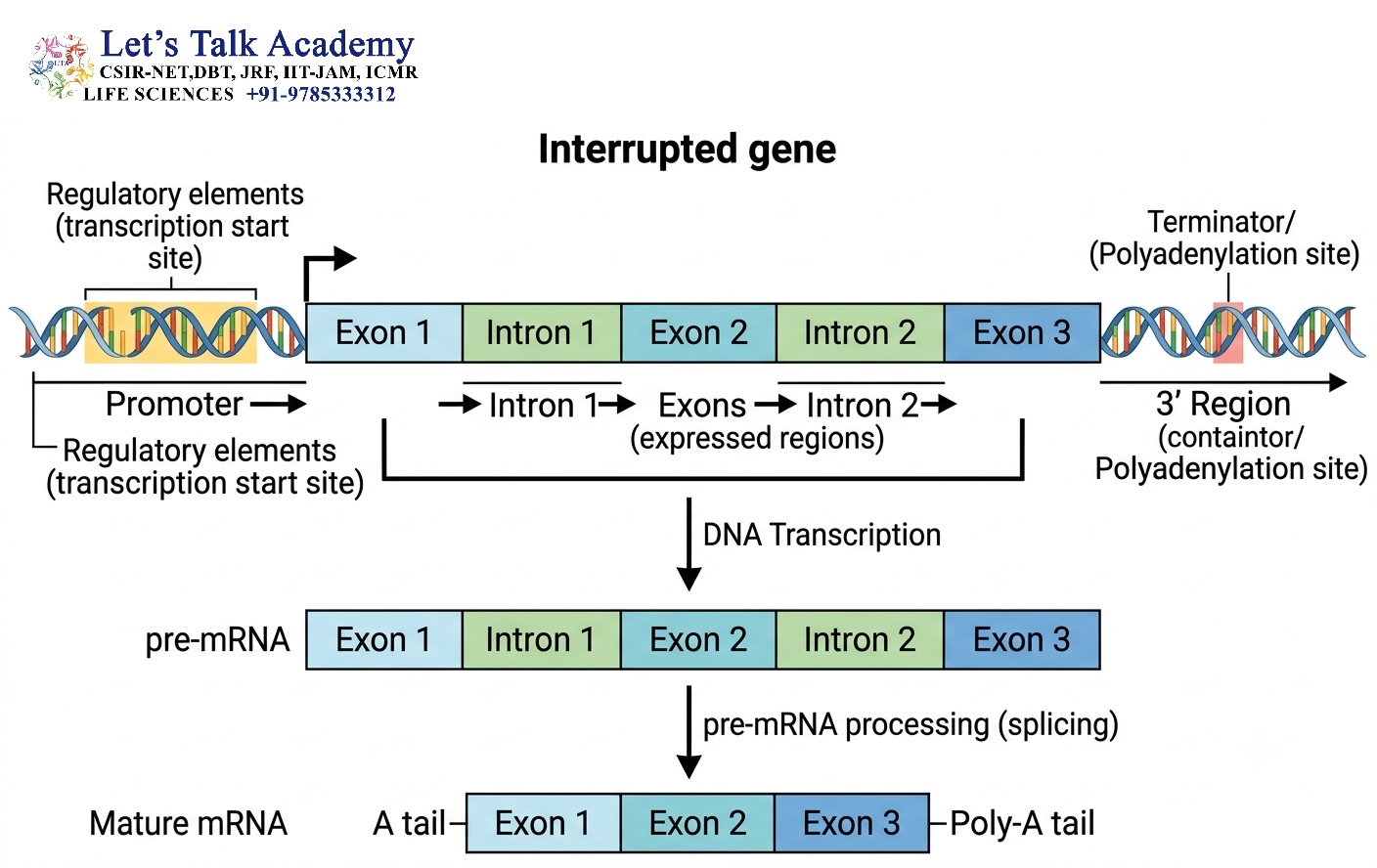
The organization of an interrupted gene involves multiple DNA regions that work together to produce a functional RNA molecule.
2.1 Promoter
The promoter is a regulatory DNA region associated with the initiation of transcription.
It provides binding sites for transcription machinery and regulatory proteins.
Depending on the gene, promoters may contain specific sequence elements recognized by transcription factors and components of RNA polymerase machinery.
The promoter determines where transcription begins and contributes to the regulation of transcriptional activity.
2.2 5′ Untranslated Region
The 5′ untranslated region (5′ UTR) is the portion of the mature RNA located before the translation initiation codon.
Although it does not normally encode amino acids, it can influence:
- Translation efficiency
- mRNA stability
- Ribosome recruitment
- Regulatory protein binding
- RNA secondary structure
The 5′ UTR can contain one or more exons.
2.3 Coding Region
The coding region contains the information used to determine the amino acid sequence of a protein.
In an interrupted gene, the coding region may be distributed across several exons.
After intron removal, the coding sequences of the appropriate exons are joined together to create a continuous open reading frame.
2.4 3′ Untranslated Region
The 3′ untranslated region (3′ UTR) is located after the translation termination codon.
It does not normally contribute amino acids to the protein but plays important regulatory roles.
The 3′ UTR can influence:
- mRNA stability
- Localization
- Translation
- Degradation
- Interaction with microRNAs and RNA-binding proteins
2.5 Polyadenylation Region
Many eukaryotic messenger RNAs undergo 3′ end processing and polyadenylation.
A poly(A) tail is added to the 3′ end of the RNA after cleavage of the precursor transcript.
The poly(A) tail contributes to:
- mRNA stability
- Nuclear export
- Translation efficiency
- Regulation of RNA degradation
3. Introns and Exons: Major Differences
| Feature | Exons | Introns |
|---|---|---|
| Presence in primary transcript | Yes | Yes |
| Presence in mature mRNA | Usually retained | Usually removed |
| Coding potential | May contain coding sequences | Generally not part of the mature coding sequence |
| Removal during splicing | No | Yes |
| Contribution to mature RNA | Direct | Usually indirect |
| Regulatory roles | Yes | Yes |
It is important to understand that not every exon is protein-coding and not every intron is functionally meaningless.
4. Transcription of Interrupted Genes
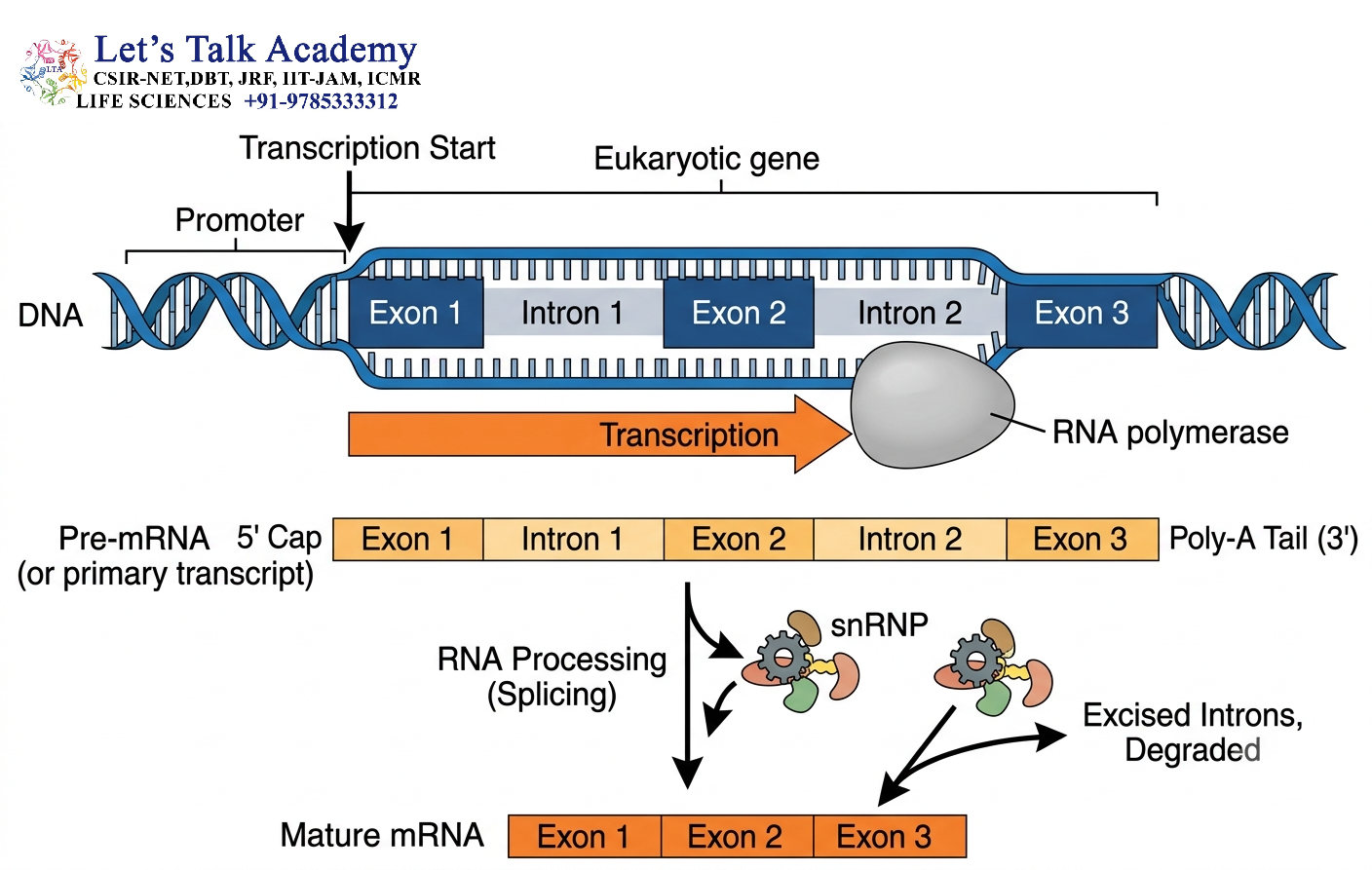
The first step in expression of an interrupted gene is transcription.
RNA polymerase synthesizes a complementary RNA molecule using the DNA template strand.
Because the gene contains both exons and introns, the initial transcript contains both types of sequences.
This initial RNA is called the:
Primary transcript or pre-mRNA
For example:
DNA:
Exon 1 — Intron 1 — Exon 2 — Intron 2 — Exon 3
↓
Primary transcript:
Exon 1 — Intron 1 — Exon 2 — Intron 2 — Exon 3
↓
Splicing:
Introns removed
↓
Mature mRNA:
Exon 1 — Exon 2 — Exon 3
The primary transcript therefore contains more sequence information than the mature mRNA.
5. RNA Processing in Interrupted Genes
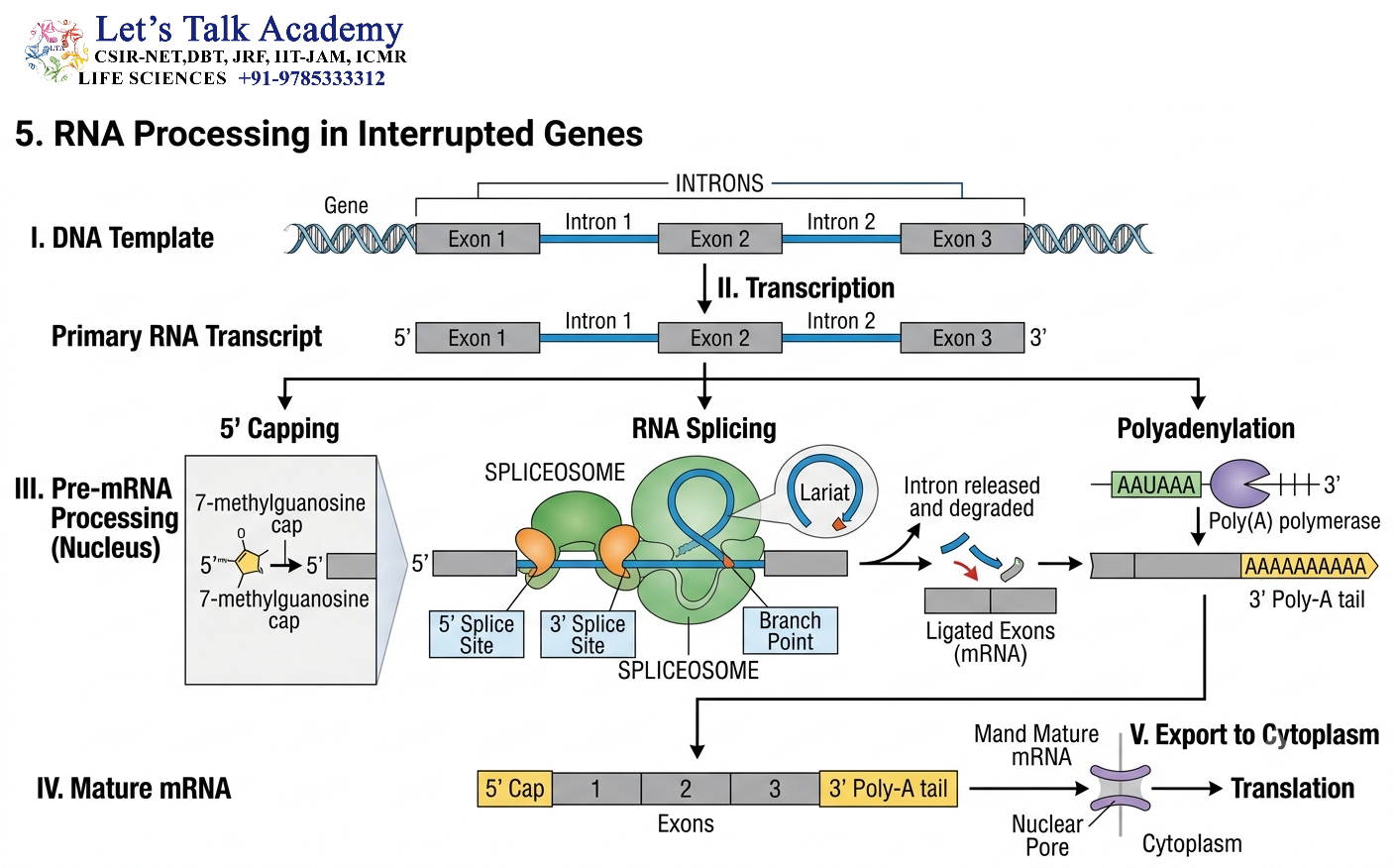
The primary RNA transcript undergoes several processing events before becoming a mature messenger RNA.
The major processing events include:
- 5′ capping
- RNA splicing
- 3′ end cleavage
- Polyadenylation
These processes are coordinated with transcription and occur mainly in the nucleus of eukaryotic cells.
5.1 5′ Capping
Soon after transcription begins, a modified guanine nucleotide called 7-methylguanosine (m⁷G) is added to the 5′ end of the RNA through a distinctive 5′–5′ triphosphate linkage.
The 5′ cap has several functions.
It:
- Protects RNA from degradation
- Helps in nuclear export
- Participates in RNA processing
- Facilitates recognition by translation machinery
- Contributes to efficient translation initiation
5.2 RNA Splicing
RNA splicing is the process through which introns are removed from the primary transcript and exons are joined.
The reaction must occur with high precision because incorrect removal of even a single nucleotide can alter the reading frame of the resulting mRNA.
Splicing is generally carried out by a large RNA–protein complex called the spliceosome.
5.3 3′ End Processing
The precursor RNA undergoes cleavage near its 3′ end.
Following cleavage, many eukaryotic mRNAs receive a poly(A) tail.
This processing step helps generate a stable mature transcript suitable for export from the nucleus and subsequent translation.
6. Mechanism of Pre-mRNA Splicing
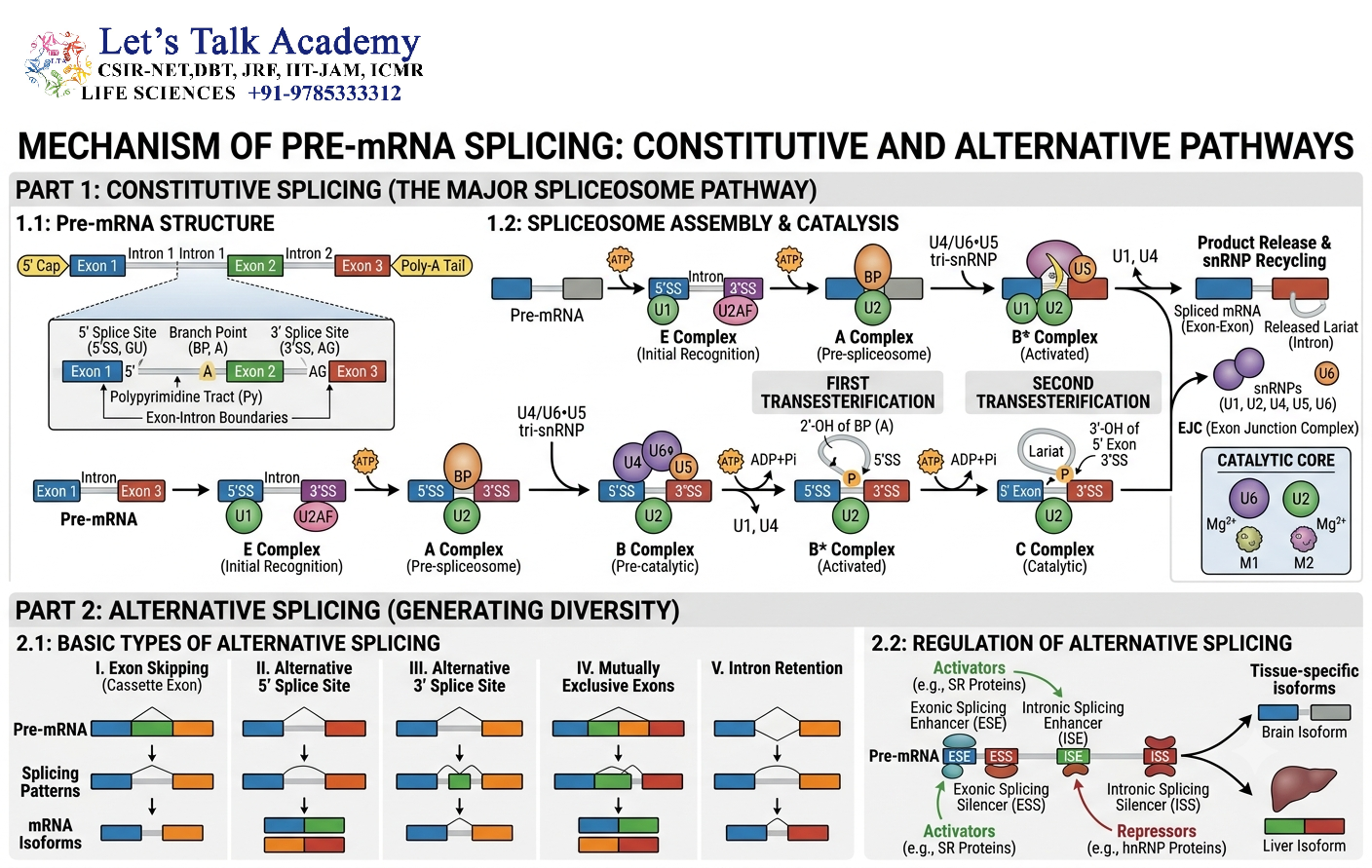
Splicing involves recognition of specific sequence signals within the intron.
The major signals include:
- 5′ splice site
- Branch-point sequence
- Polypyrimidine tract
- 3′ splice site
A simplified arrangement is:
Exon 1 — 5′ splice site — Intron — Branch point — Polypyrimidine tract — 3′ splice site — Exon 2
These sequence elements provide recognition signals for the splicing machinery.
6.1 5′ Splice Site
The 5′ end of an intron contains a conserved splice-site sequence.
In many eukaryotic introns, the intron begins with GU in the RNA sequence.
Recognition of this region is important for correct spliceosome assembly.
6.2 Branch-Point Sequence
The intron contains a conserved branch-point adenosine.
The 2′-OH group of this adenosine participates directly in the splicing reaction.
It forms a characteristic structure known as a lariat.
6.3 Polypyrimidine Tract
A pyrimidine-rich region, usually located between the branch point and the 3′ splice site, assists in spliceosome recognition and proper splice-site selection.
It commonly contains uridine and cytidine residues.
6.4 3′ Splice Site
The 3′ splice site marks the end of the intron.
In many eukaryotic introns, the intron terminates with AG in the RNA sequence.
Recognition of this site is essential for accurate removal of the intron.
7. Spliceosome
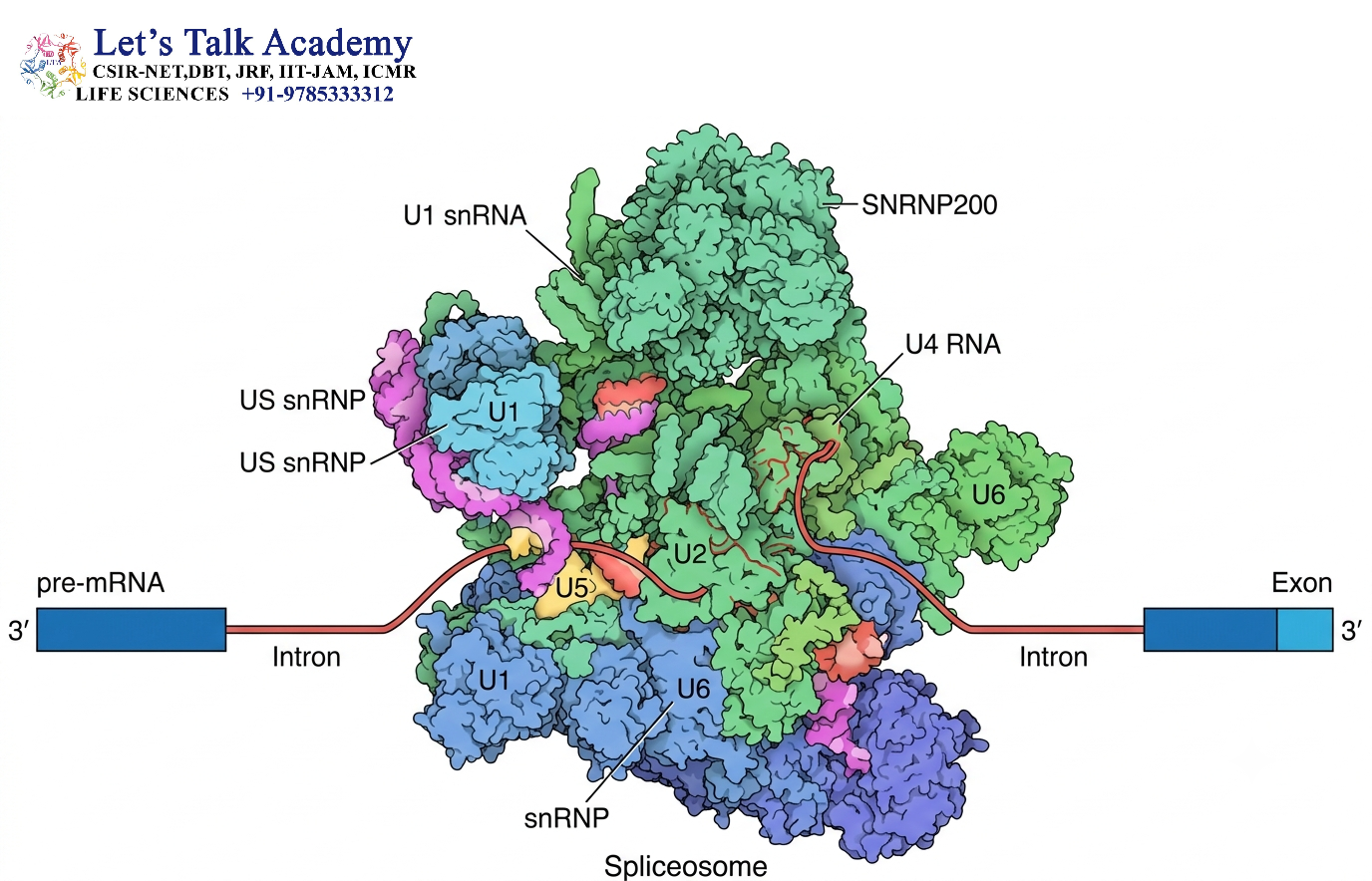
The spliceosome is the major molecular machinery responsible for pre-mRNA splicing.
It is composed of small nuclear ribonucleoproteins called snRNPs and numerous associated proteins.
Important snRNPs include:
- U1
- U2
- U4
- U5
- U6
These components interact with the pre-mRNA and with one another to recognize splice sites and catalyze the rearrangements required for intron removal.
7.1 U1 snRNP
U1 recognizes and binds the 5′ splice site.
This is one of the earliest steps in spliceosome assembly.
7.2 U2 snRNP
U2 recognizes the branch-point region.
It interacts with the branch-point sequence in a way that positions the branch-point adenosine for the subsequent splicing reaction.
7.3 U4, U5 and U6 snRNPs
These components join the developing spliceosome and undergo rearrangements.
U6 plays a particularly important catalytic role, while U5 helps align the exons for joining.
U4 initially associates with U6 and helps regulate its activity before major rearrangements occur.
8. Chemistry of RNA Splicing
Splicing involves two major transesterification reactions.
8.1 First Transesterification Reaction
The 2′-OH group of the branch-point adenosine attacks the phosphate at the 5′ splice site.
This results in:
- Cleavage of the exon–intron junction
- Formation of a 2′–5′ phosphodiester bond
- Formation of an intron lariat structure
The first exon becomes separated from the intron, while the intron remains connected to the downstream exon.
8.2 Second Transesterification Reaction
The free 3′-OH group of the upstream exon attacks the phosphate at the 3′ splice site.
As a result:
- The two exons are joined.
- The intron is released as a lariat.
The lariat is subsequently debranched and degraded or processed further.
9. Alternative Splicing
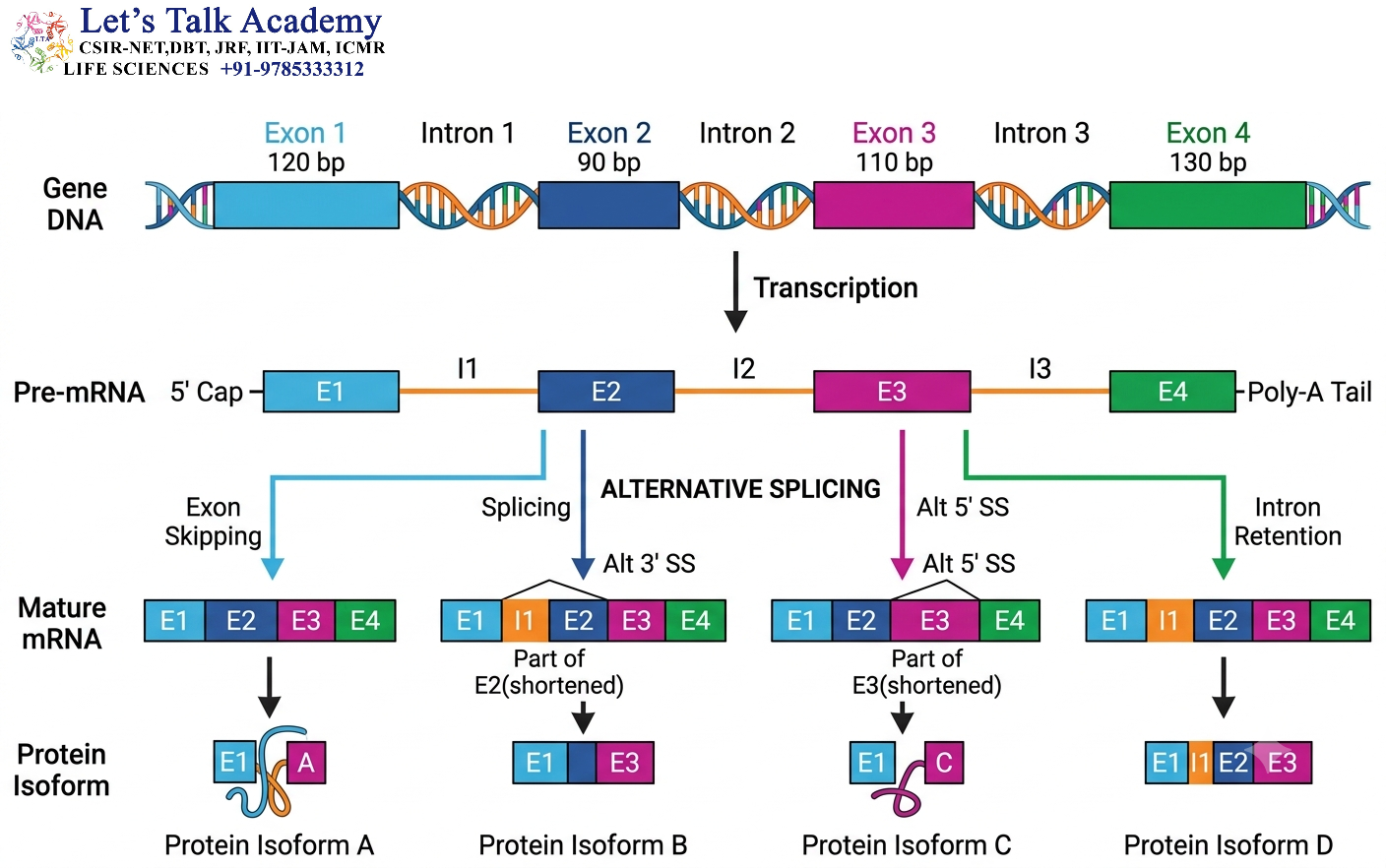
One of the most important consequences of interrupted gene organization is alternative splicing.
Alternative splicing allows a single primary transcript to be processed in different ways, producing different mature mRNAs.
Consequently, one gene can generate multiple protein isoforms.
Common patterns include:
- Exon skipping
- Alternative 5′ splice-site selection
- Alternative 3′ splice-site selection
- Mutually exclusive exons
- Intron retention
9.1 Exon Skipping
An exon may be included in one mature mRNA but excluded from another.
For example:
Transcript 1:
Exon 1 → Exon 2 → Exon 3
Transcript 2:
Exon 1 → Exon 3
The two transcripts can encode proteins with different structures or functions.
9.2 Alternative 5′ Splice Sites
Different 5′ splice sites within the same region can be selected.
This changes the beginning of the downstream exon and can alter the resulting mRNA and protein.
9.3 Alternative 3′ Splice Sites
Different 3′ splice sites can be selected within the same general region.
This changes the end of the upstream exon.
9.4 Mutually Exclusive Exons
Two exons may be arranged so that only one is incorporated into a mature transcript.
This provides a mechanism for generating structurally different protein isoforms.
9.5 Intron Retention
In some cases, an intron is retained rather than removed.
Intron retention can alter:
- Protein sequence
- Reading frame
- mRNA stability
- Cellular localization
- Transcript degradation
10. Regulation of Alternative Splicing
Alternative splicing is not simply a random process. It is carefully regulated.
Important regulatory factors include:
- RNA-binding proteins
- Splicing enhancers
- Splicing silencers
- Cellular signaling pathways
- Chromatin structure
- Transcriptional dynamics
Two important families of splicing regulators are often represented by SR proteins and hnRNP proteins.
SR proteins can promote recognition of particular splice sites, whereas hnRNP proteins can influence splice-site selection in different ways depending on the transcript and cellular context.
Thus, alternative splicing provides cells with a mechanism for regulating gene expression at the RNA-processing level.
11. Significance of Interrupted Genes
Interrupted genes have several important biological advantages.
11.1 Generation of Protein Diversity
Alternative splicing allows different combinations of exons to be used.
Consequently, a relatively limited number of genes can generate a much larger collection of protein isoforms.
11.2 Regulation of Gene Expression
RNA processing provides an additional regulatory layer between transcription and translation.
Cells can control not only whether a gene is transcribed but also how its transcript is processed.
11.3 Evolutionary Flexibility
Introns and exon organization can facilitate evolutionary changes.
Individual exons can sometimes acquire new combinations or functions without completely disrupting the overall gene.
11.4 Functional Specialization
Different tissues can produce different isoforms from the same gene.
For example, a gene may generate one RNA isoform in neuronal cells and another in muscle cells.
This contributes to cellular specialization.
12. Interrupted Genes and Protein Diversity
The relationship between genes and proteins is therefore not always one-to-one.
A simplified classical model is:
One gene → One RNA → One protein
For many eukaryotic genes, a more realistic model is:
One gene → One primary transcript → Multiple mature RNAs → Multiple protein isoforms
This does not mean that every interrupted gene necessarily produces many proteins. Rather, the exon–intron structure provides the molecular possibility for regulated transcript diversity.
13. Introns Beyond Splicing
Introns were once commonly regarded as useless intervening DNA. Modern molecular biology has demonstrated that this view is overly simplistic.
Intronic regions can contain:
- Regulatory sequences
- Enhancer elements
- Binding sites for regulatory proteins
- Non-coding RNA genes
- Signals affecting transcription and RNA processing
Some introns can also influence the efficiency or timing of gene expression.
Thus, the removal of an intron from mature mRNA does not necessarily mean that the intron has no biological importance.
14. Exon–Intron Boundaries
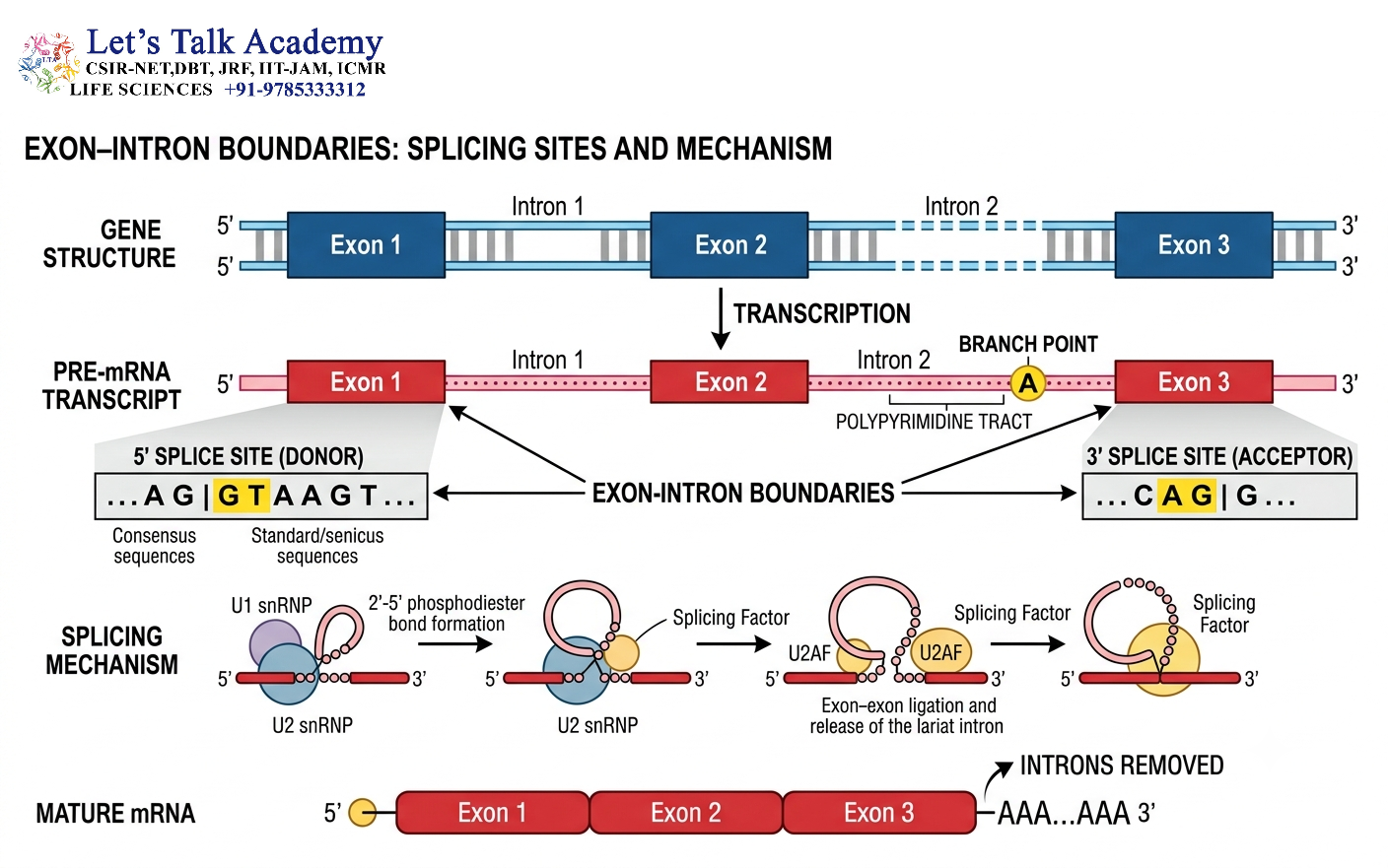
Correct identification of exon–intron boundaries is essential for accurate splicing.
A mutation affecting a splice site can result in:
- Exon skipping
- Intron retention
- Use of an abnormal splice site
- Altered reading frame
- Premature translation termination
- Production of abnormal proteins
Therefore, splice-site sequences are highly important for maintaining normal gene expression.
15. Splicing Errors and Their Consequences
The splicing process must be highly accurate.
If an intron is incorrectly removed or an exon is incorrectly included, the resulting mRNA may contain an altered coding sequence.
Possible consequences include:
- Abnormal amino acid sequence
- Frameshift
- Premature stop codon
- Reduced protein production
- Production of a non-functional protein
- Increased degradation of the abnormal mRNA
Cells possess quality-control mechanisms that can recognize and eliminate many improperly processed transcripts.
One important pathway is nonsense-mediated mRNA decay (NMD), which can degrade transcripts containing certain premature termination codons.
16. Interrupted Genes in Eukaryotes and Prokaryotes
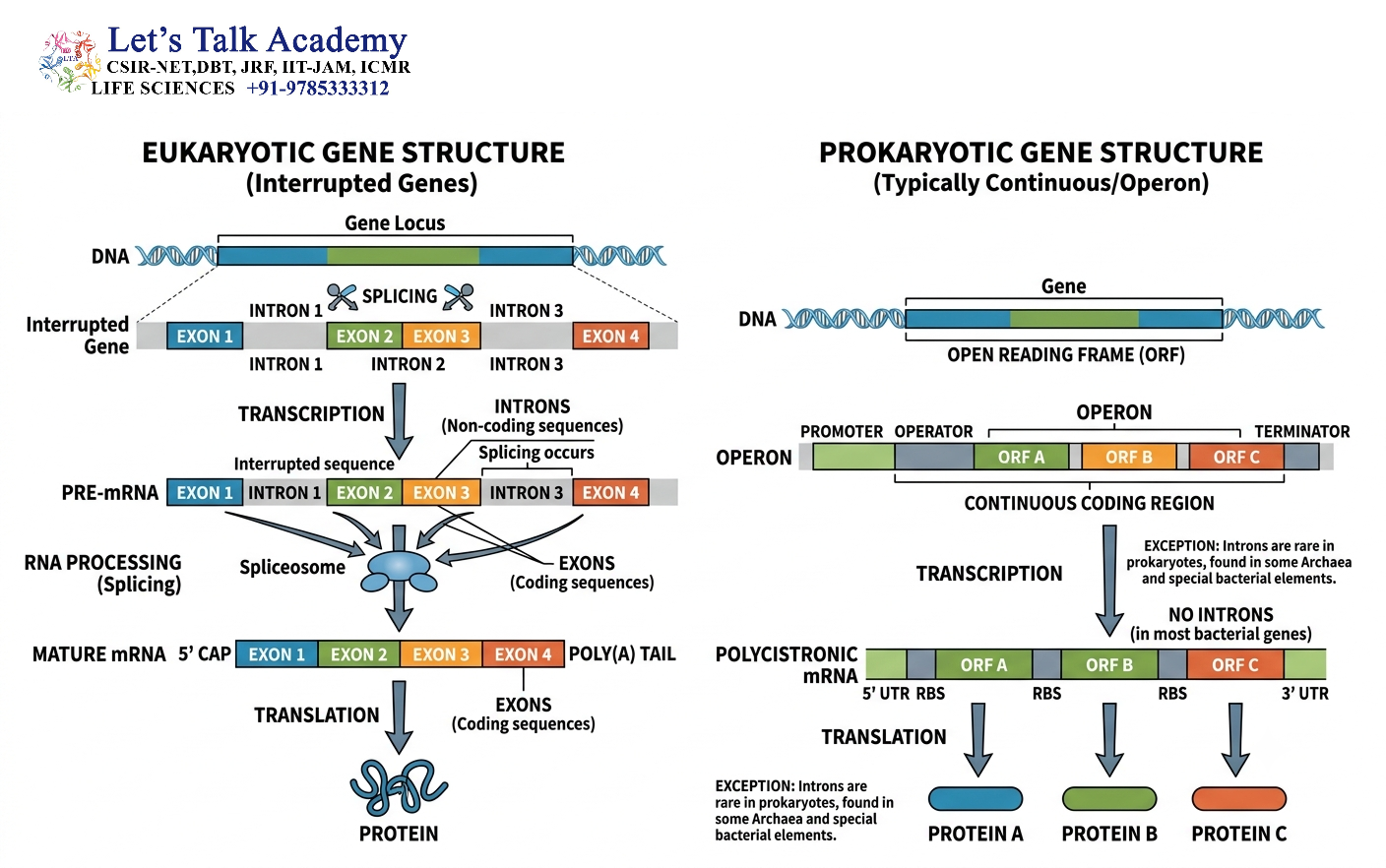
Interrupted genes are particularly characteristic of eukaryotic nuclear genomes.
Most bacterial genes are organized more compactly and generally contain far fewer introns than eukaryotic genes.
However, introns are not completely absent from prokaryotic organisms. Certain bacteria and archaea contain specialized introns, and some RNA molecules can undergo self-splicing.
Eukaryotic organisms, especially multicellular organisms, commonly exhibit extensive exon–intron organization and sophisticated alternative splicing.
17. Self-Splicing Introns
Not all introns require the conventional spliceosome.
Some introns possess catalytic RNA activity and can remove themselves from RNA under appropriate conditions.
These are called self-splicing introns.
Two major groups are:
- Group I introns
- Group II introns
Group II introns are particularly interesting because their splicing mechanism has similarities to spliceosomal intron splicing.
They form lariat-like structures and use transesterification reactions.
The existence of catalytic introns demonstrates that RNA can function not only as genetic information but also as a catalyst.
18. Interrupted Genes and Gene Architecture
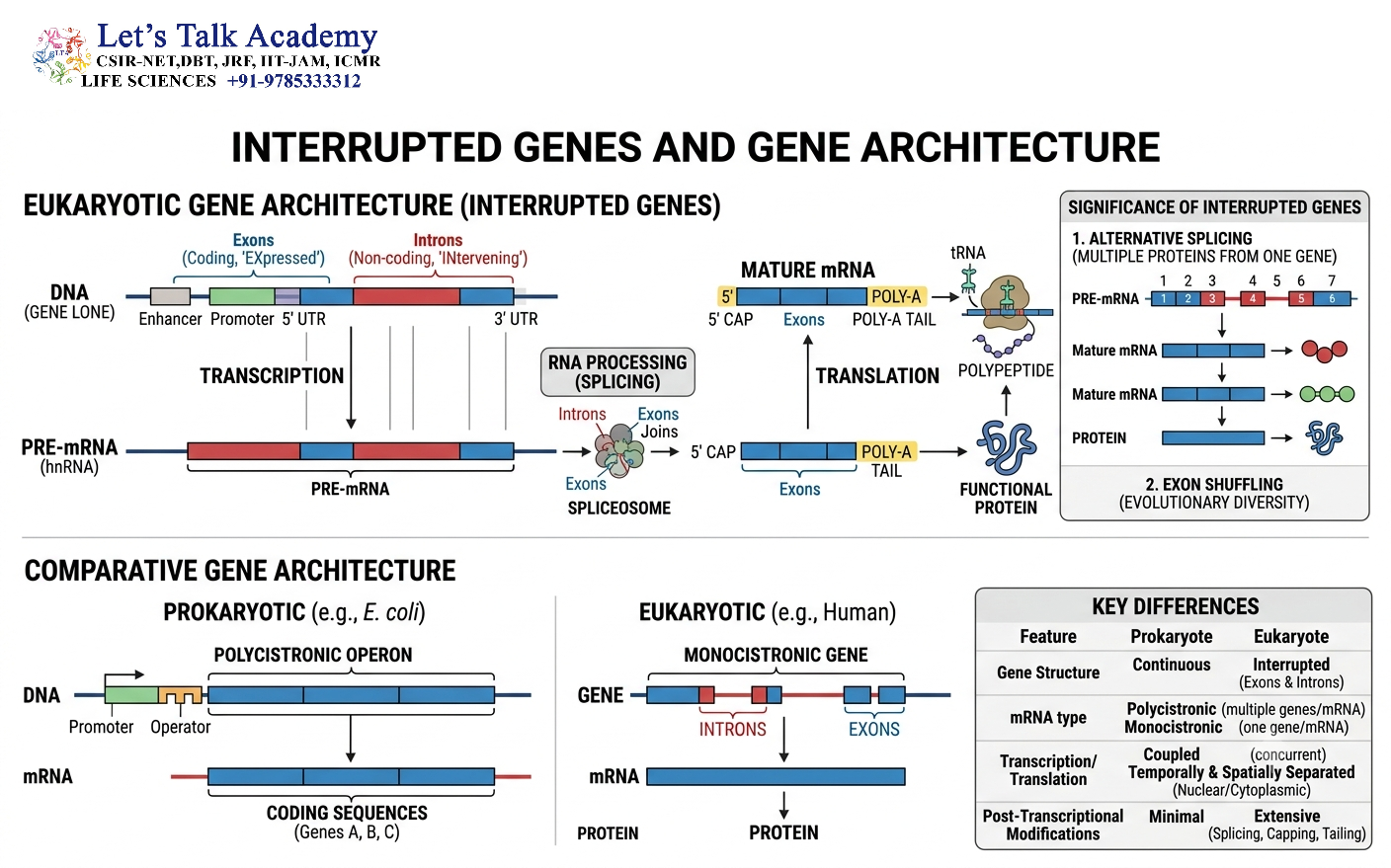
The organization of exons and introns is an important component of gene architecture.
Different genes may differ greatly in:
- Number of exons
- Intron length
- Exon length
- Splice-site arrangement
- Regulatory sequence organization
- Alternative transcript patterns
Some genes have compact structures, whereas others span very large regions of the genome because of extensive intronic sequences.
The physical size of a gene therefore does not necessarily correspond directly to the length of the protein it encodes.
A relatively small protein-coding region can be embedded within a very large genomic region containing extensive introns and regulatory sequences.
19. Interrupted Genes and Genome Complexity
Interrupted gene organization contributes to the complexity of eukaryotic gene regulation.
Genome complexity does not depend only on the number of genes. It also depends on how genes are:
- Transcribed
- Spliced
- Modified
- Regulated
- Translated
- Degraded
Alternative splicing is one mechanism through which organisms increase transcript and protein diversity without requiring a completely separate gene for every protein isoform.
20. Relationship Between Transcription and Splicing
In eukaryotic cells, transcription and RNA processing are closely connected.
Splicing can begin while transcription is still occurring.
This coordination is known as co-transcriptional RNA processing.
The transcription machinery, RNA-processing factors, chromatin environment and spliceosome can therefore interact functionally.
The rate at which RNA polymerase moves through a gene can also influence splice-site selection in certain situations.
This demonstrates that gene expression is not a collection of completely independent steps but rather a coordinated molecular process.
21. Exon Definition and Intron Definition
Splice-site recognition can involve different strategies depending on the architecture of the transcript.
Exon definition
The splicing machinery initially recognizes the boundaries of an exon and coordinates the appropriate splice sites.
Intron definition
In some transcripts, the machinery preferentially recognizes the boundaries of an intron.
The relative importance of these mechanisms depends on factors such as exon and intron size.
These concepts help explain how spliceosomes accurately identify the correct sequences in complex pre-mRNAs.
22. Interrupted Genes and RNA Quality Control
RNA processing is followed by several quality-control mechanisms.
A cell must prevent defective RNA molecules from being translated into potentially harmful proteins.
Quality control can identify transcripts with:
- Incorrect splicing
- Premature termination codons
- Abnormal RNA structures
- Incomplete processing
Defective RNAs can be retained in the nucleus or degraded.
This ensures that only appropriately processed transcripts are efficiently transported to the cytoplasm for translation.
23. Interrupted Genes and Cellular Differentiation
Different cell types can express different splice variants of the same gene.
For example, during cellular differentiation, changes in the abundance or activity of splicing regulators can modify exon selection.
As a result:
Same gene → Different splicing pattern → Different mRNA → Different protein isoform
This contributes to the molecular differences between specialized cell types.
24. Interrupted Genes and Development
Alternative splicing is particularly important during development.
As cells undergo developmental transitions, the expression of splicing factors changes.
These changes can alter the processing of numerous pre-mRNAs.
Consequently, RNA splicing can contribute to:
- Cell differentiation
- Tissue development
- Organ formation
- Developmental signaling
- Functional specialization
25. Molecular Model of an Interrupted Gene
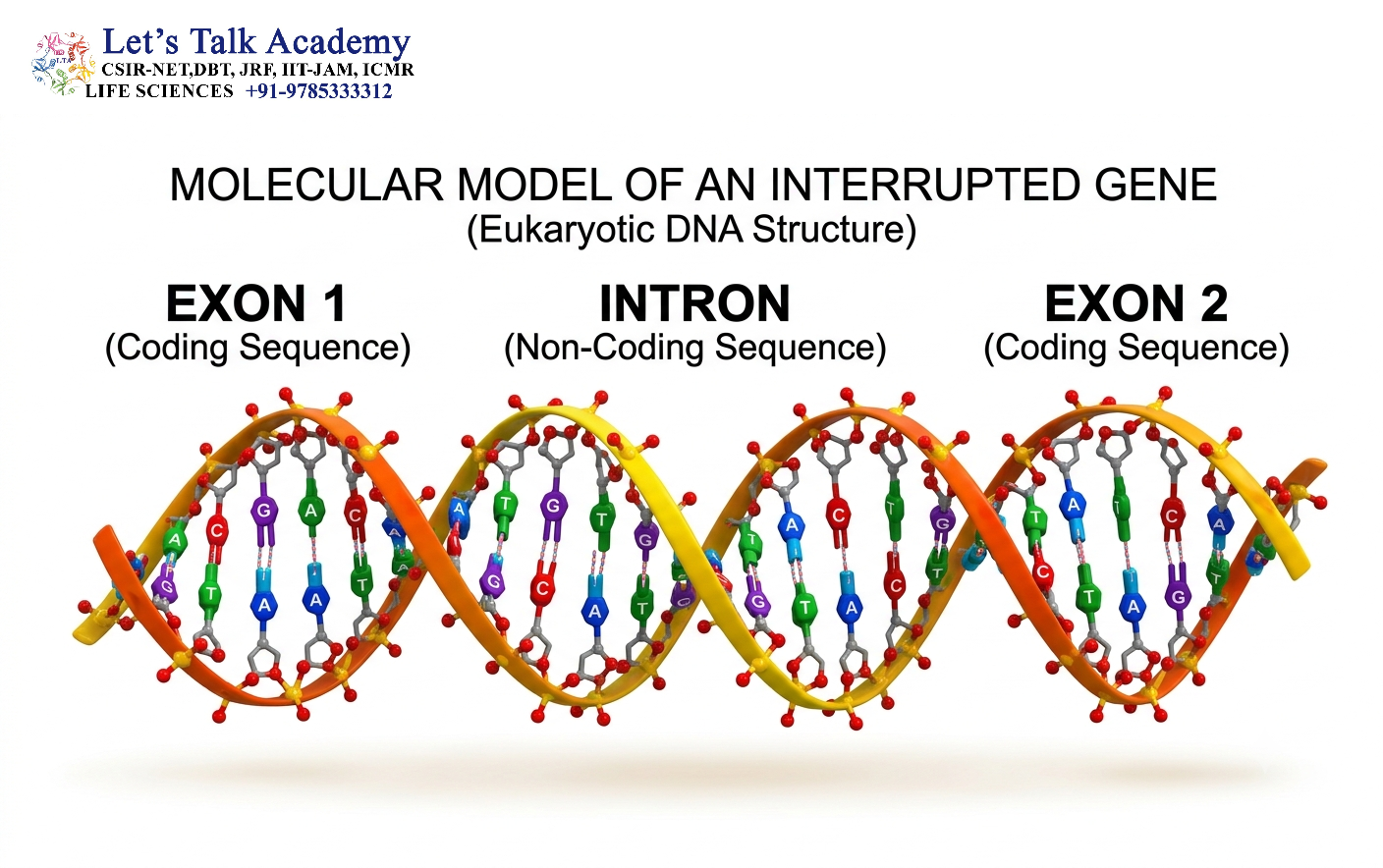
The complete pathway can be summarized as:
Genomic DNA
↓
Transcription
↓
Primary RNA transcript
↓
5′ capping
↓
Splicing
↓
3′ end processing and polyadenylation
↓
Mature mRNA
↓
Nuclear export
↓
Translation
↓
Protein
When alternative splicing occurs, the pathway branches:
One primary transcript
↓
Different exon combinations
↓
Different mature mRNAs
↓
Different protein isoforms
26. Comparison Between Continuous and Interrupted Genes
A continuous gene lacks the typical exon–intron organization seen in interrupted genes.
An interrupted gene contains intervening sequences between expressed regions.
| Feature | Continuous Gene | Interrupted Gene |
|---|---|---|
| Introns | Usually absent | Present |
| Exons | Not separated by introns | Separated by introns |
| RNA processing | Relatively simple | More extensive |
| Splicing | Generally absent | Usually required |
| Alternative splicing | Limited or absent | Common in many eukaryotic genes |
| Transcript diversity | Relatively limited | Can be extensive |


