
1. Introduction to Operon
An operon is a functional unit of genetic regulation found mainly in prokaryotes, particularly bacteria. It consists of a group of structurally related genes that are regulated together and are generally transcribed as a single messenger RNA molecule.
The operon concept was developed from studies of bacterial gene regulation, particularly the work of François Jacob and Jacques Monod on the lactose utilization system of Escherichia coli.
The central idea behind an operon is simple:
Related genes → Common regulatory region → Coordinated transcription → Single polycistronic mRNA
This arrangement allows bacteria to respond rapidly and efficiently to changes in their environment.
For example, if a bacterium encounters lactose as an available carbon source, it can activate several genes required for lactose utilization simultaneously rather than activating each gene independently.
2. Concept of Gene Regulation
Gene expression is not always active at the same level.
A cell must control:
- Which genes are expressed
- When genes are expressed
- How strongly genes are expressed
- Under which environmental conditions genes are expressed
In bacteria, gene regulation is particularly important because microorganisms frequently encounter rapidly changing environments.
Operons provide an efficient mechanism for coordinating the expression of functionally related genes.
A simplified concept is:
Environmental signal
↓
Regulatory protein changes
↓
RNA polymerase access or activity changes
↓
Gene transcription changes
↓
Protein production changes
↓
Cellular response
3. Basic Structure of an Operon
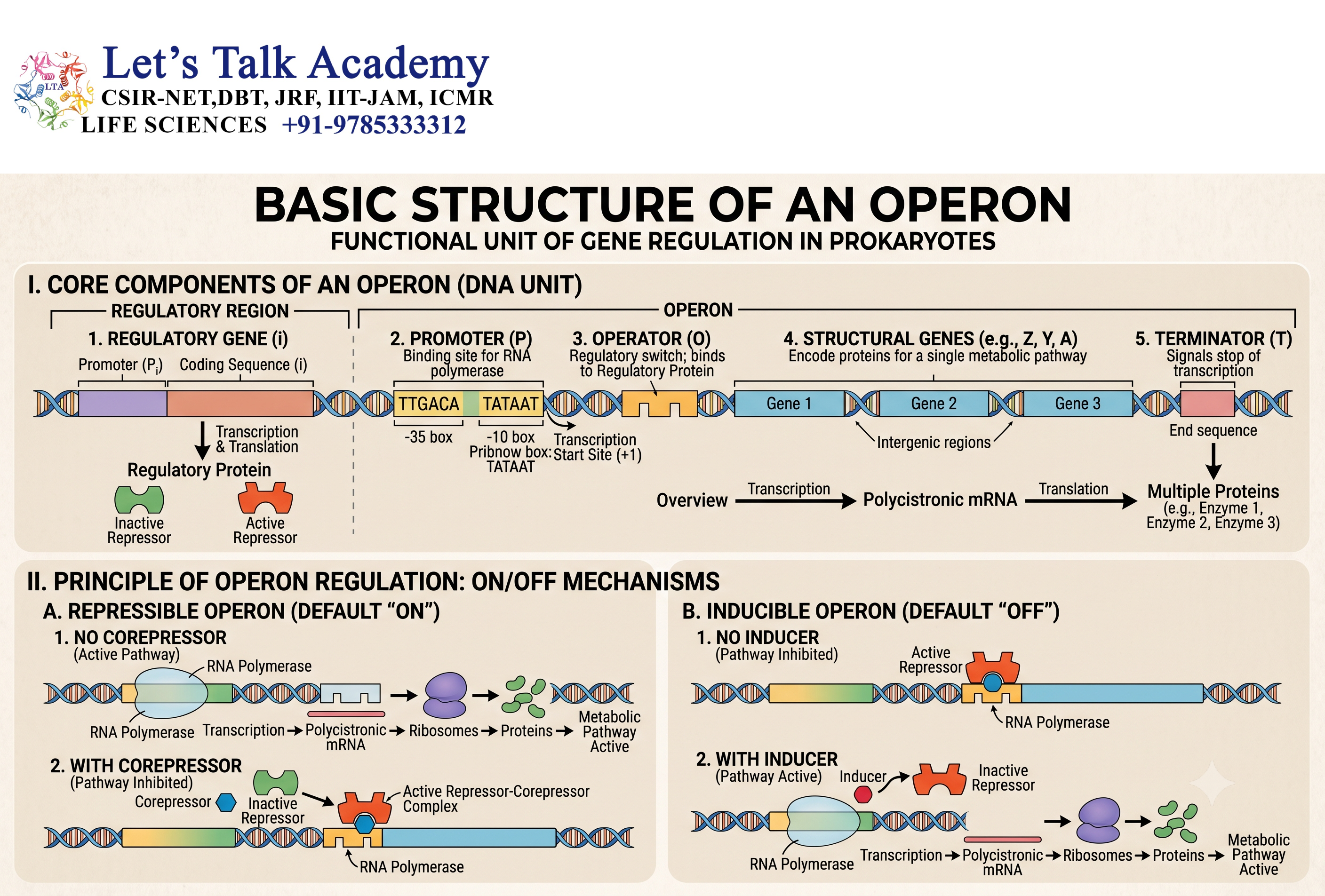
A typical operon contains several important components.
These include:
- Regulatory gene
- Promoter
- Operator
- Structural genes
- Regulatory sequences
A simplified representation is:
Regulatory gene → Promoter → Operator → Structural genes
However, the regulatory gene is often located separately from the operon itself and may have its own promoter.
4. Regulatory Gene
The regulatory gene encodes a protein or RNA molecule that controls the expression of the operon.
In classical bacterial operons, the regulatory gene often encodes a repressor or another regulatory protein.
For example, in the lac system, the regulatory gene lacI encodes the lac repressor.
The regulatory gene does not necessarily form a physical part of the operon.
5. Promoter
The promoter is a DNA sequence where RNA polymerase binds to initiate transcription.
The promoter determines the starting point and direction of transcription.
In an operon:
RNA polymerase + Promoter → Transcription initiation
The efficiency of promoter recognition can influence the level of gene expression.
6. Operator
The operator is a regulatory DNA sequence that interacts with regulatory proteins.
In many classical operons, a repressor binds to the operator and prevents or reduces transcription.
A simplified mechanism is:
Repressor + Operator
↓
Transcription inhibited
When the regulatory conditions change, the repressor may be removed or become unable to bind effectively.
7. Structural Genes
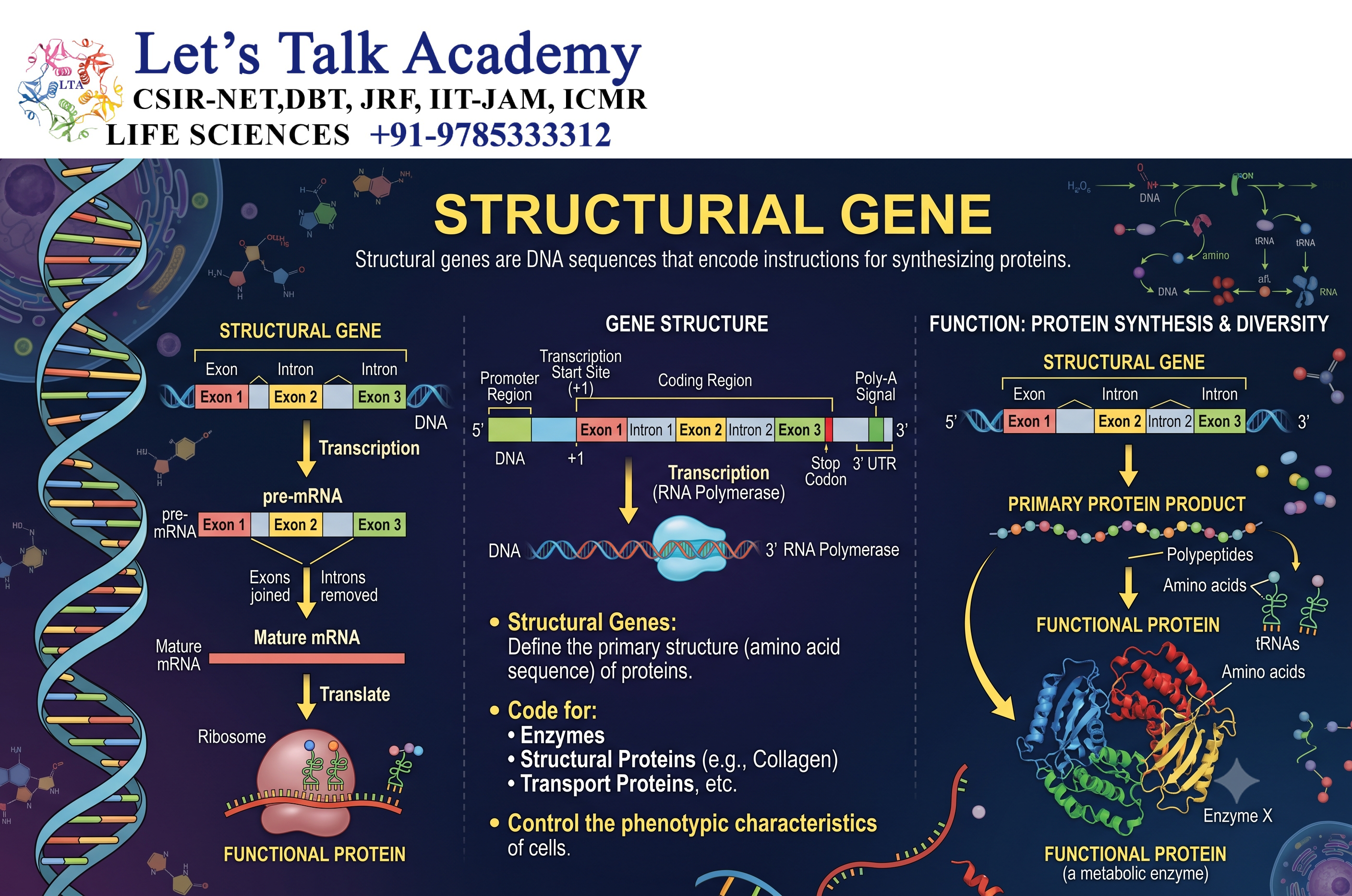
Structural genes are the genes whose products perform particular cellular functions.
They may encode:
- Metabolic enzymes
- Transport proteins
- Biosynthetic enzymes
- Regulatory proteins
- Other functional proteins
In many bacterial operons, several structural genes are transcribed together.
8. Polycistronic mRNA
One of the major characteristics of many bacterial operons is the production of polycistronic mRNA.
A polycistronic mRNA contains coding information for multiple proteins.
For example:
Gene A + Gene B + Gene C
↓
One transcription unit
↓
One polycistronic mRNA
↓
Protein A + Protein B + Protein C
This arrangement is highly efficient for the coordinated expression of related proteins.
9. Monocistronic and Polycistronic mRNA
| Feature | Monocistronic mRNA | Polycistronic mRNA |
|---|---|---|
| Coding regions | Usually one major protein-coding region | Multiple protein-coding regions |
| Common occurrence | Eukaryotes | Many bacteria |
| Gene organization | Individual genes often independently transcribed | Several genes can be transcribed together |
| Regulation | Often gene-specific | Can coordinate related genes |
Although polycistronic transcription is characteristic of many bacterial operons, not every bacterial gene belongs to an operon.
10. Why Do Bacteria Use Operons?
Operons provide several advantages.
10.1 Coordinated Gene Expression
Functionally related genes can be switched on or off together.
10.2 Energy Conservation
The cell avoids producing unnecessary proteins when they are not required.
10.3 Rapid Environmental Response
Bacteria can quickly adjust gene expression according to nutrient availability and environmental conditions.
10.4 Metabolic Efficiency
Enzymes belonging to the same metabolic pathway can be produced simultaneously.
Therefore:
Operon → Coordinated expression → Efficient metabolism
11. Types of Operon Regulation
Operons can be regulated through several mechanisms.
The major classical categories include:
- Negative inducible regulation
- Negative repressible regulation
- Positive regulation
- Catabolite regulation
- Attenuation
Two important classical examples are:
Lac operon → Inducible system
Trp operon → Repressible system
12. Inducible Operon
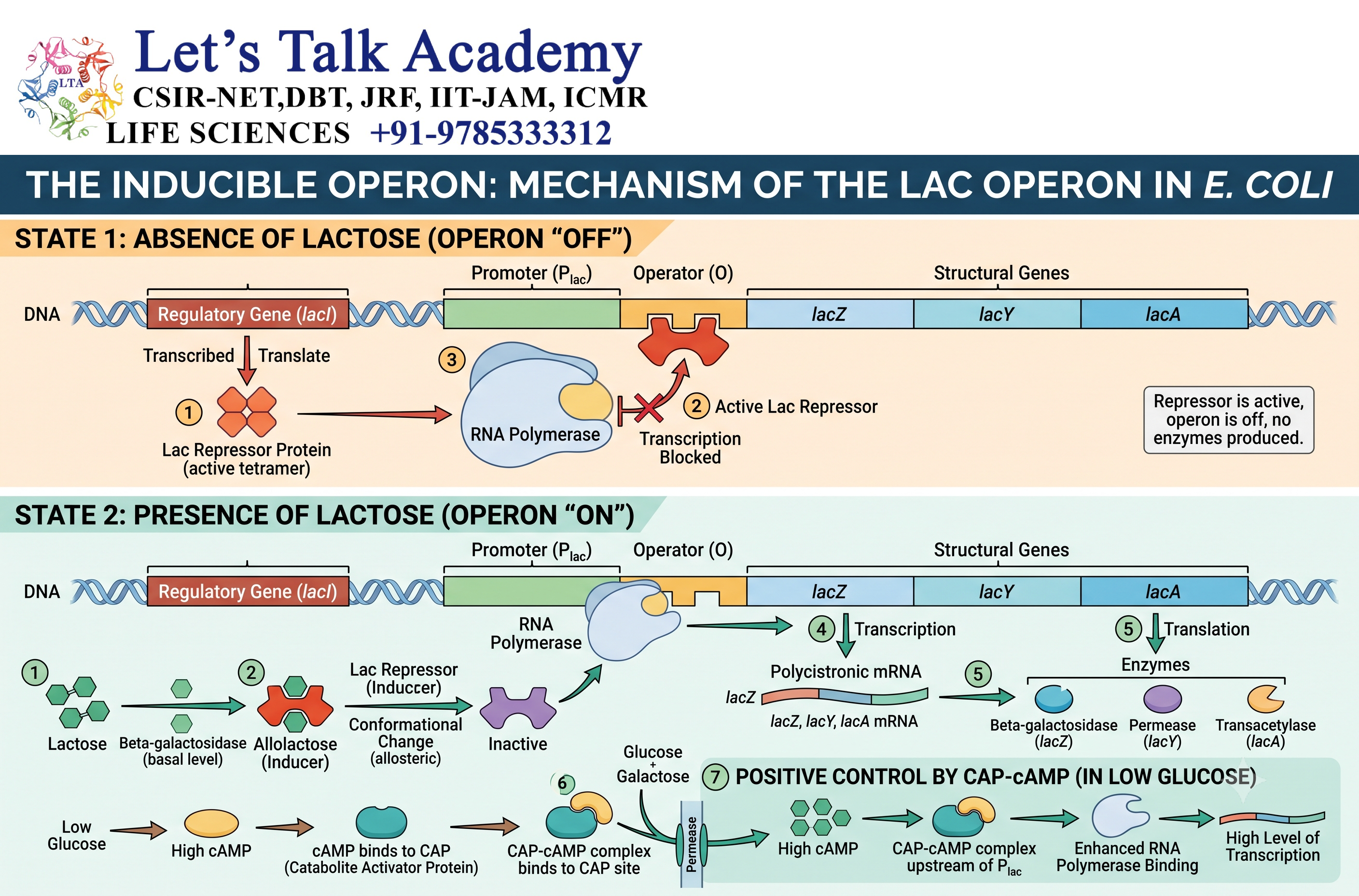
An inducible operon is generally switched on when a particular substrate or inducer becomes available.
The classic example is the lac operon.
General principle:
Inducer absent → Operon mostly OFF
Inducer present → Operon ON or strongly activated
This type of regulation is particularly useful for catabolic pathways, in which cells break down available nutrients.
13. Repressible Operon
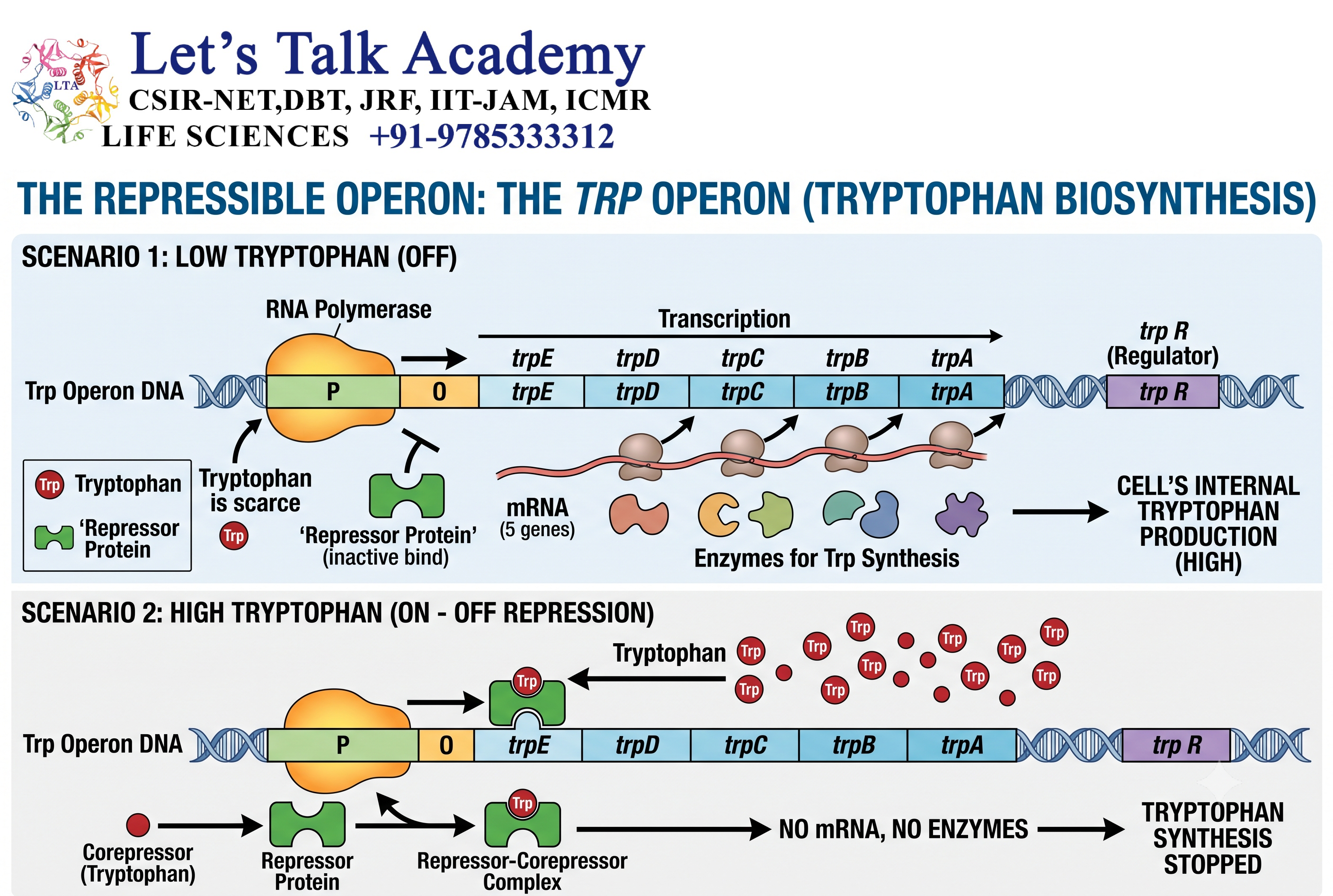
A repressible operon is generally active under normal conditions but can be switched off when the end product of a biosynthetic pathway becomes abundant.
The classic example is the trp operon.
General principle:
End product low → Operon ON
End product high → Operon OFF
This arrangement helps prevent unnecessary synthesis of compounds that are already abundant.
14. Lac Operon
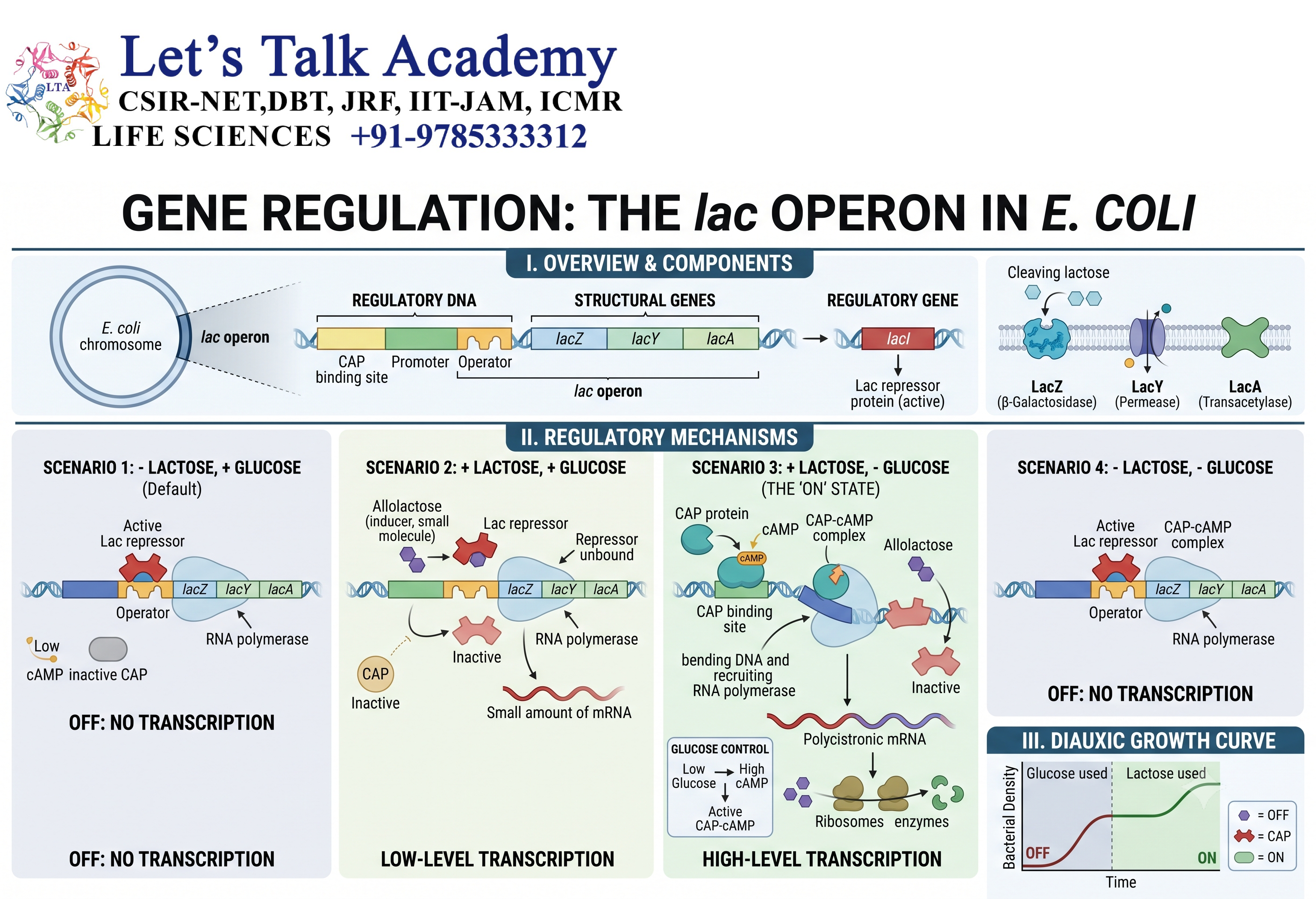
The lac operon is one of the most extensively studied examples of bacterial gene regulation.
It is found in Escherichia coli and controls genes involved in lactose utilization.
The major structural genes are:
- lacZ
- lacY
- lacA
The operon also contains regulatory DNA sequences, including the promoter and operator.
The regulatory gene lacI encodes the lac repressor.
15. Components of the Lac Operon
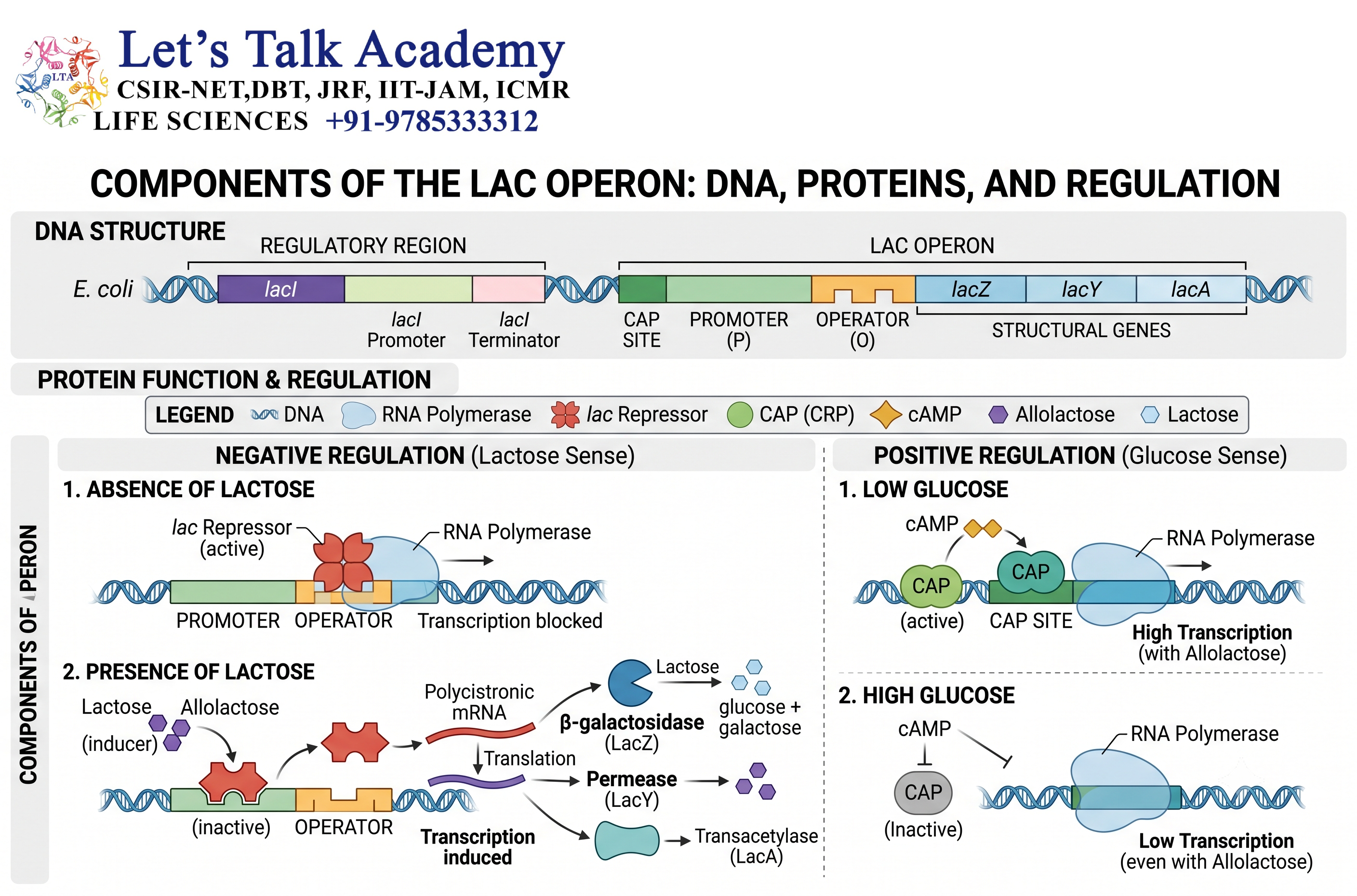
The major components include:
15.1 lacI
Encodes the lac repressor.
15.2 Promoter
Binding site for RNA polymerase.
15.3 Operator
Binding site for the lac repressor.
15.4 lacZ
Encodes β-galactosidase, which cleaves lactose into glucose and galactose and also participates in formation of the inducer allolactose.
15.5 lacY
Encodes β-galactoside permease, a membrane protein involved in lactose uptake.
15.6 lacA
Encodes β-galactoside transacetylase.
A simplified organization is:
lacI → Promoter → Operator → lacZ → lacY → lacA
16. Lac Operon in the Absence of Lactose
When lactose is absent, the lac repressor remains capable of binding the operator.
The sequence is:
No lactose
↓
Active lac repressor
↓
Repressor binds operator
↓
RNA polymerase is blocked or transcription is strongly reduced
↓
lac genes remain largely OFF
This prevents the cell from producing large amounts of proteins that are unnecessary when lactose is unavailable.
17. Lac Operon in the Presence of Lactose
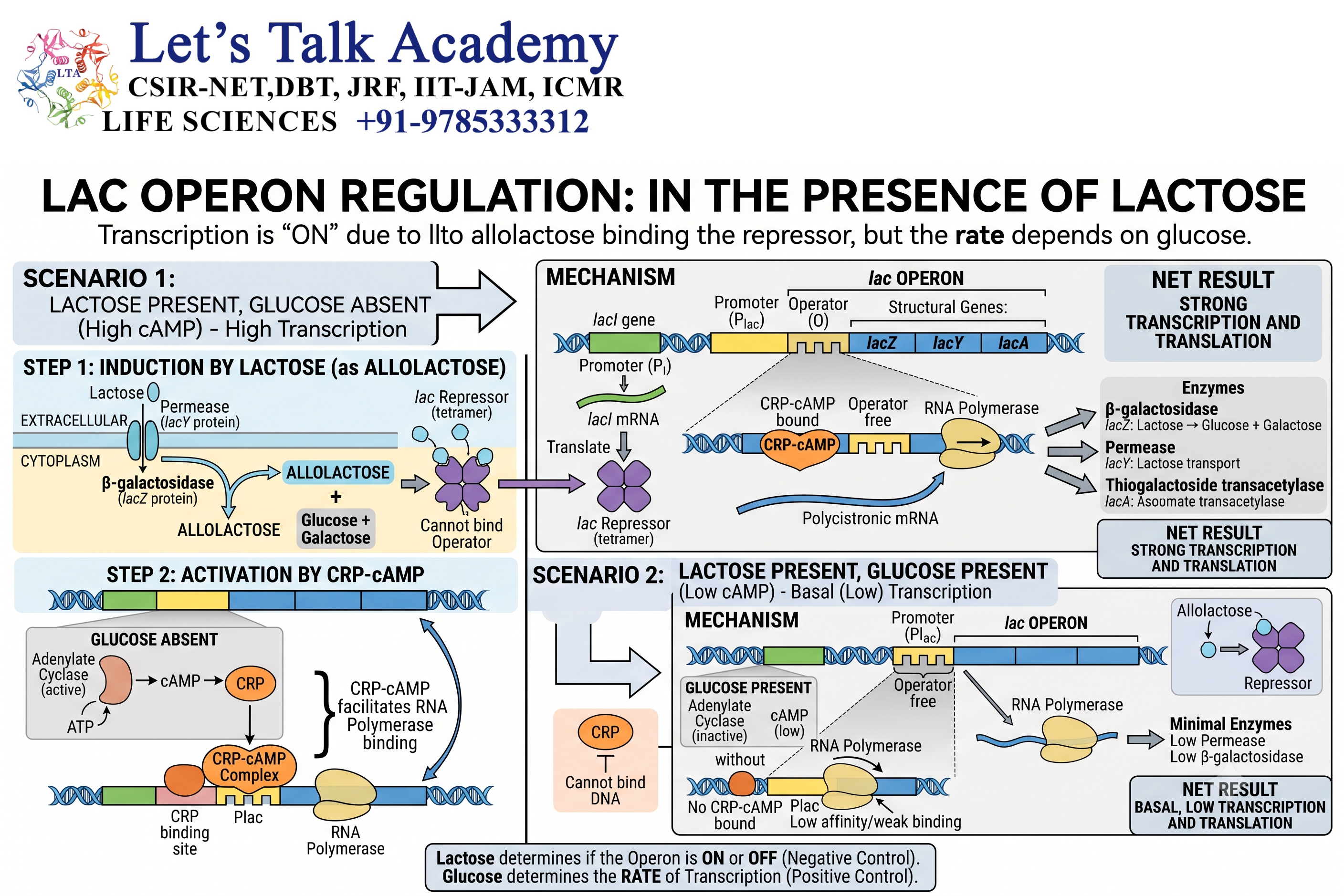
When lactose becomes available, a small amount of lactose is converted into allolactose, which acts as the physiological inducer of the lac system.
Allolactose binds the lac repressor and reduces its ability to bind the operator.
The sequence is:
Lactose available
↓
Allolactose formation
↓
Allolactose binds lac repressor
↓
Repressor loses effective operator binding
↓
RNA polymerase can transcribe lac genes
↓
Lactose-utilization proteins are produced
18. Role of Allolactose
Allolactose is an important regulatory molecule in the lac system.
It acts as the physiological inducer by interacting with the lac repressor.
This distinction is important because lactose itself is not the principal direct inducer responsible for the classical repressor response.
19. Positive Regulation of the Lac Operon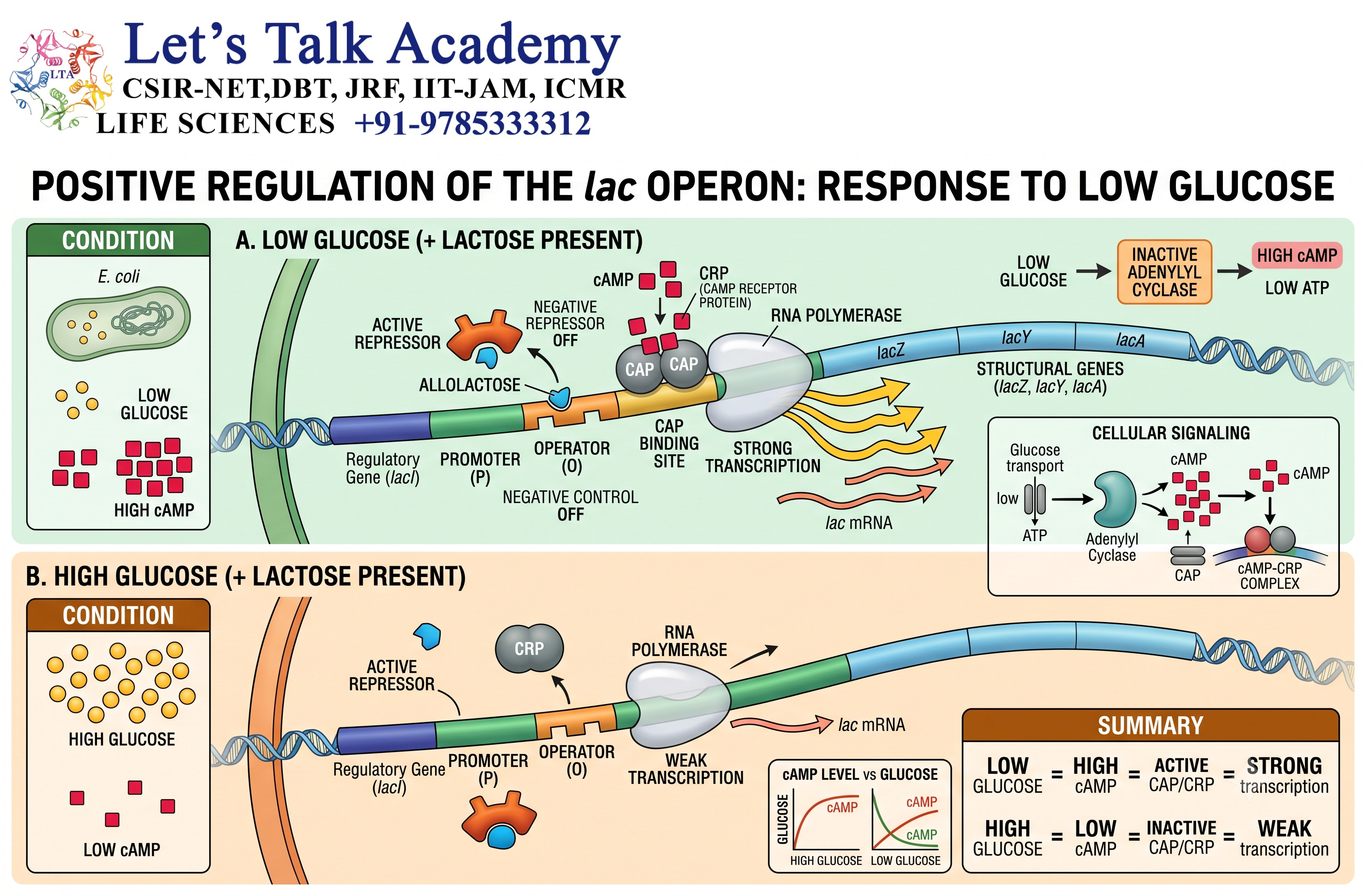
The lac operon is regulated not only by the repressor but also by a positive regulatory mechanism involving CAP (catabolite activator protein), also called CRP.
CAP activity is influenced by the concentration of cyclic AMP (cAMP).
When glucose is low:
Glucose ↓
↓
cAMP ↑
↓
cAMP binds CAP
↓
CAP–cAMP binds near lac promoter
↓
RNA polymerase recruitment/stabilization increases
↓
Lac transcription increases
This allows the bacterium to preferentially use glucose when it is available and to strongly express alternative carbon-utilization systems when glucose becomes limited.
20. Catabolite Repression
The phenomenon by which the presence of a preferred carbon source such as glucose suppresses the expression of genes needed to metabolize alternative carbon sources is called catabolite repression.
In the lac system:
High glucose
↓
Low cAMP
↓
Reduced CAP activation
↓
Weak lac transcription
Even if lactose is present, lac expression is not maximally activated when glucose is abundant.
21. Four Major States of Lac Regulation
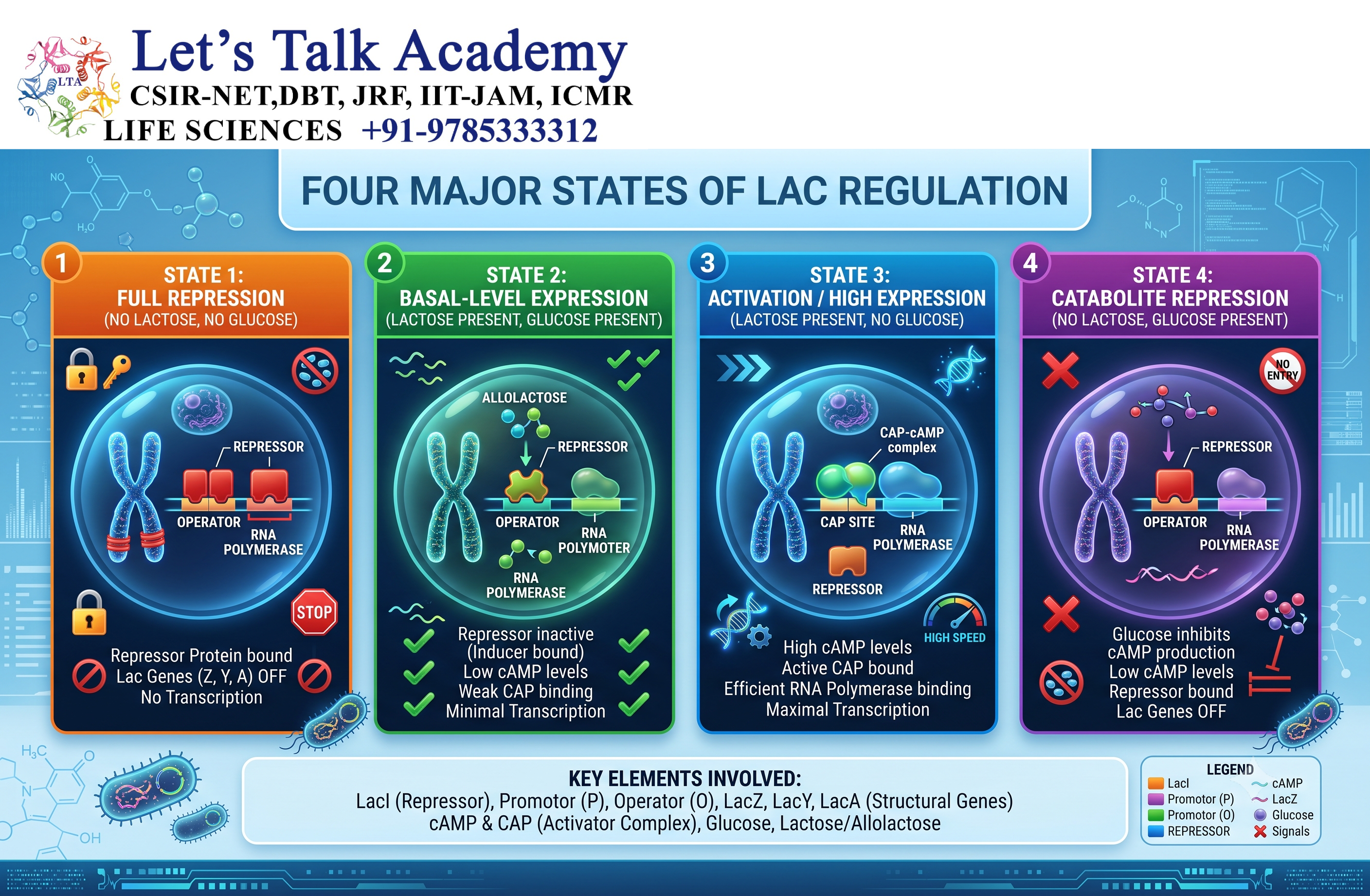
The lac operon can be understood using two variables:
- Lactose
- Glucose
| Lactose | Glucose | Lac expression |
|---|---|---|
| Absent | High | OFF |
| Absent | Low | OFF |
| Present | High | Low |
| Present | Low | High |
The strongest expression occurs when:
Lactose is present + Glucose is low
This ensures efficient metabolic prioritization.
22. Trp Operon
The trp operon is a classical example of a repressible operon.
It controls genes involved in the biosynthesis of the amino acid tryptophan in bacteria such as E. coli.
Unlike the lac operon, which primarily regulates a catabolic pathway, the trp operon regulates an anabolic/biosynthetic pathway.
Its basic principle is:
Tryptophan scarce → Trp operon ON
Tryptophan abundant → Trp operon OFF
23. Components of the Trp Operon
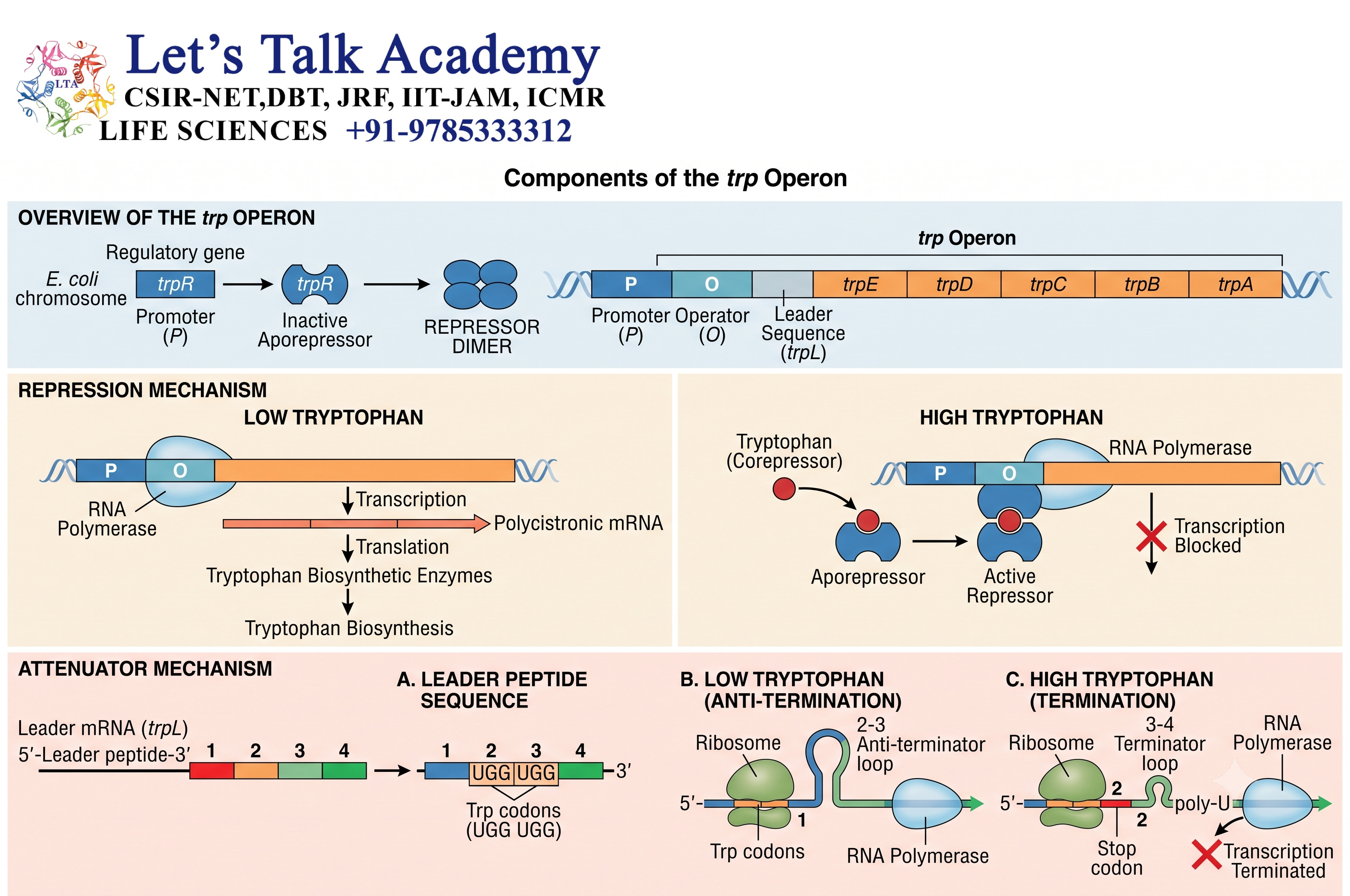
The major structural genes are:
- trpE
- trpD
- trpC
- trpB
- trpA
These genes encode enzymes required for tryptophan biosynthesis.
The regulatory gene trpR encodes the trp repressor.
The regulatory region includes the promoter and operator, followed by a leader region involved in attenuation.
24. Trp Operon When Tryptophan Is Low
When tryptophan is scarce:
Tryptophan concentration low
↓
Trp repressor remains inactive
↓
Repressor cannot effectively bind operator
↓
RNA polymerase transcribes trp genes
↓
Tryptophan biosynthetic enzymes produced
↓
Tryptophan synthesis increases
This is an example of negative repressible regulation.
25. Trp Operon When Tryptophan Is High
When tryptophan is abundant:
Tryptophan concentration high
↓
Tryptophan binds trp repressor
↓
Repressor becomes active
↓
Repressor binds operator
↓
Transcription decreases
↓
Tryptophan biosynthetic enzymes are not unnecessarily produced
This is an efficient feedback-control mechanism.
26. Corepressor Concept
In the trp operon, tryptophan acts as a corepressor.
A corepressor is a molecule that binds to a regulatory protein and enables or enhances its ability to repress transcription.
Thus:
Trp repressor alone → Inactive/weakly active
Trp repressor + Tryptophan → Active repressor
This contrasts with the lac system, where allolactose acts as an inducer by reducing repressor activity.
27. Lac Operon Versus Trp Operon
| Feature | Lac operon | Trp operon |
|---|---|---|
| Main pathway | Lactose utilization | Tryptophan biosynthesis |
| General type | Inducible | Repressible |
| Functional category | Catabolic | Anabolic |
| Regulatory molecule | Allolactose | Tryptophan |
| Role of regulator | Inducer inactivates repressor | Corepressor activates repressor |
| Default tendency | OFF | ON |
| Strong expression occurs when | Lactose present and glucose low | Tryptophan low |
28. Negative Regulation
In negative regulation, a regulatory protein called a repressor reduces transcription.
The repressor may bind to regulatory DNA and interfere with RNA polymerase activity.
General mechanism:
Repressor
↓
Regulatory DNA binding
↓
Transcription reduced
Negative regulation can occur in both inducible and repressible systems.
29. Positive Regulation
In positive regulation, an activator increases transcription.
The activator can improve the ability of RNA polymerase to initiate transcription.
General mechanism:
Activator
↓
DNA binding near promoter
↓
RNA polymerase recruitment/stabilization
↓
Transcription increases
The lac operon provides a classical example through the CAP–cAMP system.
30. Attenuation
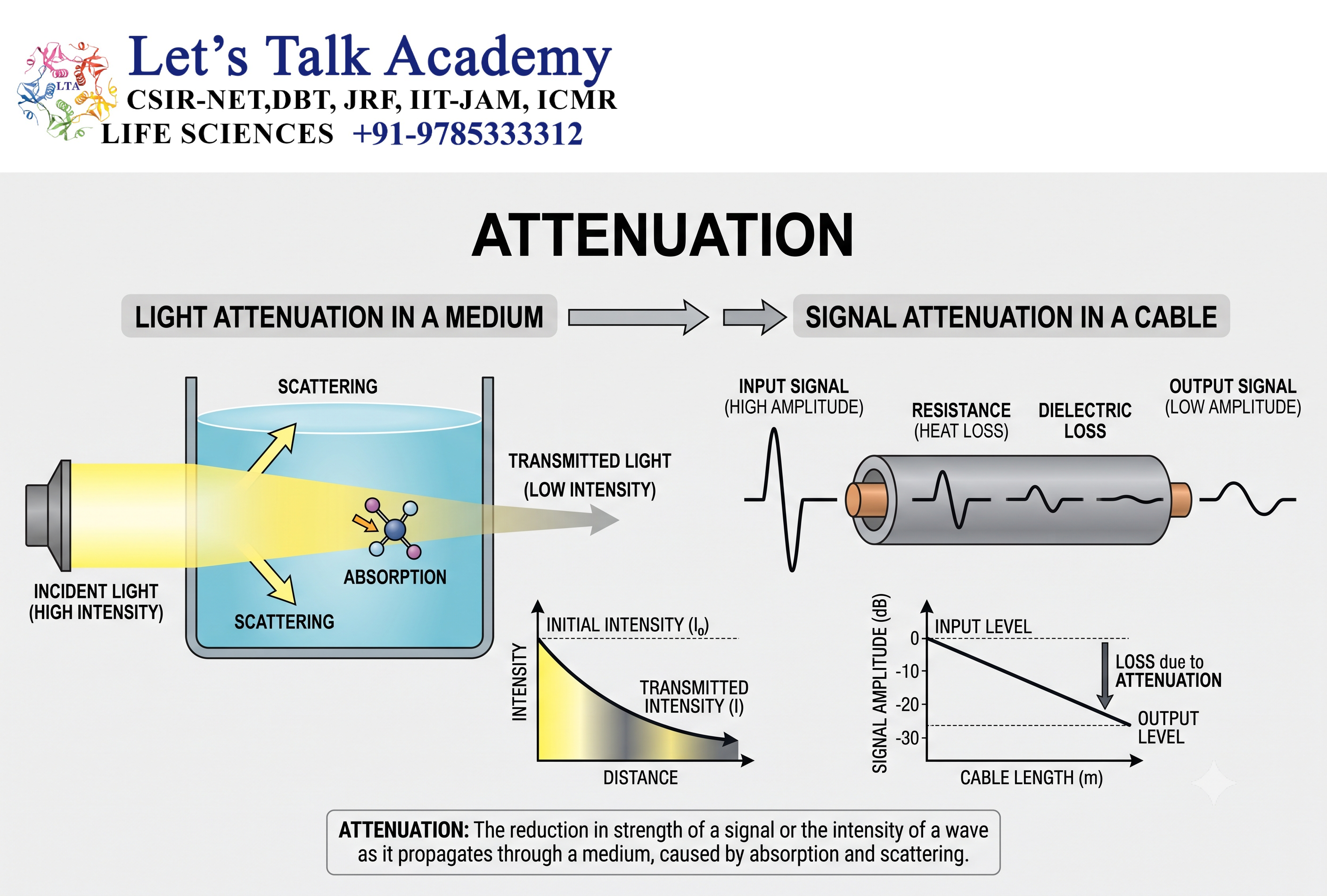
Attenuation is an additional mechanism of transcriptional regulation found in several bacterial biosynthetic operons.
The trp operon is a classic example.
Attenuation allows the cell to monitor the availability of charged tRNA and therefore the abundance of a particular amino acid during translation of a short leader sequence.
The process links:
Transcription ↔ Translation
This is possible because transcription and translation occur simultaneously in bacteria.
31. Leader Sequence in the Trp Operon
The trp operon contains a leader region known as trpL.
The leader sequence contains a short peptide-coding region with strategically positioned tryptophan codons.
The ribosome’s movement through this region depends on the availability of charged tRNA^Trp.
Thus, translation of the leader peptide provides information about intracellular tryptophan availability.
32. Attenuation When Tryptophan Is Abundant
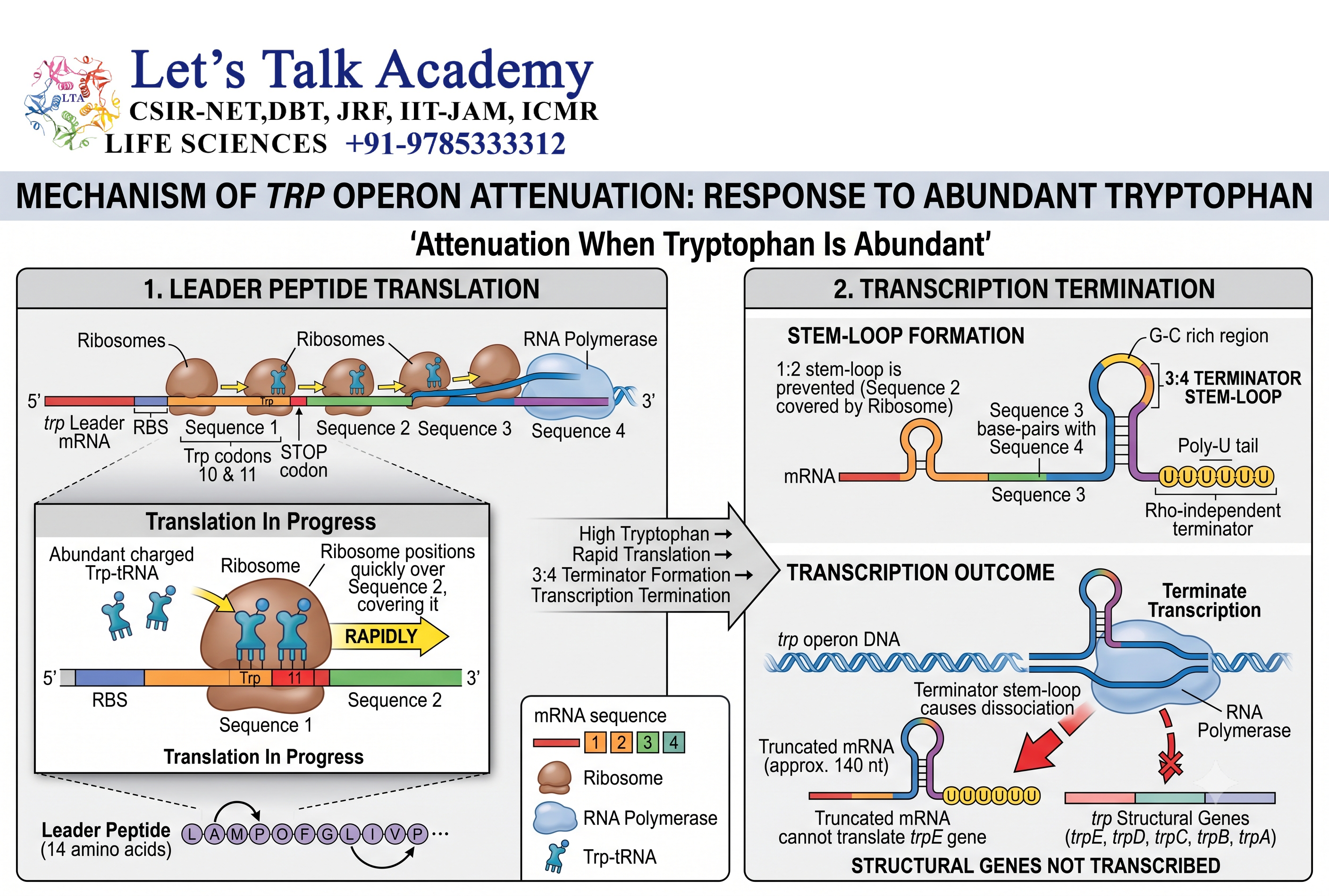
When tryptophan is abundant:
Charged tRNA^Trp abundant
↓
Ribosome moves rapidly through Trp codons
↓
Alternative RNA secondary structure forms
↓
3–4 terminator hairpin develops
↓
Transcription terminates
↓
Downstream trp genes are not transcribed
Thus, attenuation provides an additional layer of repression.
33. Attenuation When Tryptophan Is Scarce
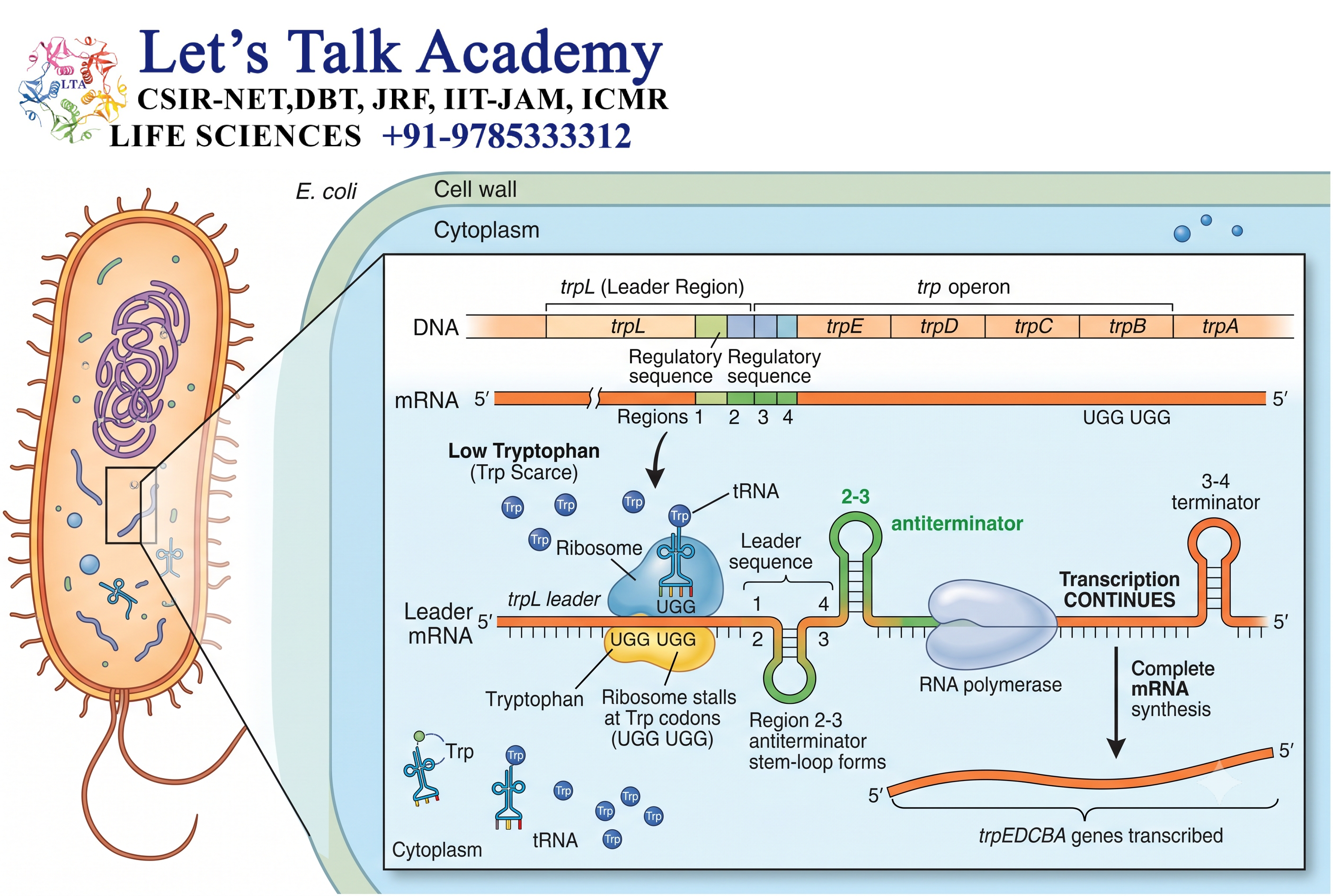
When tryptophan is scarce:
Charged tRNA^Trp low
↓
Ribosome stalls at Trp codons
↓
Alternative RNA structure forms
↓
3–4 terminator structure is prevented
↓
RNA polymerase continues transcription
↓
trp structural genes are expressed
This allows the cell to increase tryptophan biosynthesis when tryptophan is needed.
34. Importance of Coupled Transcription and Translation
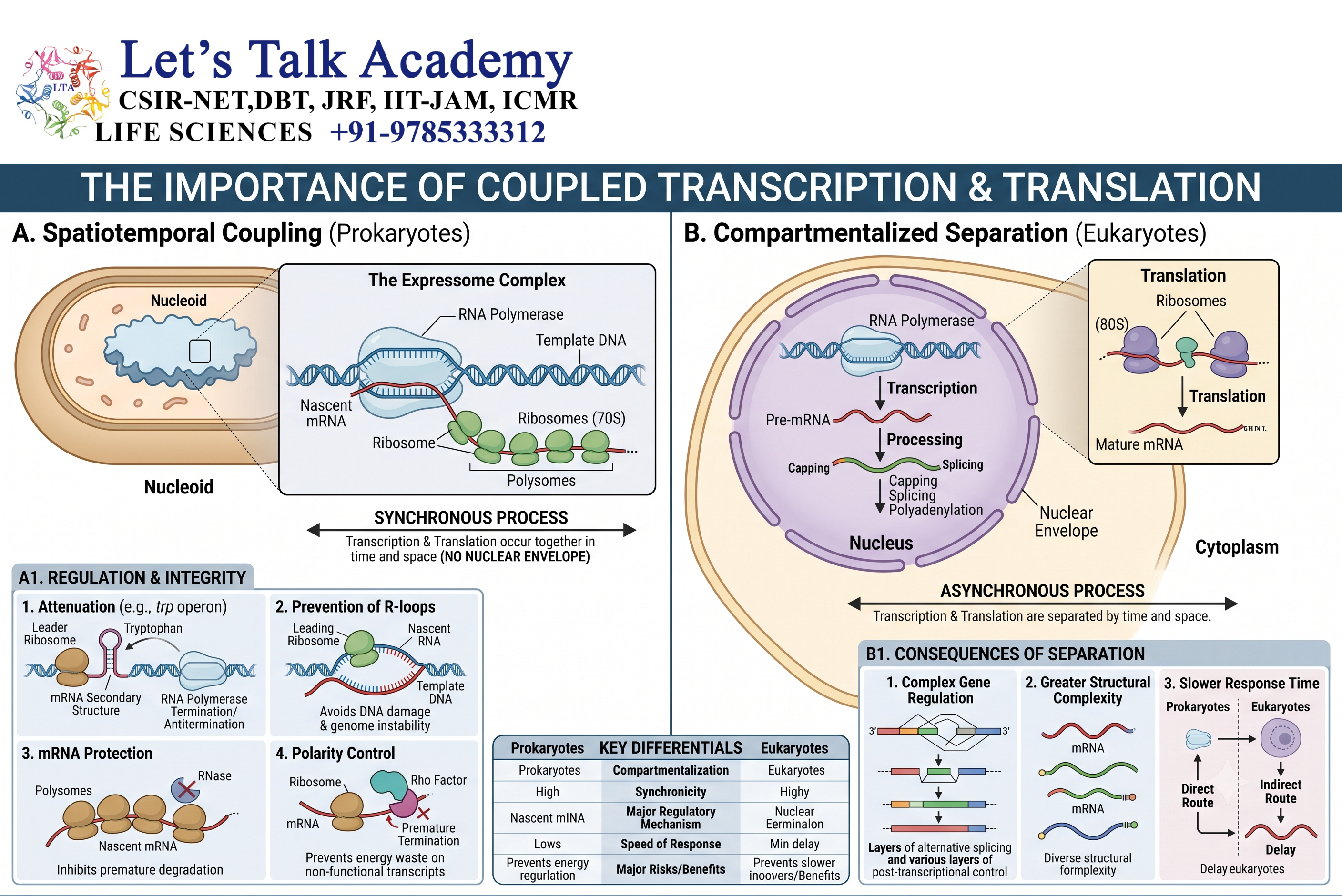
Attenuation depends on the physical and functional coupling of transcription and translation in bacteria.
As RNA polymerase synthesizes mRNA:
RNA polymerase → mRNA synthesis
At approximately the same time:
Ribosome → mRNA translation
This allows the ribosome’s position on the leader RNA to influence the RNA structure that determines whether transcription continues.
35. Riboswitches
Not all bacterial gene regulation depends on classical protein regulators.
Some genes are regulated by riboswitches, which are RNA sequences capable of binding small molecules directly.
A riboswitch generally contains:
- Aptamer domain
- Expression platform
When a metabolite binds the aptamer:
Ligand binding
↓
RNA structural change
↓
Transcription or translation altered
This provides a direct RNA-based mechanism for regulating gene expression.
36. Operons and Feedback Regulation
Many biosynthetic operons are controlled through feedback mechanisms.
General principle:
Low end product
↓
Biosynthetic genes ON
↓
Product synthesis increases
↓
End product concentration rises
↓
Regulatory mechanism represses pathway
↓
Product synthesis decreases
This prevents excessive production and saves cellular resources.
37. Operons and Metabolic Efficiency
Operons are particularly useful when several proteins function in the same biochemical pathway.
Suppose a pathway requires enzymes A, B, C, and D.
Without coordinated regulation:
Gene A → protein A
Gene B → protein B
Gene C → protein C
Gene D → protein D
With an operon:
A + B + C + D
↓
Common regulatory system
↓
Coordinated transcription
↓
Multiple enzymes produced together
This improves regulatory efficiency.
38. Operons and Environmental Adaptation
Bacteria often experience rapid environmental changes.
An operon allows a cell to quickly respond to changes such as:
- Nutrient availability
- Temperature
- Oxygen conditions
- Stress
- Toxic compounds
- Availability of specific metabolites
Therefore, operons contribute significantly to bacterial adaptation.
39. Cis-Acting and Trans-Acting Regulatory Elements
Operon regulation can be understood using two important concepts.
39.1 Cis-Acting Elements
A cis-acting regulatory element is a DNA sequence that affects genes located on the same DNA molecule.
Examples include:
- Promoter
- Operator
- Regulatory binding sites
39.2 Trans-Acting Factors
A trans-acting factor is generally a diffusible molecule that can act on target DNA molecules.
Examples include:
- Repressors
- Activators
- Certain regulatory RNAs
This distinction is especially important when analyzing genetic mutations.
40. Operator Mutations
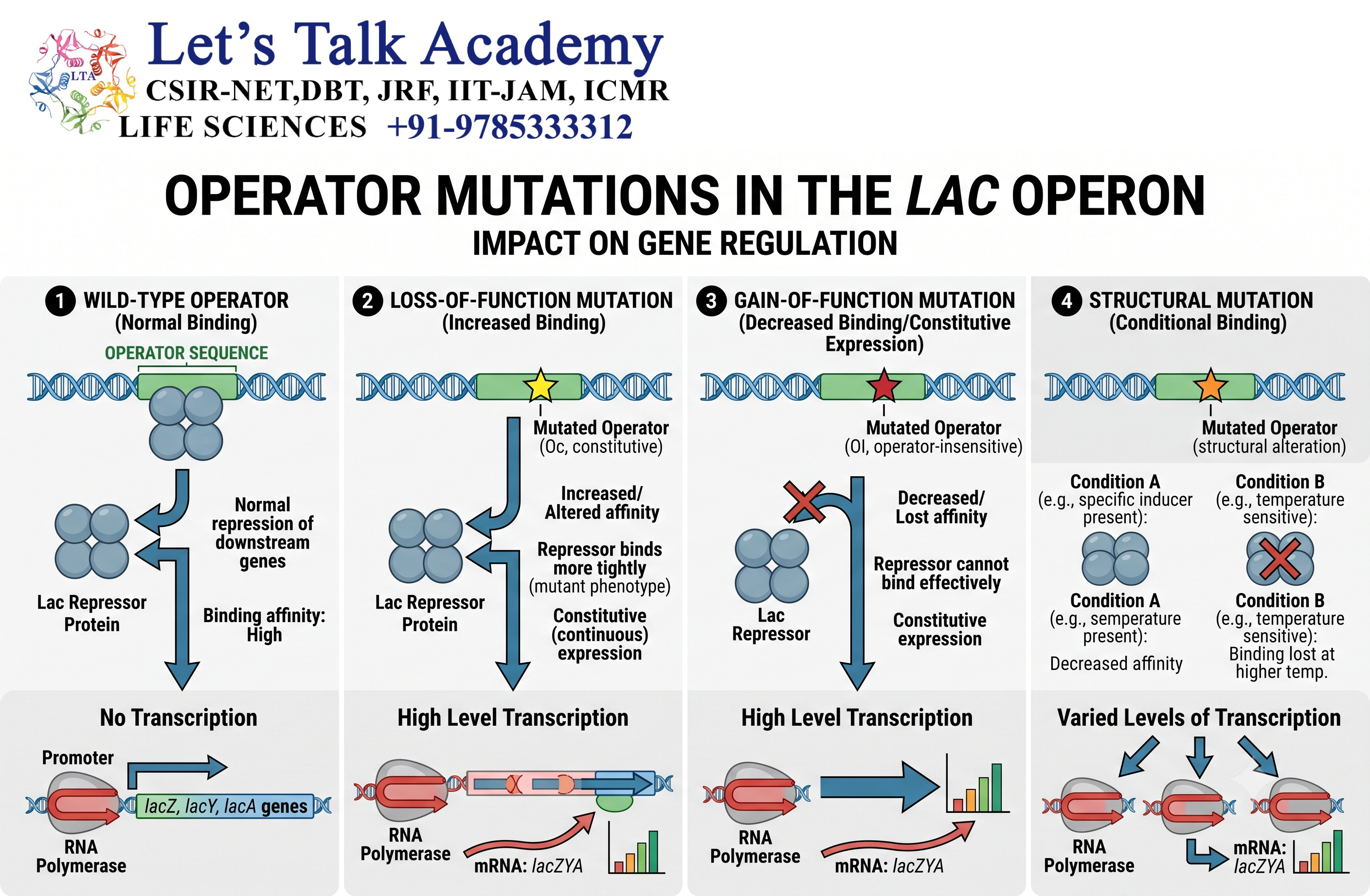
Mutations in the operator can alter repressor binding.
For example, if a mutation prevents a repressor from recognizing the operator:
Operator mutation
↓
Repressor cannot bind
↓
Transcription may become constitutive
↓
Structural genes may remain continuously expressed
This demonstrates that the operator acts as a cis-regulatory DNA element.
41. Regulatory Gene Mutations
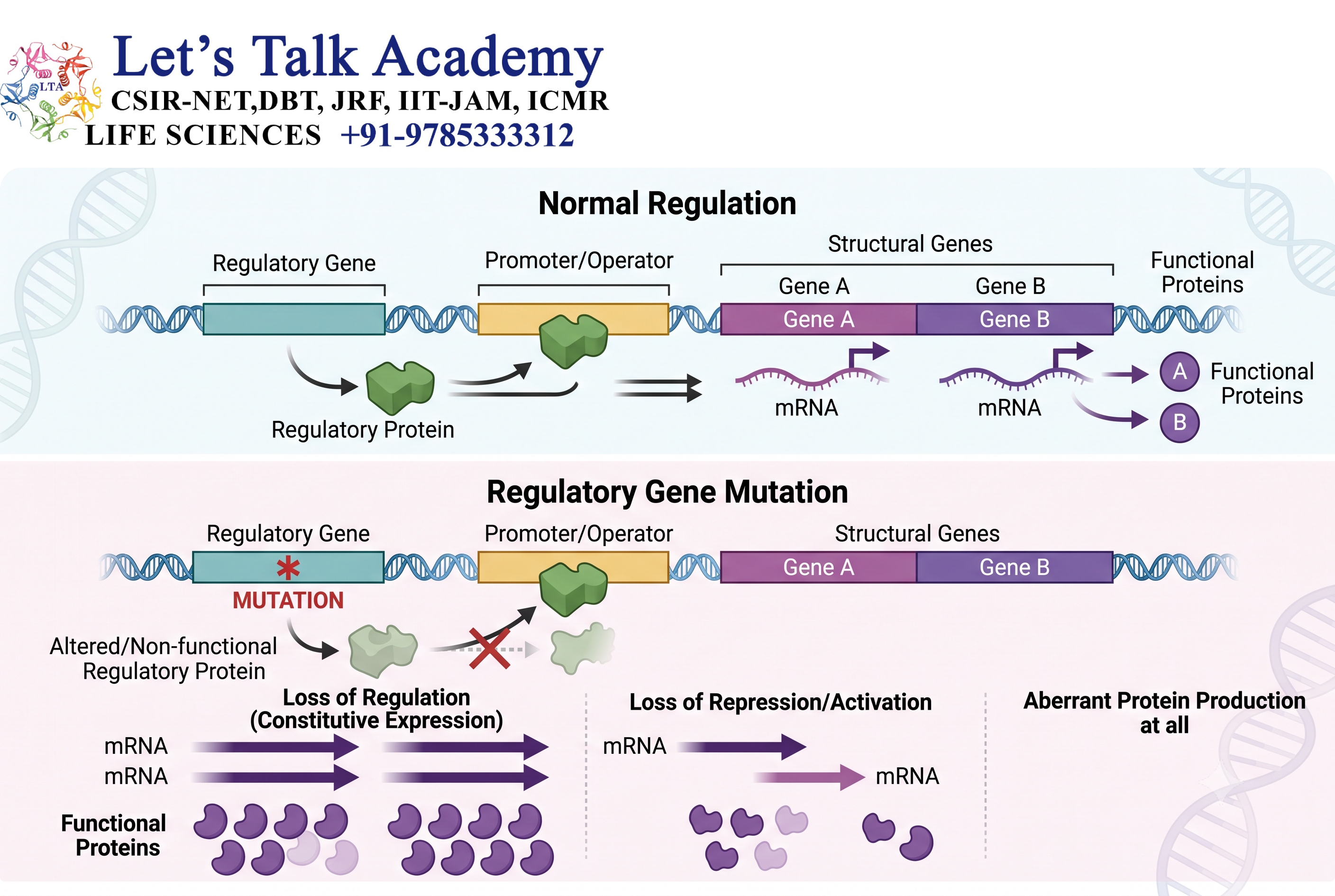
A mutation in a regulatory gene can affect the production or function of the regulatory protein.
For example:
Mutation in lacI
↓
Altered lac repressor
↓
Abnormal regulation of lac operon
Because the repressor is a diffusible protein, its effects can potentially influence appropriate target operators in the cell.
42. Constitutive Expression
Constitutive expression means that a gene or operon is expressed continuously or largely independently of the normal regulatory signal.
For example:
Functional regulatory system → Controlled expression
Regulatory mutation → Continuous expression
Constitutive mutations can be useful experimentally because they help identify regulatory components.
43. Negative and Positive Control Together
A single operon can be controlled by more than one regulatory mechanism.
The lac operon demonstrates this principle.
It is influenced by:
Negative control
→ Lac repressor
and
Positive control
→ CAP–cAMP
Therefore, bacterial gene regulation can integrate multiple environmental signals.
44. Molecular Logic of Operons
The logic of an operon can be summarized as:
Signal
↓
Regulatory molecule
↓
DNA or RNA interaction
↓
Transcriptional decision
↓
mRNA production
↓
Protein synthesis
↓
Metabolic response
This provides a molecular connection between the environment and gene expression.
45. Operon Regulation: Simplified Flowchart
Inducible System
Substrate absent
↓
Repressor active
↓
Operator occupied
↓
Transcription OFF
Substrate present
↓
Inducer interacts with regulator
↓
Repressor released/inactivated
↓
Transcription ON
Repressible System
End product low
↓
Repressor inactive
↓
Transcription ON
End product high
↓
Corepressor activates repressor
↓
Operator occupied
↓
Transcription OFF
46. Lac Operon Flowchart
Lactose absent
↓
Repressor binds operator
↓
Transcription inhibited
↓
Lac genes OFF
When lactose is present:
Lactose
↓
Allolactose
↓
Repressor inactivated
↓
Operator becomes available
↓
Transcription can occur
If glucose is also low:
cAMP increases
↓
CAP–cAMP binds regulatory site
↓
Strong transcription
47. Trp Operon Flowchart
Tryptophan low
↓
Repressor inactive
↓
Operator free
↓
Transcription ON
↓
Tryptophan synthesis
When tryptophan is high:
Tryptophan
↓
Binds repressor
↓
Repressor activated
↓
Operator occupied
↓
Transcription reduced
Additionally:
High Trp → Attenuation → Premature termination
48. Advantages of Operon Organization
Operon organization provides several major advantages:
- Coordinated expression of related genes.
- Rapid response to environmental changes.
- Efficient use of cellular energy.
- Reduced unnecessary protein synthesis.
- Integration of multiple regulatory signals.
- Efficient regulation of metabolic pathways.
- Synchronization of enzyme production.
- Adaptation to nutrient availability.
49. Limitations and Complexity of the Operon Model
Although the classical operon model is extremely useful, modern bacterial gene regulation is more complex.
Gene expression can also involve:
- Small regulatory RNAs
- Riboswitches
- DNA supercoiling
- Chromosome organization
- Nucleoid-associated proteins
- Global transcription factors
- Sigma factors
- RNA stability
- Translational regulation
Thus, the operon is one component of a much larger regulatory network.
50. Operons and Sigma Factors
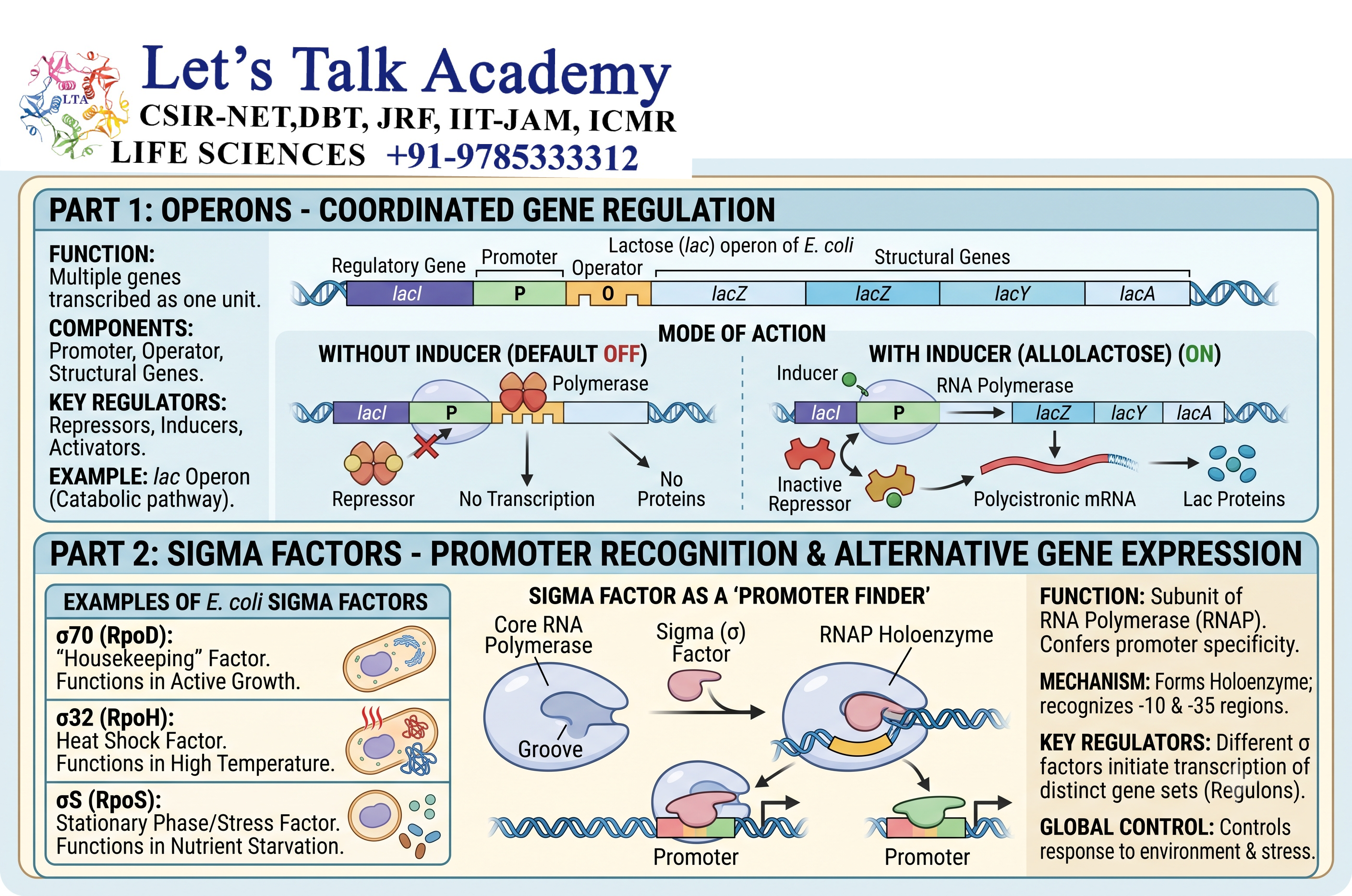
Bacterial RNA polymerase uses sigma factors to recognize different promoter classes.
Different environmental conditions can activate different sigma factors.
For example:
Environmental stress
↓
Specific sigma factor activated
↓
Recognition of stress-responsive promoters
↓
Expression of appropriate genes
Some of these genes may be organized into operons.
Therefore, sigma-factor regulation and operon regulation can work together.
51. Operons and Global Regulation
Individual operons can be integrated into larger regulatory networks.
For example, bacterial cells can coordinate multiple metabolic pathways according to:
- Carbon availability
- Nitrogen availability
- Stress conditions
- Growth phase
- Energy status
This allows a bacterium to coordinate many genes rather than treating every operon as an isolated unit.
52. Operons in Biotechnology
The principles of operon regulation have become extremely important in biotechnology.
Researchers use inducible promoters and regulatory systems to control gene expression in engineered organisms.
Applications include:
- Recombinant protein production
- Metabolic engineering
- Synthetic biology
- Molecular cloning
- Industrial biotechnology
- Gene-function studies
Understanding operons is therefore important not only for basic biology but also for modern biotechnology.
53. Classical Operon Model
The classical model can be summarized as:
Regulatory gene
↓
Produces
Regulatory protein
↓
Interacts with
Operator/regulatory DNA
↓
Controls
RNA polymerase
↓
Controls
Structural gene transcription
↓
Produces
Functional proteins
This model explains how environmental signals can influence protein production at the level of transcription.
54. Comparison of Inducible and Repressible Operons
| Feature | Inducible operon | Repressible operon |
|---|---|---|
| Typical pathway | Catabolic | Anabolic |
| Default state | Usually OFF | Usually ON |
| Regulatory signal | Substrate/inducer | End product/corepressor |
| Example | Lac operon | Trp operon |
| Purpose | Activate nutrient utilization | Prevent unnecessary biosynthesis |
| Repressor action | Usually removed/inactivated by inducer | Activated by corepressor |


