
1. Introduction
DNA replication is the fundamental biological process through which a cell produces an accurate copy of its genetic material before cell division. Because genetic information must be transmitted from one generation of cells to the next, DNA replication must occur with high accuracy and must be tightly regulated.
The unit of replication is the specific segment of DNA that is replicated from a particular origin of replication and under the control of the replication machinery associated with that origin.
The functional unit of DNA replication is commonly called a replicon.
A replicon includes:
- An origin of replication
- The DNA region replicated from that origin
- The molecular machinery responsible for initiating and completing replication
- Regulatory elements that control replication initiation
In simple terms:
Origin of replication + DNA replicated from that origin = Replicon
2. Definition of Unit of Replication
A unit of replication is a defined segment of DNA that contains an origin of replication and is replicated as a functional unit during DNA synthesis.
The term replicon is used to describe this functional unit.
2.1 Replicon
A replicon is a DNA molecule or DNA segment that is replicated from a single origin of replication.
The concept of the replicon was proposed by François Jacob, Sydney Brenner and Jacques Cuzin to explain the genetic control of DNA replication.
According to the replicon model, replication is controlled through:
- A specific DNA site called the replicator
- A regulatory protein or factor called the initiator
2.2 Replicator
The replicator is the DNA sequence or functional DNA region required for initiation of replication.
It contains or defines the region where replication begins and provides recognition sites for replication-initiation proteins.
2.3 Initiator
An initiator protein recognizes the replication origin and promotes the assembly of the replication machinery.
Examples include:
- DnaA in Escherichia coli
- ORC-associated initiation machinery in eukaryotes
3. Basic Organization of a Replicon
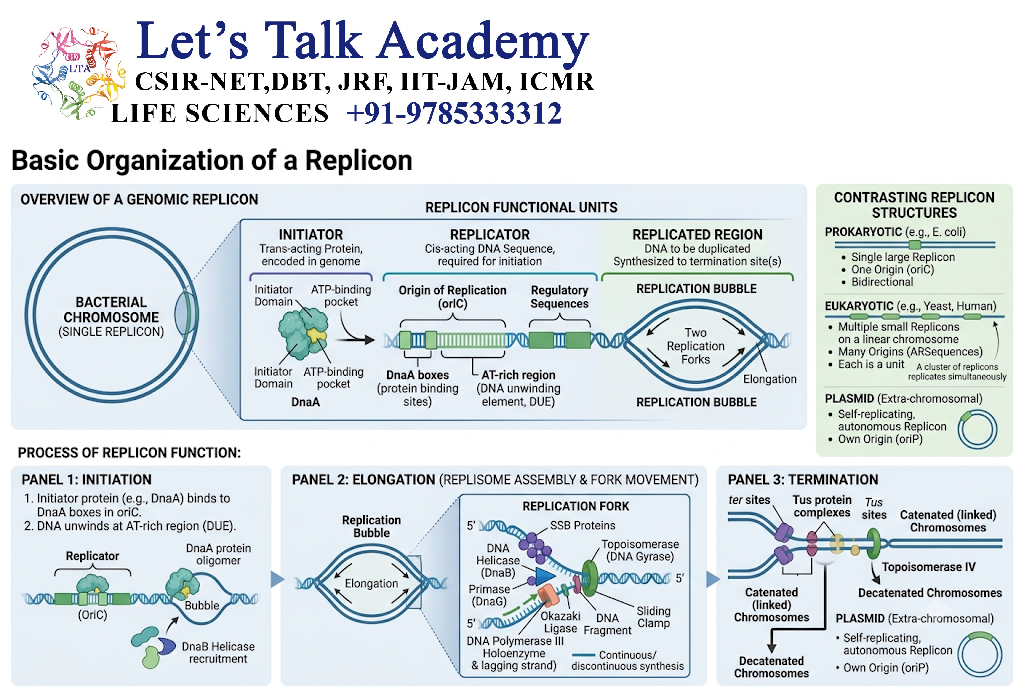
A typical replicon can be represented as:
Origin of Replication → Replication Fork → DNA Synthesis → Termination
The origin is the point where replication begins.
From the origin, replication may proceed:
- In one direction, or
- In two directions
Most bacterial chromosomes generally use a major origin from which replication proceeds bidirectionally.
Eukaryotic chromosomes contain multiple replication origins, producing many replicons along each chromosome.
4. Origin of Replication
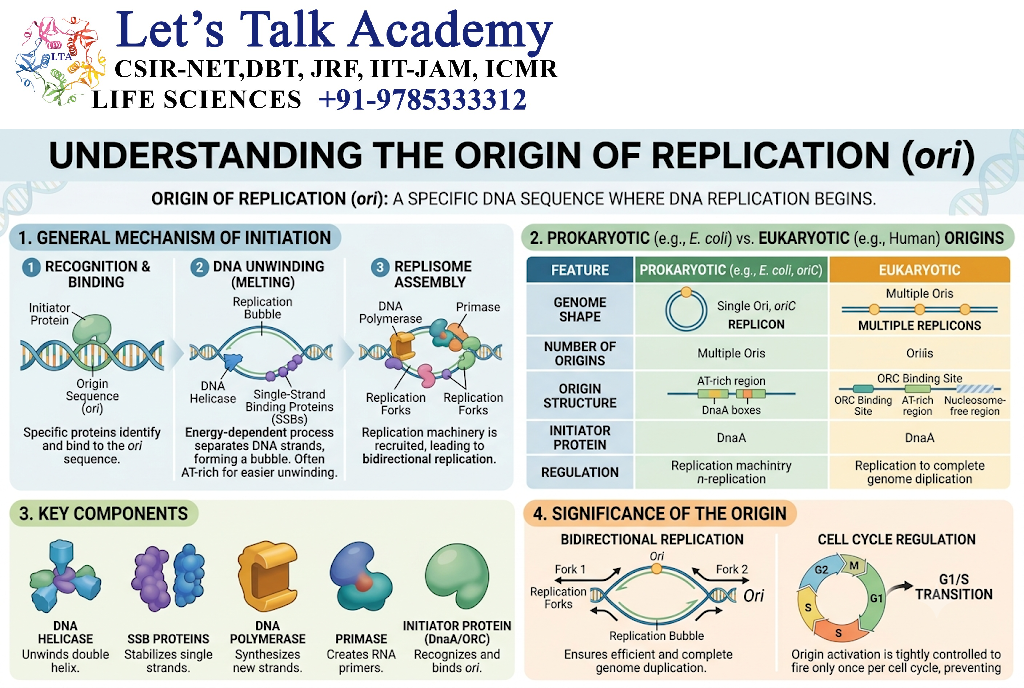
The origin of replication, abbreviated as ori, is the DNA region where DNA replication begins.
The origin is one of the most important components of a replicon because it determines where replication machinery is assembled.
4.1 Functions of the Origin
The origin:
- Provides a site for initiator-protein binding
- Promotes local DNA unwinding
- Allows formation of replication forks
- Coordinates assembly of replication proteins
- Controls the initiation of DNA replication
4.2 Bacterial Origin of Replication
Many bacteria have a single circular chromosome with one major origin.
For example, E. coli contains an origin called oriC.
The oriC region contains specific DNA sequences recognized by DnaA.
The general process is:
DnaA binding → DNA melting → helicase loading → replication machinery assembly → replication fork formation
4.3 Eukaryotic Origins
Eukaryotic chromosomes are much larger and therefore generally contain numerous origins of replication.
Multiple origins allow the genome to be replicated efficiently within the limited time available during S phase.
Thus:
Bacteria → generally fewer origins per chromosome
Eukaryotes → many origins per chromosome
5. Replication Fork
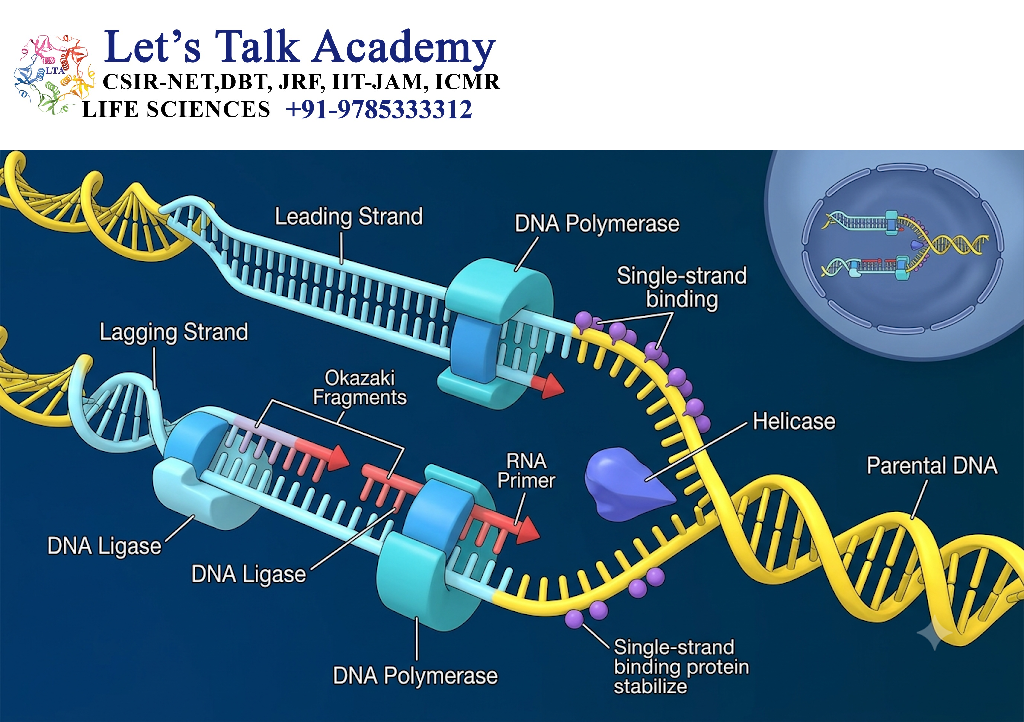
A replication fork is the Y-shaped DNA structure formed when the parental DNA double helix is locally unwound during replication.
At the replication fork:
- Parental DNA strands separate.
- Each parental strand acts as a template.
- New complementary DNA strands are synthesized.
5.1 Bidirectional Replication
When replication begins at an origin, two replication forks may move away from the origin in opposite directions.
Origin
↓
Fork ← Origin → Fork
This is called bidirectional replication.
Bidirectional replication greatly increases the efficiency of genome duplication.
6. DNA Replication Machinery

DNA replication requires several proteins and enzymes.
| Component | Major Function |
|---|---|
| Origin | Site where replication begins |
| Initiator protein | Recognizes origin and initiates replication |
| Helicase | Unwinds DNA |
| Single-strand binding proteins | Stabilize separated DNA strands |
| Primase | Synthesizes RNA primers |
| DNA polymerase | Synthesizes DNA |
| Sliding clamp | Increases polymerase processivity |
| Topoisomerase | Relieves DNA supercoiling |
| RNase/H enzymes | Remove RNA primers |
| DNA ligase | Joins DNA fragments |
| Telomerase | Maintains chromosome ends in many eukaryotic cells |
7. Initiation of DNA Replication
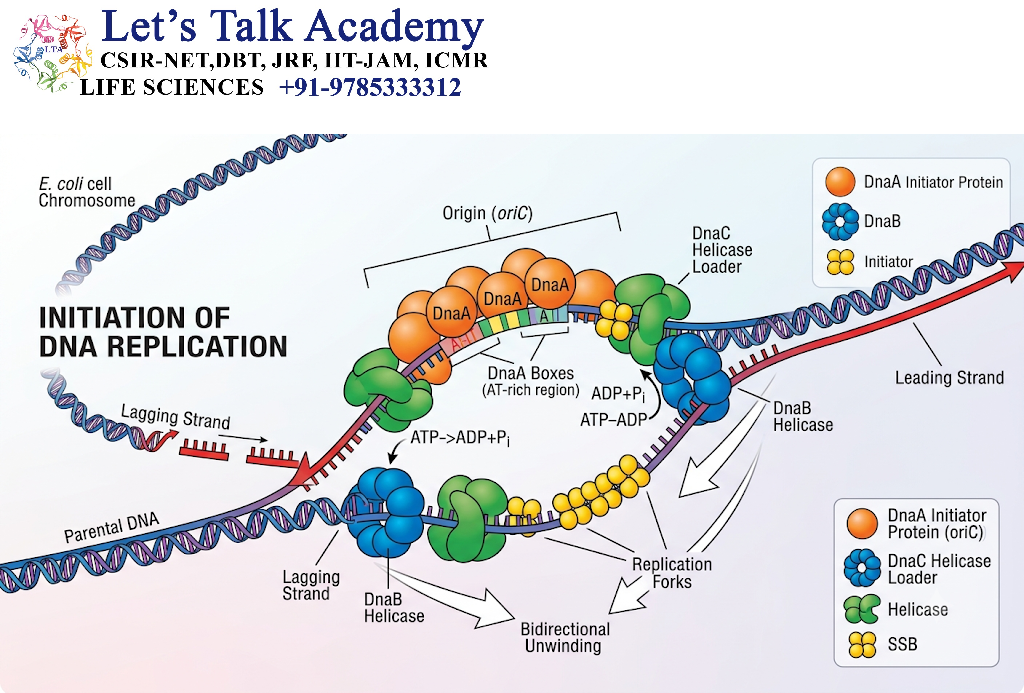
Initiation is the first major stage of DNA replication.
It begins when the replication origin is recognized by the appropriate initiation machinery.
7.1 General Steps
Origin recognition
↓
Initiator protein binding
↓
Local DNA unwinding
↓
Helicase loading
↓
Replication bubble formation
↓
Replication fork formation
↓
Primer synthesis
↓
DNA synthesis
8. Replication Bubble
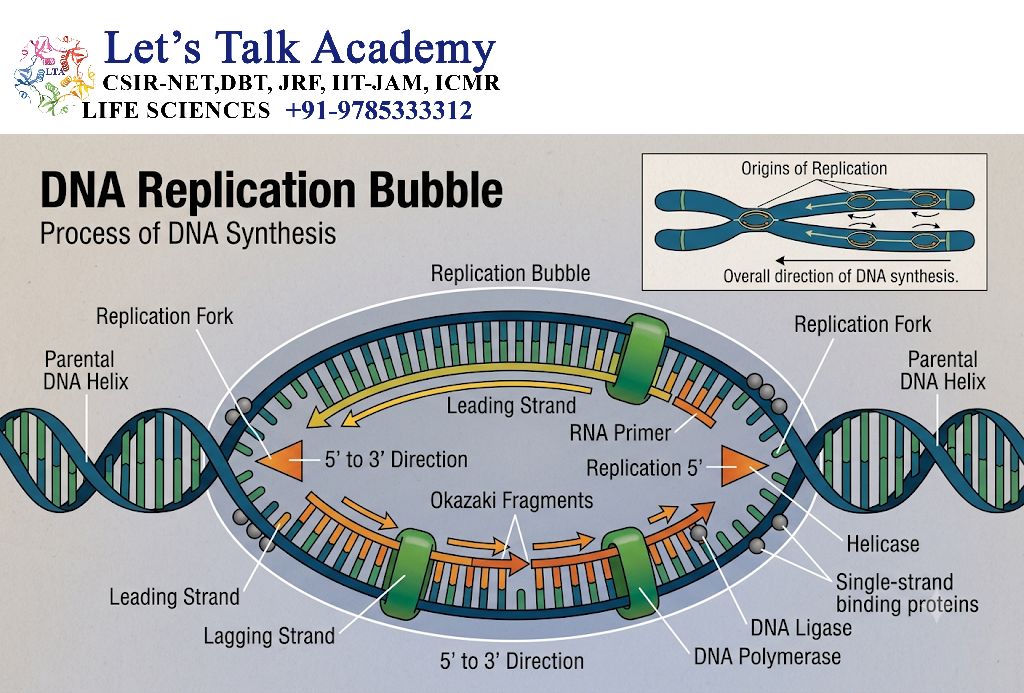
When DNA is unwound around the origin, a region called a replication bubble may form.
A replication bubble contains:
- An unwound DNA region
- Two replication forks
- Newly synthesized DNA
- Replication proteins
In bidirectional replication, the two forks move away from the origin.
9. Elongation of DNA
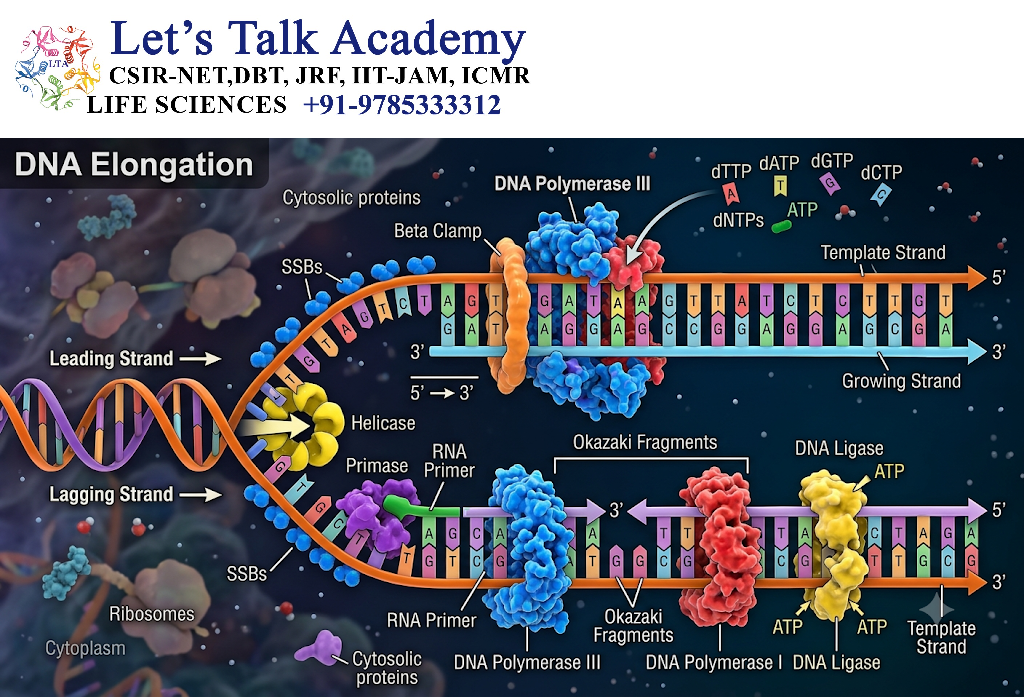
After initiation, DNA polymerases synthesize new DNA strands.
DNA synthesis has an important chemical requirement:
DNA polymerases add nucleotides only to the 3′-OH end of a growing strand.
Therefore, DNA synthesis occurs in the:
5′ → 3′ direction
This directional property produces two different modes of synthesis at the replication fork.
10. Leading Strand
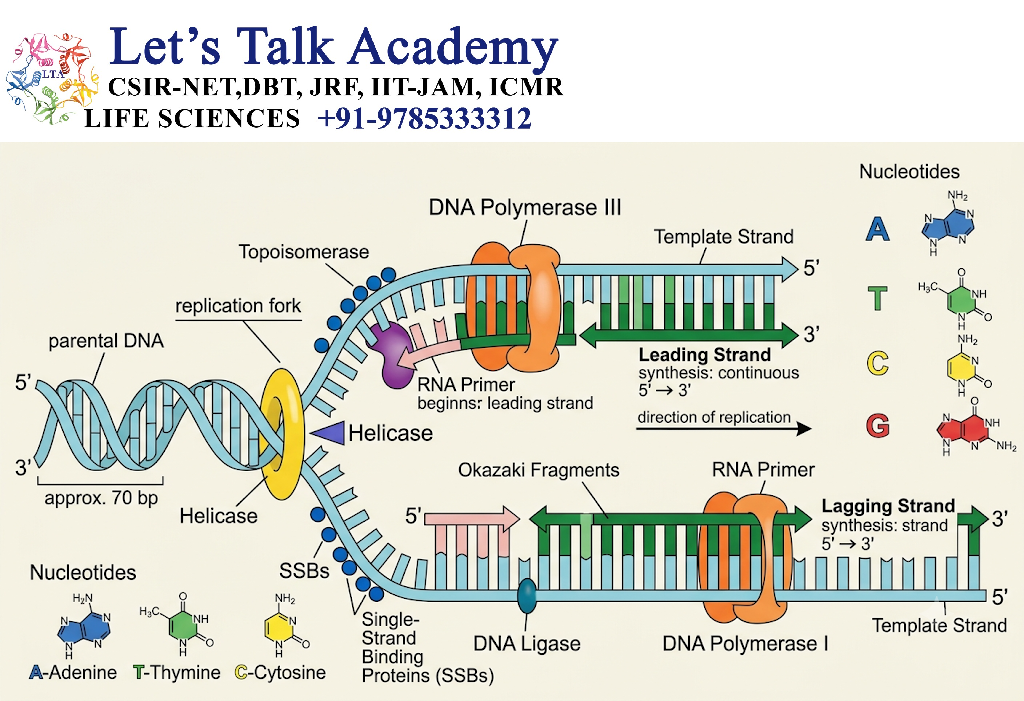
The leading strand is synthesized continuously in the direction of movement of the replication fork.
Only one major primer is generally required for continuous synthesis of the leading strand within a replication event.
Template → 3′ to 5′
New strand → 5′ to 3′
11. Lagging Strand
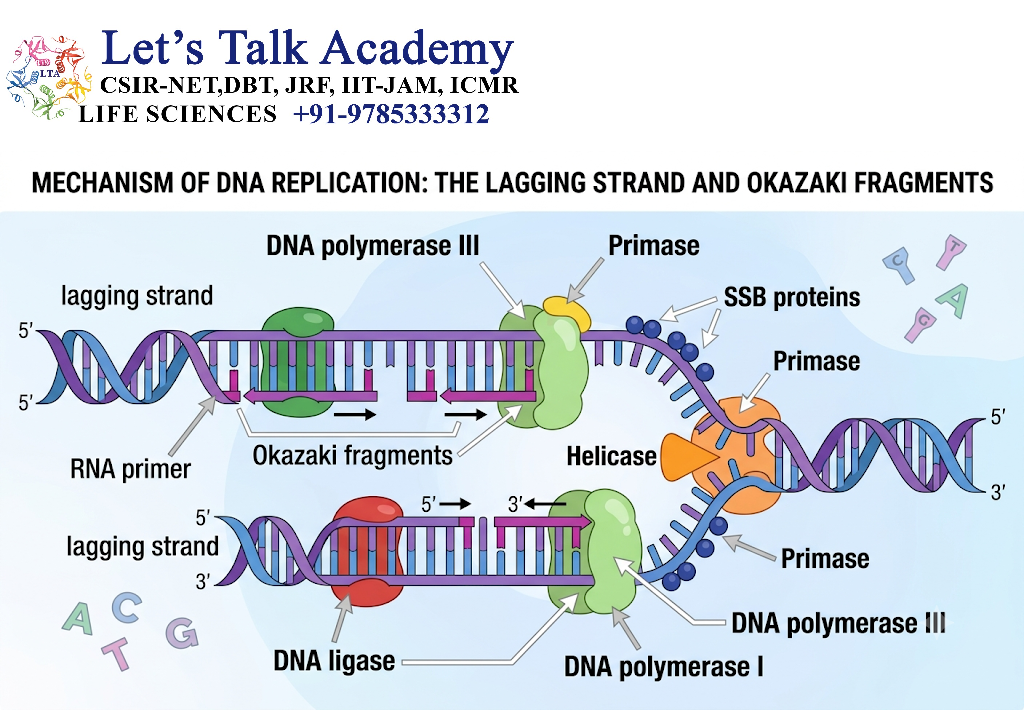
The lagging strand is synthesized discontinuously because DNA polymerase can synthesize DNA only in the 5′ → 3′ direction.
Short DNA segments called Okazaki fragments are produced.
The general process is:
RNA primer → DNA synthesis → Okazaki fragment → primer removal → DNA joining
12. Okazaki Fragments
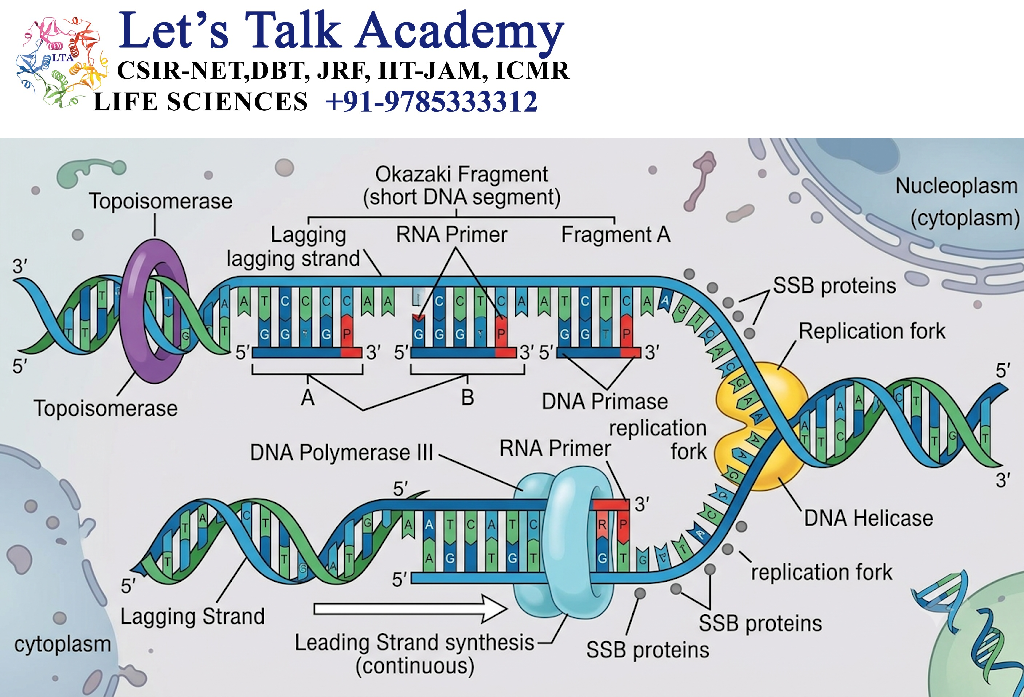
Okazaki fragments are short DNA segments synthesized discontinuously on the lagging strand.
They are later joined together by DNA ligase to form a continuous DNA strand.
Their discovery demonstrated how DNA synthesis occurs on the lagging strand.
13. Role of DNA Polymerase
DNA polymerases are the major enzymes responsible for DNA synthesis.
Their major functions include:
- Addition of nucleotides
- Template-directed synthesis
- Proofreading in many DNA polymerases
- High-fidelity genome duplication
The incoming nucleotide is selected according to complementary base pairing:
A ↔ T
G ↔ C
14. Semi-Conservative Replication
DNA replication is semi-conservative.
This means that each daughter DNA molecule contains:
- One parental DNA strand
- One newly synthesized DNA strand
Thus:
Parent DNA
↓
Strand separation
↓
Each strand acts as a template
↓
New complementary strand synthesis
↓
Two daughter DNA molecules
Each daughter molecule contains one old and one new strand.
15. Termination of Replication
Replication must eventually stop after the DNA molecule has been copied.
Termination mechanisms differ between organisms.
15.1 Bacteria
In circular bacterial chromosomes, replication forks eventually meet in a termination region.
After completion:
- Remaining gaps are filled.
- DNA strands are joined.
- Replication intermediates are resolved.
15.2 Eukaryotes
Linear chromosomes create an additional problem: the ends of chromosomes.
These ends are called telomeres.
Specialized machinery involving telomerase helps maintain telomeric DNA in many eukaryotic cell types.
16. Replicons in Prokaryotes
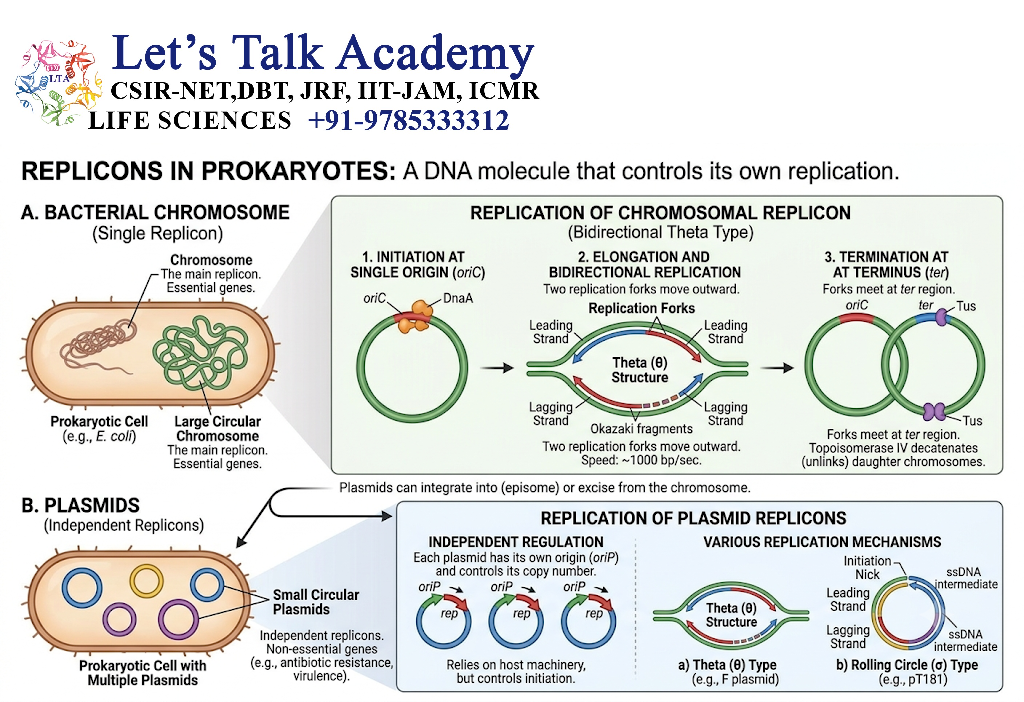
Many prokaryotic chromosomes contain a major replication origin and therefore can be considered a large replicon.
For example, in E. coli:
oriC → bidirectional replication → two forks → termination region
However, bacteria may also contain plasmids and other DNA molecules that possess their own replication origins.
Therefore, each independently replicating DNA molecule can have its own replicon.
17. Replicons in Eukaryotes
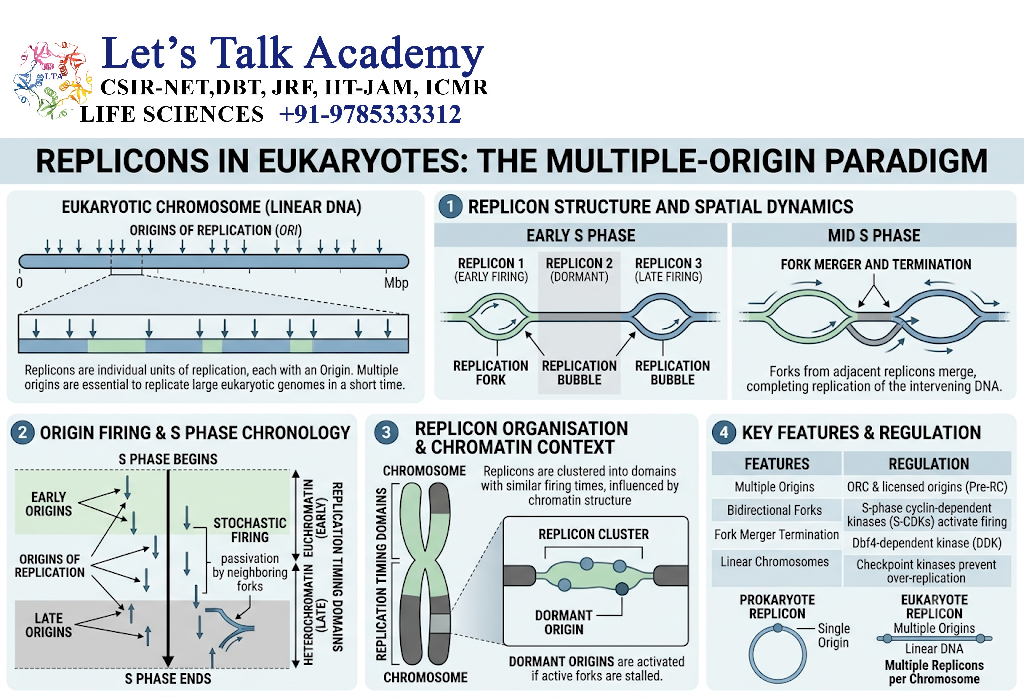
Eukaryotic chromosomes are very large and generally contain numerous replication origins.
Each origin can establish a replicon.
Therefore:
One chromosome → many origins → many replicons
This arrangement allows simultaneous replication of different chromosome regions.
18. Replication Licensing in Eukaryotes
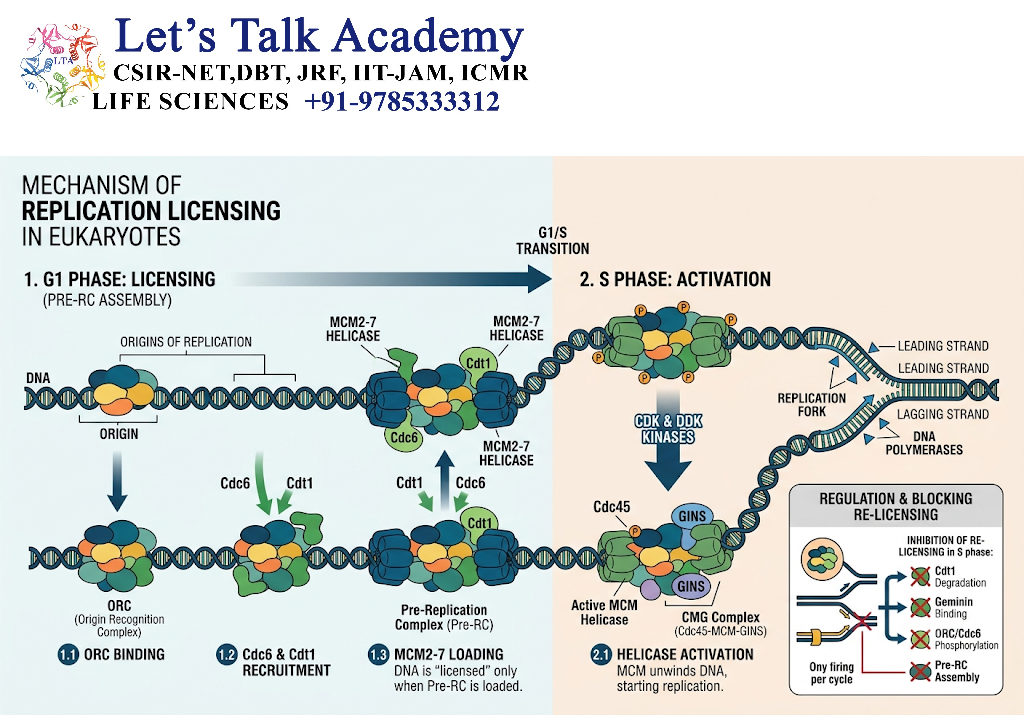
A major problem in eukaryotic cells is preventing DNA from being replicated more than once during a single cell cycle.
To solve this problem, eukaryotic cells use a process called replication licensing.
During the appropriate cell-cycle stage:
Origin recognition complex
↓
Pre-replication complex formation
↓
Replication origin licensing
↓
S phase
↓
Origin activation
Once an origin has been activated, mechanisms prevent it from being relicensed until the next cell cycle.
This ensures:
One origin → one replication event per cell cycle
19. Origin Recognition Complex
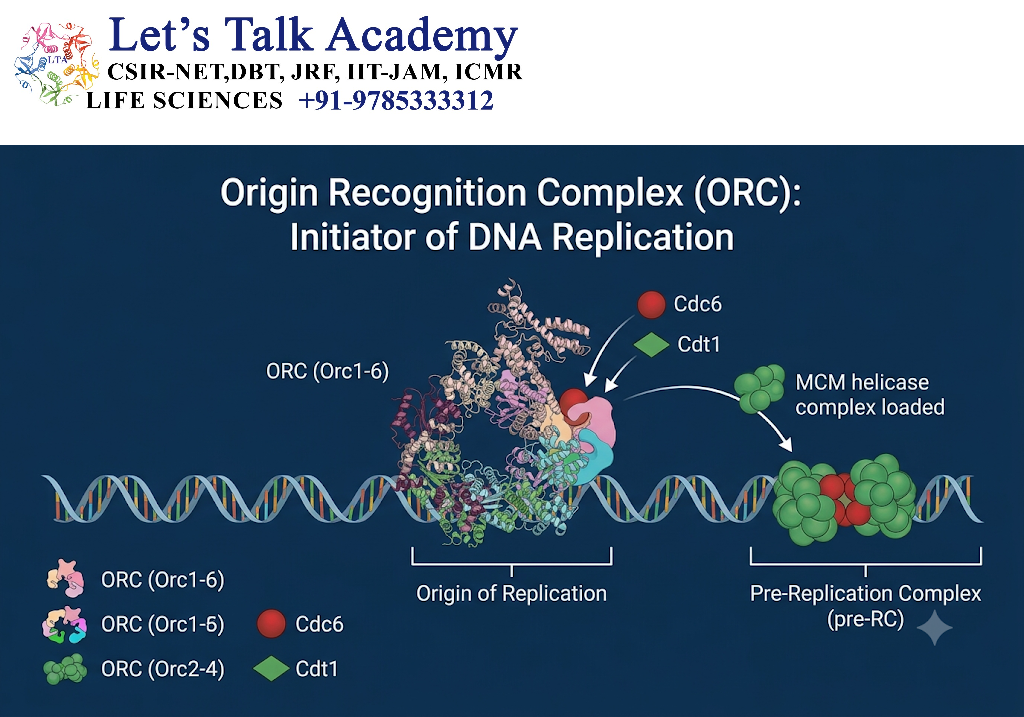
The Origin Recognition Complex (ORC) is a protein complex involved in recognizing replication origins in eukaryotic cells.
ORC helps establish the foundation for assembly of the pre-replication complex.
Other factors participate in origin licensing and activation, including:
- Cdc6
- Cdt1
- MCM helicase complex
- S-phase regulatory kinases
20. Replication Licensing and Cell-Cycle Control
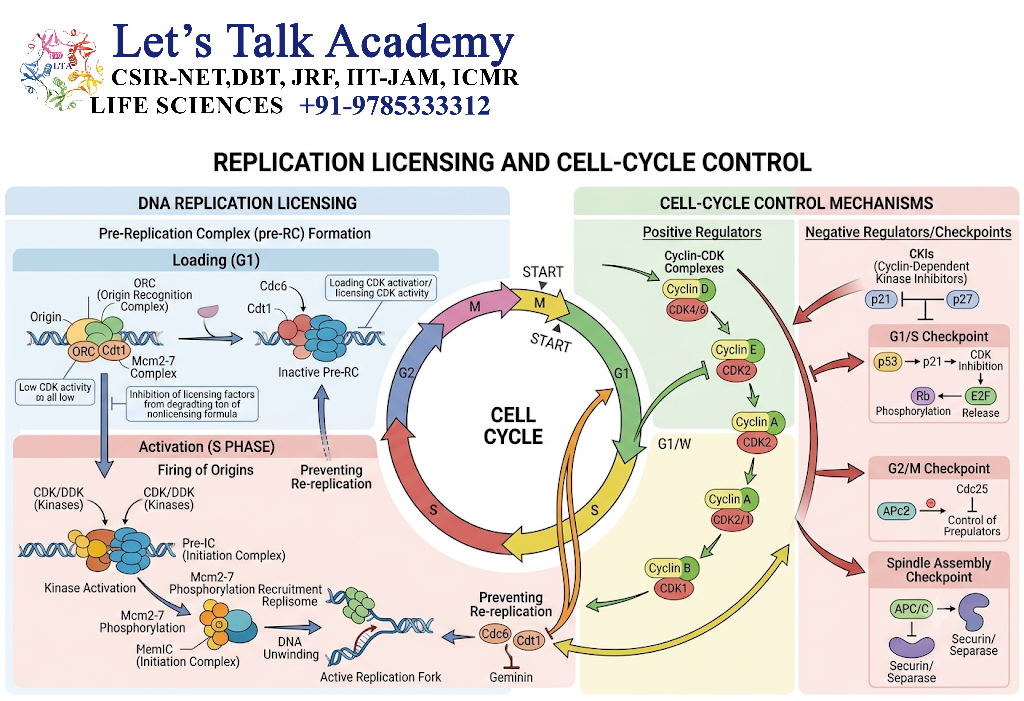
DNA replication must be coordinated with the cell cycle.
A simplified relationship is:
G1 phase → origin licensing
↓
S phase → origin activation and DNA replication
↓
G2 phase → replicated DNA maintained
↓
M phase → chromosome segregation
This coordination prevents:
- Under-replication
- Over-replication
- Genome instability
21. Regulation of Replication
DNA replication is tightly regulated because uncontrolled replication can cause genomic instability.
Important regulatory mechanisms include:
21.1 Origin Recognition
Replication begins only when the correct origin is recognized.
21.2 Initiator Regulation
Initiator proteins must be activated or controlled appropriately.
21.3 Cell-Cycle Regulation
Replication is restricted to the appropriate stage of the cell cycle.
21.4 Replication Licensing
Origins are licensed before activation and prevented from being relicensed afterward.
21.5 DNA Damage Checkpoints
If DNA is damaged, replication and cell-cycle progression can be delayed to allow repair.
22. Prokaryotic and Eukaryotic Replicons
| Feature | Prokaryotes | Eukaryotes |
|---|---|---|
| Chromosome | Usually circular | Usually linear |
| Major chromosome origins | Often one per chromosome | Multiple per chromosome |
| Replication units | Relatively large | Numerous replicons |
| Replication forks | Usually two from a major origin | Many simultaneously |
| Telomeres | Generally absent | Present on linear chromosomes |
| Replication licensing | Simpler | Highly regulated |
| Cell-cycle coordination | Relatively simpler | Strongly integrated with cell cycle |
23. Replicon Model
The replicon model explains how replication initiation can be genetically controlled.
The model involves two major concepts:
Replicator
A DNA region that controls initiation.
Initiator
A protein or factor that interacts with the replicator and promotes initiation.
The simplified model is:
Replicator
↓
Initiator recognition
↓
Origin activation
↓
Replication machinery assembly
↓
DNA replication
24. Autonomous Replicating DNA
A DNA molecule that contains the necessary elements to initiate and maintain its own replication can function as an independently replicating unit.
Plasmids are important examples in microorganisms.
Their replication origins allow them to replicate separately from the main bacterial chromosome.
25. Replication of Plasmids
Plasmids are usually small, circular DNA molecules found mainly in bacteria and some other organisms.
A plasmid generally contains:
- Replication origin
- Genes providing selectable or advantageous traits
- Regulatory sequences
The replication origin allows the plasmid to be maintained independently.
Different plasmids can have different copy-number control mechanisms.
26. Importance of the Unit of Replication
The concept of the unit of replication is important because it explains:
- Where replication begins
- How replication is organized
- How replication proceeds along DNA
- How multiple chromosome regions can replicate simultaneously
- How replication is regulated
- How chromosomes are duplicated efficiently
- How replication is coordinated with the cell cycle
27. Unit of Replication and Genome Organization
Genome size differs greatly among organisms.
Large genomes cannot necessarily depend on a single replication origin.
Instead, eukaryotic chromosomes contain numerous origins.
This organization allows multiple DNA regions to be copied simultaneously.
For example:
Large chromosome
→ Origin 1
→ Origin 2
→ Origin 3
→ Origin 4
→ Origin 5
Each origin can establish a replicating region.
28. Replication Fork Proteins
Several proteins cooperate at the replication fork.
Helicase
Separates the two DNA strands.
Single-Strand Binding Proteins
Prevent separated DNA strands from reannealing and protect them from degradation.
Primase
Produces RNA primers.
DNA Polymerase
Synthesizes new DNA.
Sliding Clamp
Keeps DNA polymerase associated with DNA and increases processivity.
Topoisomerase
Reduces torsional stress generated during DNA unwinding.
DNA Ligase
Joins DNA fragments by forming phosphodiester bonds.
29. Fidelity of DNA Replication
DNA replication must be highly accurate because replication errors can become mutations.
Several mechanisms contribute to fidelity:
- Accurate base selection
- DNA polymerase proofreading
- Post-replication repair
- Mismatch repair
- DNA damage response
The overall process can therefore be represented as:
Correct nucleotide selection
↓
DNA synthesis
↓
Proofreading
↓
Mismatch correction
↓
High-fidelity genome duplication
30. Replication and Mutation
A mutation may arise when a replication error escapes proofreading and repair mechanisms.
For example:
Incorrect nucleotide incorporation
↓
Failure of proofreading
↓
Mismatch remains
↓
DNA replication
↓
Mutation becomes fixed
Mutations can be neutral, harmful, or occasionally beneficial depending on their location and biological consequences.
31. Replication Stress
Replication stress occurs when normal DNA replication is slowed, stalled, or disrupted.
Causes can include:
- DNA damage
- Limited nucleotide availability
- Difficult-to-replicate DNA sequences
- Transcription-replication conflicts
- Abnormal DNA structures
- Excessive oncogenic signaling
Replication stress can activate checkpoint pathways and DNA repair mechanisms.
Persistent replication stress can contribute to genomic instability.
32. Replication and Chromosome Stability
Accurate replication is essential for chromosome stability.
Problems in replication can lead to:
- DNA breaks
- Rearrangements
- Copy-number changes
- Mutations
- Chromosome abnormalities
- Genomic instability
Therefore, replication control is closely connected with DNA repair and cell-cycle checkpoints.
33. Conceptual Flowchart of DNA Replication
Origin of replication
↓
Initiator protein recognition
↓
DNA unwinding
↓
Replication bubble formation
↓
Replication fork formation
↓
RNA primer synthesis
↓
Leading and lagging strand synthesis
↓
Okazaki fragment processing
↓
Primer removal
↓
DNA ligation
↓
Replication termination
↓
Two complete DNA molecules
34. Replicon-Based Organization
The complete concept can be summarized as:
Replicon
├── Origin / Replicator
├── Initiator
├── Replication machinery
├── Replication fork
├── Leading-strand synthesis
├── Lagging-strand synthesis
└── Termination
35. Important Differences: Replicon, Origin and Replication Fork
| Term | Meaning |
|---|---|
| Replicon | Functional unit of DNA replication |
| Origin | Site where replication initiation occurs |
| Replication fork | Y-shaped region where DNA synthesis occurs |
| Replicator | DNA element controlling initiation |
| Initiator | Protein/factor promoting replication initiation |
| Okazaki fragment | Discontinuous DNA segment formed on lagging strand |


