
1. Introduction
Protein synthesis is an essential process required for the growth, maintenance, reproduction, and survival of cells. The process of translation involves the coordinated activity of mRNA, tRNA, ribosomes, aminoacyl-tRNA synthetases, and several translation factors.
Because translation is essential, inhibition of protein synthesis can strongly affect cellular survival and growth.
Translational inhibitors are substances that interfere with one or more steps of protein synthesis.
They may act by targeting:
- ribosomes,
- ribosomal RNA,
- ribosomal proteins,
- aminoacyl-tRNA synthetases,
- translation factors,
- mRNA,
- tRNA,
- or specific steps of translation.
Many clinically important antibacterial drugs act by selectively inhibiting bacterial ribosomes.
2. Definition of Translational Inhibitors
2.1 Basic Definition
Translational inhibitors are molecules or compounds that interfere with the process of translation and thereby reduce or prevent the synthesis of proteins.
They may inhibit:
- initiation,
- aminoacyl-tRNA binding,
- peptide-bond formation,
- translocation,
- termination,
- ribosome recycling,
- tRNA charging.
3. Importance of Translational Inhibition
Translation requires a large amount of cellular energy and molecular resources.
If translation is inhibited:
Protein synthesis ↓
↓
Enzyme production ↓
↓
Metabolic activity ↓
↓
Cellular growth and function are affected
In bacteria, inhibition of protein synthesis can stop bacterial growth or kill the organism, depending on the drug and organism.
4. Major Targets of Translational Inhibitors
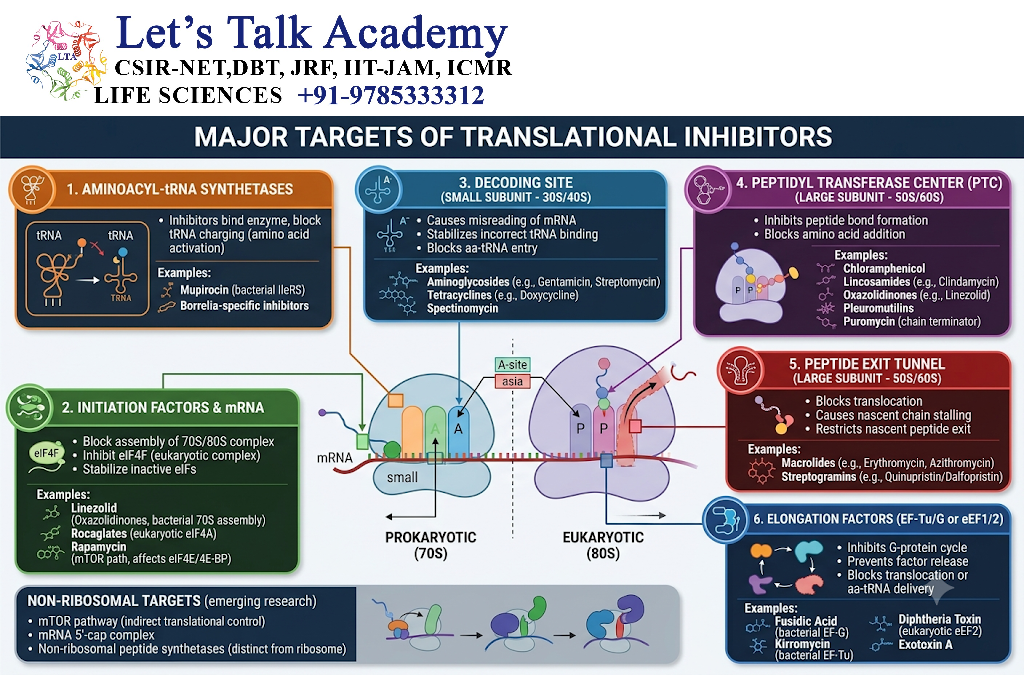
Translational inhibitors can target different molecular components.
The major targets include:
- Small ribosomal subunit
- Large ribosomal subunit
- Ribosomal RNA
- Ribosomal proteins
- Aminoacyl-tRNA synthetases
- Translation initiation factors
- Elongation factors
- mRNA
- tRNA
5. Classification of Translational Inhibitors
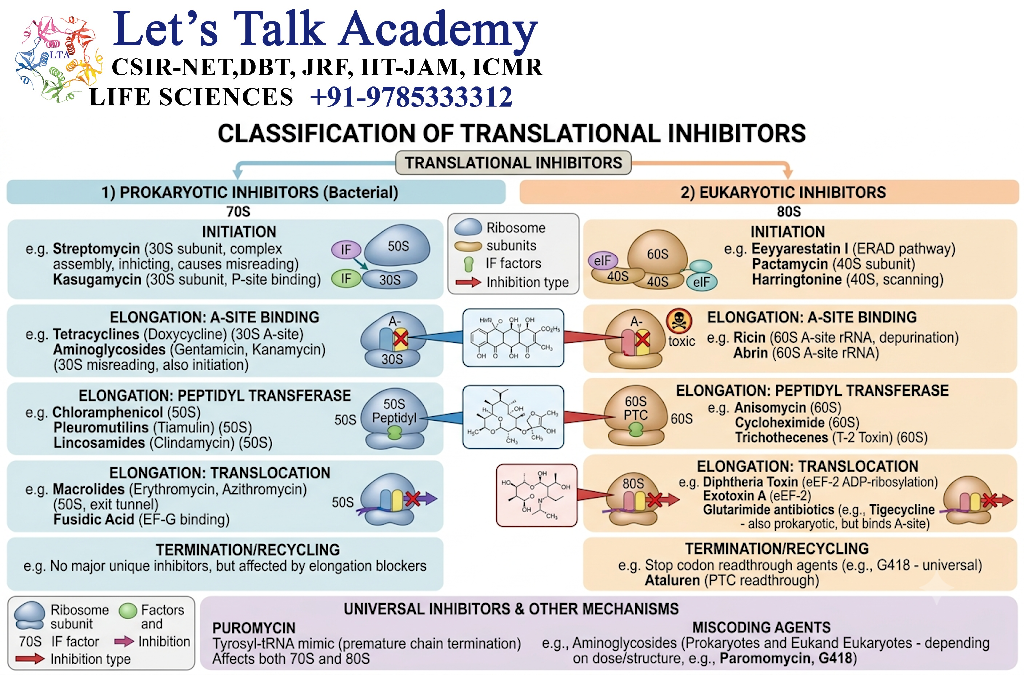
Translational inhibitors can broadly be classified according to their target or mechanism.
5.1 Inhibitors of the Small Ribosomal Subunit
These primarily affect:
- mRNA decoding,
- codon-anticodon recognition,
- aminoacyl-tRNA binding.
Examples include:
- tetracyclines,
- aminoglycosides.
5.2 Inhibitors of the Large Ribosomal Subunit
These interfere with:
- peptide-bond formation,
- peptide movement,
- translocation,
- ribosomal function.
Examples include:
- macrolides,
- chloramphenicol,
- oxazolidinones.
5.3 Inhibitors of tRNA Charging
These inhibit aminoacyl-tRNA synthetases.
An important example is:
Mupirocin
which inhibits bacterial isoleucyl-tRNA synthetase.
5.4 Inhibitors of Translation Factors
Some compounds target translation factors required for:
- initiation,
- elongation,
- termination,
- ribosome recycling.
6. Ribosome as a Target
The ribosome is one of the most important targets for translational inhibitors.
Bacterial ribosomes are:
70S
and consist of:
- 30S small subunit,
- 50S large subunit.
The cytoplasmic ribosome of eukaryotic cells is:
80S
and consists of:
- 40S small subunit,
- 60S large subunit.
Structural differences between bacterial and eukaryotic ribosomes allow certain antibiotics to preferentially target bacterial translation.
7. Inhibitors of the 30S Ribosomal Subunit
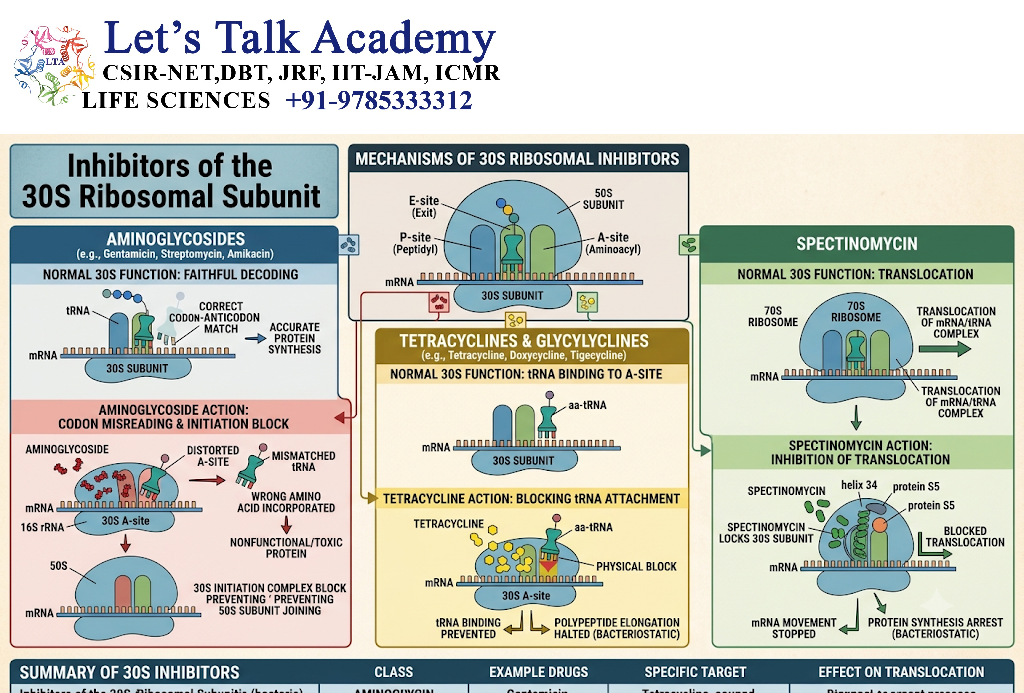
The bacterial 30S subunit contains:
16S rRNA + ribosomal proteins
It is primarily involved in:
- mRNA binding,
- decoding,
- codon-anticodon recognition.
Important inhibitors include:
- tetracyclines,
- aminoglycosides.
8. Tetracyclines
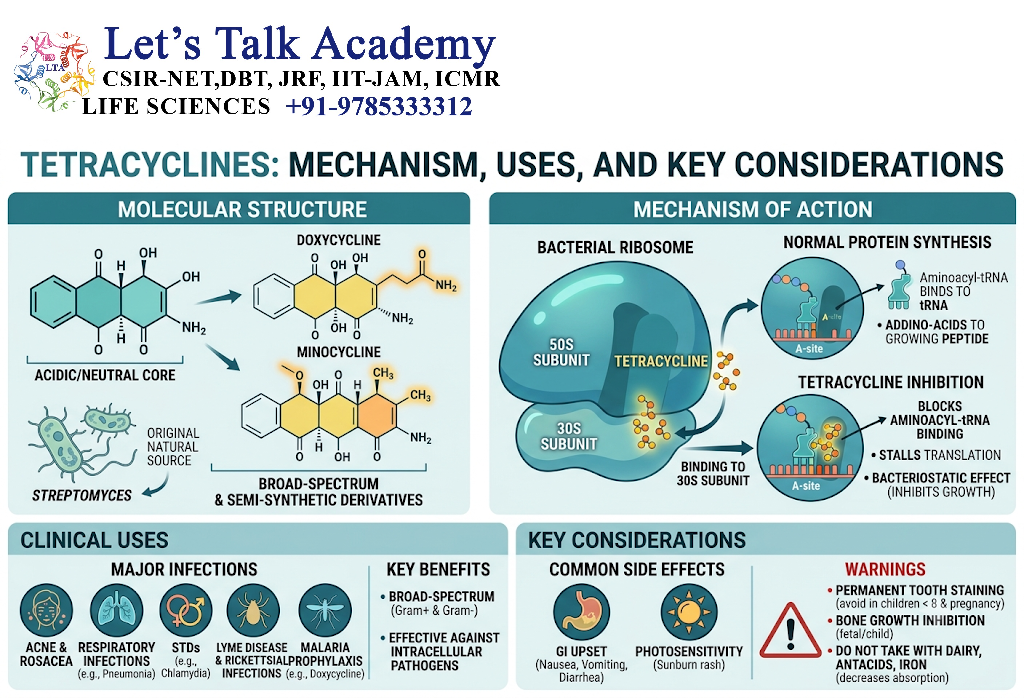
8.1 Introduction
Tetracyclines are broad-spectrum antibacterial agents that primarily target the bacterial 30S ribosomal subunit.
Examples include:
- tetracycline,
- doxycycline,
- minocycline.
8.2 Mechanism of Action
Tetracyclines bind to the bacterial 30S ribosomal subunit and interfere with the binding of aminoacyl-tRNA to the A site.
The basic mechanism is:
Tetracycline binds 30S
↓
A-site aminoacyl-tRNA entry is inhibited
↓
Elongation is blocked
↓
Protein synthesis decreases
8.3 Effect
The inability to efficiently add new amino acids prevents normal elongation of the growing polypeptide.
Tetracyclines are generally considered bacteriostatic at usual therapeutic concentrations.
9. Aminoglycosides
9.1 Introduction
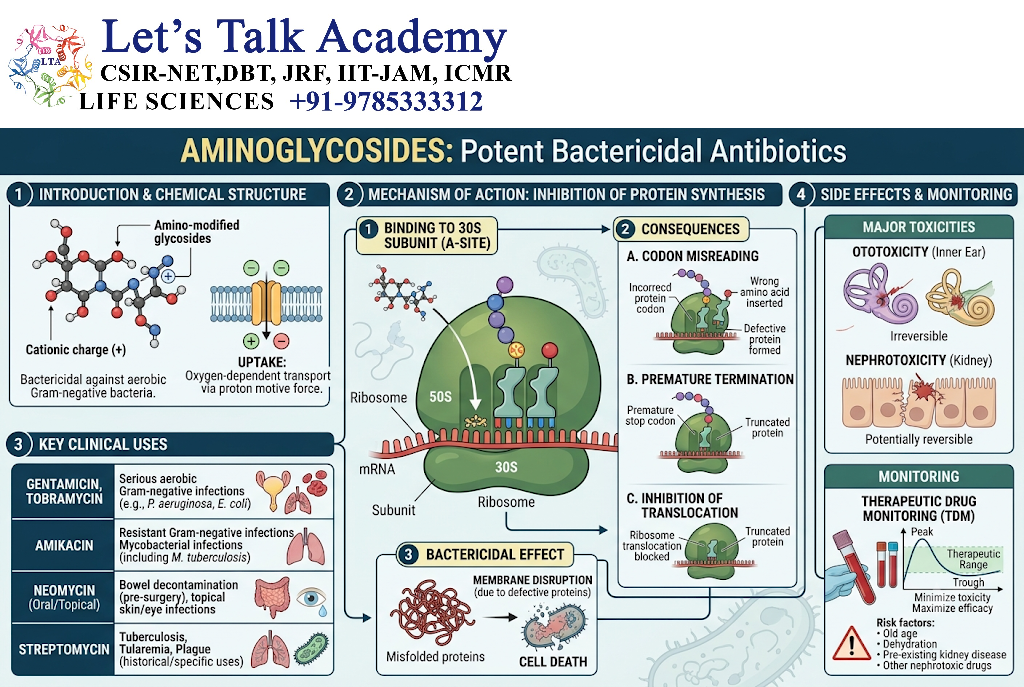
Aminoglycosides are antibacterial compounds that target the bacterial 30S ribosomal subunit.
Examples include:
- streptomycin,
- gentamicin,
- amikacin,
- tobramycin.
9.2 Mechanism
Aminoglycosides interact with the 30S subunit and interfere with accurate decoding.
This can lead to:
- incorrect codon recognition,
- misincorporation of amino acids,
- production of abnormal proteins,
- disruption of cellular processes.
9.3 Effect on Translation
The simplified mechanism is:
Aminoglycoside
↓
30S ribosome binding
↓
Decoding accuracy decreases
↓
Translation errors increase
↓
Abnormal proteins accumulate
↓
Bacterial damage and death
Unlike many bacteriostatic translation inhibitors, aminoglycosides can be bactericidal.
10. Streptomycin
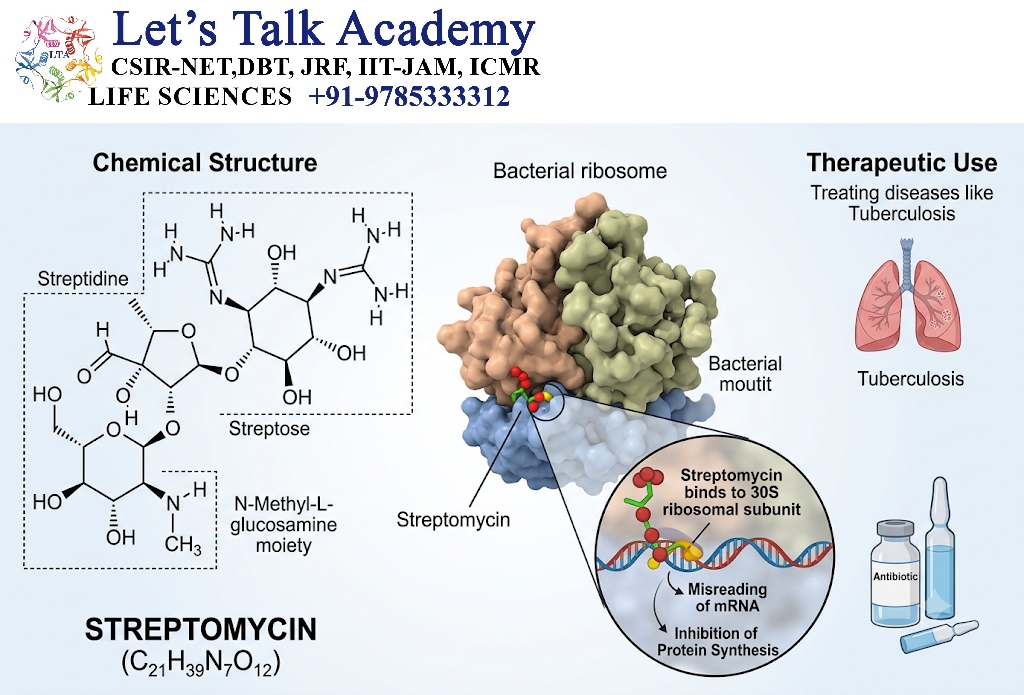
Streptomycin was one of the earliest widely used aminoglycoside antibiotics.
It binds the bacterial small ribosomal subunit and interferes with accurate decoding.
Mutations in ribosomal components can alter streptomycin susceptibility.
11. Inhibitors of the 50S Ribosomal Subunit
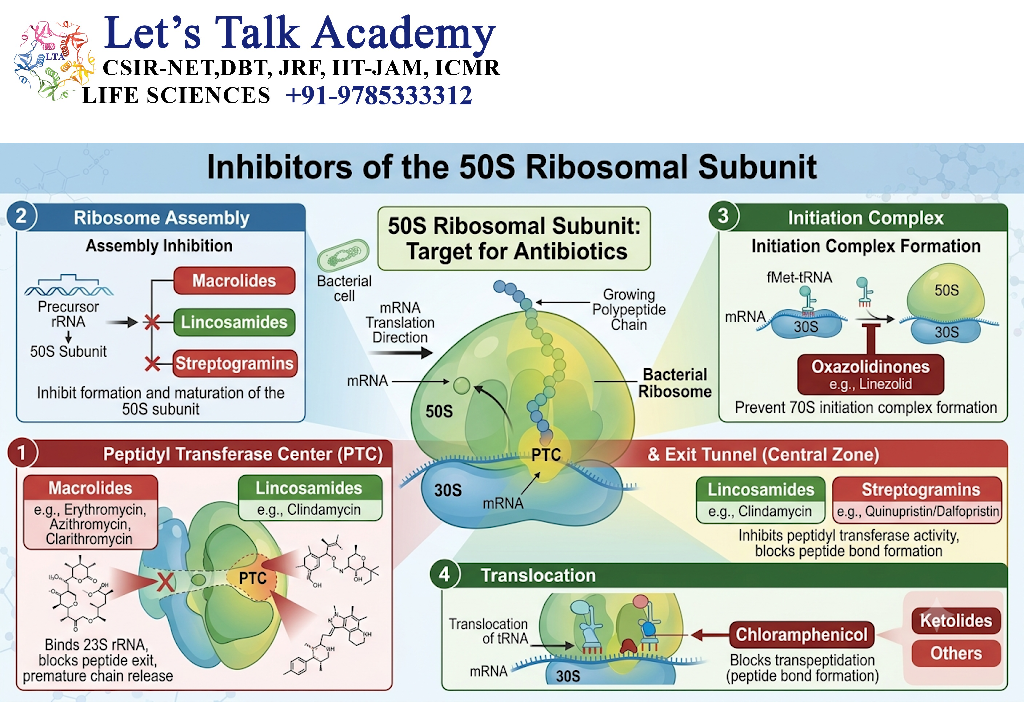
The bacterial 50S subunit contains:
- 23S rRNA,
- 5S rRNA,
- ribosomal proteins.
It contains the peptidyl transferase center and contributes to:
- peptide-bond formation,
- translocation,
- peptide exit.
Important inhibitors include:
- macrolides,
- chloramphenicol,
- oxazolidinones,
- lincosamides,
- streptogramins.
12. Macrolides
12.1 Introduction
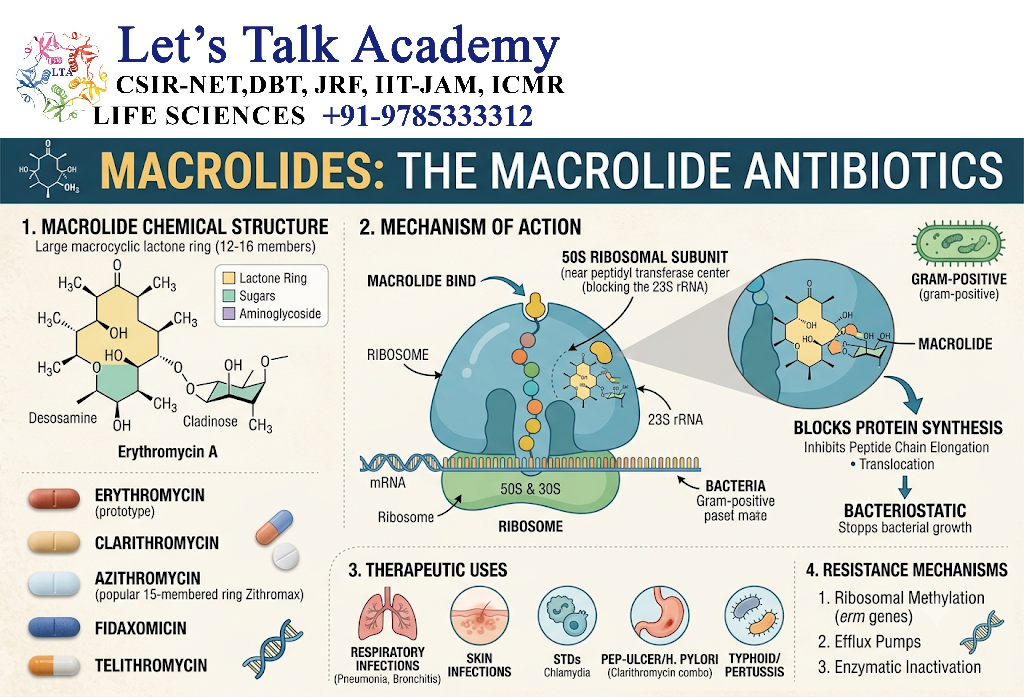
Macrolides are antibacterial compounds that bind to the bacterial 50S ribosomal subunit.
Examples include:
- erythromycin,
- azithromycin,
- clarithromycin.
12.2 Mechanism
Macrolides bind within the large ribosomal subunit near the peptide exit pathway.
They can interfere with:
- elongation,
- movement of the growing peptide,
- ribosomal progression.
The general mechanism is:
Macrolide binds 50S
↓
Ribosome progression is impaired
↓
Protein synthesis decreases
13. Erythromycin
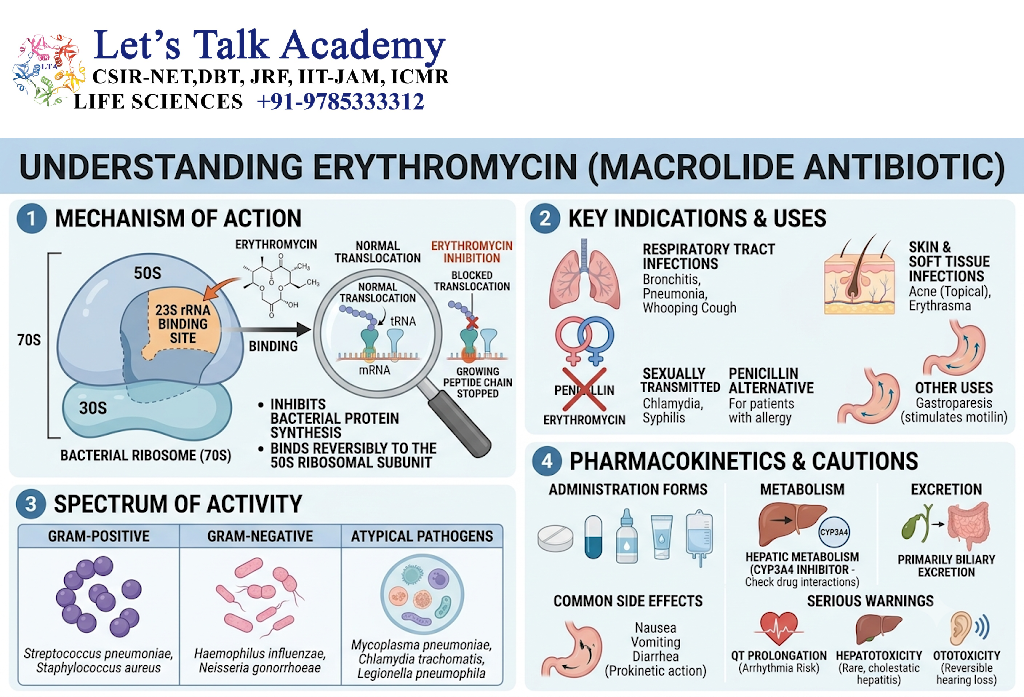
Erythromycin is a macrolide antibiotic.
It binds the bacterial 50S subunit and inhibits translation.
It is particularly useful against several Gram-positive bacteria and certain atypical bacterial pathogens.
14. Chloramphenicol
14.1 Introduction
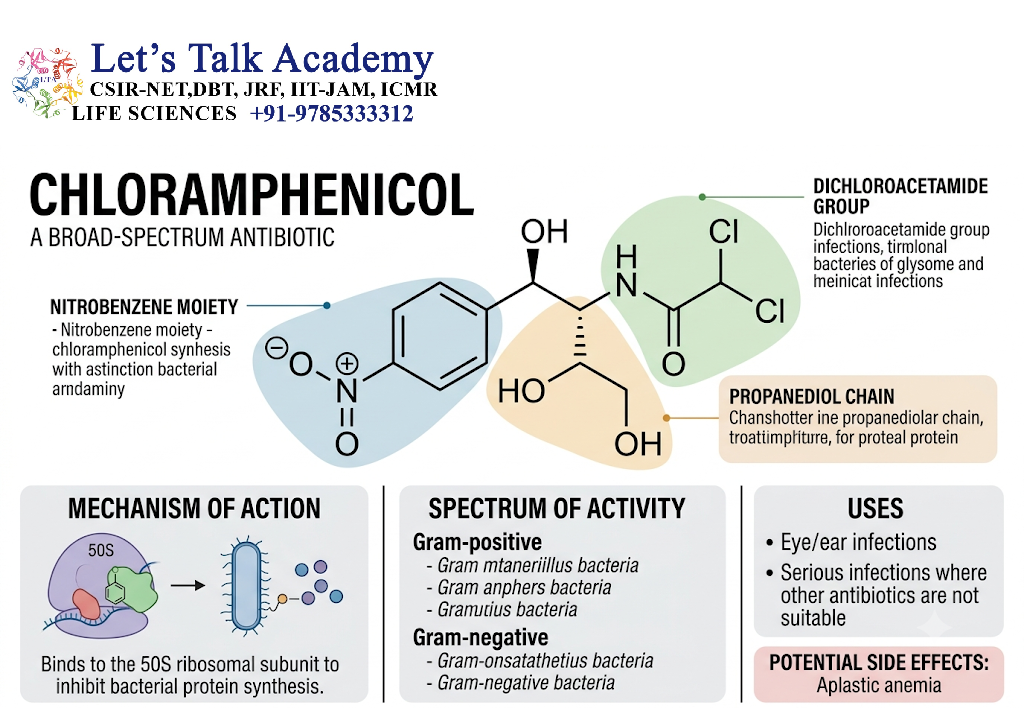
Chloramphenicol is an inhibitor of bacterial protein synthesis.
It targets the bacterial 50S ribosomal subunit.
14.2 Mechanism
Chloramphenicol interacts with the peptidyl transferase center.
It inhibits peptide-bond formation.
Therefore:
Chloramphenicol
↓
50S binding
↓
Peptidyl transferase activity inhibited
↓
Peptide-bond formation decreases
↓
Protein synthesis decreases
Chloramphenicol is generally considered bacteriostatic, although its effects can vary with organism and conditions.
15. Oxazolidinones
15.1 Introduction
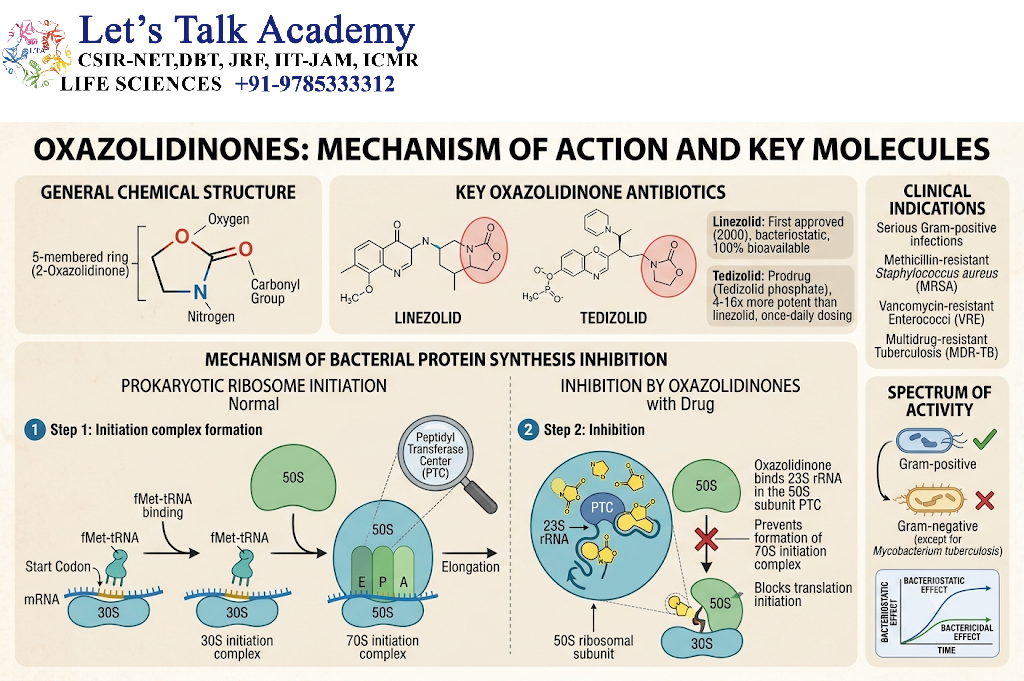
Oxazolidinones are an important class of antibacterial agents.
A major example is:
Linezolid
15.2 Mechanism
Linezolid binds to the bacterial 50S subunit and interferes with the formation of the functional initiation complex.
Therefore, it primarily inhibits translation initiation.
The simplified pathway is:
Linezolid
↓
50S binding
↓
Initiation complex formation inhibited
↓
Protein synthesis decreases
16. Lincosamides
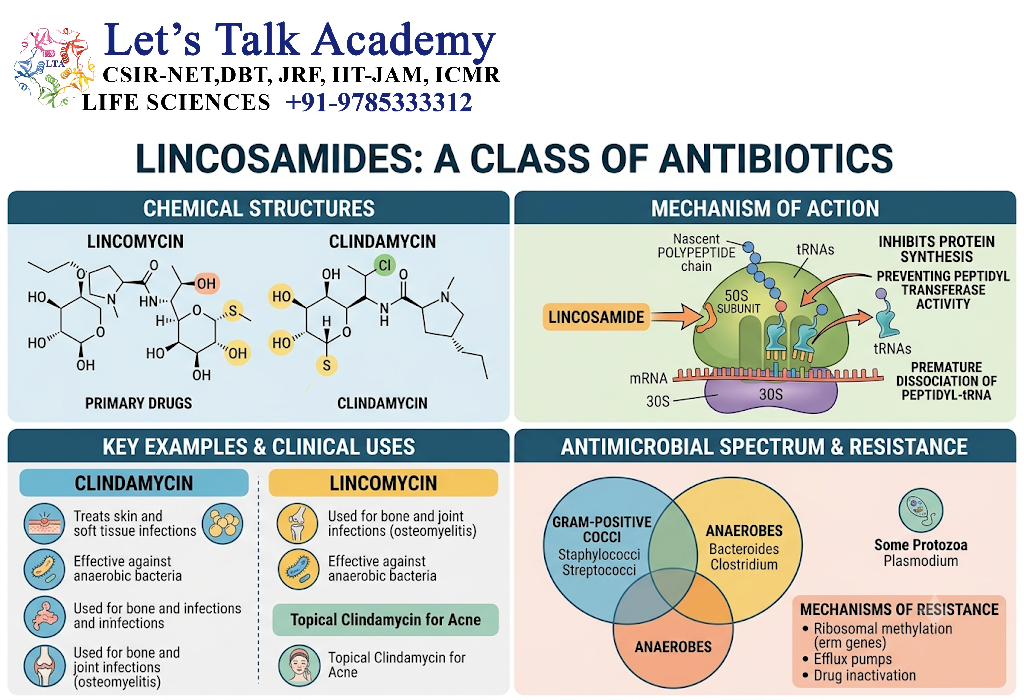
An important lincosamide is:
Clindamycin
Clindamycin binds to the bacterial 50S ribosomal subunit.
It interferes with bacterial protein synthesis by affecting ribosomal function during elongation.
17. Streptogramins
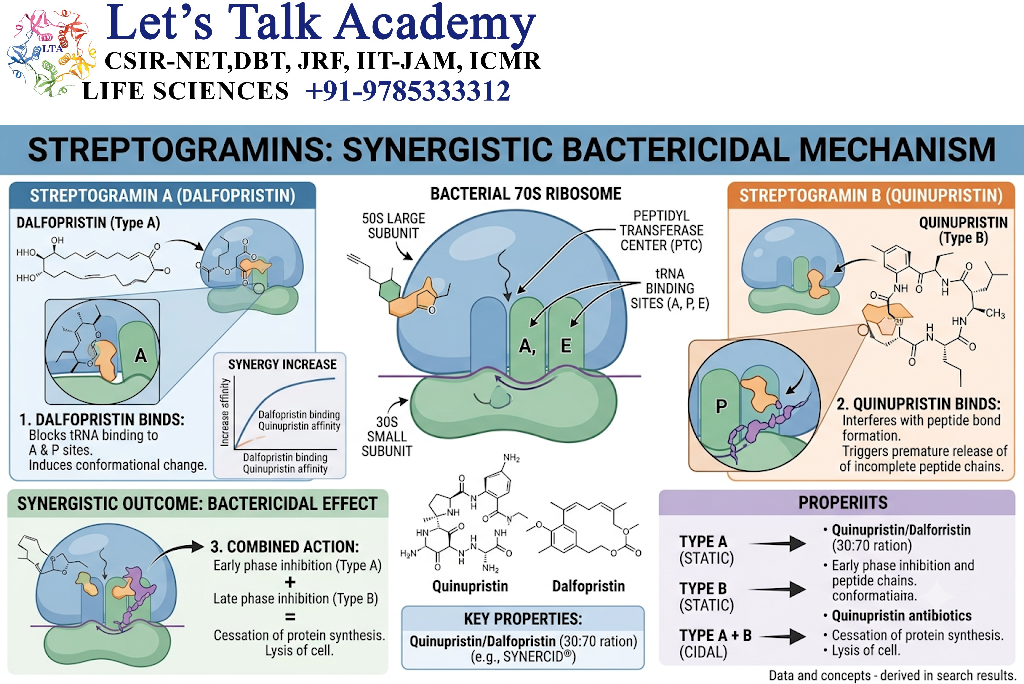
Streptogramins are antibacterial compounds that act on the bacterial 50S ribosomal subunit.
They can interfere with:
- peptide-bond formation,
- elongation,
- ribosome movement.
A clinically important combination is:
Quinupristin + Dalfopristin
18. Pleuromutilins
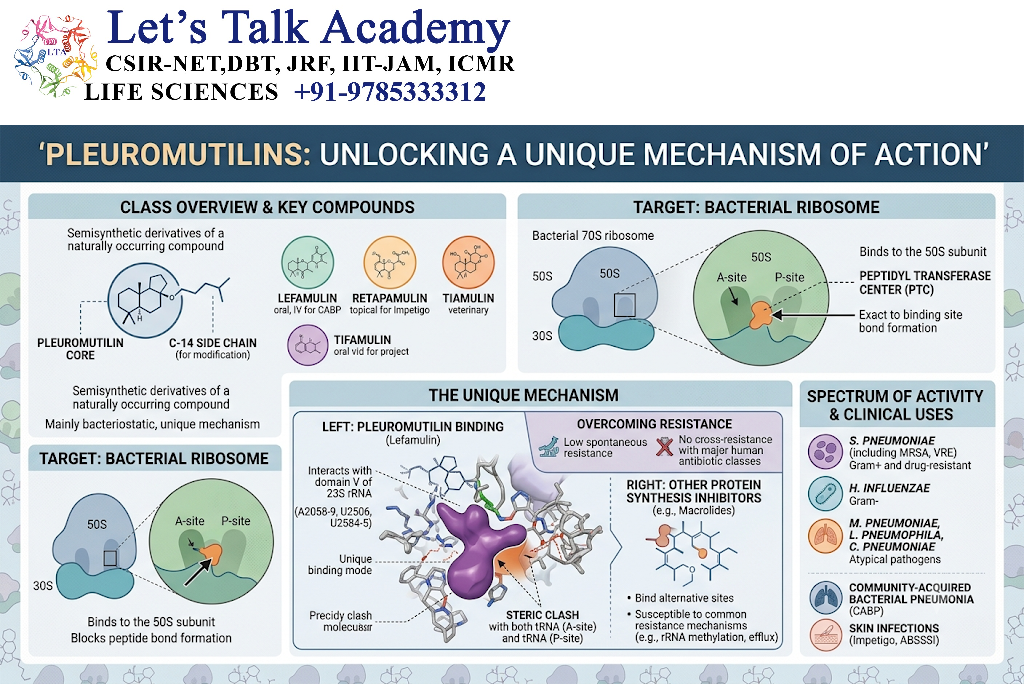
Pleuromutilins bind to the bacterial 50S ribosomal subunit at the peptidyl transferase center.
They interfere with proper positioning of tRNAs and inhibit peptide-bond formation.
An example is:
Lefamulin
19. Inhibitors of Aminoacyl-tRNA Synthetases
Translation requires correct charging of tRNAs.
If aminoacyl-tRNA synthetases are inhibited:
Correct amino acid cannot be attached to tRNA
↓
Charged tRNA availability decreases
↓
Translation elongation decreases
20. Mupirocin
Mupirocin is an important inhibitor of bacterial protein synthesis.
It inhibits:
Isoleucyl-tRNA synthetase
20.1 Mechanism
Mupirocin binds bacterial isoleucyl-tRNA synthetase.
This prevents proper charging of tRNA with isoleucine.
Therefore:
Mupirocin
↓
Isoleucyl-tRNA synthetase inhibited
↓
Isoleucine-tRNA formation decreases
↓
Translation is inhibited
Mupirocin is commonly used topically for certain bacterial skin infections.
21. Inhibitors of Translation Elongation Factors
Translation elongation requires specialized factors.
These factors help with:
- aminoacyl-tRNA delivery,
- proofreading,
- translocation.
Inhibiting these factors can stop protein synthesis.
22. Fusidic Acid
Fusidic acid is an antibacterial agent that targets the bacterial elongation factor:
EF-G
EF-G is required for translocation.
22.1 Mechanism
During normal translation:
EF-G
helps the ribosome move along the mRNA.
Fusidic acid interferes with proper EF-G function and can trap the factor in an inactive ribosome-associated state.
Therefore:
EF-G function disrupted
↓
Translocation impaired
↓
Translation inhibited
23. Puromycin
Puromycin is a structural analogue of an aminoacyl-tRNA.
It can enter the ribosome’s A site and participate in peptide-bond formation.
However, the resulting peptide-puromycin product is released prematurely.
Therefore:
Puromycin enters A site
↓
Peptide transferred to puromycin
↓
Premature chain termination
↓
Incomplete protein produced
Puromycin is widely used as a laboratory research tool.
24. Mechanism of Puromycin in Detail
Puromycin resembles the aminoacyl end of a tRNA.
The ribosome can therefore accept it as a substrate.
Once incorporated:
Growing peptide
↓
Transferred to puromycin
↓
Peptide-puromycin leaves ribosome
↓
Protein synthesis terminates prematurely
This produces incomplete polypeptides.
25. Translation Inhibitors Based on Stage of Translation
| Translation stage | Major inhibitors |
|---|---|
| Initiation | Linezolid and related inhibitors |
| Aminoacyl-tRNA entry | Tetracyclines |
| Decoding | Aminoglycosides |
| Peptide-bond formation | Chloramphenicol and other 50S inhibitors |
| Translocation | Fusidic acid |
| tRNA charging | Mupirocin |
| Premature termination | Puromycin |
26. Comparison of Major Translational Inhibitors
| Inhibitor/Class | Main target | Major effect |
|---|---|---|
| Tetracyclines | 30S | Inhibit aminoacyl-tRNA entry |
| Aminoglycosides | 30S | Cause decoding errors |
| Macrolides | 50S | Inhibit ribosomal progression |
| Chloramphenicol | 50S | Inhibits peptide-bond formation |
| Linezolid | 50S | Inhibits initiation |
| Clindamycin | 50S | Inhibits translation |
| Mupirocin | Ile-tRNA synthetase | Blocks tRNA charging |
| Fusidic acid | EF-G | Blocks translocation |
| Puromycin | Ribosome | Causes premature termination |
27. Bacteriostatic and Bactericidal Effects
Translational inhibitors can have different effects on bacteria.
27.1 Bacteriostatic Effect
A bacteriostatic drug primarily inhibits bacterial growth and reproduction.
Examples include many inhibitors such as:
- tetracyclines,
- macrolides,
- chloramphenicol.
27.2 Bactericidal Effect
A bactericidal drug kills bacteria.
Aminoglycosides are important examples.
However, the exact effect can depend on:
- bacterial species,
- drug concentration,
- growth conditions,
- susceptibility,
- physiological state.
28. Selective Toxicity
An important principle in antibacterial therapy is:
Selective toxicity
The drug should inhibit bacterial cells more strongly than host cells.
Differences between bacterial and eukaryotic translation machinery help achieve this.
Important differences include:
- ribosome structure,
- rRNA sequence,
- ribosomal proteins,
- translation factors.
29. Why Bacterial Ribosomes Are Selectively Targeted
Bacterial ribosomes are:
70S
whereas typical eukaryotic cytoplasmic ribosomes are:
80S
Their molecular structures differ substantially.
Therefore, certain drugs can bind bacterial ribosomes with greater affinity.
However, selectivity is not absolute. Some antibiotics can affect mitochondria because mitochondrial translation machinery retains evolutionary similarities to bacterial systems.
30. Mitochondrial Effects of Translational Inhibitors
Mitochondria originated evolutionarily from bacterial ancestors.
Their translation machinery therefore retains some bacterial characteristics.
Some antibiotics can affect mitochondrial protein synthesis, particularly at high concentrations or during prolonged exposure.
This contributes to certain drug-associated toxicities.
31. Mechanisms of Resistance to Translational Inhibitors
Bacteria can develop resistance to translation-targeting antibiotics.
Major mechanisms include:
- Target modification
- Target protection
- Drug modification
- Reduced permeability
- Active efflux
- Mutations in ribosomal components
32. Target Modification
Bacteria can modify the molecular target of an antibiotic.
For example:
Ribosomal modification
↓
Antibiotic binding decreases
↓
Resistance develops
Target modification can involve:
- mutation,
- methylation,
- other chemical alterations.
33. Ribosomal RNA Methylation
Some bacteria produce enzymes that methylate specific nucleotides in ribosomal RNA.
This can reduce binding of certain antibiotics.
A classic example involves methylation of bacterial 23S rRNA that can confer resistance to macrolides.
34. Target Mutation
Mutations in:
- rRNA genes,
- ribosomal protein genes,
- translation-factor genes,
can alter antibiotic binding sites.
If antibiotic binding decreases while ribosome function remains sufficiently intact:
Resistance increases
35. Drug Modification
Some bacteria produce enzymes that chemically modify antibiotics.
The modified drug may no longer bind efficiently to its ribosomal target.
Examples of antibiotic-modifying enzymes include enzymes that:
- phosphorylate,
- acetylate,
- adenylate,
- or otherwise modify specific drugs.
36. Efflux Pumps
Bacteria can actively remove antibiotics from the cell.
The mechanism is:
Antibiotic enters
↓
Efflux pump recognizes drug
↓
Drug exported
↓
Intracellular concentration decreases
↓
Ribosome is exposed to less antibiotic
↓
Resistance increases
37. Reduced Drug Uptake
Changes in the bacterial cell envelope can reduce antibiotic entry.
This is especially important for Gram-negative bacteria because their outer membrane can act as a permeability barrier.
38. Target Protection
Some bacteria produce proteins that protect ribosomes from antibiotics.
These proteins may:
- alter ribosomal conformation,
- displace antibiotics,
- promote continued translation.
This mechanism is different from directly modifying the ribosomal target.
39. Resistance and Mutation
Mutations can arise naturally in bacterial populations.
When an antibiotic is present:
Susceptible bacteria
↓
Growth inhibited
while:
Resistant bacteria
↓
Survive
↓
Multiply
This creates selection for antibiotic-resistant populations.
40. Translational Inhibitors and Antibiotic Resistance
Resistance is an important biological consequence of prolonged or inappropriate antibiotic exposure.
Resistance can spread through:
- vertical inheritance,
- horizontal gene transfer.
Horizontal gene transfer can occur through:
- transformation,
- transduction,
- conjugation.
41. Translation Inhibitors as Research Tools
Not all translational inhibitors are used clinically.
Several are valuable laboratory tools for studying:
- translation,
- ribosome function,
- protein synthesis,
- protein folding,
- gene expression,
- ribosome profiling.
Examples include:
- puromycin,
- cycloheximide,
- harringtonine,
- anisomycin.
42. Cycloheximide
Cycloheximide is a widely used laboratory inhibitor of eukaryotic cytoplasmic protein synthesis.
It primarily interferes with translation elongation by acting on the eukaryotic 80S ribosome.
It is frequently used experimentally to study:
- protein turnover,
- translation,
- mRNA translation,
- protein half-life.
It is not used as a routine antibacterial antibiotic.
43. Anisomycin
Anisomycin is a translational inhibitor that affects eukaryotic protein synthesis.
It acts on the ribosome and interferes with peptide-bond formation/elongation.
It is also used experimentally to activate cellular stress and signaling pathways.
44. Harringtonine
Harringtonine is a research compound that interferes with translation initiation and early elongation.
It has been useful in studies of:
- translation initiation,
- ribosome profiling,
- start-site identification,
- translational regulation.
45. Prokaryotic Versus Eukaryotic Translational Inhibitors
| Feature | Prokaryotic-targeting inhibitors | Eukaryotic-targeting inhibitors |
|---|---|---|
| Major target | 70S ribosome | 80S ribosome |
| Common purpose | Antibacterial therapy | Research or specialized applications |
| Examples | Tetracycline, erythromycin, streptomycin | Cycloheximide, anisomycin |
| Main target | Bacterial translation | Eukaryotic cytoplasmic translation |
46. Translational Inhibitors and Gene Expression
Translation occurs after transcription.
Therefore:
Translation inhibition
↓
Protein production decreases
even if:
mRNA synthesis continues
This demonstrates that gene expression can be regulated independently at different stages.
47. Effect on Cellular Protein Levels
When translation is inhibited:
New protein synthesis ↓
↓
Protein replacement decreases
↓
Cellular protein levels may gradually decline
The exact effect depends on the stability and half-life of existing proteins.
48. Translation Inhibition and Protein Quality Control
Translation inhibitors can influence protein quality-control systems.
Reduced or abnormal translation can affect:
- proteostasis,
- ribosome recycling,
- protein folding,
- degradation pathways.
Persistent ribosome stalling can activate specialized quality-control mechanisms.
49. Relationship Between Translation and Cell Growth
Rapidly growing cells require high rates of protein synthesis.
Therefore:
Translation inhibition
↓
Protein production ↓
↓
Cell growth ↓
This explains why many antibacterial translation inhibitors are particularly effective against actively growing bacterial populations.
50. Mechanism-Based Classification
A useful way to remember translational inhibitors is according to the step they block:
50.1 Initiation Inhibitors
Prevent formation of the functional initiation complex.
Example: Linezolid
50.2 Decoding Inhibitors
Interfere with accurate codon recognition.
Example: Aminoglycosides
50.3 A-Site Inhibitors
Prevent aminoacyl-tRNA entry.
Example: Tetracyclines
50.4 Peptide-Bond Formation Inhibitors
Interfere with the peptidyl transferase center.
Example: Chloramphenicol
50.5 Translocation Inhibitors
Prevent proper ribosomal movement.
Example: Fusidic acid
50.6 tRNA-Charging Inhibitors
Prevent formation of aminoacyl-tRNA.
Example: Mupirocin
50.7 Premature Termination Inhibitors
Cause release of incomplete polypeptides.
Example: Puromycin
51. Overall Mechanism of Translational Inhibition
The general principle can be represented as:
Translational inhibitor
↓
Specific molecular target
↓
Translation step disrupted
↓
Protein synthesis decreases
↓
Essential protein production decreases
↓
Cellular growth/function affected
In bacteria, this can ultimately result in:
Growth inhibition or bacterial death
52. Major Inhibitors at a Glance
| Drug | Target | Translation step |
|---|---|---|
| Streptomycin | 30S | Decoding |
| Gentamicin | 30S | Decoding |
| Tetracycline | 30S | A-site tRNA entry |
| Doxycycline | 30S | A-site tRNA entry |
| Erythromycin | 50S | Elongation |
| Azithromycin | 50S | Elongation |
| Chloramphenicol | 50S | Peptide-bond formation |
| Linezolid | 50S | Initiation |
| Clindamycin | 50S | Elongation |
| Mupirocin | Ile-tRNA synthetase | tRNA charging |
| Fusidic acid | EF-G | Translocation |
| Puromycin | Ribosome | Premature termination |
| Cycloheximide | 80S | Eukaryotic elongation |
| Anisomycin | 80S | Eukaryotic translation |
53. Important Differences Among Major Inhibitors
53.1 Tetracycline
Target: 30S
Main effect: Blocks aminoacyl-tRNA entry
Typical effect: Bacteriostatic
53.2 Aminoglycosides
Target: 30S
Main effect: Translation errors
Typical effect: Bactericidal
53.3 Macrolides
Target: 50S
Main effect: Inhibit elongation/ribosome progression
Typical effect: Usually bacteriostatic
53.4 Chloramphenicol
Target: 50S
Main effect: Inhibits peptide-bond formation
Typical effect: Usually bacteriostatic
53.5 Linezolid
Target: 50S
Main effect: Inhibits initiation
Typical effect: Mainly bacteriostatic against many susceptible organisms
53.6 Mupirocin
Target: Isoleucyl-tRNA synthetase
Main effect: Prevents tRNA charging
53.7 Fusidic Acid
Target: EF-G
Main effect: Blocks translocation
54. Translational Inhibitors and Selective Toxicity
The effectiveness of a translational inhibitor depends on differences between the target organism and the host.
For antibacterial drugs, these differences can include:
- ribosomal structure,
- ribosomal RNA,
- translation factors,
- membrane permeability.
The greater the difference between the bacterial target and host target, the greater the potential for selective toxicity.
55. Biological Significance
Translational inhibitors are important in:
- antibacterial therapy,
- molecular biology,
- biotechnology,
- protein synthesis research,
- studies of gene expression,
- investigation of ribosome function,
- analysis of protein turnover.
They have also contributed significantly to understanding the molecular mechanism of translation.


