
1. Introduction
Protein synthesis does not always produce a fully functional protein immediately. After a polypeptide chain is synthesized by the ribosome, it may undergo a series of chemical and structural changes that convert it into a mature, functional protein.
These changes are collectively known as post-translational modifications (PTMs).
Post-translational modifications are essential for controlling:
- protein activity,
- protein stability,
- cellular localization,
- protein-protein interactions,
- protein folding,
- degradation,
- signaling,
- enzyme activity,
- membrane association.
Therefore, the final function of a protein is often determined not only by its amino acid sequence but also by the modifications it receives after translation.
The general pathway can be represented as:
DNA
↓
Transcription
↓
mRNA
↓
Translation
↓
Nascent polypeptide
↓
Folding and post-translational modification
↓
Mature functional protein
2. Definition of Post-Translational Modification
2.1 Basic Definition
Post-translational modification is a chemical or structural alteration of a protein that occurs after or during its synthesis and changes its properties, activity, localization, stability, or interactions.
Examples include:
- phosphorylation,
- glycosylation,
- acetylation,
- methylation,
- ubiquitination,
- SUMOylation,
- lipidation,
- disulfide-bond formation,
- proteolytic cleavage,
- hydroxylation,
- carboxylation.
3. Why Are Post-Translational Modifications Necessary?
A newly synthesized polypeptide may need additional processing before it becomes fully functional.
PTMs can:
- activate proteins,
- inactivate proteins,
- change enzyme activity,
- alter protein stability,
- direct proteins to particular cellular compartments,
- regulate protein degradation,
- facilitate protein folding,
- create binding sites,
- modify protein-protein interactions,
- generate different functional forms of the same protein.
Thus:
One gene → one polypeptide sequence
does not necessarily mean:
One gene → one final protein form
because different PTMs can generate multiple functional forms.
4. General Classification of Post-Translational Modifications
Post-translational modifications can broadly be classified into:
4.1 Reversible Modifications
These can be added and removed repeatedly.
Examples:
- phosphorylation,
- acetylation,
- methylation,
- ubiquitination,
- SUMOylation.
4.2 Irreversible Modifications
These generally involve permanent chemical or structural changes.
Examples:
- proteolytic cleavage,
- some forms of cross-linking,
- certain oxidative modifications.
4.3 Covalent Modifications
These involve formation or alteration of covalent chemical bonds.
Examples:
- phosphorylation,
- glycosylation,
- acetylation,
- ubiquitination,
- lipidation.
5. Major Types of Post-Translational Modifications
The major PTMs include:
- Phosphorylation
- Glycosylation
- Acetylation
- Methylation
- Ubiquitination
- SUMOylation
- Lipidation
- Proteolytic cleavage
- Disulfide-bond formation
- Hydroxylation
- Carboxylation
- Sulfation
- ADP-ribosylation
- Nitration
- Oxidation
- Addition of cofactors or prosthetic groups
6. Phosphorylation
6.1 Definition
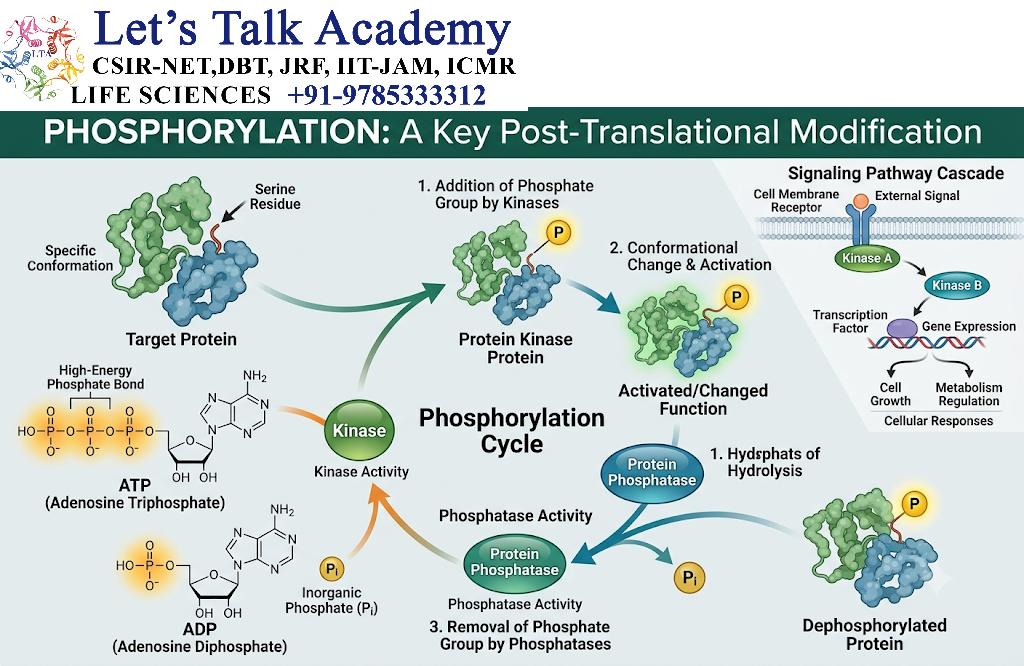
Phosphorylation is the covalent addition of a phosphate group to a protein.
It is one of the most common and important regulatory PTMs.
Phosphorylation commonly occurs on:
- serine,
- threonine,
- tyrosine.
6.2 Enzymes Involved
The enzymes that add phosphate groups are called:
Protein kinases
The enzymes that remove phosphate groups are:
Protein phosphatases
The simplified reaction is:
Protein + ATP
↓
Phosphorylated protein + ADP
6.3 Functional Significance
Phosphorylation can:
- activate an enzyme,
- inhibit an enzyme,
- alter protein localization,
- change protein conformation,
- create docking sites,
- regulate signaling pathways.
Thus:
Kinase → phosphate added
Phosphatase → phosphate removed
7. Protein Kinases
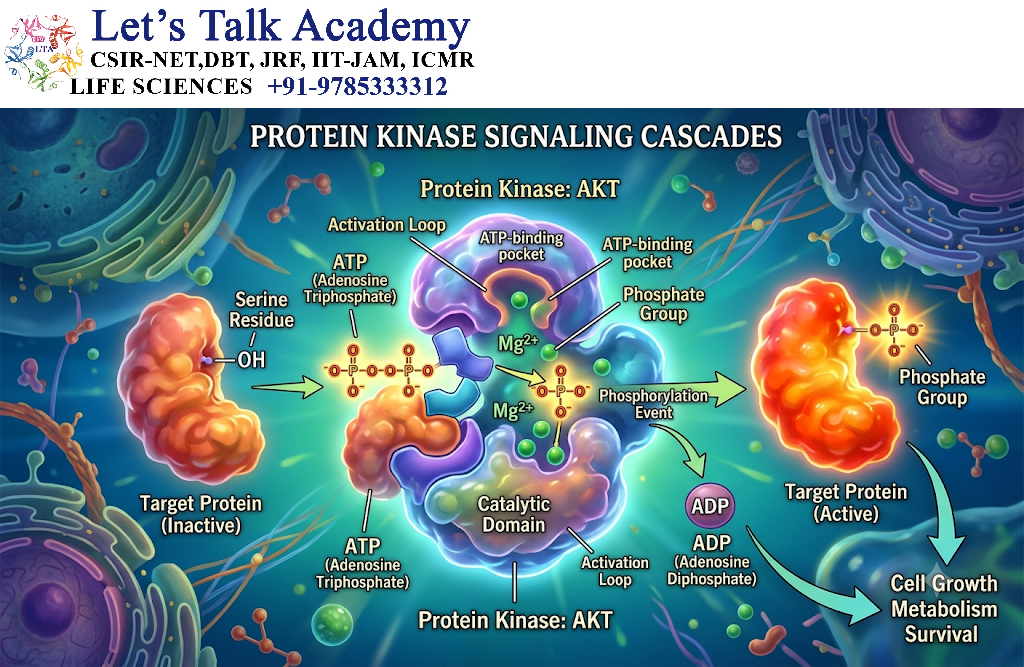
Protein kinases transfer phosphate groups from ATP to specific amino acid residues on proteins.
Major groups include:
- serine/threonine kinases,
- tyrosine kinases,
- dual-specificity kinases.
Kinases are major components of cellular signaling pathways.
8. Protein Phosphatases
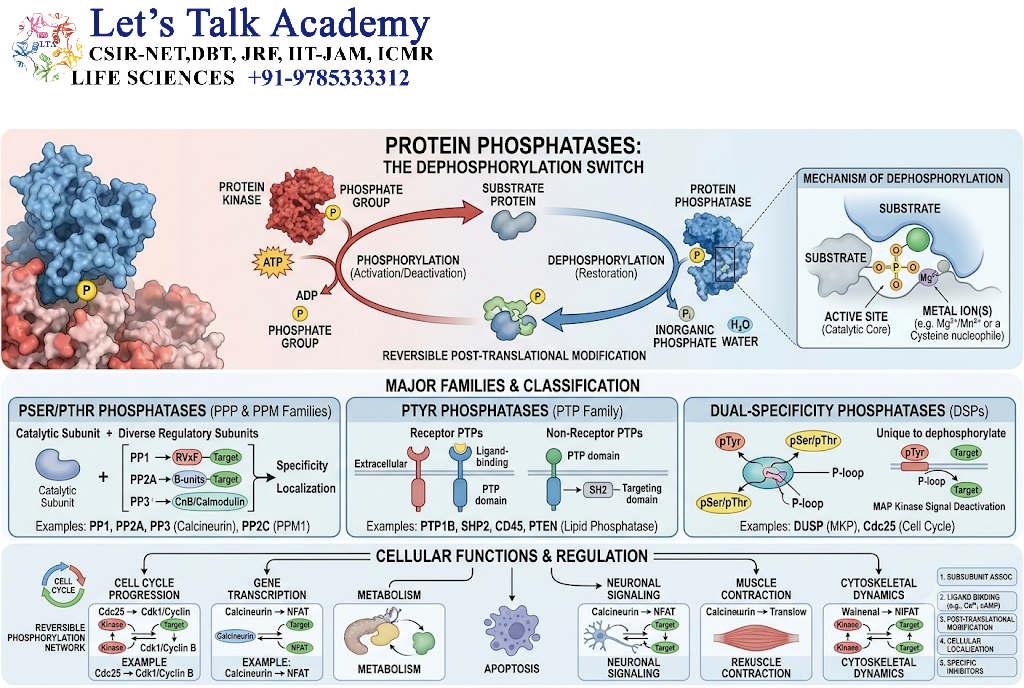
Protein phosphatases remove phosphate groups from proteins.
They help reverse the effects of phosphorylation.
Therefore, phosphorylation is often a reversible regulatory mechanism:
Kinase
↓
Protein phosphorylation
↓
Functional change
↓
Phosphatase
↓
Dephosphorylation
↓
Functional state changes again
9. Glycosylation
9.1 Definition
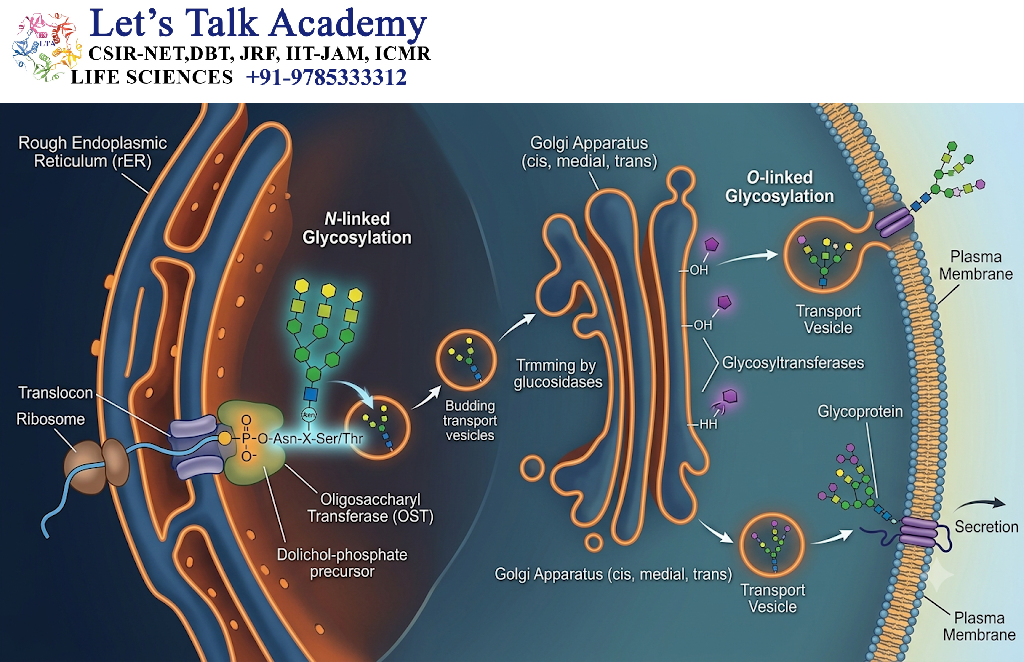
Glycosylation is the enzymatic attachment of carbohydrate groups to proteins.
It is particularly important for proteins entering the secretory pathway.
Glycosylation can influence:
- protein folding,
- stability,
- trafficking,
- cell-cell recognition,
- receptor function,
- immune recognition.
10. N-Linked Glycosylation
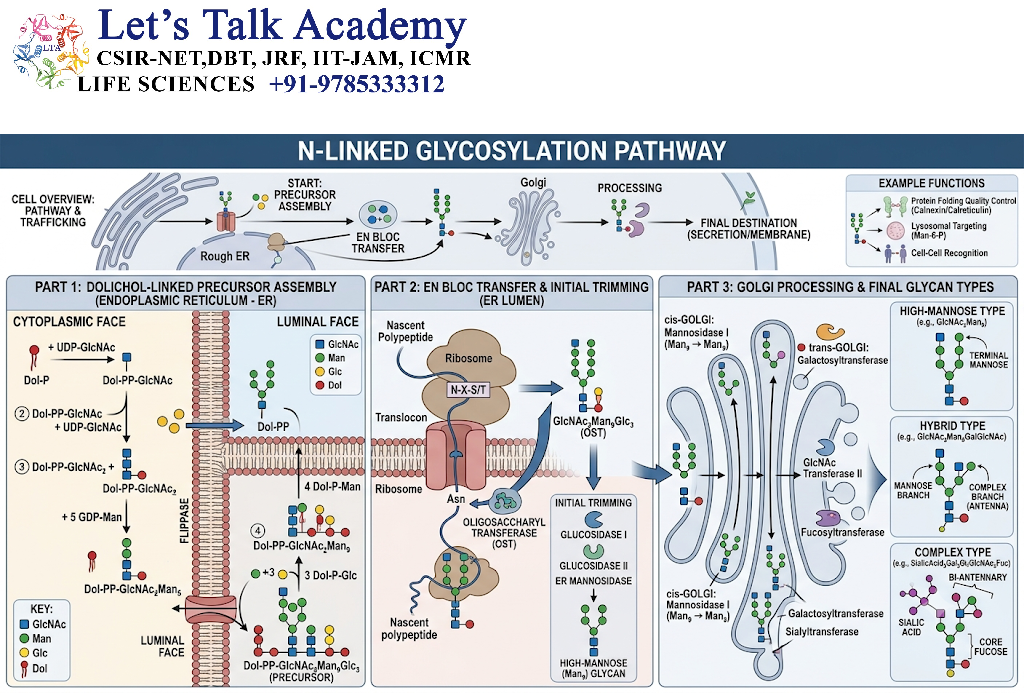
In N-linked glycosylation, carbohydrate is attached to the nitrogen atom of the side-chain amide group of asparagine.
The modification generally occurs at an:
Asn-X-Ser/Thr
sequence, where X is usually not proline.
N-linked glycosylation begins in the:
Endoplasmic reticulum
and is further processed in the:
Golgi apparatus.
11. O-Linked Glycosylation
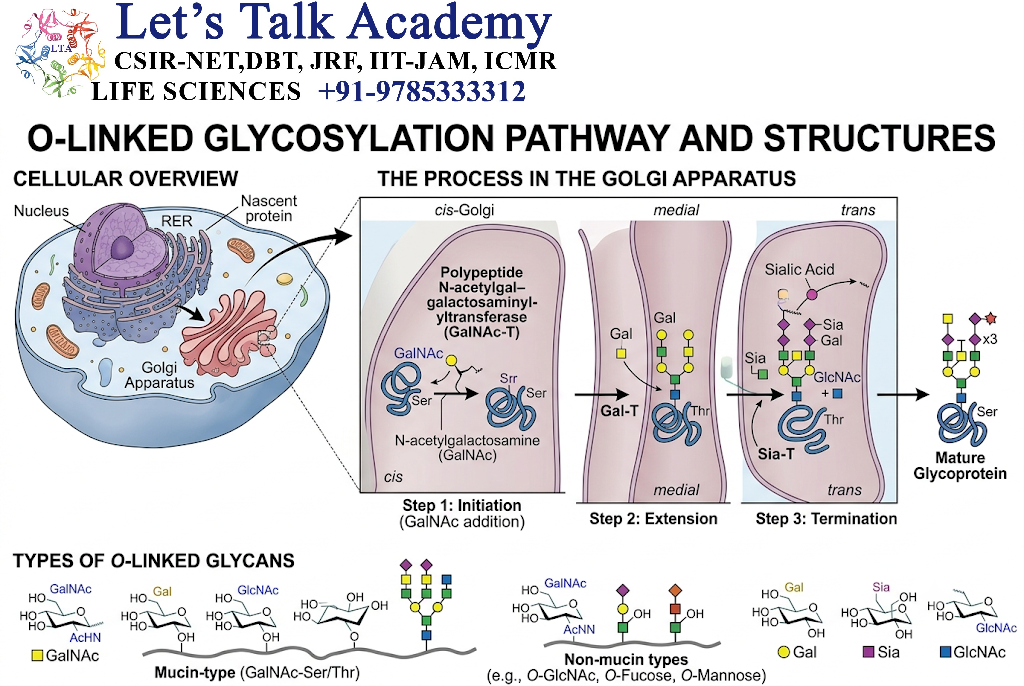
In O-linked glycosylation, carbohydrates are attached to the oxygen atom of the hydroxyl group of amino acids such as:
- serine,
- threonine.
Much O-linked glycosylation occurs in the Golgi apparatus, although some forms occur in other cellular compartments.
12. Functions of Glycosylation
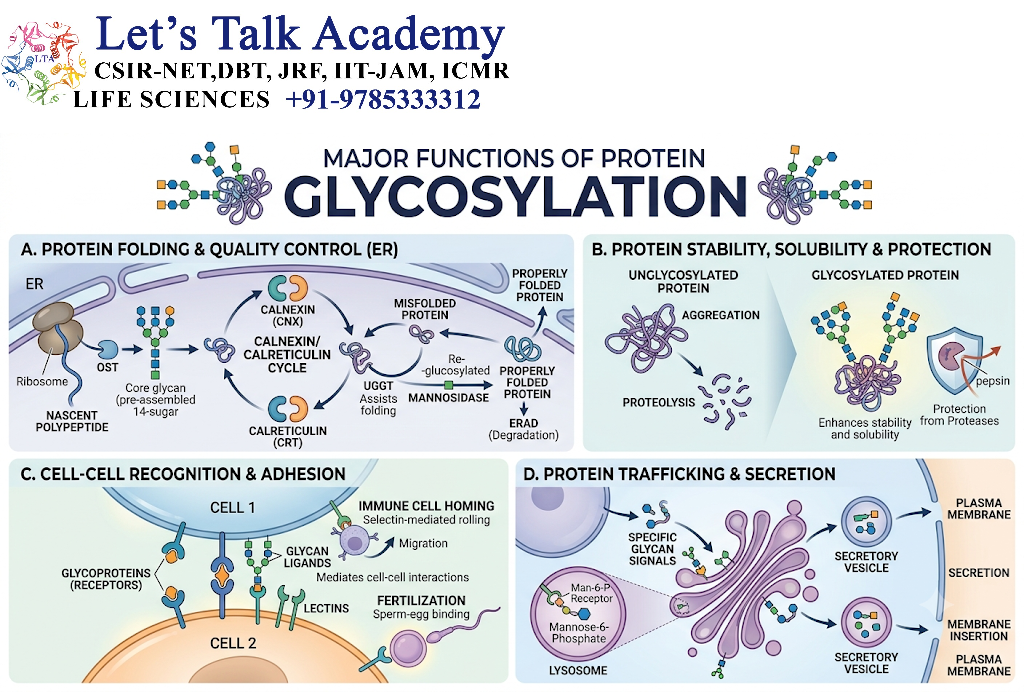
Glycosylation can:
- stabilize proteins,
- assist folding,
- protect proteins from degradation,
- regulate trafficking,
- mediate cell recognition,
- affect receptor activity,
- contribute to extracellular matrix organization.
13. Protein Folding and Chaperones
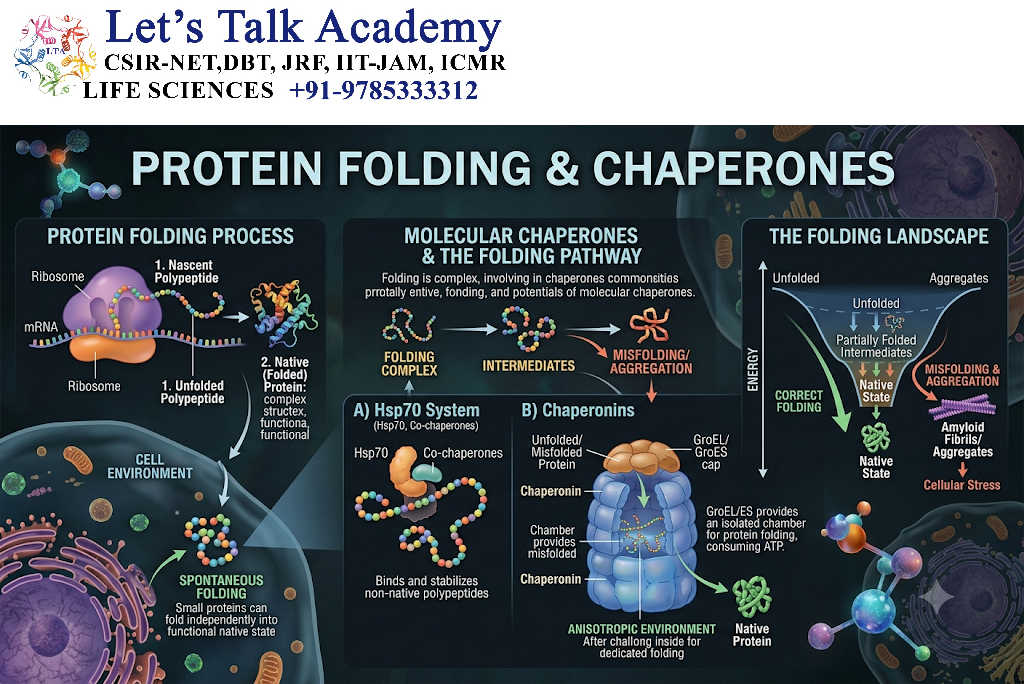
A newly synthesized protein must often fold into a specific three-dimensional structure.
Protein folding can be assisted by:
- molecular chaperones,
- chaperonins,
- folding enzymes.
Some proteins also undergo PTMs during or after folding.
Incorrect folding can lead to:
- loss of function,
- aggregation,
- cellular stress,
- degradation.
14. Disulfide-Bond Formation
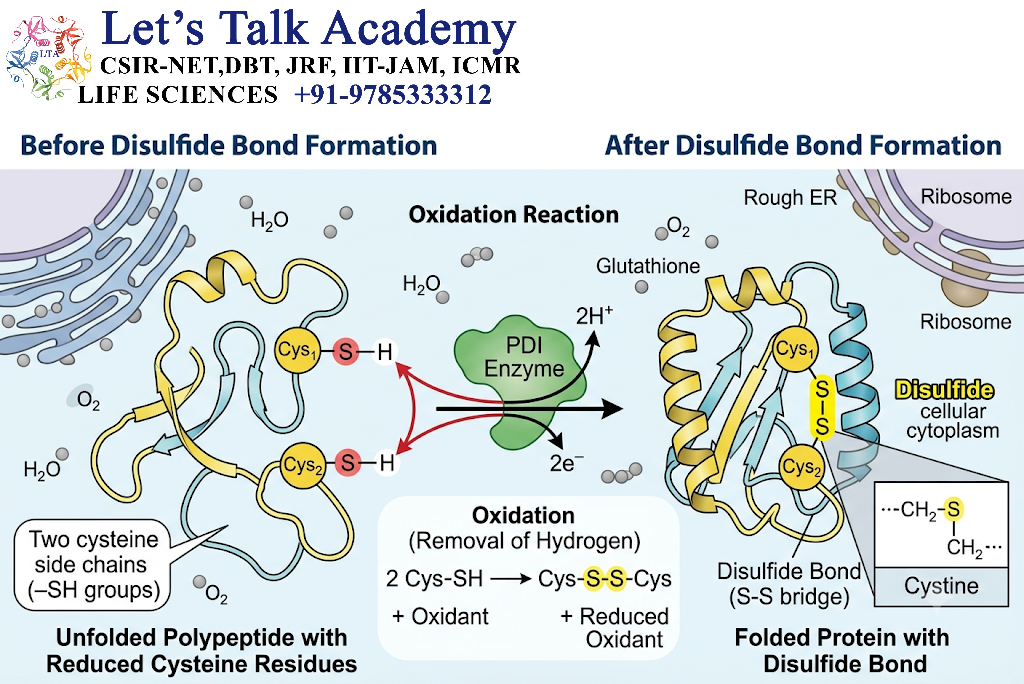
Disulfide bonds are covalent bonds formed between the sulfur-containing side chains of two cysteine residues.
The reaction is:
Cysteine-SH + HS-Cysteine
↓
Cysteine-S-S-Cysteine
These bonds help stabilize protein structure.
15. Location of Disulfide-Bond Formation
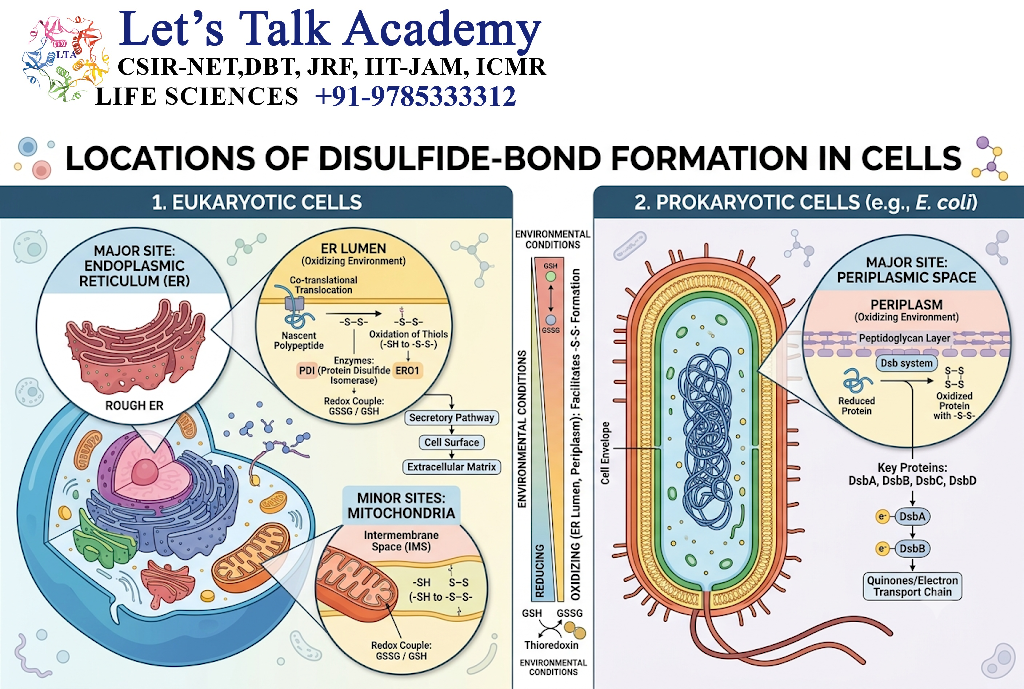
Disulfide bonds are particularly common in proteins that function:
- outside the cell,
- in the extracellular space,
- in the lumen of the ER,
- within the secretory pathway.
The oxidizing environment of the ER favors disulfide-bond formation.
16. Protein Disulfide Isomerase
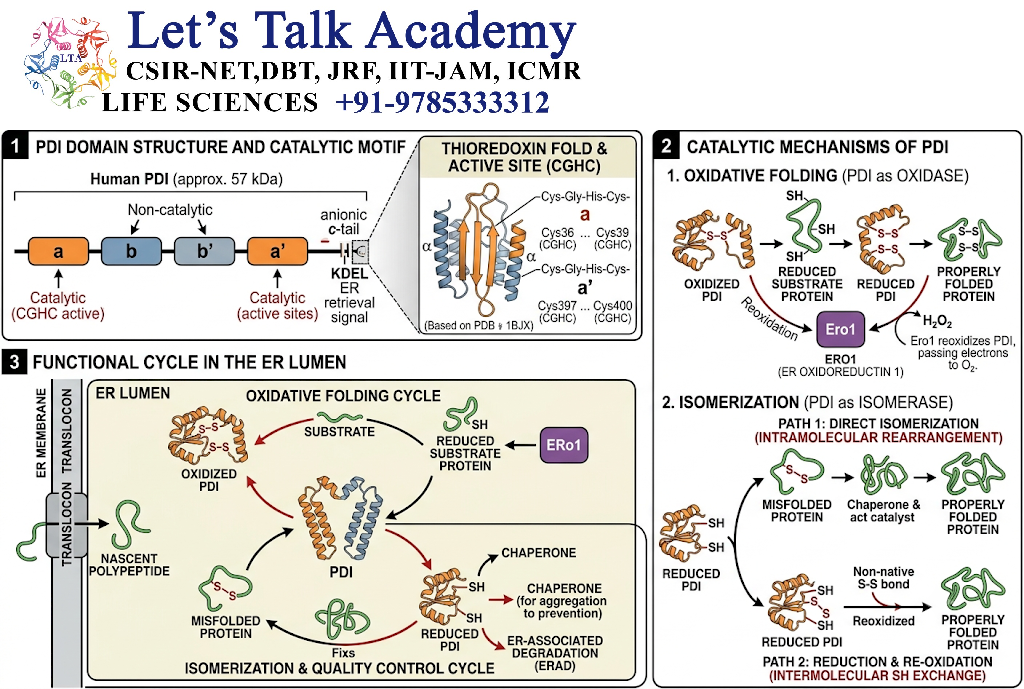
Protein disulfide isomerase (PDI) is an important ER protein involved in disulfide-bond formation and rearrangement.
It can help proteins achieve the correct disulfide-bond pattern.
17. Acetylation
17.1 Definition
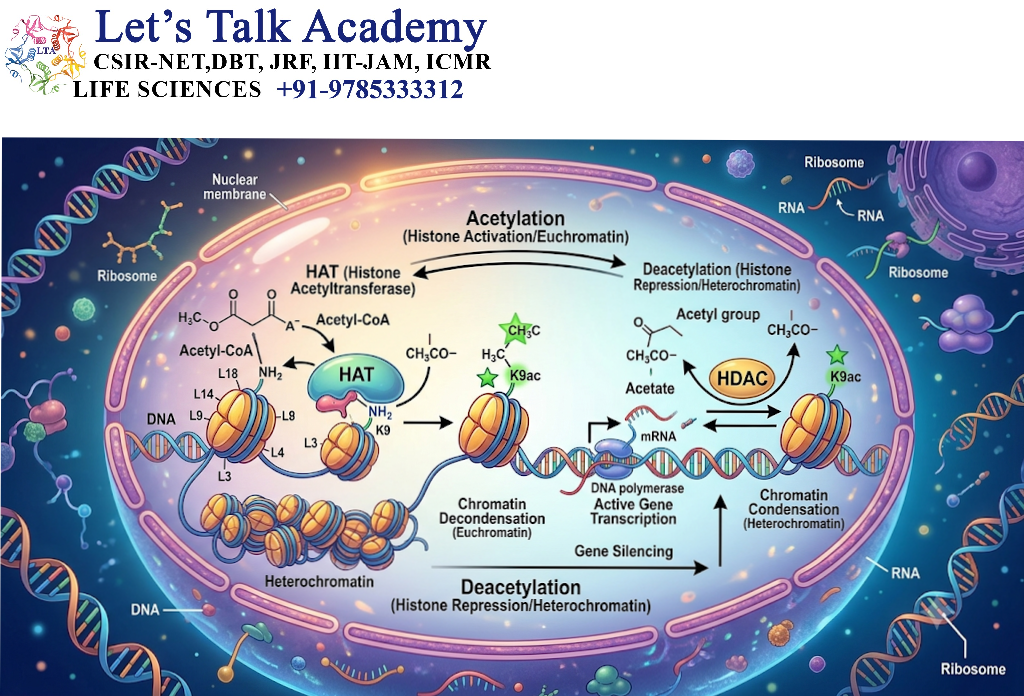
Acetylation is the addition of an acetyl group to a protein.
It commonly occurs on:
- lysine residues,
- the N-terminal amino group.
17.2 Enzymes
Acetyl groups are added by:
Acetyltransferases
They can be removed by:
Deacetylases
An important group of deacetylases is:
Histone deacetylases (HDACs)
although acetylation and deacetylation also occur on many non-histone proteins.
18. Histone Acetylation
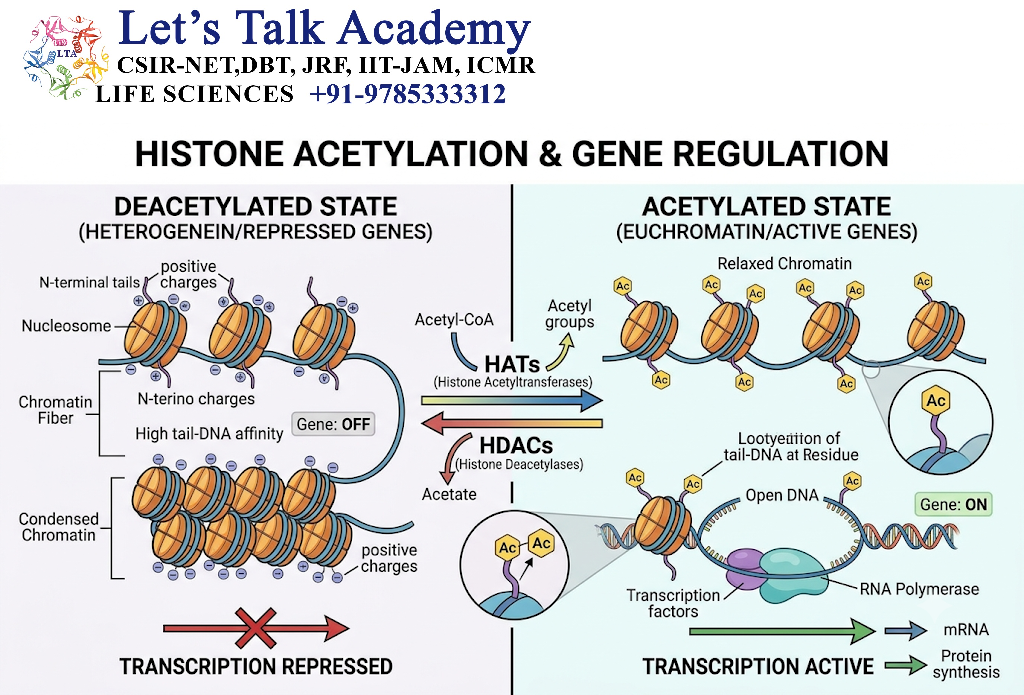
Histones are proteins associated with DNA.
Acetylation of lysine residues on histone tails can reduce their positive charge.
This can weaken interactions between histones and DNA and often promotes a more transcriptionally accessible chromatin state.
The simplified relationship is:
Histone acetylation
↓
Chromatin accessibility often increases
↓
Transcription of certain genes may increase
The actual effect depends on the specific histone residue and cellular context.
19. Protein Acetylation Beyond Histones
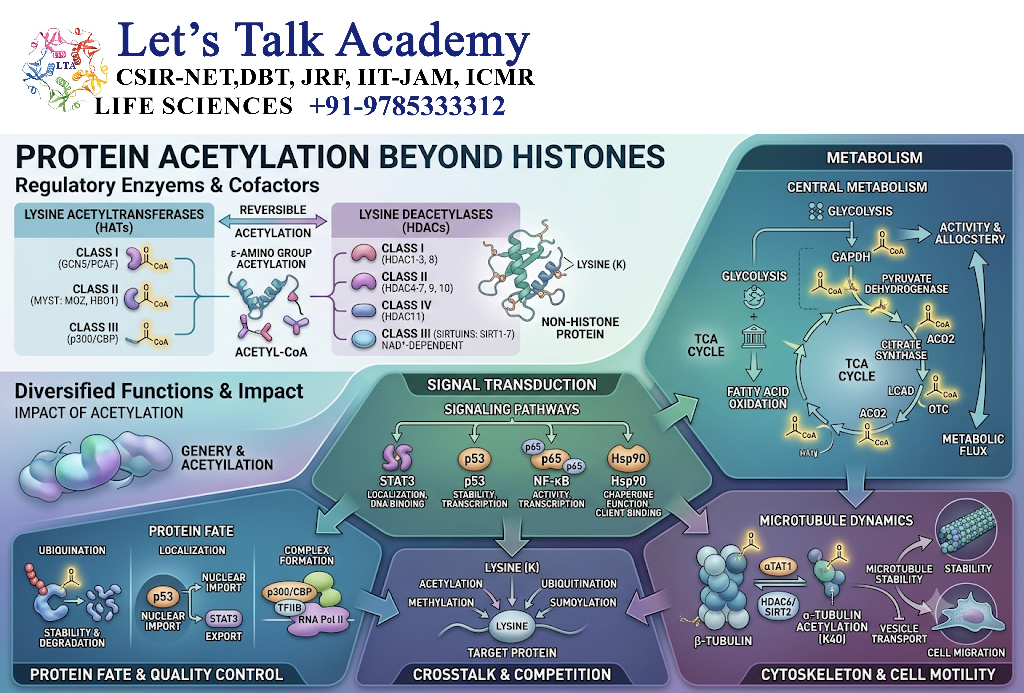
Acetylation also regulates:
- metabolic enzymes,
- transcription factors,
- cytoskeletal proteins,
- signaling proteins,
- chaperones.
Therefore, acetylation is a broad regulatory mechanism.
20. Methylation
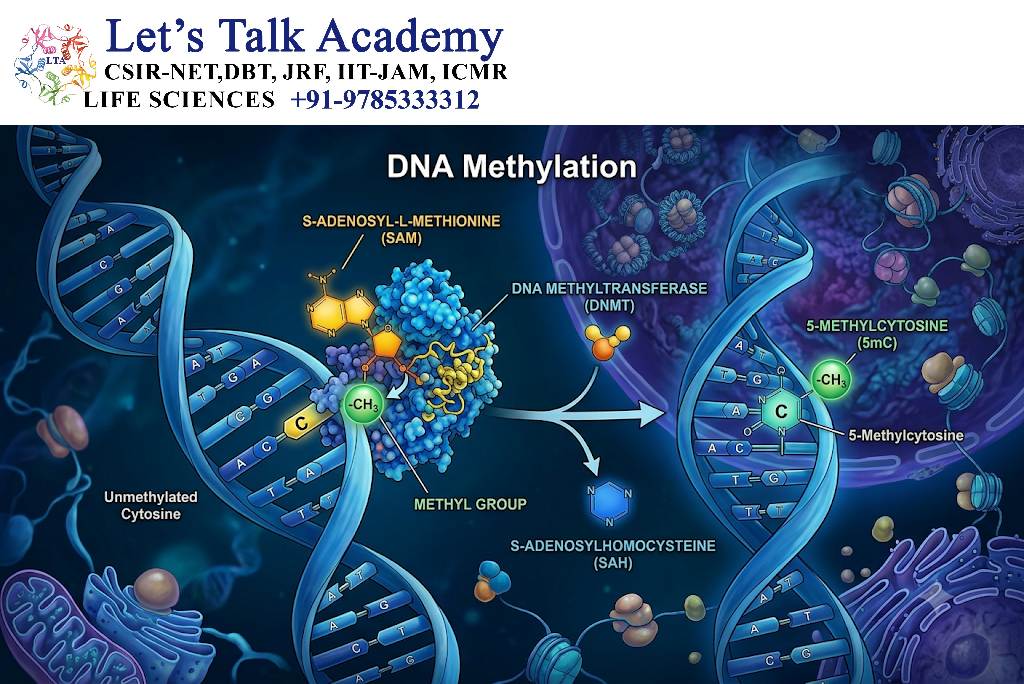
20.1 Definition
Protein methylation is the addition of methyl groups to specific amino acid residues.
It commonly occurs on:
- lysine,
- arginine.
20.2 Enzymes
Methyl groups are transferred by:
Protein methyltransferases
The methyl donor is commonly:
S-adenosylmethionine (SAM)
Methyl groups can be removed by:
Demethylases
21. Histone Methylation
Histone methylation is an important mechanism of chromatin regulation.
Depending on:
- amino acid residue,
- number of methyl groups,
- position on the histone,
methylation can be associated with:
- transcriptional activation,
- transcriptional repression,
- DNA repair,
- chromatin organization.
Therefore, histone methylation does not have one universal effect.
22. Ubiquitination
22.1 Definition
Ubiquitination is the covalent attachment of ubiquitin to a target protein.
Ubiquitin is a small regulatory protein.
Ubiquitination can regulate:
- protein degradation,
- protein localization,
- DNA repair,
- signaling,
- endocytosis.
23. Ubiquitination Machinery
Three major enzyme classes participate:
- E1 – ubiquitin-activating enzyme
- E2 – ubiquitin-conjugating enzyme
- E3 – ubiquitin ligase
The general pathway is:
Ubiquitin
↓
E1 activation
↓
E2 transfer
↓
E3-mediated substrate recognition
↓
Ubiquitin attached to target protein
24. Polyubiquitination
Multiple ubiquitin molecules can be attached to a target protein, forming a polyubiquitin chain.
Certain ubiquitin-chain configurations act as signals for:
Proteasomal degradation
The simplified pathway is:
Protein
↓
Polyubiquitin chain
↓
26S proteasome
↓
Protein degradation
25. Monoubiquitination
A single ubiquitin molecule can also be attached to a protein.
Monoubiquitination can regulate:
- endocytosis,
- membrane trafficking,
- DNA repair,
- signaling.
Therefore, ubiquitination does not always mean protein degradation.
26. Proteasomal Degradation
The 26S proteasome is a major cellular protein-degradation complex.
Proteins tagged with appropriate ubiquitin chains are recognized and degraded.
The resulting products include:
- short peptides,
- amino acids after further processing.
This system helps maintain:
Protein homeostasis
or:
Proteostasis
27. SUMOylation
27.1 Definition
SUMOylation is the covalent attachment of a Small Ubiquitin-like Modifier (SUMO) protein to a target protein.
SUMOylation can regulate:
- nuclear transport,
- transcription,
- DNA repair,
- chromatin organization,
- protein stability.
Unlike ubiquitination, SUMOylation is generally more closely associated with regulation than direct proteasomal degradation.
28. SUMOylation Enzymes
The process involves enzymes analogous to the ubiquitination system:
- activating enzyme,
- conjugating enzyme,
- ligase.
SUMO can subsequently be removed by specific proteases.
29. Lipidation
29.1 Definition
Protein lipidation is the covalent attachment of lipid groups to proteins.
It can regulate:
- membrane association,
- protein localization,
- signaling,
- protein stability.
Major forms include:
- myristoylation,
- palmitoylation,
- prenylation.
30. Myristoylation
Myristoylation involves attachment of a myristoyl group, a 14-carbon fatty acid, usually to an N-terminal glycine residue.
It can help target proteins to cellular membranes.
31. Palmitoylation
Palmitoylation commonly involves attachment of a palmitoyl group to cysteine residues through a thioester bond.
It can influence:
- membrane association,
- trafficking,
- protein stability,
- signaling.
An important feature of many palmitoylation reactions is their reversibility.
32. Prenylation
Prenylation involves attachment of isoprenoid lipid groups to proteins.
Common prenyl groups include:
- farnesyl,
- geranylgeranyl.
Prenylation is particularly important for membrane association of several signaling proteins.
33. Proteolytic Processing
33.1 Definition
Proteolytic processing is the cleavage of a protein by proteases to produce a mature or functionally active form.
It can be:
- activating,
- inactivating,
- regulatory.
34. Examples of Proteolytic Activation
Many proteins are synthesized as inactive precursors called:
Zymogens
Proteolytic cleavage converts them into active forms.
For example:
Trypsinogen
↓
Proteolytic cleavage
↓
Trypsin
This prevents premature activity inside the cells or tissues where the inactive precursor is produced.
35. Proinsulin Processing
Insulin is initially synthesized as a precursor.
The processing pathway includes:
Preproinsulin
↓
Proinsulin
↓
Proteolytic processing
↓
Insulin
Proteolytic removal of specific peptide segments produces the mature hormone.
36. Signal Peptide Removal
Proteins entering the secretory pathway may contain an N-terminal signal peptide.
After targeting to the ER, the signal peptide can be removed by a signal peptidase.
Thus:
Precursor protein
↓
Signal peptide cleavage
↓
Mature protein
37. Hydroxylation
Hydroxylation is the addition of a hydroxyl group to a protein.
It is important in several biological processes.
A well-known example occurs in:
Collagen
Specific proline and lysine residues are hydroxylated during collagen biosynthesis.
38. Vitamin C and Collagen Hydroxylation
Vitamin C is required for efficient activity of certain collagen hydroxylation enzymes.
Insufficient vitamin C can impair collagen maturation and connective-tissue integrity.
This demonstrates that PTMs can depend on cellular metabolites and nutritional factors.
39. Carboxylation
Carboxylation adds a carboxyl group to specific amino acid residues.
An important example occurs in proteins involved in:
Blood coagulation
Vitamin K-dependent carboxylation of specific glutamate residues allows these proteins to bind calcium efficiently.
40. Sulfation
Protein sulfation involves addition of sulfate groups, commonly to:
- tyrosine residues,
- carbohydrate groups.
Tyrosine sulfation can influence:
- protein-protein interactions,
- receptor-ligand recognition,
- extracellular signaling.
It commonly occurs in the secretory pathway.
41. ADP-Ribosylation
ADP-ribosylation involves attachment of an ADP-ribose group to a target protein.
It can regulate:
- DNA repair,
- chromatin,
- cellular signaling,
- stress responses.
ADP-ribosylation can occur as:
- mono-ADP-ribosylation,
- poly-ADP-ribosylation.
42. PARP Proteins
Poly(ADP-ribose) polymerases (PARPs) catalyze ADP-ribosylation reactions.
Some PARP family members become activated in response to DNA damage and contribute to DNA repair-related processes.
43. Oxidation
Proteins can undergo oxidative modifications involving amino acid side chains.
Reactive oxygen species can modify residues such as:
- cysteine,
- methionine,
- tyrosine,
- tryptophan.
Some oxidative modifications are reversible and function in signaling, whereas excessive oxidation can damage proteins.
44. Protein Oxidation and Cellular Stress
During oxidative stress:
Reactive oxygen species ↑
↓
Protein oxidation ↑
↓
Protein structure/function may change
↓
Protein quality-control systems become important
Excessive protein oxidation can contribute to cellular dysfunction.
45. Nitration
Protein nitration commonly involves modification of tyrosine residues by reactive nitrogen species.
Nitration can alter:
- enzyme activity,
- protein interactions,
- cellular signaling.
Excessive nitration can be associated with cellular stress.
46. Protein Glycation
Glycation differs from enzymatic glycosylation.
Glycosylation: generally enzyme-mediated and regulated.
Glycation: generally non-enzymatic attachment of sugars or sugar-derived compounds to proteins.
Glycation can increase under conditions of elevated glucose and can contribute to formation of advanced glycation end products (AGEs).
47. Enzymatic Versus Non-Enzymatic Modification
| Feature | Enzymatic PTM | Non-enzymatic modification |
|---|---|---|
| Enzyme required | Usually yes | Usually no |
| Regulation | Highly controlled | Often dependent on chemical conditions |
| Example | Phosphorylation | Glycation |
| Biological role | Often regulatory | Can be regulatory or damaging |
48. PTMs in the Endoplasmic Reticulum
Proteins entering the secretory pathway can undergo several modifications in the ER.
These include:
- N-linked glycosylation,
- disulfide-bond formation,
- protein folding,
- signal peptide processing.
The ER therefore acts as an important site of protein maturation.
49. PTMs in the Golgi Apparatus
The Golgi apparatus modifies and sorts many proteins.
Major processes include:
- glycan processing,
- O-linked glycosylation,
- sulfation,
- proteolytic processing in selected pathways.
The Golgi helps produce mature proteins suitable for their final cellular destination.
50. PTMs in the Cytoplasm
Many cytoplasmic proteins undergo:
- phosphorylation,
- acetylation,
- methylation,
- ubiquitination,
- SUMOylation,
- lipidation.
These modifications are important in:
- metabolism,
- signaling,
- cell-cycle regulation,
- stress responses,
- protein degradation.
51. PTMs in the Nucleus
Nuclear proteins undergo extensive modifications.
Important examples include:
- histone acetylation,
- histone methylation,
- phosphorylation,
- ubiquitination,
- SUMOylation,
- ADP-ribosylation.
These modifications regulate:
- chromatin structure,
- DNA repair,
- transcription,
- replication,
- nuclear organization.
52. PTMs and Protein Localization
A protein’s cellular location is often regulated by PTMs.
For example:
Lipidation
→ membrane association
Phosphorylation
→ can alter localization
Ubiquitination
→ can promote trafficking or degradation
SUMOylation
→ can influence nuclear localization
Therefore, PTMs act as molecular addresses or localization signals in many cellular pathways.
53. PTMs and Protein Stability
PTMs can increase or decrease protein stability.
For example:
Ubiquitination
can mark certain proteins for degradation.
Other modifications can stabilize proteins by:
- preventing degradation,
- promoting proper folding,
- altering protein interactions.
54. PTMs and Enzyme Activity
Many enzymes are regulated by PTMs.
For example:
Phosphorylation
can change an enzyme between:
- active state,
- inactive state.
This allows cells to rapidly regulate metabolic pathways.
55. PTMs and Cell Signaling
Cell signaling depends heavily on phosphorylation and other PTMs.
A simplified signaling pathway is:
External signal
↓
Receptor activation
↓
Protein kinase activation
↓
Protein phosphorylation
↓
Signal propagation
↓
Cellular response
Phosphatases can subsequently reverse many phosphorylation events.
56. Protein Kinase Cascades
Signaling pathways often involve sequential activation of kinases.
For example:
Kinase 1
↓
activates
Kinase 2
↓
activates
Kinase 3
↓
Target protein phosphorylation
This creates signal amplification and allows precise regulation.
57. PTMs and Cell-Cycle Regulation
Cell-cycle progression depends on precise regulation of many proteins.
PTMs such as:
- phosphorylation,
- ubiquitination,
- SUMOylation,
help regulate:
- cyclins,
- cyclin-dependent kinases,
- checkpoint proteins,
- DNA replication proteins.
Ubiquitin-mediated degradation is particularly important for the timed removal of cell-cycle regulators.
58. PTMs and Apoptosis
Programmed cell death involves extensive protein regulation.
Important modifications include:
- phosphorylation,
- ubiquitination,
- proteolytic cleavage.
Caspases are synthesized as inactive precursors called procaspases.
Proteolytic activation converts them into active caspases.
Thus:
Procaspase
↓
Proteolytic cleavage
↓
Active caspase
↓
Apoptotic signaling
59. PTMs and Protein Degradation
Protein degradation is essential for maintaining protein homeostasis.
The ubiquitin-proteasome system is one of the major degradation pathways.
The basic mechanism is:
Target protein
↓
Ubiquitination
↓
Recognition by proteasome
↓
Unfolding
↓
Proteolysis
↓
Peptides
60. Autophagy and Protein Regulation
Some proteins and protein complexes are degraded through autophagy-related pathways.
Autophagy can help remove:
- protein aggregates,
- damaged organelles,
- large protein complexes.
Thus, PTMs and protein degradation systems work together to maintain cellular homeostasis.
61. PTMs and Protein Folding
Protein folding and PTMs are closely connected.
A protein may require:
- cleavage,
- glycosylation,
- disulfide-bond formation,
- chaperone-assisted folding,
before becoming fully functional.
Incorrect modification or folding can result in:
Misfolded protein
↓
Aggregation or degradation
↓
Cellular stress
62. PTM Crosstalk
A single protein can contain multiple modifications.
These modifications may interact with one another.
For example:
- phosphorylation can influence ubiquitination,
- acetylation can influence protein stability,
- methylation can affect phosphorylation,
- glycosylation can influence protein folding.
This interaction is known as:
PTM crosstalk
63. PTM Combinations and Protein Function
Consider a hypothetical protein:
Protein
↓
Phosphorylation
↓
Acetylation
↓
Ubiquitination
↓
Change in activity
↓
Change in localization
↓
Change in stability
Therefore, the functional state of a protein can depend on the combination and timing of multiple PTMs.
64. PTMs and Protein Isoforms
Different PTM patterns can produce different functional forms of the same protein.
For example:
Same amino acid sequence
↓
Different phosphorylation pattern
↓
Different activity
Therefore, PTMs increase the functional diversity of the proteome.
65. Proteome Complexity
The genome contains a finite number of genes, but the number of functional protein forms can be much larger.
This complexity arises from:
- alternative splicing,
- alternative translation,
- PTMs,
- proteolytic processing,
- protein-protein interactions.
Thus:
Genome → Transcriptome → Proteome
and PTMs add another major layer of proteomic diversity.
66. Dynamic Nature of PTMs
Many PTMs are dynamic.
A protein can switch between modified and unmodified states.
For example:
Protein
↓
Phosphorylation
↓
Active state
↓
Dephosphorylation
↓
Inactive state
This allows rapid cellular responses.
67. PTMs and Cellular Communication
PTMs provide a molecular language through which cells regulate protein behavior.
For example:
Phosphate group
→ activity/localization signal
Ubiquitin
→ degradation or trafficking signal
SUMO
→ regulatory/nuclear signal
Lipid
→ membrane-targeting signal
Carbohydrate
→ folding/stability/recognition signal
68. PTMs and Disease
Abnormal PTMs can contribute to disease.
Examples include abnormalities in:
- phosphorylation,
- glycosylation,
- ubiquitination,
- protein folding,
- acetylation.
Such abnormalities can affect:
- signaling,
- metabolism,
- cell division,
- protein degradation,
- neuronal function.
69. Abnormal Phosphorylation
Abnormal kinase or phosphatase activity can disrupt signaling.
Excessive or inappropriate phosphorylation can contribute to:
- uncontrolled cell proliferation,
- abnormal signaling,
- metabolic disorders.
Kinases and phosphatases are therefore important targets in biomedical research.
70. Abnormal Glycosylation
Defects in glycosylation can alter:
- protein folding,
- trafficking,
- stability,
- cell recognition.
Inherited disorders affecting glycosylation pathways are collectively called:
Congenital disorders of glycosylation
71. Abnormal Protein Folding
If proteins fail to fold correctly, they may aggregate.
Protein misfolding and aggregation are associated with several diseases, particularly some neurodegenerative disorders.
Cells therefore use:
- chaperones,
- ubiquitin-proteasome systems,
- autophagy,
to maintain protein quality.
72. PTMs and Cancer
Cancer cells frequently show altered regulation of PTMs.
Examples include abnormal:
- kinase signaling,
- phosphorylation,
- ubiquitination,
- acetylation.
These changes can influence:
- cell proliferation,
- survival,
- metabolism,
- DNA repair,
- apoptosis.
73. PTMs and Metabolism
Metabolic enzymes can be regulated by:
- phosphorylation,
- acetylation,
- ubiquitination,
- other modifications.
This allows cells to adjust metabolic pathways according to:
- nutrient availability,
- energy status,
- hormonal signals.
74. PTMs and Epigenetic Regulation
Histone PTMs are important regulators of chromatin.
Important modifications include:
- acetylation,
- methylation,
- phosphorylation,
- ubiquitination.
These modifications can influence chromatin structure and recruitment of regulatory proteins.
75. Histone Code Concept
The combination of histone modifications can influence how chromatin is interpreted by cellular machinery.
This concept is commonly referred to as the:
Histone code
Different combinations of modifications can contribute to different chromatin states and gene-expression patterns.
76. Protein Maturation
Protein maturation can involve multiple sequential steps.
For example:
Nascent polypeptide
↓
Folding
↓
Cleavage
↓
Glycosylation
↓
Disulfide-bond formation
↓
Final mature protein
The exact pathway depends on the protein.
77. PTM Enzymes
Different classes of enzymes catalyze different modifications.
| Enzyme | Major function |
|---|---|
| Kinase | Adds phosphate |
| Phosphatase | Removes phosphate |
| Acetyltransferase | Adds acetyl group |
| Deacetylase | Removes acetyl group |
| Methyltransferase | Adds methyl group |
| Demethylase | Removes methyl group |
| Ubiquitin-activating enzyme | Activates ubiquitin |
| Ubiquitin-conjugating enzyme | Transfers ubiquitin |
| Ubiquitin ligase | Promotes substrate ubiquitination |
| Protease | Cleaves proteins |
| Glycosyltransferase | Transfers carbohydrate groups |
| Sulfotransferase | Adds sulfate groups |
| Hydroxylase | Adds hydroxyl groups |
78. Major PTMs and Their Functions
| Modification | Common target | Major function |
|---|---|---|
| Phosphorylation | Ser, Thr, Tyr | Signaling and activity control |
| Acetylation | Lys, N-terminus | Regulation and chromatin control |
| Methylation | Lys, Arg | Chromatin and protein regulation |
| Glycosylation | Asn, Ser, Thr | Folding, stability, recognition |
| Ubiquitination | Lys | Degradation and signaling |
| SUMOylation | Lys | Nuclear regulation and signaling |
| Myristoylation | N-terminal Gly | Membrane association |
| Palmitoylation | Cys | Membrane association |
| Prenylation | C-terminal Cys-containing motifs | Membrane targeting |
| Hydroxylation | Pro, Lys and others | Structural maturation |
| Carboxylation | Glu | Calcium binding |
| Sulfation | Tyr or glycans | Molecular recognition |
| ADP-ribosylation | Various residues | Signaling and DNA repair |
| Proteolytic cleavage | Specific peptide bonds | Protein activation/maturation |
| Disulfide formation | Cys | Structural stabilization |
79. Comparison of Major PTMs
79.1 Phosphorylation
Main role: Rapid regulation
Reversible: Yes
Major enzymes: Kinases and phosphatases
79.2 Glycosylation
Main role: Folding, stability, trafficking and recognition
Reversible: Depends on modification
Major location: ER and Golgi
79.3 Ubiquitination
Main role: Degradation and signaling
Reversible: Often yes
Major machinery: E1, E2, E3
79.4 Acetylation
Main role: Regulation of proteins and chromatin
Reversible: Often yes
Major enzymes: Acetyltransferases and deacetylases
79.5 Methylation
Main role: Regulation of proteins and chromatin
Reversible: Often yes
Major enzymes: Methyltransferases and demethylases
80. Reversible and Irreversible PTMs
| Type | Examples |
|---|---|
| Reversible | Phosphorylation, acetylation, methylation, many ubiquitination events |
| Often reversible | Palmitoylation, SUMOylation |
| Generally irreversible | Proteolytic cleavage |
| Structural | Disulfide-bond formation |
| Potentially damaging | Oxidation, glycation |
81. PTM and Cellular Compartment
| Cellular compartment | Important PTMs |
|---|---|
| Cytoplasm | Phosphorylation, acetylation, ubiquitination |
| Nucleus | Histone acetylation, methylation, phosphorylation, SUMOylation |
| ER | N-glycosylation, disulfide bonds |
| Golgi | Glycan processing, O-glycosylation, sulfation |
| Extracellular space | Disulfide bonds, glycosylation |
| Mitochondria | Phosphorylation, acetylation and other modifications |
82. PTM Detection and Study
Modern molecular biology uses several methods to identify and study PTMs.
Important approaches include:
- mass spectrometry,
- Western blotting with modification-specific antibodies,
- immunoprecipitation,
- chromatography,
- protein sequencing,
- fluorescence-based methods,
- structural biology.
Mass spectrometry is particularly powerful for identifying and mapping many types of PTMs.
83. Phosphoproteomics
Phosphoproteomics is the large-scale study of protein phosphorylation.
It can identify:
- phosphorylated proteins,
- phosphorylation sites,
- changes in phosphorylation under different conditions.
This helps researchers understand cellular signaling networks.
84. Glycoproteomics
Glycoproteomics studies glycosylated proteins and their attached glycans.
It is useful for understanding:
- protein maturation,
- cell recognition,
- disease-associated glycosylation changes.
85. Ubiquitinomics
Large-scale analysis of ubiquitination helps identify:
- ubiquitinated proteins,
- ubiquitination sites,
- degradation pathways,
- signaling networks.
This is important for understanding protein turnover and cellular regulation.
86. PTM Crosstalk and Signaling Networks
Cellular signaling is not controlled by one PTM alone.
A protein may receive:
Phosphorylation
↓
followed by
Ubiquitination
↓
leading to
Protein degradation
This creates a regulatory sequence in which one PTM can determine whether another modification occurs.
87. PTMs and Protein Half-Life
Protein half-life refers to the time required for the amount of a protein to decrease by half.
PTMs can strongly influence protein half-life.
For example:
Ubiquitination
↓
Proteasomal targeting
↓
Protein half-life decreases
Other modifications may stabilize proteins and increase their lifetime.
88. PTMs and Protein Localization
PTMs can change the cellular destination of proteins.
For example:
Lipidation
→ membrane association
Phosphorylation
→ may expose or hide localization signals
Ubiquitination
→ trafficking or degradation
SUMOylation
→ nuclear organization
Thus, PTMs help determine where proteins function.
89. PTMs and Protein-Protein Interaction
PTMs can create or eliminate binding sites for other proteins.
For example, phosphorylation can generate a recognition site for proteins containing specific phospho-binding domains.
Therefore:
PTM
↓
Recognition by regulatory protein
↓
Protein-protein interaction
↓
Cellular response


