
1. Introduction
Uncontrolled cell growth is one of the fundamental biological features of cancer. In normal tissues, cell proliferation is tightly regulated by growth factors, cell-cycle checkpoints, DNA-damage responses, cell–cell interactions, extracellular matrix signals, and programmed cell death. These mechanisms ensure that cells divide when required, perform their specialized functions, and are removed when they become damaged or unnecessary.
Cancer develops when genetic and epigenetic alterations disrupt these regulatory systems. As a consequence, abnormal cells may continue to proliferate despite the absence of appropriate growth signals, evade cell death, accumulate additional molecular alterations, invade surrounding tissues, and eventually spread to distant organs.
Therapeutic intervention aims to interfere with one or more of these processes. Depending on the type and stage of cancer, treatment may attempt to remove the tumor, destroy malignant cells, inhibit their proliferation, activate the immune system, block essential signaling pathways, deprive hormone-dependent tumors of growth signals, or modify the tumor microenvironment.
Modern cancer treatment is therefore not based on a single mechanism. Different approaches act at different biological levels, from DNA and cell-cycle machinery to signaling pathways, immune responses, blood vessels, and the surrounding tissue environment.
2. Biological Basis of Uncontrolled Cell Growth
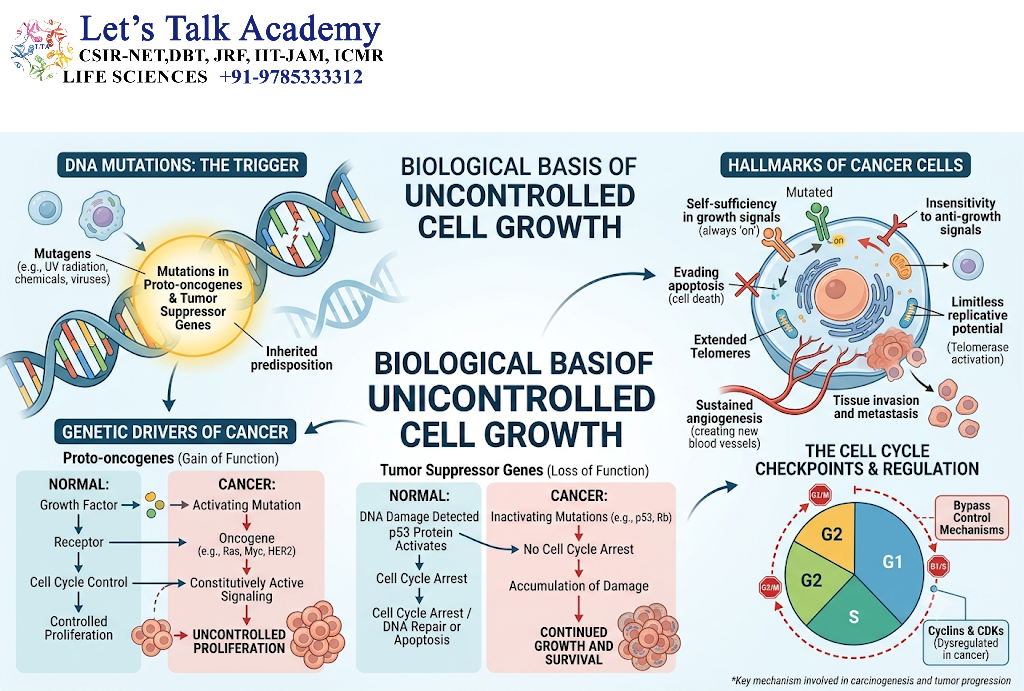
2.1 Normal Regulation of Cell Proliferation
Cell proliferation is normally controlled by a balance between signals that stimulate and inhibit cell division.
Important regulatory components include:
- Growth factors
- Cell-surface receptors
- Intracellular signaling pathways
- Cyclins
- Cyclin-dependent kinases
- Tumor suppressor proteins
- DNA-repair systems
- Apoptotic pathways
- Cell-adhesion mechanisms
- Extracellular matrix signals
A normal cell does not simply enter the cell cycle whenever nutrients are available. It must receive appropriate signals and successfully pass several regulatory checkpoints.
The major phases of the cell cycle are:
G1 → S → G2 → M
where:
- G1 phase involves cellular growth and preparation for DNA replication.
- S phase involves DNA replication.
- G2 phase involves preparation for mitosis and checking DNA integrity.
- M phase involves chromosome segregation and cell division.
Cells may also enter G0, a quiescent state in which they are metabolically active but not actively progressing through the cell cycle.
2.2 Cell-Cycle Checkpoints
Cell-cycle checkpoints prevent damaged or incompletely replicated DNA from being passed to daughter cells.
Important checkpoints include:
G1/S checkpoint
This checkpoint determines whether the cell should proceed toward DNA replication.
G2/M checkpoint
This checkpoint ensures that DNA replication has been completed and that major DNA damage has been repaired before mitosis begins.
Spindle checkpoint
During mitosis, this checkpoint ensures that chromosomes are correctly attached to the mitotic spindle before chromosome separation.
Failure of these checkpoints can allow genetically abnormal cells to continue dividing.
3. Molecular Basis of Cancer Development
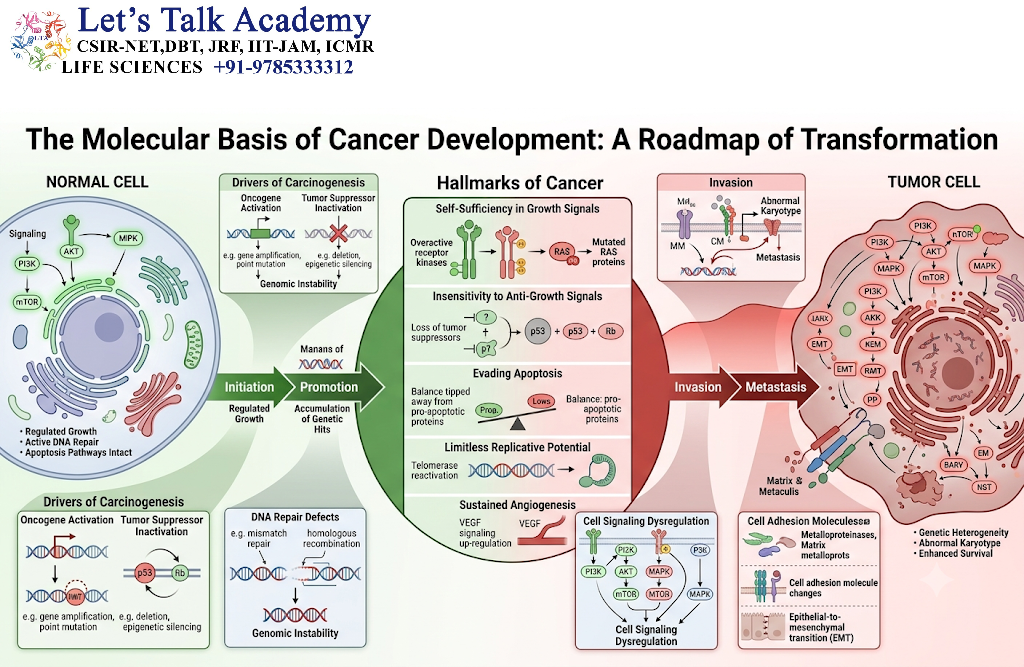
3.1 Proto-Oncogenes and Oncogenes
Proto-oncogenes are normal genes involved in cellular growth, survival, and proliferation.
When activated abnormally through mutation, amplification, rearrangement, or other mechanisms, proto-oncogenes can become oncogenes.
Examples include genes associated with:
- RAS signaling
- MYC regulation
- Growth-factor receptors
- Intracellular kinases
An activated oncogene can generate persistent proliferative signaling.
3.2 Tumor-Suppressor Genes
Tumor-suppressor genes normally restrict inappropriate cell proliferation or promote cellular responses such as apoptosis and senescence.
Important tumor suppressor pathways include:
- TP53
- RB
- PTEN
- APC
Loss or inactivation of tumor-suppressor functions can remove important barriers to uncontrolled proliferation.
3.3 DNA Damage and Genomic Instability
DNA damage occurs continuously because of endogenous metabolic processes and environmental factors.
Normal cells possess DNA-repair systems that detect and correct many forms of damage.
Cancer cells may acquire defects in these systems, leading to:
- Mutation accumulation
- Chromosomal abnormalities
- Genomic instability
- Altered signaling
- Increased tumor heterogeneity
These changes can affect both the development of cancer and its response to treatment.
4. Principles of Therapeutic Intervention
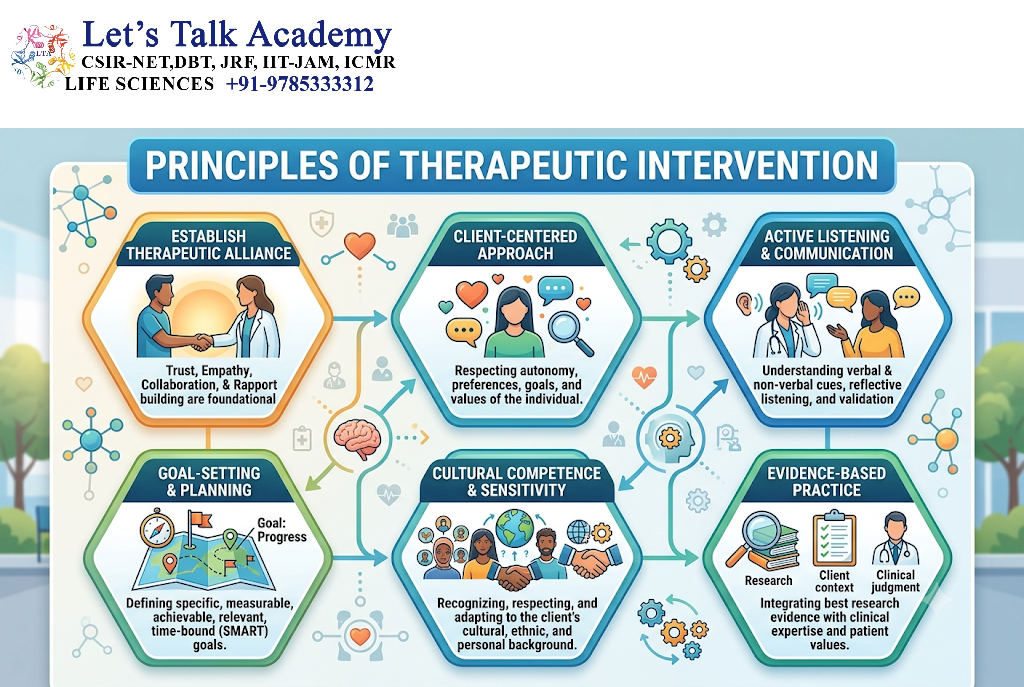
Cancer treatment can interfere with uncontrolled growth at several levels.
A simplified model is:
Abnormal proliferation
↓
Therapeutic intervention
↓
Inhibition of proliferation / induction of cell death / immune elimination / tumor removal
↓
Reduction or control of tumor burden
Therapeutic approaches can therefore be grouped according to their principal targets.
4.1 Removing the Tumor
Surgery
4.2 Damaging Cancer-Cell DNA
Radiation therapy and several forms of chemotherapy
4.3 Blocking Rapidly Dividing Cells
Cytotoxic chemotherapy
4.4 Blocking Specific Molecular Abnormalities
Targeted therapy
4.5 Activating Antitumor Immunity
Immunotherapy
4.6 Blocking Hormonal Stimulation
Endocrine or hormone therapy
4.7 Blocking Tumor Blood-Supply Signaling
Anti-angiogenic therapy
In practice, these approaches are frequently combined rather than used independently.
5. Surgical Intervention
5.1 Principle of Surgery
Surgery is a local treatment in which malignant tissue is physically removed.
It is particularly important for many solid tumors that are localized to a region of the body.
The basic principle is:
Tumor localization → surgical removal → pathological examination → assessment of surrounding tissue and margins
Surgery is often combined with systemic or local treatments because microscopic cancer cells may remain after removal of the visible tumor.
5.2 Curative Surgery
When a tumor is localized and technically removable, surgery may aim to remove all detectable malignant tissue.
The amount of tissue removed depends on:
- Tumor size
- Tumor location
- Invasion into surrounding structures
- Anatomical considerations
- Biological characteristics of the tumor
5.3 Debulking Surgery
Sometimes complete removal is not possible or would cause unacceptable damage to an essential organ.
In such circumstances, a surgeon may remove as much tumor as safely possible.
This is called debulking.
Removing part of a tumor can sometimes reduce tumor burden and allow other treatments to work more effectively.
5.4 Palliative Surgery
Surgery may also be used to relieve symptoms caused by a tumor.
For example, a tumor may cause:
- Obstruction
- Bleeding
- Pressure
- Pain
- Impaired organ function
In such circumstances, the purpose of surgery may be symptom control rather than complete tumor elimination.
6. Radiation Therapy
6.1 Basic Principle
Radiation therapy uses high-energy radiation to damage cellular DNA.
Cancer cells that accumulate DNA damage beyond their capacity for repair may stop dividing or die.
The central principle can be represented as:
Radiation → DNA damage → defective replication / cell-cycle arrest / cell death
6.2 Direct and Indirect DNA Damage
Radiation can damage DNA directly.
It can also interact with water molecules, generating reactive species that subsequently damage:
- DNA
- Proteins
- Membranes
Because cells differ in their ability to repair DNA damage, radiation sensitivity varies among tissues and tumors.
6.3 External-Beam Radiation
External-beam radiation delivers radiation from a source outside the body.
Modern radiation planning attempts to deliver an effective dose to the tumor while minimizing exposure of nearby normal tissues.
6.4 Brachytherapy
Brachytherapy involves placing a radioactive source in or near the tumor.
This allows radiation to be delivered relatively close to the target tissue.
6.5 Systemic Radiopharmaceutical Approaches
Some radioactive agents are linked to molecules that preferentially reach particular tumor cells or tissues.
These approaches can provide a mechanism for delivering radiation systemically.
7. Chemotherapy
7.1 Definition
Chemotherapy involves the use of anticancer drugs to kill cancer cells or inhibit their growth.
Because many conventional chemotherapeutic drugs act preferentially on rapidly dividing cells, they can also affect normal tissues that naturally undergo rapid proliferation.
7.2 Cell-Cycle-Specific Drugs
Some drugs act primarily during particular stages of the cell cycle.
For example, drugs may interfere with:
- DNA synthesis
- DNA replication
- Mitotic spindle formation
- Chromosome segregation
Their effectiveness can therefore depend on the proportion of tumor cells actively progressing through the relevant cell-cycle phase.
7.3 Cell-Cycle-Nonspecific Drugs
Other agents can damage cells across several phases of the cell cycle.
Their effects may depend more strongly on:
- Drug concentration
- Duration of exposure
- Cellular repair capacity
- Tumor-cell sensitivity
8. Major Classes of Cytotoxic Chemotherapeutic Agents
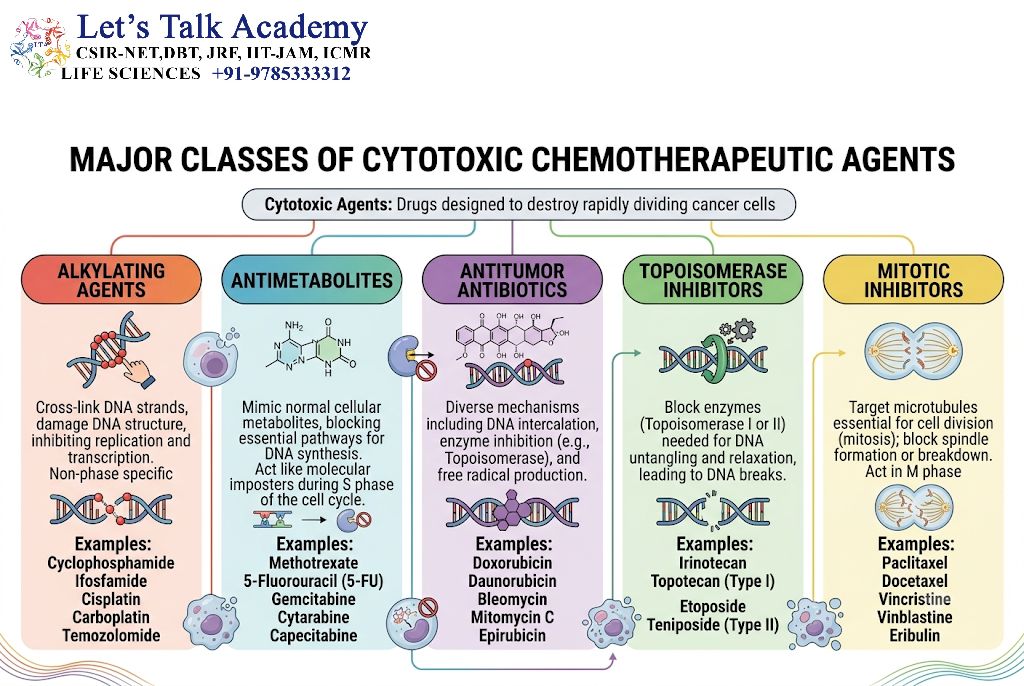
8.1 Alkylating Agents
Alkylating agents damage DNA by forming covalent modifications.
These modifications can:
- Alter DNA structure
- Interfere with replication
- Cause DNA cross-links
- Generate replication stress
If damage becomes excessive, cells may undergo apoptosis or other forms of cell death.
8.2 Platinum-Based Agents
Platinum compounds form DNA adducts and cross-links.
These lesions interfere with:
- DNA replication
- Transcription
- Genome integrity
Cells respond by activating DNA-damage signaling and repair mechanisms.
When damage exceeds repair capacity, cell death can occur.
8.3 Antimetabolites
Antimetabolites interfere with metabolic pathways required for nucleotide synthesis or DNA replication.
They may resemble normal cellular metabolites but disrupt biochemical reactions when incorporated into metabolic pathways.
Their principal effects include:
- Reduced nucleotide availability
- Inhibition of DNA synthesis
- Impaired RNA synthesis
- Replication stress
8.4 Microtubule-Targeting Agents
Microtubules are essential for mitotic spindle formation.
Drugs that interfere with microtubule dynamics can disrupt chromosome segregation.
This may activate the spindle checkpoint and lead to prolonged mitotic arrest followed by cell death.
8.5 Topoisomerase Inhibitors
Topoisomerases regulate DNA topology during replication and transcription.
Inhibiting these enzymes can produce DNA breaks or interfere with their repair.
Accumulation of DNA damage can eventually trigger cell death.
9. Apoptosis as a Therapeutic Target
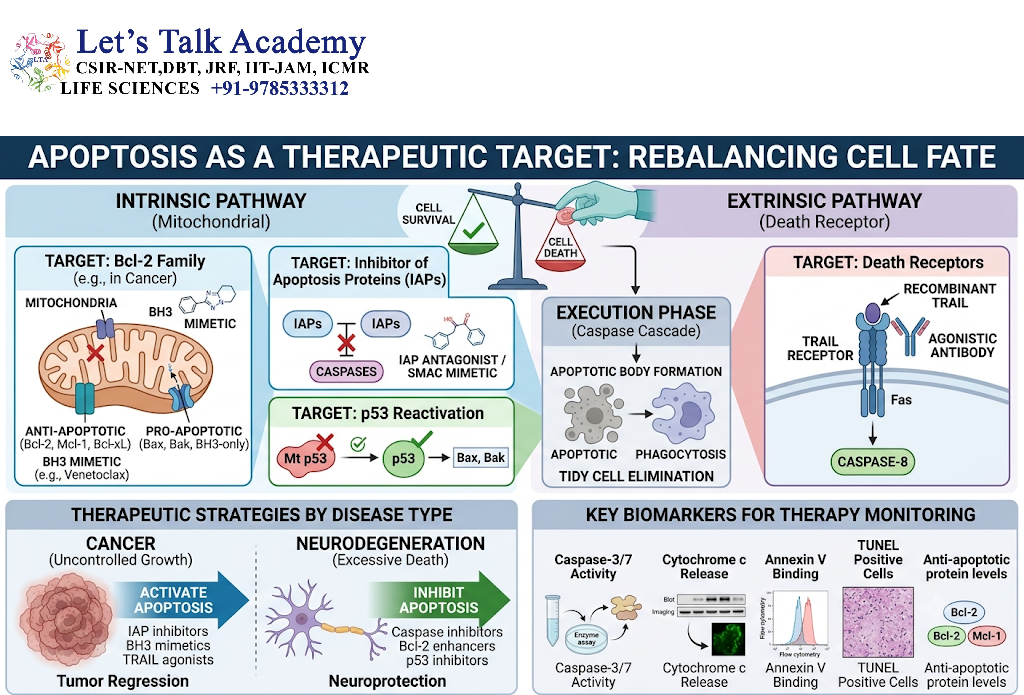
9.1 Definition of Apoptosis
Apoptosis is a regulated form of cell death characterized by controlled cellular dismantling.
Important features include:
- Cell shrinkage
- Chromatin condensation
- DNA fragmentation
- Membrane changes
- Formation of apoptotic bodies
- Removal by phagocytic cells
Cancer cells often acquire mechanisms that allow them to resist apoptosis.
9.2 Intrinsic Apoptotic Pathway
The intrinsic pathway is closely associated with mitochondrial regulation.
Important molecules include:
- BCL-2 family proteins
- Mitochondria
- Cytochrome c
- Caspases
A shift toward pro-apoptotic signaling can result in mitochondrial outer-membrane permeabilization and activation of downstream caspases.
9.3 Extrinsic Apoptotic Pathway
The extrinsic pathway is activated through specific death receptors on the cell surface.
Receptor activation can initiate a signaling cascade involving initiator caspases and downstream executioner caspases.
9.4 Therapeutic Importance
A major goal of some cancer therapies is to restore or exploit the cancer cell’s susceptibility to regulated cell death.
Targeted therapies can sometimes promote apoptosis by interfering with survival pathways or oncogenic signaling.
10. Targeted Therapy
10.1 Concept
Targeted therapy is designed to interfere with specific molecular alterations or proteins that contribute to cancer-cell growth and survival.
Unlike many traditional cytotoxic drugs, targeted therapies are developed around particular molecular targets.
10.2 Small-Molecule Inhibitors
Small-molecule drugs are sufficiently small to enter cells and can therefore target intracellular proteins.
Potential targets include:
- Kinases
- Mutant signaling proteins
- DNA-repair proteins
- Cell-cycle regulators
- Metabolic enzymes
10.3 Monoclonal Antibodies
Monoclonal antibodies are designed to bind specific molecules.
They may:
- Block growth signals
- Mark cancer cells for immune destruction
- Interfere with receptor signaling
- Deliver toxic substances
- Deliver radiation
- Promote cancer-cell death
Thus, antibodies can function both as direct therapeutic agents and as delivery systems.
11. Major Signaling Pathways as Therapeutic Targets
11.1 RAS–RAF–MEK–ERK Pathway
This pathway transmits signals from extracellular growth-factor receptors toward the nucleus.
Abnormal activation can promote:
- Cell proliferation
- Cell survival
- Differentiation
- Tumor progression
Mutations or other alterations in this pathway can make it persistently active.
11.2 PI3K–AKT–mTOR Pathway
This pathway regulates:
- Cell growth
- Protein synthesis
- Metabolism
- Survival
Abnormal activation can provide cancer cells with strong survival and growth signals.
11.3 Cell-Cycle Kinases
Cyclin-dependent kinases regulate progression through the cell cycle.
Abnormal activation of cell-cycle machinery can contribute to uncontrolled proliferation.
Therefore, inhibition of selected cyclin-dependent kinases can slow proliferation in cancers that depend on those pathways.
12. Hormonal or Endocrine Therapy
12.1 Principle
Some cancers depend on hormones for growth.
Hormone therapy can slow or stop the growth of hormone-dependent tumors by:
- Reducing production of the relevant hormone.
- Blocking the hormone receptor.
- Interfering with hormone signaling.
Hormone therapy is particularly important in certain breast and prostate cancers.
12.2 Estrogen-Dependent Growth
Some breast cancer cells express estrogen receptors.
Estrogen signaling can promote transcription of genes involved in cellular proliferation.
Therapeutic strategies may therefore interfere with estrogen production or receptor signaling.
12.3 Androgen-Dependent Growth
Many prostate cancer cells depend on androgen receptor signaling.
Reducing androgen signaling can suppress proliferation of susceptible tumor cells.
12.4 Resistance to Hormonal Therapy
Tumors can eventually become resistant through mechanisms such as:
- Altered receptor signaling
- Receptor mutations
- Activation of alternative growth pathways
- Changes in intracellular signaling
- Adaptation to reduced hormone availability
This demonstrates that cancer cells can evolve under therapeutic pressure.
13. Immunotherapy
13.1 Basic Principle
The immune system naturally recognizes and eliminates many abnormal cells.
However, cancer cells can develop mechanisms that allow them to escape immune destruction.
Immunotherapy aims to strengthen, restore, or redirect immune responses against cancer.
13.2 Immune Checkpoints
Immune checkpoints normally prevent excessive immune activation.
Cancer cells can exploit these regulatory mechanisms to suppress antitumor immune responses.
Checkpoint inhibitors block selected inhibitory interactions, allowing immune cells to remain more active against susceptible tumor cells.
13.3 Monoclonal Antibody-Based Immunotherapy
Some therapeutic antibodies recognize molecules associated with cancer cells or immune regulation.
Their effects may include:
- Direct receptor blockade
- Immune-cell recruitment
- Increased immune recognition
- Activation of cytotoxic mechanisms
14. Adoptive Cell Therapy
14.1 Concept
Adoptive cell therapy involves using immune cells as therapeutic agents.
Cells may be:
- Collected from the patient.
- Selected or genetically modified.
- Expanded outside the body.
- Returned to the patient.
The objective is to increase the ability of immune cells to recognize and destroy cancer cells.
14.2 CAR-T Cell Therapy
Chimeric antigen receptor T-cell therapy (CAR-T) involves genetically modifying T cells so they express artificial receptors capable of recognizing particular antigens.
The basic concept is:
T cell → genetic modification → CAR expression → antigen recognition → T-cell activation → cancer-cell killing
This approach has been particularly important in selected blood cancers.
15. Anti-Angiogenic Therapy
15.1 Tumor Dependence on Blood Vessels
As tumors grow, their demand for oxygen and nutrients increases.
Tumors can release signals that stimulate angiogenesis.
One major signaling system involves VEGF.
15.2 Blocking Angiogenic Signaling
Anti-angiogenic treatments attempt to interfere with the formation or maintenance of tumor-associated blood vessels.
Potential consequences include:
- Reduced vascular support
- Altered tumor perfusion
- Reduced nutrient availability
- Changes in the tumor microenvironment
However, tumor vascular biology is complex, and tumors may adapt by activating alternative pathways.
16. Tumor Microenvironment as a Therapeutic Target
16.1 Why the Microenvironment Matters
Cancer cells interact continuously with:
- Fibroblasts
- Immune cells
- Endothelial cells
- Pericytes
- Adipocytes
- Extracellular matrix
- Blood vessels
These interactions can promote survival, invasion, angiogenesis, immune suppression, and therapeutic resistance.
Therefore, targeting the tumor microenvironment represents an important area of cancer research.
16.2 Targeting Cancer-Associated Fibroblasts
Cancer-associated fibroblasts can contribute to:
- ECM deposition
- Growth-factor signaling
- Tumor-cell invasion
- Immune modulation
- Tissue stiffness
Possible therapeutic strategies include interfering with fibroblast activation or specific fibroblast-derived signaling pathways.
However, fibroblasts are heterogeneous, so indiscriminate elimination is not necessarily appropriate in every tumor context.
16.3 Targeting Tumor-Associated Immune Cells
Therapeutic strategies may attempt to:
- Activate cytotoxic T cells
- Reduce immunosuppressive signaling
- Alter macrophage function
- Improve antigen presentation
- Modify inflammatory signaling
17. Epigenetic Therapeutic Approaches
17.1 Epigenetic Regulation
Gene expression can be altered without changing the DNA sequence itself.
Important epigenetic mechanisms include:
- DNA methylation
- Histone modifications
- Chromatin remodeling
- Non-coding RNA regulation
Cancer cells frequently display abnormal epigenetic states.
17.2 DNA Methylation
Abnormal DNA methylation can silence genes involved in:
- Cell-cycle regulation
- DNA repair
- Differentiation
- Tumor suppression
Therapeutic manipulation of DNA methylation can restore or alter expression of selected genes.
17.3 Histone Modification
Histone proteins regulate DNA packaging and gene accessibility.
Enzymes that modify histones can therefore influence transcription.
Abnormal histone-modification patterns may contribute to malignant transformation and cancer-cell survival.
18. Gene-Based Therapeutic Strategies
18.1 Concept
Gene-based approaches attempt to modify the molecular abnormalities underlying cancer.
Potential strategies include:
- Replacing defective gene functions
- Silencing oncogenic genes
- Altering cancer-cell susceptibility to treatment
- Engineering immune cells
- Modifying regulatory RNA
These approaches remain highly dependent on tumor type, molecular target, delivery method, and clinical context.
19. Synthetic Lethality
19.1 Basic Concept
Synthetic lethality occurs when loss of either of two genes individually is tolerated, but loss of both becomes lethal to the cell.
This creates a therapeutic opportunity.
Suppose:
Cancer cell has defect A
and therapy blocks:
Pathway B
If the cancer cell depends heavily on pathway B because pathway A is already defective, inhibiting pathway B may selectively damage the cancer cell.
This strategy attempts to exploit vulnerabilities created by cancer-specific mutations.
19.2 Importance in Precision Medicine
Synthetic-lethal approaches demonstrate how molecular information can guide treatment selection.
Instead of asking only:
“What type of cancer is present?”
modern molecular oncology can also ask:
“What specific molecular dependency does this tumor possess?”
20. Metabolic Therapy
20.1 Altered Cancer Metabolism
Cancer cells often modify their metabolism to support rapid proliferation.
They may alter:
- Glucose metabolism
- Amino-acid metabolism
- Lipid metabolism
- Nucleotide synthesis
- Mitochondrial activity
These metabolic alterations can create potential therapeutic vulnerabilities.
20.2 Targeting Metabolic Dependencies
A metabolic intervention may attempt to limit a nutrient or inhibit an enzyme that the cancer cell depends upon.
However, metabolic targeting is complicated because normal cells also require the same metabolic pathways.
Therefore, therapeutic selectivity is a major challenge.
21. Combination Therapy
21.1 Why Combination Therapy Is Used
Cancer is biologically heterogeneous.
Different cells within the same tumor may possess different molecular characteristics.
Consequently, a treatment that kills one population may leave another population unaffected.
Combination therapy attempts to attack the tumor through multiple mechanisms.
21.2 Examples of Therapeutic Combinations
Possible combinations include:
- Surgery + chemotherapy
- Surgery + radiation
- Radiation + chemotherapy
- Hormone therapy + radiation
- Targeted therapy + chemotherapy
- Immunotherapy + chemotherapy
- Targeted therapy + immunotherapy
The exact combination depends on tumor type, stage, molecular features, treatment goals, and patient-specific considerations.
22. Neoadjuvant and Adjuvant Therapy
22.1 Neoadjuvant Therapy
Neoadjuvant therapy is treatment given before the main local treatment, such as surgery.
Potential purposes include:
- Reducing tumor size
- Treating microscopic disease early
- Making surgical removal easier
- Assessing tumor response
22.2 Adjuvant Therapy
Adjuvant therapy is given after the primary treatment.
Its purpose may be to eliminate microscopic residual disease and reduce the risk of recurrence.
Thus:
Neoadjuvant = before primary local treatment
Adjuvant = after primary local treatment
23. Drug Resistance
23.1 Definition
Drug resistance occurs when cancer cells fail to respond adequately to a therapy that would normally inhibit or kill susceptible cells.
Resistance can exist before treatment or develop during treatment.
23.2 Intrinsic Resistance
Some cancer cells are resistant before treatment begins.
This may occur because of:
- Pre-existing mutations
- Alternative survival pathways
- Low expression of the drug target
- Drug efflux mechanisms
- Enhanced DNA repair
- Anti-apoptotic signaling
23.3 Acquired Resistance
Resistance can also develop during treatment.
Cancer cells may acquire new molecular alterations or adapt their signaling networks.
For example:
Drug → selective pressure → sensitive cells die → resistant population survives → resistant tumor expands
This is an example of evolutionary selection within a tumor.
24. Mechanisms of Therapeutic Resistance
24.1 Alteration of the Drug Target
A mutation can change the target protein so that the drug can no longer bind effectively.
24.2 Activation of Alternative Pathways
Cancer cells may activate another signaling pathway that bypasses the inhibited pathway.
24.3 Increased Drug Efflux
Some cancer cells can increase expression or activity of transport proteins that remove drugs from the cell.
24.4 Enhanced DNA Repair
If a treatment damages DNA, cancer cells with efficient DNA-repair mechanisms may survive.
24.5 Failure of Apoptosis
A cancer cell may survive treatment despite extensive molecular damage if apoptotic pathways are impaired.
24.6 Tumor Heterogeneity
Different cancer cells within the same tumor can possess different genetic and molecular characteristics.
25. Cancer Stem-Like Cells and Treatment Resistance
Some tumors contain populations of cells with stem-like properties.
These cells may possess:
- Self-renewal capacity
- Increased stress resistance
- Altered metabolism
- Enhanced DNA-repair capacity
- Relative resistance to certain treatments
Their potential contribution to recurrence and treatment resistance is an active area of research.
The concept should not be interpreted as meaning that every tumor contains one uniform, permanently defined “cancer stem cell.” Tumor organization can be dynamic, and cellular states may change in response to environmental conditions.
26. Effects of Treatment on Normal Cells
26.1 Therapeutic Selectivity
An important challenge in cancer therapy is distinguishing cancer cells from normal cells.
Cancer cells are abnormal, but they remain biologically related to normal human cells.
Therefore, many treatments can produce effects in healthy tissues.
26.2 Rapidly Dividing Normal Cells
Conventional chemotherapy can affect normal cells that divide rapidly.
Examples include cells in:
- Bone marrow
- Hair follicles
- Gastrointestinal epithelium
This helps explain some common treatment-related effects.
26.3 Radiation Injury
Radiation can also affect normal cells located near the treatment field.
Modern radiation techniques therefore attempt to maximize tumor exposure while minimizing damage to surrounding tissues.
26.4 Immune-Related Effects
Immunotherapy can produce a different class of adverse effects because increased immune activity may sometimes affect normal tissues.
The biological principle is:
Enhanced immune activation → stronger antitumor response + possibility of immune-mediated tissue injury
27. Therapeutic Index
The therapeutic index reflects the relationship between the effective dose of a treatment and the dose associated with unacceptable toxicity.
An ideal anticancer treatment would:
Strongly affect cancer cells + minimally affect normal cells
In reality, there is often an overlap.
Modern treatment development therefore focuses on increasing therapeutic selectivity through:
- Molecular targeting
- Biomarker selection
- Improved drug delivery
- Precision radiation
- Tumor-specific antigens
- Combination strategies
- Patient-specific treatment planning
28. Precision Medicine
28.1 Concept
Precision medicine attempts to use the molecular characteristics of an individual tumor to guide treatment.
Relevant information may include:
- DNA mutations
- Gene amplification
- Gene fusions
- Protein expression
- Immune biomarkers
- Hormone-receptor status
- DNA-repair abnormalities
28.2 Biomarker Testing
Biomarker testing can help determine whether a tumor contains a molecular target for a particular therapy.
This is particularly important for targeted therapies because the presence or absence of a target can influence whether a treatment is biologically appropriate.
29. Emerging Therapeutic Strategies
29.1 Proteolysis-Targeting Approaches
One emerging strategy is to induce selective degradation of disease-associated proteins rather than simply blocking their activity.
This approach uses cellular protein-degradation machinery.
29.2 Antibody–Drug Conjugates
An antibody can be linked to a cytotoxic compound.
The antibody recognizes a target on cancer cells and can facilitate delivery of the cytotoxic payload.
This combines:
Target recognition + cellular delivery + cytotoxic activity
29.3 Radioimmunotherapy
A radioactive substance can be linked to an antibody directed against a tumor-associated target.
The antibody provides targeting while the radioactive component delivers localized radiation.
29.4 Personalized Immunotherapy
Future approaches increasingly aim to account for the individual tumor’s:
- Antigens
- Mutational profile
- Immune-cell composition
- Tumor microenvironment
- Immune escape mechanisms
30. Therapeutic Intervention at Different Biological Levels
Cancer therapy can be understood as targeting multiple levels of biological organization.
| Biological level | Example therapeutic strategy |
|---|---|
| Whole tumor | Surgery |
| DNA | Radiation, DNA-damaging drugs |
| DNA replication | Antimetabolites |
| Mitotic machinery | Microtubule-targeting drugs |
| Signaling proteins | Targeted inhibitors |
| Hormone receptors | Endocrine therapy |
| Immune system | Immunotherapy |
| Blood vessels | Anti-angiogenic therapy |
| Tumor microenvironment | Stromal and immune-directed approaches |
| Specific molecular vulnerabilities | Precision therapy |
| Cancer-associated proteins | Targeted degradation or antibody-based therapy |
This illustrates that modern cancer therapy operates at several interconnected levels rather than through a single mechanism.
31. Integrated Mechanism of Therapeutic Control
The overall concept can be represented as follows:
Uncontrolled cell proliferation
↓
Activation of oncogenic signaling
↓
Abnormal cell-cycle progression
↓
Tumor formation
↓
Therapeutic intervention
↙ ↓ ↘
Remove tumor | Block proliferation | Activate immune destruction
↓
DNA damage / signaling inhibition / apoptosis / immune-mediated killing
↓
Reduction in viable tumor cells
↓
Tumor regression or disease control
However:
Tumor heterogeneity + adaptation + microenvironmental protection
↓
Potential treatment resistance
↓
Recurrence or progression
This explains why cancer treatment is often an ongoing process requiring monitoring and adjustment.
32. Major Differences Between Conventional and Targeted Therapy
| Feature | Conventional cytotoxic therapy | Targeted therapy |
|---|---|---|
| Primary principle | Damages or kills rapidly dividing cells | Interferes with specific molecular targets |
| Selectivity | Relatively broad | Often more molecularly selective |
| Main target | DNA, replication, mitosis, metabolism | Specific proteins or signaling pathways |
| Biomarker requirement | Not always required | Often important |
| Resistance | Common | Also common |
| Normal-cell effects | Can affect rapidly dividing normal cells | Depends on target expression and biological function |
| Role in treatment | Often combined with other approaches | Often combined with other approaches |
Targeted therapy is not necessarily free of toxicity, and molecular selectivity does not guarantee complete tumor specificity.
33. Major Factors Determining Treatment Response
Treatment response depends on multiple factors.
33.1 Tumor Type
Different cancers have different molecular characteristics.
33.2 Tumor Stage
Localized and metastatic tumors present different therapeutic challenges.
33.3 Genetic Profile
Specific mutations can influence sensitivity or resistance.
33.4 Tumor Heterogeneity
Different cell populations may respond differently to the same treatment.
33.5 Tumor Microenvironment
Fibroblasts, immune cells, blood vessels, extracellular matrix, and metabolic conditions can modify therapeutic response.
33.6 Treatment Delivery
The ability of a drug or radiation treatment to reach all tumor regions can affect effectiveness.
33.7 Evolutionary Adaptation
Treatment creates selective pressure that can favor resistant cell populations.
34. Therapeutic Resistance as an Evolutionary Process
Cancer can be viewed as an evolving population of cells.
Before treatment:
Cell population A + Cell population B + Cell population C + Cell population D
After treatment:
Sensitive populations decrease
while:
Resistant populations survive
The resistant population may subsequently expand.
This can be represented as:
Tumor heterogeneity → treatment → selection → survival of resistant cells → clonal expansion → treatment resistance
This evolutionary perspective is important because it explains why a tumor can initially respond well to therapy but later become resistant.
35. Role of Combination Therapy in Preventing Resistance
If two treatments act through independent mechanisms, simultaneous targeting may reduce the ability of a tumor to escape through a single molecular change.
For example:
Pathway A inhibitor + Pathway B inhibitor
may provide broader suppression than inhibition of pathway A alone.
However, combination therapy can also increase toxicity, drug interactions, and treatment complexity.
Therefore, rational combination therapy requires consideration of both:
Antitumor benefit
and
Toxicity
36. Therapeutic Goals
Cancer treatment can have different objectives.
36.1 Curative Treatment
The goal is complete elimination of detectable disease with the intention of achieving long-term disease-free survival.
36.2 Disease Control
The goal may be to slow or stop tumor growth.
36.3 Recurrence Prevention
Treatment may be given after apparently successful local therapy to reduce the risk of recurrence.
36.4 Symptom Control
Treatment may reduce symptoms caused by tumor growth.
These goals can overlap, and the appropriate approach depends on tumor biology and clinical circumstances.
37. Future Directions
The future of therapeutic intervention is moving toward increasingly integrated approaches.
Important areas include:
- Molecular profiling
- Single-cell analysis
- Spatial analysis of tumor tissues
- Tumor-specific immune responses
- Combination immunotherapy
- Synthetic lethality
- Targeted protein degradation
- Personalized cell therapy
- Improved drug delivery
- Tumor-microenvironment modulation
- Liquid biopsy and molecular monitoring
- Artificial-intelligence-assisted biomarker discovery
The central objective is to identify the biological dependencies that make an individual tumor vulnerable while reducing damage to normal tissues.


