
1. Introduction
Cells continuously interact with their surrounding extracellular environment. One of the most important groups of proteins that mediate these interactions is the integrin family.
Integrins are transmembrane cell-surface receptors that connect cells to the extracellular matrix (ECM) and, in some contexts, participate in cell-cell interactions. They also convert extracellular information into intracellular biochemical and mechanical signals.
Integrins therefore have two major functions:
- Adhesion
- Signal transduction
They provide a physical connection between the extracellular environment and the intracellular cytoskeleton.
A simplified relationship is:
ECM → Integrin → Adaptor proteins → Cytoskeleton → Signaling pathways → Cellular response
Because of this dual role, integrins are essential for:
- Cell adhesion
- Cell migration
- Cell spreading
- Cell survival
- Cell proliferation
- Differentiation
- Tissue organization
- Mechanotransduction
- Wound healing
- Immune-cell movement
2. Definition of Integrins
Integrins are heterodimeric transmembrane adhesion receptors composed of one α subunit and one β subunit that mediate cell adhesion to extracellular matrix components and regulate intracellular signaling.
The term heterodimeric means that two different protein subunits associate to form one functional receptor.
Thus:
α subunit + β subunit → Functional integrin receptor
Different combinations of α and β subunits give rise to integrins with different ligand specificities and biological functions.
3. General Structure of Integrins
A typical integrin consists of:
- One α subunit
- One β subunit
- Large extracellular domains
- A single transmembrane region in each subunit
- Relatively short cytoplasmic tails
The overall organization can be represented as:
Extracellular matrix
↓
Large extracellular integrin domains
↓
Transmembrane segments
↓
Cytoplasmic tails
↓
Adaptor/signaling proteins
↓
Cytoskeleton
The extracellular portions recognize ligands, whereas the intracellular tails interact indirectly with cytoskeletal and signaling proteins.
4. Integrin Heterodimers
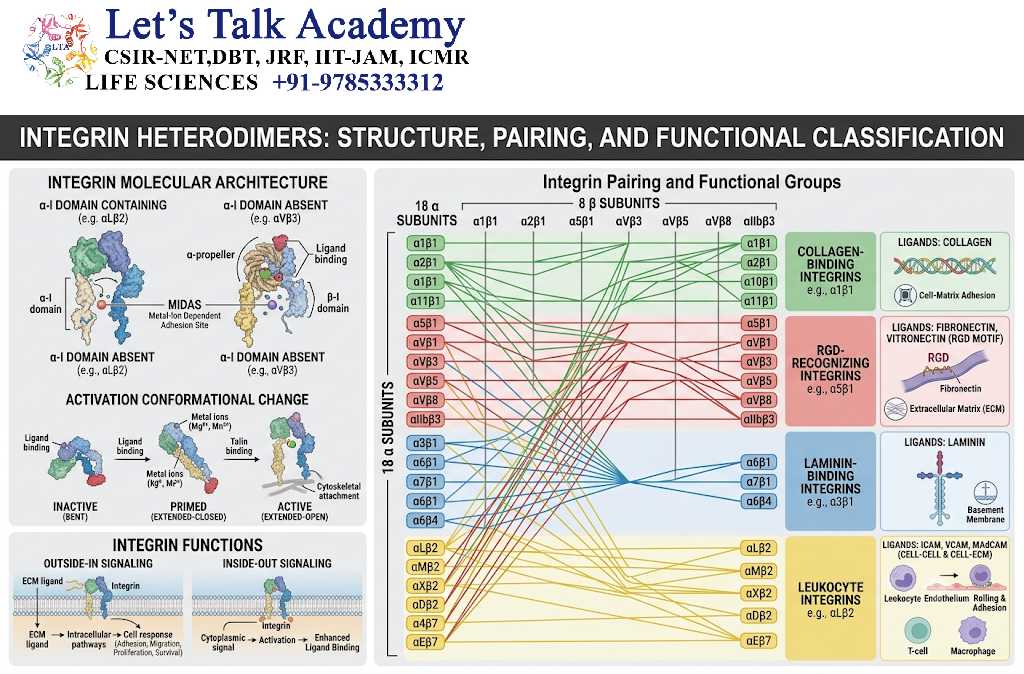
The α and β subunits combine in specific pairs.
Mammals contain multiple α and β integrin subunits, which can combine to form many distinct heterodimers.
Different integrin heterodimers recognize different extracellular ligands.
For example, some integrins recognize:
- Fibronectin
- Laminin
- Collagen
- Vitronectin
Therefore, the particular αβ combination influences the biological function of an integrin.
5. Major Structural Regions of Integrins
5.1 Extracellular Domain
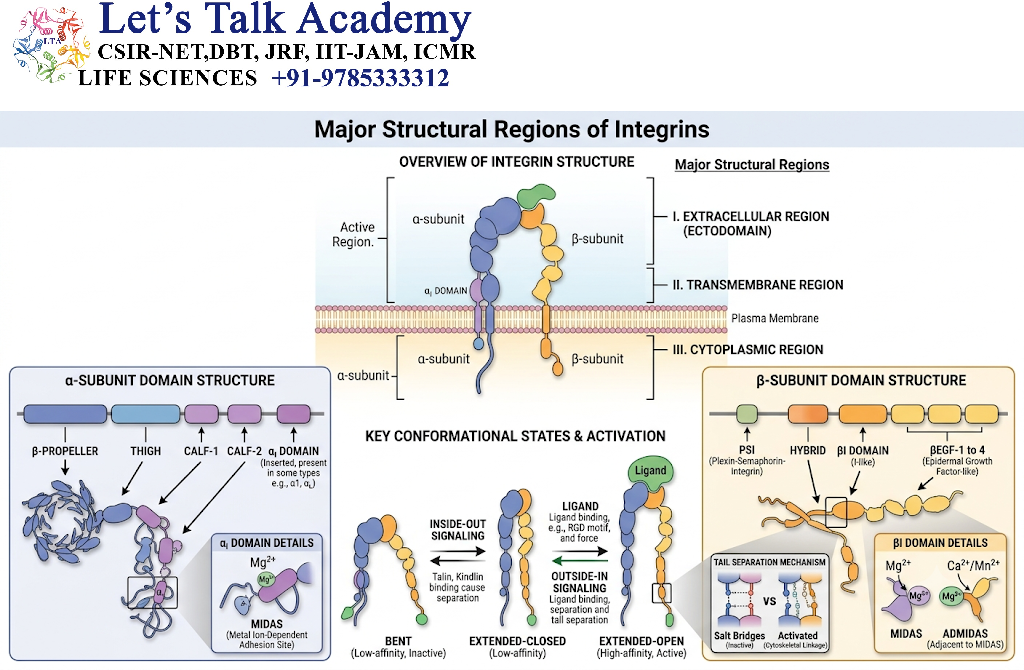
The extracellular region is responsible for ligand recognition.
It interacts with ECM proteins and can undergo conformational changes during activation.
5.2 Transmembrane Domain
Each α and β subunit contains a transmembrane segment.
These regions anchor the receptor in the plasma membrane.
5.3 Cytoplasmic Domain
The cytoplasmic tails interact with intracellular proteins.
Important interacting proteins include:
- Talin
- Kindlin
- Paxillin
- Vinculin
- Focal adhesion kinase
- Src-family kinases
These interactions connect integrins with the cytoskeleton and signaling networks.
6. Major Ligands of Integrins
Integrins recognize several ECM proteins.
| ECM ligand | Importance |
|---|---|
| Fibronectin | Adhesion and migration |
| Laminin | Basement membrane adhesion |
| Collagen | Tissue attachment and organization |
| Vitronectin | Cell adhesion and signaling |
The exact ligand specificity depends on the integrin heterodimer.
7. Integrin Activation
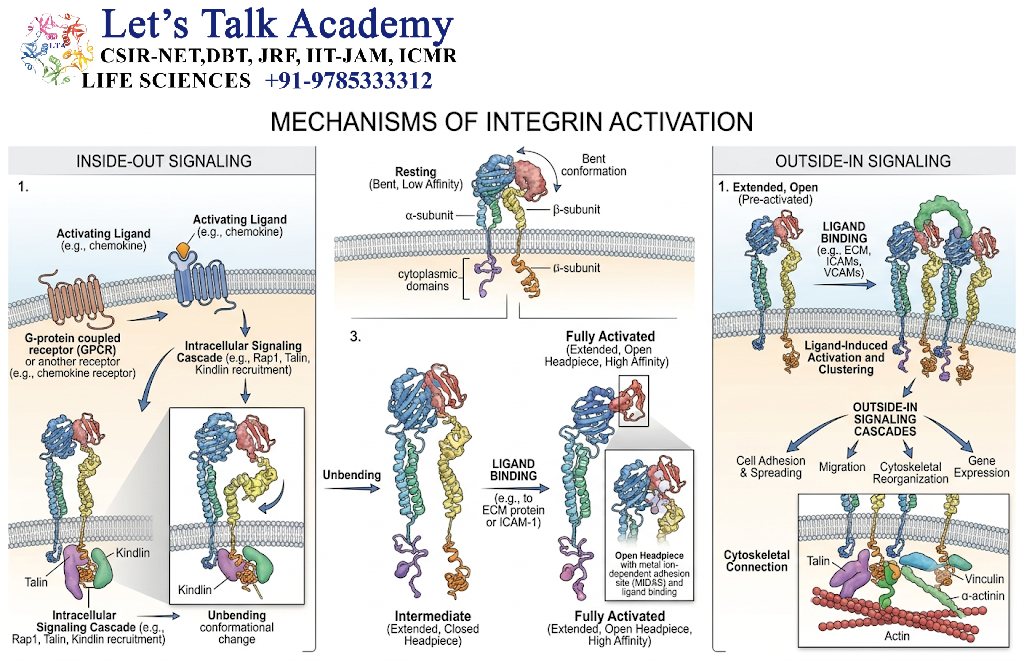
Integrins can exist in different conformational states.
A major feature of integrin biology is that activation can occur through inside-out and outside-in signaling.
These two mechanisms are closely related but represent different directions of information flow.
8. Inside-Out Signaling
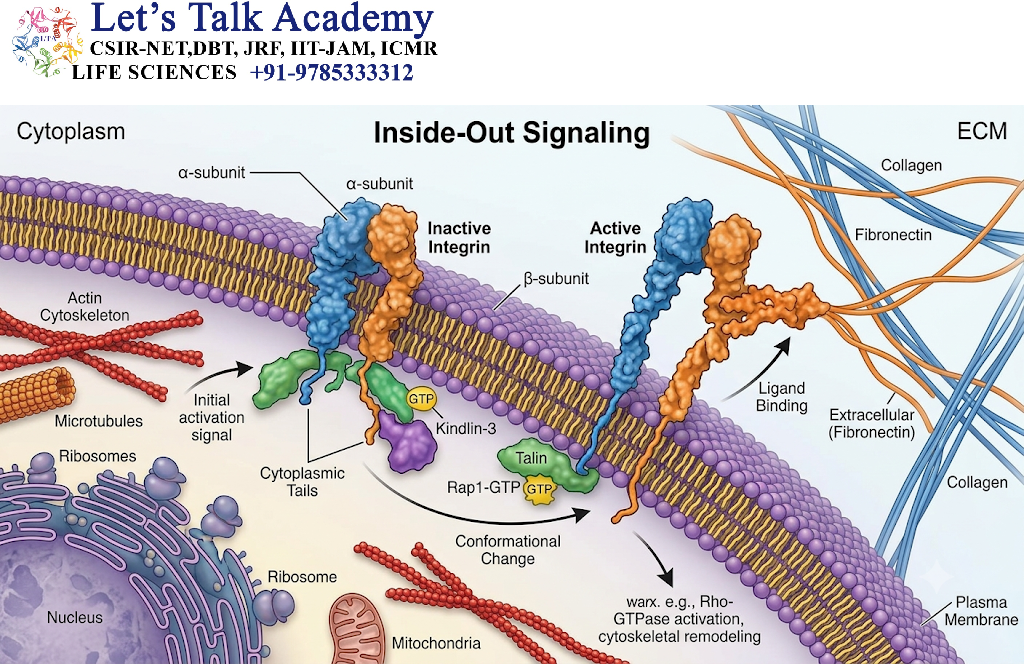
In inside-out signaling, intracellular signals modify the extracellular ligand-binding activity of an integrin.
The general sequence is:
Intracellular signal
↓
Talin/kindlin recruitment
↓
Integrin conformational change
↓
Increased ligand affinity
↓
Cell adhesion
This mechanism is particularly important in blood cells, where integrin activation allows rapid changes in adhesion.
9. Outside-In Signaling
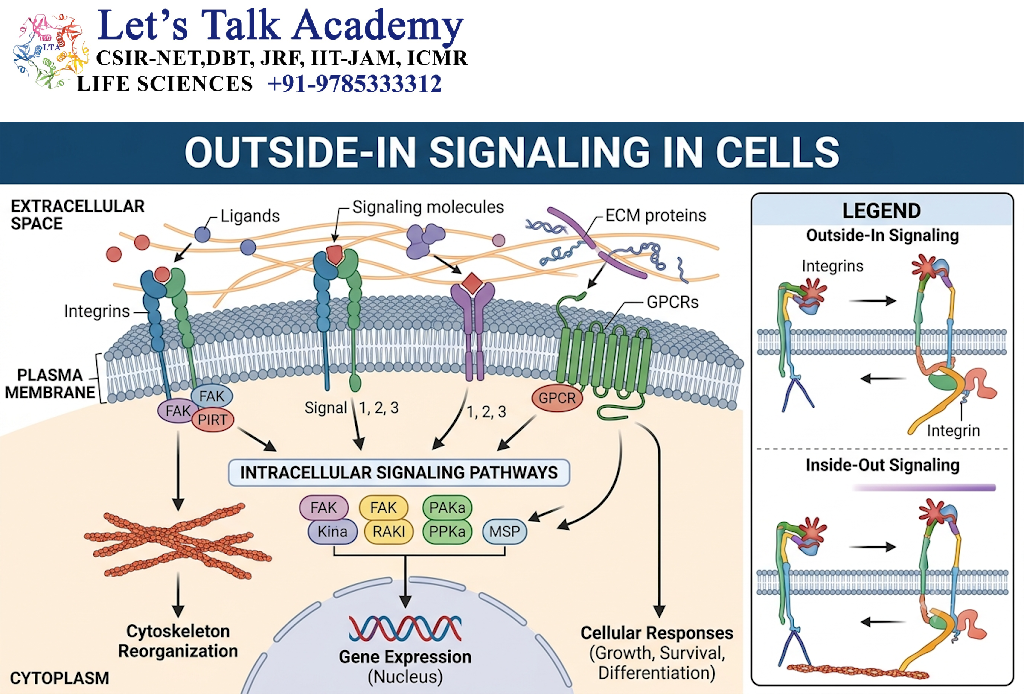
In outside-in signaling, an extracellular ligand binds to an integrin and initiates intracellular signaling.
The sequence is:
ECM ligand
↓
Integrin binding
↓
Integrin clustering
↓
Adaptor recruitment
↓
Kinase activation
↓
Cytoskeletal reorganization
↓
Cellular response
Outside-in signaling allows cells to detect their extracellular environment.
10. Integrin Conformational States
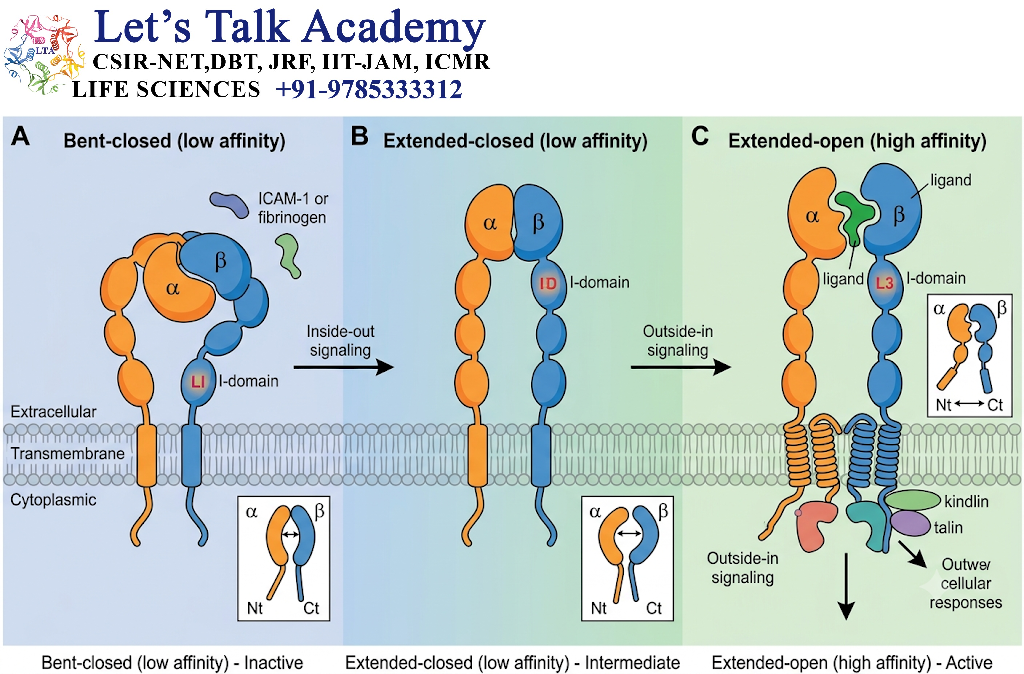
Integrins can adopt different structural conformations.
A simplified model includes:
Bent / low-affinity state
↓
Extended / intermediate state
↓
Activated / high-affinity state
Ligand binding and intracellular interactions can stabilize more active conformations.
This structural flexibility is essential for regulating adhesion.
11. Integrin Clustering
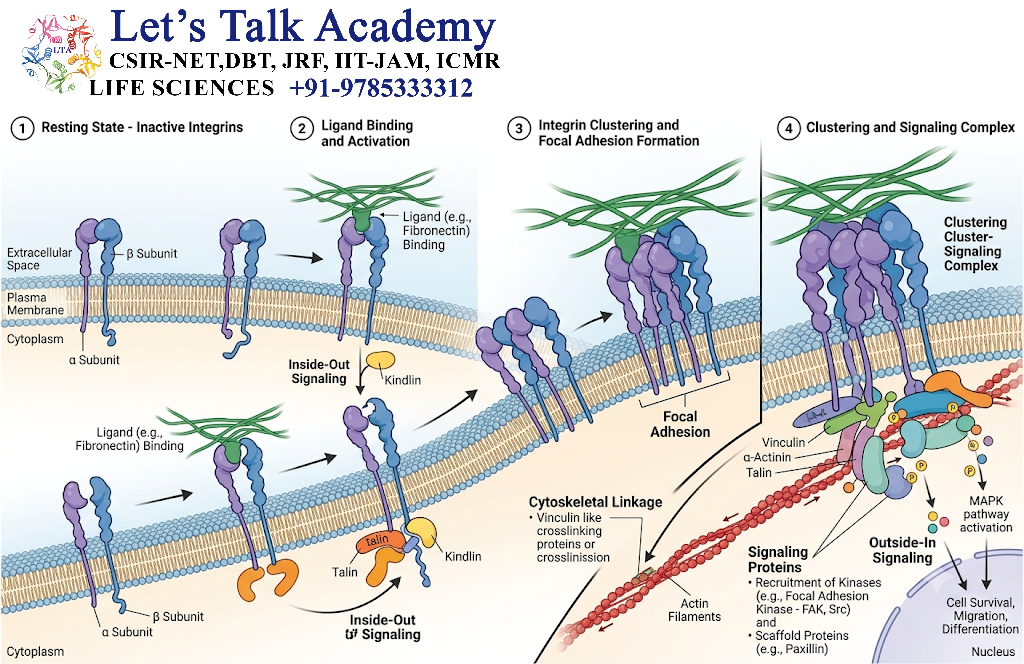
After binding to ECM components, integrins can cluster together within the plasma membrane.
Clustering increases the local concentration of integrin receptors and signaling proteins.
This promotes formation of larger adhesion structures.
Thus:
Ligand binding
↓
Integrin clustering
↓
Adaptor recruitment
↓
Focal adhesion formation
↓
Cytoskeletal connection
12. Focal Adhesions
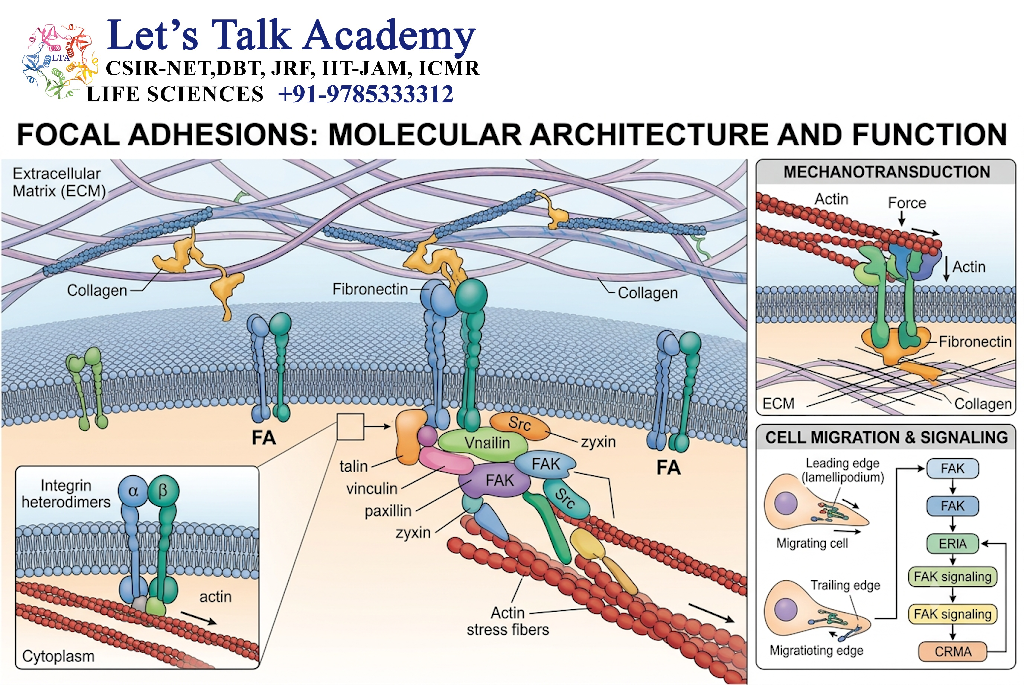
Focal adhesions are specialized cell-ECM adhesion structures that connect integrins to the actin cytoskeleton and contain many signaling proteins.
Important proteins associated with focal adhesions include:
- Integrins
- Talin
- Kindlin
- Vinculin
- Paxillin
- FAK
- Src-family kinases
- Actin-associated proteins
A simplified structure is:
ECM
↓
Integrin
↓
Talin / kindlin
↓
Vinculin / paxillin and other proteins
↓
Actin cytoskeleton
Focal adhesions are dynamic structures that form, grow, mature and disassemble according to cellular requirements.
13. Role of Talin
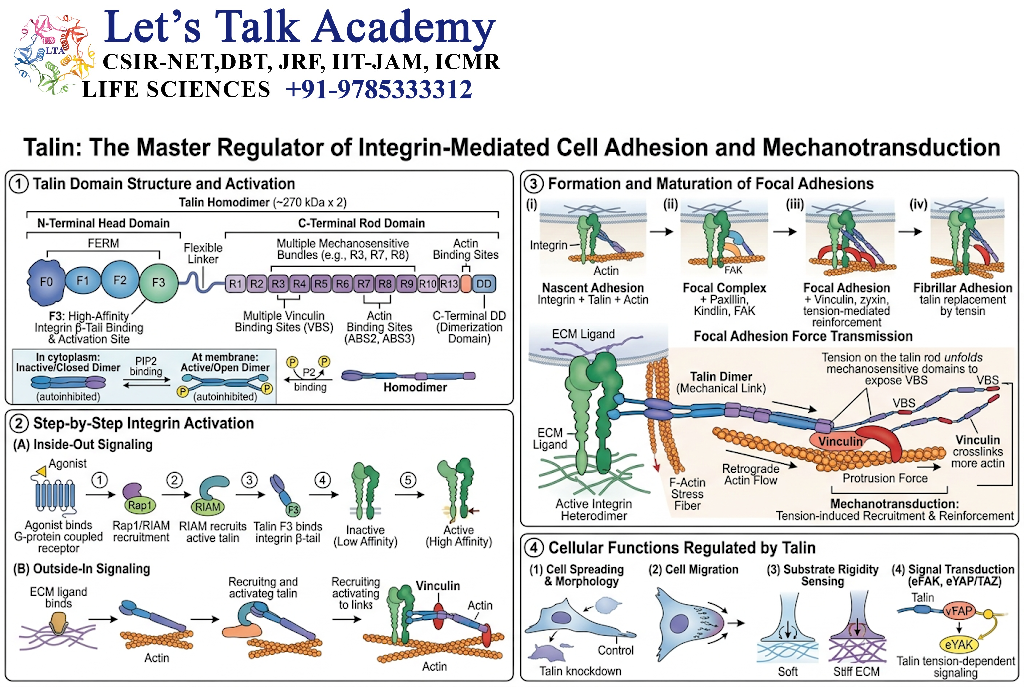
Talin is a major intracellular integrin-binding protein.
It binds to the cytoplasmic tail of β-integrin and helps:
- Activate integrins
- Connect integrins to actin
- Promote adhesion
- Organize focal adhesions
- Participate in mechanical signaling
Talin is therefore important in both integrin activation and force transmission.
14. Role of Kindlin
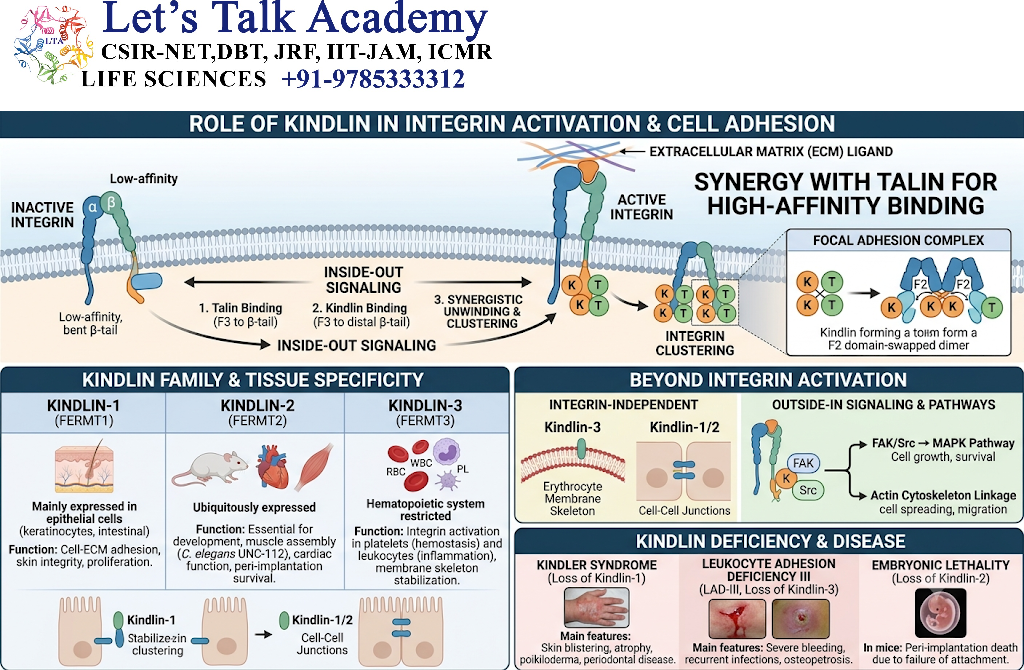
Kindlins are intracellular proteins that cooperate with talin in integrin activation.
They bind to the β-integrin cytoplasmic tail and help regulate:
- Integrin activation
- Adhesion
- Cell spreading
- Signaling
Talin and kindlin work together to regulate the functional state of many integrins.
15. Role of Vinculin
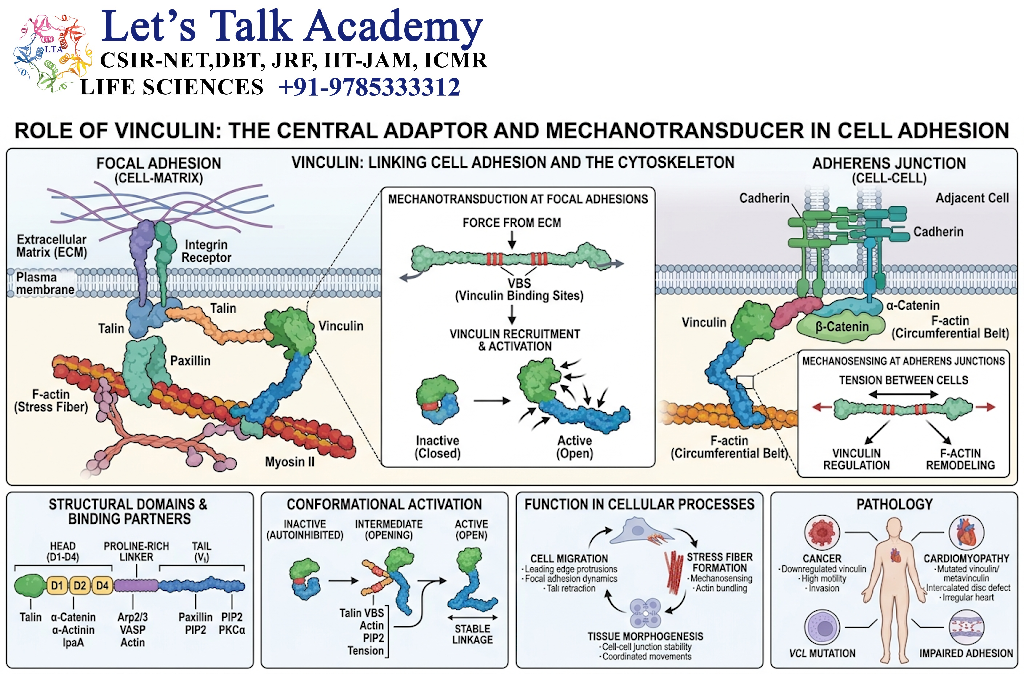
Vinculin is an adhesion-associated protein that links components of focal adhesions to the actin cytoskeleton.
Its activity is influenced by mechanical forces.
Vinculin therefore contributes to:
- Adhesion strengthening
- Actin attachment
- Mechanical force transmission
- Mechanosensing
16. Role of Paxillin
Paxillin is a focal adhesion-associated adaptor protein.
It serves as a platform for the assembly of signaling proteins.
Paxillin participates in:
- Focal adhesion organization
- Cell migration
- Cytoskeletal regulation
- Signal transduction
17. Focal Adhesion Kinase
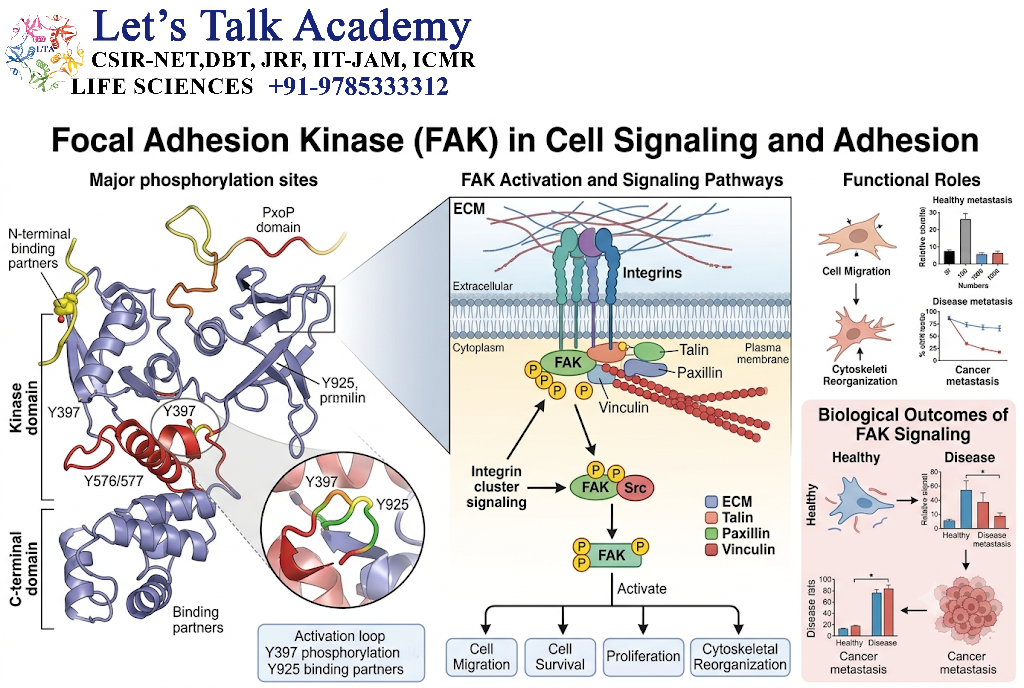
Focal adhesion kinase (FAK) is an important non-receptor tyrosine kinase associated with integrin-mediated signaling.
Integrin engagement can promote FAK activation and recruitment of additional signaling proteins.
FAK can influence pathways involved in:
- Cell migration
- Cell survival
- Cell proliferation
- Cytoskeletal organization
18. Integrin Signaling Pathways
Integrin activation can regulate several intracellular pathways.
Important pathways include:
- FAK-Src
- PI3K-AKT
- MAPK/ERK
- Rho-family GTPases
These pathways regulate different cellular responses.
18.1 FAK-Src Pathway
A simplified sequence is:
Integrin clustering
↓
FAK activation
↓
Src-family kinase recruitment
↓
Phosphorylation of signaling proteins
↓
Cell migration / survival / cytoskeletal regulation
18.2 PI3K-AKT Pathway
Integrin signaling can promote PI3K-AKT activity in appropriate cellular contexts.
This pathway contributes to:
- Cell survival
- Growth
- Metabolic regulation
18.3 MAPK Pathway
Integrin-mediated signaling can influence the MAPK cascade.
A simplified pathway is:
Integrin
↓
FAK/Src and adaptor proteins
↓
Ras
↓
Raf
↓
MEK
↓
ERK
↓
Gene expression / cellular response
18.4 Rho-Family GTPases
Integrin signaling can regulate:
- Rho
- Rac
- Cdc42
These proteins control cytoskeletal organization.
They are important for:
- Cell shape
- Cell spreading
- Cell polarity
- Cell migration
- Formation of actin structures
19. Integrins and the Actin Cytoskeleton
Integrins create an important physical connection between ECM and actin.
The pathway is:
ECM
↓
Integrin
↓
Talin / vinculin / other adaptors
↓
Actin
↓
Cellular force generation
This connection allows cells to generate traction against their surroundings.
20. Integrins and Cell Migration
Integrins are essential for many forms of cell migration.
During migration, cells:
- Extend protrusions.
- Form new integrin-mediated adhesions.
- Generate traction through the cytoskeleton.
- Move the cell body forward.
- Release adhesions at the rear.
- Repeat the process.
Thus:
New adhesion → force generation → movement → adhesion release
Integrin activity must therefore be precisely regulated during migration.
21. Integrins and Mechanotransduction
One of the most important functions of integrins is their role in mechanotransduction.
Mechanotransduction is the conversion of mechanical forces into biochemical signals.
The process can be represented as:
ECM mechanical force
↓
Integrin
↓
Focal adhesion
↓
Cytoskeletal tension
↓
Mechanosensitive signaling
↓
Gene expression and cellular adaptation
Cells can therefore sense differences in:
- ECM stiffness
- Mechanical tension
- Force
- Matrix organization
22. Integrins and ECM Stiffness
The mechanical properties of the ECM influence integrin signaling.
A relatively stiff matrix can increase integrin-mediated adhesion and cytoskeletal tension in many cell types.
This can affect:
- Cell spreading
- Actin organization
- Focal adhesion maturation
- Migration
- Proliferation
- Differentiation
The response is highly dependent on cell type and tissue context.
23. Integrins and Cell Survival
Cells often require appropriate adhesion signals for survival.
Integrin signaling can activate pathways such as:
Integrin
↓
FAK/Src
↓
PI3K-AKT
↓
Pro-survival signaling
Loss of appropriate adhesion can trigger anoikis in many normal cells.
24. Integrins and Cell Proliferation
Integrin signaling can cooperate with growth-factor receptors to regulate cell proliferation.
For example:
Integrin signaling + growth-factor signaling
↓
MAPK / PI3K-AKT
↓
Cell-cycle regulation
↓
Cell proliferation
This illustrates that integrins can participate in signaling crosstalk.
25. Integrins and Cell Differentiation
Integrin-mediated interactions influence differentiation by regulating:
- Cell adhesion
- Cytoskeletal organization
- Mechanical signaling
- Growth-factor responses
- Gene expression
Therefore, the ECM-integrin system contributes to tissue-specific cellular differentiation.
26. Integrins in the Immune System
Integrins have important functions in immune-cell adhesion and migration.
They participate in:
- Leukocyte adhesion
- Leukocyte migration
- Immune-cell interactions
- Tissue infiltration
- Antigen-presenting cell interactions
During leukocyte recruitment, selectins and integrins perform coordinated functions.
27. Selectin-Integrin Cooperation
During inflammation:
Selectin-mediated rolling
↓
Chemokine signaling
↓
Integrin activation
↓
Firm adhesion
↓
Transmigration
↓
Tissue entry
Thus, selectins and integrins act sequentially during leukocyte recruitment.
28. Integrins in Platelet Function
Certain integrins are important in platelet adhesion and aggregation.
Following platelet activation, integrins can undergo conformational changes that increase their ability to bind ligands.
This contributes to formation and stabilization of platelet aggregates during hemostasis.
29. Integrins in Development
Integrins contribute to embryonic development by regulating:
- Cell adhesion
- Cell migration
- Tissue organization
- Cell differentiation
- Organ formation
- ECM assembly
Developing cells must constantly interact with their changing extracellular environment, making integrin signaling particularly important.
30. Integrins in Wound Healing
Integrins participate in multiple stages of tissue repair.
They regulate:
- Cell migration
- Fibroblast activity
- Keratinocyte movement
- ECM deposition
- Cell proliferation
- Remodeling
A simplified sequence is:
Tissue injury
↓
ECM remodeling
↓
Integrin-mediated adhesion
↓
Cell migration
↓
ECM deposition
↓
Tissue repair
31. Integrins and Angiogenesis
Integrins participate in endothelial-cell interactions with the ECM during blood-vessel formation.
They influence:
- Endothelial-cell adhesion
- Migration
- Survival
- Cytoskeletal organization
- Response to angiogenic signals
Thus, integrin signaling contributes to vascular development and remodeling.
32. Integrin Crosstalk with Other Receptors
Integrins can communicate with other receptor systems.
Important examples include:
- Growth-factor receptors
- GPCRs
- Cytokine receptors
- Mechanosensitive signaling systems
This is called receptor crosstalk.
For example:
Integrin signaling ↔ Growth-factor receptor signaling
This interaction allows cells to integrate biochemical and mechanical information.
33. Integrins and Cancer
Altered integrin expression or signaling can contribute to abnormal cell behavior in cancer.
Changes can influence:
- Cell survival
- Migration
- Invasion
- ECM remodeling
- Angiogenesis
- Interaction with the tumor microenvironment
Integrin signaling can cooperate with oncogenic pathways, although its effects depend on the specific integrin and cellular context.
34. Integrins and Metastasis
Integrins can participate in several stages of metastatic progression.
A simplified process is:
Tumor-cell detachment
↓
ECM interaction
↓
Migration
↓
Intravasation
↓
Interaction with vascular environment
↓
Extravasation
↓
Adhesion to new tissue
↓
Colonization
Integrins can influence multiple steps by controlling adhesion and signaling.
35. Integrins and Fibrosis
During fibrosis, changes in ECM composition and stiffness can alter integrin signaling.
This can create a feedback mechanism:
ECM accumulation
↓
Increased matrix stiffness
↓
Integrin activation
↓
Cell signaling
↓
Further ECM production
↓
Additional tissue stiffening
This type of feedback can contribute to persistent tissue remodeling in fibrotic conditions.
36. Regulation of Integrin Activity
Integrin activity is regulated by:
- Conformational changes
- Talin and kindlin binding
- Ligand availability
- Receptor clustering
- Phosphorylation
- Endocytosis
- Recycling
- Proteolytic processing
- Cytoskeletal interactions
These mechanisms allow cells to rapidly modify adhesion according to their environment.
37. Integrin Trafficking
Integrins are continuously transported within cells.
They can undergo:
Endocytosis
↓
Intracellular trafficking
↓
Recycling to plasma membrane
Recycling allows cells to reposition integrins during migration.
This is particularly important because migrating cells need to continuously establish new adhesion sites at the leading edge.
38. Integrin Turnover
Integrin-containing adhesion structures are dynamic.
They can:
- Form
- Mature
- Stabilize
- Disassemble
The controlled turnover of adhesions is essential for cell migration.
Too much adhesion can restrict movement, whereas insufficient adhesion can prevent cells from generating effective traction.
39. Major Integrin Functions
The major functions of integrins include:
Structural Functions
- ECM attachment
- Cytoskeletal anchoring
- Tissue organization
Signaling Functions
- FAK/Src activation
- PI3K-AKT signaling
- MAPK signaling
- Rho-family signaling
Cellular Functions
- Migration
- Survival
- Proliferation
- Differentiation
- Cell spreading
Mechanical Functions
- Mechanosensing
- Force transmission
- Matrix stiffness sensing
Physiological Functions
- Immune-cell trafficking
- Hemostasis
- Development
- Wound healing
- Angiogenesis
40. Integrin Signaling Flowchart
ECM ligand
↓
Integrin binding
↓
Integrin conformational activation
↓
Integrin clustering
↓
Talin / kindlin recruitment
↓
Focal adhesion formation
↓
FAK/Src activation
↓
PI3K-AKT / MAPK / Rho-family signaling
↓
Cytoskeletal remodeling
↓
Cell adhesion, migration, survival, proliferation and differentiation
41. Inside-Out vs Outside-In Signaling
| Feature | Inside-out signaling | Outside-in signaling |
|---|---|---|
| Direction | Intracellular → extracellular receptor state | Extracellular ligand → intracellular signaling |
| Main effect | Increases integrin activation/affinity | Activates intracellular pathways |
| Important proteins | Talin, kindlin | FAK, Src, paxillin and others |
| Major role | Regulation of adhesion | Signaling and cellular response |
42. Integrins vs Cadherins
| Feature | Integrins | Cadherins |
|---|---|---|
| Main adhesion | Cell-ECM | Cell-cell |
| Structure | αβ heterodimer | Cadherin family proteins |
| Major extracellular partner | ECM proteins | Cadherins on neighboring cells |
| Cytoskeletal connection | Actin/intermediate filament-associated complexes | Actin or intermediate filaments |
| Major signaling role | Strong | Strong |
| Important structures | Focal adhesions, hemidesmosomes | Adherens junctions, desmosomes |
43. Integrins vs Selectins
| Feature | Integrins | Selectins |
|---|---|---|
| Main role | Adhesion and signaling | Transient adhesion |
| Major ligands | ECM proteins / cell-surface ligands | Carbohydrate-containing ligands |
| Typical interaction | Often stronger and regulated | Relatively weak and transient |
| Immune role | Firm adhesion and migration | Leukocyte rolling |
| Structural feature | αβ heterodimer | Selectin family receptor |


