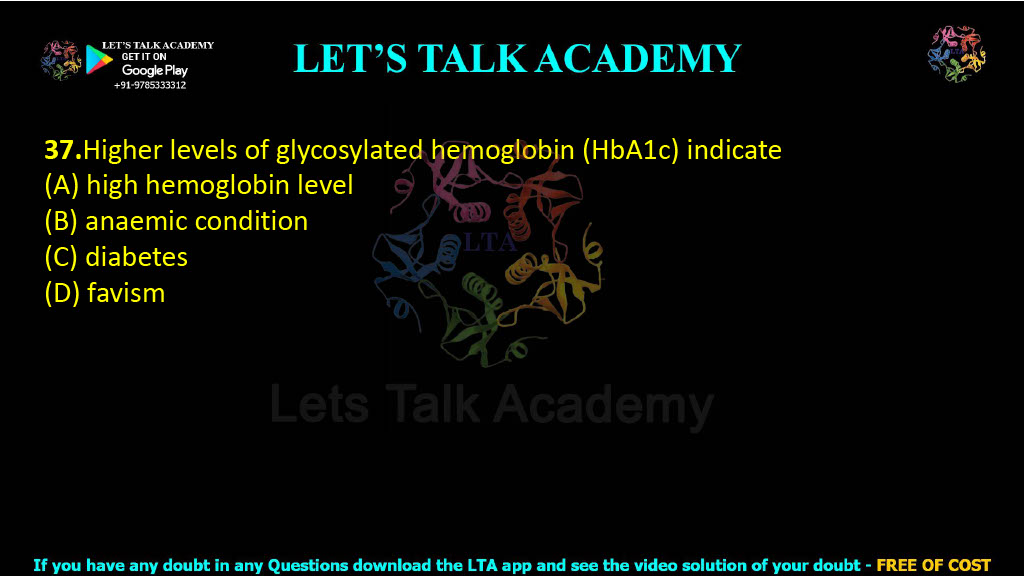
37.Higher levels of glycosylated hemoglobin (HbA1c) indicate
(A) high hemoglobin level
(B) anaemic condition
(C) diabetes
(D) favism
Higher Levels of Glycosylated Hemoglobin (HbA1c) Indicate Diabetes
Introduction
Glycosylated hemoglobin, commonly known as HbA1c or glycated hemoglobin, is one of the most important biochemical markers used to diagnose and monitor diabetes mellitus. Unlike a single blood glucose measurement, which reflects glucose concentration at a specific moment, HbA1c provides an average estimate of blood glucose levels over the previous two to three months. Since red blood cells have an average lifespan of approximately 120 days, glucose continuously and irreversibly binds to hemoglobin throughout their lifetime, making HbA1c an excellent indicator of long-term glycemic control.
Measurement of HbA1c has become a standard tool in clinical medicine because it helps physicians assess whether blood glucose levels have remained consistently elevated. Persistently high HbA1c values indicate chronic hyperglycemia, which significantly increases the risk of complications such as diabetic retinopathy, nephropathy, neuropathy, cardiovascular disease, and stroke.
Correct Answer
Correct Option: (C) Diabetes
Detailed Explanation
HbA1c is formed when circulating glucose reacts non-enzymatically with the N-terminal valine residue of the β-chain of hemoglobin A. This process is known as non-enzymatic glycation. The higher the concentration of glucose in the blood, the greater the amount of hemoglobin that becomes glycated. Since red blood cells circulate for approximately 120 days, the percentage of HbA1c reflects the average blood glucose concentration during the preceding two to three months.
Individuals with diabetes mellitus experience persistent hyperglycemia due to insufficient insulin secretion, impaired insulin action, or both. Because blood glucose remains elevated for prolonged periods, a larger proportion of hemoglobin molecules become glycated, resulting in increased HbA1c levels. Therefore, HbA1c is widely used for both the diagnosis and long-term monitoring of diabetes.
According to current clinical guidelines, an HbA1c value of less than 5.7% is considered normal. Values between 5.7% and 6.4% indicate prediabetes, while an HbA1c level of 6.5% or higher on appropriate testing is diagnostic of diabetes mellitus.
Explanation of Each Option
Option (A): High Hemoglobin Level
This statement is incorrect. HbA1c measures the percentage of glycated hemoglobin rather than the total concentration of hemoglobin. A person may have a normal or even low hemoglobin concentration while still having an elevated HbA1c if blood glucose levels remain high.
Option (B): Anaemic Condition
This statement is incorrect. Although certain types of anemia can influence HbA1c values by altering red blood cell lifespan, elevated HbA1c itself is not a marker of anemia.
Option (C): Diabetes
This statement is correct. Persistent elevation of blood glucose increases non-enzymatic glycation of hemoglobin, producing higher HbA1c levels. Therefore, elevated HbA1c is a hallmark of diabetes mellitus and is routinely used for diagnosis and monitoring.
Option (D): Favism
This statement is incorrect. Favism is associated with glucose-6-phosphate dehydrogenase (G6PD) deficiency, leading to hemolytic anemia after exposure to fava beans or certain oxidizing agents. It is not characterized by elevated HbA1c.
Why Option (C) is Correct
HbA1c directly reflects the average blood glucose concentration over several months. Individuals with diabetes have prolonged hyperglycemia, leading to increased glycation of hemoglobin. Consequently, elevated HbA1c serves as one of the most reliable laboratory indicators of diabetes and long-term glycemic control.
Why the Other Options are Incorrect
Why Option (A) is Incorrect
HbA1c measures the proportion of glycated hemoglobin, not the absolute hemoglobin concentration in blood.
Why Option (B) is Incorrect
Anemia affects red blood cell number or lifespan but is not diagnosed by elevated HbA1c values.
Why Option (D) is Incorrect
Favism results from G6PD deficiency and oxidative hemolysis rather than chronic hyperglycemia.
Comparison of All Options
| Option | Condition | Relation to HbA1c | Correct or Incorrect |
|---|---|---|---|
| A | High Hemoglobin Level | No direct relationship | Incorrect |
| B | Anemia | May alter HbA1c interpretation but not cause elevation | Incorrect |
| C | Diabetes Mellitus | Persistent hyperglycemia increases HbA1c | Correct |
| D | Favism | G6PD deficiency causing hemolysis | Incorrect |
HbA1c Diagnostic Ranges
| HbA1c (%) | Clinical Interpretation |
|---|---|
| Below 5.7% | Normal |
| 5.7–6.4% | Prediabetes |
| 6.5% or Higher | Diabetes Mellitus |
Advantages of HbA1c Measurement
| Feature | Clinical Importance |
|---|---|
| Reflects Long-Term Glucose Control | Represents average blood glucose over 2–3 months |
| No Fasting Required | Convenient for patients |
| Diagnosis of Diabetes | Used worldwide in clinical practice |
| Monitoring Therapy | Evaluates effectiveness of diabetic treatment |
| Predicts Complications | Higher HbA1c correlates with increased complication risk |
Formation of HbA1c
| Step | Process |
|---|---|
| 1 | Glucose circulates in blood |
| 2 | Glucose binds non-enzymatically to hemoglobin |
| 3 | Stable glycated hemoglobin (HbA1c) is formed |
| 4 | HbA1c accumulates throughout the lifespan of red blood cells |
| 5 | Measured to estimate long-term blood glucose levels |
Biological Significance of HbA1c
HbA1c has revolutionized diabetes management because it provides a reliable estimate of long-term glycemic control. Unlike random blood glucose measurements that fluctuate with meals, stress, and exercise, HbA1c reflects sustained blood glucose exposure. Physicians use HbA1c values to diagnose diabetes, monitor treatment effectiveness, adjust medications, and assess the risk of long-term complications such as nephropathy, retinopathy, neuropathy, and cardiovascular disease.
Final Answer
Correct Option: (C) Diabetes
Higher levels of glycosylated hemoglobin (HbA1c) indicate chronic hyperglycemia associated with diabetes mellitus. HbA1c reflects the average blood glucose level over the preceding 2–3 months and is one of the most reliable biomarkers for diagnosing and monitoring diabetes.


