10. In prokaryotes, the terminal electron acceptor in anaerobic conditions are generally (1) Glucose, fructose, maltose (2) Fatty acids (3) SO42-, NO32- , S (4) Antioxidants such as Vitamin K […]

10. In prokaryotes, the terminal electron acceptor in anaerobic conditions are generally (1) Glucose, fructose, maltose (2) Fatty acids (3) SO42-, NO32- , S (4) Antioxidants such as Vitamin K […]

9. Iron-sulphur clusters (Fe-S) are the key prosthetic groups that carry electrons in of the below EXCEPT. (1) NADH – CoQ reductase (2) Succinate – CoQ reductase (3) Cytochrome c […]

8. NADH donates its electron to electron transport chain through primary acceptor (1) CoQ (2) FMN (3) FAD (4) Cytochrome oxidase NADH is a crucial electron carrier in cellular […]

7. In mitochondria the enzymes of electron transport chain are located at (1) Outer membrane (2) Inter membrane space (3) Inner membrane (4) Matrix The electron transport chain (ETC) […]
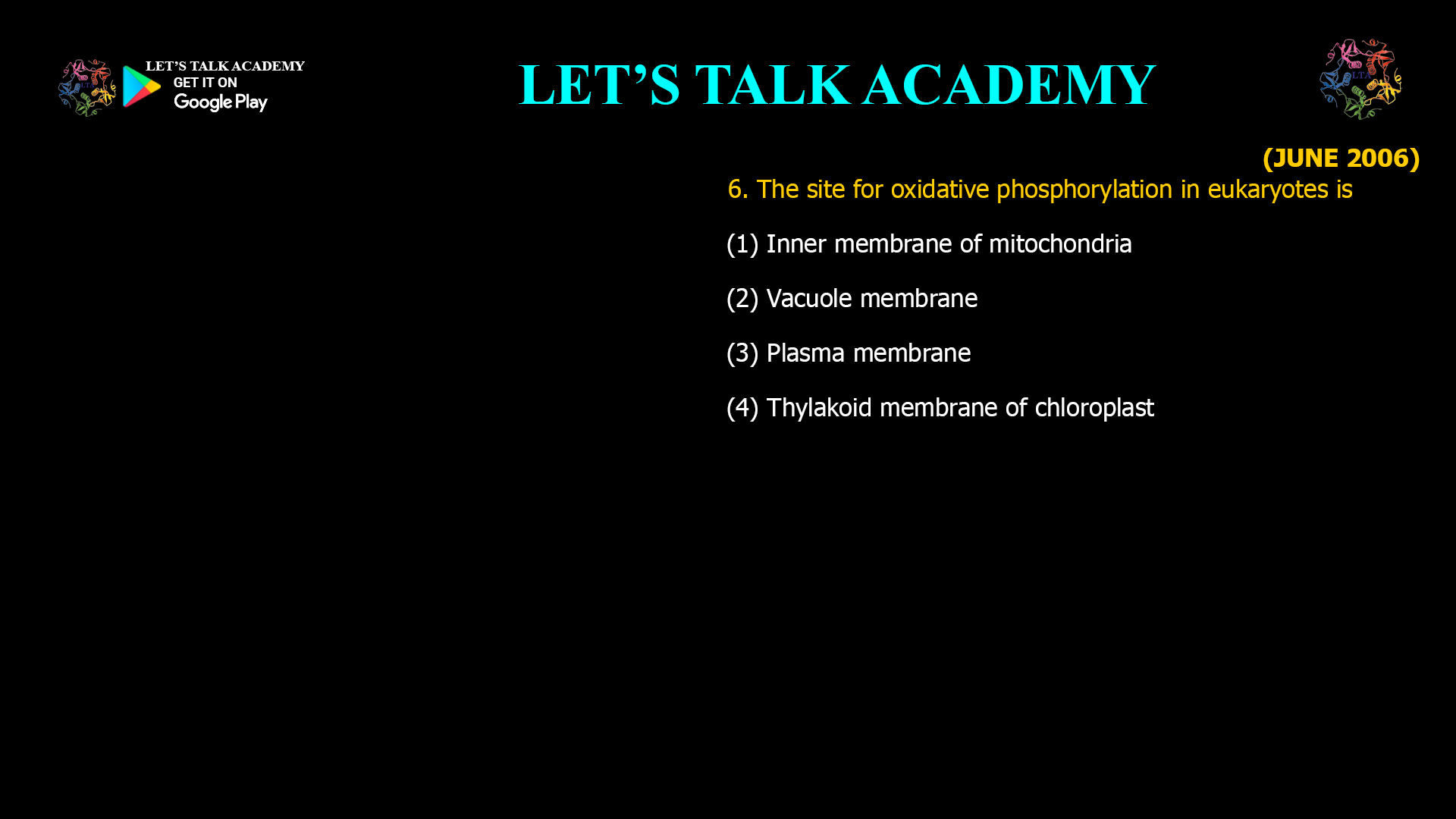
6. The site for oxidative phosphorylation in eukaryotes is (1) Inner membrane of mitochondria (2) Vacuole membrane (3) Plasma membrane (4) Thylakoid membrane of chloroplast Oxidative phosphorylation is a […]
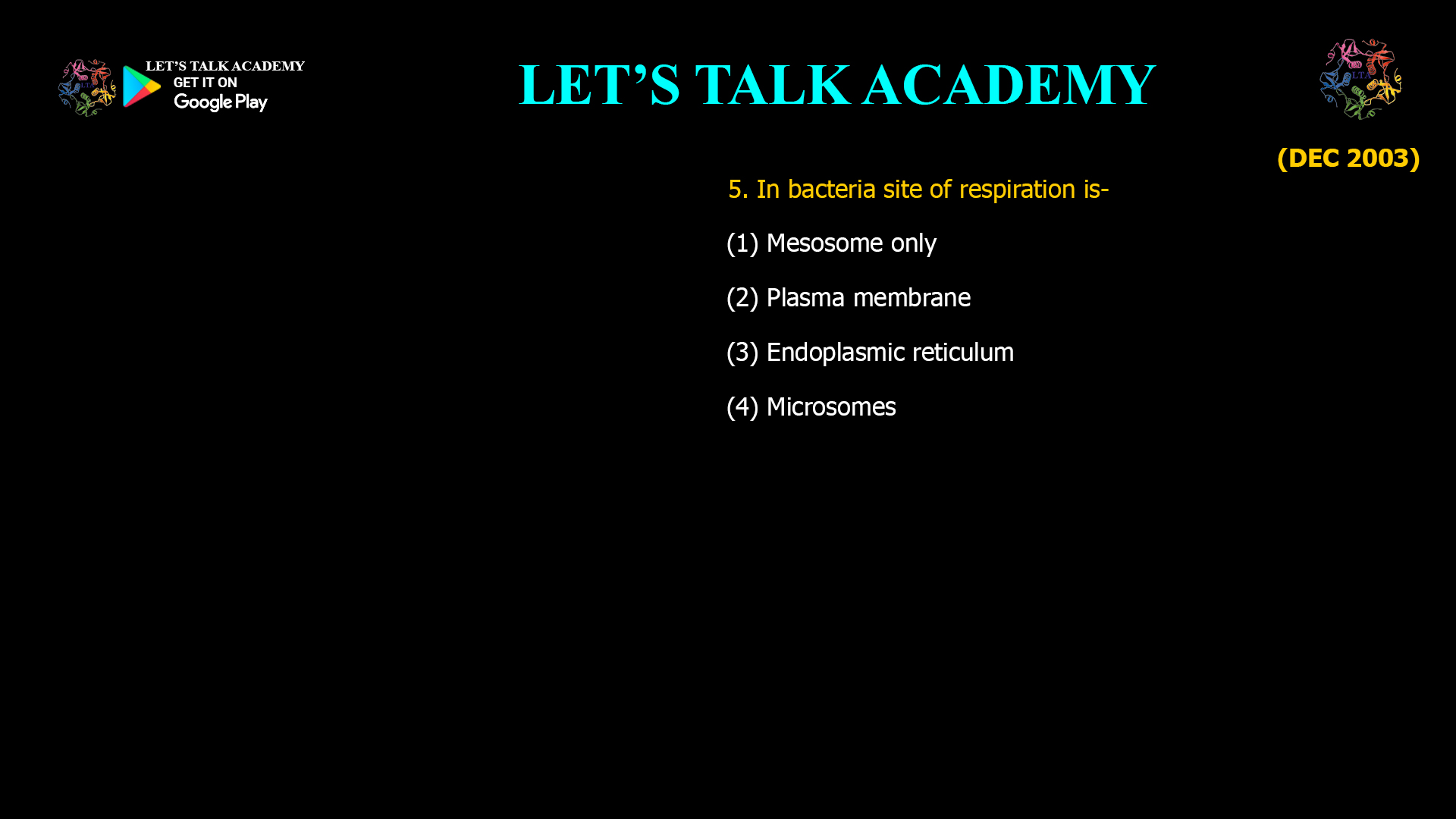
5.In bacteria site of respiration is- (1) Mesosome only (2) Plasma membrane (3) Endoplasmic reticulum (4) Microsomes Respiration is a vital process in all living organisms, including bacteria, where […]
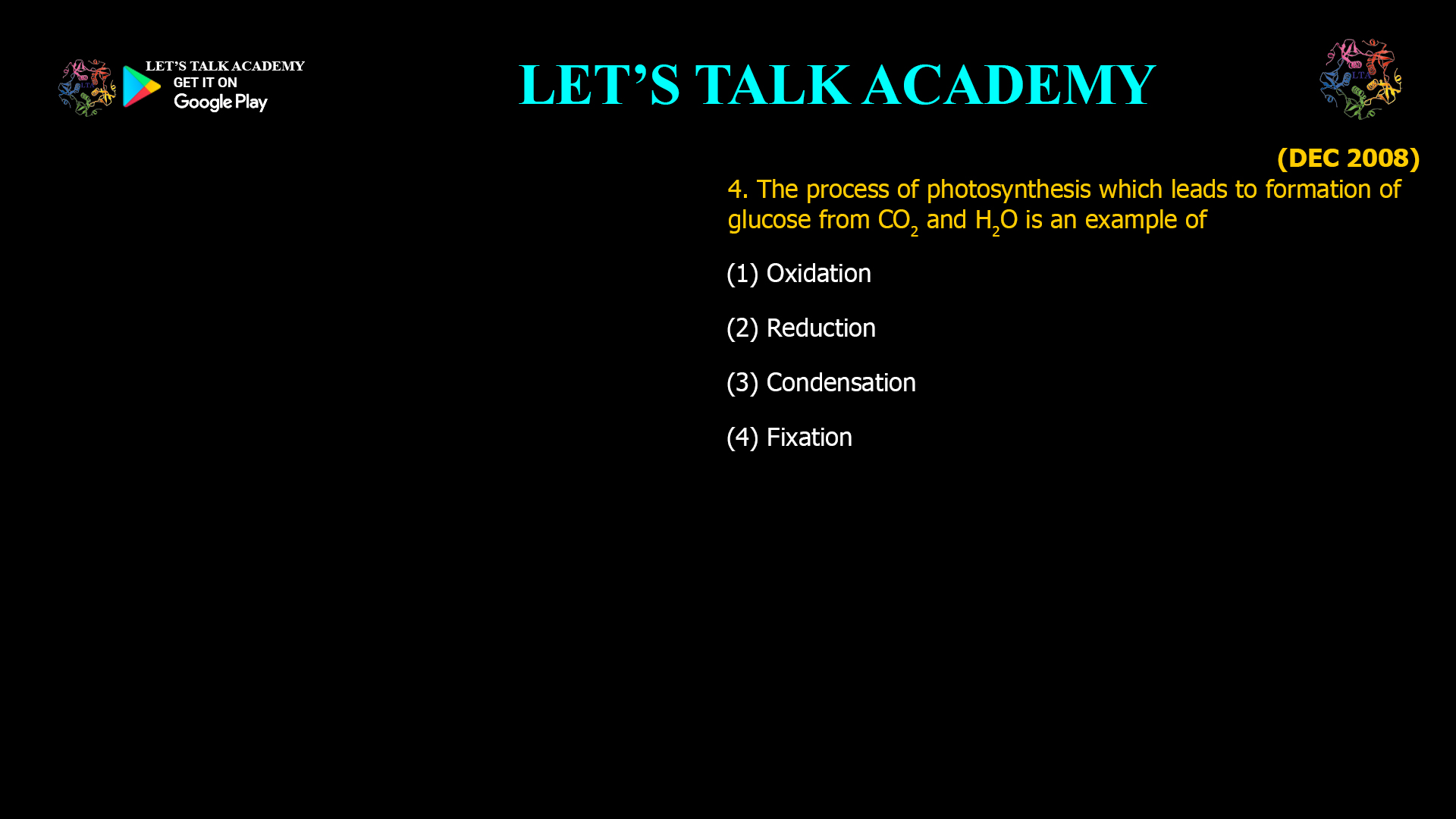
4. The process of photosynthesis which leads to formation of glucose from C02 and H20 is an example of (1) Oxidation (2) Reduction (3) Condensation (4) Fixation Photosynthesis is a […]
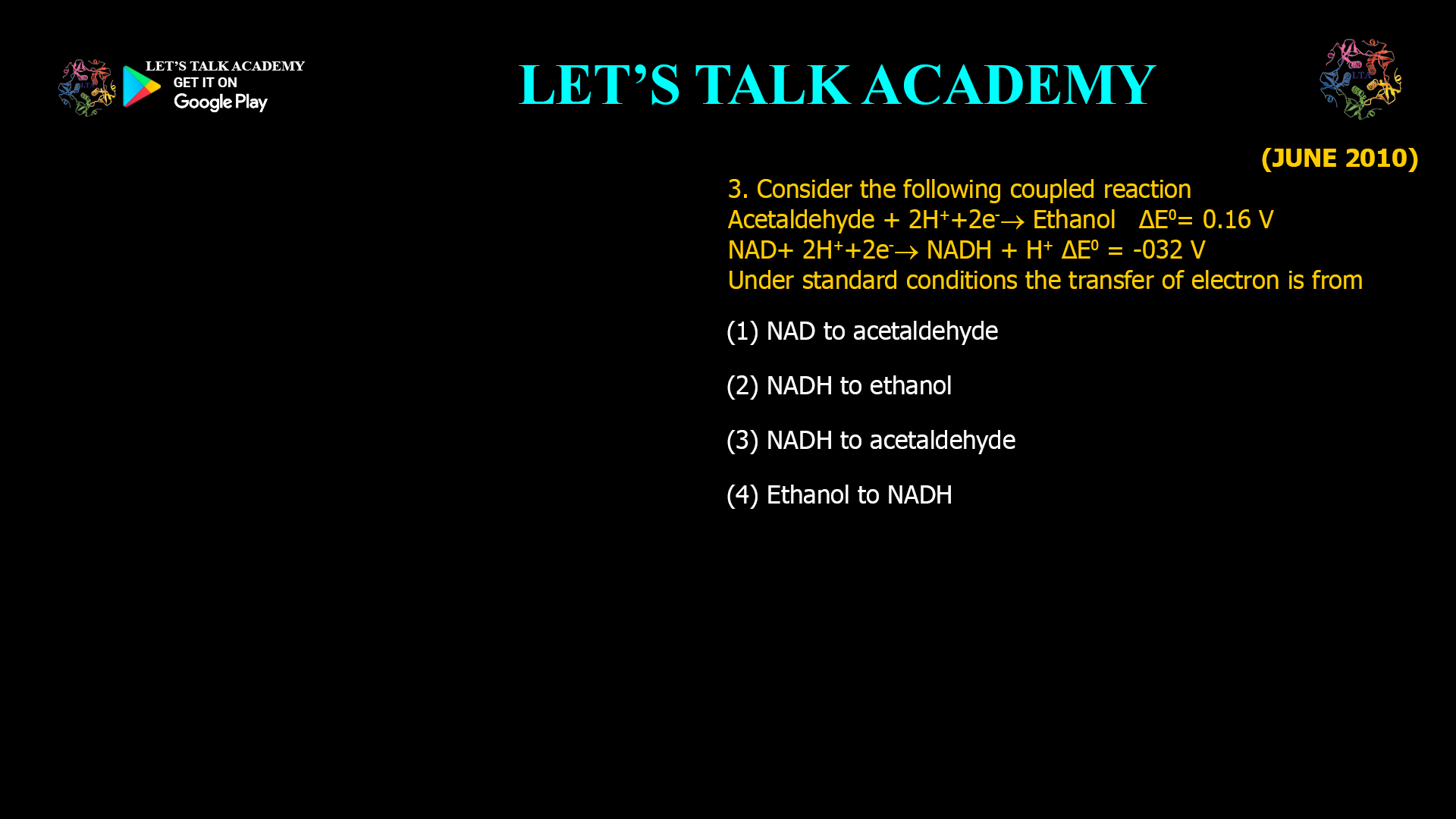
Consider the following coupled reaction Acetaldehyde + 2H++2e– à Ethanol ΔE0= 0.16 V NAD+ 2H++2e– à NADH + H+ ΔE0 = -032 V Under standard conditions the transfer of electron […]
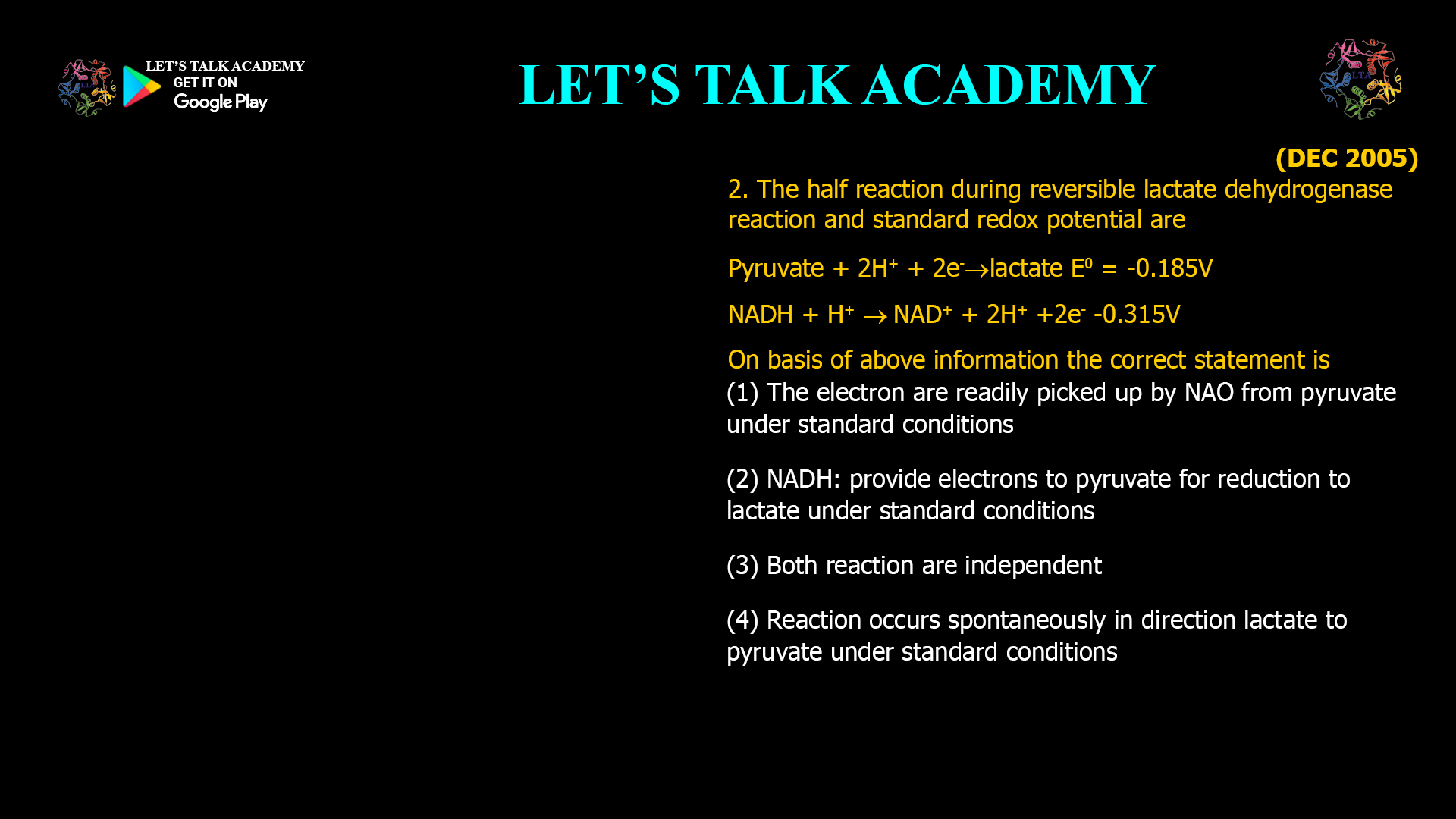
The half reaction during reversible lactate dehydrogenase reaction and standard redox potential are Pyruvate + 2H+ + 2e– à lactate E0 = -0.185V NADH + H+ à NAD+ + 2H+ […]
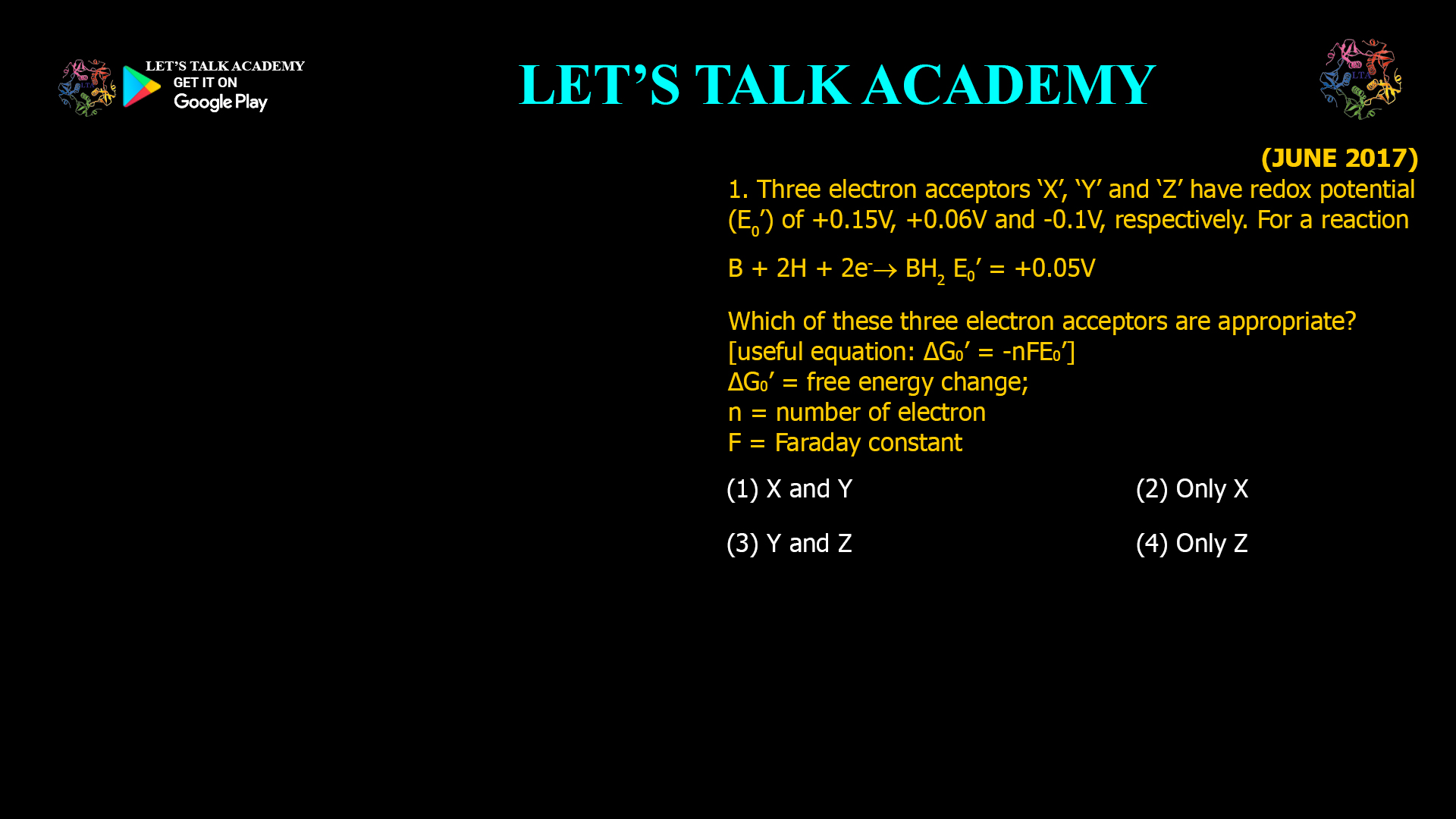
1. Three electron acceptors ‘X’, ‘Y’ and ‘Z’ have redox potential (E0’) of +0.15V, +0.06V and -0.1V, respectively. For a reaction B + 2H + 2e– à BH2 E0’ = […]


