
1. Introduction to Antigenicity and Immunogenicity
The immune system is a highly organized defense mechanism that protects the body from infectious microorganisms, harmful substances, and abnormal cells. To perform this function, the immune system must identify and respond to specific molecular structures. Two fundamental concepts that explain this process are antigenicity and immunogenicity.
Although these terms are closely related, they describe two different properties of an antigen. Antigenicity refers to the ability of a substance to bind specifically to an antibody or antigen receptor. Immunogenicity refers to the ability of a substance to induce an immune response under appropriate biological conditions.
A molecule may be recognized by an antibody without being capable of stimulating a complete immune response. This distinction is particularly important when studying haptens, carrier proteins, vaccines, antibody production, and immune tolerance.
Understanding the difference between antigenicity and immunogenicity provides a foundation for studying antigen–antibody interactions, lymphocyte activation, antigen processing, and the development of immune memory.
1.1 Definition of Antigenicity
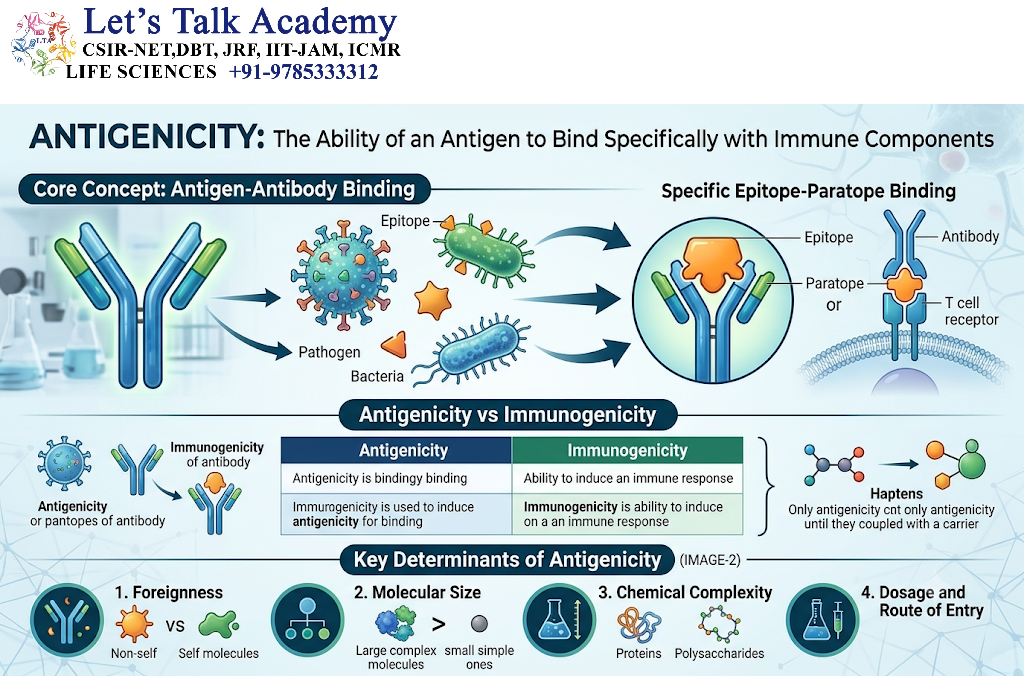
Antigenicity is the ability of a substance or molecular structure to bind specifically to an antibody, B-cell receptor, or T-cell receptor.
This property depends on the presence of a recognizable molecular region called an epitope. The epitope interacts with a complementary binding region on an antibody or antigen receptor.
Antigenicity is determined by the structural and chemical compatibility between the antigen and the receptor. Several molecular forces contribute to this interaction, including hydrogen bonds, electrostatic interactions, hydrophobic interactions, and van der Waals forces.
For example, a bacterial protein may possess an epitope that fits precisely into the antigen-binding site of a particular antibody. The antibody can bind to the protein even if the protein does not stimulate a detectable immune response in the individual.
This example illustrates that specific recognition and immune activation are not the same process.
1.2 Definition of Immunogenicity
Immunogenicity is the ability of a substance to induce an immune response in a suitable biological context.
An immunogenic substance can stimulate one or more components of the adaptive immune system, such as B lymphocytes or T lymphocytes. The resulting response may include antibody production, T-cell activation, clonal expansion, differentiation into effector cells, and the development of immunological memory.
Immunogenicity depends on both the properties of the antigen and the characteristics of the host.
For example, a foreign protein introduced into the body may be taken up by antigen-presenting cells, processed into peptides, and presented to T cells. If the appropriate activation signals are present, antigen-specific lymphocytes may proliferate and produce an immune response.
However, an antigen may also induce tolerance rather than active immunity, depending on the conditions under which it is encountered.
1.3 Historical and Biological Significance
The concepts of antigenicity and immunogenicity developed through research into antibody formation, immune specificity, and the relationship between foreign substances and immune responses.
Early immunological studies established that the immune system could respond selectively to particular substances. Later advances in molecular immunology demonstrated that this specificity arises from interactions between antigenic structures and highly diverse immune receptors.
Modern immunology distinguishes between:
-
The ability of a molecule to be recognized.
-
The ability of a molecule to activate immune cells.
-
The type of immune response produced.
-
The persistence of the response.
-
The development of immune memory or tolerance.
These distinctions are essential for understanding how the same antigen can produce different outcomes in different individuals or under different experimental conditions.
2. Antigenicity
2.1 Molecular Basis of Antigenicity
Antigenicity depends on the ability of an antigen to interact with the binding site of an antibody or antigen receptor.
Antibodies contain variable regions that form a three-dimensional antigen-binding surface called the paratope. The corresponding region of the antigen is known as the epitope.
When the epitope and paratope have complementary shapes and chemical properties, they can form a stable complex.
The interaction is usually noncovalent and reversible. The overall strength of binding depends on the combined contribution of multiple weak molecular forces.
A molecule’s antigenicity may change when its structure changes. For example, heating a protein can alter its three-dimensional conformation and affect the availability of certain epitopes.
2.2 Factors Affecting Antigenicity
2.2.1 Epitope Structure
The nature of an epitope is one of the most important determinants of antigenicity.
An epitope may consist of a continuous sequence of amino acids or a three-dimensional arrangement of chemical groups brought together by protein folding.
If the shape of an epitope changes, an antibody may bind less efficiently or may no longer recognize it.
2.2.2 Molecular Complementarity
Antigen–antibody binding depends on the degree of complementarity between the epitope and the paratope.
Complementarity involves:
-
Shape.
-
Charge distribution.
-
Hydrogen-bonding capacity.
-
Hydrophobicity.
-
Surface accessibility.
A high degree of complementarity generally favors stronger binding, although the actual affinity depends on the entire molecular interface.
2.2.3 Epitope Accessibility
An epitope must be accessible to the immune receptor for effective binding.
Some epitopes are exposed on the outer surface of proteins, whereas others are buried within the folded molecule.
A change in protein folding, aggregation, or chemical modification may expose previously hidden epitopes or conceal exposed ones.
2.2.4 Molecular Conformation
The three-dimensional structure of a protein strongly influences its antigenicity.
Some antibodies recognize the native conformation of a protein. If the protein is denatured, the original conformational epitope may be disrupted.
Other antibodies recognize linear epitopes that remain detectable after denaturation.
2.2.5 Cross-Reactivity
Antigenicity may extend to structurally related molecules.
Cross-reactivity occurs when an antibody or antigen receptor recognizes more than one antigen because the molecules contain similar or shared antigenic determinants.
Cross-reactivity may contribute to recognition of related microorganisms, but it can also complicate diagnostic assays.
2.3 Antigenicity and Antigenic Determinants
An antigenic determinant, or epitope, is the portion of an antigen that interacts with a specific immune receptor.
A single antigen may contain multiple epitopes. Consequently, different antibodies can recognize different regions of the same molecule.
The number, distribution, and accessibility of epitopes influence how an antigen interacts with antibodies and antigen receptors.
However, the presence of many epitopes does not necessarily mean that the antigen will induce a strong immune response. That property depends on immunogenicity.
2.4 Antigenicity of Different Molecules
2.4.1 Proteins
Proteins are often highly antigenic because they possess complex structures and numerous potential epitopes.
2.4.2 Polysaccharides
Polysaccharides can contain repeating molecular structures recognized by antibodies and B-cell receptors.
2.4.3 Lipids
Some lipids and glycolipids are recognized by specialized receptors or presented through CD1 molecules.
2.4.4 Small Chemical Molecules
Certain small molecules can function as haptens. They may bind to antibodies even when they cannot independently induce a strong immune response.
2.4.5 Nucleic Acids
DNA and RNA may be recognized by specialized immune receptors, although their antigenic and immunogenic properties depend on their molecular form and biological context.
3. Immunogenicity
3.1 Molecular and Cellular Basis of Immunogenicity
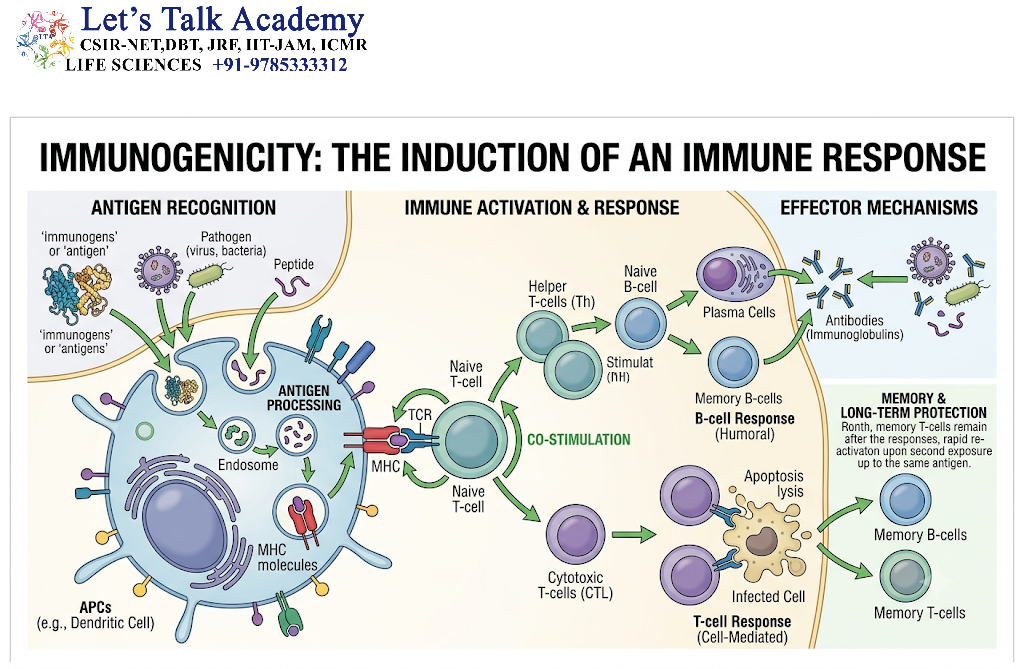
Immunogenicity is the capacity of a substance to stimulate an immune response. It is a complex property involving antigen recognition, innate immune signals, antigen processing, lymphocyte activation, and immune regulation.
For an antigen to induce a strong adaptive immune response, several events may need to occur:
-
The antigen must reach an appropriate anatomical site.
-
The antigen must be encountered by suitable immune cells.
-
Antigen-presenting cells may need to take up and process the antigen.
-
Appropriate antigenic peptides must be presented to T cells, where relevant.
-
Antigen-specific lymphocytes must recognize the antigen.
-
Adequate costimulatory signals must be available.
-
Cytokines and other signaling molecules must support the response.
-
Activated lymphocytes must proliferate and differentiate.
The absence of one or more essential signals may result in weak immune activation, functional unresponsiveness, or tolerance.
3.2 Factors Affecting Immunogenicity
3.2.1 Degree of Foreignness
The immune system generally responds more strongly to substances that are sufficiently different from the host’s own molecular components.
Foreignness is relative rather than absolute. A molecule that is strongly immunogenic in one species may be weakly immunogenic in another.
The existence of immune tolerance means that foreignness alone does not guarantee a response.
3.2.2 Molecular Size
Larger molecules are often more immunogenic than very small molecules because they may possess greater structural complexity and more potential epitopes.
However, size is not the only determinant. A large but chemically simple molecule may be poorly immunogenic.
3.2.3 Chemical Complexity
Molecular complexity can increase immunogenicity by providing a greater variety of chemical structures that may be recognized by lymphocytes.
Complex proteins frequently contain multiple epitopes and can generate peptides suitable for MHC-mediated presentation.
3.2.4 Molecular Degradability
An antigen must often be processed or degraded to generate peptides for T-cell presentation.
A protein that cannot be processed efficiently may have limited capacity to stimulate certain T-cell responses.
At the same time, excessive degradation may reduce the persistence of intact antigenic structures. The relationship between degradation and immunogenicity depends on the immune pathway involved.
3.2.5 Genetic Background of the Host
Genetic variation among individuals can influence immunogenicity.
MHC polymorphism is particularly important because different MHC molecules bind and present different sets of peptides.
As a result, two individuals exposed to the same protein may generate different T-cell responses.
Other genetic differences affecting innate immune signaling and lymphocyte function may also influence the response.
3.2.6 Dose of Antigen
The amount of antigen encountered by the immune system can influence the resulting response.
A suitable dose may stimulate immune activation, whereas very low or very high doses may sometimes promote weak responses or tolerance.
The relationship between antigen dose and immune activation is influenced by the antigen, the route of exposure, and the physiological state of the host.
3.2.7 Route of Administration
The route through which an antigen enters the body influences the immune cells and tissues that encounter it.
Different routes include:
-
Oral.
-
Intranasal.
-
Intradermal.
-
Subcutaneous.
-
Intramuscular.
-
Intravenous.
For example, mucosal exposure may promote localized immune responses or tolerance, depending on the antigen and the surrounding immune environment.
3.2.8 Adjuvants
Adjuvants are substances that enhance an immune response to an antigen when administered together with it.
They may act by stimulating innate immune pathways, improving antigen uptake, enhancing antigen presentation, or prolonging antigen availability.
Adjuvants are particularly important in vaccine development because they can improve the magnitude and quality of antigen-specific immunity.
3.2.9 Host Age and Physiological Condition
Age and physiological condition can influence the immune response to an antigen.
Immune-system development, aging, nutritional status, inflammation, and other physiological factors may affect antigen presentation, lymphocyte activation, and immune memory.
3.2.10 Antigen Persistence
The duration for which an antigen remains available can affect the immune response.
Brief exposure may induce a short-lived response, whereas persistent exposure can lead to prolonged stimulation.
Persistent antigen exposure may also contribute to altered immune function, including immune exhaustion or chronic inflammation in certain contexts.
4. Fundamental Differences Between Antigenicity and Immunogenicity
4.1 Comparative Overview
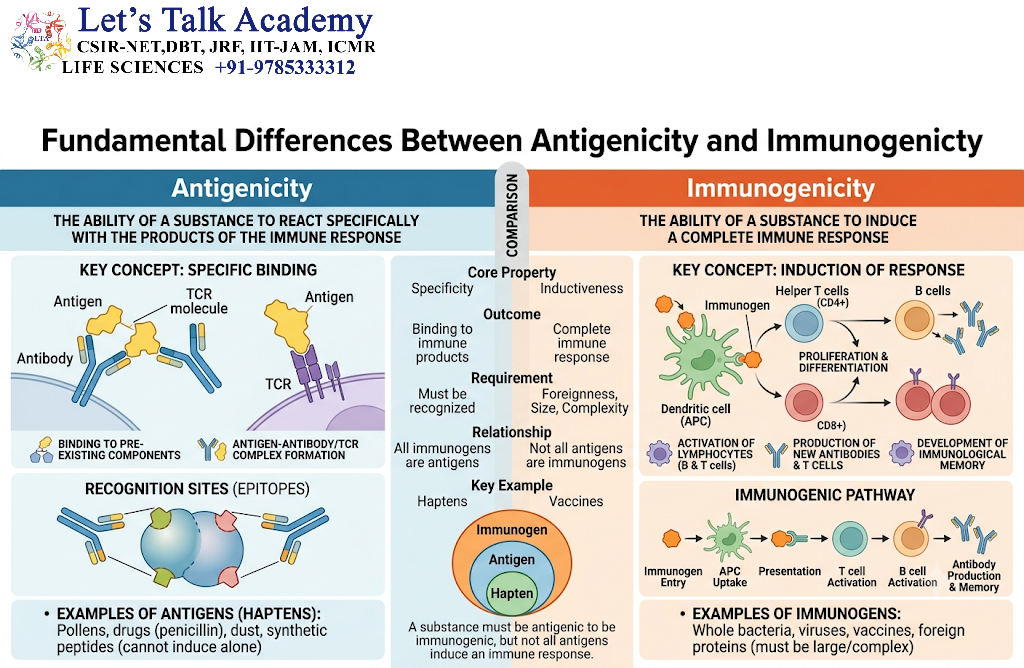
Antigenicity and immunogenicity are related properties, but they should not be used interchangeably. Antigenicity describes the ability of a substance to bind specifically to an immune receptor, whereas immunogenicity describes the ability of a substance to induce an immune response.
The following table summarizes the major differences.
|
Feature |
Antigenicity |
Immunogenicity |
|---|---|---|
|
Definition |
Ability to bind specifically to an antibody or antigen receptor |
Ability to induce an immune response |
|
Primary function |
Molecular recognition |
Immune activation |
|
Main determinants |
Epitope structure and receptor complementarity |
Foreignness, molecular complexity, host factors, and activation signals |
|
Requires immune-cell activation? |
No |
Yes, for an induced adaptive immune response |
|
Example |
A hapten binding to a specific antibody |
A hapten–carrier conjugate stimulating antibody production |
|
Relationship |
An immunogen must be antigenic |
An immunogen is an antigen capable of inducing an immune response |
4.2 Why Antigenicity Does Not Always Lead to Immunogenicity
An important principle of immunology is that the ability to bind an immune receptor does not automatically guarantee the ability to activate the immune system.
A substance may bind to an antibody because its molecular structure complements the antibody’s binding site. However, the same substance may lack the size, complexity, or biological context needed to stimulate lymphocytes.
In addition, adaptive immune activation generally requires more than receptor binding. For example, naïve T-cell activation requires antigen recognition together with appropriate costimulatory and cytokine signals.
Consequently, a substance may be antigenic but not immunogenic under particular conditions.
4.3 The Relationship Between Antigenicity and Immunogenicity
The relationship between the two properties can be expressed as follows:
Immunogen ⊆ Antigen
In biological terms, substances that induce a specific immune response must also possess the relevant antigenic recognition properties. However, not every antigen can induce an immune response.
This distinction is particularly useful when studying haptens, tolerance, vaccine antigens, and antigen-specific immune assays.
4.4 A Practical Example
Consider a small chemical molecule that binds to a specific antibody.
The molecule has antigenicity because the antibody recognizes it. However, when the molecule is administered alone, it may fail to activate sufficient numbers of B and T lymphocytes to produce a strong adaptive immune response.
Now, imagine that the same molecule is attached to a carrier protein.
The carrier protein provides additional molecular complexity and can supply peptides for presentation to helper T cells. A B cell that recognizes the small molecule may internalize the conjugate, present carrier-derived peptides, and receive help from a T cell.
As a result, the small molecule can stimulate the production of specific antibodies.
This example demonstrates how a molecule can possess antigenicity without necessarily possessing sufficient immunogenicity on its own.
5. Haptens and Carrier Proteins
5.1 Definition of a Hapten
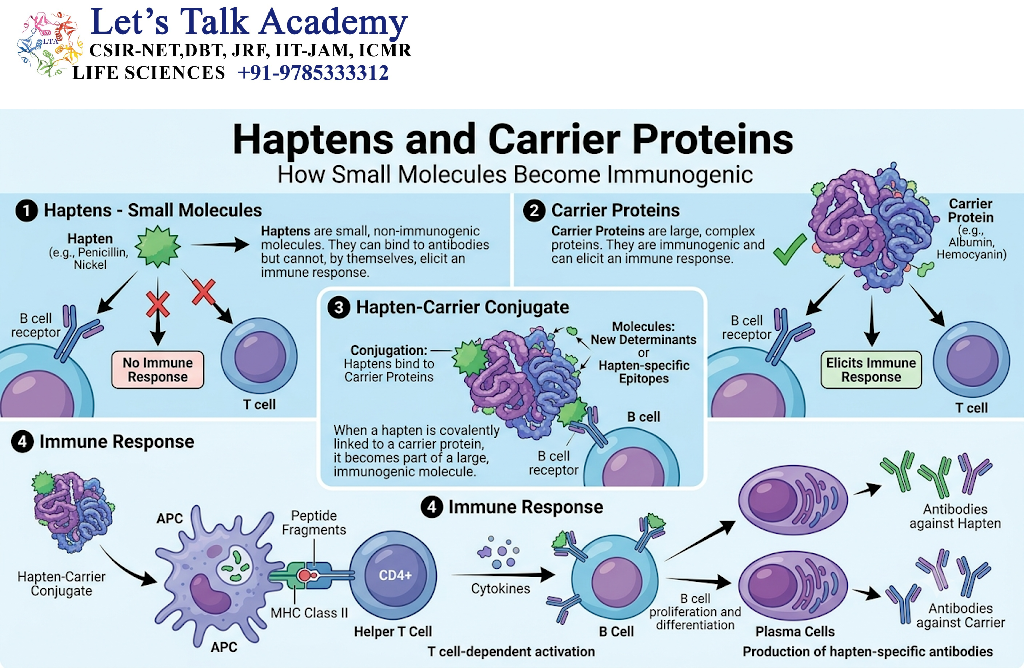
A hapten is a small molecule that can bind specifically to an antibody or antigen receptor but generally cannot induce a strong adaptive immune response independently.
Haptens are often described as incomplete antigens because they possess antigenicity but may lack sufficient immunogenicity when administered alone.
Their small size and limited molecular complexity are important reasons why they may fail to stimulate an effective immune response.
5.2 Characteristics of Haptens
Haptens generally possess the following characteristics:
-
They are relatively small molecules.
-
They can interact specifically with antibodies or B-cell receptors.
-
They may contain a recognizable epitope.
-
They often require attachment to a carrier to induce strong antibody responses.
-
They may be involved in drug-related immune reactions.
-
They can be used experimentally to investigate immune specificity.
The behavior of a hapten depends on its chemical structure and the conditions under which it is encountered.
5.3 Carrier Proteins
A carrier protein is a larger, immunogenic molecule to which a hapten can be attached.
The carrier provides peptide sequences and molecular complexity that can support T-cell-dependent immune responses.
Commonly studied carrier proteins include proteins used in experimental immunology, such as keyhole limpet hemocyanin and bovine serum albumin.
The choice of carrier can influence the strength and characteristics of the immune response.
5.4 Mechanism of Hapten–Carrier Immunogenicity
The production of antibodies against a hapten attached to a carrier protein can involve the following sequence:
Step 1: Formation of the Hapten–Carrier Conjugate
The hapten is chemically linked to a carrier protein. The resulting conjugate contains both the small antigenic molecule and the larger protein component.
Step 2: Recognition by a B Cell
A B cell with a receptor specific for the hapten binds to the hapten–carrier conjugate.
Step 3: Internalization of the Conjugate
The B cell internalizes the conjugate through receptor-mediated endocytosis.
Step 4: Processing of the Carrier Protein
The carrier protein is broken down into peptide fragments within intracellular vesicles.
Step 5: Presentation of Carrier-Derived Peptides
The B cell displays a carrier-derived peptide on an MHC class II molecule.
Step 6: Recognition by a Helper T Cell
A suitable helper T cell recognizes the peptide–MHC class II complex and provides activating signals to the B cell.
Step 7: B-Cell Proliferation and Differentiation
The activated B cell proliferates and differentiates into plasma cells and memory B cells.
Step 8: Antibody Production
Plasma cells secrete antibodies that specifically recognize the hapten.
5.5 Significance of Haptens in Immunology
Haptens are important in several areas of biological research.
They are used to study:
-
Antibody specificity.
-
Carrier effects.
-
B-cell and T-cell cooperation.
-
Drug-related immune responses.
-
Antigen–antibody interactions.
-
The molecular basis of immune recognition.
Certain drugs or their metabolites can bind to host proteins and create new antigenic structures. In susceptible individuals, these modified proteins may contribute to drug-related immune reactions.
6. Epitopes and Their Role in Antigenicity
6.1 Definition of an Epitope
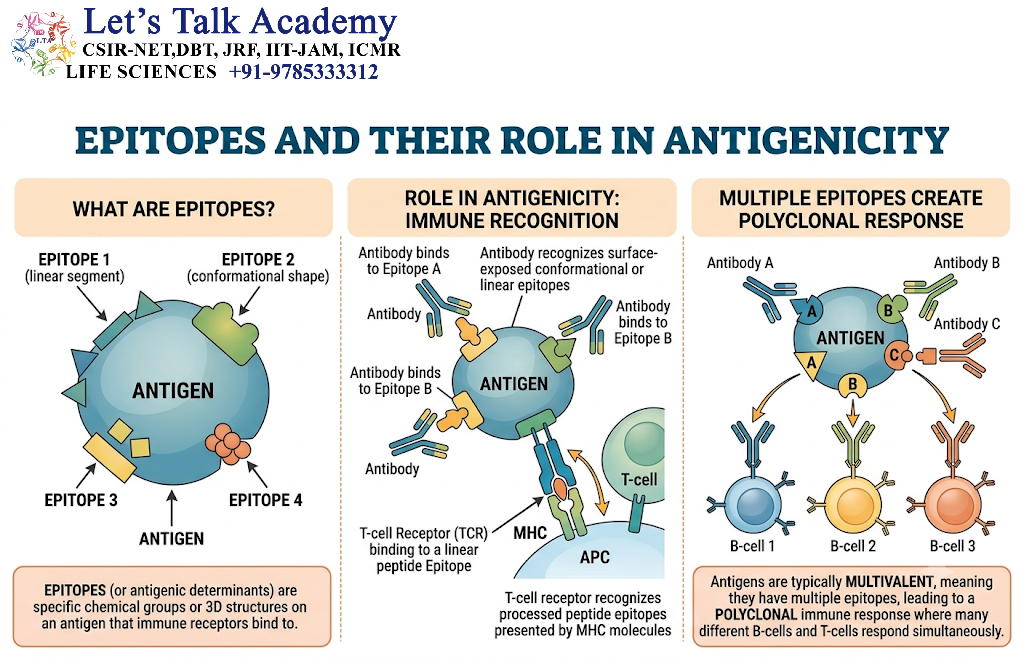
An epitope, also known as an antigenic determinant, is the specific region of an antigen recognized by an antibody, B-cell receptor, or T-cell receptor.
A single antigen may contain several different epitopes. Each epitope may be recognized by a different population of lymphocytes.
The presence of multiple epitopes allows the immune system to generate a diverse response against a single molecule.
6.2 Linear Epitopes
A linear epitope consists of a continuous sequence of amino acids or other chemical units.
In a protein, the recognized amino acids occur next to one another in the primary sequence.
Some linear epitopes remain recognizable even after a protein has been denatured, although their accessibility can still change.
6.3 Conformational Epitopes
A conformational epitope is formed by molecular regions that may be separated in the primary sequence but brought together by the three-dimensional folding of a protein.
Antibodies recognizing conformational epitopes often bind the native structure of a protein.
If the protein unfolds, the spatial arrangement of the epitope may be disrupted, reducing or eliminating antibody binding.
6.4 B-Cell and T-Cell Epitopes
B-cell and T-cell epitopes differ in how they are recognized.
B-cell epitopes are recognized by B-cell receptors or antibodies. They may be present on intact proteins, polysaccharides, lipids, or other molecular structures.
T-cell epitopes are usually peptide fragments presented by MHC molecules. T-cell receptors recognize the peptide in combination with the presenting MHC molecule.
This distinction explains why an antibody may bind an intact protein while a T cell recognizes a peptide fragment derived from the same protein.
6.5 Epitope Accessibility
An epitope must be accessible to its receptor to participate in a binding interaction.
Several factors influence accessibility:
-
Protein folding.
-
Molecular aggregation.
-
Chemical modification.
-
Proteolytic cleavage.
-
Changes in pH.
-
Interaction with other molecules.
Changes in accessibility can influence the sensitivity of diagnostic assays and the effectiveness of antibody-mediated recognition.
6.6 Epitope Density
Epitope density refers to the number or concentration of particular antigenic determinants present on a molecular or particulate surface.
Highly repetitive antigens may bind multiple B-cell receptors simultaneously. This can promote receptor clustering and influence B-cell signaling.
Epitope density is especially relevant to the study of polysaccharide antigens, particulate antigens, and receptor-mediated activation.
7. Molecular Factors Influencing Antigenicity and Immunogenicity
7.1 Molecular Size
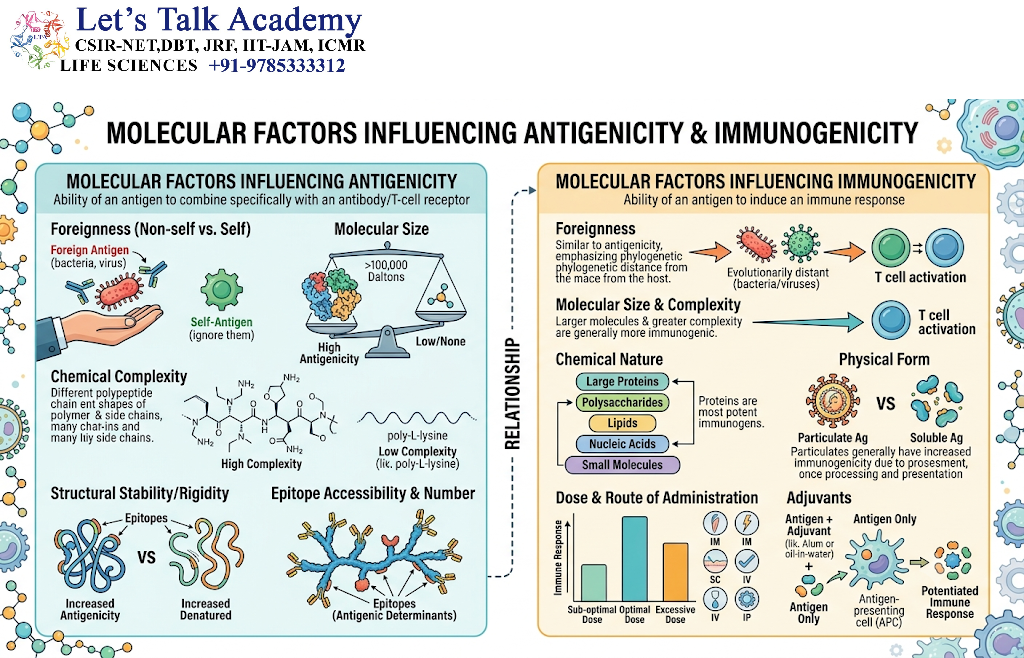
Molecular size can influence both the ability of a substance to induce immunity and the number of antigenic determinants it contains.
Larger proteins often contain more potential epitopes than small molecules. They may also provide peptide sequences that can be processed and presented to T cells.
However, size is not a sufficient condition for immunogenicity. Large molecules may be poorly immunogenic if they lack suitable chemical complexity or are unable to stimulate the appropriate immune pathways.
7.2 Chemical Complexity
Chemical complexity refers to the diversity of structural and chemical features present in a molecule.
Complex proteins containing different amino acid residues and distinct structural regions often have greater potential to stimulate diverse immune responses.
Simple repeating polymers may still be antigenic and immunogenic, but their immune responses can differ from those generated by complex proteins.
7.3 Structural Stability
Structural stability influences the persistence and accessibility of antigenic regions.
A highly unstable protein may undergo rapid degradation, whereas a stable protein may remain available for uptake or recognition for a longer period.
Stability can affect antibody recognition and antigen processing differently. A stable native structure may preserve conformational epitopes, while processing requires the generation of suitable peptide fragments.
7.4 Solubility and Physical State
The physical form of an antigen influences its distribution and uptake by immune cells.
Soluble antigens can diffuse through body fluids and tissues. Particulate antigens may be more efficiently engulfed by macrophages and dendritic cells.
Aggregated molecules may cross-link multiple B-cell receptors and alter signaling strength.
The relationship between physical state and immunogenicity depends on the type of antigen and the immune pathway involved.
7.5 Foreignness
Foreignness is the degree to which a molecular structure differs from the host’s own components.
Substances that are sufficiently different from self-molecules may be recognized as foreign. However, the immune system also possesses mechanisms that prevent responses against many self-antigens.
Foreignness must therefore be considered together with tolerance, antigen processing, and the availability of activating signals.
7.6 Antigen Degradability
Antigen degradability refers to the ability of a molecule to undergo breakdown by cellular or extracellular processes.
Protein degradability is particularly important for T-cell responses because peptide fragments must often be generated before they can bind MHC molecules.
If a protein cannot be processed effectively, certain T-cell responses may be limited.
7.7 Molecular Charge
The electrical charge of an antigen can influence its solubility, interactions with other molecules, uptake by cells, and binding to immune receptors.
Charge distribution at the antigen–antibody interface can contribute to binding specificity and affinity.
However, overall molecular charge alone does not predict whether an antigen will be immunogenic.
7.8 Molecular Repetition
Repeated molecular structures can increase the ability of an antigen to cluster B-cell receptors.
Certain bacterial polysaccharides contain repeating units that promote extensive receptor cross-linking.
This property may contribute to T-independent B-cell activation.
8. Cellular Factors Influencing Immunogenicity
8.1 Role of Antigen-Presenting Cells
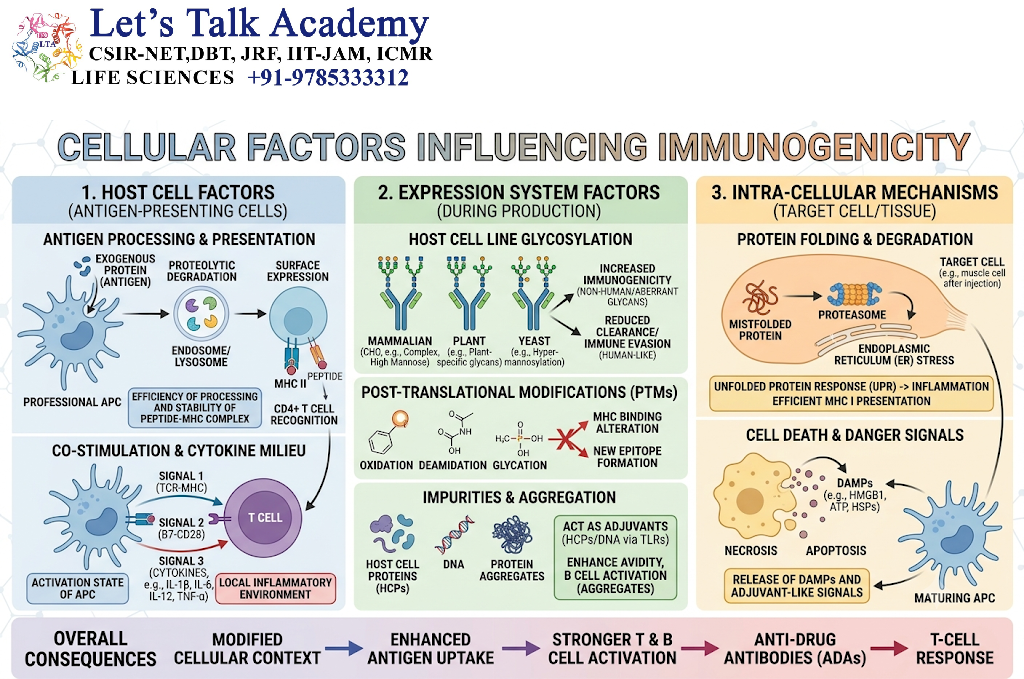
Antigen-presenting cells are essential for initiating many adaptive immune responses.
Dendritic cells, macrophages, and B cells can process and present antigen-derived peptides through MHC class II molecules.
Dendritic cells are particularly important for activating naïve T cells.
The ability of antigen-presenting cells to stimulate immunity depends on their maturation state, antigen uptake, MHC expression, and costimulatory signals.
8.2 Costimulatory Signals
Antigen recognition by a T-cell receptor is generally not sufficient to activate a naïve T cell.
Costimulatory signals provide additional information that helps determine whether the T cell should become activated.
A well-known interaction involves CD28 on the T cell and CD80 or CD86 on the antigen-presenting cell.
When antigen recognition occurs without suitable costimulation, the T cell may become functionally unresponsive or undergo other tolerance-associated outcomes.
8.3 Role of Cytokines
Cytokines are signaling proteins that regulate immune-cell communication.
They influence:
-
Lymphocyte proliferation.
-
Differentiation of T-cell subsets.
-
Activation of macrophages.
-
B-cell responses.
-
Inflammatory processes.
-
Development of immune memory.
The cytokine environment surrounding antigen exposure can influence the type and strength of the resulting immune response.
8.4 Role of Innate Immune Receptors
Innate immune receptors recognize microbial components or signals associated with tissue injury.
These receptors help activate antigen-presenting cells and promote an environment in which adaptive immune responses can develop.
Examples include Toll-like receptors, NOD-like receptors, and other pattern-recognition receptors.
The activation of innate immune pathways can increase the immunogenicity of certain antigens by promoting inflammation and costimulation.
8.5 Role of B Cells
B cells recognize antigenic structures through B-cell receptors.
After appropriate activation, B cells may proliferate and differentiate into plasma cells and memory B cells.
In T-dependent responses, B cells can present carrier-derived peptides to helper T cells and receive signals required for effective antibody production.
8.6 Role of T Cells
T cells recognize peptide–MHC complexes through their T-cell receptors.
Helper T cells can promote B-cell activation and support other immune functions. Cytotoxic T cells can recognize and eliminate infected or abnormal cells.
The ability of an antigen to generate a T-cell response depends on peptide processing, MHC binding, T-cell receptor specificity, and the availability of activation signals.
9. Antigenicity and Immunogenicity in Antigen Processing
9.1 Overview of Antigen Processing
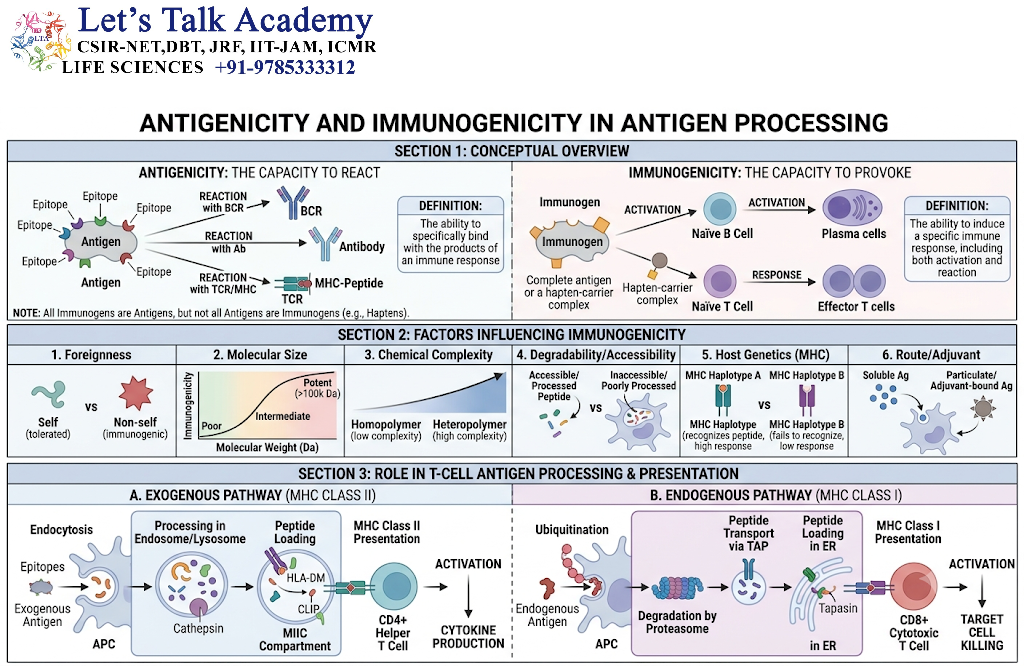
Antigen processing involves the breakdown of proteins into smaller fragments, particularly peptides, that can be presented to T cells.
Antigen processing is essential for many T-cell responses but is not required for every type of antibody–antigen interaction.
B-cell receptors can recognize intact antigens, whereas conventional T-cell recognition generally requires peptide presentation by MHC molecules.
9.2 MHC Class I Pathway
MHC class I molecules generally present peptides derived from intracellular proteins to CD8-positive T cells.
The main steps include:
-
Breakdown of intracellular proteins by proteolytic systems.
-
Transport of suitable peptides into the endoplasmic reticulum or other relevant compartments.
-
Loading of peptides onto MHC class I molecules.
-
Transport of peptide–MHC class I complexes to the cell surface.
-
Recognition by appropriate CD8-positive T cells.
This pathway is important in immune responses against many intracellular pathogens and abnormal cells.
9.3 MHC Class II Pathway
MHC class II molecules generally present peptides derived from proteins acquired from the extracellular environment to CD4-positive T cells.
The principal stages include:
-
Uptake of extracellular proteins by antigen-presenting cells.
-
Breakdown of proteins in endosomal or lysosomal compartments.
-
Assembly and transport of MHC class II molecules.
-
Loading of suitable peptides onto MHC class II molecules.
-
Transport of peptide–MHC class II complexes to the cell surface.
-
Recognition by CD4-positive T cells.
This pathway is important for the activation of helper T cells.
9.4 Cross-Presentation
Cross-presentation is a specialized process in which extracellularly acquired antigens are presented by MHC class I molecules.
This process allows certain dendritic cells to activate CD8-positive T cells against antigens that were not produced directly inside the dendritic cell.
Cross-presentation is relevant to immune responses against certain viruses, tumors, and other extracellular sources of antigen.
10. Antigenicity, Immunogenicity, and Immune Tolerance
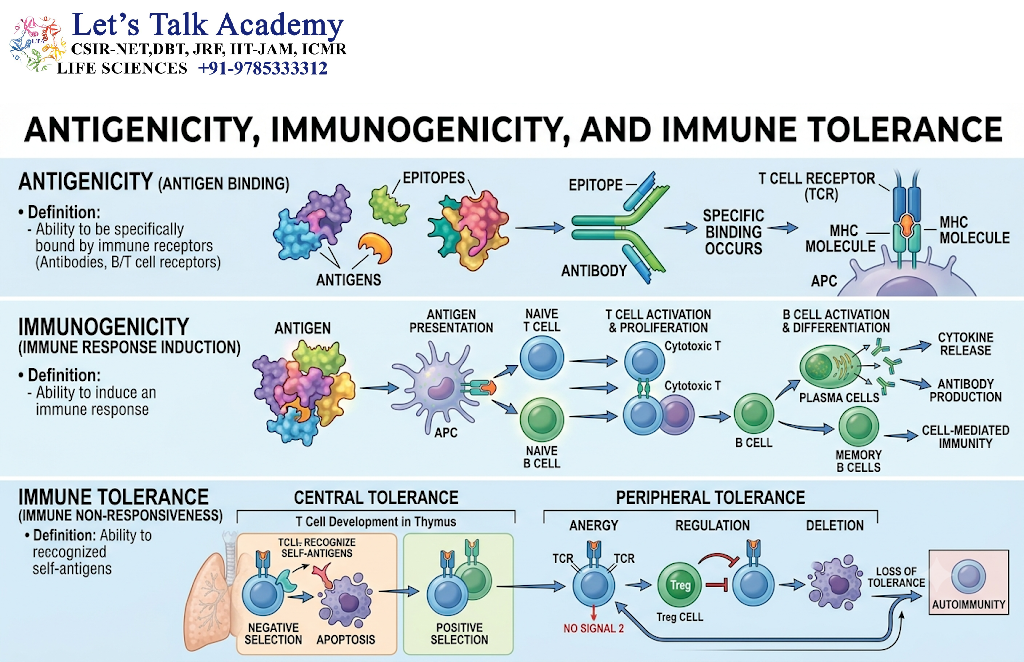
10.1 Definition of Immune Tolerance
Immune tolerance is a state in which the immune system does not mount a damaging response against a particular antigen.
Tolerance is essential for preventing harmful responses against self-antigens and many harmless environmental substances.
An antigen may be recognized by immune receptors without triggering an effective immune response if the surrounding biological conditions favor tolerance.
10.2 Central Tolerance
Central tolerance develops during the formation of lymphocytes in primary lymphoid organs.
During T-cell development in the thymus and B-cell development in the bone marrow, mechanisms remove or modify many strongly self-reactive lymphocytes.
These processes reduce the likelihood of harmful immune responses against self-components.
10.3 Peripheral Tolerance
Peripheral tolerance regulates lymphocytes after they have matured and entered the peripheral immune system.
Mechanisms include:
-
Functional inactivation of lymphocytes.
-
Deletion of certain reactive cells.
-
Suppression by regulatory T cells.
-
Presentation of antigens in tolerogenic environments.
Peripheral tolerance is important because not every self-antigen is encountered during lymphocyte development.
10.4 Antigen Recognition Without Activation
An antigen may bind to a lymphocyte receptor without providing the additional signals needed for effective activation.
For example, a naïve T cell may recognize a peptide–MHC complex on a cell that lacks appropriate costimulatory activity.
Depending on the circumstances, the T cell may become unresponsive or develop another regulated state.
This principle demonstrates that immune responses depend on both molecular recognition and cellular context.
10.5 Immunogenicity and Autoimmunity
Autoimmunity occurs when immune responses target the body’s own molecules or tissues.
A self-molecule may become immunogenic under certain conditions, including:
-
Loss of immune tolerance.
-
Changes in protein structure.
-
Release of normally hidden antigens.
-
Tissue injury.
-
Altered antigen processing.
-
Inflammatory activation.
Not every autoantigen causes disease. Autoimmune pathology requires an appropriate combination of antigen recognition, immune activation, and tissue-specific factors.
11. Antigenicity and Immunogenicity in Vaccines
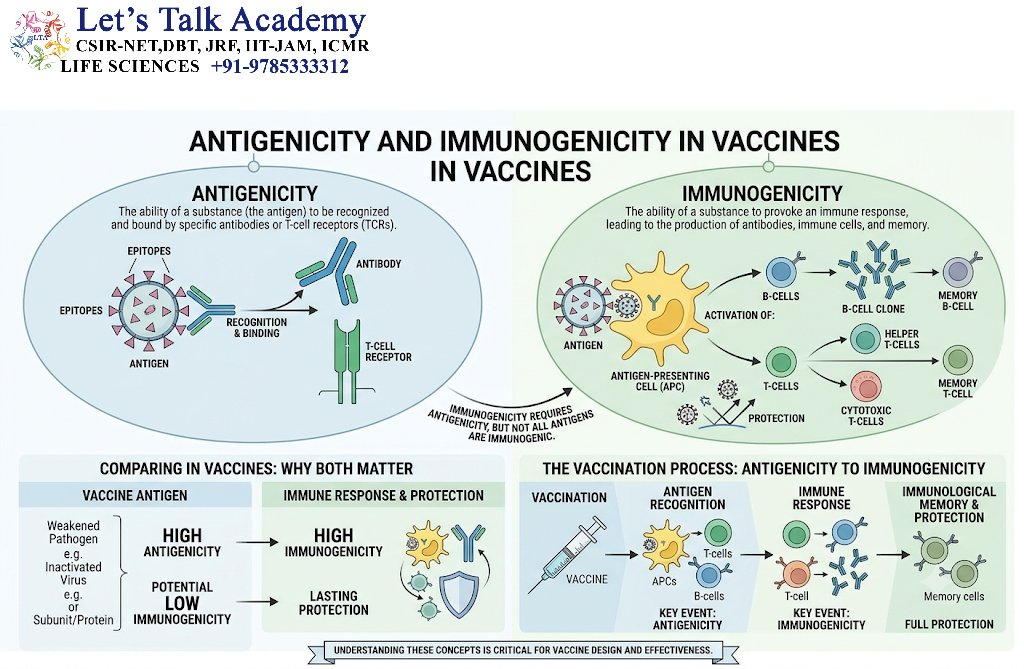
11.1 Role of Antigenicity in Vaccine Design
An effective vaccine antigen must contain molecular structures that can be recognized by the immune system.
The selection of antigenic regions is important because antibodies and T cells may recognize different parts of the same molecule.
A vaccine may be designed to induce antibodies against a surface-exposed epitope or T-cell responses against conserved internal protein regions.
11.2 Role of Immunogenicity in Vaccines
A vaccine antigen must not only be recognized but also stimulate a sufficiently strong and useful immune response.
Factors influencing vaccine immunogenicity include:
-
Antigen composition.
-
Antigen dose.
-
Delivery system.
-
Adjuvants.
-
Route of administration.
-
Antigen stability.
-
Host characteristics.
-
Innate immune activation.
The goal is to generate protective immunity and, where possible, durable immunological memory.
11.3 Protein Subunit Antigens
Protein subunit vaccines contain selected proteins or protein fragments derived from a pathogen.
These antigens can be produced using recombinant DNA technology.
Their immunogenicity may be enhanced through adjuvants or delivery systems that promote antigen uptake and immune activation.
11.4 Polysaccharide and Conjugate Antigens
Polysaccharide antigens can stimulate antibody responses, but some may produce relatively limited immune memory.
Conjugate vaccines link a polysaccharide to a carrier protein. This arrangement can promote a T-dependent response by allowing polysaccharide-specific B cells to receive help from carrier-peptide-specific helper T cells.
The resulting response can improve the quality and durability of antibody-mediated immunity.
11.5 Antigenic Variation and Vaccine Responses
Some pathogens undergo changes in their antigenic structures.
These changes may reduce the binding of previously generated antibodies or alter the peptides recognized by T cells.
Antigenic variation is therefore an important consideration when designing vaccines against genetically variable microorganisms.
12. Laboratory Applications of Antigenicity and Immunogenicity
12.1 Enzyme-Linked Immunosorbent Assay
The enzyme-linked immunosorbent assay, or ELISA, is used to detect or quantify antigens or antibodies.
In an antigen-detection ELISA, antibodies are used to capture and identify a target antigen.
The assay depends on antigenicity because the antibodies must bind specifically to the target molecule.
The presence of a detectable signal indicates that the target antigen has been captured and identified under the test conditions.
12.2 Western Blotting
Western blotting is used to detect specific proteins in a complex sample.
The protein is separated by electrophoresis and transferred to a membrane. A primary antibody then binds to the target protein.
The specificity of the antibody–protein interaction depends on antigenicity.
Western blotting is frequently used to study protein expression and the molecular specificity of antibodies.
12.3 Immunofluorescence
Immunofluorescence uses fluorescently labeled antibodies to detect antigens in cells or tissue sections.
The method can reveal the location of a specific antigen within a cell or tissue.
The technique is useful for investigating protein distribution, cellular structures, and disease-associated changes in antigen expression.
12.4 Flow Cytometry
Flow cytometry analyzes individual cells based on physical and molecular characteristics.
Fluorescent antibodies can be used to detect cell-surface or intracellular antigens.
The method is useful for studying:
-
Immune-cell populations.
-
Cell-surface marker expression.
-
Cellular activation.
-
Antigen-specific cell populations.
-
Tumor-associated markers.
12.5 Immunoprecipitation
Immunoprecipitation uses a specific antibody to isolate a target antigen from a complex biological mixture.
The antibody–antigen complex is separated from other molecules, allowing researchers to study protein expression and molecular interactions.
12.6 Antigen-Specific T-Cell Assays
Several techniques can be used to identify or measure T-cell responses against specific antigens.
Examples include:
-
Peptide–MHC tetramer staining.
-
Enzyme-linked immunospot assays.
-
Intracellular cytokine staining.
-
T-cell proliferation assays.
-
Functional cytotoxicity assays.
These techniques help researchers investigate antigen-specific cellular immunity and the immunogenicity of candidate antigens.
13. Advanced Concepts Related to Antigenicity and Immunogenicity
13.1 Immunodominance
Immunodominance is the phenomenon in which certain epitopes generate stronger immune responses than other epitopes present in the same antigen.
Although a protein may contain many potential epitopes, only some may stimulate prominent responses in a particular individual.
Immunodominance depends on antigen processing, MHC binding, T-cell receptor availability, and the history of previous antigen exposure.
13.2 Antigenic Competition
Antigenic competition occurs when multiple antigens influence one another’s immune responses.
When different antigens are encountered simultaneously, they may compete for uptake, processing, presentation, or access to immune resources.
The outcome depends on antigen concentration, timing, molecular structure, and the biological context.
13.3 Epitope Spreading
Epitope spreading refers to the expansion of an immune response from an initial epitope to additional epitopes during the course of an immune reaction.
It may occur when tissue damage exposes new molecular structures or changes antigen processing.
Epitope spreading is relevant to certain autoimmune diseases, chronic inflammatory conditions, and studies of immune responses against tumors.
13.4 Cryptic Epitopes
Cryptic epitopes are antigenic determinants that are poorly recognized under ordinary conditions but may become accessible or immunologically relevant after structural or processing changes.
They may be exposed through protein unfolding, proteolysis, chemical modification, or changes in antigen processing.
Cryptic epitopes are important in research on immune tolerance and autoimmune responses.
13.5 Neoantigens
Neoantigens are newly generated antigenic structures that arise from changes in proteins.
In cancer, genetic mutations may create altered peptide sequences that are presented by MHC molecules and recognized by T cells as different from normal self-peptides.
Neoantigens are being studied as potential targets for personalized cancer immunotherapy.
13.6 Superantigens
Superantigens are molecules that can activate unusually large numbers of T cells by interacting with MHC class II molecules and particular regions of T-cell receptors outside the conventional peptide-binding interaction.
Unlike conventional antigens, superantigens do not require each responding T-cell receptor to recognize a unique peptide epitope.
Some bacterial toxins have superantigenic properties. Their activity can lead to extensive T-cell activation and cytokine release.
13.7 Altered Peptide Ligands
Altered peptide ligands are modified peptide sequences that interact with T-cell receptors but produce signaling outcomes that differ from those produced by the original peptide.
Depending on the interaction, these molecules may cause full activation, partial activation, or altered functional responses.
They are useful in studying T-cell receptor signaling and the relationship between peptide structure and immune activation.
13.8 Affinity and Avidity
Affinity refers to the strength of a single binding interaction between an antigen-binding site and an epitope.
Avidity refers to the combined strength of multiple interactions between a multivalent antibody or receptor system and an antigen.
An antibody with moderate affinity may display strong overall avidity when it forms several simultaneous interactions with a multivalent antigen.
These concepts are important in the interpretation of antigen–antibody binding assays.
14. Experimental Factors Affecting the Measurement of Antigenicity and Immunogenicity
14.1 Antigen Concentration in Binding Assays
The concentration of an antigen can affect the detection of antigen–antibody interactions.
If the antigen concentration is too low, the interaction may produce a signal below the detection limit of the assay.
If the antigen concentration is very high, the assay may become saturated, making it difficult to distinguish differences in concentration.
14.2 Antibody Affinity
The affinity of an antibody for its target antigen influences the sensitivity and specificity of many immunological assays.
High-affinity antibodies may detect low concentrations of antigen under suitable conditions, although assay performance also depends on epitope accessibility and other experimental variables.
14.3 Antigen Denaturation
Denaturation can alter the structure of protein antigens.
If an assay depends on conformational epitopes, denaturation may reduce antibody binding. If the assay detects linear epitopes, denaturation may have a smaller effect or may expose additional binding sites.
14.4 Experimental Conditions
The interaction between an antigen and an antibody can be influenced by:
-
Temperature.
-
pH.
-
Salt concentration.
-
Incubation time.
-
Buffer composition.
-
Molecular aggregation.
-
Nonspecific binding.
These variables should be controlled when studying antigenicity experimentally.
14.5 Measuring Immunogenicity
Immunogenicity can be assessed using different biological measurements.
Researchers may examine:
-
Antibody titers.
-
Antibody affinity.
-
B-cell activation.
-
T-cell proliferation.
-
Cytokine production.
-
Frequency of antigen-specific T cells.
-
Formation of memory cells.
-
Functional protection in appropriate experimental models.
A single measurement may not capture the complete immunogenicity of an antigen. For example, high antibody levels do not necessarily indicate that the antibodies are protective.
15. Important Differences: Frequently Confused Terms
15.1 Antigenicity Versus Immunogenicity
Antigenicity is the ability to bind a specific immune receptor.
Immunogenicity is the ability to induce an immune response.
15.2 Antigen Versus Immunogen
An antigen is recognized by a specific immune receptor.
An immunogen is an antigen capable of inducing an immune response under suitable conditions.
15.3 Epitope Versus Paratope
An epitope is the region of the antigen that is recognized.
A paratope is the complementary antigen-binding region of an antibody or receptor.
15.4 Hapten Versus Carrier
A hapten is a small molecule that may bind to an antibody but generally requires a carrier to induce a strong immune response.
A carrier is a larger immunogenic molecule that can provide the necessary biological context for a hapten-specific response.
15.5 Antigen Recognition Versus T-Cell Activation
Antigen recognition occurs when an immune receptor interacts with its target.
T-cell activation requires antigen recognition together with appropriate additional signals, especially for naïve T cells.
15.6 Affinity Versus Avidity
Affinity refers to the strength of one binding interaction.
Avidity refers to the combined strength of multiple binding interactions.


