
1. Introduction
Antibodies are specialized proteins of the immune system that play a central role in humoral immunity. They are produced by activated B lymphocytes, particularly plasma cells, in response to foreign substances known as antigens.
Antibodies recognize specific molecular regions called epitopes and bind to them with high specificity. Through this binding, antibodies can neutralize pathogens and toxins, promote their removal, activate complement, and facilitate recognition of foreign particles by other immune cells.
Antibodies are also known as immunoglobulins (Igs). They are glycoproteins belonging to the immunoglobulin superfamily.
The basic antibody molecule has a characteristic Y-shaped structure consisting of heavy and light polypeptide chains. Its structure is closely related to its ability to recognize antigens and perform different immune functions.
2. Definition of Antibodies
An antibody is an antigen-specific immunoglobulin produced by B cells and plasma cells that binds specifically to an antigenic epitope.
Antibodies can exist in two major forms:
- Membrane-bound immunoglobulin – functions as the B-cell receptor (BCR).
- Secreted immunoglobulin – released by plasma cells into blood, lymph and other body fluids.
Basic Principle
Antigen → B-cell recognition → B-cell activation → Plasma-cell differentiation → Antibody secretion
3. General Structure of an Antibody Molecule
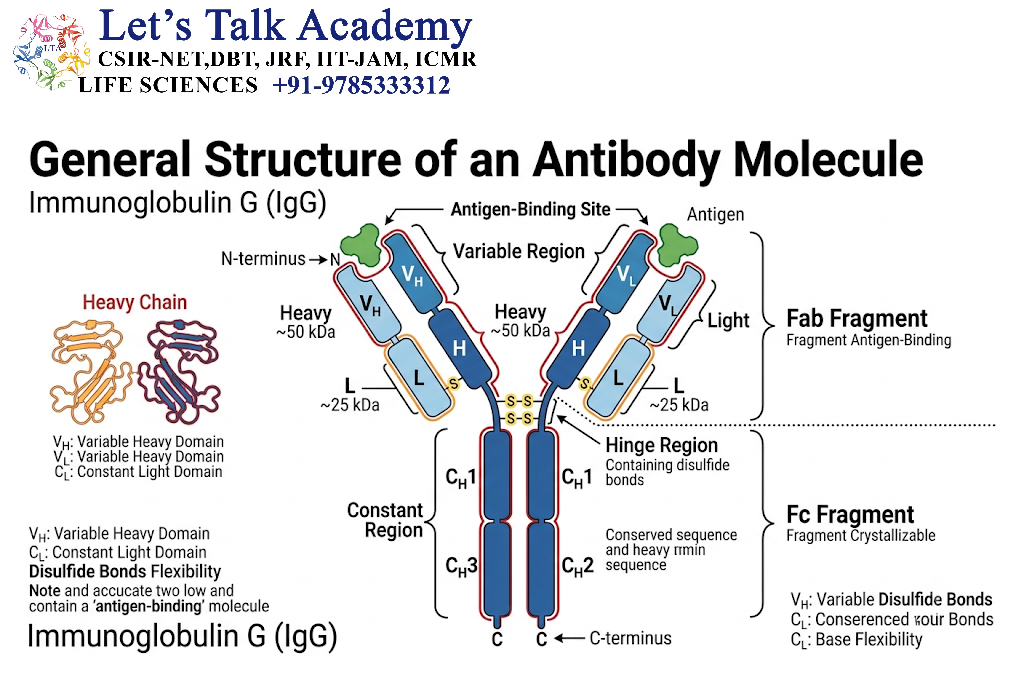
A typical antibody molecule is composed of four polypeptide chains:
- Two identical heavy chains
- Two identical light chains
These chains are held together by disulfide bonds and non-covalent interactions.
Simplified Structure
                 Antigen-binding site
                    ↑       ↑
                  /           \
              Light           Light
              chain            chain
                \               /
                 \             /
                Heavy       Heavy
                 chain       chain
                    \       /
                     \     /
                       |
                       |
                    Fc region
The molecule can be divided functionally into:
- Fab regions – responsible mainly for antigen recognition
- Fc region – responsible mainly for interaction with immune effector systems
- Hinge region – provides flexibility between Fab and Fc regions
4. Heavy Chains
The heavy chains are large polypeptide chains that determine much of the antibody’s class and effector properties.
Each antibody contains two identical heavy chains.
The type of heavy chain determines the immunoglobulin class:
| Antibody Class | Heavy Chain |
|---|---|
| IgG | γ (gamma) |
| IgA | α (alpha) |
| IgM | μ (mu) |
| IgD | δ (delta) |
| IgE | ε (epsilon) |
The heavy chain contains:
- Variable region
- Constant regions
The number and organization of constant domains vary among antibody classes.
5. Light Chains
Each antibody contains two identical light chains.
There are two types of light chains:
- Kappa (κ)
- Lambda (λ)
A particular antibody molecule contains either two κ chains or two λ chains, not one of each.
Each light chain contains:
- One variable domain
- One constant domain
Light chains contribute directly to antigen recognition because their variable regions form part of the antigen-binding site.
6. Variable and Constant Regions
Both heavy and light chains contain variable and constant regions.
6.1 Variable Region
The variable regions are located near the amino-terminal ends of the chains.
They determine antigen-binding specificity.
The variable regions contain highly variable sequences known as complementarity-determining regions (CDRs).
6.2 Constant Region
Constant regions are more conserved within an antibody class.
They determine many of the biological functions of antibodies, including interactions with:
- Fc receptors
- Complement proteins
- Immune cells
Comparison
| Feature | Variable Region | Constant Region |
|---|---|---|
| Main role | Antigen recognition | Effector functions |
| Sequence variation | High | Relatively low |
| Contains CDRs | Yes | No |
| Determines antigen specificity | Yes | No |
| Determines antibody class | No | Yes |
7. Complementarity-Determining Regions
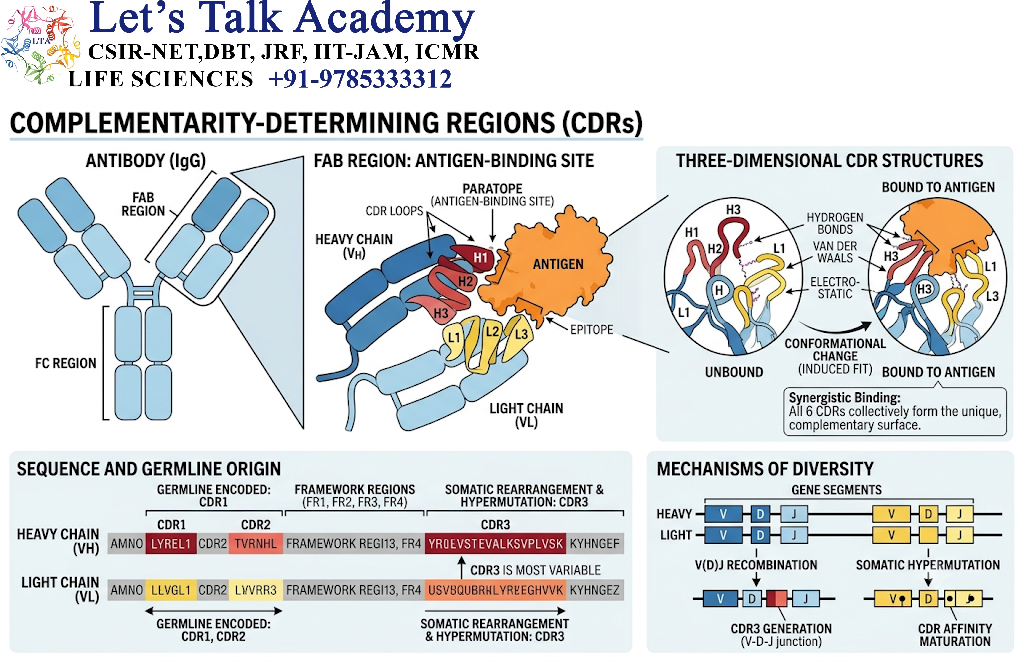
The antigen-binding site contains highly variable regions called complementarity-determining regions (CDRs).
There are three major CDRs in each variable domain:
- CDR1
- CDR2
- CDR3
The CDRs from the heavy and light chains combine to form the antigen-binding surface.
CDR3 is often particularly diverse and contributes substantially to antigen-binding specificity.
8. Framework Regions
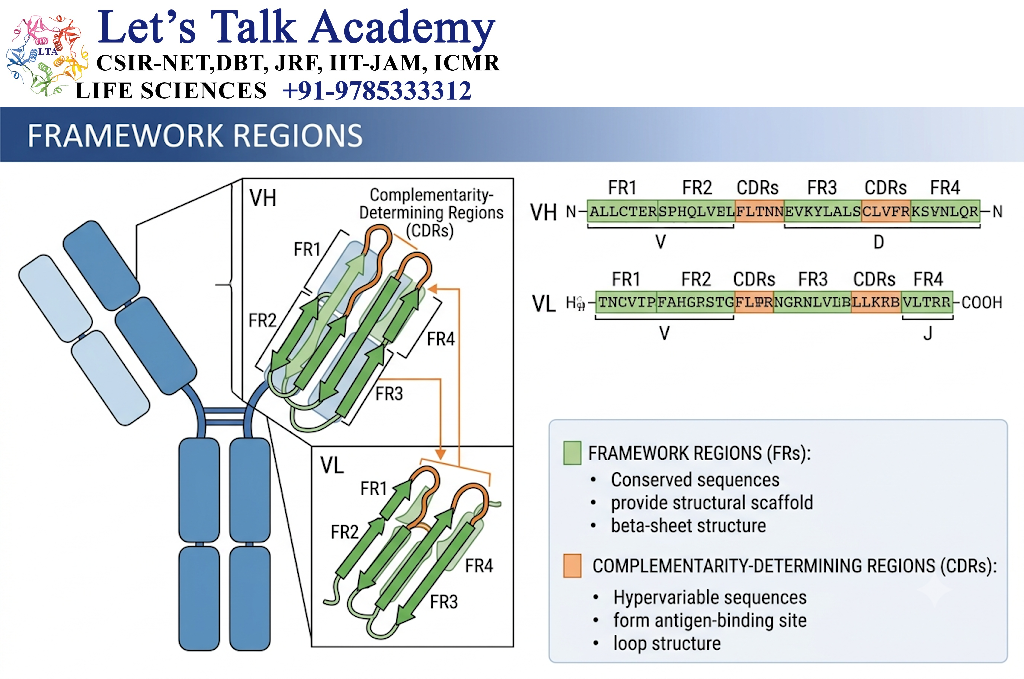
The variable regions also contain relatively conserved sequences called framework regions.
Framework regions provide structural support for the CDRs.
Thus, a variable domain can be conceptually divided into:
Framework regions + CDRs
The framework maintains the three-dimensional structure needed to position the CDRs correctly for antigen recognition.
9. Antigen-Binding Site
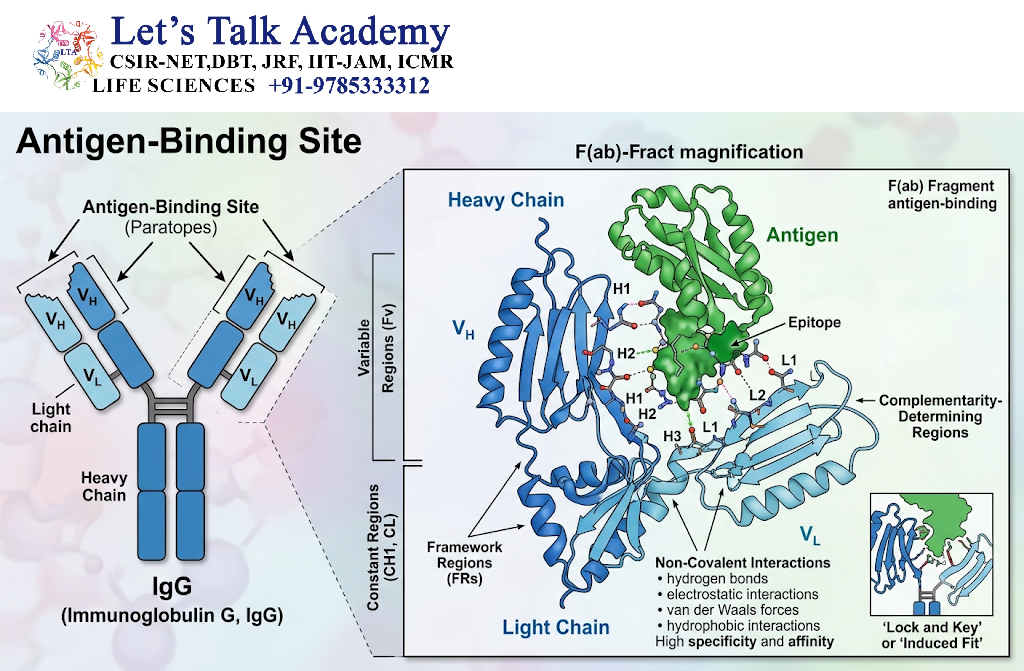
Each antibody contains antigen-binding sites at the ends of its Fab arms.
A conventional antibody molecule has two antigen-binding sites.
These sites are formed by the association of:
- One heavy-chain variable domain
- One light-chain variable domain
The antigen-binding site recognizes a specific epitope through molecular complementarity.
Interaction
Epitope ↔ Antibody binding site
The interaction involves non-covalent forces such as:
- Hydrogen bonds
- Electrostatic interactions
- Hydrophobic interactions
- Van der Waals forces
10. Fab Region
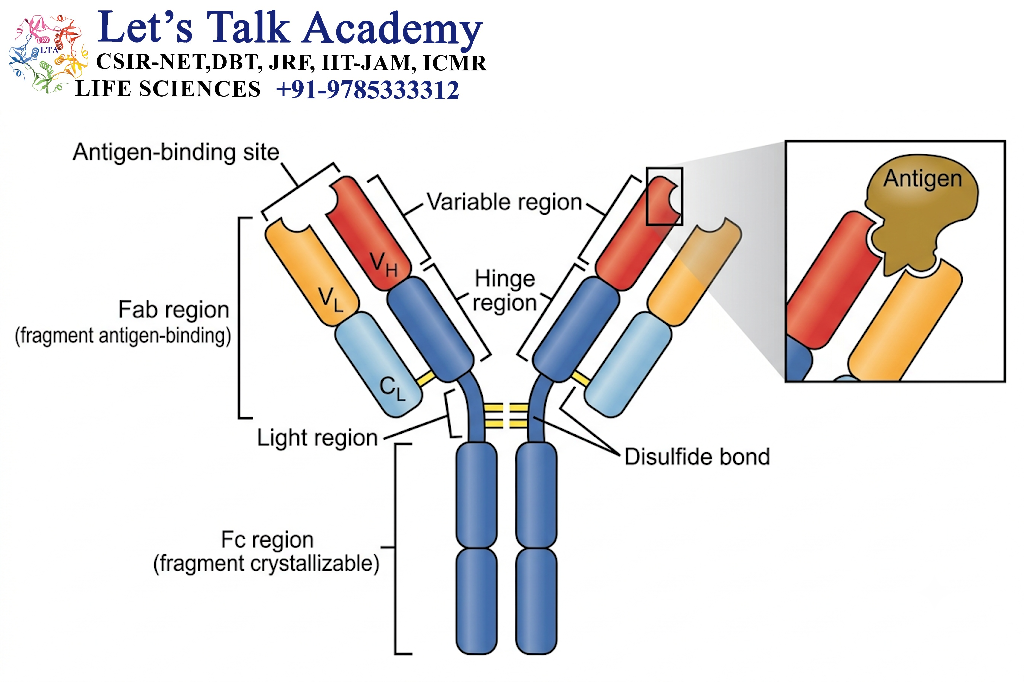
Fab stands for fragment antigen-binding.
The Fab region contains:
- Light chain
- Variable portion of heavy chain
- Variable portion of light chain
- Associated constant-domain regions
Its principal function is antigen recognition and binding.
An antibody with two Fab arms can bind two identical or structurally related epitopes.
11. Fc Region
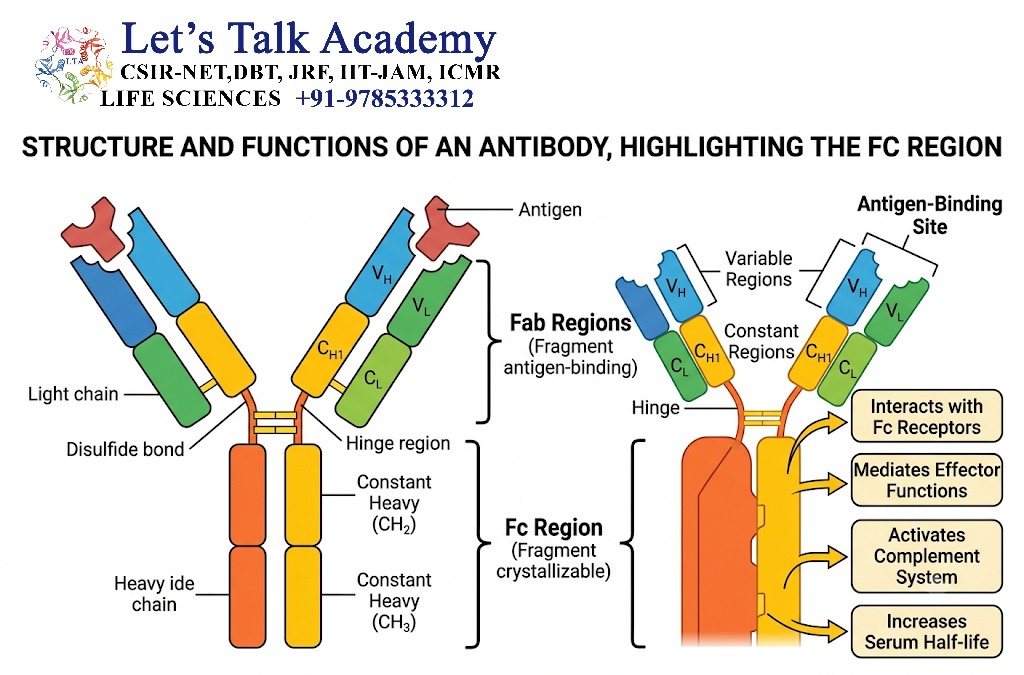
Fc stands for fragment crystallizable.
The Fc region is formed primarily by the constant regions of the heavy chains.
It does not normally determine antigen specificity.
Instead, it mediates many biological functions, including interactions with:
- Fc receptors on immune cells
- Complement components
- Placental transport mechanisms for certain antibodies
The Fc region therefore connects antigen recognition to downstream immune responses.
12. Hinge Region
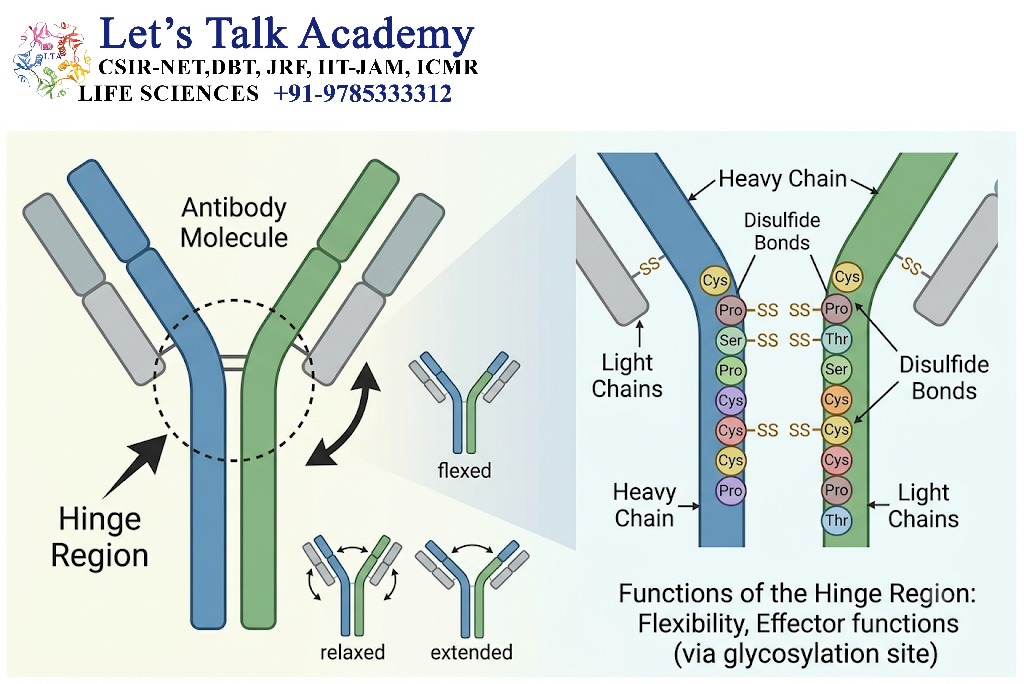
Many antibody classes contain a flexible hinge region between the Fab arms and Fc region.
The hinge allows the Fab arms to move relative to one another.
This flexibility helps antibodies bind epitopes that are separated by different distances on antigen surfaces.
The length and flexibility of the hinge vary among antibody classes.
13. Disulfide Bonds
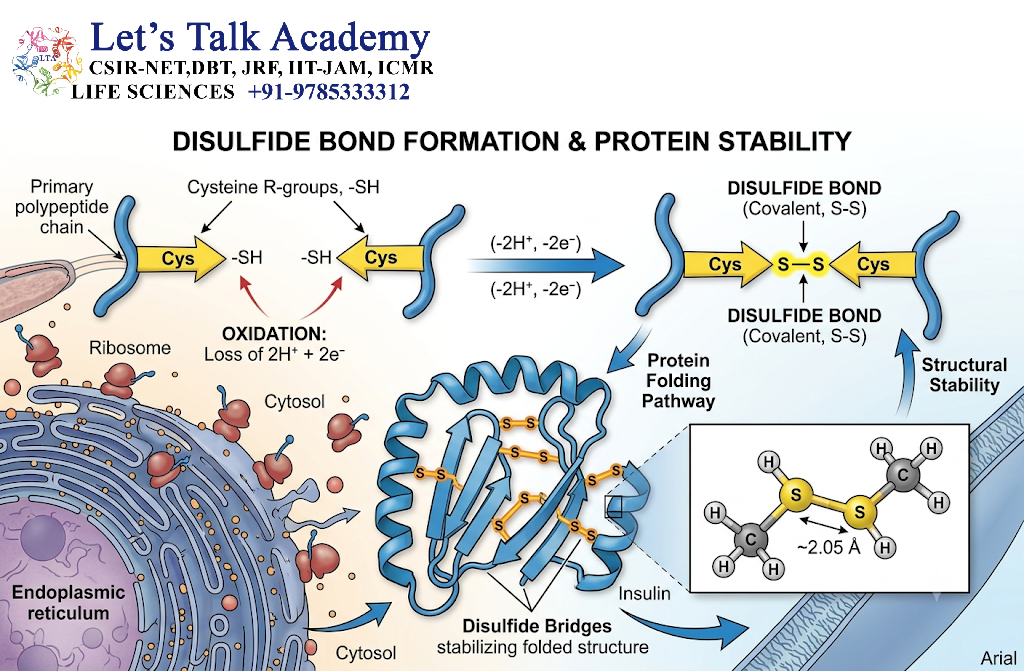
Disulfide bonds help stabilize antibody structure.
They occur:
- Between heavy chains
- Between heavy and light chains
- Within individual immunoglobulin domains
These covalent bonds provide structural stability to the antibody molecule.
14. Immunoglobulin Fold
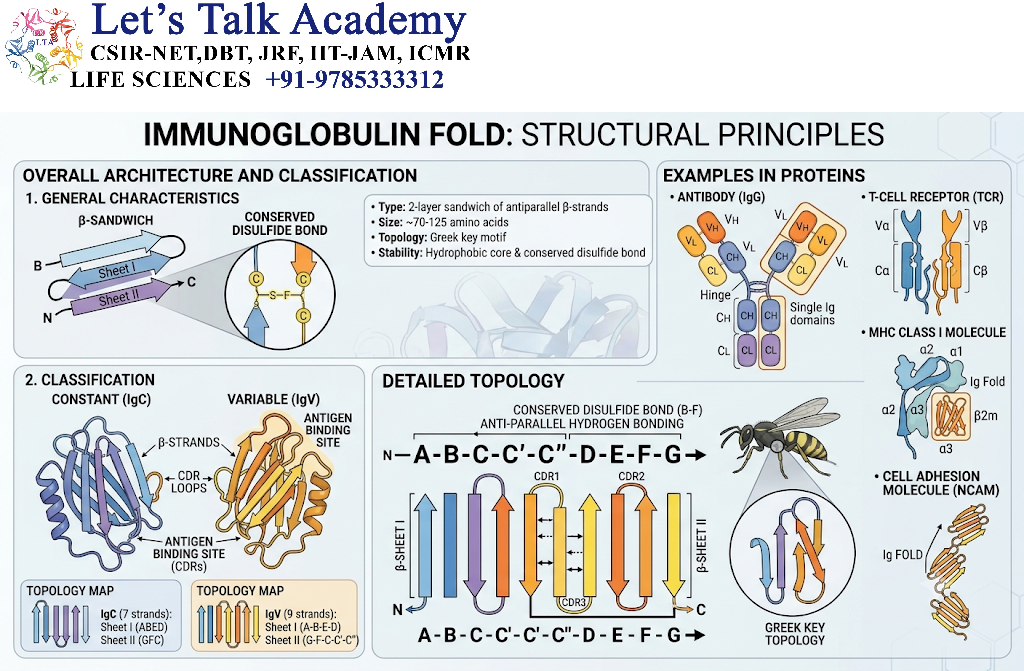
Antibody domains have a characteristic immunoglobulin fold.
The immunoglobulin fold is a structural motif consisting mainly of β-sheets stabilized by an intrachain disulfide bond.
This structural organization is also found in many other proteins of the immunoglobulin superfamily.
15. Antibody Isotypes
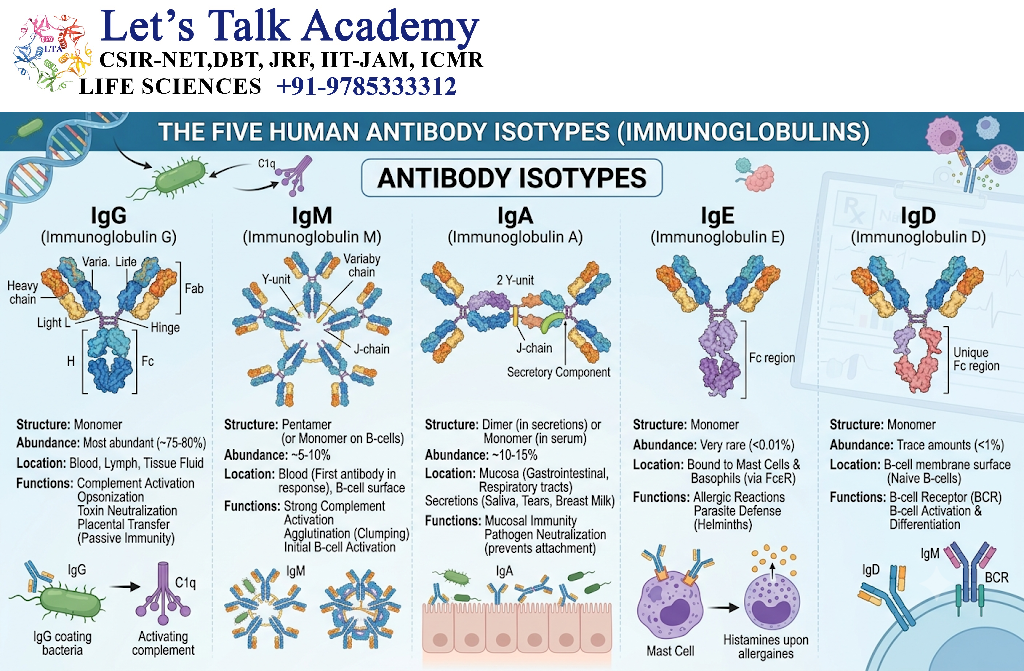
Humans have five major immunoglobulin classes:
- IgG
- IgA
- IgM
- IgD
- IgE
They differ mainly in their heavy-chain constant regions and therefore have different distributions and effector functions.
16. IgG
IgG is the predominant antibody class in normal serum.
It is generally a monomer.
Major Functions
IgG can:
- Neutralize toxins and viruses
- Promote phagocytosis through Fc receptors
- Activate complement through certain subclasses
- Participate in antibody-dependent cellular cytotoxicity
- Provide systemic immune protection
IgG is also capable of crossing the placenta through Fc receptor-mediated transport, providing passive immune protection to the developing fetus.
17. IgA
IgA is particularly important in mucosal immunity.
It is found in secretions such as:
- Saliva
- Tears
- Mucus
- Intestinal secretions
- Respiratory secretions
- Breast milk
Secretory IgA is commonly present as a dimer associated with a J chain and secretory component.
Major Functions
IgA:
- Prevents microbial attachment to mucosal surfaces
- Neutralizes pathogens and toxins
- Helps protect epithelial surfaces
- Contributes to immune defense in the gastrointestinal and respiratory tracts
18. IgM
IgM is the first major antibody class produced during many primary immune responses.
Secreted IgM is generally a pentamer consisting of five antibody units associated through a J chain.
Because it contains multiple antigen-binding sites, IgM has high overall avidity for many repetitive antigens.
Major Functions
IgM:
- Provides early humoral defense
- Efficiently activates the classical complement pathway
- Agglutinates particulate antigens
- Helps eliminate pathogens from circulation
Membrane-bound IgM also serves as an important component of the B-cell receptor on mature naïve B cells.
19. IgD
IgD is present mainly as a membrane-bound immunoglobulin on naïve B cells.
It functions together with IgM as part of the B-cell receptor system.
Its concentration in serum is relatively low compared with IgG.
IgD contributes to B-cell activation and regulation.
20. IgE
IgE is present at low concentrations in normal serum but has important functions in:
- Immediate hypersensitivity reactions
- Defense against certain parasitic organisms
IgE binds with high affinity to Fcε receptors on mast cells and basophils.
When antigen cross-links cell-bound IgE, these cells can degranulate and release inflammatory mediators.
21. Comparison of Major Antibody Classes
| Feature | IgG | IgA | IgM | IgD | IgE |
|---|---|---|---|---|---|
| Common form | Monomer | Monomer/dimer | Pentamer in secretion | Monomer | Monomer |
| Major location | Blood and tissues | Mucosal secretions | Blood | B-cell surface | Tissues, especially mast-cell-associated |
| Major role | Systemic defense | Mucosal defense | Early response/complement | B-cell receptor | Allergy and parasite defense |
| Complement activation | Yes, subclass-dependent | Limited/context-dependent | Strong | Minimal | No major classical role |
| Fc receptor interactions | Important | Important | Important | B-cell associated | High-affinity FcεRI |
| Placental transfer | Yes | No major role | No | No | No |
22. Antibody Valency and Avidity
Valency refers to the number of antigen-binding sites available on an antibody.
For example:
- IgG generally has two binding sites.
- Secreted IgM has multiple binding sites.
Avidity refers to the overall strength of multiple interactions between an antibody and a multivalent antigen.
A single antibody-antigen interaction is described in terms of affinity, whereas the combined strength of multiple interactions is related to avidity.
23. Affinity
Affinity refers to the strength of interaction between one antigen-binding site and one epitope.
High-affinity antibodies generally form more stable interactions with their corresponding epitopes.
During an immune response, B cells can undergo processes that result in the production of antibodies with increased affinity for antigen.
This process is known as affinity maturation.
24. Antibody Functions
Antibodies perform several major immune functions.
The most important include:
- Neutralization
- Opsonization
- Complement activation
- Agglutination
- Antibody-dependent cellular cytotoxicity
- Immune exclusion
- Regulation of immune responses
25. Neutralization
Neutralization occurs when antibodies bind to pathogens or toxins and prevent them from interacting with their target cells.
For viruses, antibodies can block attachment or entry into host cells.
For toxins, antibodies can prevent toxins from binding to their cellular receptors.
Flow
Antibody binds pathogen/toxin → Functional site blocked → Cellular interaction prevented → Neutralization
26. Opsonization
Opsonization is the process by which antibodies coat a pathogen and enhance its uptake by phagocytic cells.
The Fc region of antibody can interact with Fc receptors on cells such as:
- Macrophages
- Neutrophils
Flow
Antibody binds pathogen → Fc region becomes available → Fc receptor recognizes antibody → Phagocyte attaches → Enhanced uptake
27. Complement Activation
Certain antibody classes can activate the classical complement pathway.
Antigen-bound antibody provides a platform for complement recognition.
This can lead to:
- Opsonization
- Inflammation
- Enhanced phagocytosis
- Formation of membrane attack complexes in appropriate contexts
IgM and certain IgG subclasses are particularly important in classical complement activation.
28. Agglutination
Agglutination occurs when antibodies cross-link multiple particulate antigens, such as cells or microorganisms.
This produces larger aggregates that can be more easily removed by immune mechanisms.
IgM is particularly effective at agglutination because of its multivalent structure.
29. Antibody-Dependent Cellular Cytotoxicity
Antibody-dependent cellular cytotoxicity (ADCC) occurs when immune cells recognize antibody-coated target cells through Fc receptors.
For example, natural killer cells can recognize Fc regions of IgG bound to target cells through FcγRIII (CD16).
This can trigger cytotoxic activity against the antibody-coated cell.
Flow
Antibody binds target cell → NK cell Fc receptor binds antibody Fc → NK-cell activation → Target-cell killing
30. Immune Exclusion
At mucosal surfaces, secretory IgA can bind microorganisms and prevent their attachment to epithelial cells.
This mechanism is particularly important in the:
- Respiratory tract
- Gastrointestinal tract
- Other mucosal surfaces
Rather than necessarily destroying the pathogen directly, antibodies can prevent colonization and facilitate removal.
31. Antibody-Mediated Activation of Immune Cells
Antibody Fc regions can interact with Fc receptors on immune cells.
Important Fc receptor-bearing cells include:
- Macrophages
- Neutrophils
- Natural killer cells
- Mast cells
- Dendritic cells
These interactions allow antibody recognition of antigen to be translated into cellular responses.
32. Antibody Diversity
The immune system can produce an enormous variety of antibodies.
This diversity allows recognition of a vast range of antigens.
Major mechanisms contributing to antibody diversity include:
- V(D)J recombination
- Junctional diversity
- Combinatorial diversity
- Heavy-chain and light-chain pairing
- Somatic hypermutation
33. V(D)J Recombination
During B-cell development, antibody variable-region genes are assembled through recombination of gene segments.
For immunoglobulin heavy chains:
V + D + J → Variable region
For light chains:
V + J → Variable region
This process generates a large repertoire of antigen-binding sites.
34. Junctional Diversity
Additional diversity is generated at the junctions between gene segments.
Nucleotide addition and deletion can change the final sequence of the variable region.
This process is particularly important for generating diversity in the antigen-binding regions.
35. Heavy- and Light-Chain Pairing
Different heavy chains can combine with different light chains.
This increases the number of possible antigen-binding sites.
Thus:
Heavy-chain diversity + Light-chain diversity → Expanded antibody repertoire
36. Somatic Hypermutation and Affinity Maturation
After B-cell activation, mutations can be introduced into immunoglobulin variable-region genes.
This process is called somatic hypermutation.
B cells expressing antibodies with improved antigen binding can be preferentially selected.
This produces affinity maturation.
37. Class-Switch Recombination
Activated B cells can change the antibody class they produce while maintaining the same basic antigen specificity.
For example, a B cell initially producing IgM can switch to producing IgG, IgA or IgE.
The variable region remains largely unchanged, while the heavy-chain constant region changes.
Concept
Same antigen specificity + Different Fc region → Different effector function
This process is called class-switch recombination.
38. Antibody-Mediated Protection
Antibody-mediated protection can be summarized as:
Antigen recognition
        ↓
Antibody binding
        ↓
┌────────┼─────────┐
↓        ↓         ↓
Neutral- Opson-   Complement
ization ization    activation
↓        ↓         ↓
Blocked  Enhanced  Pathogen
infection phagocytosis elimination
39. Membrane-Bound Antibody as B-Cell Receptor
Antibodies are not only secreted molecules.
Membrane-bound immunoglobulins form part of the B-cell receptor complex.
The BCR allows B cells to recognize antigens.
BCR signaling requires associated signaling proteins, including CD79a and CD79b.
Simplified Pathway
Antigen → BCR binding → CD79 signaling → Intracellular signaling → B-cell activation
40. Antibody Effector Functions and Fc Regions
The Fc region determines which effector mechanisms can be recruited.
Different antibody classes interact with different Fc receptors and immune pathways.
Therefore:
Variable region → Determines antigen recognition
Constant/Fc region → Determines many effector functions
This division of function allows the immune system to recognize the same antigen while producing different types of immune responses.
41. Structural-Functional Relationship
The structure of an antibody is directly related to its function.
| Structural Feature | Functional Importance |
|---|---|
| Variable region | Antigen specificity |
| CDRs | Direct antigen recognition |
| Fab region | Antigen binding |
| Hinge region | Flexibility |
| Fc region | Effector functions |
| Disulfide bonds | Structural stability |
| Heavy-chain constant region | Antibody class and Fc-mediated functions |
| Light chain | Contributes to antigen-binding site |
42. Antibodies in Passive Immunity
Antibodies can provide protection without requiring the recipient to generate the antibodies themselves.
This is called passive immunity.
Naturally occurring examples include:
- Maternal IgG transferred across the placenta
- Maternal IgA provided through breast milk
Passive immunity provides relatively rapid protection but does not generally generate the same long-term immune memory as active immunization.
43. Antibodies in Diagnostic and Research Applications
The specificity of antibodies makes them valuable biological tools.
Applications include:
- ELISA
- Western blotting
- Immunohistochemistry
- Immunofluorescence
- Flow cytometry
- Immunoprecipitation
- Antigen detection
- Protein localization
These techniques rely on specific antibody-antigen interactions.
44. Monoclonal and Polyclonal Antibodies
44.1 Monoclonal Antibodies
Monoclonal antibodies are produced from a single B-cell clone and recognize one defined epitope or a closely related epitope.
They provide highly specific reagents for research, diagnosis and therapy.
44.2 Polyclonal Antibodies
Polyclonal antibody preparations contain antibodies produced by multiple B-cell clones.
They recognize multiple epitopes on the same antigen.
| Feature | Monoclonal | Polyclonal |
|---|---|---|
| B-cell origin | Single clone | Multiple clones |
| Epitope recognition | Usually one dominant epitope | Multiple epitopes |
| Specificity | Highly defined | Broader |
| Experimental consistency | High | Can vary between preparations |
45. Antibody-Drug and Therapeutic Applications
Antibodies can be designed or selected to target specific molecules.
Therapeutic antibodies can function by:
- Blocking receptor signaling
- Neutralizing soluble molecules
- Recruiting immune effector cells
- Marking target cells for destruction
- Altering inflammatory signaling
Their effectiveness depends on antigen specificity, affinity, Fc properties, tissue distribution and other pharmacological factors.


