
1. Introduction
Translation is the process by which the genetic information present in messenger RNA (mRNA) is converted into a specific sequence of amino acids to form a protein.
Proteins are essential components of every living cell. They function as enzymes, receptors, transporters, structural molecules, signaling molecules, antibodies, and regulatory proteins. Because protein production consumes considerable cellular energy and resources, cells must control translation carefully.
The overall flow of genetic information can be represented as:
DNA → RNA → Protein
The first step, in which DNA information is copied into RNA, is called transcription.
The second step, in which the nucleotide sequence of mRNA is decoded to produce a polypeptide, is called translation.
Translation therefore establishes a direct connection between the genetic information stored in nucleic acids and the functional proteins required by the cell.
2. Definition of Translation
2.1 Basic Definition
Translation is the ribosome-mediated process in which the nucleotide sequence of an mRNA molecule is decoded into a specific amino acid sequence to produce a polypeptide.
Translation requires the coordinated action of:
- mRNA,
- ribosomes,
- tRNAs,
- aminoacyl-tRNA synthetases,
- translation initiation factors,
- elongation factors,
- termination factors,
- GTP and other energy sources.
3. Major Components Required for Translation
3.1 Messenger RNA
mRNA carries the genetic information required for protein synthesis.
It contains:
- codons,
- untranslated regions,
- regulatory sequences,
- a start codon,
- stop codon.
The coding region is read by the ribosome in groups of three nucleotides.
3.2 Transfer RNA
tRNA functions as an adaptor between mRNA codons and amino acids.
Each tRNA contains:
- an anticodon,
- an amino acid attachment site.
The anticodon recognizes the corresponding codon on mRNA.
3.3 Ribosome
The ribosome is the molecular machine that performs translation.
It consists of:
- small subunit,
- large subunit.
The small subunit primarily participates in mRNA binding and decoding, whereas the large subunit contains the peptidyl transferase center responsible for peptide-bond formation.
3.4 Aminoacyl-tRNA Synthetases
Aminoacyl-tRNA synthetases attach the correct amino acid to its corresponding tRNA.
This process is known as:
tRNA charging
The accuracy of this step is essential because the ribosome mainly checks codon-anticodon pairing rather than independently verifying the chemical identity of the attached amino acid.
3.5 Translation Factors
Translation factors assist different stages of protein synthesis.
They include:
- initiation factors,
- elongation factors,
- release factors,
- recycling factors.
4. Genetic Code
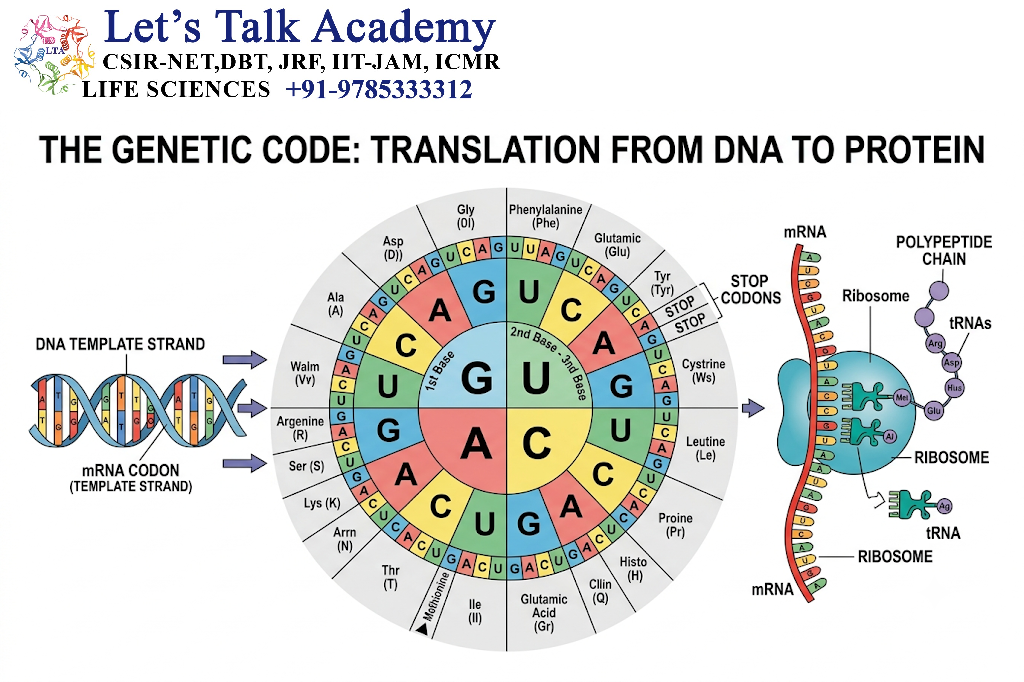
The genetic code establishes the relationship between nucleotide triplets and amino acids.
4.1 Codons
A codon consists of three consecutive nucleotides in mRNA.
For example:
AUG
is a codon.
Most codons specify amino acids, while three codons function as termination signals.
4.2 Start Codon
The most common start codon is:
AUG
It specifies methionine.
In bacteria, the initiator tRNA carries N-formylmethionine (fMet).
4.3 Stop Codons
The three standard stop codons are:
- UAA,
- UAG,
- UGA.
These do not specify amino acids.
Instead, they are recognized by release factors.
5. Direction of Translation
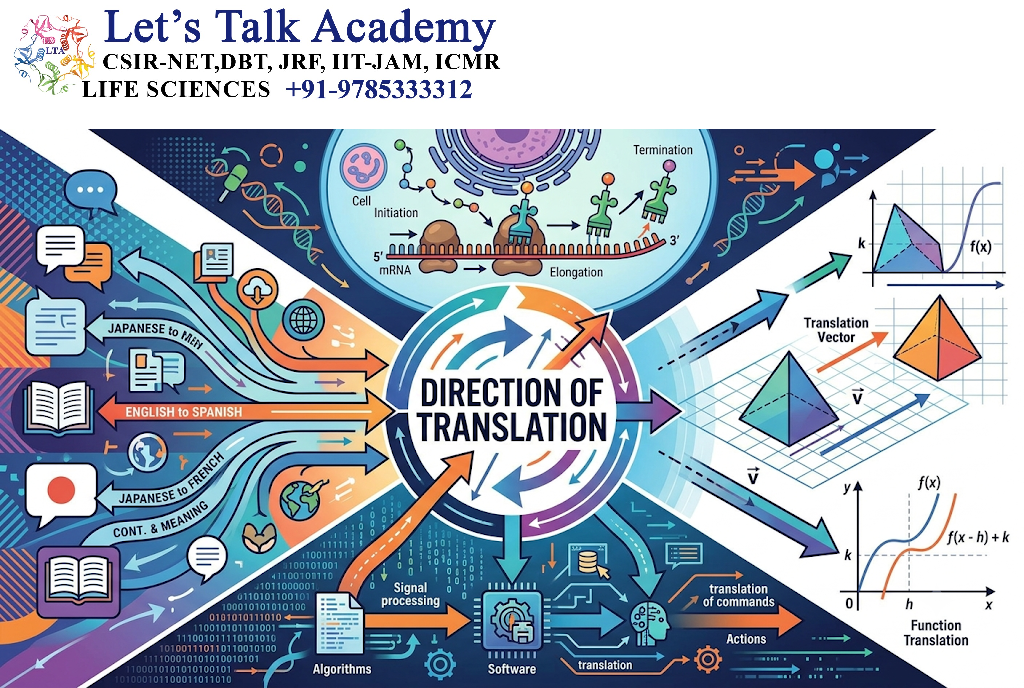
The ribosome reads mRNA in the:
5′ → 3′ direction
The polypeptide is synthesized from:
N-terminus → C-terminus
Thus:
mRNA: 5′ → 3′
Protein: N-terminal → C-terminal
6. Stages of Translation
Translation can be divided into four major stages:
- Initiation
- Elongation
- Termination
- Ribosome recycling
Aminoacyl-tRNA formation occurs before and during the overall translation process and is essential for supplying charged tRNAs.
7. Amino Acid Activation and tRNA Charging
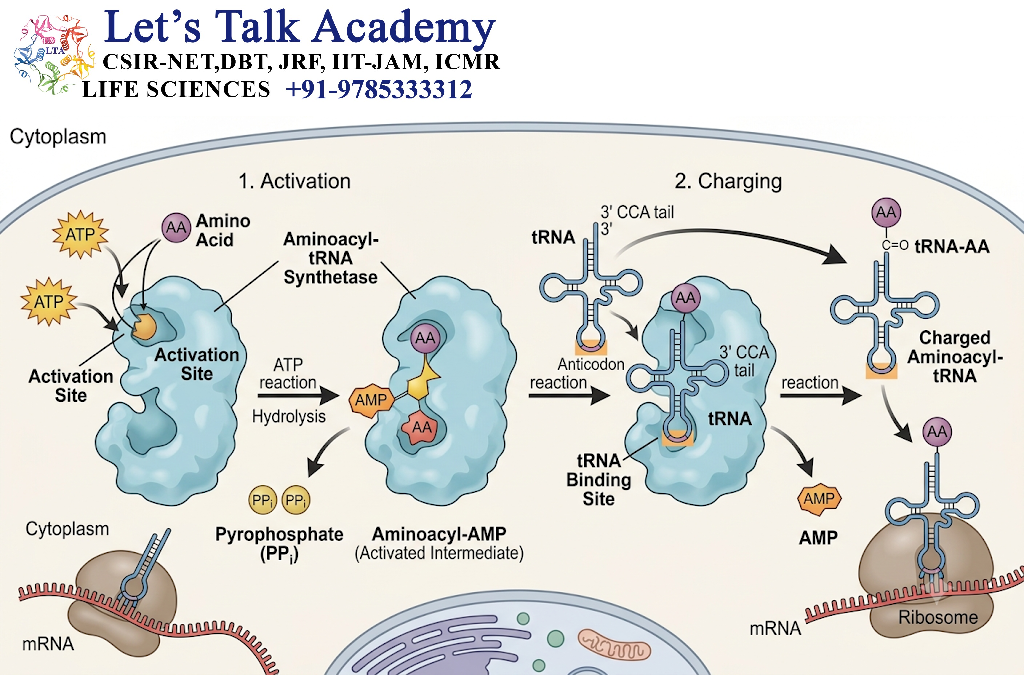
Before an amino acid can participate in translation, it must be attached to the appropriate tRNA.
This reaction is catalyzed by an aminoacyl-tRNA synthetase.
The overall reaction is:
Amino acid + tRNA + ATP
↓
Aminoacyl-tRNA + AMP + PPi
The amino acid is therefore stored in a high-energy linkage with its tRNA.
7.1 Two-Step Charging Reaction
The process generally occurs in two steps.
Step 1: Amino Acid Activation
The amino acid reacts with ATP to form an aminoacyl-AMP intermediate.
Step 2: Transfer to tRNA
The activated amino acid is transferred to the appropriate tRNA.
The result is:
Aminoacyl-tRNA
which can participate in translation.
8. Proofreading by Aminoacyl-tRNA Synthetases
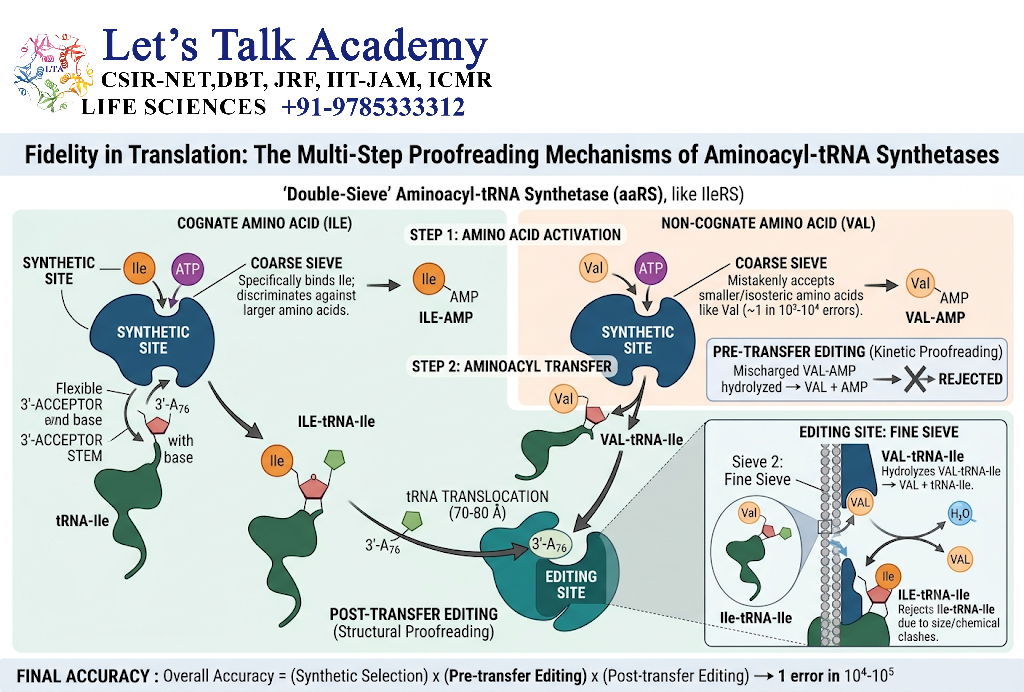
Aminoacyl-tRNA synthetases have an important role in maintaining translation accuracy.
Many synthetases contain proofreading or editing mechanisms that remove incorrectly attached amino acids.
This is important because:
Incorrect amino acid attachment
↓
Incorrect amino acid enters translation
↓
Potentially defective protein
Therefore, aminoacyl-tRNA synthetases form one of the major accuracy checkpoints of protein synthesis.
9. Translation Initiation in Bacteria
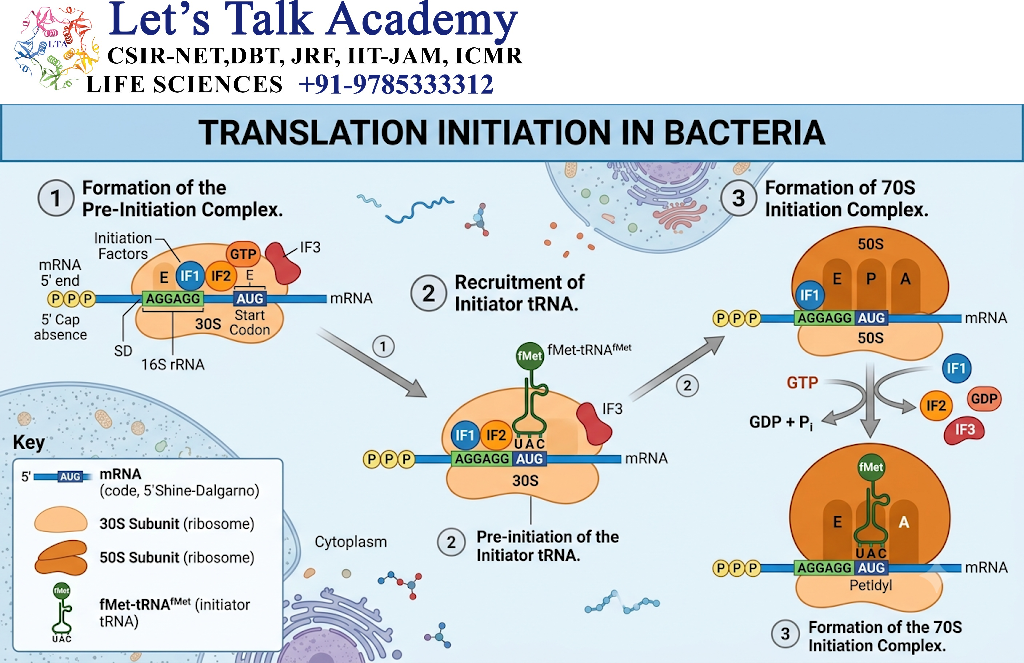
Initiation is the first stage of translation.
The major components include:
- 30S ribosomal subunit,
- mRNA,
- initiator tRNA,
- initiation factors,
- 50S ribosomal subunit.
9.1 Formation of the Initiation Complex
The bacterial small ribosomal subunit associates with initiation factors and binds the mRNA.
The Shine-Dalgarno sequence in the mRNA base-pairs with a complementary sequence in 16S rRNA.
This positions the start codon correctly within the ribosome.
9.2 Initiator tRNA
The initiator tRNA carries:
N-formylmethionine (fMet)
The initiator tRNA is positioned directly in the P site.
9.3 Joining of the Large Subunit
After proper start-codon recognition, the 50S subunit joins the 30S initiation complex.
The complete:
70S initiation complex
is formed.
10. Translation Initiation in Eukaryotes
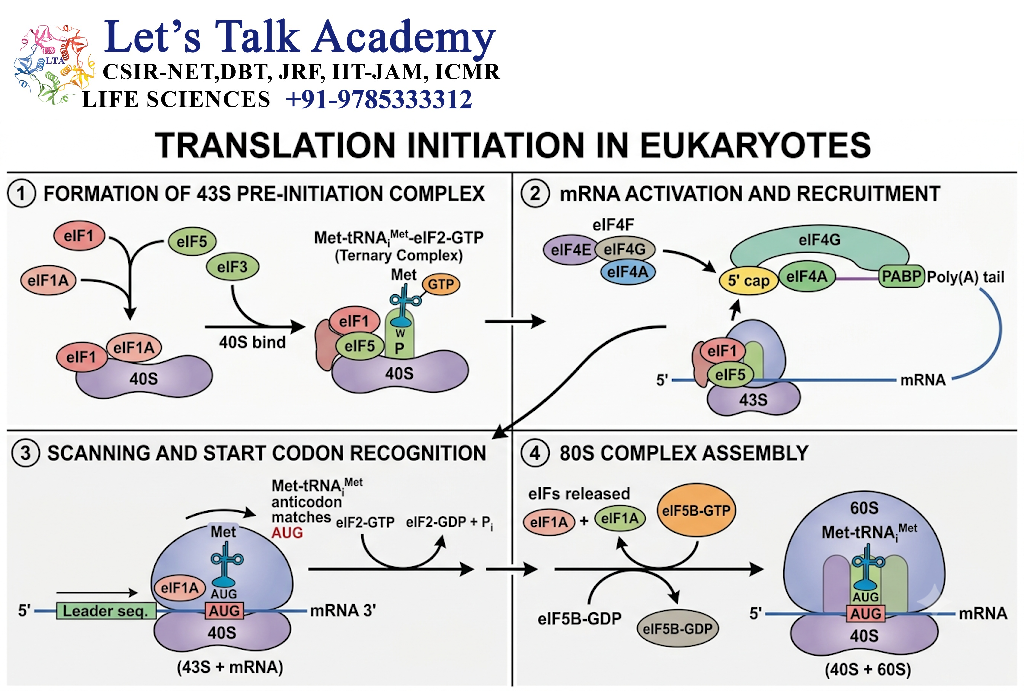
Eukaryotic initiation is more complex and involves numerous initiation factors.
The major components include:
- 40S ribosomal subunit,
- initiator tRNA,
- mRNA,
- initiation factors,
- 60S ribosomal subunit.
10.1 Initiator tRNA
The initiator tRNA carries methionine.
Unlike bacterial initiation, the amino acid is not formylated.
10.2 mRNA Recognition
The eukaryotic small ribosomal subunit is recruited to the mRNA through initiation factors.
Recognition of the 5′ cap is an important part of the process.
10.3 Scanning
The 40S initiation complex moves along the mRNA in the:
5′ → 3′ direction
until it identifies an appropriate AUG start codon in a favorable sequence context.
10.4 Large Subunit Joining
After start-codon recognition and rearrangement of initiation factors, the 60S subunit joins.
The result is the functional:
80S initiation complex
11. Kozak Sequence
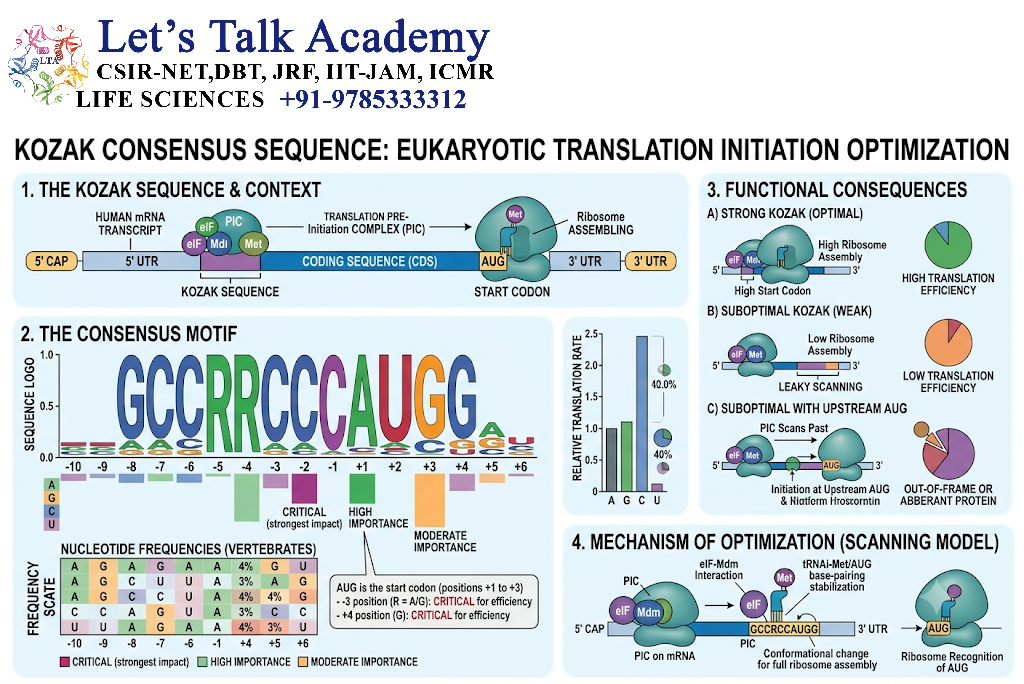
In eukaryotes, the nucleotide sequence surrounding the start codon influences translation initiation.
This sequence context is known as the Kozak sequence.
A favorable Kozak context increases the efficiency of start-codon recognition.
Therefore:
5′ cap recognition
Scanning
Kozak sequence recognition
→
Efficient translation initiation
12. Initiation as a Major Regulatory Step
Translation initiation is often one of the most important points of translational control.
The cell can regulate:
- availability of initiation factors,
- mRNA recruitment,
- start-codon recognition,
- ribosome assembly on mRNA.
Because initiation determines whether a ribosome begins translation, controlling this step can rapidly alter protein production.
13. Translation Elongation
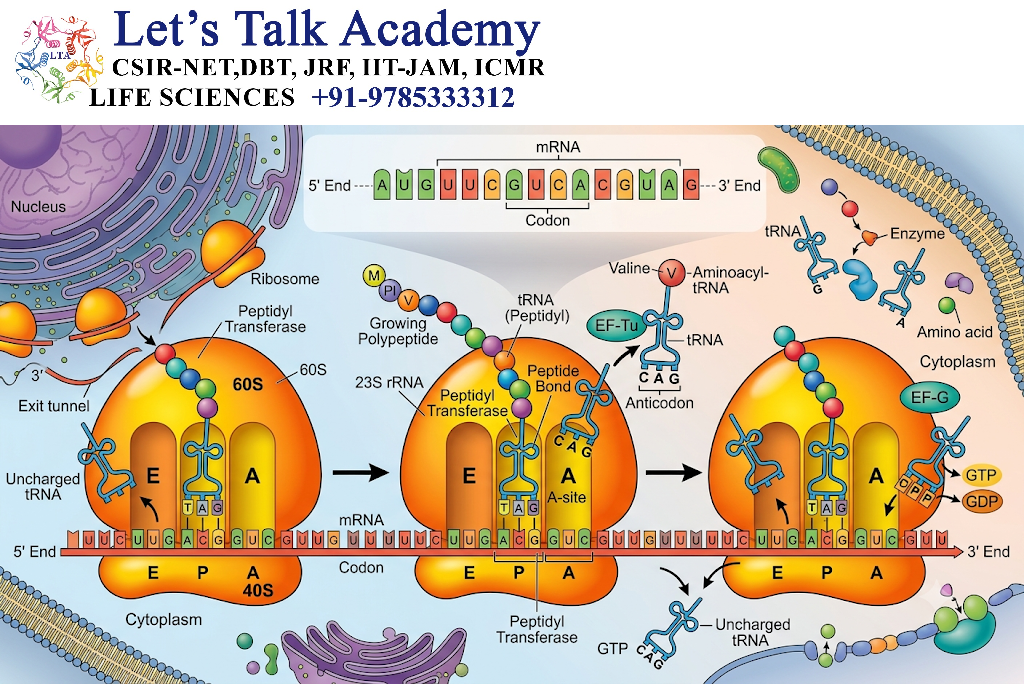
After initiation, the ribosome enters the elongation stage.
The major steps are:
- aminoacyl-tRNA entry,
- codon recognition,
- peptide-bond formation,
- translocation.
These steps repeat until a stop codon is reached.
14. Aminoacyl-tRNA Entry into the A Site
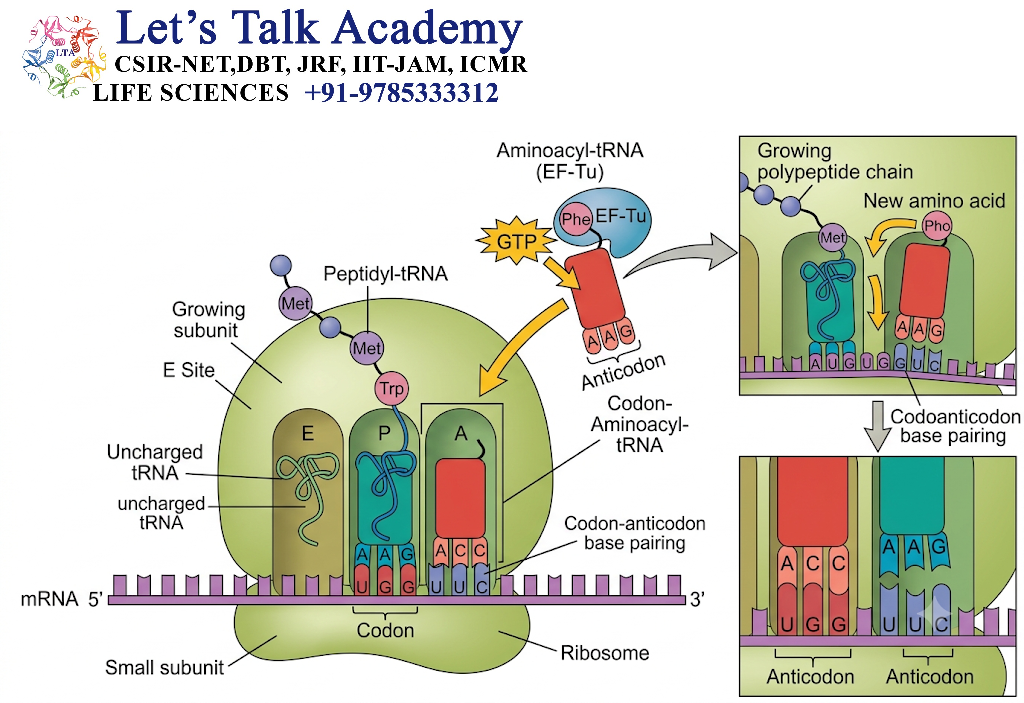
A charged tRNA enters the ribosomal A site.
An elongation factor helps deliver the aminoacyl-tRNA to the ribosome.
The anticodon of the tRNA interacts with the appropriate codon of mRNA.
Correct codon-anticodon pairing promotes accommodation of the tRNA.
15. Codon Recognition
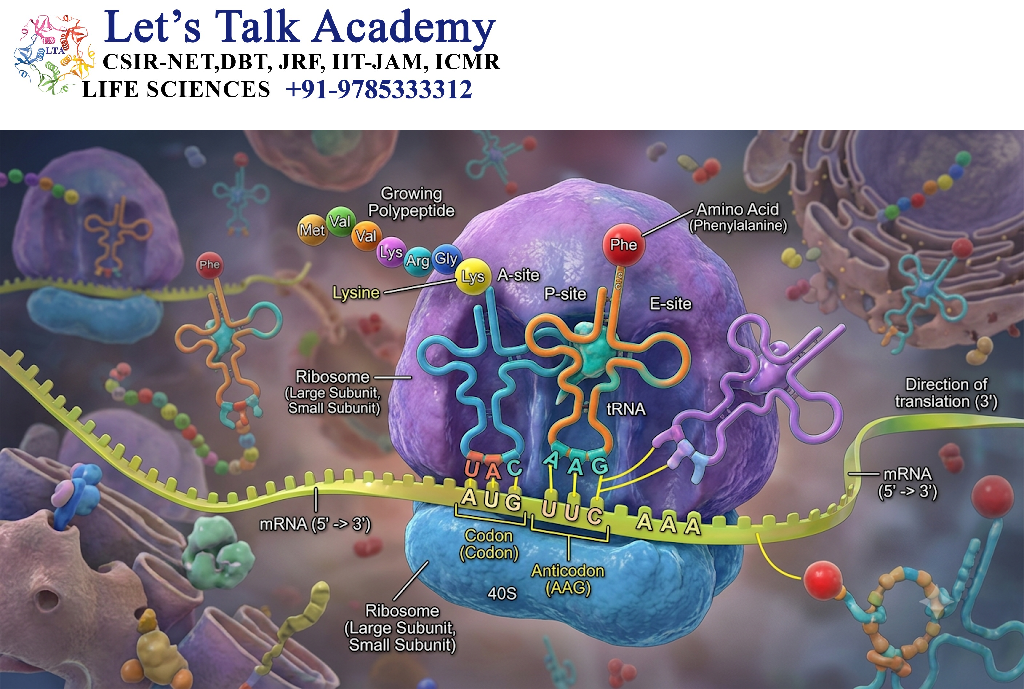
The ribosome checks whether the incoming tRNA contains the appropriate anticodon.
This recognition is essential for maintaining translation accuracy.
The ribosome therefore functions as a molecular decoding machine.
16. Peptide-Bond Formation
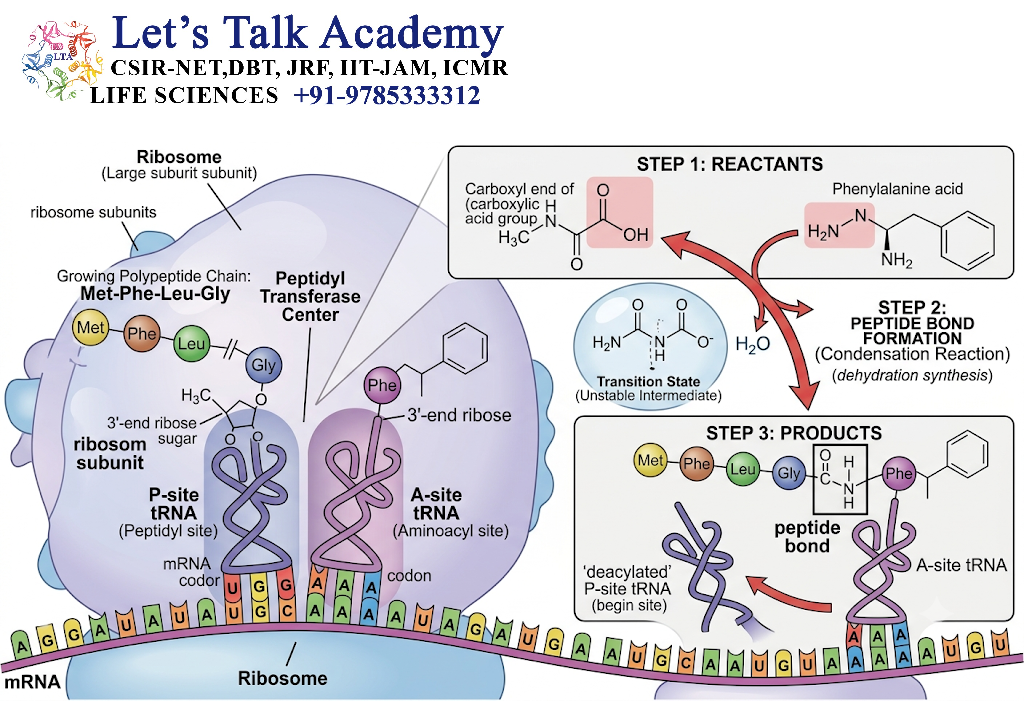
Once the correct aminoacyl-tRNA is positioned in the A site, peptide-bond formation occurs.
The growing peptide attached to the P-site tRNA is transferred to the amino acid attached to the A-site tRNA.
This reaction occurs at the:
Peptidyl transferase center
of the large ribosomal subunit.
The ribosomal RNA within this center plays the primary catalytic role.
17. Translocation
After peptide-bond formation, the ribosome moves along the mRNA by one codon.
This movement is called:
Translocation
During translocation:
A-site peptidyl-tRNA → P site
P-site deacylated tRNA → E site
The empty tRNA can then leave through the E site.
The A site becomes available for the next aminoacyl-tRNA.
18. Complete Elongation Cycle
The elongation cycle can be summarized as:
1. Aminoacyl-tRNA enters A site
↓
2. Codon-anticodon recognition
↓
3. Correct tRNA accommodation
↓
4. Peptide-bond formation
↓
5. Translocation
↓
6. tRNA movement
↓
7. Next aminoacyl-tRNA enters
This cycle repeats until translation reaches a stop codon.
19. Role of GTP in Elongation
GTP is used during several translation-factor-mediated steps.
It contributes to:
- delivery of aminoacyl-tRNA,
- translocation,
- conformational changes in translation factors.
Therefore, translation is an energy-dependent process.
20. Translation Termination
Termination occurs when the ribosome reaches a stop codon.
The stop codons are:
- UAA,
- UAG,
- UGA.
Because there is no normal tRNA that recognizes these codons as amino acids, specialized proteins called release factors recognize them.
21. Release Factors
Release factors enter the ribosome and promote release of the completed polypeptide.
They functionally recognize stop codons and stimulate hydrolysis of the bond linking the completed protein to the tRNA.
The newly synthesized protein is then released.
22. Ribosome Recycling
After termination:
Protein released
↓
Ribosome undergoes structural rearrangement
↓
Ribosomal subunits separate
↓
mRNA and tRNA are released
↓
Ribosome components become available for another translation cycle
This process is called:
Ribosome recycling
23. Complete Mechanism of Translation
The complete process can therefore be summarized as:
Amino acid activation
↓
tRNA charging
↓
Initiation
↓
Start-codon recognition
↓
Elongation
↓
Codon recognition
↓
Peptide-bond formation
↓
Translocation
↓
Repeated elongation
↓
Stop-codon recognition
↓
Termination
↓
Protein release
↓
Ribosome recycling
24. Regulation of Translation
Translation must be regulated according to cellular requirements.
Regulation determines:
- which mRNAs are translated,
- how frequently they are translated,
- how many proteins are produced,
- how long translation continues,
- when translation should stop.
Translational regulation can occur at several levels.
25. Major Levels of Translational Regulation
Important regulatory levels include:
- Regulation of translation initiation
- Regulation of elongation
- Regulation of termination
- Regulation of mRNA stability
- Regulation by RNA-binding proteins
- Regulation by small regulatory RNAs
- Regulation by riboswitches
- Regulation by upstream open reading frames
- Regulation by mRNA structure
- Regulation by cellular signaling pathways
26. Regulation of Translation Initiation
Initiation is commonly the major control point.
The cell can regulate translation by changing:
- initiation-factor activity,
- ribosome recruitment,
- mRNA accessibility,
- start-codon recognition.
A simple model is:
Initiation factor active
→ ribosome recruitment
→ translation increases
Whereas:
Initiation factor inhibited
→ ribosome recruitment decreases
→ translation decreases.
27. Regulation by Eukaryotic Initiation Factor 2
A major regulatory mechanism involves eukaryotic initiation factor 2 (eIF2).
eIF2 participates in delivery of initiator Met-tRNA to the small ribosomal subunit.
eIF2 activity depends on its guanine nucleotide state.
27.1 eIF2-GTP
The active form of eIF2 is associated with GTP.
It participates in formation of the initiation complex.
27.2 eIF2-GDP
After initiation, GTP is hydrolyzed to GDP.
eIF2 must be converted back to the active GTP-bound form before another initiation cycle.
28. eIF2 Phosphorylation
Phosphorylation of the eIF2 alpha subunit is an important mechanism of translational control during stress.
When eIF2α is phosphorylated:
eIF2 recycling decreases
↓
Translation initiation decreases
↓
Global protein synthesis decreases
This mechanism allows cells to conserve resources during stressful conditions.
29. Integrated Stress Response
The phosphorylation of eIF2α is part of the broader integrated stress response.
Different types of cellular stress can activate different kinases that phosphorylate eIF2α.
Examples of stress include:
- amino acid deprivation,
- accumulation of unfolded proteins,
- viral infection,
- oxidative stress,
- other cellular disturbances.
The result is generally:
Global translation ↓
while translation of selected stress-responsive mRNAs can be maintained or increased.
30. mTOR Pathway and Translation
The mTOR pathway is an important regulator of cellular growth and protein synthesis.
When nutrients and growth signals are sufficient:
mTOR signaling ↑
↓
Translation-related pathways activated
↓
Protein synthesis ↑
When nutrients are limited or growth signals are reduced:
mTOR activity ↓
↓
Protein synthesis generally decreases
Thus, mTOR connects environmental and nutritional information with translational activity.
31. Regulation by 4E-BP Proteins
In eukaryotes, 4E-binding proteins (4E-BPs) regulate the availability of the cap-binding initiation factor eIF4E.
When 4E-BPs bind eIF4E:
eIF4E activity ↓
↓
Translation initiation ↓
When mTOR signaling phosphorylates 4E-BPs:
4E-BP binding to eIF4E decreases
↓
eIF4E becomes more available
↓
Translation initiation increases
32. Regulation Through mRNA 5′ Cap
The 5′ cap of eukaryotic mRNA is important for efficient translation initiation.
Cap-binding factors recognize the 5′ cap and help recruit the translation machinery.
Therefore:
Accessible 5′ cap
→ efficient initiation
Whereas disruption of cap-dependent recruitment can reduce translation.
33. Regulation Through Poly(A) Tail
The 3′ poly(A) tail contributes to mRNA stability and translation efficiency.
Poly(A)-binding proteins can interact with translation-initiation machinery.
This can help form a functionally circularized mRNA structure that facilitates efficient initiation.
The length and regulation of the poly(A) tail can influence:
- mRNA stability,
- translation efficiency,
- mRNA degradation.
34. Regulation by mRNA Secondary Structure
RNA can fold into secondary structures such as:
- hairpins,
- stem-loops,
- bulges,
- internal loops.
Strong secondary structures near the translation initiation region can interfere with ribosome binding or scanning.
Thus:
RNA structure
↓
Ribosome accessibility changes
↓
Translation changes
35. Regulation by RNA-Binding Proteins
RNA-binding proteins can interact with specific regions of mRNA.
Their effects may include:
- blocking ribosome binding,
- recruiting translation machinery,
- altering mRNA stability,
- changing RNA localization.
Therefore, RNA-binding proteins can act as positive or negative translational regulators.
36. Regulation by Small Regulatory RNAs
Small regulatory RNAs can regulate translation by interacting with target mRNAs.
In bacteria, small RNAs may:
- block the ribosome-binding site,
- expose the ribosome-binding site,
- alter mRNA stability.
Thus:
Small RNA + target mRNA
↓
RNA structure or stability changes
↓
Translation changes
37. Riboswitch-Mediated Translational Regulation
Riboswitches are RNA regulatory elements that directly bind small molecules.
A riboswitch contains:
- aptamer domain,
- expression platform.
Ligand binding changes RNA structure.
This can:
- expose the ribosome-binding site,
- hide the ribosome-binding site,
- terminate transcription,
- promote transcription continuation.
Therefore, riboswitches can directly connect cellular metabolite concentration with gene expression.
38. Upstream Open Reading Frames
An upstream open reading frame (uORF) is a small coding region located in the 5′ untranslated region of an mRNA.
Translation of a uORF can influence translation of the main coding region.
Possible mechanisms include:
- ribosome reinitiation,
- ribosome stalling,
- altered scanning,
- interaction with cellular conditions.
uORFs are important regulatory elements in many eukaryotic mRNAs.
39. Ribosome Stalling
Ribosomes may pause or stall during translation.
Stalling can result from:
- difficult RNA structures,
- rare codons,
- amino acid limitation,
- damaged mRNA,
- regulatory sequences,
- nascent peptide interactions.
Ribosome stalling can regulate protein production or activate quality-control pathways.
40. Codon Usage and Translation
Different organisms and genes do not use synonymous codons equally.
Some codons are translated more efficiently because the corresponding tRNAs are more abundant.
Therefore:
Codon usage
can influence:
- translation rate,
- translation accuracy,
- protein folding,
- gene-expression level.
41. tRNA Availability
The availability of charged tRNAs can influence elongation.
If a particular aminoacyl-tRNA becomes scarce:
Ribosome movement slows
↓
Translation elongation decreases
This provides a mechanism by which nutrient availability can influence protein synthesis.
42. Amino Acid Availability
Translation depends on adequate supplies of amino acids.
During amino acid starvation:
Uncharged tRNA increases
↓
Translation-related signaling pathways are activated
↓
Protein synthesis decreases
This helps the cell conserve resources.
43. Bacterial Translational Regulation
Bacteria regulate translation using mechanisms such as:
- small regulatory RNAs,
- RNA-binding proteins,
- riboswitches,
- attenuation,
- mRNA secondary structure,
- translational repressors,
- codon usage.
Because transcription and translation can be coupled in bacteria, regulation at the RNA level can have rapid effects.
44. Translational Repressors
A translational repressor is a regulatory protein that binds an mRNA and inhibits translation.
It may block:
- the ribosome-binding site,
- translation initiation,
- ribosome progression.
A simplified mechanism is:
Repressor binds mRNA
↓
Ribosome cannot efficiently initiate
↓
Protein synthesis decreases
45. Translational Activators
Some RNA-binding proteins increase translation.
They may:
- expose the ribosome-binding region,
- stabilize mRNA,
- recruit translation factors,
- promote ribosome loading.
Therefore:
Activator binding
→
ribosome recruitment
→
translation increases
46. Regulation by mRNA Degradation
Translation and mRNA stability are closely connected.
If an mRNA is rapidly degraded:
mRNA concentration ↓
↓
Ribosome recruitment ↓
↓
Protein production ↓
Conversely, stable mRNAs can remain available for translation for longer periods.
47. Coupling Between Translation and mRNA Stability
Translation can itself affect mRNA stability.
Ribosome occupancy may protect certain regions of an mRNA from degradation.
Therefore:
Translation
and
mRNA degradation
are interconnected processes.
48. Polysomes and Translational Efficiency
Multiple ribosomes can simultaneously translate the same mRNA.
This structure is called a:
Polysome
or
Polyribosome
Polysomes allow a single mRNA to produce many copies of a protein efficiently.
49. Translational Control During Cellular Stress
Cells often reduce global protein synthesis during stress.
This helps conserve:
- ATP,
- amino acids,
- ribosomes,
- cellular resources.
However, selected stress-response proteins may continue to be synthesized.
Therefore, stress does not necessarily stop all translation; instead, it can reprogram translation.
50. Translational Control During Nutrient Availability
When nutrients are abundant:
Amino acids ↑
↓
Growth signaling ↑
↓
Translation generally ↑
During nutrient limitation:
Amino acids ↓
↓
Growth-related signaling decreases
↓
Translation generally ↓
This coordinates protein production with available resources.
51. Translational Regulation by Hormonal and Growth Signals
In multicellular organisms, extracellular signals can influence translation through intracellular signaling pathways.
Growth factors and hormones can activate pathways involving:
- PI3K,
- AKT,
- mTOR.
These pathways can regulate translation initiation and protein synthesis according to cellular growth requirements.
52. Translational Regulation During Development
Different developmental stages require different proteins.
Cells can therefore regulate translation to control:
- differentiation,
- growth,
- tissue formation,
- developmental timing.
In many developmental systems, mRNAs may be stored in a translationally inactive state and activated at a specific time.
53. Translational Regulation by RNA Localization
Some mRNAs are transported to specific cellular regions before translation.
Localization allows proteins to be synthesized near their site of function.
This is important in:
- polarized cells,
- neurons,
- developing embryos,
- migrating cells.
Thus:
mRNA localization
→
localized translation
→
localized protein function
54. Translational Regulation in Neurons
Neurons have long processes and highly specialized regions.
Local protein synthesis allows neurons to produce proteins near:
- dendrites,
- synapses,
- axons.
This provides rapid and spatially controlled responses to cellular signals.
55. Co-translational Protein Folding
Protein folding can begin while the polypeptide is still being synthesized.
The growing chain exits through the ribosomal tunnel.
Molecular chaperones can interact with the emerging protein.
Thus, translation and protein folding are physically and functionally connected.
56. Translation and Protein Targeting
Some proteins contain targeting sequences.
For example, secretory proteins often contain an N-terminal signal sequence.
The signal sequence can be recognized by the signal recognition particle (SRP).
The ribosome is then targeted to the endoplasmic reticulum.
This allows:
Translation + protein targeting
to occur in a coordinated manner.
57. Quality Control During Translation
Cells possess mechanisms to detect defective translation.
Problems may occur due to:
- damaged mRNA,
- premature termination,
- ribosome stalling,
- incomplete proteins.
Quality-control systems can:
- rescue stalled ribosomes,
- degrade defective mRNAs,
- remove incomplete proteins.
58. Ribosome Rescue
When a ribosome becomes stalled, specialized cellular pathways can separate the ribosome from defective mRNA and allow the ribosomal subunits to be reused.
This prevents loss of functional ribosomes.
59. Regulation Through Translation Termination
Termination efficiency can influence protein production.
Changes in:
- release-factor activity,
- stop-codon context,
- mRNA structure,
can influence termination.
In certain biological contexts, specialized mechanisms can also allow programmed readthrough or alternative decoding of stop codons.
60. Stop-Codon Readthrough
Stop-codon readthrough occurs when a ribosome continues translation beyond a stop codon under specific regulatory circumstances.
This can produce an extended protein.
Such regulation can increase protein diversity from a single mRNA.
61. Programmed Ribosomal Frameshifting
In some biological systems, the ribosome can shift its reading frame at a specific site.
This is called:
Programmed ribosomal frameshifting
It can allow a single mRNA to produce different protein products.
The mechanism may involve:
- specific RNA structures,
- slippery sequences,
- ribosome pausing.
62. Translational Regulation by RNA Structures
Certain RNA structures can act as regulatory switches.
Examples include:
- hairpins,
- pseudoknots,
- riboswitches,
- internal loops.
These structures can influence:
- ribosome binding,
- ribosome movement,
- frameshifting,
- termination.
63. Regulation by Ribosome Traffic
When many ribosomes translate the same mRNA, their movement can influence one another.
A slow-moving ribosome can create a queue of following ribosomes.
This phenomenon is sometimes called:
ribosome traffic
It can affect translation efficiency and may trigger quality-control responses.
64. Translation Efficiency
Translation efficiency depends on many factors:
- mRNA abundance,
- initiation rate,
- codon usage,
- tRNA availability,
- ribosome availability,
- elongation rate,
- mRNA structure,
- protein-folding requirements.
Therefore, protein abundance does not depend solely on the amount of mRNA present.
65. Relationship Between Transcription and Translation
Gene expression can be regulated at multiple levels:
DNA
↓
Transcription
↓
mRNA
↓
mRNA processing and stability
↓
Translation
↓
Protein
Regulation at any of these stages can influence the final amount of protein produced.
66. Translation Regulation: Major Mechanisms
| Mechanism | Major effect |
|---|---|
| Initiation-factor regulation | Controls ribosome recruitment |
| eIF2 phosphorylation | Reduces global initiation |
| mTOR signaling | Promotes growth-associated translation |
| 4E-BP regulation | Controls eIF4E availability |
| RNA secondary structure | Changes ribosome accessibility |
| Small regulatory RNAs | Repress or activate translation |
| Riboswitches | Metabolite-dependent RNA regulation |
| uORFs | Modulate downstream translation |
| Codon usage | Influences elongation efficiency |
| tRNA availability | Affects elongation |
| Ribosome stalling | Slows or regulates translation |
| mRNA stability | Controls availability of template |
67. Prokaryotic and Eukaryotic Translation
| Feature | Prokaryotes | Eukaryotes |
|---|---|---|
| Ribosome | 70S | 80S |
| Small subunit | 30S | 40S |
| Large subunit | 50S | 60S |
| Initiator amino acid | fMet | Met |
| mRNA positioning | Shine-Dalgarno interaction | 5′ cap-dependent recruitment and scanning |
| Start-site recognition | Shine-Dalgarno + AUG | Scanning + Kozak context |
| Transcription-translation relationship | Can be coupled | Spatially separated |
| Main regulatory RNA elements | Riboswitches, sRNAs, RNA structures | uORFs, miRNAs, RNA-binding proteins, RNA structures |
68. Important Translation Factors
| Factor group | Main role |
|---|---|
| Initiation factors | Formation of initiation complex |
| Elongation factors | tRNA delivery and translocation |
| Release factors | Stop-codon recognition and protein release |
| Recycling factors | Ribosome disassembly and reuse |
69. Energy Consumption During Translation
Translation requires substantial energy.
ATP is used during:
Amino acid activation and tRNA charging
GTP is used during several steps involving translation factors, including:
- aminoacyl-tRNA delivery,
- translocation,
- initiation-related processes,
- termination and recycling-related processes.
Thus, protein synthesis is one of the major energy-consuming activities of growing cells.
70. Mechanism of Translation in One Sequence
The complete mechanism can be visualized as:
1. Amino acids are activated
↓
2. Correct amino acids are attached to tRNAs
↓
3. Ribosome binds mRNA
↓
4. Start codon is recognized
↓
5. Initiator tRNA occupies P site
↓
6. Large ribosomal subunit joins
↓
7. Aminoacyl-tRNA enters A site
↓
8. Codon-anticodon pairing is checked
↓
9. Peptide bond is formed
↓
10. Ribosome translocates
↓
11. tRNAs move A → P → E
↓
12. Cycle repeats
↓
13. Stop codon is recognized
↓
14. Release factor promotes protein release
↓
15. Ribosome is recycled


