
1. Introduction
The ribosome is one of the most important molecular machines present in all living cells. It is responsible for translating the genetic information carried by messenger RNA (mRNA) into proteins.
Proteins perform almost every major function inside a cell. They act as enzymes, structural components, transporters, receptors, signaling molecules, and regulatory factors. The ribosome is the cellular machinery that converts the nucleotide sequence of an mRNA into the amino acid sequence of a protein.
The overall flow of genetic information can be represented as:
DNA
↓
Transcription
↓
mRNA
↓
Translation
↓
Protein
Ribosomes perform the final step of this information flow: translation.
Ribosomes are composed primarily of:
- ribosomal RNA (rRNA),
- ribosomal proteins.
An important feature of the ribosome is that its catalytic center is formed mainly by rRNA rather than by protein. Therefore, the ribosome is considered a major example of an RNA-based catalytic molecular machine.
2. Definition of Ribosome
2.1 Basic Definition
A ribosome is a ribonucleoprotein complex that translates the nucleotide sequence of mRNA into a specific sequence of amino acids during protein synthesis.
A ribosome contains two subunits:
- Small subunit
- Large subunit
The small subunit is primarily involved in:
- mRNA binding,
- decoding of genetic information.
The large subunit is primarily involved in:
- peptide-bond formation,
- movement of the growing polypeptide through the ribosome.
3. Discovery and Historical Background
3.1 Early Observations
The cellular particles now known as ribosomes were initially observed as small structures associated with the cytoplasm and endoplasmic reticulum.
The term ribosome reflects their association with ribonucleic acid and their role in protein synthesis.
3.2 Electron Microscopy
Electron microscopy provided important evidence about the size, distribution, and structure of ribosomes.
Later biochemical and structural studies established that ribosomes consist of rRNA and proteins.
3.3 Structural Studies
The development of X-ray crystallography, cryo-electron microscopy, and other structural techniques provided detailed information about ribosomal architecture and the molecular mechanism of translation.
These studies revealed how:
- mRNA is positioned,
- tRNAs interact with the ribosome,
- codons are decoded,
- peptide bonds are formed,
- the ribosome moves along mRNA.
4. General Structure of Ribosomes
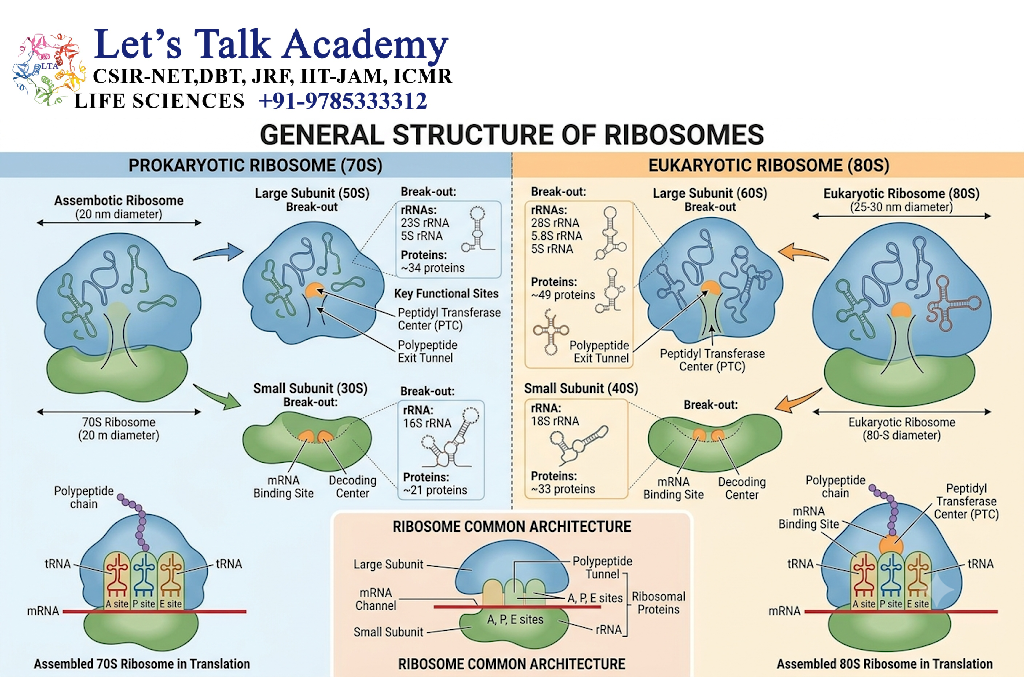
A ribosome is made up of two unequal subunits.
Ribosome
├── Small subunit
└── Large subunit
The two subunits associate during active translation.
When translation is not occurring, the subunits may exist separately, particularly in bacteria.
5. Ribosomes in Prokaryotes
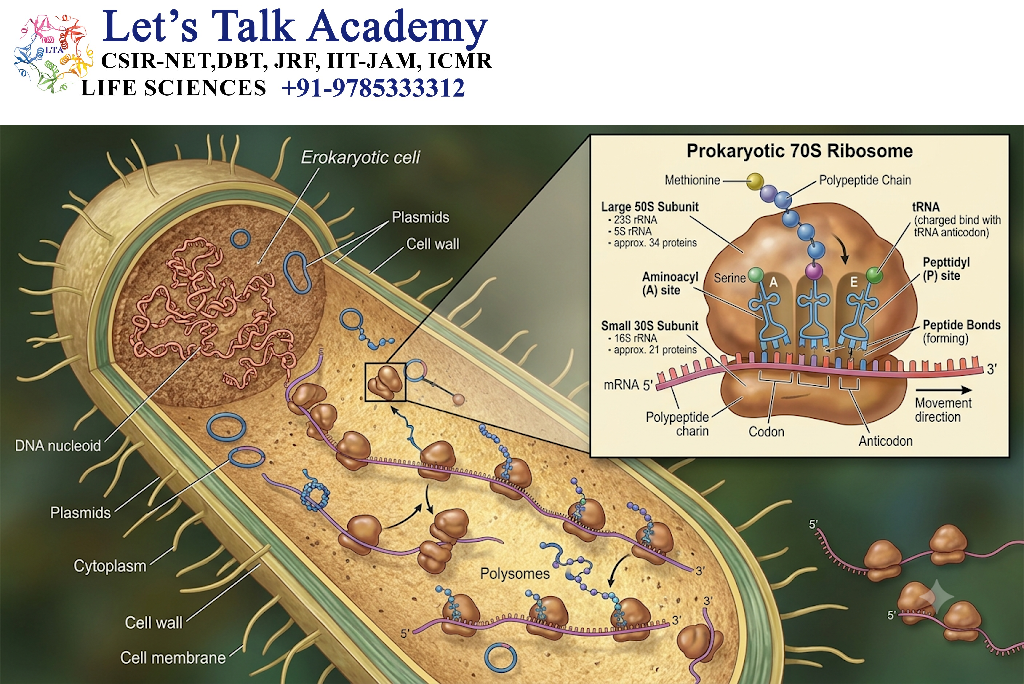
The typical bacterial ribosome is a:
70S ribosome
It consists of:
- 30S small subunit
- 50S large subunit
Therefore:
30S + 50S = 70S
The S value represents the Svedberg sedimentation coefficient and is not an arithmetic sum of the subunits.
6. Structure of the 30S Subunit
6.1 General Function
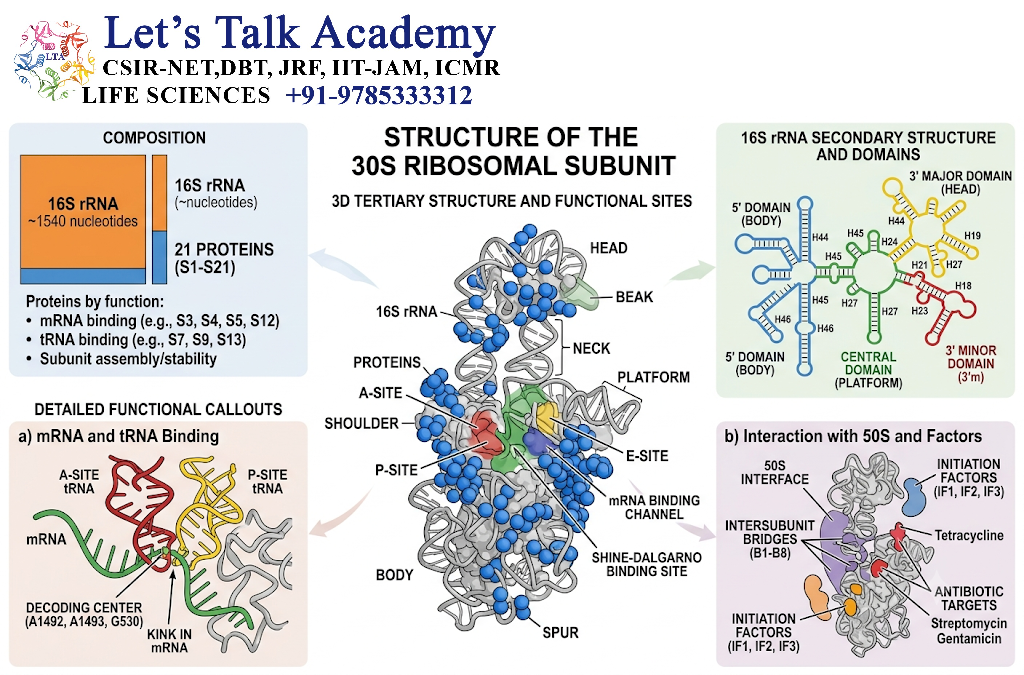
The 30S subunit contains:
- 16S rRNA,
- ribosomal proteins.
Its major functions include:
- binding mRNA,
- decoding codons,
- monitoring codon-anticodon pairing.
6.2 16S rRNA
The 16S rRNA is the major RNA component of the bacterial small subunit.
It plays important roles in:
- mRNA positioning,
- interaction with tRNA,
- decoding,
- maintenance of ribosomal structure.
The 16S rRNA contains the anti-Shine-Dalgarno sequence, which pairs with the Shine-Dalgarno sequence of bacterial mRNA during translation initiation.
7. Structure of the 50S Subunit
7.1 General Function
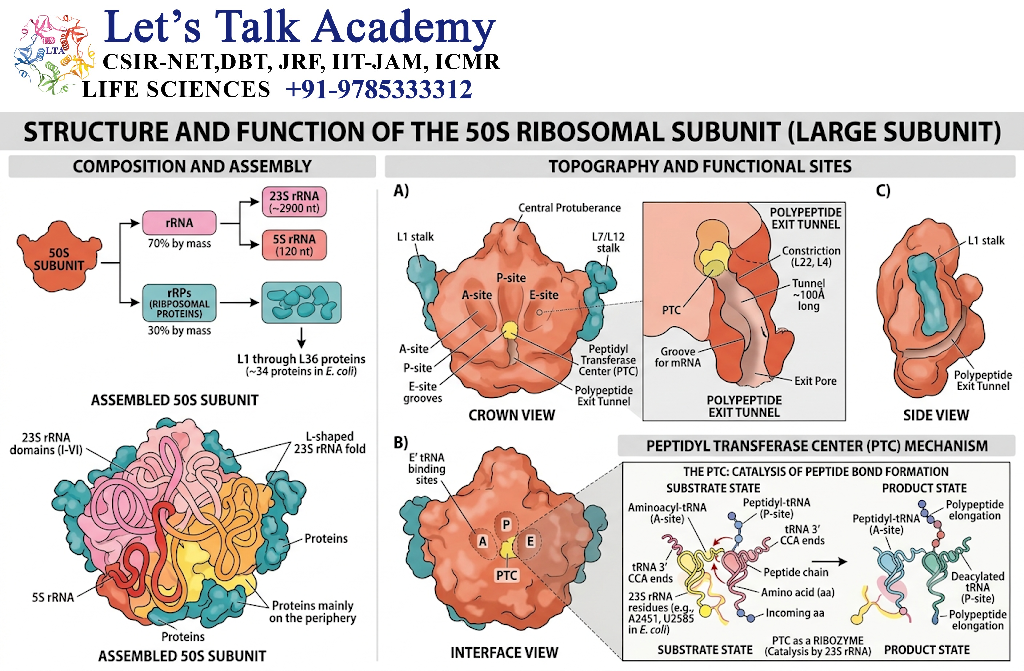
The 50S subunit contains:
- 23S rRNA,
- 5S rRNA,
- ribosomal proteins.
Its major functions include:
- peptide-bond formation,
- accommodation of tRNAs,
- movement of tRNAs,
- formation of the polypeptide exit tunnel.
7.2 23S rRNA
The 23S rRNA is a major catalytic and structural component of the large subunit.
It forms much of the peptidyl transferase center, where peptide bonds are formed.
7.3 5S rRNA
5S rRNA is an important structural and functional component of the large subunit.
It interacts with ribosomal proteins and contributes to proper organization of the ribosome.
8. Ribosomes in Eukaryotes
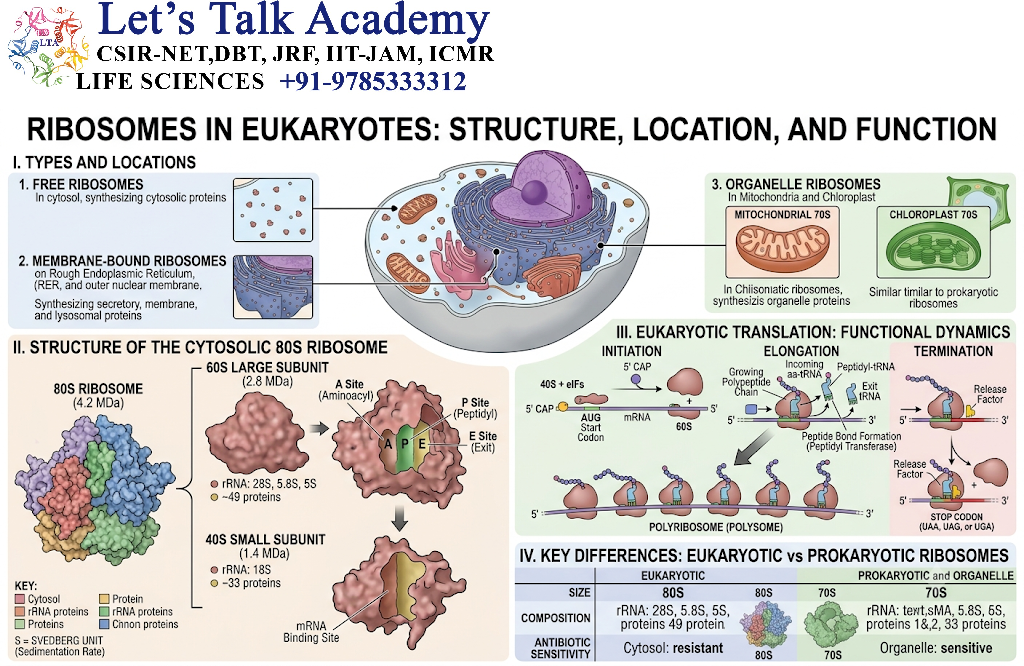
The typical cytoplasmic eukaryotic ribosome is:
80S ribosome
It consists of:
- 40S small subunit
- 60S large subunit
Therefore:
40S + 60S = 80S
Again, Svedberg values are sedimentation coefficients and should not be added mathematically.
9. Structure of the 40S Subunit
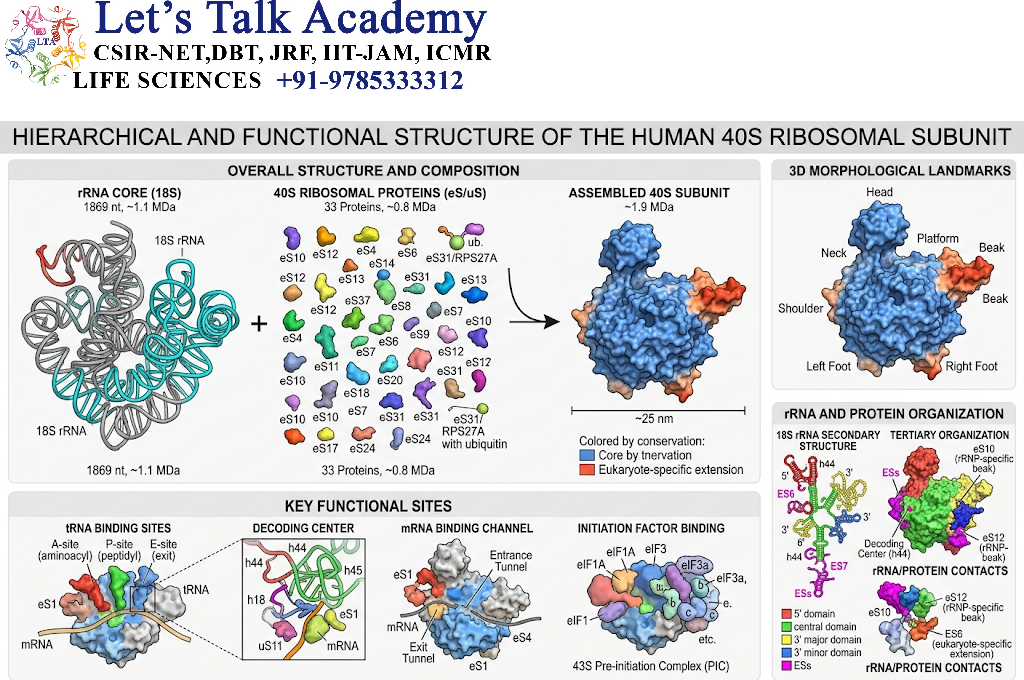
The 40S subunit contains:
- 18S rRNA,
- multiple ribosomal proteins.
Its major functions include:
- binding mRNA,
- scanning the mRNA,
- decoding codons,
- monitoring codon-anticodon interactions.
10. Structure of the 60S Subunit
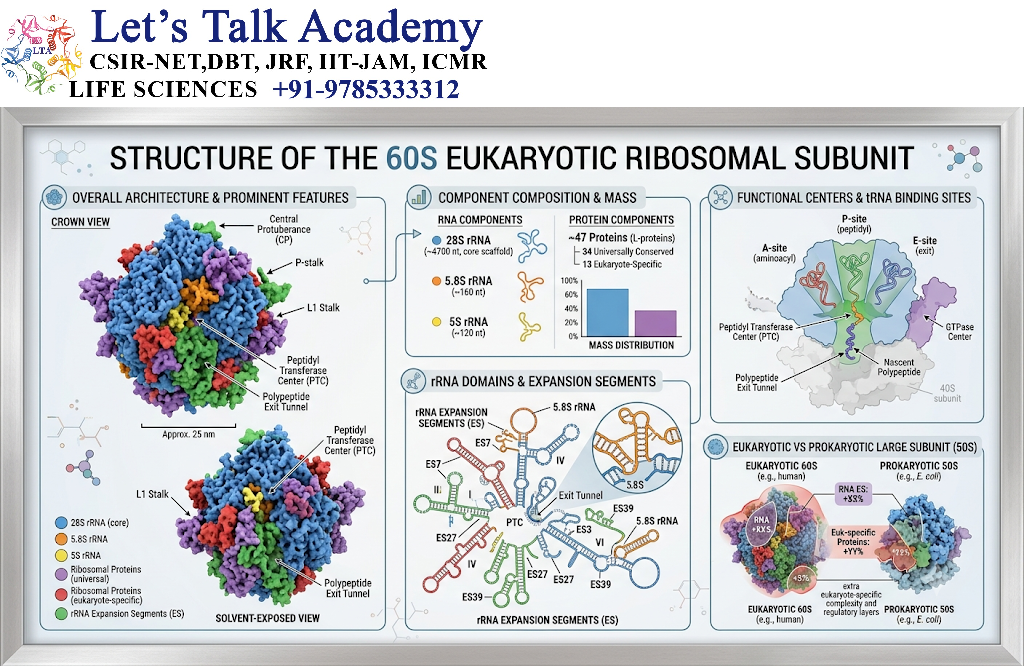
The 60S subunit contains:
- 28S rRNA,
- 5.8S rRNA,
- 5S rRNA,
- multiple ribosomal proteins.
It contains the catalytic center responsible for peptide-bond formation.
11. Comparison of Prokaryotic and Eukaryotic Ribosomes
| Feature | Prokaryotic Ribosome | Eukaryotic Cytoplasmic Ribosome |
|---|---|---|
| Overall size | 70S | 80S |
| Small subunit | 30S | 40S |
| Large subunit | 50S | 60S |
| Small-subunit rRNA | 16S | 18S |
| Large-subunit rRNA | 23S + 5S | 28S + 5.8S + 5S |
| Location | Cytoplasm | Cytoplasm and rough ER |
| Protein synthesis | Yes | Yes |
12. Svedberg Unit
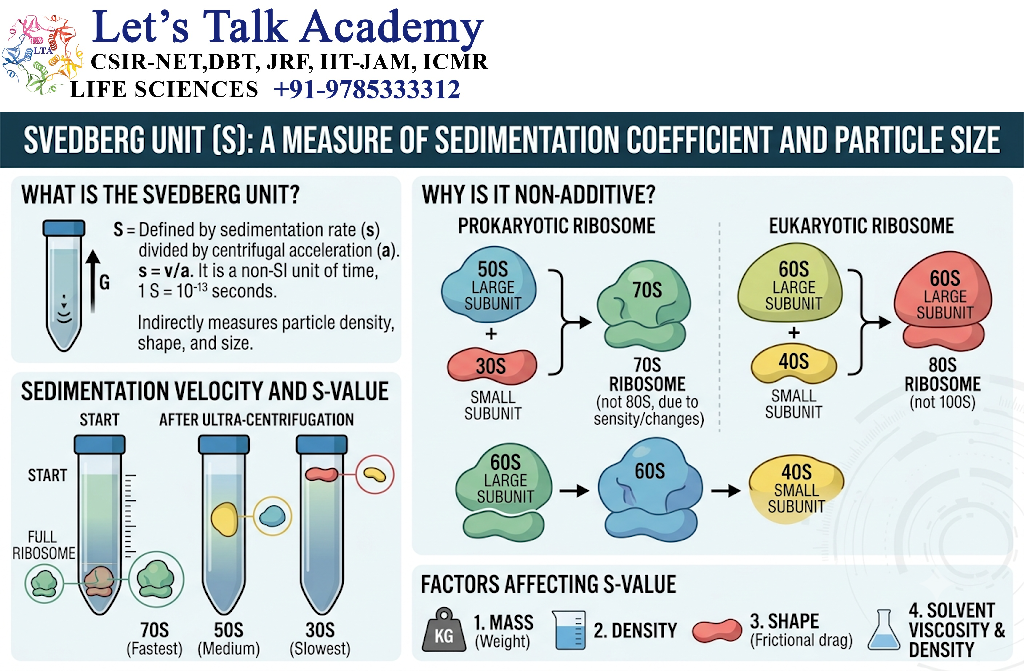
The symbol S refers to the Svedberg sedimentation coefficient.
It describes how rapidly a particle sediments during ultracentrifugation.
It depends on several factors, including:
- mass,
- shape,
- density,
- frictional properties.
Therefore:
30S + 50S = 70S
does not mean that 30 + 50 is being used as an ordinary mathematical calculation. The Svedberg values are experimentally determined properties.
13. Ribosomal RNA
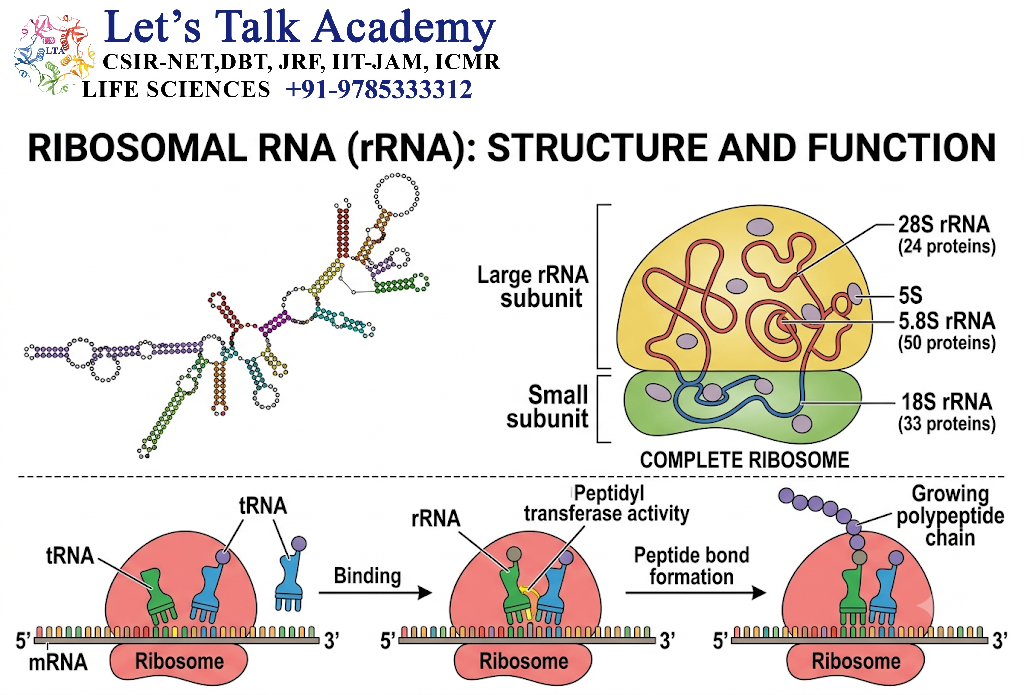
Ribosomal RNA is a major structural and functional component of ribosomes.
rRNA performs several important functions:
- maintains ribosome structure,
- participates in mRNA binding,
- interacts with tRNA,
- contributes to decoding,
- catalyzes peptide-bond formation.
The importance of rRNA is particularly evident from the fact that the ribosome’s catalytic center is predominantly RNA-based.
14. Ribosomal Proteins
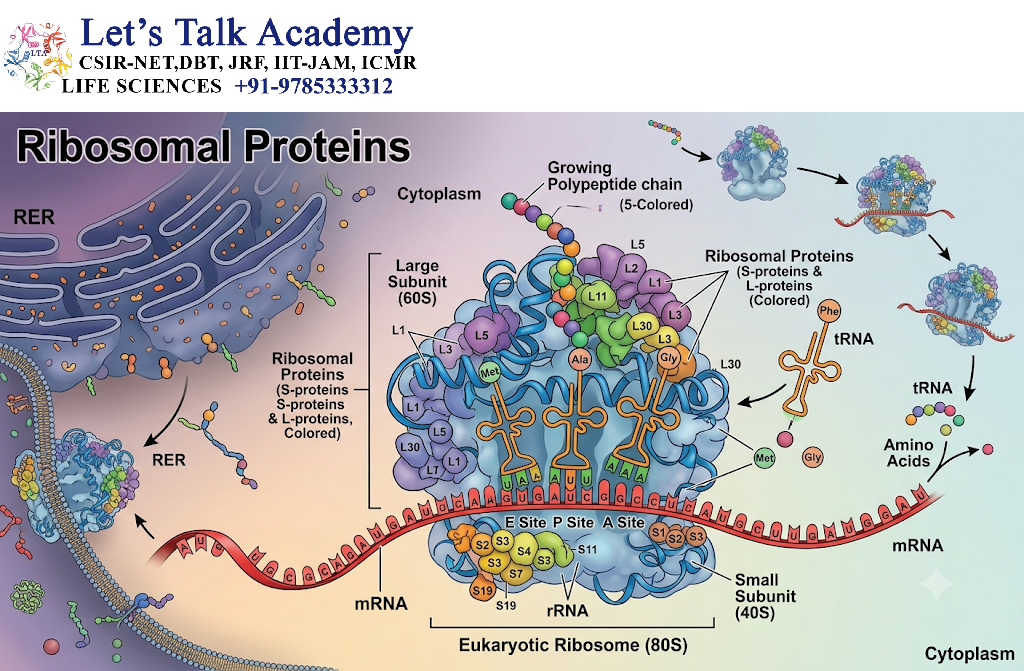
Ribosomes also contain many proteins.
Ribosomal proteins help:
- stabilize rRNA,
- maintain ribosomal architecture,
- assist ribosome assembly,
- interact with translation factors,
- regulate ribosomal dynamics.
However, the proteins are not simply passive structural components. They contribute to the overall organization and functional dynamics of the ribosome.
15. Ribosome as a Ribozyme
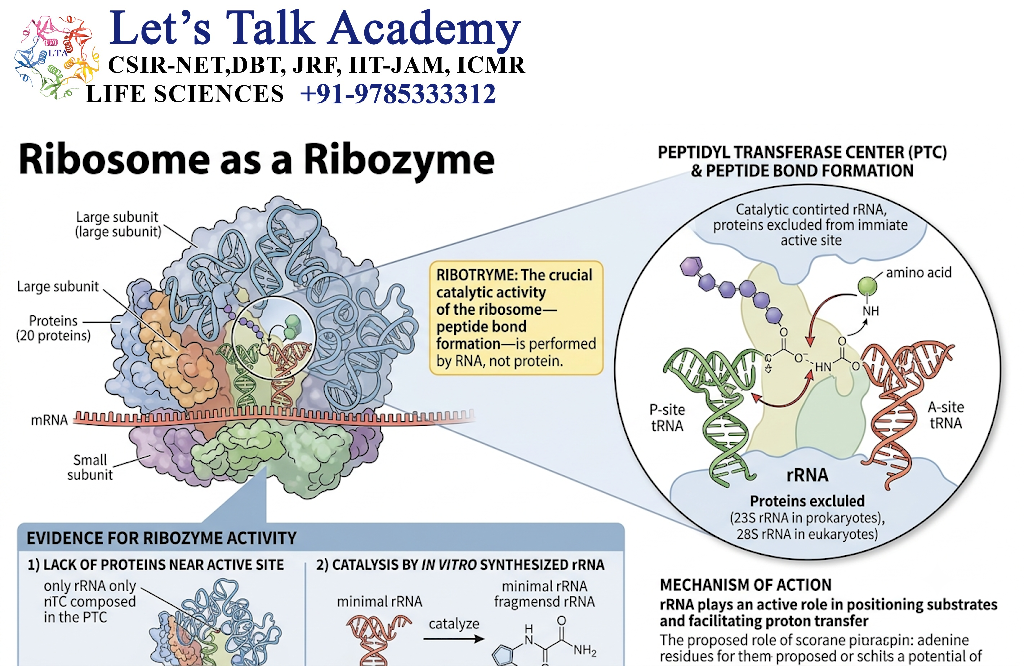
15.1 Peptidyl Transferase Activity
The ribosome is considered a ribozyme because the central chemistry of peptide-bond formation is catalyzed by the ribosomal RNA-containing active site.
The peptidyl transferase center is primarily formed by rRNA.
Thus:
rRNA → catalytic activity
rather than:
ribosomal protein → primary catalytic activity
15.2 Importance
This discovery provided important evidence that RNA can possess sophisticated catalytic capabilities.
16. Functional Sites of the Ribosome
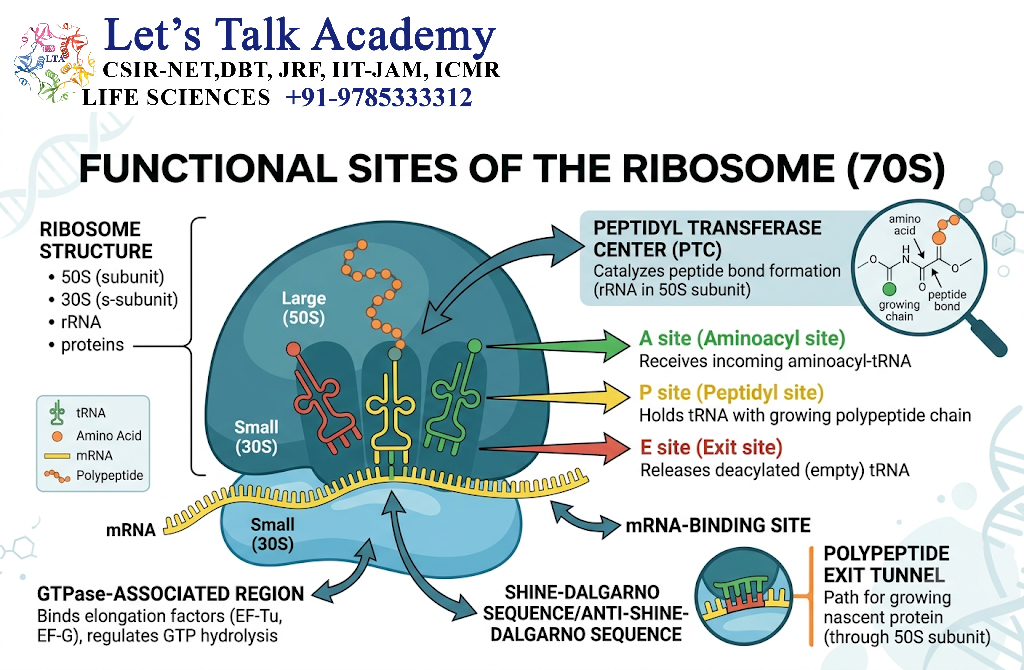
The ribosome contains three major tRNA-binding sites:
- A site
- P site
- E site
These sites coordinate the movement of tRNAs during translation.
17. A Site
The A site is the:
Aminoacyl-tRNA site
It is the site where an incoming aminoacyl-tRNA binds.
The anticodon of the tRNA interacts with the appropriate codon of the mRNA.
18. P Site
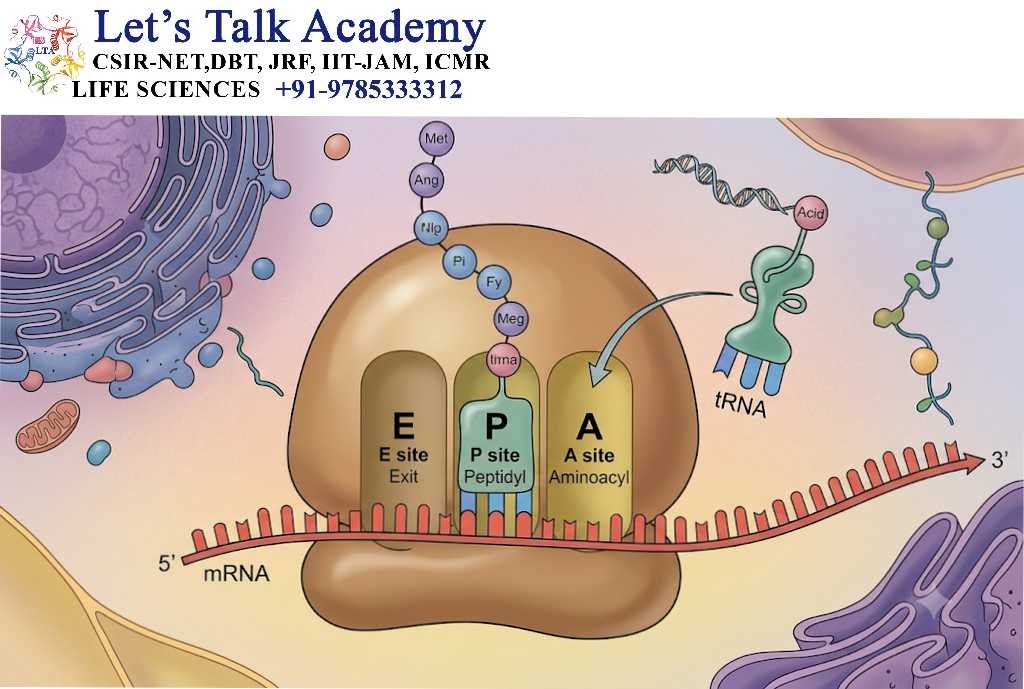
The P site is the:
Peptidyl-tRNA site
It holds the tRNA carrying the growing polypeptide chain.
The P site is therefore directly associated with the growing peptide during translation.
19. E Site
The E site is the:
Exit site
After a tRNA has transferred its amino acid and becomes deacylated, it can move into the E site before leaving the ribosome.
20. Arrangement of tRNA Sites
The basic arrangement is:
A site → P site → E site
During translation:
Incoming aminoacyl-tRNA
↓
A site
↓
Peptidyl-tRNA
↓
P site
↓
Deacylated tRNA
↓
E site
↓
Exit
21. mRNA-Binding Site
The ribosome contains a channel through which mRNA passes.
The small subunit plays an important role in:
- recognizing mRNA,
- positioning codons,
- monitoring codon-anticodon interactions.
The mRNA is read in the:
5′ → 3′ direction
22. Decoding Center
The decoding center is located primarily in the small subunit.
It checks whether the anticodon of an incoming tRNA correctly pairs with the mRNA codon.
This proofreading contributes to the accuracy of protein synthesis.
23. Peptidyl Transferase Center
The peptidyl transferase center (PTC) is located in the large ribosomal subunit.
It catalyzes peptide-bond formation between amino acids attached to tRNAs.
The reaction can be simplified as:
Peptidyl-tRNA + Aminoacyl-tRNA
↓
Peptide bond formation
↓
Extended polypeptide
24. Polypeptide Exit Tunnel
The growing polypeptide chain passes through a tunnel within the large ribosomal subunit.
The exit tunnel:
- protects the emerging peptide,
- provides a pathway for the growing chain,
- can interact with certain sequences or factors,
- connects the ribosomal catalytic center to the cellular environment.
25. Ribosome and Translation
Translation is the process by which the nucleotide sequence of mRNA is converted into an amino acid sequence.
The major stages are:
- Initiation
- Elongation
- Termination
- Ribosome recycling
26. Translation Initiation in Bacteria
26.1 Basic Process
Translation initiation begins when the small ribosomal subunit interacts with mRNA.
The bacterial ribosome recognizes the Shine-Dalgarno sequence.
This sequence pairs with a complementary region of 16S rRNA.
This interaction positions the start codon correctly.
26.2 Initiator tRNA
The initiator tRNA carries:
N-formylmethionine (fMet)
The initiator tRNA is positioned in the P site during bacterial initiation.
27. Translation Initiation in Eukaryotes
In eukaryotes, the small 40S subunit associates with initiation factors and initiator tRNA.
The complex binds near the 5′ end of the mRNA and scans in the 5′ → 3′ direction to identify an appropriate start codon in a suitable sequence context.
The initiator tRNA carries methionine.
After proper start-codon recognition, the 60S subunit joins the complex.
28. Start Codon
The most common translation start codon is:
AUG
AUG specifies methionine.
In bacteria, the initiator amino acid is:
N-formylmethionine
In eukaryotic cytoplasmic translation:
Methionine
is used by the initiator tRNA.
29. Initiation Complex
The completed initiation complex contains:
- mRNA,
- small ribosomal subunit,
- large ribosomal subunit,
- initiator tRNA,
- initiation factors.
The initiator tRNA is positioned at the P site.
30. Translation Elongation
Elongation is the stage during which amino acids are sequentially added to the growing polypeptide.
The main steps are:
- aminoacyl-tRNA entry,
- codon recognition,
- peptide-bond formation,
- translocation.
31. Aminoacyl-tRNA Entry
An aminoacyl-tRNA carrying the appropriate amino acid enters the A site.
The anticodon interacts with the corresponding mRNA codon.
Correct pairing is required before the tRNA is efficiently accommodated into the ribosome.
32. Codon-Anticodon Recognition
The mRNA contains codons consisting of three nucleotides.
Each codon specifies:
- an amino acid,
- or a termination signal.
The tRNA contains a complementary anticodon.
For example:
mRNA codon: AUG
↓
tRNA anticodon: UAC
The exact orientation is antiparallel.
33. Peptide-Bond Formation
Once the correct aminoacyl-tRNA is positioned in the A site, peptide-bond formation occurs.
The growing peptide attached to the P-site tRNA is transferred to the amino acid attached to the A-site tRNA.
The reaction is catalyzed by the ribosomal peptidyl transferase center.
34. Translocation
After peptide-bond formation, the ribosome moves along the mRNA by one codon.
During this process:
- peptidyl-tRNA moves from A → P,
- deacylated tRNA moves from P → E,
- the E-site tRNA exits.
The A site then becomes available for the next aminoacyl-tRNA.
35. Repeated Elongation Cycle
The elongation cycle can be summarized as:
A-site tRNA entry
↓
Codon recognition
↓
Peptide-bond formation
↓
Translocation
↓
tRNA movement
↓
Next aminoacyl-tRNA
This cycle continues until a stop codon is encountered.
36. Translation Termination
Termination occurs when the ribosome encounters a stop codon.
The three standard stop codons are:
- UAA
- UAG
- UGA
These codons do not encode amino acids.
Instead, they are recognized by release factors.
37. Role of Release Factors
Release factors promote termination of translation.
They cause the completed polypeptide chain to be released from the tRNA.
The ribosome then dissociates into subunits and can be recycled for another round of translation.
38. Ribosome Recycling
After termination:
Completed protein
↓
Release
↓
Ribosomal subunits separate
↓
mRNA and tRNA are released
↓
Ribosome components become available for another translation cycle
39. Direction of Translation
The ribosome moves along mRNA in the:
5′ → 3′ direction
The protein is synthesized from:
N-terminus → C-terminus
Thus:
mRNA: 5′ → 3′
Protein: N-terminus → C-terminus
40. Genetic Code and Ribosomes
The ribosome does not independently determine the genetic code.
Instead, it provides the molecular machinery that reads the codons of mRNA and matches them with the appropriate tRNAs.
The genetic code determines which amino acid corresponds to each codon.
41. Role of tRNA in Ribosome Function
Transfer RNA acts as an adaptor molecule.
Each tRNA contains:
- an anticodon,
- an amino acid attachment site.
The tRNA connects:
mRNA codon
with
specific amino acid
The ribosome coordinates this interaction.
42. Ribosome and Aminoacyl-tRNA Synthetases
Aminoacyl-tRNA synthetases attach the correct amino acid to its corresponding tRNA.
This process is essential for translation accuracy.
The ribosome then uses the charged tRNAs to build the polypeptide.
Therefore:
Aminoacyl-tRNA synthetase
→ charges tRNA
Ribosome
→ uses charged tRNA for protein synthesis
43. Translation Accuracy
The ribosome must distinguish correct from incorrect aminoacyl-tRNAs.
Accuracy depends on:
- codon-anticodon interactions,
- ribosomal structural checkpoints,
- kinetic proofreading,
- translation factors.
This ensures that proteins are synthesized with relatively high fidelity.
44. Wobble Base Pairing
The genetic code contains more codons than there are distinct tRNAs for many organisms.
This is possible partly because of wobble base pairing.
Wobble occurs particularly at the third position of the mRNA codon.
It allows one tRNA to recognize more than one codon.
45. Polysomes
45.1 Definition
A polysome or polyribosome is a group of multiple ribosomes simultaneously translating a single mRNA molecule.
45.2 Significance
Polysomes increase the efficiency of protein production.
One mRNA can therefore produce multiple copies of the same protein at the same time.
The arrangement can be represented as:
mRNA
→ Ribosome 1
→ Ribosome 2
→ Ribosome 3
→ Ribosome 4
and so on.
46. Free and Membrane-Bound Ribosomes
In eukaryotic cells, ribosomes can be:
- Free ribosomes
- Membrane-bound ribosomes
47. Free Ribosomes
Free ribosomes are present in the cytosol.
They primarily synthesize proteins that function:
- in the cytosol,
- in the nucleus,
- in mitochondria-associated pathways,
- in other intracellular locations depending on targeting signals.
48. Membrane-Bound Ribosomes
Ribosomes can become associated with the rough endoplasmic reticulum (RER).
These ribosomes synthesize proteins destined for:
- secretion,
- lysosomes,
- plasma membrane,
- endomembrane system.
The ribosome itself is not permanently different from a free ribosome. Its association with the ER depends on the protein being synthesized and its targeting signals.
49. Signal Recognition Particle
Proteins destined for the secretory pathway often contain an N-terminal signal sequence.
The signal sequence is recognized by the signal recognition particle (SRP).
The basic pathway is:
Translation begins
↓
Signal sequence emerges
↓
SRP recognizes signal sequence
↓
Ribosome-SRP complex interacts with ER membrane
↓
Ribosome docks at translocon
↓
Protein enters the ER during translation
50. Ribosome Biogenesis
50.1 Definition
Ribosome biogenesis is the process by which ribosomal RNA and ribosomal proteins are synthesized, processed, assembled, and matured into functional ribosomes.
It is a highly coordinated cellular process.
51. Ribosome Biogenesis in Bacteria
In bacteria, ribosome assembly mainly occurs in the cytoplasm.
The process involves:
- rRNA transcription,
- rRNA processing,
- ribosomal protein synthesis,
- assembly of ribosomal proteins with rRNA,
- maturation of subunits.
The resulting:
30S
and
50S
subunits combine during translation to form the functional 70S ribosome.
52. Ribosome Biogenesis in Eukaryotes
In eukaryotic cells, most ribosome biogenesis occurs in the nucleolus.
The nucleolus is a specialized nuclear region associated with:
- rRNA synthesis,
- rRNA processing,
- ribosomal subunit assembly.
Ribosomal subunits are then exported from the nucleus to the cytoplasm.
53. Eukaryotic rRNA Processing
In eukaryotes, a large precursor rRNA is processed to generate several mature rRNAs.
The major rRNAs of the cytoplasmic ribosome include:
- 18S rRNA,
- 5.8S rRNA,
- 28S rRNA,
- 5S rRNA.
The 18S rRNA forms part of the 40S subunit.
The 28S, 5.8S, and 5S rRNAs contribute to the 60S subunit.
54. Role of Nucleolus
The nucleolus acts as a major site for ribosome production.
It is involved in:
- rRNA transcription,
- rRNA processing,
- modification of rRNA,
- ribosomal protein assembly,
- maturation of ribosomal subunits.
Ribosomal proteins are synthesized in the cytoplasm and imported into the nucleus for assembly with rRNA.
55. Ribosomal RNA Modification
rRNA undergoes several modifications during maturation.
These modifications can include:
- methylation,
- pseudouridylation,
- nucleotide processing.
Such modifications contribute to proper ribosome structure and function.
56. Ribosome Assembly
Ribosome assembly is not simply a random combination of RNA and proteins.
It is an ordered process involving:
- rRNA folding,
- initial ribosomal protein binding,
- structural rearrangement,
- additional protein recruitment,
- rRNA processing,
- subunit maturation.
57. Ribosome Export
In eukaryotic cells, immature ribosomal subunits are transported from the nucleus into the cytoplasm.
After additional maturation steps, they become functional translation-competent subunits.
58. Mitochondrial Ribosomes
Mitochondria contain their own ribosomes, known as mitochondrial ribosomes or mitoribosomes.
They synthesize proteins encoded by mitochondrial DNA.
Mitochondrial ribosomes differ structurally and compositionally from both bacterial and cytoplasmic eukaryotic ribosomes.
Their existence is consistent with the evolutionary origin of mitochondria from an ancestral bacterial lineage.
59. Chloroplast Ribosomes
Chloroplasts also contain their own ribosomes.
These ribosomes synthesize proteins encoded by the chloroplast genome.
Chloroplast ribosomes have important similarities to bacterial ribosomes, reflecting the endosymbiotic origin of chloroplasts.
60. Endosymbiotic Significance
Mitochondria and chloroplasts are believed to have originated from ancestral bacterial cells that entered into endosymbiotic relationships with early eukaryotic cells.
Evidence includes:
- bacterial-like ribosomes,
- circular genomes,
- division by processes resembling bacterial fission,
- genetic similarities with bacteria.
61. Ribosome and Antibiotics
Ribosomes are important targets for many antibacterial drugs.
Because bacterial and eukaryotic ribosomes differ structurally, some antibiotics can preferentially target bacterial translation.
Examples include:
- tetracyclines,
- aminoglycosides,
- macrolides,
- chloramphenicol,
- oxazolidinones.
These drugs interfere with different stages or components of bacterial protein synthesis.
62. Tetracyclines
Tetracycline-class antibiotics primarily interfere with bacterial translation by affecting aminoacyl-tRNA entry into the A site of the bacterial ribosome.
This reduces protein synthesis and inhibits bacterial growth.
63. Aminoglycosides
Aminoglycosides interact with the bacterial small ribosomal subunit.
They can interfere with accurate decoding and promote translation errors.
Examples include:
- gentamicin,
- streptomycin.
64. Macrolides
Macrolide antibiotics bind to the bacterial large ribosomal subunit.
They can interfere with movement of the growing peptide through the ribosome and inhibit translation.
An important example is:
Erythromycin
65. Chloramphenicol
Chloramphenicol targets the bacterial large ribosomal subunit and inhibits peptide-bond formation.
Its clinical use is limited in many settings because of potentially serious adverse effects and resistance concerns.
66. Ribosome and Antibiotic Resistance
Bacteria can develop resistance to ribosome-targeting antibiotics through mechanisms such as:
- mutation of ribosomal components,
- modification of antibiotic targets,
- reduced antibiotic uptake,
- active drug efflux,
- enzymatic drug modification.
Thus, changes in ribosomal structure can affect antibiotic sensitivity.
67. Ribosome Profiling
Ribosome profiling is a molecular technique used to study translation across the transcriptome.
The basic principle is:
Ribosomes protect short regions of mRNA
↓
Protected fragments are isolated
↓
RNA sequencing
↓
Ribosome positions are mapped
This allows researchers to study:
- translation rates,
- ribosome occupancy,
- translation initiation,
- translation pauses,
- alternative translation events.
68. Ribosome Quality Control
Cells have mechanisms that detect and manage defective translation.
Problems can arise from:
- damaged mRNA,
- stalled ribosomes,
- incomplete proteins,
- incorrect translation.
Ribosome-associated quality-control pathways help:
- rescue stalled ribosomes,
- remove defective mRNA,
- degrade incomplete proteins.
69. Ribosome Stalling
Ribosomes can temporarily or permanently stall during translation.
Causes may include:
- difficult RNA structures,
- rare codons,
- damaged mRNA,
- insufficient aminoacyl-tRNA,
- regulatory sequences,
- problematic nascent peptides.
Stalling can sometimes serve a regulatory function, but persistent stalling can trigger quality-control pathways.
70. Ribosome Recycling and Quality Control
After translation termination or ribosome stalling, specialized factors help separate ribosomal subunits.
This prevents defective ribosome-mRNA complexes from remaining trapped and allows ribosomes to participate in new translation cycles.
71. Ribosome and Co-translational Protein Folding
Protein folding can begin while a protein is still being synthesized.
The growing polypeptide emerges from the ribosome through the exit tunnel.
Molecular chaperones can interact with emerging proteins and assist proper folding.
Thus, the ribosome is not only a protein-production machine but also an important site around which early stages of protein folding occur.
72. Co-translational Protein Targeting
Some proteins are targeted to specific cellular locations while they are being synthesized.
For secretory proteins:
Ribosome
↓
Signal sequence
↓
SRP recognition
↓
ER targeting
↓
Co-translational translocation
This allows protein synthesis and cellular targeting to occur in a coordinated manner.
73. Regulation of Translation Through Ribosomes
Translation can be regulated at several stages.
Important regulatory points include:
- initiation,
- tRNA availability,
- elongation,
- ribosome movement,
- termination,
- mRNA stability.
Because initiation is often a major rate-limiting step, many cells regulate protein production primarily at translation initiation.
74. Ribosome Heterogeneity
Ribosomes were traditionally considered identical molecular machines within a cell type.
However, research has shown that ribosome composition can vary in some biological contexts.
Variation may involve:
- ribosomal protein composition,
- rRNA modifications,
- associated factors.
Such differences may influence translation of particular groups of mRNAs.
This concept is often described as ribosome heterogeneity or the specialized ribosome concept.
75. Ribosome and Cellular Growth
Ribosome production is strongly associated with cellular growth.
Rapidly growing cells require large amounts of protein synthesis.
Therefore:
Cell growth ↑
↓
Protein synthesis demand ↑
↓
Ribosome production and translation capacity ↑
Conversely, nutrient limitation can reduce ribosome production and translation activity.
76. Ribosome Allocation
Cells must distribute their ribosomes among different mRNAs.
During nutrient-rich conditions, many ribosomes can be devoted to growth-related protein synthesis.
During stress, ribosome activity may be redirected toward proteins required for:
- stress resistance,
- repair,
- survival,
- adaptation.
77. Ribosome and Stress Response
Environmental stress can alter translation.
Examples include:
- nutrient starvation,
- heat stress,
- oxidative stress,
- antibiotic exposure.
Cells can reduce general protein synthesis while selectively maintaining translation of stress-response proteins.
78. Ribosome as a Molecular Machine
The ribosome is not a static structure.
It undergoes continuous conformational changes during translation.
Important movements include:
- tRNA movement,
- mRNA movement,
- subunit rotation,
- factor binding and release,
- conformational changes at the decoding center.
These dynamic movements are essential for efficient translation.
79. Energy Requirements of Translation
Protein synthesis is an energy-intensive process.
Energy is required for:
- amino acid activation,
- tRNA delivery,
- proofreading,
- translocation,
- recycling.
GTP is particularly important for several translation-factor-mediated steps.
ATP is used during aminoacyl-tRNA formation.
80. Overall Translation Cycle
The complete cycle can be summarized as:
mRNA recognition
↓
Initiation
↓
Initiator tRNA positioning
↓
A-site aminoacyl-tRNA entry
↓
Codon recognition
↓
Peptide-bond formation
↓
Translocation
↓
Repeated elongation
↓
Stop codon recognition
↓
Termination
↓
Protein release
↓
Ribosome recycling
81. Functional Summary of Ribosomal Components
| Component | Major function |
|---|---|
| Small subunit | mRNA binding and decoding |
| Large subunit | Peptide-bond formation |
| rRNA | Structure, decoding, catalysis |
| Ribosomal proteins | Structural and functional support |
| A site | Incoming aminoacyl-tRNA |
| P site | Peptidyl-tRNA |
| E site | tRNA exit |
| Decoding center | Codon-anticodon monitoring |
| Peptidyl transferase center | Peptide-bond formation |
| Exit tunnel | Passage of growing polypeptide |
82. Prokaryotic and Eukaryotic Translation: Major Differences
| Feature | Bacteria | Eukaryotic Cytoplasm |
|---|---|---|
| Ribosome | 70S | 80S |
| Small subunit | 30S | 40S |
| Large subunit | 50S | 60S |
| Initiator amino acid | fMet | Met |
| mRNA recognition | Shine-Dalgarno-based positioning | Usually 5′ cap-dependent recruitment and scanning |
| Transcription and translation | Can be coupled | Spatially separated |
| Main rRNA in small subunit | 16S | 18S |
83. Coupling of Transcription and Translation in Bacteria
Because bacteria lack a membrane-bound nucleus, transcription and translation can occur in close temporal and spatial association.
As mRNA is being synthesized:
RNA polymerase
↓
mRNA emerges
↓
Ribosomes can bind
↓
Translation begins
This coupling is a major feature of bacterial gene expression.
84. Separation of Transcription and Translation in Eukaryotes
In eukaryotic cells:
Transcription
occurs primarily in the nucleus.
Translation
occurs primarily in the cytoplasm or on the rough ER.
Therefore, mature mRNA generally must undergo processing and export before being translated.
85. Ribosome and mRNA Polarity
Ribosomes translate mRNA from:
5′ → 3′
The resulting polypeptide is synthesized:
N-terminal → C-terminal
This directional relationship is fundamental to gene expression.
86. Ribosome and Genetic Information
The ribosome serves as a molecular interpreter.
The information pathway is:
DNA sequence
↓
RNA sequence
↓
Codons
↓
tRNA anticodons
↓
Amino acid sequence
↓
Protein
The ribosome coordinates the interaction between mRNA and tRNA.
87. Biological Significance
Ribosomes are essential for:
- protein synthesis,
- cellular growth,
- cell division,
- metabolism,
- development,
- signaling,
- repair,
- adaptation.
Without functional ribosomes, cells cannot maintain normal protein production and therefore cannot survive.
88. Clinical and Biomedical Significance
Ribosomes are important biomedical targets because differences between bacterial and eukaryotic ribosomes allow selective inhibition of bacterial protein synthesis.
Ribosomal mutations and alterations can also influence:
- antibiotic resistance,
- translation accuracy,
- cellular growth,
- inherited disorders associated with ribosome biogenesis.
Defects in ribosome production or function can contribute to diseases collectively described in some contexts as ribosomopathies.
89. Ribosomopathies
Ribosomopathies are disorders associated with defects in ribosome biogenesis or function.
Examples include:
- Diamond-Blackfan anemia,
- Shwachman-Diamond syndrome,
- dys


