
1. Introduction
Genetic recombination is a fundamental biological process in which DNA molecules or DNA segments are rearranged or exchanged to produce new combinations of genetic information. Recombination is important for maintaining genome integrity, repairing damaged DNA, generating genetic variation, and controlling the organization of genetic material.
Two major forms of recombination are homologous recombination and site-specific recombination. Although both involve the rearrangement of DNA, they differ substantially in their requirements, molecular mechanisms, enzymes, and biological roles.
Homologous recombination depends on extensive similarity between DNA sequences. It allows one DNA molecule to use another homologous DNA molecule as a template or partner during DNA exchange. This process is particularly important in the accurate repair of DNA double-strand breaks and in the exchange of genetic material during meiosis.
Site-specific recombination, in contrast, occurs at particular DNA sequences recognized by specialized recombination enzymes called recombinases. Extensive sequence homology between the participating DNA molecules is generally not required. This type of recombination is widely used by viruses and bacteria and has become an important tool in molecular biology and biotechnology.
Understanding both processes provides insight into DNA repair, chromosome organization, genetic variation, genome evolution, and modern genome engineering.
2. Genetic Recombination
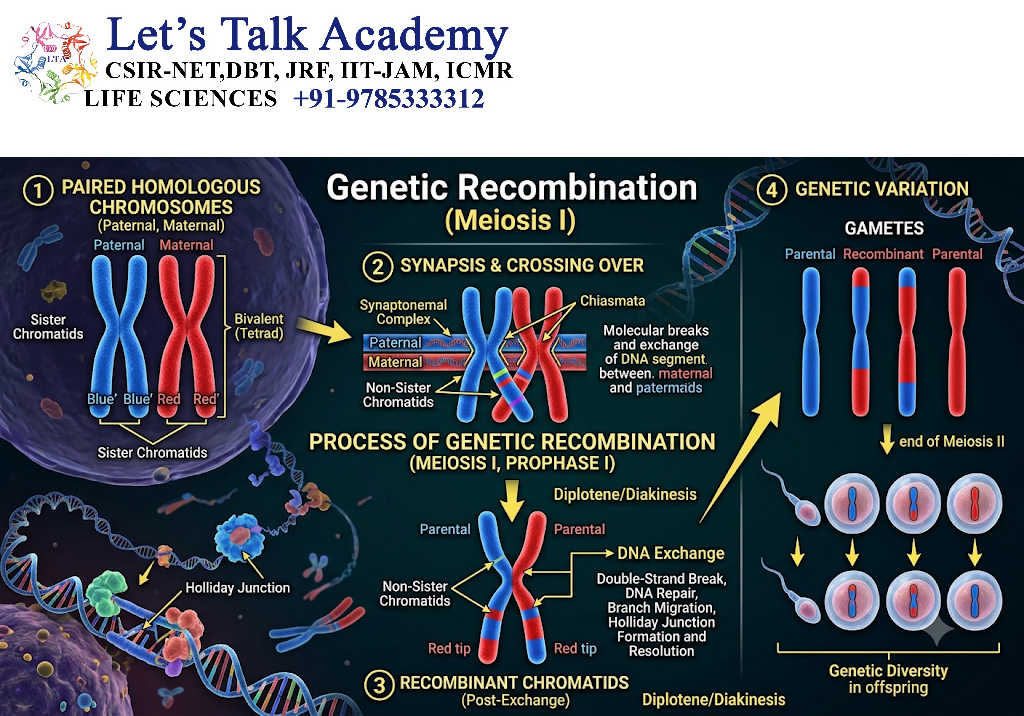
2.1 Definition of Genetic Recombination
Genetic recombination is the process through which DNA molecules undergo rearrangement or exchange of genetic information, resulting in a new genetic arrangement.
Recombination can occur between:
- homologous DNA molecules,
- sister chromatids,
- homologous chromosomes,
- specific DNA recognition sites,
- viral and host DNA molecules, or
- different genetic elements.
The exact mechanism depends on the type of recombination involved.
2.2 Major Types of Recombination
The major mechanistic categories include:
- Homologous recombination
- Site-specific recombination
- Transpositional recombination
Homologous and site-specific recombination are particularly important because they illustrate two fundamentally different strategies for rearranging DNA.
3. Homologous Recombination
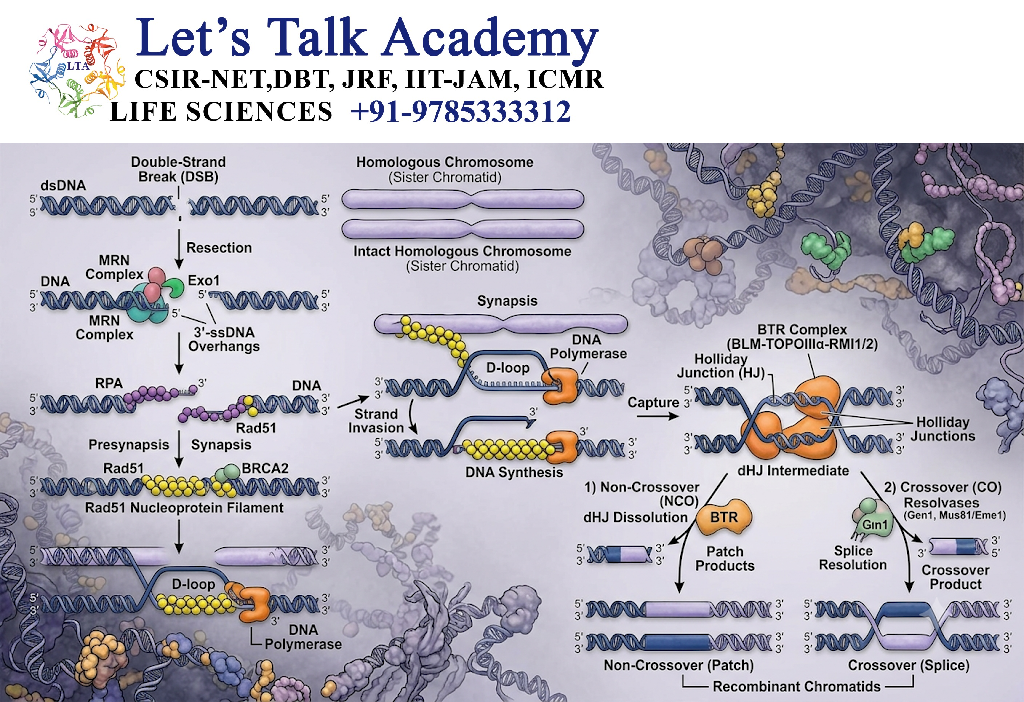
3.1 Definition
Homologous recombination is a DNA exchange process in which similar or nearly identical DNA sequences pair with each other and undergo strand exchange.
The participating DNA molecules must contain sufficient sequence similarity to allow accurate recognition of corresponding regions.
3.2 Basic Principle
The central principle of homologous recombination is DNA sequence homology.
When DNA is damaged, another DNA molecule containing a corresponding intact sequence can serve as a template. The damaged DNA can pair with the homologous region and use its information to restore the missing or damaged sequence.
Thus, homologous recombination can function as an important mechanism of high-fidelity DNA repair.
3.3 Major Functions
Homologous recombination performs several important functions:
- Repair of DNA double-strand breaks
- Recovery of stalled or collapsed replication forks
- Genetic exchange during meiosis
- Generation of genetic diversity
- Maintenance of chromosome integrity
- Accurate restoration of damaged DNA
- Promotion of genetic variation in sexually reproducing organisms
4. Homologous DNA Sequences
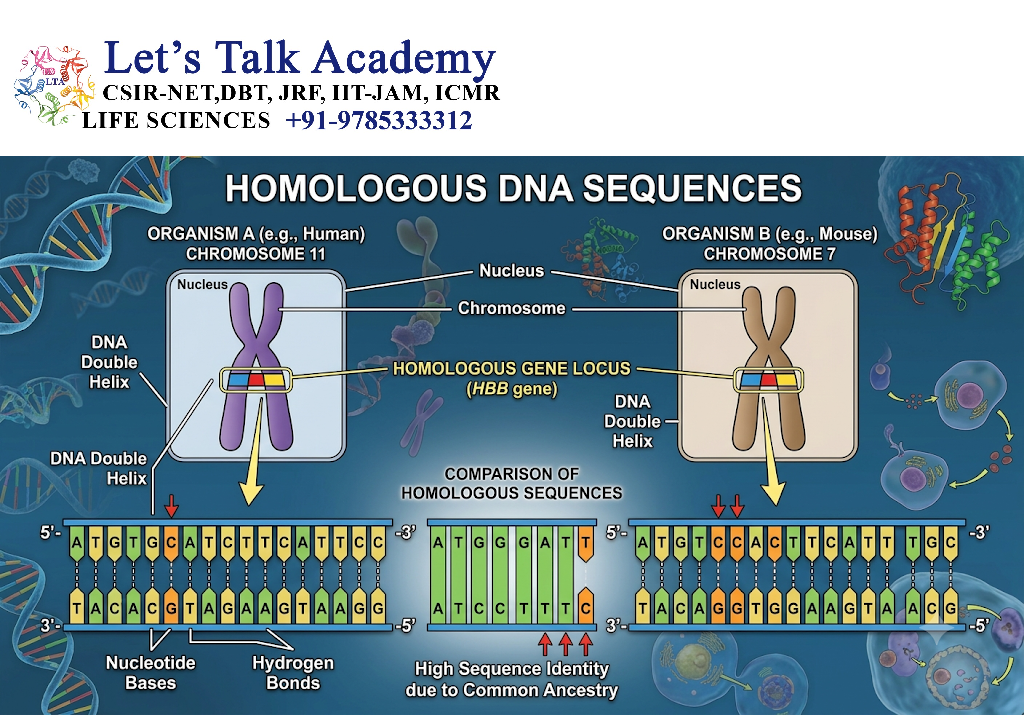
4.1 Meaning of Homology
Homology refers to an evolutionary or genetic relationship between DNA sequences derived from a common ancestral sequence.
In the context of recombination, DNA sequences need to be sufficiently similar to permit molecular pairing and strand exchange.
4.2 Importance of Homology
Homology allows the recombination machinery to distinguish an appropriate DNA partner from unrelated DNA.
For example, if a chromosome contains a damaged region, the corresponding intact region on a homologous chromosome can provide information needed for repair.
The greater the sequence similarity, the more efficiently homologous pairing can generally occur, although recombination mechanisms can tolerate some sequence differences depending on the organism and molecular system.
5. Molecular Components of Homologous Recombination
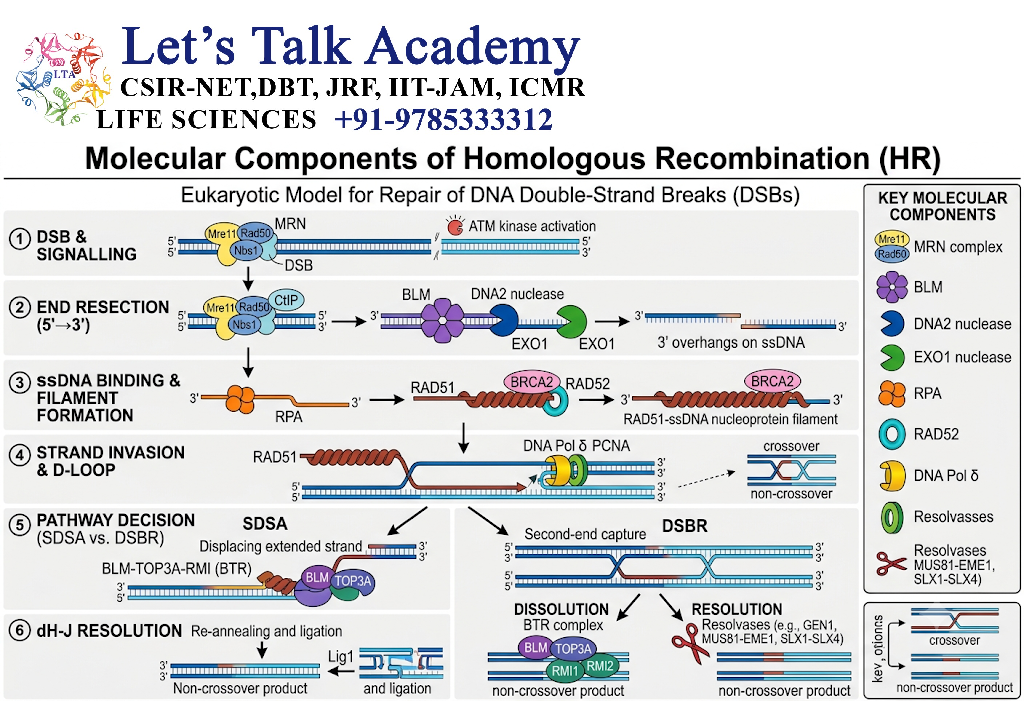
Homologous recombination requires coordinated activity of DNA-processing enzymes, recombination proteins, DNA polymerases, and DNA repair factors.
5.1 RecA Protein
RecA is a central recombination protein in bacteria.
RecA binds to single-stranded DNA and forms a nucleoprotein filament. This filament participates in the search for homologous DNA and promotes strand invasion.
Major functions include:
- binding to ssDNA,
- formation of a RecA-ssDNA filament,
- homology search,
- strand invasion,
- promotion of DNA strand exchange.
5.2 Rad51 Protein
In eukaryotic organisms, Rad51 performs functions analogous to those of bacterial RecA.
Rad51 forms a filament on single-stranded DNA generated during DNA repair. The filament searches for a homologous DNA sequence and promotes strand invasion.
Accessory proteins help regulate Rad51 filament formation and activity.
5.3 DNA Helicases
Helicases separate DNA strands and can participate in branch migration, recombination intermediate processing, and dissolution of recombination structures.
5.4 Nucleases
Nucleases cleave DNA strands.
During homologous recombination, nucleases can:
- process DNA ends,
- generate single-stranded regions,
- remove damaged DNA,
- process recombination intermediates.
5.5 DNA Polymerases
DNA polymerases extend a DNA strand by adding nucleotides to a free 3′-OH group.
During homologous recombination, the invading DNA strand can act as a primer for DNA synthesis using the homologous DNA molecule as a template.
5.6 DNA Ligase
DNA ligase seals breaks or nicks in the DNA backbone by forming phosphodiester bonds.
It is important during the final stages of DNA repair and chromosome restoration.
6. Initiation of Homologous Recombination
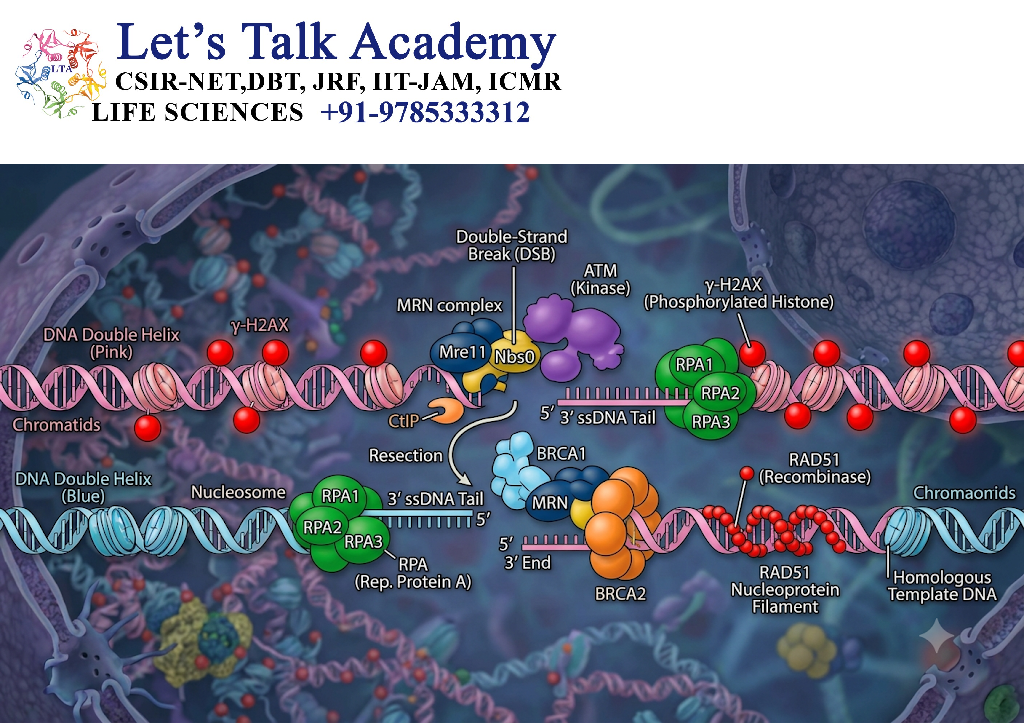
Homologous recombination can be initiated by different types of DNA damage or programmed DNA breaks.
A major initiating lesion is the DNA double-strand break (DSB).
6.1 DNA Double-Strand Break
A DNA double-strand break occurs when both strands of the DNA duplex are broken.
DSBs are particularly dangerous because a chromosome can become physically divided into separate DNA fragments.
Sources of DSBs include:
- ionizing radiation,
- reactive chemicals,
- replication-associated damage,
- oxidative stress,
- chromosome breakage,
- programmed meiotic DNA breaks.
6.2 Recognition of the DNA Break
The cell detects the broken DNA ends through specialized DNA damage-response proteins.
These proteins recruit DNA-processing factors to the damaged region.
The repair pathway that is selected depends on:
- cell-cycle stage,
- DNA-end structure,
- availability of homologous DNA,
- regulatory signals,
- type and location of damage.
7. DNA-End Resection
7.1 Definition
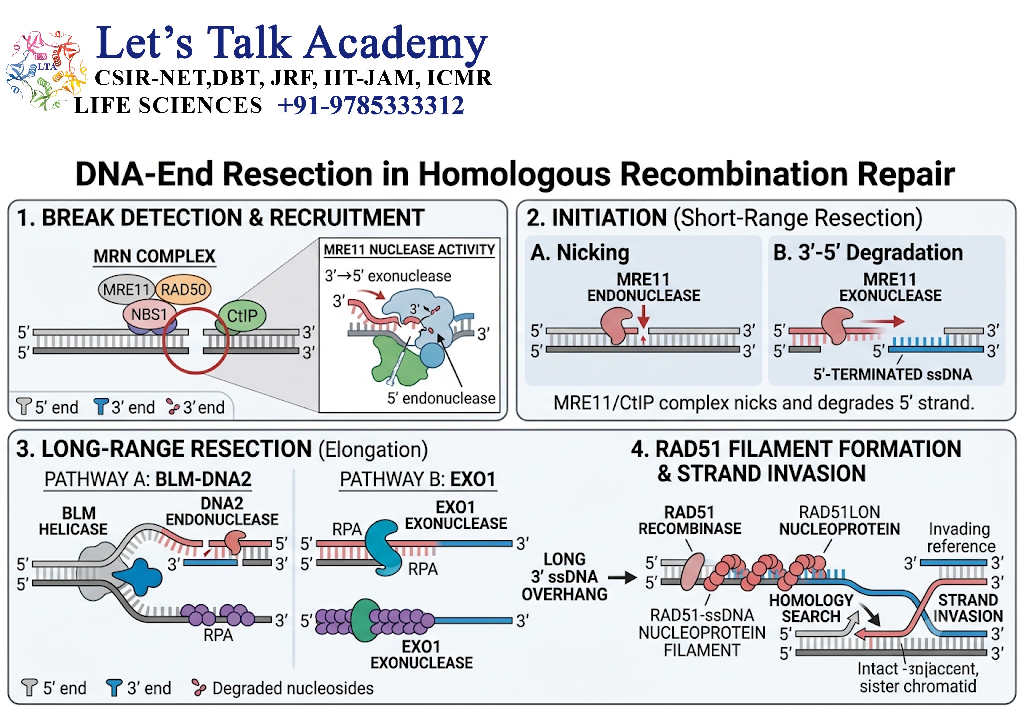
DNA-end resection is the enzymatic processing of broken DNA ends to generate single-stranded DNA.
This is a critical step in many homologous recombination pathways.
7.2 Formation of 3′ Single-Stranded DNA
During resection, DNA nucleotides are removed from the 5′ side of the broken ends, resulting in exposed 3′ single-stranded DNA tails.
These 3′ ssDNA regions are important because they can participate in strand invasion and later serve as primers for DNA synthesis.
7.3 Protection of ssDNA
Single-stranded DNA is vulnerable to degradation and inappropriate interactions.
Therefore, ssDNA is coated by single-strand-binding proteins.
In eukaryotic cells, RPA (Replication Protein A) initially binds the ssDNA.
Rad51 then replaces or assembles on the ssDNA with the help of accessory factors.
8. Formation of the RecA or Rad51 Filament
8.1 RecA-ssDNA Filament
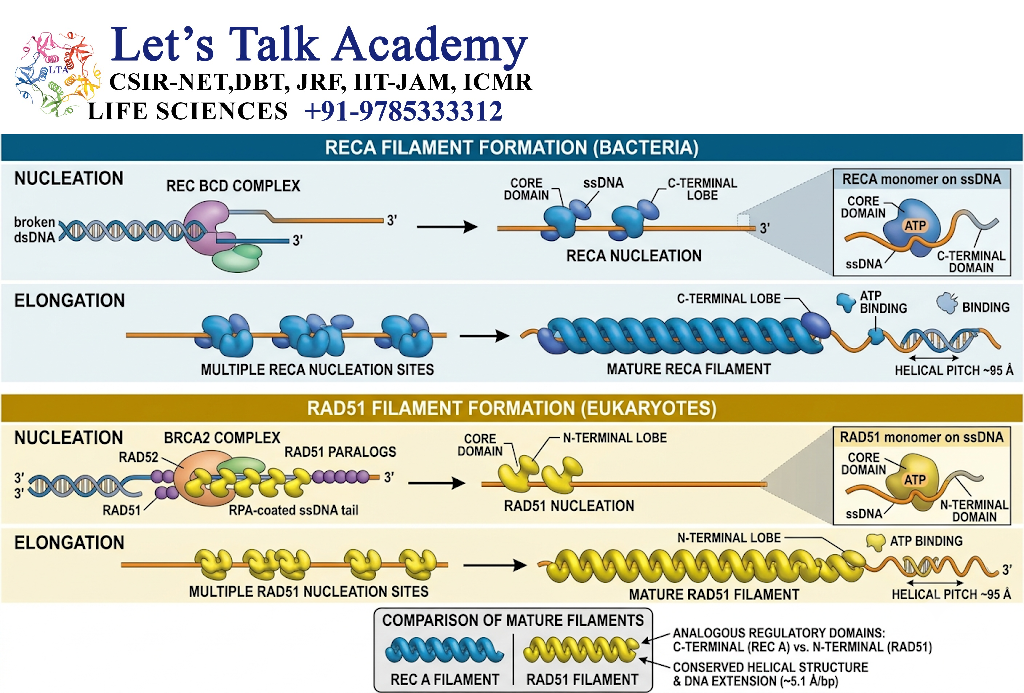
In bacteria, RecA molecules bind cooperatively to ssDNA.
The resulting nucleoprotein filament is capable of interacting with double-stranded DNA.
8.2 Rad51-ssDNA Filament
In eukaryotes, Rad51 performs a similar function.
Formation of an active Rad51 filament is carefully regulated because uncontrolled recombination can produce harmful chromosome rearrangements.
8.3 Function of the Filament
The filament performs two major activities:
- Searching for homologous DNA
- Promoting strand invasion
This makes RecA and Rad51 central components of homologous recombination.
9. Homology Search
9.1 Definition
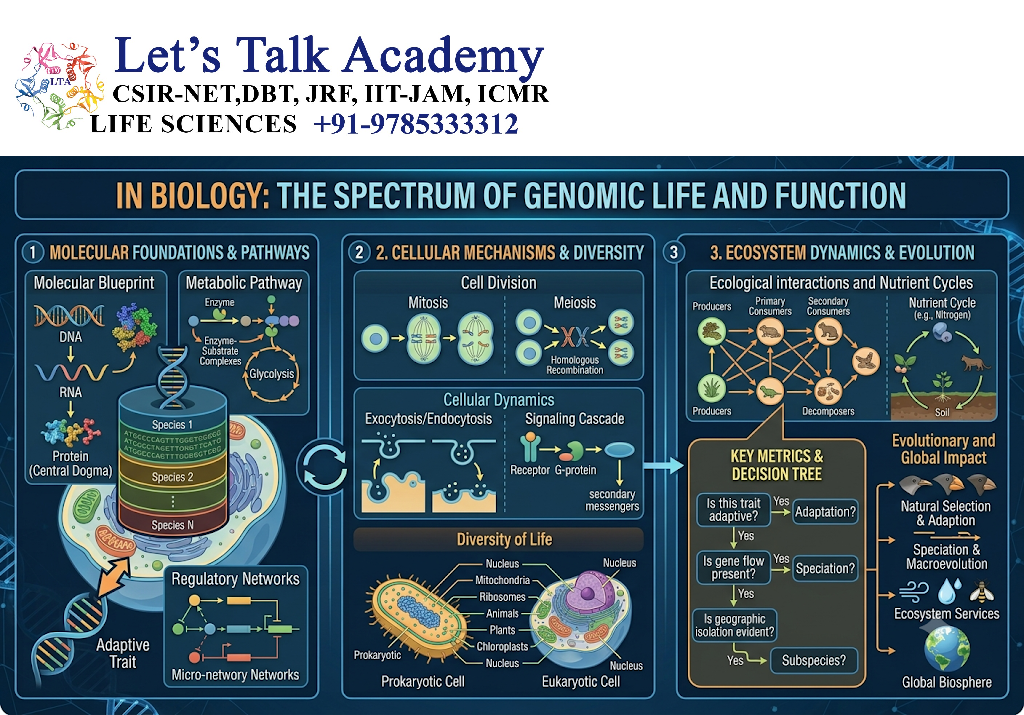
Homology search is the process through which the RecA/Rad51-ssDNA filament identifies a DNA molecule containing a sufficiently matching sequence.
9.2 Molecular Basis
The recombination filament interacts transiently with double-stranded DNA.
It tests whether the DNA contains a sequence complementary to the exposed single-stranded region.
When sufficient homology is detected, a stable recombination intermediate can form.
9.3 Biological Importance
Accurate homology searching is essential because inappropriate strand exchange could produce:
- mutations,
- chromosome rearrangements,
- deletions,
- duplications,
- translocations.
Therefore, homology recognition is an important mechanism for maintaining genome stability.
10. Strand Invasion
10.1 Definition
Strand invasion occurs when the single-stranded DNA from the broken molecule enters a homologous double-stranded DNA molecule and pairs with its complementary strand.
The invading strand displaces the original partner strand.
10.2 Mechanism
The process can be summarized as:
ssDNA filament → homologous DNA recognition → DNA strand pairing → strand displacement → recombination intermediate
The invading 3′ end can then serve as a primer for DNA synthesis.
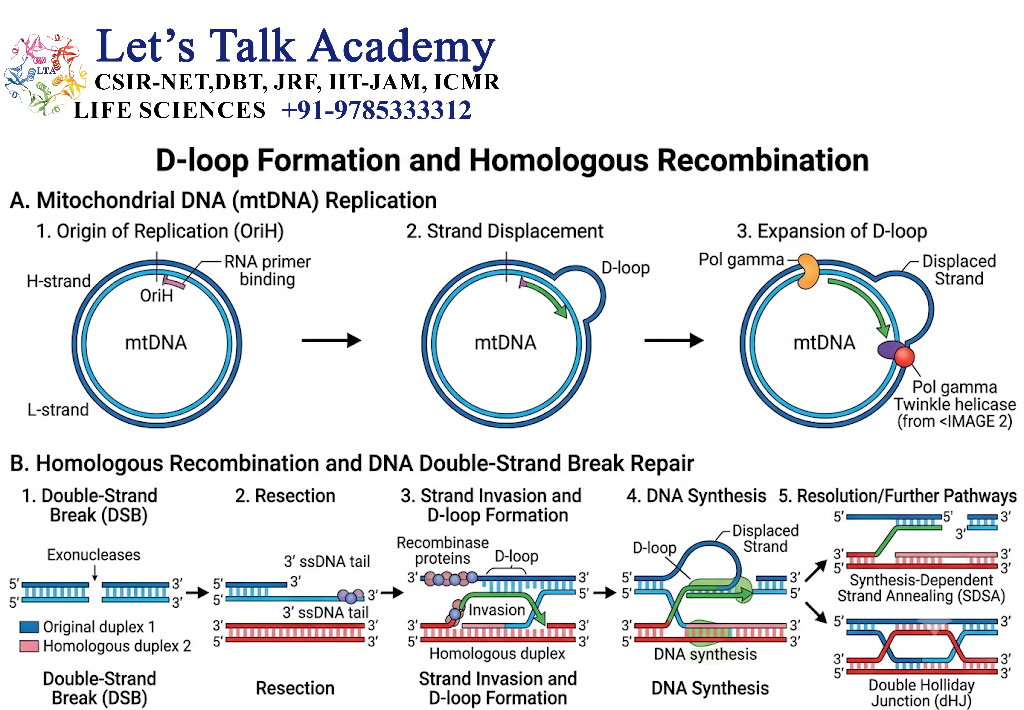
11. D-Loop Formation
11.1 Definition
The structure produced during strand invasion is called a displacement loop (D-loop).
The invading single DNA strand pairs with one strand of the homologous duplex and displaces the other strand locally.
11.2 Importance of the D-Loop
The D-loop provides a structural platform for:
- DNA synthesis,
- extension of the invading strand,
- stabilization of the recombination intermediate,
- progression toward different recombination outcomes.
12. DNA Synthesis During Homologous Recombination
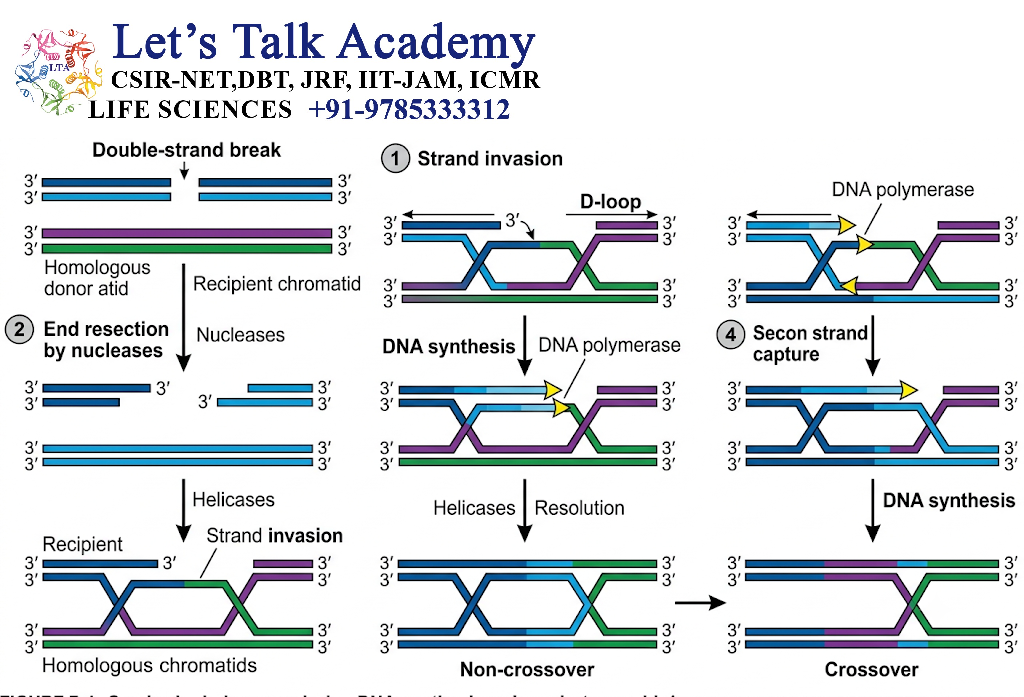
The free 3′ end of the invading DNA strand can be extended by DNA polymerase.
The homologous DNA molecule serves as the template.
This allows the damaged DNA molecule to obtain genetic information from an intact homologous sequence.
12.1 Template-Guided Repair
The major advantage of this process is that the cell does not have to reconstruct the missing sequence randomly.
Instead, it copies information from an intact homologous template.
Therefore, homologous recombination can provide highly accurate repair of DNA damage.
13. Holliday Junction
13.1 Definition
A Holliday junction is a four-stranded DNA intermediate formed during certain recombination reactions.
It contains interconnected DNA strands from two DNA duplexes.
13.2 Structure
A typical Holliday junction contains:
- four DNA strands,
- a crossover point,
- two DNA duplex arms,
- mobile strand-exchange region.
13.3 Formation
During recombination, strand exchange can connect the two DNA molecules.
This creates a four-stranded intermediate that can undergo branch migration and subsequent resolution or dissolution.
14. Branch Migration
14.1 Definition
Branch migration is the movement of the Holliday junction along the DNA.
As the junction moves, base pairs are broken in one region and newly formed in another.
14.2 Function
Branch migration can:
- extend the region of heteroduplex DNA,
- alter the position of the crossover,
- facilitate processing of the recombination intermediate.
14.3 Bacterial Proteins
In bacteria, proteins such as RuvA and RuvB participate in Holliday junction branch migration.
RuvA recognizes and stabilizes the junction, while RuvB provides motor activity that drives branch migration.
15. Holliday Junction Resolution
15.1 Definition
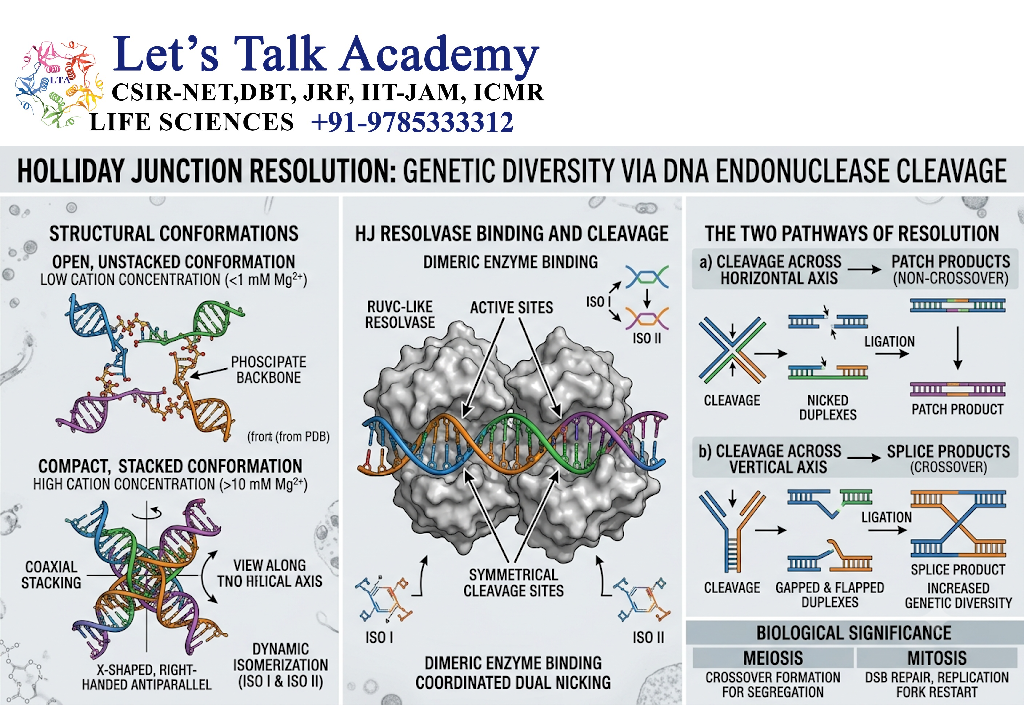
Resolution is the process through which a Holliday junction is cleaved and converted into separate DNA molecules.
15.2 Resolution Pathways
The orientation in which the junction is resolved can influence whether the final product is:
- a crossover product, or
- a non-crossover product.
15.3 RuvC
In many bacteria, RuvC functions as a Holliday junction resolvase.
It cleaves DNA strands at appropriate positions so that the interconnected DNA molecules can separate.
16. Crossover and Non-Crossover Products
16.1 Crossover
A crossover occurs when DNA segments are exchanged between two DNA molecules.
The resulting chromosomes contain combinations of DNA derived from both parental molecules.
16.2 Non-Crossover
In a non-crossover outcome, DNA repair or exchange occurs without producing a reciprocal exchange of the chromosome arms.
Both outcomes are biologically important.
16.3 Biological Importance
Crossover is particularly important during meiosis because it contributes to genetic diversity.
Non-crossover repair is important for maintaining chromosome integrity without necessarily rearranging large chromosome regions.
17. Double Holliday Junction
In some homologous recombination pathways, two Holliday junctions can form between DNA molecules.
This structure is called a double Holliday junction (dHJ).
The two junctions can be:
- resolved by nucleolytic cleavage, or
- dissolved by coordinated helicase/topoisomerase-associated activities.
The final processing determines whether crossover or non-crossover products are generated.
18. Homologous Recombination During Meiosis
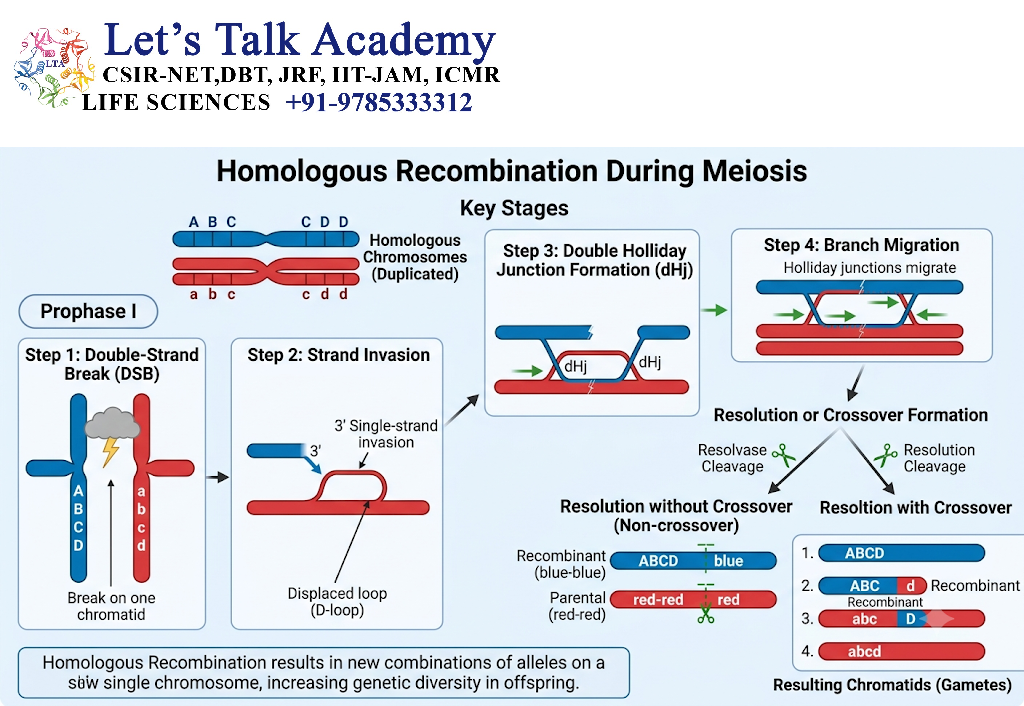
Homologous recombination has a specialized role during meiosis.
18.1 Programmed DNA Breaks
During meiotic prophase, programmed DNA double-strand breaks are generated.
In many organisms, the enzyme Spo11 initiates these breaks.
18.2 Pairing of Homologous Chromosomes
Homologous chromosomes align with one another.
This alignment facilitates exchange between corresponding DNA regions.
18.3 Crossing Over
DNA exchange between homologous chromosomes produces crossover structures.
The physical manifestations of these exchanges are associated with chiasmata, which help establish connections between homologous chromosomes before their separation.
18.4 Genetic Diversity
Meiotic recombination creates new combinations of alleles.
Together with independent chromosome assortment, crossing over contributes substantially to genetic diversity among sexually reproducing organisms.
19. Biological Importance of Homologous Recombination
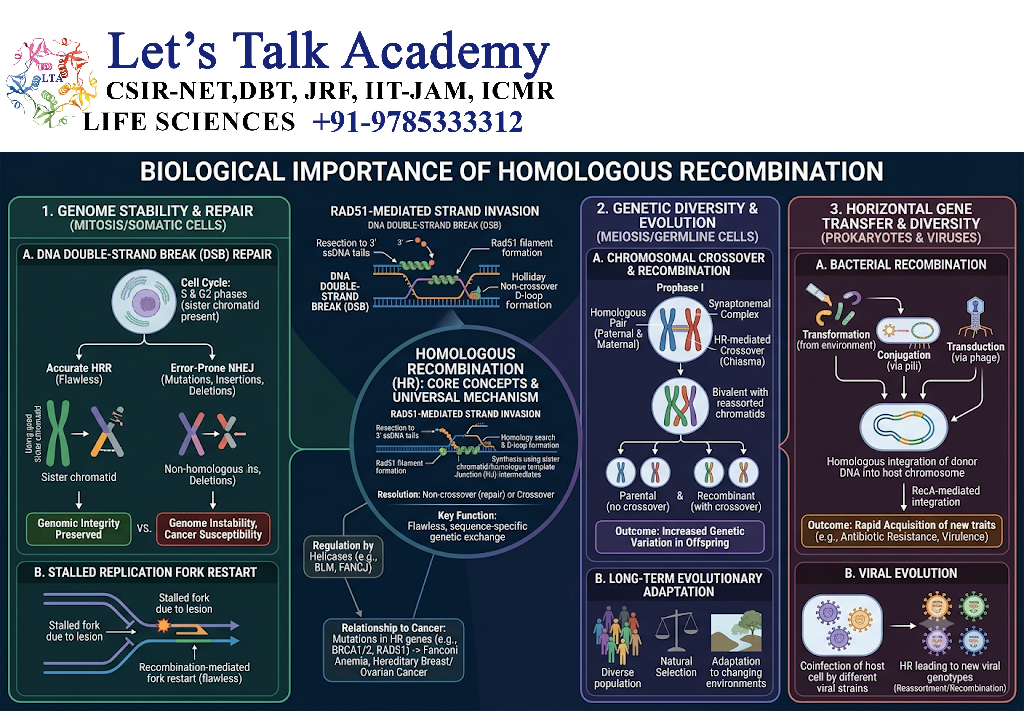
Homologous recombination is essential for:
19.1 DNA Repair
It provides an accurate mechanism for repairing double-strand breaks using homologous DNA as a template.
19.2 Replication-Fork Recovery
When replication forks stall or collapse, recombination-mediated processes can help restore productive DNA replication.
19.3 Genetic Diversity
During meiosis, crossing over creates new combinations of genetic variants.
19.4 Genome Stability
Accurate repair prevents accumulation of chromosome breaks and harmful mutations.
19.5 Evolution
Recombination generates genetic combinations upon which evolutionary processes can act.
20. Site-Specific Recombination
20.1 Definition
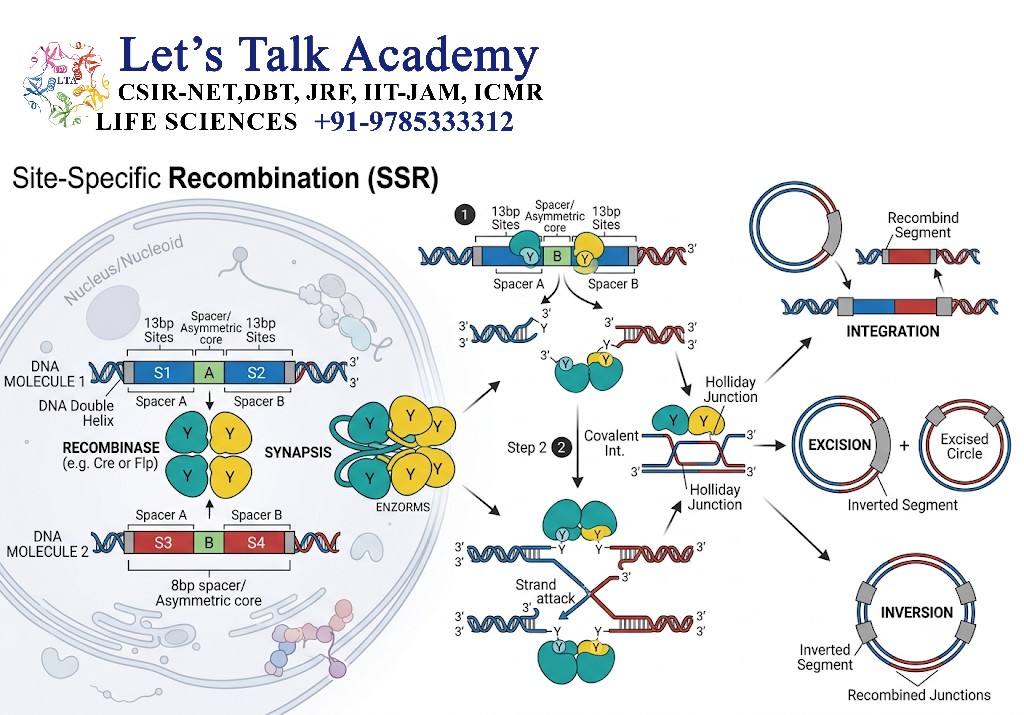
Site-specific recombination is a DNA rearrangement process in which specialized enzymes recognize particular DNA sequences and catalyze recombination at or near those sites.
Unlike homologous recombination, it does not require extensive DNA sequence homology between the participating DNA molecules.
20.2 Basic Principle
The reaction depends primarily on:
specific DNA recognition sites + recombinase enzyme + DNA strand cleavage and rejoining
The recombinase identifies the appropriate DNA sequences and brings them into a configuration that allows strand exchange.
21. Characteristics of Site-Specific Recombination

Important characteristics include:
- specific DNA recognition sequences,
- specialized recombinases,
- precise DNA cleavage,
- controlled strand exchange,
- precise DNA joining,
- predictable genomic outcomes.
The process can produce:
- integration,
- excision,
- inversion,
- DNA rearrangement.
22. Site-Specific Recombinases
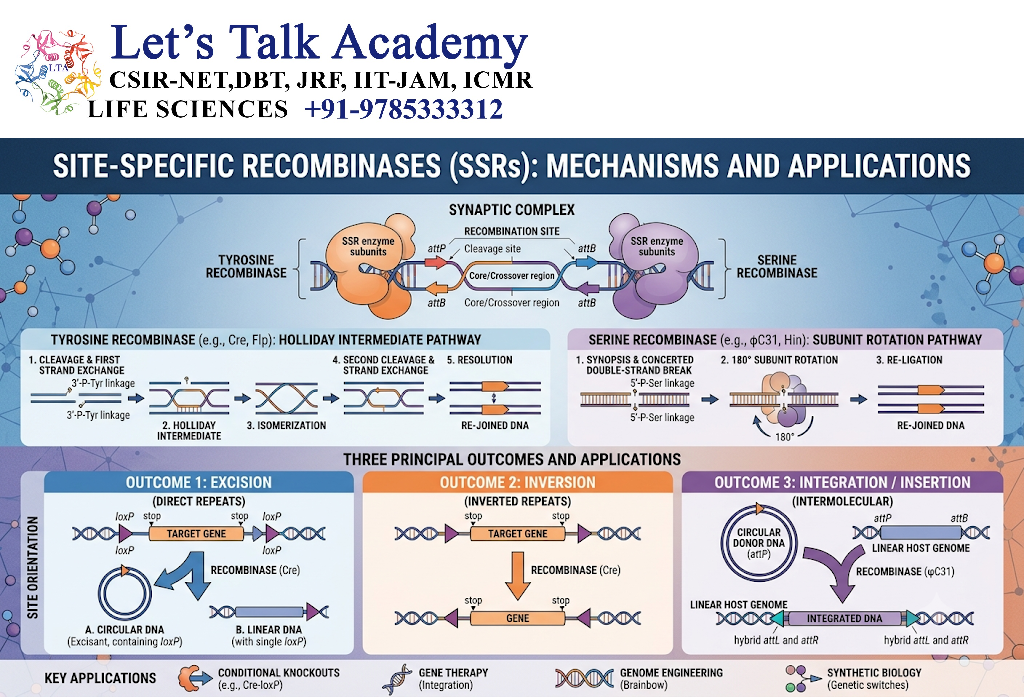
Recombinases are enzymes responsible for catalyzing site-specific DNA rearrangements.
Two major mechanistic families are:
- Tyrosine recombinases
- Serine recombinases
22.1 Tyrosine Recombinases
Tyrosine recombinases use an active-site tyrosine residue during DNA cleavage.
Examples include:
- Cre
- Flp
- λ integrase
These enzymes generally form covalent enzyme-DNA intermediates during the recombination reaction.
22.2 Serine Recombinases
Serine recombinases use an active-site serine residue.
Many members of this family catalyze highly controlled DNA rearrangements and can produce integration, excision, or inversion depending on the reaction system.
Examples include several resolvases and invertases.
23. Recognition Sites
Site-specific recombination depends on specific DNA sequences.
These sequences contain recognition elements to which the recombinase binds.
The DNA sites may contain:
- recombinase-binding regions,
- spacer or crossover regions,
- orientation information.
The arrangement and orientation of the recognition sites influence the final DNA product.
24. Cre-lox Recombination System
The Cre-lox system is one of the best-known examples of site-specific recombination.
It consists of:
- Cre recombinase
- loxP DNA sites
24.1 Cre Recombinase
Cre is a site-specific recombinase that recognizes loxP sites.
It binds to the loxP sequences and catalyzes recombination between them.
24.2 loxP Site
A loxP site is a specific DNA recognition sequence for Cre.
Its directional organization allows Cre to distinguish the orientation of the recombination sites.
25. Cre-Mediated Excision
When two loxP sites are positioned in the same orientation, Cre recombination generally results in excision of the DNA segment between them.
The DNA segment located between the sites is removed from the original DNA molecule and can form a circular DNA product containing a loxP site.
The chromosome or DNA molecule left behind contains a single recombined loxP site.
Conceptual flow
loxP → DNA segment → loxP
↓
Cre recombinase
↓
DNA segment excised
26. Cre-Mediated Inversion
When two loxP sites are positioned in opposite orientations, Cre-mediated recombination can invert the DNA segment between them.
The DNA is not necessarily removed; instead, its orientation is reversed.
Conceptual flow
loxP → DNA segment ← loxP
↓
Cre
↓
Inverted DNA segment
This mechanism is useful for studying gene orientation and regulatory elements.
27. Site-Specific Integration
Site-specific recombination can also insert DNA into a defined genomic location.
Integration occurs when recombination takes place between appropriate recognition sites on two different DNA molecules.
This mechanism is used naturally by several viruses and has also been adapted for biotechnology.
28. Bacteriophage Lambda Integration
Bacteriophage λ provides an important biological example of site-specific integration.
During lysogeny, the viral DNA becomes integrated into the bacterial chromosome.
28.1 Integrase
The λ integrase enzyme catalyzes recombination between specific sites on the phage DNA and bacterial chromosome.
28.2 Integration
The phage attachment site and bacterial attachment site are brought together.
Integrase-mediated recombination produces an integrated prophage.
28.3 Excision
When the phage exits the bacterial chromosome, a related site-specific recombination reaction reverses the integration event.
This illustrates how site-specific recombination can be reversible and tightly regulated.
29. DNA Inversion
Site-specific recombination can change the orientation of a DNA segment without necessarily changing its overall copy number.
This is called DNA inversion.
29.1 Mechanism
If two recombination sites are arranged in opposite orientations, recombination can flip the intervening DNA segment.
29.2 Biological Significance
DNA inversion can regulate gene expression.
In some bacteria, inversion changes which promoter or regulatory region is positioned correctly relative to a gene.
This can produce alternative patterns of gene expression.
30. Site-Specific Recombination in Bacteria
Bacteria use site-specific recombination for several functions.
These include:
- phage integration,
- phage excision,
- DNA inversion,
- plasmid resolution,
- genome organization,
- regulation of gene expression.
Bacterial recombination systems often provide highly precise DNA rearrangements.
31. Site-Specific Recombination in Viruses
Viruses can use site-specific recombination to integrate their genomes into host chromosomes.
This strategy allows some viruses to establish long-term associations with host cells.
Integration can contribute to:
- viral genome maintenance,
- latent infection,
- controlled gene expression,
- switching between viral life-cycle states.
32. Site-Specific Recombination in Eukaryotic Cells
Although naturally occurring systems differ among organisms, site-specific recombination has become extremely useful for manipulating eukaryotic genomes.
The Cre-lox system is widely used because DNA segments can be placed between loxP sites and selectively rearranged when Cre is expressed.
33. Conditional Gene Deletion
One important application is conditional gene deletion.
A gene can be flanked by loxP sites. Such a gene is often described as floxed.
When Cre is activated in a particular tissue, cell type, or developmental stage, the DNA segment between the loxP sites can be excised.
This allows researchers to investigate gene function in a controlled biological context.
34. Homologous Recombination vs Site-Specific Recombination
| Feature | Homologous Recombination | Site-Specific Recombination |
|---|---|---|
| Basic requirement | Extensive DNA sequence similarity | Specific recognition sites |
| Main proteins | RecA/Rad51 and accessory factors | Recombinases |
| Homology requirement | High | Usually not extensive |
| Main mechanism | Strand invasion and DNA pairing | Site-directed cleavage and rejoining |
| DNA repair role | Major | Usually more specialized |
| Holliday junction | Common in many pathways | Not a defining intermediate |
| Genetic diversity | Major role in meiosis | Usually not the primary role |
| Integration | Possible but not its defining feature | Major function in some systems |
| Inversion | Possible | Common mechanism |
| Biotechnology | Gene targeting and DNA repair studies | Conditional gene manipulation and targeted rearrangement |
35. Major Mechanistic Differences
35.1 Homologous Recombination
The general sequence is:
DNA damage → end processing → ssDNA formation → RecA/Rad51 filament → homology search → strand invasion → D-loop → DNA synthesis → recombination intermediate → resolution/dissolution
35.2 Site-Specific Recombination
The general sequence is:
Recognition site → recombinase binding → DNA synapsis → strand cleavage → strand exchange → DNA rejoining → final rearranged product
The major difference is therefore the basis of DNA recognition.
Homologous recombination searches for sequence similarity, whereas site-specific recombination depends on predefined recognition sequences.
36. Regulation of Homologous Recombination
Homologous recombination must be tightly controlled.
Unregulated recombination can cause:
- chromosome rearrangements,
- inappropriate crossover,
- deletions,
- duplications,
- loss of genetic information.
Regulation involves controlling:
- DNA-end resection,
- RecA/Rad51 filament formation,
- strand invasion,
- DNA synthesis,
- recombination intermediate processing,
- pathway choice.
In eukaryotic cells, homologous recombination is strongly influenced by the cell-cycle stage and DNA-damage response.
37. Regulation of Site-Specific Recombination
Site-specific recombination can also be regulated at several levels.
Regulation may involve:
- recombinase expression,
- DNA-site availability,
- orientation of recognition sites,
- accessory proteins,
- DNA topology,
- cellular conditions.
The same recombinase can therefore produce different outcomes depending on the organization of the DNA sites.
38. Biological Significance of Site-Specific Recombination
Site-specific recombination contributes to:
38.1 Genome Organization
Precise DNA rearrangements can modify chromosome structure.
38.2 Gene Regulation
DNA inversion can alter the position of promoters and regulatory sequences.
38.3 Viral Genome Integration
Some viruses use site-specific recombination to integrate their DNA into host chromosomes.
38.4 Plasmid Maintenance
Certain recombination systems help resolve plasmid multimers, improving plasmid inheritance.
38.5 Genome Engineering
Scientists use site-specific recombination to remove, invert, or integrate selected DNA segments.
39. Recombination and Genome Stability
Both homologous and site-specific recombination can contribute to genome stability when properly regulated.
Homologous recombination primarily protects the genome by repairing damaged DNA and recovering replication problems.
Site-specific recombination maintains genomic organization by carrying out controlled DNA rearrangements.
However, abnormal or misregulated recombination can become harmful and may generate structural chromosome changes.
40. Recombination in DNA Repair
Homologous recombination is one of the most important mechanisms for repairing DNA double-strand breaks when an appropriate homologous template is available.
The process restores DNA sequence information rather than simply joining broken ends.
This is particularly important when preserving genetic information is essential.
41. Recombination and Genetic Variation
Recombination is a major source of genetic diversity.
During meiosis, homologous chromosomes exchange DNA segments.
As a result, gametes can contain combinations of alleles that were not present together on either original parental chromosome.
This contributes to biological diversity within populations.
42. Recombination and Evolution
Recombination influences evolution by rearranging existing genetic variants into new combinations.
Natural selection can subsequently act on these combinations.
Recombination can therefore influence:
- adaptation,
- population diversity,
- linkage relationships,
- genome evolution.
43. Recombination in Biotechnology
Both recombination mechanisms have major applications in biotechnology.
43.1 Gene Targeting
Homologous recombination can be used to introduce or replace DNA sequences at selected genomic regions.
43.2 Conditional Gene Manipulation
Cre-lox recombination can selectively delete genes.
43.3 Genome Engineering
Site-specific recombination allows researchers to manipulate DNA in a predictable manner.
43.4 Genetic Constructs
Recognition sites can be incorporated into engineered DNA molecules so that recombinases can control their organization.
.


