
1. Introduction
Genomes are not completely static repositories of genetic information. In addition to genes and regulatory sequences, genomes contain DNA sequences capable of changing their positions or generating new copies within the genome. These mobile genetic elements are collectively known as transposable elements, and the individual mobile DNA sequences are commonly called transposons.
Transposons can move from one genomic location to another or, in some cases, generate additional copies that insert elsewhere.
Their movement can:
- Alter gene function.
- Change gene expression.
- Produce mutations.
- Rearrange chromosomes.
- Increase genome size.
- Create genetic variation.
- Contribute to genome evolution.
A simplified concept is:
Transposable DNA → Movement or copying → New genomic position → Genetic consequences
Transposable elements are found in organisms ranging from bacteria to plants and animals and represent a major component of many genomes.
2. Definition of Transposons
A transposon is a DNA sequence capable of moving from one genomic location to another, either directly or through an RNA intermediate depending on the type.
Transposons belong to the broader category of mobile genetic elements.
Their movement is called transposition.
The basic relationship is:
Transposon → Transposition → New genomic location
Some transposons move without requiring an RNA intermediate, whereas others are transcribed into RNA and then converted back into DNA before insertion.
3. Discovery of Transposons
The concept of transposable elements emerged from genetic studies in maize conducted by Barbara McClintock.
She identified genetic elements capable of changing their positions and demonstrated that such movements could influence gene activity and produce visible changes in kernel pigmentation.
Her work established that genomes contain mobile genetic elements and fundamentally changed the understanding of genome organization.
The discovery later received major scientific recognition.
4. Transposons and Mobile Genetic Elements
Mobile genetic elements can be broadly classified according to their mechanisms of movement.
Two major categories are:
- DNA transposons
- Retrotransposons
The fundamental difference is the presence or absence of an RNA intermediate.
DNA transposons:
DNA → DNA
Retrotransposons:
DNA → RNA → DNA
5. Major Classification of Transposons
A simplified classification is:
| Category | Major mechanism | Important enzyme |
|---|---|---|
| DNA transposons | DNA-based movement | Transposase |
| Retrotransposons | RNA intermediate | Reverse transcriptase |
| LTR retrotransposons | RNA intermediate with LTRs | Reverse transcriptase and integrase |
| Non-LTR retrotransposons | RNA intermediate without LTRs | Reverse transcriptase and endonuclease |
Transposable-element classification can be more detailed because different organisms contain diverse families and subfamilies.
6. DNA Transposons
DNA transposons move directly as DNA molecules.
Many DNA transposons use a cut-and-paste mechanism.
The basic process is:
Transposon excision → DNA movement → Insertion at a new site
The enzyme transposase is central to this process.
7. Structure of a Typical DNA Transposon
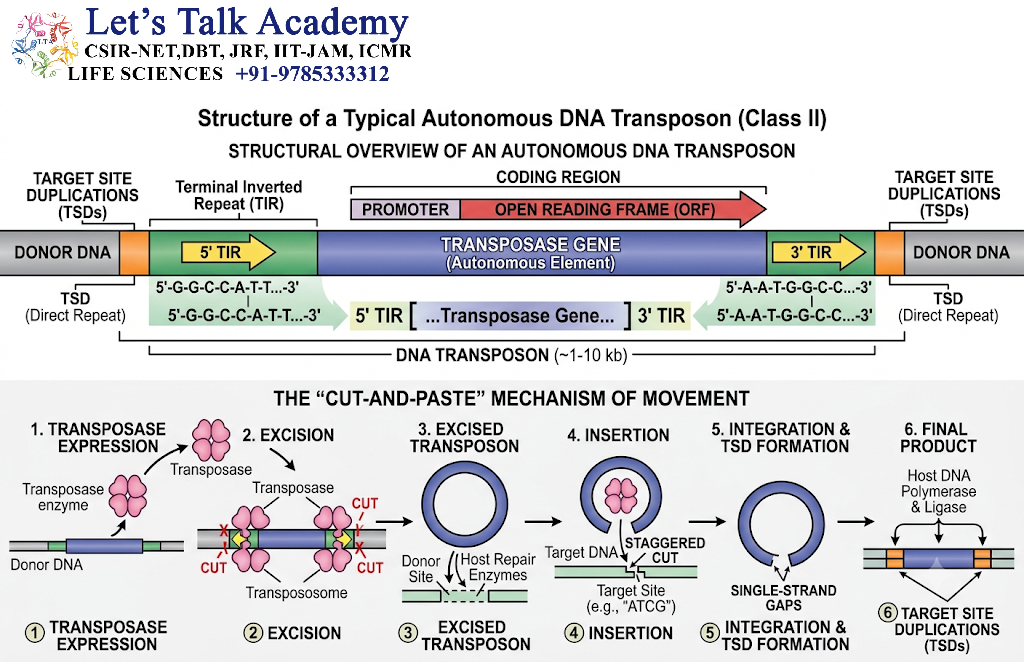
Many DNA transposons contain:
- Terminal inverted repeats (TIRs)
- A transposase gene
- Internal DNA sequence
A simplified structure is:
TIR → Transposase-coding region → TIR
The terminal inverted repeats are recognized by the transposase.
However, not every DNA transposon has exactly the same organization.
8. Terminal Inverted Repeats
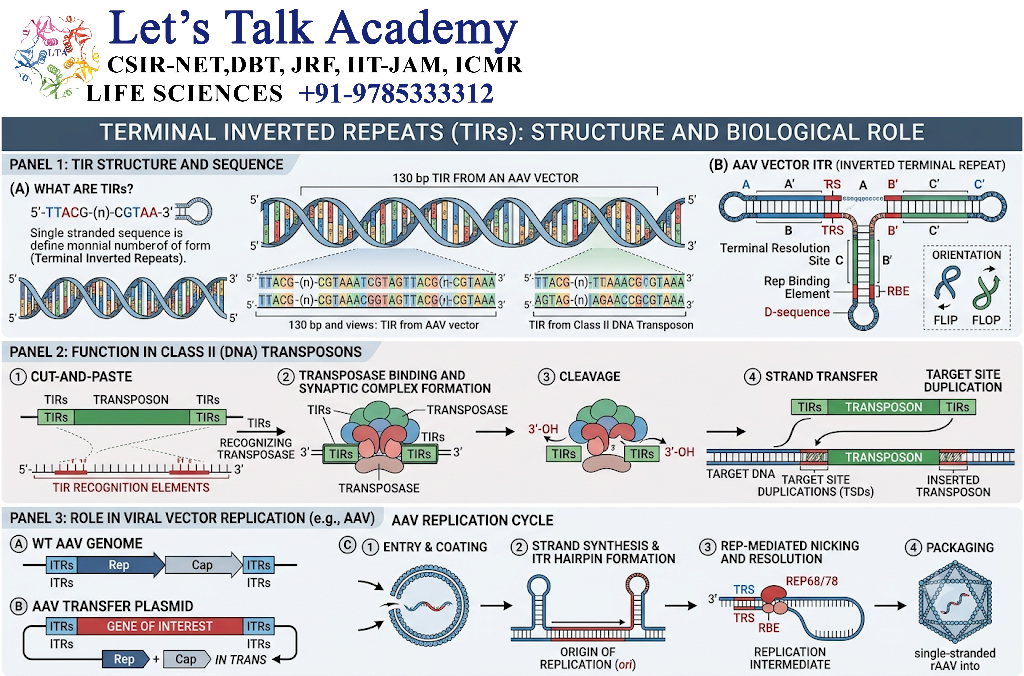
Terminal inverted repeats (TIRs) are repeated sequences located at the two ends of many DNA transposons.
They are called inverted repeats because the sequences at opposite ends have an inverted relationship.
They provide recognition sites for the transposase.
A simplified representation is:
5′ — TIR — Transposase region — TIR — 3′
9. Transposase
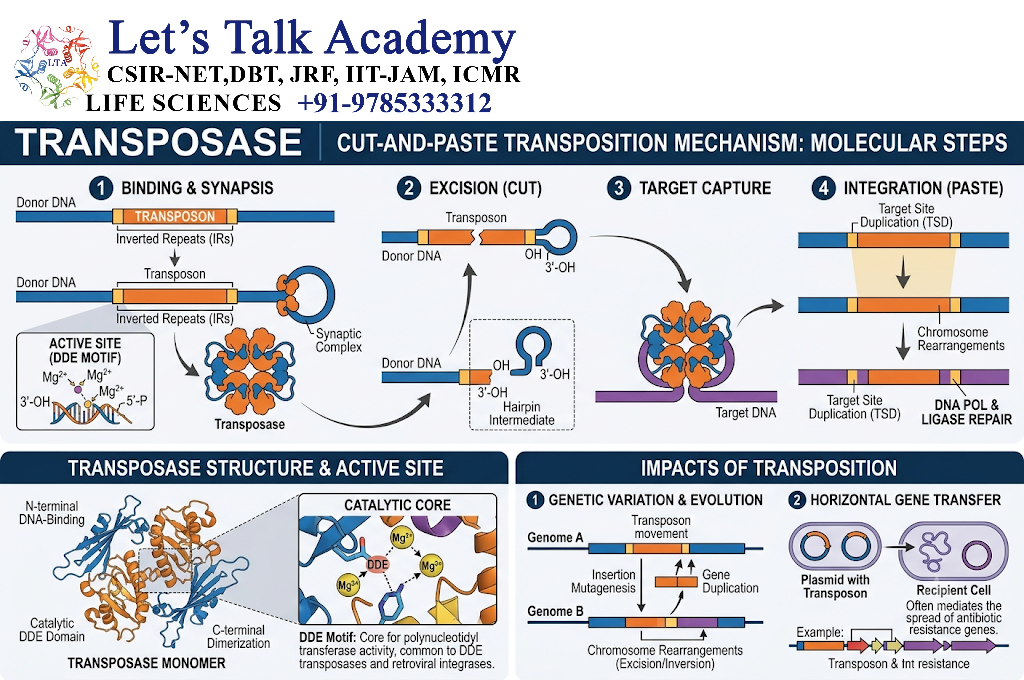
Transposase is the enzyme responsible for movement of many DNA transposons.
It recognizes transposon ends and catalyzes reactions involved in:
- DNA cleavage or excision.
- Formation of the transposition complex.
- Target DNA integration.
Different transposon families encode structurally and mechanistically distinct transposases.
10. Cut-and-Paste Transposition
In a classical cut-and-paste mechanism:
Step 1: Recognition
Transposase recognizes the terminal sequences of the transposon.
Step 2: Synaptic Complex Formation
The transposon ends are brought together in a protein-DNA complex.
Step 3: Excision
The transposon is removed from its original location.
Step 4: Target Recognition
The transposition machinery interacts with a new target DNA site.
Step 5: Insertion
The transposon is inserted into the target site.
Step 6: Repair
Host DNA-repair pathways repair the resulting DNA structures.
The simplified pathway is:
Original DNA
↓
Transposon excision
↓
Target-site insertion
↓
DNA repair
11. Target Site Duplication
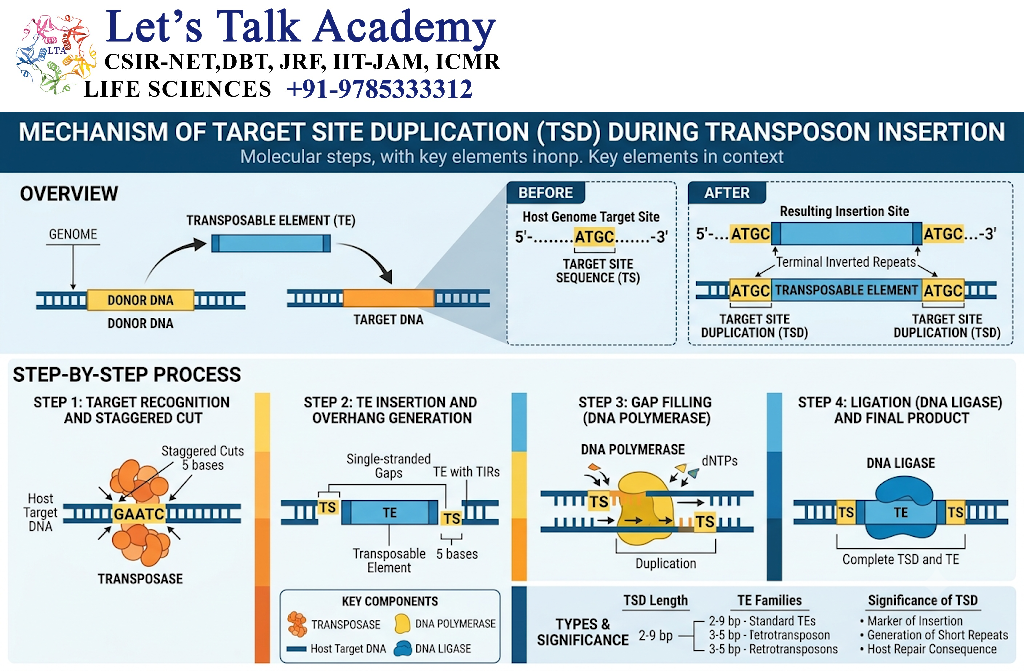
Insertion of many transposable elements produces short duplicated sequences at the target site.
These are called target site duplications (TSDs).
They arise because the transposase or related integration machinery makes staggered cuts in the target DNA.
After insertion, cellular DNA-repair processes fill the gaps, producing short direct repeats flanking the inserted element.
A simplified structure is:
Direct repeat — Transposon — Direct repeat
The exact length of the duplication depends on the transposable-element family.
12. Replicative Transposition
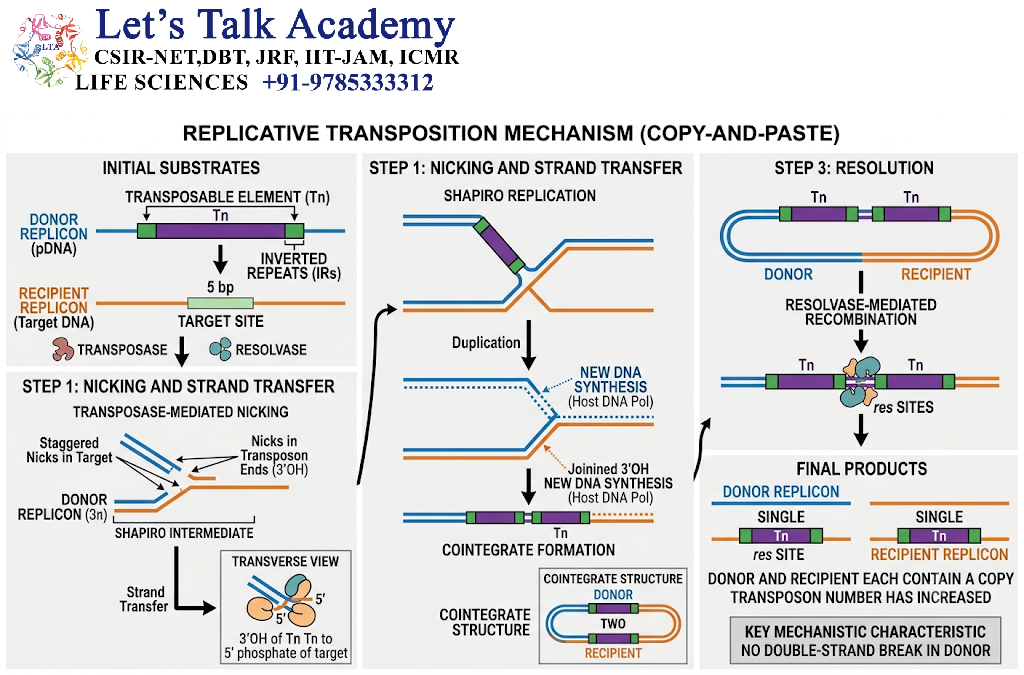
Not all transposons move through a simple cut-and-paste mechanism.
In replicative transposition, the original transposon remains at its original position while a new copy is generated at another genomic location.
Thus:
One transposon → two copies
This mechanism can increase the number of transposon copies within a genome.
13. DNA Transposons in Bacteria
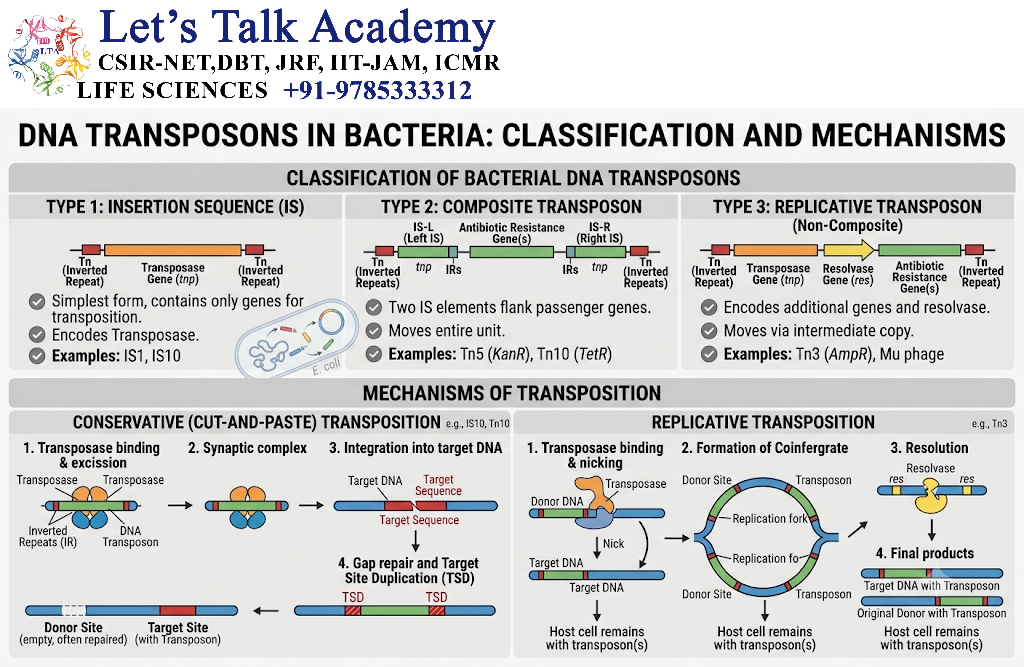
Bacteria contain several types of mobile DNA elements.
One important class is the insertion sequence (IS).
An insertion sequence is a relatively simple transposable element that typically contains:
- Transposase gene
- Terminal inverted repeats
Insertion sequences can move within bacterial genomes and may influence gene function.
14. Composite Transposons
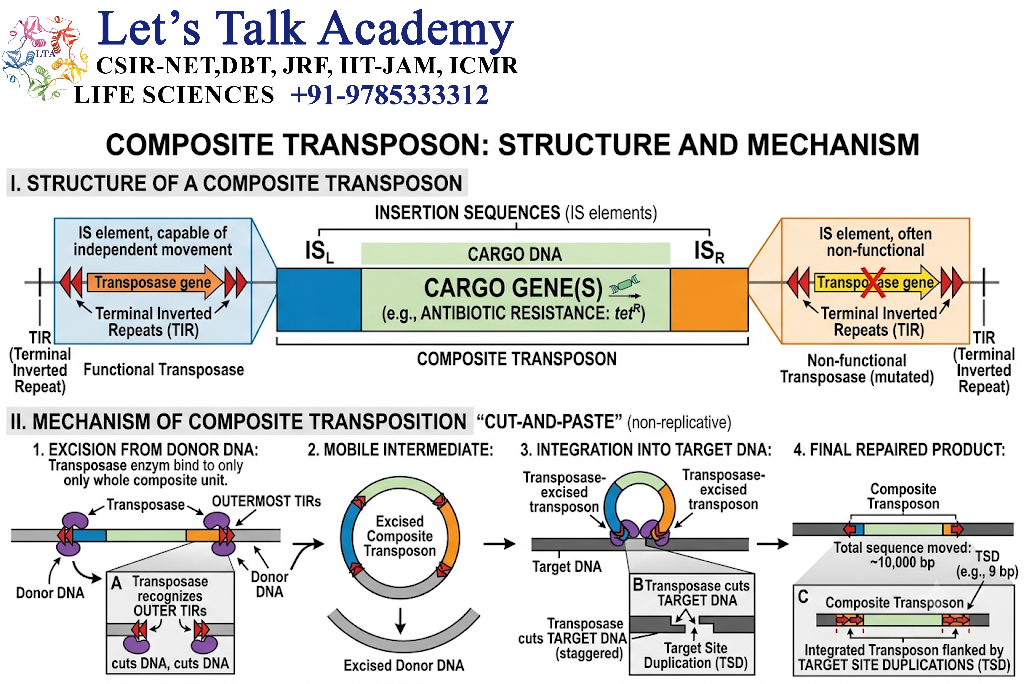
Some bacterial transposons are known as composite transposons.
They contain two insertion-sequence-like elements surrounding additional genes.
A simplified structure is:
IS → Additional gene(s) → IS
The additional genes may include antibiotic-resistance genes.
Movement of such elements can therefore contribute to the spread of resistance traits.
15. Non-Composite Transposons
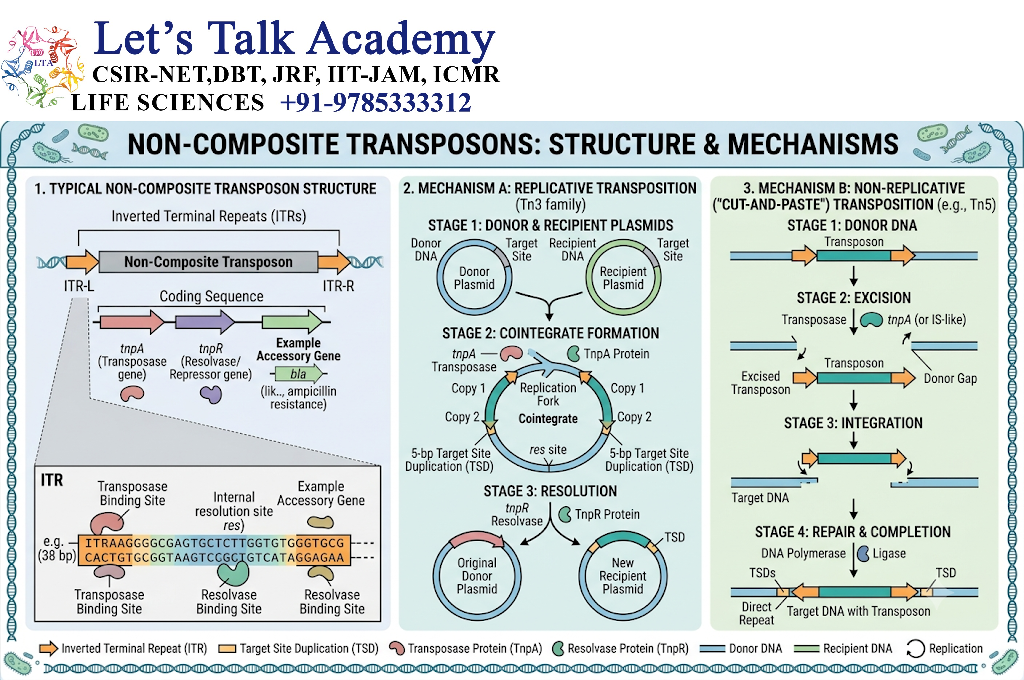
Non-composite transposons do not necessarily consist of two flanking insertion sequences.
Instead, they may contain:
- Transposition genes
- Regulatory sequences
- Additional functional genes
Some bacterial transposons can carry genes that provide adaptive advantages to their host.
16. Retrotransposons
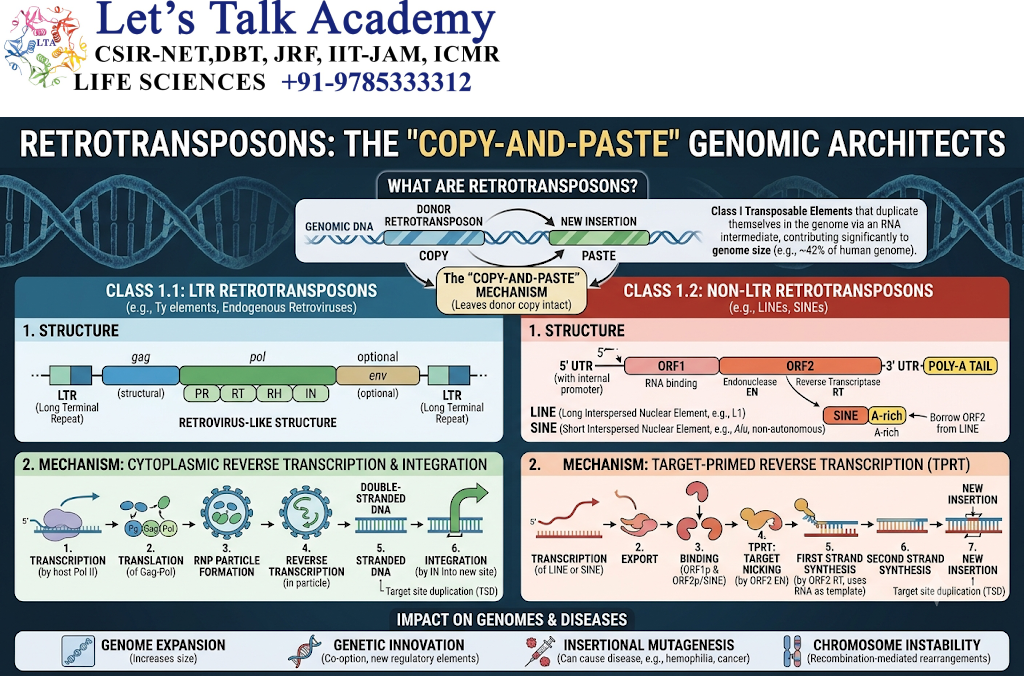
Retrotransposons are transposable elements that move through an RNA intermediate.
The general pathway is:
DNA → RNA → DNA → New genomic location
The RNA intermediate is converted into DNA using reverse transcriptase.
Unlike classical cut-and-paste DNA transposons, retrotransposon movement usually leaves the original copy behind.
Therefore, retrotransposition is generally a copy-and-paste process.
17. Reverse Transcriptase
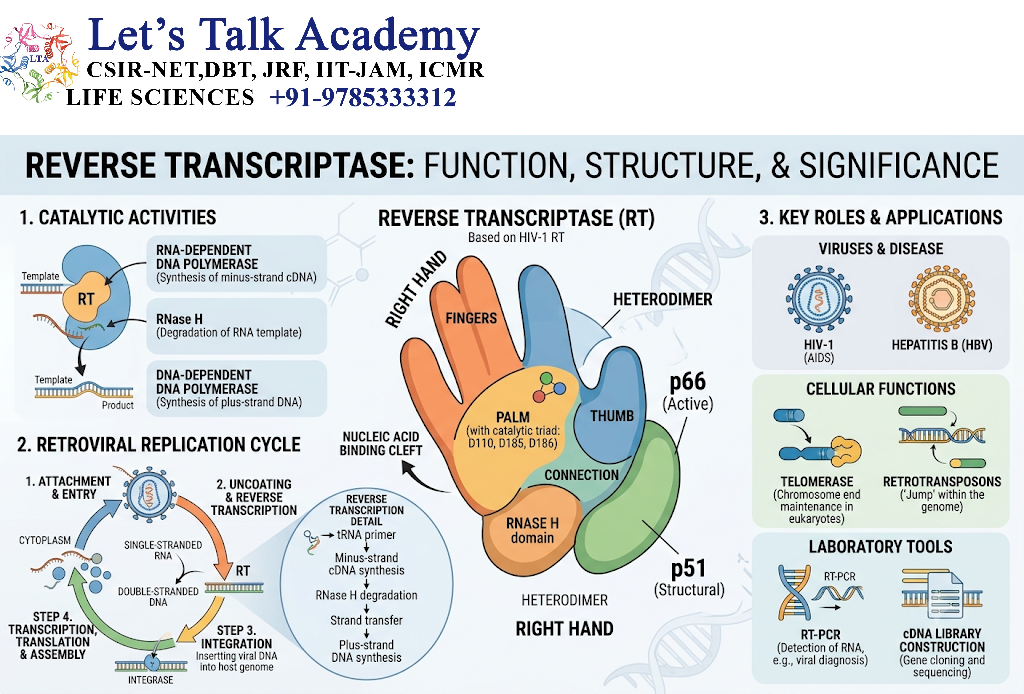
Reverse transcriptase is an enzyme that synthesizes DNA using RNA as a template.
In retrotransposition:
RNA template → DNA copy
The resulting DNA can then be inserted into a new genomic location.
Reverse transcriptase is therefore a central enzyme in retrotransposon propagation.
18. Major Classes of Retrotransposons
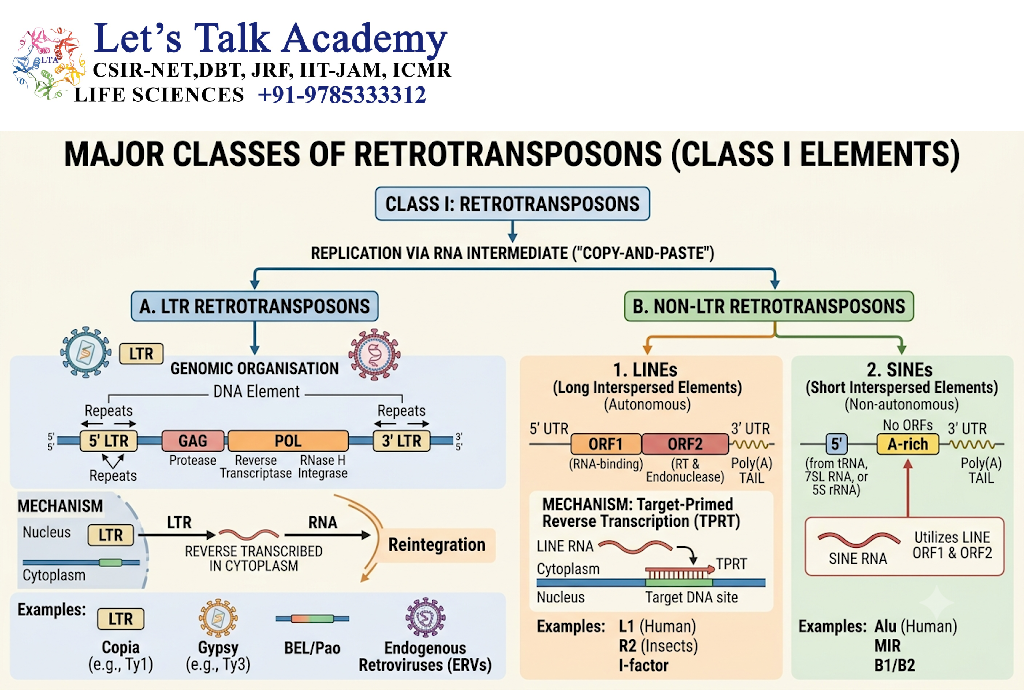
Retrotransposons can broadly be divided into:
- LTR retrotransposons
- Non-LTR retrotransposons
The classification is based largely on their structural organization and mechanism.
19. LTR Retrotransposons
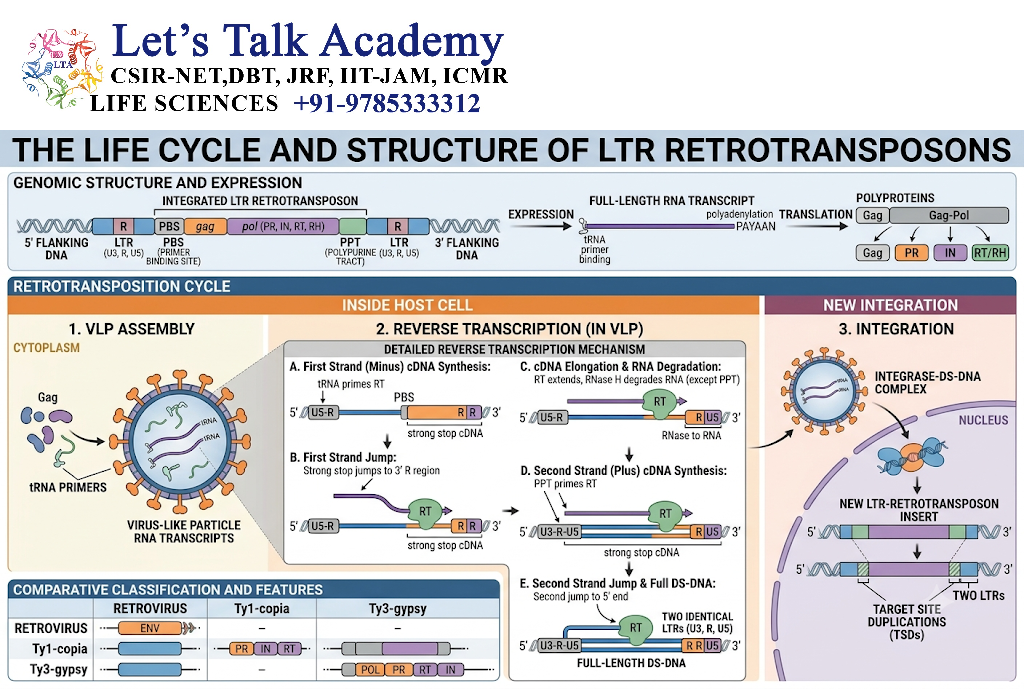
LTR retrotransposons contain long terminal repeats (LTRs) at their ends.
A simplified structure is:
LTR → Internal coding region → LTR
Many LTR retrotransposons encode proteins involved in their own replication and integration.
Important enzymatic activities may include:
- Reverse transcriptase
- Integrase
- Protease in some systems
20. LTR Retrotransposition Mechanism
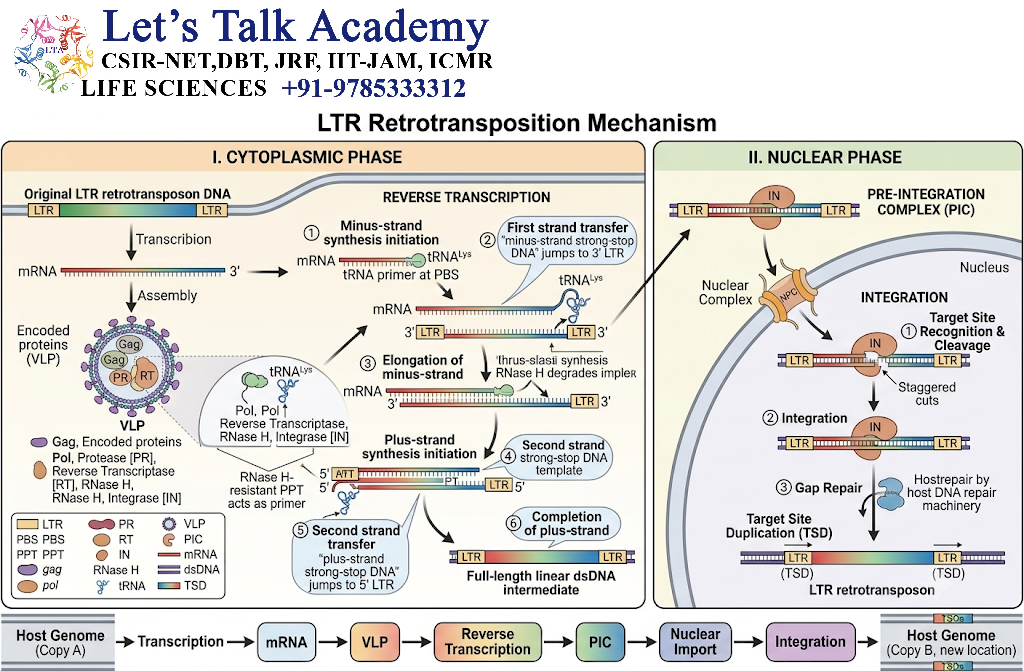
The general process is:
LTR retrotransposon DNA
↓
Transcription into RNA
↓
RNA processing
↓
Reverse transcription
↓
DNA copy formation
↓
Integration into a new genomic location
This process produces an additional copy of the element.
21. Non-LTR Retrotransposons
Non-LTR retrotransposons lack the characteristic LTRs found in LTR retrotransposons.
Important examples in mammals include:
- LINEs
- SINEs
These elements have played major roles in genome evolution.
22. LINEs
LINEs stands for Long Interspersed Nuclear Elements.
LINE-1, or L1, is the best-known autonomous LINE family in the human genome.
An active LINE can encode proteins required for its own retrotransposition.
These include proteins with:
- Endonuclease activity
- Reverse transcriptase activity
23. LINE-1 Structure
A simplified active LINE-1 organization includes:
5′ regulatory region → ORF1 → ORF2 → 3′ region
ORF1 encodes an RNA-binding protein, while ORF2 encodes proteins with endonuclease and reverse-transcriptase activities.
The exact organization varies among LINE families.
24. SINEs
SINEs stands for Short Interspersed Nuclear Elements.
SINEs are relatively short non-autonomous retrotransposable elements.
They generally do not encode the complete machinery required for their own movement.
Instead, they can use proteins produced by autonomous elements such as LINEs.
25. Alu Elements
Alu elements are abundant SINEs in the human genome.
They originated from a 7SL RNA-related ancestral sequence and are highly represented throughout the genome.
Although most Alu copies are inactive, some can contribute to genome variation and disease when inserted into functionally important genomic locations.
26. Autonomous and Non-Autonomous Transposons
Transposable elements can also be classified according to whether they encode the machinery required for their movement.
Autonomous elements
Autonomous elements contain the genetic information needed for their own transposition.
Non-autonomous elements
Non-autonomous elements lack some or all required transposition machinery and depend on enzymes supplied by other elements.
The relationship can be summarized as:
Autonomous element → provides transposition machinery
Non-autonomous element → uses machinery from another element
27. Copy-and-Paste Mechanism
Retrotransposons typically follow a copy-and-paste mechanism.
The process can be simplified as:
Original DNA
↓
RNA transcription
↓
Reverse transcription
↓
New DNA copy
↓
Insertion
↓
Original + new copy
This mechanism can increase the number of repetitive sequences in the genome.
28. Cut-and-Paste vs Copy-and-Paste
| Feature | Cut-and-paste | Copy-and-paste |
|---|---|---|
| Original copy | Usually removed | Usually retained |
| Major examples | Many DNA transposons | Retrotransposons |
| Intermediate | DNA | RNA |
| Key enzyme | Transposase | Reverse transcriptase |
| Copy number | May remain similar | Often increases |
29. Transposition and Mutation
Insertion of a transposable element can produce mutations.
If a transposon inserts into a functional gene, it may:
- Disrupt the coding sequence.
- Alter RNA processing.
- Interfere with transcription.
- Change regulatory activity.
Therefore, transposition can generate new genetic variation.
30. Transposons as Mutagens
Transposable elements can function as endogenous mutagens.
Their insertion may produce:
- Gene disruption
- Regulatory changes
- Exon alterations
- Changes in splicing
- Chromosomal rearrangements
However, most transposition events do not necessarily produce an observable phenotype.
31. Effects on Gene Regulation
Transposons can influence gene expression by introducing:
- Promoters
- Enhancers
- Silencer-like sequences
- Transcription-factor binding sites
- Polyadenylation signals
Consequently, a transposable element inserted near a gene may change its expression.
32. Transposons and Alternative Splicing
Some transposable-element sequences can become incorporated into transcripts.
They may influence:
- Alternative splicing
- Exon formation
- RNA stability
- Transcript termination
Thus, transposable elements can contribute to transcriptome diversity.
33. Transposons and Genome Size
Transposable elements can contribute substantially to genome size.
Retrotransposons are particularly important because copy-and-paste amplification can produce large numbers of genomic copies.
As a result, genomes can accumulate large amounts of repetitive DNA derived from mobile elements.
34. Transposons and Genome Evolution
Transposable elements have played an important role in genome evolution.
They can contribute to:
- Genetic variation
- Gene duplication
- Regulatory innovation
- Genome rearrangement
- New regulatory networks
- Novel exons
- Changes in genome size
Therefore, transposons can act both as sources of genomic instability and as sources of evolutionary innovation.
35. Transposon-Derived Regulatory Elements
Over evolutionary time, host genomes can recruit transposable-element sequences for useful regulatory functions.
A sequence originally introduced by a transposable element may become:
- Enhancer
- Promoter
- Insulator
- Transcription-factor binding site
- Regulatory RNA sequence
This process is sometimes described as exaptation or molecular domestication.
36. Molecular Domestication
Some transposon-derived genes have been retained by host genomes and adapted to perform cellular functions.
In such cases, genes that originally evolved for transposition can become useful to the host organism.
This demonstrates that transposable elements are not exclusively harmful.
37. Transposons and Gene Duplication
Retrotransposition can generate additional copies of genes.
An mRNA molecule can occasionally be reverse-transcribed and inserted into the genome.
This process can produce a processed pseudogene.
In some cases, duplicated sequences may subsequently acquire new functions.
38. Transposons and Exon Shuffling
Transposable elements can contribute indirectly to the rearrangement of genetic material.
Repeated sequences can promote recombination between non-allelic locations.
Such events may contribute to:
- Gene duplication
- Deletion
- Inversion
- Rearrangement
- Exon movement
39. Transposons and Recombination
Because many transposons are repetitive, homologous recombination between similar copies can generate chromosome rearrangements.
Possible outcomes include:
Direct repeats → deletion or unequal recombination
Inverted repeats → inversion
Thus, transposable elements can influence chromosome architecture even without actively transposing.
40. Transposons and Genome Instability
Uncontrolled transposition can cause:
- DNA breaks
- Insertional mutations
- Chromosomal rearrangements
- Replication problems
- Altered gene expression
For this reason, organisms have evolved multiple mechanisms to suppress transposable-element activity.
41. Host Defense Against Transposons
Cells employ several mechanisms to control mobile elements.
These include:
- DNA methylation
- Repressive histone modifications
- Chromatin compaction
- Small RNA pathways
- RNA degradation
- Transcriptional repression
In animals, piRNA pathways are particularly important for suppressing transposons in germ cells.
42. Small RNA-Mediated Silencing
Small RNAs can recognize transposon-derived sequences and promote their silencing.
Major pathways include:
- siRNA-related pathways
- piRNA pathways
- Other small-RNA regulatory systems
These pathways can reduce transposon transcription and limit their propagation.
43. Transposons and Heterochromatin
Many transposable elements are silenced through heterochromatin formation.
A simplified pathway is:
Transposon sequence
↓
Recognition
↓
DNA methylation / repressive histone modifications
↓
Heterochromatin formation
↓
Reduced transcription
↓
Reduced transposition
This connects transposon biology with chromatin organization.
44. Transposons in Germ Cells
Transposon control is especially important in germ cells because mutations occurring in germline DNA can potentially be inherited.
Organisms therefore maintain strong mechanisms for transposon suppression in germline tissues.
In mammals, piRNA-associated pathways are major components of this defense system.
45. Transposons in Somatic Cells
Transposon activity can also occur in somatic cells.
Some transposable elements remain capable of movement in particular tissues or developmental stages.
Somatic transposition can contribute to cellular genetic mosaicism.
46. Transposons and Genetic Variation
Transposition can create differences among individuals or among cells of the same organism.
New insertions may produce:
- New alleles
- Gene disruption
- Regulatory variation
- Structural variation
Therefore, transposons are important contributors to genetic diversity.
47. Transposons in Human Genomes
A substantial fraction of the human genome is derived from transposable elements or their remnants.
Major groups include:
- LINEs
- SINEs
- LTR-derived sequences
- DNA transposon remnants
Most copies are no longer capable of autonomous movement, but their sequences remain important components of genome structure and evolution.
48. Inactive Transposable Elements
Most transposable-element copies in complex genomes are inactive.
They may have accumulated:
- Mutations
- Deletions
- Truncations
- Epigenetic silencing
Only a subset remains capable of active transposition.
Nevertheless, inactive copies can still influence genome function through regulatory and recombinational mechanisms.
49. Transposons and Disease
Transposable-element activity can sometimes contribute to human disease.
Potential mechanisms include:
- Insertion into genes
- Disruption of regulatory regions
- Altered splicing
- Genome rearrangement
- Abnormal gene expression
Most transposable-element sequences, however, remain inactive and do not directly cause disease.
50. Transposons and Cancer
Cancer cells often exhibit changes in epigenetic regulation and genome stability.
Loss of transposon silencing can sometimes lead to increased transposable-element activity.
This may contribute to:
- DNA damage
- Inflammation
- Genome instability
- Altered gene regulation
Transposable-element-derived nucleic acids can also interact with cellular immune-sensing pathways.
51. Transposons in Bacterial Antibiotic Resistance
Mobile genetic elements are important in the spread of antibiotic-resistance genes.
A transposon carrying a resistance gene can move:
Resistance gene + transposon
↓
New genomic location or mobile DNA element
↓
Potential spread of resistance trait
Transposons can also interact with plasmids and other mobile genetic elements, increasing the potential for horizontal gene transfer.
52. Transposons and Horizontal Gene Transfer
In bacteria, transposons can contribute to the movement of genetic information between different DNA molecules.
They may move genes:
- Within a chromosome
- From chromosome to plasmid
- Between plasmids
- Between other mobile genetic elements
This can accelerate bacterial adaptation.
53. Transposons as Genetic Tools
Scientists have adapted transposon systems for experimental applications.
They can be used for:
- Gene insertion
- Gene disruption
- Functional genomics
- Mutagenesis
- Generation of transgenic organisms
- Identification of gene function
Examples of engineered transposon systems include Sleeping Beauty, piggyBac, and Tol2.
54. Transposon Tagging
Transposon tagging is a genetic strategy in which a transposable element is used to identify or disrupt genes.
If a transposon inserts into a gene and produces a detectable phenotype, the inserted element can serve as a molecular tag.
This approach has been valuable in functional genomics.
55. Transposon-Based Gene Delivery
Engineered transposons can be used to introduce DNA sequences into cells.
A simplified system contains:
Transposon carrying desired gene
Transposase
↓
Stable genomic insertion
This provides a useful alternative to some viral gene-delivery approaches.
56. Transposons and Evolutionary Innovation
Transposable elements can generate evolutionary novelty by:
- Moving regulatory sequences
- Creating new transcription-factor binding sites
- Promoting gene duplication
- Modifying gene structure
- Producing new non-coding RNAs
- Facilitating genome rearrangements
Natural selection can sometimes retain transposon-derived changes that provide a functional advantage.
57. Transposons as Drivers of Genome Architecture
Over evolutionary time, transposable elements can influence the physical organization of genomes.
Their accumulation can affect:
- Genome size
- Repetitive DNA content
- Chromosome structure
- Recombination patterns
- Regulatory landscapes
Thus, transposons are important contributors to genome architecture.
58. DNA Transposons vs Retrotransposons
| Feature | DNA Transposons | Retrotransposons |
|---|---|---|
| Intermediate | DNA | RNA |
| Major mechanism | Often cut-and-paste | Usually copy-and-paste |
| Key enzyme | Transposase | Reverse transcriptase |
| Original copy | Often removed | Usually retained |
| Copy-number expansion | Limited by mechanism | Common |
| Examples | IS elements, many DNA transposon families | LINEs, SINEs, LTR retrotransposons |
59. Autonomous vs Non-Autonomous Elements
| Feature | Autonomous | Non-autonomous |
|---|---|---|
| Own transposition machinery | Usually present | Absent or incomplete |
| Dependence on other elements | Lower | Higher |
| Example | Active LINE-1 | SINE |
| Movement | Can potentially self-mobilize | Requires machinery supplied in trans |
60. Transposons and the Central Dogma
Transposons illustrate that genetic information can move through pathways involving RNA intermediates.
For ordinary protein-coding genes:
DNA → RNA → Protein
For retrotransposons:
DNA → RNA → DNA
The second pathway depends on reverse transcription.
61. Conceptual Flowchart of Transposon Activity
Transposable element
↓
Activation
↓
Transcription or DNA mobilization
↓
Transposition machinery
↓
Excision or reverse transcription
↓
Target-site recognition
↓
Insertion
↓
DNA repair
↓
New genomic arrangement
↓
Possible mutation / regulation / genome evolution
62. Major Biological Effects of Transposons
Transposons can have both harmful and beneficial effects.
Potential harmful effects
- Gene disruption
- Regulatory interference
- Genome instability
- Chromosome rearrangement
- Disease-associated mutations
Potential beneficial or evolutionary effects
- Genetic variation
- New regulatory elements
- Gene duplication
- Genome innovation
- Functional recruitment of transposon-derived sequences
Therefore, transposons have a dual role in genome biology.
.


