
1. Introduction
The genetic information of eukaryotic organisms is stored primarily in the form of DNA molecules. A single human cell contains several billion base pairs of DNA, which, if stretched end to end, would be approximately two metres long. However, the nucleus of a typical human cell is only a few micrometres in diameter. Therefore, DNA must be highly organized and compacted to fit efficiently inside the nucleus while remaining accessible for essential processes such as replication, transcription, repair, and recombination.
DNA does not exist inside the nucleus as a naked molecule. It is associated with proteins and organized into a dynamic nucleoprotein complex called chromatin. During cell division, chromatin becomes progressively condensed and forms visible structures called chromosomes.
Thus, chromatin and chromosomes represent different structural states of the same genetic material.
A simplified organization can be represented as:
DNA → Nucleosomes → Chromatin → Higher-order chromatin domains → Condensed chromosome
The organization of chromatin is not merely a mechanism for DNA packaging. It also plays a major role in regulating gene expression, maintaining chromosome stability, controlling DNA replication, facilitating DNA repair, and ensuring accurate chromosome segregation.
2. Chromatin: Definition and Basic Concept
Chromatin is the complex of DNA, histone proteins, non-histone proteins, and associated RNA molecules present in the nucleus of eukaryotic cells.
The major components of chromatin are:
| Component | Major role |
|---|---|
| DNA | Stores genetic information |
| Histone proteins | Package and organize DNA |
| Non-histone proteins | Structural and regulatory functions |
| RNA | Participates in chromatin regulation and organization |
Chromatin is therefore a highly organized molecular structure rather than simply condensed DNA.
The fundamental repeating unit of chromatin is the nucleosome.
3. Chromatin and Chromosomes
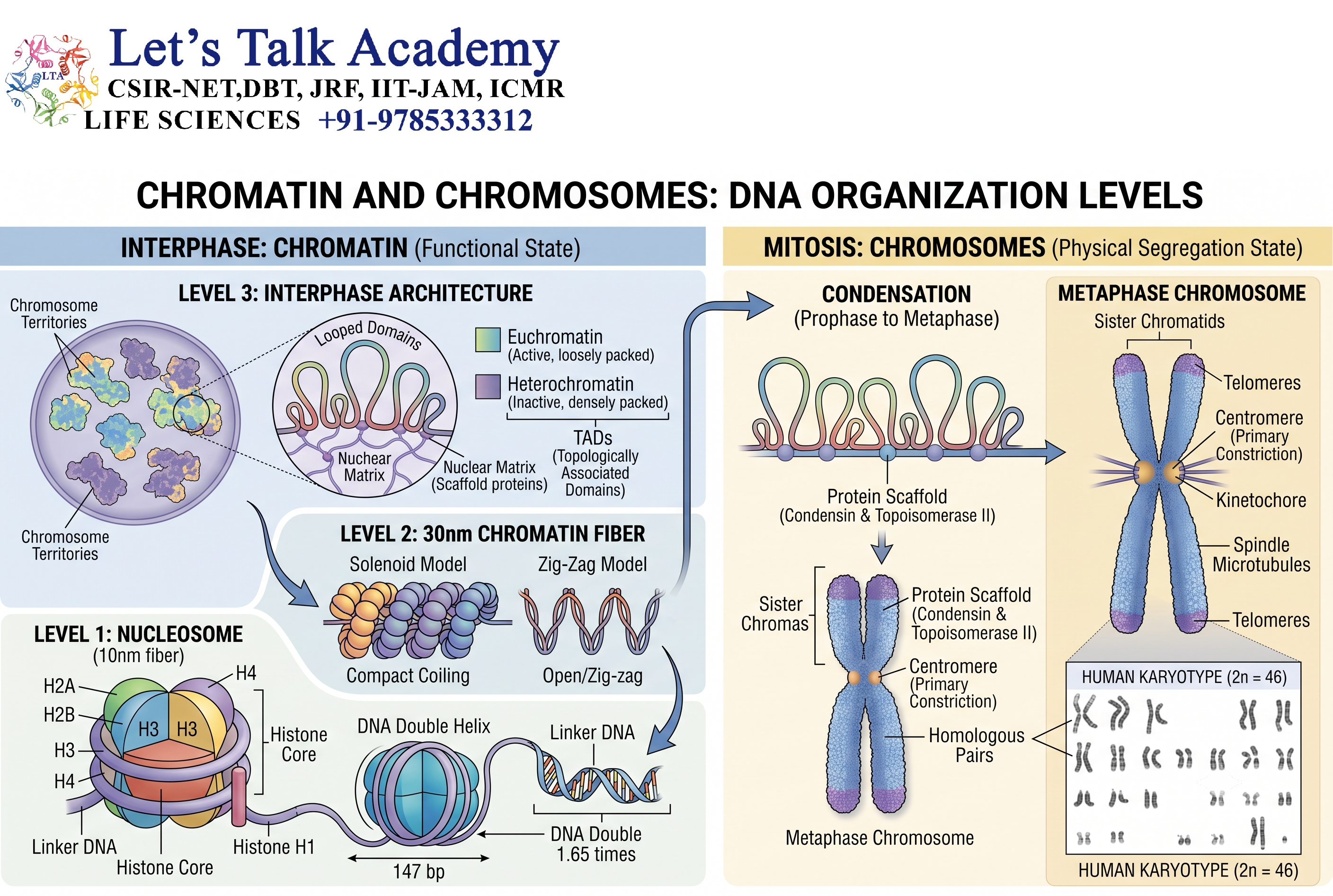
Chromatin and chromosomes are closely related but are not exactly the same structural entity.
Chromatin refers broadly to the DNA-protein material present in the nucleus, particularly during interphase.
Chromosomes are highly condensed and organized forms of chromatin that become especially prominent during cell division.
The relationship can be summarized as:
DNA + proteins → Chromatin → Progressive condensation → Chromosome
During interphase, chromatin generally exists in a relatively extended form that allows genes to be transcribed and DNA to be replicated.
During mitosis and meiosis, chromatin undergoes extensive condensation, producing compact chromosomes that can be efficiently distributed to daughter cells.
4. Histone Proteins
Histones are small, basic proteins that play a central role in DNA packaging.
They contain a relatively high proportion of positively charged amino acids such as lysine and arginine. Because DNA contains negatively charged phosphate groups, histones can interact strongly with DNA through electrostatic interactions.
The major core histones are:
- H2A
- H2B
- H3
- H4
Two copies of each of these four histones form the histone octamer of a nucleosome.
Another important histone is H1, commonly called the linker histone. It associates with linker DNA and contributes to higher-order chromatin organization.
5. Structure of the Nucleosome
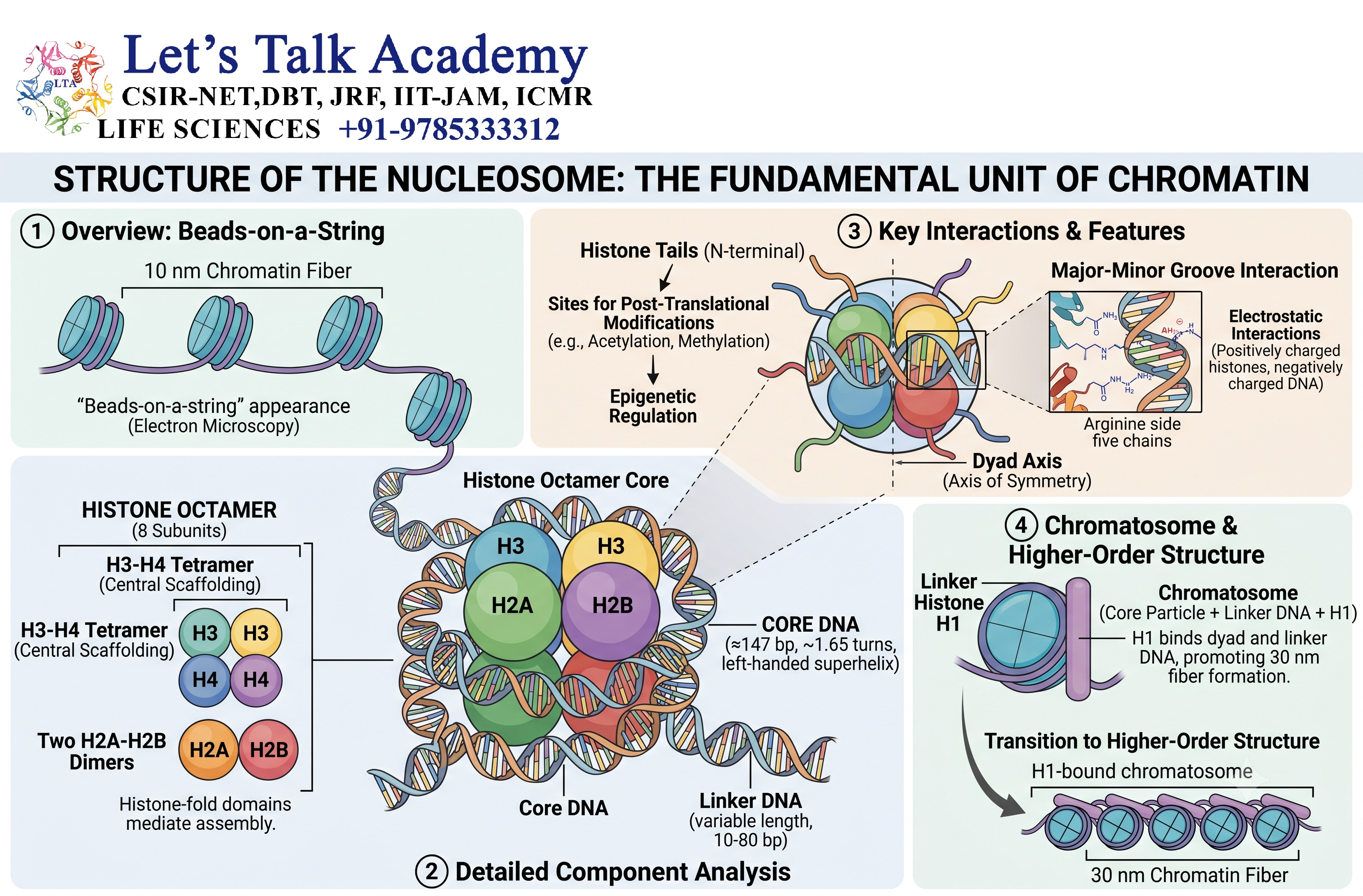
The nucleosome is the fundamental repeating unit of eukaryotic chromatin.
A nucleosome consists of approximately 147 base pairs of DNA wrapped around a histone octamer.
The histone octamer contains:
- 2 copies of H2A
- 2 copies of H2B
- 2 copies of H3
- 2 copies of H4
The DNA wraps around the histone core approximately 1.7 times.
A simplified representation is:
DNA → wraps around histone octamer → nucleosome
The appearance of nucleosomes along DNA has historically been compared with a “beads-on-a-string” arrangement.
6. Histone Octamer
The histone octamer forms the protein core around which DNA is wrapped.
It contains two copies each of:
H2A + H2B + H3 + H4
The organization can be represented as:
H3-H4 tetramer + two H2A-H2B dimers
The interaction between histones and DNA provides a compact but dynamic method of DNA organization.
7. Linker DNA

The DNA segment connecting adjacent nucleosomes is called linker DNA.
Unlike the approximately 147 bp of DNA directly associated with the histone core, linker DNA is located between neighbouring nucleosomes.
The total DNA associated with one nucleosome plus its linker region is often referred to as the nucleosome repeat length, which varies among organisms and cell types.
Linker DNA provides flexibility and allows higher-order chromatin organization.
8. Linker Histone H1
Histone H1 is different from the core histones.
It does not form part of the histone octamer. Instead, H1 associates primarily with linker DNA near the nucleosome entry and exit sites.
Major functions of H1 include:
- Stabilizing nucleosome structure.
- Helping organize linker DNA.
- Promoting higher-order chromatin folding.
- Contributing to chromatin compaction.
- Influencing accessibility of regulatory proteins to DNA.
Thus, H1 contributes significantly to the transition from relatively open nucleosome arrays to more compact chromatin structures.
9. Histone Tails
Histone proteins contain flexible terminal regions called histone tails.
These tails extend outward from the nucleosome and are important sites for post-translational modifications.
Common histone modifications include:
- Acetylation
- Methylation
- Phosphorylation
- Ubiquitination
- SUMOylation
These modifications can influence chromatin structure and gene activity.
For example, histone acetylation is generally associated with a more accessible chromatin environment, whereas particular histone methylation marks may be associated with either active or repressed chromatin depending on the residue modified.
10. Nucleosome Positioning
Nucleosomes are not randomly distributed throughout the genome.
Their positions can be influenced by:
- DNA sequence
- Histone variants
- ATP-dependent chromatin-remodelling complexes
- Transcription factors
- DNA methylation
- Cellular state
Nucleosome positioning can determine whether regulatory DNA sequences are accessible to proteins involved in transcription.
Therefore, nucleosome organization contributes directly to gene regulation.
11. Levels of Chromatin Organization

Chromatin organization occurs at multiple structural levels.
A simplified model is:
DNA double helix
↓
Nucleosomes
↓
Chromatin fibre / nucleosome arrays
↓
Chromatin loops
↓
Topologically associated domains and larger chromatin compartments
↓
Condensed chromosome
Modern studies show that chromatin organization is more complex than a simple linear folding model. Chromatin forms dynamic three-dimensional structures involving loops, domains, compartments, and interactions with nuclear structures.
12. Higher-Order Chromatin Organization
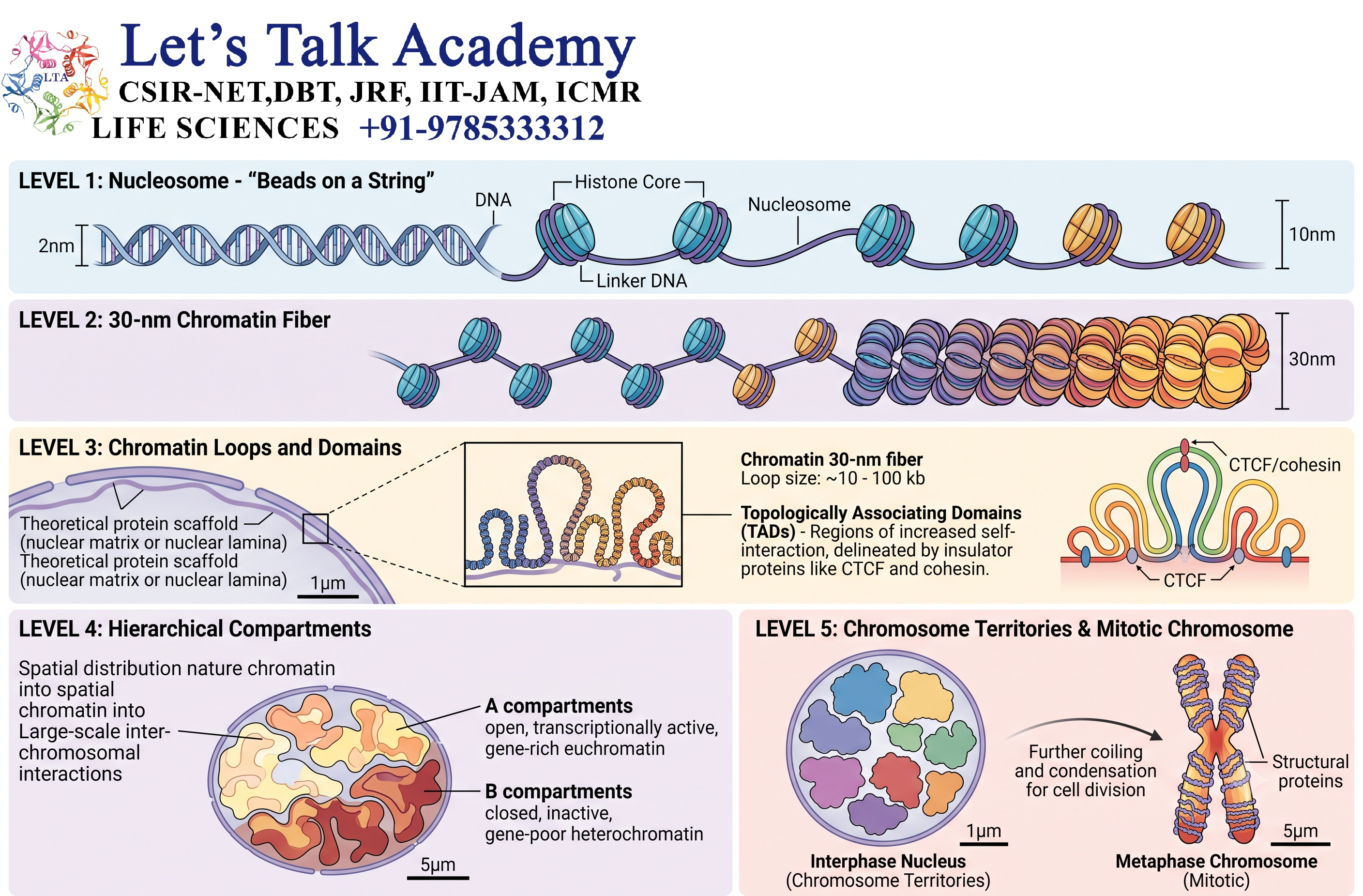
After nucleosome formation, chromatin undergoes additional levels of organization.
Nucleosome arrays interact with one another and with chromatin-associated proteins to form increasingly complex structures.
Higher-order organization helps:
- Compact DNA.
- Regulate gene expression.
- Organize replication.
- Facilitate DNA repair.
- Establish chromosome territories.
- Control interactions between distant regulatory regions.
The precise structure of higher-order chromatin is dynamic and can vary according to cellular conditions.
13. Chromatin Loops

Chromatin loops occur when two regions of chromatin that are separated along the linear DNA sequence come into close physical proximity.
Loops can bring regulatory elements such as enhancers into contact with promoters.
Important proteins involved in many chromatin-looping processes include:
- Cohesin
- CTCF
- Other architectural proteins
Chromatin looping therefore allows the three-dimensional organization of the genome to influence gene regulation.
14. Topologically Associated Domains
Topologically associated domains (TADs) are genomic regions within which DNA sequences interact with one another more frequently than with regions outside the domain.
TADs contribute to the spatial organization of chromosomes and help coordinate regulatory interactions.
They can help restrict enhancer activity so that regulatory elements preferentially interact with appropriate genes.
15. Chromatin Compartments
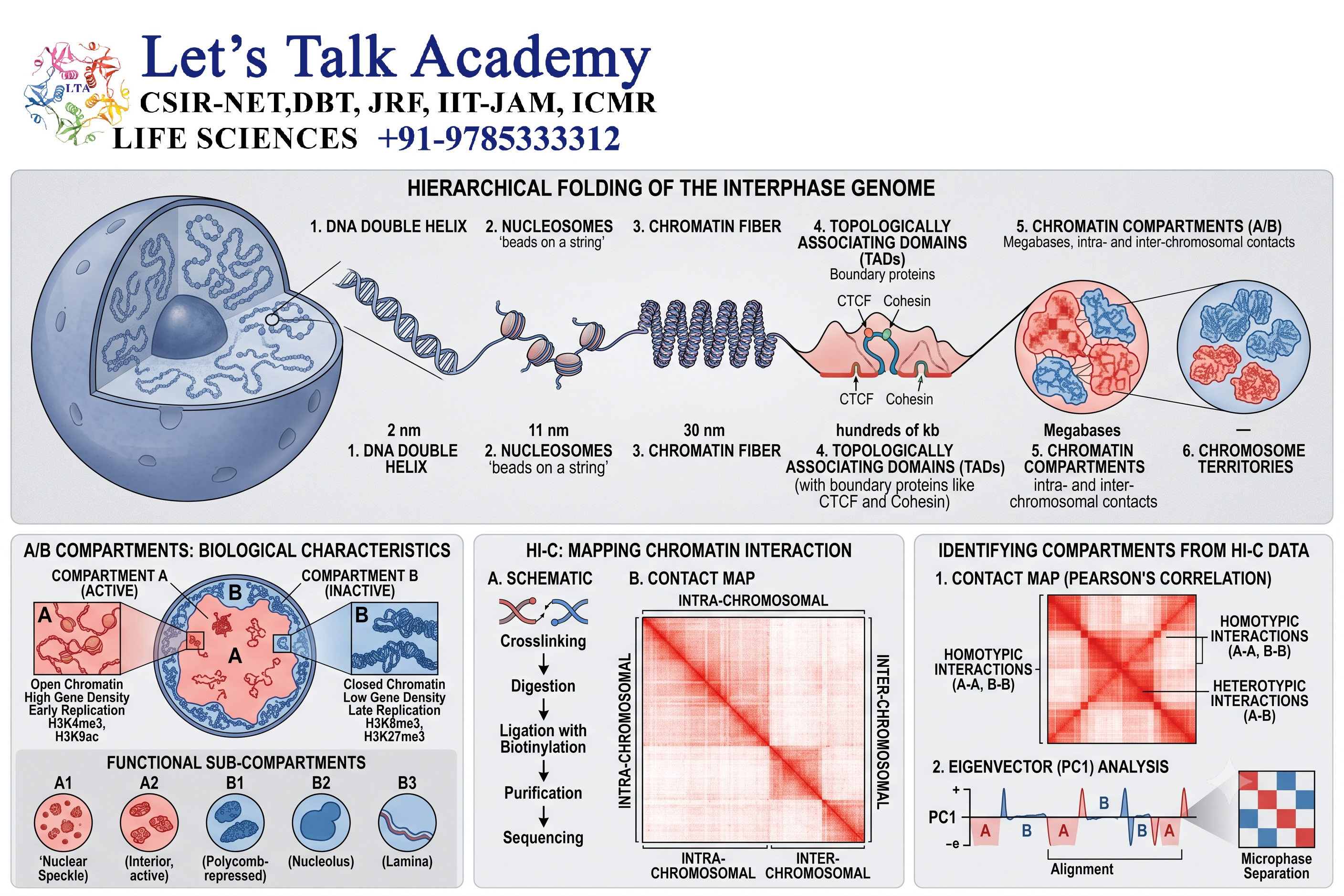
At a larger scale, chromatin can be organized into spatial compartments.
Two broad categories commonly described are:
- A compartment: generally associated with transcriptionally active and relatively open chromatin.
- B compartment: generally associated with less active, more compact chromatin.
These compartments reflect the three-dimensional organization of the genome within the nucleus.
16. Euchromatin
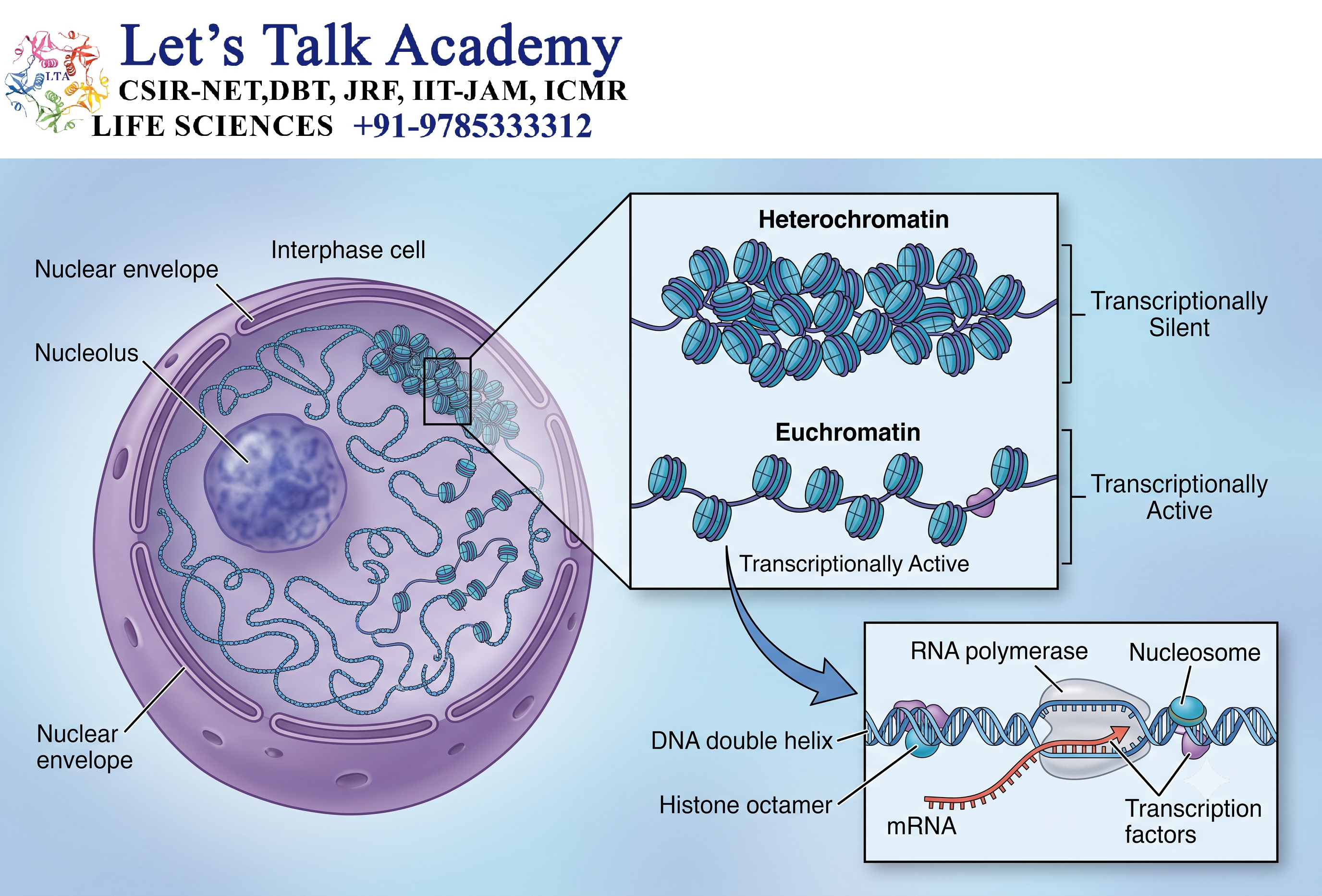
Euchromatin is a relatively open and less condensed form of chromatin.
It is generally:
- More accessible to regulatory proteins.
- Enriched in actively transcribed genes.
- Replicated relatively early during S phase.
- Associated with active chromatin marks.
Euchromatin is not permanently open. Its accessibility can change according to cellular requirements.
17. Heterochromatin

Heterochromatin is a relatively compact form of chromatin.
It is commonly associated with:
- Reduced transcriptional activity.
- Repetitive DNA sequences.
- Structural chromosome regions.
- Stable chromatin organization.
Heterochromatin can be broadly divided into constitutive heterochromatin and facultative heterochromatin.
18. Constitutive Heterochromatin
Constitutive heterochromatin remains relatively condensed in most cell types.
It is commonly found around:
- Centromeres
- Pericentromeric regions
- Certain repetitive DNA-rich regions
- Telomeric regions
It contributes to chromosome stability and structural organization.
19. Facultative Heterochromatin
Facultative heterochromatin can switch between relatively inactive and active states depending on cell type or developmental stage.
A classic example is the inactive X chromosome in female mammals, which becomes highly condensed into a structure called a Barr body.
Facultative heterochromatin demonstrates that chromatin structure can be dynamically regulated.
20. Comparison Between Euchromatin and Heterochromatin
| Feature | Euchromatin | Heterochromatin |
|---|---|---|
| Condensation | Relatively low | Relatively high |
| Accessibility | Generally higher | Generally lower |
| Transcription | Usually more active | Usually reduced |
| Gene density | Often higher | Often lower |
| Replication | Generally earlier | Often later |
| Repetitive DNA | Less enriched | Often enriched |
| Structural role | Regulatory and transcriptional | Structural and regulatory |
These categories represent general tendencies rather than absolute rules.
21. Chromosome: Definition
A chromosome is a highly organized DNA-protein structure that contains genetic information.
In eukaryotes, chromosomes are primarily composed of:
DNA + histones + non-histone proteins + associated regulatory molecules
Chromosomes provide an organized framework for storing and transmitting genetic information.
22. Chromosome Structure During Cell Division
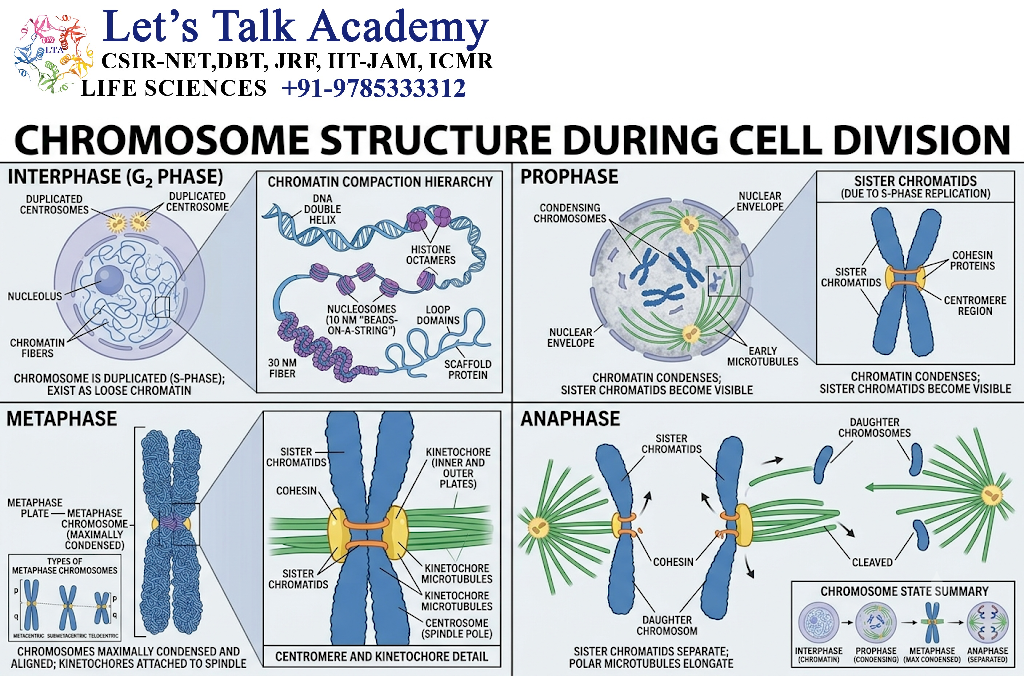
During mitosis, replicated chromosomes become highly condensed and can be observed under a light microscope.
A typical replicated chromosome consists of two sister chromatids joined together.
The major visible regions include:
- Sister chromatids
- Centromere
- Short arm (p arm)
- Long arm (q arm)
- Telomeres
A simplified organization is:
Two sister chromatids
↓
Joined at centromeric region
↓
Each chromatid contains one continuous DNA molecule
23. Sister Chromatids

Before chromosome segregation, DNA is replicated during S phase.
The resulting identical DNA copies remain associated as sister chromatids.
During mitosis, sister chromatids eventually separate and move toward opposite daughter cells.
This mechanism ensures that each daughter cell receives an appropriate copy of the genetic information.
24. Centromere
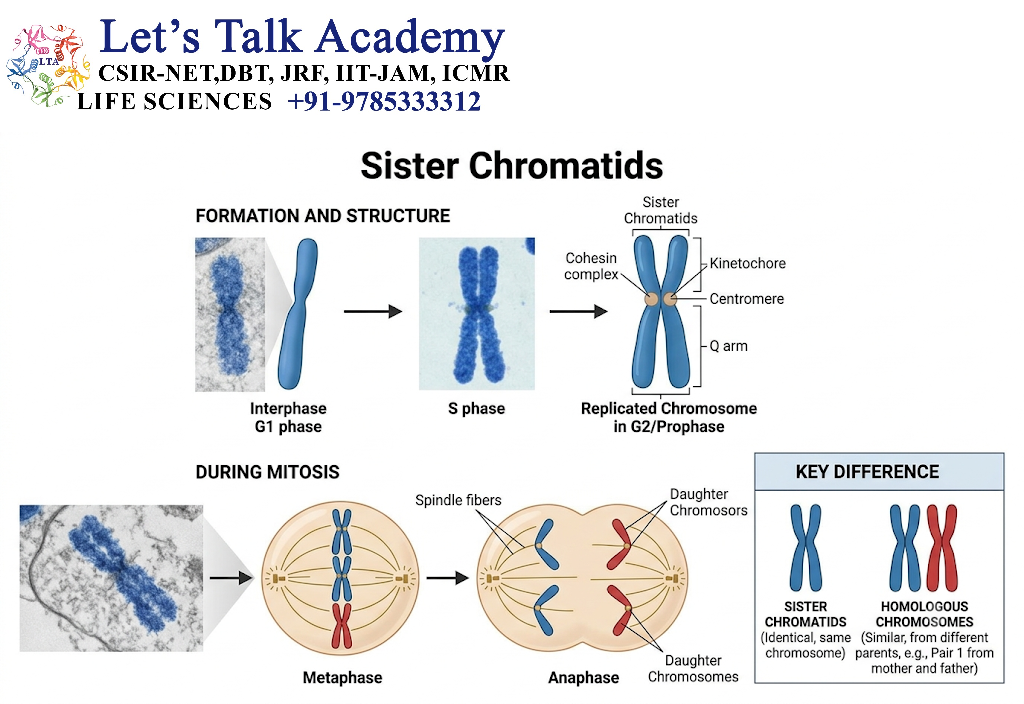
The centromere is a specialized chromosome region involved in chromosome segregation.
It provides the foundation for formation of the kinetochore, a protein complex that interacts with spindle microtubules during cell division.
Centromeres are often associated with specialized chromatin containing the histone H3 variant CENP-A.
The centromere is therefore essential for:
- Kinetochore assembly
- Spindle attachment
- Chromosome movement
- Accurate chromosome segregation
25. Kinetochore

The kinetochore is a multiprotein structure assembled on centromeric chromatin.
Its major functions include:
- Connecting chromosomes to spindle microtubules.
- Monitoring chromosome attachment.
- Participating in chromosome movement.
- Contributing to accurate chromosome segregation.
The centromere and kinetochore work together during cell division.
26. Chromosome Arms
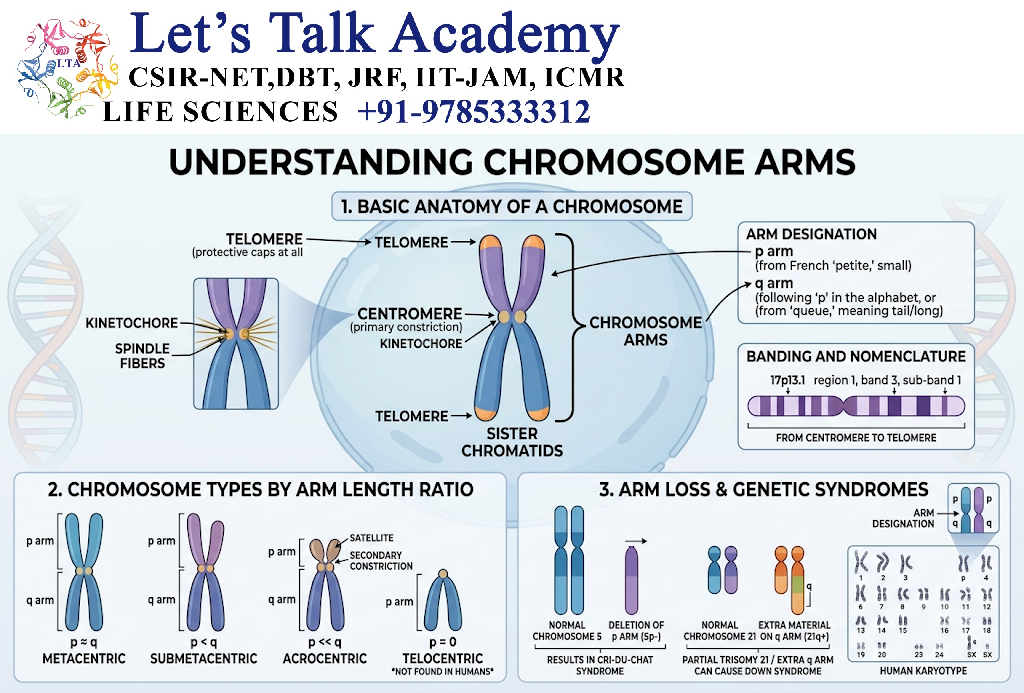
The centromere divides a chromosome into two arms.
The shorter arm is called the p arm, where “p” refers to “petit.”
The longer arm is called the q arm.
Therefore:
Centromere → p arm + q arm
The relative position of the centromere is used to classify chromosomes morphologically.
27. Types of Chromosomes Based on Centromere Position
Chromosomes can be classified according to centromere location.
| Type | Centromere position |
|---|---|
| Metacentric | Near the middle |
| Submetacentric | Slightly away from the middle |
| Acrocentric | Close to one end |
| Telocentric | At or extremely close to the terminal region |
Telocentric chromosomes are not normally present in humans.
28. Telomeres
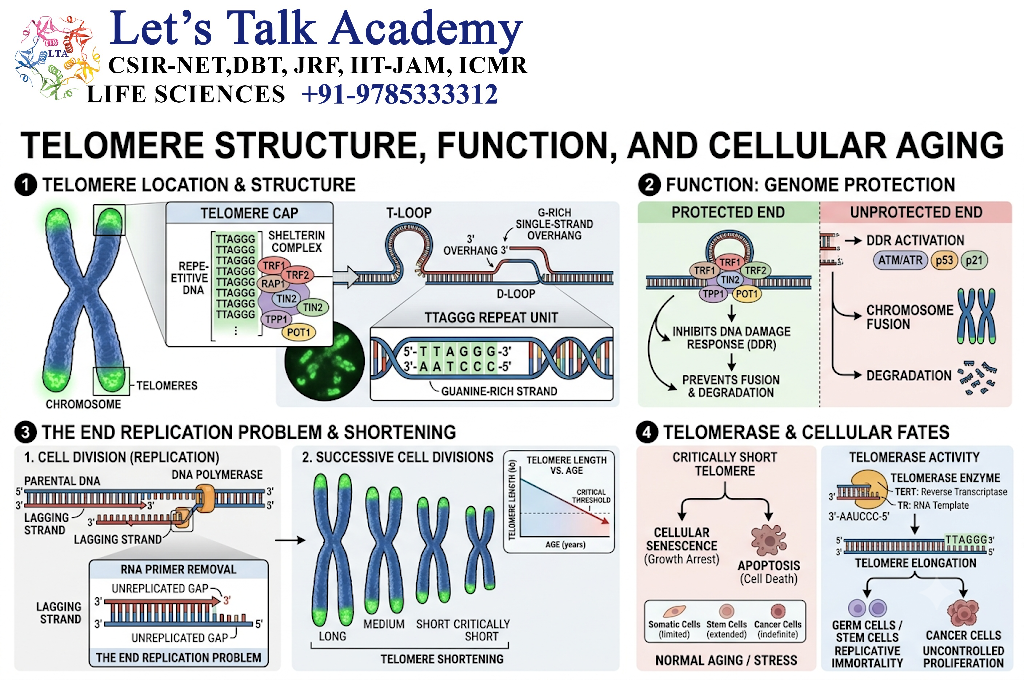
Telomeres are specialized DNA-protein structures located at chromosome ends.
They protect chromosome termini from being incorrectly recognized as DNA breaks.
Major functions include:
- Protecting chromosome ends.
- Preventing chromosome fusion.
- Supporting chromosome stability.
- Participating in chromosome-end replication.
Telomeres contain repetitive DNA sequences and specialized proteins collectively called the shelterin complex.
29. Telomerase
Because conventional DNA replication has difficulty completely copying linear chromosome ends, specialized mechanisms are required to maintain telomeres.
Telomerase is a ribonucleoprotein enzyme that can extend telomeric DNA.
It contains:
- A catalytic reverse transcriptase component.
- An RNA component that serves as a template.
Telomerase activity is particularly important in:
- Germline cells
- Many stem-cell populations
- Certain proliferating cell types
- Many cancer cells
30. Scaffold and Chromosome Architecture
Historically, chromosome organization was described using the concept of a proteinaceous scaffold around which chromatin loops were organized.
Modern chromosome biology presents a more dynamic model involving:
- Cohesin
- Condensin
- CTCF
- Histones
- Other chromosome-associated proteins
These proteins contribute to chromosome folding and organization.
31. Condensin Complexes
Condensin proteins play an important role in chromosome condensation during cell division.
They help organize chromatin into compact structures that can be efficiently segregated.
Condensin-mediated chromosome organization is particularly important during mitosis and meiosis.
32. Cohesin Complexes
Cohesin is a protein complex that helps maintain association between sister chromatids after DNA replication.
It also contributes to chromatin-loop formation and three-dimensional chromosome organization.
Therefore, cohesin has both:
- Structural functions
- Regulatory functions
33. Chromosome Territories
Within the interphase nucleus, individual chromosomes generally occupy distinct but dynamic spatial regions known as chromosome territories.
Chromosome territories are not isolated compartments. Chromatin from different chromosomes can interact, particularly at functionally important genomic regions.
Their organization contributes to the three-dimensional arrangement of the genome inside the nucleus.
34. Interphase Chromatin
During interphase, chromosomes are not completely condensed.
Instead, chromatin forms a dynamic three-dimensional network.
Interphase chromatin must remain sufficiently organized to permit:
- DNA replication
- Transcription
- DNA repair
- Recombination
- Chromatin remodeling
Thus, interphase chromosomes represent an organized but relatively accessible state.
35. Mitotic Chromatin
During mitosis, chromosomes undergo extensive condensation.
This condensation:
- Reduces chromosome entanglement.
- Protects DNA from mechanical damage.
- Facilitates chromosome movement.
- Supports accurate segregation.
The condensed metaphase chromosome is therefore a highly specialized state of chromatin organization.
36. Chromatin Remodeling
Chromatin is dynamic rather than static.
ATP-dependent chromatin-remodelling complexes can reposition, remove, or reorganize nucleosomes.
Major chromatin-remodelling families include:
- SWI/SNF
- ISWI
- CHD
- INO80
These complexes regulate DNA accessibility and influence transcription, replication, and DNA repair.
37. Histone Variants
In addition to canonical histones, cells contain specialized histone variants.
Examples include:
- H3.3
- CENP-A
- H2A.Z
- H2A.X
Histone variants can provide specialized structural or regulatory functions.
For example, CENP-A is strongly associated with centromeric chromatin, whereas H2A.X participates in the cellular response to DNA damage.
38. Epigenetic Regulation of Chromatin

Chromatin structure is closely connected with epigenetic regulation.
Epigenetic mechanisms can influence gene activity without changing the underlying DNA sequence.
Important mechanisms include:
- DNA methylation
- Histone modification
- Chromatin remodeling
- Histone variant incorporation
- Regulatory non-coding RNAs
These mechanisms help establish and maintain cell-specific patterns of gene expression.
39. DNA Methylation and Chromatin

DNA methylation commonly involves the addition of a methyl group to cytosine residues, particularly at CpG sites in vertebrates.
DNA methylation can contribute to transcriptional repression by:
- Directly reducing accessibility of regulatory proteins.
- Recruiting proteins that recognize methylated DNA.
- Promoting repressive chromatin states.
However, DNA methylation functions depend on genomic context and cellular state.
40. Histone Acetylation
Histone acetylation commonly occurs on lysine residues in histone tails.
It can reduce the positive charge of histones and generally promotes a more accessible chromatin environment.
Histone acetyltransferases add acetyl groups, whereas histone deacetylases remove them.
This balance contributes to regulation of gene expression.
41. Histone Methylation
Histone methylation can either activate or repress gene expression depending on:
- Which histone is modified.
- Which amino-acid residue is modified.
- Whether the residue is mono-, di-, or trimethylated.
Therefore, histone methylation should not simply be considered an “activation” or “repression” mark.
42. Chromatin and Gene Expression
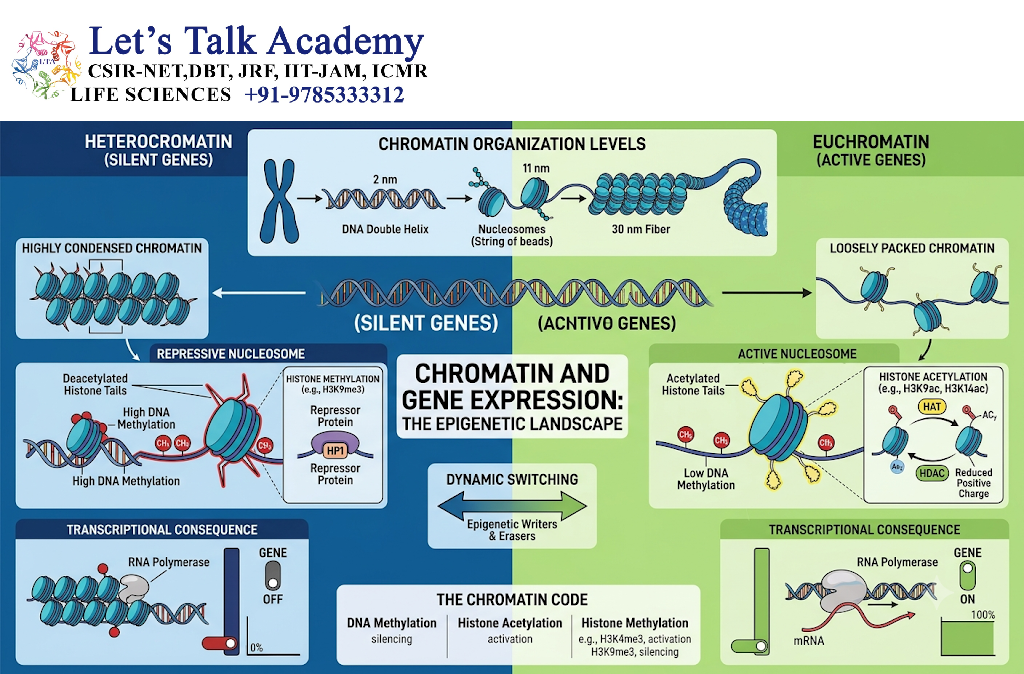
Chromatin structure strongly influences whether genes can be expressed.
A general model is:
Open chromatin → greater DNA accessibility → transcription machinery access → increased transcription potential
Whereas:
Compact chromatin → reduced DNA accessibility → restricted transcription → reduced transcription potential
However, gene regulation is highly context-dependent and involves many regulatory proteins and chromatin modifications.
43. Chromatin and DNA Replication
Before cell division, DNA must be replicated.
Because DNA is packaged into chromatin, replication requires coordinated changes in chromatin structure.
During replication:
- Nucleosomes ahead of the replication machinery may be temporarily disrupted.
- Histones are redistributed.
- New histones are incorporated.
- Chromatin organization is re-established.
Thus, DNA replication and chromatin assembly are closely coordinated processes.
44. Chromatin and DNA Repair
DNA can be damaged by environmental factors and normal cellular processes.
Efficient DNA repair requires access to damaged DNA.
Chromatin can therefore undergo local remodeling to permit repair proteins to reach the damaged site.
After repair, chromatin structure can be restored.
This demonstrates the dynamic nature of chromatin.
45. Chromatin and Recombination
Chromatin structure also influences homologous recombination and other DNA rearrangement processes.
The accessibility of DNA and the organization of chromosome regions can affect:
- Recombination frequency
- DNA repair pathways
- Genome stability
- Genetic variation
46. Chromosome Banding
When chromosomes are treated with specific staining procedures, characteristic patterns called chromosome bands can be observed.
Common cytogenetic banding techniques include:
- G-banding
- C-banding
- R-banding
- Q-banding
These patterns help identify individual chromosomes and detect structural abnormalities.
47. G-Banding
G-banding is a widely used chromosome-staining method.
It produces alternating dark and light bands along chromosomes.
The pattern is characteristic for each chromosome and can be used for:
- Chromosome identification
- Karyotype analysis
- Detection of deletions
- Detection of duplications
- Detection of translocations
- Detection of other structural abnormalities
48. Karyotype
A karyotype is the organized representation of an individual’s chromosomes.
Chromosomes are generally arranged according to:
- Size
- Centromere position
- Banding pattern
Karyotyping can provide information about chromosome number and large-scale structural changes.
49. Chromosome Number and Ploidy
Different organisms possess characteristic chromosome numbers.
Chromosome number does not directly indicate biological complexity.
Cells can be:
- Haploid
- Diploid
- Polyploid
A diploid cell contains two sets of chromosomes, whereas a haploid cell contains one set.
Changes in chromosome number can affect development, fertility, and cellular function.
50. Structural Organization of a Typical Eukaryotic Chromosome
A simplified structural hierarchy can be represented as:
DNA double helix
↓
Histone association
↓
Nucleosome formation
↓
Nucleosome arrays
↓
Chromatin domains
↓
Chromatin loops
↓
Condensin/cohesin-associated organization
↓
Highly condensed chromosome
This hierarchy allows enormous lengths of DNA to be organized within the limited volume of the nucleus.
51. Chromatin Organization and Genome Compaction
Genome compaction is essential because eukaryotic DNA is extremely long.
Chromatin organization provides several advantages:
- Efficient DNA packaging.
- Protection of DNA.
- Regulation of gene accessibility.
- Organization of replication.
- Facilitation of chromosome segregation.
- Maintenance of genome stability.
Thus, DNA packaging and gene regulation are fundamentally interconnected.
52. Functional Importance of Chromatin Structure
Chromatin performs several major biological functions.
52.1 DNA Packaging
It allows long DNA molecules to fit inside the nucleus.
52.2 Gene Regulation
It determines the accessibility of genes and regulatory elements.
52.3 DNA Protection
It helps protect DNA from physical and chemical damage.
52.4 Replication Control
It coordinates DNA replication with chromatin assembly.
52.5 DNA Repair
It can be remodeled to permit access to damaged DNA.
52.6 Chromosome Segregation
Highly condensed chromatin allows chromosomes to be accurately distributed during cell division.
53. Chromatin as a Dynamic Structure
Chromatin should not be viewed as a permanently fixed structure.
It continuously changes in response to:
- Cell cycle stage
- Development
- Environmental signals
- Transcriptional activity
- DNA damage
- Cellular differentiation
This dynamic behavior allows cells containing the same genome to express different sets of genes.
54. Chromatin Organization During the Cell Cycle
Chromatin undergoes major changes during the cell cycle.
| Cell-cycle stage | General chromatin state |
|---|---|
| G1 | Relatively less condensed |
| S phase | DNA replication and chromatin assembly |
| G2 | Chromosomes prepare for condensation |
| Prophase | Strong chromosome condensation begins |
| Metaphase | Highly condensed chromosomes |
| Anaphase | Sister chromatids separate |
| Telophase | Chromosomes begin decondensing |
The organization of chromatin is therefore closely coordinated with cell-cycle progression.
55. Chromatin, Differentiation, and Cell Identity
Almost all somatic cells in a multicellular organism contain essentially the same genome, yet different cell types perform different functions.
This difference is largely achieved through selective regulation of gene expression.
Chromatin contributes to this process by establishing cell-type-specific patterns of:
- DNA accessibility
- Histone modification
- DNA methylation
- Chromatin organization
- Regulatory element activity
Therefore, chromatin is a major component of cellular identity.
56. Chromatin and Genome Stability
Proper chromosome organization is essential for maintaining genome stability.
Disruption of chromatin organization can contribute to:
- Abnormal gene expression
- DNA replication defects
- Chromosome instability
- Abnormal recombination
- Incorrect chromosome segregation
Therefore, chromatin structure has both regulatory and protective functions.
57. Chromosome Structural Abnormalities
Changes in chromosome structure may include:
- Deletion
- Duplication
- Inversion
- Translocation
- Insertion
These changes can alter gene dosage, disrupt genes, or modify regulatory relationships.
Chromatin organization is important for maintaining chromosome architecture and minimizing inappropriate DNA rearrangements.
58. Integrated View of Chromatin and Chromosome Structure
The structure of chromatin can be understood as a continuous hierarchy.
DNA
↓
Histone-DNA interaction
↓
Nucleosome
↓
Chromatin array
↓
Chromatin loops and domains
↓
Three-dimensional chromosome organization
↓
Condensed chromosome during cell division
This integrated organization allows DNA to remain compact while still being accessible when required.
59. Important Terms
| Term | Definition |
|---|---|
| Chromatin | DNA-protein complex present in the nucleus |
| Chromosome | Highly organized and condensed chromatin structure |
| Nucleosome | Fundamental repeating unit of chromatin |
| Histone | DNA-packaging protein |
| H1 | Linker histone |
| Euchromatin | Relatively open chromatin |
| Heterochromatin | Relatively compact chromatin |
| Centromere | Chromosomal region associated with kinetochore formation |
| Kinetochore | Protein complex involved in chromosome-spindle attachment |
| Telomere | Protective chromosome-end structure |
| Chromatid | One copy of a replicated chromosome |
| Cohesin | Complex involved in sister chromatid cohesion and chromosome organization |
| Condensin | Complex involved in chromosome condensation |
| TAD | Three-dimensional genomic interaction domain |


