
1. Introduction to Gene Families
Genes are the fundamental units of hereditary information. Each gene contains information required to produce a functional RNA molecule or protein and contributes to the development, maintenance, and functioning of an organism. Although many genes perform highly specialized functions, genomes also contain groups of related genes that originated from a common ancestral gene. These groups are known as gene families.
A gene family is a collection of genes that share significant sequence similarity because they have evolved from a common ancestral gene. Members of the same gene family may encode proteins with similar structures and biochemical properties, although their exact functions can differ.
Gene families are found in virtually all organisms, from bacteria and archaea to plants, fungi, and animals. Some families contain only a few genes, whereas others contain hundreds or even thousands of related genes.
The existence of gene families illustrates an important principle of genome evolution: new genes do not always arise from entirely new DNA sequences. Instead, existing genes can be duplicated, modified, and adapted to perform new functions.
For example, genes encoding different types of globins are members of the globin gene family. Although different globin proteins have specialized roles, their sequences and structures indicate that they descended from a common ancestral gene.
Gene families therefore provide an excellent framework for understanding the relationship between gene duplication, mutation, natural selection, functional diversification, genome organization, and evolution.
1.1 Definition of a Gene Family
A gene family can be defined as:
A group of evolutionarily related genes derived from a common ancestral gene and sharing detectable sequence or structural similarity.
The similarity between family members may occur at the level of:
- DNA sequence
- RNA sequence
- Protein sequence
- Protein domain organization
- Three-dimensional structure
- Conserved functional motifs
- Biochemical activity
- Regulatory elements
However, similarity does not necessarily mean that all members perform exactly the same function. During evolution, duplicated genes can accumulate mutations and become specialized.
1.2 General Characteristics of Gene Families
Gene families commonly possess several characteristic features:
- Common evolutionary origin – members generally descend from an ancestral gene.
- Sequence similarity – related genes often retain conserved nucleotide or amino acid sequences.
- Conserved domains – important functional regions may remain highly conserved.
- Gene duplication history – expansion of families commonly occurs through duplication.
- Functional diversification – duplicated genes may acquire different functions.
- Similar regulation – some family members share regulatory mechanisms.
- Chromosomal clustering – related genes may occur close together on chromosomes.
- Evolutionary conservation – important members can be conserved across species.
1.3 Why Gene Families Are Important
Gene families increase the functional potential of a genome. Instead of relying on a single gene to perform one function, an organism can maintain multiple related genes that can be expressed under different conditions.
This provides biological flexibility.
For example, one member of a gene family may be expressed in muscle tissue, another in nervous tissue, and another during embryonic development. Similarly, related enzymes may operate under different environmental conditions or act on different substrates.
Gene families are therefore important in:
- Metabolism
- Development
- Cell signaling
- Immune responses
- Oxygen transport
- DNA repair
- Transcriptional regulation
- Cellular communication
- Reproduction
- Adaptation to environmental conditions
2. Origin of Gene Families
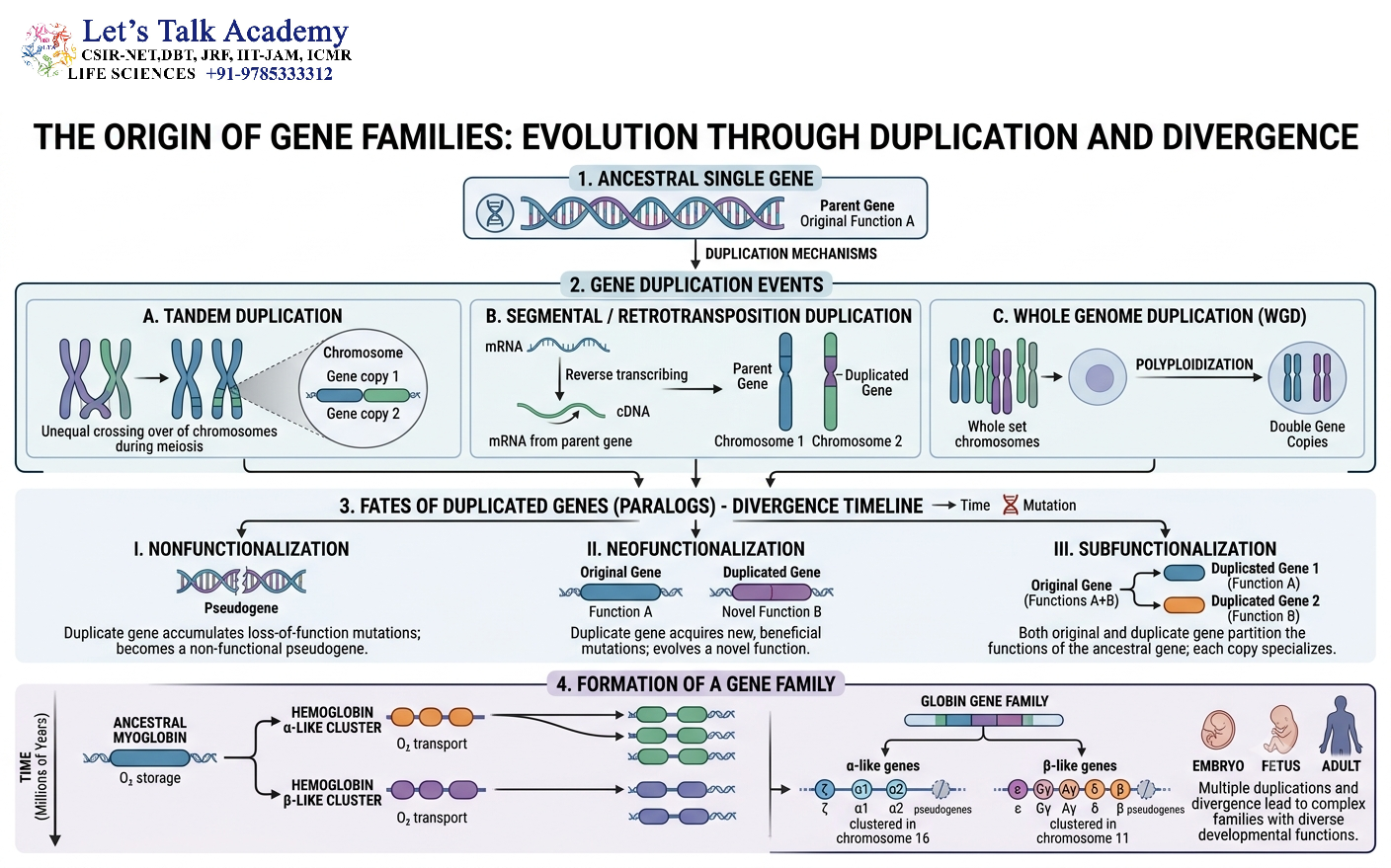
The major mechanism responsible for the formation of gene families is gene duplication.
A duplication event produces an additional copy of an existing gene. Because the original gene can continue performing its established function, the duplicated copy may accumulate mutations without immediately eliminating the original function.
Over evolutionary time, duplicated copies may:
- Retain the same function
- Divide the original function
- Develop a new function
- Become inactive
- Acquire new regulatory patterns
Thus, gene duplication provides raw genetic material for evolutionary innovation.
2.1 Gene Duplication
Gene duplication occurs when a segment of DNA containing a gene is copied and inserted into the genome.
The resulting copies are initially highly similar.
Suppose an ancestral genome contains:
Gene A
After duplication:
Gene A + Gene A′
Both copies may initially perform the same function. Over time, mutations can cause their sequences and functions to diverge.
The general evolutionary pathway can be represented as:
Ancestral gene → duplication → duplicated genes → mutation and selection → divergent functions
2.2 Mechanisms of Gene Duplication
Gene duplication can occur through several mechanisms.
2.2.1 Unequal Crossing Over
During meiosis, homologous chromosomes normally align and exchange corresponding DNA segments.
If homologous chromosomes become misaligned, crossing over may occur at unequal positions. One chromosome can receive an additional copy of a gene, whereas the other may lose that copy.
This process is called unequal crossing over.
It is particularly important in the expansion of gene families containing tandemly repeated genes.
2.2.2 Replication Errors
Errors during DNA replication can produce duplicated genomic segments.
Repeated DNA sequences can promote mispairing or template switching during replication, resulting in additional copies of genes.
2.2.3 Retrotransposition
Some genes can be copied through an RNA intermediate.
In this process:
- A gene is transcribed into RNA.
- The RNA is converted back into DNA.
- The resulting DNA copy becomes inserted at another genomic location.
Such a duplicated gene is often called a retrogene.
Because retrotransposed copies generally originate from processed RNA, they frequently lack introns and may have different regulatory environments from the original gene.
2.2.4 Segmental Duplication
Large chromosomal regions can sometimes be duplicated. Such duplicated segments may contain multiple genes.
If the duplicated region is retained during evolution, the genes within it may form or contribute to expanded gene families.
2.2.5 Whole-Genome Duplication
In some organisms, especially plants, the entire genome may be duplicated.
Whole-genome duplication can produce two copies of nearly every gene simultaneously.
Over time, some duplicate genes are lost, whereas others are retained and diversified.
Whole-genome duplication has played an important role in the evolution of many plant lineages and has also contributed to genome evolution in animals.
3. Evolution of Gene Families
Once duplication has occurred, gene family members may evolve independently.
The evolutionary fate of duplicate genes depends on mutation, natural selection, genetic drift, gene conversion, regulatory changes, and other genomic processes.
3.1 Conservation of Function
Sometimes both copies retain essentially the same function.
This may occur when increased gene dosage is beneficial.
For example, an organism may require a high level of a particular protein, and maintaining multiple functional copies can increase total protein production.
3.2 Subfunctionalization
Subfunctionalization occurs when duplicated genes divide the functions of the ancestral gene.
Suppose the ancestral gene performed functions A, B, and C.
After duplication:
- Gene A′ performs functions A and B.
- Gene A″ performs function C.
Together, the two genes preserve the ancestral functional capacity.
Subfunctionalization can also involve changes in tissue-specific or developmental expression.
For example, one duplicate may become active primarily during embryonic development, whereas another may be expressed predominantly in adult tissues.
3.3 Neofunctionalization
Neofunctionalization occurs when one duplicated gene acquires a new function that was not performed by the ancestral gene.
The original gene continues performing the ancestral function, while the duplicate accumulates mutations that produce a novel biochemical or biological activity.
This process is particularly important in evolutionary innovation.
3.4 Degeneration and Pseudogenization
Not every duplicated gene remains functional.
A duplicate may accumulate mutations that disrupt its coding sequence or regulatory regions. If the altered copy loses its ability to produce a functional product, it may become a pseudogene.
Pseudogenes may contain:
- Premature stop codons
- Frameshift mutations
- Disrupted splice sites
- Large deletions
- Mutations in regulatory regions
Although many pseudogenes are nonfunctional, some can still influence gene regulation through RNA production, transcriptional interference, or interactions with regulatory molecules.
4. Homologous Genes Within Gene Families
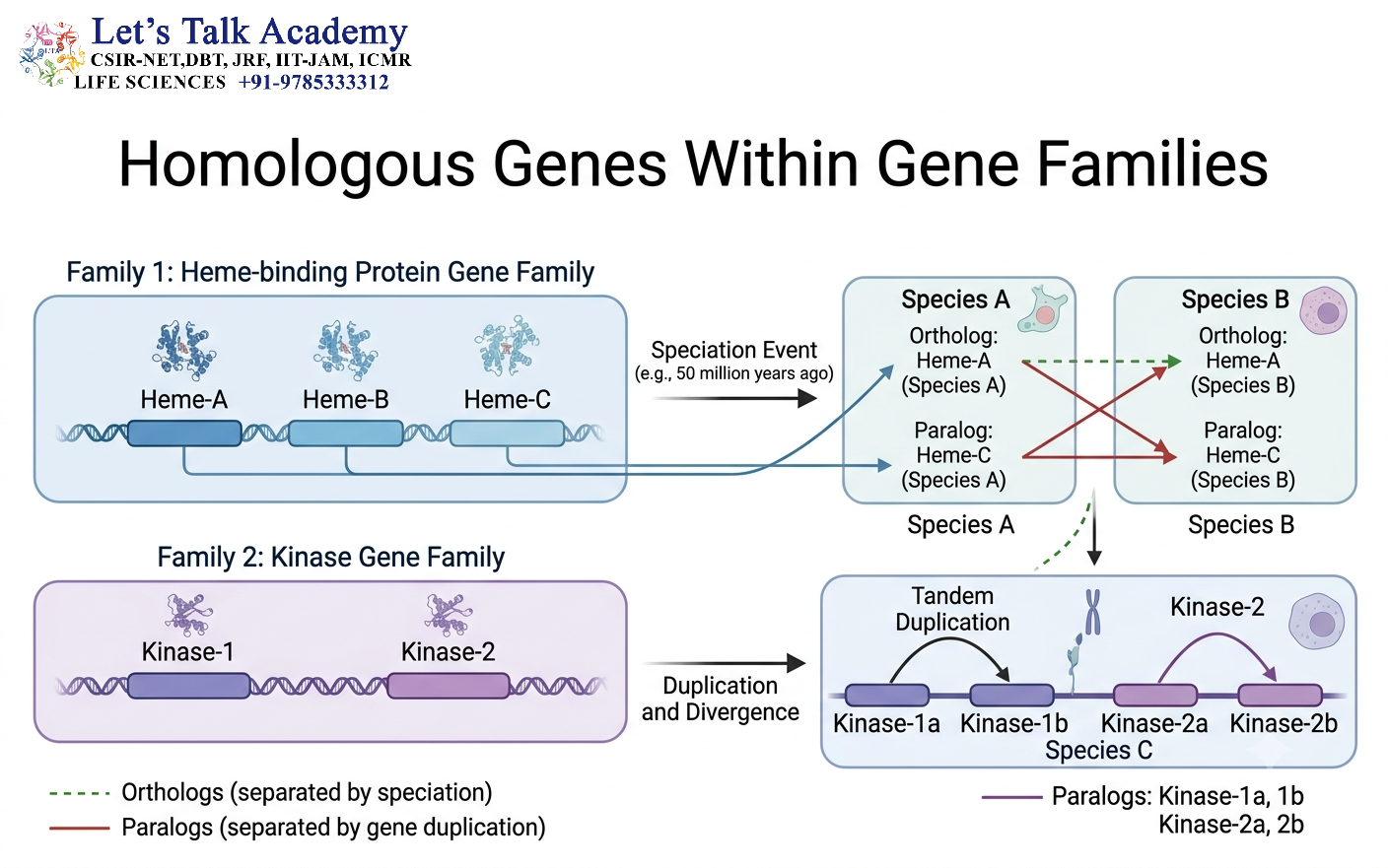
The members of a gene family are generally homologous because they share a common evolutionary origin.
Two important types of homologous genes are orthologs and paralogs.
4.1 Orthologs
Orthologs are homologous genes separated by a speciation event.
For example, a gene present in the human genome and its corresponding gene in the mouse genome may be orthologous if both descended from a gene present in their common ancestor.
Orthologs often retain similar functions, although functional differences can evolve.
4.2 Paralogs
Paralogs are homologous genes that arise through gene duplication.
For example:
Ancestral gene → duplication → Gene A + Gene B
Gene A and Gene B are paralogs.
Paralogs are particularly important for understanding gene family expansion and functional diversification.
4.3 Relationship Between Orthologs and Paralogs
The distinction is based primarily on the evolutionary event separating the genes:
| Feature | Orthologs | Paralogs |
|---|---|---|
| Origin | Speciation | Gene duplication |
| Location | Usually different species | Often same species |
| Function | Often conserved | Frequently diversified |
| Evolutionary relationship | Between species | Within or between species |
5. Classification of Gene Families
Gene families can be classified according to their organization, evolutionary history, sequence similarity, and functional characteristics.
5.1 Small Gene Families
Some gene families contain only a few members.
These genes often encode proteins with specialized functions.
Examples include certain families involved in:
- Hormone signaling
- Transcriptional regulation
- DNA repair
- Metabolism
5.2 Large Gene Families
Some families contain many genes and may have undergone repeated duplication events.
Large gene families are particularly common when organisms benefit from having multiple proteins capable of interacting with diverse substrates or environmental signals.
Examples include:
- Olfactory receptor genes
- Immunoglobulin-related genes
- Cytochrome P450 genes
- ABC transporter genes
- Protein kinase families
5.3 Tandem Gene Families
In tandem gene families, related genes are located next to one another on the same chromosome.
A simplified arrangement may look like:
Gene A – Gene A′ – Gene A″ – Gene A‴
Tandem organization can arise through repeated unequal crossing over and duplication.
Such arrangements can facilitate further expansion or contraction of the family.
5.4 Dispersed Gene Families
In dispersed gene families, related genes are located at different positions in the genome and may occur on different chromosomes.
Dispersed organization can result from:
- Transposition
- Chromosomal rearrangements
- Retrotransposition
- Segmental duplication
6. Examples of Important Gene Families
6.1 Globin Gene Family
The globin gene family is one of the classic examples of gene family evolution.
Globin proteins participate in oxygen transport and storage.
Different globin genes are expressed at different developmental stages.
For example, distinct globin genes are associated with:
- Embryonic development
- Fetal development
- Adult life
The globin family demonstrates how gene duplication followed by divergence can produce proteins with related structures but specialized physiological roles.
6.2 Immunoglobulin Gene Family
Immunoglobulin-related genes encode proteins involved in immune recognition.
Their structures contain characteristic immunoglobulin domains.
The immune system requires enormous molecular diversity to recognize a wide variety of foreign molecules. Gene organization, recombination, mutation, and selection contribute to this diversity.
6.3 Major Histocompatibility Complex Gene Families
Major histocompatibility complex genes encode proteins involved in presenting peptide antigens to immune cells.
These gene families are characterized by extensive genetic diversity.
Different variants can influence the ability of individuals to present particular peptide molecules.
6.4 Cytochrome P450 Gene Family
Cytochrome P450 enzymes participate in the metabolism of numerous endogenous and external compounds.
Members of this family contribute to:
- Steroid metabolism
- Lipid metabolism
- Drug metabolism
- Detoxification
- Biosynthesis of signaling molecules
Gene duplication and diversification have produced a large collection of P450 enzymes with different substrate specificities.
6.5 Protein Kinase Gene Families
Protein kinases transfer phosphate groups to target proteins.
Protein phosphorylation is a major mechanism of cellular regulation.
Different kinase families participate in:
- Cell-cycle control
- Growth signaling
- Differentiation
- Metabolism
- Apoptosis
- Stress responses
Although many kinases share a conserved catalytic domain, their regulatory regions and substrate specificities can differ substantially.
6.6 Olfactory Receptor Gene Family
Olfactory receptor genes form one of the largest gene families in many vertebrate genomes.
Different receptors recognize different classes of odorant molecules.
The large number of receptor genes allows organisms to detect an enormous variety of chemical signals.
This is an excellent example of how gene family expansion can increase sensory capacity.
7. Molecular Mechanisms Responsible for Gene Family Expansion
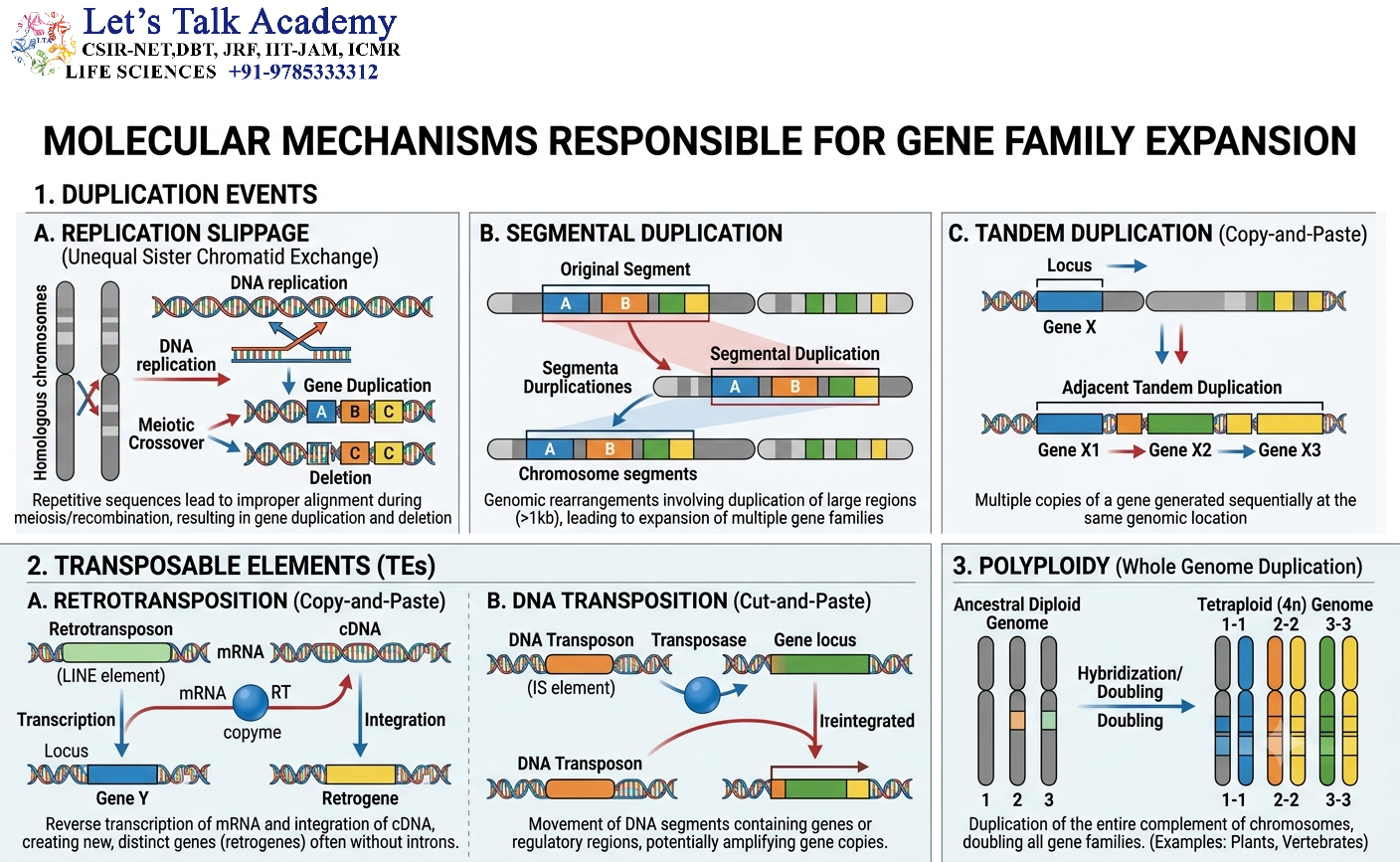
Gene families are dynamic structures.
They can expand through duplication and contract through gene loss.
7.1 Duplication and Divergence
The fundamental mechanism is:
Duplication → mutation → selection → functional divergence
Immediately following duplication, two copies are usually highly similar.
Mutations gradually introduce differences.
If a mutation is neutral, it may become fixed through genetic drift.
If it provides an advantage, natural selection may favor its retention.
7.2 Gene Conversion
Gene conversion is a process in which sequence information from one DNA region is copied into another homologous region.
Gene conversion can increase similarity between members of a gene family.
This creates an important contrast:
- Mutation and divergence increase differences.
- Gene conversion can reduce differences.
Gene conversion can therefore influence the evolutionary history and sequence homogenization of gene families.
7.3 Gene Loss
Gene families can also shrink.
A duplicated gene may become unnecessary and eventually be deleted or become a pseudogene.
Gene loss may occur through:
- Deletion
- Insertion of disruptive sequences
- Accumulation of deleterious mutations
- Chromosomal rearrangement
- Selection against unnecessary gene copies
Thus, gene families continuously undergo a balance between birth and death of genes.
8. Gene Family Organization in the Genome
The physical arrangement of genes within chromosomes provides important clues about their evolutionary history.
8.1 Clustered Genes
Genes located close together may have originated through tandem duplication.
Clustered genes can sometimes share:
- Regulatory elements
- Chromatin environments
- Enhancers
- Promoters
- Transcriptional control mechanisms
However, physical proximity does not necessarily mean that genes are regulated identically.
8.2 Dispersed Genes
Related genes can become separated through chromosomal rearrangements.
They may eventually occur on different chromosomes.
Despite their physical separation, they can retain substantial sequence similarity because of their common ancestry.
8.3 Gene Clusters and Coordinated Expression
Some gene clusters contain genes that are developmentally or physiologically related.
The arrangement of such genes can facilitate coordinated regulation.
A classic example is the organization of certain globin genes, where developmental expression patterns are associated with genomic organization and regulatory regions.
9. Functional Diversification of Gene Families
Gene families are particularly important because duplicated genes can acquire specialized functions.
9.1 Changes in Protein Sequence
Mutations in coding regions can alter:
- Enzyme activity
- Substrate specificity
- Binding affinity
- Protein stability
- Cellular localization
- Protein-protein interactions
Some changes have little effect, whereas others can dramatically modify function.
9.2 Changes in Gene Regulation
Functional diversification does not require major changes in protein sequence.
Changes in regulatory DNA can alter:
- Tissue specificity
- Developmental timing
- Expression level
- Response to environmental signals
- Hormonal regulation
Therefore, two genes may encode similar proteins but be expressed in completely different tissues.
9.3 Changes in Substrate Specificity
Enzyme gene families frequently demonstrate changes in substrate recognition.
A duplicated enzyme gene may evolve amino acid substitutions near its active site.
These substitutions can change the molecules that the enzyme recognizes.
This provides a molecular mechanism for biochemical diversification.
10. Gene Families and Evolution
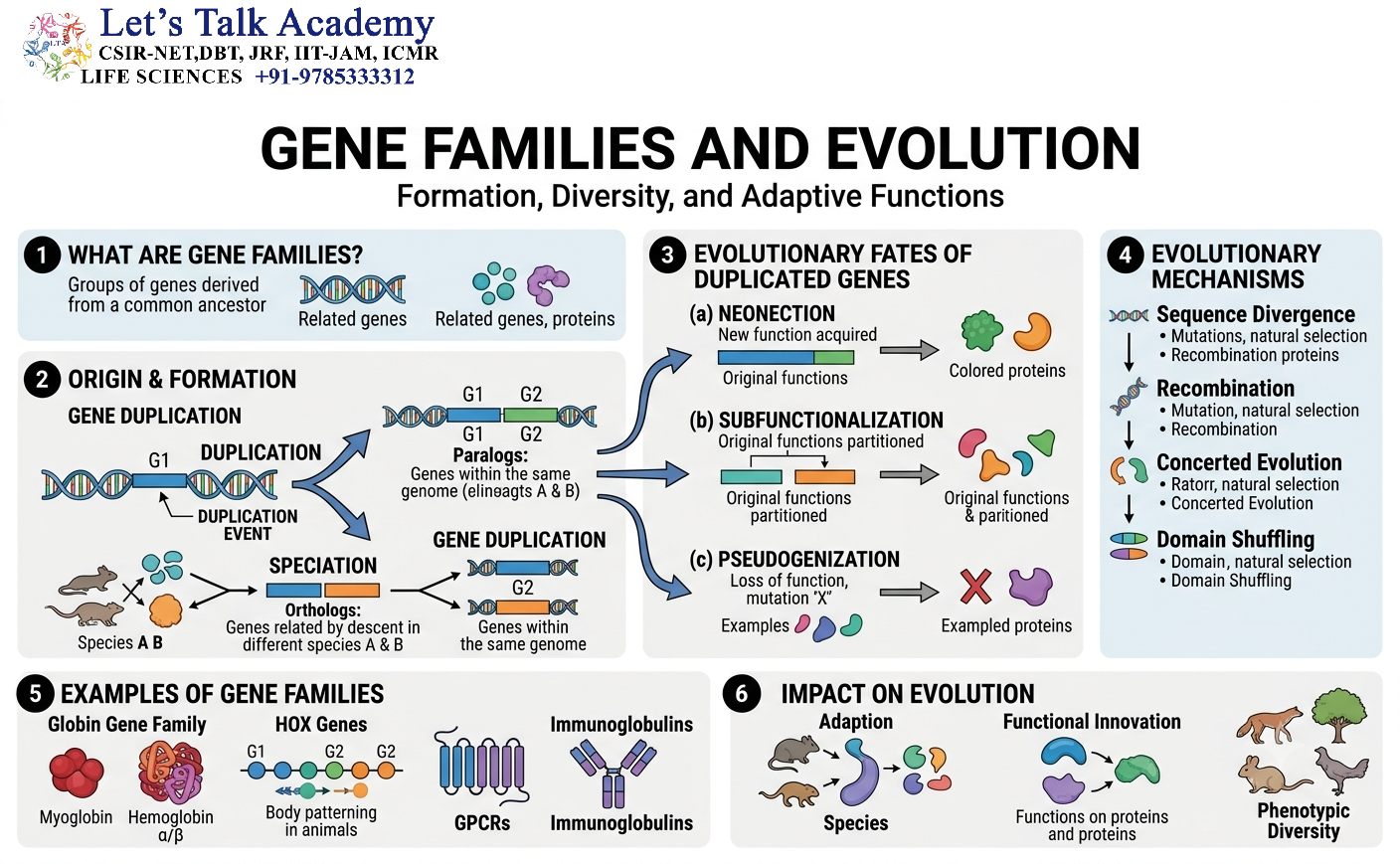
Gene families are powerful evidence for evolutionary relationships.
When related genes are found in different organisms, their sequence similarities can reveal common ancestry.
10.1 Conserved Regions
Important functional regions are often conserved because mutations in those regions may reduce protein activity.
Conserved sequences can therefore provide clues about functional importance.
10.2 Divergent Regions
Other regions may evolve rapidly.
These regions may contribute to:
- Species-specific functions
- Regulatory differences
- Protein-protein interactions
- Adaptation
Comparing conserved and divergent regions helps researchers understand how gene families evolve.
10.3 Gene Family Expansion and Adaptation
Gene family expansion may provide organisms with additional functional capacity.
For example, expansion of receptor families can improve the ability to detect diverse environmental signals.
Similarly, expansion of metabolic enzyme families can allow organisms to process a broader range of chemical compounds.
11. Birth-and-Death Evolution of Gene Families
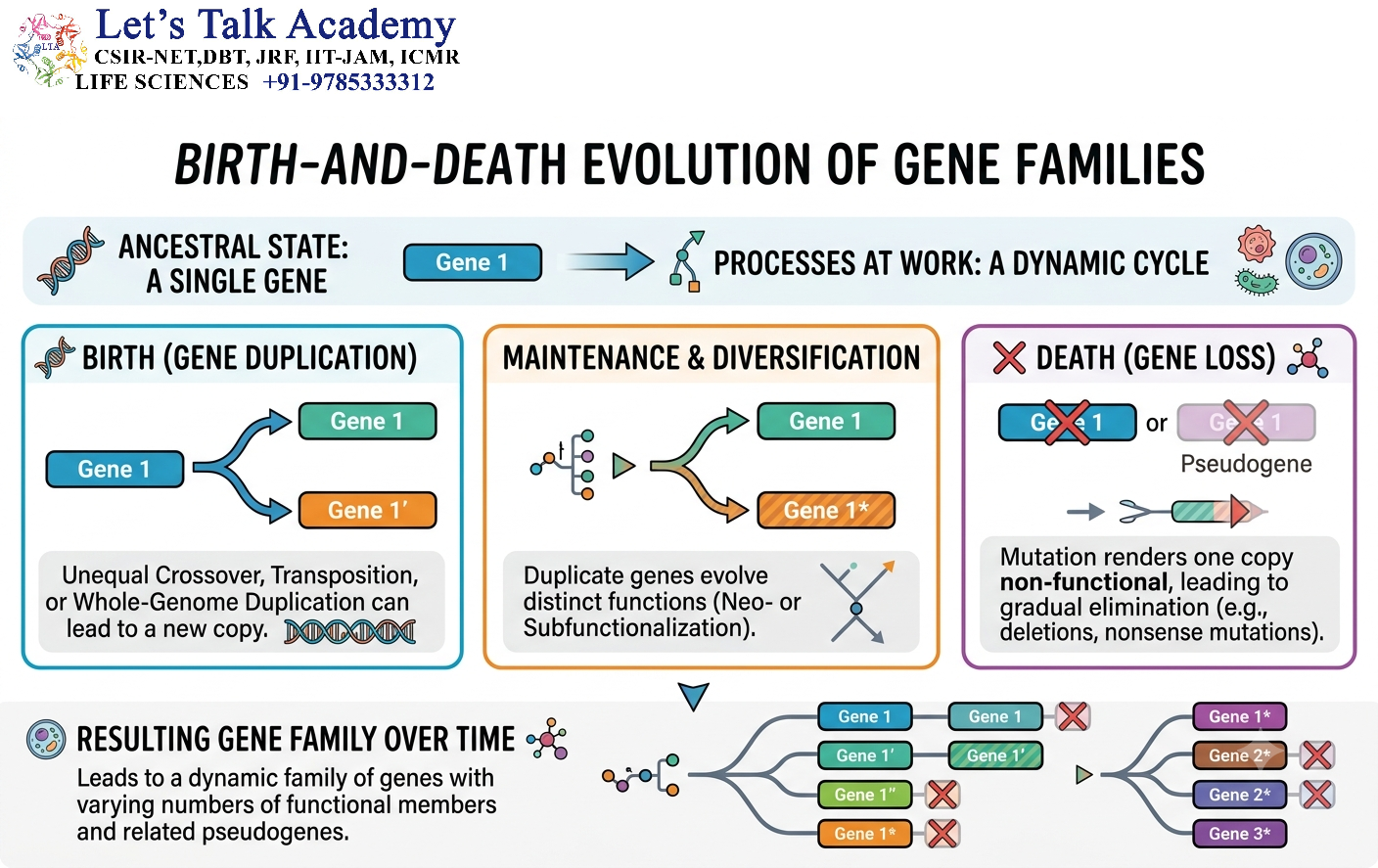
The birth-and-death model describes gene families as dynamic collections in which new genes arise through duplication and existing genes may subsequently be lost or become nonfunctional.
The process can be summarized as:
Gene birth → duplication → divergence → retention or loss
A duplicated gene that provides a useful function may be retained.
A redundant or disadvantageous duplicate may disappear.
Different species may therefore contain different numbers of members of the same gene family.
This explains why a gene family may contain:
- Many copies in one species
- Fewer copies in another
- Pseudogenes in another lineage
12. Gene Families and Genome Complexity
Genome complexity is not determined simply by the number of genes.
Gene families contribute to complexity by allowing genes to become specialized.
A genome with duplicated genes can generate multiple related proteins with different:
- Expression patterns
- Activities
- Cellular locations
- Regulatory properties
- Developmental functions
Thus, gene duplication is an important source of biological complexity.
13. Gene Families in Development
Development requires precise regulation of genes in time and space.
Gene families can provide specialized proteins during different developmental stages.
13.1 Developmental Regulation
Different members of a gene family may be expressed:
- During embryonic development
- During tissue differentiation
- During adulthood
- In response to hormones
- During stress
This allows a related set of proteins to support different developmental requirements.
13.2 Tissue-Specific Expression
Gene family members may become specialized for particular tissues.
For example, one member may be predominantly expressed in muscle, whereas another may be expressed in liver or nervous tissue.
Such specialization is often associated with divergence in promoter and enhancer sequences.
14. Gene Families and Regulation of Gene Expression
Members of a gene family can be regulated independently or coordinately.
Regulation may occur at multiple levels.
14.1 Transcriptional Regulation
Transcription factors can bind to promoters and enhancers and control gene transcription.
Differences in regulatory sequences can cause family members to respond differently to the same signal.
14.2 Epigenetic Regulation
DNA methylation, histone modifications, and chromatin organization can influence gene expression.
Closely related genes may therefore have different expression patterns depending on their chromatin states.
14.3 Post-Transcriptional Regulation
Gene family members can also be regulated after transcription through:
- Alternative splicing
- RNA stability
- RNA degradation
- microRNA-mediated regulation
- RNA editing
These mechanisms further increase functional diversity.
15. Gene Families and Alternative Splicing
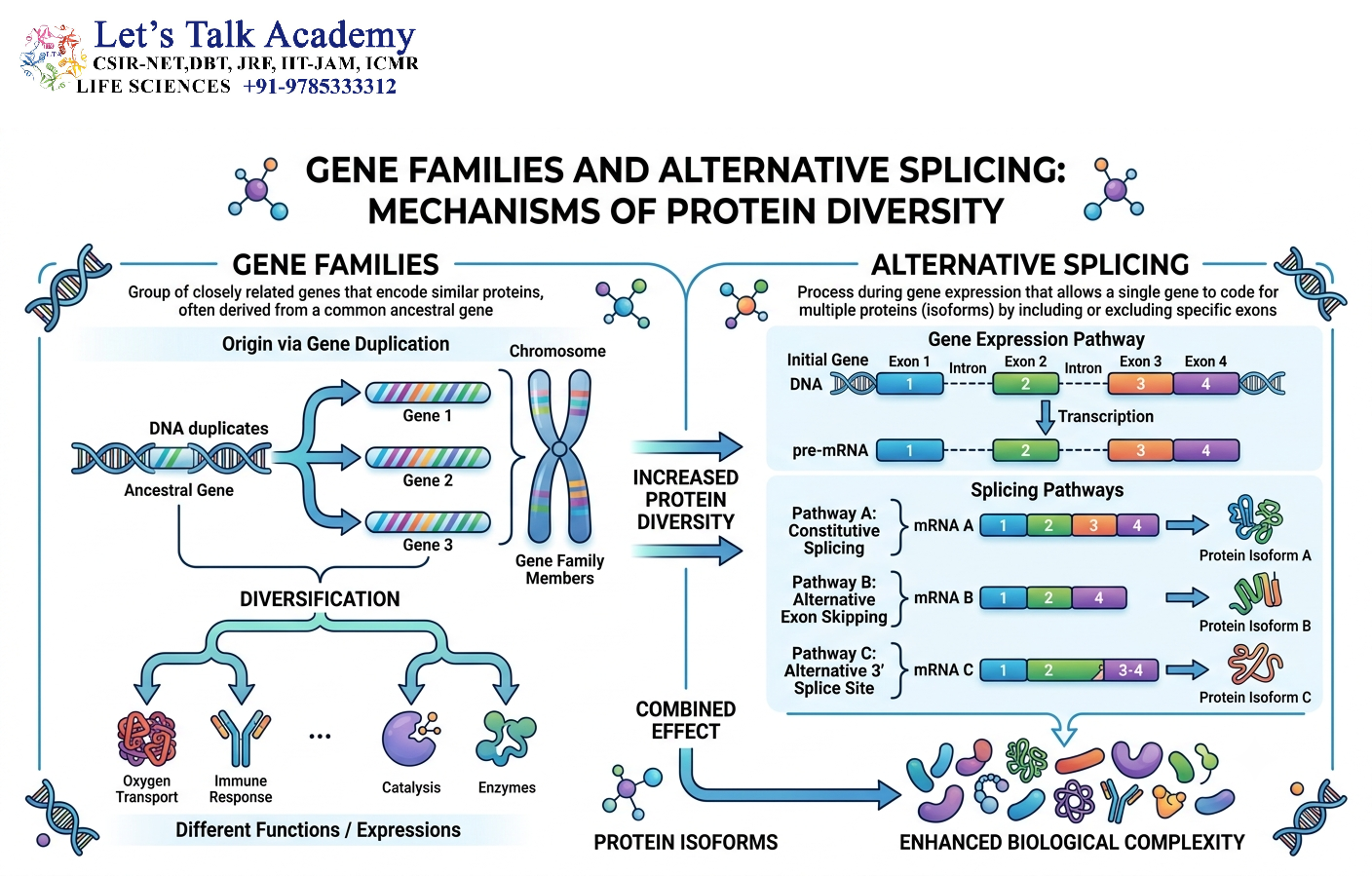
Alternative splicing allows a single gene to produce multiple RNA transcripts.
When combined with gene family expansion, the functional diversity can become even greater.
For example:
Gene duplication + alternative splicing + regulatory divergence
can produce a broad collection of related protein products.
Therefore, the number of proteins in an organism may substantially exceed the number of protein-coding genes.
16. Gene Families and Disease
Alterations in gene families can contribute to disease.
Disease-associated changes may involve:
- Gene duplication
- Gene deletion
- Point mutations
- Copy-number variation
- Unequal crossing over
- Abnormal gene conversion
- Regulatory mutations
Because family members may have related functions, alteration of one member can sometimes be partially compensated by another member. In other cases, the affected gene may have a highly specialized function, leading to a strong phenotype.
16.1 Gene Copy-Number Variation
The number of copies of a gene can vary between individuals.
This is known as copy-number variation (CNV).
An increased number of gene copies may alter gene expression and protein abundance.
Conversely, deletion of copies may reduce the amount of gene product.
16.2 Gene Family Expansion in Cancer
Cancer cells can undergo extensive genomic alterations.
These may include amplification of particular genes.
If an amplified gene contributes to cell proliferation or survival, increased copy number can promote abnormal growth.
17. Gene Families and Biotechnology
Understanding gene families has many applications in biotechnology.
Gene family analysis can help identify:
- Enzymes with useful properties
- Novel metabolic pathways
- Drug targets
- Receptors
- Transport proteins
- Industrially valuable proteins
17.1 Protein Engineering
Related proteins can be compared to identify amino acid residues associated with specific biochemical properties.
Scientists can then modify selected residues to improve:
- Stability
- Catalytic activity
- Substrate specificity
- Temperature tolerance
- Resistance to chemical conditions
17.2 Drug Discovery
Gene families can help identify related proteins involved in disease pathways.
Knowledge of conserved domains and family-specific regions can assist in developing selective drugs.
17.3 Crop Improvement
In plants, gene family analysis can help identify genes involved in:
- Drought tolerance
- Salinity tolerance
- Disease resistance
- Nutrient utilization
- Growth regulation
- Flowering
- Seed development
18. Identification and Analysis of Gene Families
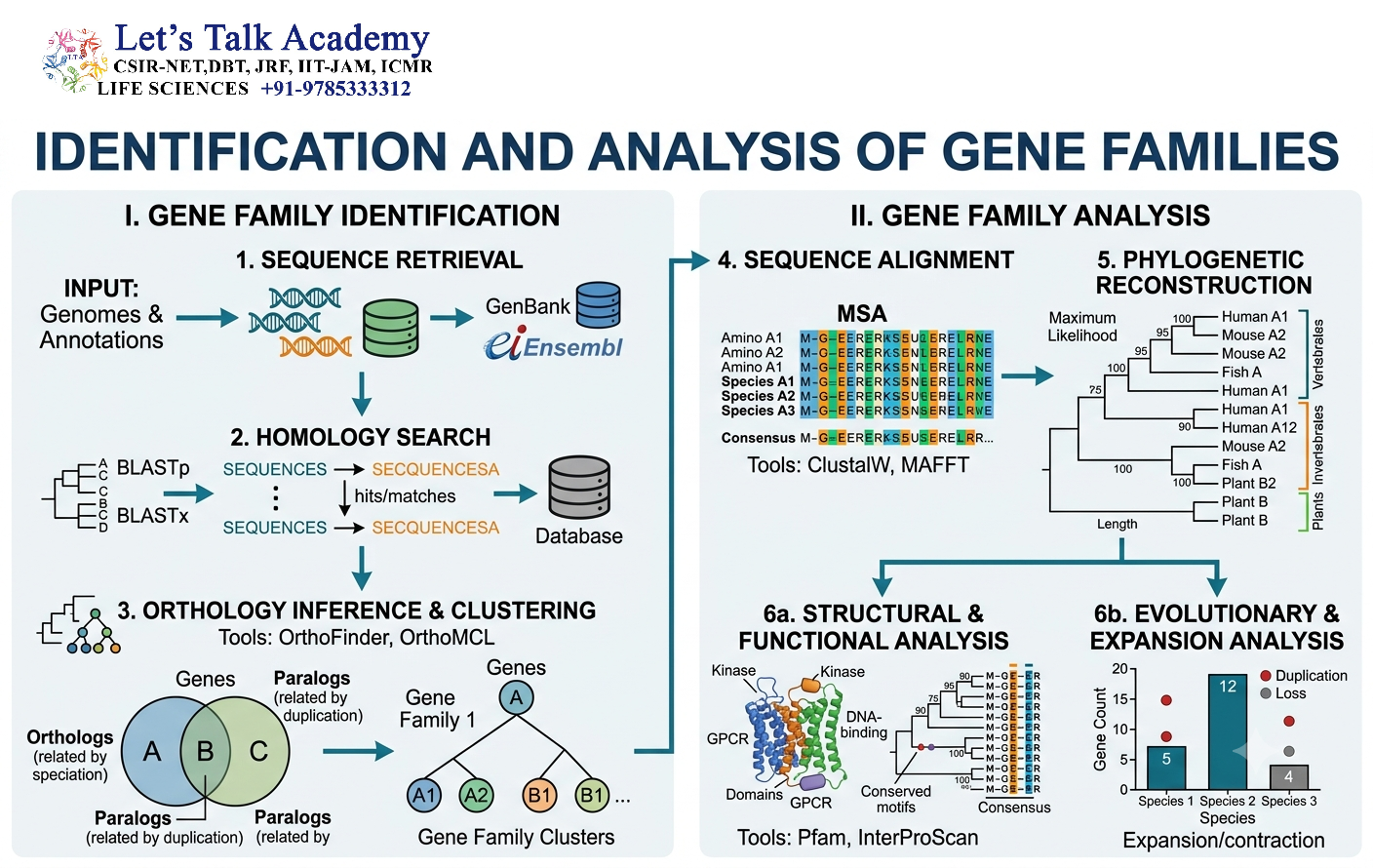
Modern molecular biology provides several approaches for identifying gene families.
18.1 Sequence Comparison
DNA or protein sequences can be compared to identify homologous genes.
Greater sequence similarity generally suggests closer evolutionary relationships, although sequence similarity must be interpreted carefully.
18.2 Conserved Domain Analysis
Many gene families share characteristic protein domains.
Identifying these conserved domains can help classify proteins into particular families.
18.3 Phylogenetic Analysis
Phylogenetic trees can be constructed to investigate relationships among gene family members.
Such trees can help distinguish:
- Orthologs
- Paralogs
- Duplication events
- Speciation events
- Gene loss
18.4 Synteny Analysis
Synteny refers to the conservation of genomic regions between species.
If related genes occur in similar chromosomal neighborhoods across species, this can provide evidence of common ancestry.
18.5 Gene Expression Analysis
Expression studies reveal where and when gene family members are active.
Methods may include:
- RNA sequencing
- Quantitative PCR
- Microarray analysis
- In situ hybridization
- Single-cell transcriptomics
Expression patterns can reveal functional specialization among family members.
19. Gene Families and Molecular Evolution
Gene families provide a natural system for studying molecular evolution.
Researchers can examine how nucleotide substitutions accumulate after duplication.
19.1 Synonymous Mutations
Synonymous substitutions alter the DNA sequence without changing the encoded amino acid.
These mutations may have little effect on protein sequence, although they can sometimes influence gene expression or RNA processing.
19.2 Nonsynonymous Mutations
Nonsynonymous substitutions change the encoded amino acid.
Their effects depend on the location and biochemical nature of the substitution.
Changes in critical functional domains may strongly affect protein activity.
19.3 Positive Selection
Some gene family members evolve rapidly because beneficial mutations are favored by natural selection.
Positive selection can contribute to adaptation and functional innovation.
19.4 Purifying Selection
Important genes are often subject to purifying selection.
Deleterious mutations are removed from the population, resulting in strong conservation of functionally important regions.
20. Gene Families and Molecular Phylogenetics
Gene families are frequently used in phylogenetic studies.
By comparing homologous genes among species, researchers can reconstruct evolutionary relationships.
However, accurate interpretation requires distinguishing duplication from speciation.
If a gene family experienced several duplication events, simply comparing sequence similarity may produce misleading evolutionary conclusions.
Therefore, phylogenetic analysis often considers:
- Sequence similarity
- Gene structure
- Chromosomal position
- Conserved domains
- Duplication history
- Species relationships
21. Gene Structure Within Gene Families
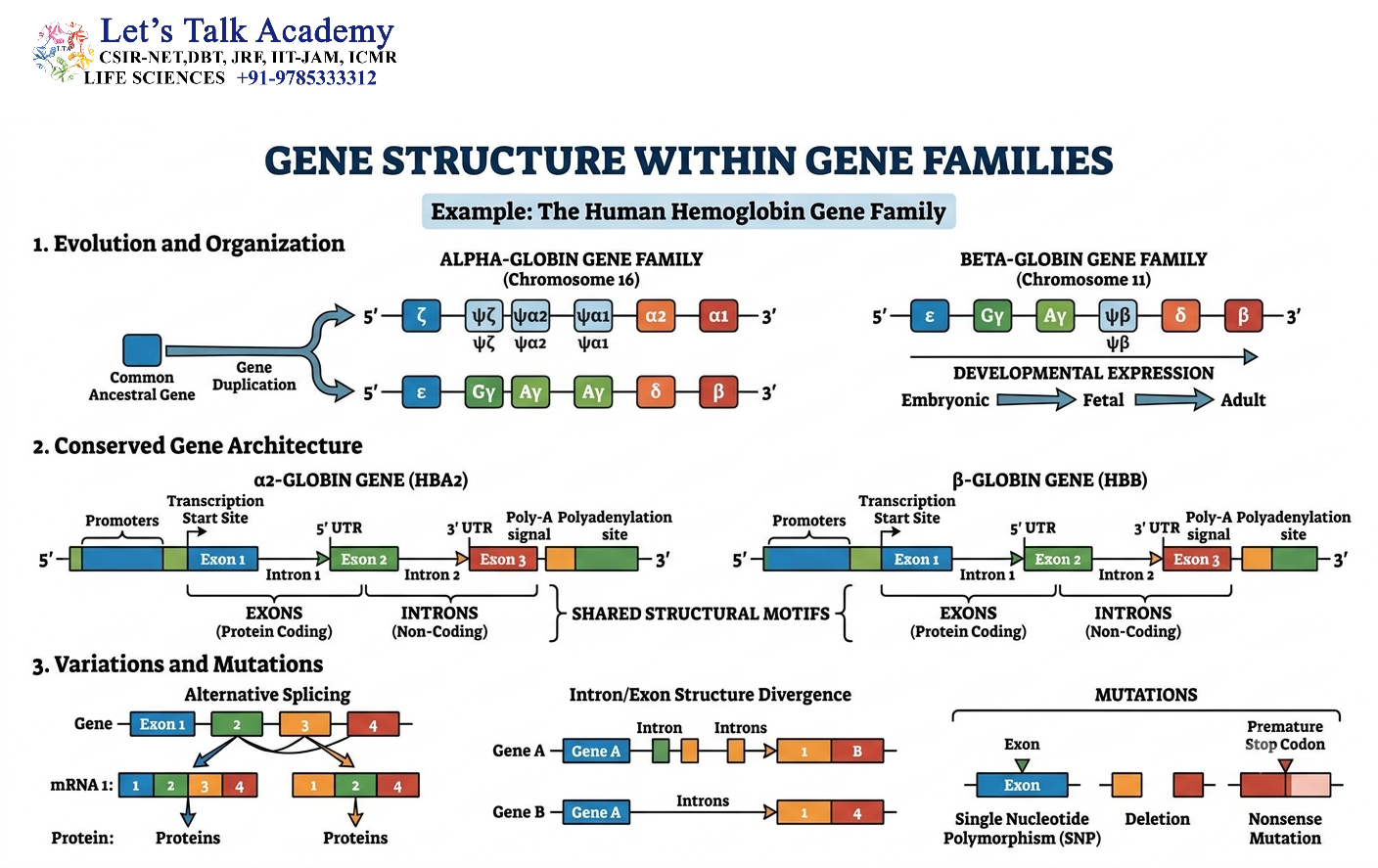
Members of a gene family may retain similar exon-intron organization.
21.1 Conserved Exon Structure
If related genes share similar exon arrangements, this may indicate common ancestry.
Important functional domains may correspond to conserved exons.
21.2 Intron Gain and Loss
During evolution, introns may occasionally be gained or lost.
Thus, two homologous genes may retain similar protein sequences while having different genomic structures.
21.3 Regulatory Region Divergence
Promoters and enhancers can evolve faster than protein-coding regions.
Consequently, gene family members may encode highly similar proteins but exhibit very different expression patterns.
22. Gene Family Expansion in Plants and Animals
Gene duplication has played a major role in both plant and animal evolution.
Plants frequently experience genome duplication events, and many plant genomes contain extensive families of genes associated with environmental responses.
Animals also contain large gene families, particularly those involved in:
- Immunity
- Sensory perception
- Signaling
- Development
- Cell adhesion
The evolutionary history of each family depends on the balance between duplication, divergence, selection, and gene loss.
23. Gene Families and Environmental Adaptation
Environmental conditions can favor the expansion or specialization of particular gene families.
For example, organisms exposed to chemically diverse environments may benefit from having expanded families of metabolic enzymes.
Similarly, organisms living in pathogen-rich environments may experience strong selection on immune-related gene families.
This demonstrates how gene family evolution can contribute to adaptation.
24. Gene Families and Functional Redundancy
When two genes perform similar functions, they may provide functional redundancy.
This means that loss of one gene may have a smaller effect because another family member can partially compensate.
Functional redundancy can increase robustness.
However, redundancy may decrease over time if one duplicate becomes specialized.
Thus:
Duplication → redundancy → divergence → specialization
represents one possible evolutionary pathway.
25. Gene Families and Gene Dosage
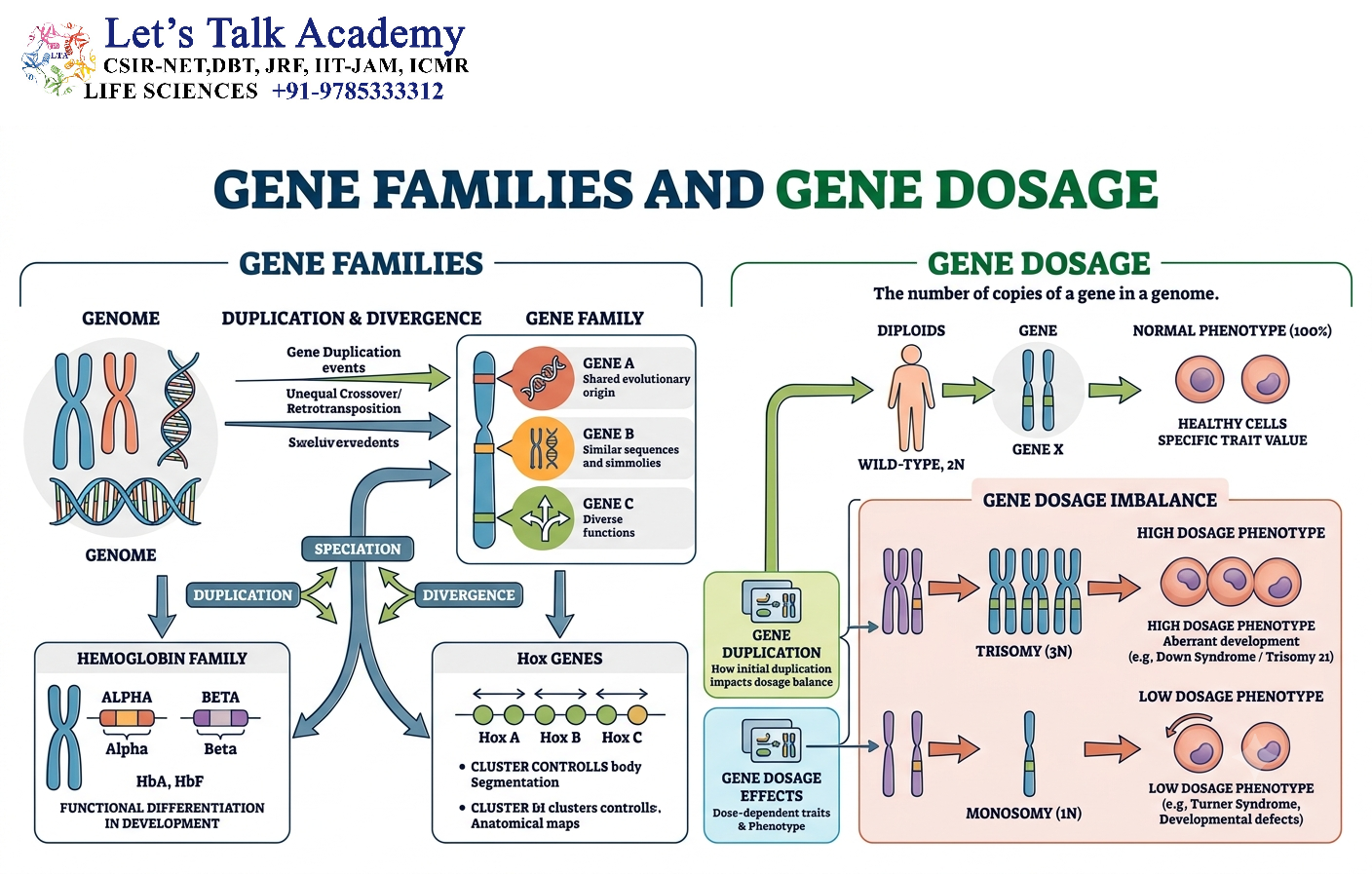
Gene dosage refers to the amount of gene product produced as a consequence of gene copy number and expression.
Duplication can increase dosage.
In some situations, increased dosage is beneficial.
In other situations, excessive gene dosage can disrupt cellular balance.
Therefore, the retention of duplicated genes depends partly on whether their dosage is compatible with cellular physiology.
26. Gene Families and Pseudogenes
Pseudogenes are important components of many gene families.
They provide evidence about the evolutionary history of functional genes.
A pseudogene may retain recognizable similarity to functional family members even after losing its ability to produce a normal functional protein.
26.1 Processed Pseudogenes
Processed pseudogenes commonly arise through reverse transcription of mRNA followed by insertion into the genome.
They often:
- Lack introns
- Contain remnants of a poly-A tail
- Occur at genomic locations different from the original gene
26.2 Unprocessed Pseudogenes
Unprocessed pseudogenes generally originate from duplication of genomic DNA.
They may retain:
- Introns
- Exons
- Promoter-associated sequences
Mutations subsequently disrupt their function.
27. Gene Families as Dynamic Genomic Systems
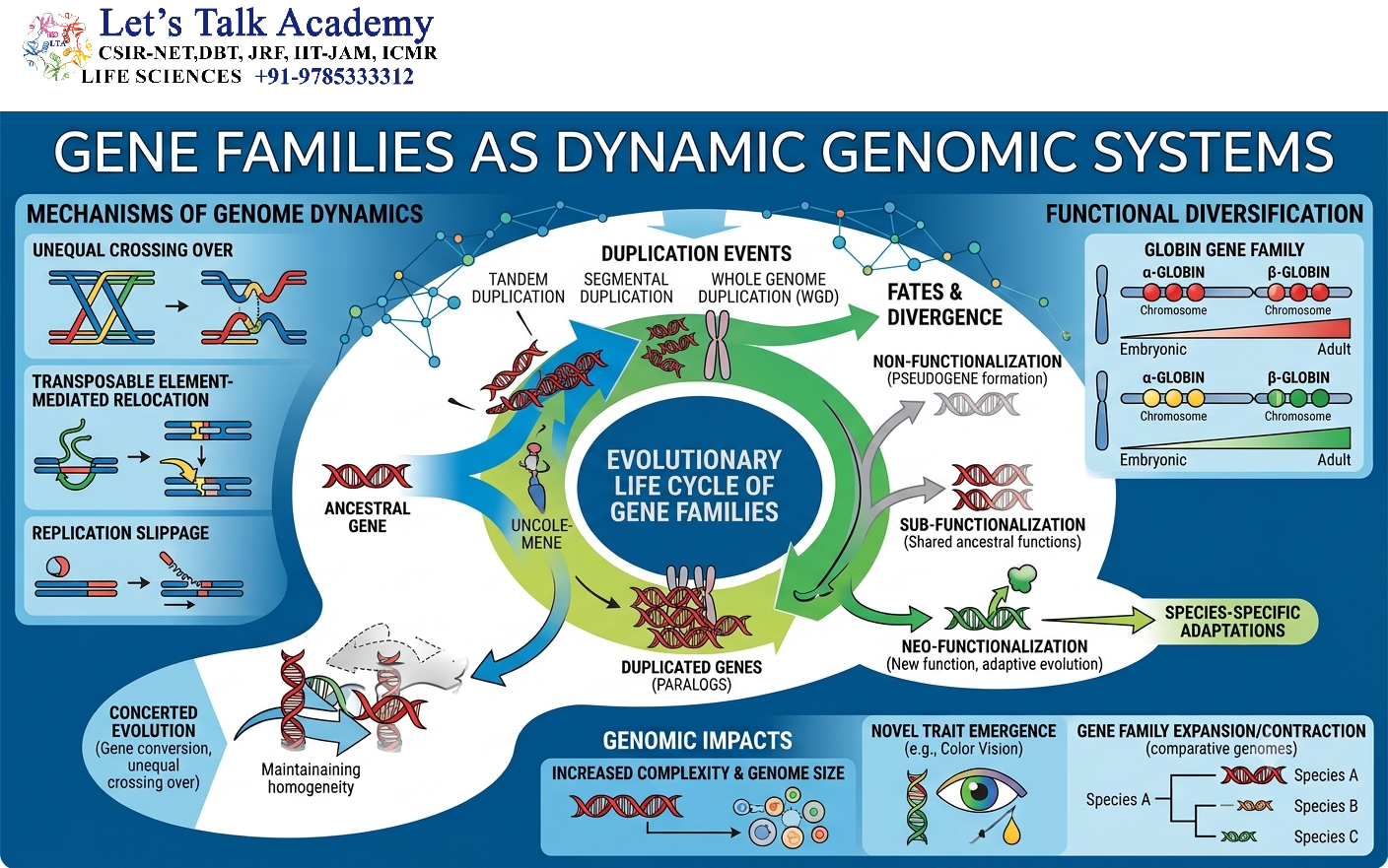
A genome should not be considered a static collection of genes.
Gene families continuously change through:
Duplication → mutation → selection → conversion → rearrangement → gene loss
These processes collectively shape genome architecture.
Different lineages can therefore possess different numbers and types of genes belonging to the same ancestral family.
28. Conceptual Model of Gene Family Evolution
A simplified model can be represented as:
Ancestral gene
↓
Gene duplication
↓
Two or more gene copies
↓
Sequence and regulatory changes
↓
Functional conservation / subfunctionalization / neofunctionalization / pseudogenization
↓
Modern gene family
This model explains why modern genomes contain many related genes with different levels of similarity and functional specialization.


