
Composition, Structure and Function of Carbohydrates
1. Introduction to Carbohydrates
Carbohydrates are one of the most important classes of biomolecules found in living organisms. They are composed mainly of carbon, hydrogen and oxygen and occur in a remarkably wide range of structures, from simple monosaccharides such as glucose and fructose to highly complex polysaccharides such as starch, glycogen, cellulose and chitin.
The term carbohydrate was historically associated with the general empirical formula
Cn(H2O)n, which suggested that these compounds could be considered as hydrates of carbon. However, this formula is not a universal definition of carbohydrates because several biologically important carbohydrates and their derivatives do not strictly follow this formula.
From a biochemical perspective, carbohydrates are generally described as polyhydroxy aldehydes, polyhydroxy ketones, or compounds that produce such molecules upon hydrolysis. Their structures contain multiple hydroxyl groups and, in their open-chain forms, an aldehyde or ketone functional group.
2. Chemical Composition of Carbohydrates
The major elements present in carbohydrates are carbon, hydrogen and oxygen. Many simple carbohydrates approximately follow the empirical formula
Cn(H2O)n.
For example, glucose has the molecular formula C6H12O6. The ratio of hydrogen to oxygen is approximately 2:1, similar to water, which historically led to the term carbohydrate.
However, carbohydrate chemistry is much more diverse than this simple formula suggests. Many carbohydrates contain additional chemical groups such as amino groups, phosphate groups, sulfate groups or other modifications. These derivatives have major biological importance.
3. General Structure of Carbohydrates
Carbohydrates generally contain several hydroxyl groups and a carbonyl group or a structure derived from a carbonyl group. Depending on the nature of the carbonyl group, monosaccharides can be classified into aldoses and ketoses.
An aldose contains an aldehyde group in its open-chain form, whereas a ketose contains a ketone group. Glucose is an important example of an aldose, while fructose is a major example of a ketose.
| Type | Functional Group | Example |
|---|---|---|
| Aldose | Aldehyde | Glucose |
| Ketose | Ketone | Fructose |
4. Classification of Carbohydrates
Carbohydrates are commonly classified according to the number of monosaccharide units present in the molecule. The major groups are monosaccharides, oligosaccharides and polysaccharides.
4.1 Monosaccharides
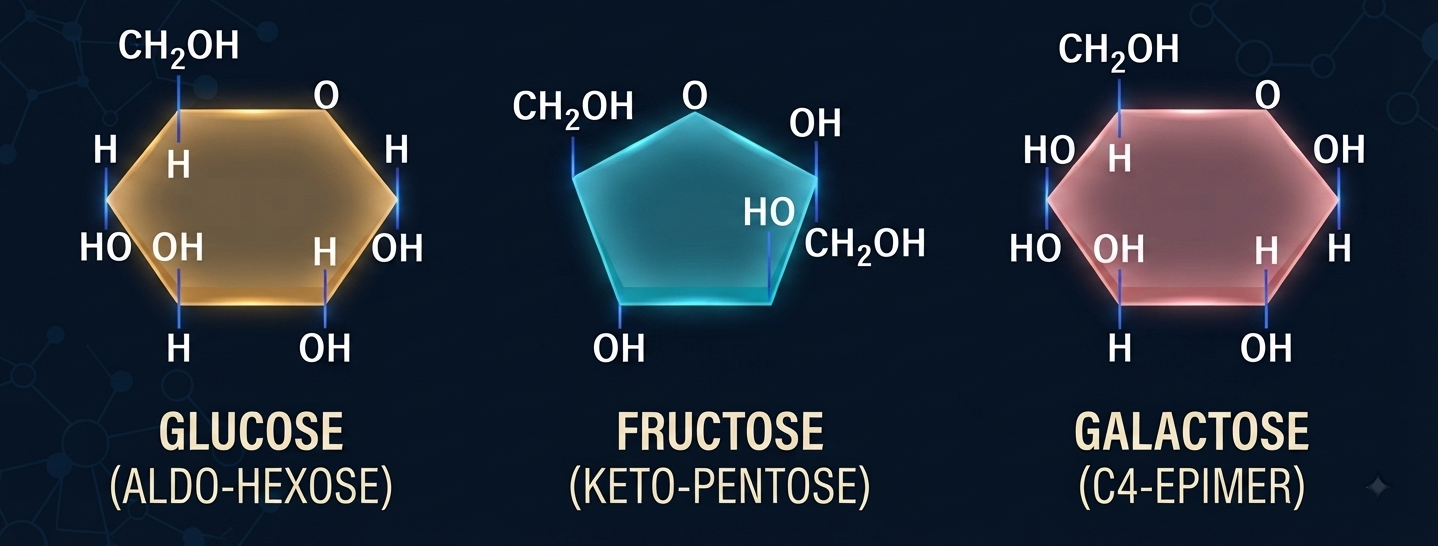
Monosaccharides are the simplest carbohydrates and cannot be hydrolyzed into smaller carbohydrate units. They act as fundamental building blocks for larger carbohydrates and also participate directly in cellular metabolism.
Important monosaccharides include glucose, fructose, galactose, ribose and deoxyribose.
4.2 Oligosaccharides
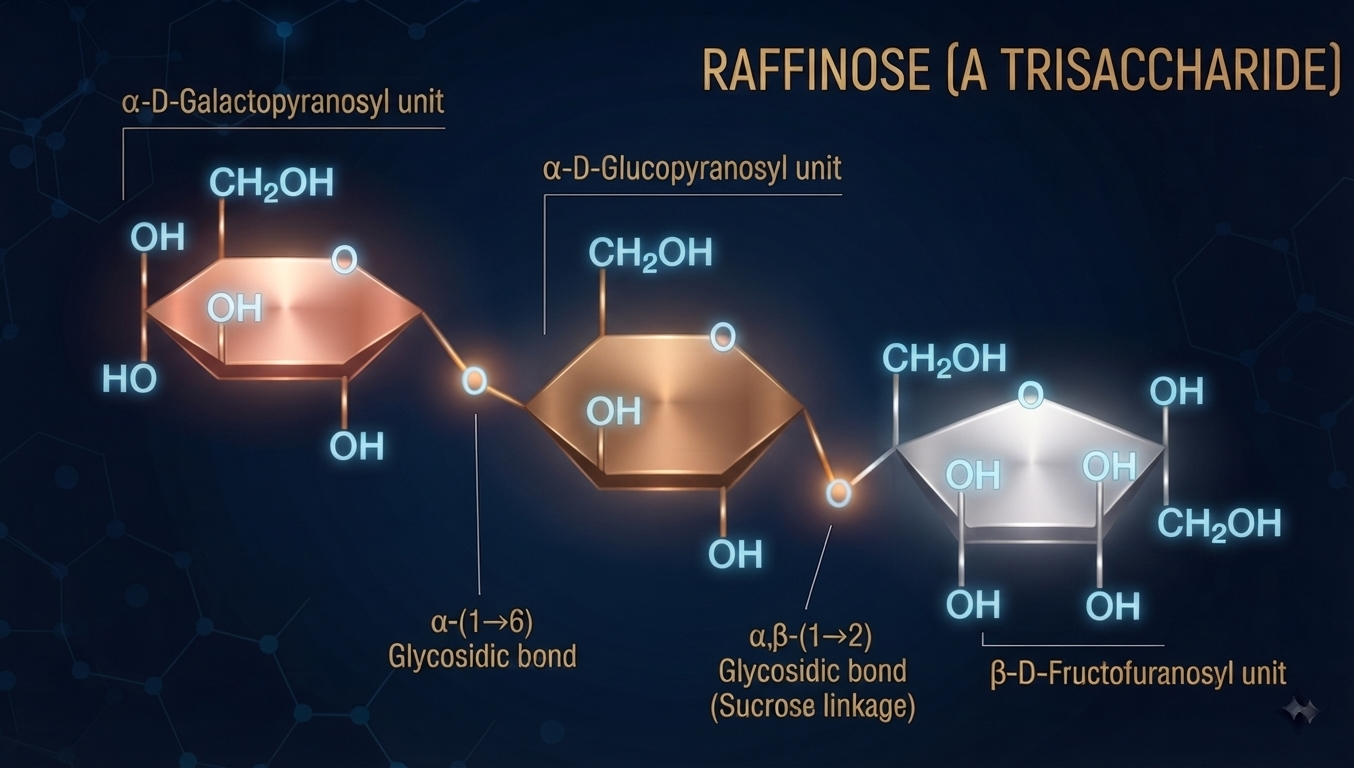
Oligosaccharides contain a small number of monosaccharide residues connected through glycosidic bonds. Disaccharides are the most familiar members of this group.
Important disaccharides include maltose, lactose and sucrose.
4.3 Polysaccharides
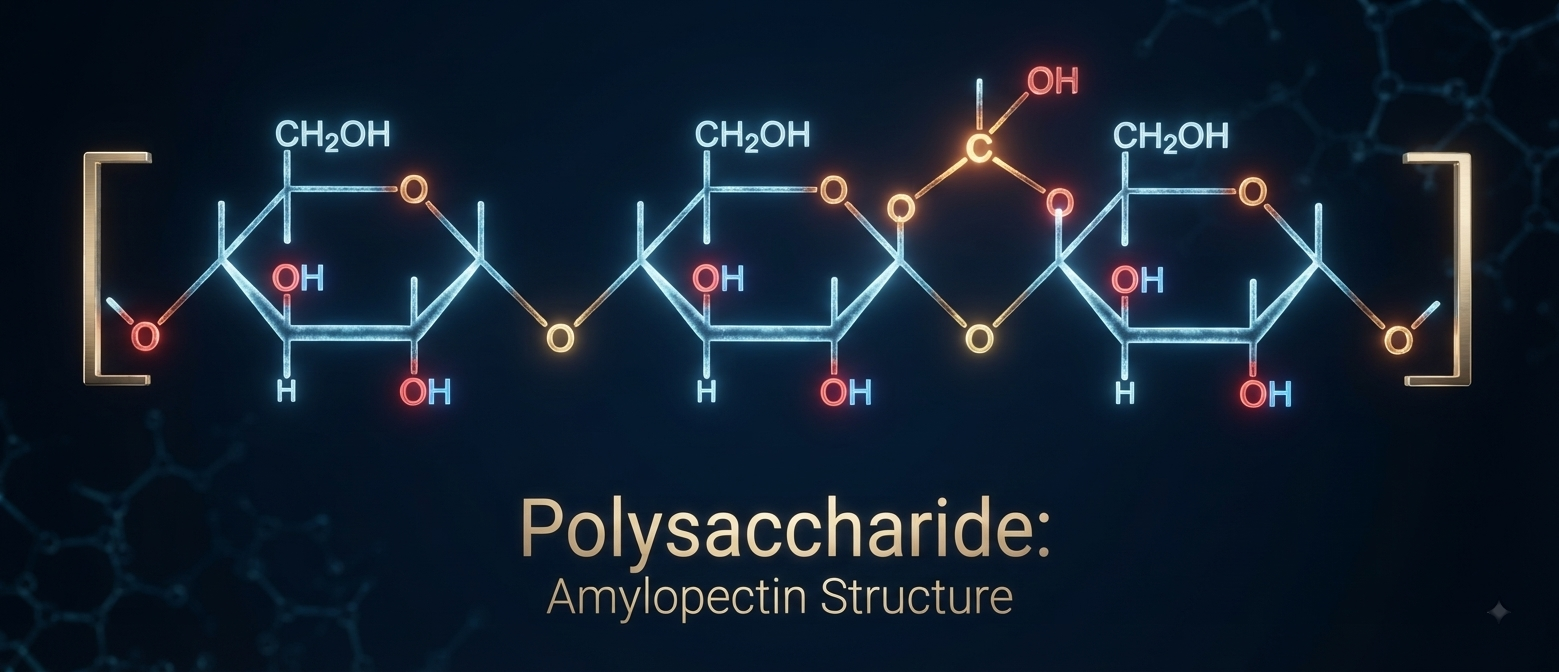
Polysaccharides are long carbohydrate polymers composed of many monosaccharide residues. Depending on the arrangement of their sugar residues, they may be linear or branched and may serve storage or structural functions.
5. Classification Based on Number of Carbon Atoms
| Number of Carbon Atoms | Name | Example |
|---|---|---|
| 3 | Triose | Glyceraldehyde |
| 4 | Tetrose | Erythrose |
| 5 | Pentose | Ribose |
| 6 | Hexose | Glucose, Fructose |
| 7 | Heptose | Sedoheptulose |
6. Aldoses and Ketoses
6.1 Aldoses
Aldoses contain an aldehyde group in their open-chain structure. Important examples include glyceraldehyde, ribose, glucose, galactose and mannose.
6.2 Ketoses
Ketoses contain a ketone group in their open-chain structure. Important examples include dihydroxyacetone, ribulose and fructose.
7. Stereochemistry of Carbohydrates
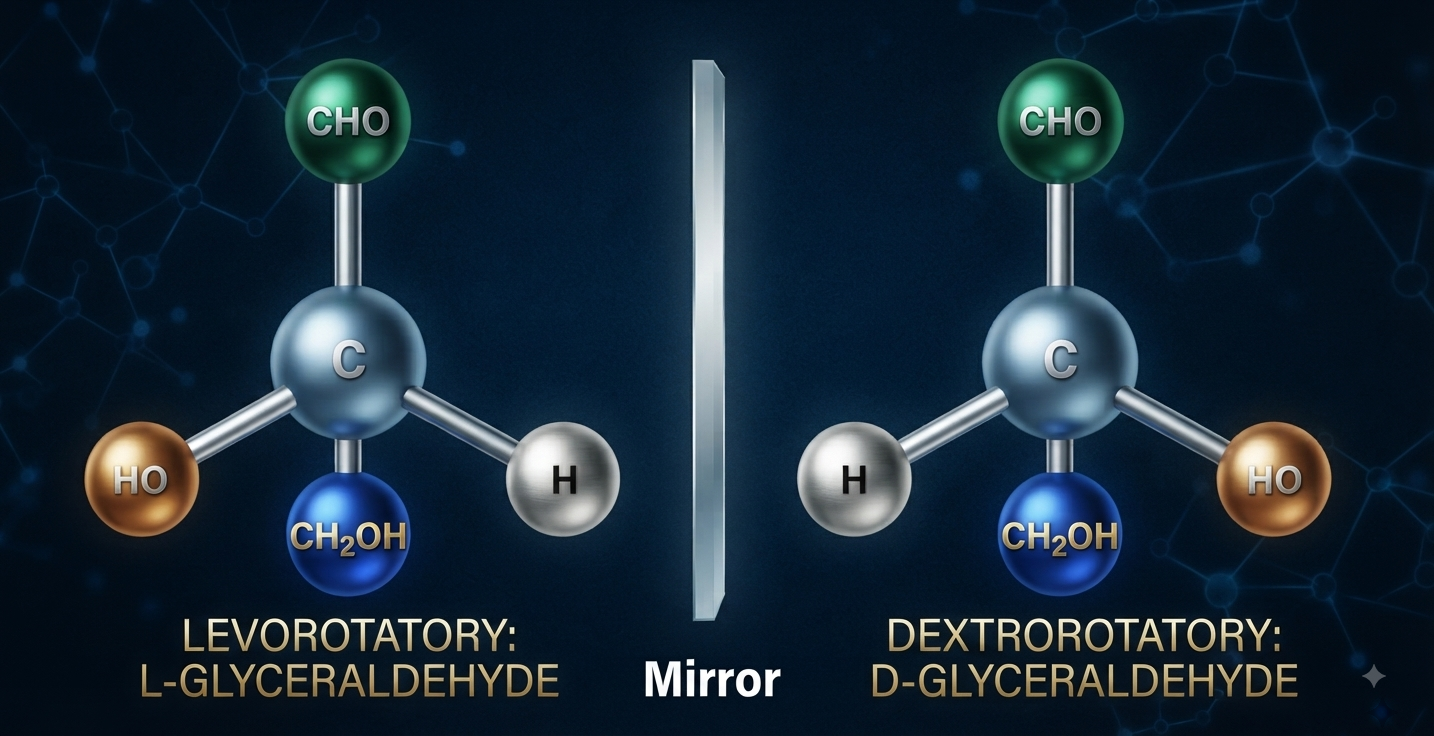
Stereochemistry is one of the most important areas of carbohydrate chemistry. Many carbohydrates contain several chiral carbon atoms, allowing them to exist in multiple stereoisomeric forms.
Biological systems are highly stereospecific. Enzymes and carbohydrate-binding proteins generally recognize specific three-dimensional arrangements of sugar molecules. Therefore, two sugars with identical molecular formulas may have very different biological properties if their stereochemical configurations differ.
8. Chiral Carbon
A chiral carbon is generally a carbon atom attached to four different substituents. The presence of chiral centers allows carbohydrates to exist in different stereoisomeric forms.
For a molecule containing n independent chiral centers, the maximum number of possible stereoisomers is:
9. D and L Configuration
The D and L configuration of carbohydrates is determined by comparing their stereochemical arrangement with glyceraldehyde. In a Fischer projection, the configuration of the chiral carbon farthest from the carbonyl group is used for assigning the D or L designation.
If the hydroxyl group on the penultimate carbon is on the right side, the sugar belongs to the D series. If it is on the left side, it belongs to the L series.
10. Enantiomers, Diastereomers and Epimers
10.1 Enantiomers
Enantiomers are stereoisomers that are non-superimposable mirror images of each other. D-glucose and L-glucose are examples of enantiomeric forms.
10.2 Diastereomers
Diastereomers are stereoisomers that are not mirror images of each other. Many naturally occurring monosaccharides are related to one another as diastereomers.
10.3 Epimers
Epimers are a special type of diastereomer that differ in configuration at only one stereogenic center.
For example, D-glucose and D-galactose are C4 epimers, whereas D-glucose and D-mannose are C2 epimers.
11. Cyclic Structure of Monosaccharides
Although monosaccharides can be represented in an open-chain form, many biologically important sugars predominantly exist in cyclic forms in aqueous solution. Cyclization occurs when the carbonyl group reacts intramolecularly with a hydroxyl group present within the same molecule.
In aldoses, this process produces a hemiacetal, whereas in ketoses it produces a hemiketal. The reaction generates a new stereogenic center known as the anomeric carbon.
12. Pyranose and Furanose Forms
A six-membered cyclic sugar ring is called a pyranose, whereas a five-membered ring is called a furanose.
Glucose commonly exists in the pyranose form, while fructose can form both pyranose and furanose structures. Ribose commonly occurs in the furanose form within nucleic acids.
13. Anomeric Carbon
The anomeric carbon is the carbon atom that was the carbonyl carbon in the open-chain form of the sugar. In aldoses, it is generally C1, while in ketoses such as fructose it is generally C2.
Aldose → Anomeric carbon generally C1
Ketose → Anomeric carbon generally C2
14. Anomers
Anomers are stereoisomers that differ specifically in configuration at the anomeric carbon. They are designated as α and β forms.
For example, α-D-glucose and β-D-glucose are anomers. The distinction between α and β configurations becomes extremely important when discussing glycosidic bonds and polysaccharide structures.
15. Mutarotation
Mutarotation refers to the spontaneous interconversion of α and β forms of a reducing sugar through the open-chain form.
The phenomenon occurs because the ring can temporarily open to form the carbonyl-containing open-chain structure and then close again, producing either the α or β configuration.
16. Glycosidic Bond
A glycosidic bond is a covalent linkage through which monosaccharide residues are connected to one another or to other molecules. It commonly involves the anomeric carbon of one sugar.
The position and stereochemistry of the glycosidic bond are extremely important because they influence the three-dimensional structure and biological function of the resulting carbohydrate.
Important examples:
α(1→4) linkage → common in starch and glycogen
β(1→4) linkage → characteristic of cellulose and chitin
α(1→6) linkage → branch points in glycogen and amylopectin
17. Important Disaccharides
17.1 Maltose
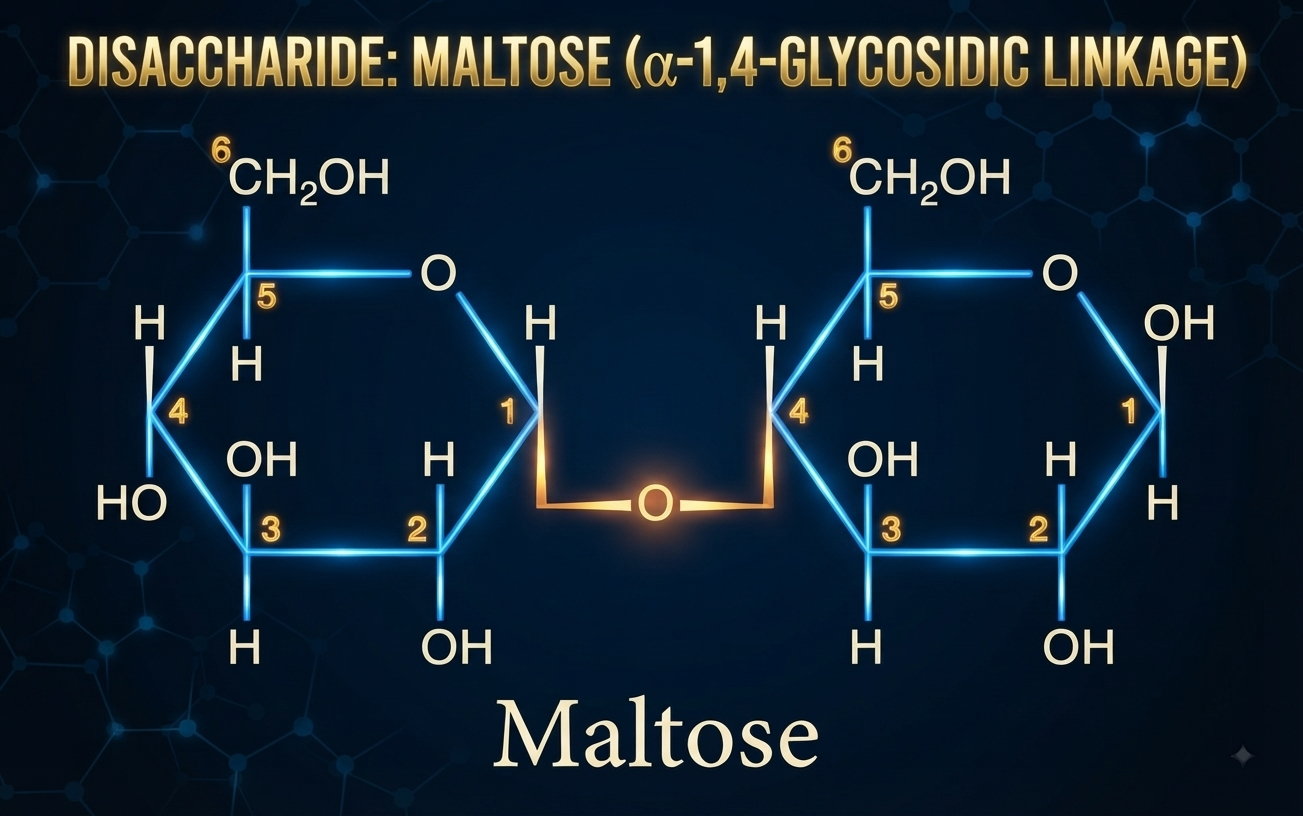
Maltose consists of two glucose residues joined primarily through an α(1→4) glycosidic linkage. Because one anomeric carbon remains free, maltose is a reducing sugar.
17.2 Lactose
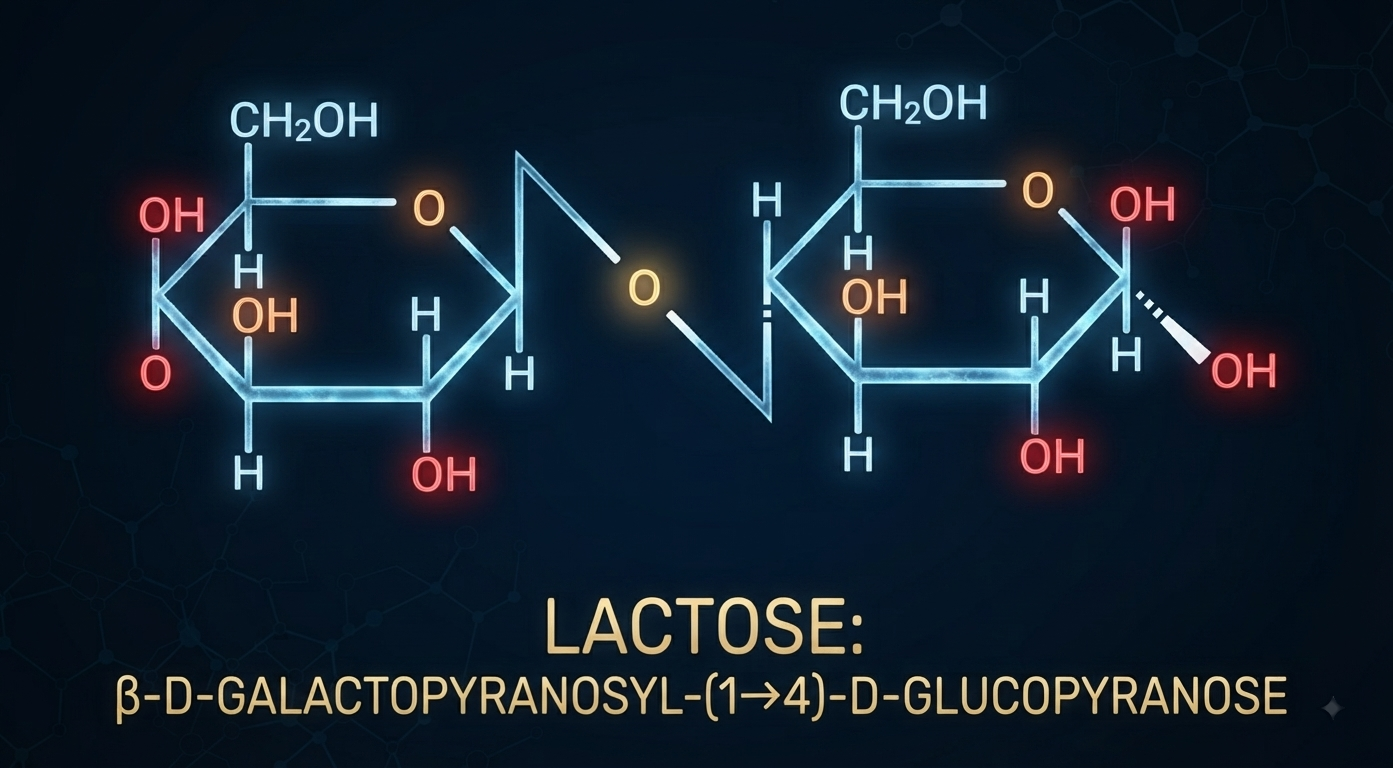
Lactose consists of galactose and glucose joined through a β(1→4) glycosidic linkage. Lactose is a reducing sugar because the anomeric carbon of the glucose residue remains available for ring-chain interconversion.
17.3 Sucrose
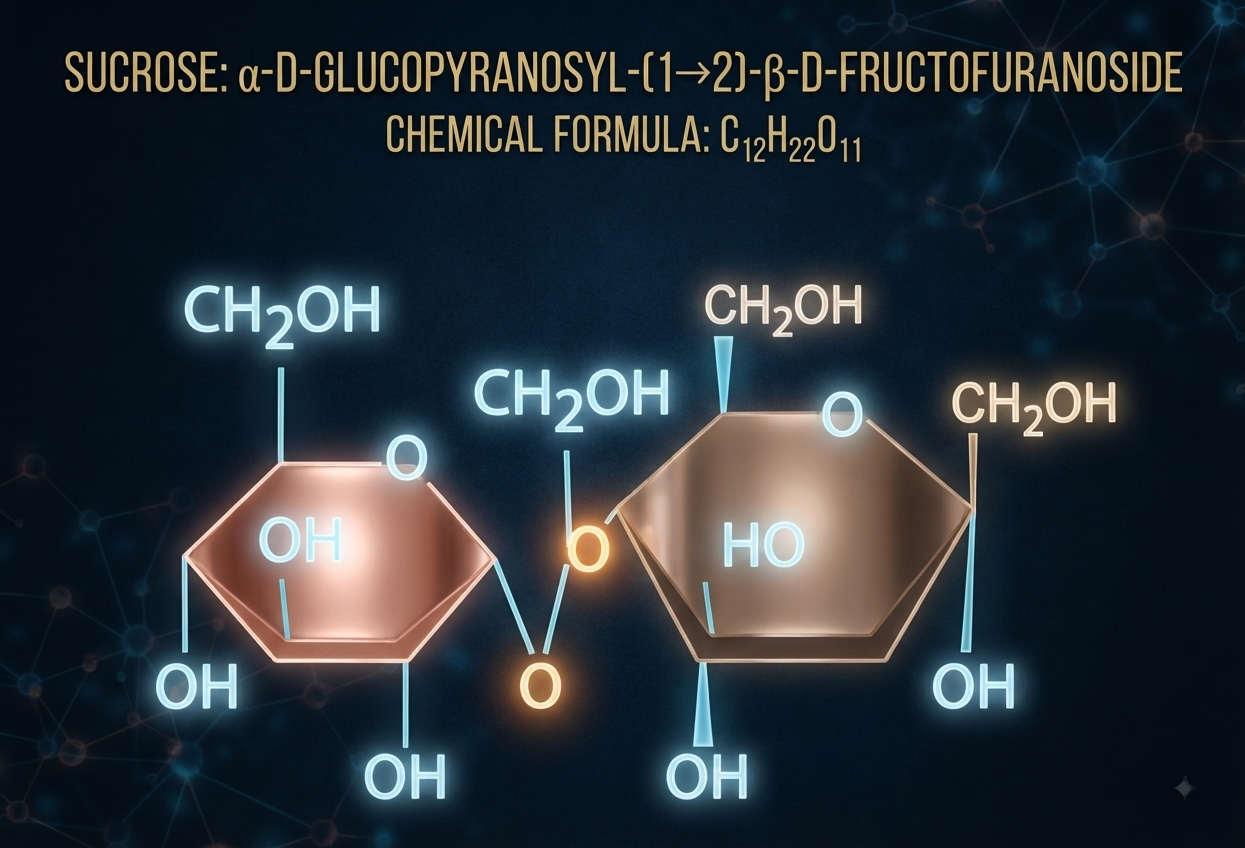
Sucrose consists of glucose and fructose. The glycosidic linkage involves the anomeric carbons of both monosaccharides. Consequently, neither anomeric carbon remains available as a free reducing center.
Sucrose is a non-reducing sugar because both anomeric carbons participate in the glycosidic linkage.
18. Reducing and Non-Reducing Sugars
18.1 Reducing Sugars
A reducing sugar possesses a structural arrangement that allows it to generate a reactive carbonyl form under appropriate conditions. This is generally associated with the presence of a free anomeric center capable of participating in ring-chain interconversion.
18.2 Non-Reducing Sugars
A non-reducing sugar lacks a freely available anomeric center capable of generating the required reactive carbonyl form. Sucrose is the classical example.
19. Polysaccharides
Polysaccharides are long polymers containing many monosaccharide residues. Their properties depend on the identity of their monosaccharides, the type of glycosidic linkages, the degree of branching and the three-dimensional organization of the polymer.
Polysaccharides can function as energy-storage molecules or structural materials. Some are homopolysaccharides containing mainly one type of sugar residue, while others are heteropolysaccharides containing different types of sugar residues.
20. Starch
Starch is the major carbohydrate storage polysaccharide of plants. It contains two principal components: amylose and amylopectin.
20.1 Amylose
Amylose is a relatively linear polymer of glucose residues primarily connected by α(1→4) glycosidic bonds.
20.2 Amylopectin
Amylopectin contains α(1→4) linkages in its main chains and α(1→6) linkages at branch points. The branching provides a compact storage architecture and multiple accessible ends for enzymatic metabolism.
21. Glycogen
Glycogen is the principal storage polysaccharide of animals. It is especially important in the liver and skeletal muscle, where it serves as a readily mobilizable reserve of glucose.
Glycogen contains α(1→4) linkages in its chains and α(1→6) linkages at branch points. It is more highly branched than amylopectin, allowing rapid mobilization of glucose because many non-reducing ends are available for enzymatic action.
22. Cellulose
Cellulose is a major structural polysaccharide of plant cell walls. It consists primarily of glucose residues connected through β(1→4) glycosidic linkages.
The β configuration results in extended chains that can interact strongly with neighboring chains through hydrogen bonding. These interactions contribute to the mechanical strength of plant cell walls.
Starch and cellulose are both primarily glucose polymers, but their different glycosidic linkages result in dramatically different structures and biological functions.
23. Chitin
Chitin is a structural polysaccharide composed mainly of N-acetyl-D-glucosamine residues connected through β(1→4) glycosidic linkages.
It is an important structural component of arthropod exoskeletons and fungal cell walls. The nitrogen-containing sugar residues distinguish chitin chemically from cellulose.
24. Major Functions of Carbohydrates
24.1 Energy Source
Glucose serves as one of the most important substrates for cellular energy metabolism. Through glycolysis and subsequent oxidative pathways, glucose-derived carbon can contribute to ATP production.
24.2 Energy Storage
Plants store carbohydrates mainly as starch, whereas animals store glucose predominantly as glycogen. Polymerization allows cells to store large quantities of glucose while reducing the osmotic consequences associated with storing the same amount as free glucose molecules.
24.3 Structural Function
Cellulose provides mechanical strength to plant cell walls, while chitin provides structural support in arthropod exoskeletons and fungal cell walls.
24.4 Genetic Material
Ribose forms the carbohydrate component of RNA, while deoxyribose forms the carbohydrate component of DNA.
24.5 Cell Recognition
Carbohydrates present on the cell surface participate in cell recognition, cell adhesion, immune recognition and interactions between cells and extracellular molecules.
24.6 Cell Signaling
Carbohydrate-containing structures can participate in molecular recognition and signaling processes through interactions with carbohydrate-binding proteins such as lectins.
25. Carbohydrates as Information Molecules
An advanced concept in carbohydrate biology is that carbohydrates can function as information-rich molecules. Their biological information is determined by the identity of the sugar residues, stereochemistry, linkage positions, branching pattern and chemical modifications.
This structural diversity allows carbohydrate chains to act as recognition signals on cell surfaces and within glycoconjugates. Such interactions are important in development, immunity, inflammation, cell adhesion and host-pathogen interactions.
26. Glycoconjugates
Carbohydrates can be covalently attached to proteins and lipids, producing biologically important glycoconjugates.
Important examples include glycoproteins, glycolipids and proteoglycan-related structures. These molecules participate in cell recognition, adhesion, receptor function, molecular trafficking and extracellular matrix organization.
27. Carbohydrates in Nucleic Acids
Ribose and deoxyribose are among the most biologically important carbohydrate derivatives. Ribose is present in RNA, whereas 2-deoxyribose is present in DNA.
The major structural difference occurs at the 2′ carbon. Ribose contains a hydroxyl group at this position, whereas deoxyribose contains hydrogen instead.
28. Comparison of Starch, Glycogen and Cellulose
| Feature | Starch | Glycogen | Cellulose |
|---|---|---|---|
| Major Role | Energy storage | Energy storage | Structural support |
| Major Source | Plants | Animals | Plants |
| Main Monomer | Glucose | Glucose | Glucose |
| Main Linkage | α(1→4) | α(1→4) | β(1→4) |
| Branching | Amylopectin is branched | Highly branched | Essentially linear |
29. Structure Determines Function
One of the most important principles in biomolecular science is that molecular structure determines biological function. Carbohydrates provide an excellent example of this principle.
Glucose molecules can be connected through different glycosidic linkages and arranged into different branching patterns. These apparently small chemical changes can produce polymers with completely different physical properties and biological roles.
Key Concept:
Same basic monosaccharide + different stereochemistry + different glycosidic linkage + different branching pattern = different three-dimensional structure and biological function.


