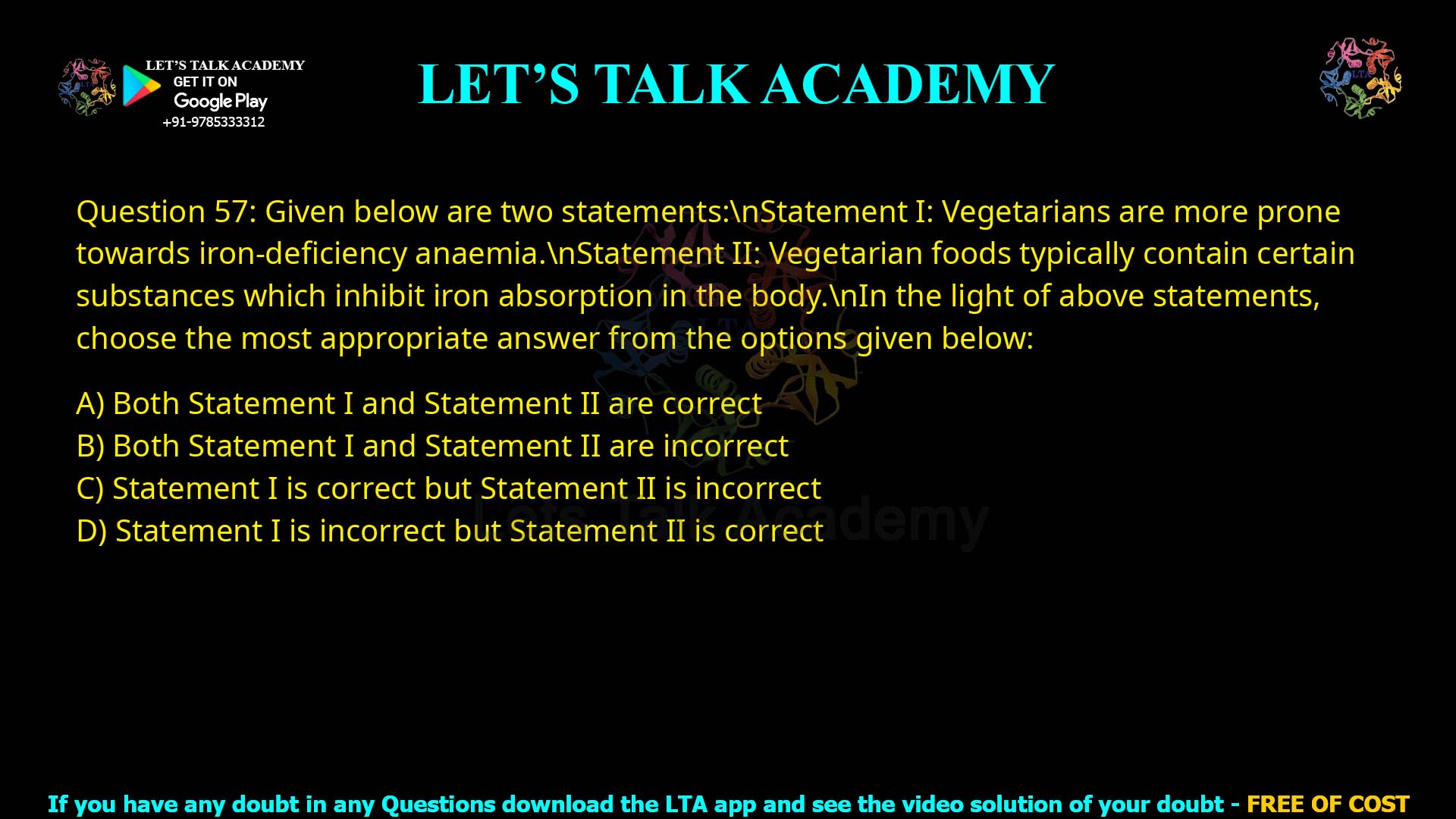
Q.57 Given below are two statements:
Statement I: Vegetarians are more prone towards iron-deficiency anaemia.
Statement II: Vegetarian foods typically contain certain substances which inhibit iron absorption in the body.
In the light of above statements, choose the most appropriate answer from the options given below:
1. Both Statement I and Statement II are correct
2. Both Statement I and Statement II are incorrect
3. Statement I is correct but Statement II is incorrect
4. Statement I is incorrect but Statement II is correct
Vegetarians face a higher risk of iron-deficiency anemia due to reliance on less absorbable non-heme iron from plants. Vegetarian foods often contain inhibitors like phytates and polyphenols that reduce iron uptake, making both statements correct.
Correct Answer
Option 1: Both Statement I and Statement II are correct
Vegetarians are indeed more prone to iron-deficiency anemia because plant-based non-heme iron has 5-12% bioavailability versus 15-35% for heme iron from meat. Inhibitors like phytates (in grains/legumes), polyphenols (in tea/coffee), and oxalates (in spinach) bind iron in the gut, reducing absorption further.
Statement I Explanation
True: Studies show vegetarians, especially women, have higher rates of low ferritin (<15 µg/L) and anemia prevalence (up to 2-3x non-vegetarians). Lower iron stores stem from inadequate intake and poor absorption, not just total dietary iron which can match omnivores.
Statement II Explanation
True: Phytates chelate iron in cereals/legumes; tannins/polyphenols in beverages/berries inhibit by 50-70%; calcium/oxalates compete during meals. Vitamin C counters this by boosting non-heme absorption 2-3x, but inhibitors dominate in typical vegetarian diets.
Incorrect Options Breakdown
-
Option 2 incorrect: Both statements align with evidence; denying them ignores epidemiological data.
-
Option 3 incorrect: Statement II precisely explains Statement I’s mechanism.
-
Option 4 incorrect: While balanced vegetarian diets can mitigate risk via variety/fortification, the general proneness holds due to inhibitors and non-heme iron.


