Selection in which two extreme phenotypes leave more offspring than the intermediate phenotype is called (1) directional selection. (2) disruptive selection. (3) stabilizing selection. (4) neutral selection. Correct answer: (2) […]
Selection in which two extreme phenotypes leave more offspring than the intermediate phenotype is called (1) directional selection. (2) disruptive selection. (3) stabilizing selection. (4) neutral selection. Correct answer: (2) […]
If natural selection favors an average phenotype by selecting against extreme variation, under such condition (1) Both alleles will coexist in population (2) Only dominant alleles will exist (3) Only […]
A scientist is using the Hardy-Weinberg equation to assess if a population is in equilibrium or is evolving. She recorded the following characteristics for this population: A. The size of […]
In a population individuals having heterozygous phenotype are more favored then homozygous dominant which are more favored then homozygous recessive genotypes, under such condition (1) Recessive alleles would be lost […]
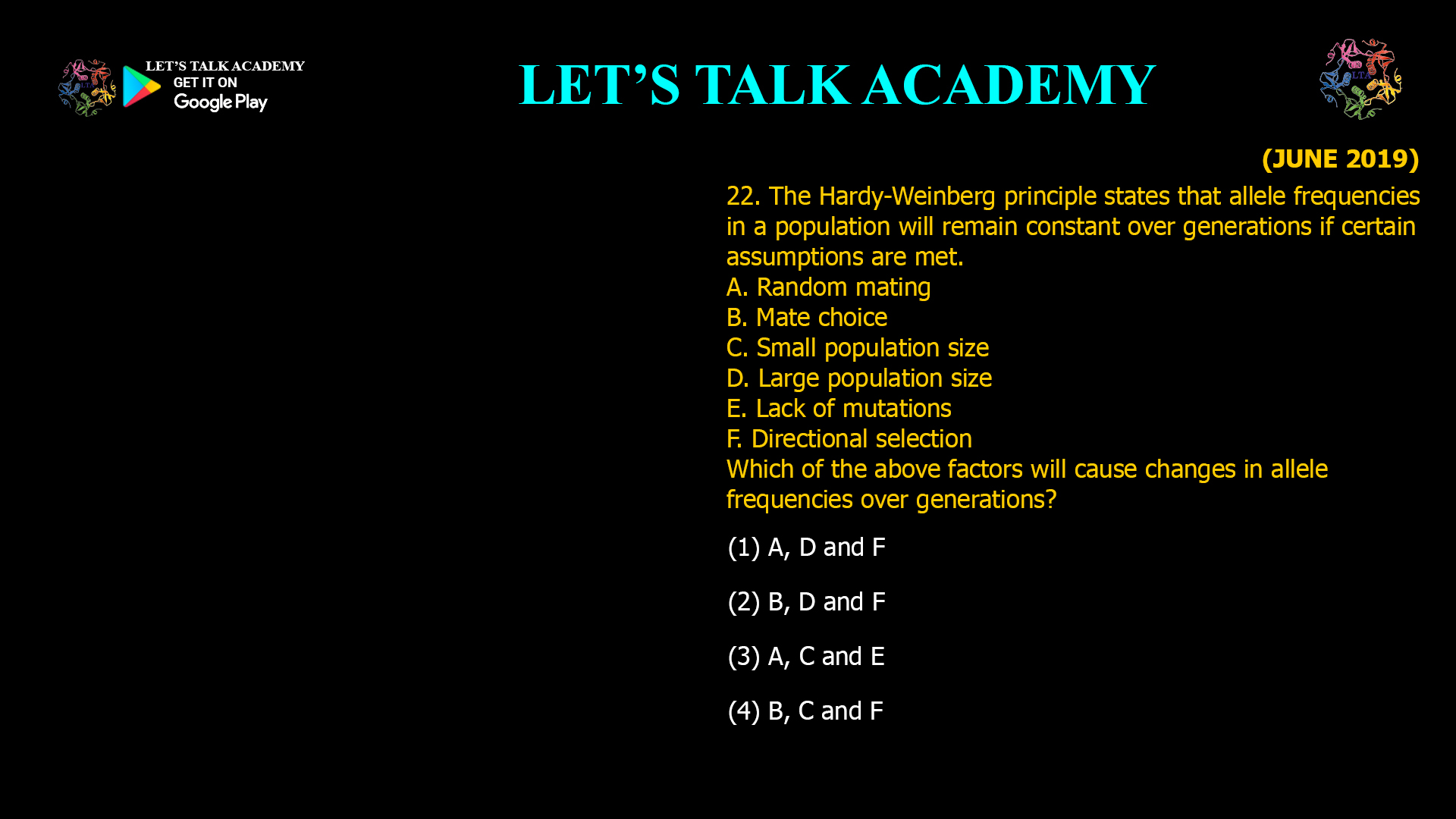
The Hardy-Weinberg principle states that allele frequencies in a population will remain constant over generations if certain assumptions are met. A. Random mating B. Mate choice C. Small population size […]
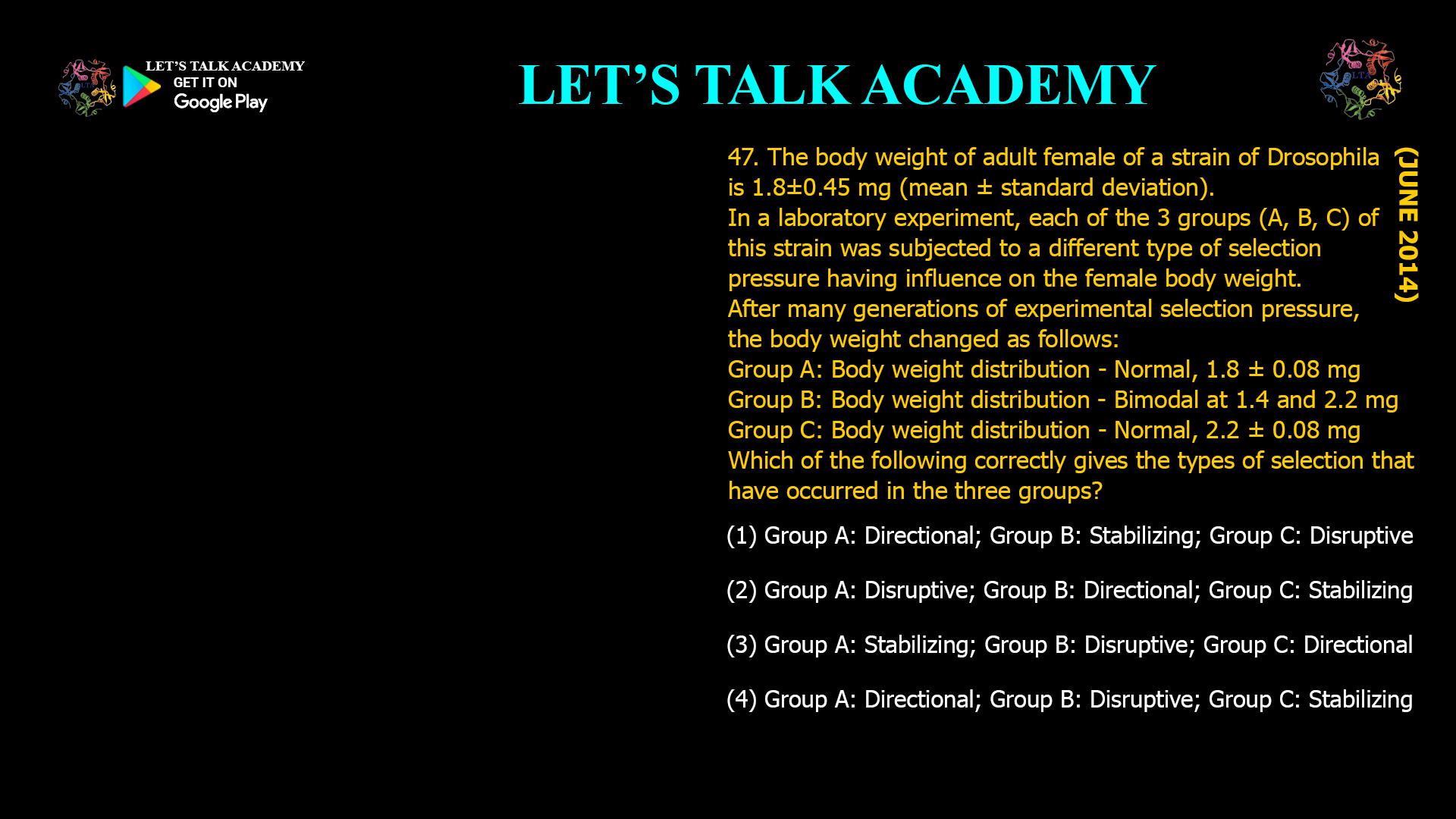
The body weight of adult female of a strain ofDrosophila is 1.8±0.45 mg (mean ± standard deviation).In a laboratory experiment, each of the 3 groups (A, B, C) of this strain […]
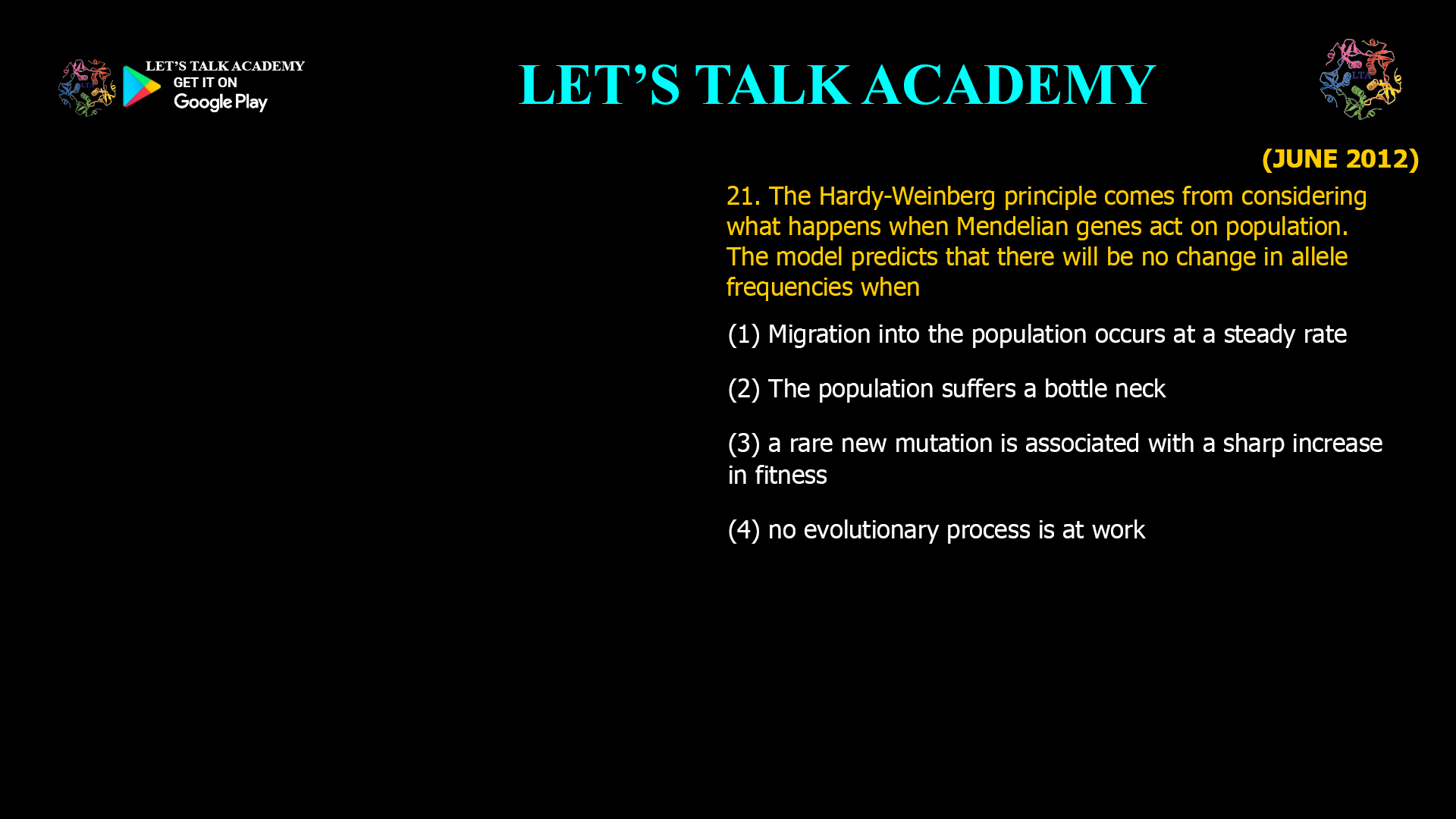
The Hardy-Weinberg principle comes from considering what happens when Mendelian genes act on population. The model predicts that there will be no change in allele frequencies when (1) Migration into […]
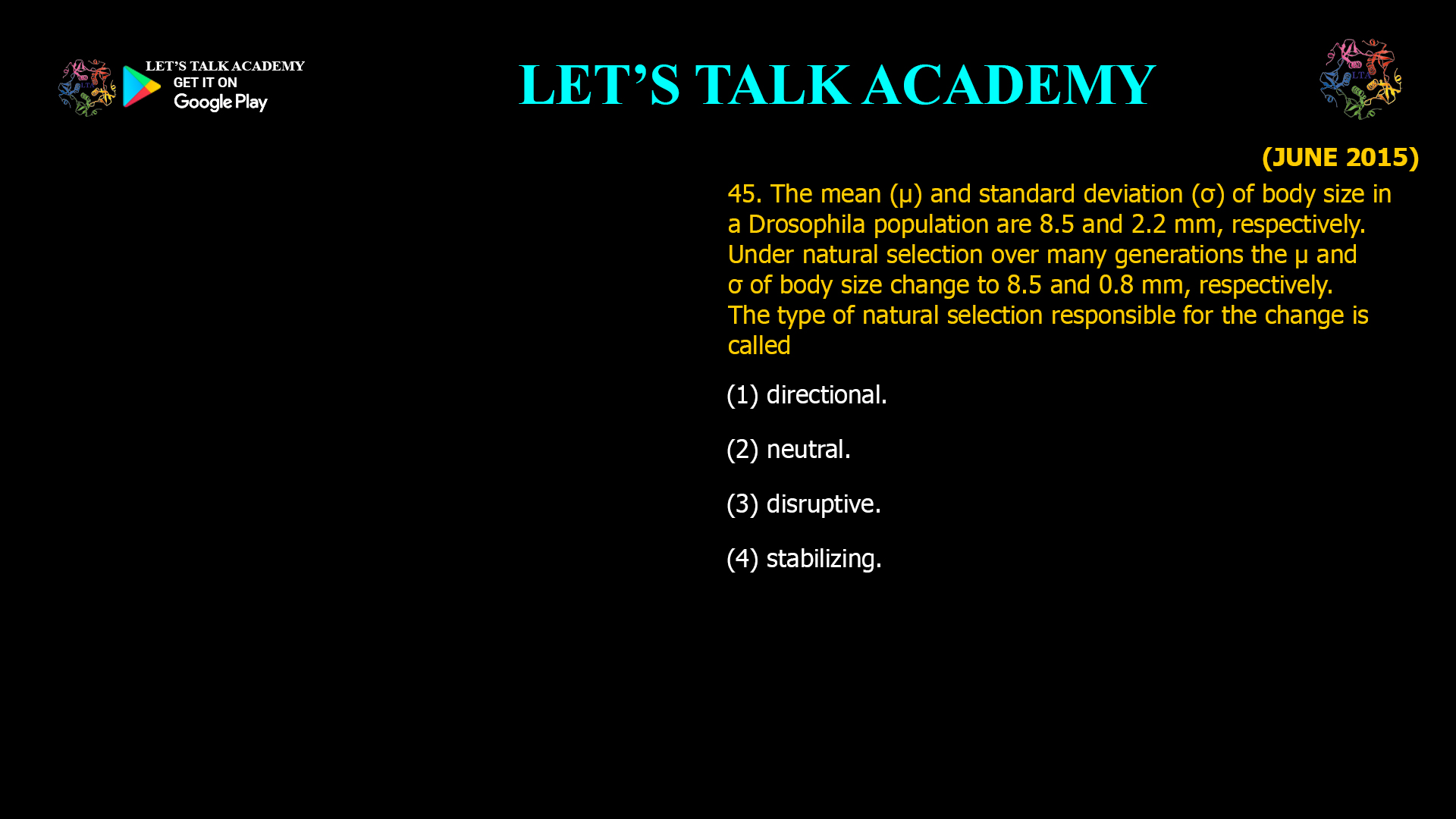
The mean (µ) and standard deviation (σ) of body size in a Drosophila population are 8.5 and 2.2 mm, respectively. Under natural selection over many generations the µ and σ […]
Which of the following assumption support the Hardy-Weinberg Equilibrium? (1) Presence of Natural Selection (2) Random mating. (3) Genetic Drift. (4) Assortative mating Which Assumption Supports Hardy-Weinberg Equilibrium? Understanding […]
Under which condition of natural selection no allele would be lost when (1) Any one homozygote is favored (2) Both homozygote are favored (3) Heterozygote are favored (4) Heterozygote is […]


