The following statements have been proposed for a cancer cell. A. Binding of p53 with MDM2, a ubiquitin E3 ligase; is a precondition for cancer progression. B. Phosphorylation of a […]
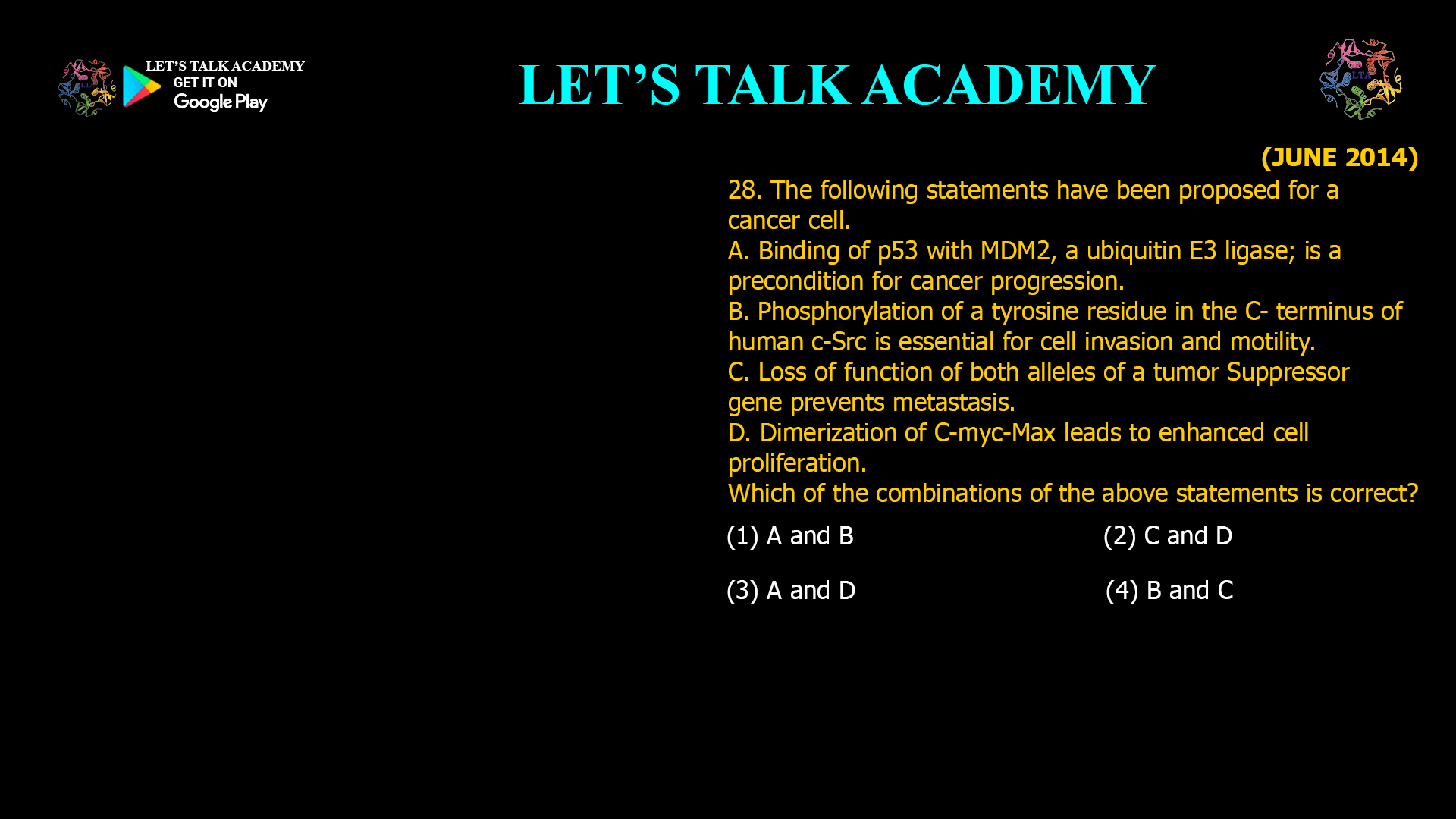
The following statements have been proposed for a cancer cell. A. Binding of p53 with MDM2, a ubiquitin E3 ligase; is a precondition for cancer progression. B. Phosphorylation of a […]

In an experiment it was observed that a protein was upregulated in cancer tissues (compared to control tissues) that showed correlation with disease progression. Following are a few possibilities, which […]

26. A student treated cancer cells with an anticancer drug and perform western blot analysis. Which one of the following blots is the best representation under the control (C) and […]

25. A western blot analysis after treating cancer cells with a prospective anti-cancer drug is shown below: The following assumptions were made: A. The drug may have arrested the growth […]
Oncogenes and tumor suppressor genes are termed as cancer-critical genes. Increasingly powerful tools are now available for systematically searching the DNA or mRNAs of cancer cells for either significant mutations […]

Two classes of genes – proto-oncogene and tumor suppressor gene usually contribute to the development of cancer. Following are some of the statements regarding both the genes. A. Proto-oncogenes result […]
Following statements have been proposed for cancer cells and cancer stem cells: A. Cancer cells mostly have mutations whereas cancer stem cells do not. B. Cancer cells divide to form […]

Cancer is often believed to arise from stem cells rather than fully differentiated cells. Following are certain views related to the above statement. Which one of the following is NOT […]

Conversion of proto-oncogene to oncogene may involve the following processes: A. mutation in coding sequence B. gene amplification C. chromosome rearrangement D. mutation in non-coding sequence Which one is appropriate? […]

When adenoma is converted to metastatic adenocarcinoma, which of the following combination of proteins is almost certainly to be degraded? (1) Type IV collagen and laminin. (2) Fibronectin and β2 […]


