28. In the following example, 3 independently assorting genes are known to govern coat color in mice. The genotype of few of the coat colors is given below: Agouti: A-B-C- […]

28. In the following example, 3 independently assorting genes are known to govern coat color in mice. The genotype of few of the coat colors is given below: Agouti: A-B-C- […]
27. Genes A, B and C. control three phenotypes which assort independently; A plant with the genotype Aa Bb Cc is selfed. What is the probability for progeny which show […]
26. What is the probability of getting a sum of 9 from simultaneously throwing two dice? (1) 1/6 (2) 1/8 (3) 1/9 (4) 1/12 Step‑by‑step solution Total possible outcomes Each […]

25. Two strains of mice which are genetically identical except for a Single genetic locus or region are said to be: (1) Syngenic (2) Allogenic (3) Congenic (4) […]

24. Of the following meiotic events (A) formation of synaptonemal complex (B) crossing over (C) arrangements of chromosomes at the equatorial plate at Metaphase I (D) separation of chromatids at […]
![23. Mutation is essential for genetic variation. Which one of the following events can lead to variation amongst the gametes produced by males of Drosophila melanogaster? [Crossing over does not occur in D. melanogaster males] (1) Segregation (2) Imprinting (3) Recombination (4) Independent Assortment.](https://www.letstalkacademy.com/wp-content/uploads/2025/11/23-2.png)
23. Mutation is essential for genetic variation. Which one of the following events can lead to variation amongst the gametes produced by males of Drosophila melanogaster? [Crossing over does not […]

22. Two siblings who inherit 50% of the genome from the mother and 50% from the father show lot of phenotypic differences. Which one of the following events during gametogenesis […]
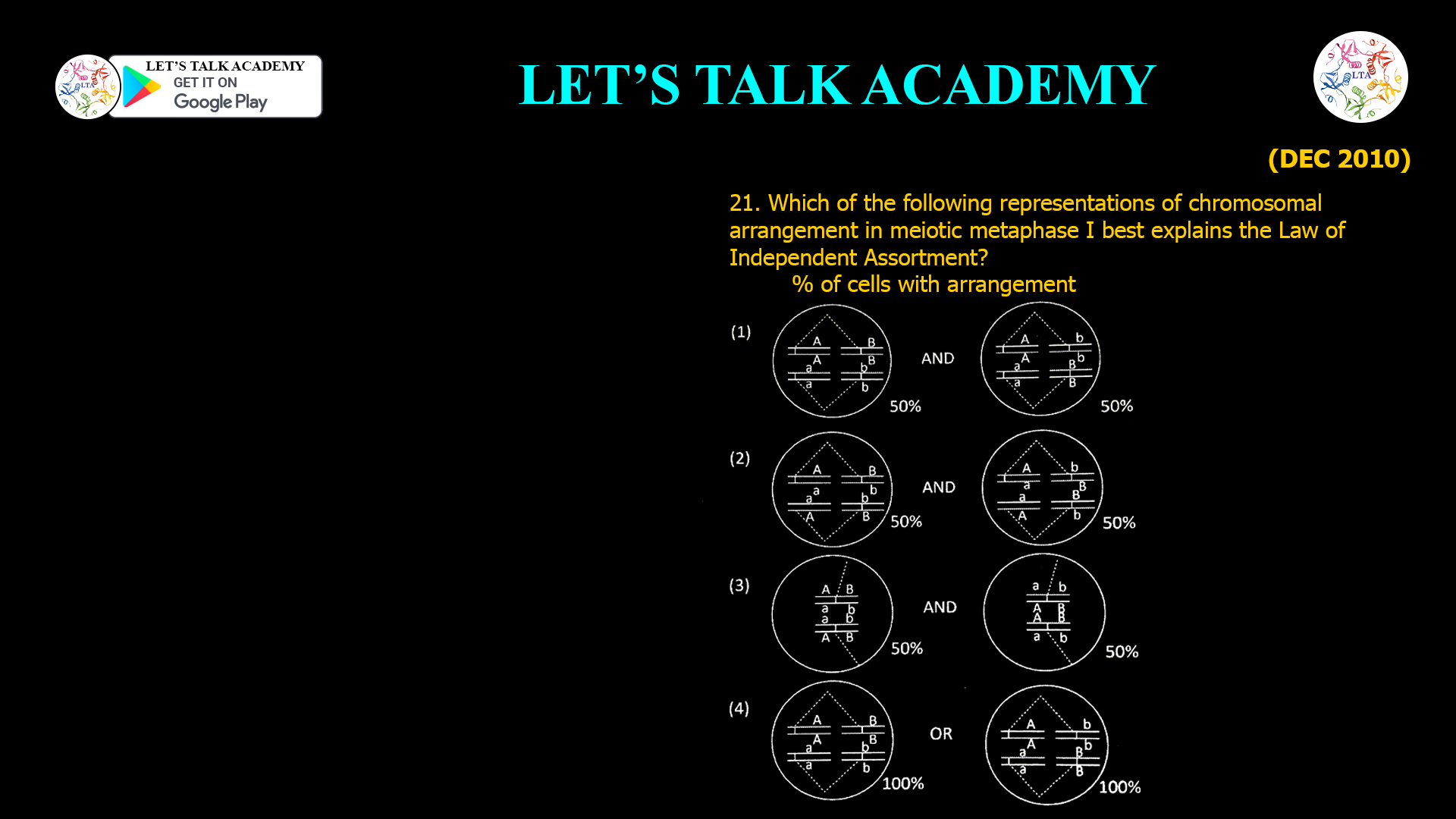
21. Which of the following representations of chromosomal arrangement in meiotic metaphase I best explains the Law of Independent Assortment? Concept: independent assortment and metaphase I Consider a dihybrid AaBbAaBb where A/a […]
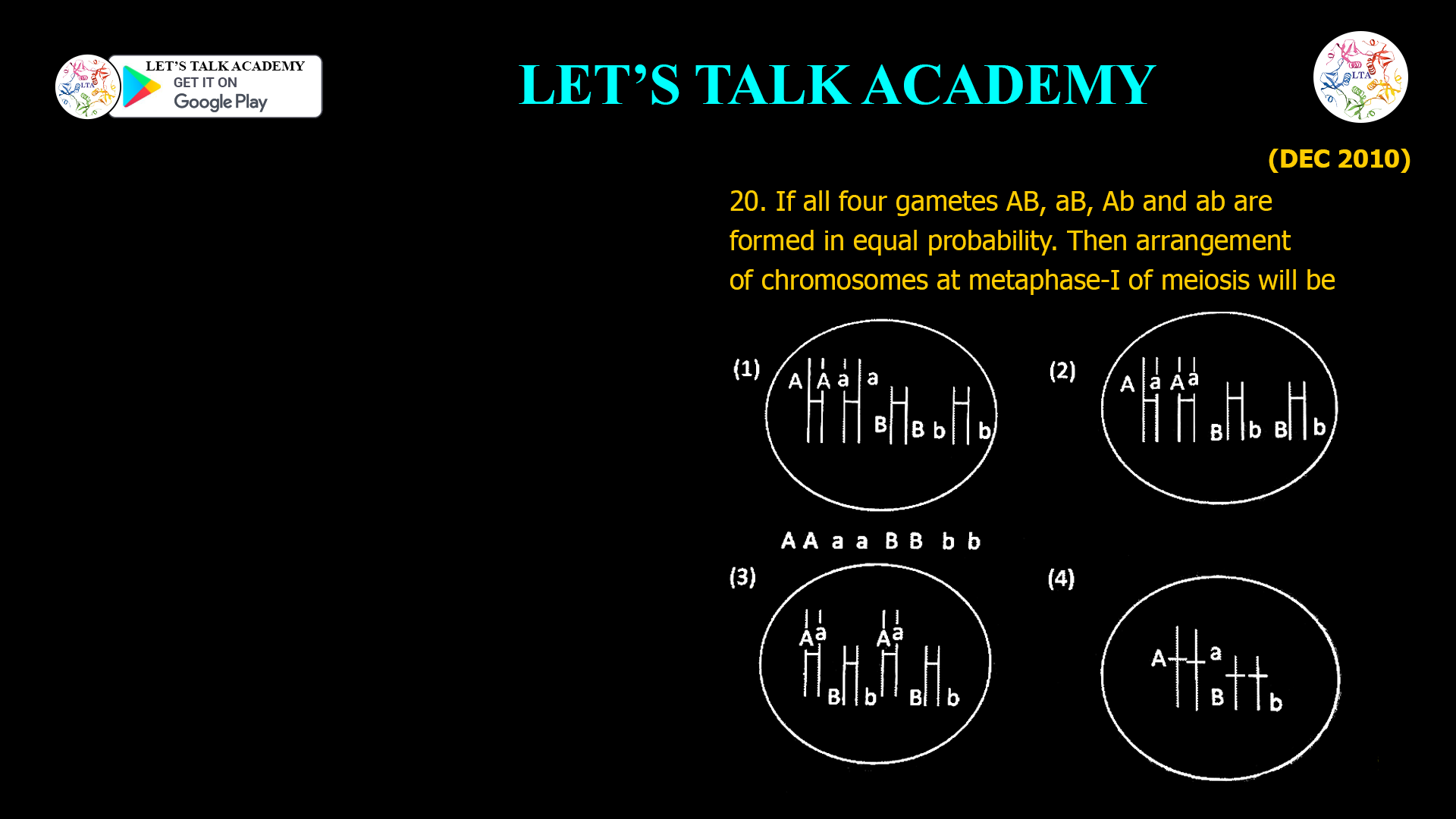
20. If all four gametes AB, aB, Ab and ab are formed in equal probability. Then arrangement of chromosomes at metaphase-I of meiosis will be Concept Genotype: AaBb. Two homologous chromosomes […]
19. In a heterozygous individual for a given gene, if a crossing over has occurred between the gene locus and the centromere of the chromosome, the segregation of the two […]


