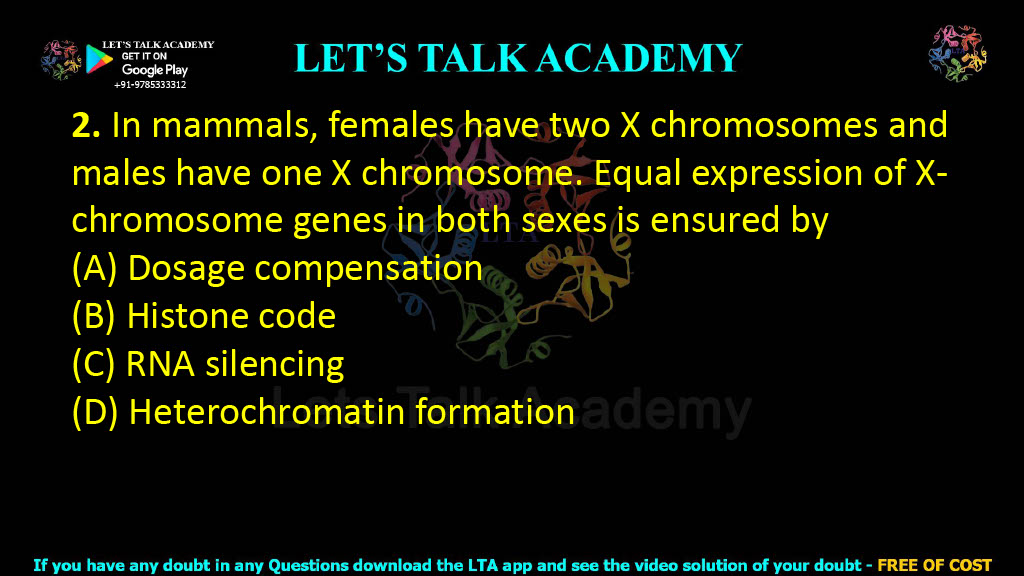
2. In mammals, females have two X chromosomes and males have one X chromosome. Equal expression of X-chromosome genes in both sexes is ensured by
(A) Dosage compensation
(B) Histone code
(C) RNA silencing
(D) Heterochromatin formation
Dosage Compensation in Mammals: Complete Explanation of X-Chromosome Inactivation
Introduction
One of the most fascinating mechanisms in genetics is how mammals maintain equal expression of X-linked genes despite males possessing only one X chromosome (XY) and females possessing two X chromosomes (XX). If both X chromosomes in females remained completely active, females would produce approximately twice the amount of X-linked gene products compared to males. Such an imbalance would disrupt normal cellular function and development. To overcome this challenge, mammals have evolved a remarkable regulatory mechanism known as dosage compensation, which equalizes the expression of X-linked genes between the two sexes.
Correct Answer
Correct Option: (A) Dosage Compensation
Detailed Explanation
Dosage compensation is the biological mechanism that ensures males and females express approximately the same amount of X-linked gene products despite possessing different numbers of X chromosomes. In mammals, females inherit two X chromosomes, whereas males inherit one X chromosome and one Y chromosome. Without dosage compensation, females would produce nearly twice as much protein from X-linked genes, leading to severe developmental abnormalities and imbalance in gene expression.
To prevent this imbalance, one of the two X chromosomes in every female somatic cell becomes transcriptionally inactive during early embryonic development. This inactive chromosome condenses into a structure known as the Barr body. The process is largely controlled by the XIST (X-Inactive Specific Transcript) gene, which produces a long non-coding RNA that coats the chromosome destined for inactivation. Once coated, the chromosome undergoes extensive chromatin remodeling, DNA methylation, histone modifications, and heterochromatin formation, resulting in stable transcriptional silencing. Because only one X chromosome remains active in both males and females, the expression level of X-linked genes becomes nearly identical in both sexes. This entire phenomenon is collectively known as dosage compensation.
Mechanism of Dosage Compensation in Mammals
Random X-Chromosome Inactivation
During early embryonic development in female mammals, one of the two X chromosomes is randomly selected for inactivation in each somatic cell. The choice is generally random, meaning either the maternal or paternal X chromosome may become inactive. Once inactivation occurs, all daughter cells inherit the same inactive X chromosome, producing a mosaic pattern of gene expression throughout the body.
Role of the XIST Gene
The XIST gene plays the central role in X-chromosome inactivation. It produces a long non-coding RNA that remains associated with the chromosome from which it is transcribed. This RNA coats the chromosome, recruits chromatin-modifying proteins, promotes histone modifications, DNA methylation, and ultimately converts the chromosome into transcriptionally inactive heterochromatin. This stable silencing persists throughout the lifetime of the cell.
Formation of the Barr Body
Following XIST-mediated silencing, the inactive X chromosome becomes highly condensed and appears as a darkly stained structure inside the nucleus called the Barr body. Although most genes on the inactive chromosome are silenced, a small percentage escape inactivation and continue to be expressed. Nevertheless, the overall level of X-linked gene expression remains balanced between males and females because of dosage compensation.
Why Option (A) is Correct
Dosage compensation is the specific biological mechanism responsible for equalizing X-linked gene expression between males and females. It achieves this by transcriptionally inactivating one X chromosome in female mammals, ensuring that both sexes effectively express genes from only one functional X chromosome. Therefore, dosage compensation directly answers the question and is the correct option.
Why the Other Options are Incorrect
Option (B): Histone Code
The histone code refers to combinations of histone modifications such as acetylation, methylation, phosphorylation, and ubiquitination that regulate chromatin structure and gene expression. Although histone modifications participate in maintaining the inactive X chromosome, the histone code itself is not the overall mechanism responsible for balancing X-linked gene expression between males and females. Therefore, this option is incomplete and incorrect.
Option (C): RNA Silencing
RNA silencing is a gene regulatory mechanism involving small RNAs such as siRNA and miRNA that suppress gene expression after transcription. Although the long non-coding XIST RNA participates in X-chromosome inactivation, dosage compensation is much broader than RNA silencing alone because it also involves DNA methylation, chromatin remodeling, and heterochromatin formation. Hence, RNA silencing by itself does not fully explain equal expression of X-linked genes.
Option (D): Heterochromatin Formation
Heterochromatin formation occurs during X-chromosome inactivation and results in the condensed Barr body. However, heterochromatin formation is only one molecular event within the larger process of dosage compensation. The question asks for the complete biological mechanism responsible for equal gene expression, making dosage compensation the more comprehensive and correct answer.
Comparison of All Options
| Option | Meaning | Correct for This Question? | Reason |
|---|---|---|---|
| Dosage Compensation | Balances X-linked gene expression between males and females | Yes | Directly ensures equal expression of X-linked genes |
| Histone Code | Histone modifications regulating gene expression | No | Only contributes to chromatin regulation |
| RNA Silencing | Gene suppression through regulatory RNAs | No | Only one component involved in X inactivation |
| Heterochromatin Formation | Formation of condensed inactive chromatin | No | Occurs during dosage compensation but is not the complete mechanism |
Biological Significance of Dosage Compensation
Dosage compensation is essential for normal mammalian development because it prevents harmful overexpression of X-linked genes in females. Without this mechanism, females would synthesize approximately twice the amount of proteins encoded by X-linked genes compared to males, resulting in severe developmental defects and disruption of cellular homeostasis. By maintaining equal levels of gene expression in both sexes, dosage compensation ensures proper embryonic development, normal physiological function, and balanced genetic regulation. This mechanism also demonstrates how epigenetic modifications can regulate entire chromosomes rather than individual genes.
Final Answer
Correct Option: (A) Dosage Compensation
Dosage compensation ensures equal expression of X-linked genes in male and female mammals by transcriptionally inactivating one X chromosome in female somatic cells through XIST-mediated X-chromosome inactivation, resulting in the formation of the Barr body and balanced gene expression between the two sexes.


