Q.8 Match List-I with List-II List-I List-II (Coenzyme) (Precursor) (A) Coenzyme A (I) Vitamin B1 (B) FAD, FMN (II) Pantothenic Acid (C) NAD+, NADP+ (III) Vitamin B2 (D) Thiamine pyrophosphate […]

Q.8 Match List-I with List-II List-I List-II (Coenzyme) (Precursor) (A) Coenzyme A (I) Vitamin B1 (B) FAD, FMN (II) Pantothenic Acid (C) NAD+, NADP+ (III) Vitamin B2 (D) Thiamine pyrophosphate […]

Q.7 Match List-I with List-II List-I List-II Enzyme Type of reaction catalyzed (A) Alcohol Dehydrogenase (I) Bond formation coupled to ATP hydrolysis (B) Trypsin (II) Transfer of electrons (C) Hexokinase […]

Q.6 Read the following structure which is a combination of: Clinical Syndrome : Karyotype : Chromosome Formula : Estimated Frequency at Birth (A) Down Syndrome : 47, +13 : 2n+1 […]

Q.5 People with hemophilia are unable to produce a factor needed for blood clotting; the cuts, bruises, and wounds of hemophiliacs continue to bleed and, if not stopped by transfusion […]

Q.4 Match List-I with List-II List-I (Organism) List-II (Number of Chromosome) (A) Fruit fly (Drosophila melanogaster) (I) Diploid number 40 (B) Nematode (Caenorhabditis elegans) (II) Haploid number 06 (C) Human […]
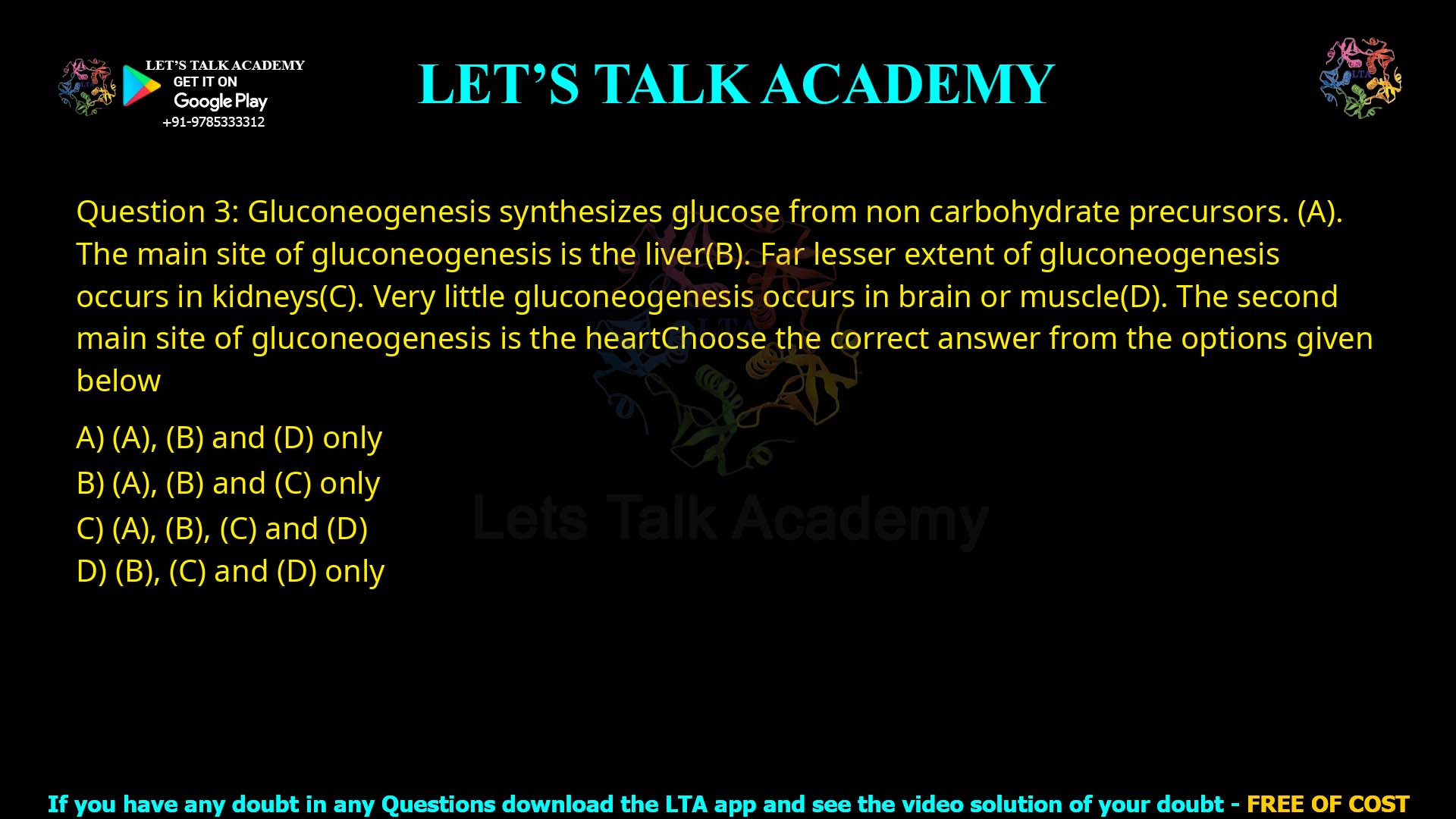
Q.3 Gluconeogenesis synthesizes glucose from non-carbohydrate precursors. (A) The main site of gluconeogenesis is the liver. (B) Far lesser extent of gluconeogenesis occurs in kidneys. (C) Very little gluconeogenesis occurs […]
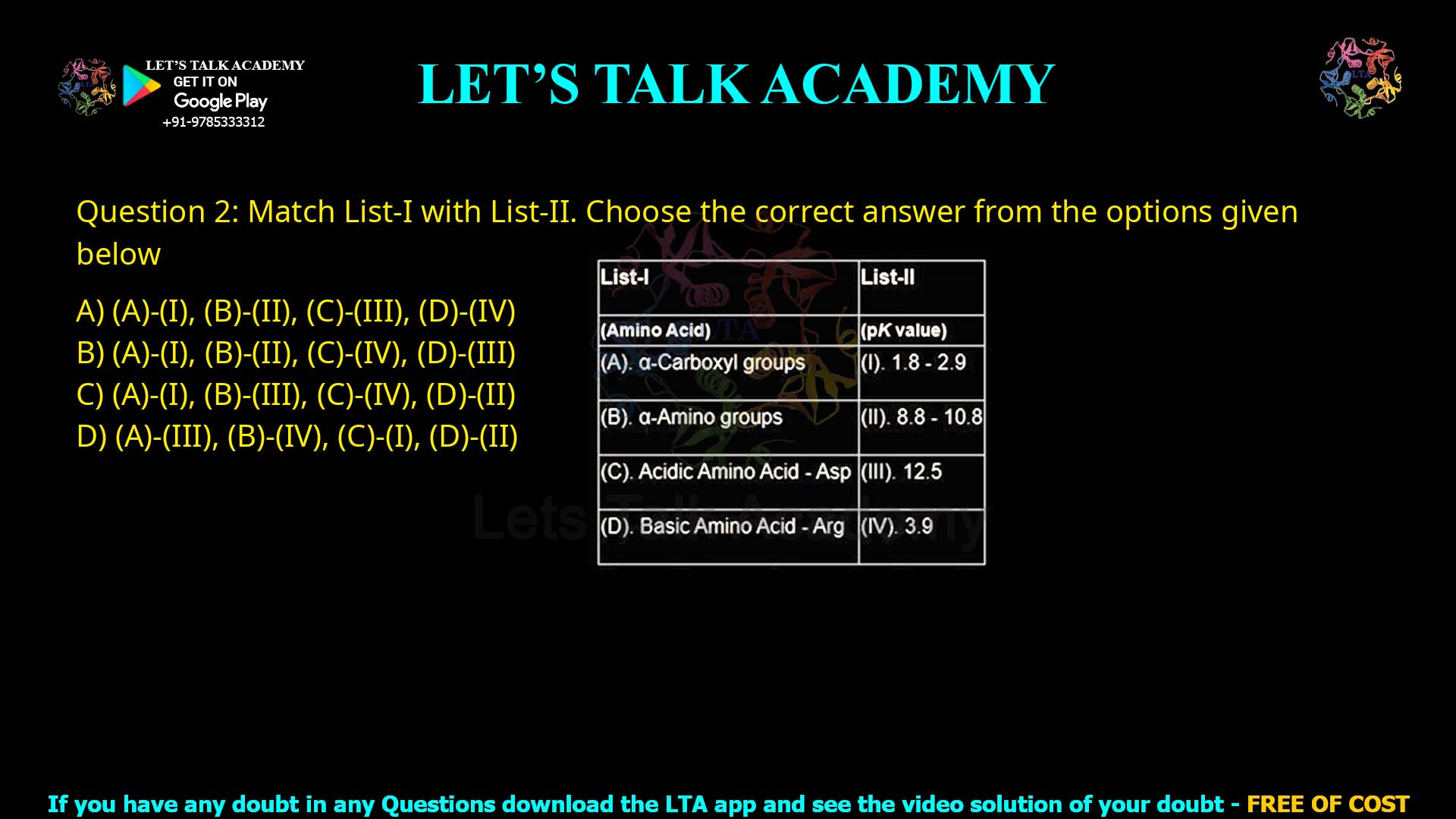
Q.2 Match List-I with List-II List-I List-II (Amino Acid) (pK value) (A) α-Carboxyl groups (I) 1.8 – 2.9 (B) α-Amino groups (II) 8.8 – 10.8 (C) Acidic Amino Acid – […]

Q.1 Sickle cell anemia is a disease characterised by the patient’s erythrocyte, having a characteristic sickle or crescent shape. Select the correct statement hut the disease – l. Deletion of […]

Question 64: Enzymes that are involved in the transfer of electrons (hydride ions or H atoms) are called: (A) Transferases (B) Hydrolases (C) Oxidoreductases (D) Ligases The correct answer is […]

Question 63: Immune cells that ingest large particles and cells by phagocytosis are called: (A) Macrophages (B) B lymphocytes (C) Cytotoxic T cells (D) Helper T cells The correct answer […]


