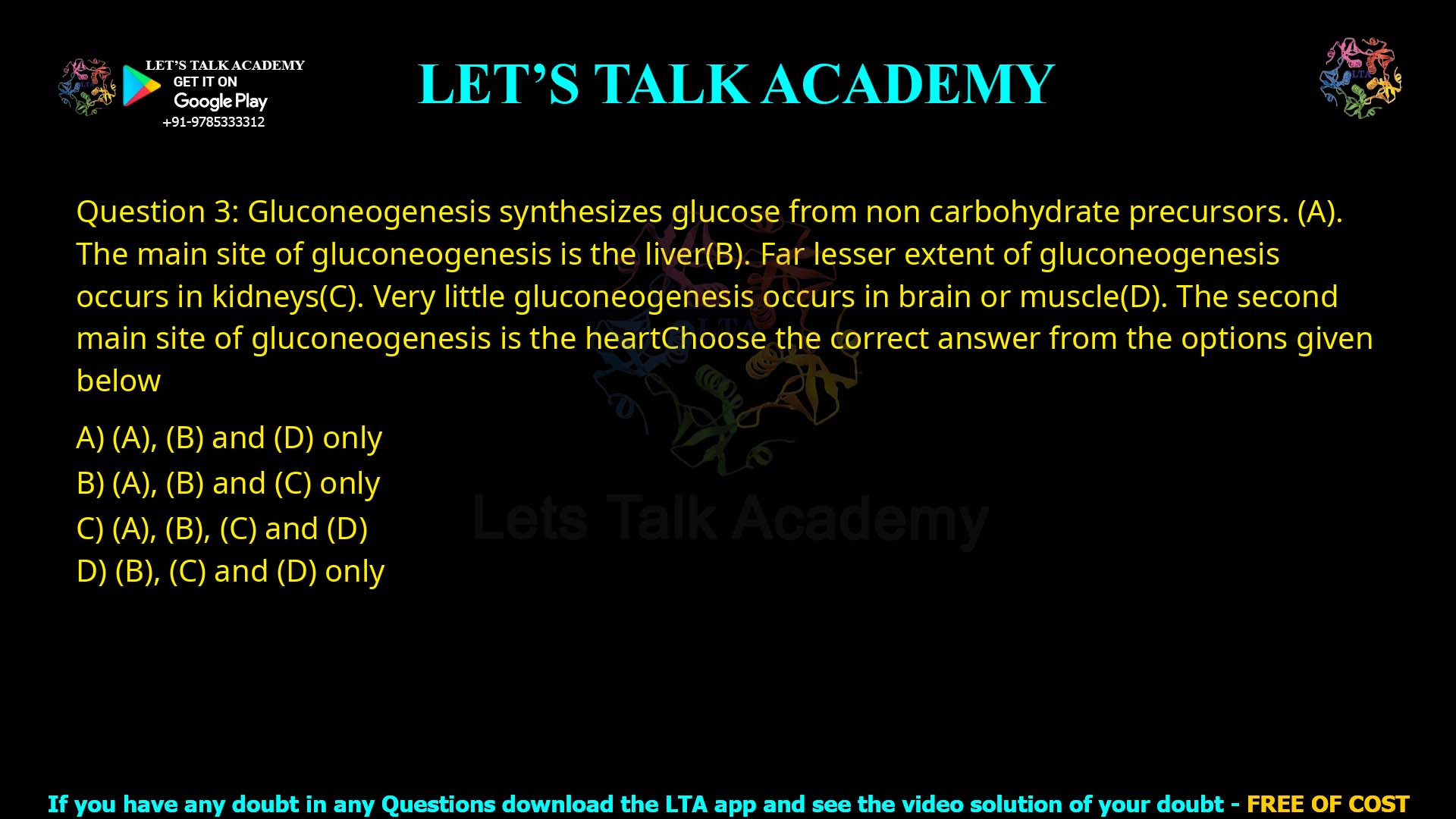
The correct answer is (A), (B) and (C) only.
Gluconeogenesis is a metabolic pathway that synthesizes glucose from non-carbohydrate precursors like lactate, glycerol, and amino acids, primarily during fasting to maintain blood glucose levels.
Option Analysis
(A) Main Site: Liver
The liver is the primary site of gluconeogenesis, contributing about 90% of glucose production from precursors, thanks to its key enzymes like glucose-6-phosphatase and phosphoenolpyruvate carboxykinase.
(B) Kidneys: Lesser Extent
Kidneys perform gluconeogenesis to a far lesser degree (around 10%), mainly during prolonged fasting, using substrates like glutamine and lactate in the renal cortex.
(C) Brain and Muscle: Very Little
Very little gluconeogenesis occurs in the brain or muscle, as these tissues lack essential enzymes and rely on blood glucose; muscle uses glycolysis products sent to the liver instead.
(D) Heart: Not Main Site
The heart is not a main site for gluconeogenesis; it primarily uses fatty acids and lacks significant gluconeogenic capacity, making this option incorrect.
Gluconeogenesis synthesizes glucose from non-carbohydrate precursors during fasting, with the gluconeogenesis main site liver kidneys brain muscle heart varying by tissue capacity.
The liver dominates as the gluconeogenesis main site, handling 90% of synthesis via enzymes reversing glycolysis. Kidneys contribute far less, ramping up in starvation.
Brain and muscle show very little activity, prioritizing glucose use over production. Heart plays no major role.
Key Sites Table
| Tissue |
Role in Gluconeogenesis |
Contribution Level |
| Liver |
Primary site, key enzymes present |
~90% |
| Kidneys |
Secondary, increases in fasting |
~10% |
| Brain |
Negligible, no key enzymes |
Very little |
| Muscle |
Negligible, lacks enzymes |
Very little |
| Heart |
Minimal to none |
Not significant |