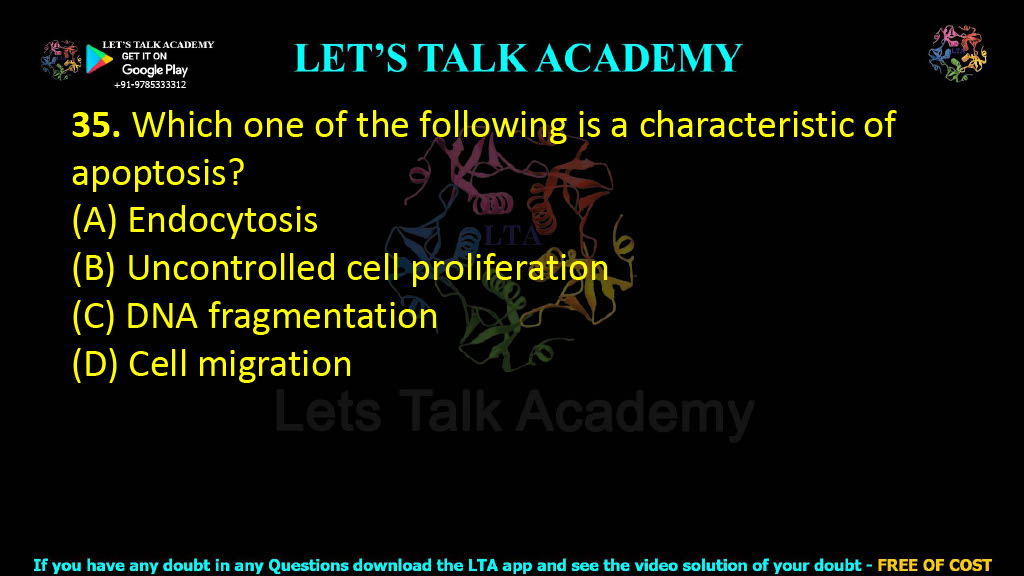
35. Which one of the following is a characteristic of apoptosis?
(A) Endocytosis
(B) Uncontrolled cell proliferation
(C) DNA fragmentation
(D) Cell migration
Characteristic Features of Apoptosis
Introduction
Apoptosis, commonly known as programmed cell death, is a genetically regulated process through which damaged, infected, or unnecessary cells are removed from the body without causing inflammation. It is essential for embryonic development, tissue remodeling, immune system regulation, maintenance of tissue homeostasis, and prevention of cancer. Unlike necrosis, which is an uncontrolled and inflammatory form of cell death, apoptosis follows a precise sequence of molecular and cellular events controlled by signaling pathways and proteolytic enzymes called caspases.
During apoptosis, cells undergo characteristic structural and biochemical changes including cell shrinkage, chromatin condensation, DNA fragmentation, membrane blebbing, formation of apoptotic bodies, and exposure of phosphatidylserine on the outer surface of the plasma membrane. These changes allow apoptotic cells to be recognized and removed efficiently by phagocytic cells without damaging neighboring tissues.
Correct Answer
Correct Option: (C) DNA Fragmentation
Detailed Explanation
One of the defining biochemical hallmarks of apoptosis is DNA fragmentation. During programmed cell death, executioner caspases, particularly caspase-3, activate Caspase-Activated DNase (CAD) by degrading its inhibitor (ICAD). Activated CAD cleaves chromosomal DNA at the linker regions between nucleosomes, producing fragments approximately 180–200 base pairs in length or multiples thereof. This regular cleavage pattern generates the characteristic DNA ladder observed during agarose gel electrophoresis.
DNA fragmentation occurs together with chromatin condensation, nuclear fragmentation, membrane blebbing, and apoptotic body formation. These coordinated changes ensure that cellular contents remain enclosed within membrane-bound vesicles, allowing macrophages to remove dying cells without triggering inflammation.
Explanation of Each Option
Option (A): Endocytosis
This statement is incorrect. Endocytosis is a normal cellular process by which cells internalize extracellular molecules, nutrients, receptors, and membrane components through vesicle formation. Although endocytosis occurs in healthy cells and contributes to membrane trafficking, it is not a defining characteristic of apoptosis.
Option (B): Uncontrolled Cell Proliferation
This statement is incorrect. Uncontrolled cell proliferation is the opposite of apoptosis. It is a hallmark of cancer, where cells evade programmed cell death and continue dividing uncontrollably. Apoptosis functions to eliminate abnormal cells and thereby suppress tumor development.
Option (C): DNA Fragmentation
This statement is correct. Internucleosomal DNA fragmentation is one of the most characteristic biochemical events of apoptosis. Activated nucleases cleave genomic DNA into regular fragments, producing the classical DNA ladder pattern that distinguishes apoptosis from necrosis.
Option (D): Cell Migration
This statement is incorrect. Cell migration is a physiological process involved in embryonic development, wound healing, immune surveillance, and tissue regeneration. Although apoptotic cells may eventually be engulfed by migrating phagocytes, migration itself is not a defining feature of apoptosis.
Why Option (C) is Correct
DNA fragmentation is considered one of the most reliable molecular markers of apoptosis. The cleavage of genomic DNA into nucleosomal fragments is highly regulated, caspase-dependent, and distinguishes apoptosis from most other forms of cell death. Because of its diagnostic importance, DNA ladder formation is routinely used in laboratory studies to identify apoptotic cells.
Why the Other Options are Incorrect
Why Option (A) is Incorrect
Endocytosis is a membrane transport mechanism rather than a programmed cell death event.
Why Option (B) is Incorrect
Uncontrolled proliferation characterizes cancer cells, whereas apoptosis eliminates damaged or abnormal cells.
Why Option (D) is Incorrect
Cell migration is associated with development, immunity, and wound repair but is not a characteristic feature of apoptosis.
Comparison of All Options
| Option | Process | Characteristic of Apoptosis? | Reason |
|---|---|---|---|
| A | Endocytosis | No | Normal membrane transport mechanism. |
| B | Uncontrolled cell proliferation | No | Characteristic of cancer, not apoptosis. |
| C | DNA fragmentation | Yes | Major biochemical hallmark of programmed cell death. |
| D | Cell migration | No | Occurs during development and wound healing. |
Major Hallmarks of Apoptosis
| Feature | Biological Significance |
|---|---|
| Cell shrinkage | Reduction in cell volume |
| Chromatin condensation | Condensation of nuclear material |
| DNA fragmentation | Internucleosomal cleavage producing DNA ladder |
| Membrane blebbing | Formation of membrane protrusions |
| Apoptotic bodies | Packaging of cellular contents for phagocytosis |
| Phosphatidylserine exposure | Recognition signal for macrophages |
| Caspase activation | Execution of programmed cell death |
Comparison Between Apoptosis and Necrosis
| Feature | Apoptosis | Necrosis |
|---|---|---|
| Nature | Programmed and regulated | Uncontrolled and accidental |
| Cell Size | Shrinkage | Swelling |
| DNA Degradation | Regular internucleosomal fragmentation | Random degradation |
| Membrane Integrity | Maintained until late stages | Early membrane rupture |
| Inflammation | Absent | Present |
| Main Enzymes | Caspases | Lysosomal enzymes |
Biological Significance of Apoptosis
Apoptosis is indispensable for maintaining the health of multicellular organisms. It removes damaged DNA-containing cells, eliminates virus-infected cells, shapes organs during embryonic development, controls immune cell populations, and prevents tumor formation. Defective apoptosis contributes to cancer and autoimmune diseases, whereas excessive apoptosis is associated with neurodegenerative disorders such as Alzheimer’s disease, Parkinson’s disease, and Huntington’s disease.
Final Answer
Correct Option: (C) DNA Fragmentation
DNA fragmentation is one of the most characteristic and widely recognized features of apoptosis. During programmed cell death, activated nucleases cleave chromosomal DNA into regular nucleosomal fragments, producing the characteristic DNA ladder pattern. This event, together with caspase activation, chromatin condensation, membrane blebbing, and apoptotic body formation, distinguishes apoptosis from other forms of cell death.


