
1. Introduction
Antibodies are highly specific molecules of the adaptive immune system that recognize particular antigenic epitopes. Their natural ability to distinguish between different molecular targets has made antibodies valuable tools in research, diagnosis and medicine.
Antibody engineering is the application of molecular biology, protein engineering, genetic engineering and immunological techniques to modify or construct antibodies with desired properties.
Natural antibodies may not always possess the characteristics required for a particular application. Antibody engineering can therefore be used to modify properties such as:
- Antigen specificity
- Binding affinity
- Stability
- Solubility
- Tissue penetration
- Half-life
- Fc-mediated effector functions
- Immunogenicity
- Multispecificity
The development of recombinant DNA technology and display technologies has transformed antibody engineering from a mainly experimental field into a powerful platform for designing therapeutic and diagnostic molecules.
2. Definition of Antibody Engineering
Antibody engineering is the deliberate modification or design of antibody genes, structures or domains to produce antibodies with desired antigen-binding, structural, pharmacological or biological properties.
The basic concept is:
Antibody gene → Genetic modification → Recombinant expression → Engineered antibody → Desired function
Antibody engineering can involve modification of:
- Variable regions
- Constant regions
- Antibody fragments
- Linker sequences
- Fc regions
- Glycosylation patterns
- Multiple antigen-binding sites
3. Objectives of Antibody Engineering
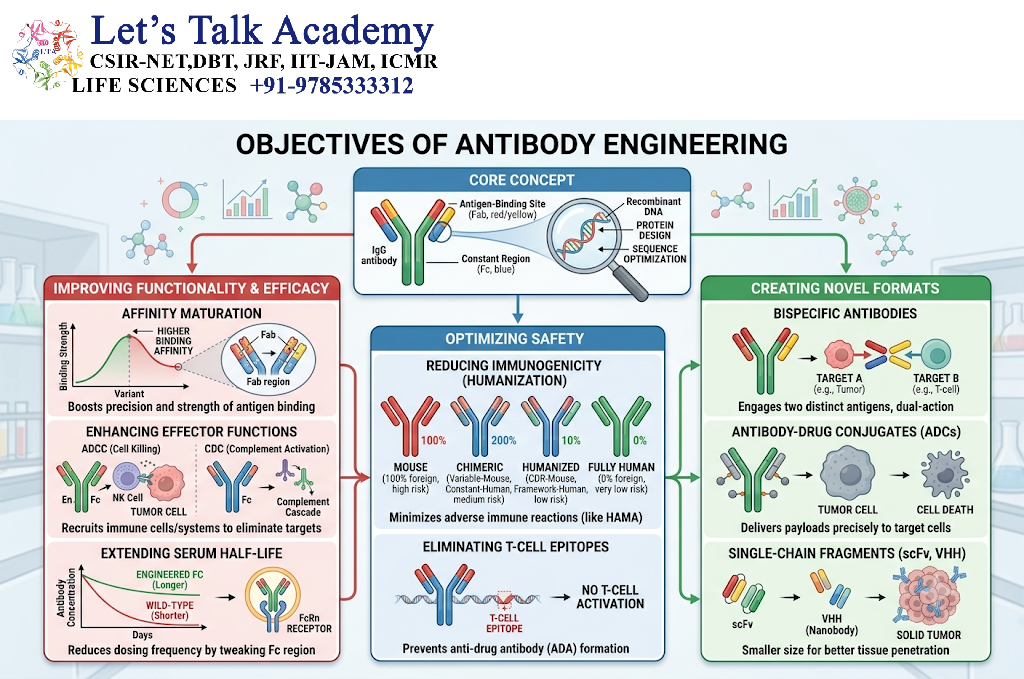
The major objectives include:
- Increasing antigen-binding affinity
- Improving specificity
- Reducing unwanted immune reactions
- Increasing antibody stability
- Improving solubility
- Modifying serum half-life
- Controlling Fc-mediated effector functions
- Creating antibodies against difficult targets
- Producing antibodies in suitable expression systems
- Generating multispecific antibodies
- Developing antibody-based therapeutics
4. Basic Structure Relevant to Antibody Engineering
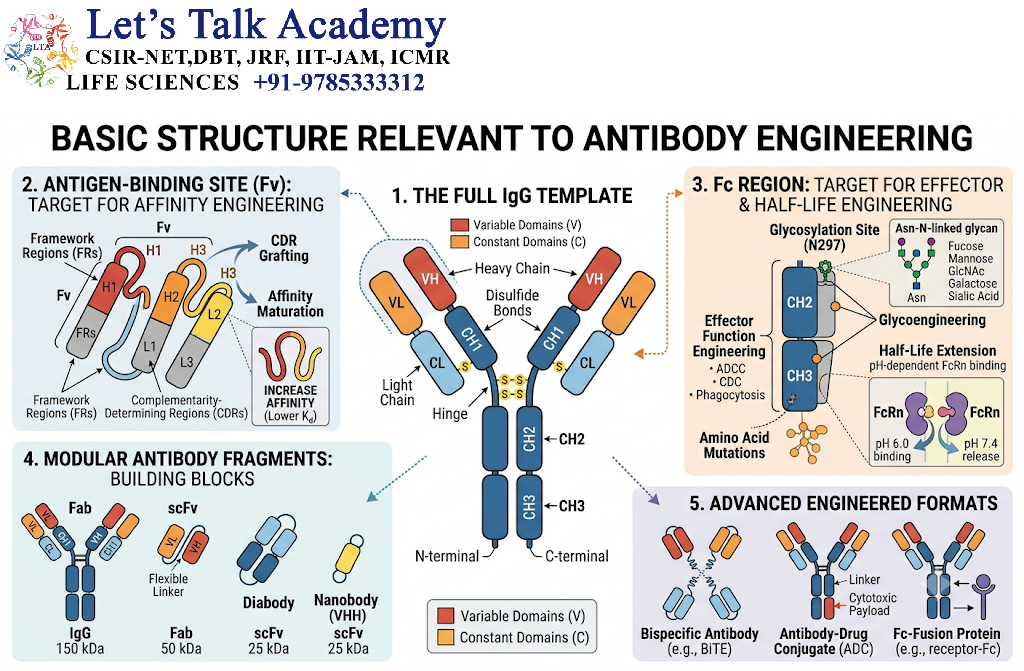
A conventional antibody contains:
- Two heavy chains
- Two light chains
- Variable regions
- Constant regions
- Fab regions
- Hinge region
- Fc region
The variable regions are mainly responsible for antigen recognition, whereas the Fc region contributes to many effector and pharmacokinetic properties.
Therefore, antibody engineering can target different structural regions depending on the desired outcome.
| Region | Engineering Objective |
|---|---|
| Variable region | Modify specificity and affinity |
| CDRs | Modify antigen recognition |
| Framework regions | Improve stability and folding |
| Hinge | Modify flexibility and architecture |
| Fc region | Modify effector function and half-life |
| Glycosylation sites | Modify Fc interactions and pharmacological properties |
5. Antibody Engineering Workflow
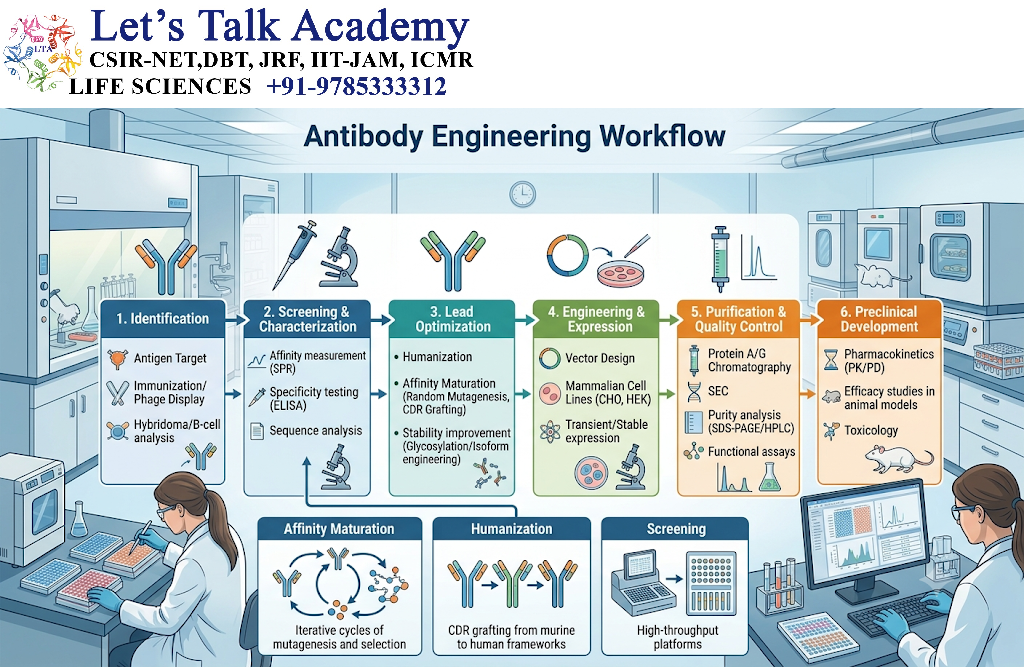
A general antibody-engineering workflow can be represented as:
Target identification
↓
Antibody selection
↓
Antibody gene isolation
↓
Sequence analysis
↓
Genetic modification
↓
Expression
↓
Purification
↓
Binding and functional characterization
↓
Optimization
↓
Final engineered antibody
The exact workflow varies according to the type of antibody being developed.
6. Sources of Antibody Sequences
Antibody sequences can be obtained from several sources.
Important approaches include:
- Immunized animals
- Hybridoma technology
- Human B cells
- Existing antibody libraries
- Synthetic libraries
- Naïve libraries
- Display libraries
- Computationally designed sequences
The choice of source depends on the desired specificity and downstream application.
7. Recombinant Antibody Technology
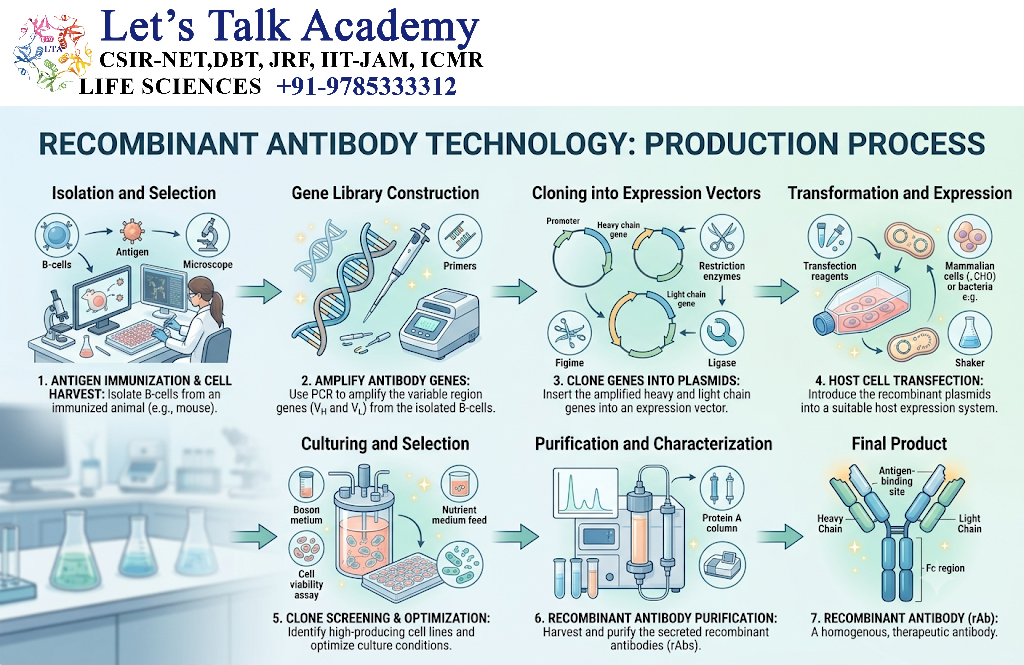
Recombinant antibody technology involves cloning antibody genes into suitable expression vectors.
General Process
Antibody-producing cell
↓
Isolation of antibody genes
↓
PCR amplification
↓
Gene cloning
↓
Expression vector
↓
Host-cell expression
↓
Recombinant antibody production
This approach allows precise manipulation of antibody sequences.
8. Antibody Gene Cloning
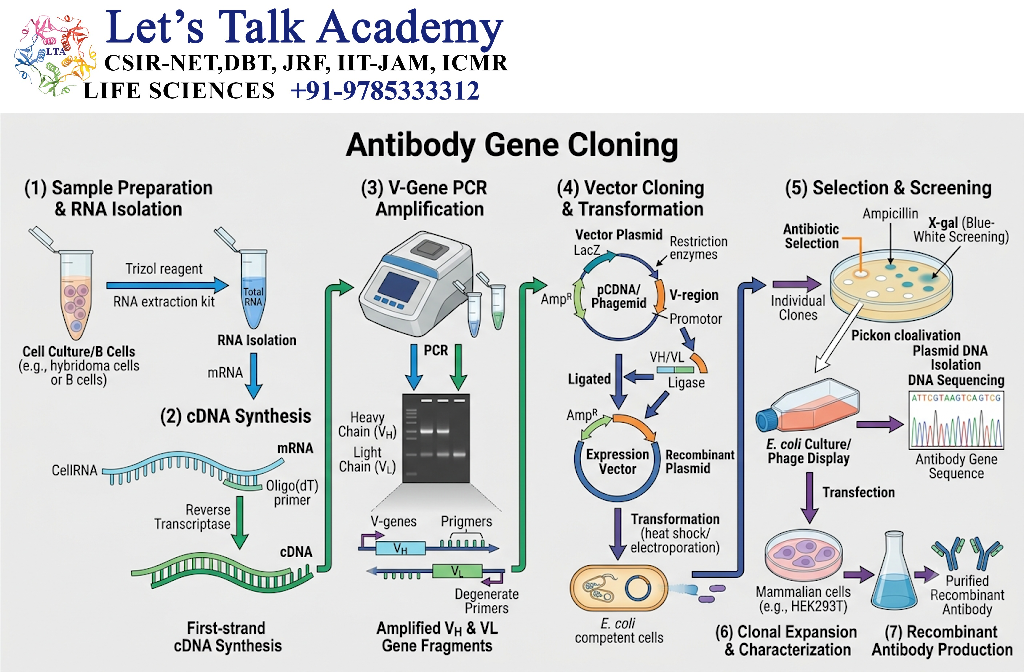
Genes encoding antibody heavy and light chains can be amplified and cloned using molecular biology techniques.
Important steps include:
- Isolation of nucleic acids
- Reverse transcription when starting from RNA
- PCR amplification
- Sequence determination
- Cloning into expression vectors
- Expression in host cells
The resulting recombinant genes can then be modified according to the desired antibody properties.
9. Antibody Expression Systems
Engineered antibodies can be produced using different expression systems.
| Expression System | Major Characteristics |
|---|---|
| Bacterial cells | Rapid and inexpensive; limited for complex antibodies |
| Yeast | Eukaryotic expression with useful secretion capabilities |
| Insect cells | Suitable for many recombinant proteins |
| Mammalian cells | Commonly used for full-length therapeutic antibodies |
| Plant systems | Can produce recombinant antibodies in some applications |
Mammalian systems are particularly important when appropriate folding and post-translational processing are required.
10. Antibody Fragments
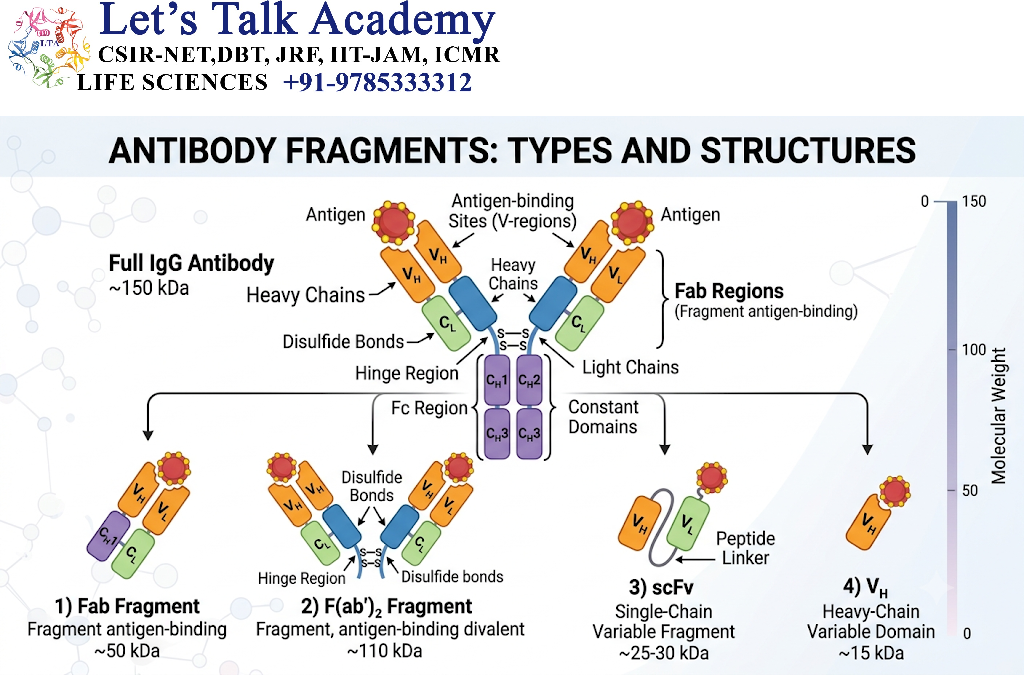
Full-length antibodies are not always necessary.
Different antibody fragments can be engineered for specific applications.
Major formats include:
- Fab
- F(ab’)₂
- Single-chain variable fragment (scFv)
- Single-domain antibodies
- Nanobody-like single-domain formats
- Bispecific fragments
11. Fab Fragments
A Fab fragment contains:
- One light chain
- Variable and constant regions associated with the light chain
- Variable and part of the constant region of one heavy chain
Fab fragments retain antigen-binding ability but lack the complete Fc region.
Advantages
- Smaller than full antibodies
- Useful for antigen-binding applications
- Reduced Fc-mediated interactions
- Potentially improved tissue penetration
12. Single-Chain Variable Fragments
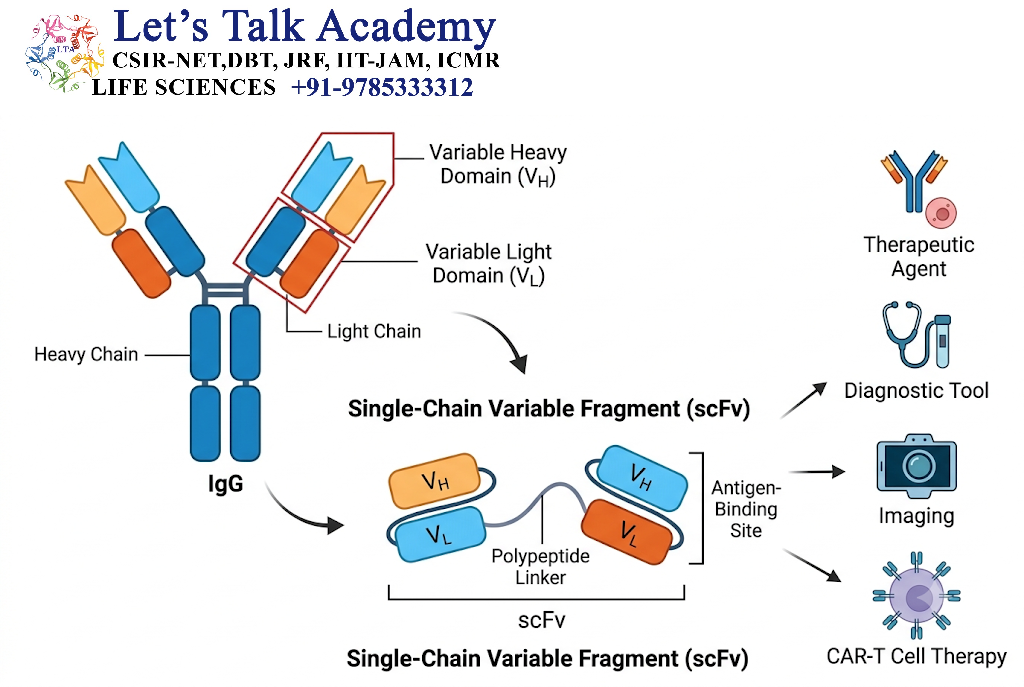
A single-chain variable fragment (scFv) consists of:
- Heavy-chain variable domain
- Flexible peptide linker
- Light-chain variable domain
Structure
VH — linker — VL
or
VL — linker — VH
The linker allows the two domains to remain associated and form a functional antigen-binding site.
13. Advantages of scFv
scFv molecules are useful because they are:
- Small
- Genetically defined
- Relatively easy to manipulate
- Suitable for recombinant expression
- Adaptable to different antibody formats
They can be incorporated into larger engineered proteins and cellular targeting systems.
14. Single-Domain Antibodies
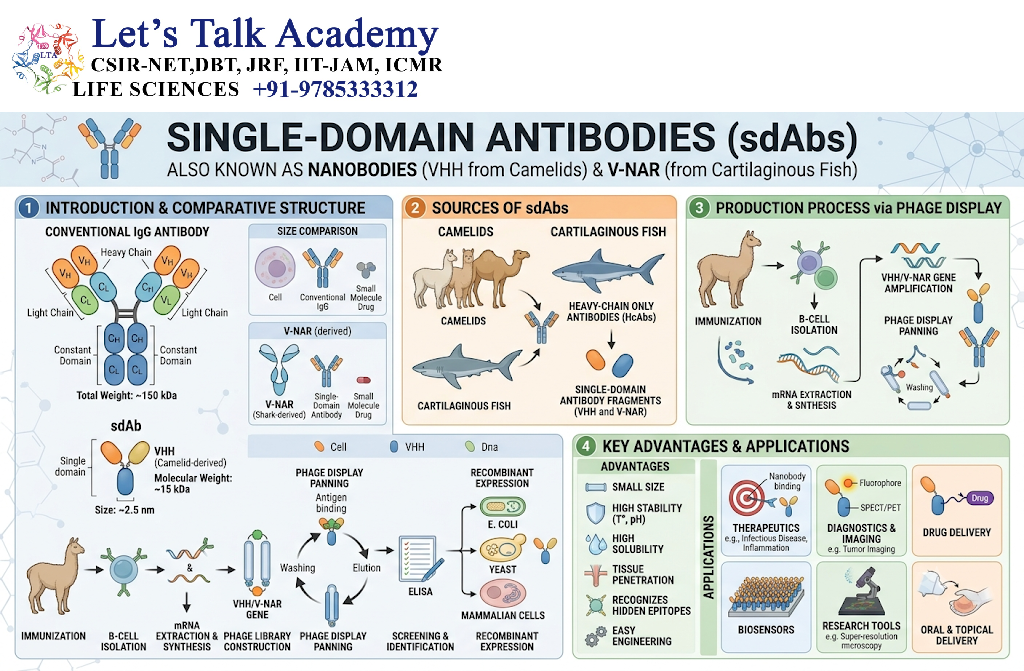
Single-domain antibodies use a single antibody variable domain for antigen recognition.
Examples include antibody-derived single-domain formats obtained from camelid antibodies and related engineered systems.
Their small size can provide:
- Good tissue penetration
- Access to recessed epitopes
- High structural stability in suitable formats
- Ease of genetic engineering
15. Humanization of Antibodies
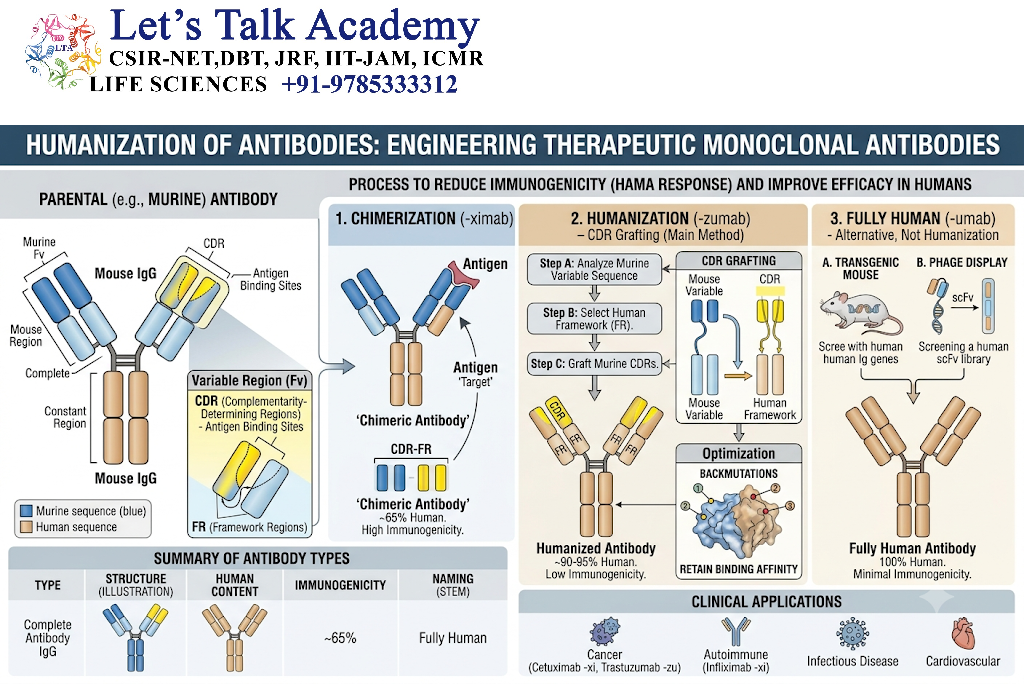
Some antibodies originally developed in non-human species can trigger unwanted immune responses when administered repeatedly to humans.
Antibody humanization aims to reduce immunogenicity while preserving antigen-binding activity.
One important strategy is CDR grafting.
Basic Principle
Non-human antibody
↓
Identify antigen-binding CDRs
↓
Transfer CDRs onto human antibody frameworks
↓
Reconstruct antibody
↓
Test binding and function
The resulting antibody retains important antigen-recognition features while having a predominantly human sequence.
16. Chimeric Antibodies
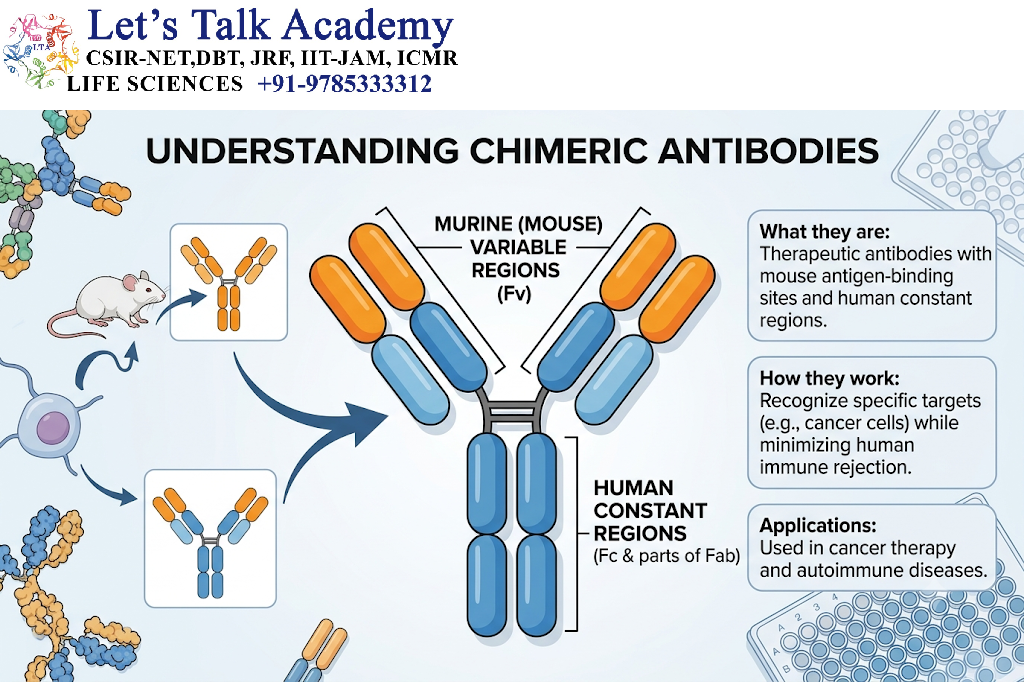
A chimeric antibody contains antibody regions derived from different species.
A common design combines:
- Non-human variable regions
- Human constant regions
The human constant regions provide more human-like Fc properties than a completely non-human antibody.
Simplified Structure
Non-human variable region + Human constant region
Chimeric antibodies were an important step toward developing less immunogenic therapeutic antibodies.
17. Fully Human Antibodies
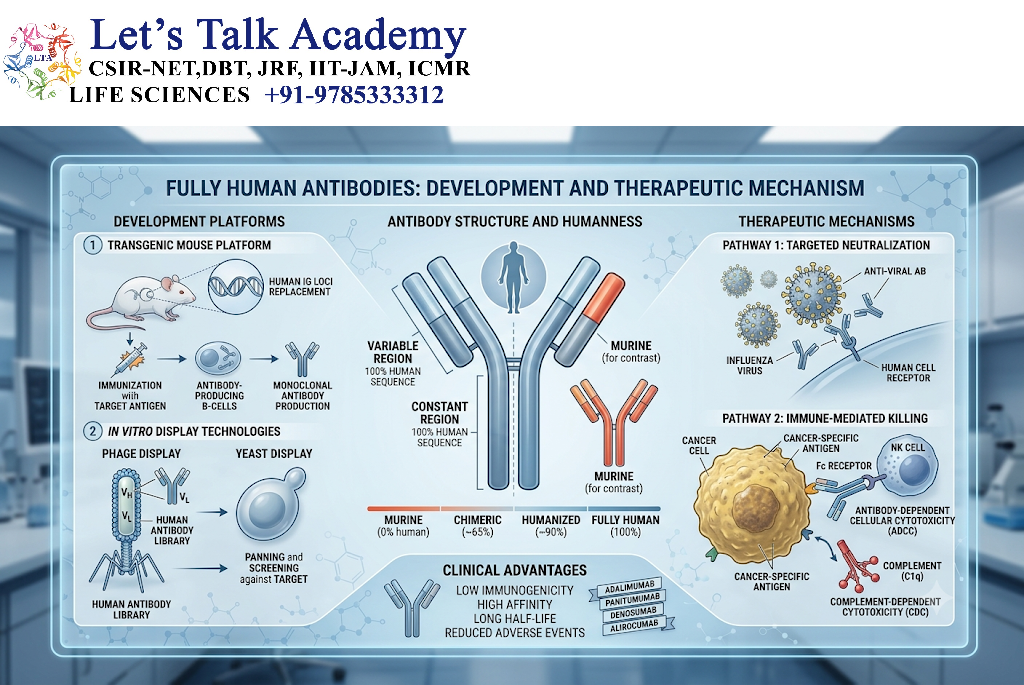
Fully human antibodies contain human antibody sequences throughout their variable and constant regions.
They can be generated using approaches such as:
- Human antibody libraries
- Display technologies
- Transgenic animal systems
- Single B-cell approaches
The goal is to obtain high-specificity antibodies with reduced risk of anti-antibody immune responses.
18. Comparison of Antibody Formats
| Type | General Composition | Major Purpose |
|---|---|---|
| Murine antibody | Mainly mouse-derived | Experimental and historical therapeutic use |
| Chimeric antibody | Non-human variable + human constant regions | Reduced immunogenicity |
| Humanized antibody | Mainly human sequence with selected non-human CDRs | Preserve specificity with reduced immunogenicity |
| Fully human antibody | Human sequence | Therapeutic and research applications |
19. Affinity Engineering
Affinity engineering aims to increase the strength of antibody binding to its antigen.
Affinity depends on the molecular interactions between the antibody and epitope.
Engineering can target:
- CDR residues
- Framework residues
- Antigen-contacting amino acids
- Structural features influencing CDR conformation
General Strategy
Starting antibody
↓
Introduce sequence diversity
↓
Select improved binders
↓
Characterize affinity
↓
Repeat optimization
This iterative process can generate antibodies with substantially improved binding properties.
20. CDR Engineering
The complementarity-determining regions are major targets for antibody engineering because they directly contribute to antigen recognition.
Changes in CDR sequences can alter:
- Binding affinity
- Specificity
- Cross-reactivity
- Binding kinetics
However, modifications must preserve the overall structural integrity of the antibody variable domain.
21. Affinity Maturation
Affinity maturation is the process of selecting antibody variants with improved antigen-binding properties.
In natural immune responses, somatic hypermutation and selection contribute to affinity maturation.
In laboratory antibody engineering, similar principles can be recreated through:
- Mutagenesis
- Library generation
- Selection
- Screening
Conceptual Flow
Parent antibody
↓
Generate variants
↓
Select antigen-binding variants
↓
Screen for improved affinity
↓
Repeat
↓
Optimized antibody
22. Antibody Display Technologies
Display technologies allow antibody fragments to be physically linked to the genetic information encoding them.
This makes it possible to connect:
Genotype ↔ Phenotype
A major example is phage display.
23. Phage Display
In phage display, antibody fragments such as scFv or Fab fragments are displayed on bacteriophage particles.
The corresponding DNA sequence is contained within the same particle.
General Process
Antibody library
↓
Display on phage
↓
Contact with target antigen
↓
Select bound phage
↓
Wash away weak/non-specific binders
↓
Recover selected phage
↓
Amplify
↓
Repeat selection
↓
Identify high-affinity antibody
This process is known as biopanning.
24. Antibody Libraries
An antibody library contains a large collection of different antibody sequences.
Libraries may be:
- Naïve
- Immune
- Synthetic
- Semi-synthetic
The diversity of the library determines the range of antigen-binding molecules that can potentially be identified.
25. Yeast and Other Display Platforms
In addition to phage display, antibody engineering can use:
- Yeast display
- Mammalian-cell display
- Ribosome display
- mRNA display
These platforms differ in their selection mechanisms, expression properties and library characteristics.
26. Fc Engineering
The Fc region can be modified to change antibody effector functions and pharmacological properties.
Fc engineering may influence interactions with:
- Fc receptors
- Complement components
- Immune effector cells
Possible objectives include:
- Increasing effector activity
- Reducing effector activity
- Altering receptor selectivity
- Modifying antibody half-life
27. Fc-Mediated Effector Functions
The Fc region can recruit immune mechanisms such as:
- Antibody-dependent cellular cytotoxicity
- Phagocytosis
- Complement activation
Therefore, modifying the Fc region can change how an antibody behaves after binding its target.
28. Glycoengineering
Antibody glycosylation can influence Fc receptor interactions and effector functions.
Engineered changes to Fc-associated glycans can therefore alter antibody activity.
This is known as glycoengineering.
Glycoengineering can be used to modify:
- Fc receptor binding
- Effector-cell recruitment
- Pharmacological properties
29. Half-Life Engineering
The time an antibody remains in circulation can be modified through engineering of its interactions with cellular recycling pathways.
The neonatal Fc receptor (FcRn) plays an important role in IgG recycling and contributes to its long serum half-life.
Engineering antibody-FcRn interactions can be used to modify antibody persistence.
30. Bispecific Antibodies
A bispecific antibody is engineered to recognize two different antigens or two different epitopes.
This allows one molecule to perform two targeting functions.
General Concept
Binding site 1 → Target A
Binding site 2 → Target B
Bispecific antibodies can be designed to bring two cells or molecular targets into close proximity.
31. Bispecific Antibody Applications
Potential applications include:
- Recruiting immune cells to target cells
- Blocking two signaling pathways simultaneously
- Connecting a therapeutic target with an effector cell
- Increasing targeting specificity
An important therapeutic concept is the simultaneous engagement of a tumor-associated target and an immune-cell receptor.
32. Multispecific Antibodies
Antibody engineering can produce molecules that recognize more than two targets.
These are called multispecific antibodies.
They can be designed to integrate multiple targeting or regulatory functions into one molecular platform.
33. Antibody-Drug Conjugates
An antibody-drug conjugate (ADC) combines:
- Antibody
- Linker
- Therapeutic payload
Structure
Antibody — Linker — Payload
The antibody provides target specificity, while the payload provides the desired biological activity.
The linker determines how the payload is released.
34. General Mechanism of Antibody-Drug Conjugates
ADC binds target antigen
↓
Target-cell internalization
↓
Intracellular processing
↓
Payload release
↓
Payload acts on target cell
This approach aims to increase the concentration of the therapeutic payload near target cells.
35. Antibody Fusion Proteins
Antibody engineering can also be used to create fusion proteins containing antibody domains and other functional proteins.
Examples can combine antibody targeting with:
- Cytokine domains
- Receptor domains
- Enzymatic domains
- Other therapeutic proteins
These molecules can provide targeted delivery of biological activity.
36. Antibody Engineering for Improved Stability
Protein engineering can improve antibody stability.
Potential strategies include modification of:
- Framework residues
- Surface-exposed amino acids
- Aggregation-prone regions
- Domain interfaces
The goal is to maintain:
- Correct folding
- Solubility
- Binding activity
- Storage stability
37. Reducing Aggregation
Antibody aggregation can negatively affect product quality and biological performance.
Engineering can identify and modify sequence or structural features associated with aggregation.
Factors influencing aggregation include:
- Protein concentration
- Temperature
- pH
- Hydrophobic surface exposure
- Partial unfolding
- Repeated physical stress
38. Improving Tissue Penetration
Antibody size and molecular properties influence tissue distribution.
Smaller antibody fragments may penetrate certain tissues more efficiently than full-length antibodies.
However, smaller size can also reduce serum persistence.
Therefore, antibody engineering often involves balancing:
Tissue penetration ↔ Stability ↔ Half-life
39. Antibody Engineering and Specificity
Engineering can improve specificity by reducing unwanted interactions with unrelated molecules.
Specificity can be assessed by examining:
- Binding to the intended antigen
- Binding to related molecules
- Off-target interactions
- Cellular responses
A useful engineered antibody should ideally recognize the desired target while minimizing unintended binding.
40. Computational Antibody Engineering
Computational methods can assist antibody design.
Approaches include:
- Sequence analysis
- Structural modeling
- Molecular docking
- Molecular dynamics
- Machine learning
- Developability prediction
Computational analysis can help identify candidate mutations before experimental testing.
41. Structural Modeling
Three-dimensional structures can reveal interactions between:
- Antibody CDRs
- Antigen epitopes
- Framework regions
Structural information can guide rational modifications of antigen-binding sites.
Concept
Antibody structure → Identify antigen contacts → Design mutations → Test experimentally
42. Rational Design vs Directed Evolution
Two broad strategies are used in antibody engineering.
Rational Design
Specific modifications are selected based on structural or biochemical knowledge.
Structure → Mutation → Testing
Directed Evolution
Large numbers of variants are generated and selected experimentally.
Diversification → Selection → Screening → Improved variant
Both approaches can be combined.
43. Antibody Engineering and Selection
Selection methods are used to identify desirable antibody variants from large libraries.
Selection criteria may include:
- Binding affinity
- Specificity
- Stability
- Expression
- Functional activity
After selection, candidate antibodies undergo detailed characterization.
44. Characterization of Engineered Antibodies
Engineered antibodies are evaluated for several properties.
Binding Properties
- Affinity
- Kinetics
- Specificity
Structural Properties
- Folding
- Stability
- Aggregation
- Purity
Functional Properties
- Neutralization
- Receptor blocking
- Fc-mediated activity
- Cellular effects
Pharmacological Properties
- Half-life
- Distribution
- Clearance
- Immunogenicity
45. Antibody Engineering in Diagnostics
Engineered antibodies can improve diagnostic assays by providing highly specific and reproducible recognition.
Applications include detection of:
- Pathogen antigens
- Hormones
- Biomarkers
- Tumor-associated molecules
- Proteins
They can be incorporated into:
- ELISA
- Immunoassays
- Biosensors
- Imaging systems
- Rapid diagnostic platforms
46. Antibody Engineering in Cancer Research and Therapy
Cancer cells can express molecules that distinguish them from normal tissues.
Engineered antibodies can be designed to recognize such targets.
Potential mechanisms include:
- Blocking growth signals
- Recruiting immune effector cells
- Delivering therapeutic payloads
- Engaging T cells
- Targeting tumor-associated molecules
Bispecific antibodies and antibody-drug conjugates are important examples of engineered antibody platforms.
47. Antibody Engineering in Infectious Disease
Engineered antibodies can be designed to recognize pathogen-specific antigens.
Potential functions include:
- Neutralizing pathogen attachment
- Blocking entry into host cells
- Neutralizing toxins
- Facilitating immune clearance
Antibody engineering can also be used to improve recognition of conserved or functionally important pathogen epitopes.
48. Challenges in Antibody Engineering
Despite major advances, several challenges remain.
Important challenges include:
- Maintaining correct protein folding
- Avoiding aggregation
- Preserving specificity
- Controlling immunogenicity
- Achieving appropriate tissue distribution
- Optimizing half-life
- Controlling Fc activity
- Manufacturing at scale
- Maintaining product consistency
Engineering one property may sometimes negatively affect another.
49. Developability of Engineered Antibodies
Developability refers to the overall suitability of an antibody for development into a stable, manufacturable and clinically useful product.
Important parameters include:
- Expression
- Solubility
- Stability
- Aggregation tendency
- Viscosity
- Chemical stability
- Specificity
- Immunogenicity
- Pharmacokinetics
Therefore, the antibody with the highest binding affinity is not necessarily the most suitable molecule for development.
50. Integrated Antibody Engineering Flowchart
Target identification
        ↓
Antibody discovery
        ↓
Sequence identification
        ↓
Antibody library / gene cloning
        ↓
Genetic engineering
        ↓
Affinity or specificity optimization
        ↓
Fc / glycan / half-life engineering
        ↓
Expression
        ↓
Purification
        ↓
Structural and functional characterization
        ↓
Developability assessment
        ↓
Optimized antibody
        ↓
Diagnostic / research / therapeutic application


