
1. Introduction to Bacterial Behavior and Communication
Bacteria are microscopic organisms that can sense changes in their surroundings, respond to environmental signals, move toward favorable conditions, avoid harmful substances, and coordinate activities with neighboring cells. Although individual bacteria are single-celled organisms, they exhibit remarkably sophisticated behaviors that allow them to survive and adapt to changing environments.
Two important processes involved in bacterial adaptation and interaction are bacterial chemotaxis and quorum sensing.
Bacterial chemotaxis is a directed movement response toward or away from chemical substances. It enables bacteria to locate nutrients, avoid toxic compounds, and reach environments that support growth and reproduction.
Quorum sensing is a cell-to-cell communication process in which bacteria produce, release, detect, and respond to signaling molecules. These signals allow bacterial populations to coordinate gene expression according to the local population density and the concentration of signaling molecules.
Both processes involve signal detection, intracellular information processing, and changes in cellular behavior. However, they serve different purposes. Chemotaxis primarily helps bacteria respond to chemical gradients through changes in movement, whereas quorum sensing regulates collective behaviors through changes in gene expression.
Understanding these mechanisms provides insight into bacterial physiology, microbial ecology, host–microbe interactions, biofilm development, and the evolution of microbial cooperation.
1.1 Importance of Studying Bacterial Signaling
Bacterial signaling is important because microorganisms rarely exist in completely isolated environments. They interact with nutrients, minerals, host tissues, other microorganisms, and changing physical conditions.
Bacteria must continuously answer several questions:
-
Where are the nutrients located?
-
Are harmful chemicals present nearby?
-
Is the surrounding environment suitable for growth?
-
Are enough neighboring cells present to carry out a group behavior?
-
Should the bacterial population produce a shared extracellular product?
-
Is it advantageous to attach to a surface and form a biofilm?
Chemotaxis helps bacteria navigate chemical environments, while quorum sensing helps them coordinate certain activities with neighboring cells.
These processes illustrate how relatively simple cells can generate complex, adaptive behavior through molecular signaling networks.
1.2 General Features of Bacterial Signaling
Most bacterial signaling systems involve three broad stages:
-
Signal detection: A receptor or sensor recognizes a chemical or environmental change.
-
Signal transduction: The detected information is transmitted through intracellular proteins, second messengers, or changes in regulatory activity.
-
Cellular response: The cell changes its movement, metabolism, gene expression, surface properties, or other physiological activities.
The same external signal can sometimes produce different responses depending on the species, cellular state, and surrounding conditions.
2. Bacterial Chemotaxis
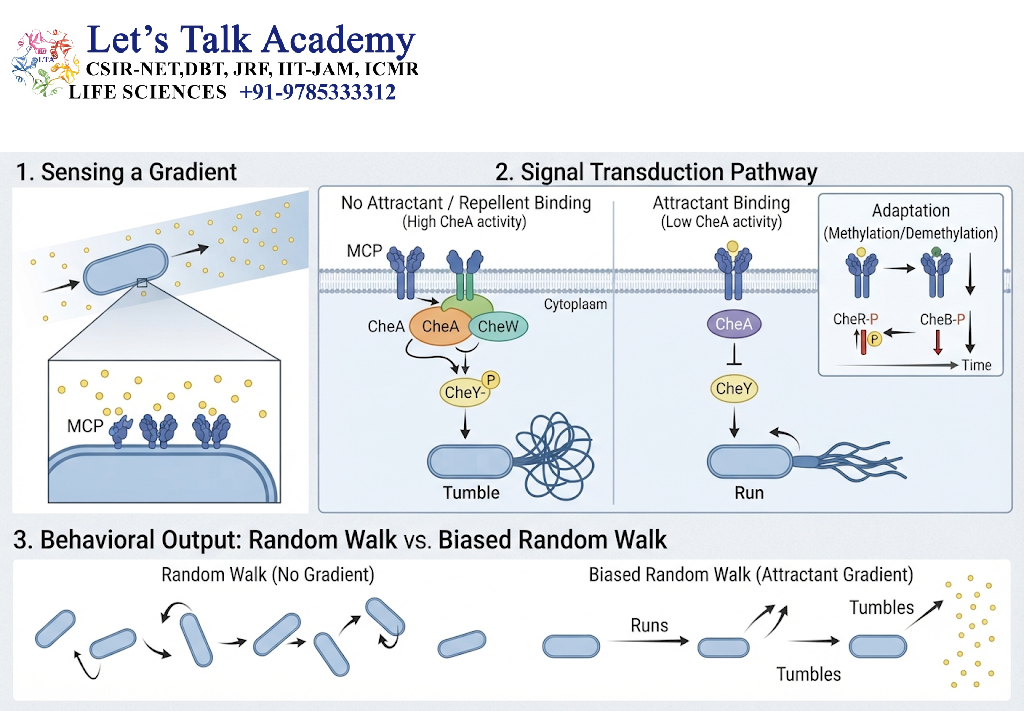
2.1 Definition of Bacterial Chemotaxis
Bacterial chemotaxis is the directed movement of bacteria in response to a chemical gradient.
When bacteria move toward a chemical substance that improves their survival or growth, the response is called positive chemotaxis. When bacteria move away from a harmful chemical, the response is called negative chemotaxis.
For example, a bacterium may move toward a region containing higher concentrations of nutrients such as certain sugars or amino acids. Conversely, it may move away from toxic substances that interfere with cellular metabolism.
Chemotaxis is not simply random swimming. It is a regulated behavior in which bacteria compare chemical conditions over time and modify their movement accordingly.
2.2 Chemotaxis Versus Random Movement
Many motile bacteria move through liquid environments using flagella. Their movement consists of a combination of relatively directed swimming and changes in direction.
In a well-studied model organism, Escherichia coli, the flagellar motors are powered by the proton motive force. The direction of flagellar rotation influences the swimming pattern.
When the bacterium swims in a favorable direction, it can extend the duration of its relatively straight movement. When conditions become less favorable, it increases the frequency of directional changes.
This behavioral strategy is often described as a biased random walk.
The bacterium does not necessarily determine the exact location of a nutrient source. Instead, it uses temporal comparisons of chemical conditions to increase the probability of moving toward favorable environments.
2.3 Biological Significance of Chemotaxis
Chemotaxis provides several important advantages to bacteria:
-
Nutrient acquisition: It helps bacteria locate regions rich in nutrients.
-
Energy conservation: Cells can move away from harmful or metabolically unfavorable conditions.
-
Host colonization: Some bacteria use chemotaxis to locate suitable host tissues or chemical environments.
-
Symbiotic interactions: Chemotaxis can help bacteria locate plant roots or other organisms with which they interact.
-
Biofilm development: Chemotactic behavior may contribute to the movement and positioning of bacteria before surface attachment.
-
Environmental adaptation: It enables bacteria to respond to spatial variations in their surroundings.
Chemotaxis can therefore influence bacterial distribution, ecological competition, and the establishment of microbial communities.
3. Types of Bacterial Movement and Motility
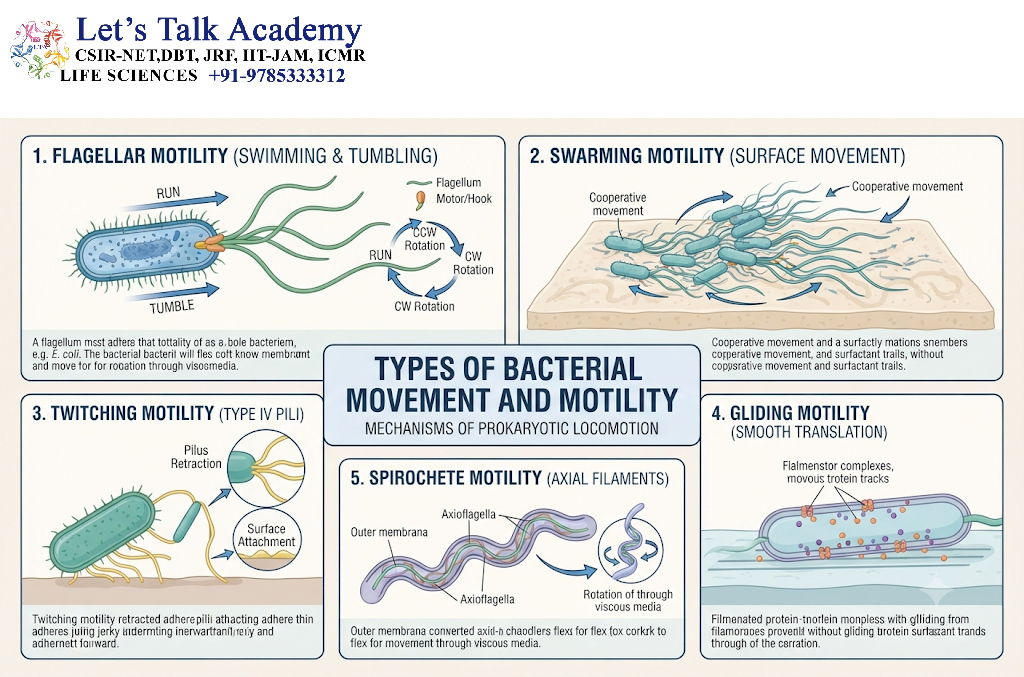
Before examining the molecular mechanism of chemotaxis, it is useful to understand the major forms of bacterial movement.
3.1 Flagellar Motility
Flagella are specialized structures that allow many bacteria to move through liquid environments or across surfaces.
A typical bacterial flagellum consists of three major parts:
-
Filament: The long, helical portion responsible for generating thrust.
-
Hook: A curved connector between the filament and the basal body.
-
Basal body: The motor-associated structure embedded in the cell envelope.
In many bacteria, the flagellar motor rotates the filament, producing movement.
In E. coli, counterclockwise rotation of the flagellar motors generally promotes the formation of a bundled flagellar arrangement that supports relatively straight swimming. Clockwise rotation promotes changes in swimming direction.
The precise arrangement and mechanism vary among bacterial species.
3.2 Run-and-Tumble Motility
The classical run-and-tumble behavior of E. coli consists of two recognizable movement states.
3.2.1 Run
During a run, the bacterium moves in a relatively straight direction. The cell uses this phase to travel through its environment.
When the bacterium experiences improving chemical conditions, it tends to extend the duration of runs.
3.2.2 Tumble
During a tumble, changes in flagellar rotation cause the bacterium to reorient itself.
Tumbling allows the bacterium to explore a different direction. When the new direction is more favorable, the next run can carry the cell toward a nutrient-rich region.
3.2.3 Role of Temporal Sensing
A bacterium swimming through a chemical gradient may encounter changing concentrations as it moves. Rather than measuring the complete spatial gradient at a single moment, it can compare present conditions with recently experienced conditions.
This process is called temporal sensing.
Temporal sensing is particularly important for small bacteria because the chemical gradient across the length of an individual cell may be too small to detect directly.
3.3 Other Forms of Bacterial Motility
Not all bacteria use the same movement mechanism.
Some bacteria exhibit:
-
Gliding motility: Movement along surfaces without conventional rotating flagella.
-
Twitching motility: Surface-associated movement often involving type IV pili.
-
Swarming: Coordinated movement of bacterial populations across suitable surfaces.
-
Swimming: Movement through liquid environments.
-
Spiraling or corkscrew movement: Movement associated with particular cell shapes and motility structures, such as axial filaments in spirochetes.
Chemotactic regulation can interact with different motility systems, although the molecular machinery varies among organisms.
4. Molecular Mechanism of Bacterial Chemotaxis
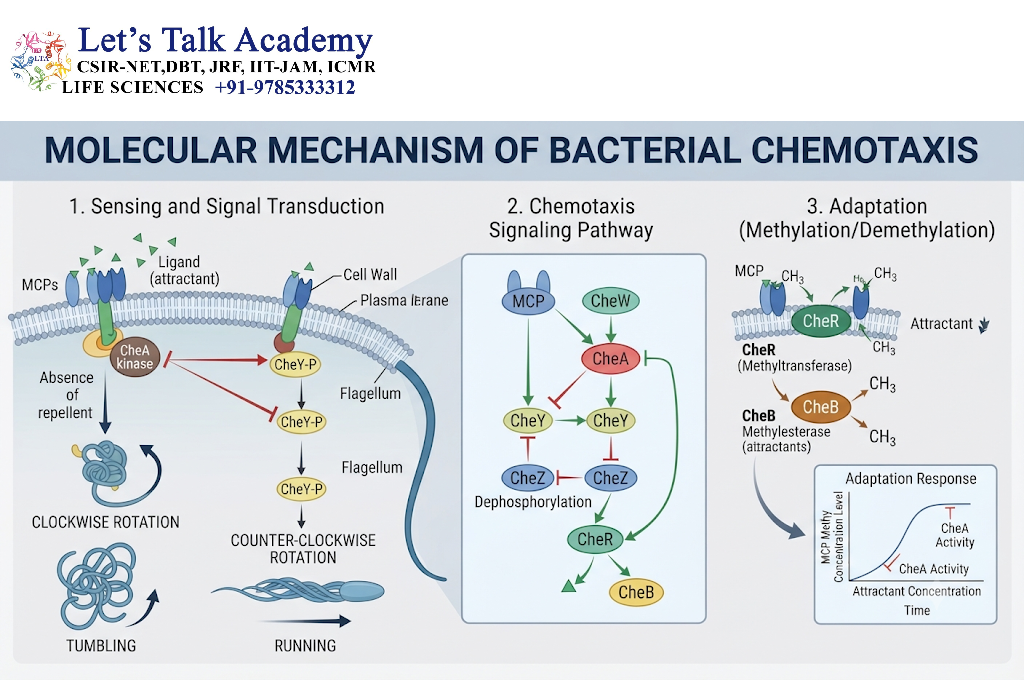
The molecular basis of chemotaxis has been studied extensively in Escherichia coli. Its chemotaxis system provides a model for understanding how receptors, signaling proteins, and flagellar motors convert environmental information into movement.
The major components include:
-
Methyl-accepting chemotaxis proteins, or MCPs.
-
CheA, a histidine kinase.
-
CheW, an adaptor protein.
-
CheY, a response regulator.
-
CheZ, a protein that promotes CheY-P dephosphorylation in organisms such as E. coli.
-
CheR, a receptor methyltransferase.
-
CheB, a receptor methylesterase and response-regulatory protein.
-
Flagellar motor proteins.
The system is organized around a signaling complex that couples chemical sensing to the activity of the flagellar motor.
4.1 Chemoreceptors: Methyl-Accepting Chemotaxis Proteins
Chemoreceptors are responsible for detecting changes in the chemical environment.
In E. coli, many chemoreceptors belong to the methyl-accepting chemotaxis protein family, commonly called MCPs.
These receptors detect attractants and repellents either directly or through associated binding proteins.
4.1.1 Basic Structure of MCPs
A typical MCP contains:
-
An extracellular or periplasmic ligand-sensing region, depending on receptor architecture.
-
Transmembrane segments.
-
A cytoplasmic signaling region.
-
A methylation region involved in sensory adaptation.
MCPs assemble into higher-order signaling complexes, often located near the cell poles.
The receptor signaling state influences the activity of the associated histidine kinase CheA.
4.1.2 Attractant and Repellent Detection
When an attractant binds to an appropriate receptor, it generally promotes a receptor signaling state that reduces CheA kinase activity.
When an attractant concentration decreases, or when a repellent is detected, the receptor signaling state can shift toward increased CheA activity.
This change influences the phosphorylation state of CheY and ultimately affects flagellar motor behavior.
4.2 CheA: Histidine Kinase
CheA is a central signaling protein in the chemotaxis pathway.
It is a histidine kinase that participates in a phosphotransfer reaction. CheA receives regulatory information from the receptor complex and undergoes autophosphorylation under conditions that promote kinase activity.
The phosphoryl group is subsequently transferred to response regulators, especially CheY and CheB.
CheA activity is controlled by receptor–CheW signaling complexes rather than simply by the direct binding of attractant to CheA.
4.2.1 Function of CheA
The principal functions of CheA include:
-
Receiving information from chemoreceptor complexes.
-
Autophosphorylating a conserved histidine residue.
-
Transferring the phosphoryl group to CheY.
-
Transferring the phosphoryl group to CheB.
-
Connecting environmental sensing with downstream chemotactic responses.
CheA acts as an information-processing hub in the chemotaxis network.
4.3 CheW: Coupling Protein
CheW is an adaptor protein that helps connect chemoreceptors to CheA.
It supports the formation and organization of receptor–kinase signaling complexes.
CheW does not function as the primary enzyme that phosphorylates CheY. Instead, it contributes to the physical and functional coupling required for receptor-controlled regulation of CheA.
The organization of receptor complexes can influence the sensitivity and cooperative behavior of the chemotaxis system.
4.4 CheY: Response Regulator
CheY is the principal response regulator that transmits chemotactic signals to the flagellar motor in E. coli.
When CheA is active, it transfers a phosphoryl group to CheY, producing CheY-P.
4.4.1 Formation of CheY-P
The simplified reaction can be represented as:
CheY-P interacts with components of the flagellar motor, especially FliM, FliN, and associated motor-switch machinery.
In E. coli, an increase in CheY-P generally increases the probability of clockwise motor rotation, promoting tumbling.
4.4.2 Role in Directional Changes
When CheY-P concentration decreases, the probability of clockwise rotation falls, and counterclockwise rotation becomes more frequent.
This favors longer runs in the classical run-and-tumble system.
The response is rapid, allowing bacteria to adjust their swimming behavior as chemical conditions change.
4.5 CheZ: Regulation of CheY-P
CheZ is a chemotaxis protein that accelerates the dephosphorylation of CheY-P in E. coli.
Dephosphorylation is important because the phosphorylated response regulator must be removed or inactivated to reset the signaling system.
The reaction can be represented as:
CheZ contributes to the rapid termination of CheY signaling and helps maintain an appropriate response time.
Not all bacteria use CheZ. Other species may use different proteins or mechanisms to regulate response-regulator phosphorylation.
4.6 CheR and CheB: Adaptation Proteins
Bacteria need to adapt to persistent chemical conditions. If a bacterium remains in an environment with a constant attractant concentration, it should not remain permanently locked into one movement response.
Adaptation allows the cell to respond to changes rather than simply reacting to the absolute presence of a chemical.
Two important proteins involved in the classical E. coli system are CheR and CheB.
4.6.1 CheR: Receptor Methyltransferase
CheR adds methyl groups to specific glutamate residues in chemoreceptors.
This methylation changes receptor signaling properties and contributes to the restoration of receptor activity after a stimulus.
CheR uses S-adenosyl-L-methionine as the methyl-group donor.
4.6.2 CheB: Receptor Methylesterase
CheB is activated through phosphorylation by CheA.
Activated CheB removes methyl groups from methylated chemoreceptors.
Thus, CheR and CheB work in opposing directions to regulate receptor methylation.
4.6.3 Importance of Adaptation
Adaptation enables bacteria to:
-
Detect changes in chemical concentration over time.
-
Prevent continuous saturation of the response system.
-
Maintain sensitivity to new chemical stimuli.
-
Explore their environment efficiently.
The chemotaxis network is therefore a dynamic sensory system rather than a simple on–off switch.
4.7 Receptor Clustering and Signal Amplification
One of the most remarkable features of bacterial chemotaxis is the ability to detect very small changes in the concentration of chemical substances.
In E. coli, chemoreceptors are organized into large signaling arrays in the cytoplasmic membrane. These arrays contain receptor dimers, CheW, and CheA. The arrangement allows receptors to communicate with one another and regulate kinase activity cooperatively.
4.7.1 Organization of Chemoreceptor Arrays
Chemoreceptor dimers form higher-order structures commonly described as trimers of receptor dimers. These structures interact with CheW and CheA to create signaling arrays.
The organization of these arrays helps integrate signals from different receptors.
For example, a bacterium may encounter several chemical substances simultaneously. Some may be attractants, while others may be repellents. The receptor network combines these signals to generate an overall response.
4.7.2 Signal Amplification
Signal amplification occurs when a relatively small change in receptor activity produces a much larger change in CheA activity.
This is important because the chemical changes experienced by a small bacterium may be extremely subtle.
Cooperative receptor interactions allow bacteria to respond sensitively over a broad range of chemical concentrations.
4.7.3 Biological Importance
Signal amplification helps bacteria:
-
Detect small chemical changes.
-
Integrate signals from multiple receptors.
-
Respond rapidly to changing environmental conditions.
-
Maintain sensitivity over a wide range of background concentrations.
The receptor array therefore acts as an information-processing system rather than merely a collection of independent chemical sensors.
4.8 The Complete Chemotactic Signaling Pathway
The classical chemotaxis pathway in E. coli can be summarized as follows.
4.8.1 Response to an Attractant
-
An attractant binds to an appropriate chemoreceptor.
-
The receptor complex changes its signaling state.
-
CheA kinase activity decreases.
-
The formation of CheY-P decreases.
-
The probability of clockwise flagellar motor rotation decreases.
-
The bacterium performs longer runs.
-
The cell tends to move toward favorable chemical conditions.
4.8.2 Response to a Repellent
-
A repellent is detected by a chemoreceptor or an associated sensing mechanism.
-
The receptor signaling state shifts toward increased CheA activity.
-
CheA transfers a phosphoryl group to CheY.
-
CheY-P interacts with the flagellar motor.
-
Clockwise motor rotation becomes more likely.
-
Tumbling frequency increases.
-
The bacterium changes direction more frequently, helping it avoid unfavorable conditions.
The precise response depends on the organism, receptor, ligand, and type of motility system. The sequence above describes the classical E. coli model.
4.9 Adaptation and Short-Term Cellular Memory
Chemotactic adaptation allows bacteria to adjust their responses to persistent environmental stimuli.
Suppose a bacterium enters a region containing a high concentration of an attractant. Initially, the attractant reduces CheA activity, leading to longer runs. If the attractant concentration remains constant, receptor methylation gradually modifies receptor signaling and restores CheA activity toward its adapted level.
This process enables the bacterium to detect subsequent changes in attractant concentration.
4.9.1 Importance of Negative Feedback
Negative feedback is central to chemotactic adaptation.
A simplified model is:
-
Attractant binding reduces CheA activity.
-
Reduced CheA activity decreases CheY-P formation.
-
The receptor adaptation system changes receptor methylation.
-
Receptor activity gradually returns toward its baseline.
-
The bacterium becomes responsive to further changes in the chemical environment.
The adaptation system gives the cell a form of short-term molecular memory. It compares current conditions with recently experienced conditions rather than responding only to the absolute concentration of a chemical.
4.10 Diversity of Chemotaxis Systems in Bacteria
Although E. coli is a widely studied model, its chemotaxis system does not represent every bacterial species.
Different organisms may differ in:
-
Number and types of chemoreceptors.
-
Flagellar structure and motor organization.
-
CheA and CheY signaling components.
-
Adaptation proteins.
-
Mechanisms of response-regulator dephosphorylation.
-
Types of environmental stimuli detected.
-
Cellular behaviors controlled by chemotaxis-like pathways.
For example, Bacillus subtilis has a chemotaxis system with regulatory features that differ from those of E. coli. Some bacteria possess multiple chemotaxis pathways that regulate different cellular behaviors.
Chemotaxis-like signaling networks may also influence developmental processes, surface-associated behavior, and other physiological activities.
4.11 Chemotaxis Beyond Chemical Gradients
Although chemotaxis literally refers to movement in response to chemical stimuli, bacteria can exhibit other forms of taxis.
|
Type of taxis |
Stimulus |
|---|---|
|
Chemotaxis |
Chemical concentration |
|
Phototaxis |
Light intensity or direction |
|
Aerotaxis |
Oxygen concentration or redox conditions |
|
Thermotaxis |
Temperature gradient |
|
Osmotaxis |
Osmotic conditions |
|
Magnetotaxis |
Geomagnetic field orientation |
These behaviors are regulated by different sensory mechanisms. Some pathways may share signaling components with chemotaxis, while others use distinct regulatory systems.
4.12 Experimental Study of Bacterial Chemotaxis
Bacterial chemotaxis can be studied using several experimental techniques.
4.12.1 Capillary Assay
In a capillary assay, a small capillary tube containing an attractant solution is placed in a suspension of motile bacteria.
If the bacteria are attracted to the chemical, more cells accumulate near or inside the capillary.
This method helps researchers assess the ability of bacteria to respond to specific chemical compounds.
4.12.2 Soft-Agar Chemotaxis Assay
Soft-agar plates can be used to investigate bacterial movement.
Motile bacteria are inoculated into soft agar containing a suitable growth medium. Chemotactic movement may contribute to the formation of expanding populations.
However, growth rate and other forms of motility can also affect the observed pattern, so the results must be interpreted carefully.
4.12.3 Microscopic Tracking
Microscopy and automated image analysis can be used to measure:
-
Swimming speed.
-
Run duration.
-
Tumble frequency.
-
Changes in direction.
-
Response to attractant or repellent exposure.
These measurements help connect molecular signaling events with observable bacterial behavior.
4.12.4 Genetic and Molecular Approaches
Researchers can study the functions of chemotaxis proteins through:
-
Gene deletion.
-
Gene complementation.
-
Protein localization studies.
-
Fluorescence microscopy.
-
Protein interaction assays.
-
Biochemical phosphorylation assays.
-
Mutational analysis of receptors and signaling proteins.
These approaches help establish the roles of individual components in the signaling network.
5. Quorum Sensing
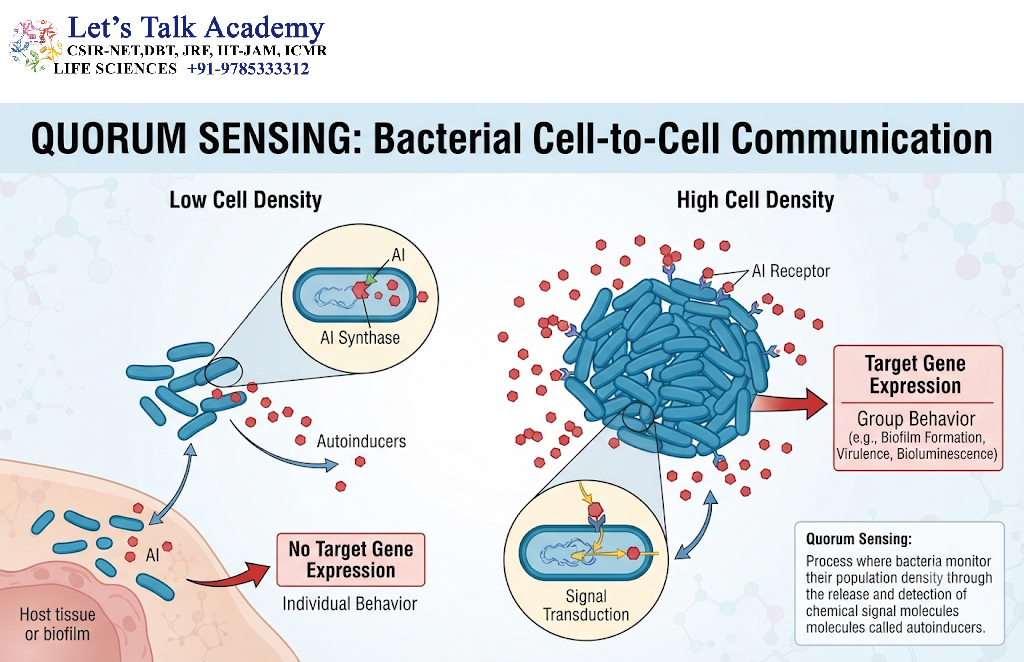
5.1 Definition of Quorum Sensing
Quorum sensing is a form of bacterial chemical communication in which cells produce, release, detect, and respond to signaling molecules called autoinducers.
These signals allow bacteria to regulate gene expression in response to changes in their local environment, including the concentration of signaling molecules and the composition of nearby microbial communities.
In many quorum-sensing systems, the concentration of an autoinducer increases as the number of signal-producing cells increases. When the signal reaches a sufficient concentration, it can trigger changes in gene expression.
Quorum sensing can coordinate collective behaviors such as bioluminescence, biofilm development, competence, motility, secretion of extracellular products, and the production of certain virulence-associated factors.
However, quorum sensing does not always operate as a simple population counter. Signal concentration is also influenced by diffusion, fluid flow, chemical degradation, signal uptake, and the activity of other microorganisms.
5.2 Historical Background
The study of bacterial communication developed through investigations of bioluminescent marine bacteria.
One of the best-known examples involves Vibrio fischeri, now commonly referred to as Aliivibrio fischeri.
These bacteria can live in association with marine animals and produce visible light under suitable conditions.
Research into bacterial bioluminescence helped reveal that light production could be regulated by the accumulation of extracellular chemical signals.
The term quorum sensing was introduced in the 1990s to describe population-associated regulation of bacterial gene expression.
Subsequent research demonstrated that bacterial communication is widespread and involves many types of signaling molecules and regulatory networks.
5.3 Why Do Bacteria Use Quorum Sensing?
Some bacterial activities require contributions from many cells to be effective.
For example, a single bacterial cell may produce only a small quantity of an extracellular enzyme. The amount may be insufficient to significantly alter the surrounding environment.
If a large population produces the enzyme simultaneously, the combined activity may become biologically meaningful.
Quorum sensing can help regulate these activities so that cells do not necessarily express costly group-associated functions under every environmental condition.
5.3.1 Coordinated Gene Expression
Quorum sensing allows groups of bacteria to alter the expression of specific genes in a coordinated manner.
The affected genes may control:
-
Light production.
-
Extracellular enzyme secretion.
-
Biofilm-associated functions.
-
Secondary metabolite production.
-
DNA uptake and competence.
-
Motility and surface colonization.
-
Host interaction and virulence-associated processes.
The specific effects depend on the species and the regulatory system.
5.3.2 Metabolic Investment and Collective Benefits
Some quorum-sensing-regulated products function as extracellular or shared resources, sometimes called public goods.
Examples include certain extracellular enzymes and molecules that modify the environment.
Producing such compounds requires energy and cellular resources. Coordinating their production can be advantageous under conditions in which collective activity provides a benefit.
However, the benefits of quorum sensing are not guaranteed. Signal production can be disrupted by other organisms, and non-producing cells may sometimes benefit from products made by signal-producing cells.
This makes quorum sensing an important topic in microbial ecology and the study of social behavior.
5.4 General Mechanism of Quorum Sensing
A typical quorum-sensing system involves four major steps:
-
Signal synthesis: Bacterial cells produce autoinducer molecules.
-
Signal release: The molecules enter the extracellular environment through diffusion, transport, or other release mechanisms.
-
Signal accumulation: The concentration of the signal changes according to production, degradation, transport, and environmental conditions.
-
Signal detection and response: Cells detect the signal and activate or repress target genes.
A common regulatory outcome is the activation of additional signal production, creating a positive-feedback loop.
5.4.1 Simplified Quorum-Sensing Model
Quorum-sensing signaling sequence
1. Autoinducer synthesis
Bacterial cells produce signaling molecules.
2. Signal release
Autoinducers enter the surrounding environment.
3. Signal accumulation
Signal concentration changes with cell density and environmental conditions.
4. Signal detection
Receptors or regulatory proteins recognize the signal.
5. Gene regulation
Target genes are activated or repressed.
6. Coordinated cellular behavior
The population changes its physiological activities.
This is a general model. Actual quorum-sensing networks may contain multiple receptors, regulatory proteins, feedback loops, and signals.
5.5 Autoinducers: Chemical Signals in Quorum Sensing
Autoinducers are signaling molecules that mediate bacterial communication.
Different bacterial species use different types of autoinducers. Some signals are associated primarily with communication within a species, whereas others can convey information across species.
The structure of an autoinducer determines which receptors can recognize it and what regulatory responses it can produce.
Important categories include:
-
Acyl-homoserine lactones.
-
Autoinducer-2.
-
Oligopeptide signals.
-
Autoinducer-3 and related signaling compounds in particular systems.
-
Other species-specific or structurally diverse signaling molecules.
The chemical diversity of autoinducers allows bacteria to build signaling systems suited to different ecological environments.
5.6 Types of Quorum-Sensing Systems
5.6.1 Quorum Sensing in Gram-Negative Bacteria
Many Gram-negative bacteria use small molecules, including acyl-homoserine lactones, as quorum-sensing signals.
A commonly studied system is the Vibrio fischeri LuxI–LuxR system.
-
LuxI: An enzyme involved in the synthesis of an acyl-homoserine lactone signal.
-
LuxR: A transcriptional regulator that recognizes the signal and regulates target gene expression.
When the signal accumulates to a sufficient level, it binds to LuxR. The signal–regulator complex can then activate transcription of genes associated with bioluminescence and other regulated functions.
The exact response depends on the regulatory network of the organism.
5.6.2 Quorum Sensing in Gram-Positive Bacteria
Many Gram-positive bacteria use processed oligopeptides as signaling molecules.
These signaling peptides are often synthesized as precursor proteins and undergo processing before becoming mature signals.
The signals may be detected by:
-
Membrane-bound sensor histidine kinases.
-
Two-component regulatory systems.
-
Transport-associated sensing mechanisms.
-
Intracellular regulatory pathways.
One example is the regulation of competence in Bacillus subtilis, where peptide signaling contributes to decisions about cellular development and the uptake of environmental DNA.
Another well-studied example is peptide-mediated communication in Streptococcus species.
5.6.3 Autoinducer-2-Mediated Signaling
Autoinducer-2, commonly abbreviated AI-2, is associated with the LuxS metabolic pathway in many bacteria.
AI-2-related signaling has been investigated as a potential mechanism for interspecies communication.
However, the biological significance of AI-2 varies among organisms. In some bacteria, LuxS and associated chemistry may have important metabolic roles in addition to any signaling-related functions.
Therefore, the presence of a LuxS pathway alone should not automatically be interpreted as proof of a particular social communication behavior.
5.7 The LuxI–LuxR Quorum-Sensing System
The LuxI–LuxR system is one of the most influential models for understanding quorum sensing in Gram-negative bacteria.
It was originally studied in the context of bioluminescence regulation in Vibrio fischeri.
5.7.1 Role of LuxI
LuxI is an autoinducer synthase.
It catalyzes the production of a specific acyl-homoserine lactone signal using cellular precursors.
The synthesized autoinducer is released from the cell or otherwise reaches the extracellular environment.
5.7.2 Role of LuxR
LuxR is a transcriptional regulator that recognizes the appropriate acyl-homoserine lactone.
When the signal binds to LuxR, the regulator can adopt a functional configuration that allows it to interact with DNA and influence transcription.
5.7.3 Positive Feedback
In many LuxI–LuxR-type systems, the activated regulator can stimulate the expression of the autoinducer synthase gene.
This produces a positive-feedback loop:
-
More autoinducer is synthesized.
-
More regulator becomes activated.
-
Target gene expression increases.
-
The population can transition toward a coordinated state.
Positive feedback can produce a relatively sharp transition in gene expression, although real biological systems are influenced by many environmental and cellular factors.
5.8 Quorum Sensing in Vibrio Species
Members of the genus Vibrio have provided important models for understanding bacterial communication.
Some Vibrio species possess multiple signaling systems that detect different autoinducers.
Rather than relying on a single signal, the cell can integrate information from several signaling pathways to regulate gene expression.
5.8.1 Signal Integration
In a complex quorum-sensing system:
-
Different autoinducers are detected by distinct sensor proteins.
-
The sensors influence phosphorylation pathways.
-
Phosphorylation signals converge on downstream regulatory components.
-
The activity of transcriptional regulators and small regulatory RNAs changes.
-
The expression of group-associated genes is altered.
This arrangement allows bacteria to respond to the presence of different types of neighboring cells and to changes in the composition of their microbial community.
5.8.2 Importance of Regulatory Networks
Quorum sensing is not always a simple linear pathway consisting of one signal and one receptor.
In many bacteria, signaling pathways interact with:
-
Two-component systems.
-
Small regulatory RNAs.
-
Transcription factors.
-
Alternative sigma factors.
-
Metabolic regulatory systems.
-
Stress-response pathways.
This network architecture allows bacteria to adjust their behavior according to environmental and physiological conditions.
5.9 Quorum Sensing and Gene Regulation
The central outcome of quorum sensing is often a change in gene expression.
Signals may activate or repress transcription by influencing DNA-binding proteins, signaling cascades, or post-transcriptional regulators.
5.9.1 Transcriptional Regulation
Some autoinducers bind directly to transcriptional regulators.
The resulting regulator–signal complex may bind to promoter regions and alter the recruitment or activity of RNA polymerase.
Consequently, the transcription of target genes increases or decreases.
5.9.2 Post-Transcriptional Regulation
Some quorum-sensing systems regulate gene expression through small RNAs.
These regulatory RNAs can influence the stability or translation of messenger RNA molecules.
In several bacterial signaling networks, small RNAs form an important connection between signal detection and gene expression.
5.9.3 Feedback Regulation
Feedback loops are common in quorum-sensing networks.
-
Positive feedback can amplify signal production and coordinate a population-wide response.
-
Negative feedback can limit signaling, prevent excessive activation, and help cells adapt to changing conditions.
The combination of feedback mechanisms can influence the timing, strength, and stability of quorum-sensing responses.
5.10 Environmental Factors Affecting Quorum Sensing
Quorum sensing is influenced by the physical and chemical environment.
Cell density alone does not determine the activity of a quorum-sensing system.
Important factors include:
5.10.1 Diffusion
Autoinducers may diffuse away from bacterial populations. If the environment allows rapid diffusion, signals may not accumulate sufficiently to trigger a response.
In contrast, confined spaces can promote signal accumulation.
5.10.2 Fluid Flow
Flow can transport signaling molecules away from a population or distribute them across a larger region.
This is especially relevant in aquatic environments, tissues, and engineered systems.
5.10.3 Chemical Stability
Some signaling molecules are sensitive to environmental conditions such as pH, temperature, and enzymatic degradation.
The stability of a signal influences how long it remains available for detection.
5.10.4 Signal Uptake and Degradation
Bacteria and other microorganisms may remove signals from their surroundings.
Signal uptake, enzymatic degradation, or chemical modification can influence the effective concentration of an autoinducer.
5.10.5 Spatial Organization
Biofilms and other structured microbial communities create local environments in which signal concentration may vary considerably from one region to another.
Consequently, different cells within the same population may experience different signaling conditions.
5.11 Quorum Sensing and Population Density: A Critical Understanding
Quorum sensing is commonly described as a bacterial mechanism for measuring population density. This description is useful but incomplete.
A more accurate interpretation is that bacteria respond to the concentration of particular signaling molecules and the information those signals provide about their surroundings.
The relationship between cell density and signal concentration depends on:
-
Signal production rate.
-
Number of signal-producing cells.
-
Volume of the surrounding environment.
-
Signal diffusion.
-
Fluid movement.
-
Signal degradation.
-
Signal uptake.
-
Presence of other microbial species.
Therefore, a high cell density does not always result in high signal concentration, and a low cell density can sometimes produce a detectable signal in a confined environment.
This distinction is essential for understanding quorum sensing in natural microbial communities.
6. Major Biological Functions of Quorum Sensing
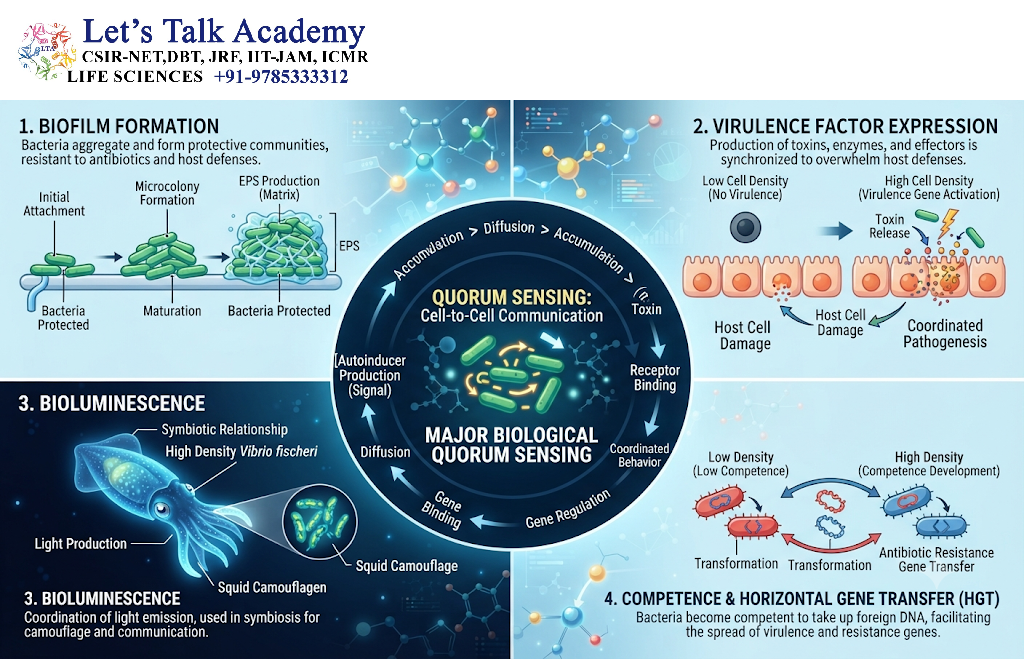
Quorum sensing regulates diverse bacterial activities. Its biological effects vary considerably among species and depend on the specific signaling network.
6.1 Bioluminescence
Bioluminescence is the production of visible light through a chemical reaction.
In the classical Aliivibrio fischeri model, quorum sensing regulates the expression of genes required for light production.
When the relevant autoinducer accumulates and activates the appropriate regulatory pathway, the expression of the lux genes increases.
The luciferase enzyme catalyzes a reaction involving reduced flavin, a long-chain aldehyde, and oxygen, resulting in the emission of light.
The biological significance of light production depends on the ecological relationship between the bacterium and its host.
6.2 Biofilm Formation
A biofilm is a structured microbial community in which cells attach to a surface or to one another and become embedded in a self-produced extracellular matrix.
Quorum sensing can regulate processes involved in biofilm development, including:
-
Production of extracellular polymeric substances.
-
Surface-associated gene expression.
-
Cell aggregation.
-
Extracellular enzyme secretion.
-
Detachment and dispersal in some organisms.
The role of quorum sensing in biofilms is species-specific. Some bacteria use quorum-sensing pathways to promote biofilm development, whereas others use them to regulate dispersal or other stages of the biofilm life cycle.
6.3 Virulence-Associated Gene Regulation
Certain bacterial pathogens use quorum-sensing systems to regulate genes associated with interactions with host organisms.
These genes may encode:
-
Extracellular enzymes.
-
Toxins.
-
Adhesion factors.
-
Secretion system components.
-
Tissue-degrading enzymes.
-
Factors involved in colonization.
For example, quorum-sensing networks in Pseudomonas aeruginosa regulate several genes associated with extracellular products and host interactions.
However, quorum sensing is only one of many regulatory mechanisms involved in bacterial pathogenicity. Environmental conditions, nutrient availability, stress responses, and host signals can also influence the expression of these genes.
6.4 Competence and Horizontal Gene Transfer
Some bacteria regulate their ability to take up DNA from the environment through cell-to-cell signaling systems.
This physiological state is called competence.
During competence, bacteria express proteins that enable the uptake and processing of extracellular DNA.
In some organisms, peptide signaling or other population-associated signals influence the development of competence.
The acquired DNA may provide new genetic characteristics, although the outcome depends on whether the DNA can be maintained or incorporated into the recipient’s genome.
6.5 Motility and Surface Colonization
Quorum sensing can influence bacterial motility and the transition between free-swimming and surface-associated lifestyles.
Depending on the species, signaling pathways may affect:
-
Flagellar gene expression.
-
Surface-associated motility.
-
Type IV pilus activity.
-
Production of surface adhesins.
-
Swarming behavior.
-
Biofilm maturation.
Chemotaxis and quorum sensing can therefore influence related aspects of bacterial ecology, even though the two processes use different primary signaling mechanisms.
6.6 Production of Secondary Metabolites
Quorum sensing can regulate the synthesis of secondary metabolites, including certain antimicrobial compounds, pigments, and other specialized products.
These compounds may influence interactions between bacteria and other organisms.
In some cases, the coordinated production of secondary metabolites helps a bacterial population compete for resources or establish ecological relationships.
The production of these compounds is frequently controlled by additional regulatory systems, including nutrient and stress-response pathways.
7. Quorum Quenching: Disruption of Bacterial Communication
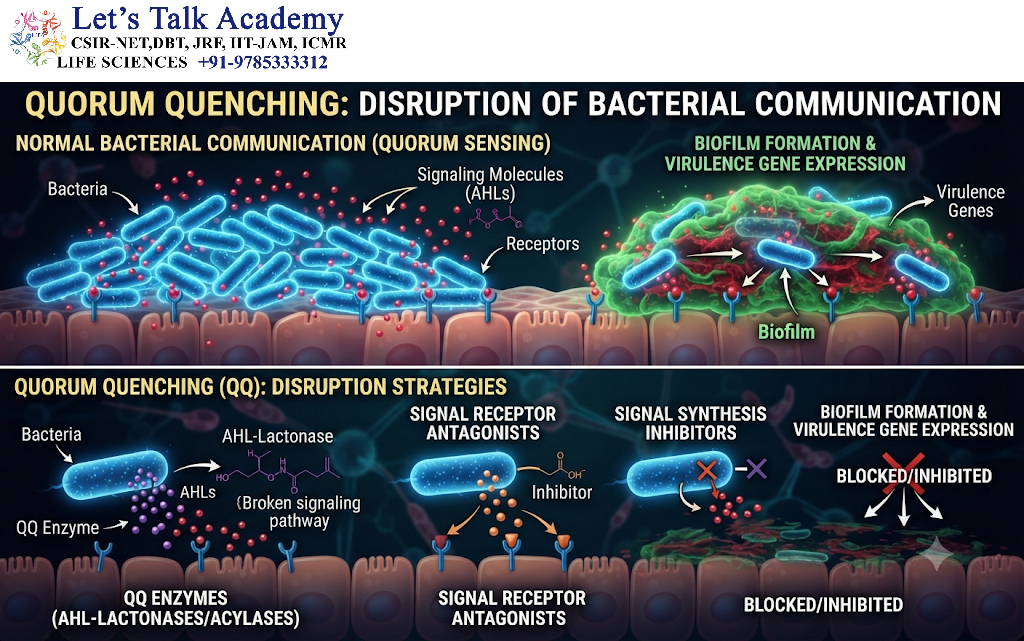
7.1 Definition of Quorum Quenching
Quorum quenching is the disruption of quorum-sensing communication through interference with signal production, signal availability, signal detection, or downstream signaling.
Quorum quenching can occur naturally through the activity of microorganisms, enzymes, environmental processes, or host-derived mechanisms.
It can also be investigated as a strategy for modifying bacterial behavior.
7.2 Major Mechanisms of Quorum Quenching
7.2.1 Inhibition of Signal Synthesis
Some compounds interfere with the enzymes responsible for autoinducer production.
If signal synthesis is reduced, the concentration of the signaling molecule may become insufficient to activate the quorum-sensing pathway.
7.2.2 Enzymatic Degradation of Signals
Certain microorganisms produce enzymes that chemically modify or degrade quorum-sensing molecules.
Examples of enzymes investigated in acyl-homoserine lactone signal interference include:
-
AHL lactonases: Enzymes that hydrolyze the lactone ring of suitable AHL molecules.
-
AHL acylases: Enzymes that cleave the amide bond of certain AHLs.
These enzymes can reduce the availability of signals to their receptors.
7.2.3 Chemical Modification
Some organisms and environmental processes chemically alter signaling molecules without necessarily completely destroying them.
The modified molecules may have reduced biological activity or may interact differently with receptors.
7.2.4 Receptor Antagonism
A receptor antagonist is a compound that interferes with the action of a signaling molecule.
In quorum-sensing research, signal analogues may bind to receptors without producing the normal regulatory response.
This can reduce the activity of the signaling pathway.
7.3 Potential Applications of Quorum Quenching
Quorum-quenching strategies have been investigated in areas such as:
-
Biofilm control.
-
Water treatment.
-
Industrial surface protection.
-
Agricultural microbiology.
-
Development of anti-virulence approaches.
-
Management of microbial fouling.
Quorum quenching is not automatically equivalent to killing bacteria. It aims to interfere with communication or signal-dependent behavior.
However, the practical effectiveness of a quorum-quenching approach depends on signal diversity, environmental conditions, resistance mechanisms, and the specific microbial community.
8. Biofilms and Microbial Communities
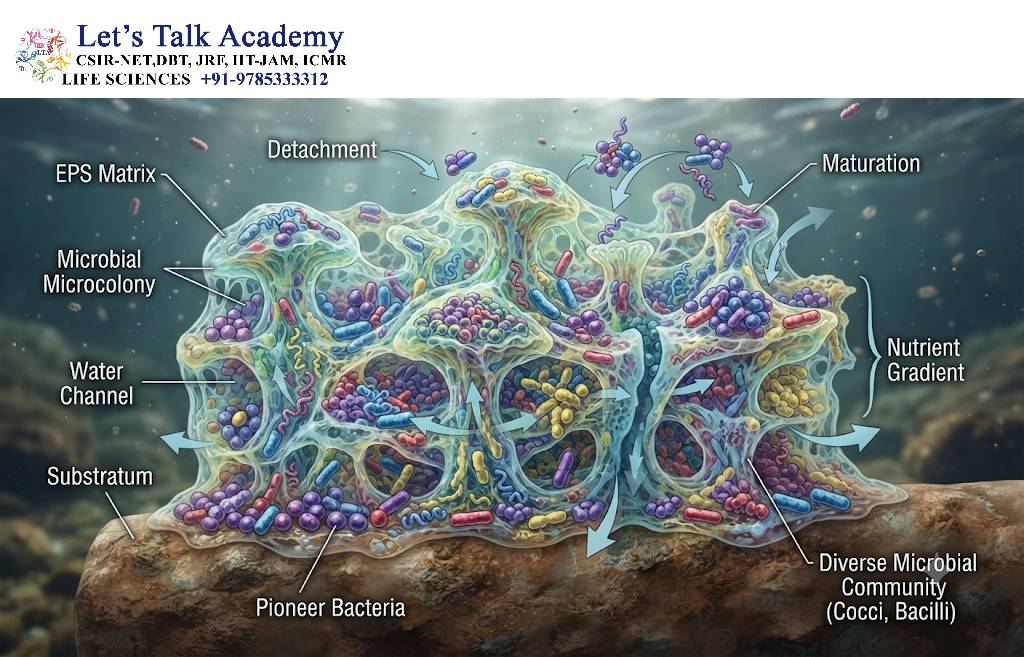
8.1 Definition of a Biofilm
A biofilm is a microbial community attached to a surface or associated with an interface and surrounded by an extracellular matrix produced by the organisms within the community.
Biofilms may form on:
-
Rocks in rivers.
-
Soil particles.
-
Plant roots.
-
Medical devices.
-
Water pipelines.
-
Industrial equipment.
-
Teeth and oral surfaces.
-
Host tissues.
Biofilms are often composed of multiple microbial species rather than a single bacterial population.
8.2 Stages of Biofilm Development
Biofilm formation is a dynamic process. The details differ among organisms, but several general stages can be identified.
8.2.1 Initial Surface Contact
Motile bacteria encounter a surface and interact with it through physical and chemical forces.
Chemotaxis may influence how cells reach a surface or respond to nutrients near it.
8.2.2 Reversible Attachment
During the early stage, cells may attach weakly to a surface.
This attachment can be influenced by:
-
Surface charge.
-
Hydrophobic interactions.
-
Motility.
-
Environmental conditions.
-
Cell-surface structures.
8.2.3 Irreversible Attachment
Cells may begin to establish stronger attachment through adhesins, pili, fimbriae, and other surface-associated structures.
Changes in gene expression can support the transition to a surface-associated lifestyle.
8.2.4 Matrix Production
Bacteria may produce extracellular polymeric substances, including polysaccharides, proteins, extracellular DNA, and other materials.
The matrix helps maintain the structure of the developing biofilm.
8.2.5 Maturation
The biofilm develops a more complex architecture.
Nutrient gradients, oxygen gradients, waste accumulation, and local chemical signaling may generate distinct microenvironments.
8.2.6 Dispersal
Some cells leave the biofilm and return to a free-living state.
Dispersal may be associated with changes in environmental conditions, nutrient availability, enzyme activity, or regulated cellular processes.
8.3 Relationship Between Chemotaxis and Biofilms
Chemotaxis can influence the movement of bacteria toward surfaces, nutrients, host tissues, and favorable microenvironments.
In certain species, chemotaxis-like pathways also regulate surface-associated behaviors.
For example, some bacteria possess signaling pathways related to chemotaxis that control biofilm formation rather than directly controlling swimming.
Therefore, chemotaxis should not be viewed exclusively as a mechanism for movement. Its molecular components may be adapted for other biological functions.
8.4 Relationship Between Quorum Sensing and Biofilms
Quorum sensing can influence biofilm formation through the regulation of surface attachment, extracellular matrix production, motility, and dispersal-associated processes.
However, the relationship is complex.
Some biofilms rely strongly on quorum-sensing regulation, while others develop through pathways that do not require conventional quorum sensing.
Biofilm behavior is influenced by many factors, including:
-
Nutrient availability.
-
Surface properties.
-
Hydrodynamic conditions.
-
Cell density.
-
Microbial species composition.
-
Stress responses.
-
Extracellular matrix production.
-
Host-derived molecules.
Consequently, quorum sensing is one component of a much larger regulatory network controlling biofilm biology.
9. Relationship Between Bacterial Chemotaxis and Quorum Sensing
Chemotaxis and quorum sensing are distinct processes, but they can influence one another indirectly or directly.
9.1 Major Differences
|
Feature |
Bacterial chemotaxis |
Quorum sensing |
|---|---|---|
|
Primary function |
Directed movement in response to chemical changes |
Regulation of gene expression through chemical communication |
|
Main input |
Attractants, repellents, and other environmental stimuli |
Autoinducer concentration and signal information |
|
Main output |
Changes in movement, direction, or motility |
Changes in gene expression and collective behavior |
|
Key molecular components |
Chemoreceptors, CheA, CheW, CheY, adaptation proteins |
Signal synthases, receptors, transcriptional regulators, sensor kinases, and other network components |
|
Typical timescale |
Often rapid changes in swimming behavior |
Often changes in gene expression over minutes or longer, depending on the system |
|
Population dependence |
Not inherently dependent on population density |
Often associated with signal accumulation and community context |
|
Example |
Movement toward a nutrient source |
Coordinated production of bioluminescence or extracellular products |
9.2 Similarities
Both systems:
-
Detect chemical information.
-
Use signal-transduction mechanisms.
-
Convert environmental information into cellular responses.
-
Help bacteria adapt to changing conditions.
-
Can influence microbial ecology and host interactions.
-
May involve feedback and complex regulatory networks.
9.3 Functional Interactions
Chemotaxis and quorum sensing may be connected through changes in motility, surface colonization, and microbial community organization.
For example, a bacterium may use chemotaxis to locate a favorable nutrient-rich environment and later activate signaling pathways that regulate surface-associated behavior.
In some species, quorum-sensing signals influence the expression of motility-related genes. In others, chemotaxis-like signaling networks regulate processes associated with biofilm development.
These interactions are not universal. Their presence and biological importance depend on the organism and the environmental context.
10. Molecular Regulation and Signal Transduction: Important Concepts
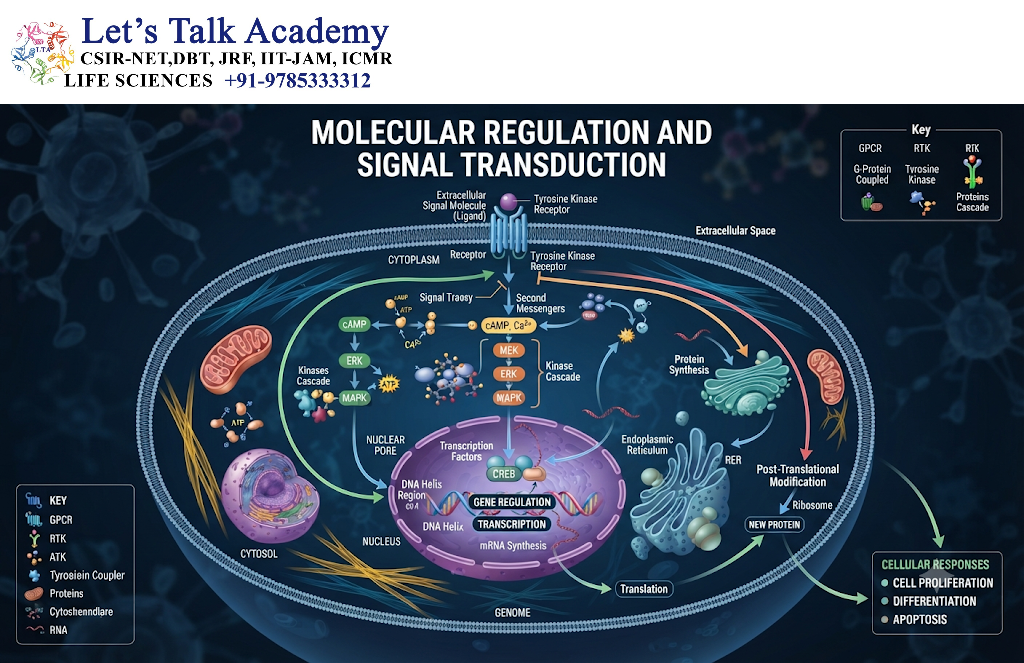
10.1 Two-Component Regulatory Systems
Two-component systems are among the most common signal-transduction mechanisms in bacteria.
A typical two-component system contains:
-
A sensor histidine kinase.
-
A response regulator.
The sensor detects an environmental or intracellular signal and undergoes autophosphorylation.
The phosphoryl group is transferred to a conserved aspartate residue in the response regulator.
The phosphorylated response regulator then influences a cellular response.
10.1.1 Chemotaxis and Two-Component Signaling
In classical chemotaxis, CheA is the histidine kinase, and CheY is a response regulator involved in motor control.
CheA activity is regulated by chemoreceptor complexes.
10.1.2 Quorum Sensing and Two-Component Signaling
Many Gram-positive quorum-sensing systems use membrane-associated sensor kinases and response regulators.
Some Gram-negative bacteria, including Vibrio species, also use multistep phosphorelay pathways in their quorum-sensing networks.
However, not every quorum-sensing system is based on a two-component system.
10.2 Phosphorylation and Dephosphorylation
Phosphorylation can alter the activity, structure, or interactions of signaling proteins.
Dephosphorylation reverses or terminates many signaling responses.
In chemotaxis, the balance between CheA-mediated phosphorylation and response-regulator dephosphorylation influences flagellar motor behavior.
In quorum sensing, phosphorylation and dephosphorylation may regulate signal flow through sensor kinases, response regulators, and phosphorelays.
10.3 Positive and Negative Feedback
Feedback is a major feature of biological regulatory networks.
Positive feedback
Positive feedback occurs when a signaling response increases the production or activity of components that reinforce that same response.
In quorum sensing, autoinducer production may increase following activation of the signaling pathway.
Negative feedback
Negative feedback occurs when a response reduces or limits its own activity.
In chemotaxis, receptor methylation and demethylation provide feedback that helps the cell adapt to persistent stimuli.
Feedback contributes to the stability, sensitivity, and timing of bacterial responses.
11. Experimental Methods for Studying Quorum Sensing
11.1 Reporter Gene Assays
Reporter genes are widely used to study quorum-sensing activity.
A reporter gene produces a measurable output, such as:
-
Fluorescence.
-
Bioluminescence.
-
Enzyme activity.
-
A color change.
Researchers can place a reporter under the control of a quorum-sensing-responsive promoter.
If the signaling pathway is activated, reporter expression changes, allowing researchers to estimate the activity of the regulatory system.
11.2 Signal Detection and Chemical Analysis
Autoinducers can be investigated using analytical techniques such as:
-
High-performance liquid chromatography.
-
Liquid chromatography–mass spectrometry.
-
Gas chromatography–mass spectrometry for suitable compounds.
-
Spectroscopic methods.
-
Chemical biosensors.
These techniques help identify the chemical structure of signals and measure their concentrations.
11.3 Gene Expression Analysis
Researchers can compare gene expression under different signaling conditions.
Common approaches include:
-
Quantitative reverse-transcription PCR.
-
RNA sequencing.
-
Transcriptomic analysis.
-
Promoter activity measurements.
-
Targeted expression assays.
These methods help identify genes regulated by quorum-sensing pathways.
11.4 Mutational Analysis
Mutant strains can be used to investigate the functions of genes involved in communication.
For example, researchers may examine the effects of deleting or altering genes encoding:
-
Autoinducer synthases.
-
Signal receptors.
-
Transcriptional regulators.
-
Signal-processing proteins.
-
Regulatory enzymes.
Complementation experiments can help determine whether a phenotype is specifically associated with the altered gene.
11.5 Biofilm Assays
Several experimental methods are used to study biofilm formation, including:
-
Crystal violet staining.
-
Microscopic imaging.
-
Flow-cell experiments.
-
Confocal laser scanning microscopy.
-
Viable-cell counting.
-
Biomass measurements.
These methods provide complementary information about biofilm structure, biomass, and cellular viability.
11.6 Important Experimental Controls
When studying bacterial communication, experimental controls are essential.
Researchers should consider:
-
Bacterial growth rate.
-
Cell viability.
-
Nutrient concentration.
-
Signal stability.
-
Solvent effects.
-
Genetic background.
-
Plasmid copy number.
-
Reporter specificity.
-
Cell density and culture volume.
A change in gene expression does not automatically prove that quorum sensing caused the response. The effects of growth, stress, metabolism, and other regulatory systems must be evaluated.
12. Ecological and Evolutionary Significance
12.1 Bacteria as Social Organisms
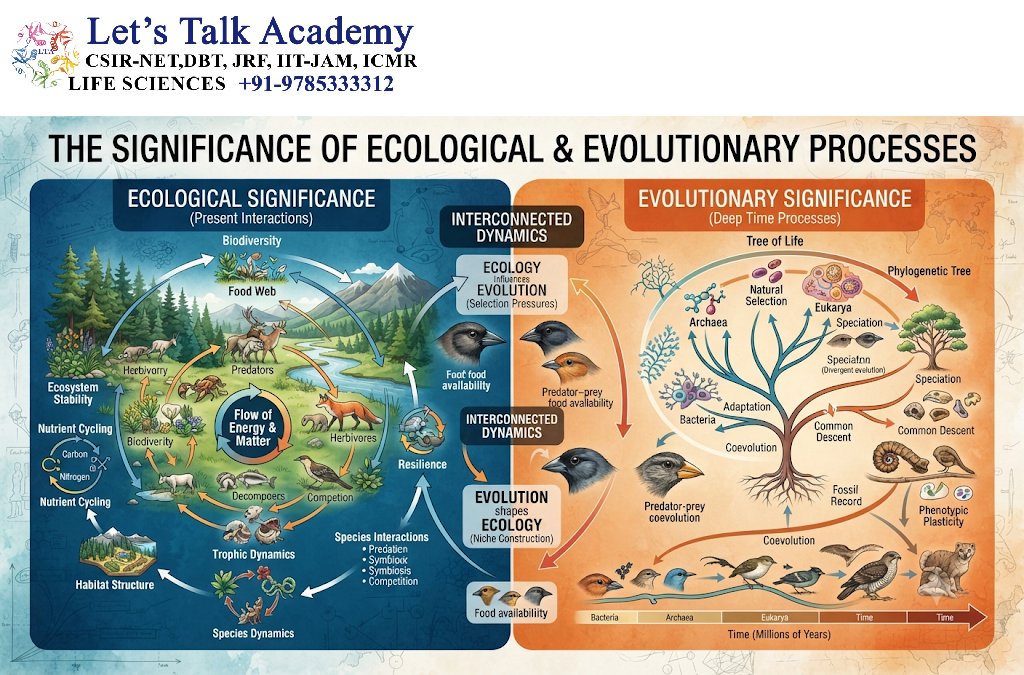
Bacteria can cooperate, compete, exchange information, and modify their surroundings.
Quorum sensing demonstrates that bacterial populations can coordinate particular activities through chemical signaling.
However, bacterial communities are not always cooperative. Cells may compete for nutrients, interfere with signaling, or exploit products produced by other organisms.
The balance between cooperation and competition influences microbial community structure.
12.2 Signal Specificity and Cross-Species Communication
Some signaling systems are highly specific, while others can detect signals produced by different organisms.
Cross-species signaling may allow bacteria to gather information about neighboring populations.
For example, a bacterium may respond to a signal that indicates the presence of another microbial species in the same environment.
This can influence gene expression, ecological interactions, and resource use.
12.3 Evolution of Chemotaxis
Chemotaxis provides a strong selective advantage when movement toward favorable environments improves survival or reproductive success.
The basic principles of receptor-mediated sensing and response-regulator signaling are widespread among bacteria and archaea, although the molecular details differ.
Evolutionary changes in receptor specificity, motor organization, and signal-processing proteins allow organisms to adapt chemotaxis to different ecological lifestyles.
12.4 Evolution of Quorum Sensing
Quorum-sensing systems may evolve under different ecological pressures.
Factors influencing their evolution include:
-
Benefits of collective behavior.
-
Costs of producing extracellular products.
-
Signal specificity.
-
Interactions with non-signaling cells.
-
Competition between microbial populations.
-
Environmental stability.
-
Signal interference by other organisms.
Quorum sensing is therefore relevant to the evolution of microbial social behavior and the regulation of shared resources.
13. Applications of Bacterial Chemotaxis and Quorum Sensing Research
13.1 Medical and Pharmaceutical Research
Chemotaxis and quorum sensing are studied to understand bacterial colonization, host interactions, and the regulation of pathogenicity-associated processes.
Research may contribute to the development of strategies that interfere with bacterial movement, signaling, or communication.
Quorum-sensing inhibitors and quorum-quenching compounds are being investigated as possible anti-virulence approaches.
These strategies aim to reduce harmful bacterial behavior without necessarily directly inhibiting bacterial growth.
Their clinical usefulness requires careful evaluation of effectiveness, safety, signal diversity, and the possibility of resistance.
13.2 Environmental Biotechnology
Bacterial chemotaxis can be relevant to the movement of microorganisms toward pollutants or favorable chemical environments.
Researchers investigate chemotactic responses in the context of:
-
Bioremediation.
-
Pollutant transformation.
-
Nutrient cycling.
-
Soil microbial ecology.
-
Aquatic microbial processes.
The ability of bacteria to locate chemical compounds may influence their access to substrates that can be metabolized or transformed.
13.3 Agriculture
Chemotaxis can help certain bacteria locate plant roots and other nutrient-rich regions.
Beneficial rhizosphere bacteria may respond to root-derived compounds and participate in plant–microbe interactions.
Quorum sensing and related signaling systems can also influence microbial colonization, interspecies interactions, and the production of compounds relevant to plant health.
The specific role of any signaling molecule must be assessed in the particular plant–microbe system.
13.4 Industrial Biotechnology
Bacterial signaling research has applications in microbial production systems.
Quorum-sensing networks can be used in synthetic biology to regulate the timing or coordination of gene expression.
Chemotaxis-related systems may also be studied as biological sensing platforms.
Potential applications include:
-
Biosensors.
-
Microbial production systems.
-
Engineered cell–cell communication.
-
Population-dependent gene regulation.
-
Environmental monitoring.
13.5 Synthetic Biology
Synthetic biology uses biological components to construct or modify regulatory systems.
Researchers can design artificial circuits inspired by natural chemotaxis and quorum-sensing networks.
Examples of possible research directions include:
-
Engineering cells to respond to specific chemical stimuli.
-
Constructing population-responsive gene circuits.
-
Developing biological feedback systems.
-
Designing microbial biosensors.
-
Creating programmable communication networks.
The success of these approaches depends on signal specificity, circuit stability, metabolic burden, and the behavior of the engineered organism.
14. Advanced Concepts in Bacterial Chemotaxis and Quorum Sensing
This section explores several advanced concepts that help explain how bacterial signaling systems function in complex environments.
14.1 Temporal Sensing and Spatial Sensing
Bacteria can detect environmental information through different sensing strategies.
Temporal sensing involves comparing the current concentration of a chemical with concentrations experienced in the recent past.
In the classical E. coli chemotaxis system, temporal sensing allows bacteria to detect whether the environment is becoming more favorable or less favorable.
Spatial sensing involves comparing information from different locations. In some organisms, multiple receptors or cells can contribute to spatial information processing.
The small size of bacteria makes temporal comparisons particularly useful because the concentration difference across the cell may be very small.
14.2 Signal Noise and Accuracy
Bacterial signaling systems operate in environments where chemical concentrations fluctuate and molecular interactions are subject to random variation.
This creates a problem known as biological noise.
For example:
-
Receptor molecules may fluctuate between different activity states.
-
Autoinducer molecules may be produced at variable rates.
-
Signal molecules may diffuse unpredictably.
-
Protein concentrations may vary among individual cells.
Bacteria use receptor clustering, feedback mechanisms, signal integration, and regulatory networks to improve the reliability of cellular responses.
However, signaling systems are not perfectly accurate. Variability among individual cells can produce different behaviors within the same population.
14.3 Heterogeneity Within Bacterial Populations
A bacterial population may contain genetically similar cells that behave differently.
This phenomenon is known as phenotypic heterogeneity.
Even when cells experience similar environmental conditions, they may differ in:
-
Receptor abundance.
-
Signaling protein concentrations.
-
Metabolic state.
-
Growth rate.
-
Autoinducer production.
-
Response thresholds.
As a result, not every cell necessarily responds to a quorum-sensing signal at the same time.
Population-level behavior can therefore emerge from a combination of individual cellular responses.
14.4 Quorum Sensing in Multispecies Communities
Natural microbial communities often contain numerous bacterial species.
In such communities, signaling molecules may be:
-
Produced by different species.
-
Detected by multiple species.
-
Modified by neighboring microorganisms.
-
Degraded by environmental enzymes.
-
Transported between different regions.
Consequently, quorum sensing may provide information about the composition of a microbial community rather than simply the number of cells of one species.
The response to a signal depends on receptor specificity and the physiological context of the recipient organism.
14.5 Chemotaxis in Heterogeneous Environments
Natural environments are rarely uniform.
Soil, water, sediments, and host tissues contain chemical gradients that can vary over very small distances.
Bacteria may encounter gradients of:
-
Oxygen.
-
Organic acids.
-
Sugars.
-
Amino acids.
-
Electron donors and acceptors.
-
pH.
-
Toxic compounds.
Chemotaxis can influence the distribution of bacteria within these environments.
However, movement is also affected by fluid flow, cell shape, physical barriers, surface attachment, and the availability of energy for motility.
14.6 Crosstalk Between Signaling Networks
Bacterial cells often possess multiple regulatory systems that interact with one another.
For example, chemotaxis, quorum sensing, stress responses, and nutrient regulation may influence the same physiological behavior.
Crosstalk can occur through:
-
Shared regulatory proteins.
-
Common second messengers.
-
Changes in gene expression.
-
Metabolic interactions.
-
Regulation of motility-associated genes.
-
Signal-dependent changes in cell physiology.
This allows bacteria to make decisions based on multiple environmental inputs rather than relying on a single signal.
15. Key Molecular Components: A Consolidated Overview
15.1 Important Chemotaxis Proteins
|
Protein |
Principal function in the classical E. coli model |
|---|---|
|
MCPs |
Detect chemical stimuli and regulate the chemotaxis signaling complex |
|
CheA |
Histidine kinase that undergoes autophosphorylation |
|
CheW |
Connects chemoreceptors with CheA |
|
CheY |
Response regulator that controls flagellar motor switching through CheY-P |
|
CheZ |
Promotes CheY-P dephosphorylation in E. coli |
|
CheR |
Adds methyl groups to chemoreceptors |
|
CheB |
Removes methyl groups from chemoreceptors after activation |
|
Flagellar motor |
Converts signaling information into changes in swimming behavior |
15.2 Important Quorum-Sensing Components
|
Component |
Function |
|---|---|
|
Autoinducer synthase |
Produces a quorum-sensing signal |
|
Autoinducer |
Chemical molecule involved in communication |
|
Signal receptor |
Recognizes an appropriate signaling molecule |
|
Transcriptional regulator |
Controls target gene expression |
|
Sensor histidine kinase |
Detects signals and initiates a phosphorylation pathway in suitable systems |
|
Response regulator |
Transmits information to downstream cellular targets |
|
Regulatory RNA |
Influences gene expression at the post-transcriptional level in certain networks |
|
Quorum-quenching enzyme |
Reduces signal activity through chemical modification or degradation |
The precise components vary among bacterial species. Not all quorum-sensing systems contain the same proteins.
16. Important Examples of Bacterial Signaling Systems
16.1 Escherichia coli Chemotaxis
The E. coli chemotaxis system is a classical model for understanding bacterial movement.
Its key features include:
-
MCP-based chemical sensing.
-
CheA–CheY phosphotransfer.
-
Flagellar motor regulation.
-
Receptor methylation and demethylation.
-
Run-and-tumble movement.
-
Cooperative signaling through receptor arrays.
16.2 Aliivibrio fischeri Quorum Sensing
This bacterium provides a classical example of LuxI–LuxR-type signaling.
Important features include:
-
Autoinducer synthesis.
-
Signal accumulation.
-
LuxR-dependent gene regulation.
-
Population-associated bioluminescence.
16.3 Pseudomonas aeruginosa Quorum Sensing
Pseudomonas aeruginosa contains multiple interconnected regulatory pathways that influence extracellular products, microbial interactions, and biofilm-associated behavior.
Its signaling networks illustrate the complexity of quorum sensing and its integration with other regulatory systems.
16.4 Bacillus subtilis Signaling
Bacillus subtilis uses peptide-based communication and other regulatory mechanisms to coordinate physiological processes.
These include developmental decisions, competence, and responses to environmental conditions.
Its signaling networks demonstrate that population-associated regulation can involve more than a single autoinducer and receptor.
17. Important Distinctions and Common Misconceptions
17.1 Chemotaxis Is Not the Same as Chemokinesis
Chemotaxis is directed movement in response to a chemical gradient.
Chemokinesis is a change in the speed or frequency of movement caused by a chemical substance, without necessarily producing movement toward or away from a specific gradient.
For example, a chemical may increase bacterial swimming speed without causing a directional response.
17.2 Quorum Sensing Is Not Simply Counting Cells
Bacteria do not necessarily count individual cells.
They detect chemical signals, and the concentration of those signals may provide information about the surrounding population and environment.
Signal concentration depends on more than cell number.
17.3 All Bacteria Do Not Use Quorum Sensing
Quorum sensing is widespread, but it is not a universal feature of every bacterial species or every bacterial behavior.
Many bacteria regulate their activities through other mechanisms, and some use multiple signaling systems.
17.4 Biofilm Formation Does Not Always Require Quorum Sensing
Biofilms can develop through several regulatory pathways.
Although quorum sensing contributes to biofilm development in some organisms, it is not essential for every biofilm-forming species or every stage of biofilm development.
17.5 Chemotaxis Does Not Always Lead Directly to Growth
Chemotaxis can help bacteria locate nutrients, but a chemotactic response does not guarantee that the organism will grow.
Growth also depends on nutrient utilization, energy availability, environmental conditions, and other physiological factors.
17.6 Quorum Sensing Does Not Always Mean Cooperation
Quorum sensing can regulate collective behaviors, but the resulting interactions may involve cooperation, competition, exploitation, or combinations of these processes.
The biological outcome depends on the ecological context.


