
Structure of Chemical Bonds
Biomolecules are the chemical substances that form the structural and functional foundation of living organisms. Every living cell contains a highly organized collection of molecules that interact with one another in a precise and coordinated manner. Proteins, carbohydrates, lipids, nucleic acids, vitamins, hormones, pigments, metabolites and many other biological compounds are maintained by different types of chemical bonds and molecular interactions.
The structure of a biomolecule is not determined simply by the atoms present in it. The way in which these atoms are connected and the forces acting between different parts of the molecule are equally important. A small change in the type, orientation or strength of a chemical interaction can produce a major change in the three-dimensional structure and biological function of a molecule.
For example, amino acids are connected through strong covalent peptide bonds to form a polypeptide chain. However, this chain does not normally remain as a simple linear molecule. It folds into a highly organized three-dimensional structure through the combined contribution of hydrogen bonds, hydrophobic interactions, electrostatic interactions, van der Waals forces and, in some proteins, disulfide bonds.
Similarly, DNA contains a covalently linked sugar-phosphate backbone, but the two strands are organized through hydrogen bonding between complementary bases and stabilized extensively by base-stacking interactions and interactions with the surrounding aqueous environment.
Therefore, understanding chemical bonding is one of the most fundamental requirements for understanding biomolecular structure and function.
1. Classification of Chemical Interactions in Biomolecules
Chemical interactions present in biological molecules can broadly be divided into two major categories: covalent bonds and non-covalent interactions.
This classification is based mainly on whether electrons are shared directly between atoms to form a chemical bond.
Covalent bonds are generally strong interactions in which atoms share one or more pairs of electrons. They form the fundamental chemical framework of most biological molecules. Non-covalent interactions, on the other hand, generally do not involve the formation of a new shared electron pair between the interacting groups. Individually, these interactions are usually weaker than covalent bonds, but their collective contribution is extremely important in biological systems.
Major Types of Interactions
- Covalent bonds
- Electrostatic interactions
- Hydrogen bonds
- Van der Waals interactions
- Hydrophobic interactions
It is important to understand that biological molecules rarely depend on only one type of
interaction. A functional protein, nucleic acid or membrane is usually stabilized by several
different interactions acting simultaneously.
2. Covalent Bond
A covalent bond is a strong chemical bond formed when two atoms share one or more pairs of electrons with each other. The shared electrons are attracted by the nuclei of both participating atoms, creating a stable association between the atoms.
The concept of covalent bonding is closely related to the electronic configuration of atoms. Atoms tend to achieve energetically favorable electron configurations. Sharing electrons allows many atoms to reach a more stable valence-shell configuration.
Covalent bonds are particularly important in biological molecules because they provide the basic structural framework of biomolecules. Once a covalent bond is formed, considerable energy is generally required to break it compared with the energy required to disrupt many individual non-covalent interactions.
Examples of biologically important covalent bonds include peptide bonds in proteins, phosphodiester bonds in nucleic acids, glycosidic bonds in carbohydrates, ester bonds in lipids and disulfide bonds in proteins.
2.1 Characteristics of Covalent Bonds
Covalent bonds are characterized by the sharing of electrons between atoms. The number of electron pairs shared determines whether the bond is single, double or triple.
A single covalent bond contains one shared electron pair. A double bond contains two shared electron pairs, whereas a triple bond contains three shared electron pairs.
For example, oxygen gas contains an O=O double bond, while nitrogen gas contains an N≡N triple bond. In biological molecules, both single and double covalent bonds are extremely important. The peptide backbone contains single bonds and partial double-bond character around peptide linkages, while nucleic acids and aromatic biological compounds contain numerous double-bond systems.
3. Example of a Covalent Bond: Methane
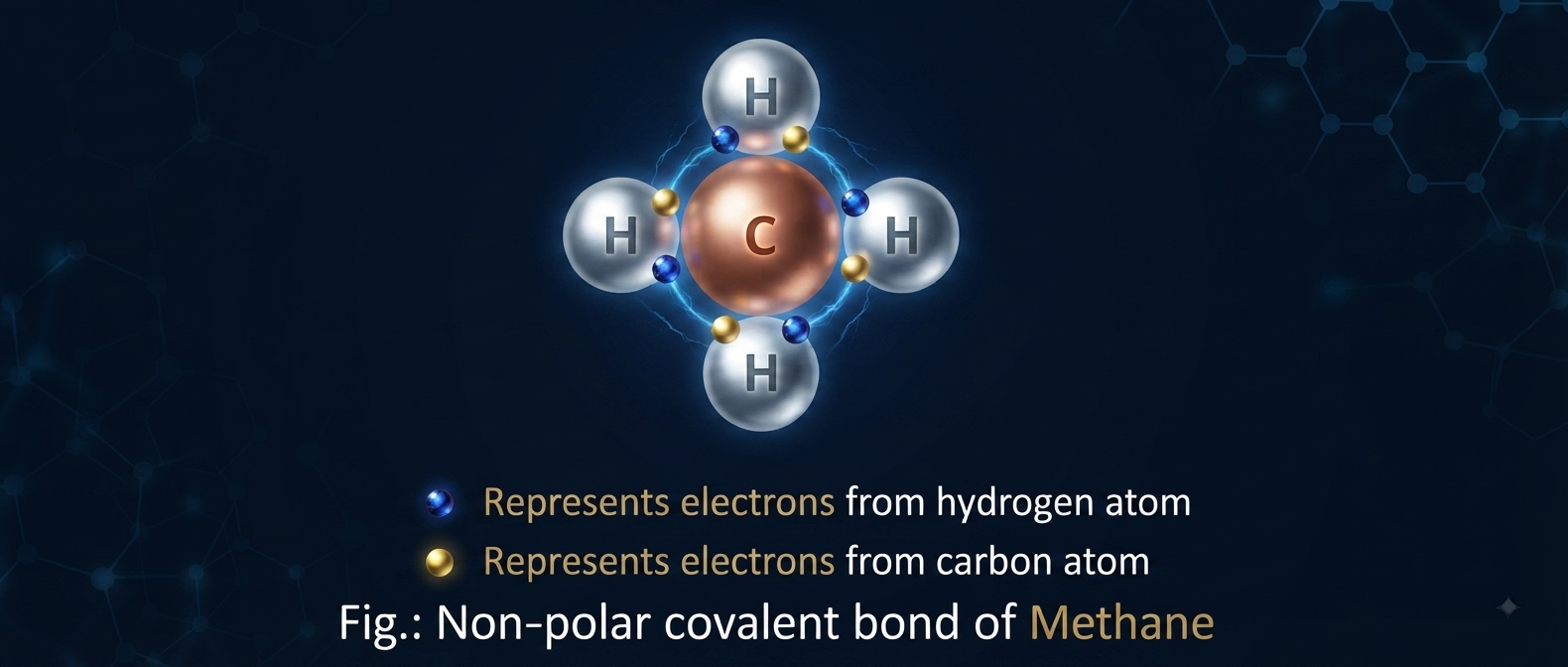
A simple example of covalent bonding is the formation of methane, CH4.
Carbon contains four valence electrons, whereas each hydrogen atom contains one valence electron. Carbon can share one electron with each of four hydrogen atoms. Each hydrogen
similarly contributes one electron to a shared electron pair.
As a result, carbon forms four C-H covalent bonds and achieves a stable valence-shell configuration.
The Lewis structure of methane represents the shared electron pairs between carbon and hydrogen. The molecule has a tetrahedral geometry with carbon at the center and four hydrogen atoms directed toward the corners of a tetrahedron.
An important concept is that bond polarity and molecular polarity are not necessarily identical. The C-H bonds may have a small degree of polarity because of the difference in electronegativity between carbon and hydrogen. However, the tetrahedral symmetry of methane causes the individual bond dipoles to cancel to a large extent, making methane an overall non-polar molecule.
4. Non-Polar Covalent Bond
A non-polar covalent bond is a covalent bond in which the bonding electrons are shared approximately equally between the two participating atoms.
This generally occurs when the atoms have identical or very similar electronegativities. Because the electrons are distributed relatively symmetrically, there is little or no significant separation of partial positive and partial negative charges across the bond.
Common examples include bonds between identical atoms such as H-H, Cl-Cl, O=O and N≡N.
4.1 Examples
In molecular hydrogen, the two hydrogen atoms have identical electronegativities. Therefore, the bonding electron pair is shared equally between them and the H-H bond is non-polar.
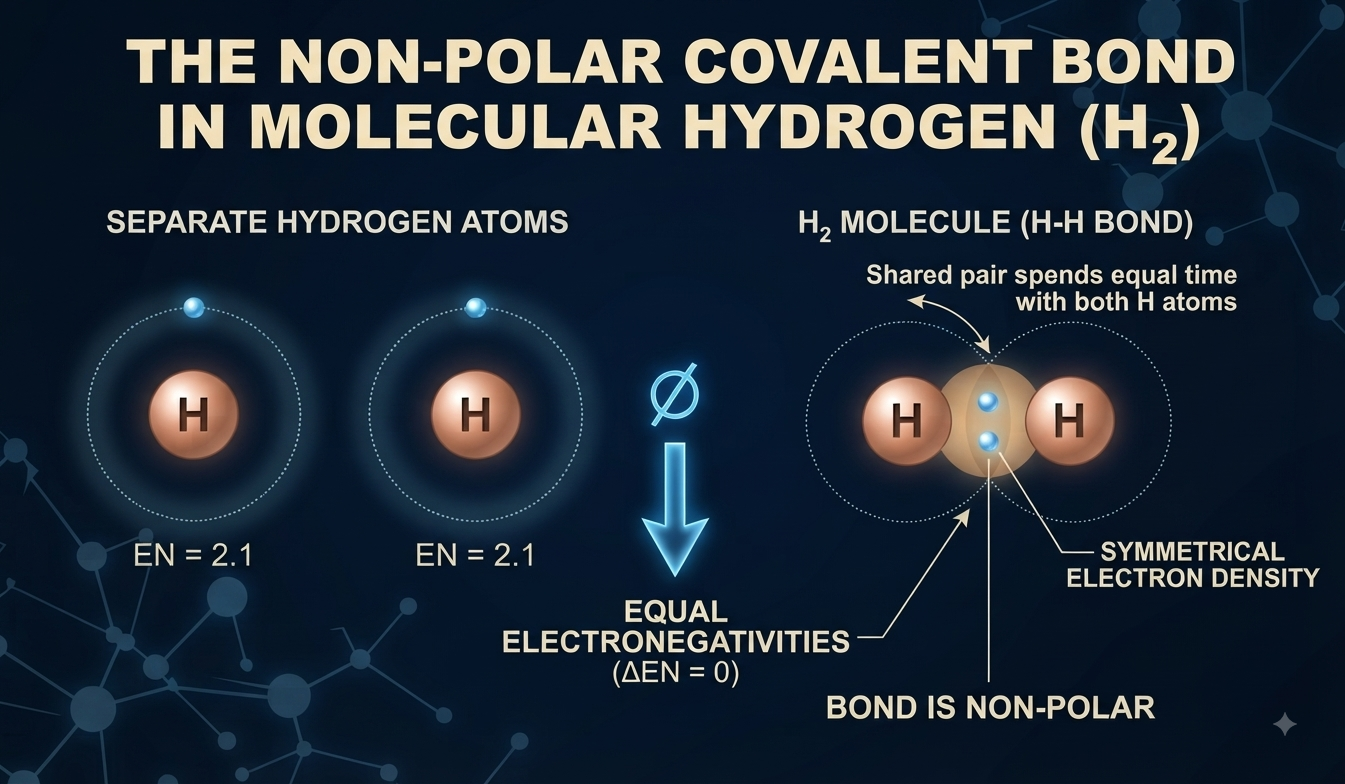
Similarly, in molecular oxygen, the two oxygen atoms have the same electronegativity. Consequently, the O=O double bond is non-polar.
4.2 Non-Polar Molecules Versus Non-Polar Bonds
An important conceptual distinction is that a molecule may be non-polar even when some of its individual bonds have polarity.
Molecular polarity depends not only on bond polarity but also on the three-dimensional arrangement of the bonds. If bond dipoles are arranged symmetrically, they may cancel one another.
For example, carbon dioxide contains two polar C=O bonds. However, because carbon dioxide is linear, the two bond dipoles point in opposite directions and cancel. Therefore, CO2 is a non-polar molecule despite containing polar bonds.
This distinction is frequently useful in conceptual questions involving molecular structure.
5. Polar Covalent Bond
A polar covalent bond is a covalent bond in which the bonding electrons are shared unequally between two atoms because the atoms have different electronegativities.
The more electronegative atom attracts the shared electron pair more strongly. Consequently, the electron density becomes greater around that atom. This produces a partial negative charge represented by δ−. The less electronegative atom develops a partial positive charge represented by δ+.
The bond therefore develops an electrical dipole.
The greater the difference in electronegativity between two atoms, the greater the tendency toward unequal electron distribution and polar character, although bonding exists on a continuum between predominantly covalent and predominantly ionic character.
5.1 Example: Water
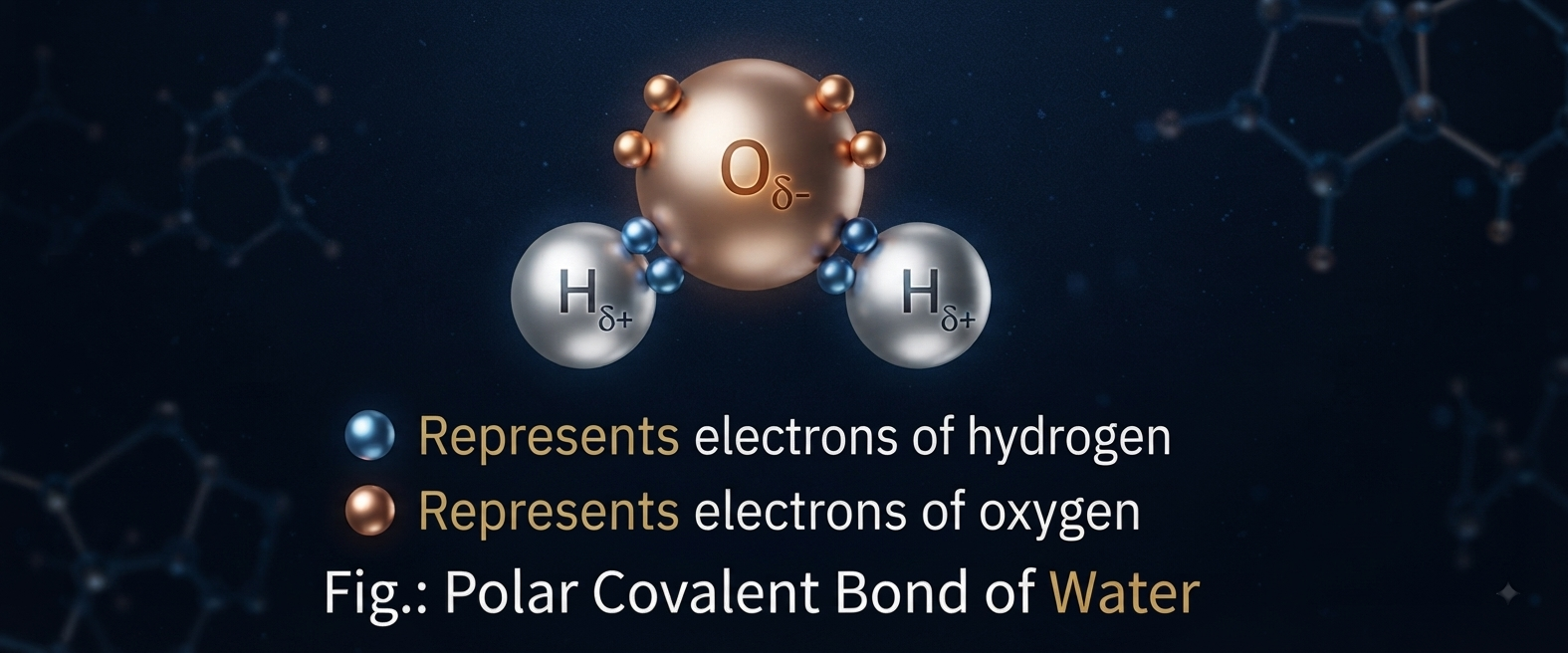
Water, H2O, is one of the most important examples of a polar molecule in biology.
Oxygen is considerably more electronegative than hydrogen. Therefore, the bonding electrons of each O-H bond are attracted more strongly toward oxygen.
As a result, oxygen develops a partial negative charge, whereas hydrogen atoms develop partial positive charges.
The polarity of water is further enhanced by its bent geometry. Because the two O-H bonds are not arranged in a straight line, their dipole moments do not cancel.
The polarity of water is biologically extremely important. It allows water molecules to participate in extensive hydrogen bonding and enables water to dissolve many ionic and polar substances.
5.2 Biological Importance of Polar Covalent Bonds
Polar covalent bonds are common in biological molecules. Functional groups such as hydroxyl, carbonyl, carboxyl, amino and phosphate groups contain polar bonds and therefore interact strongly with water and other polar molecules.
The polarity of these functional groups contributes to the solubility, reactivity and biological behavior of biomolecules.
6. Electronegativity and Bond Polarity
Electronegativity refers to the tendency of an atom to attract the shared electrons of a chemical bond toward itself.
When two bonded atoms have similar electronegativities, electron sharing is relatively equal. When their electronegativities differ significantly, the electron pair is pulled more strongly toward one atom.
Therefore, electronegativity differences help determine whether a covalent bond has a significant polar character.
The following general relationship is useful:
Small electronegativity difference → more equal electron sharing
Larger electronegativity difference → more unequal electron sharing
However, electronegativity alone does not determine the polarity of an entire molecule. Molecular geometry must also be considered.
6.1 Bond Dipole
A bond dipole occurs when electrical charge is distributed unequally across a chemical bond. The direction of the bond dipole is conventionally associated with the more electronegative atom.
The overall dipole moment of a molecule depends on both the magnitude and direction of individual bond dipoles.
This is why molecular geometry becomes extremely important when determining whether a molecule is polar or non-polar.
7. Covalent Bonds in Biological Molecules
Covalent bonds form the fundamental framework of biological macromolecules. Without covalent bonding, the long and complex structures of proteins, nucleic acids, carbohydrates and lipids could not be maintained.
7.1 Peptide Bond
A peptide bond is a covalent bond formed between the carboxyl group of one amino acid and the amino group of another amino acid.
The reaction involves the removal of a molecule of water and is therefore commonly described as a condensation or dehydration reaction.
The resulting peptide linkage forms an important part of the protein backbone.
The peptide bond has partial double-bond character because of resonance. Consequently, the peptide group is relatively planar and rotation around the peptide C-N bond is restricted. This property is extremely important for understanding protein conformation.
7.2 Phosphodiester Bond
Nucleotides in DNA and RNA are joined through phosphodiester bonds. These covalent bonds connect the sugar moiety of one nucleotide with the phosphate group associated with the next nucleotide.
The phosphodiester linkage forms the negatively charged sugar-phosphate backbone of nucleic acids.
7.3 Glycosidic Bond
Monosaccharides can be joined through glycosidic bonds. These covalent linkages are responsible for the formation of disaccharides, oligosaccharides and polysaccharides.
The biological properties of carbohydrates depend strongly on the position and stereochemistry of glycosidic linkages.
7.4 Ester Bond
Many lipids contain ester bonds. In triglycerides, fatty acids are linked to glycerol through ester linkages.
These covalent bonds are important in constructing energy-storage molecules and several structural lipids.
7.5 Disulfide Bond
A disulfide bond is a covalent S-S linkage formed between two cysteine residues.
Disulfide bonds are particularly important in many extracellular proteins where they help
stabilize the folded structure of the protein.
8. Non-Covalent Bonding and Interactions
Non-covalent interactions are extremely important in biological systems because they allow biological molecules to interact dynamically without permanently altering their covalent structure.
Unlike most covalent bonds, many non-covalent interactions can form and break relatively easily under physiological conditions. This reversibility is essential for biological processes such as enzyme catalysis, ligand binding, signal transduction and molecular recognition.
For example, an enzyme must bind its substrate, perform or facilitate a chemical reaction, and then release the product. If enzyme-substrate recognition depended entirely on strong irreversible covalent bonds, normal enzyme function would often be impossible.
Instead, enzymes use combinations of hydrogen bonds, electrostatic interactions, hydrophobic contacts and van der Waals interactions to recognize substrates with high specificity.
9. Electrostatic Interactions
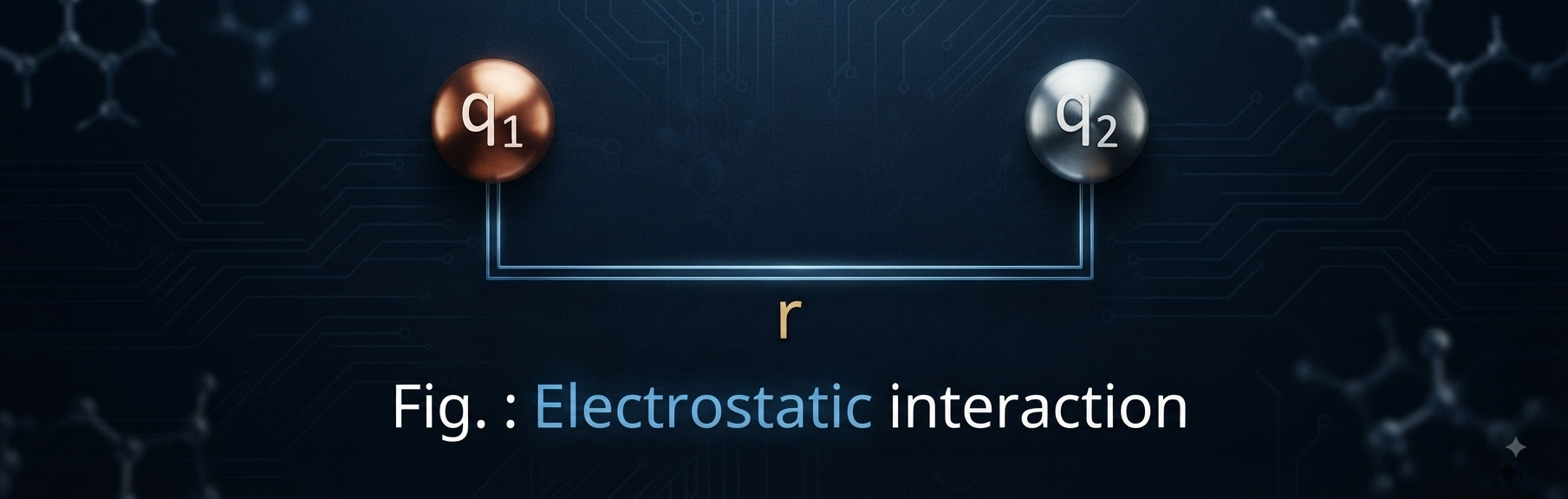
An electrostatic interaction is an interaction arising from the attraction or repulsion between electric charges.
Opposite charges attract each other, whereas charges of the same sign repel one another.
Therefore:
Positive (+) and Negative (-) → Attraction
Positive (+) and Positive (+) → Repulsion
Negative (-) and Negative (-) → Repulsion
Electrostatic interactions are especially important in proteins because amino acid side chains may carry positive or negative charges depending on their chemical properties and the surrounding pH.
9.1 Charged Amino Acid Side Chains
At physiological pH, lysine and arginine are generally positively charged, while aspartate and glutamate are generally negatively charged.
Histidine is particularly important because its side chain can change protonation state near physiological pH, making histidine useful in enzyme active sites and proton-transfer reactions.
9.2 Salt Bridges
An electrostatic interaction between oppositely charged groups within a protein is commonly referred to as a salt bridge.
For example, the positively charged amino group of lysine can interact with the negatively charged carboxylate group of glutamate.
Lys-NH3+ ··· –OOC-Glu
Salt bridges can contribute to protein stability, but their actual contribution depends strongly on whether the charged groups are exposed to water or buried within the protein.
9.3 Effect of Solvent
The strength of electrostatic interactions depends strongly on the surrounding medium. Water is a highly polar solvent and has a high dielectric constant. It can shield charged groups and reduce the effective electrostatic attraction between them.
The presence of dissolved ions can also shield charges from one another. This phenomenon is important in biological solutions because cells contain substantial concentrations of ions.
Therefore, the strength of an electrostatic interaction depends on factors such as distance, dielectric environment, ionic strength, pH and protonation state.
9.4 Coulombic Relationship
The basic electrostatic interaction between charges can be described conceptually using
Coulomb’s law:
F ∝ (q1q2)/(εr2)
where q1 and q2 represent the charges, r represents the distance between them, and ε represents the dielectric properties of the surrounding medium.
This relationship explains why electrostatic interactions become weaker as charged groups move farther apart and why the surrounding solvent can strongly influence these interactions.
10. Hydrogen Bonds
A hydrogen bond is a relatively weak but highly important directional non-covalent interaction involving a hydrogen atom covalently attached to an electronegative
atom and an electronegative acceptor atom possessing an available electron pair. The general representation is:
D-H ··· A
Here, D-H represents the hydrogen bond donor and A represents the hydrogen bond acceptor.
Hydrogen bonding is one of the most important interactions in biological systems because water, proteins, DNA, RNA and many other biomolecules contain groups capable of participating in hydrogen bonding.
10.1 Hydrogen-Bond Donor
A hydrogen-bond donor is a chemical group containing a hydrogen atom covalently attached to an electronegative atom.
Common biological donors include:
- O-H groups
- N-H groups
The electronegative atom withdraws electron density from hydrogen, leaving hydrogen with partial positive character. This allows the hydrogen to interact with an electron-rich acceptor atom.
10.2 Hydrogen-Bond Acceptor
A hydrogen-bond acceptor is generally an electronegative atom possessing an available lone pair of electrons that can interact with the partially positive hydrogen.
Oxygen and nitrogen are particularly important hydrogen-bond acceptors in biological molecules, although the ability of a specific atom to accept a hydrogen bond depends on its chemical environment and protonation state.
11. Hydrogen Bonding in Water
Water is one of the best examples for understanding hydrogen bonding.
Because oxygen is more electronegative than hydrogen, each water molecule contains polar O-H bonds. Oxygen carries partial negative character, whereas hydrogen carries partial positive character.
The partially positive hydrogen of one water molecule can therefore interact with the partially negative oxygen of another water molecule.
O-H ··· O
Through this process, water molecules form extensive and dynamic hydrogen-bond networks. The hydrogen bonds continuously break and reform, allowing water to remain a fluid while still maintaining strong intermolecular organization.
Hydrogen bonding contributes to the high boiling point, cohesion, surface tension, heat capacity and solvent properties of water. These properties are extremely important for life.
12. Hydrogen Bonds in Proteins
Hydrogen bonds play a central role in protein structure, particularly in the formation and stabilization of secondary structures.
12.1 Alpha Helix
In an α-helix, hydrogen bonds form between the carbonyl oxygen of one peptide bond and the amide hydrogen of another peptide bond located further along the polypeptide chain.
These repeated hydrogen bonds help maintain the helical arrangement of the polypeptide backbone.
12.2 Beta Sheet
In a β-sheet, hydrogen bonds form between peptide backbone groups of adjacent regions of the polypeptide chain.
The strands may be arranged in parallel or antiparallel orientations, producing different patterns of hydrogen bonding.
Therefore, hydrogen bonding is one of the major structural forces involved in organizing protein secondary structure.
However, it is important to remember that protein stability is not determined by hydrogen bonds alone. Hydrophobic interactions, electrostatic interactions, van der Waals forces and covalent disulfide bonds can also contribute significantly.
13. Hydrogen Bonds in DNA
Hydrogen bonding is responsible for the specific pairing of complementary bases in DNA.
Adenine pairs with thymine through two hydrogen bonds, whereas guanine pairs with cytosine through three hydrogen bonds.
The base-pairing pattern provides molecular specificity and allows one DNA strand to act as a template for the other.
Base stacking interactions between adjacent aromatic bases make a major contribution to the stability of the DNA double helix. The surrounding aqueous environment, ionic conditions and sequence composition also influence DNA stability.
Therefore, the statement that “GC-rich DNA is always stable simply because G-C has three hydrogen bonds” is an oversimplification. The thermodynamic stability of DNA depends on multiple factors.
14. Van der Waals Interactions
Van der Waals interactions are weak, short-range, non-covalent attractive interactions that arise because of interactions between permanent, induced, or instantaneous dipoles in atoms and molecules. Although an individual van der Waals interaction is relatively weak compared with a covalent bond, thousands or even millions of such interactions can collectively make an important contribution to the stability and specificity of biological macromolecules.
The fundamental basis of van der Waals interactions is related to the distribution of electrons around atoms and molecules. Electrons are continuously moving and therefore the electron distribution around an atom or molecule is not always perfectly symmetrical. At a particular instant, electrons may be slightly more concentrated in one region than another. This produces a temporary separation of electrical charge called an instantaneous dipole.
This instantaneous dipole can influence the electron distribution of a neighboring atom or molecule. The electron cloud of the neighboring molecule becomes distorted, producing an induced dipole. The resulting electrostatic attraction between the two dipoles contributes to the overall van der Waals interaction.
Therefore, even atoms and molecules that do not possess a permanent electrical dipole can experience attractive intermolecular forces.
Van der Waals interactions are particularly important in biological systems because atoms in proteins, nucleic acids, lipids and small molecules are packed very closely together. When two molecular surfaces fit together correctly, a large number of atoms can establish favorable van der Waals contacts.
14.1 Origin of Van der Waals Interactions
The electron distribution around an atom should not be considered completely static. Electrons are constantly moving around the nucleus. At any particular moment, there may be a slight asymmetry in the distribution of electrons.
For example, consider an otherwise non-polar atom. Although the average distribution of electrons around the nucleus may be symmetrical, at a particular instant the electrons may temporarily be concentrated more toward one side of the atom. That side becomes slightly more negative, while the opposite side becomes slightly more positive.
This temporary separation of charge is called an instantaneous dipole.
The instantaneous dipole can then influence a neighboring atom. The electron cloud of the neighboring atom is displaced or distorted, producing an induced dipole.
The opposite partial charges of these dipoles attract one another. This produces a weak intermolecular attraction.
Therefore, the basic sequence can be represented as:
Temporary fluctuation in electron distribution
→ Instantaneous dipole
→ Induced dipole in neighboring atom
→ Attraction
This phenomenon is especially important for non-polar atoms and molecules because it explains why even substances without permanent dipoles can attract one another.
14.2 Three Classical Types of Van der Waals Interactions
Classical van der Waals interactions are commonly divided into three major categories:
- Keesom interaction:
Permanent dipole – permanent dipole interaction - Debye interaction:
Permanent dipole – induced dipole interaction - London dispersion interaction:
Instantaneous dipole – induced dipole interaction
14.3 Dipole-Dipole Interaction: Keesom Interaction
A dipole-dipole interaction, also called a Keesom interaction, occurs between two molecules that possess permanent dipoles.
A polar molecule contains an unequal distribution of electrical charge. One region of the molecule has partial positive character, while another region has partial negative character.
When two polar molecules approach one another, the partially positive region of one molecule can interact attractively with the partially negative region of the other molecule.
The basic arrangement can be represented as:
δ+ — δ−
···
δ+ — δ−
The exact orientation of the molecules is important because the attraction is strongest when opposite partial charges are positioned favorably.
14.3.1 Example of Dipole-Dipole Interaction
Hydrogen chloride (HCl) is a simple example of a polar molecule. Chlorine is more electronegative than hydrogen, so the chlorine end of the molecule carries partial negative character and the hydrogen end carries partial positive character.
When two HCl molecules approach each other, the partially positive hydrogen region of one molecule can interact with the partially negative chlorine region of another molecule.
This is a permanent dipole-permanent dipole interaction.
14.3.2 Biological Significance of Dipole-Dipole Interactions
Many functional groups present in biomolecules are polar. Carbonyl groups, hydroxyl groups, amide groups and several other functional groups contain permanent dipoles. Consequently, dipole-dipole interactions can contribute to the association and orientation of biomolecules.
For example, polar groups in an enzyme active site can interact favorably with complementary polar groups in a substrate. These interactions can contribute to molecular recognition and substrate binding.
However, in biological systems, permanent dipole interactions usually operate together with hydrogen bonds, electrostatic interactions, hydrophobic effects and other molecular forces rather than acting independently.
14.3.3 Factors Affecting Keesom Interactions
The strength of a permanent dipole-permanent dipole interaction depends on several factors, including the magnitude of the dipole moments, the distance between the molecules, their relative orientation and temperature.
As the distance between the molecules increases, the interaction becomes weaker. Similarly, unfavorable molecular orientation can reduce the attractive interaction.
Temperature also affects these interactions because increasing thermal motion tends to disturb the preferred orientation of polar molecules.
14.4 Dipole-Induced Dipole Interaction: Debye Interaction
A dipole-induced dipole interaction, also called a Debye interaction, occurs when a molecule possessing a permanent dipole induces a temporary dipole in a neighboring non-polar molecule.
A polar molecule has a permanent separation of charge. When it approaches a neighboring non-polar molecule, its electric field can distort the electron distribution of that neighboring molecule.
The electron cloud of the non-polar molecule is displaced slightly toward or away from the permanent dipole. As a result, the previously non-polar molecule develops a temporary induced dipole.
The basic process can therefore be represented as:
Permanent dipole
→
Distortion of neighboring electron cloud
→
Induced dipole
→
Attraction
14.4.1 Example of Debye Interaction
Consider a polar molecule approaching a non-polar molecule such as molecular oxygen or another non-polar species. The electric field produced by the polar molecule can distort the electron distribution of the neighboring molecule.
The non-polar molecule therefore develops a temporary positive and negative region. The resulting induced dipole can interact attractively with the permanent dipole of the original polar molecule.
14.4.2 Importance of Polarizability
The extent to which an electron cloud can be distorted is called polarizability.
Molecules with highly polarizable electron clouds are more easily distorted and can therefore form stronger induced-dipole interactions.
Polarizability generally increases with the size of the electron cloud and the number of electrons. Large atoms and molecules are often more polarizable than small ones.
This concept is important when comparing the strength of intermolecular interactions among molecules of different sizes.
14.4.3 Biological Significance of Debye Interactions
In biological systems, a polar group can influence a nearby non-polar group through induced polarization. Although the contribution of an individual interaction is small, many such interactions can contribute to the overall stability of a protein-ligand complex.
Debye interactions are therefore one of the many forces that contribute to the molecular complementarity required for biomolecular recognition.
14.5 London Dispersion Interaction
The London dispersion force is a particularly important type of van der Waals interaction. It arises from temporary fluctuations in electron distribution that produce instantaneous dipoles.
Even a non-polar atom or molecule has electrons that are continuously moving. At any particular instant, the electrons may become slightly more concentrated on one side of the atom or molecule.
This produces an instantaneous dipole.
The instantaneous dipole then distorts the electron distribution of a neighboring atom or molecule, creating an induced dipole.
The two dipoles interact attractively.
Therefore, London dispersion interaction can be represented as:
Instantaneous dipole
→
Induced dipole
→
Attraction
14.5.1 Why Does an Instantaneous Dipole Form?
Electrons do not remain fixed at a particular location around the nucleus. Their continuous motion means that the electron distribution is constantly changing.
Although the average electron distribution of a non-polar atom may be symmetrical, it can become temporarily asymmetrical.
At one instant, more electron density may be present on one side of the atom. That side becomes slightly negative, while the opposite side becomes slightly positive.
This temporary charge separation is called an instantaneous dipole.
Because electrons continue to move, the location of the instantaneous dipole also changes continuously.
14.5.2 Formation of the Induced Dipole
The instantaneous dipole creates an electric field around itself. When a neighboring atom or molecule comes within an appropriate distance, this electric field can influence the neighboring electron cloud.
If the neighboring electron distribution becomes distorted, a second dipole is produced. This second dipole is called an induced dipole.
The two dipoles can then interact attractively.
Therefore, the process can be summarized as:
Fluctuation in electrons
→
Instantaneous dipole
→
Induced dipole
→
Attraction between atoms
14.5.3 London Dispersion Forces Occur in All Atoms and Molecules
One of the most important features of London dispersion forces is that they occur between essentially all atoms and molecules.
They are particularly important for non-polar substances because non-polar molecules do not possess permanent dipoles.
Therefore, London dispersion forces explain why non-polar molecules can still condense into liquids and solids and why they can interact with other non-polar molecules.
14.5.4 Strength of London Dispersion Forces
The strength of London dispersion interactions depends strongly on the polarizability of the interacting particles.
Larger atoms and molecules generally contain more electrons and have more easily deformable electron clouds. As a result, their instantaneous dipoles can be larger, leading to stronger dispersion interactions.
For example, among noble gases, dispersion forces increase as the atoms become larger and more polarizable.
Molecular shape also matters. Molecules with greater surface contact can establish more favorable dispersion interactions than molecules with limited contact.
14.6 Van der Waals Contact Distance
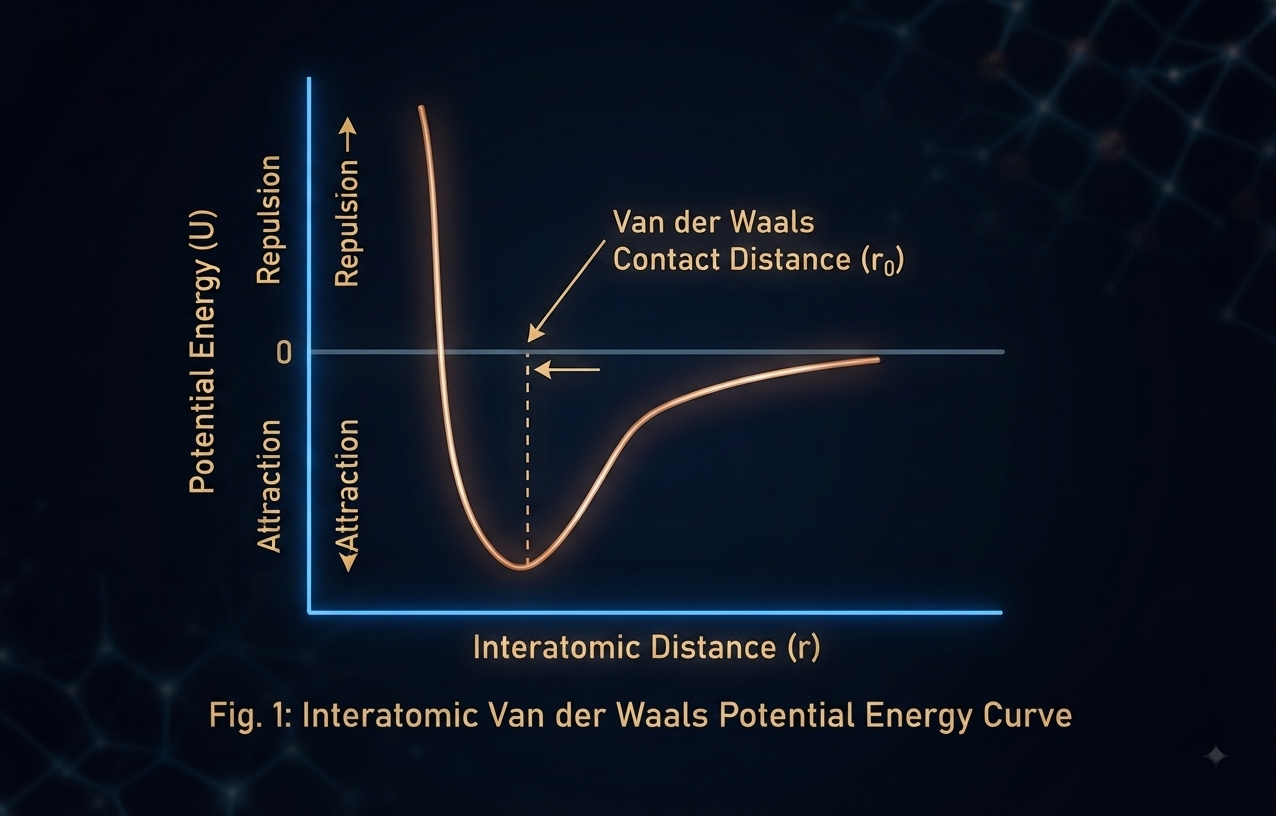
Van der Waals interactions are strongly dependent on the distance between atoms. When two atoms are very far apart, the attractive force is negligible.
As the atoms approach one another, attractive van der Waals forces increase. However, this attraction does not continue indefinitely.
If the atoms approach too closely, their electron clouds begin to overlap strongly. Because electrons repel one another and because of quantum-mechanical restrictions, a strong repulsive force develops.
Therefore, there is an energetically favorable distance at which attractive and repulsive forces are balanced.
This distance is related to the van der Waals contact distance.
The van der Waals contact distance can be understood as the distance at which two non-bonded atoms can approach one another without producing excessive electron-cloud overlap.
14.6.1 Attraction at Intermediate Distance
At an appropriate distance, the attractive component of van der Waals interactions becomes significant. The atoms are close enough for their fluctuating or permanent dipoles to interact.
14.6.2 Repulsion at Very Short Distance
When two atoms become too close, the electron clouds overlap excessively. Strong repulsive forces then develop.
Therefore, the total van der Waals interaction can be considered as a balance between attractive and repulsive components.
This is extremely important in protein structure because biological molecules must pack atoms closely enough to obtain favorable interactions without forcing atoms into strongly unfavorable overlap.
14.7 Attractive and Repulsive Components
The interaction between two non-bonded atoms can therefore be described as having two major components.
The first is the attractive component, which includes van der Waals attractions arising from dipole interactions and dispersion effects.
The second is the repulsive component, which becomes dominant when atoms approach each other too closely.
The total interaction energy therefore depends strongly on the distance between the atoms.
A simplified conceptual relationship is:
Total interaction = Attractive contribution + Repulsive contribution
The attractive contribution becomes increasingly favorable as atoms approach one another, but at extremely short distances the repulsive contribution rises very sharply.
The result is an energy minimum at a favorable intermolecular distance.
14.8 Van der Waals Interactions in Proteins
Van der Waals interactions are extremely important in determining the packing of atoms within proteins.
When a protein folds, its amino acid side chains become positioned very close to one another. Numerous atoms establish short-range contacts.
Each individual van der Waals interaction contributes only a small amount of stabilization. However, a large protein can contain an enormous number of these contacts.
The combined contribution can therefore be significant.
Van der Waals interactions are particularly important in the tightly packed hydrophobic core of globular proteins.
They help atoms occupy energetically favorable positions and contribute to the precise packing of side chains.
14.9 Van der Waals Interactions in Enzyme-Substrate Binding
Enzymes recognize substrates through a combination of different molecular interactions. Van der Waals contacts can contribute significantly when the shape of a substrate is complementary to the enzyme’s active site.
When a substrate enters the active site, many atoms of the substrate may come within favorable contact distances of amino acid residues in the enzyme.
The resulting van der Waals contacts contribute to the overall binding energy.
This is one reason why molecular shape is extremely important in enzyme-substrate recognition. A substrate that fits poorly may fail to establish enough favorable molecular contacts.
Therefore, van der Waals interactions contribute to the concept of molecular complementarity.
14.10 Van der Waals Interactions in Ligand-Receptor Binding
Receptors recognize ligands through a combination of electrostatic interactions, hydrogen bonds, hydrophobic interactions and van der Waals contacts.
A ligand that fits accurately into a receptor-binding pocket can establish a large number of close molecular contacts.
These contacts may collectively increase binding affinity.
This demonstrates an important biological principle: many weak interactions acting together can produce highly specific and stable molecular recognition.
14.11 Van der Waals Interactions in Nucleic Acids
Van der Waals interactions also contribute to nucleic acid structure.
The nitrogenous bases of nucleic acids contain large aromatic surfaces that can participate in close-range interactions with neighboring bases and other molecular groups.
In DNA, adjacent bases are closely packed within the double helix. The resulting molecular contacts contribute to base stacking and overall helix stability.
Therefore, DNA structure is maintained through a combination of hydrogen bonding, base stacking, electrostatic effects, van der Waals interactions and interactions with the surrounding solvent and ions.
14.12 Van der Waals Interactions and Molecular Docking
Molecular docking studies attempt to predict how a ligand fits into the binding site of a protein.
Van der Waals interactions are important in docking because a favorable ligand should establish close but not excessively close contacts with the atoms of the binding pocket.
If the ligand atoms are too far apart, attractive interactions are weak. If they are forced too close together, strong repulsive interactions develop.
Therefore, an ideal binding orientation balances favorable attractive interactions with avoidance of steric clashes.
14.13 Difference Between Van der Waals and Hydrogen Bond
Van der Waals interactions and hydrogen bonds are both non-covalent interactions, but they are not identical.
Hydrogen bonds generally require a hydrogen atom associated with an appropriate donor and an electronegative acceptor atom. They are relatively directional.
Van der Waals interactions, particularly London dispersion forces, can occur even between non-polar atoms and molecules. They are strongly dependent on the distance between interacting particles.
Both interactions can contribute to protein structure, ligand binding and molecular recognition.
14.14 Difference Between Van der Waals and Electrostatic Interaction
Electrostatic interactions arise from permanent electrical charges or charge distributions, whereas van der Waals interactions include interactions involving permanent, induced and instantaneous dipoles.
Electrostatic interactions can operate over relatively longer distances than van der Waals interactions, although their effective strength in biological systems is strongly influenced by solvent screening and ionic strength.
Van der Waals interactions are generally short-range and become particularly important when atoms are in close contact.
14.15 Difference Between Hydrophobic Interaction and Van der Waals Interaction
Hydrophobic interactions and van der Waals interactions are often discussed together because both contribute to protein folding and molecular association. However, their physical origins are different.
Hydrophobic interactions arise primarily from the behavior and thermodynamics of water surrounding non-polar surfaces.
Van der Waals interactions arise from electromagnetic interactions associated with permanent, induced or instantaneous dipoles.
Therefore, hydrophobic interactions should not simply be described as another form of van der Waals force.
14.16 Comparison of the Three Types of Van der Waals Interactions
| Type | Dipoles Involved | Basic Mechanism | Typical Example |
|---|---|---|---|
| Keesom | Permanent dipole + Permanent dipole | Attraction between oppositely oriented permanent dipoles | Interaction between polar molecules |
| Debye | Permanent dipole + Induced dipole | A permanent dipole distorts the electron cloud of a neighboring molecule | Polar molecule interacting with a non-polar molecule |
| London dispersion | Instantaneous dipole + Induced dipole | Temporary fluctuation in electron distribution induces a dipole in a neighboring particle | Interaction between non-polar atoms or molecules |
15. Hydrophobic Interactions
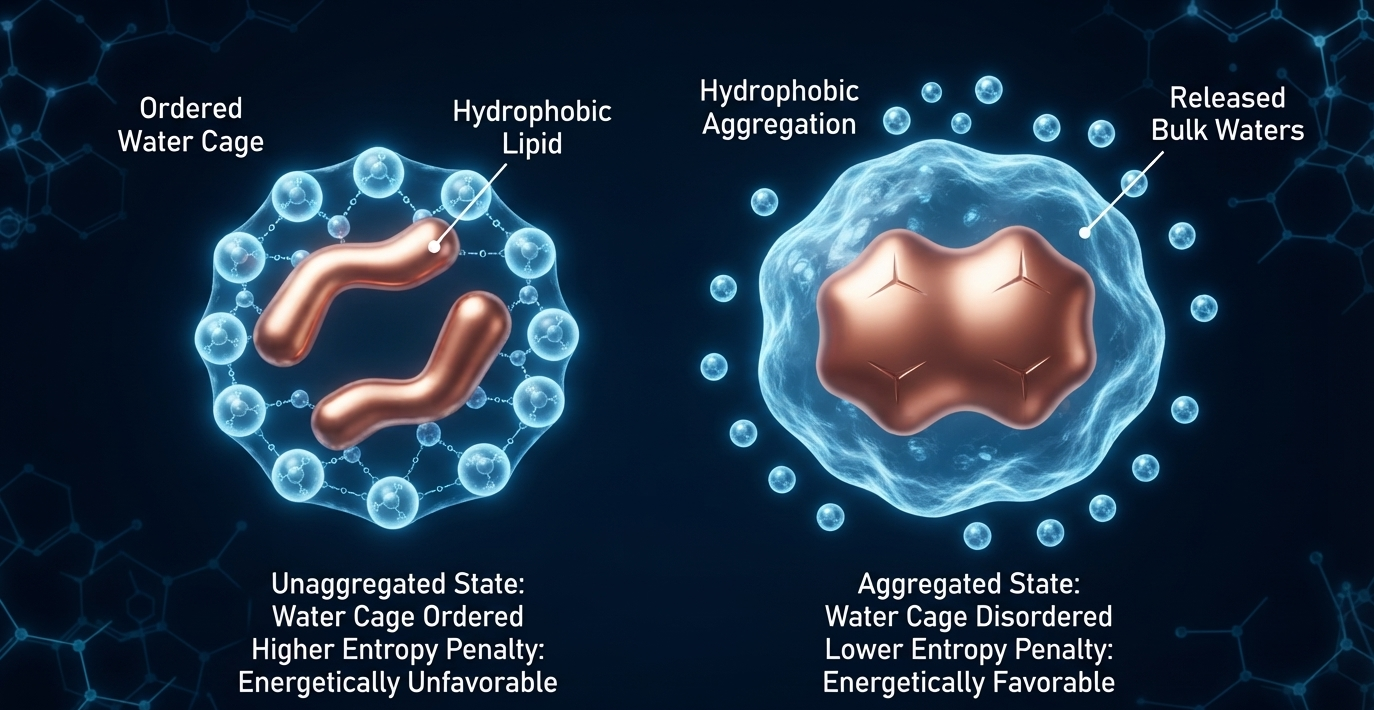
A hydrophobic interaction refers to the tendency of non-polar groups to associate in an aqueous environment.
The word hydrophobic literally means “water-fearing,” but this terminology can sometimes be misleading. Hydrophobic molecules are not necessarily actively repelled by water in the same way that two electric charges repel each other.
Instead, the hydrophobic effect arises largely from the behavior of water around non-polar surfaces.
Non-polar molecules cannot participate effectively in hydrogen bonding with water. When water molecules surround a non-polar surface, their orientations become constrained. When two non-polar surfaces come together, less non-polar surface remains exposed to water. This can allow water molecules to become less constrained.
The resulting thermodynamic effect can favor the association of non-polar groups.
Thus, hydrophobic interactions are best understood as a solvent-driven phenomenon rather than as a conventional chemical bond.
15.1. Hydrophobic Interactions and Entropy
The hydrophobic effect is closely related to the thermodynamics of water.
When water surrounds a non-polar surface, the surrounding water molecules may adopt more organized arrangements than water molecules in the bulk solvent.
When non-polar surfaces cluster together, the total area exposed to water decreases. Consequently, some of the previously constrained water molecules can return to a more disordered state.
This change can provide an entropic contribution to the favorable association of hydrophobic groups.
Therefore, the hydrophobic effect is an important example of how solvent behavior can drive biological organization.
15.2. Hydrophobic Interactions in Protein Folding
Hydrophobic interactions are one of the major factors contributing to the folding of globular proteins.
Many amino acids contain non-polar side chains. Important examples include valine, leucine, isoleucine, methionine, phenylalanine and tryptophan.
When a polypeptide chain is exposed to an aqueous environment, hydrophobic side chains tend to become buried within the interior of the folded protein, whereas many polar and charged groups remain exposed to water.
This arrangement reduces the exposure of hydrophobic surfaces to water and contributes to the formation of a compact protein structure.
However, protein folding cannot be explained solely by hydrophobic interactions. Hydrogen bonds, electrostatic interactions, van der Waals forces, covalent disulfide bonds and other factors also contribute to the final structure.
15.3. Hydrophobic Interactions in Biological Membranes
Hydrophobic interactions are fundamental to biological membrane organization.
Membrane phospholipids are amphipathic molecules. They contain a hydrophilic region that interacts favorably with water and hydrophobic regions that avoid direct exposure to water.
When phospholipids are placed in an aqueous environment, they spontaneously organize into structures such as lipid bilayers.
The hydrophilic head groups remain exposed to the aqueous environment, while the hydrophobic tails are shielded within the interior of the bilayer.
This spontaneous organization provides the structural basis of biological membranes.
The hydrophobic effect is therefore essential for understanding membrane formation, membrane stability and the organization of membrane proteins.
15.4. Amphipathic Molecules
An amphipathic molecule contains both hydrophilic and hydrophobic regions. Such molecules are extremely important in biological systems.
Phospholipids are classic examples. Their polar head groups interact with water, while their non-polar hydrocarbon tails tend to avoid water.
Proteins can also be amphipathic. Certain regions of a protein may contain hydrophobic residues while other regions contain polar or charged residues.
Amphipathic behavior is important in membrane formation, membrane-protein interactions, protein folding and molecular recognition.
16. Comparison of Covalent and Non-Covalent Interactions
Covalent bonds and non-covalent interactions differ fundamentally in their nature and biological roles.
| Feature | Covalent Bond | Non-Covalent Interaction |
|---|---|---|
| Basic principle | Sharing of electrons | Interaction between atoms or molecular groups without formation of a conventional shared electron pair |
| Relative strength | Generally strong | Generally weaker individually |
| Reversibility | Usually requires substantial energy to break | Often readily reversible |
| Major biological role | Forms molecular framework | Controls folding, recognition and molecular association |
| Examples | Peptide, phosphodiester, glycosidic and ester bonds | Hydrogen, electrostatic, van der Waals and hydrophobic interactions |
The distinction does not mean that non-covalent interactions are biologically unimportant. In fact, the dynamic behavior of biological systems depends heavily on their ability to form and break non-covalent interactions.
17. Why Weak Interactions Are Biologically Important
A common misconception is that weak interactions are biologically unimportant. In reality, biological systems depend heavily on large numbers of weak interactions.
A single hydrogen bond or van der Waals interaction may contribute only a small amount of stabilization. However, when hundreds or thousands of interactions act together, their combined effect can become extremely significant.
At the same time, because individual non-covalent interactions can be broken relatively easily, biological molecules retain flexibility and reversibility.
This combination of strength through cooperation and reversibility through individual weakness is one of the fundamental principles of molecular biology.
18. Chemical Interactions in Protein Structure
Protein structure provides one of the best examples of the combined action of different chemical interactions.
18.1 Primary Structure
The primary structure of a protein is the linear sequence of amino acids. Amino acids are connected through covalent peptide bonds.
18.2 Secondary Structure
Secondary structures such as α-helices and β-sheets are stabilized primarily through hydrogen bonding between backbone atoms.
18.3 Tertiary Structure
The tertiary structure represents the complete three-dimensional folding of a polypeptide chain. It is stabilized by hydrophobic interactions, hydrogen bonds, electrostatic interactions, van der Waals forces and, where present, disulfide bonds.
18.4 Quaternary Structure
Quaternary structure describes the organization of multiple polypeptide subunits. Non-covalent interactions often play major roles in maintaining associations between subunits, although covalent disulfide linkages can also occur in some proteins.
19. Chemical Interactions in DNA Structure
DNA provides another excellent example of the cooperation between covalent and non-covalent interactions.
The sugar-phosphate backbone of DNA is maintained through strong covalent phosphodiester bonds.
Complementary bases on opposite strands form specific hydrogen-bonding patterns. Adenine pairs with thymine, while guanine pairs with cytosine.
In addition, neighboring aromatic bases interact through base-stacking effects. These interactions, together with solvent and ionic effects, contribute strongly to the stability of the DNA double helix.
Thus, the structure of DNA is not controlled by one interaction alone but by the combined effect of several molecular forces.
20. Chemical Interactions in Enzyme-Substrate Recognition
Enzymes recognize substrates through highly specific molecular interactions.
The active site of an enzyme contains amino acid side chains positioned in a particular three-dimensional arrangement. These residues may interact with the substrate through hydrogen bonds, electrostatic interactions, hydrophobic contacts and van der Waals forces.
The combined effect of these interactions determines the affinity and specificity of the enzyme for its substrate.
This explains why a small structural change in either an enzyme or substrate can sometimes produce a large change in binding affinity.
The classical lock-and-key model provides a simple conceptual explanation, whereas the induced-fit model emphasizes that substrate binding can cause conformational changes in the enzyme.
21. Chemical Interactions and Molecular Recognition
Molecular recognition refers to the ability of one biological molecule to selectively identify and interact with another molecule.
Examples include:
- Enzyme-substrate recognition
- Antigen-antibody recognition
- Hormone-receptor interaction
- DNA-protein interaction
- Protein-protein recognition
- RNA-protein interaction
Specific molecular recognition generally results from the complementary arrangement of several weak interactions rather than one extremely strong interaction.
The three-dimensional shape, charge distribution, hydrogen-bonding capacity, hydrophobicity and flexibility of the interacting molecules all contribute to recognition.
22. Relative Strength and Context Dependence
It is tempting to memorize a simple hierarchy of chemical interactions. However, biological systems are more complex than such a fixed ranking suggests.
A general principle is:
Covalent bonds are generally much stronger than individual non-covalent interactions.
However, the actual contribution of a non-covalent interaction depends on the molecular environment.
For example, an electrostatic interaction between two charges may be strongly affected by water and ionic strength. A hydrogen bond can behave differently depending on whether it occurs in water, inside a protein or within an active site. Hydrophobic interactions depend strongly on solvent exposure and temperature.
Therefore, the biological significance of an interaction must always be interpreted in context.
23. Factors Affecting Biomolecular Interactions
The strength and behavior of chemical interactions in biological systems are influenced by several environmental and molecular factors.
23.1 Distance
Many molecular interactions become weaker as the interacting groups move farther apart. Van der Waals and electrostatic interactions are particularly sensitive to distance.
23.2 Solvent
Water can strongly influence electrostatic and hydrogen-bonding interactions. It can also alter the energetic cost of exposing hydrophobic groups.
23.3 Temperature
Temperature can influence molecular motion, hydrogen bonding, hydrophobic effects and overall protein stability.
23.4 pH
pH affects the protonation state of ionizable groups. Consequently, it can dramatically change electrostatic interactions and hydrogen-bonding patterns.
23.5 Ionic Strength
Dissolved ions can shield electrostatic charges and alter the effective strength of interactions between charged groups.
23.6 Molecular Geometry
The three-dimensional orientation of functional groups determines whether interactions can occur and how effectively molecules fit together.
24. Chemical Bonds and Thermodynamics of Biomolecules
The formation or disruption of molecular interactions is associated with changes in thermodynamic quantities such as enthalpy, entropy and free energy.
The Gibbs free energy relationship is:
ΔG = ΔH – TΔS
where ΔG represents the change in Gibbs free energy, ΔH represents the change in enthalpy, T represents absolute temperature and ΔS represents the change in entropy.
A process is thermodynamically favorable under a particular set of conditions when its free-energy change is negative.
This equation is especially useful for understanding hydrophobic effects, protein folding, ligand binding and molecular association.
For example, hydrophobic association can be influenced strongly by changes in the entropy of water surrounding non-polar groups.
25. Bond Versus Interaction
A frequent source of confusion is the use of the words “bond” and “interaction” interchangeably.
A covalent bond involves direct sharing of electrons between atoms and creates a strong chemical connection.
Hydrogen bonding, electrostatic attraction, van der Waals forces and hydrophobic effects are generally described as non-covalent interactions rather than conventional covalent bonds.
Therefore, in scientific writing it is more accurate to use the expression non-covalent interactions when discussing hydrogen bonds, electrostatic interactions, van der Waals forces and hydrophobic effects collectively.
26. Important Conceptual Distinctions
26.1 Polar Bond Does Not Always Mean Polar Molecule
Molecular geometry determines whether individual bond dipoles cancel. Carbon dioxide is a classic example of a molecule containing polar bonds but having no net molecular dipole because of its linear geometry.
26.2 Hydrophobic Interaction Is Not a Conventional Bond
The hydrophobic effect is primarily a solvent-driven phenomenon involving the behavior of water around non-polar surfaces.
26.3 Hydrogen Bonds Are Directional
The geometry of a hydrogen bond matters. This directionality is important in protein structure, nucleic acid recognition and enzyme-substrate interactions.
26.4 Weak Does Not Mean Unimportant
Many weak interactions acting together can produce substantial molecular stability and specificity.
26.5 DNA Stability Is Not Determined Only by Hydrogen Bonds
Hydrogen bonding provides base-pairing specificity, but base stacking, ionic environment, solvent effects and sequence composition also contribute significantly to DNA stability.
27. Important Examples
| Interaction | Basic Principle | Important Biological Example |
|---|---|---|
| Covalent bond | Sharing of electrons between atoms | Peptide bond |
| Non-polar covalent bond | Approximately equal sharing of electrons | H-H bond |
| Polar covalent bond | Unequal sharing of electrons | O-H bond in water |
| Electrostatic interaction | Attraction or repulsion between charges | Salt bridge in proteins |
| Hydrogen bond | Interaction between donor hydrogen and acceptor atom | DNA base pairing |
| Keesom interaction | Permanent dipole-permanent dipole | Polar molecules |
| Debye interaction | Permanent dipole-induced dipole | Polar molecule interacting with a non-polar molecule |
| London dispersion | Instantaneous dipole-induced dipole | Close molecular contacts |
| Hydrophobic interaction | Association of non-polar groups in water | Protein folding and membrane formation |
| Disulfide bond | Covalent S-S linkage | Protein stabilization |
| Phosphodiester bond | Covalent linkage between nucleotides | DNA and RNA backbone |
| Glycosidic bond | Covalent linkage between sugar residues | Polysaccharides and disaccharides |
28. Integrated View of Biomolecular Interactions
The most important concept in biomolecular chemistry is that biological structures are maintained by the combined action of several types of interactions.
A protein is first constructed through covalent peptide bonds. The resulting polypeptide chain then folds into a three-dimensional structure. During folding, hydrophobic residues may become buried in the protein interior, hydrogen bonds form between appropriate groups, charged residues may form electrostatic interactions, and closely packed atoms contribute van der Waals interactions.
In proteins containing cysteine residues, disulfide bonds may provide additional covalent stabilization.
The final protein structure is therefore the result of a highly coordinated balance between different chemical forces.
The same principle applies to nucleic acids, membranes and molecular complexes.
Thus, biological structure is an emergent property of many molecular interactions acting simultaneously.
29. Role of Chemical Bonds in Biological Structure and Function
Chemical bonds determine the organization of biomolecules from the simplest molecular structures to complex cellular assemblies.
At the molecular level, covalent bonds determine which atoms are connected and establish the chemical identity of a molecule.
At the macromolecular level, non-covalent interactions determine how a molecule folds, associates with other molecules and responds to its environment.
At the cellular level, these interactions determine membrane organization, receptor recognition, signal transduction, enzyme activity and assembly of macromolecular complexes.
Therefore, understanding chemical interactions provides a bridge between chemistry and modern molecular biology.


