Identify the pollinators for the flowers with following pollination syndromes A. Flowers dull colored, located away from foliage, floral parts turgid, B. Flowers bright red, crowded, turgid, neclar watery and […]
CSIR NET Life Science PYQ and Solution Species Interactions
No posts found.
Identify the pollinators for the flowers with following pollination syndromes A. Flowers dull colored, located away from foliage, floral parts turgid, B. Flowers bright red, crowded, turgid, neclar watery and […]
36. A plant is visited by bats during the night and sunbirds during the day. Given this information, which of the following characters best match this plant? (1) The plant […]

Following are the main types of defense employed by prey species against predators Types of defense: Chemical with aposematic coloration (A); Cryptic coloration (B); Batesian mimicry (C); Intimidation display (D) […]
A plant species with unisexual flowers has the following traits: floral longevity = 12 hours, pollen: ovule = 10:1, male and female flowers with synchronized anthesis. Given these, which of […]

Incorporating additional ecological factors into the Lotka-Voltera predator-prey model can change the predator isocline. Given below are three state-space graphsA-C) representing modification of predator isocline due to the ecological factors […]
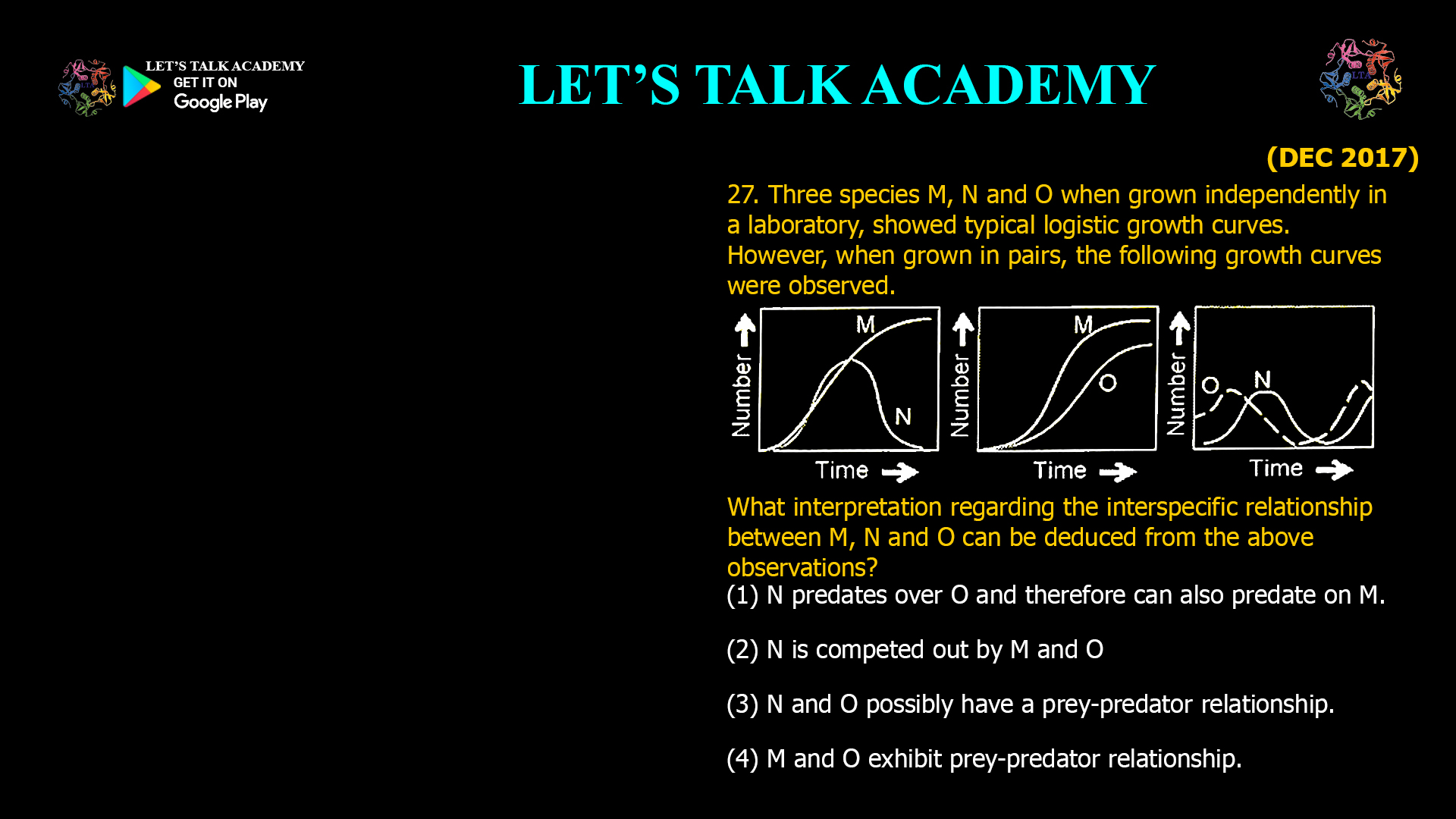
Three species M, N and O when grown independently in a laboratory, showed typical logistic growth curves. However, when grown in pairs, the following growth curves were observed. What interpretation […]
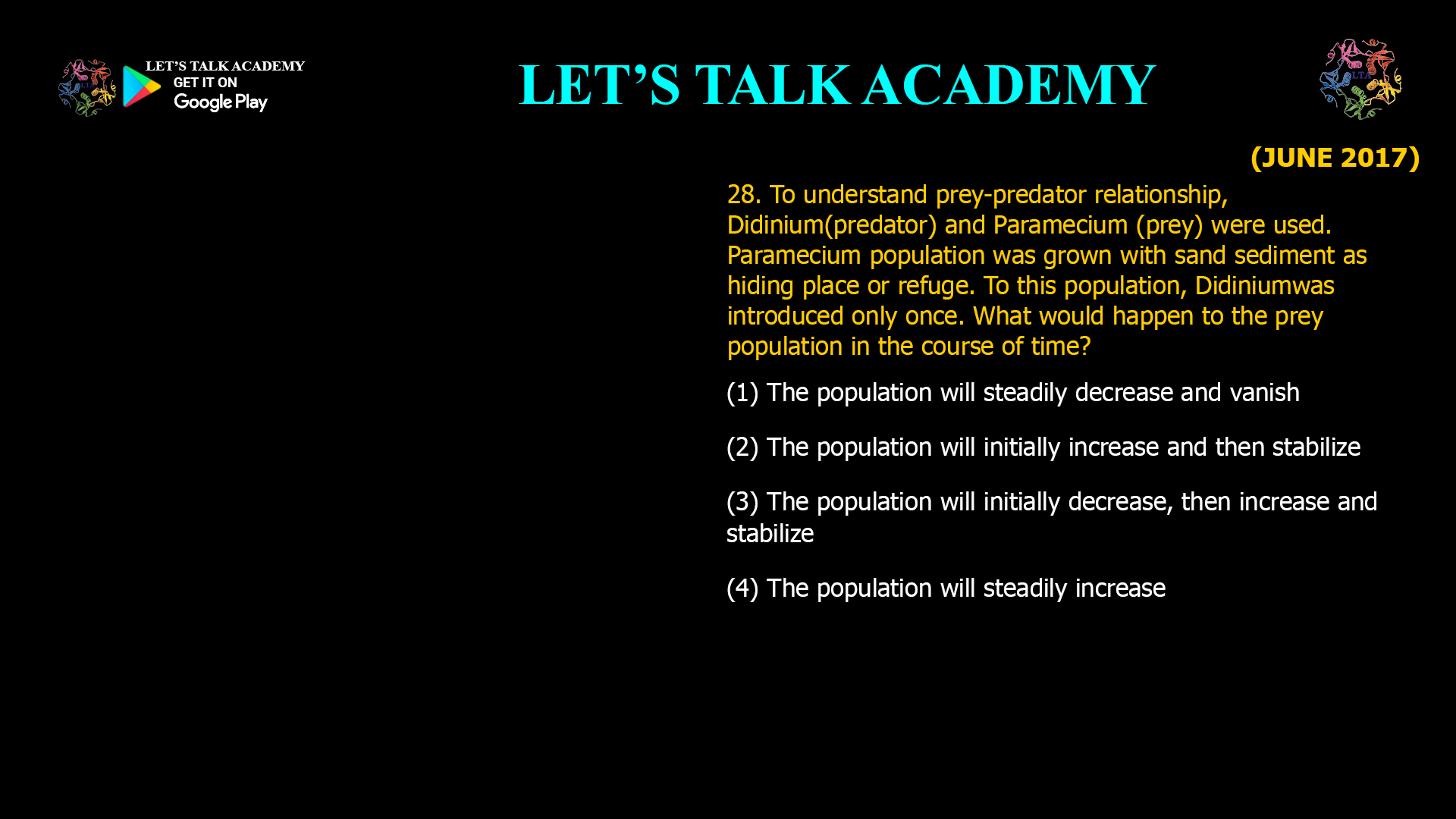
To understand prey-predator relationship, Didinium(predator) and Paramecium (prey) were used. Paramecium population was grown with sand sediment as hiding place or refuge. To this population, Didiniumwas introduced only once. What […]
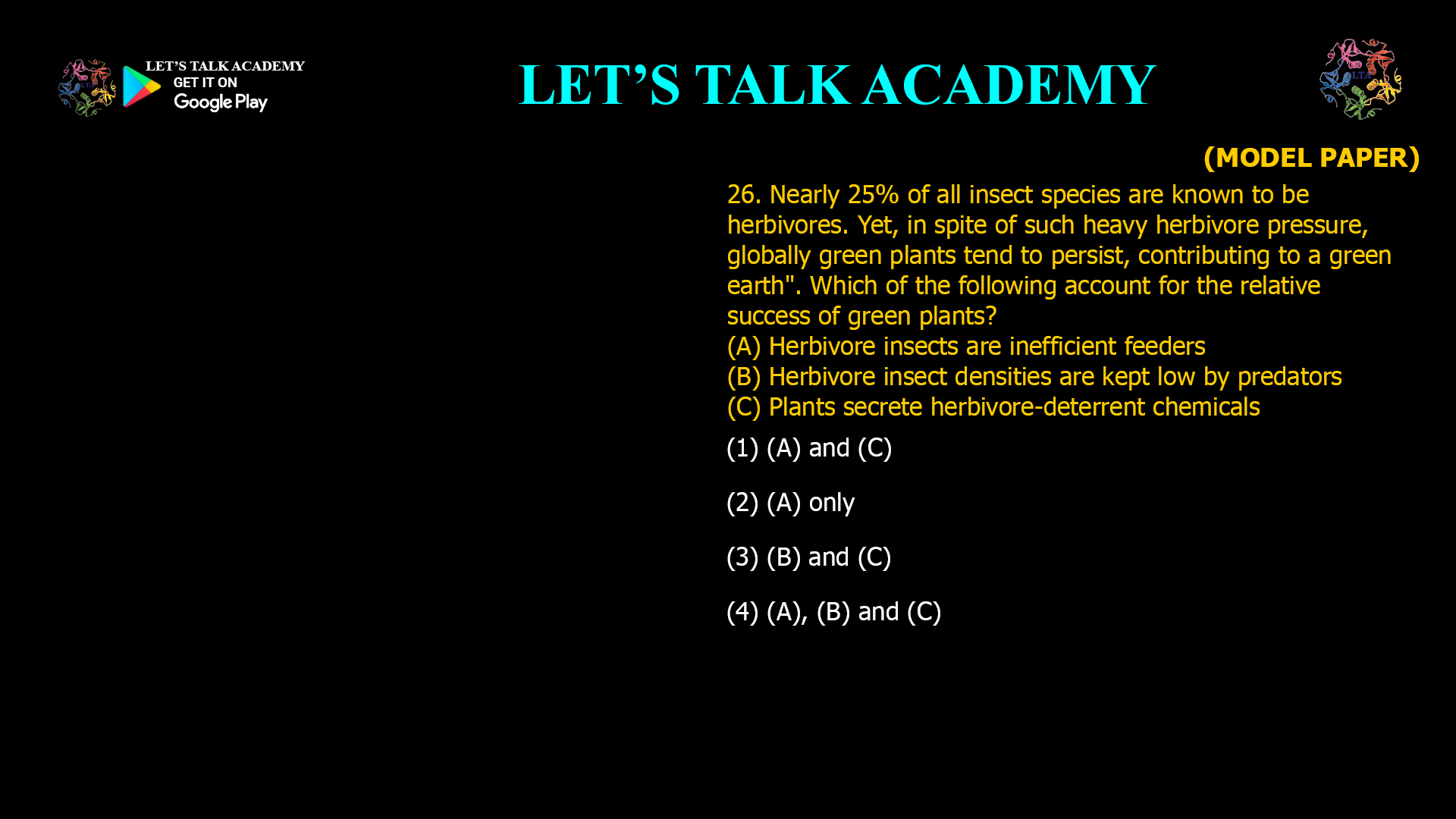
Nearly 25% of all insect species are known to be herbivores. Yet, in spite of such heavy herbivore pressure, globally green plants tend to persist, contributing to a green earth”. […]
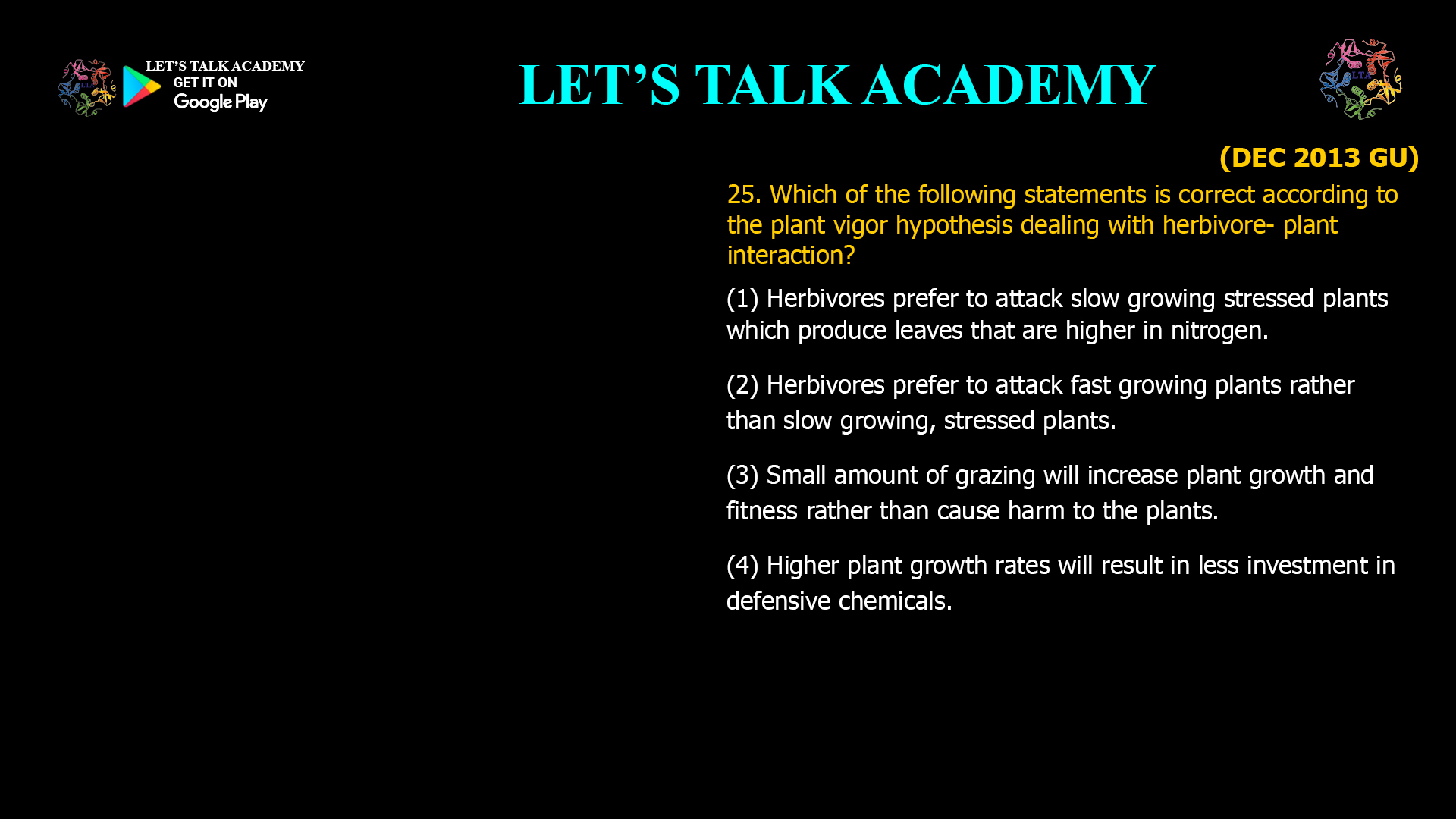
Which of the following statements is correct according to the plant vigor hypothesis dealing with herbivore- plant interaction? (1) Herbivores prefer to attack slow growing stressed plants which produce leaves […]
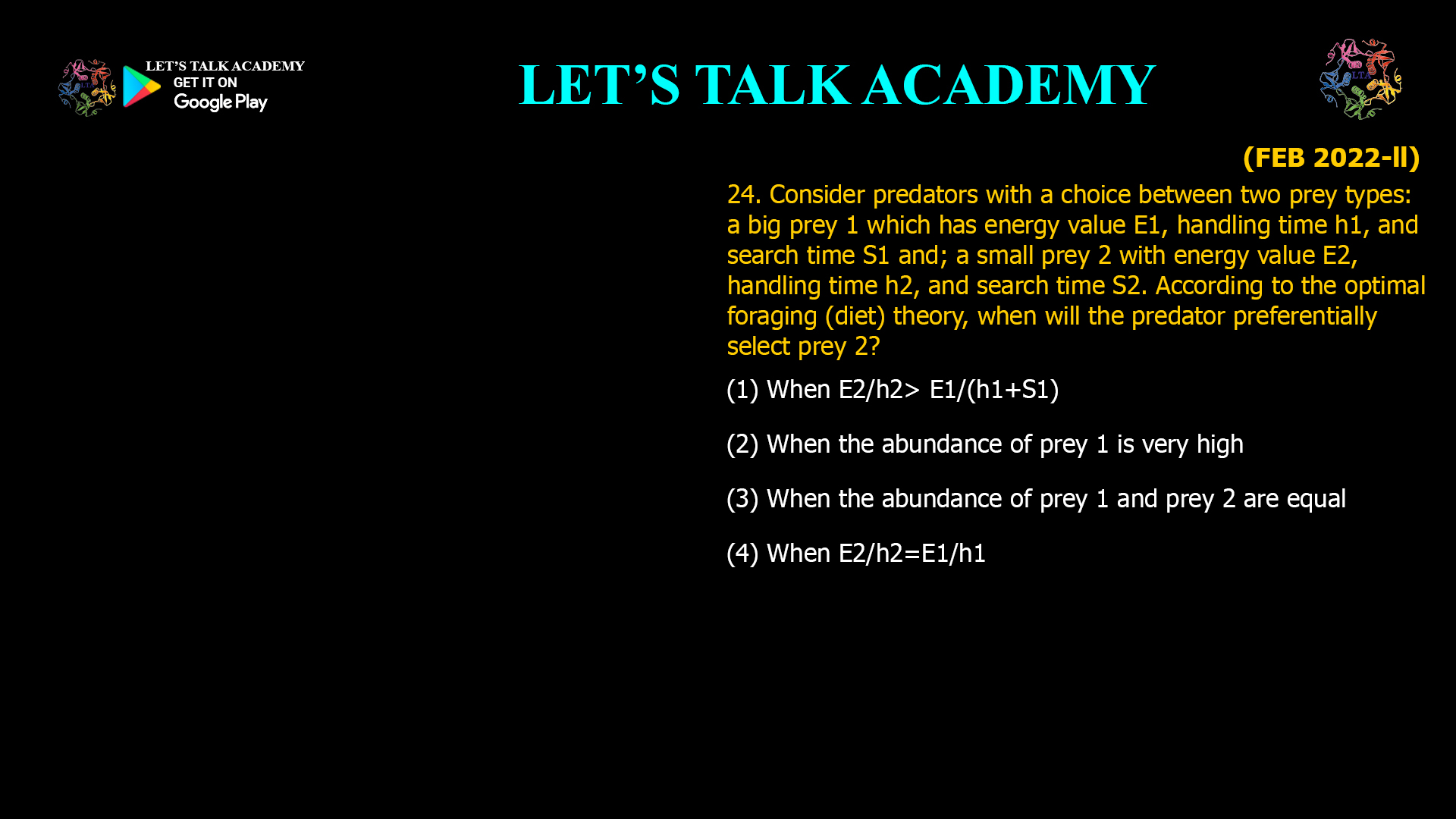
Consider predators with a choice between two prey types: a big prey 1 which has energy value E1, handling time h1, and search time S1 and; a small prey 2 […]


