
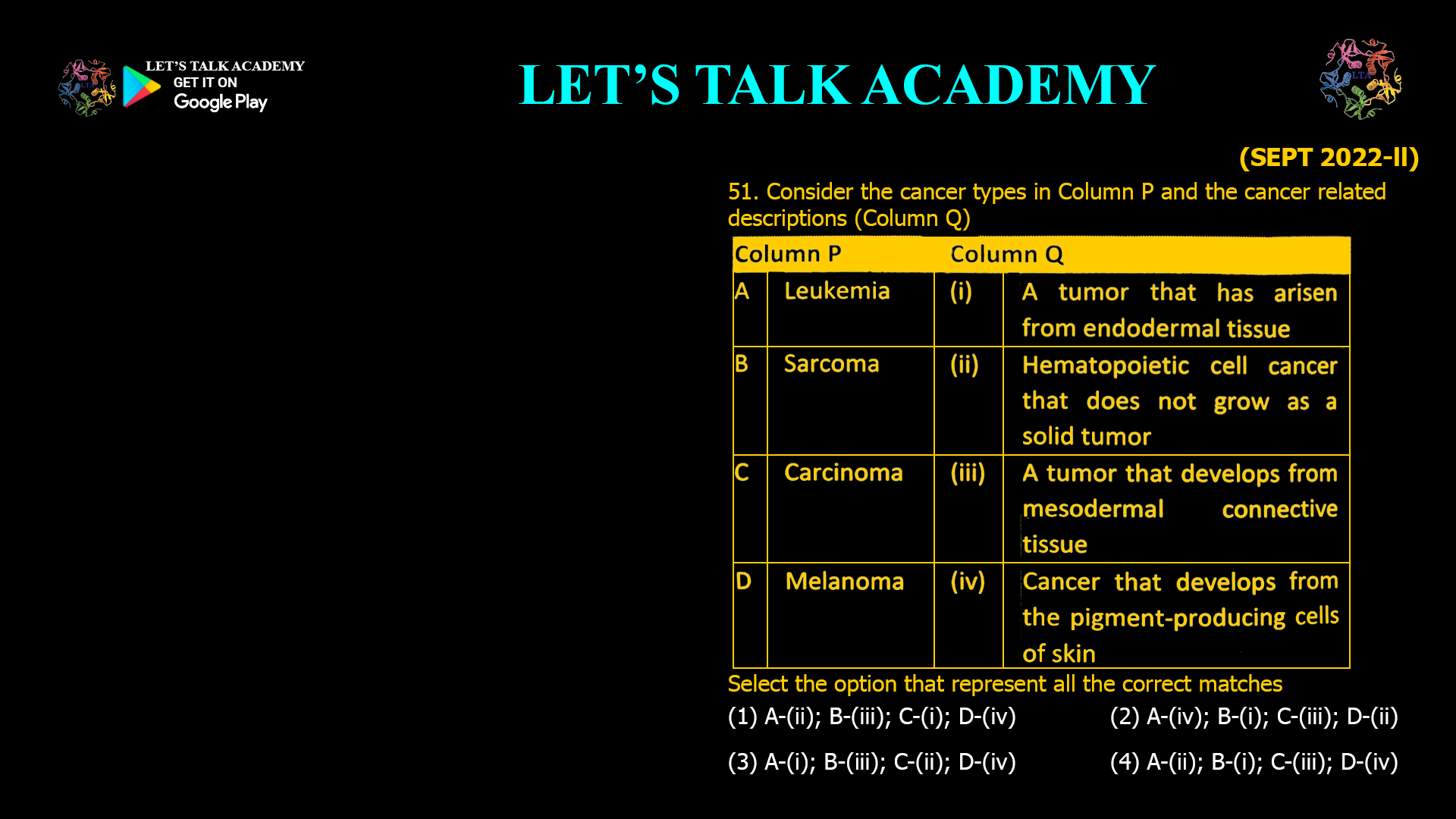
![The table below lists the characteristics of specific tumor types (Column A) and their names (Column B). Which of the following options represents the correct match between Column A and Column B? Options:- (1) A-iii; B-iv; C-i; D-ii (2) A-ii; B-iv; C-vi; D-iii (3) A-iii; B-v; C-vi; D-l (4) A-iv; B-v; C-i; D-ii]](https://www.letstalkacademy.com/wp-content/uploads/2025/10/52.jpg)






Two classes of genes – proto-oncogene and tumor suppressor gene usually contribute to the development of cancer. Following are some of the statements regarding both the genes. A. Proto-oncogenes result […]

Two classes of genes – proto-oncogene and tumor suppressor gene usually contribute to the development of cancer. Following are some of the statements regarding both the genes. A. Proto-oncogenes result […]
Following statements have been proposed for cancer cells and cancer stem cells: A. Cancer cells mostly have mutations whereas cancer stem cells do not. B. Cancer cells divide to form […]

Cancer is often believed to arise from stem cells rather than fully differentiated cells. Following are certain views related to the above statement. Which one of the following is NOT […]

Conversion of proto-oncogene to oncogene may involve the following processes: A. mutation in coding sequence B. gene amplification C. chromosome rearrangement D. mutation in non-coding sequence Which one is appropriate? […]

When adenoma is converted to metastatic adenocarcinoma, which of the following combination of proteins is almost certainly to be degraded? (1) Type IV collagen and laminin. (2) Fibronectin and β2 […]
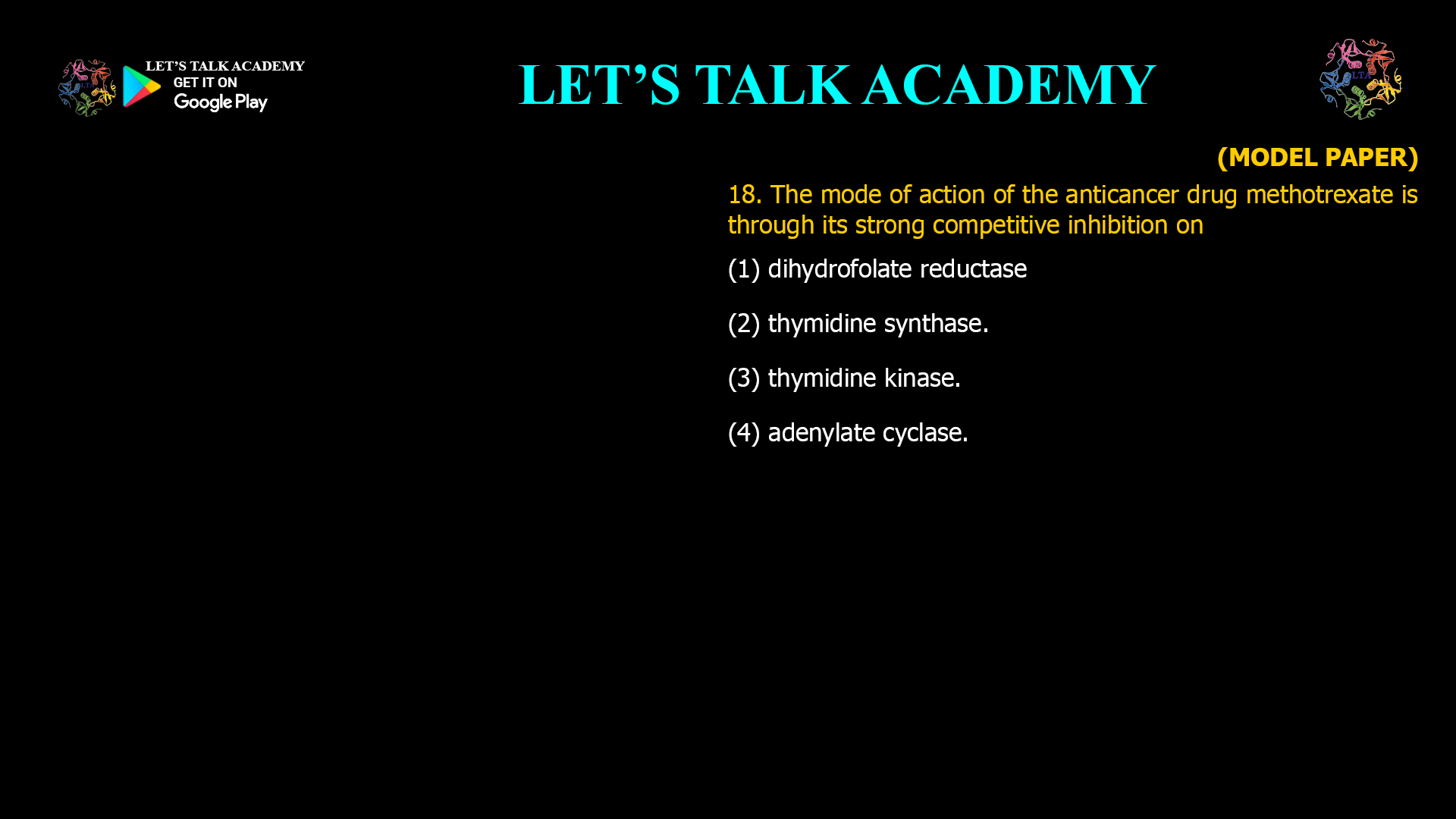
The mode of action of the anticancer drug methotrexate is through its strong competitive inhibition on (1) dihydrofolate reductase (2) thymidine synthase. (3) thymidine kinase. (4) adenylate cyclase. Final Answer The […]

17. The mutation in an oncogene falls under which of the following classes? (1) Loss of function mutation (2) Frame shift mutation (3) Gain of function mutation (4) Dominant negative […]
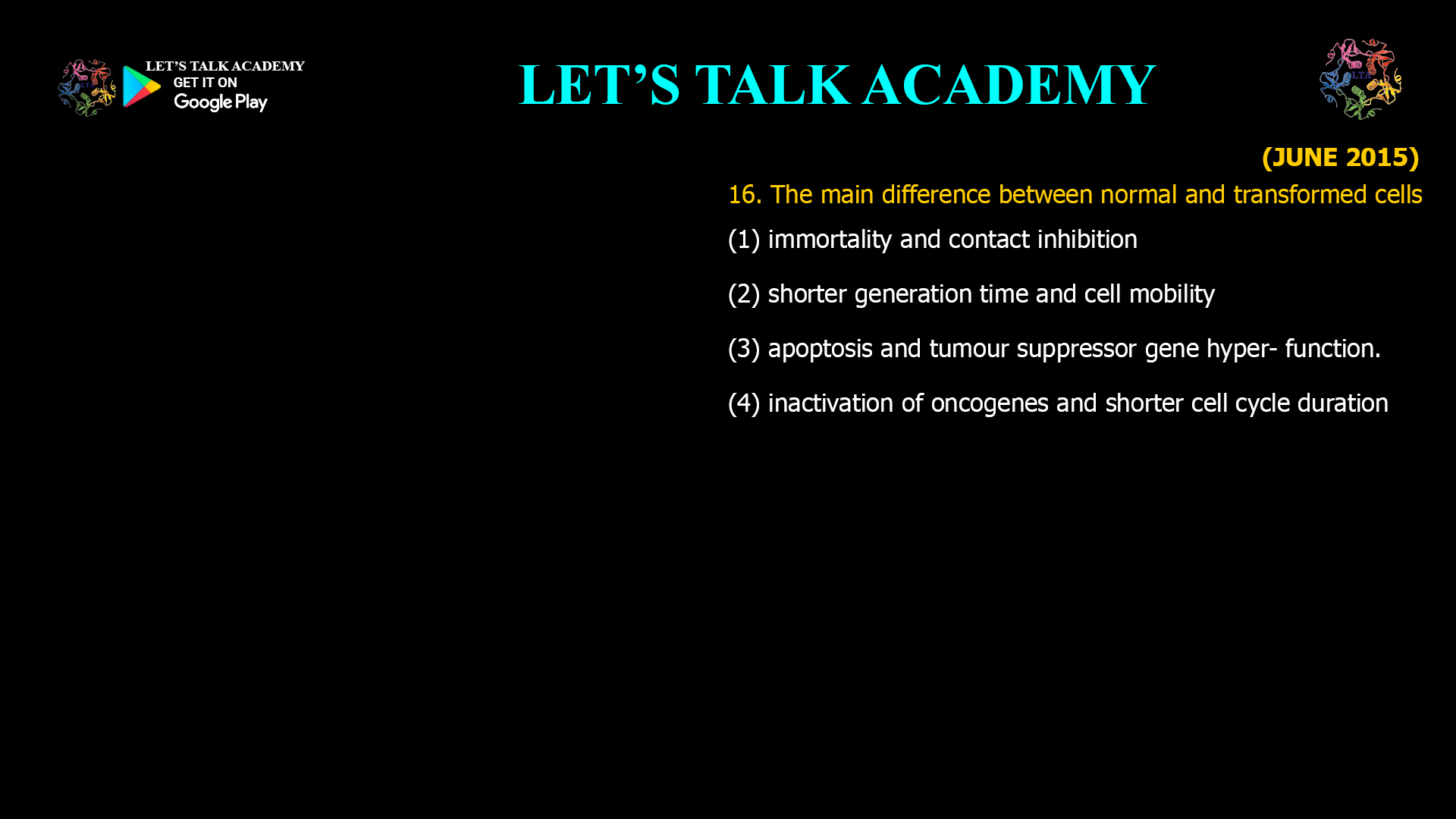
The main difference between normal and transformed cells (1) immortality and contact inhibition (2) shorter generation time and cell mobility (3) apoptosis and tumour suppressor gene hyper- function. (4) inactivation […]
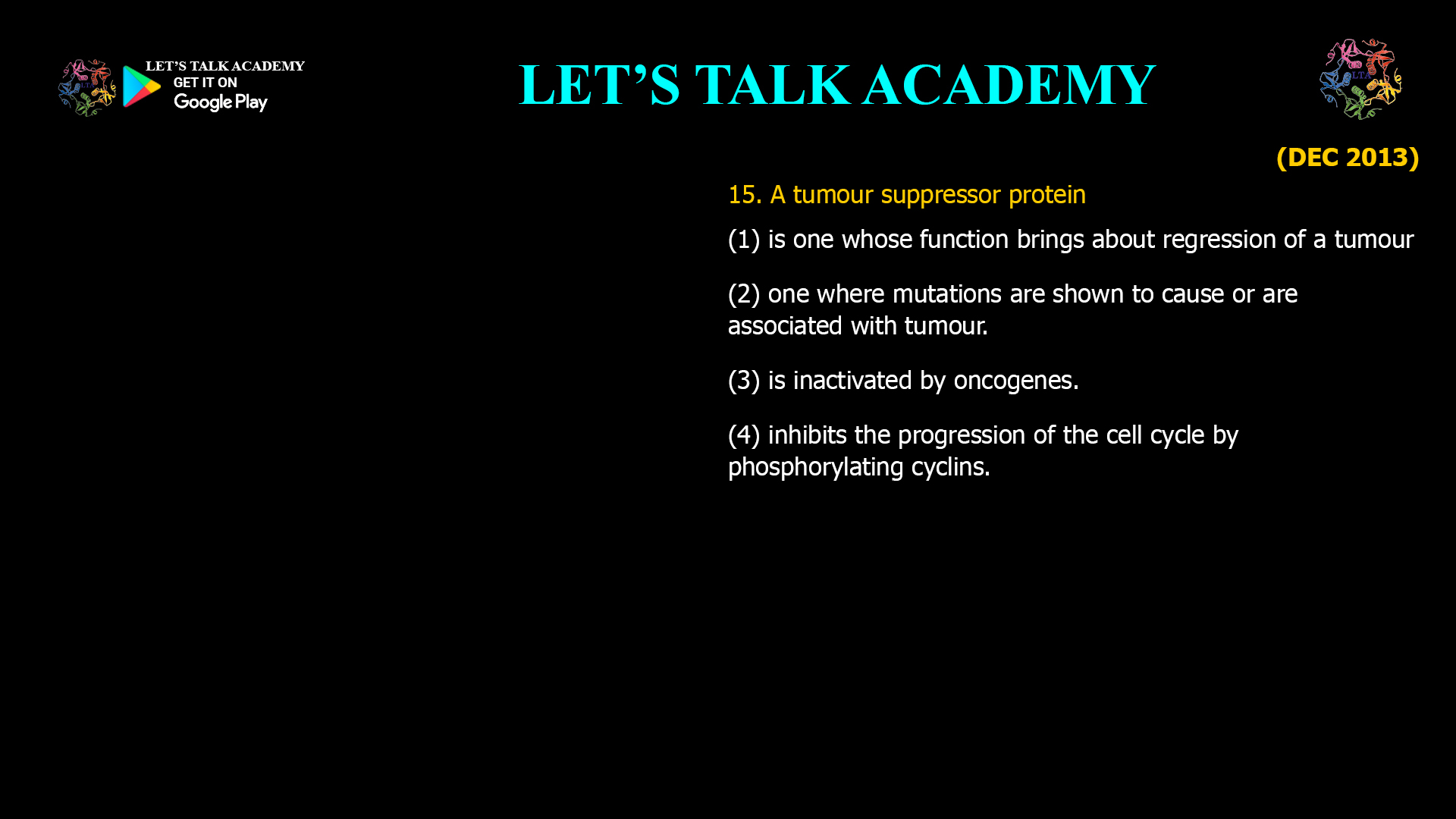
A tumour suppressor protein (1) is one whose function brings about regression of a tumour (2) one where mutations are shown to cause or are associated with tumour. (3) is […]
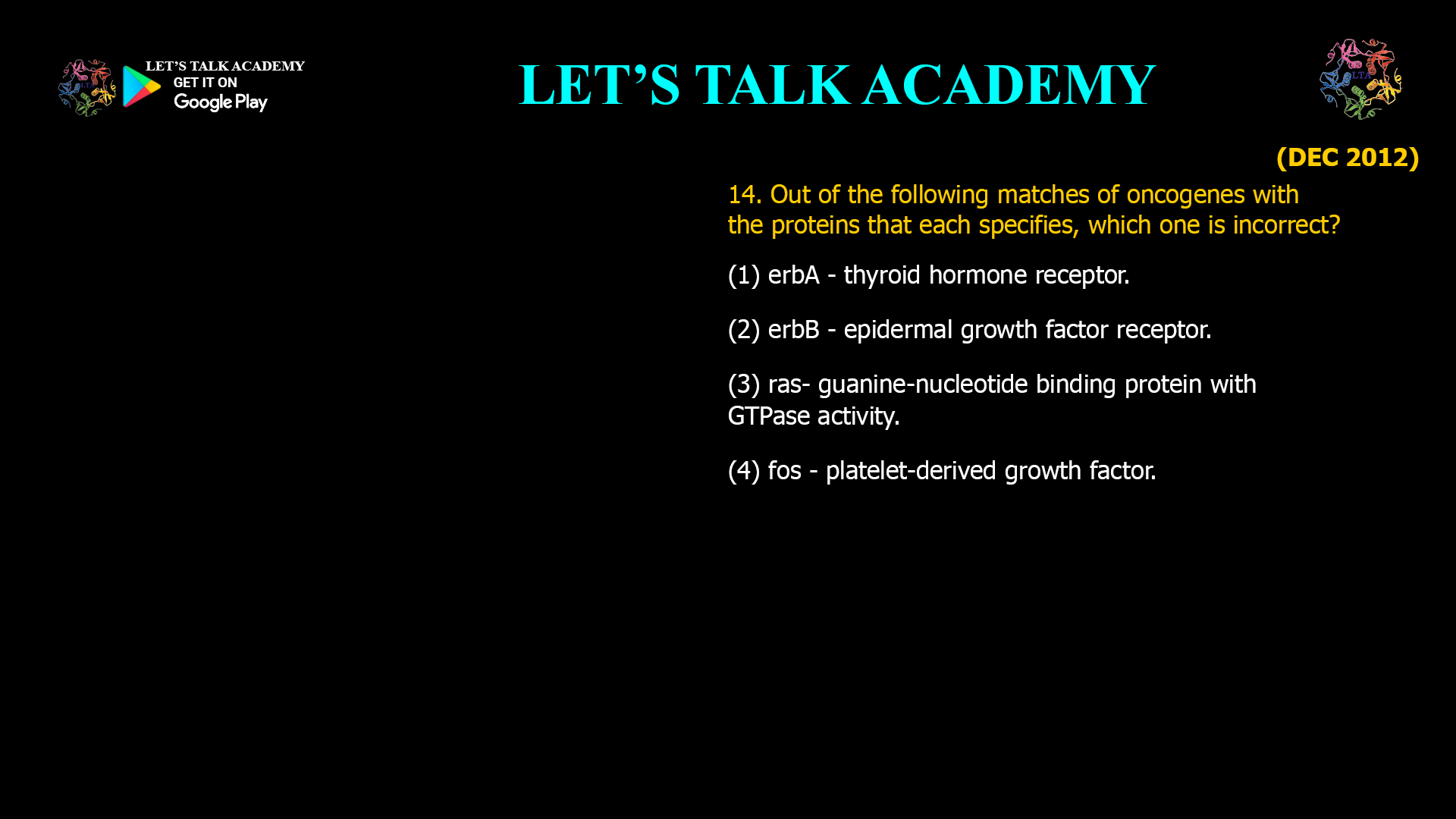
Out of the following matches of oncogenes with the proteins that each specifies, which one is incorrect? (1) erbA – thyroid hormone receptor. (2) erbB – epidermal growth factor receptor. […]


