4. Which one of the following statements is NOT correct? (1) Together with proteins rRNA provides a site for polypeptide synthesis. (2) All DNA molecules are unbranched polymers of nucleotides. […]
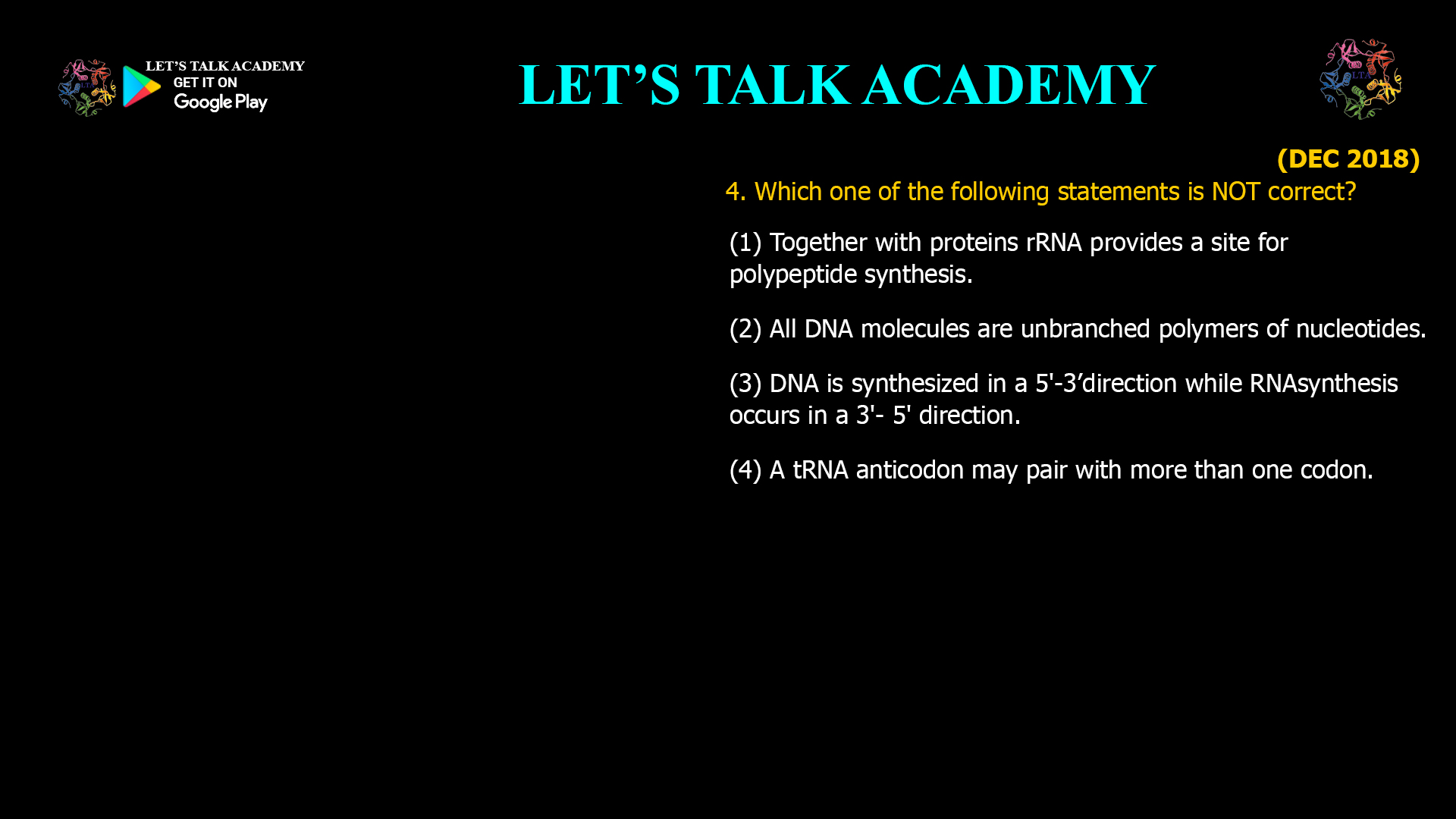
4. Which one of the following statements is NOT correct? (1) Together with proteins rRNA provides a site for polypeptide synthesis. (2) All DNA molecules are unbranched polymers of nucleotides. […]
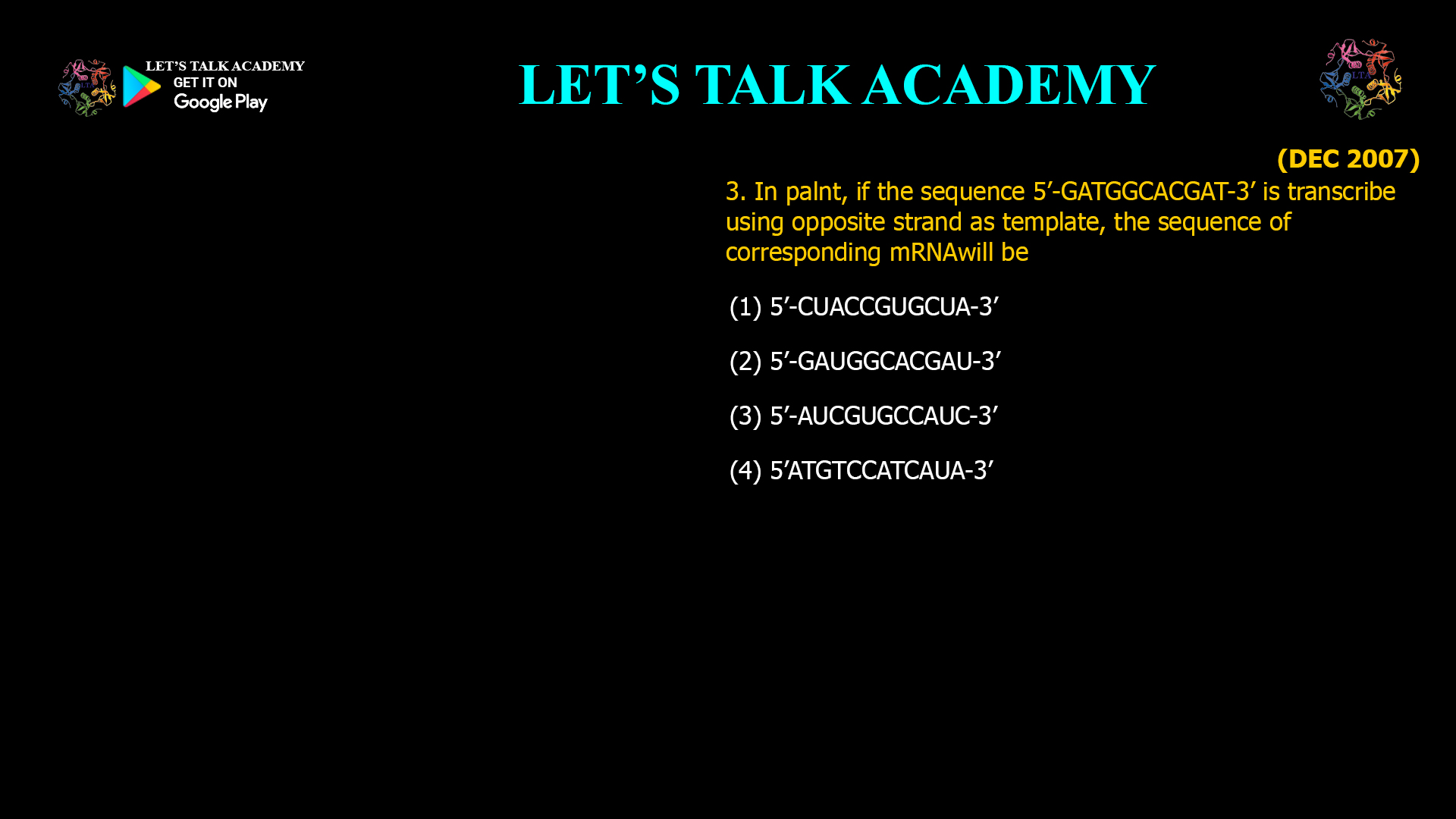
3. In plant, if the sequence 5’-GATGGCACGAT-3’ is transcribe using opposite strand as template, the sequence of corresponding mRNA will be (1) 5’-CUACCGUGCUA-3’ (2) 5’-GAUGGCACGAU-3’ (3) 5’-AUCGUGCCAUC-3’ (4) 5’ATGTCCATCAUA-3’ […]

2. If DNA have sequence 5’-ATGCTCA-3’, is used as template strand, then the sequence of mRNA will be (1) UAGCUTU (2) UACGAGU (3) UGAGCAU (4) TUCGAGT If DNA has […]

1. Which statement is not true for DNA transcription? (1 ) Template strand & m-RNA have complementary sequences (2) Template strand is used as coding strand (3) Transcription is in […]

RCB PhD in Biotechnology: A Gateway to Cutting-Edge Research The Regional Centre for Biotechnology (RCB) offers an interdisciplinary PhD program in Biotechnology for passionate individuals with a postgraduate degree (or […]
Free Online Coaching for CSIR NET Life Science: How Lets Talk Academy is Helping Deserving Candidates Are you preparing for CSIR NET JRF Life Sciences but struggling to afford expensive […]

CSIR NET Life Science Free Test on Cell Cycle and Regulation by Let’s Talk Academy If you’re preparing for the CSIR NET Life Science exam, mastering key units like Cell […]

CSIR NET LIFE SCIENCE FREE TEST ON Cell-Cell Communication CSIR NET LIFE SCIENCE FREE TEST ON Cell-Cell Communication Let’s Talk Academy offers a free topic-wise test on Cell-Cell Communication as […]

HPSC Assistant Professor Zoology Previous Year Subjective Question Paper PDF with Answer Key – Download by Let’s Talk Academy Join our What’s App group of HPSC Introduction Are you […]


