During glycolysis in plants, alanine and related amino acids are directly produced from which one of the following precursors? (1) 3-Phosphoglycerate (2) Phosphoenolpyruvate (3) Pyruvate (4) Acetyl-CoA Amino acid biosynthesis […]

During glycolysis in plants, alanine and related amino acids are directly produced from which one of the following precursors? (1) 3-Phosphoglycerate (2) Phosphoenolpyruvate (3) Pyruvate (4) Acetyl-CoA Amino acid biosynthesis […]

In yeast, under anaerobic conditions, pyruvate is fermented to ethanol through two steps: decarboxylation of pyruvate to acetaldehyde and NADH-mediated reduction of acetaldehyde to ethanol. The mammalian liver also expresses […]

When yeast produce ethanol from glucose, the reaction of acetaldehyde to form ethanol directly (1) generates ATP (2) produces NADH (3) regenerates NAD+ (4) contributes to the proton motive force […]

In mature erythrocytes, the end-product of glycolysis that contains the carbons of glucose is: (1) ethanol (2) pyruvate (3) acetaldehyde (4) lactate Mature erythrocytes (red blood cells) have a unique […]

The major role of 2,3 BPG formed during glycolysis in RBC is for hemoglobin is (1) Increasing affinity for oxygen (2) Decreasing affinity for oxygen (3) Increasing affinity for CO2 […]

9. Which one of the following enzymes present in erythrocytes helps bypass the first step of ATP formation in glycolysis? (1) Bisphosphoglycerate mutase (2) Phosphoglycerate kinase (3) Glyceraldehyde 3-phosphate dehydrogenase […]
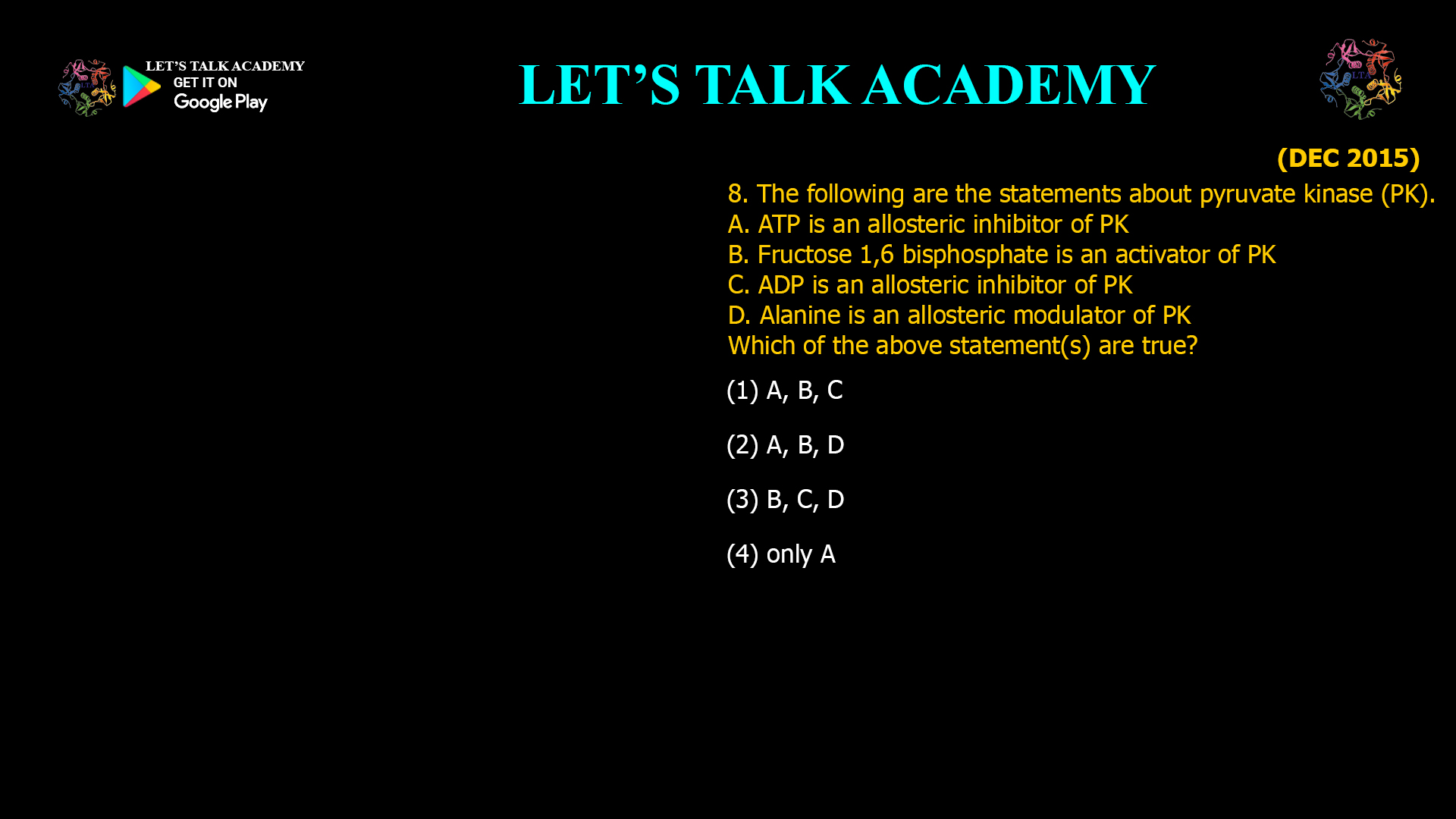
The following are the statements about pyruvate kinase (PK). A. ATP is an allosteric inhibitor of PK B. Fructose 1,6 bisphosphate is an activator of PK C. ADP is an […]
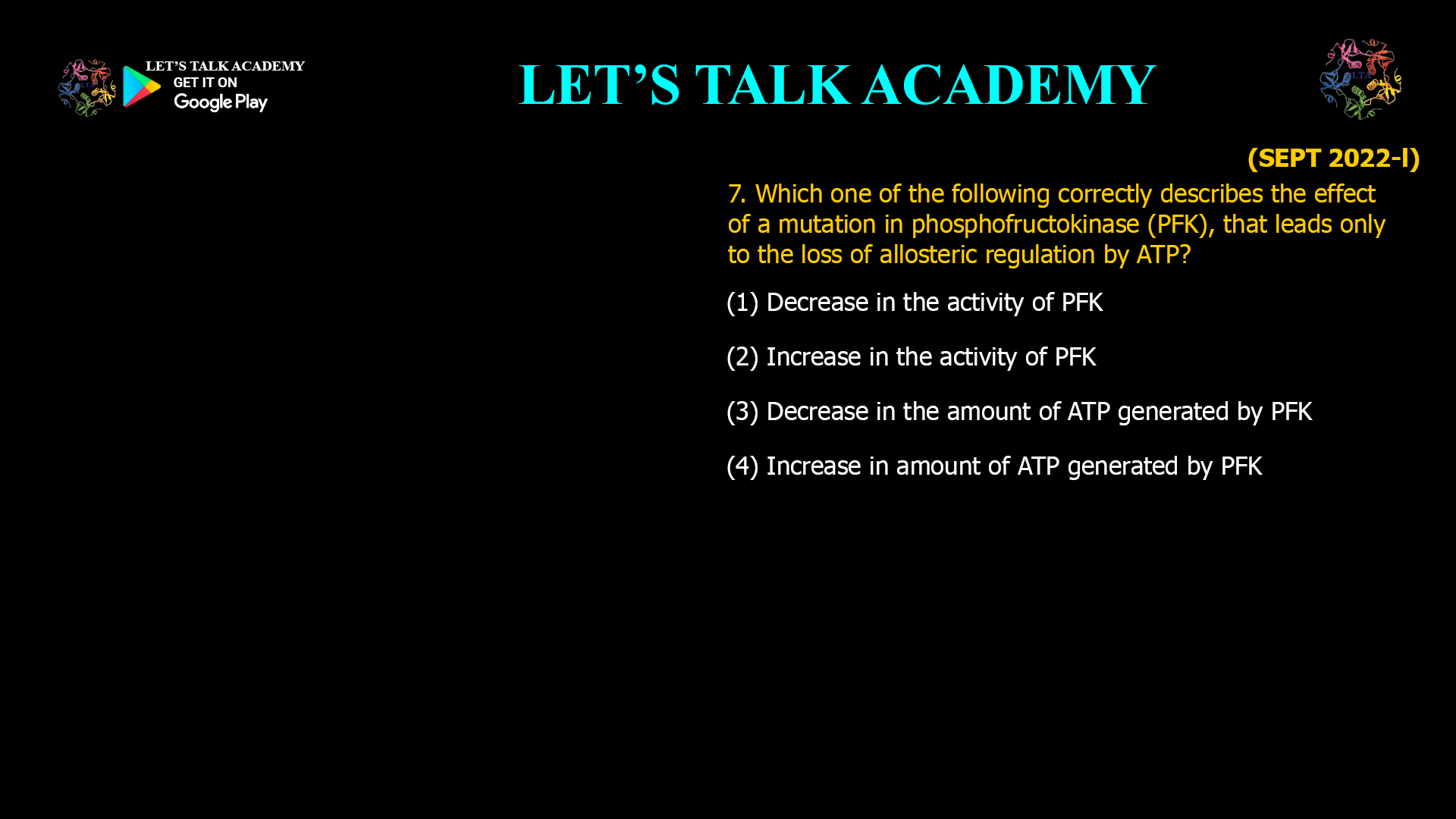
Which one of the following correctly describes the effect of a mutation in phosphofructokinase (PFK), that leads only to the loss of allosteric regulation by ATP? (1) Decrease in the […]
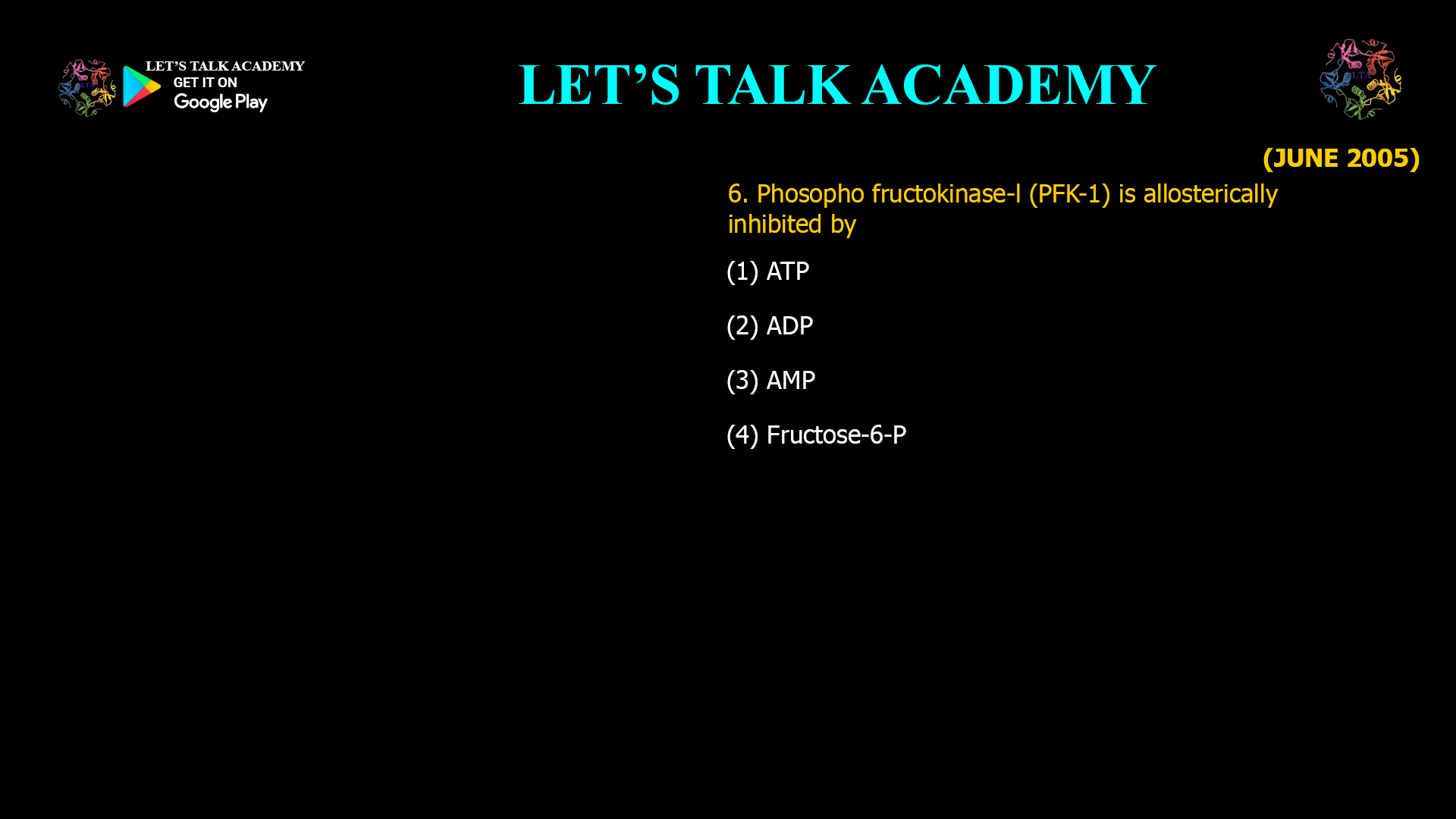
Phosopho fructokinase-l (PFK-1) is allosterically inhibited by (1) ATP (2) ADP (3) AMP (4) Fructose-6-P Phosphofructokinase-1 (PFK-1) is a pivotal enzyme in the glycolytic pathway, often described as the “rate-limiting” […]

Given below are statements that may or may not be correct. A. Fructose 2, 6- biphosphate is an allosteric inhibitor of phosphofructokinase-l. B. The TCA cycle intermediates, succinate and oxaloacetate […]


