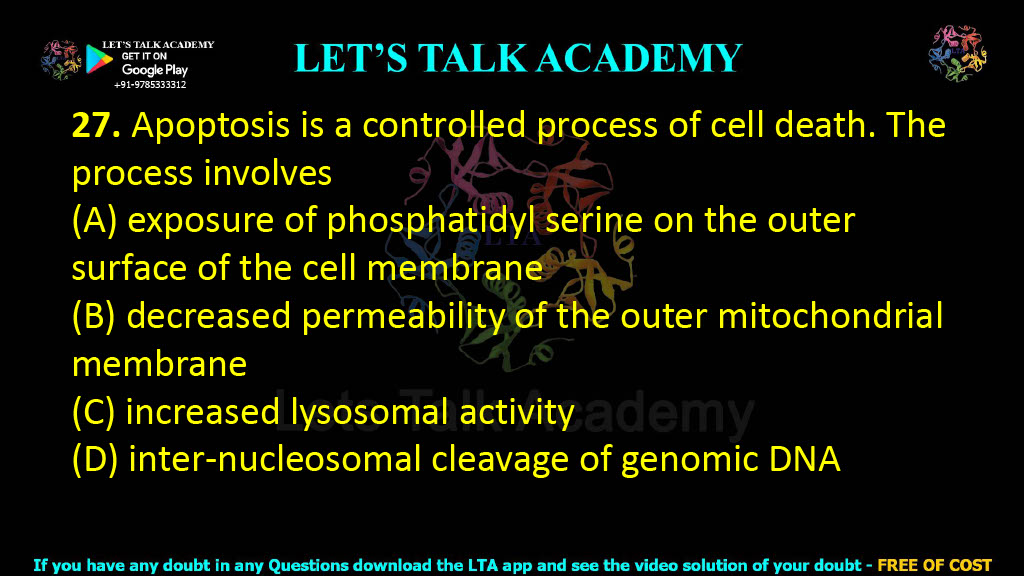
27. Apoptosis is a controlled process of cell death. The process involves
(A) exposure of phosphatidyl serine on the outer surface of the cell membrane
(B) decreased permeability of the outer mitochondrial membrane
(C) increased lysosomal activity
(D) inter-nucleosomal cleavage of genomic DNA
Apoptosis: Molecular Mechanism and Hallmarks of Programmed Cell Death
Introduction
Apoptosis is a highly regulated and genetically programmed mechanism of cell death that plays an essential role in embryonic development, tissue homeostasis, immune regulation, and the elimination of damaged or infected cells. Unlike necrosis, which is an uncontrolled form of cell death accompanied by inflammation, apoptosis is an orderly process that removes unwanted cells without causing damage to neighboring tissues. Because apoptosis is tightly controlled by intracellular signaling pathways, it is often referred to as programmed cell death.
The apoptotic process involves a series of characteristic biochemical and morphological changes, including exposure of phosphatidylserine on the outer surface of the plasma membrane, activation of caspases, increased permeability of the mitochondrial outer membrane, release of cytochrome c, chromatin condensation, nuclear fragmentation, membrane blebbing, formation of apoptotic bodies, and internucleosomal cleavage of genomic DNA.
Correct Answer
Correct Option: (A) and (D)
Detailed Explanation
Apoptosis proceeds through a coordinated sequence of molecular events regulated by the Bcl-2 family of proteins, caspases, and mitochondrial signaling pathways. One of the earliest detectable changes is the translocation of phosphatidylserine (PS) from the inner leaflet of the plasma membrane to the outer surface. This externalized phosphatidylserine serves as an “eat-me” signal that allows macrophages and neighboring phagocytic cells to recognize and remove apoptotic cells without triggering inflammation.
Another hallmark of apoptosis is internucleosomal cleavage of genomic DNA. Activated caspase-3 cleaves the inhibitor of caspase-activated DNase (ICAD), releasing CAD (Caspase-Activated DNase). CAD cuts chromosomal DNA at linker regions located between nucleosomes, generating DNA fragments of approximately 180–200 base pairs or their multiples. This characteristic fragmentation pattern appears as a DNA ladder during agarose gel electrophoresis and is considered one of the classical biochemical signatures of apoptosis.
Therefore, both phosphatidylserine exposure and internucleosomal DNA fragmentation are defining features of programmed cell death.
Explanation of Each Option
Option (A): Exposure of Phosphatidylserine on the Outer Surface of the Cell Membrane
This statement is correct. In healthy cells, phosphatidylserine is restricted to the inner leaflet of the plasma membrane by ATP-dependent flippases. During apoptosis, these enzymes become inactive while scramblases are activated, causing phosphatidylserine to appear on the outer membrane surface. This externalized phosphatidylserine serves as an important recognition signal for macrophages, ensuring efficient removal of apoptotic cells without initiating inflammation.
Option (B): Decreased Permeability of the Outer Mitochondrial Membrane
This statement is incorrect. During intrinsic apoptosis, the outer mitochondrial membrane undergoes increased permeability rather than decreased permeability. Members of the pro-apoptotic Bcl-2 family such as Bax and Bak create pores in the mitochondrial outer membrane, allowing cytochrome c and other apoptogenic proteins to enter the cytoplasm. This event activates caspase-9 and initiates the caspase cascade.
Option (C): Increased Lysosomal Activity
This statement is incorrect. Apoptosis is primarily mediated by caspases and mitochondrial signaling pathways rather than lysosomal degradation. Although lysosomes may contribute to certain specialized forms of cell death, increased lysosomal activity is not considered a defining hallmark of classical apoptosis.
Option (D): Inter-Nucleosomal Cleavage of Genomic DNA
This statement is correct. Activated CAD cleaves chromosomal DNA between adjacent nucleosomes, producing fragments approximately 180–200 base pairs in length. This regular fragmentation pattern produces the characteristic DNA ladder observed during agarose gel electrophoresis and represents one of the most important biochemical markers of apoptosis.
Why Options (A) and (D) are Correct
Both phosphatidylserine externalization and internucleosomal DNA fragmentation are universally recognized hallmarks of apoptosis. Phosphatidylserine enables phagocytic recognition of dying cells, whereas DNA ladder formation results from highly regulated nuclease activity. These features distinguish apoptosis from necrosis and other forms of cell death.
Why the Other Options are Incorrect
Why Option (B) is Incorrect
The mitochondrial outer membrane becomes more permeable during apoptosis, allowing cytochrome c release and activation of the intrinsic apoptotic pathway.
Why Option (C) is Incorrect
Lysosomal enzyme activation is not the principal mechanism responsible for classical apoptosis. Caspases and mitochondrial signaling pathways are the major mediators of programmed cell death.
Comparison of All Options
| Option | Statement | Correct or Incorrect | Reason |
|---|---|---|---|
| A | Exposure of phosphatidylserine on the outer membrane | Correct | Acts as an “eat-me” signal for phagocytes. |
| B | Decreased mitochondrial membrane permeability | Incorrect | Apoptosis requires increased mitochondrial outer membrane permeability. |
| C | Increased lysosomal activity | Incorrect | Not a defining feature of classical apoptosis. |
| D | Inter-nucleosomal DNA cleavage | Correct | Produces the characteristic DNA ladder. |
Major Molecular Events During Apoptosis
| Event | Biological Significance |
|---|---|
| Phosphatidylserine externalization | Recognition by macrophages |
| Mitochondrial outer membrane permeabilization | Release of cytochrome c |
| Caspase activation | Proteolysis of cellular proteins |
| Chromatin condensation | Nuclear shrinkage |
| Internucleosomal DNA fragmentation | Formation of DNA ladder |
| Membrane blebbing | Formation of apoptotic bodies |
| Phagocytosis | Removal without inflammation |
Comparison Between Apoptosis and Necrosis
| Feature | Apoptosis | Necrosis |
|---|---|---|
| Nature | Programmed | Uncontrolled |
| Cell Size | Shrinks | Swells |
| DNA Fragmentation | Regular internucleosomal cleavage | Random degradation |
| Plasma Membrane | Intact with phosphatidylserine exposure | Membrane ruptures |
| Inflammation | Absent | Present |
| Main Enzymes | Caspases | Lysosomal enzymes |
Biological Significance of Apoptosis
Apoptosis maintains tissue homeostasis by eliminating aged, damaged, infected, or potentially cancerous cells. It plays indispensable roles during embryonic development, immune system maturation, nervous system development, digit separation, and removal of autoreactive lymphocytes. Dysregulation of apoptosis contributes to numerous diseases. Reduced apoptosis promotes cancer and autoimmune disorders, whereas excessive apoptosis contributes to neurodegenerative diseases such as Alzheimer’s disease, Parkinson’s disease, and Huntington’s disease.
Final Answer
Correct Option: (A) and (D)
Apoptosis is characterized by the externalization of phosphatidylserine, which promotes phagocytic recognition of dying cells, and internucleosomal cleavage of genomic DNA, producing the characteristic DNA ladder pattern. In contrast, apoptosis involves increased mitochondrial outer membrane permeability rather than decreased permeability, and lysosomal activation is not considered a defining feature of classical programmed cell death.


