
1. Introduction
Viruses are obligate intracellular infectious agents that depend on host cells for their replication. Unlike cellular organisms, viruses do not possess complete metabolic and protein-synthesizing machinery of their own. Therefore, a virus must first recognize a suitable host cell, attach to it, enter the cell, release its genome, and redirect host-cell machinery toward the production of viral components.
Viral entry is one of the most important stages of the viral life cycle. It determines, to a large extent, which host species, tissues, and cell types can be infected. The process differs considerably between animal and plant viruses because animal cells are surrounded primarily by a plasma membrane, whereas plant cells possess a rigid cell wall outside the plasma membrane.
A generalized viral infection can be represented as:
Attachment → Entry → Uncoating → Genome Release → Replication → Assembly → Maturation → Release
Although this sequence provides a useful framework, individual viruses may follow different pathways. Some animal viruses enter through membrane fusion, while others use receptor-mediated endocytosis. Plant viruses face the additional physical barrier of the plant cell wall and therefore commonly depend on wounds, vectors, or specialized mechanisms to gain access to host cells.
2. Recognition of Host Cells by Viruses
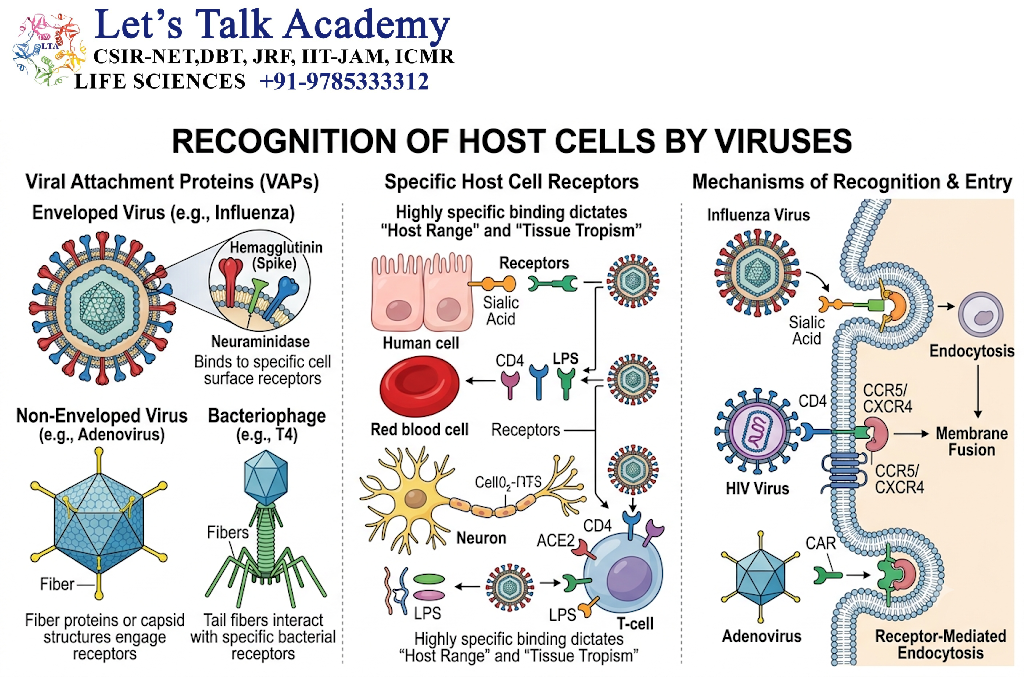
2.1 Viral Attachment
The first major interaction between a virus and a susceptible host cell is attachment.
Viral surface proteins recognize specific molecules present on the host-cell surface. These molecules may be proteins, glycoproteins, glycolipids, or other membrane-associated structures.
The interaction can be represented as:
Viral attachment protein + Host-cell receptor → Virus–cell binding
This interaction is usually highly specific.
2.2 Host-Cell Receptors
A host receptor is a cellular molecule that can be recognized by a viral attachment protein or other viral surface structure.
The presence or absence of suitable receptors can influence viral tropism.
For example, if a particular cell lacks the receptor required for viral attachment, the virus may be unable to establish infection even if other components required for replication are present.
However, receptor binding alone does not always determine susceptibility. Additional host factors may be required for viral entry, genome replication, assembly, or release.
2.3 Co-Receptors and Attachment Factors
Some viruses require more than one host molecule for efficient entry.
An initial attachment factor may concentrate the virus on the cell surface, followed by interaction with a receptor or co-receptor that triggers entry.
Therefore, viral entry can involve several sequential interactions rather than a single receptor-binding event.
3. Entry of Viruses into Animal Cells
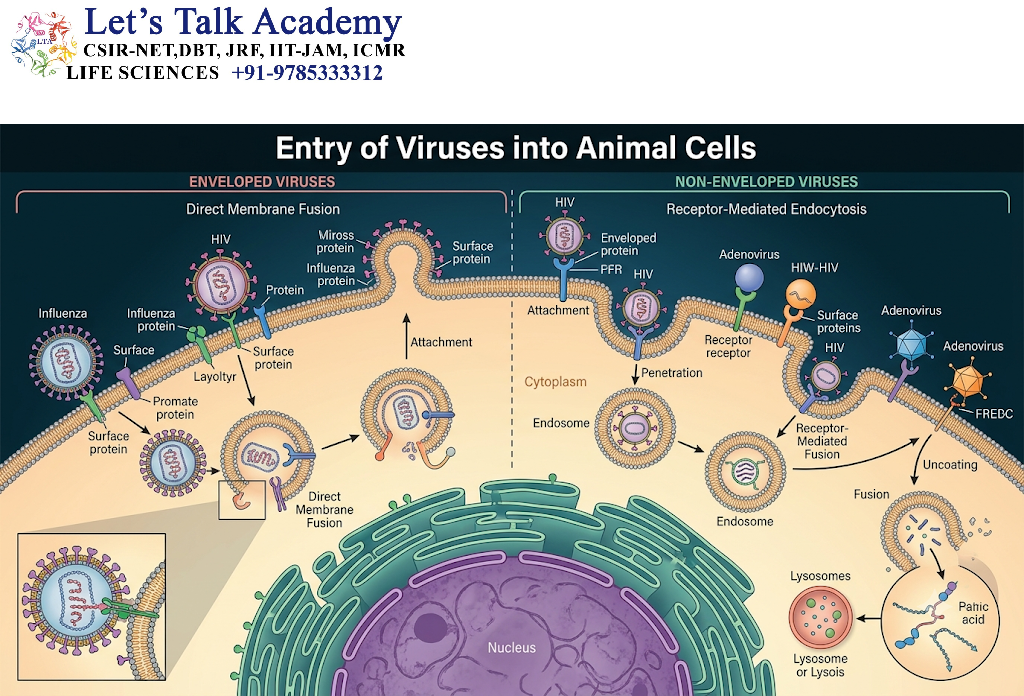
3.1 General Features
Animal cells do not possess a rigid cell wall. Their plasma membrane is therefore the primary physical barrier encountered by an extracellular virus.
Animal viruses can enter cells through several mechanisms, including:
- Direct fusion with the plasma membrane
- Receptor-mediated endocytosis
- Clathrin-mediated endocytosis
- Caveolae-associated or other endocytic pathways
- Macropinocytosis
- Other virus-specific uptake mechanisms
The exact pathway depends on the virus, its surface structures, and the host cell.
4. Membrane Fusion
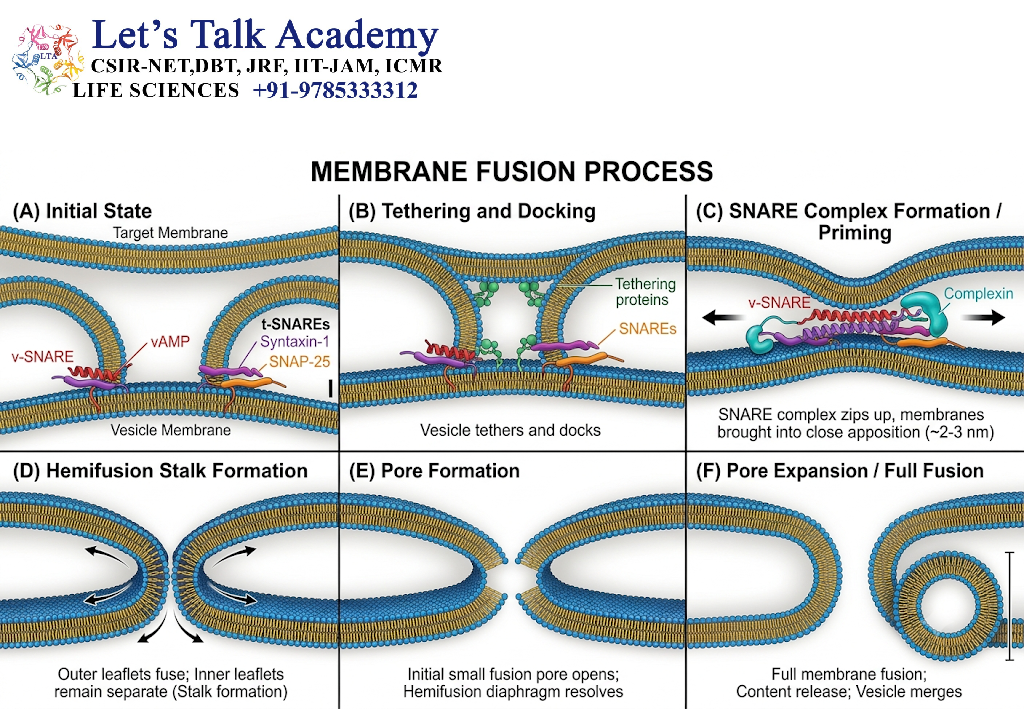
4.1 Enveloped Viruses
Many animal viruses possess a lipid envelope derived partly from host-cell membranes.
Embedded within this envelope are viral glycoproteins responsible for attachment and, in some cases, membrane fusion.
For an enveloped virus, entry can occur when the viral envelope fuses with the host-cell membrane.
The simplified process is:
Attachment → Receptor recognition → Fusion → Release of viral nucleocapsid/genome
4.2 Direct Fusion at the Plasma Membrane
Some enveloped viruses can fuse directly with the plasma membrane after appropriate receptor interactions.
Fusion proteins undergo structural changes that bring the viral membrane and cellular membrane into close proximity.
The two lipid bilayers then merge, allowing the viral contents to enter the cytoplasm.
4.3 Fusion After Endocytosis
Other viruses are first internalized into endosomal compartments.
Changes in the endosomal environment, such as acidification, can trigger conformational changes in viral fusion proteins.
The viral envelope then fuses with the endosomal membrane, allowing the viral genome or nucleocapsid to enter the cytoplasm.
Thus:
Receptor binding → Endocytosis → Endosomal maturation → Fusion → Genome release
5. Receptor-Mediated Endocytosis
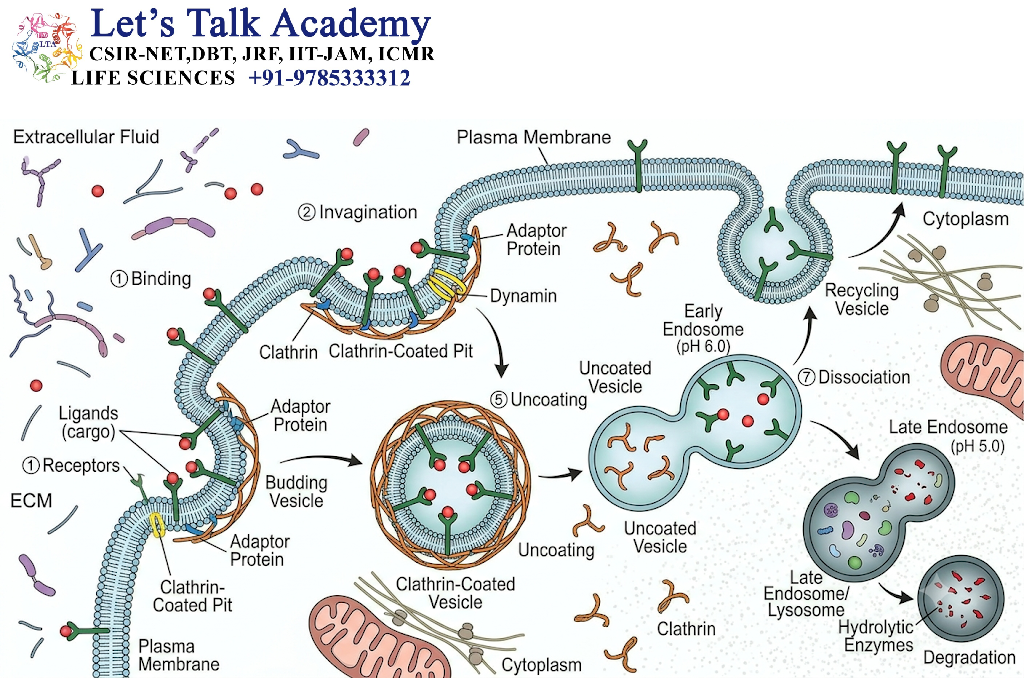
5.1 Basic Mechanism
Receptor-mediated endocytosis is an important route of entry for many animal viruses.
The process generally involves:
- Viral attachment to a receptor
- Receptor clustering
- Recruitment of cellular endocytic machinery
- Membrane invagination
- Formation of an intracellular vesicle
- Transport through the endosomal system
- Viral penetration or uncoating
The virus therefore exploits a normal cellular process for internalization.
5.2 Clathrin-Mediated Endocytosis
Clathrin-mediated endocytosis is one of the best-characterized cellular uptake pathways.
After receptor engagement, cellular proteins help form a clathrin-coated membrane structure. The membrane bends inward and eventually forms an intracellular vesicle.
The vesicle subsequently undergoes changes in composition and trafficking as it moves through the endosomal system.
Some viruses exploit this pathway to reach a compartment where their entry machinery becomes activated.
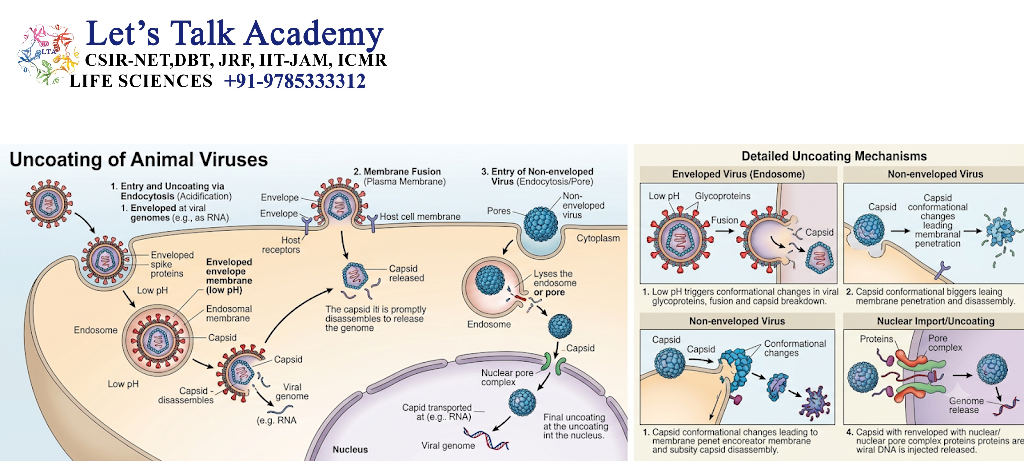
6. Uncoating of Animal Viruses
6.1 Meaning of Uncoating
Uncoating refers to the removal or disruption of viral protein structures surrounding the viral genome, allowing the genome to become accessible for replication or transcription.
Entry and uncoating are closely connected but are not identical processes.
A virus may enter a cell successfully but remain unable to replicate until its genome is released into the appropriate cellular compartment.
6.2 Factors Triggering Uncoating
Uncoating may be triggered by:
- Receptor binding
- Endosomal acidification
- Proteolytic cleavage
- Conformational changes in viral proteins
- Interactions with host factors
- Membrane fusion
- Changes in ionic conditions
Different viruses use different combinations of these mechanisms.
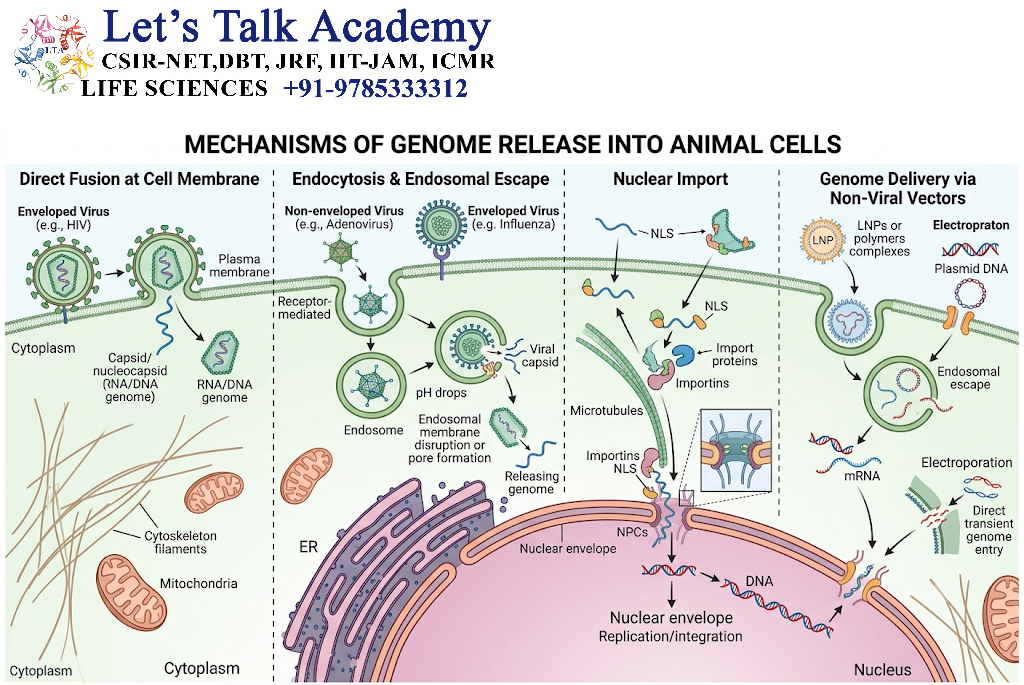
7. Genome Release into Animal Cells
7.1 Cytoplasmic Genome Release
Some viruses release their genomes directly into the cytoplasm.
This is particularly important for viruses whose genomes are replicated or translated in the cytoplasm.
7.2 Nuclear Entry
Other viruses must transport their genome or nucleoprotein complex into the nucleus.
This requirement is particularly important for viruses whose replication depends on nuclear enzymes, nuclear compartments, or host nuclear processes.
The viral genome may enter the nucleus through nuclear pores or through virus-specific mechanisms.
7.3 Importance of Intracellular Trafficking
After entry, viruses can interact with the host cytoskeleton and intracellular transport machinery.
Microtubules, motor proteins, vesicular transport systems, and membrane trafficking pathways can contribute to the movement of viral components toward sites of replication.
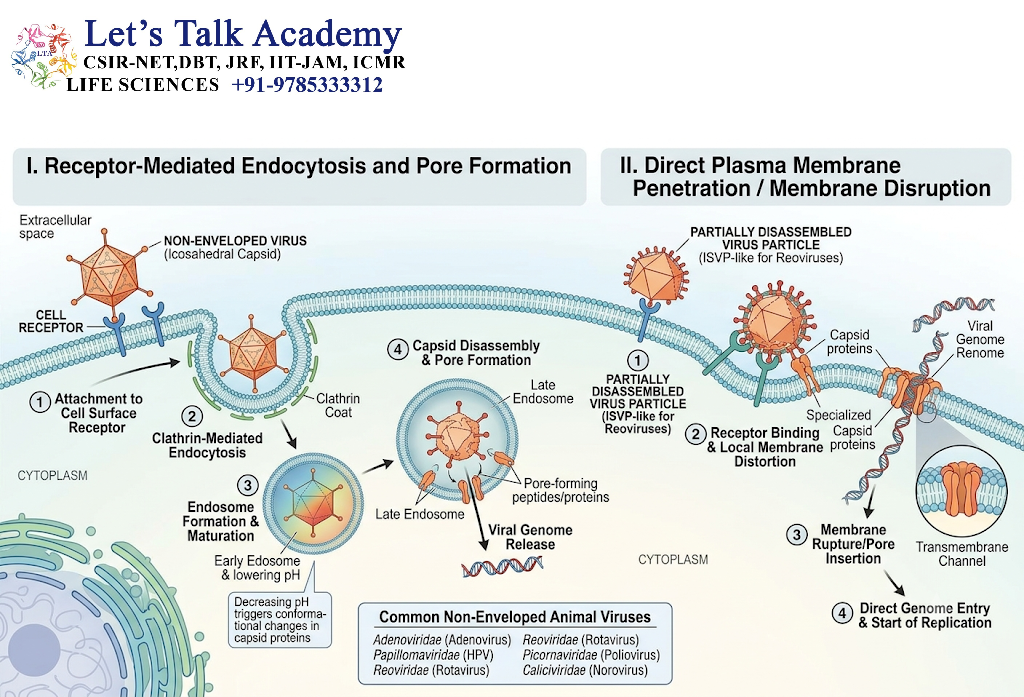
8. Entry of Non-Enveloped Animal Viruses
8.1 Absence of a Lipid Envelope
Non-enveloped viruses lack a lipid membrane surrounding the viral capsid.
Therefore, they cannot enter cells through the same envelope-fusion mechanism used by enveloped viruses.
Instead, they may use receptor-mediated endocytosis followed by structural rearrangements that allow the viral genome to cross an endosomal or cellular membrane.
8.2 Capsid-Mediated Membrane Penetration
After uptake, conformational changes in the viral capsid may expose regions capable of interacting with cellular membranes.
These changes can facilitate genome delivery into the cytoplasm.
The exact mechanism differs among virus families.
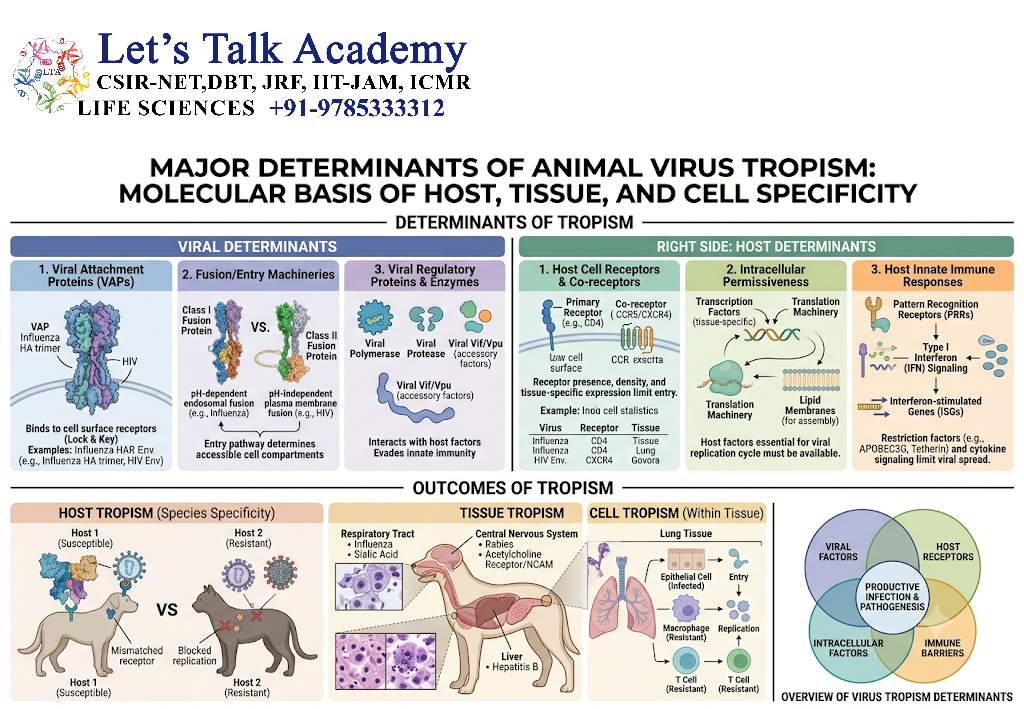
9. Determinants of Animal Virus Tropism
9.1 Receptor Distribution
The distribution of cellular receptors can strongly influence which cells are susceptible to infection.
If a receptor is expressed predominantly in a particular tissue, viruses that depend on that receptor may preferentially interact with those cells.
9.2 Intracellular Factors
Receptor presence is not sufficient in every case.
A cell may possess the appropriate receptor but still be non-permissive because it lacks an essential intracellular factor required for viral replication.
9.3 Host Defense Mechanisms
Innate antiviral defenses also influence viral tropism.
Interferon responses, restriction factors, antiviral enzymes, programmed cell death, and adaptive immune mechanisms can determine whether infection becomes productive.
Therefore:
Susceptibility = Entry factors + Intracellular compatibility + Viral replication capacity − Host antiviral defenses
This is a conceptual relationship rather than a mathematical equation.
10. Entry of Viruses into Plant Cells
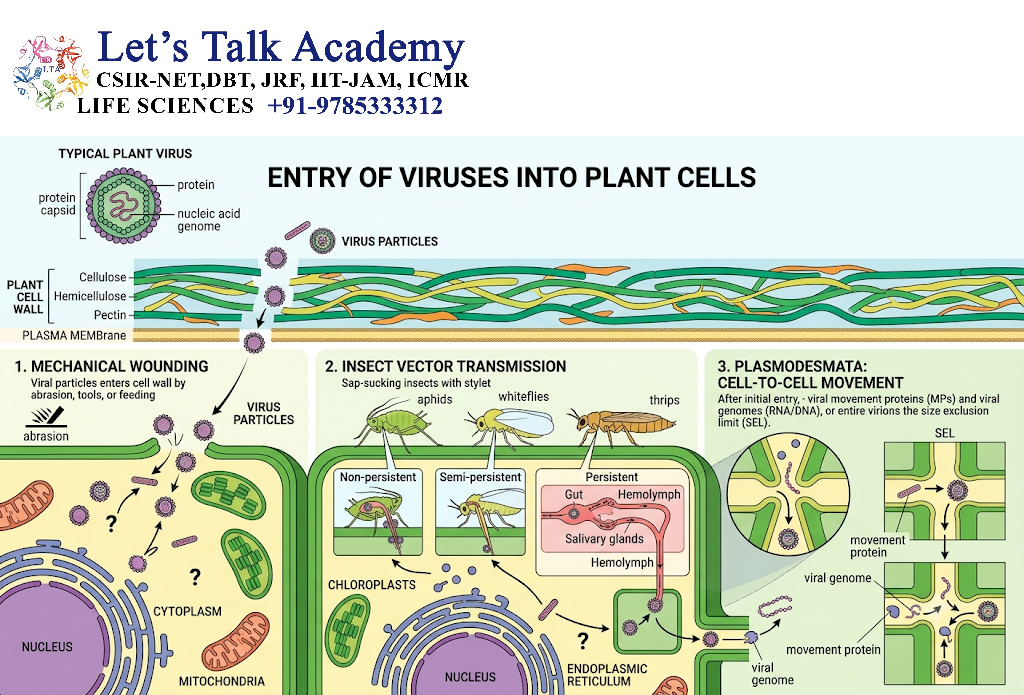
10.1 The Plant Cell Wall as a Major Barrier
Plant cells differ fundamentally from animal cells because they possess a rigid cell wall composed primarily of cellulose, hemicellulose, and pectin.
This wall provides mechanical strength and protects the plasma membrane.
However, it also creates a major physical barrier for viruses.
A virus generally cannot simply attach to the plant plasma membrane from the extracellular environment and enter through ordinary receptor-mediated endocytosis in the same manner as many animal viruses.
10.2 How Plant Viruses Overcome the Cell Wall
Plant viruses commonly gain access to cells through:
- Mechanical injury
- Feeding by insect vectors
- Other biological vectors
- Grafting or vegetative propagation
- Natural openings or damaged tissues
- Experimental mechanical inoculation
Once a virus reaches the cytoplasm of a plant cell, it can initiate its intracellular infection cycle.
11. Plant Virus Transmission by Vectors
11.1 Insect Vectors
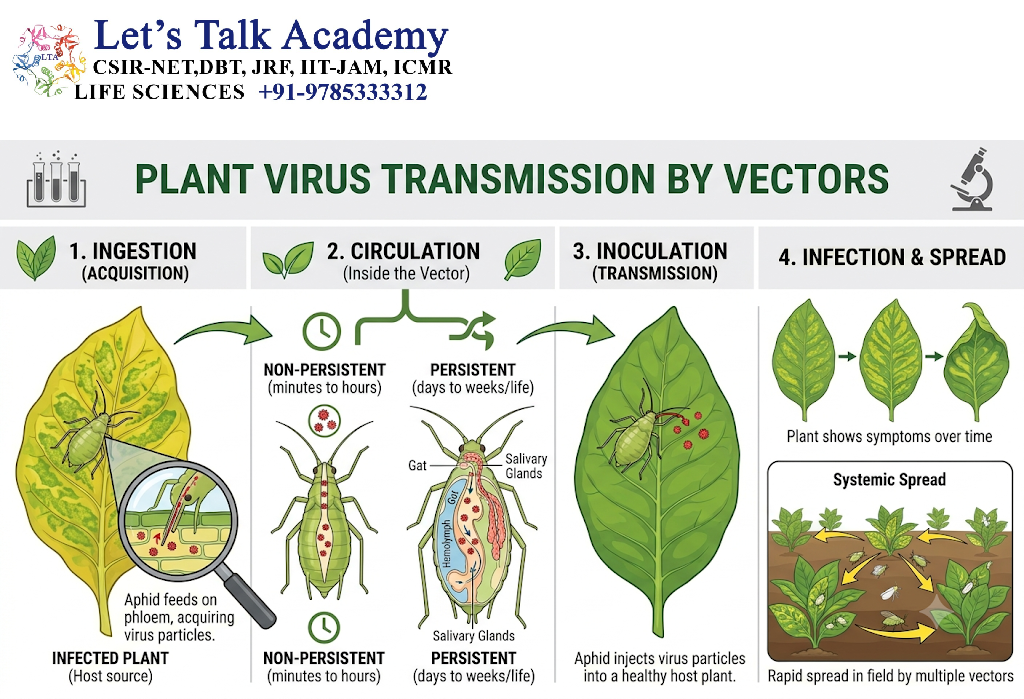
Many plant viruses are transmitted by insects.
Important vectors include:
- Aphids
- Whiteflies
- Leafhoppers
- Thrips
- Beetles
The vector acquires the virus while feeding on an infected plant and may subsequently introduce the virus into another plant.
11.2 Vector-Mediated Cell Entry
During feeding, the vector can damage plant tissues and introduce viral particles into cells or intercellular regions.
This bypasses the major physical obstacle created by the plant cell wall.
The process can therefore be conceptualized as:
Infected plant → Vector acquisition → Vector feeding → Plant-cell access → Viral infection
11.3 Other Routes of Transmission
Plant viruses can also spread through:
- Infected seeds
- Pollen
- Vegetative propagation
- Grafting
- Mechanical contact
- Soil-associated mechanisms for certain viruses
- Fungal or nematode vectors in particular cases
12. Viral Entry into the Plant Cytoplasm
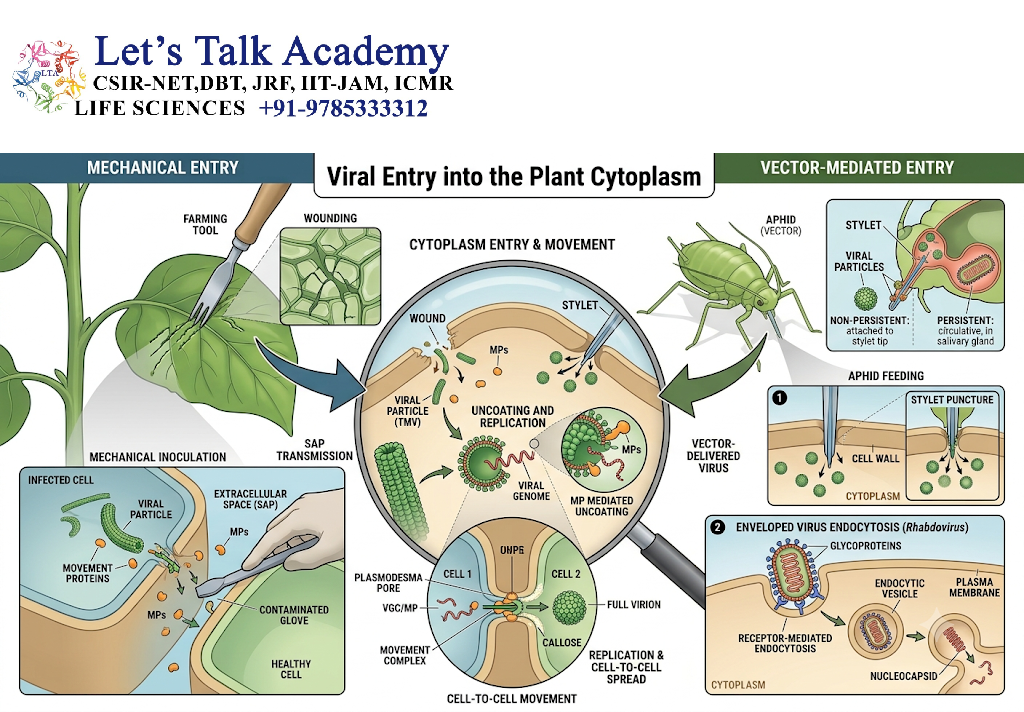
12.1 Direct Access to the Cytoplasm
Once a plant virus gains physical access to the interior of a cell, its genome can become available for viral replication or translation.
Many plant viruses replicate in the cytoplasm.
The initial stages commonly involve:
Genome release → Translation of viral proteins → Genome replication → Assembly
12.2 Positive-Sense RNA Viruses
For many positive-sense single-stranded RNA viruses, the viral RNA can function directly as messenger RNA after entering the cytoplasm.
Therefore, the first major step can be translation of viral proteins using host ribosomes.
These proteins can include enzymes required for viral RNA replication.
12.3 Negative-Sense RNA Viruses
Negative-sense RNA genomes generally cannot function directly as messenger RNA.
They require an appropriate viral RNA-dependent RNA polymerase to generate complementary RNA molecules that can be translated.
Therefore, the virus must deliver the necessary polymerase activity along with or associated with the viral genome.
12.4 DNA Plant Viruses
DNA viruses use different replication strategies depending on their genome type and virus family.
Some plant DNA viruses replicate in the nucleus, while others use specialized cellular compartments or replication mechanisms.
The route of genome entry and intracellular trafficking therefore depends on the biology of the particular virus.
13. Plant Viral Movement Between Cells
13.1 The Problem of Cell-to-Cell Spread
Plant cells are connected by structures called plasmodesmata.
These intercellular channels normally regulate communication and molecular exchange between neighboring cells.
Plant viruses exploit this system to spread from one infected cell to another.
13.2 Viral Movement Proteins
Many plant viruses encode specialized movement proteins.
These proteins can modify plasmodesmata and facilitate the movement of viral genomes or viral nucleoprotein complexes between adjacent cells.
Thus, plant viruses have evolved mechanisms that overcome the normally restrictive nature of plasmodesmata.
13.3 Local Spread
After replication in an initially infected cell, the virus can move into neighboring cells.
This produces a localized region of infection.
The process can be represented as:
Initial cell infection → Viral replication → Plasmodesmata modification → Neighboring cell entry → Repeated cell-to-cell movement
14. Systemic Movement in Plants
14.1 Vascular System
Following local cell-to-cell spread, many plant viruses can enter the plant vascular system.
The vascular tissues provide long-distance transport routes.
The phloem is particularly important for systemic movement of many plant viruses.
14.2 Local Versus Systemic Infection
Local infection refers to viral spread through nearby cells.
Systemic infection refers to movement of the virus to distant tissues or organs.
Systemic movement allows viruses to reach young leaves, stems, roots, reproductive tissues, and other parts of the plant.
15. Recognition of Viruses by Plant Cells
15.1 Plant Innate Immunity
Plants possess sophisticated innate immune systems that detect pathogen-associated molecules and respond to infection.
Unlike animals, plants do not possess circulating immune cells that migrate throughout the organism in the same manner.
Instead, individual plant cells and surrounding tissues participate in immune recognition and signaling.
15.2 Pattern Recognition
Plant cells can recognize pathogen-associated molecular patterns through pattern-recognition receptors located at the cell surface or within cells.
Recognition can trigger:
- Ion fluxes
- Reactive oxygen species
- Protein phosphorylation
- Defense-gene expression
- Hormonal signaling
- Cell-wall reinforcement
- Antimicrobial responses
15.3 Recognition of Viral Components
Plant cells can detect viral nucleic acids and viral-associated molecular structures.
Viral double-stranded RNA and other replication-associated molecules can activate antiviral defense pathways.
These responses help restrict viral multiplication and movement.
16. RNA Silencing in Plant Antiviral Defense
16.1 Concept of RNA Silencing
RNA silencing is a major antiviral defense mechanism in plants.
Viral double-stranded RNA or structured viral RNA can be processed into small RNA molecules.
These small RNAs can guide sequence-specific silencing complexes toward complementary viral RNA.
16.2 Small Interfering RNAs
Small interfering RNAs, or siRNAs, are important components of plant antiviral defense.
The general sequence is:
Viral RNA → Double-stranded RNA → Small interfering RNAs → Sequence-specific targeting → Viral RNA degradation or suppression
16.3 Viral Suppressors of RNA Silencing
Because RNA silencing is an important defense mechanism, many plant viruses produce suppressor proteins that interfere with different stages of the pathway.
This creates an evolutionary conflict between viral replication and plant antiviral defense.
17. Comparison of Viral Entry into Animal and Plant Cells
| Feature | Animal cells | Plant cells |
|---|---|---|
| Major external barrier | Plasma membrane | Cell wall + plasma membrane |
| Common initial interaction | Receptor or attachment factor | Often access through wounds or vectors |
| Direct membrane fusion | Common for many enveloped viruses | Not the typical general mechanism |
| Endocytosis | Important for many animal viruses | Not the principal general route for overcoming the cell wall |
| Major genome-release site | Cytoplasm or nucleus depending on virus | Cytoplasm or nucleus depending on virus |
| Cell-to-cell spread | Often through extracellular release or direct cell-associated mechanisms | Frequently involves plasmodesmata |
| Long-distance spread | Blood, lymph, nerves, or other tissues depending on virus | Frequently through vascular tissues |
| Major antiviral defense | Interferons, restriction factors, innate and adaptive immunity | RNA silencing, receptor-mediated immunity, defense signaling |
18. Major Differences Between Animal and Plant Viral Entry
18.1 Physical Barriers
The most fundamental difference is the presence of a rigid cell wall in plants.
Animal viruses generally interact directly with the plasma membrane.
Plant viruses usually require a route through or around the cell wall.
18.2 Receptor Dependence
Many animal viruses depend strongly on specific cell-surface receptors for attachment and entry.
Plant viruses can also interact with host factors, but physical access to the plant cell is a particularly important limitation.
18.3 Cell-to-Cell Movement
Plant viruses have evolved specialized movement mechanisms because plant cells are physically separated by cell walls.
Animal viruses do not normally face the same structural limitation between adjacent cells.
18.4 Systemic Spread
Animal viruses may spread through blood, lymph, nerves, or other biological routes.
Plant viruses commonly exploit vascular tissues for long-distance movement.
19. Generalized Viral Infection Cycle in Animal Cells
19.1 Step 1: Attachment
Viral attachment proteins recognize host-cell molecules.
19.2 Step 2: Entry
The virus enters through fusion, endocytosis, or another virus-specific pathway.
19.3 Step 3: Uncoating
The viral genome is released from its protective structure.
19.4 Step 4: Genome Replication and Gene Expression
Viral genetic information directs production of viral proteins and new genomes.
19.5 Step 5: Assembly
New viral genomes and structural proteins assemble into progeny virions.
19.6 Step 6: Release
New virions leave the cell through mechanisms such as budding, exocytosis, or cell lysis, depending on the virus.
20. Generalized Viral Infection Cycle in Plant Cells
20.1 Step 1: Access to Plant Tissue
The virus gains entry through a wound, vector, graft, or another route.
20.2 Step 2: Cell Infection
The virus reaches the interior of a susceptible plant cell.
20.3 Step 3: Uncoating and Genome Expression
The viral genome becomes accessible and directs synthesis of viral proteins.
20.4 Step 4: Genome Replication
New viral genomes are synthesized.
20.5 Step 5: Assembly
Viral components form new virus particles or infectious complexes.
20.6 Step 6: Cell-to-Cell Movement
Viral movement proteins facilitate movement through plasmodesmata.
20.7 Step 7: Systemic Movement
The virus can enter vascular tissues and spread to distant parts of the plant.
21. Factors Determining Viral Host Range
21.1 Receptor Compatibility
For many animal viruses, successful interaction with an appropriate receptor is a major determinant of host range.
21.2 Cellular Compatibility
The host cell must provide the molecular environment required for viral replication.
21.3 Viral Polymerases and Replication Proteins
Viral replication enzymes must function effectively in the selected host.
21.4 Host Restriction Factors
Host cells contain proteins that can inhibit viral replication.
21.5 Immune Responses
Innate and adaptive immune mechanisms in animals, and innate and RNA-silencing mechanisms in plants, can restrict infection.
21.6 Tissue Environment
Temperature, cellular metabolism, receptor distribution, intracellular factors, and tissue architecture can all influence viral replication.


