

Q75.Given below are two statements: one is labelled as Assertion A and the other is labelled as Reason R. Assertion A: Animals cannot convert fatty acids to sugars. Reason R: Plants possess glyoxylate cycle. In the light of the above statements, choose the most appropriate answer from the options given below: (1) Both A and R are correct and R is the correct explanation of A (2) Both A and R are correct but R is not the correct explanation of A (3) A is correct but R is not correct (4) A is not correct but R is correct

Animals Cannot Convert Fatty Acids to Sugars

Q74.Given below are two statements : one is labelled as Assertion A and the other is labelled as Reason R. Assertion A : Water is an excellent solvent. Reason R : Water has high dielectric constant. In the light of the above statements, choose the most appropriate answer from the options given below : (1) Both A and R are correct and R is the correct explanation of A (2) Both A and R are correct but R is not the correct explanation of A (3) A is correct but R is not correct (4) A is not correct but R is correct

Water Excellent Solvent High Dielectric Constant

Q73.Given below are two statements: one is labelled as Assertion A and the other is labelled as Reason R. Assertion A: The density of RNA molecule is higher than that of DNA. Reason R: RNA has 2′OH group attached to the second carbon atom of the ribose ring. In the light of the above statements, choose the most appropriate answer from the options given below: (1) Both A and R are correct and R is the correct explanation of A (2) Both A and R are correct but R is not the correct explanation of A (3) A is correct but R is not correct (4) A is not correct but R is correct

RNA Density Higher Than DNA

Q72.Given below are two statements : one is labelled as Assertion A and the other is labelled as Reason R. Assertion A : Primitive groove is the functional equivalent to dorsal lip of the amphibian blastopore. Reason R : Dorsal lip of the amphibian blastopore is considered as the primary organiser. In the light of the above statements, choose the most appropriate answer from the options given below : (1) Both A and R are correct and R is the correct explanation of A (2) Both A and R are correct but R is not the correct explanation of A (3) A is correct but R is not correct (4) A is not correct but R is correct

Primitive Groove Dorsal Lip Amphibian Blastopore

Q71.Which of the following statements are true? A. Dominant species have a large effect on the community because of its abundance. B. Keystone species have a large role in community, out of proportion to its abundance. C. Indicator species provide information on the overall health of an ecosystem. D. Flagship species is the single, large and instantly recognisable species. Choose the correct answer from the options given below : (1) A and D Only (2) A and B Only (3) A, B and C Only (4) A, B, C and D

Dominant Keystone Indicator Flagship Species

Q70.In deserts, Kangaroos can survive without drinking water because of the following reasons A. Dependence on protein rich diet B. Greater ADH level in the blood C. Absence of sweat glands D. Dependence on metabolic water Choose the correct answer from the options given below : (1) A Only (2) C and D Only (3) A, B, C and D (4) A, B and D Only

Kangaroos Survive Deserts

Q69.Choose the correct statement. A. Mean, median and mode are measures of central tendency. B. Range, quartile range and standard deviation are the measures of spread or variability. C. Variance is the average squared deviation. D. Continuous data arise from qualitative traits. E. If mean of six data is 30, the sum of all the data will be 36. Choose the correct answer from the options given below : (1) A, B and C Only (2) B, C and D Only (3) E Only (4) C and D Only

Measures of Central Tendency and Variability

Q68.The animals having segmented body belong to the phylum A. Protozoa B. Cnidaria C. Ctenophora D. Annelida E. Arthropoda Choose the correct answer from the options given below : (1) A, B and C Only (2) C and D Only (3) B and D Only (4) D and E Only

Segmented Body Animals Phylum

Q67.Which of the following are correct for MHC-I molecule? A. Glycoprotein B. Expressed by nearly all nucleated cells C. Present antigen to Tₕ (T-helper) cells D. Peptide-binding domain is α1 and β1 Choose the correct answer from the options given below : (1) A and B Only (2) A, B and C Only (3) B, C and D Only (4) B and C Only

MHC-I Glycoprotein Nucleated Cells

Q66.Pernicious anemia is a result of A. Deficiency of Vitamin B₂ B. Deficiency of Vitamin C C. Blockage of Vitamin B₁₂ absorption D. Blockage of Vitamin A absorption E. Lack of proteins in diet Choose the correct answer from the options given below : (1) A, B, C and E Only (2) C Only (3) B, C and D Only (4) D and E Only

Pernicious Anemia Vitamin B12 Absorption Blockage

Q65.Choose the correct statement. A. Differential gene expression can occur only at the level of transcription. B. RNA polymerase binds to the promoter region to initiate transcription. C. Enhancers regulate transcription. D. Transcription factors can recognize specific sequences of DNA in heterochromatic region. E. Post-translational modification occurs in nucleus. Choose the correct answer from the options given below : (1) A, D and E Only (2) B and C Only (3) B, C and D Only (4) A, C and E Only

RNA Polymerase Promoter

Q64.Given below are two statements : Statement I : Migration refers to regular, recurrent and cyclical movement of animals from one place to the other. Statement II : Migration occurs to manage the excess of food and water. In the light of the above statements, choose the most appropriate answer from the options given below : (1) Both Statement I and Statement II are correct (2) Both Statement I and Statement II are incorrect (3) Statement I is correct but Statement II is incorrect (4) Statement I is incorrect but Statement II is correct

Animal Migration Definition

Q63.Match List I with List II List I A. Savannah B. Taiga C. Temperate grassland D. Temperate broadleaf forest List II I. North American Plains II. Home of ants, antelopes and lions III. Deciduous trees, such as hickory and birch IV. Spruce, fir, pine and hemlock trees Choose the correct answer from the options given below : (1) A-II, B-IV, C-III, D-I (2) A-II, B-IV, C-I, D-III (3) A-IV, B-II, C-I, D-III (4) A-IV, B-II, C-III, D-I

Savannah Taiga Temperate Grassland Forest Matching

Q62.Given below are two statements : Statement I : Hypothalamus regulates emotions and behaviour. Statement II : Hypothalamus controls body temperature. In the light of the above statements, choose the most appropriate answer from the options given below : (1) Both Statement I and Statement II are correct (2) Both Statement I and Statement II are incorrect (3) Statement I is correct but Statement II is incorrect (4) Statement I is incorrect but Statement II is correct

Hypothalamus Regulates Body Temperature

Q61.Given below are two statements: Statement I: Myoglobin and haemoglobin are oligomeric proteins. Statement II: Myoglobin and haemoglobin are heme-containing proteins. In the light of the above statements, choose the most appropriate answer from the options given below: (1) Both Statement I and Statement II are correct (2) Both Statement I and Statement II are incorrect (3) Statement I is correct but Statement II is incorrect (4) Statement I is incorrect but Statement II is correct

Myoglobin Haemoglobin Oligomeric Heme-Containing Proteins

Q60.Given below are two statements : Statement I : In non-competitive type of enzymatic inhibition, the Vmax decreases and km remains unchanged. Statement II : Temperature below freezing point causes inactivation of enzymes. In the light of the above statements, choose the most appropriate answer from the options given below : (1) Both Statement I and Statement II are correct (2) Both Statement I and Statement II are incorrect (3) Statement I is correct but Statement II is incorrect (4) Statement I is incorrect but Statement II is correct

Non-Competitive Inhibition

Q59.Given below are two statements: Statement I: Lysozyme, an enzyme found in mucous secretion and in tears. It cleaves peptide bonds of the antigen. Statement II: Interferon comprises a group of proteins produced by virus-infected cells. In the light of the above statements, choose the most appropriate answer from the options given below: (1) Both Statement I and Statement II are correct (2) Both Statement I and Statement II are incorrect (3) Statement I is correct but Statement II is incorrect (4) Statement I is incorrect but Statement II is correct

Lysozyme Enzyme Tears Interferon

Q58.Given below are two statements: Statement I: Flagella has 9 + 2 arrangement of microtubules. Statement II: Centriole has 9 + 0 arrangement of microtubules. In the light of the above statements, choose the most appropriate answer from the options given below: (1) Both Statement I and Statement II are correct (2) Both Statement I and Statement II are incorrect (3) Statement I is correct but Statement II is incorrect (4) Statement I is incorrect but Statement II is correct

 Flagella 9+2 and Centriole 9+0 Microtubule Arrangement

Q57.Given below are two statements: Statement I: Type I Hypersensitivity reaction is mediated by IgE. Statement II: Type III Hypersensitivity reaction is mediated by the formation of immune complexes and activation of complement. In the light of the above statements, choose the most appropriate answer from the options given below: (1) Both Statement I and Statement II are correct (2) Both Statement I and Statement II are incorrect (3) Statement I is correct but Statement II is incorrect (4) Statement I is incorrect but Statement II is correct

 Type I IgE Type III Immune Complex

Q56.Given below are two statements : Statement I : Compound microscope includes condenser lens, the objective lens and the eye piece lens. Statement II : Objective lens has a smaller focal length and aperture than the eye piece. In the light of the above statements, choose the most appropriate answer from the options given below : (1) Both Statement I and Statement II are correct (2) Both Statement I and Statement II are incorrect (3) Statement I is correct but Statement II is incorrect (4) Statement I is incorrect but Statement II is correct

Compound Microscope Statements

Q55.Arrange the following evolutionary events in horse chronologically : A. Equus B. Miohippus C. Orohippus D. Hyracotherium E. Merychippus Choose the correct answer from the options given below : (1) A, B, C, D, E (2) D, C, B, E, A (3) A, C, B, D, E (4) D, B, C, E, A

Horse Evolution Chronological Order

Q54.Arrange the following animals on the basis of their phyla according to increasing level of complexity. A. Limulus B. Nereis C. Taenia solium D. Sycon Choose the correct answer from the options given below: (1) D, C, B, A (2) C, D, A, B (3) D, B, C, A (4) C, D, B, A

Arrange Animals by Phyla Increasing Complexity

Q53.Arrange the following components of complement system as per their involvement in initiation of alternative pathways of complement system. A. Factor D B. Factor B C. C3b D. Properdin Choose the correct answer from the options given below : (1) C, A, B, D (2) A, C, B, D (3) A, B, C, D (4) D, C, B, A

Alternative Pathway Complement System Sequence

Q52.Arrange the following in the correct sequence of DNA packaging: A. DNA Scaffold B. Nucleosome formation C. Chromatosome formation D. Histone Dimerization E. 30 nm fiber Choose the correct answer from the options given below: (1) D, A, C, E, B (2) D, C, B, E, A (3) D, B, C, E, A (4) D, B, E, C, A

DNA Packaging Sequence

Q51.Arrange the following in sequence of molecular events. A. Transcription B. Nuclear Export C. Translation D. Splicing E. Glycosylation Choose the correct answer from the options given below : (1) A, D, B, C, E (2) A, B, C, D, E (3) C, D, E, A, B (4) B, A, E, C, D

Sequence of Molecular Events

Q50.Arrange the following in decreasing order (size). A. Mitochondria B. Proteins C. Ribosomes D. Human egg E. Nucleus Choose the correct answer from the options given below : (1) D, A, C, B, E (2) D, A, C, E, B (3) D, E, C, A, B (4) D, E, A, C, B

Mitochondria Proteins Ribosomes Human Egg Nucleus Size Order

Q49.Arrange the events in correct order of sequence : A. Cleavage B. Fertilization C. Morula D. Gastrula E. Blastula Choose the correct answer from the options given below : (1) A, B, E, C, D (2) B, A, C, E, D (3) B, C, A, E, D (4) B, C, E, D, A

 Cleavage Fertilization Morula Gastrula Blastula Sequence

Q48.Given below are two statements: one is labelled as Assertion A and the other is labelled as Reason R. Assertion A: Scientists believe that RNA is the primitive genetic material. Reason R: RNA has the ability to catalyze chemical reactions. In the light of the above statements, choose the most appropriate answer from the options given below: (1) Both A and R are correct and R is the correct explanation of A (2) Both A and R are correct but R is not the correct explanation of A (3) A is correct but R is not correct (4) A is not correct but R is correct

RNA Primitive Genetic Material

Q47.Given below are two statements: one is labelled as Assertion A and the other is labelled as Reason R. Assertion A: Hemoglobin binding to oxygen is non-cooperative. Reason R: Hemoglobin is the oxygen carrier. In the light of the above statements, choose the most appropriate answer from the options given below: (1) Both A and R are correct and R is the correct explanation of A (2) Both A and R are correct but R is not the correct explanation of A (3) A is correct but R is not correct (4) A is not correct but R is correct

Hemoglobin Oxygen Binding Cooperative

Q46.Match List I with List II List I A. Bone marrow B. Spleen C. Lymph Node D. Thymus List II I. Hematopoiesis II. T-cell maturation III. Filtration of blood-borne antigen IV. Filtration of tissue-associated antigen Choose the correct answer from the options given below : (1) A-I, B-IV, C-II, D-III (2) A-III, B-I, C-II, D-IV (3) A-II, B-I, C-IV, D-III (4) A-I, B-III, C-IV, D-II

Lymphoid Organs Matching

Q45.Match List I with List II List I A. Allopatric Species B. Sympatric Species C. Sibling Species D. Parapatric Species List II I. Species inhabiting the same geographical area II. Species inhabiting different geographical areas III. Species occupying separate areas that share a common boundary IV. Species which are morphologically identical but reproductively isolated Choose the correct answer from the options given below : (1) A-II, B-I, C-IV, D-III (2) A-I, B-II, C-III, D-IV (3) A-I, B-III, C-IV, D-II (4) A-II, B-IV, C-I, D-III

Allopatric Sympatric Sibling Parapatric Species

Q44.Match List I with List II List I A. Smooth endoplasmic reticulum B. Rough endoplasmic reticulum C. Lysosome D. Mitochondria List II I. Protein synthesis II. Detoxification III. Oxidative phosphorylation IV. Intracellular digestion Choose the correct answer from the options given below : (1) A-II, B-I, C-IV, D-III (2) A-I, B-II, C-III, D-IV (3) A-II, B-III, C-I, D-IV (4) A-I, B-IV, C-II, D-III

Cell Organelle Functions

Q43.Match List I with List II List I A. Glycine B. Tyrosine C. Tryptophan D. Threonine List II I. Aromatic amino acid II. Amino acid having chiral C-atom in side chain III. Optically inactive IV. Amino acid undergoes phosphorylation Choose the correct answer from the options given below : (1) A-IV, B-III, C-II, D-I (2) A-III, B-II, C-IV, D-I (3) A-III, B-I, C-IV, D-II (4) A-III, B-IV, C-I, D-II

Glycine Tyrosine Tryptophan Threonine

Q42.Match List I with List II List I A. Renal calculi B. Nephrotic syndrome C. Renal failure D. Polycystic kidney disease List II I. A condition characterized by proteinuria and hyperlipidemia II. Kidney tubules become riddled with cysts III. Kidney stone IV. Cessation of glomerular filtration Choose the correct answer from the options given below : (1) A-I, B-IV, C-II, D-III (2) A-III, B-IV, C-II, D-I (3) A-II, B-III, C-I, D-IV (4) A-III, B-I, C-IV, D-II

Renal Calculi Nephrotic Syndrome

Q41.Match List I with List II List I A. Diaphysis B. Epiphysis C. Metaphysis D. Endosteum List II I. The regions between the diaphysis and epiphysis II. A thin membrane that lines the internal bone surface III. The proximal and distal end of the bone IV. The long cylindrical main portion of the bone Choose the correct answer from the options given below : (1) A-I, B-III, C-IV, D-II (2) A-IV, B-III, C-I, D-II (3) A-I, B-IV, C-II, D-III (4) A-IV, B-II, C-I, D-III

Long Bone Anatomy

Q.40 Ascaris lumbricoides is (1) Acoelomate (2) Pseudocoelomate (3) Coelomate (4) Nephrocoelomate

Ascaris lumbricoides

Q.39 The area that contains at least 1500 species of vascular plants as endemic species along with at least 70% of habitat loss is designated as :- (1) National Park (2) Biosphere Reserve (3) Biodiversity Hotspot (4) Ecologically Sensitive Area (ESA)

Biodiversity Hotspot Criteria

Q.38 Which one of the following is a post-zygotic barrier in speciation? (1) Behavioral Isolation (2) Habitat Isolation (3) Temporal Isolation (4) Hybrid Sterility

Post-Zygotic Barriers in Speciation

Q.37 Molecular clock concept used to measure evolutionary changes is based on: (1) 14C isotope embedded in the organic content of an organism (2) Cyclic changes in the content of some key regulatory molecules (3) Circadian rhythms (4) Some genes or gene regions of genome evolve at constant rate

Molecular Clock Concept

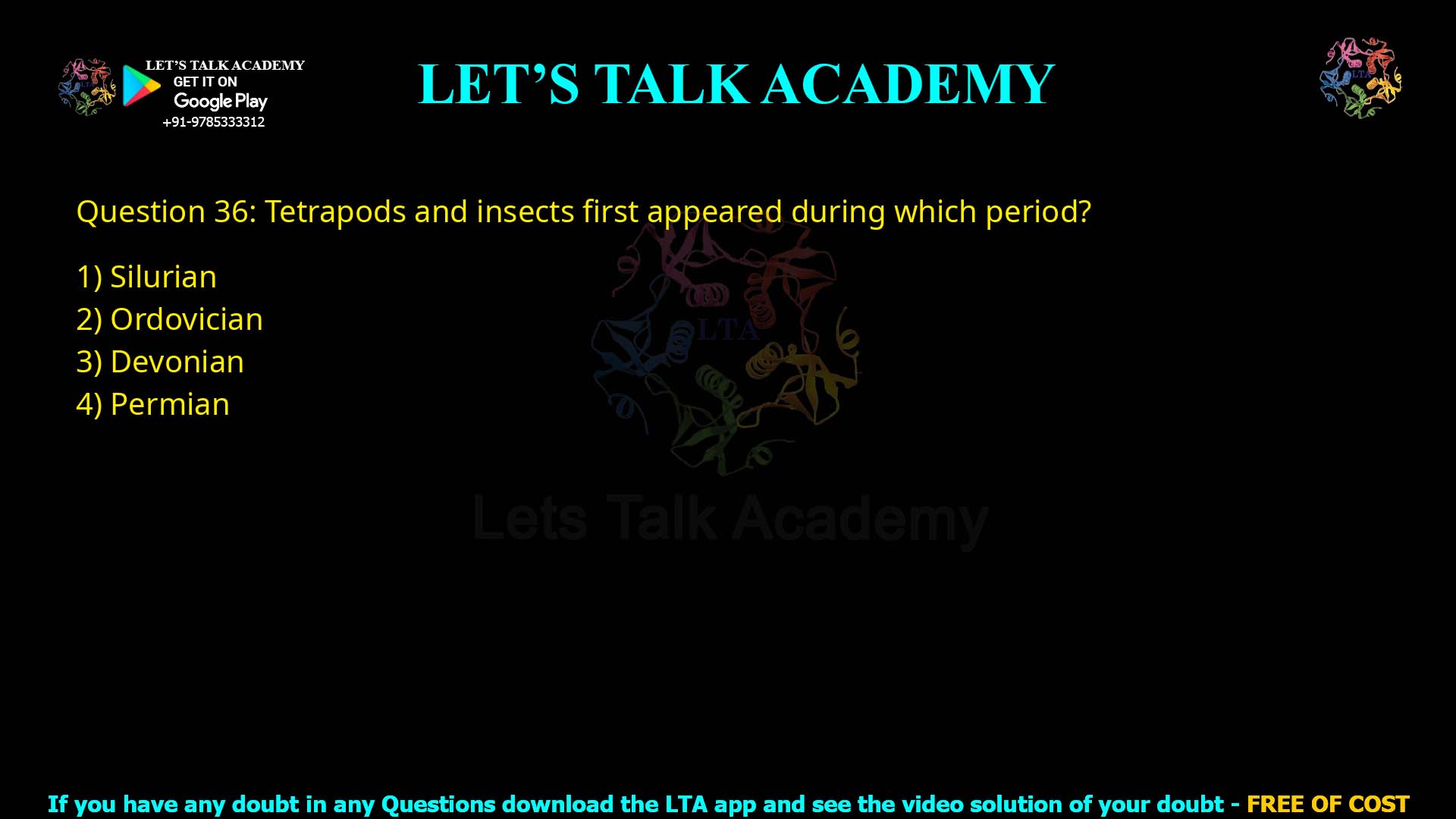
Q.36 Tetrapods and insects first appeared during which period? (1) Silurian (2) Ordovician (3) Devonian (4) Permian

Tetrapods and Insects First Appeared

Q.35 MHC-II is expressed by which of the following? (1) All nucleated cells (2) Antigen presenting cells (3) RBCs (4) All leukocytes

MHC-II Expression

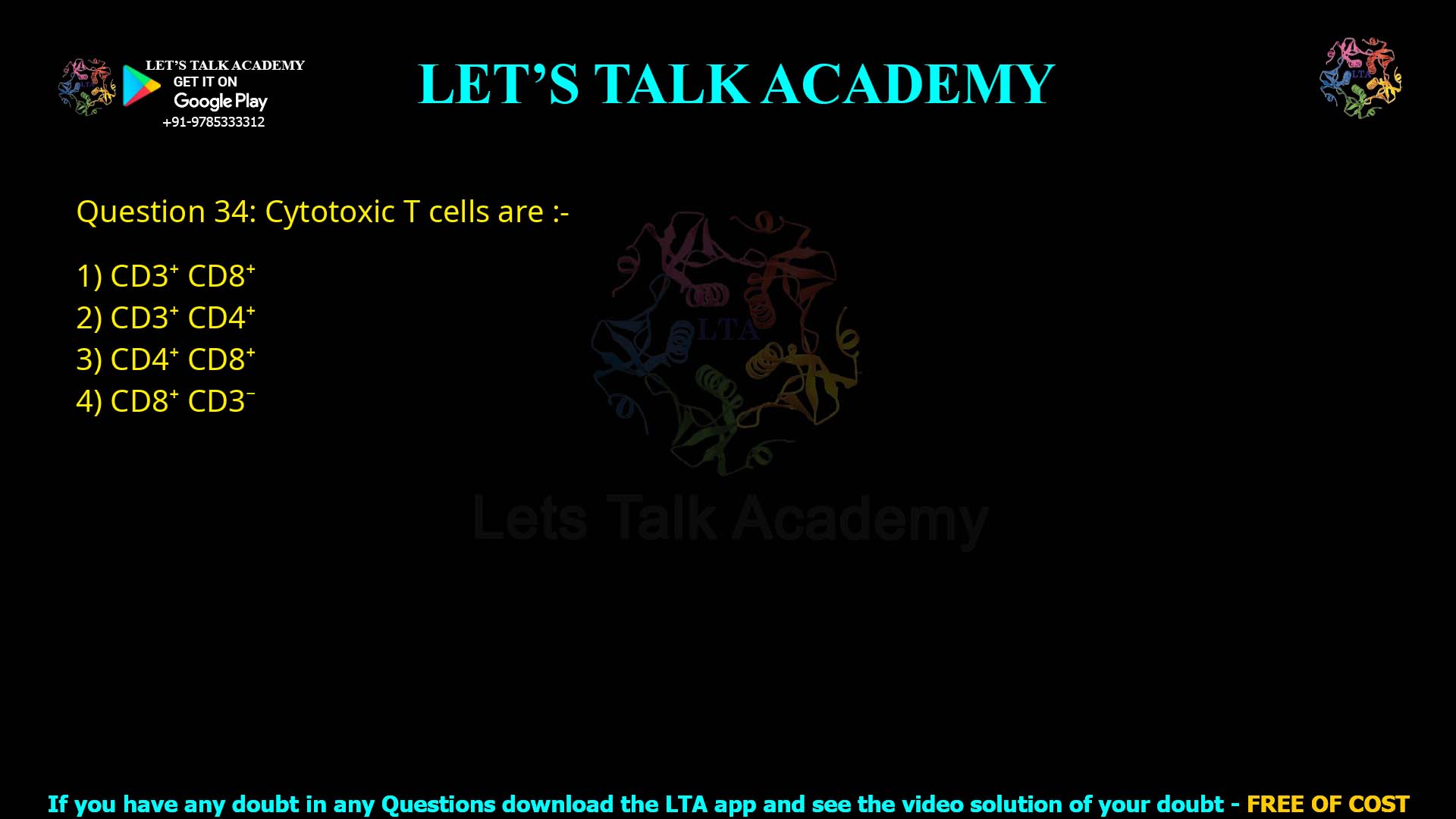
Q.34 Cytotoxic T cells are :- (1) CD3+ CD8+ (2) CD3+ CD4+ (3) CD4+ CD8+ (4) CD8+ CD3−

 Cytotoxic T Cells Are

Q.33 Which of the following immune cells are known as polymorphonuclear (PMN) leucocytes? (1) Macrophages (2) Neutrophils (3) Monocytes (4) Eosinophils

Which Immune Cells Are Polymorphonuclear

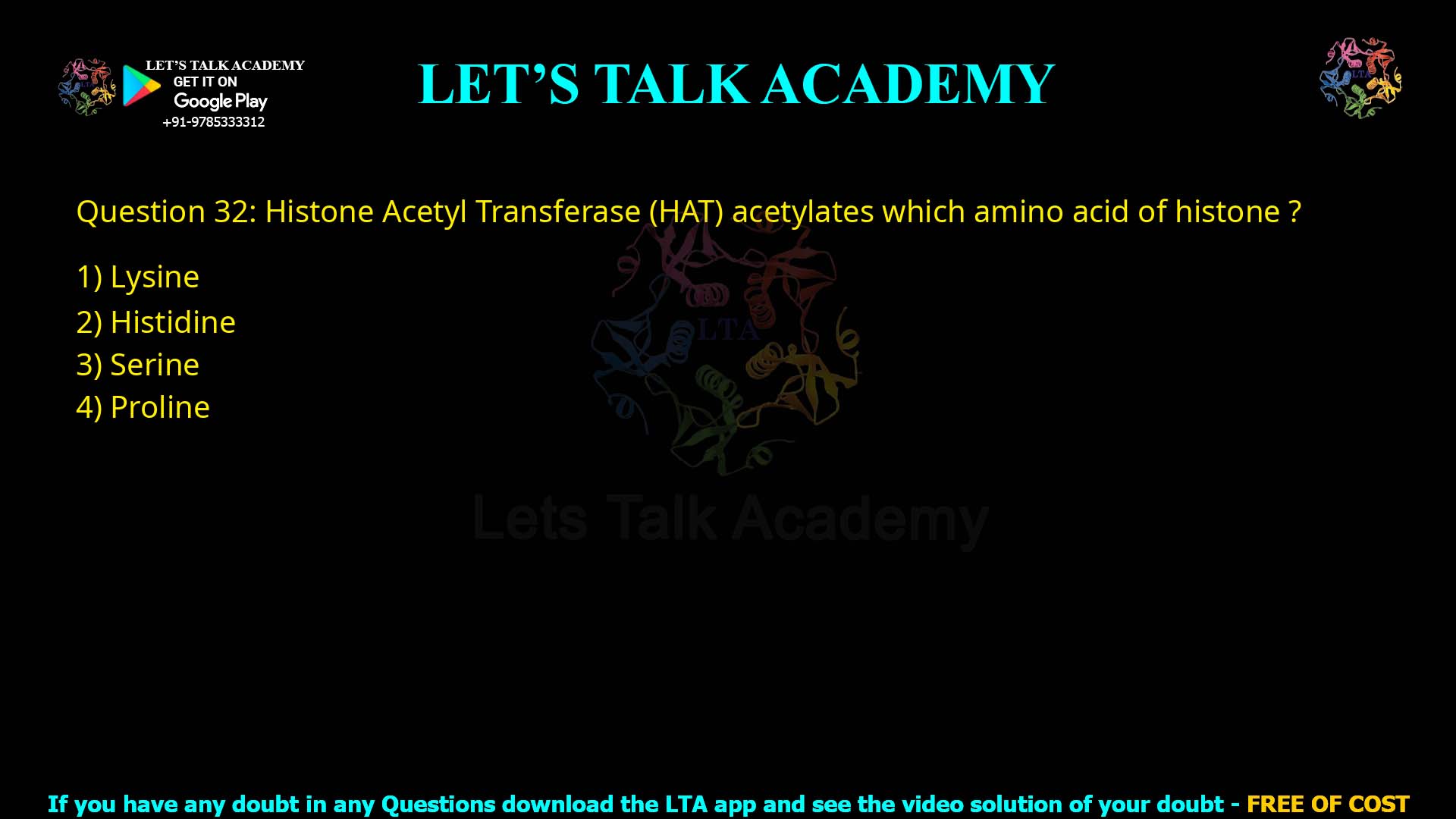
Q.32 Histone Acetyl Transferase (HAT) acetylates which amino acid of histone? (1) Lysine (2) Histidine (3) Serine (4) Proline

Histone Acetyl Transferase

Q.31 Which of the enzyme catalyses the formation of peptide bond between two amino acids? (1) Peptidases (2) Peptidyltransferase (3) Phosphodiesterase (4) Proteases

Which Enzyme Catalyzes Peptide Bond Formation

Q.30 Methylation of Uracil forms which of the following? (1) Adenine (2) Cytosine (3) Guanine (4) Thymine

Methylation of Uracil Forms

Q.29 The structural basis in sponges is provided by which of the following? (1) Pinacocytes (2) Choanocytes (3) Porocytes (4) Amoebocytes

Structural Basis in Sponges

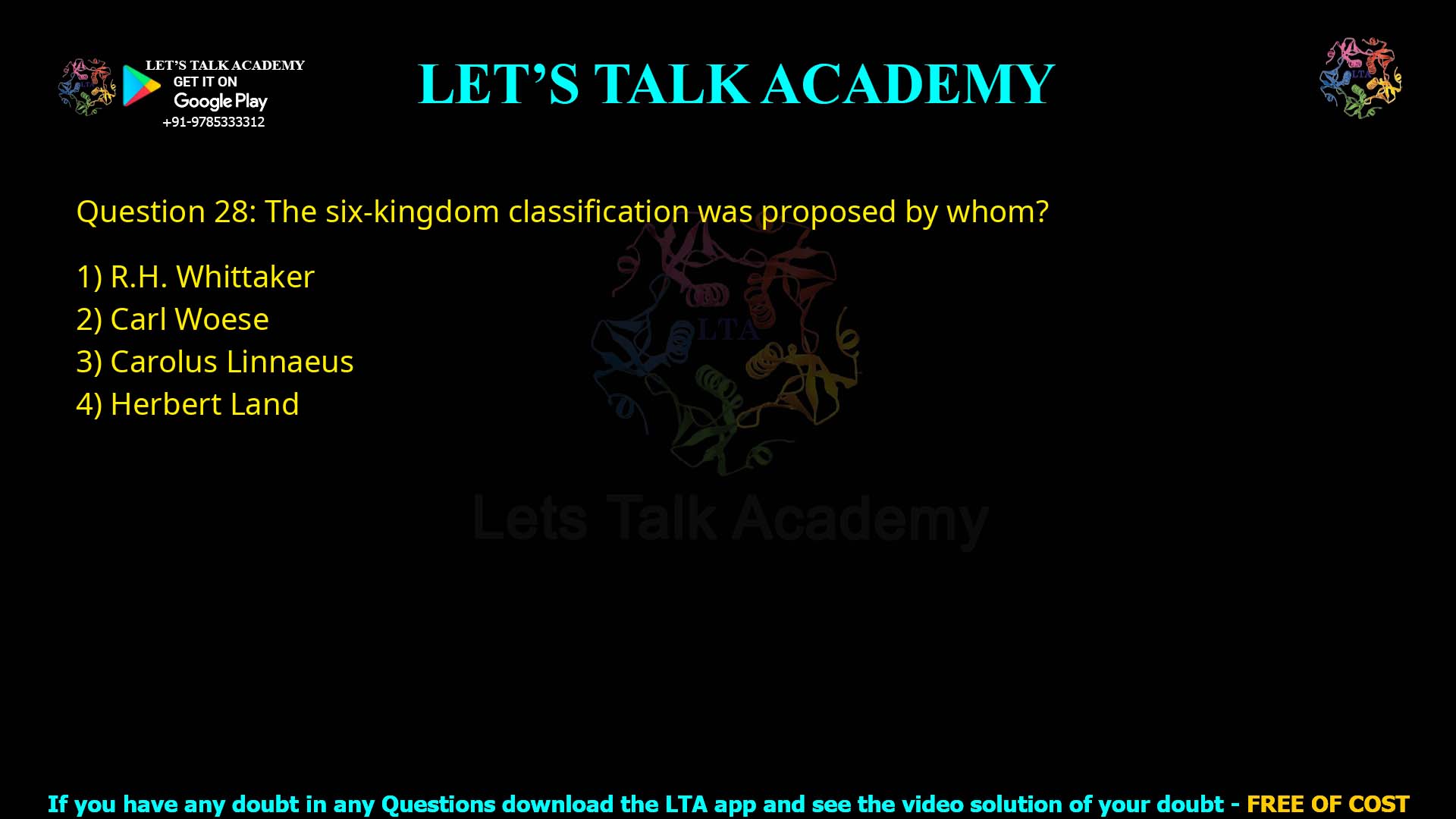
Q.28 The six-kingdom classification was proposed by whom? (1) R.H. Whittaker (2) Carl Woese (3) Carolus Linnaeus (4) Herbert Land

 Six-Kingdom Classification Proposed by

Q.27 Neoteny is exhibited by :- (1) Axolotl larva (2) Zoea larva (3) Bipinnaria larva (4) Planula larva

Neoteny Exhibited by

Q.26 Embryonic cleavage in mammals is (1) Rotational cleavage (2) Radial cleavage (3) Bilateral cleavage (4) Discoidal cleavage

Embryonic Cleavage in Mammals

Q.25 Hormone responsible for metamorphosis in frog is :- (1) Ecdysone (2) Juvenile hormone (3) Growth hormone (4) Thyroid hormone

Frog Metamorphosis Hormone

Q.24 Reabsorption of water via the distal convoluted tubule is by which of the following? (1) Rennin and angiotensin (2) Aldosterone (3) Vasopressin (4) Glucocorticoid

DCT Water Reabsorption by

Q.23 In the stomach, hydrochloric acid (HCl) is secreted by (1) Chief cells (2) Parietal cells (3) Enterochromaffin cells (4) Mucous cells

HCl in Stomach Secreted by

Q.22 Which one of the following is known as pacemaker of the heart? (1) Sino-Atrial Node (2) Atrio-Ventricular Node (3) Purkinje Fibres (4) Bundle of His

Pacemaker of the Heart

Q.21 Melatonin is derived from which of the following? (1) Epinephrine (2) Nor-epinephrine (3) Serotonin (4) Histamine

Melatonin Derived from

Q.20 In the formation of agarose gel, which one of the following bonds is involved? (1) Van der Waals interaction (2) Intra-chain hydrogen bonding (3) Inter and Intra-chain hydrogen bonding (4) Disulphide bond

Agarose Gel Formation Bonds

Q.19 Which one of the following technique is used for the characterisation of RNA? (1) Western blotting (2) Southern blotting (3) Northern blotting (4) Eastern blotting

RNA Characterization Technique

Q.18 Direct Greenhouse gases do not include (1) Methane (2) Carbon dioxide (3) Nitrous oxide (4) Sulphur dioxide

Direct Greenhouse Gases Do Not Include

Q.17 Lysozyme cleaves peptidoglycan at (1) N-acetyl muramic acid and N-acetyl glucosamine (2) N-acetyl glucosamine and N-acetyl muramic acid (3) N-acetyl muramic acid and N-acetyl muramic acid (4) N-acetyl glucosamine and N-acetyl glucosamine

 Lysozyme Cleaves Peptidoglycan at

Q.16 The formation of hypoblast in birds is a result of (1) Epiboly (2) Delamination (3) Invagination (4) Involution

Formation of Hypoblast in Birds

Q.15 Phospholipase C cleaves phosphatidyl-inositol 4, 5, bisphosphate into the following: (1) Phosphatidyl-choline and Phosphatidic acid (2) Phosphatidic acid and Choline (3) Inositol 1, 4, 5-triphosphate and diacylglycerol (4) Triacylglycerol and Inositol-triphosphate

Phospholipase C Reaction

Q.14 In the above mentioned Ramachandran Plot, A and B represent the following respectively (1) Right-handed α-helix and left-handed α-helix (2) Right-handed α-helix and β-pleated sheet (3) β-pleated sheet and left-handed α-helix (4) β-pleated sheet and right-handed α-helix

Ramachandran Plot MCQ

Q.13 Genetic material of Coronavirus is (1) Single-stranded RNA (2) Double-stranded RNA (3) Single-stranded DNA (4) Double-stranded DNA

Coronavirus Genetic Material

Q.12 Nanda Devi Biosphere Reserve is located in which State? (1) Tamil Nadu (2) Uttarakhand (3) Odisha

Nanda Devi Biosphere Reserve Location

Q.11 The association in which population of one organism is benefited and population of the other is unaffected is known as (1) Symbiosis (2) Commensalism (3) Mutualism (4) Parasitism

Commensalism in Biology

Q.10 When one gene masks the effect of another gene in a phenotype, then it is known as: (1) Pleiotropy (2) Epistasis (3) Homeostasis (4) Incomplete dominance

When One Gene Masks Another

Q.9 Example of multiple allelism is (1) ABO blood grouping (2) Drosophila eye colour (3) MN blood grouping (4) Pea plant height

Example of Multiple Allelism is?

Q.8 Haplodiploid system of sex determination is found in (1) Humans (2) Grasshoppers (3) Birds (4) Honey bees

Haplodiploid System of Sex Determination

Q.7 Which of the following is known as positional average? (1) Mean deviation (2) Standard deviation (3) Median (4) Mean

Which of the Following is Known as Positional Average?

Q.6 Which of the following is a non-parametric test? (1) Chi-square test (2) T-test (3) F-test (4) Z-test

Which of the Following is a Non-Parametric Test?

Q.5 Voltage-Dependent Anion-selective Channels (VDACs) allow passage of small molecules across (1) Endoplasmic reticulum (2) Outer membrane of mitochondria (3) Ribosome (4) Nucleus

VDACs Allow Passage Across Which Organelle?

Q.4 Sodium – Potassium ATPase transports (1) 3 Na+ In and 2 K+ Out of the cell (2) 2 K+ In and 3 Na+ Out of the cell (3) 3 K+ In and 2 Na+ Out of the cell (4) 2 K+ Out and 2 Na+ In of the cell

Na+/K+ ATPase Pump

Q.3 Sudan Black is used for staining of (1) Protein (2) Lipid (3) Carbohydrate (4) Cytoskeleton

Sudan Black Staining

Q.2 Enzyme responsible for relaxing positive supercoiling of DNA in prokaryotes (1) Type I topoisomerase (2) DNA gyrase (3) Catenase (4) DNA ligase

DNA Gyrase: Enzyme Relaxing Positive Supercoiling

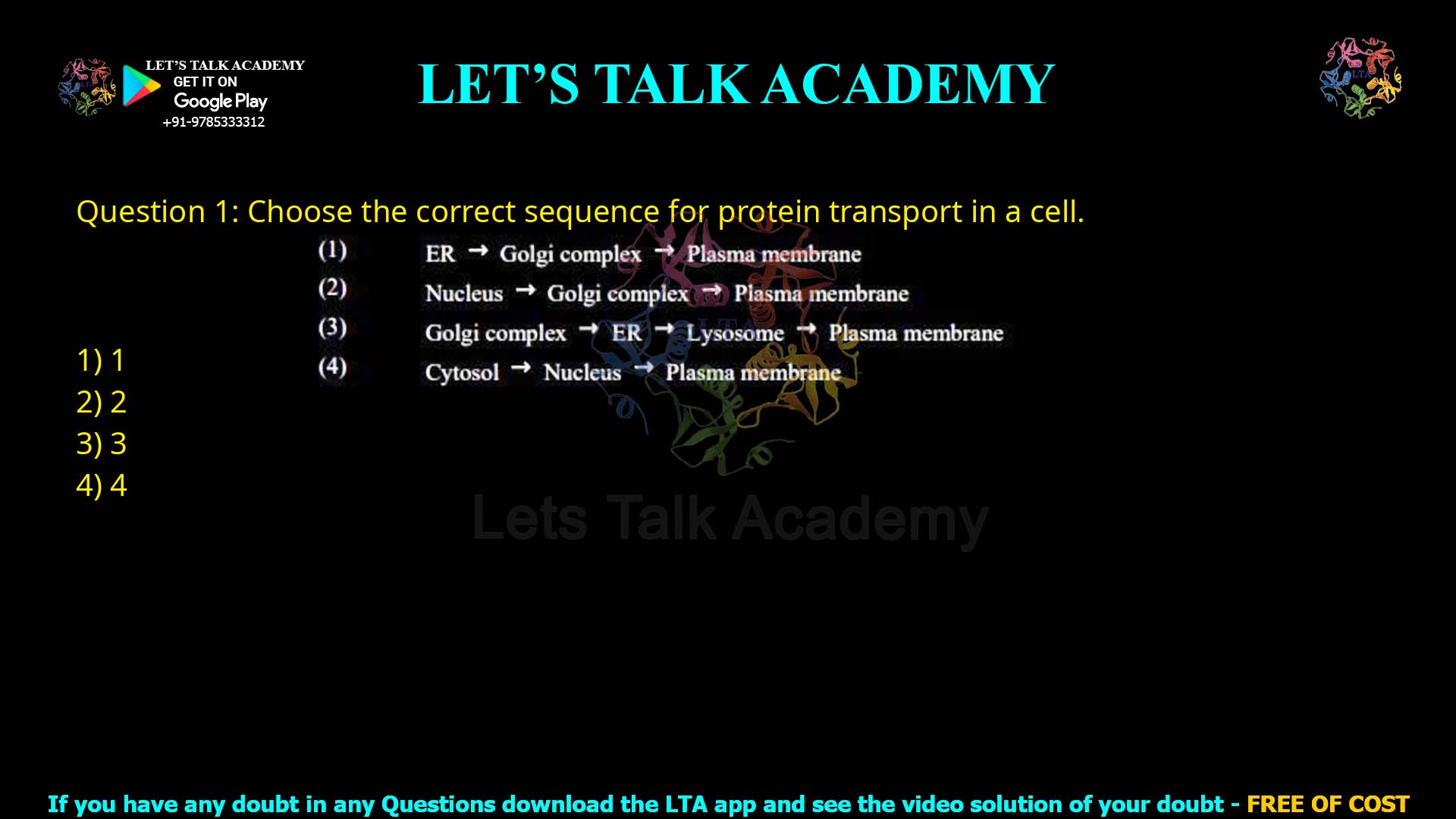
Q.1 Choose the correct sequence for protein transport in a cell. (1) ER → Golgi complex → Plasma membrane (2) Nucleus → Golgi complex → Plasma membrane (3) Golgi complex → ER → Lysosome → Plasma membrane (4) Cytosol → Nucleus → Plasma membrane

Protein Transport Pathway

Latest Courses