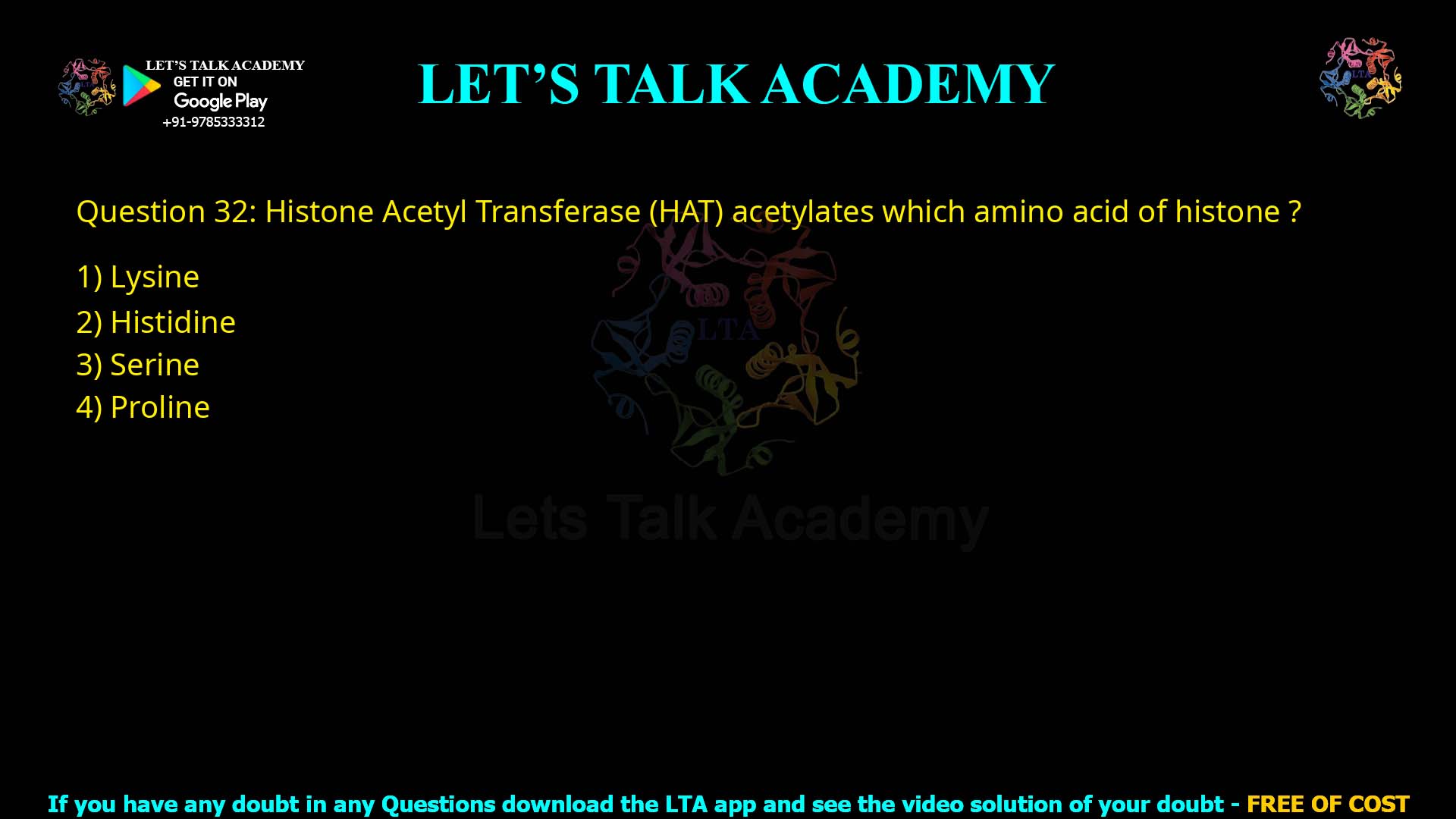
Q.32 Histone Acetyl Transferase (HAT) acetylates which amino acid of histone?
(1) Lysine
(2) Histidine
(3) Serine
(4) Proline
Histone Acetyl Transferase HAT Acetylates Lysine
Histone Acetyl Transferase (HAT) specifically targets lysine residues on histones to regulate gene expression via chromatin remodeling. This SEO article details the correct answer for biology exams like NEET.
Correct Answer
The correct answer is (1) Lysine. HAT enzymes transfer acetyl groups from acetyl-CoA to the ε-amino group of lysine residues on histone N-terminal tails, neutralizing their positive charge to loosen chromatin and promote transcription.
Role in Epigenetics
Acetylation by HATs (e.g., p300/CBP, GCN5) on lysines like H3K9, H3K14, H4K16 reduces histone-DNA affinity, facilitating access for transcription factors. This reversible mark contrasts with HDAC removal, balancing euchromatin/heterochromatin states.
Option Analysis
| Option | Description | Targeted by HAT? |
|---|---|---|
| (1) Lysine | Primary target; ε-NH₂ group acetylated, key for chromatin relaxation and activation . | Yes |
| (2) Histidine | Imidazole ring can be acetylated in some contexts but not by HATs on histones; more common in signaling . | No |
| (3) Serine | Hydroxyl group undergoes phosphorylation or O-acetylation, not Nε-acetylation by HATs . | No |
| (4) Proline | Cyclic secondary amine resists acetylation; undergoes hydroxylation instead . | No |
Biological Significance
HAT-mediated lysine acetylation is central to epigenetics, influencing development, cancer, and gene regulation. Dysregulation links to diseases, making HATs therapeutic targets. Vital for biochemistry, genetics studies.


