The peacock’s tail is an example of (1) natural selection (2) diversifying selection (3) sexual selection (4) group selection What Is Sexual Selection? Sexual selection is a form of […]
The peacock’s tail is an example of (1) natural selection (2) diversifying selection (3) sexual selection (4) group selection What Is Sexual Selection? Sexual selection is a form of […]
During evolution increased ornamentation in male is a result of (1) Directional selection (2) Co-evolution (3) Sexual selection (4) Natural selection What Is Sexual Selection? Sexual selection is a […]
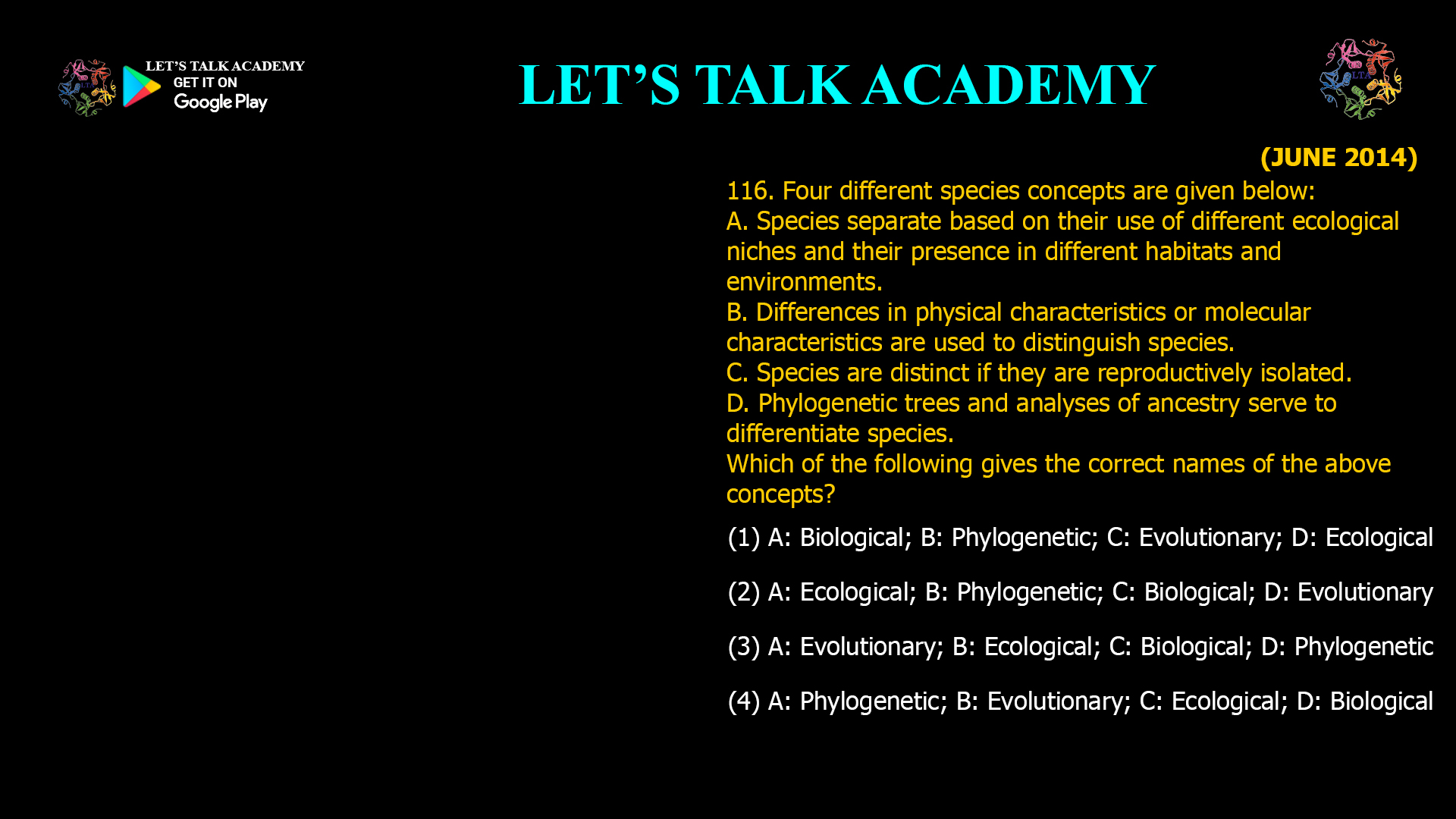
Four different species concepts are given below: A. Species separate based on their use of different ecological niches and their presence in different habitats and environments. B. Differences in physical […]
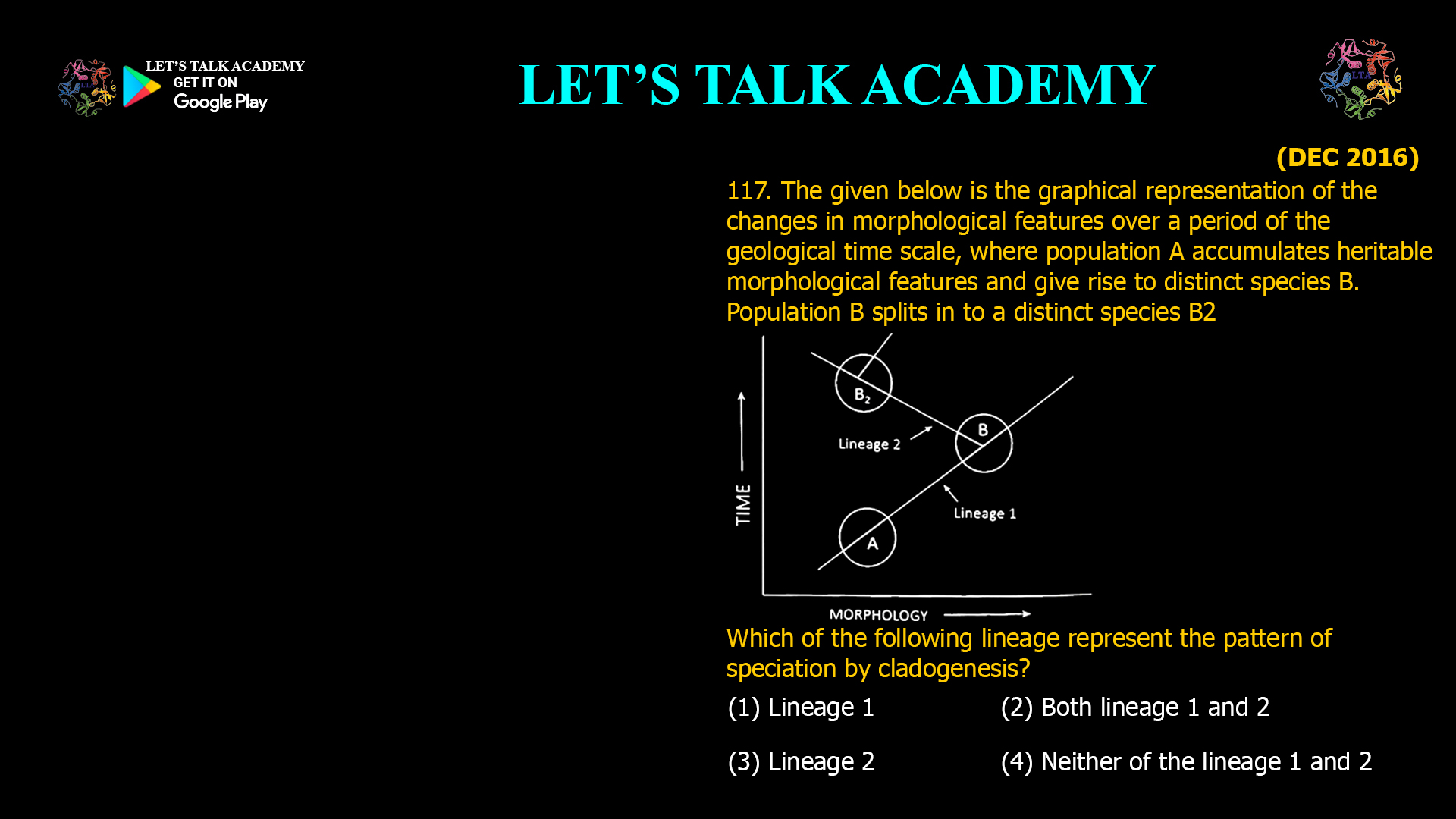
The given below is the graphical representation of the changes in morphological features over a period of the geological time scale, where population A accumulates heritable morphological features and give […]
In a study of sexual isolation in a species of salamander, scientists brought together males and females from different populations and from the same population. They observed the frequency of […]
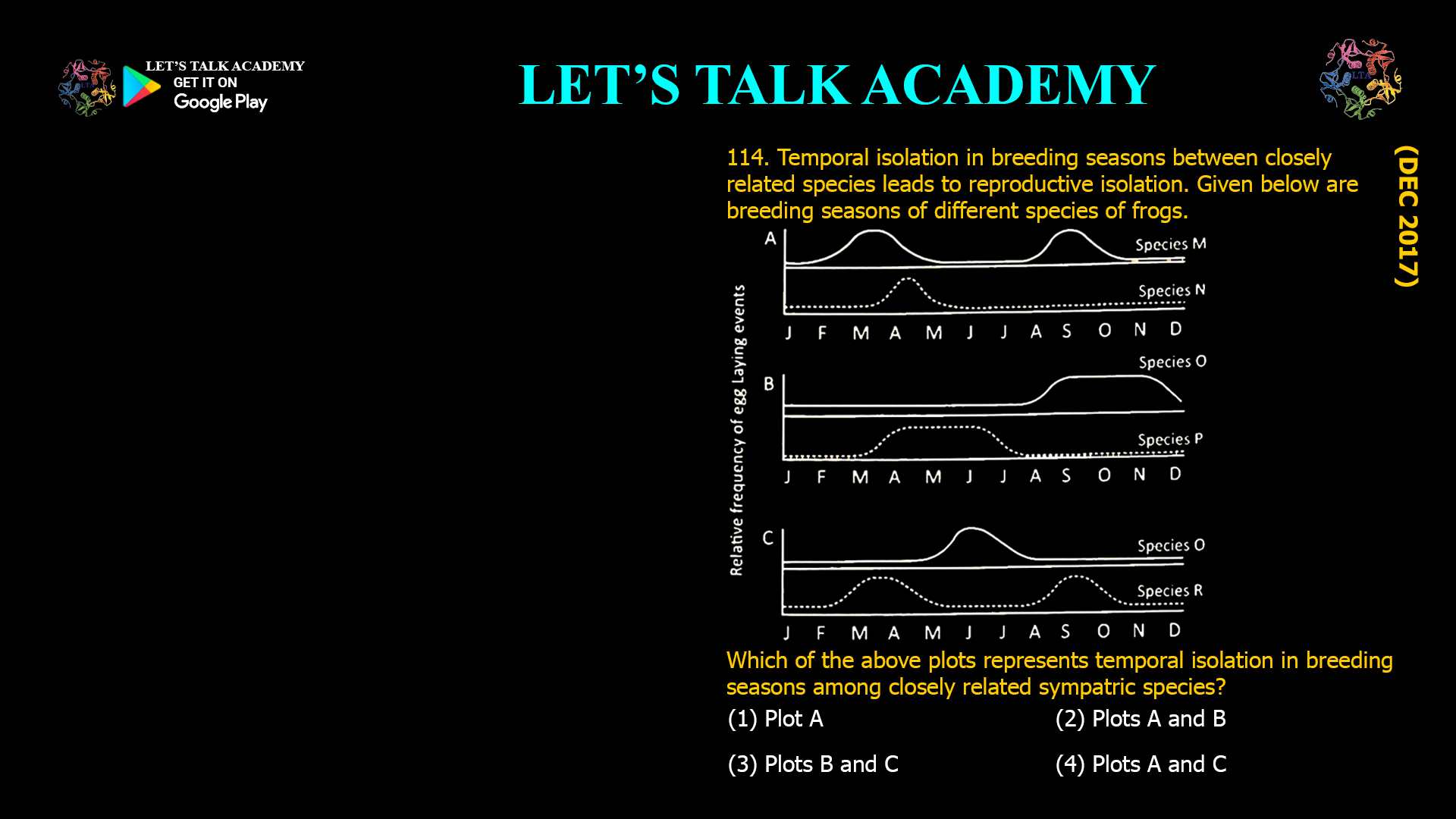
Temporal isolation in breeding seasons between closely related species leads to reproductive isolation. Given below are breeding seasons of different species of frogs. Which of the above plots represents temporal […]
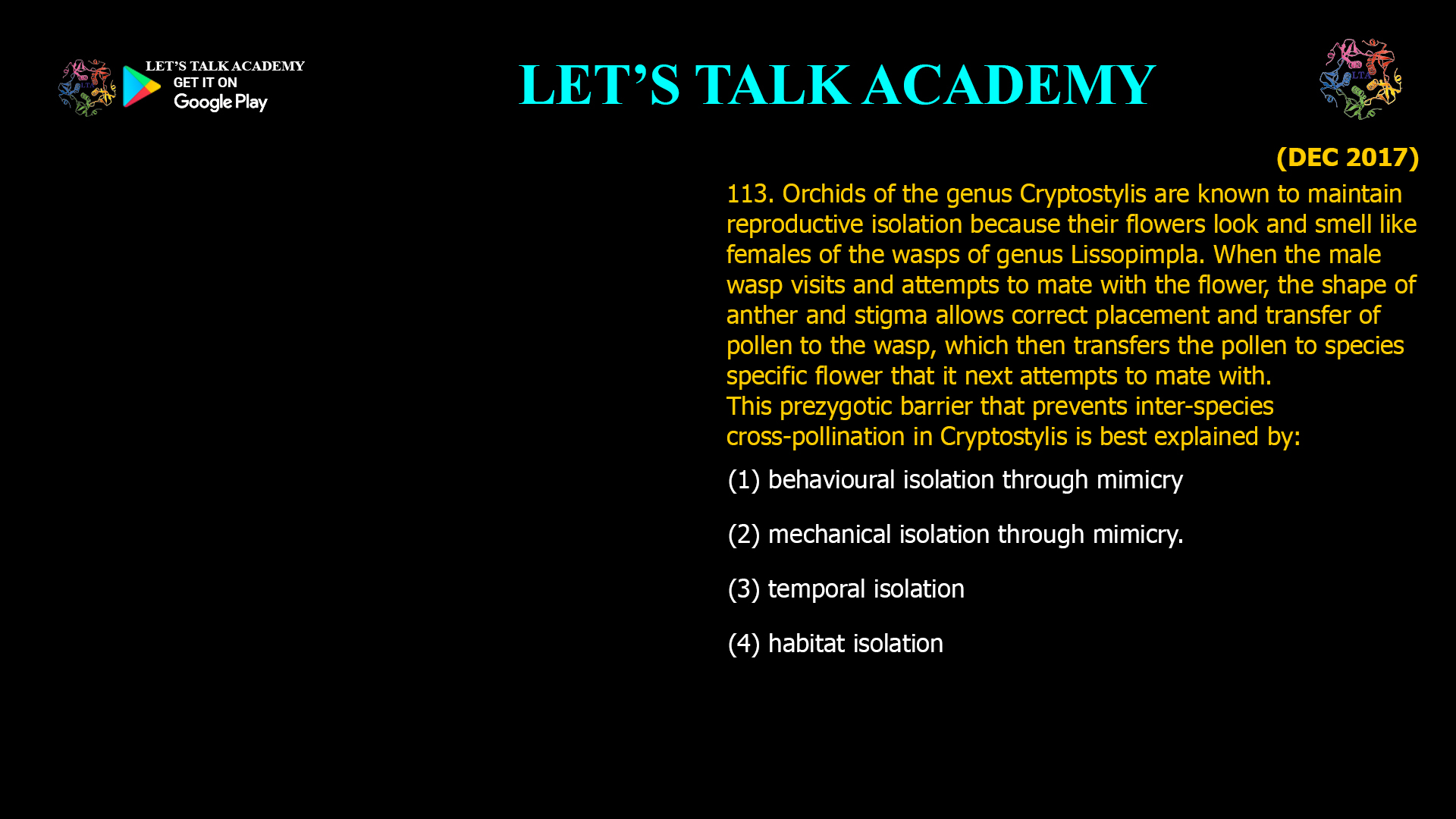
Orchids of the genus Cryptostylis are known to maintain reproductive isolation because their flowers look and smell like females of the wasps of genus Lissopimpla. When the male wasp visits […]
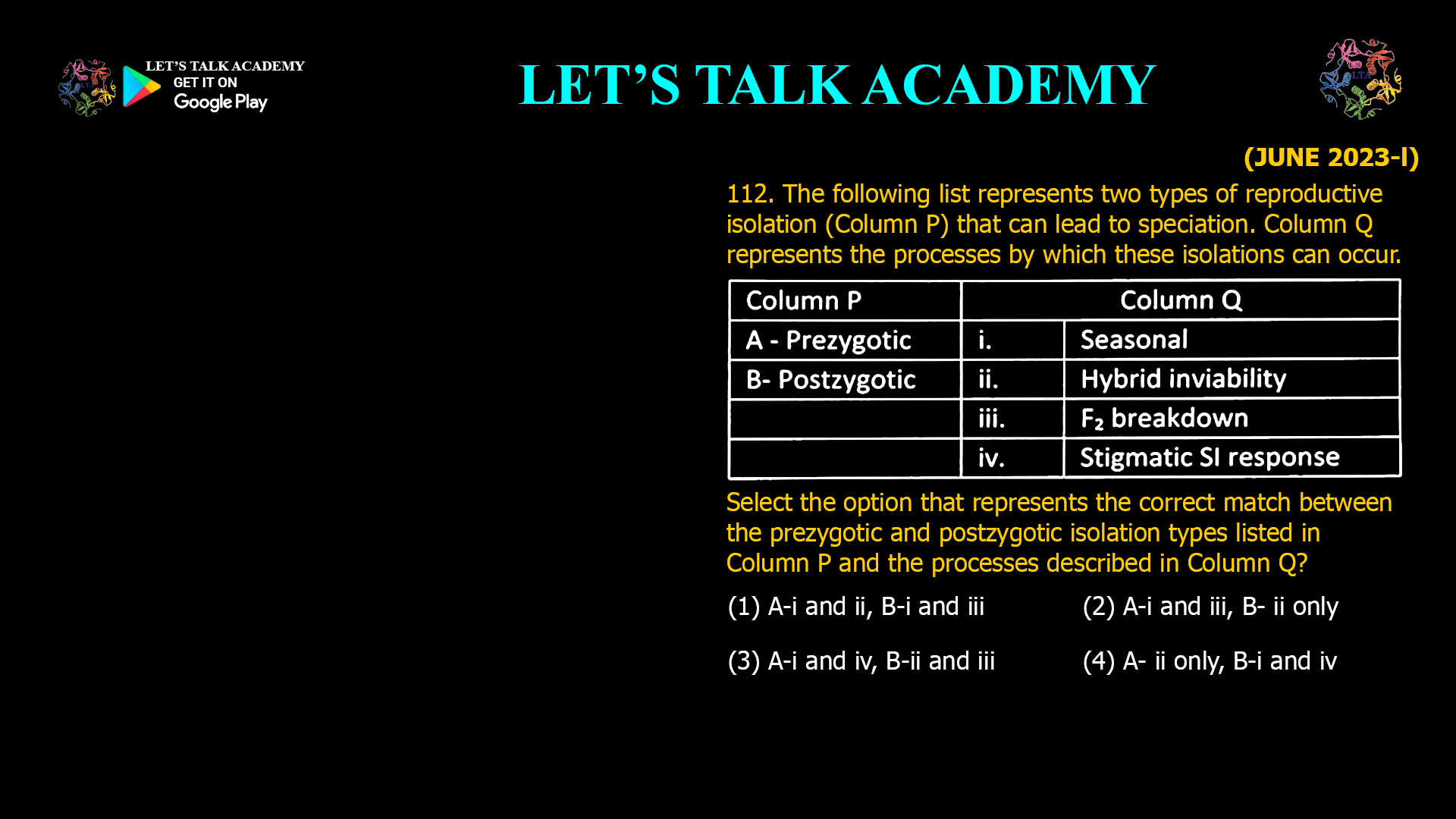
The following list represents two types of reproductive isolation (Column P) that can lead to speciation. Column Q represents the processes by which these isolations can occur. Select the option […]
Wolbachia are obligate intracellular bacteria, many different strains of which are abundantly present in insects. They induce mating incompatibility in host, i.e. males infected with one strain can only fertilize […]
Which one of the following statement is correct for the process of speciation ? (1) Allopatric speciation occurs between adjacent populations. (2) Parapatric speciation may occur between geographically separated populations. […]


