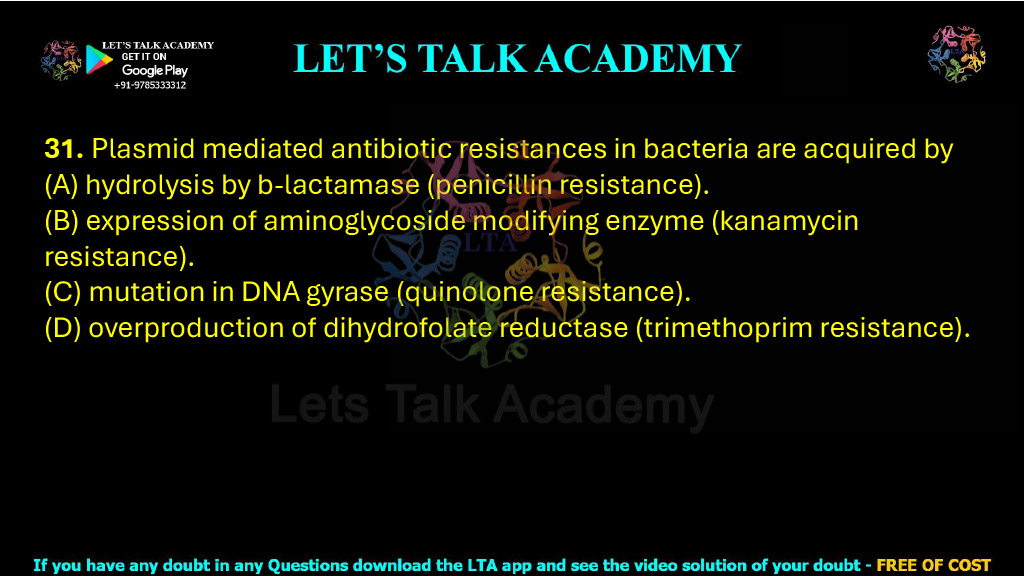
31. Plasmid mediated antibiotic resistances in bacteria are acquired by
(A) hydrolysis by b-lactamase (penicillin resistance).
(B) expression of aminoglycoside modifying enzyme (kanamycin resistance).
(C) mutation in DNA gyrase (quinolone resistance).
(D) overproduction of dihydrofolate reductase (trimethoprim resistance).
Plasmid-Mediated Antibiotic Resistance in Bacteria: Mechanisms, Enzymes, and Clinical Significance
Introduction
Antibiotic resistance is one of the greatest challenges facing modern medicine. The widespread use and misuse of antibiotics have accelerated the emergence of resistant bacterial strains, making the treatment of infectious diseases increasingly difficult. Bacteria acquire antibiotic resistance through two major mechanisms: chromosomal mutations and horizontal gene transfer. Among the horizontal gene transfer mechanisms, plasmid-mediated resistance plays the most significant role in the rapid dissemination of resistance genes across bacterial populations.
Plasmids are small, circular, double-stranded DNA molecules that exist independently of the bacterial chromosome. Many plasmids, particularly R (Resistance) plasmids, carry genes encoding enzymes or proteins that neutralize antibiotics, modify antibiotic targets, or actively pump antibiotics out of the bacterial cell. Because plasmids can spread through bacterial conjugation, they contribute substantially to multidrug resistance in pathogenic bacteria.
Correct Answer
Correct Options: (A), (B) and (D)
Detailed Explanation
Plasmids frequently carry genes that encode proteins capable of protecting bacteria from antibiotics. These resistance genes can spread rapidly among bacterial populations through conjugation, making plasmid-mediated resistance one of the principal causes of multidrug-resistant bacterial infections.
β-Lactamase enzymes, encoded by numerous R plasmids, hydrolyze the β-lactam ring present in penicillins and related antibiotics. Once this ring is broken, the antibiotic can no longer inhibit bacterial cell wall synthesis. Therefore, hydrolysis by β-lactamase is a classic plasmid-mediated mechanism of penicillin resistance.
Similarly, many plasmids encode aminoglycoside-modifying enzymes such as acetyltransferases, phosphotransferases, and nucleotidyltransferases. These enzymes chemically modify aminoglycoside antibiotics including kanamycin, streptomycin, and gentamicin, preventing them from binding to bacterial ribosomes and rendering them ineffective.
Resistance to trimethoprim may also be plasmid mediated. Many R plasmids carry genes encoding altered or overproduced dihydrofolate reductase (DHFR), allowing folate synthesis to continue despite the presence of trimethoprim.
In contrast, quinolone resistance caused by mutations in DNA gyrase usually results from chromosomal mutations in the gyrA or parC genes rather than plasmid-mediated gene acquisition. Although plasmid-mediated quinolone resistance mechanisms (such as Qnr proteins) have been identified, the specific mechanism mentioned in this question—mutation in DNA gyrase—is chromosomal and therefore not plasmid mediated.
Explanation of Each Option
Option (A): Hydrolysis by β-Lactamase (Penicillin Resistance)
This statement is correct. β-Lactamase enzymes encoded by plasmids hydrolyze the β-lactam ring of penicillin and related antibiotics, producing resistance.
Option (B): Expression of Aminoglycoside-Modifying Enzyme (Kanamycin Resistance)
This statement is correct. Plasmids commonly encode enzymes that chemically modify aminoglycosides, preventing their interaction with the bacterial ribosome.
Option (C): Mutation in DNA Gyrase (Quinolone Resistance)
This statement is incorrect. Mutation in DNA gyrase is primarily a chromosomal mutation rather than a plasmid-mediated resistance mechanism.
Option (D): Overproduction of Dihydrofolate Reductase (Trimethoprim Resistance)
This statement is correct. Plasmids may carry genes encoding resistant or overexpressed forms of dihydrofolate reductase, reducing the effectiveness of trimethoprim.
Why Options (A), (B), and (D) are Correct
Each of these resistance mechanisms results from genes commonly carried on resistance plasmids. These plasmids spread efficiently between bacteria through conjugation, allowing rapid dissemination of antibiotic resistance.
Why Option (C) is Incorrect
Although quinolone resistance is common, the mechanism specified here is a mutation in DNA gyrase, which usually arises from chromosomal mutations rather than acquisition of plasmid genes.
Comparison of All Options
| Option | Resistance Mechanism | Plasmid Mediated? |
|---|---|---|
| A | β-Lactamase hydrolysis | Yes |
| B | Aminoglycoside-modifying enzyme | Yes |
| C | DNA gyrase mutation | No (Chromosomal mutation) |
| D | Overproduction/altered dihydrofolate reductase | Yes |
Common Plasmid-Mediated Antibiotic Resistance Mechanisms
| Antibiotic | Resistance Mechanism | Encoded By |
|---|---|---|
| Penicillin | β-Lactamase | R plasmid |
| Kanamycin | Aminoglycoside-modifying enzyme | R plasmid |
| Trimethoprim | Altered or excess DHFR | R plasmid |
| Tetracycline | Efflux pump | R plasmid |
| Chloramphenicol | Chloramphenicol acetyltransferase | R plasmid |
Plasmid-Mediated vs Chromosomal Resistance
| Feature | Plasmid-Mediated Resistance | Chromosomal Resistance |
|---|---|---|
| Inheritance | Horizontal gene transfer | Vertical inheritance |
| Spread | Rapid | Relatively slow |
| Transfer Between Species | Possible | Rare |
| Example | β-Lactamase genes | DNA gyrase mutation |
Biological Significance
Plasmid-mediated resistance has transformed bacterial evolution by enabling rapid exchange of resistance genes among unrelated bacterial species. The spread of R plasmids has contributed to the emergence of multidrug-resistant pathogens such as methicillin-resistant Staphylococcus aureus (MRSA), extended-spectrum β-lactamase (ESBL)-producing Enterobacteriaceae, and carbapenem-resistant bacteria. Understanding these resistance mechanisms is therefore essential for antibiotic stewardship, infection control, and development of novel antimicrobial therapies.
Final Answer
Correct Options: (A), (B), and (D)
Plasmid-mediated antibiotic resistance commonly involves β-lactamase-mediated hydrolysis of penicillin, aminoglycoside-modifying enzymes, and plasmid-encoded or overproduced dihydrofolate reductase. In contrast, DNA gyrase mutation causing quinolone resistance is primarily a chromosomal mutation and is therefore not considered a plasmid-mediated mechanism in this context.


